Preventing
Slips, Trips & Falls
Hazards are Everywhere
Wet floors, an open drawer, slippery shoes, an icy walkway
– all can lead to serious, painful injuries in the workplace.
Protect yourself and your co-workers by learning how slips,
trips and falls occur and what you can do to report or clean
up hazards.
Slips, trips and falls account for more than 20% of all non-fatal
occupational injuries involving days away from work.
Approximately 10% of fatal occupational injuries for all industries
were attributed to fall from a height.
Slips, trips and falls are one of the leading causes of accidents in
the workplace, accounting for at least 20% of
all worker’s compensation claims.
Causes for Workplace
Slips, Trips and Falls
• A Lack of Safety Awareness
• Unsafe Conditions
• Unsafe Behaviors
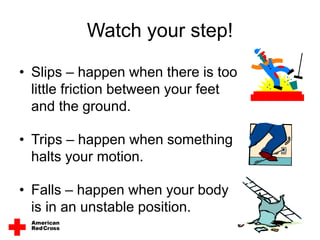
Watch your step!
• Slips – happen when there is too
little friction between your feet
and the ground.
• Trips – happen when something
halts your motion.
• Falls – happen when your body
is in an unstable position.
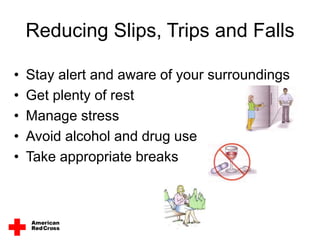
Reducing Slips, Trips and Falls
• Stay alert and aware of your surroundings
• Get plenty of rest
• Manage stress
• Avoid alcohol and drug use
• Take appropriate breaks
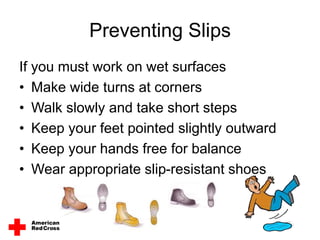
Preventing Slips
If you must work on wet surfaces
• Make wide turns at corners
• Walk slowly and take short steps
• Keep your feet pointed slightly outward
• Keep your hands free for balance
• Wear appropriate slip-resistant shoes
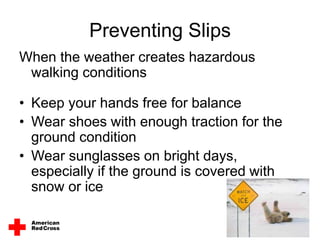
Preventing Slips
When the weather creates hazardous
walking conditions
• Keep your hands free for balance
• Wear shoes with enough traction for the
ground condition
• Wear sunglasses on bright days,
especially if the ground is covered with
snow or ice
Preventing Slips
Examples of preventable slips
• Wipe shoes thoroughly on rugs
• Wipe up spills (even small one) – even if it
is not your spill
• Mark spills/slippery area until cleaned up
• If you see a hazard on the
floor, clean it up
Preventing Trips
Trips are caused by taking shortcuts, poor lighting
and loose footing
• Walk in designated areas
• Make sure you can see where you are going –
and look ahead
• Carry only loads you can see over and doesn’t
hinder your movement
• Remind yourself to slow down
and pay attention
Preventing Trips
Keep areas well lit and clean. Proper lighting
helps avoid potential hazards
• Turn on lights every time you enter a room
• Replace light bulbs when they burn out
• Keep all work areas & walkways clear of boxes,
bags, papers, cords, etc.
• Watch for curled rugs, chipped flooring, etc.
• Close file drawers and cabinet doors after each
use
• Correct or report potential trip hazards
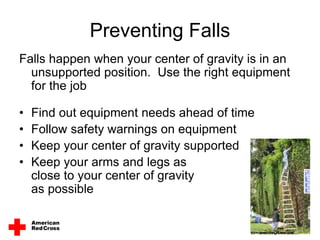
Preventing Falls
Falls happen when your center of gravity is in an
unsupported position. Use the right equipment
for the job
• Find out equipment needs ahead of time
• Follow safety warnings on equipment
• Keep your center of gravity supported
• Keep your arms and legs as
close to your center of gravity
as possible
Preventing Falls
Use ladders safely. Follow the 1-to-4 rule. The
base of the ladder needs to be placed 1 foot
from its support for every 4 feet of ladder.
• Inspect ladders before using
• Set and secure the ladder on stable ground
• Have someone hold the base of the
ladder
• Never use the top rung of the ladder
for standing
Preventing Falls
Examples of preventable falls
• Don’t stand on chairs or tables with wheels
• Don’t stand on furniture not intended for
standing/climbing
• Don’t sit on banisters
• Report/repair uneven or
wobbly furniture
Your role in Prevention
Make lifestyle decisions that include getting
adequate rest, staying focused on your
task and keeping stress under control.
• Stay focused on your task at hand
• Take short breaks to allow for refocusing
• Rest your mind and body
• Manage stress and fatigue
Make Safety a Habit
To stay safe on the job and at home, make safety part of
your daily routine.
• Grip hand rails with all your fingers and thumb
• Look a head when climbing stairs without lifting
our head back. This tends to lean the body
backward.
• Carry only loads of a comfortable weight
• Stay in shape and control your weight. Maintaining
muscle and weight helps control your center of gravity
and balance
• Pay attention to signs and warnings
Safety is Up to You
Preventing accidents and injuries in the
workplace involves teamwork.
You and your co-workers need to work
cooperatively to identify, report and correct
unsafe conditions and behaviors.
Make a commitment to yourself to develop
an awareness of potential hazards.

Preventing slips_trips_falls.ppt

  • 1.
  • 2.
    Hazards are Everywhere Wetfloors, an open drawer, slippery shoes, an icy walkway – all can lead to serious, painful injuries in the workplace. Protect yourself and your co-workers by learning how slips, trips and falls occur and what you can do to report or clean up hazards. Slips, trips and falls account for more than 20% of all non-fatal occupational injuries involving days away from work. Approximately 10% of fatal occupational injuries for all industries were attributed to fall from a height. Slips, trips and falls are one of the leading causes of accidents in the workplace, accounting for at least 20% of all worker’s compensation claims.
  • 3.
    Causes for Workplace Slips,Trips and Falls • A Lack of Safety Awareness • Unsafe Conditions • Unsafe Behaviors
  • 4.
    Watch your step! •Slips – happen when there is too little friction between your feet and the ground. • Trips – happen when something halts your motion. • Falls – happen when your body is in an unstable position.
  • 5.
    Reducing Slips, Tripsand Falls • Stay alert and aware of your surroundings • Get plenty of rest • Manage stress • Avoid alcohol and drug use • Take appropriate breaks
  • 6.
    Preventing Slips If youmust work on wet surfaces • Make wide turns at corners • Walk slowly and take short steps • Keep your feet pointed slightly outward • Keep your hands free for balance • Wear appropriate slip-resistant shoes
  • 7.
    Preventing Slips When theweather creates hazardous walking conditions • Keep your hands free for balance • Wear shoes with enough traction for the ground condition • Wear sunglasses on bright days, especially if the ground is covered with snow or ice
  • 8.
    Preventing Slips Examples ofpreventable slips • Wipe shoes thoroughly on rugs • Wipe up spills (even small one) – even if it is not your spill • Mark spills/slippery area until cleaned up • If you see a hazard on the floor, clean it up
  • 9.
    Preventing Trips Trips arecaused by taking shortcuts, poor lighting and loose footing • Walk in designated areas • Make sure you can see where you are going – and look ahead • Carry only loads you can see over and doesn’t hinder your movement • Remind yourself to slow down and pay attention
  • 10.
    Preventing Trips Keep areaswell lit and clean. Proper lighting helps avoid potential hazards • Turn on lights every time you enter a room • Replace light bulbs when they burn out • Keep all work areas & walkways clear of boxes, bags, papers, cords, etc. • Watch for curled rugs, chipped flooring, etc. • Close file drawers and cabinet doors after each use • Correct or report potential trip hazards
  • 11.
    Preventing Falls Falls happenwhen your center of gravity is in an unsupported position. Use the right equipment for the job • Find out equipment needs ahead of time • Follow safety warnings on equipment • Keep your center of gravity supported • Keep your arms and legs as close to your center of gravity as possible
  • 12.
    Preventing Falls Use ladderssafely. Follow the 1-to-4 rule. The base of the ladder needs to be placed 1 foot from its support for every 4 feet of ladder. • Inspect ladders before using • Set and secure the ladder on stable ground • Have someone hold the base of the ladder • Never use the top rung of the ladder for standing
  • 13.
    Preventing Falls Examples ofpreventable falls • Don’t stand on chairs or tables with wheels • Don’t stand on furniture not intended for standing/climbing • Don’t sit on banisters • Report/repair uneven or wobbly furniture
  • 14.
    Your role inPrevention Make lifestyle decisions that include getting adequate rest, staying focused on your task and keeping stress under control. • Stay focused on your task at hand • Take short breaks to allow for refocusing • Rest your mind and body • Manage stress and fatigue
  • 15.
    Make Safety aHabit To stay safe on the job and at home, make safety part of your daily routine. • Grip hand rails with all your fingers and thumb • Look a head when climbing stairs without lifting our head back. This tends to lean the body backward. • Carry only loads of a comfortable weight • Stay in shape and control your weight. Maintaining muscle and weight helps control your center of gravity and balance • Pay attention to signs and warnings
  • 16.
    Safety is Upto You Preventing accidents and injuries in the workplace involves teamwork. You and your co-workers need to work cooperatively to identify, report and correct unsafe conditions and behaviors. Make a commitment to yourself to develop an awareness of potential hazards.