Presentation:
Split Phase Motor
Group Members:
Kamran Ali (ADP-002)
Ameer Hamza (BS-004)
Abdul Bilal (BS-006)
Furqan Habib (BS-007)
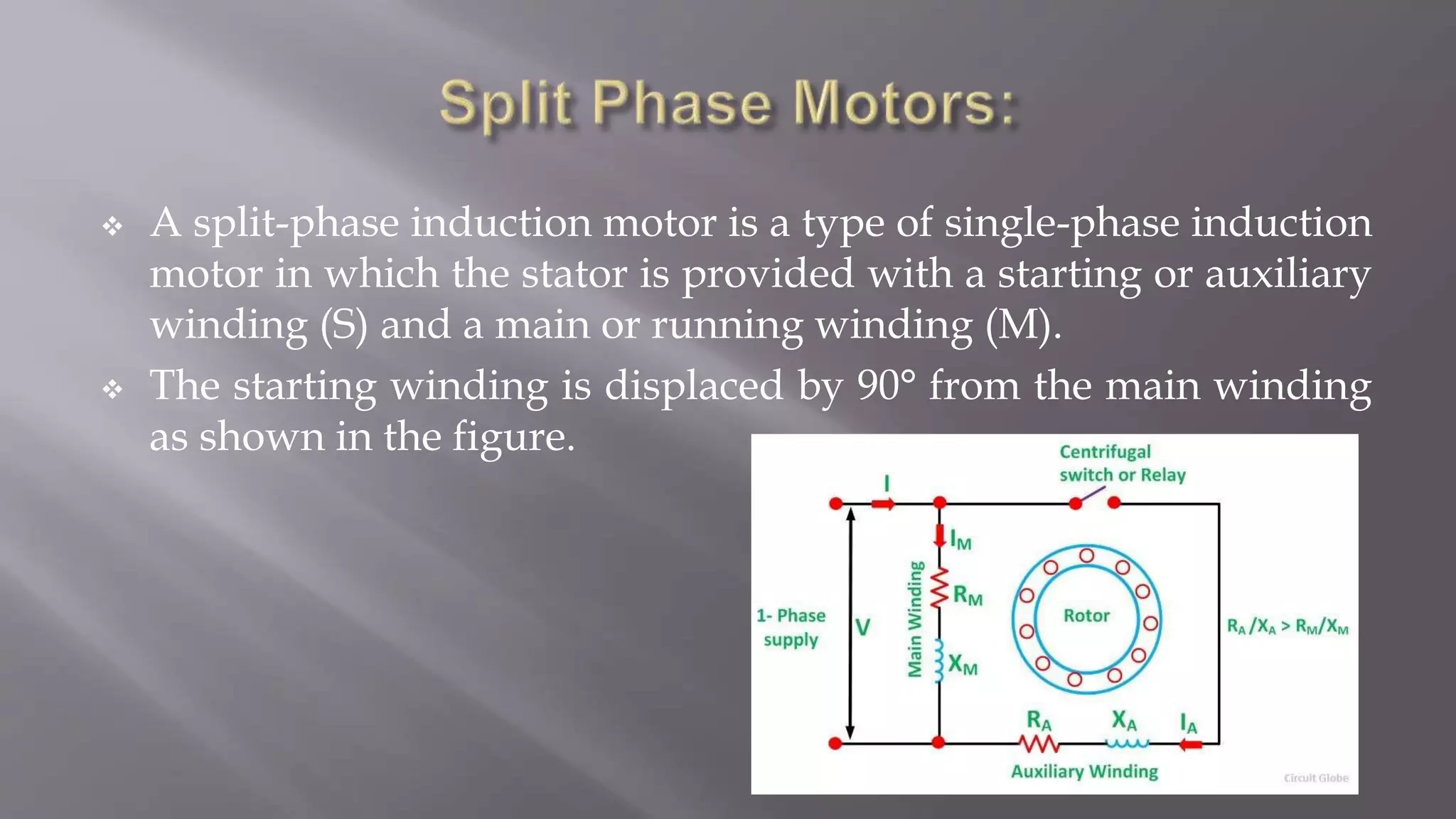
 A split-phase induction motor is a type of single-phase induction
motor in which the stator is provided with a starting or auxiliary
winding (S) and a main or running winding (M).
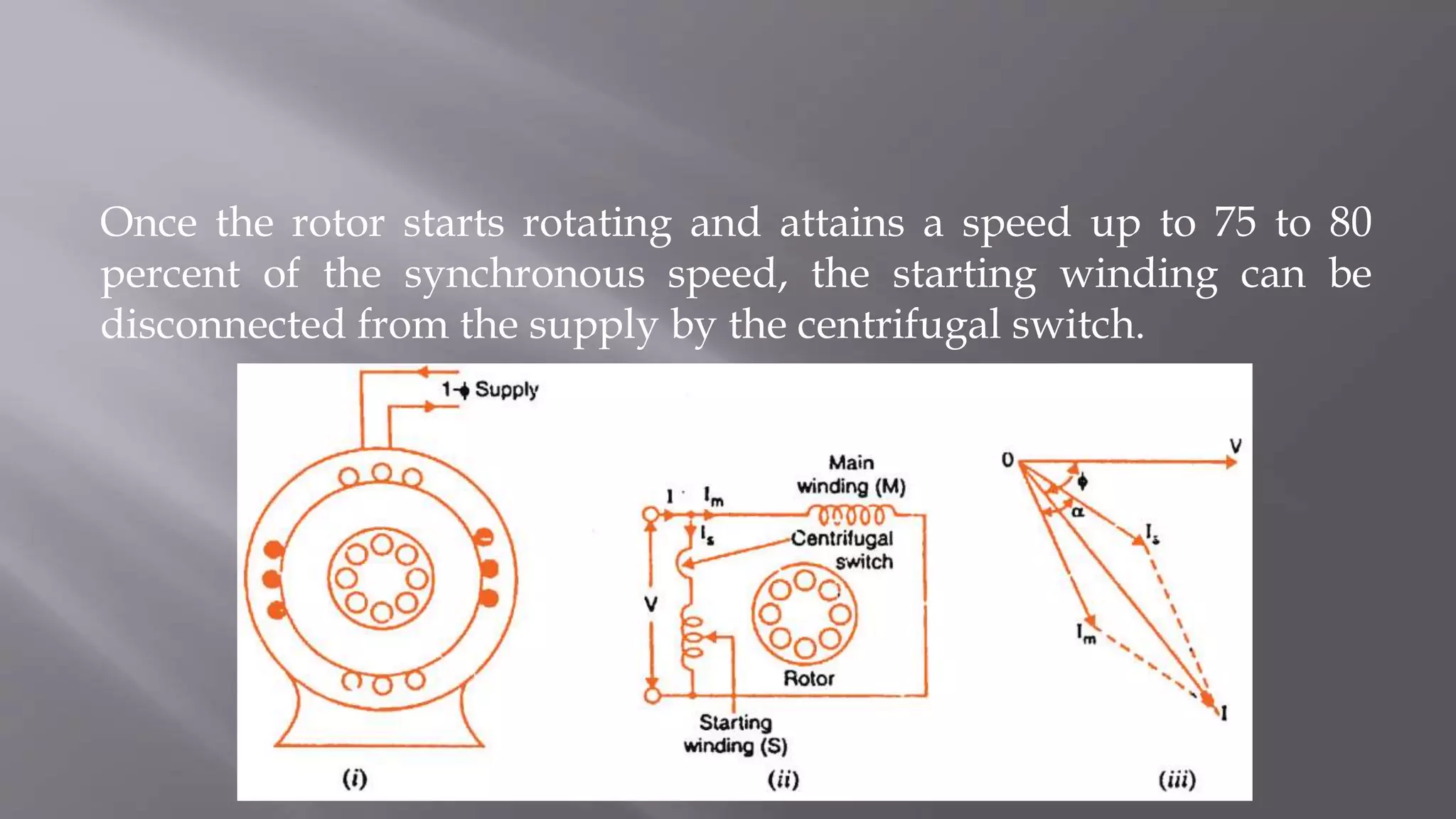
 The starting winding is displaced by 90° from the main winding
as shown in the figure.
 A split-phase induction motor are not self-starting because the
produced stator flux is alternating in nature and at the starting,
the two components of this flux cancel each other, and hence
there is no net torque.
In split-phase motor two windings named main winding and
starting winding. At the time of starting, both the main and
starting windings should be connected across the supply to
produce the rotating magnetic field, and when the supply is
given to the stator the rotating magnetic field is produced. As
the rotor bars are short-circuited, a current flows through them
producing a magnetic field. This magnetic field opposes the
revolving magnetic field and will combine with the main field to
produce a revolving field.
Once the rotor starts rotating and attains a speed up to 75 to 80
percent of the synchronous speed, the starting winding can be
disconnected from the supply by the centrifugal switch.
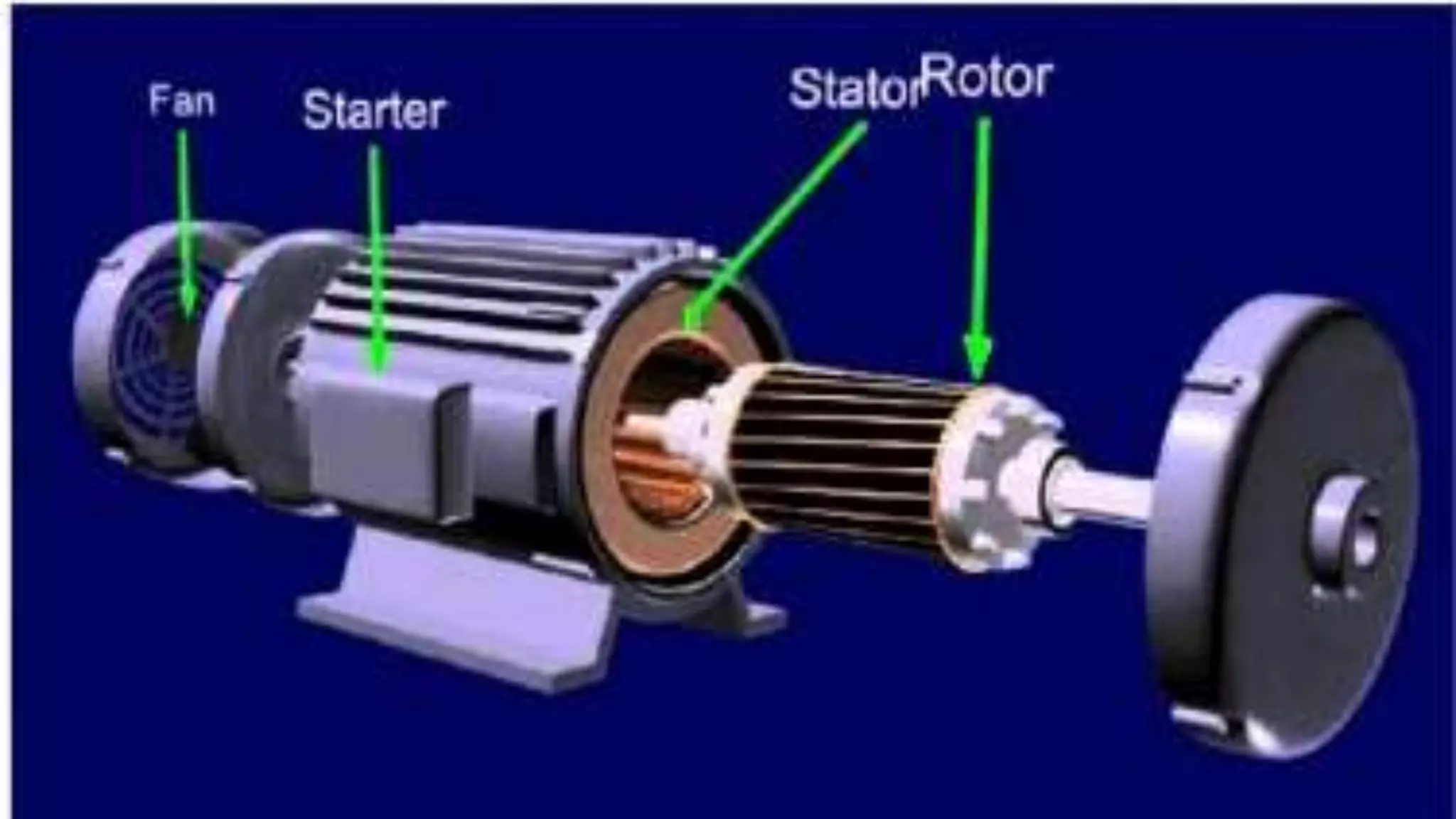
The split-phase induction motor basically consists of a stator, a
rotor, a centrifugal switch located inside the motor, two end shields
housing the bearings that support the rotor shaft. In addition to the
main winding or running winding, the stator of the split-phase
induction motor carries another winding called auxiliary winding
or starting winding. A centrifugal switch is connected in series with
auxiliary winding. The purpose of this switch is to disconnect the
auxiliary winding from the main circuit.
A split-phase motor has no capacitance in the auxiliary circuit. A
phase shift to the main current is achieved by using narrow
conductors to achieve high resistance to reactance ratio. Increasing
the resistance means that the auxiliary winding can only be used
during starting, otherwise, it would overheat. A split-phase motor
has significantly lower torque at starting due to the reduced phase
angle between main and auxiliary winding currents.
 Stator
 Frame
 Stator Winding
 Rotor
 Rotor Winding
 Cooling Fan
 Bearings
 Frame:
Frame provides Mechanical support to the stator and rotor. It made
from casting material.
 Stator:
It is stationary part of induction motor. It consist stator winding. It
is housed on the motor frame.
 Stator Winding:
Star winding and Delta winding
 Rotor:
It is rotating part of machine. It housed on the shaft of the
induction motor. It has two ends one is driving end and the other
one is non-driving end. Mechanical load is connecting with driving
end while cooling fan is connected on non-driving end. Both the
end is connected with bearing for free rotation means of reduced
friction losses.
 Rotor Winding:
• Squirrel cage induction motor
• Slip ring induction motor
The characteristics of split-phase induction motors are given as follows −
 The split-phase motor has the starting current about 7 to 8 times of the full
load current.
 The starting torque of a split-phase induction motor is about 1.5 times of
the full-load torque.
 The maximum or pull out torque is about 2.5 times of the full-load torque at
about 75% of synchronous speed.
 Split-phase induction motors are less expensive, thus, they are very popular
motors in the market.
 To drive fans
 In washing machines
 Oil burners
 Smalls machine tools
 Blowers and centrifugal pumps
 Food mixers and grinders
The advantages of a split-phase induction motor include the
following.
 The motor is economical and installed in many domestic
appliances.
 It can be changed once it wears out before trying to reverse it.
 These are available in different frame sizes so that they can be
placed effortlessly in most of the machines.
The disadvantages of a split-phase induction motor include the
following.
 These motors have less starting torque, so not suitable for above
1 KW.
 The disadvantage of this motor is power output and efficiency.
As compared to a 3-phase motor, these are unsuccessful while
changing the energy from electrical to working.
 These motors rely simply on the different resistance &
inductance of the starting winding.
 These motors are used where high starting torque is mandatory
like an air compressor
A split-phase induction motor is a type of single-phase
induction motor in which the stator is provided with a
starting or auxiliary winding (S) and a main or running
winding (M). The starting winding is displaced by 90°
from the main winding. It is not self-start. Split-phase
induction motors are less expensive. These are available in
different frame sizes .
Split phase motor.pptx

Split phase motor.pptx

  • 1.
    Presentation: Split Phase Motor GroupMembers: Kamran Ali (ADP-002) Ameer Hamza (BS-004) Abdul Bilal (BS-006) Furqan Habib (BS-007)
  • 2.
     A split-phaseinduction motor is a type of single-phase induction motor in which the stator is provided with a starting or auxiliary winding (S) and a main or running winding (M).  The starting winding is displaced by 90° from the main winding as shown in the figure.
  • 3.
     A split-phaseinduction motor are not self-starting because the produced stator flux is alternating in nature and at the starting, the two components of this flux cancel each other, and hence there is no net torque.
  • 5.
    In split-phase motortwo windings named main winding and starting winding. At the time of starting, both the main and starting windings should be connected across the supply to produce the rotating magnetic field, and when the supply is given to the stator the rotating magnetic field is produced. As the rotor bars are short-circuited, a current flows through them producing a magnetic field. This magnetic field opposes the revolving magnetic field and will combine with the main field to produce a revolving field.
  • 6.
    Once the rotorstarts rotating and attains a speed up to 75 to 80 percent of the synchronous speed, the starting winding can be disconnected from the supply by the centrifugal switch.
  • 7.
    The split-phase inductionmotor basically consists of a stator, a rotor, a centrifugal switch located inside the motor, two end shields housing the bearings that support the rotor shaft. In addition to the main winding or running winding, the stator of the split-phase induction motor carries another winding called auxiliary winding or starting winding. A centrifugal switch is connected in series with auxiliary winding. The purpose of this switch is to disconnect the auxiliary winding from the main circuit.
  • 8.
    A split-phase motorhas no capacitance in the auxiliary circuit. A phase shift to the main current is achieved by using narrow conductors to achieve high resistance to reactance ratio. Increasing the resistance means that the auxiliary winding can only be used during starting, otherwise, it would overheat. A split-phase motor has significantly lower torque at starting due to the reduced phase angle between main and auxiliary winding currents.
  • 9.
     Stator  Frame Stator Winding  Rotor  Rotor Winding  Cooling Fan  Bearings
  • 10.
     Frame: Frame providesMechanical support to the stator and rotor. It made from casting material.  Stator: It is stationary part of induction motor. It consist stator winding. It is housed on the motor frame.  Stator Winding: Star winding and Delta winding
  • 11.
     Rotor: It isrotating part of machine. It housed on the shaft of the induction motor. It has two ends one is driving end and the other one is non-driving end. Mechanical load is connecting with driving end while cooling fan is connected on non-driving end. Both the end is connected with bearing for free rotation means of reduced friction losses.  Rotor Winding: • Squirrel cage induction motor • Slip ring induction motor
  • 12.
    The characteristics ofsplit-phase induction motors are given as follows −  The split-phase motor has the starting current about 7 to 8 times of the full load current.  The starting torque of a split-phase induction motor is about 1.5 times of the full-load torque.  The maximum or pull out torque is about 2.5 times of the full-load torque at about 75% of synchronous speed.  Split-phase induction motors are less expensive, thus, they are very popular motors in the market.
  • 14.
     To drivefans  In washing machines  Oil burners  Smalls machine tools  Blowers and centrifugal pumps  Food mixers and grinders
  • 15.
    The advantages ofa split-phase induction motor include the following.  The motor is economical and installed in many domestic appliances.  It can be changed once it wears out before trying to reverse it.  These are available in different frame sizes so that they can be placed effortlessly in most of the machines.
  • 16.
    The disadvantages ofa split-phase induction motor include the following.  These motors have less starting torque, so not suitable for above 1 KW.  The disadvantage of this motor is power output and efficiency. As compared to a 3-phase motor, these are unsuccessful while changing the energy from electrical to working.  These motors rely simply on the different resistance & inductance of the starting winding.  These motors are used where high starting torque is mandatory like an air compressor
  • 17.
    A split-phase inductionmotor is a type of single-phase induction motor in which the stator is provided with a starting or auxiliary winding (S) and a main or running winding (M). The starting winding is displaced by 90° from the main winding. It is not self-start. Split-phase induction motors are less expensive. These are available in different frame sizes .