THE WAY
 THE BRAIN
LEARNS BEST


    www.humanikaconsulting.com
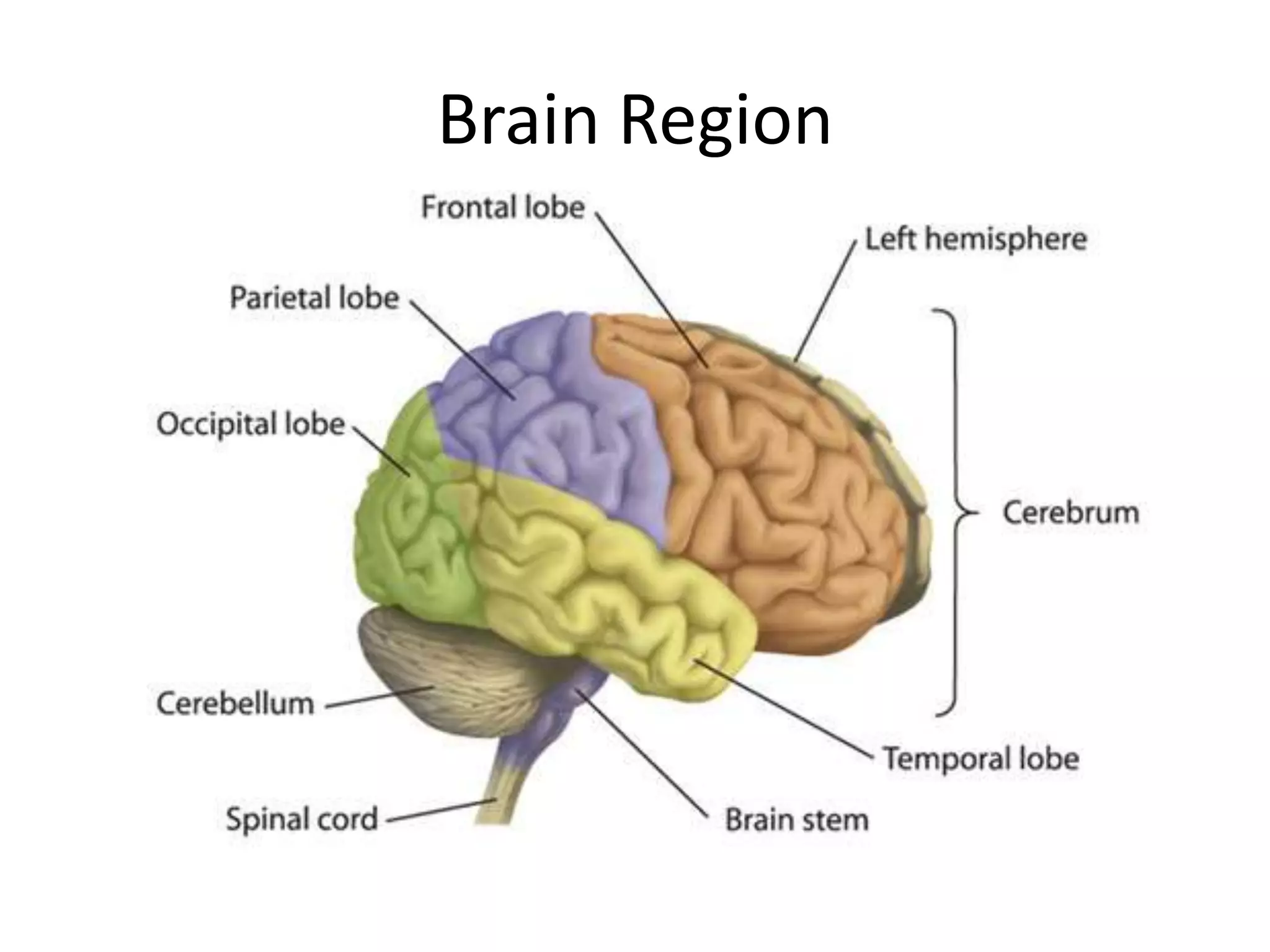
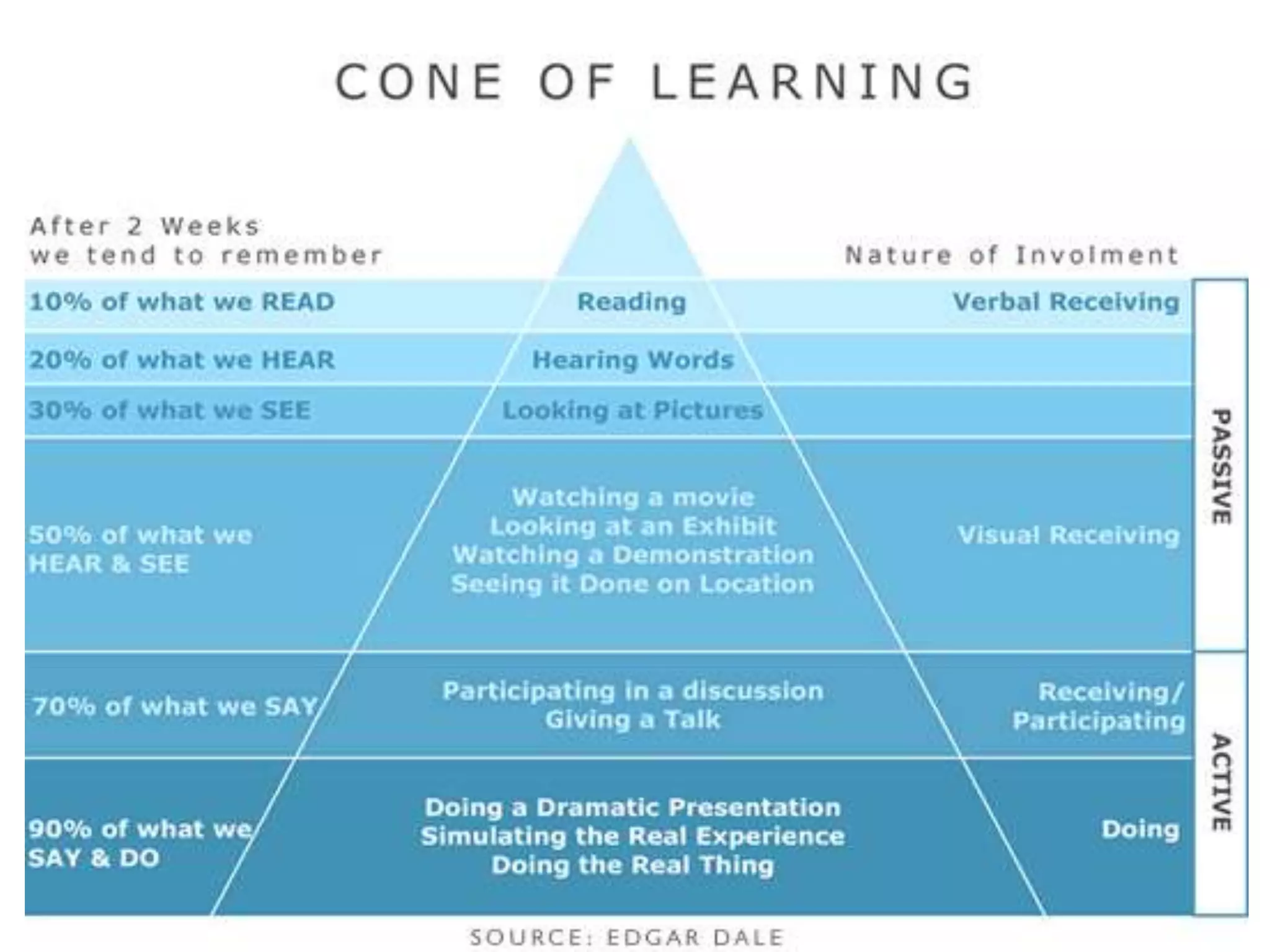
Brain Region
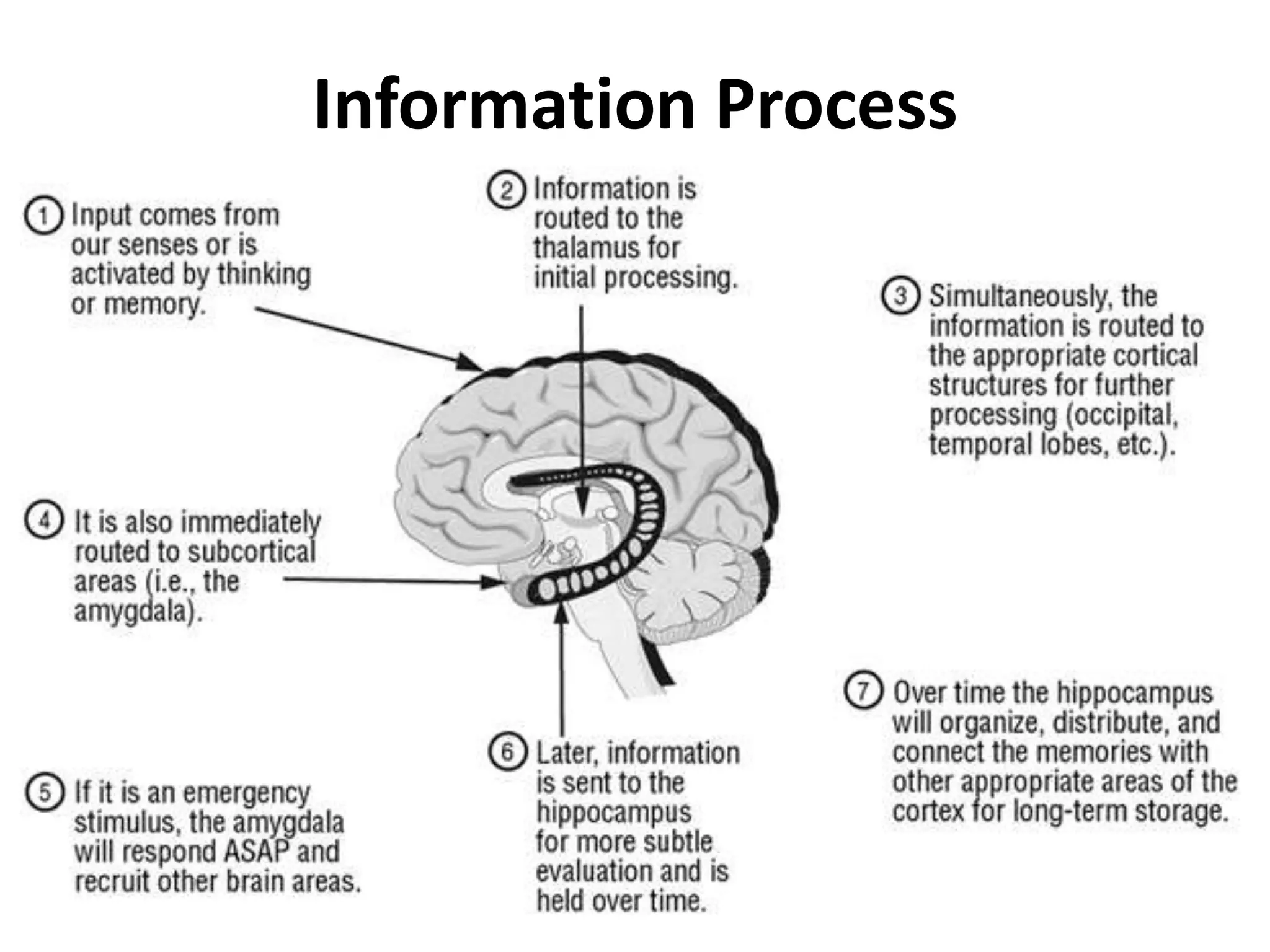
Information Process
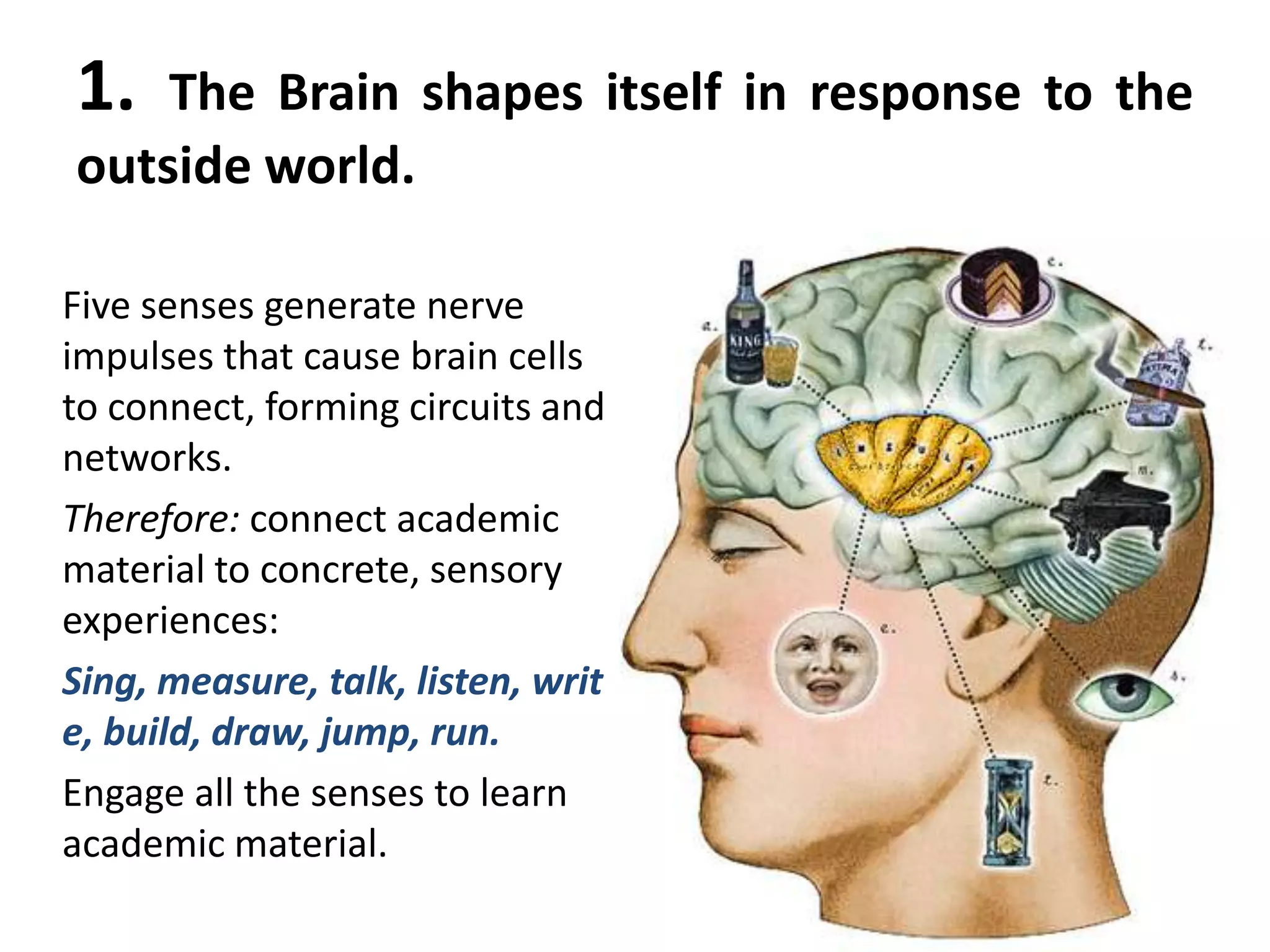
1.  The Brain shapes itself in response to the
outside world.

Five senses generate nerve
impulses that cause brain cells
to connect, forming circuits and
networks.
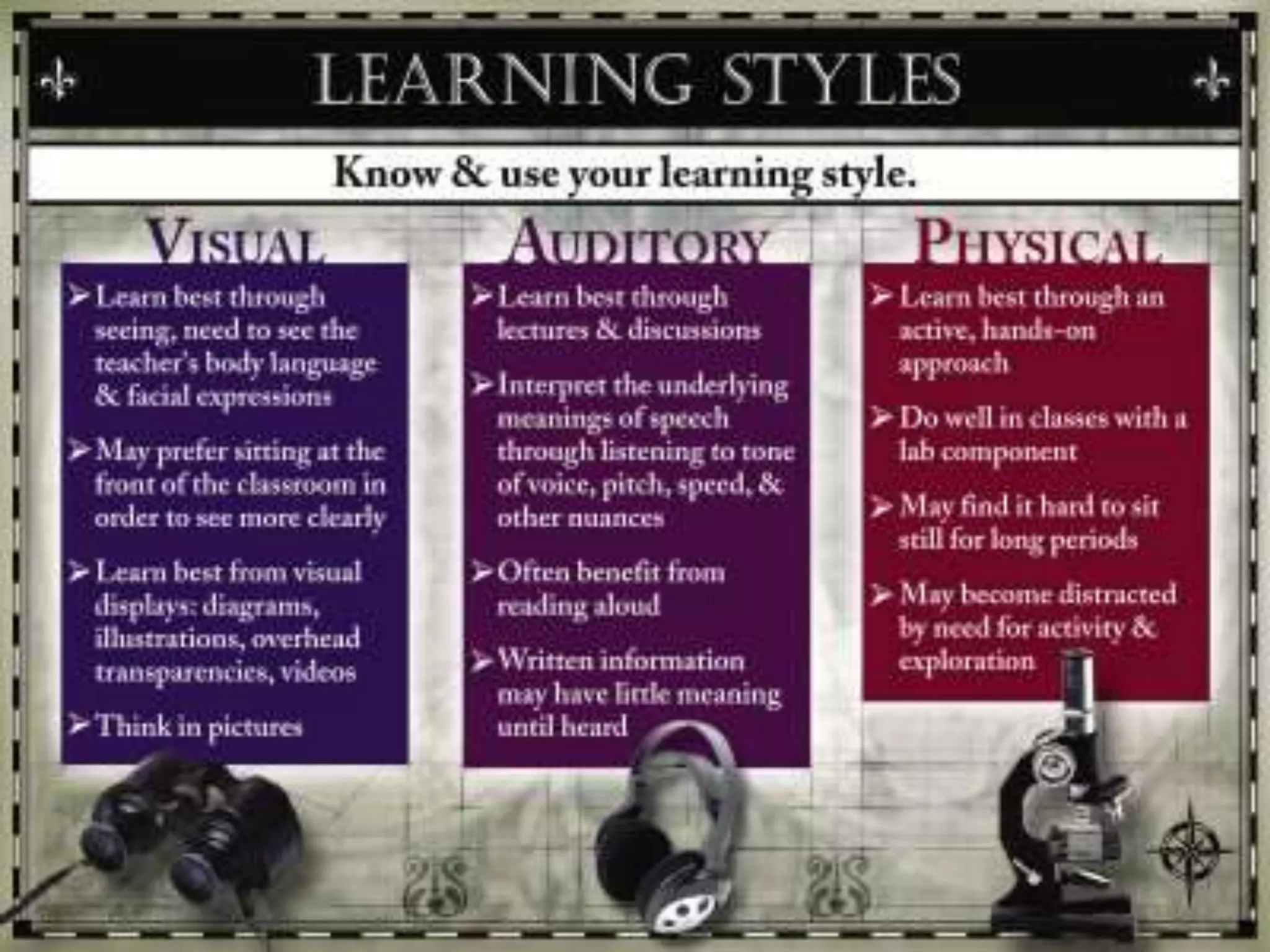
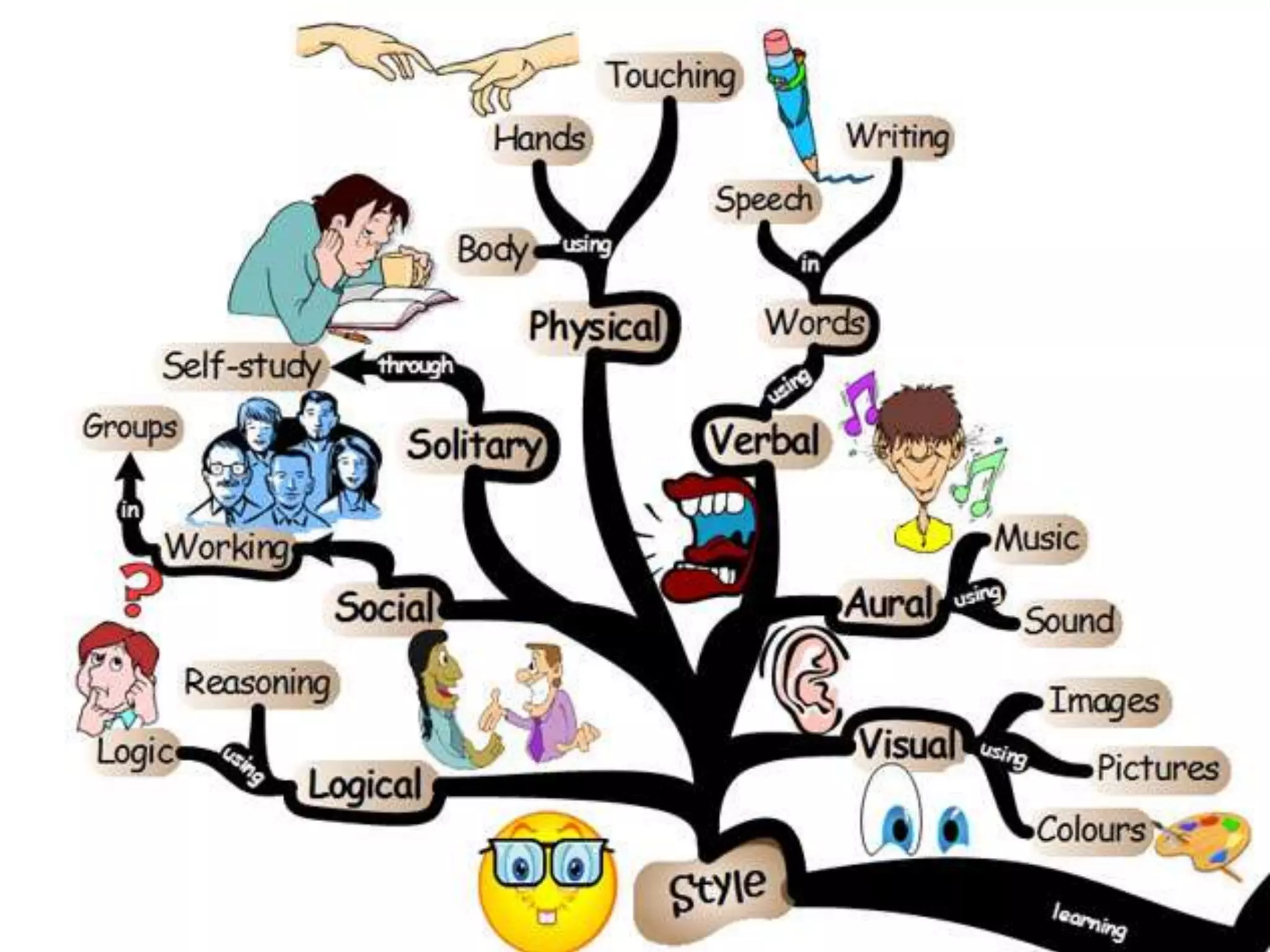
Therefore: connect academic
material to concrete, sensory
experiences:
Sing, measure, talk, listen, writ
e, build, draw, jump, run.
Engage all the senses to learn
academic material.
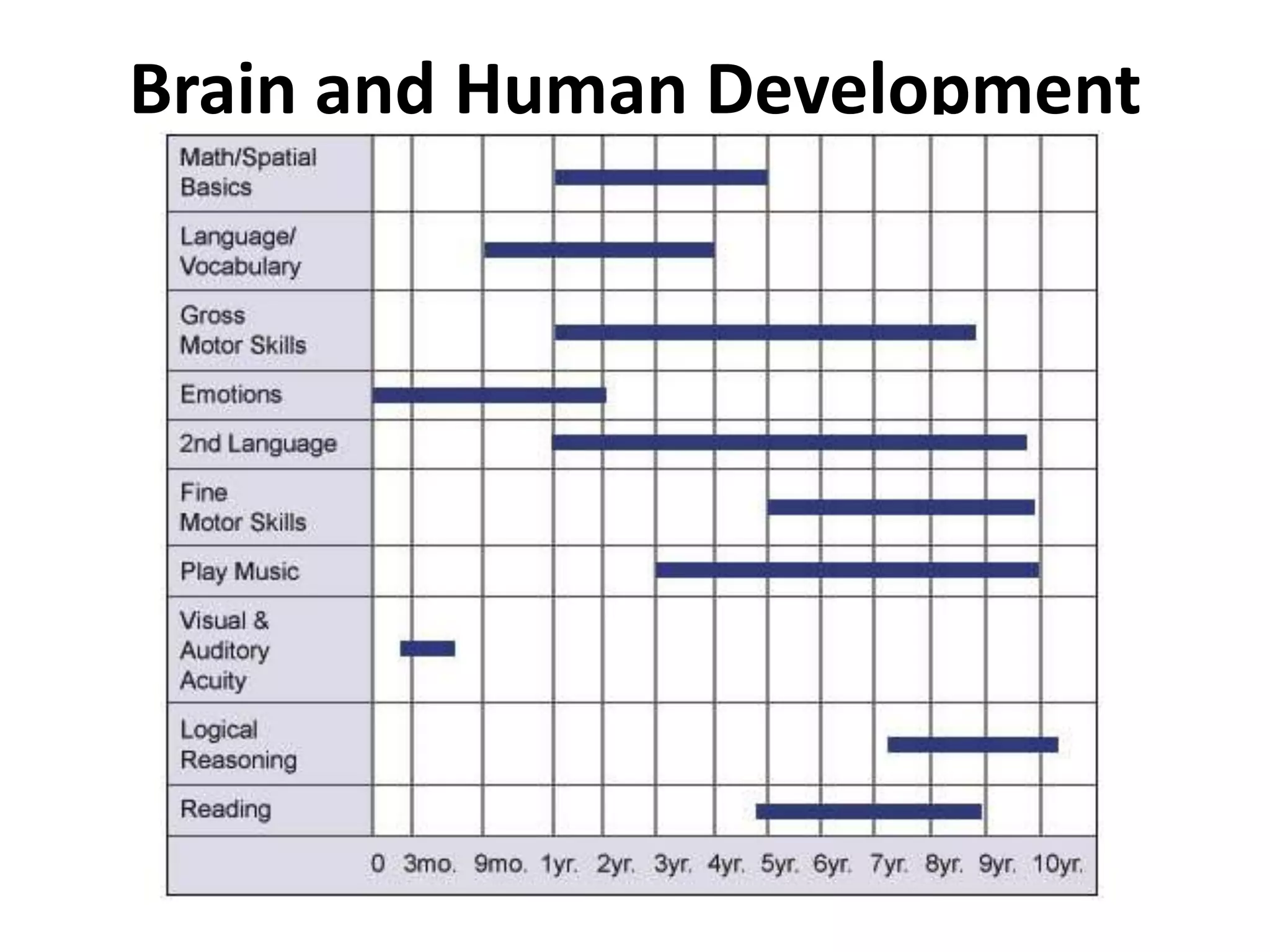
Brain and Human Development
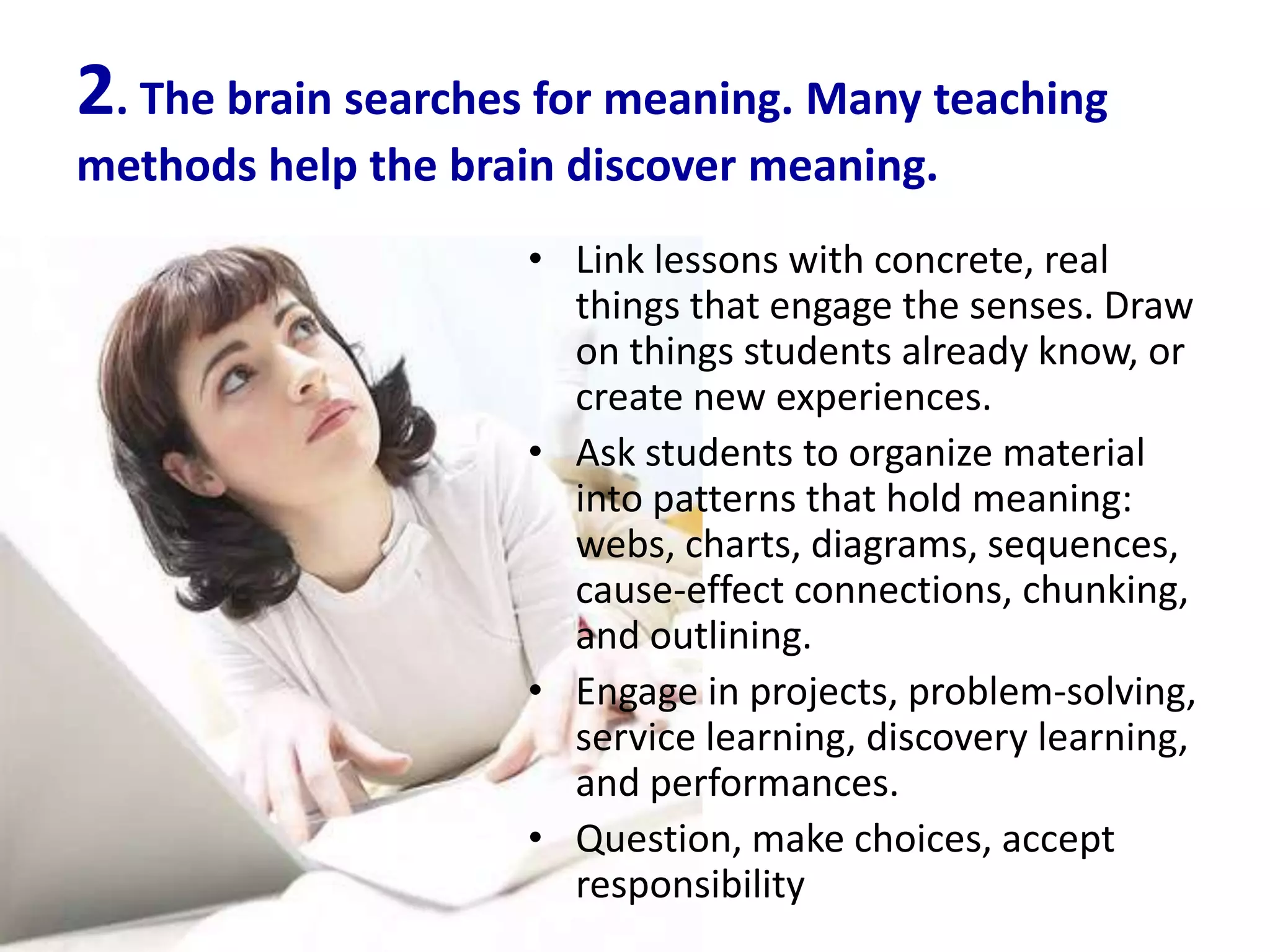
2. The brain searches for meaning. Many teaching
methods help the brain discover meaning.
                     • Link lessons with concrete, real
                       things that engage the senses. Draw
                       on things students already know, or
                       create new experiences.
                     • Ask students to organize material
                       into patterns that hold meaning:
                       webs, charts, diagrams, sequences,
                       cause-effect connections, chunking,
                       and outlining.
                     • Engage in projects, problem-solving,
                       service learning, discovery learning,
                       and performances.
                     • Question, make choices, accept
                       responsibility
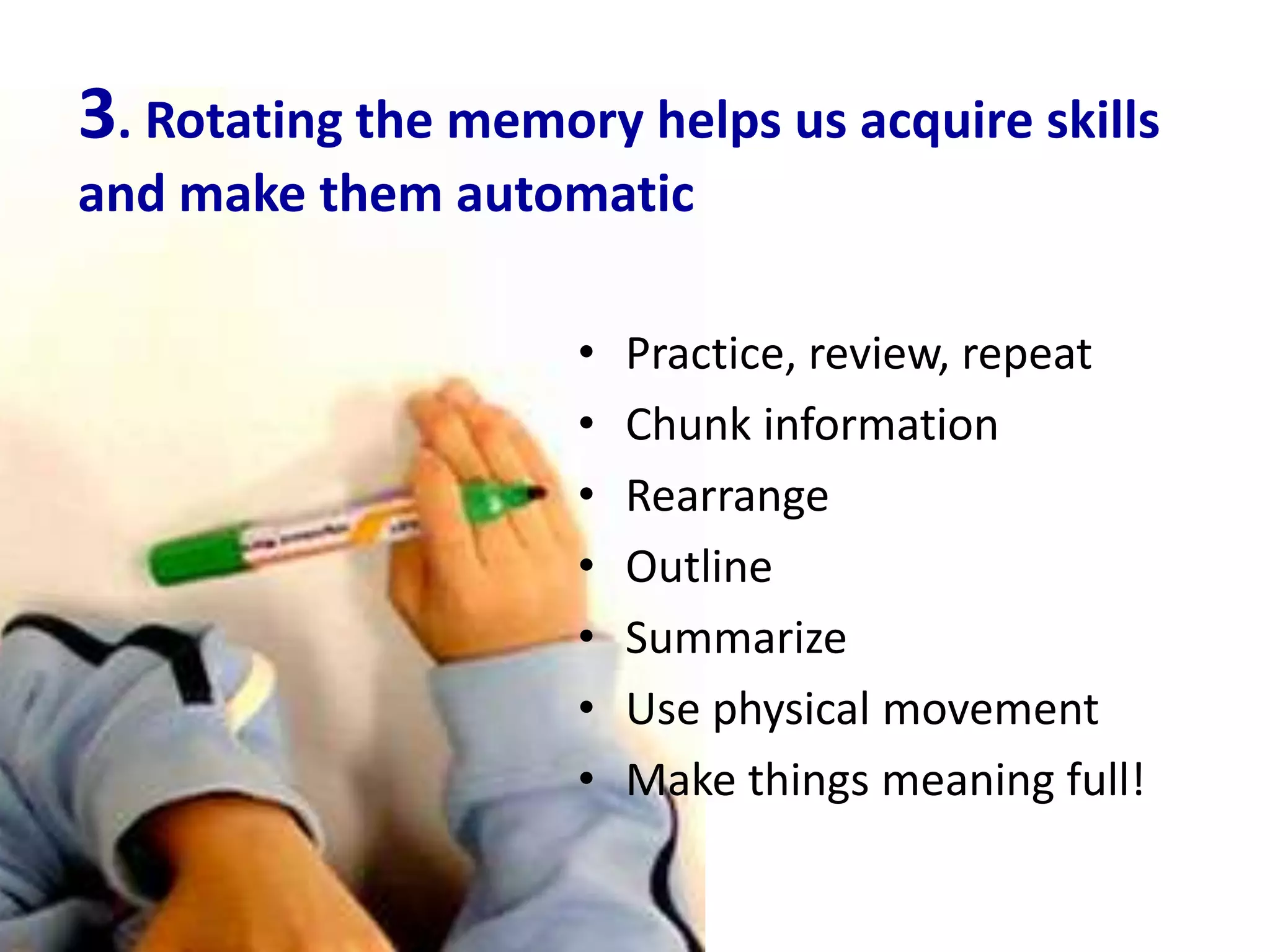
3. Rotating the memory helps us acquire skills
and make them automatic

                     •   Practice, review, repeat
                     •   Chunk information
                     •   Rearrange
                     •   Outline
                     •   Summarize
                     •   Use physical movement
                     •   Make things meaning full!
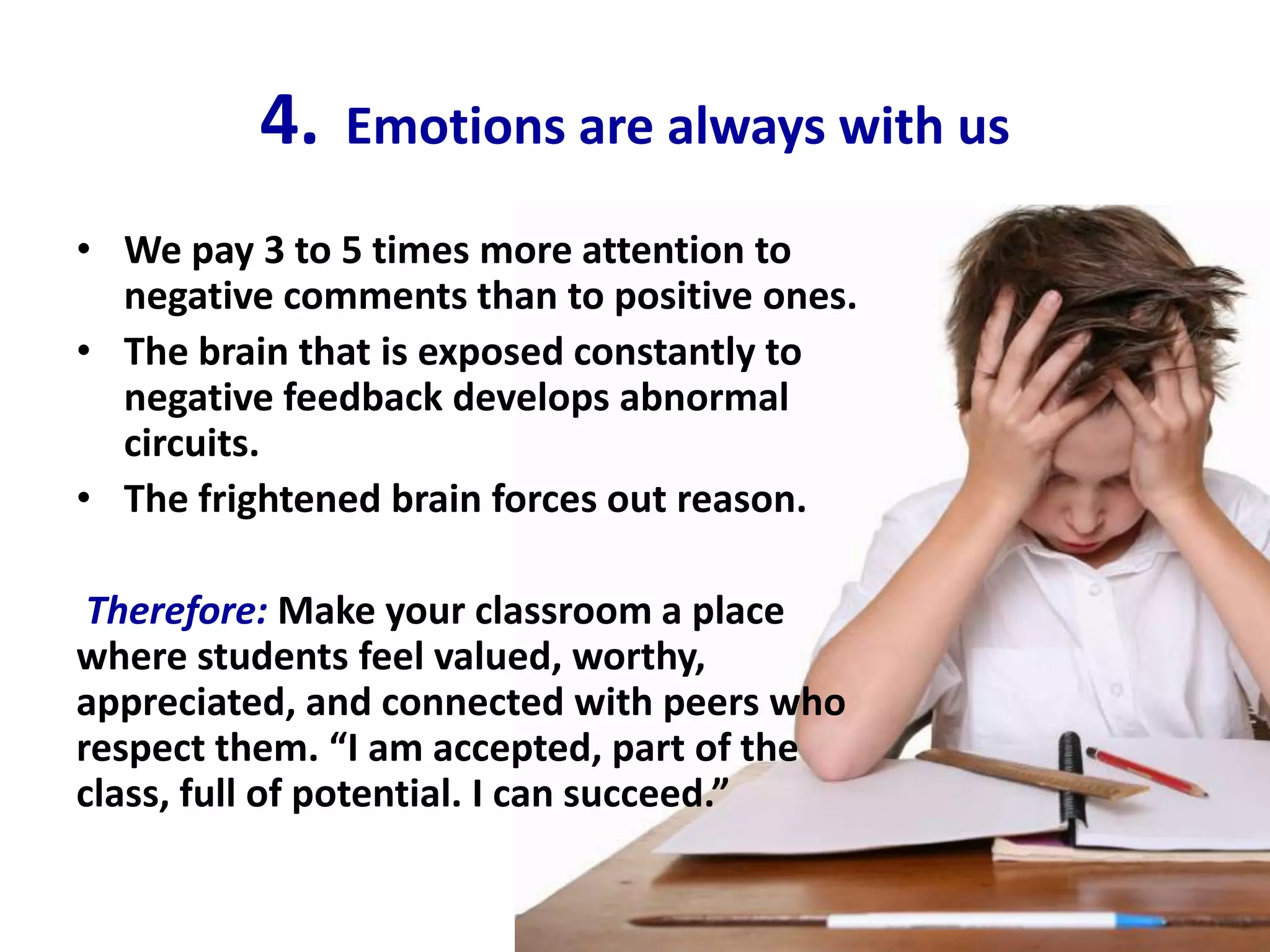
4.   Emotions are always with us

• We pay 3 to 5 times more attention to
  negative comments than to positive ones.
• The brain that is exposed constantly to
  negative feedback develops abnormal
  circuits.
• The frightened brain forces out reason.

 Therefore: Make your classroom a place
where students feel valued, worthy,
appreciated, and connected with peers who
respect them. “I am accepted, part of the
class, full of potential. I can succeed.”
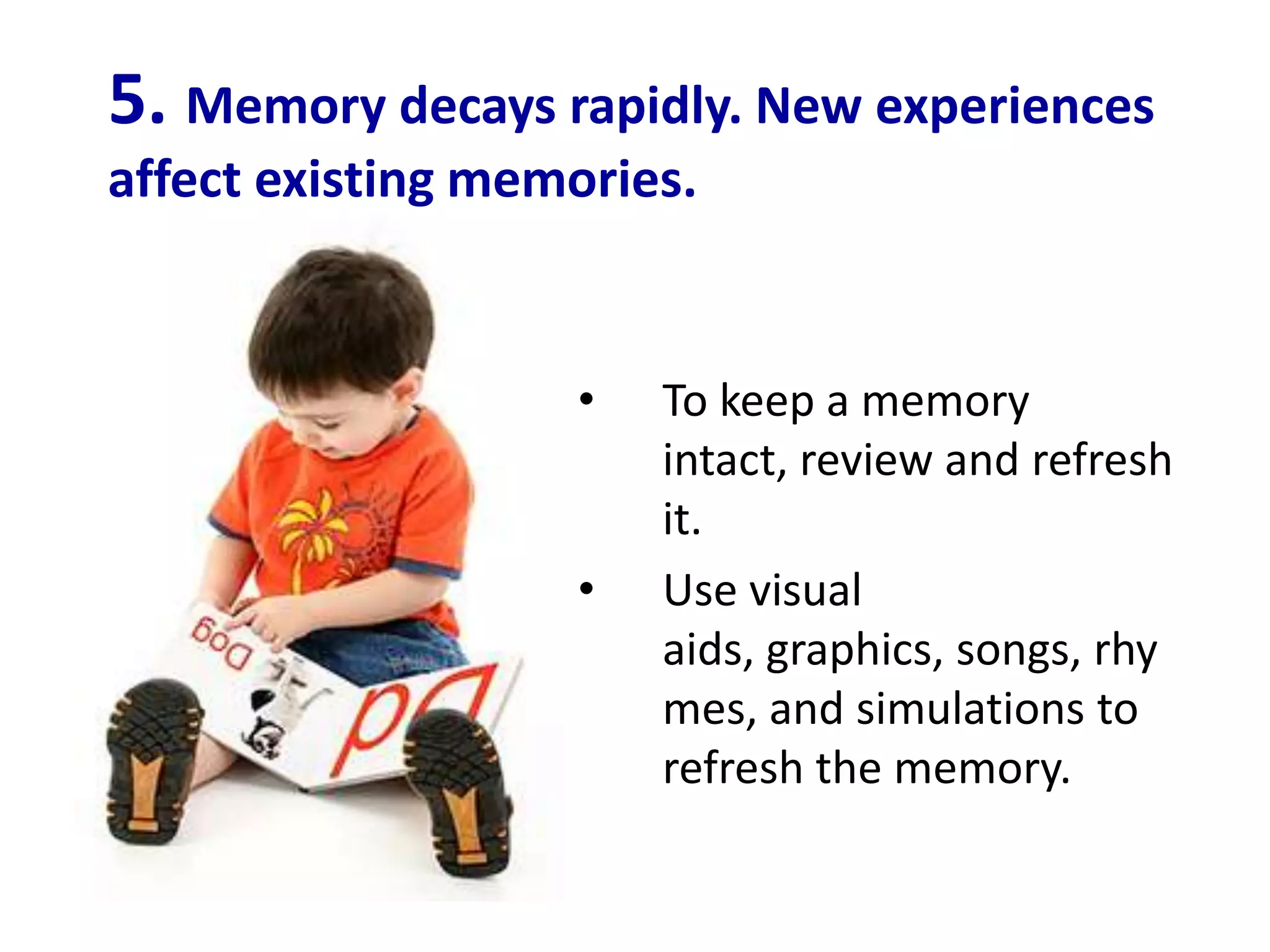
5. Memory decays rapidly. New experiences
affect existing memories.


                   •   To keep a memory
                       intact, review and refresh
                       it.
                   •   Use visual
                       aids, graphics, songs, rhy
                       mes, and simulations to
                       refresh the memory.
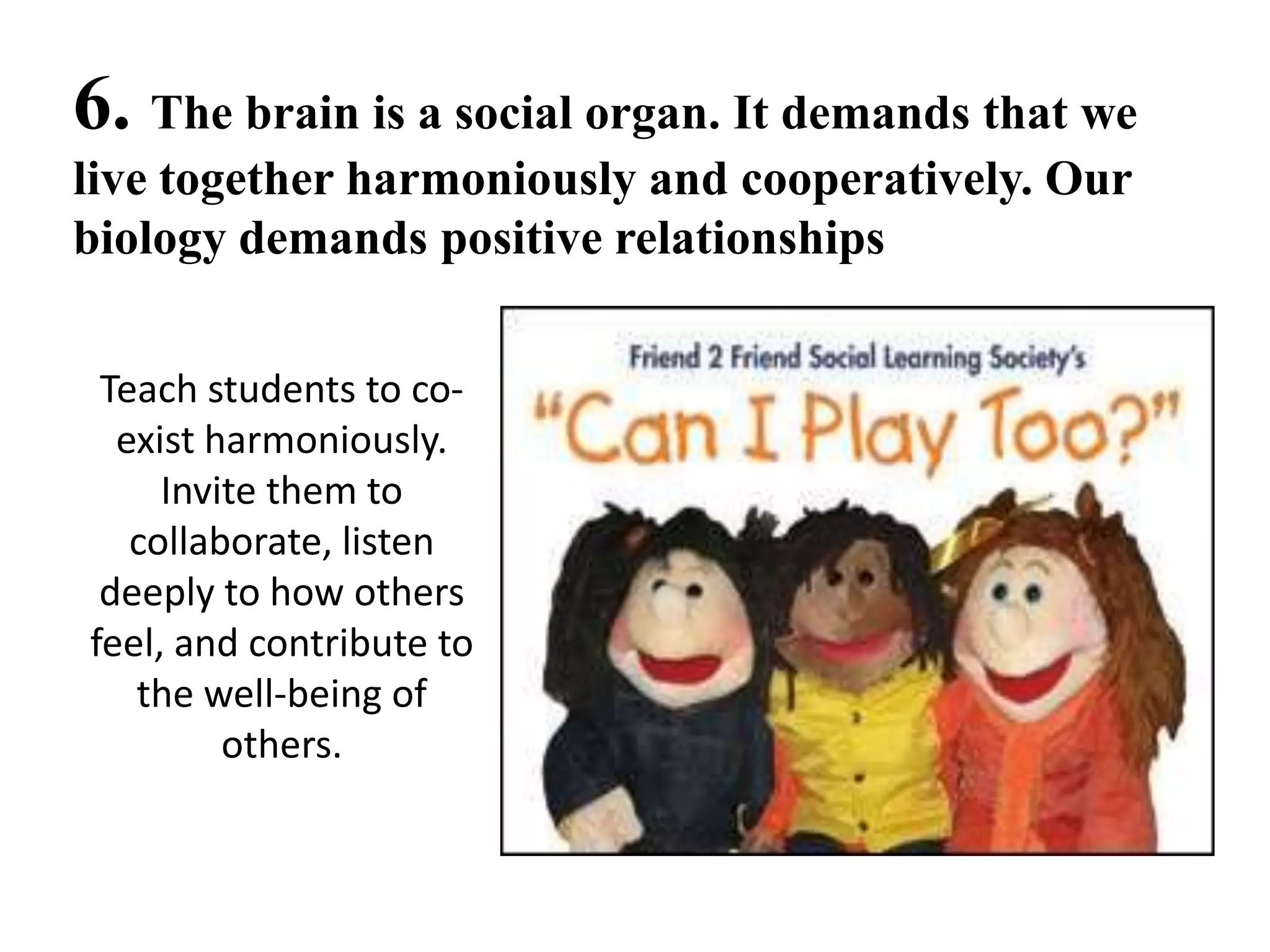
6. The brain is a social organ. It demands that we
live together harmoniously and cooperatively. Our
biology demands positive relationships


 Teach students to co-
  exist harmoniously.
     Invite them to
   collaborate, listen
 deeply to how others
feel, and contribute to
   the well-being of
         others.
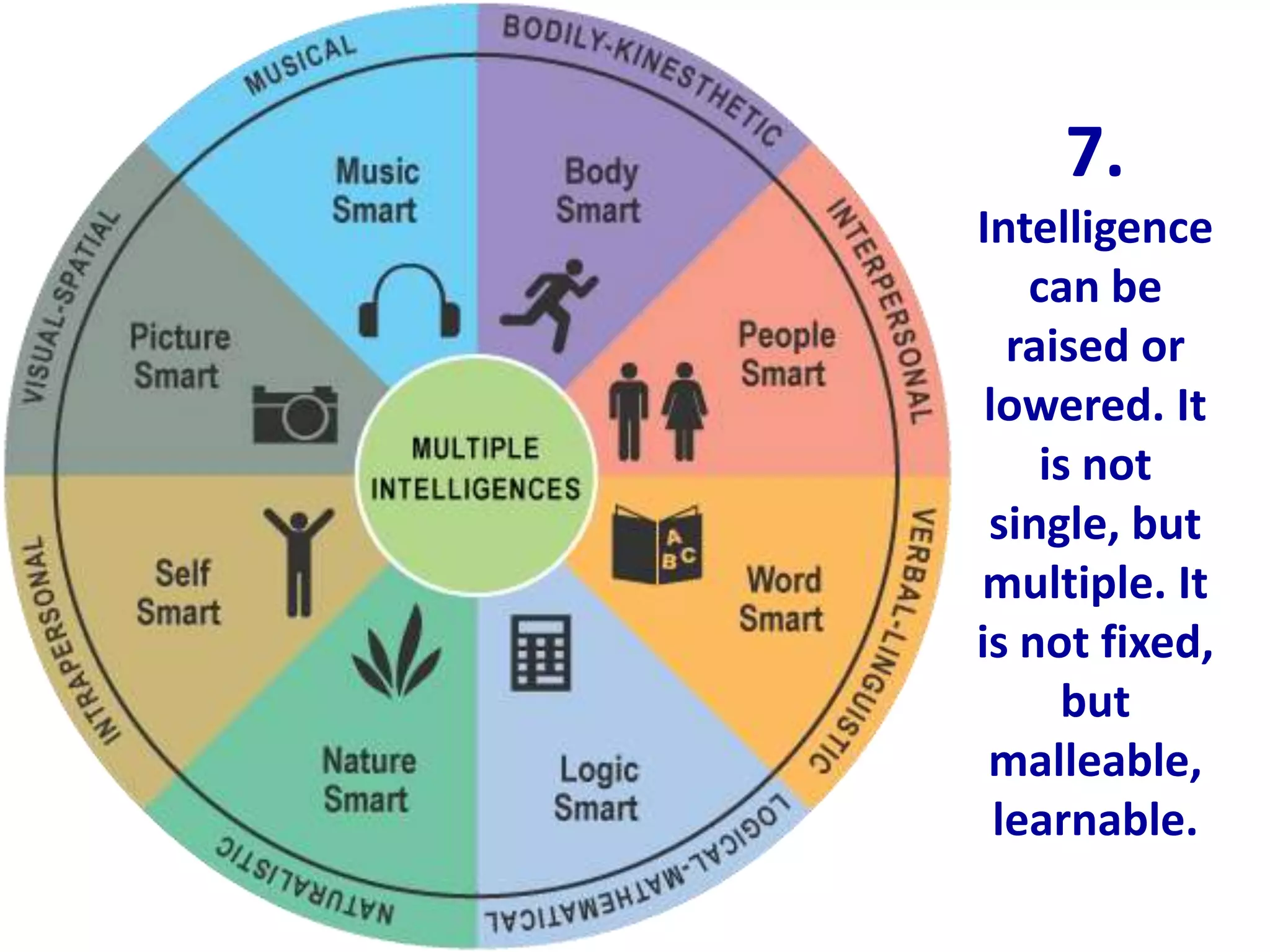
7.
Intelligence
    can be
   raised or
 lowered. It
     is not
 single, but
multiple. It
is not fixed,
      but
 malleable,
  learnable.
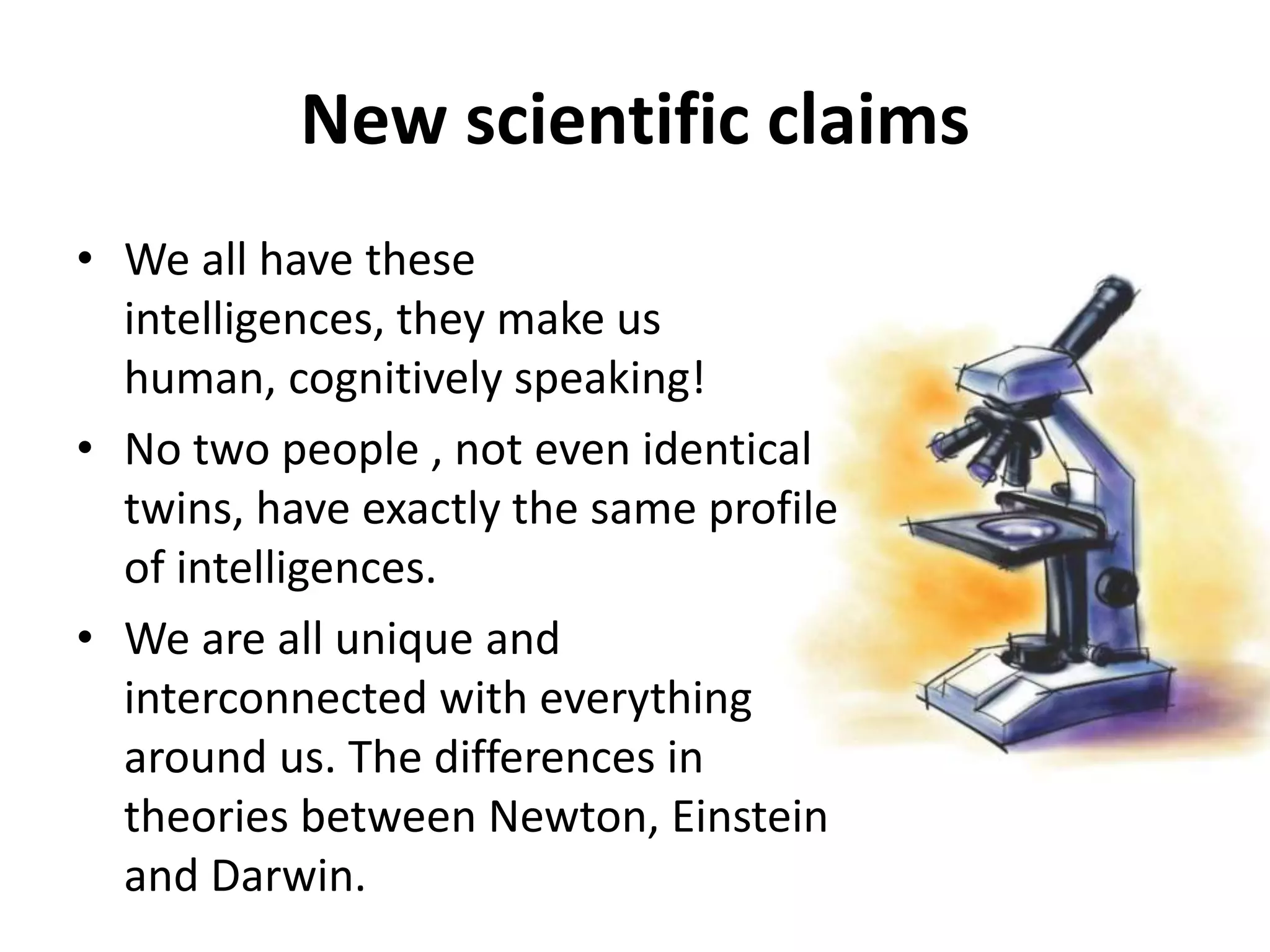
New scientific claims
• We all have these
  intelligences, they make us
  human, cognitively speaking!
• No two people , not even identical
  twins, have exactly the same profile
  of intelligences.
• We are all unique and
  interconnected with everything
  around us. The differences in
  theories between Newton, Einstein
  and Darwin.
Three trust/facts
     1.   Globalization, the easy move of
          human beings, money, fashion
          and globalize thinking is a fact.
          The whole world in coming is
          nearby.
     2.   The biological revolution, like this
          knowledge about how brains are
          working.
     3.   The digital revolution, virtual,
          fast and virtual realities. Its all to
          bee seen on the screen!
The five Minds for the Future

1. The disciplined mind
2. The synthesizing mind, system thinking in
   school systems
3. The creating mind.
4. The respectful mind
5. Ethical mind
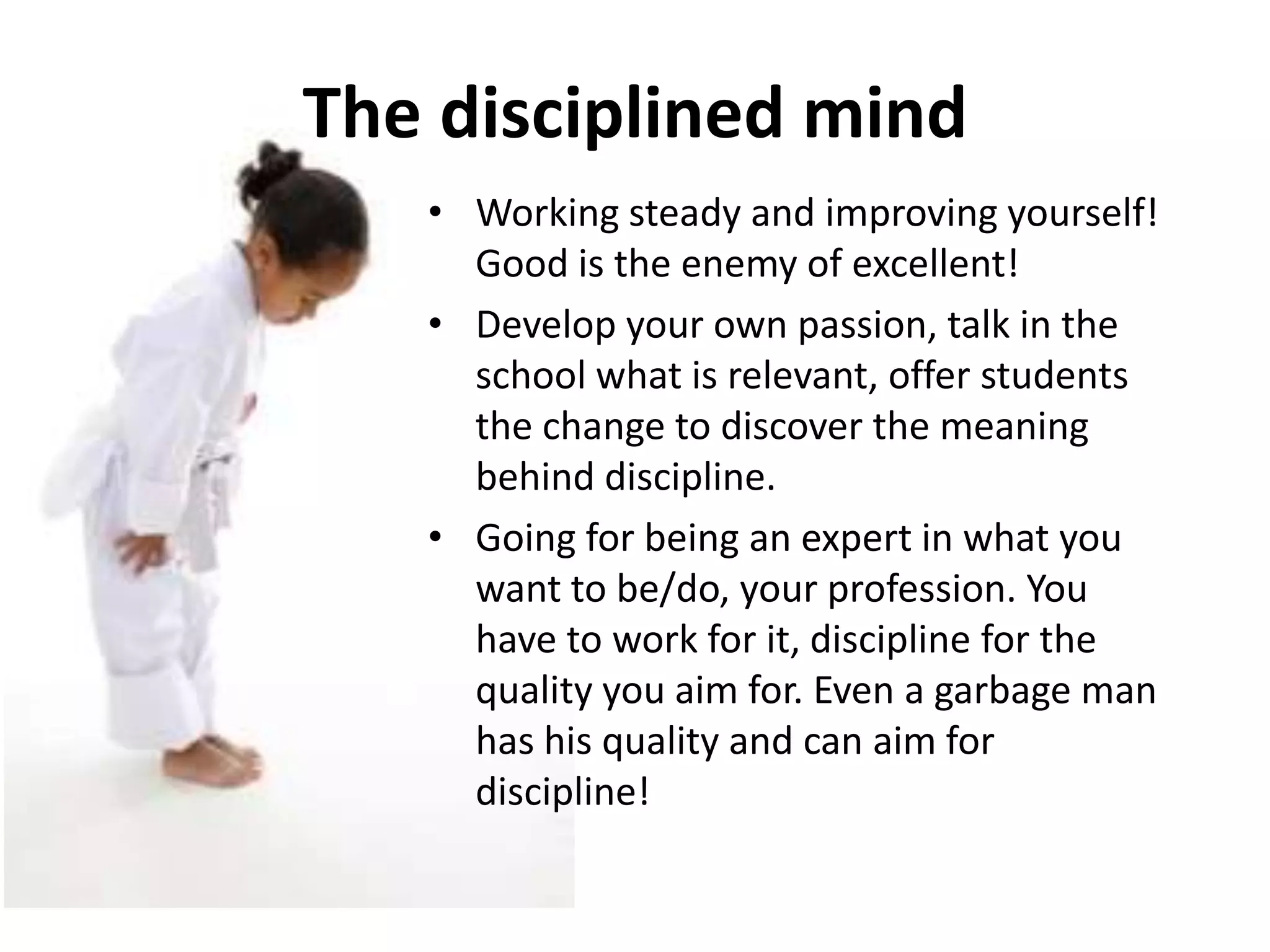
The disciplined mind
   • Working steady and improving yourself!
     Good is the enemy of excellent!
   • Develop your own passion, talk in the
     school what is relevant, offer students
     the change to discover the meaning
     behind discipline.
   • Going for being an expert in what you
     want to be/do, your profession. You
     have to work for it, discipline for the
     quality you aim for. Even a garbage man
     has his quality and can aim for
     discipline!
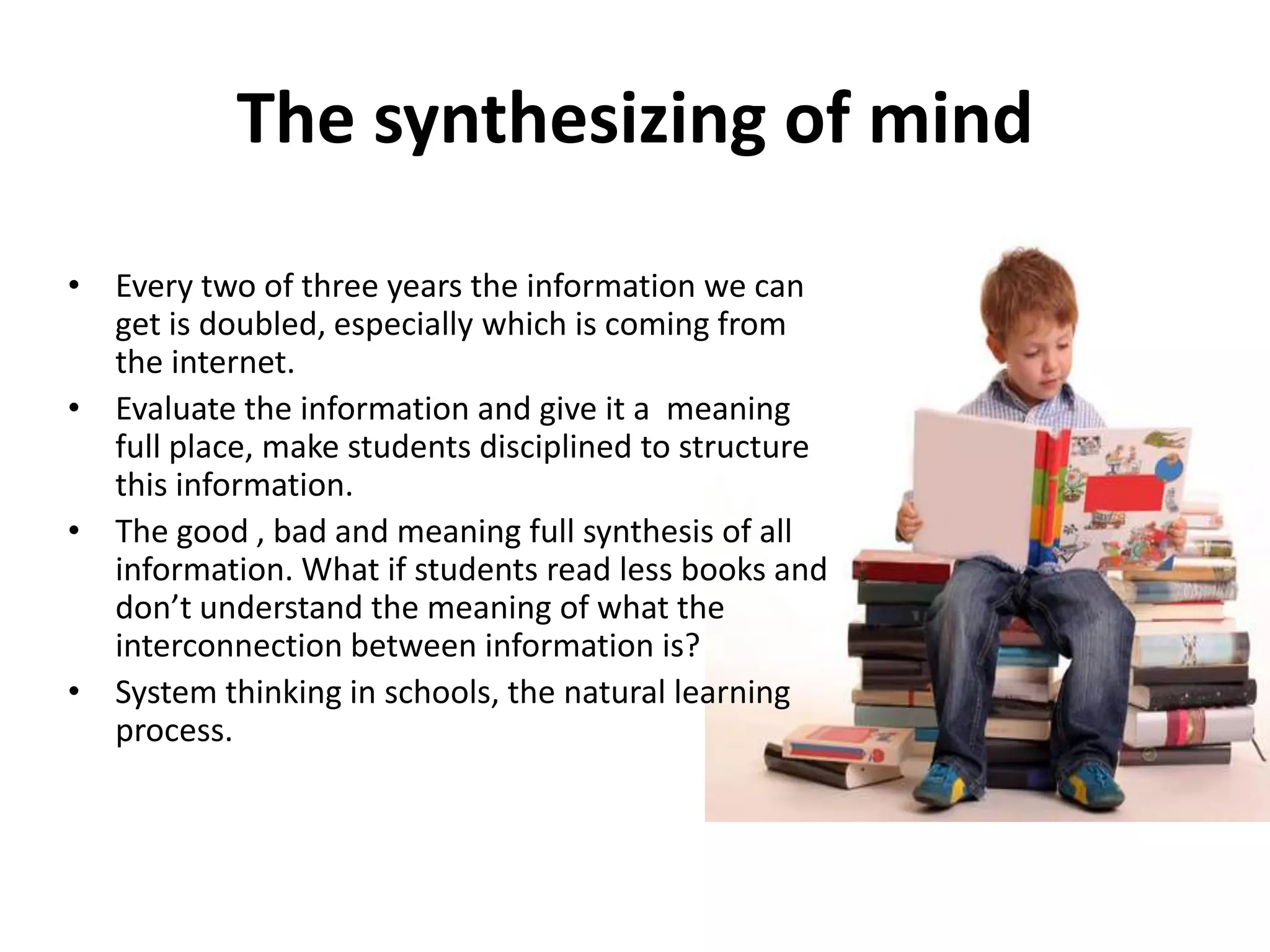
The synthesizing of mind
• Every two of three years the information we can
  get is doubled, especially which is coming from
  the internet.
• Evaluate the information and give it a meaning
  full place, make students disciplined to structure
  this information.
• The good , bad and meaning full synthesis of all
  information. What if students read less books and
  don’t understand the meaning of what the
  interconnection between information is?
• System thinking in schools, the natural learning
  process.
• Going beyond the known-thinking outside the box. Creative encourage,
  right or wrong. If you can see the whole pathway in front of you, you
  are probably going the wrong way!
• Good questions, new questions.
• Creativity on individual- and team level!
• Fostering creativity in the school instead of discipline. That is hard to
  believe, but new learning is connected with creativity of students in
  discipline to them self!
• The creating mind of a five year old kid is the highest level a human
  brain can reach!
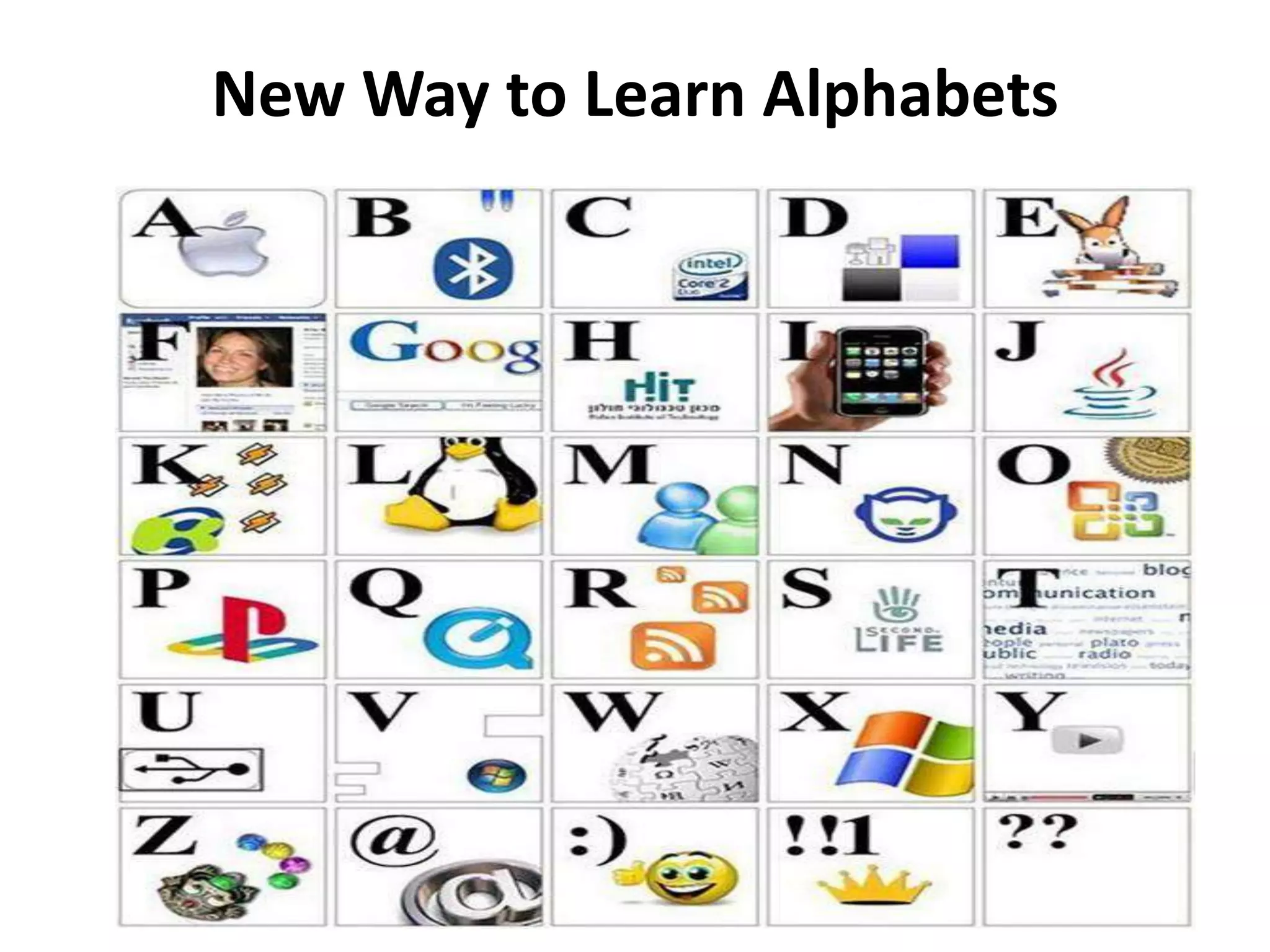
New Way to Learn Alphabets
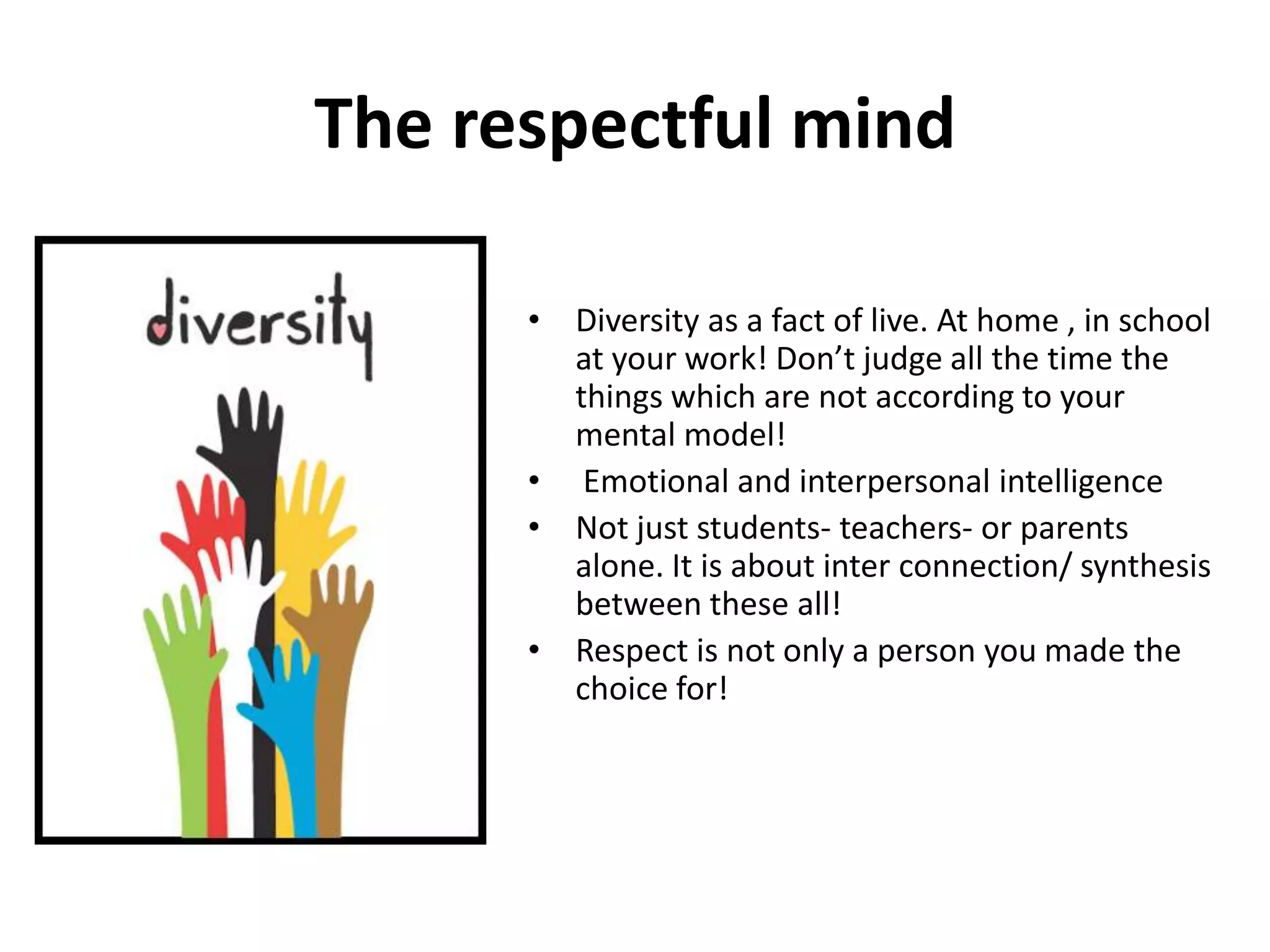
The respectful mind

      • Diversity as a fact of live. At home , in school
        at your work! Don’t judge all the time the
        things which are not according to your
        mental model!
      • Emotional and interpersonal intelligence
      • Not just students- teachers- or parents
        alone. It is about inter connection/ synthesis
        between these all!
      • Respect is not only a person you made the
        choice for!
The ethical mind

• What will/can I add to develop others.
• What does it mean to be partner in the
  community I am living in?
• Teach students how they can add something to
  the society we are all living in. Enlarge their
  time and place horizon.
• Make learning sustainable and train people for
  the tomorrow job! Awareness of that is for all
  teachers very important
• The ethical person is worried about his or her
  responsibilities.
• The role of formal and informal learning in
  developing these five minds for the future!

The way the brain learns best

  • 1.
    THE WAY THEBRAIN LEARNS BEST www.humanikaconsulting.com
  • 2.
  • 3.
  • 4.
    1. TheBrain shapes itself in response to the outside world. Five senses generate nerve impulses that cause brain cells to connect, forming circuits and networks. Therefore: connect academic material to concrete, sensory experiences: Sing, measure, talk, listen, writ e, build, draw, jump, run. Engage all the senses to learn academic material.
  • 6.
    Brain and HumanDevelopment
  • 7.
    2. The brainsearches for meaning. Many teaching methods help the brain discover meaning. • Link lessons with concrete, real things that engage the senses. Draw on things students already know, or create new experiences. • Ask students to organize material into patterns that hold meaning: webs, charts, diagrams, sequences, cause-effect connections, chunking, and outlining. • Engage in projects, problem-solving, service learning, discovery learning, and performances. • Question, make choices, accept responsibility
  • 10.
    3. Rotating thememory helps us acquire skills and make them automatic • Practice, review, repeat • Chunk information • Rearrange • Outline • Summarize • Use physical movement • Make things meaning full!
  • 12.
    4. Emotions are always with us • We pay 3 to 5 times more attention to negative comments than to positive ones. • The brain that is exposed constantly to negative feedback develops abnormal circuits. • The frightened brain forces out reason. Therefore: Make your classroom a place where students feel valued, worthy, appreciated, and connected with peers who respect them. “I am accepted, part of the class, full of potential. I can succeed.”
  • 14.
    5. Memory decaysrapidly. New experiences affect existing memories. • To keep a memory intact, review and refresh it. • Use visual aids, graphics, songs, rhy mes, and simulations to refresh the memory.
  • 15.
    6. The brainis a social organ. It demands that we live together harmoniously and cooperatively. Our biology demands positive relationships Teach students to co- exist harmoniously. Invite them to collaborate, listen deeply to how others feel, and contribute to the well-being of others.
  • 17.
    7. Intelligence can be raised or lowered. It is not single, but multiple. It is not fixed, but malleable, learnable.
  • 18.
    New scientific claims •We all have these intelligences, they make us human, cognitively speaking! • No two people , not even identical twins, have exactly the same profile of intelligences. • We are all unique and interconnected with everything around us. The differences in theories between Newton, Einstein and Darwin.
  • 19.
    Three trust/facts 1. Globalization, the easy move of human beings, money, fashion and globalize thinking is a fact. The whole world in coming is nearby. 2. The biological revolution, like this knowledge about how brains are working. 3. The digital revolution, virtual, fast and virtual realities. Its all to bee seen on the screen!
  • 20.
    The five Mindsfor the Future 1. The disciplined mind 2. The synthesizing mind, system thinking in school systems 3. The creating mind. 4. The respectful mind 5. Ethical mind
  • 21.
    The disciplined mind • Working steady and improving yourself! Good is the enemy of excellent! • Develop your own passion, talk in the school what is relevant, offer students the change to discover the meaning behind discipline. • Going for being an expert in what you want to be/do, your profession. You have to work for it, discipline for the quality you aim for. Even a garbage man has his quality and can aim for discipline!
  • 22.
    The synthesizing ofmind • Every two of three years the information we can get is doubled, especially which is coming from the internet. • Evaluate the information and give it a meaning full place, make students disciplined to structure this information. • The good , bad and meaning full synthesis of all information. What if students read less books and don’t understand the meaning of what the interconnection between information is? • System thinking in schools, the natural learning process.
  • 23.
    • Going beyondthe known-thinking outside the box. Creative encourage, right or wrong. If you can see the whole pathway in front of you, you are probably going the wrong way! • Good questions, new questions. • Creativity on individual- and team level! • Fostering creativity in the school instead of discipline. That is hard to believe, but new learning is connected with creativity of students in discipline to them self! • The creating mind of a five year old kid is the highest level a human brain can reach!
  • 24.
    New Way toLearn Alphabets
  • 25.
    The respectful mind • Diversity as a fact of live. At home , in school at your work! Don’t judge all the time the things which are not according to your mental model! • Emotional and interpersonal intelligence • Not just students- teachers- or parents alone. It is about inter connection/ synthesis between these all! • Respect is not only a person you made the choice for!
  • 26.
    The ethical mind •What will/can I add to develop others. • What does it mean to be partner in the community I am living in? • Teach students how they can add something to the society we are all living in. Enlarge their time and place horizon. • Make learning sustainable and train people for the tomorrow job! Awareness of that is for all teachers very important • The ethical person is worried about his or her responsibilities. • The role of formal and informal learning in developing these five minds for the future!