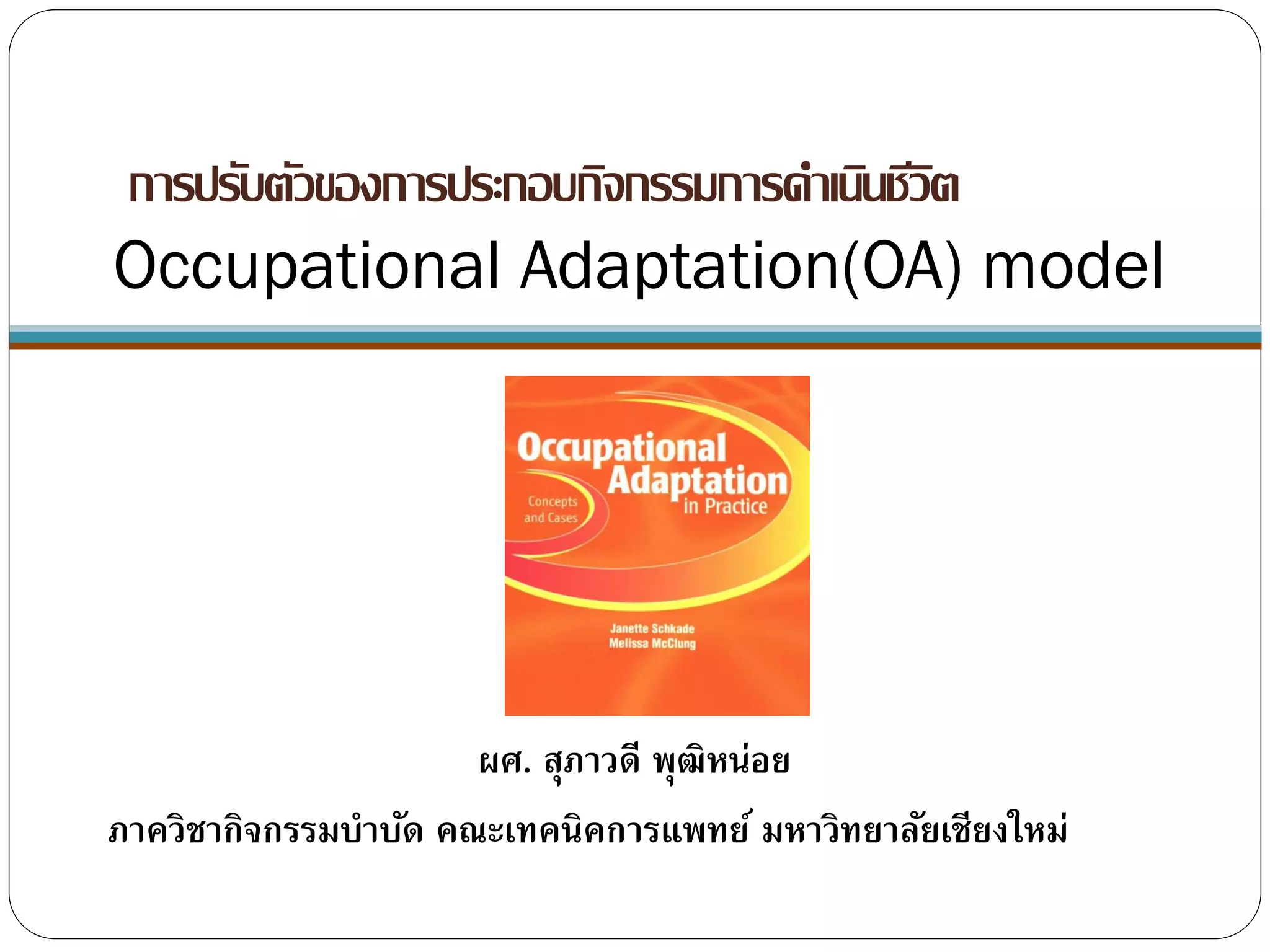
การปรับตัวของการประกอบกิจกรรมการดาเนินชีวิต
Occupational Adaptation(OA) model
ผศ. สุภาวดี พุฒิหน่อย
ภาควิชากิจกรรมบาบัด คณะเทคนิคการแพทย์ มหาวิทยาลัยเชียงใหม่
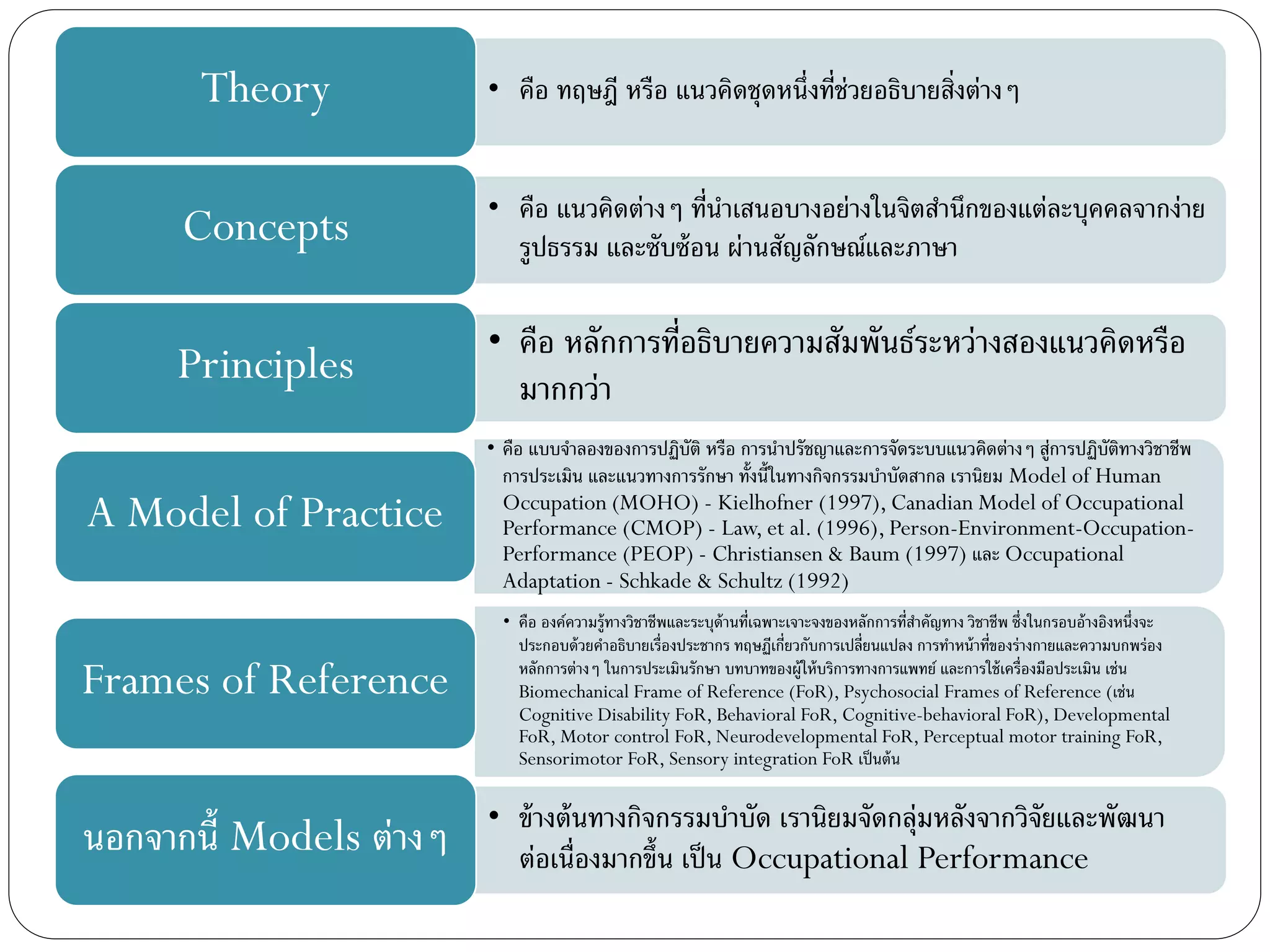
• คือ ทฤษฎี หรือ แนวคิดชุดหนึ่งที่ช่วยอธิบายสิ่งต่างๆTheory
• คือ แนวคิดต่างๆ ที่นาเสนอบางอย่างในจิตสานึกของแต่ละบุคคลจากง่าย
รูปธรรม และซับซ้อน ผ่านสัญลักษณ์และภาษาConcepts
• คือ หลักการที่อธิบายความสัมพันธ์ระหว่างสองแนวคิดหรือ
มากกว่า
Principles
• คือ แบบจาลองของการปฏิบัติ หรือ การนาปรัชญาและการจัดระบบแนวคิดต่างๆ สู่การปฏิบัติทางวิชาชีพ
การประเมิน และแนวทางการรักษา ทั้งนี้ในทางกิจกรรมบาบัดสากล เรานิยม Model of Human
Occupation (MOHO) - Kielhofner (1997), Canadian Model of Occupational
Performance (CMOP) - Law, et al. (1996), Person-Environment-Occupation-
Performance (PEOP) - Christiansen & Baum (1997) และ Occupational
Adaptation - Schkade & Schultz (1992)
A Model of Practice
• คือ องค์ความรู้ทางวิชาชีพและระบุด้านที่เฉพาะเจาะจงของหลักการที่สาคัญทาง วิชาชีพ ซึ่งในกรอบอ้างอิงหนึ่งจะ
ประกอบด้วยคาอธิบายเรื่องประชากร ทฤษฏีเกี่ยวกับการเปลี่ยนแปลง การทาหน้าที่ของร่างกายและความบกพร่อง
หลักการต่างๆ ในการประเมินรักษา บทบาทของผู้ให้บริการทางการแพทย์ และการใช้เครื่องมือประเมิน เช่น
Biomechanical Frame of Reference (FoR), Psychosocial Frames of Reference (เช่น
Cognitive Disability FoR, Behavioral FoR, Cognitive-behavioral FoR), Developmental
FoR, Motor control FoR, Neurodevelopmental FoR, Perceptual motor training FoR,
Sensorimotor FoR, Sensory integration FoR เป็นต้น
Frames of Reference
• ข้างต้นทางกิจกรรมบาบัด เรานิยมจัดกลุ่มหลังจากวิจัยและพัฒนา
ต่อเนื่องมากขึ้น เป็น Occupational Performanceนอกจากนี้ Models ต่างๆ
Occupational
Adaptation(OA)
model
ผสมผสานองค์ความรู้
-Occupation
-Adaptation
จุดเริ่มแรกเป็น frame
of reference ต่อมา
พัฒนาเป็น theory
มุ่งเน้นไปที่การปรับตัว
และเกิดทักษะการทางาน
(functional skills)
Dr. Jeanette Schkade and
Dr. Sally Schultz.
Theory published in 1992
Developed atTexas
Woman’s University
Janette King Schkade
หลักการ:1
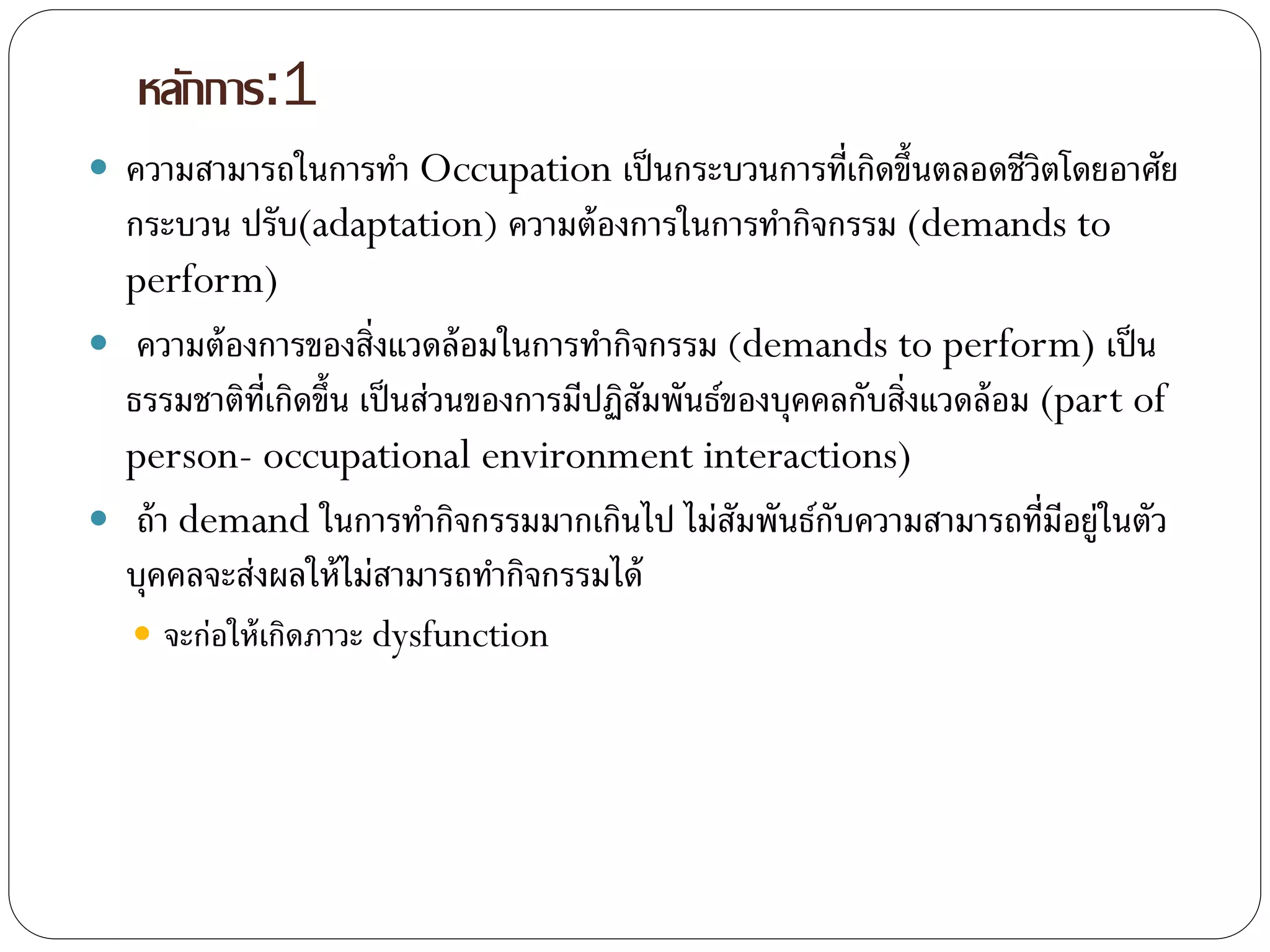
 ความสามารถในการทา Occupation เป็นกระบวนการที่เกิดขึ้นตลอดชีวิตโดยอาศัย
กระบวน ปรับ(adaptation) ความต้องการในการทากิจกรรม (demands to
perform)
 ความต้องการของสิ่งแวดล้อมในการทากิจกรรม (demands to perform) เป็น
ธรรมชาติที่เกิดขึ้น เป็นส่วนของการมีปฏิสัมพันธ์ของบุคคลกับสิ่งแวดล้อม (part of
person- occupational environment interactions)
 ถ้า demand ในการทากิจกรรมมากเกินไป ไม่สัมพันธ์กับความสามารถที่มีอยู่ในตัว
บุคคลจะส่งผลให้ไม่สามารถทากิจกรรมได้
 จะก่อให้เกิดภาวะ dysfunction
หลักการ:2
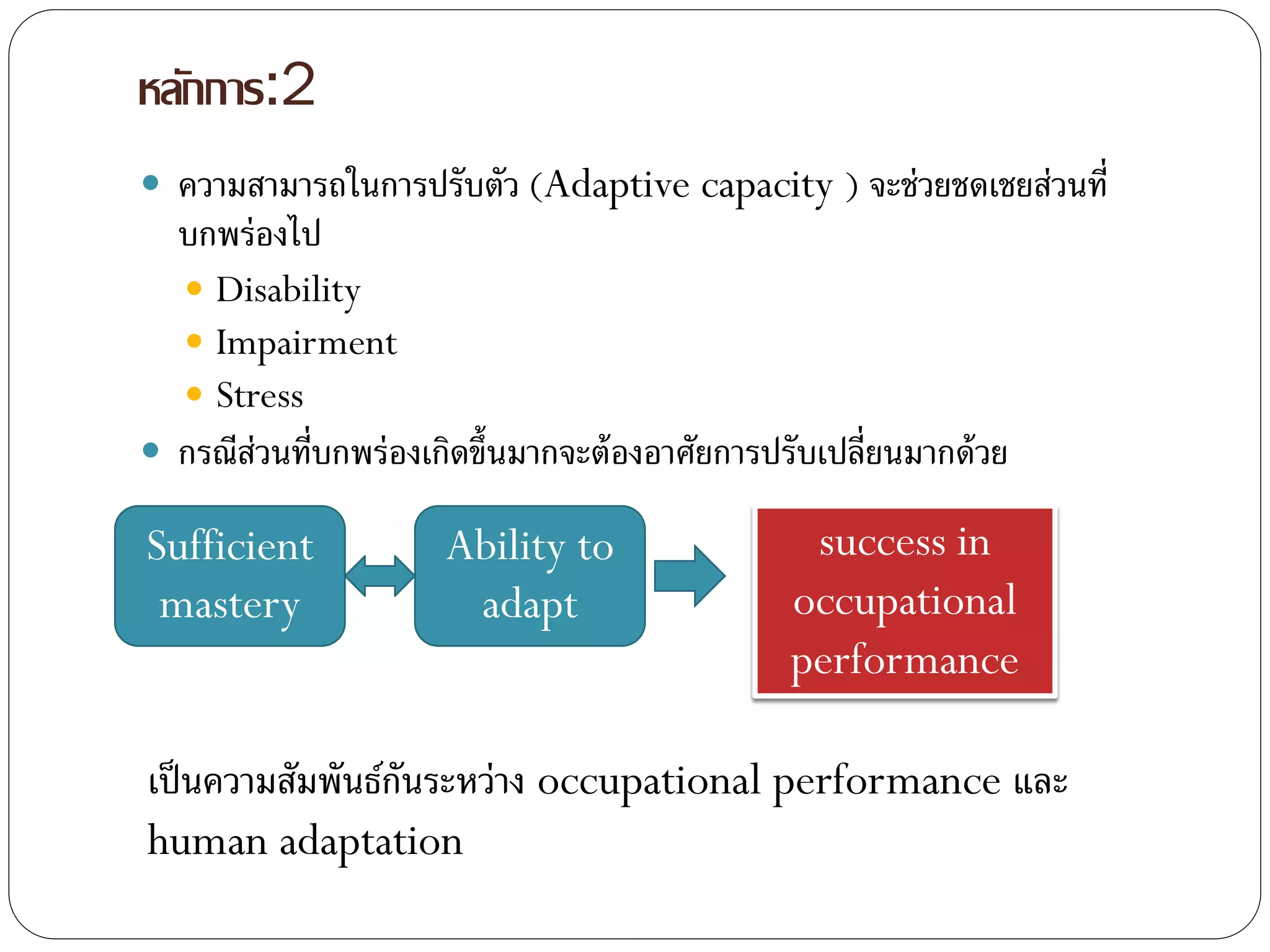
 ความสามารถในการปรับตัว (Adaptive capacity ) จะช่วยชดเชยส่วนที่
บกพร่องไป
 Disability
 Impairment
 Stress
 กรณีส่วนที่บกพร่องเกิดขึ้นมากจะต้องอาศัยการปรับเปลี่ยนมากด้วย
Sufficient
mastery
Ability to
adapt
success in
occupational
performance
เป็นความสัมพันธ์กันระหว่าง occupational performance และ
human adaptation
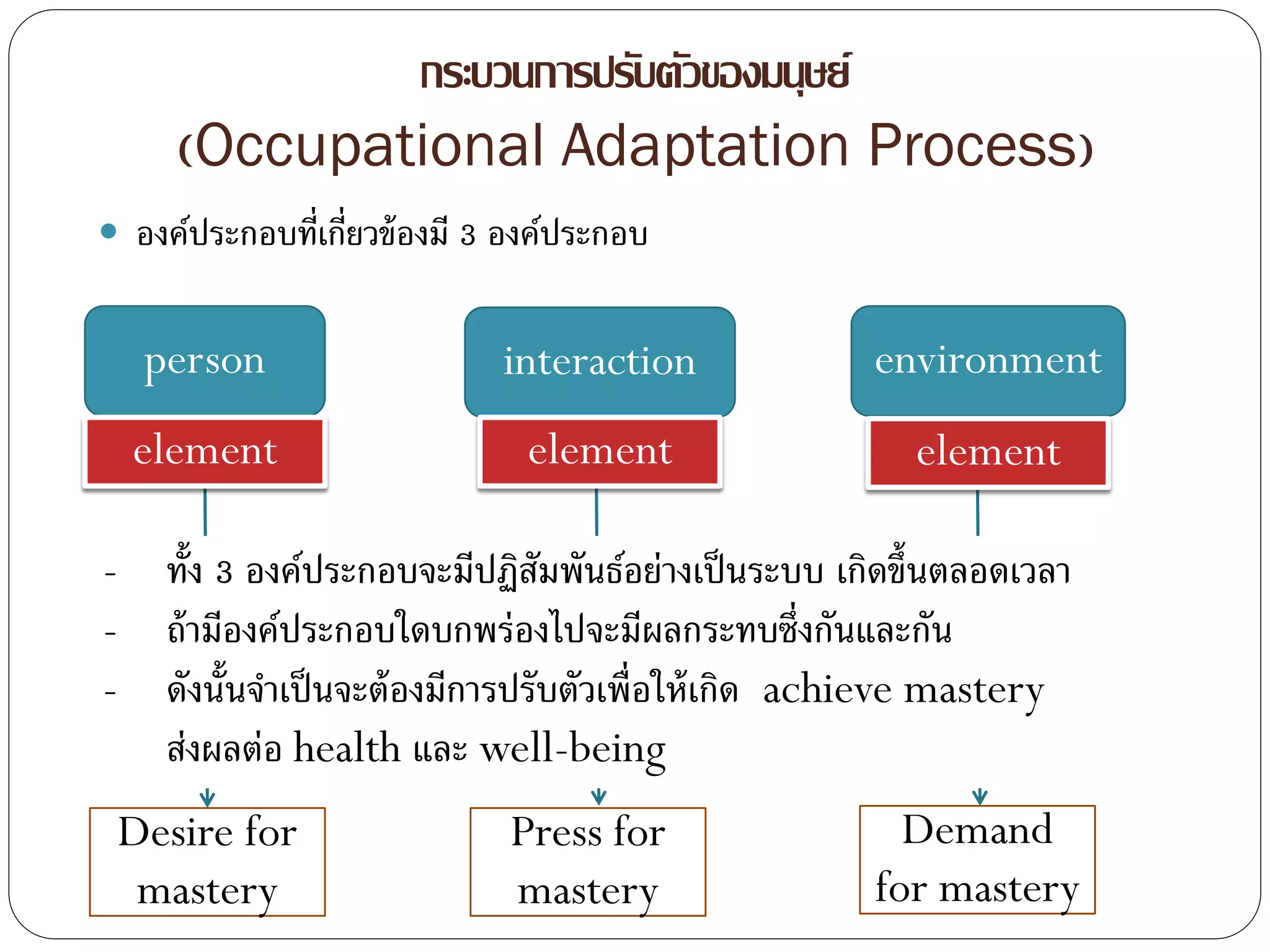
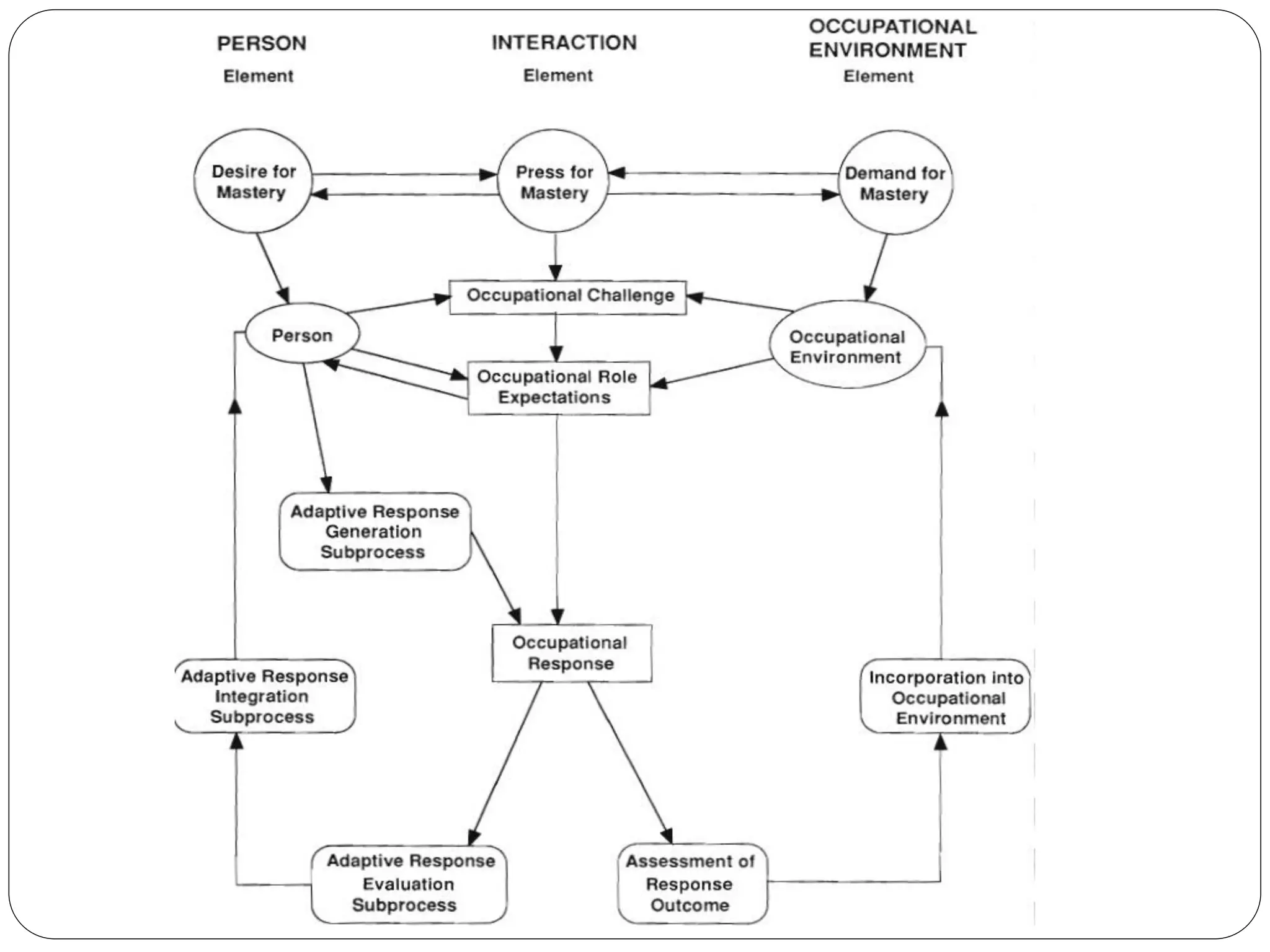
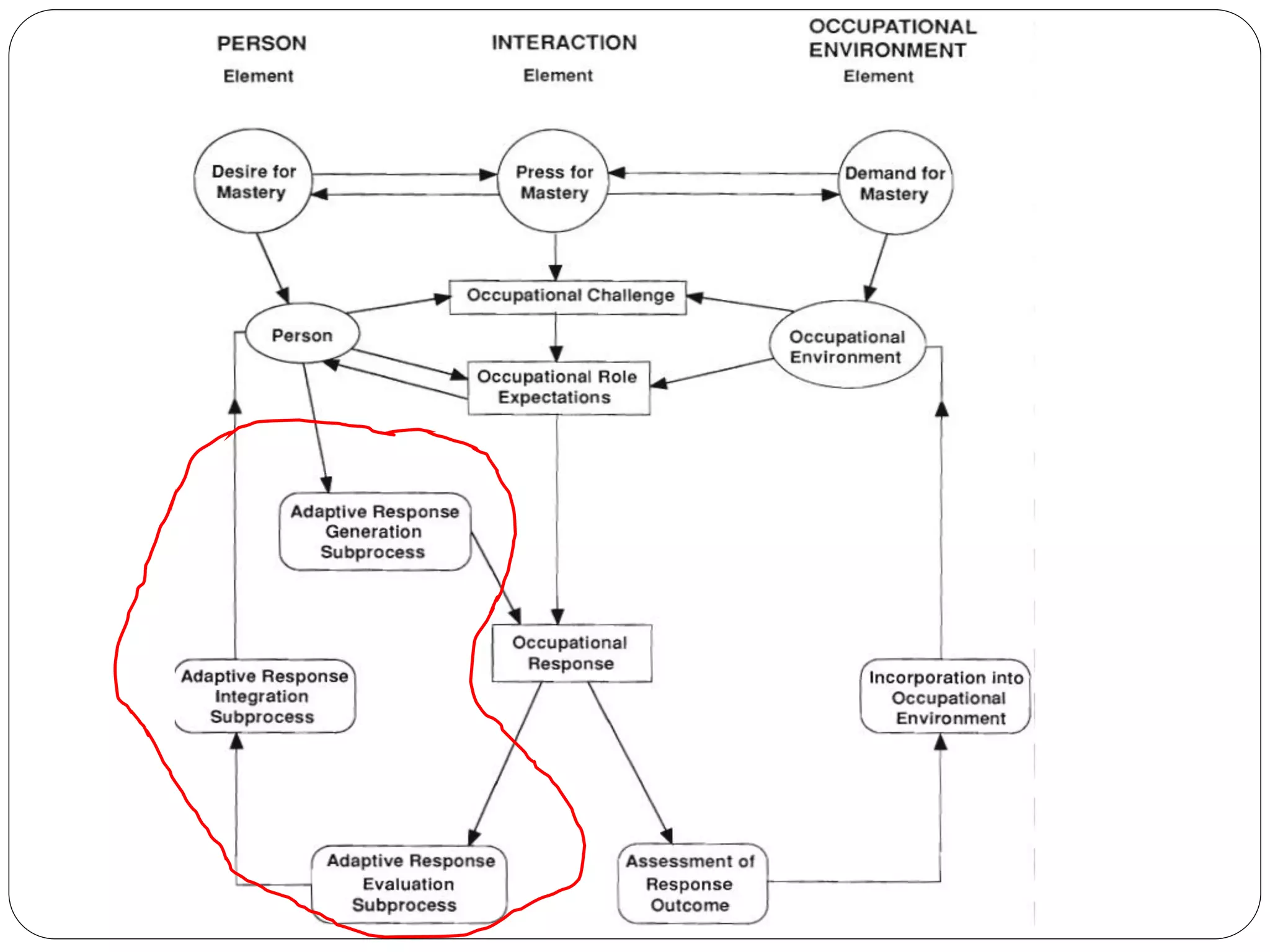
Desire for
mastery
Press for
mastery
Demand
for mastery
กระบวนการปรับตัวของมนุษย์
(Occupational Adaptation Process)
 องค์ประกอบที่เกี่ยวข้องมี 3 องค์ประกอบ
environmentinteractionperson
element element element
- ทั้ง 3 องค์ประกอบจะมีปฏิสัมพันธ์อย่างเป็นระบบ เกิดขึ้นตลอดเวลา
- ถ้ามีองค์ประกอบใดบกพร่องไปจะมีผลกระทบซึ่งกันและกัน
- ดังนั้นจาเป็นจะต้องมีการปรับตัวเพื่อให้เกิด achieve mastery
ส่งผลต่อ health และ well-being
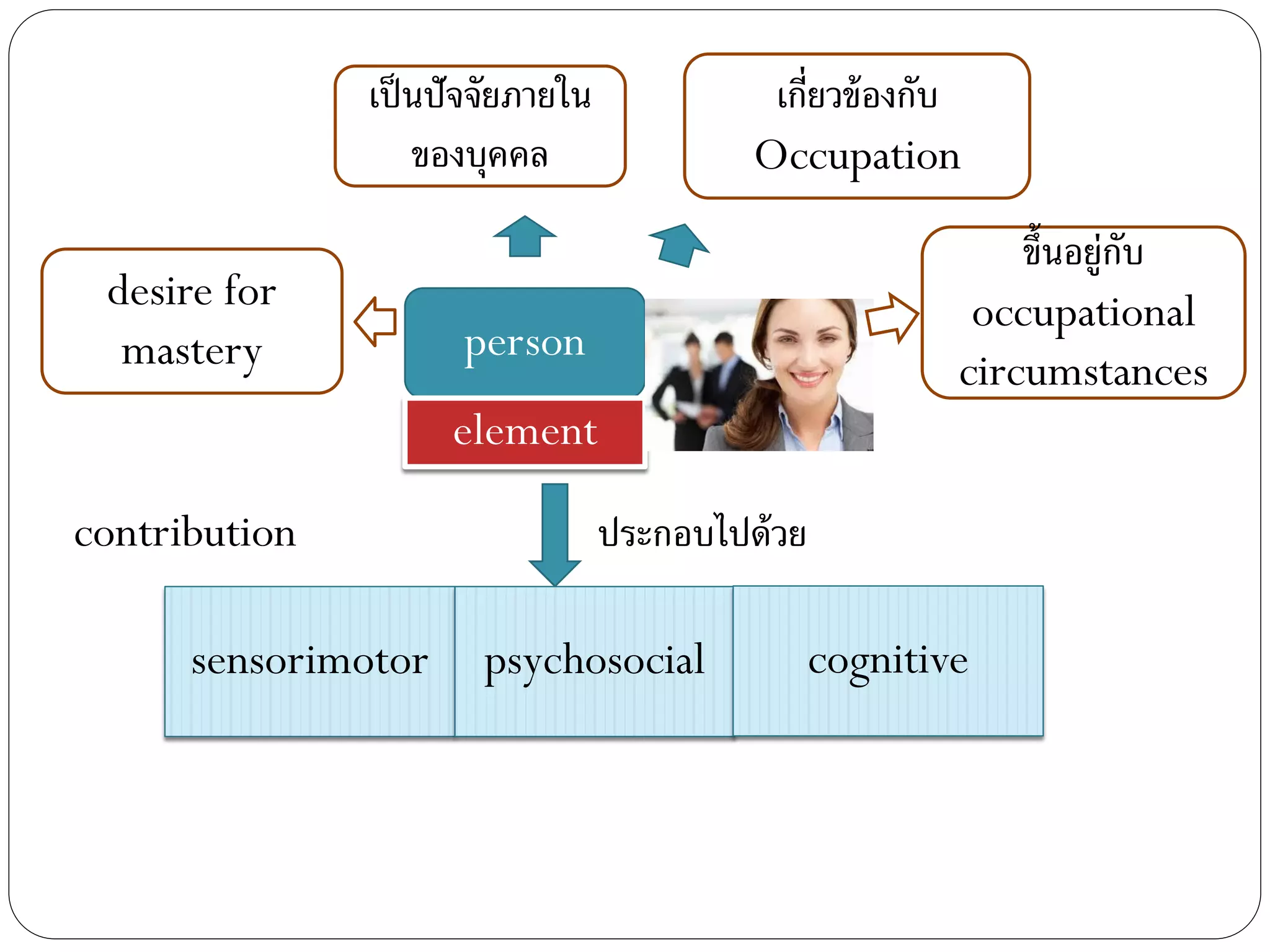
เป็นปัจจัยภายใน
ของบุคคล
desire for
mastery
ประกอบไปด้วย
sensorimotor psychosocial cognitive
person
element
เกี่ยวข้องกับ
Occupation
contribution
ขึ้นอยู่กับ
occupational
circumstances
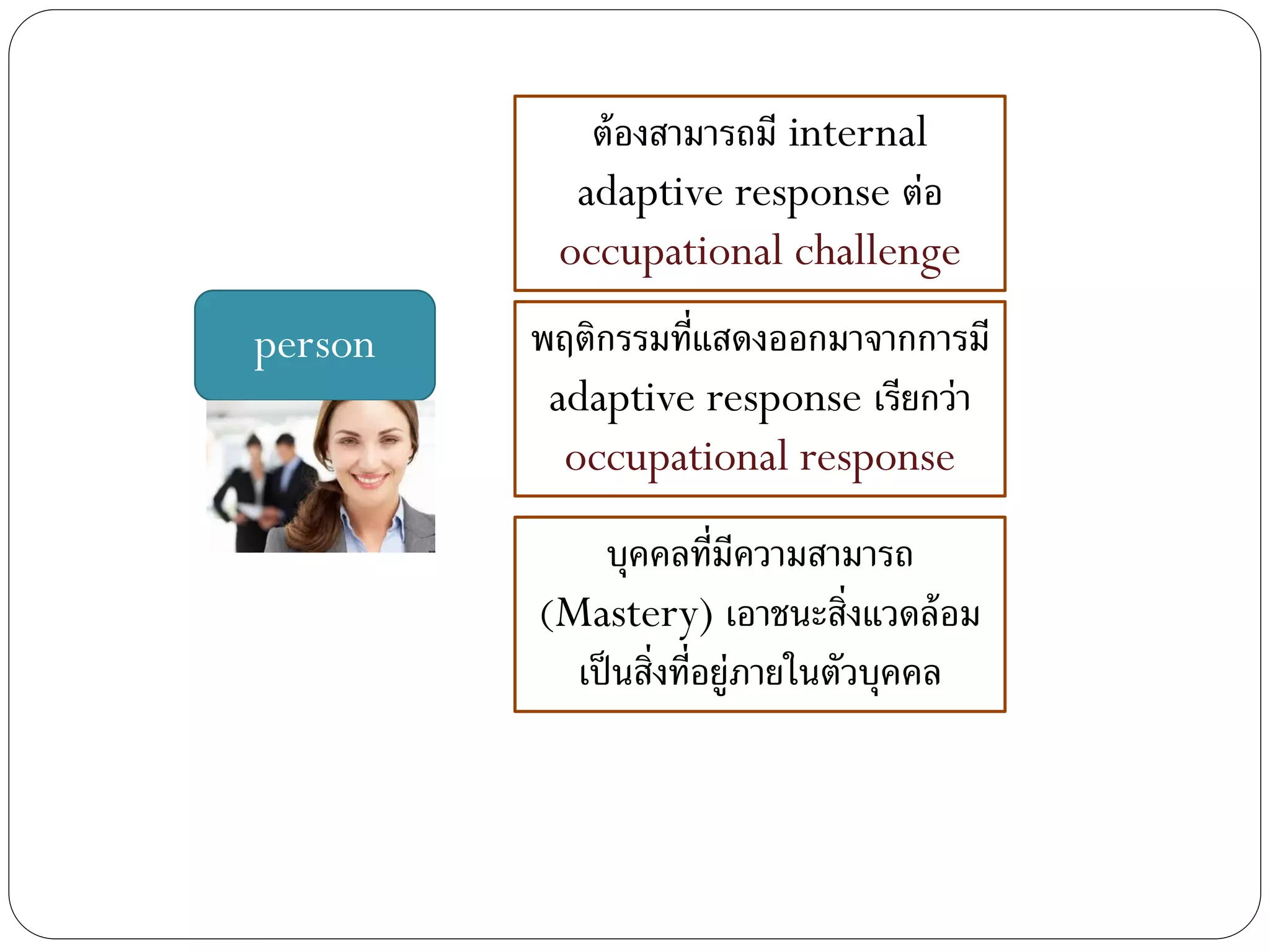
person
ต้องสามารถมี internal
adaptive response ต่อ
occupational challenge
พฤติกรรมที่แสดงออกมาจากการมี
adaptive response เรียกว่า
occupational response
บุคคลที่มีความสามารถ
(Mastery) เอาชนะสิ่งแวดล้อม
เป็นสิ่งที่อยู่ภายในตัวบุคคล
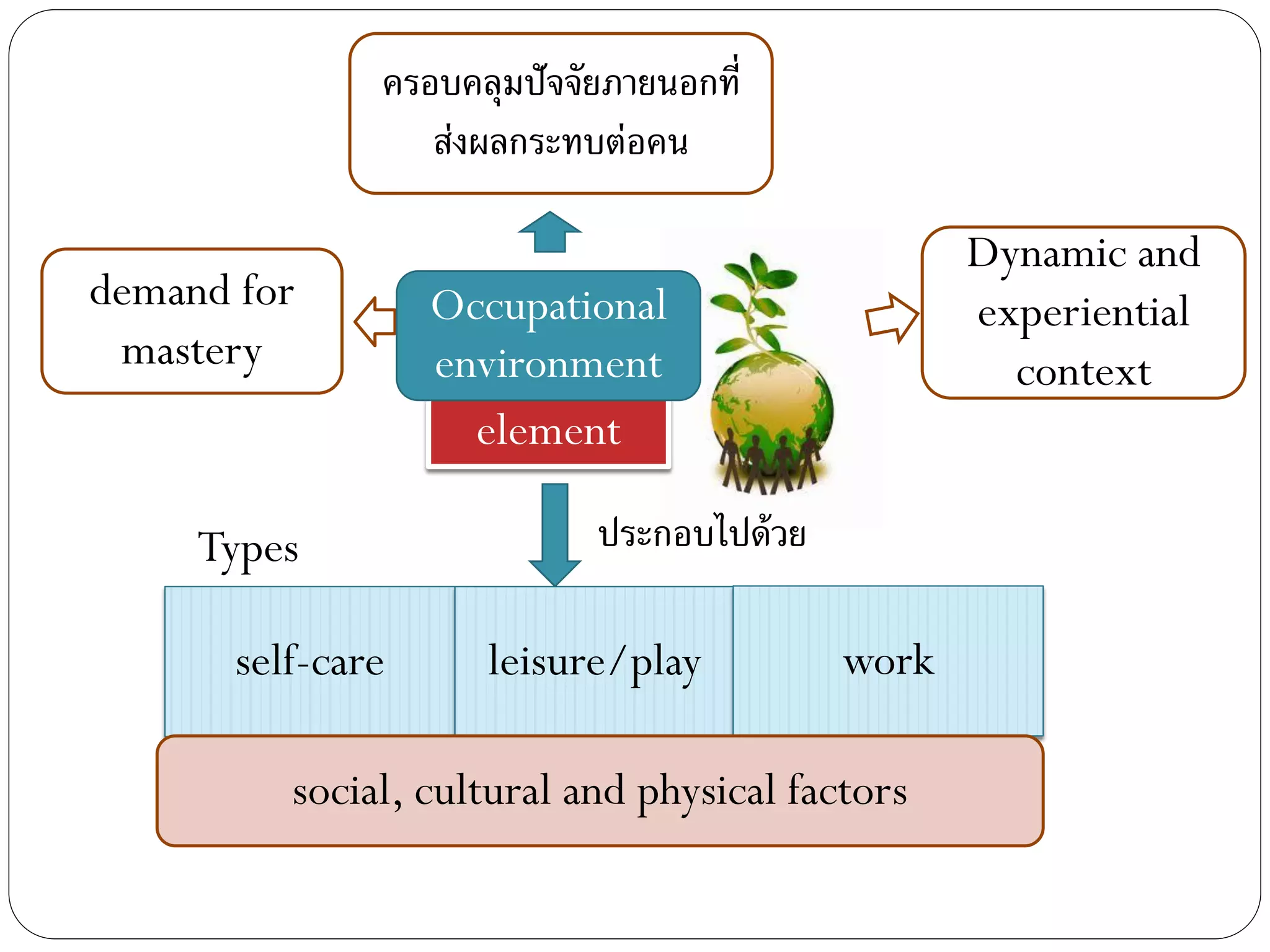
ครอบคลุมปัจจัยภายนอกที่
ส่งผลกระทบต่อคน
demand for
mastery
ประกอบไปด้วย
self-care leisure/play work
element
social, cultural and physical factors
Types
Dynamic and
experiential
context
Occupational
environment
Interaction
element
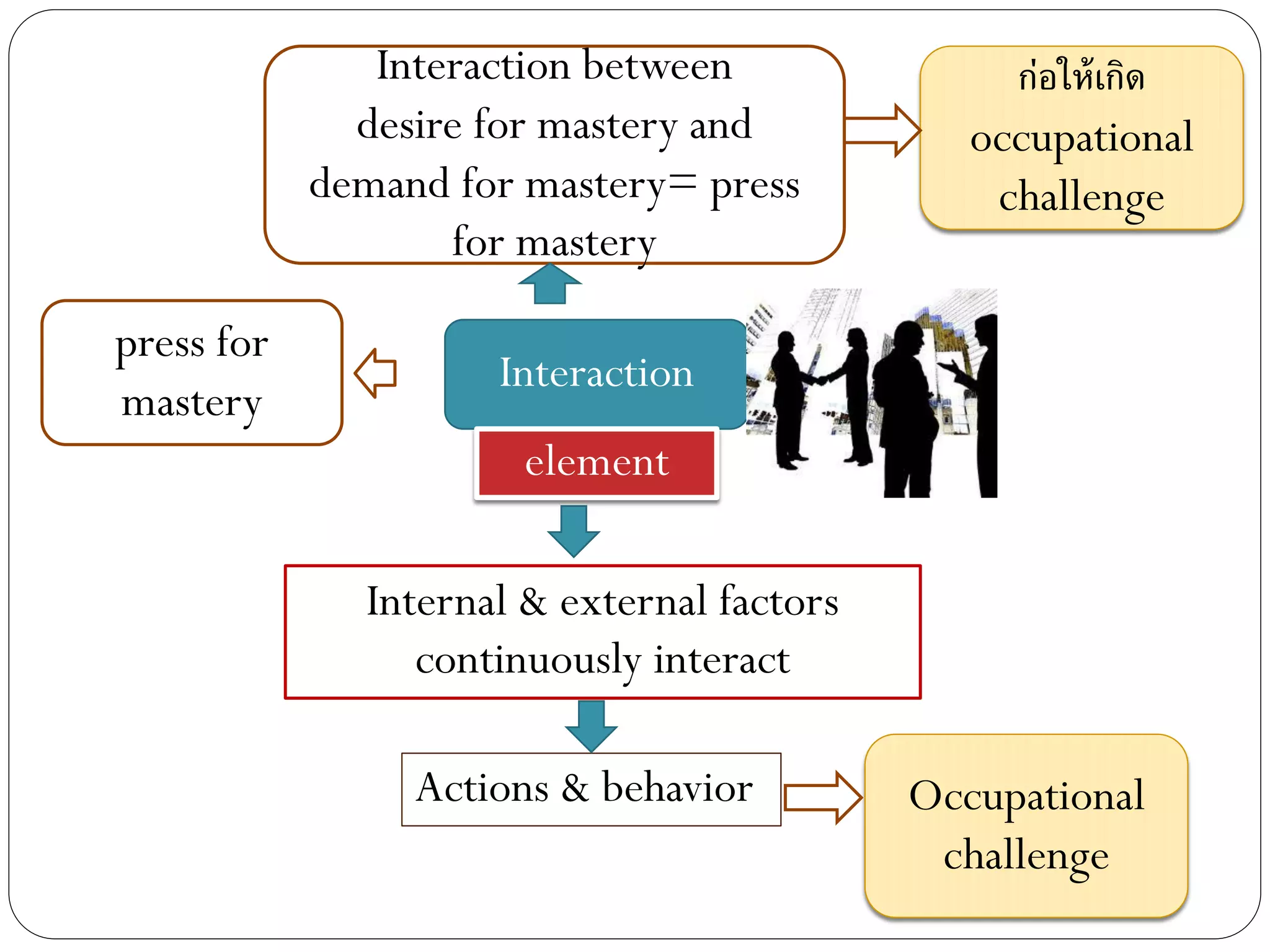
Interaction between
desire for mastery and
demand for mastery= press
for mastery
press for
mastery
ก่อให้เกิด
occupational
challenge
Internal & external factors
continuously interact
Actions & behavior Occupational
challenge
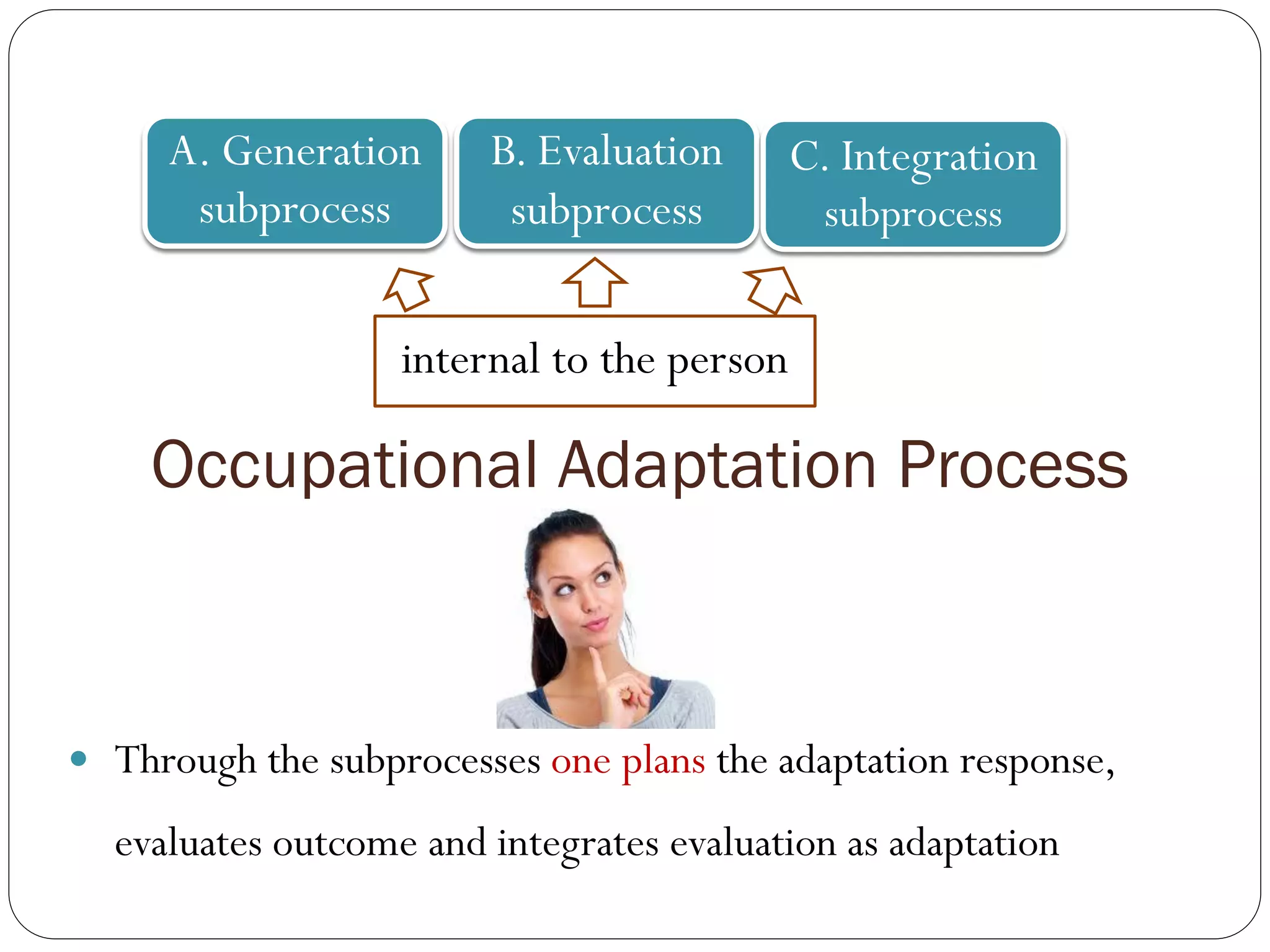
Occupational Adaptation Process
 Through the subprocesses one plans the adaptation response,
evaluates outcome and integrates evaluation as adaptation
internal to the person
A. Generation
subprocess
B. Evaluation
subprocess
C. Integration
subprocess
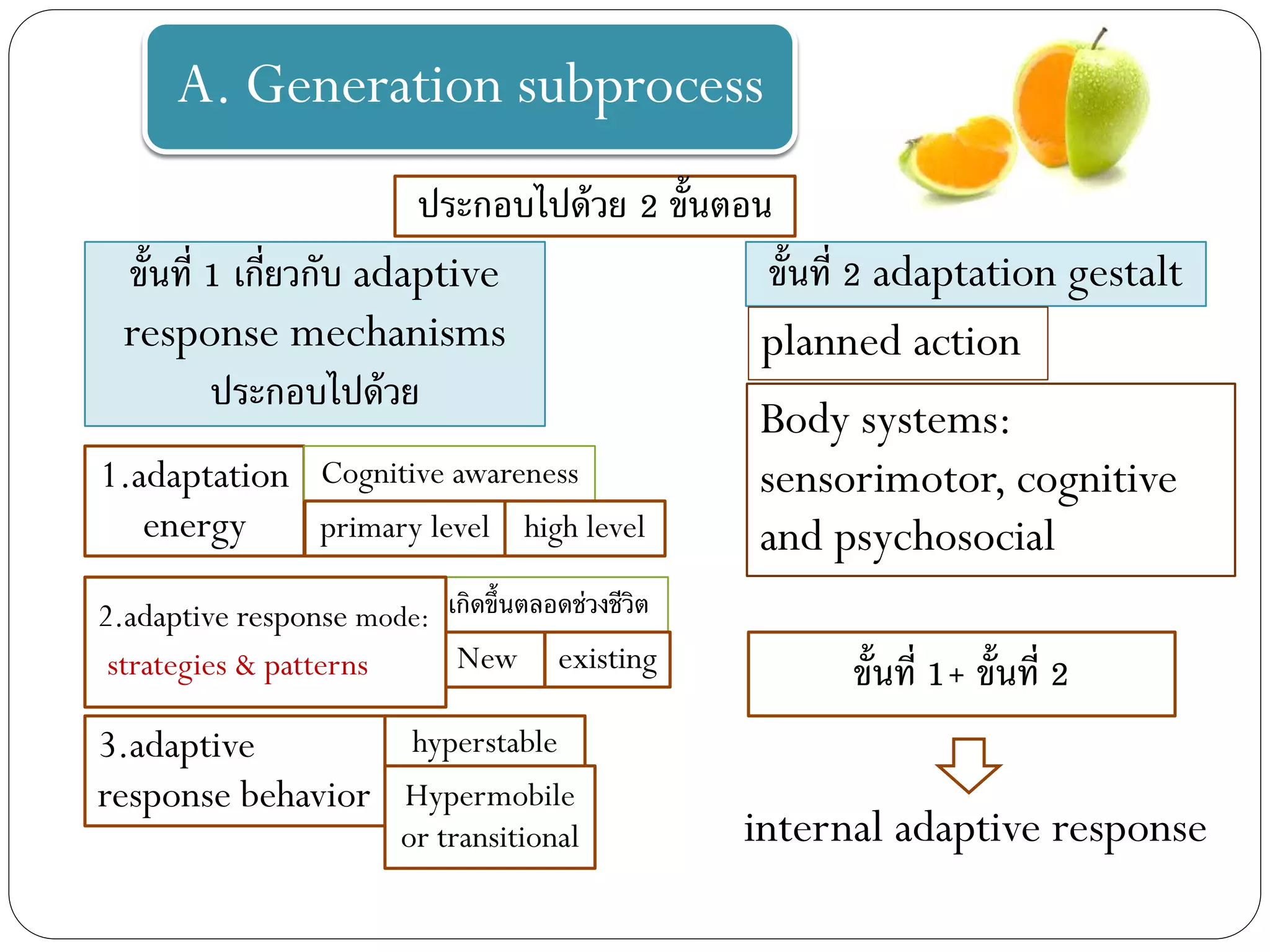
A. Generation subprocess
ประกอบไปด้วย 2 ขั้นตอน
เกิดขึ้นตลอดช่วงชีวิต
New existing
ขั้นที่ 1 เกี่ยวกับ adaptive
response mechanisms
ประกอบไปด้วย
1.adaptation
energy
2.adaptive response mode:
strategies & patterns
3.adaptive
response behavior
Cognitive awareness
primary level high level
hyperstable
Hypermobile
or transitional
ขั้นที่ 2 adaptation gestalt
planned action
Body systems:
sensorimotor, cognitive
and psychosocial
ขั้นที่ 1+ ขั้นที่ 2
internal adaptive response
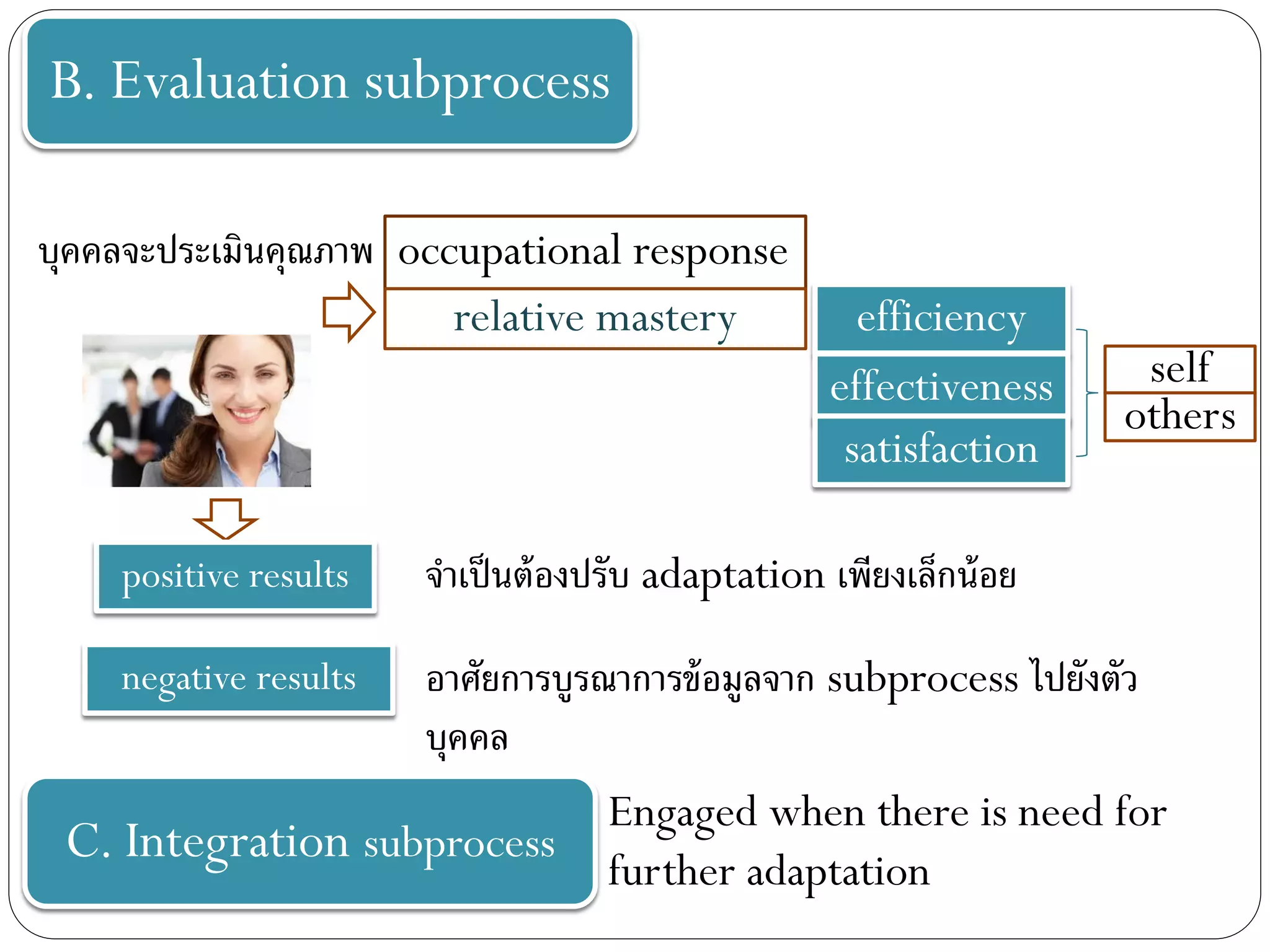
B. Evaluation subprocess
occupational responseบุคคลจะประเมินคุณภาพ
relative mastery efficiency
effectiveness
satisfaction
self
others
positive results
negative results
จาเป็นต้องปรับ adaptation เพียงเล็กน้อย
อาศัยการบูรณาการข้อมูลจาก subprocess ไปยังตัว
บุคคล
C. Integration subprocess
Engaged when there is need for
further adaptation
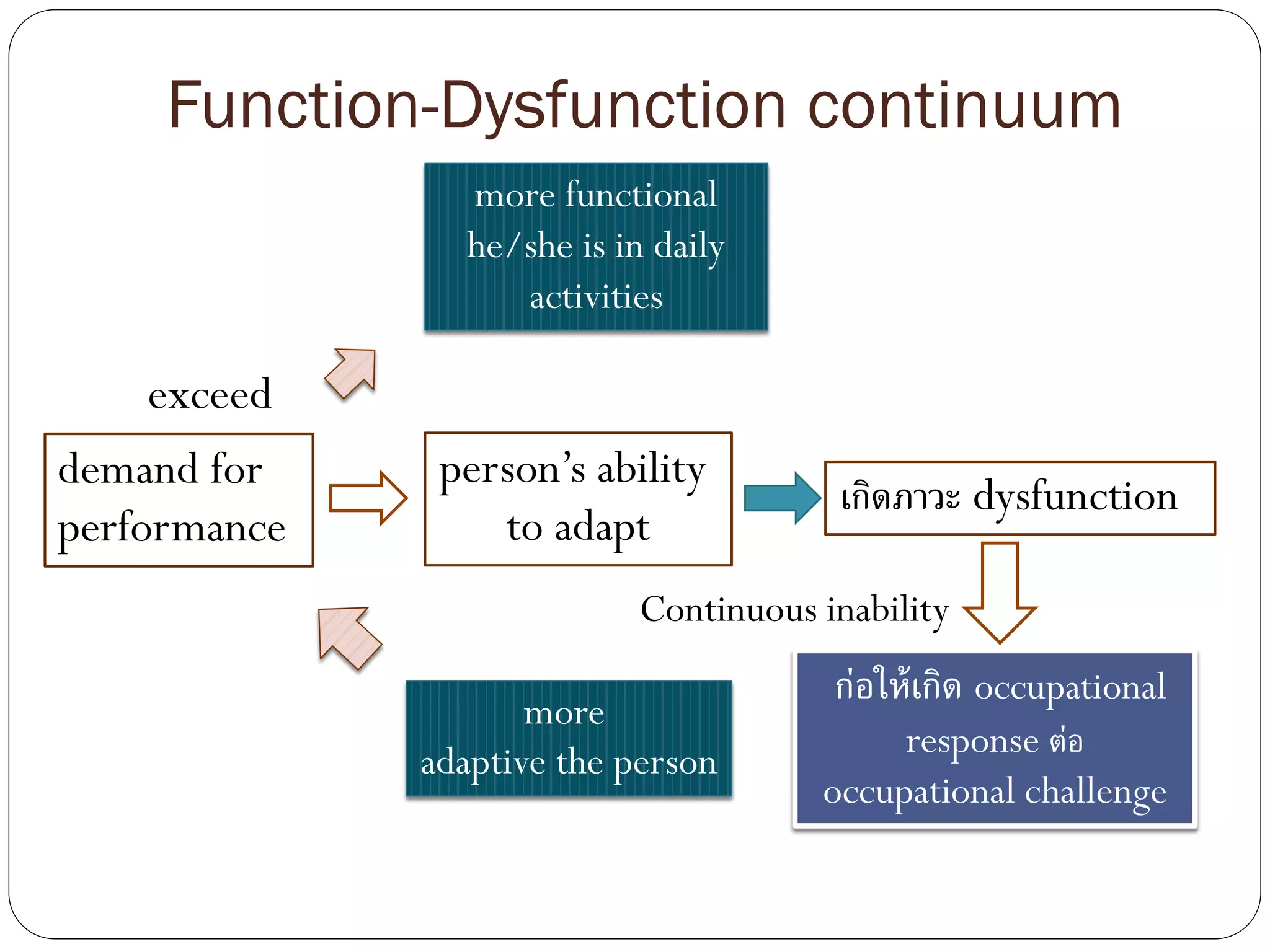
Function-Dysfunction continuum
demand for
performance
person’s ability
to adapt
exceed
เกิดภาวะ dysfunction
Continuous inability
ก่อให้เกิด occupational
response ต่อ
occupational challenge
more
adaptive the person
more functional
he/she is in daily
activities
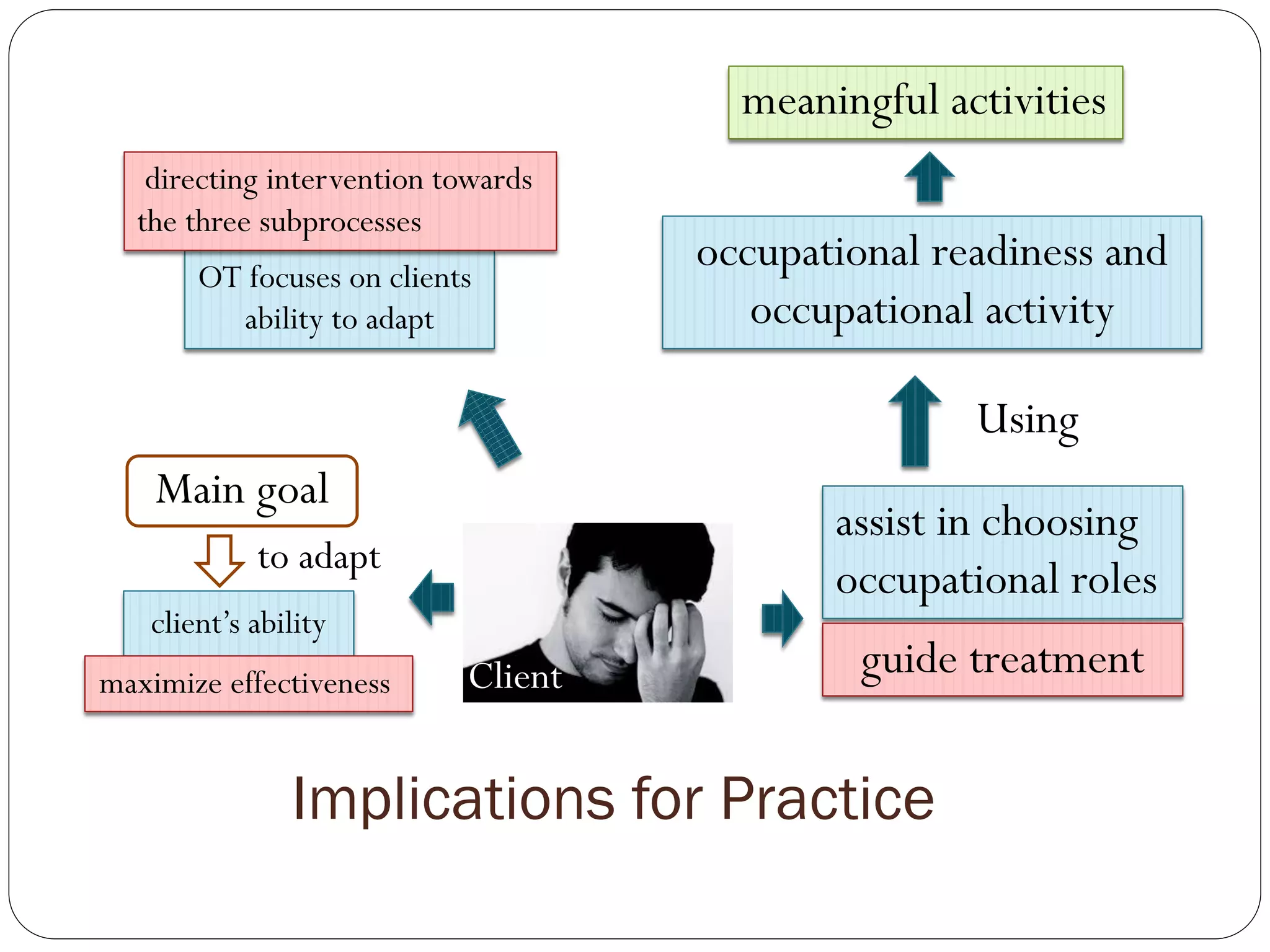
Implications for Practice
client’s ability
maximize effectiveness
Main goal
to adapt
Client
assist in choosing
occupational roles
guide treatment
occupational readiness and
occupational activity
Using
OT focuses on clients
ability to adapt
directing intervention towards
the three subprocesses
meaningful activities
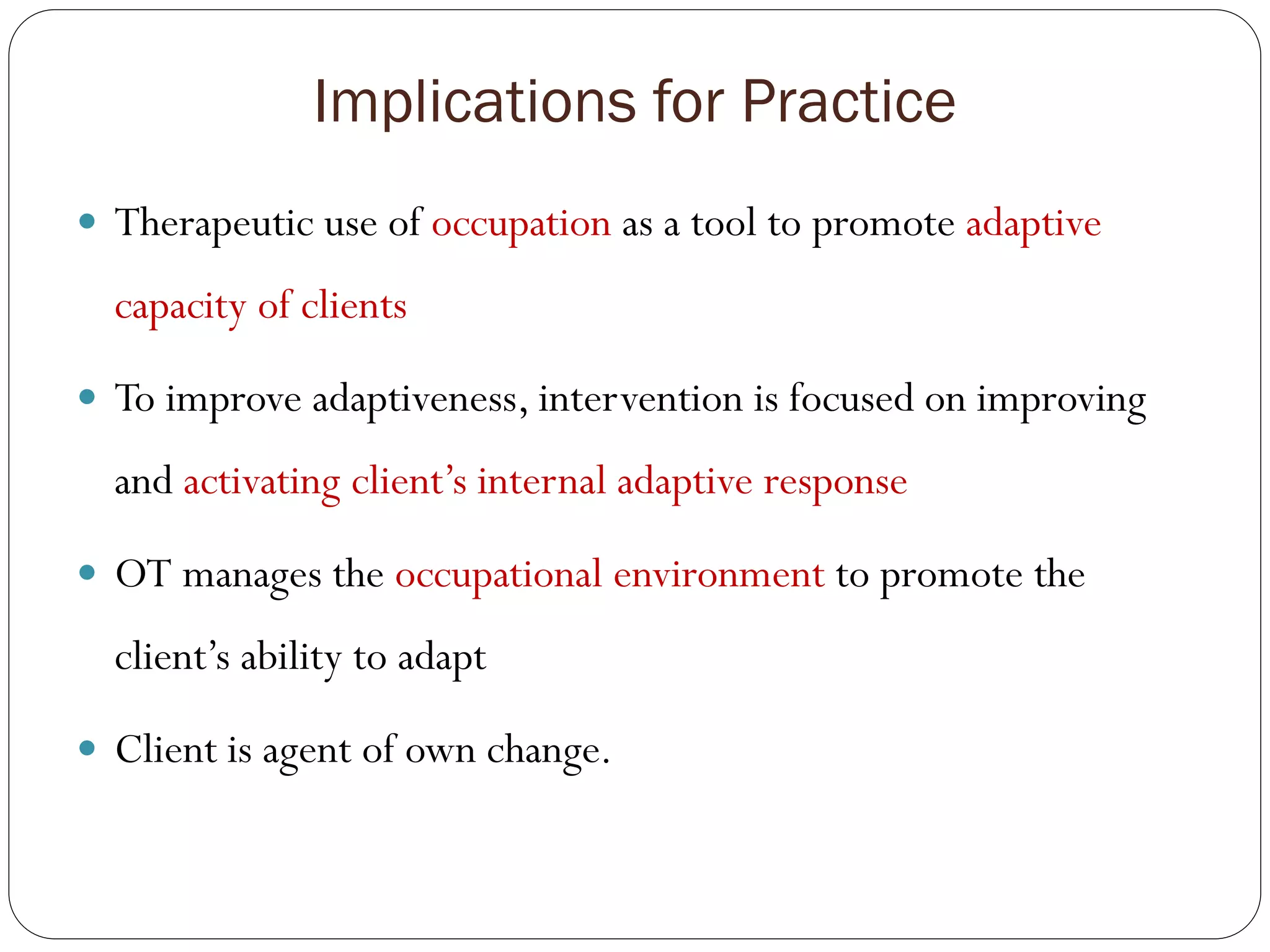
Implications for Practice
 Therapeutic use of occupation as a tool to promote adaptive
capacity of clients
 To improve adaptiveness, intervention is focused on improving
and activating client’s internal adaptive response
 OT manages the occupational environment to promote the
client’s ability to adapt
 Client is agent of own change.
Reference
 Schultz, 2009.Theory of OccupationalAdaptation. In Crepeau, E.B,
Cohn, E.S. & Schell. B.A. 2009. Willard’s & Spackman’s Occupational
Therapy. 11th Edition. Philadelphia: LippincottWilliams &Wilkins
 [Online]Theory of OccupationalAdaptation - Overview by Dr Sally
Schultz
 Schkade, J. & Schultz, S. 1992. OccupationalAdaptation:Toward a
HolisticApproach for Contemporary Practice, Part 1. American Journal
Of OccupationalTherapy.46 (9) p29 -p37
Occupational
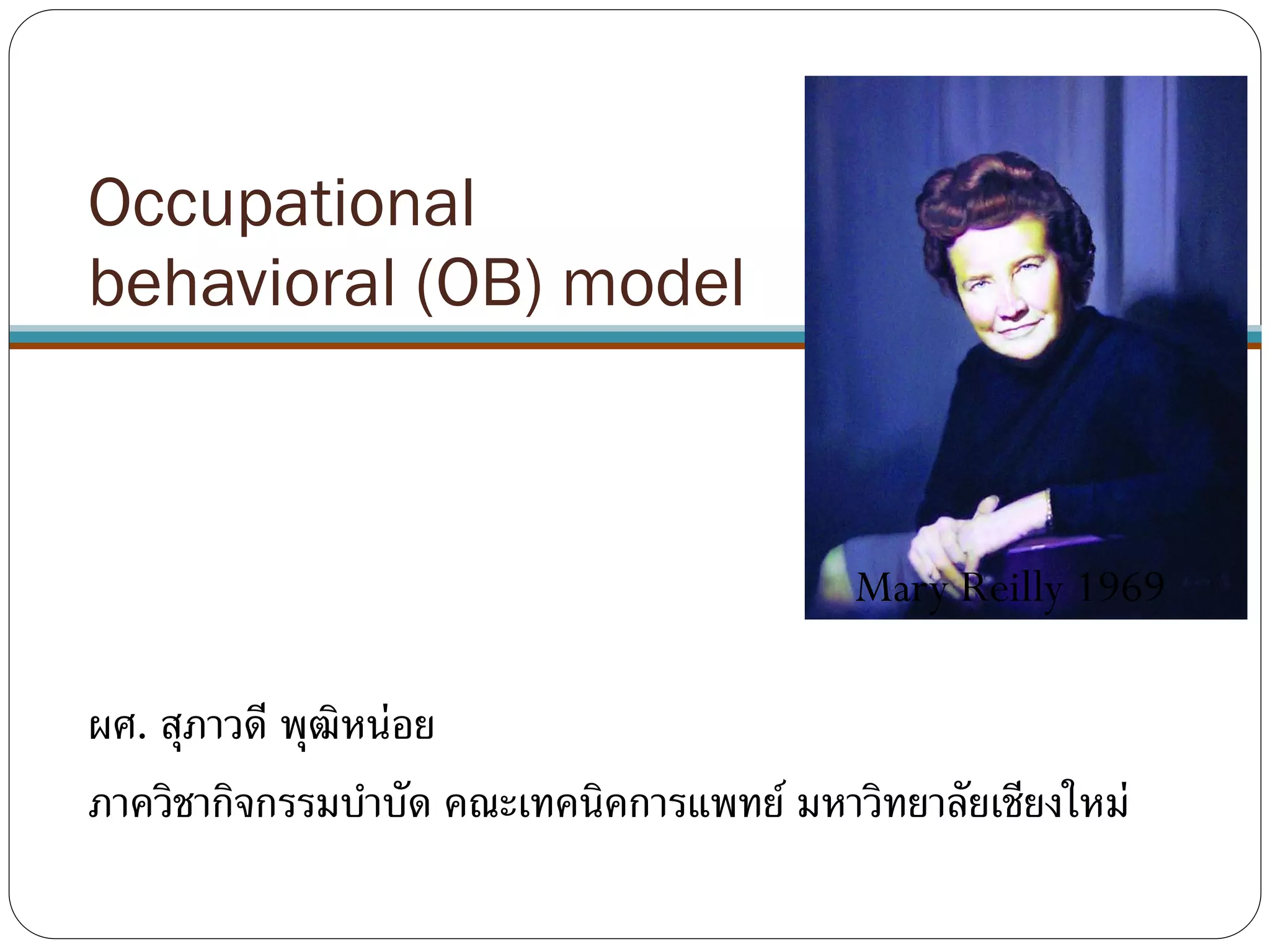
behavioral (OB) model
ผศ. สุภาวดี พุฒิหน่อย
ภาควิชากิจกรรมบาบัด คณะเทคนิคการแพทย์ มหาวิทยาลัยเชียงใหม่
Mary Reilly 1969
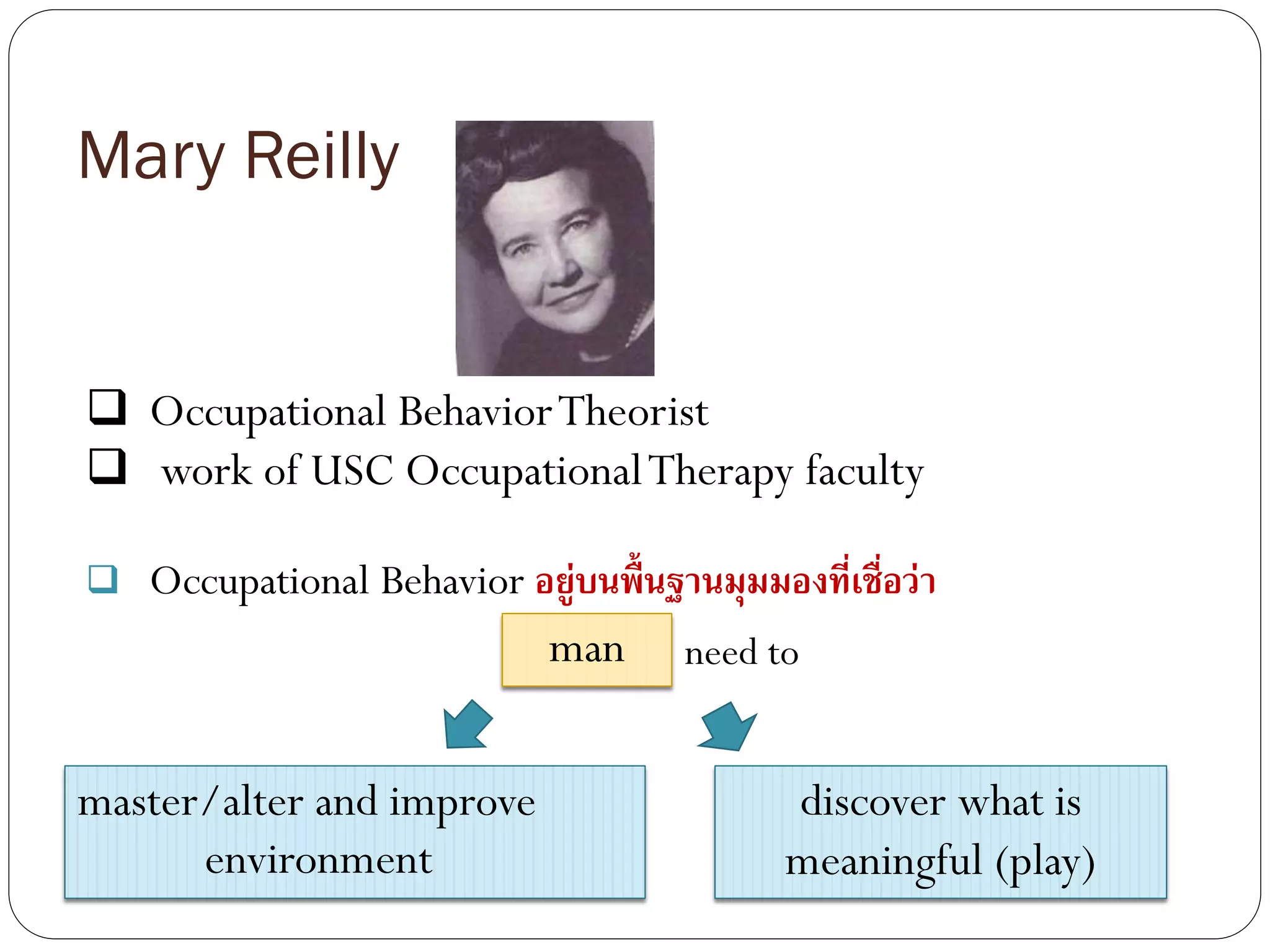
 Occupational BehaviorTheorist
 work of USC OccupationalTherapy faculty
Mary Reilly
 Occupational Behavior อยู่บนพื้นฐานมุมมองที่เชื่อว่า
man need to
master/alter and improve
environment
discover what is
meaningful (play)
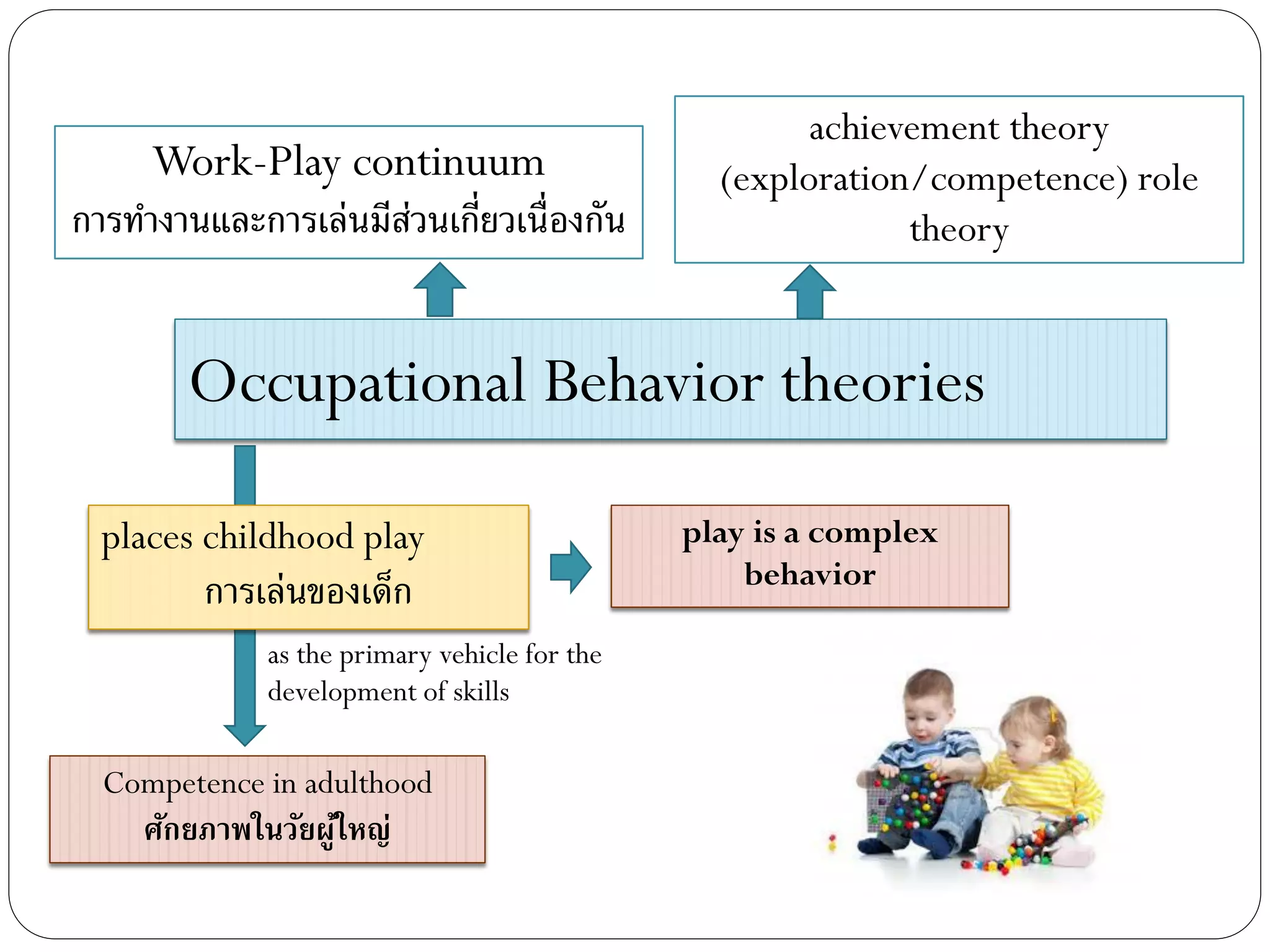
Occupational Behavior theories
play is a complex
behavior
Work-Play continuum
การทางานและการเล่นมีส่วนเกี่ยวเนื่องกัน
achievement theory
(exploration/competence) role
theory
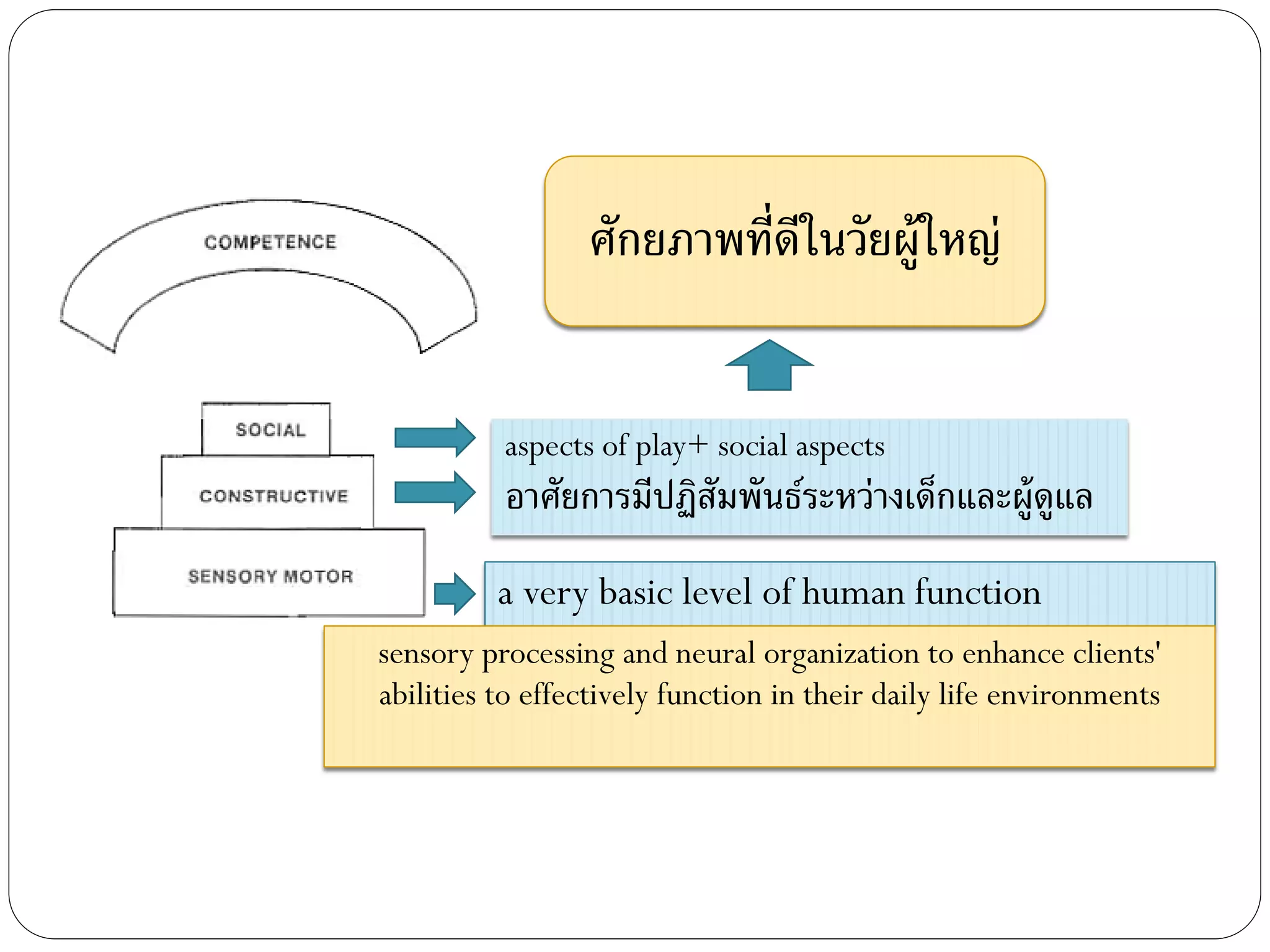
places childhood play
การเล่นของเด็ก
as the primary vehicle for the
development of skills
Competence in adulthood
ศักยภาพในวัยผู้ใหญ่
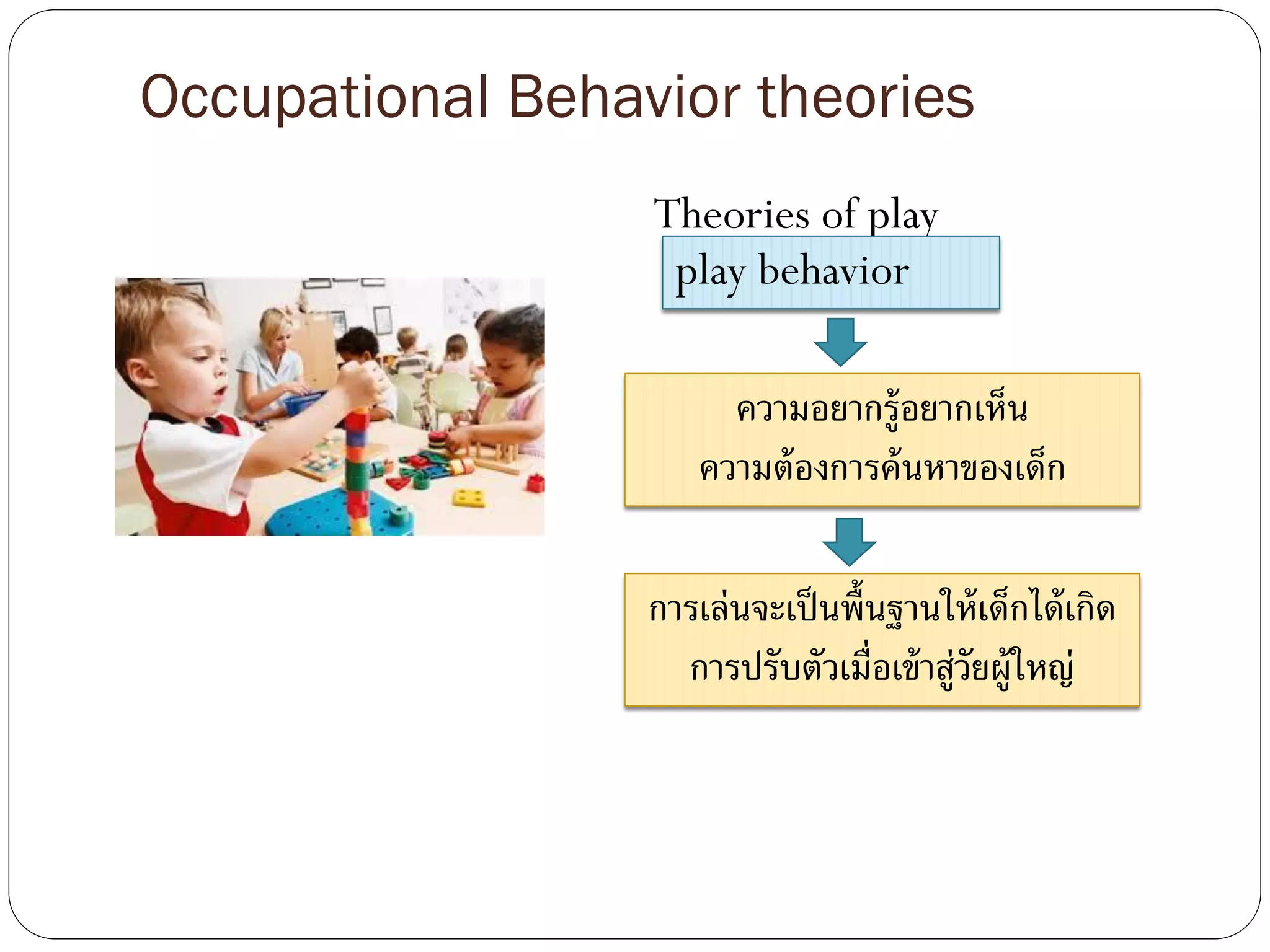
Occupational Behavior theories
Theories of play
play behavior
ความอยากรู้อยากเห็น
ความต้องการค้นหาของเด็ก
การเล่นจะเป็นพื้นฐานให้เด็กได้เกิด
การปรับตัวเมื่อเข้าสู่วัยผู้ใหญ่
a very basic level of human function
sensory processing and neural organization to enhance clients'
abilities to effectively function in their daily life environments
aspects of play+ social aspects
อาศัยการมีปฏิสัมพันธ์ระหว่างเด็กและผู้ดูแล
ศักยภาพที่ดีในวัยผู้ใหญ่
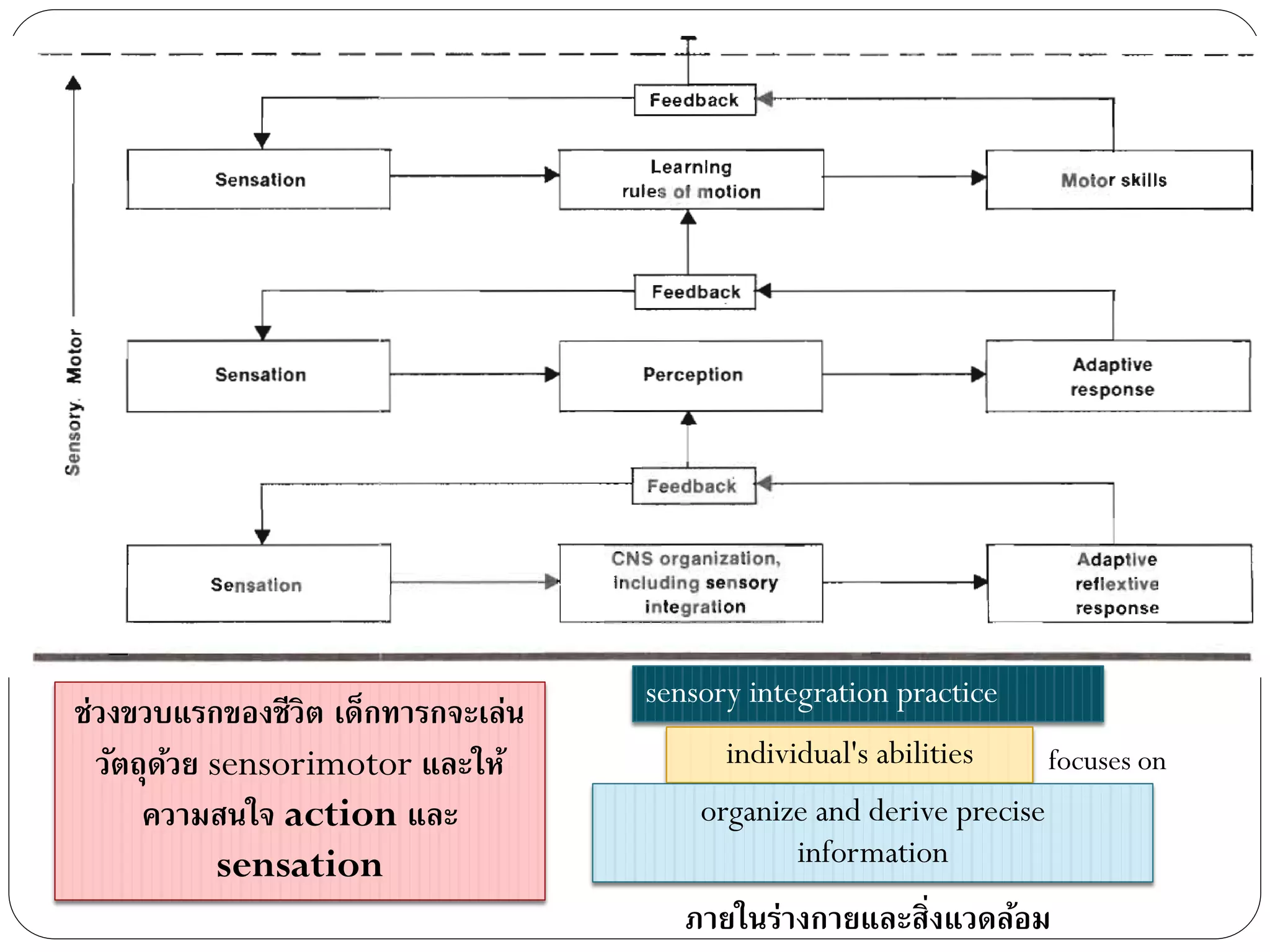
sensory integration practice
individual's abilities focuses on
organize and derive precise
information
ภายในร่างกายและสิ่งแวดล้อม
ช่วงขวบแรกของชีวิต เด็กทารกจะเล่น
วัตถุด้วย sensorimotor และให้
ความสนใจ action และ
sensation
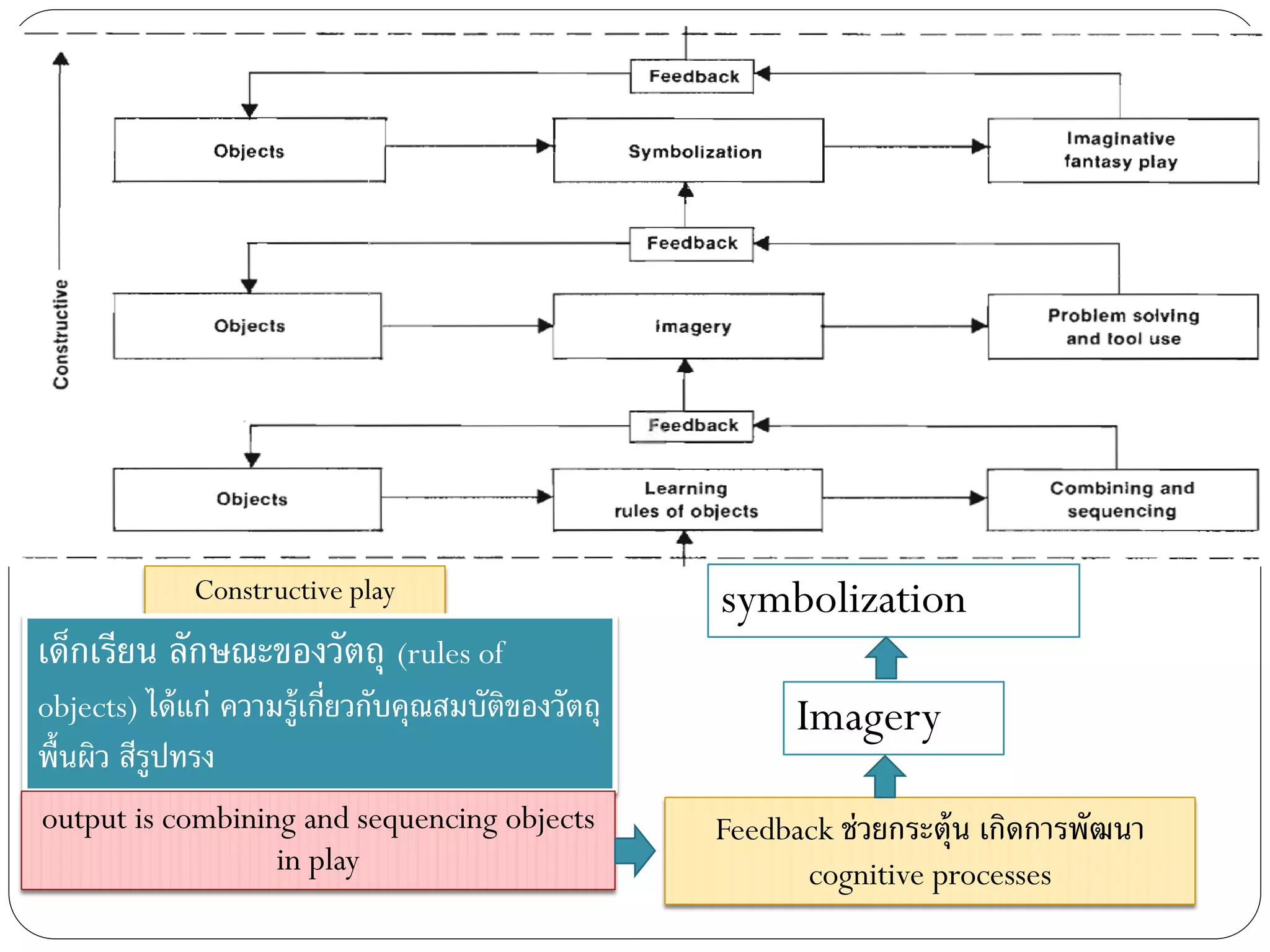
Constructive play
เด็กเรียน ลักษณะของวัตถุ (rules of
objects) ได้แก่ ความรู้เกี่ยวกับคุณสมบัติของวัตถุ
พื้นผิว สีรูปทรง
Feedback ช่วยกระตุ้น เกิดการพัฒนา
cognitive processes
output is combining and sequencing objects
in play
Imagery
symbolization
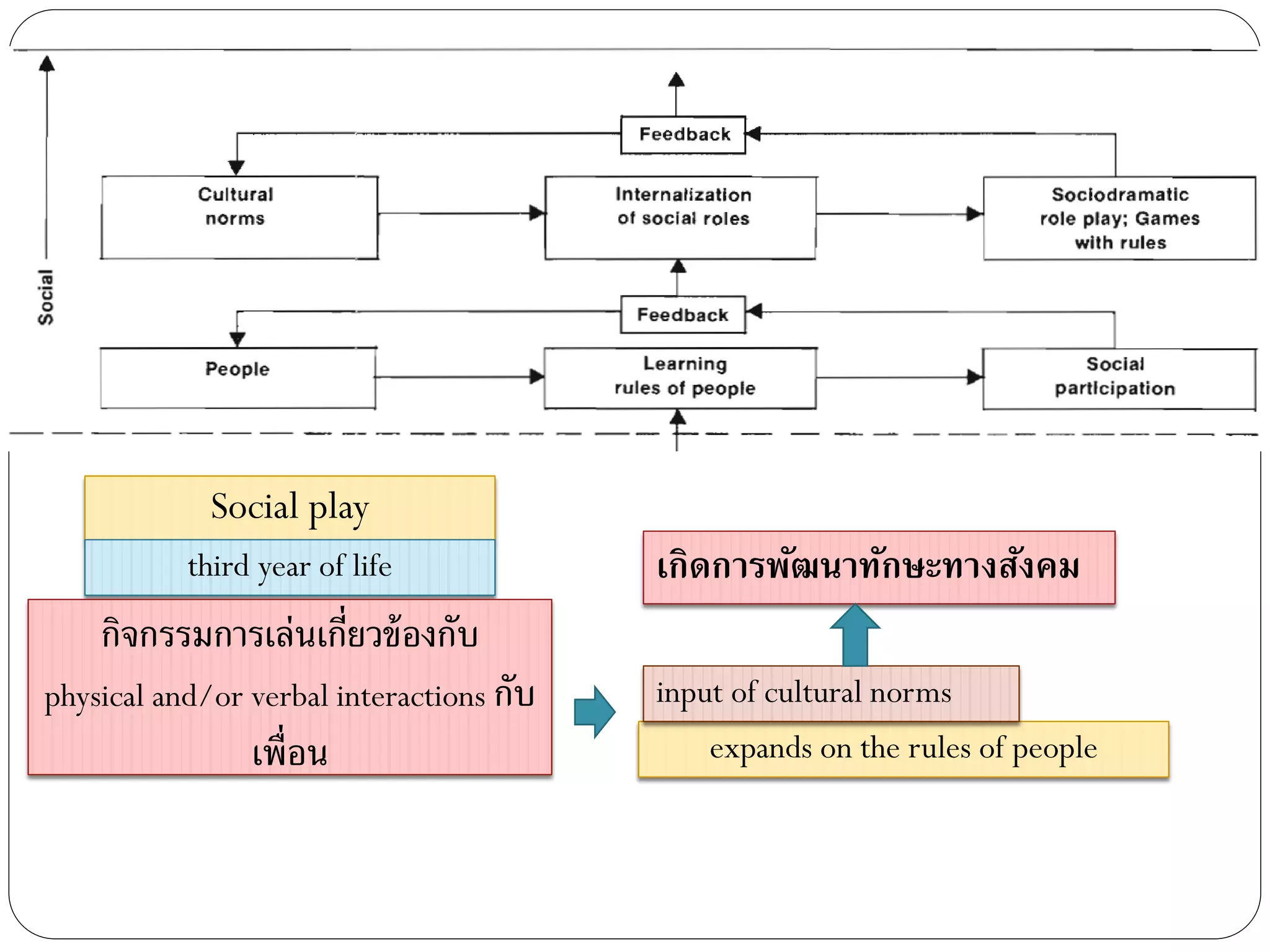
expands on the rules of people
Social play
third year of life
กิจกรรมการเล่นเกี่ยวข้องกับ
physical and/or verbal interactions กับ
เพื่อน
input of cultural norms
เกิดการพัฒนาทักษะทางสังคม
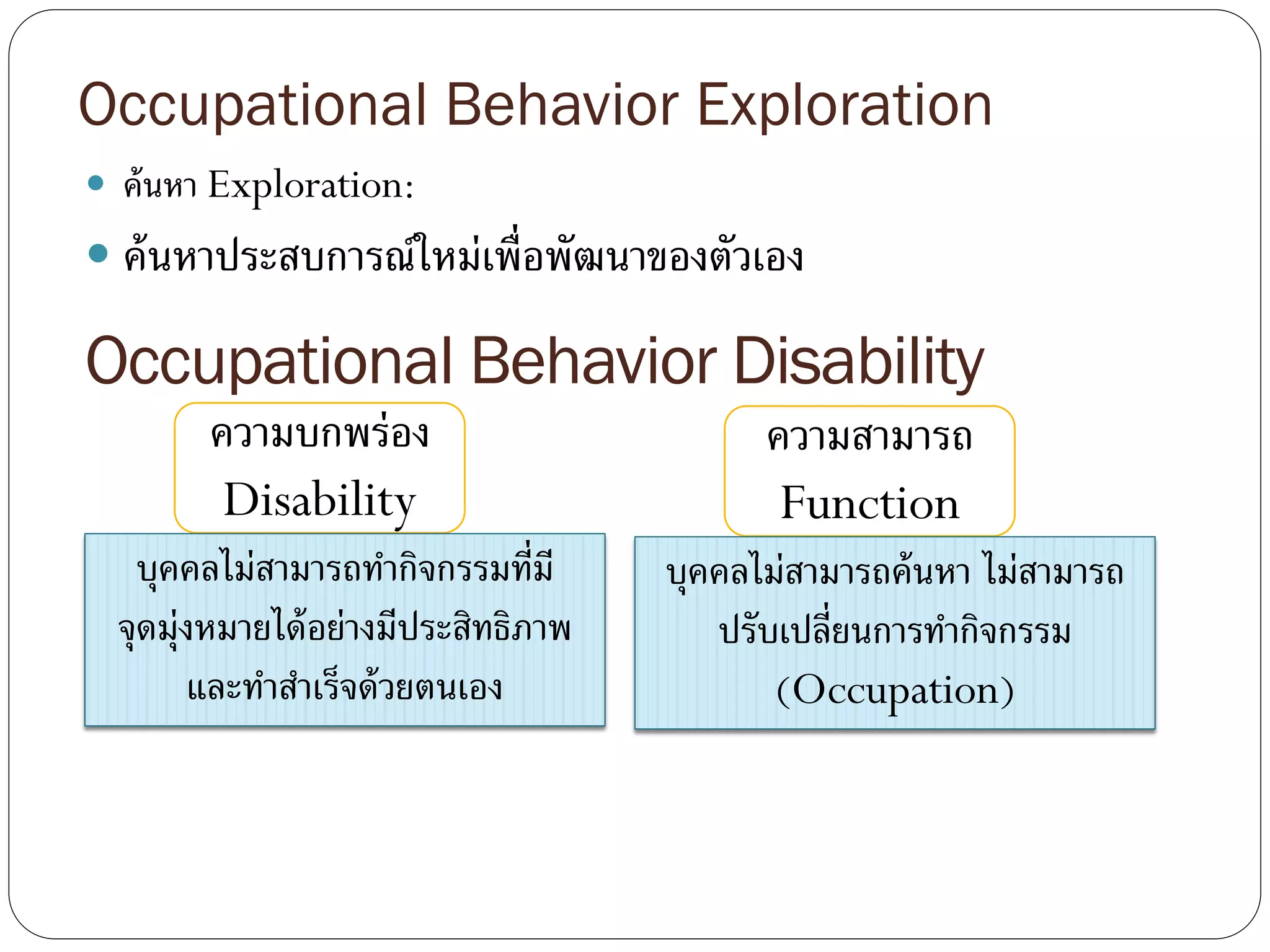
Occupational Behavior Exploration
 ค้นหา Exploration:
 ค้นหาประสบการณ์ใหม่เพื่อพัฒนาของตัวเอง
Occupational Behavior Disability
ความบกพร่อง
Disability
บุคคลไม่สามารถทากิจกรรมที่มี
จุดมุ่งหมายได้อย่างมีประสิทธิภาพ
และทาสาเร็จด้วยตนเอง
ความสามารถ
Function
บุคคลไม่สามารถค้นหา ไม่สามารถ
ปรับเปลี่ยนการทากิจกรรม
(Occupation)
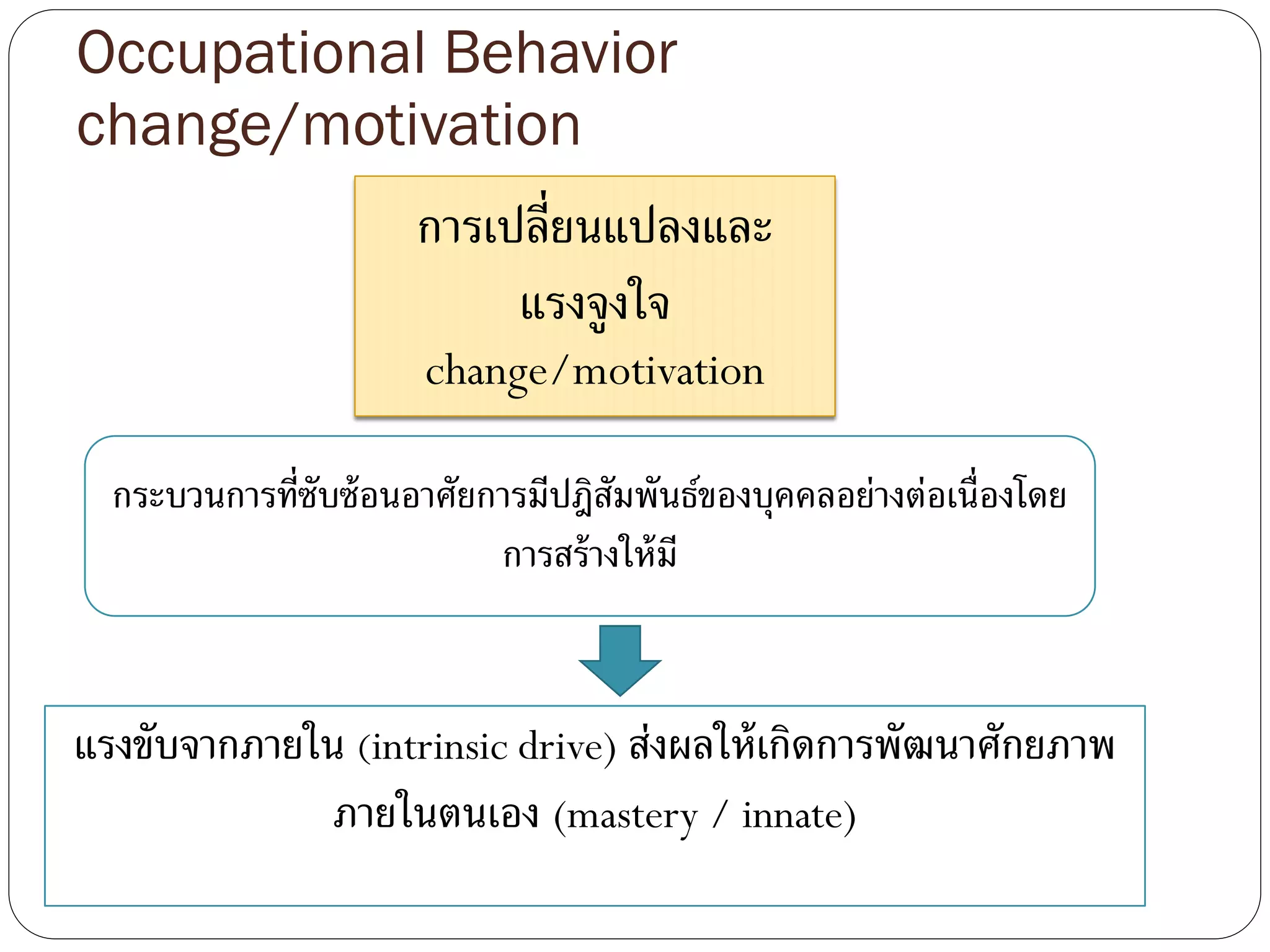
Occupational Behavior
change/motivation
แรงขับจากภายใน (intrinsic drive) ส่งผลให้เกิดการพัฒนาศักยภาพ
ภายในตนเอง (mastery / innate)
การเปลี่ยนแปลงและ
แรงจูงใจ
change/motivation
กระบวนการที่ซับซ้อนอาศัยการมีปฎิสัมพันธ์ของบุคคลอย่างต่อเนื่องโดย
การสร้างให้มี
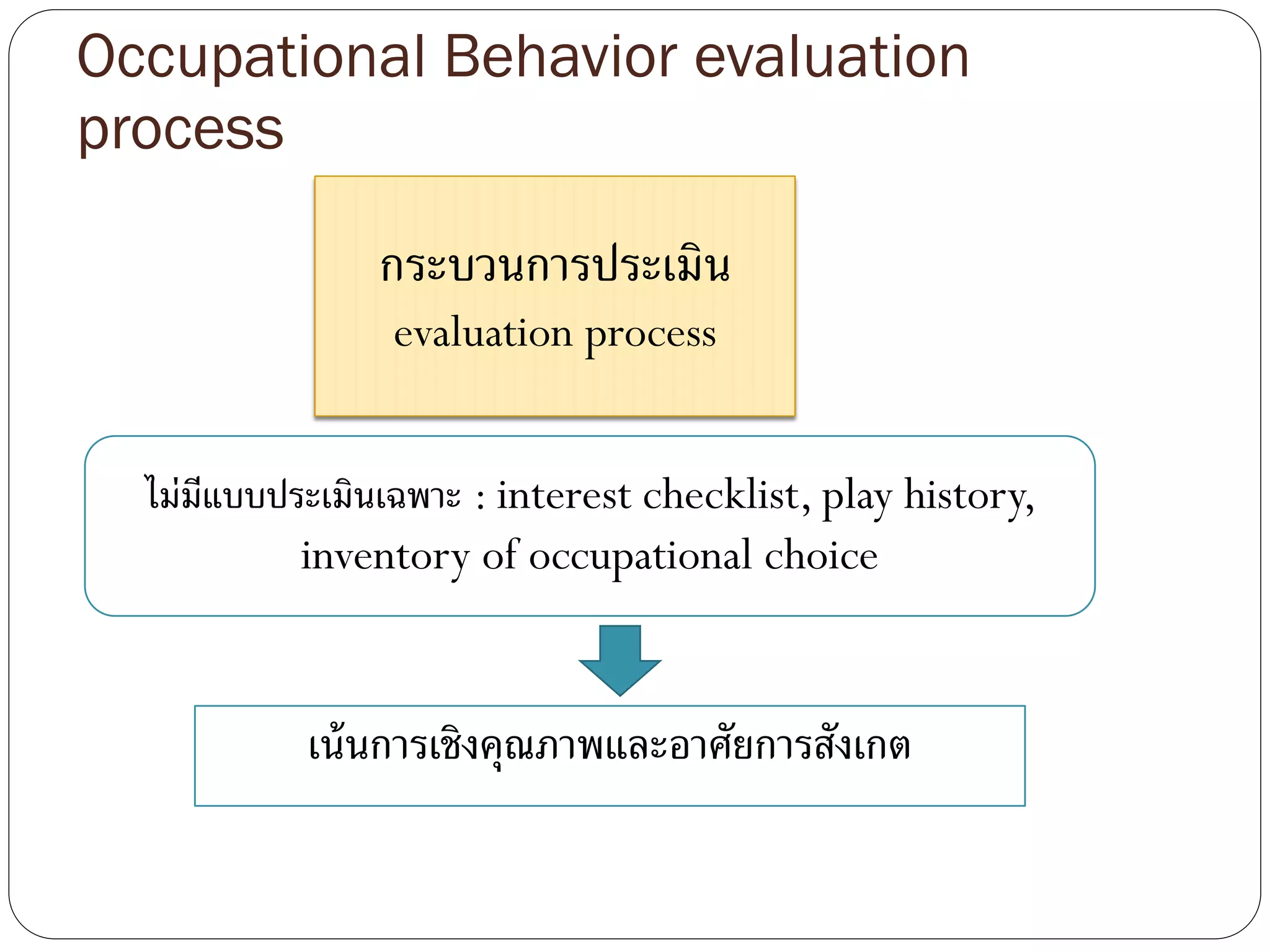
Occupational Behavior evaluation
process
เน้นการเชิงคุณภาพและอาศัยการสังเกต
กระบวนการประเมิน
evaluation process
ไม่มีแบบประเมินเฉพาะ : interest checklist, play history,
inventory of occupational choice
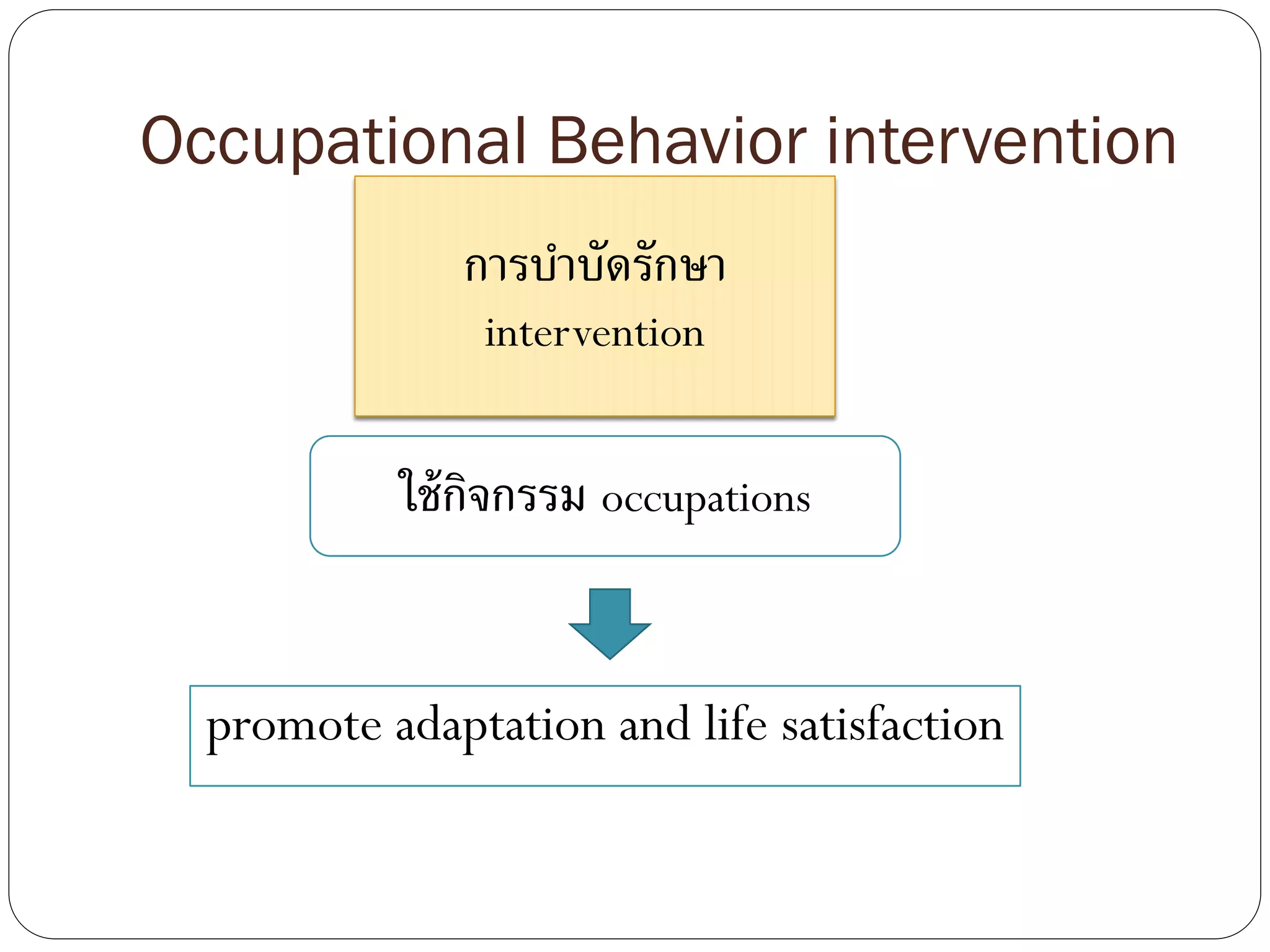
Occupational Behavior intervention
promote adaptation and life satisfaction
การบาบัดรักษา
intervention
ใช้กิจกรรม occupations

05 occupational adaptation oa

  • 1.
    การปรับตัวของการประกอบกิจกรรมการดาเนินชีวิต Occupational Adaptation(OA) model ผศ.สุภาวดี พุฒิหน่อย ภาควิชากิจกรรมบาบัด คณะเทคนิคการแพทย์ มหาวิทยาลัยเชียงใหม่
  • 2.
    • คือ ทฤษฎีหรือ แนวคิดชุดหนึ่งที่ช่วยอธิบายสิ่งต่างๆTheory • คือ แนวคิดต่างๆ ที่นาเสนอบางอย่างในจิตสานึกของแต่ละบุคคลจากง่าย รูปธรรม และซับซ้อน ผ่านสัญลักษณ์และภาษาConcepts • คือ หลักการที่อธิบายความสัมพันธ์ระหว่างสองแนวคิดหรือ มากกว่า Principles • คือ แบบจาลองของการปฏิบัติ หรือ การนาปรัชญาและการจัดระบบแนวคิดต่างๆ สู่การปฏิบัติทางวิชาชีพ การประเมิน และแนวทางการรักษา ทั้งนี้ในทางกิจกรรมบาบัดสากล เรานิยม Model of Human Occupation (MOHO) - Kielhofner (1997), Canadian Model of Occupational Performance (CMOP) - Law, et al. (1996), Person-Environment-Occupation- Performance (PEOP) - Christiansen & Baum (1997) และ Occupational Adaptation - Schkade & Schultz (1992) A Model of Practice • คือ องค์ความรู้ทางวิชาชีพและระบุด้านที่เฉพาะเจาะจงของหลักการที่สาคัญทาง วิชาชีพ ซึ่งในกรอบอ้างอิงหนึ่งจะ ประกอบด้วยคาอธิบายเรื่องประชากร ทฤษฏีเกี่ยวกับการเปลี่ยนแปลง การทาหน้าที่ของร่างกายและความบกพร่อง หลักการต่างๆ ในการประเมินรักษา บทบาทของผู้ให้บริการทางการแพทย์ และการใช้เครื่องมือประเมิน เช่น Biomechanical Frame of Reference (FoR), Psychosocial Frames of Reference (เช่น Cognitive Disability FoR, Behavioral FoR, Cognitive-behavioral FoR), Developmental FoR, Motor control FoR, Neurodevelopmental FoR, Perceptual motor training FoR, Sensorimotor FoR, Sensory integration FoR เป็นต้น Frames of Reference • ข้างต้นทางกิจกรรมบาบัด เรานิยมจัดกลุ่มหลังจากวิจัยและพัฒนา ต่อเนื่องมากขึ้น เป็น Occupational Performanceนอกจากนี้ Models ต่างๆ
  • 3.
    Occupational Adaptation(OA) model ผสมผสานองค์ความรู้ -Occupation -Adaptation จุดเริ่มแรกเป็น frame of referenceต่อมา พัฒนาเป็น theory มุ่งเน้นไปที่การปรับตัว และเกิดทักษะการทางาน (functional skills) Dr. Jeanette Schkade and Dr. Sally Schultz. Theory published in 1992 Developed atTexas Woman’s University Janette King Schkade
  • 4.
    หลักการ:1  ความสามารถในการทา Occupationเป็นกระบวนการที่เกิดขึ้นตลอดชีวิตโดยอาศัย กระบวน ปรับ(adaptation) ความต้องการในการทากิจกรรม (demands to perform)  ความต้องการของสิ่งแวดล้อมในการทากิจกรรม (demands to perform) เป็น ธรรมชาติที่เกิดขึ้น เป็นส่วนของการมีปฏิสัมพันธ์ของบุคคลกับสิ่งแวดล้อม (part of person- occupational environment interactions)  ถ้า demand ในการทากิจกรรมมากเกินไป ไม่สัมพันธ์กับความสามารถที่มีอยู่ในตัว บุคคลจะส่งผลให้ไม่สามารถทากิจกรรมได้  จะก่อให้เกิดภาวะ dysfunction
  • 5.
    หลักการ:2  ความสามารถในการปรับตัว (Adaptivecapacity ) จะช่วยชดเชยส่วนที่ บกพร่องไป  Disability  Impairment  Stress  กรณีส่วนที่บกพร่องเกิดขึ้นมากจะต้องอาศัยการปรับเปลี่ยนมากด้วย Sufficient mastery Ability to adapt success in occupational performance เป็นความสัมพันธ์กันระหว่าง occupational performance และ human adaptation
  • 6.
    Desire for mastery Press for mastery Demand formastery กระบวนการปรับตัวของมนุษย์ (Occupational Adaptation Process)  องค์ประกอบที่เกี่ยวข้องมี 3 องค์ประกอบ environmentinteractionperson element element element - ทั้ง 3 องค์ประกอบจะมีปฏิสัมพันธ์อย่างเป็นระบบ เกิดขึ้นตลอดเวลา - ถ้ามีองค์ประกอบใดบกพร่องไปจะมีผลกระทบซึ่งกันและกัน - ดังนั้นจาเป็นจะต้องมีการปรับตัวเพื่อให้เกิด achieve mastery ส่งผลต่อ health และ well-being
  • 8.
    เป็นปัจจัยภายใน ของบุคคล desire for mastery ประกอบไปด้วย sensorimotor psychosocialcognitive person element เกี่ยวข้องกับ Occupation contribution ขึ้นอยู่กับ occupational circumstances
  • 9.
    person ต้องสามารถมี internal adaptive responseต่อ occupational challenge พฤติกรรมที่แสดงออกมาจากการมี adaptive response เรียกว่า occupational response บุคคลที่มีความสามารถ (Mastery) เอาชนะสิ่งแวดล้อม เป็นสิ่งที่อยู่ภายในตัวบุคคล
  • 10.
  • 11.
    Interaction element Interaction between desire formastery and demand for mastery= press for mastery press for mastery ก่อให้เกิด occupational challenge Internal & external factors continuously interact Actions & behavior Occupational challenge
  • 13.
    Occupational Adaptation Process Through the subprocesses one plans the adaptation response, evaluates outcome and integrates evaluation as adaptation internal to the person A. Generation subprocess B. Evaluation subprocess C. Integration subprocess
  • 14.
    A. Generation subprocess ประกอบไปด้วย2 ขั้นตอน เกิดขึ้นตลอดช่วงชีวิต New existing ขั้นที่ 1 เกี่ยวกับ adaptive response mechanisms ประกอบไปด้วย 1.adaptation energy 2.adaptive response mode: strategies & patterns 3.adaptive response behavior Cognitive awareness primary level high level hyperstable Hypermobile or transitional ขั้นที่ 2 adaptation gestalt planned action Body systems: sensorimotor, cognitive and psychosocial ขั้นที่ 1+ ขั้นที่ 2 internal adaptive response
  • 15.
    B. Evaluation subprocess occupationalresponseบุคคลจะประเมินคุณภาพ relative mastery efficiency effectiveness satisfaction self others positive results negative results จาเป็นต้องปรับ adaptation เพียงเล็กน้อย อาศัยการบูรณาการข้อมูลจาก subprocess ไปยังตัว บุคคล C. Integration subprocess Engaged when there is need for further adaptation
  • 16.
    Function-Dysfunction continuum demand for performance person’sability to adapt exceed เกิดภาวะ dysfunction Continuous inability ก่อให้เกิด occupational response ต่อ occupational challenge more adaptive the person more functional he/she is in daily activities
  • 17.
    Implications for Practice client’sability maximize effectiveness Main goal to adapt Client assist in choosing occupational roles guide treatment occupational readiness and occupational activity Using OT focuses on clients ability to adapt directing intervention towards the three subprocesses meaningful activities
  • 18.
    Implications for Practice Therapeutic use of occupation as a tool to promote adaptive capacity of clients  To improve adaptiveness, intervention is focused on improving and activating client’s internal adaptive response  OT manages the occupational environment to promote the client’s ability to adapt  Client is agent of own change.
  • 19.
    Reference  Schultz, 2009.Theoryof OccupationalAdaptation. In Crepeau, E.B, Cohn, E.S. & Schell. B.A. 2009. Willard’s & Spackman’s Occupational Therapy. 11th Edition. Philadelphia: LippincottWilliams &Wilkins  [Online]Theory of OccupationalAdaptation - Overview by Dr Sally Schultz  Schkade, J. & Schultz, S. 1992. OccupationalAdaptation:Toward a HolisticApproach for Contemporary Practice, Part 1. American Journal Of OccupationalTherapy.46 (9) p29 -p37
  • 20.
    Occupational behavioral (OB) model ผศ.สุภาวดี พุฒิหน่อย ภาควิชากิจกรรมบาบัด คณะเทคนิคการแพทย์ มหาวิทยาลัยเชียงใหม่ Mary Reilly 1969
  • 21.
     Occupational BehaviorTheorist work of USC OccupationalTherapy faculty Mary Reilly  Occupational Behavior อยู่บนพื้นฐานมุมมองที่เชื่อว่า man need to master/alter and improve environment discover what is meaningful (play)
  • 22.
    Occupational Behavior theories playis a complex behavior Work-Play continuum การทางานและการเล่นมีส่วนเกี่ยวเนื่องกัน achievement theory (exploration/competence) role theory places childhood play การเล่นของเด็ก as the primary vehicle for the development of skills Competence in adulthood ศักยภาพในวัยผู้ใหญ่
  • 23.
    Occupational Behavior theories Theoriesof play play behavior ความอยากรู้อยากเห็น ความต้องการค้นหาของเด็ก การเล่นจะเป็นพื้นฐานให้เด็กได้เกิด การปรับตัวเมื่อเข้าสู่วัยผู้ใหญ่
  • 24.
    a very basiclevel of human function sensory processing and neural organization to enhance clients' abilities to effectively function in their daily life environments aspects of play+ social aspects อาศัยการมีปฏิสัมพันธ์ระหว่างเด็กและผู้ดูแล ศักยภาพที่ดีในวัยผู้ใหญ่
  • 25.
    sensory integration practice individual'sabilities focuses on organize and derive precise information ภายในร่างกายและสิ่งแวดล้อม ช่วงขวบแรกของชีวิต เด็กทารกจะเล่น วัตถุด้วย sensorimotor และให้ ความสนใจ action และ sensation
  • 26.
    Constructive play เด็กเรียน ลักษณะของวัตถุ(rules of objects) ได้แก่ ความรู้เกี่ยวกับคุณสมบัติของวัตถุ พื้นผิว สีรูปทรง Feedback ช่วยกระตุ้น เกิดการพัฒนา cognitive processes output is combining and sequencing objects in play Imagery symbolization
  • 27.
    expands on therules of people Social play third year of life กิจกรรมการเล่นเกี่ยวข้องกับ physical and/or verbal interactions กับ เพื่อน input of cultural norms เกิดการพัฒนาทักษะทางสังคม
  • 28.
    Occupational Behavior Exploration ค้นหา Exploration:  ค้นหาประสบการณ์ใหม่เพื่อพัฒนาของตัวเอง Occupational Behavior Disability ความบกพร่อง Disability บุคคลไม่สามารถทากิจกรรมที่มี จุดมุ่งหมายได้อย่างมีประสิทธิภาพ และทาสาเร็จด้วยตนเอง ความสามารถ Function บุคคลไม่สามารถค้นหา ไม่สามารถ ปรับเปลี่ยนการทากิจกรรม (Occupation)
  • 29.
    Occupational Behavior change/motivation แรงขับจากภายใน (intrinsicdrive) ส่งผลให้เกิดการพัฒนาศักยภาพ ภายในตนเอง (mastery / innate) การเปลี่ยนแปลงและ แรงจูงใจ change/motivation กระบวนการที่ซับซ้อนอาศัยการมีปฎิสัมพันธ์ของบุคคลอย่างต่อเนื่องโดย การสร้างให้มี
  • 30.
    Occupational Behavior evaluation process เน้นการเชิงคุณภาพและอาศัยการสังเกต กระบวนการประเมิน evaluationprocess ไม่มีแบบประเมินเฉพาะ : interest checklist, play history, inventory of occupational choice
  • 31.
    Occupational Behavior intervention promoteadaptation and life satisfaction การบาบัดรักษา intervention ใช้กิจกรรม occupations