Downloaded 100 times

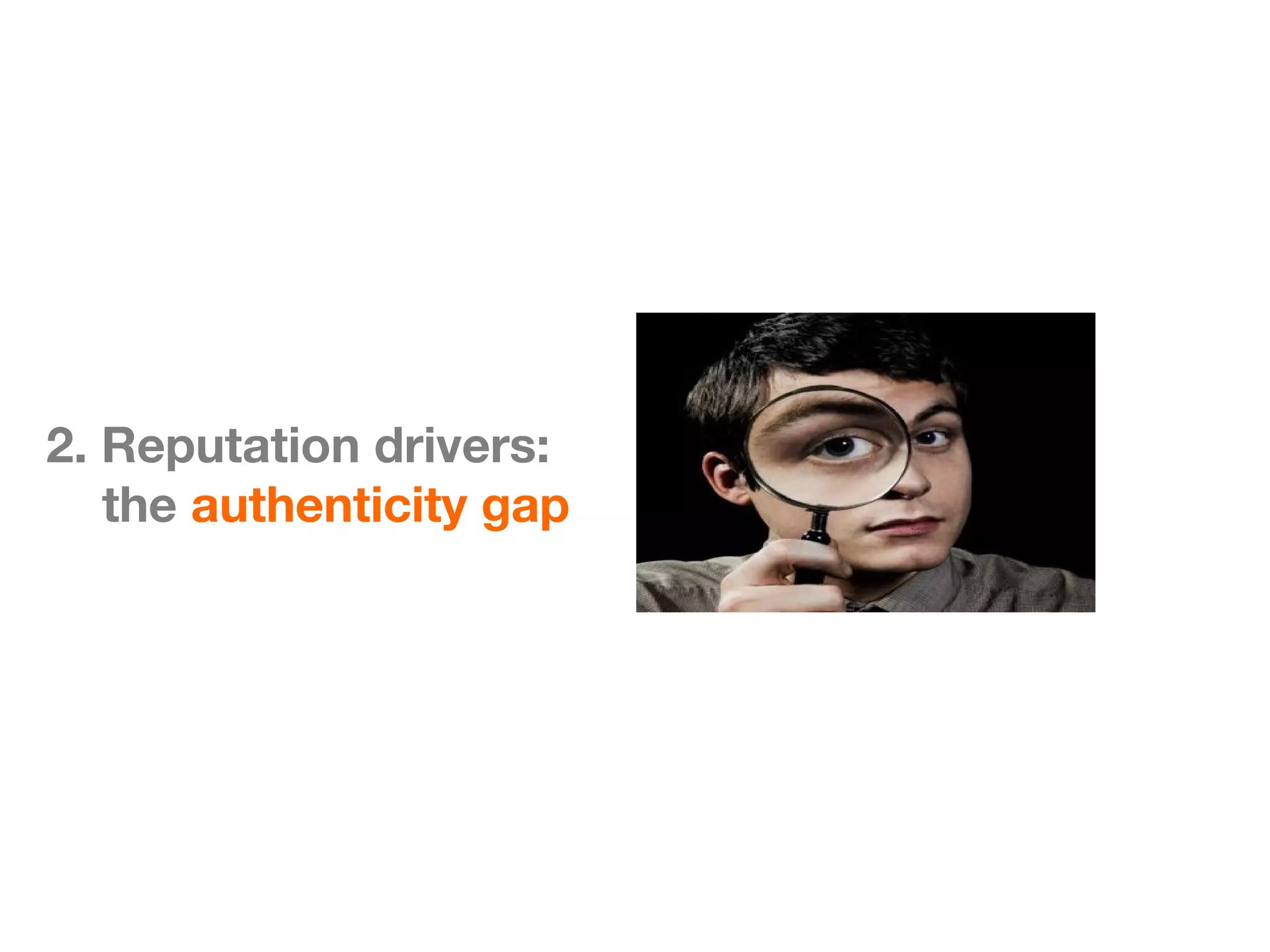
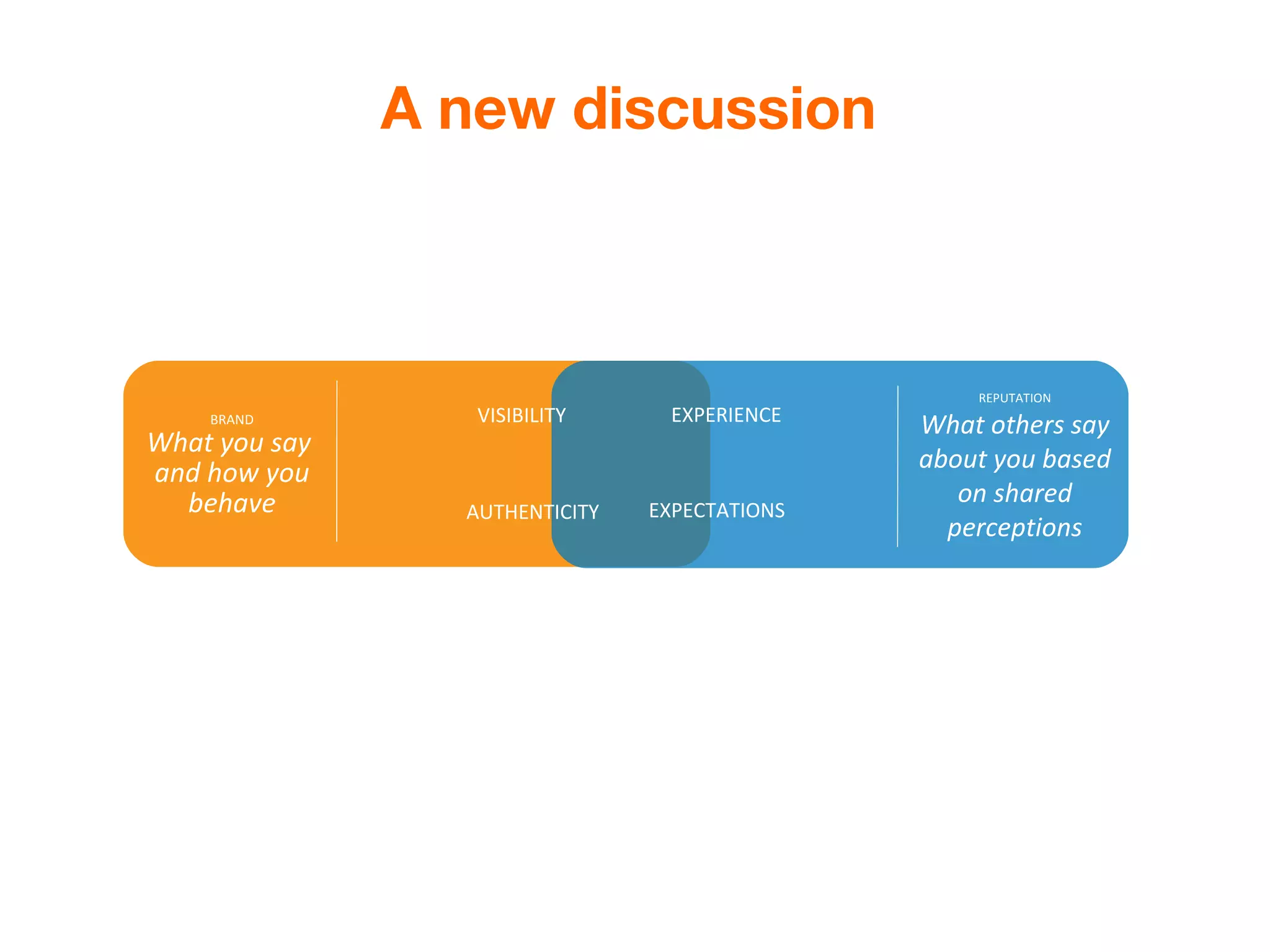
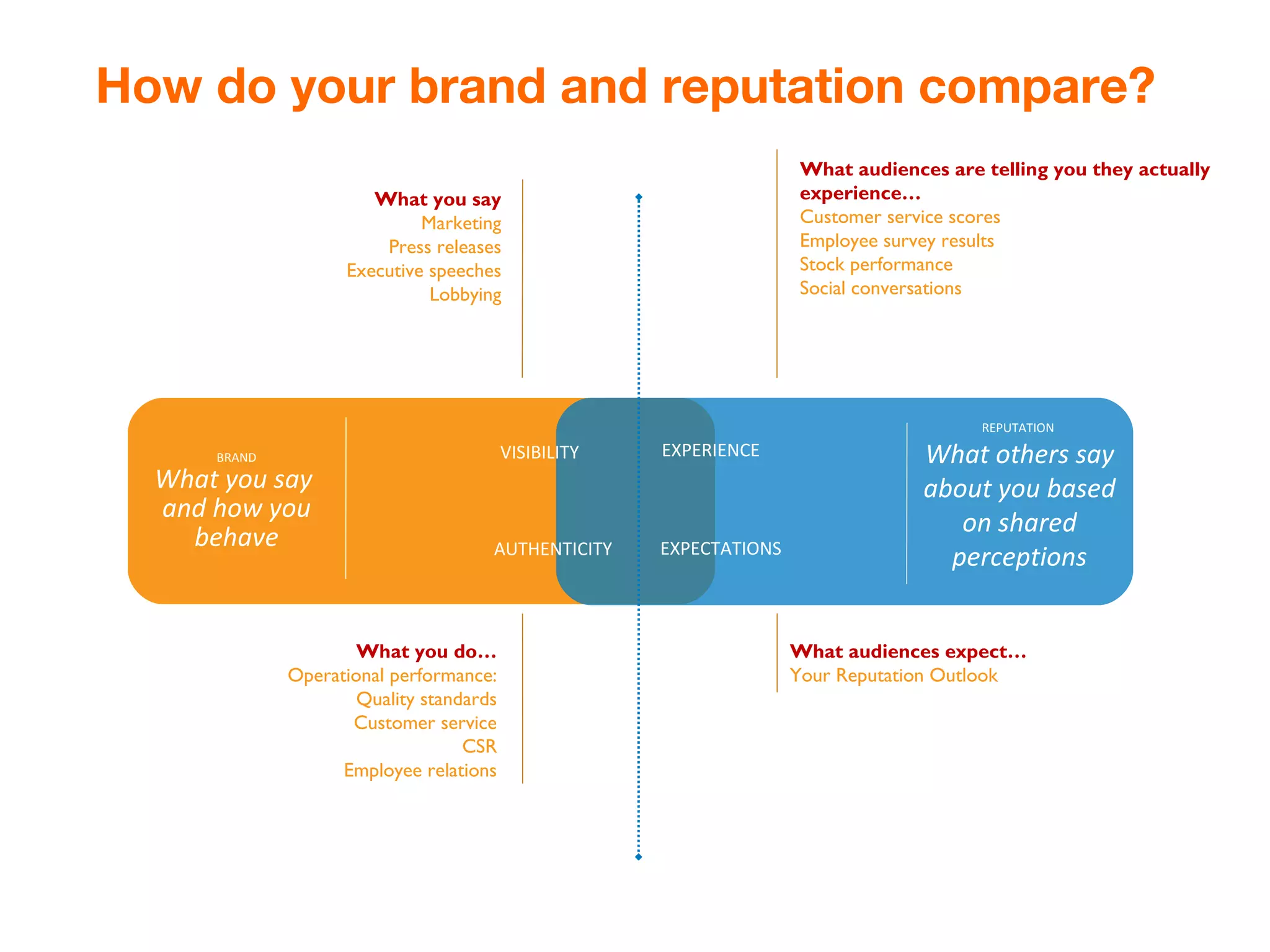
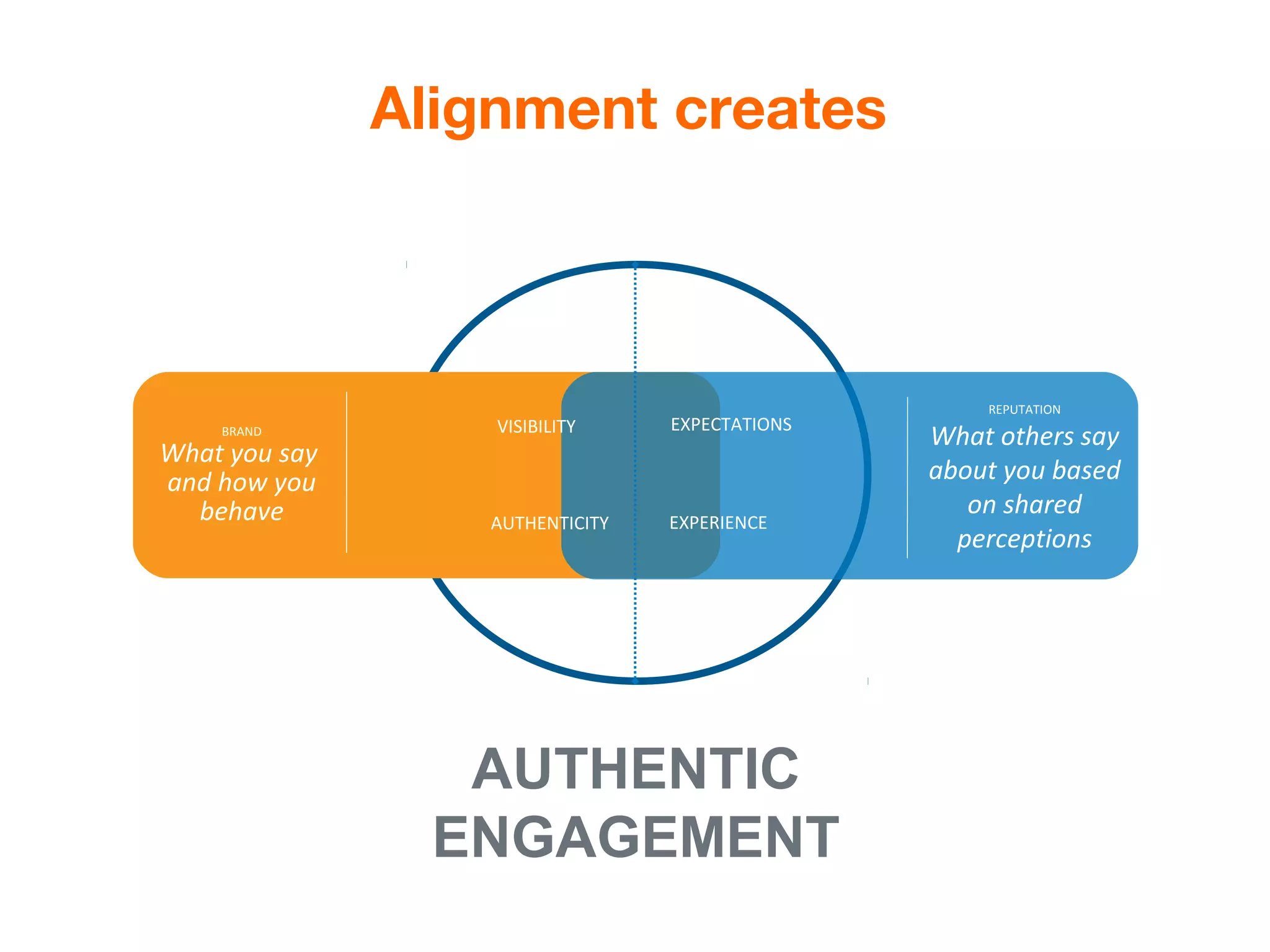
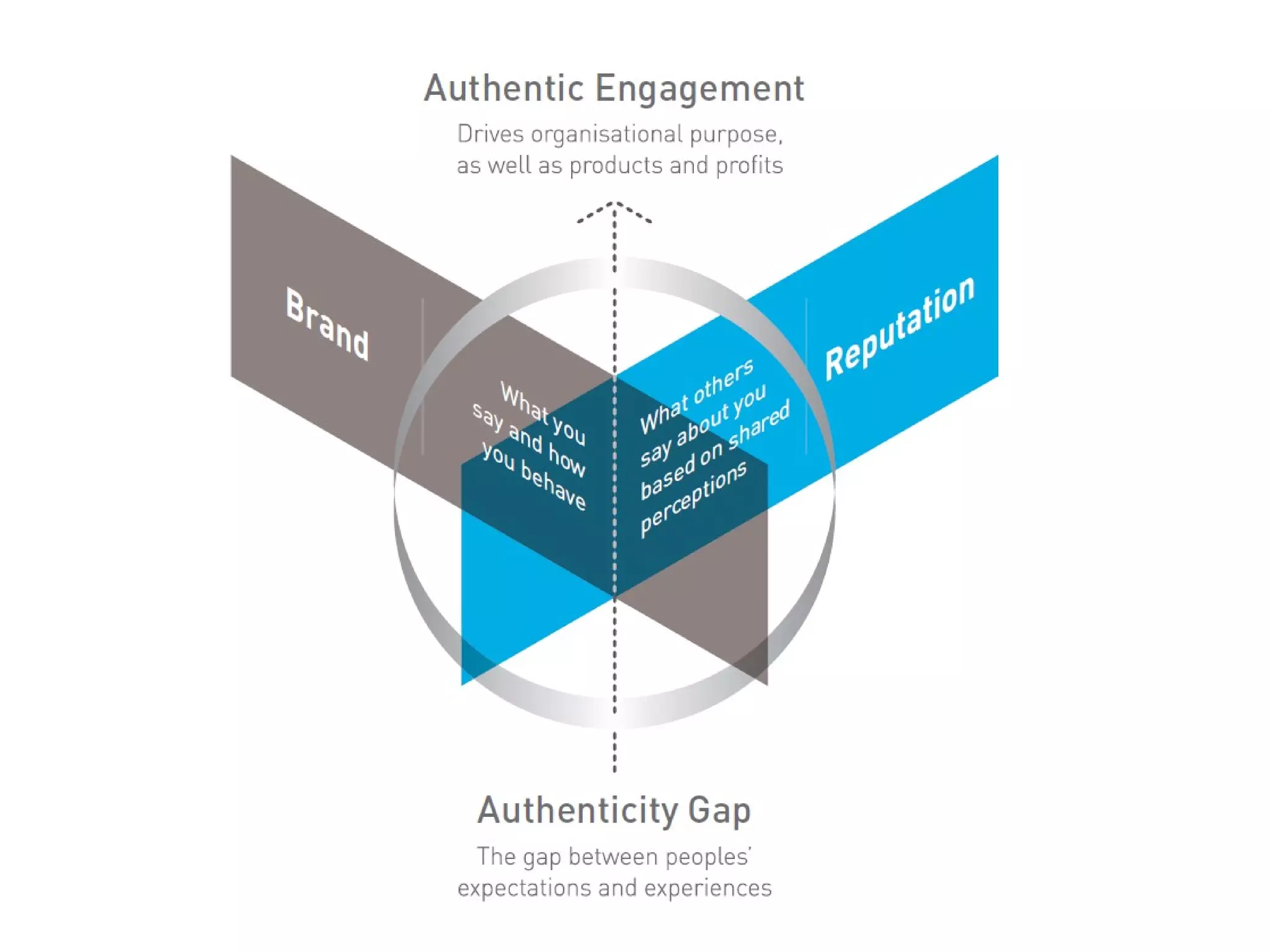
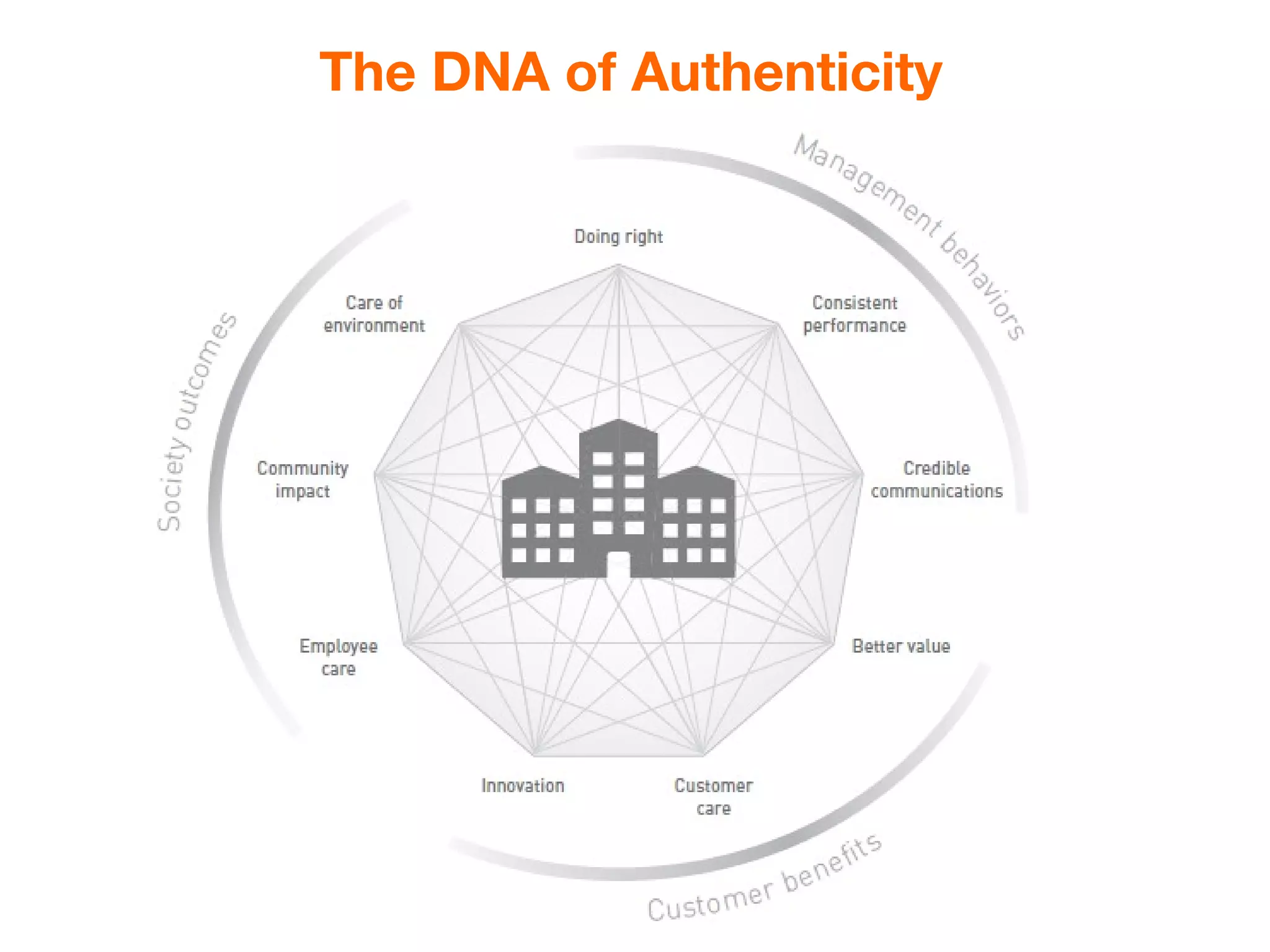
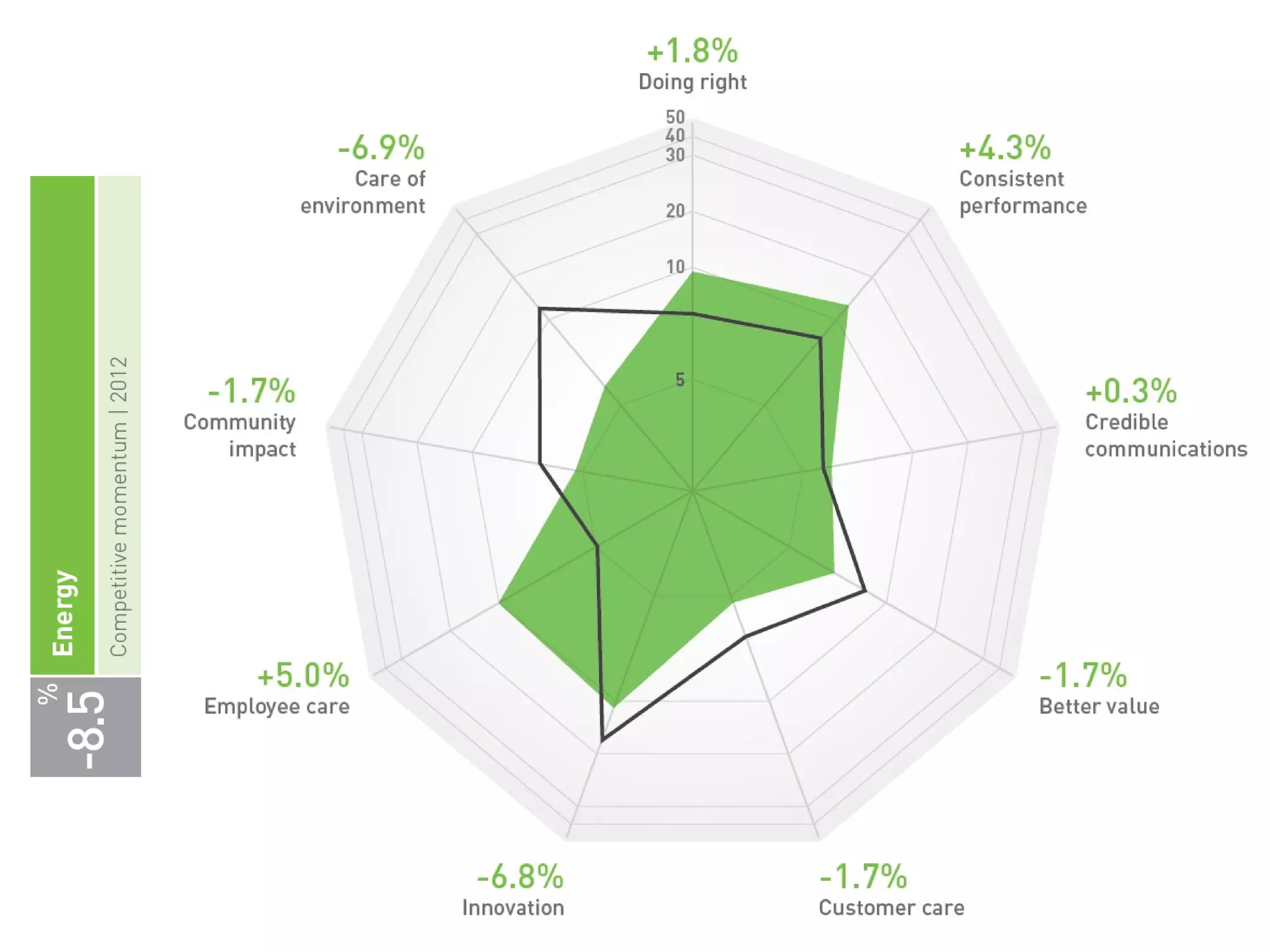
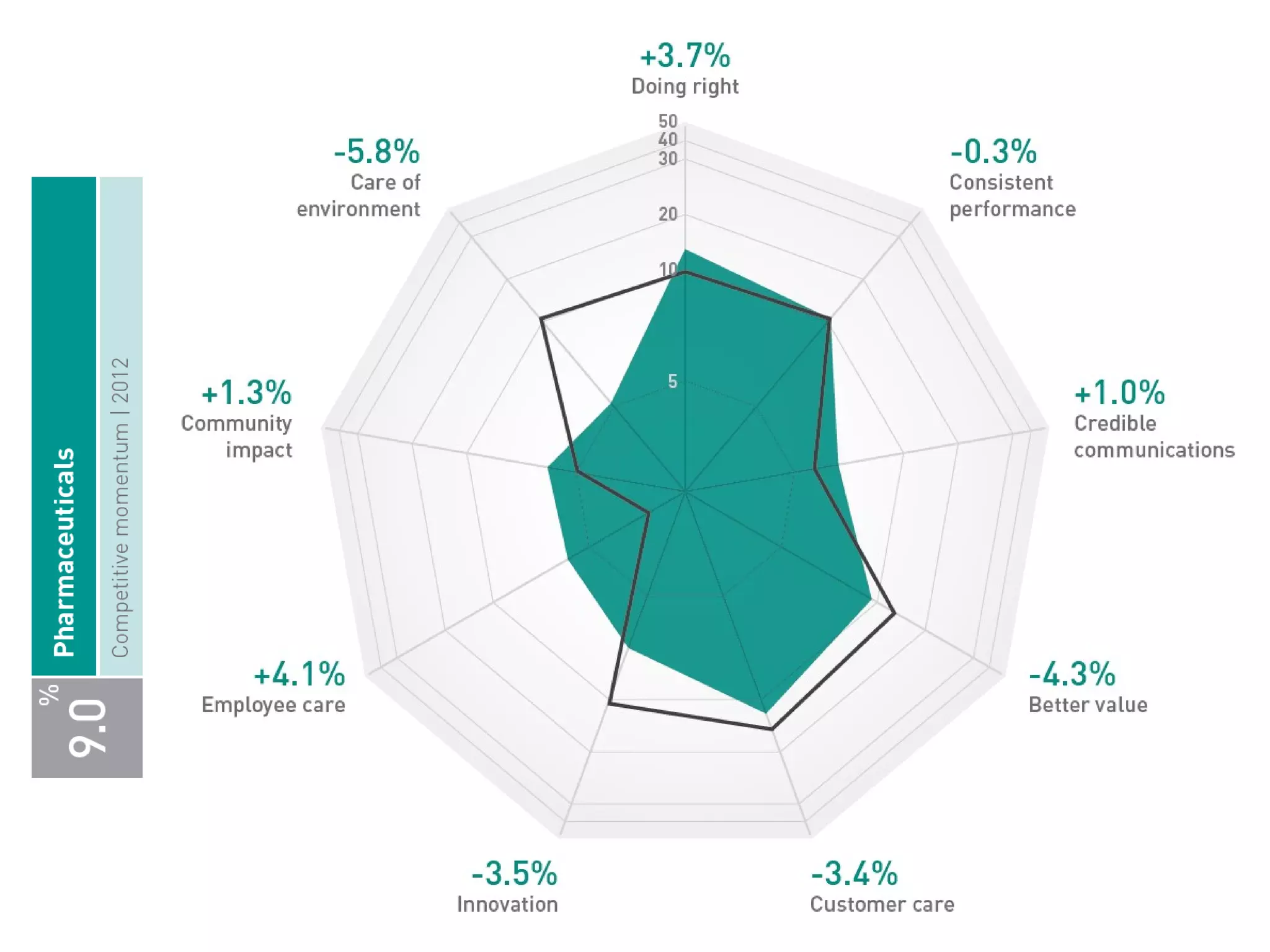
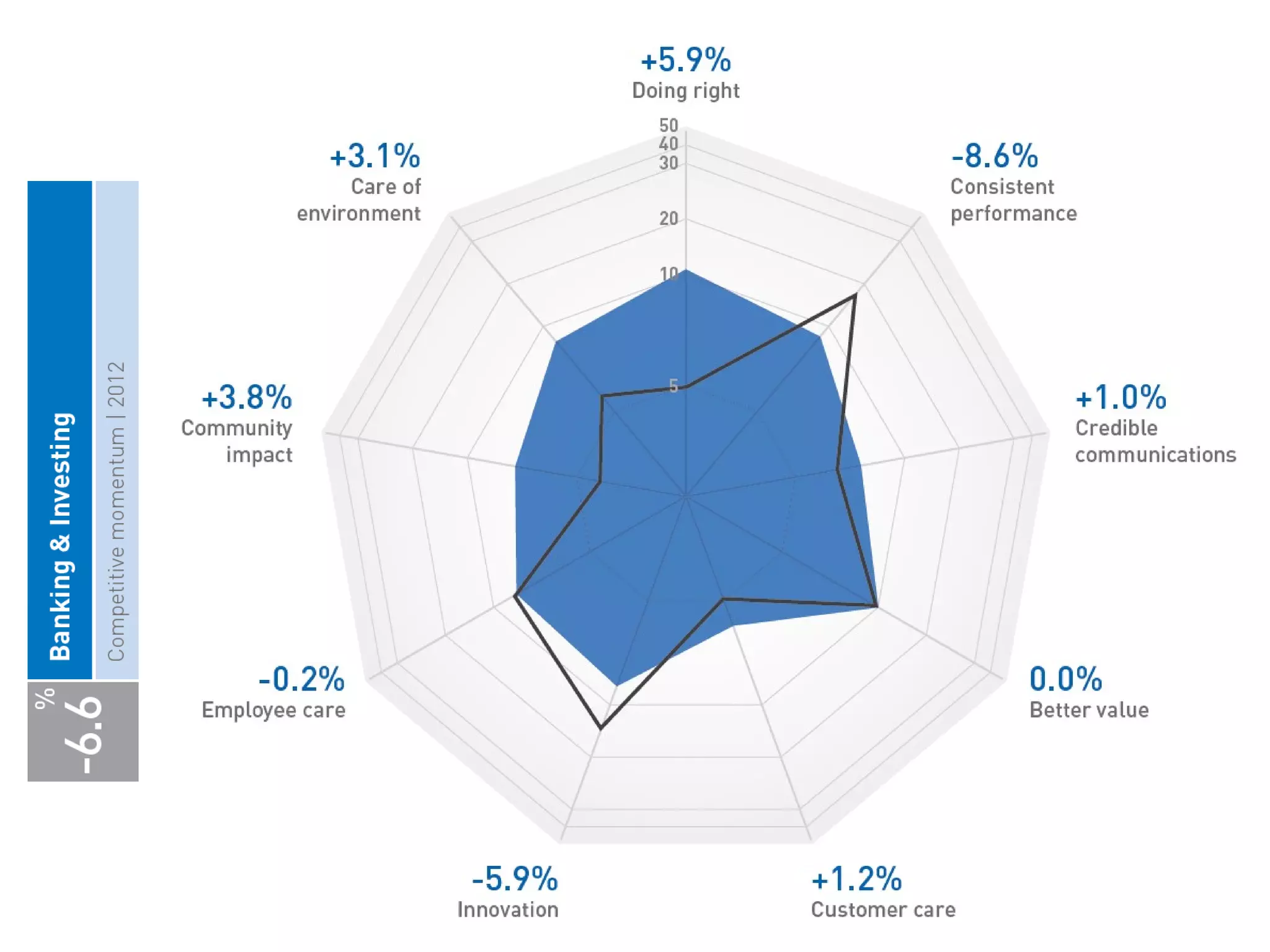
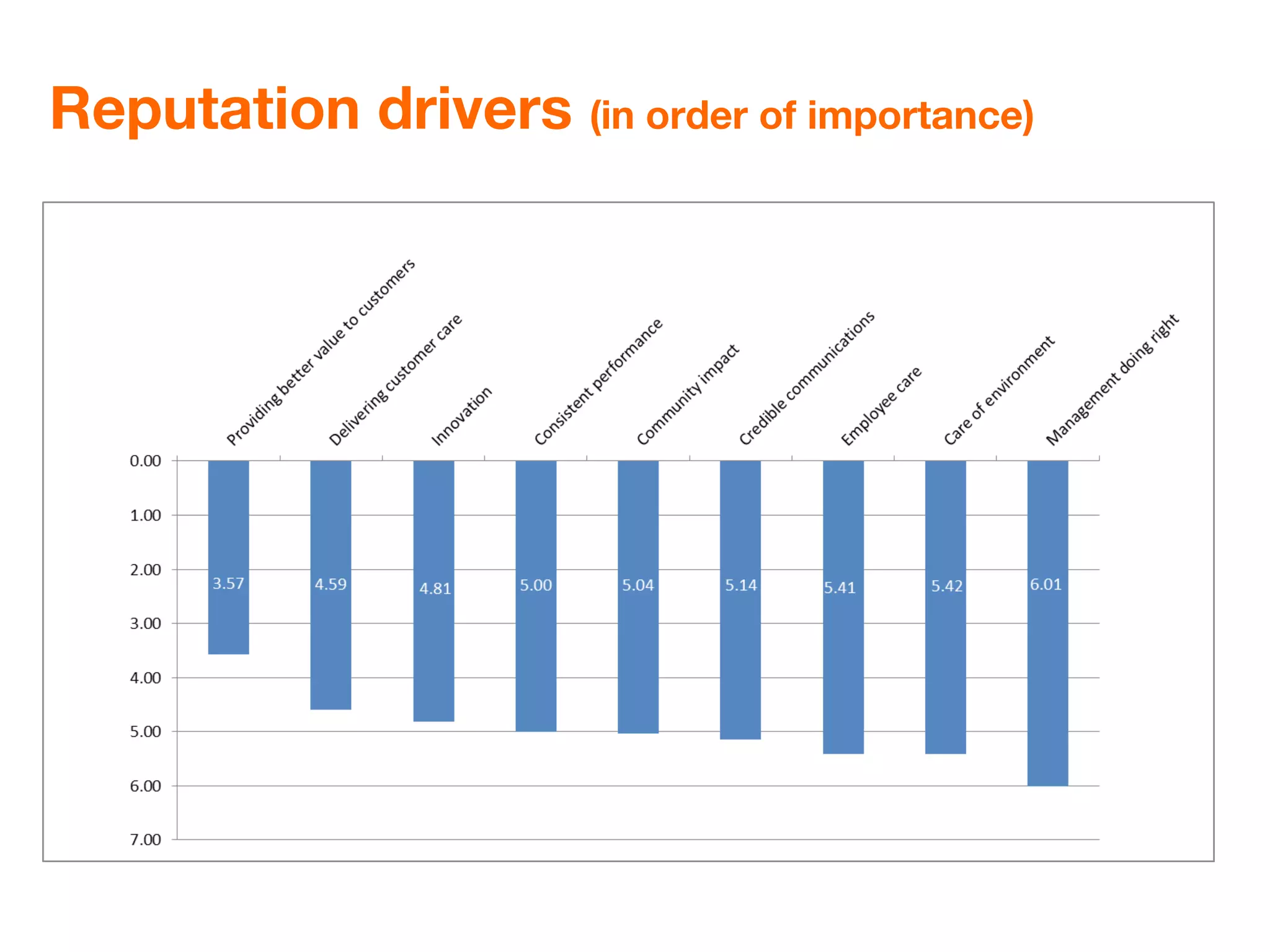
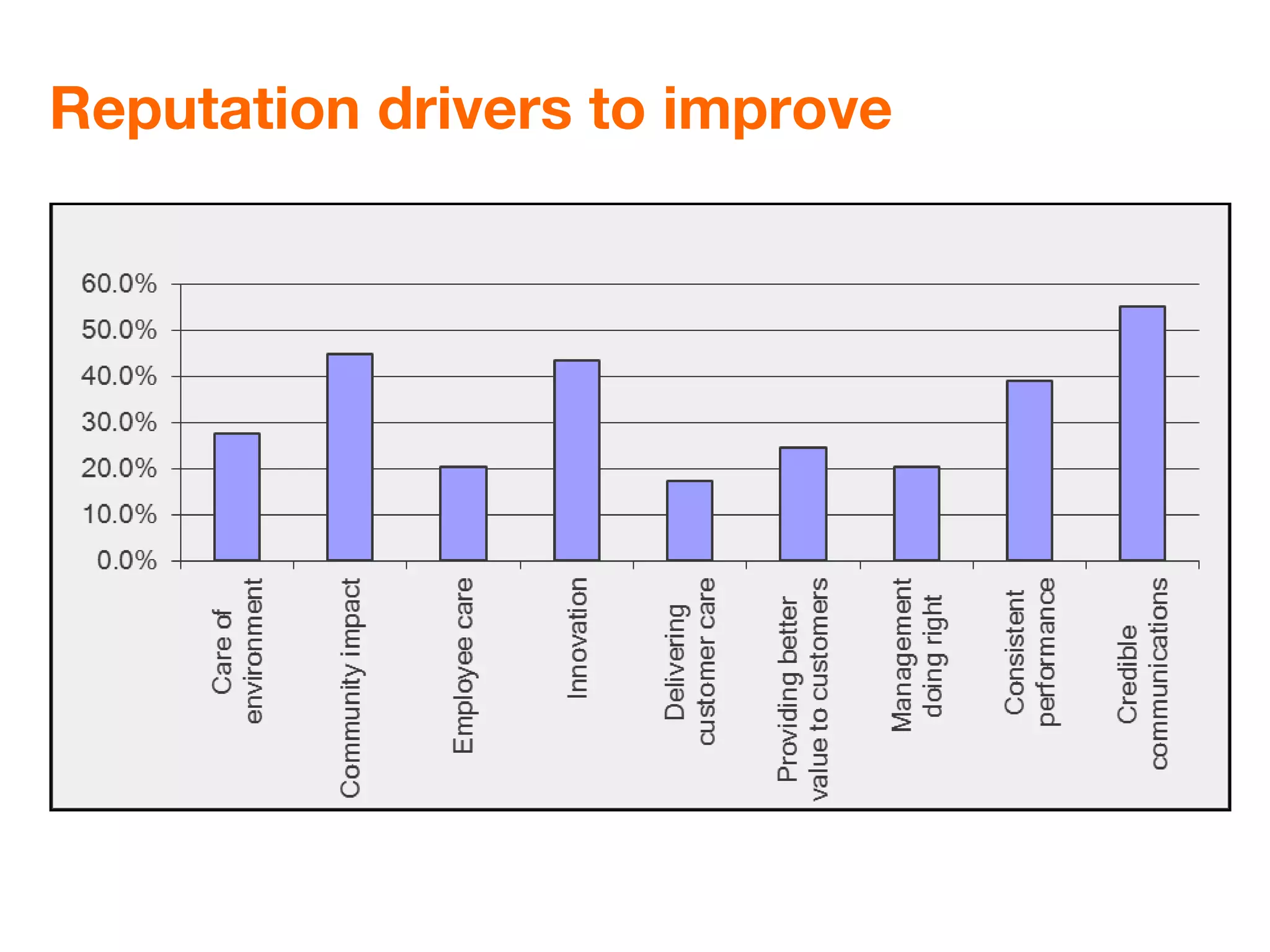
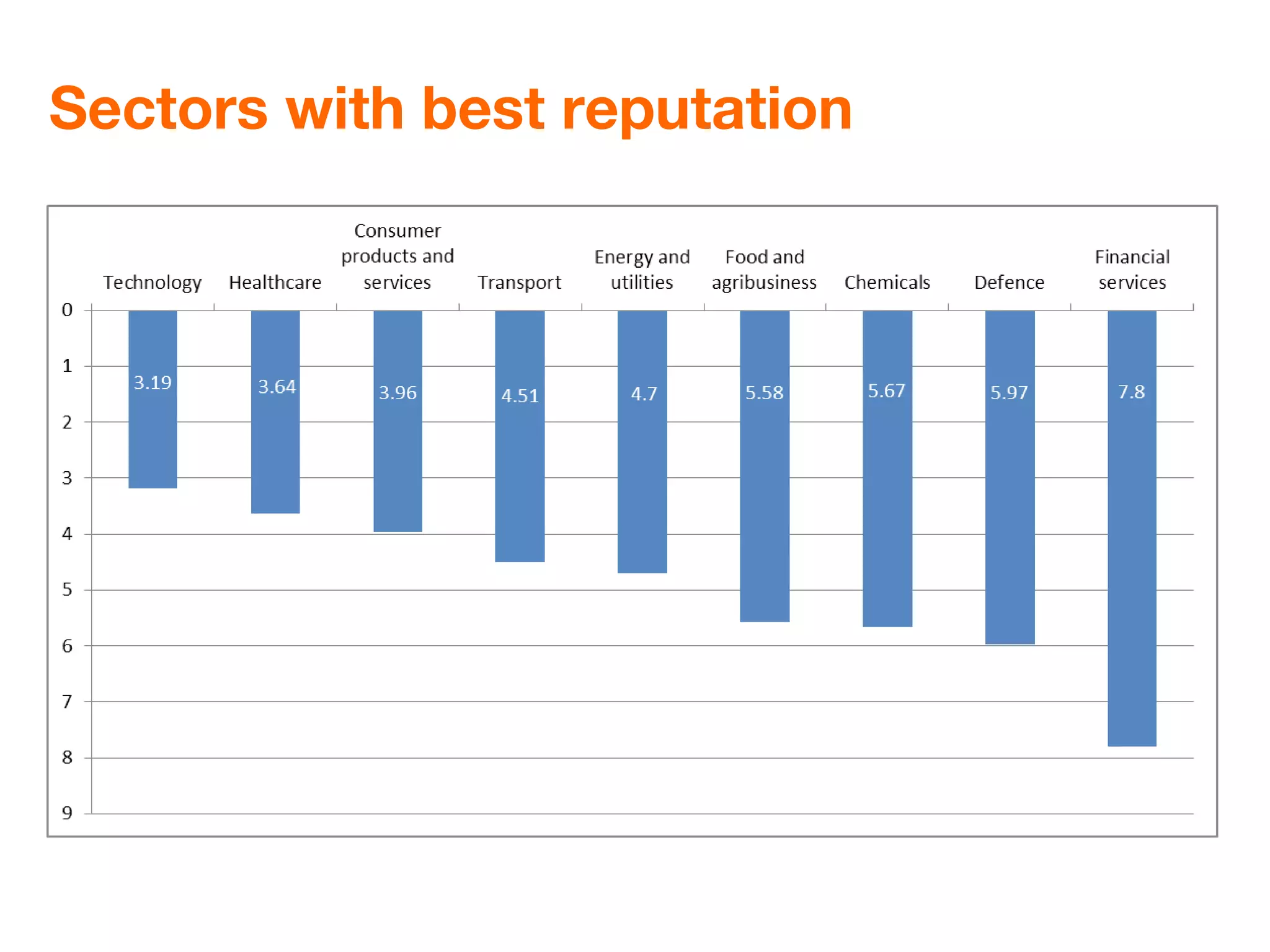

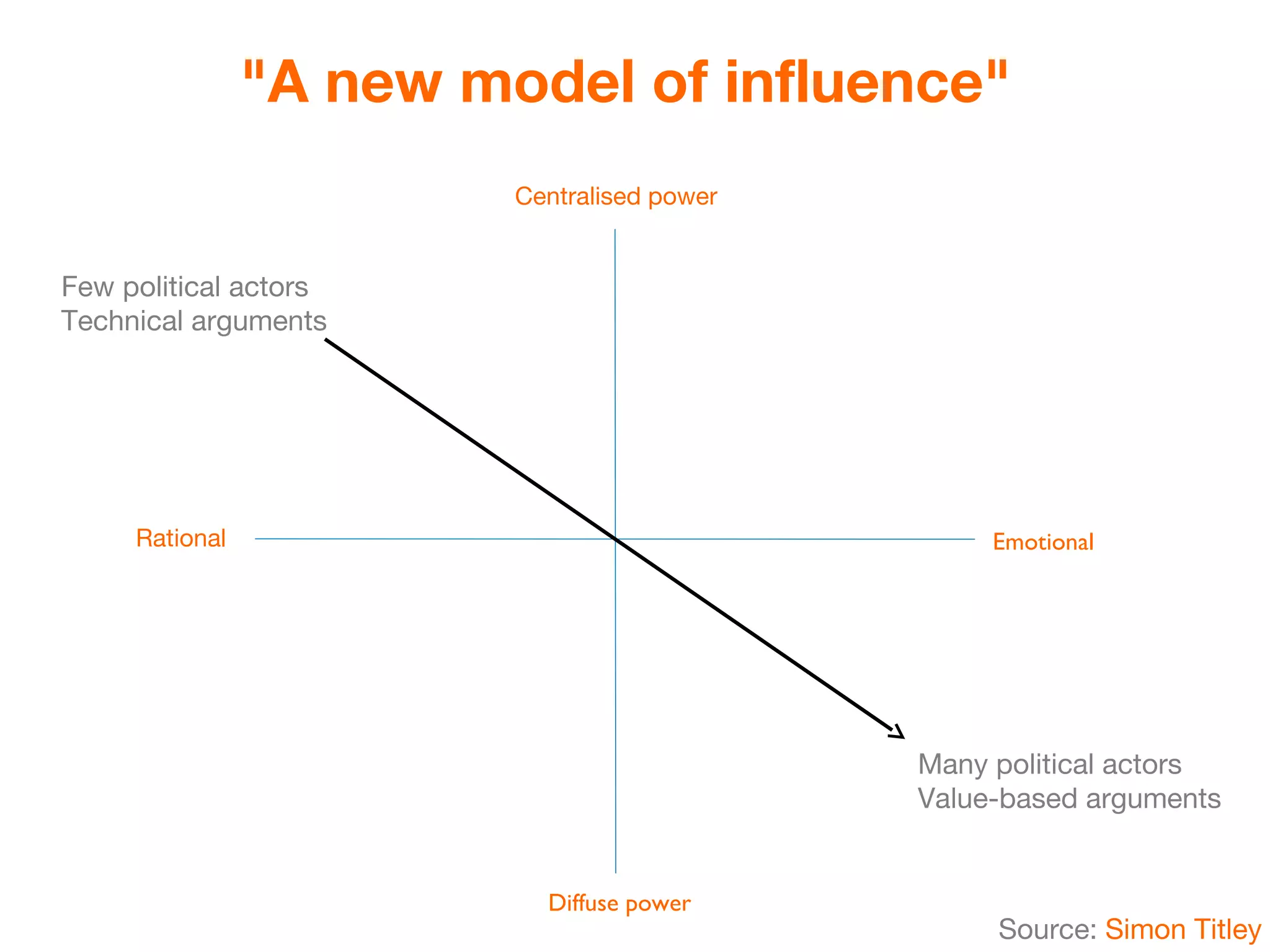
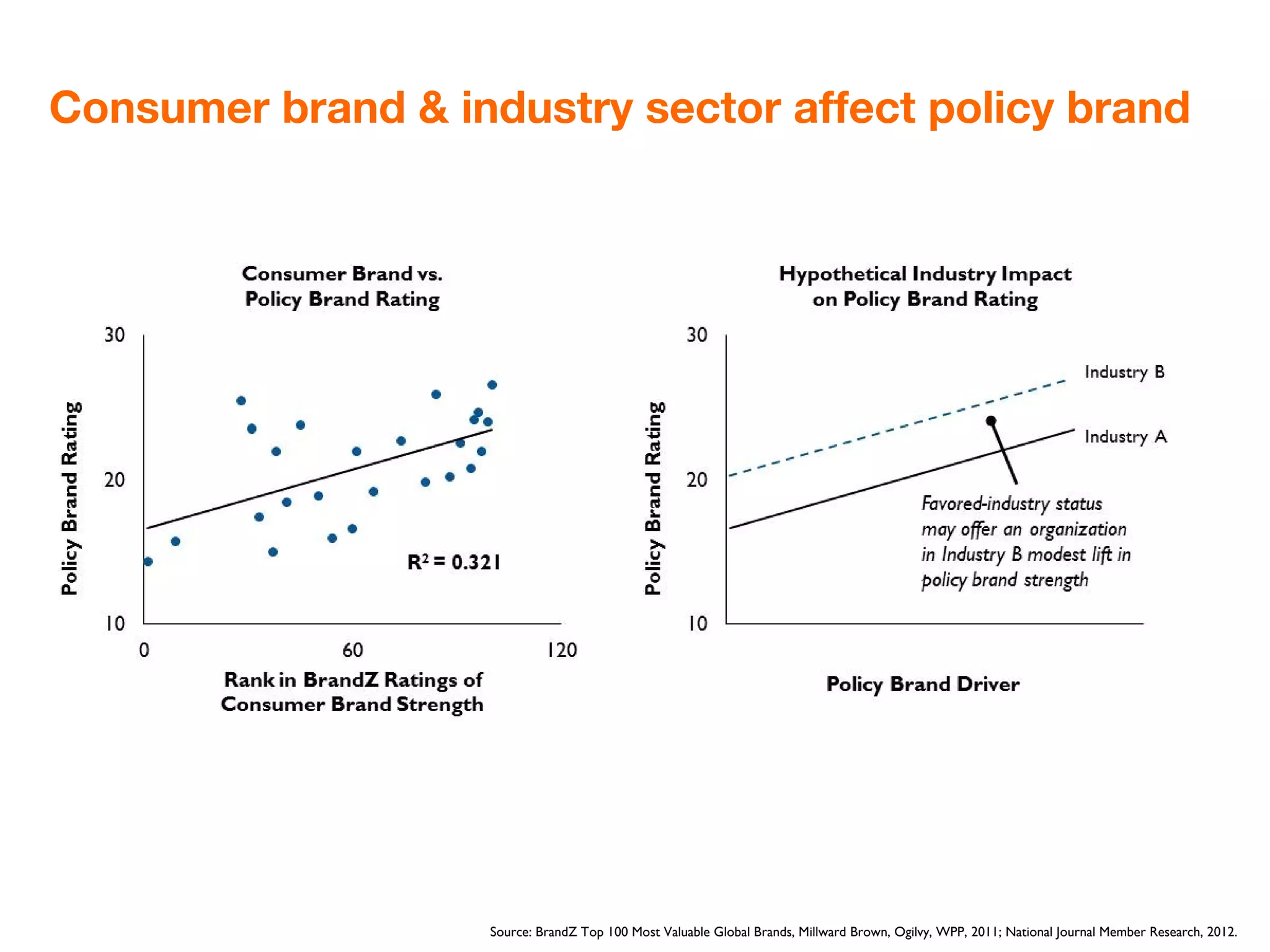
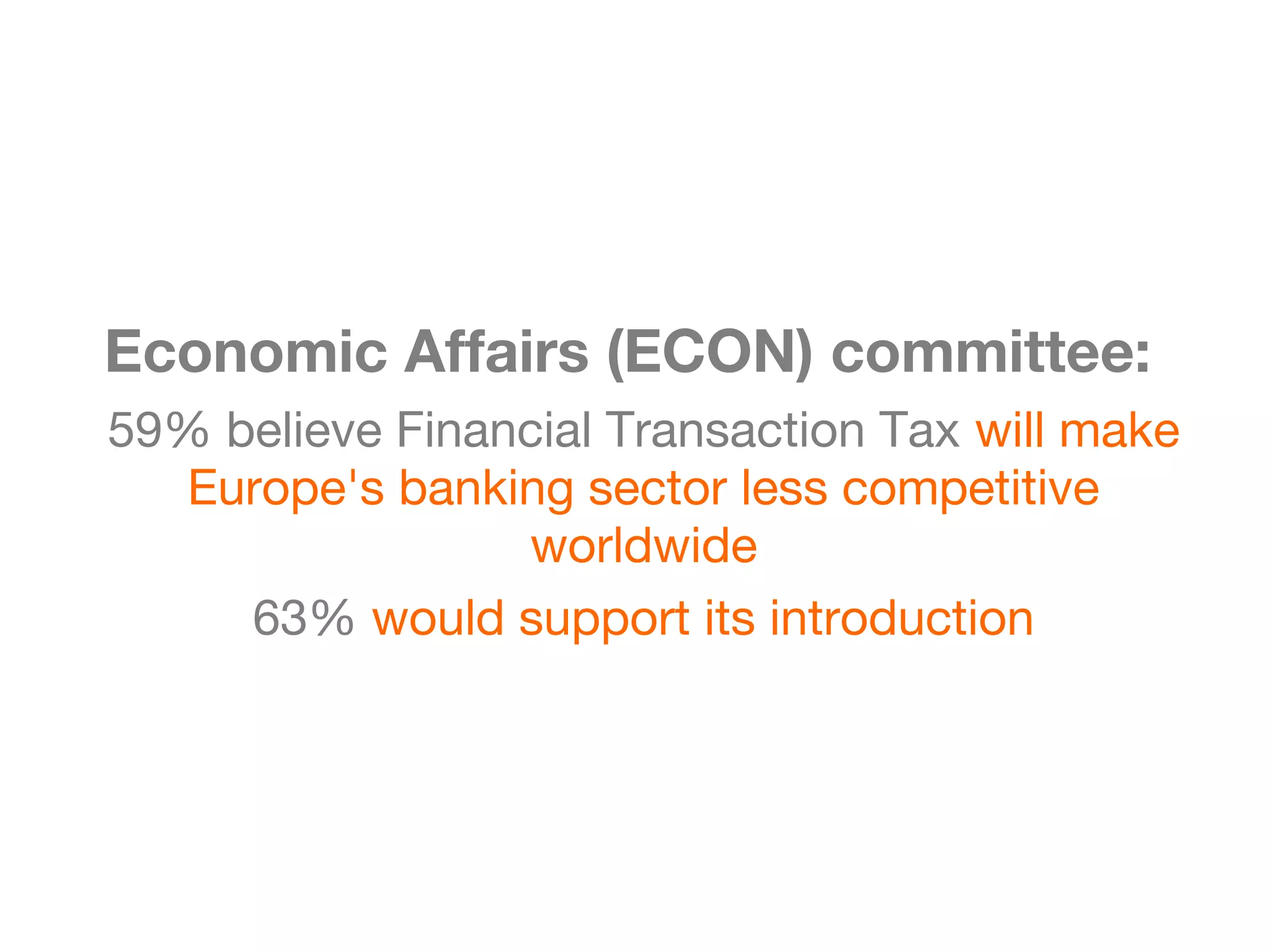
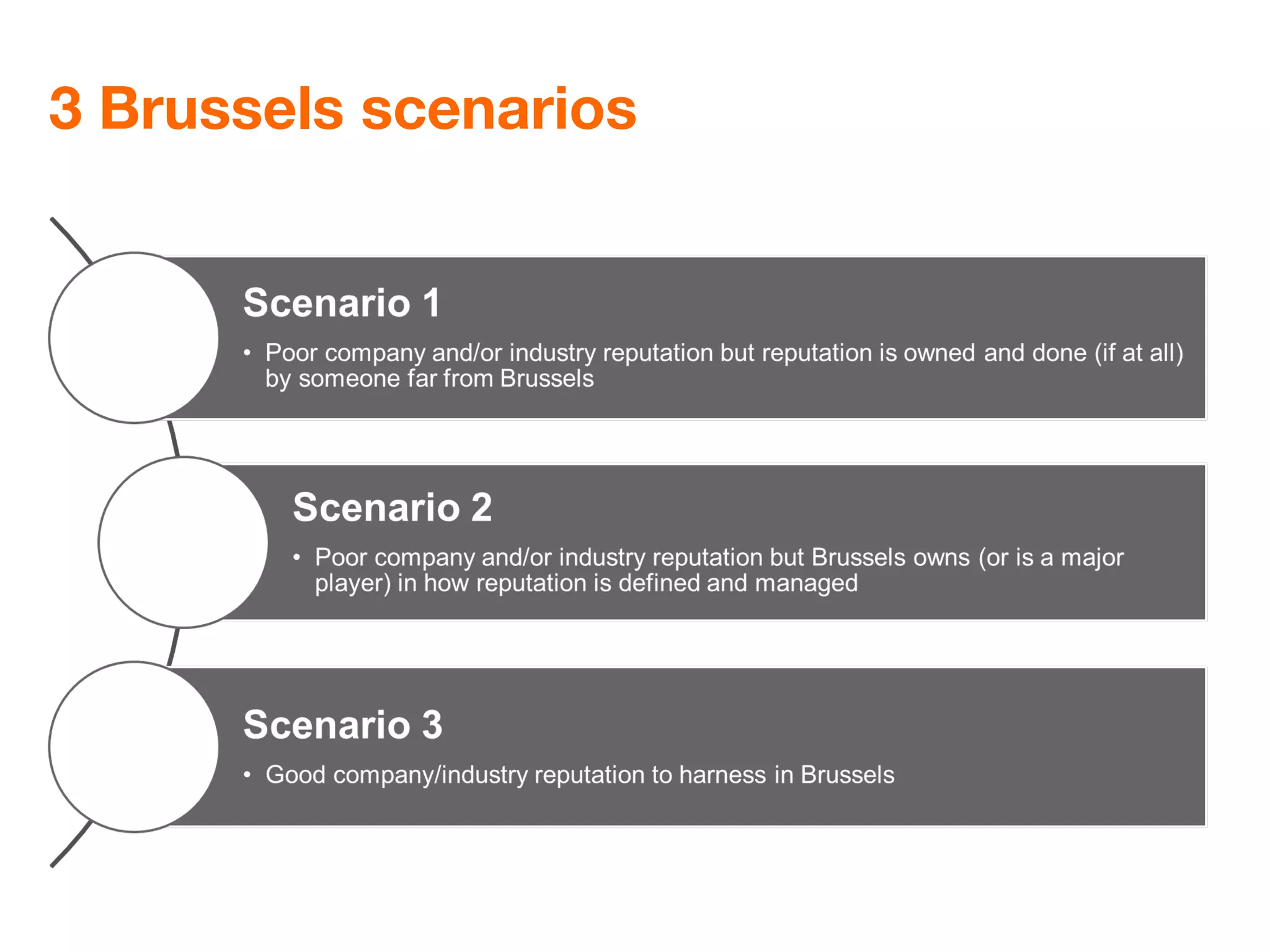
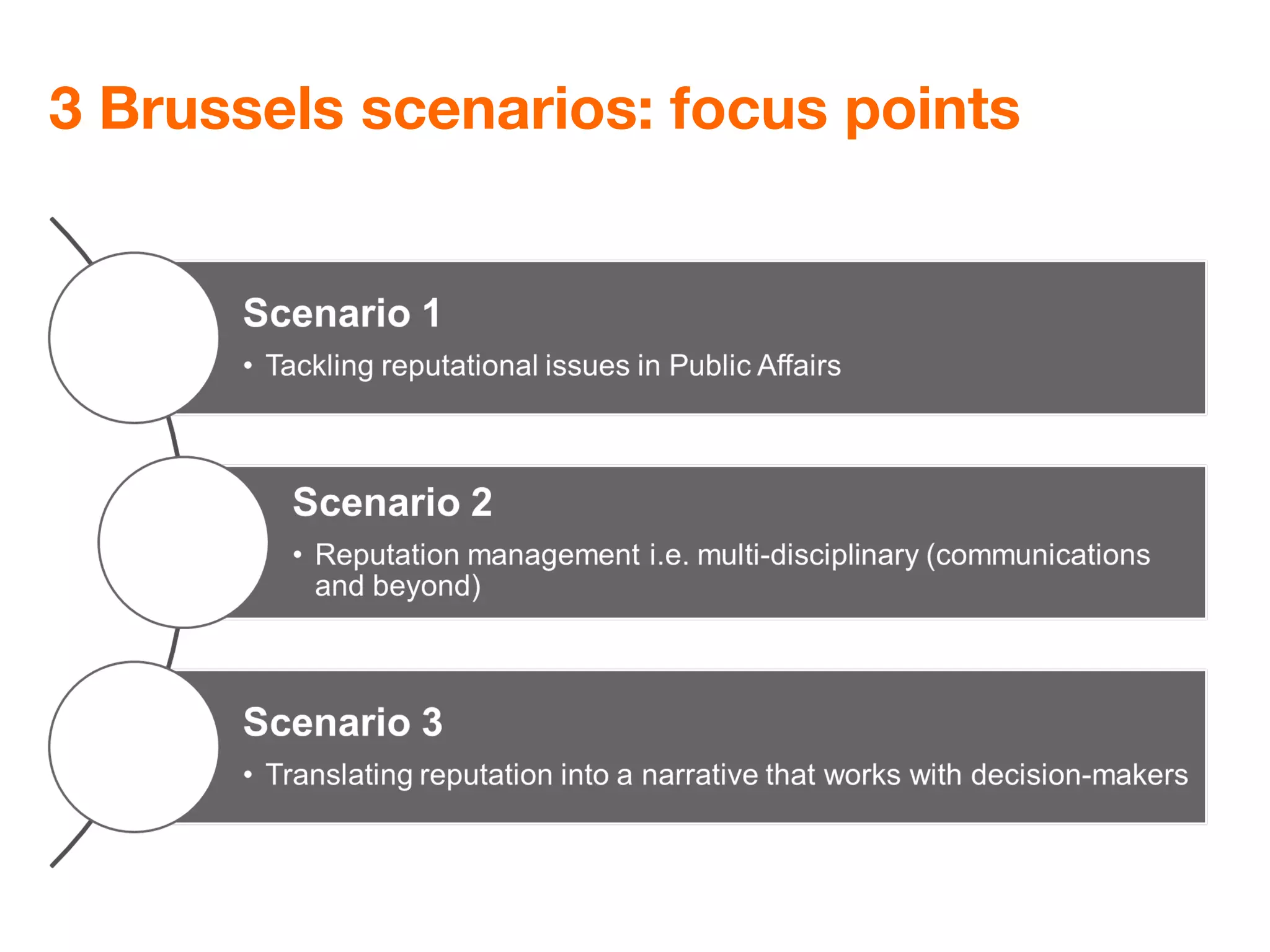

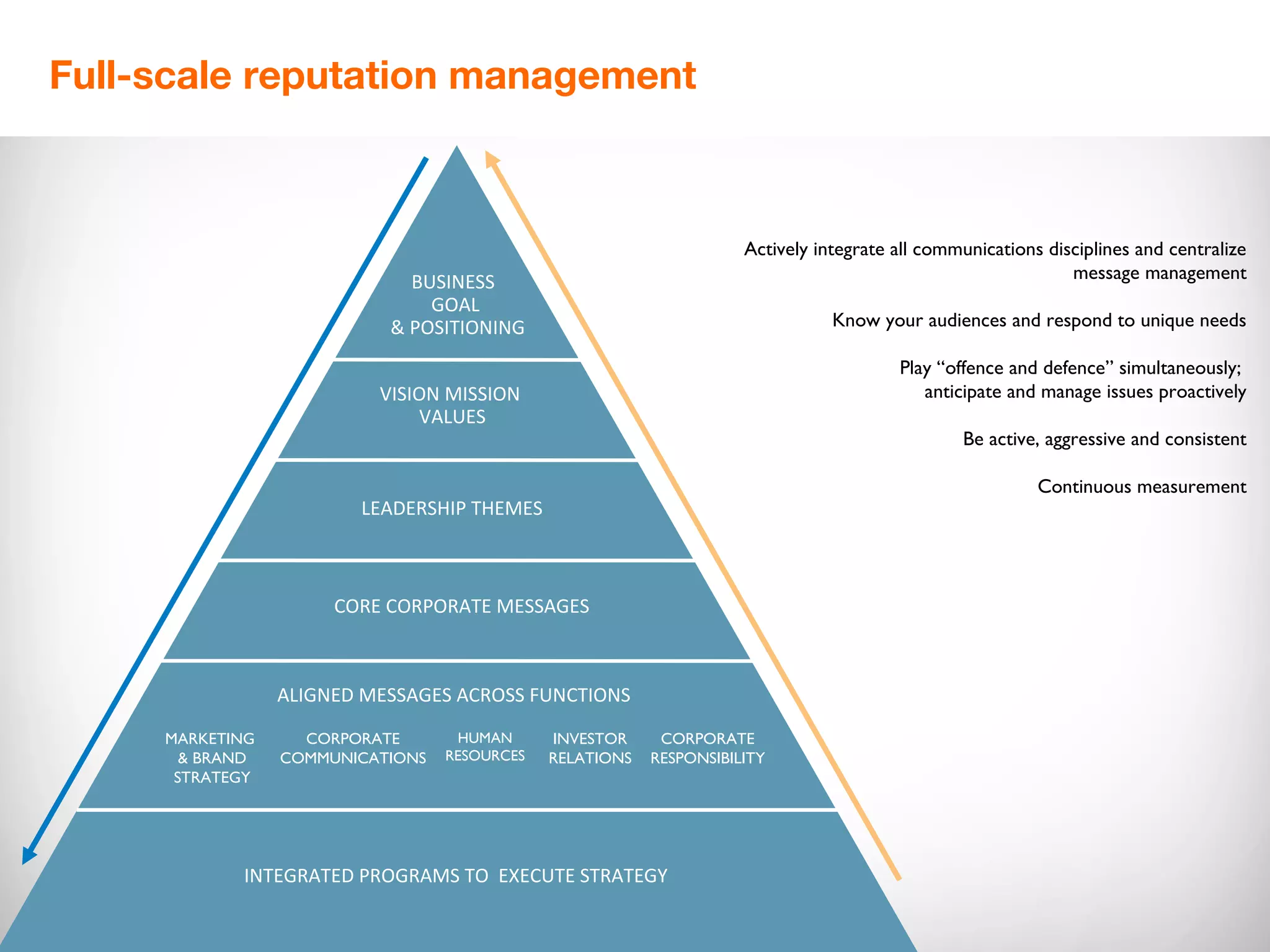
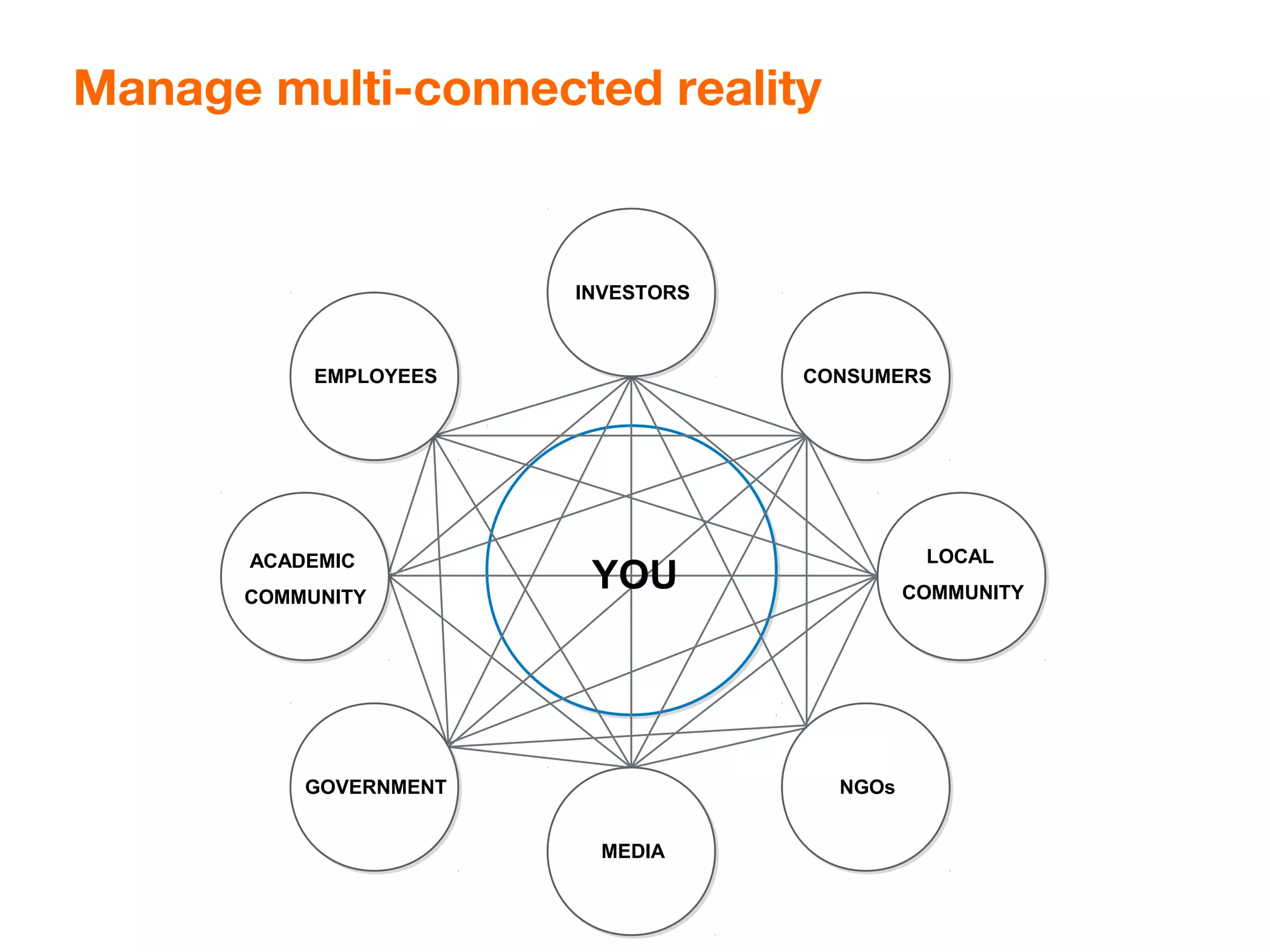
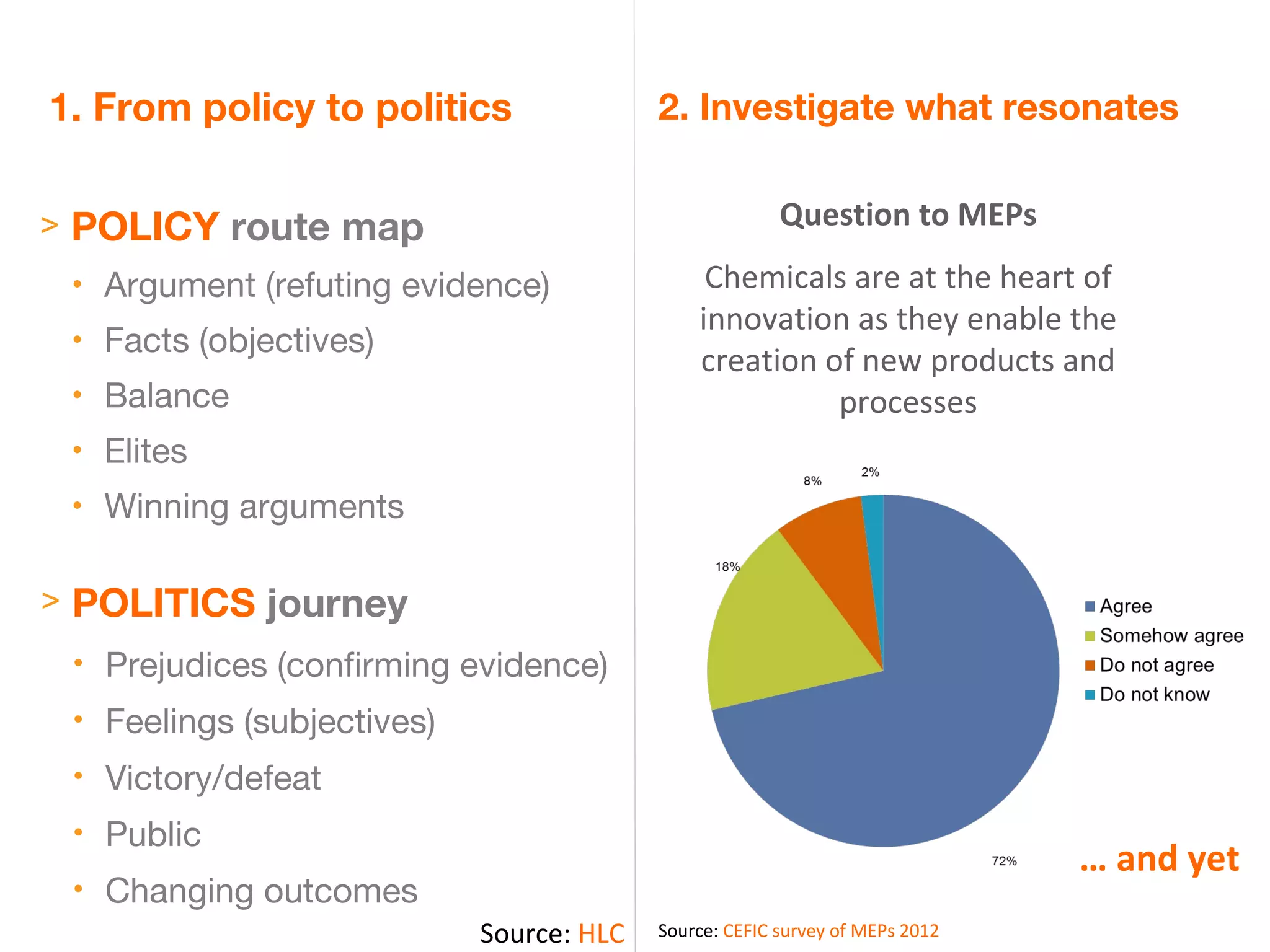
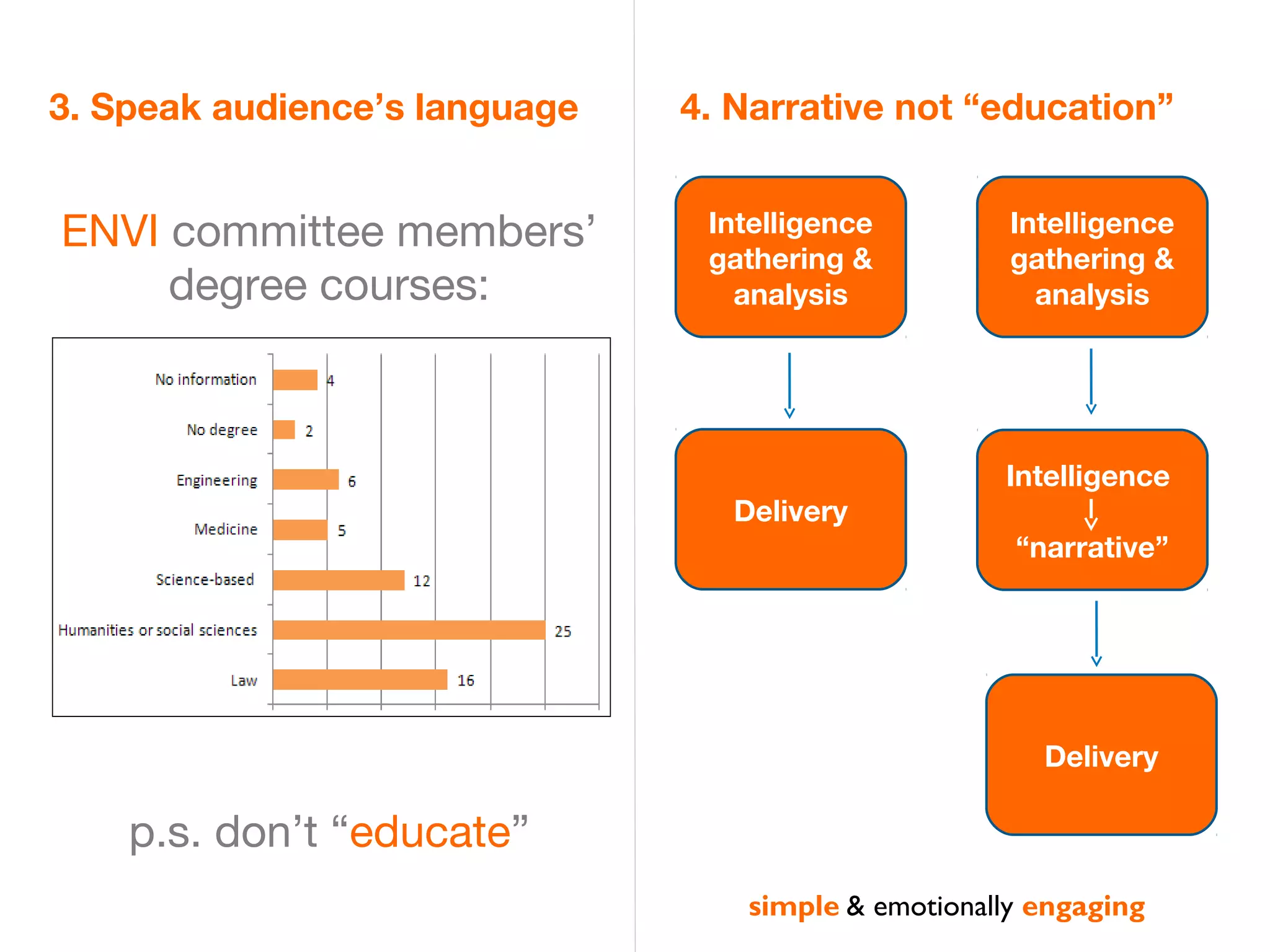
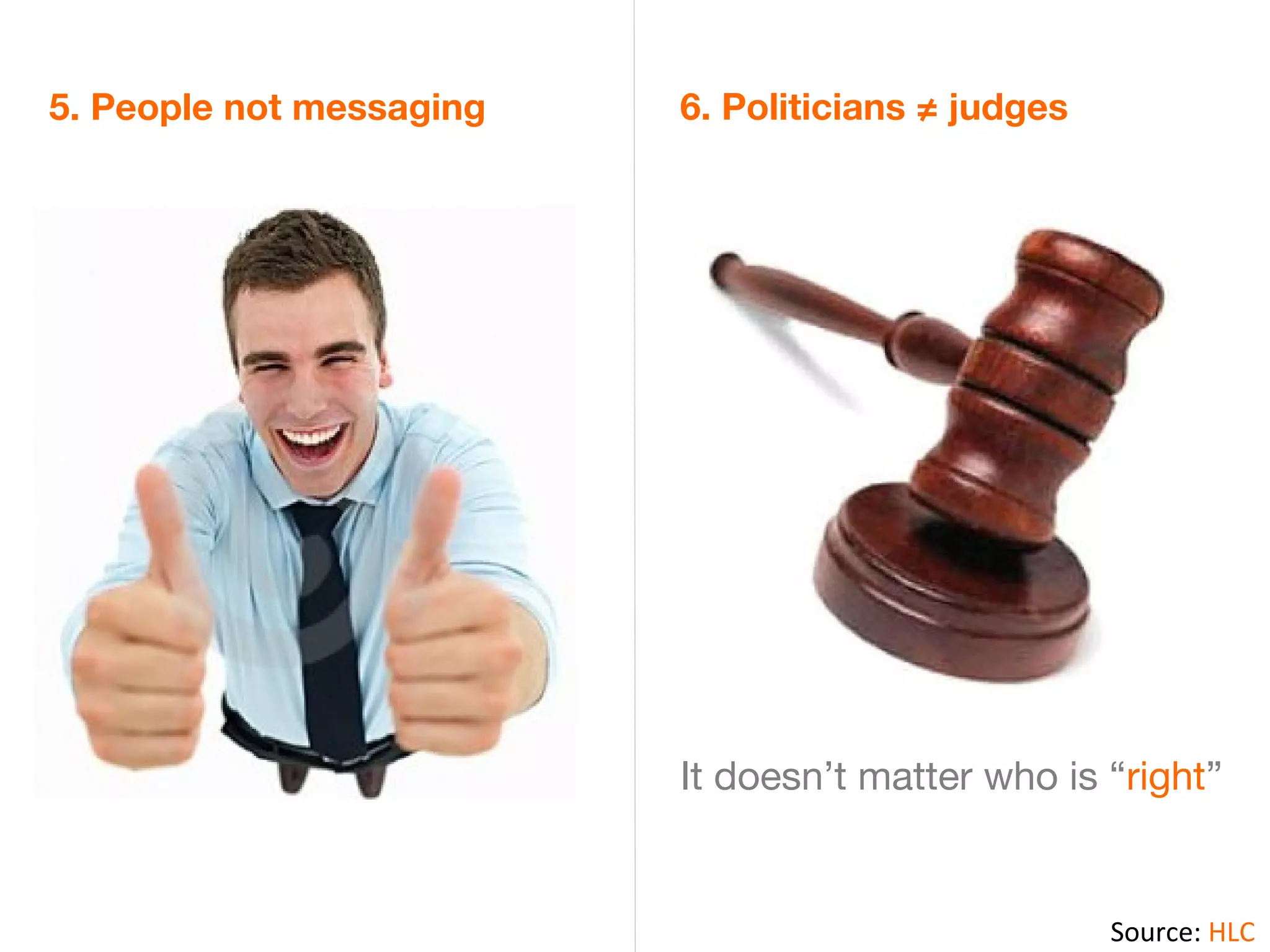

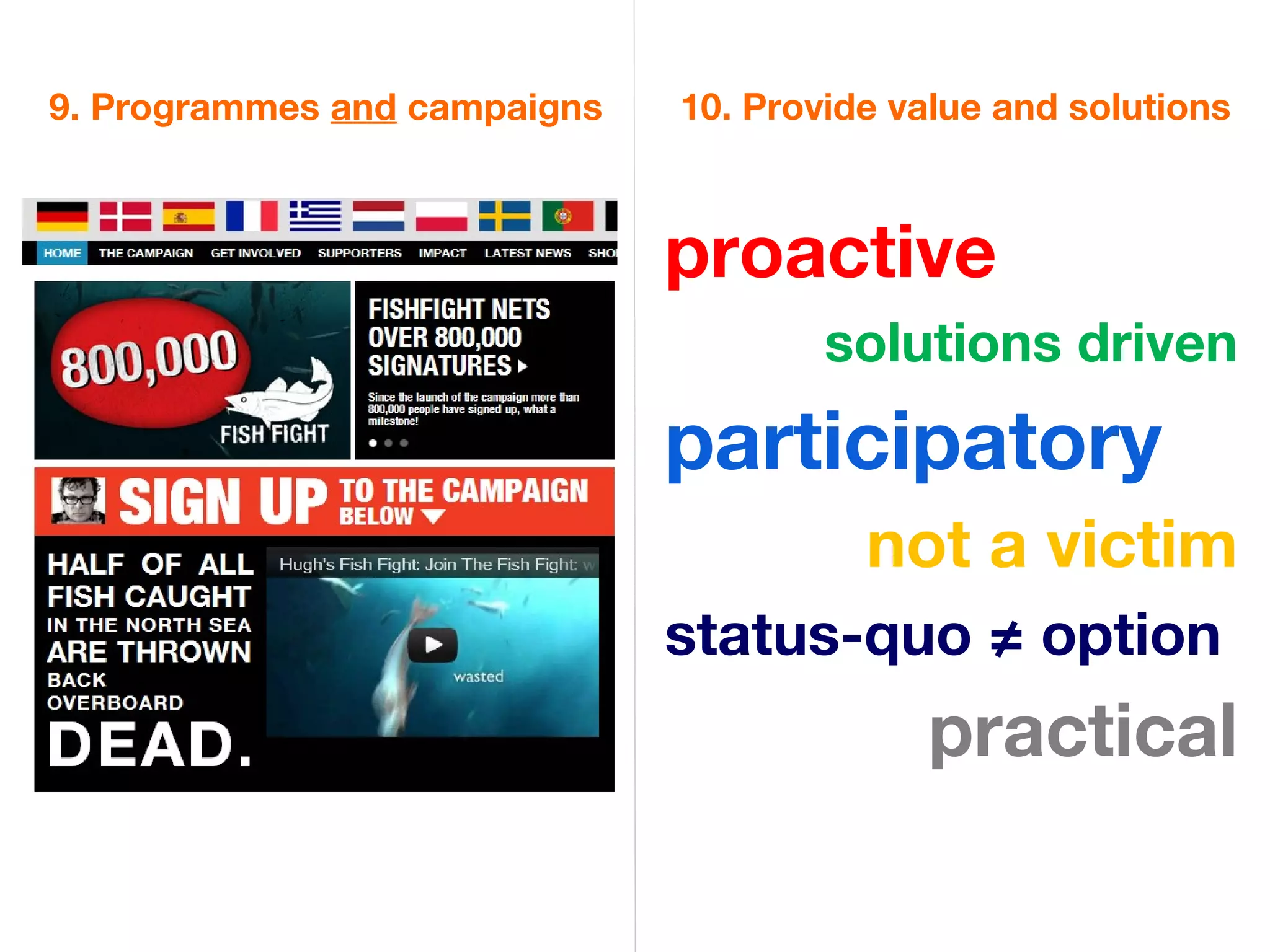

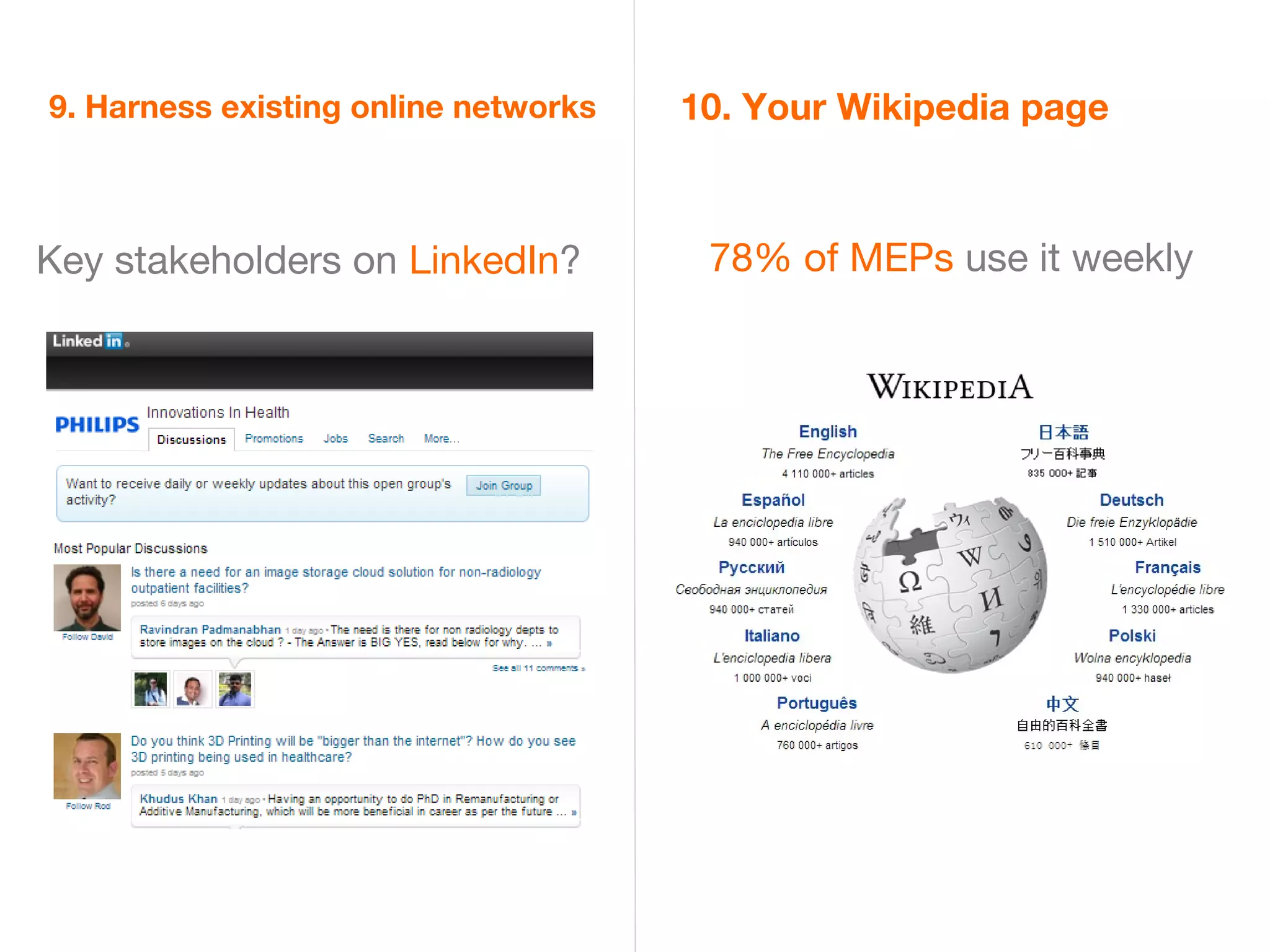

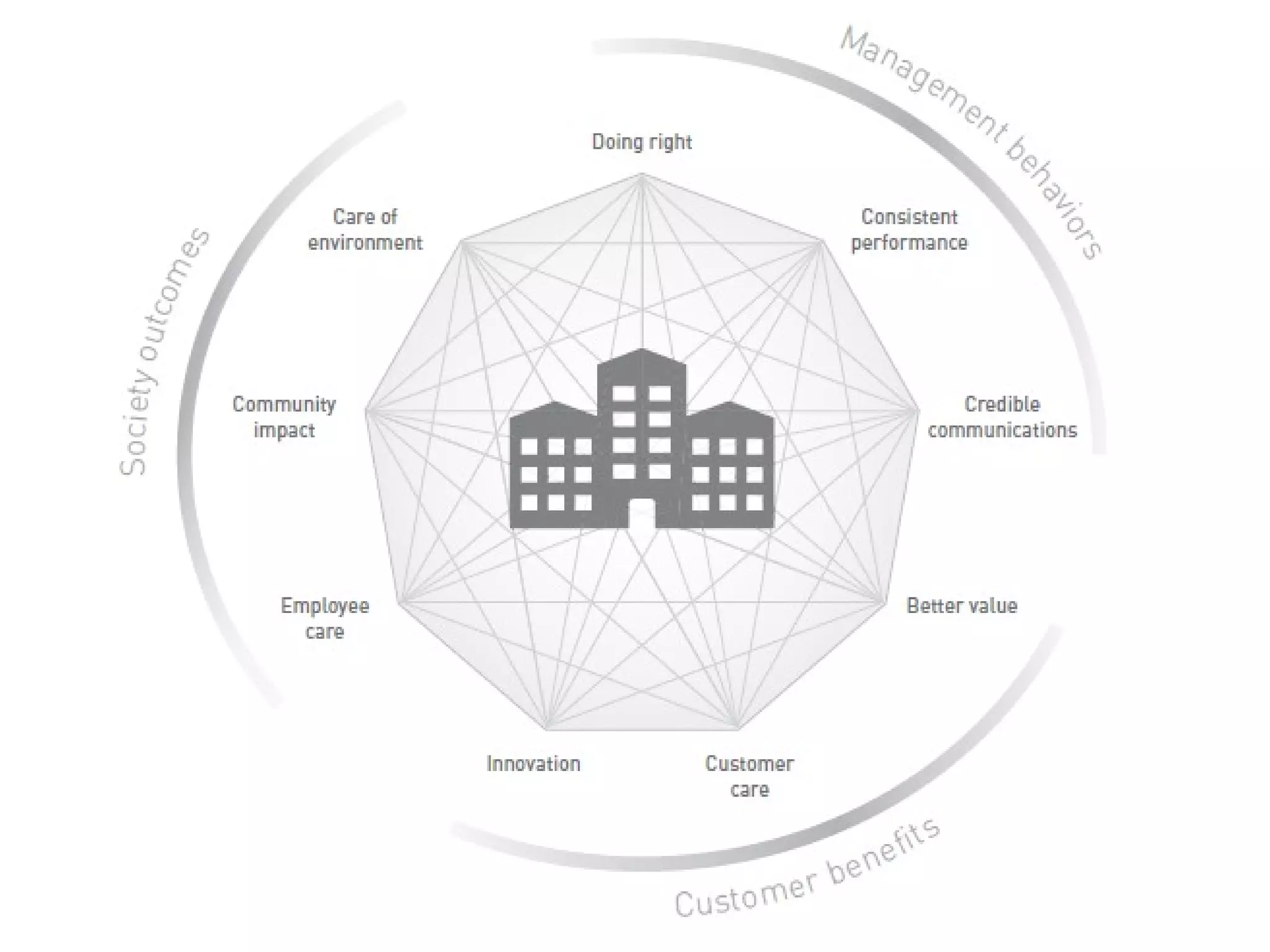

1. The document discusses reputation drivers and the importance of authenticity and alignment between brand and reputation. It notes a common "authenticity gap" where what companies say does not match audiences' actual experiences. 2. When discussing reputation management in Brussels, the document outlines three potential scenarios and emphasizes the importance of understanding audiences, having integrated communications, and providing solutions rather than just communicating policy. 3. The final sections provide 10 principles and 10 ideas for effective reputation management, focusing on speaking to audiences' emotions and values rather than just facts, mobilizing existing networks, and addressing reputational issues proactively rather than reactively.


