Buoyancy And Floatation
(2141906)
Div. & Batch-Mechanical B-3
Group Members:-
1. Parikh Rupesh
2. Patel Abhishek
Guided By:-
Pro. Harshal Oza
Oh buoy this
is going to be
fun
Ups and Downs: Buoyancy
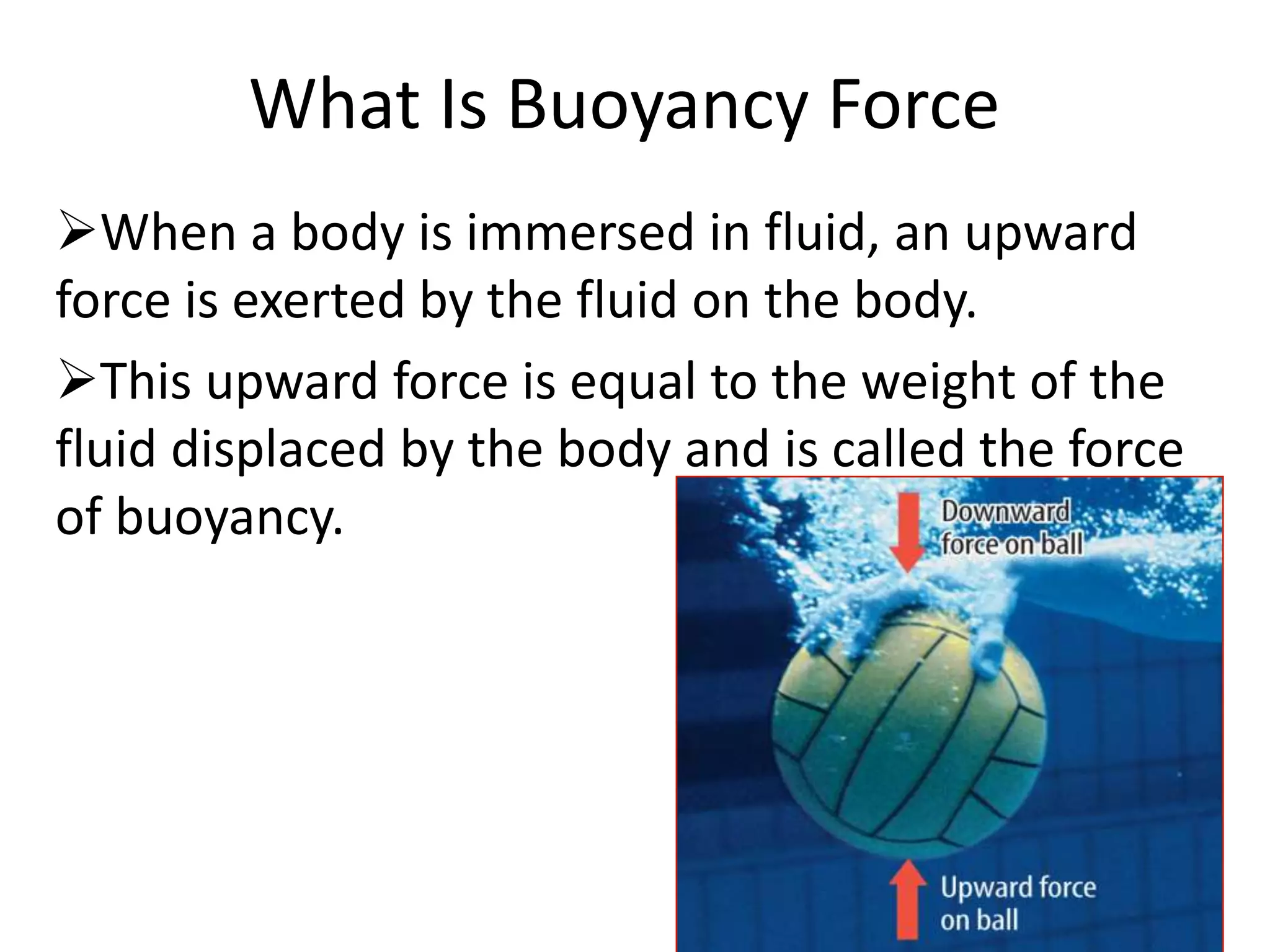
What Is Buoyancy Force
When a body is immersed in fluid, an upward
force is exerted by the fluid on the body.
This upward force is equal to the weight of the
fluid displaced by the body and is called the force
of buoyancy.
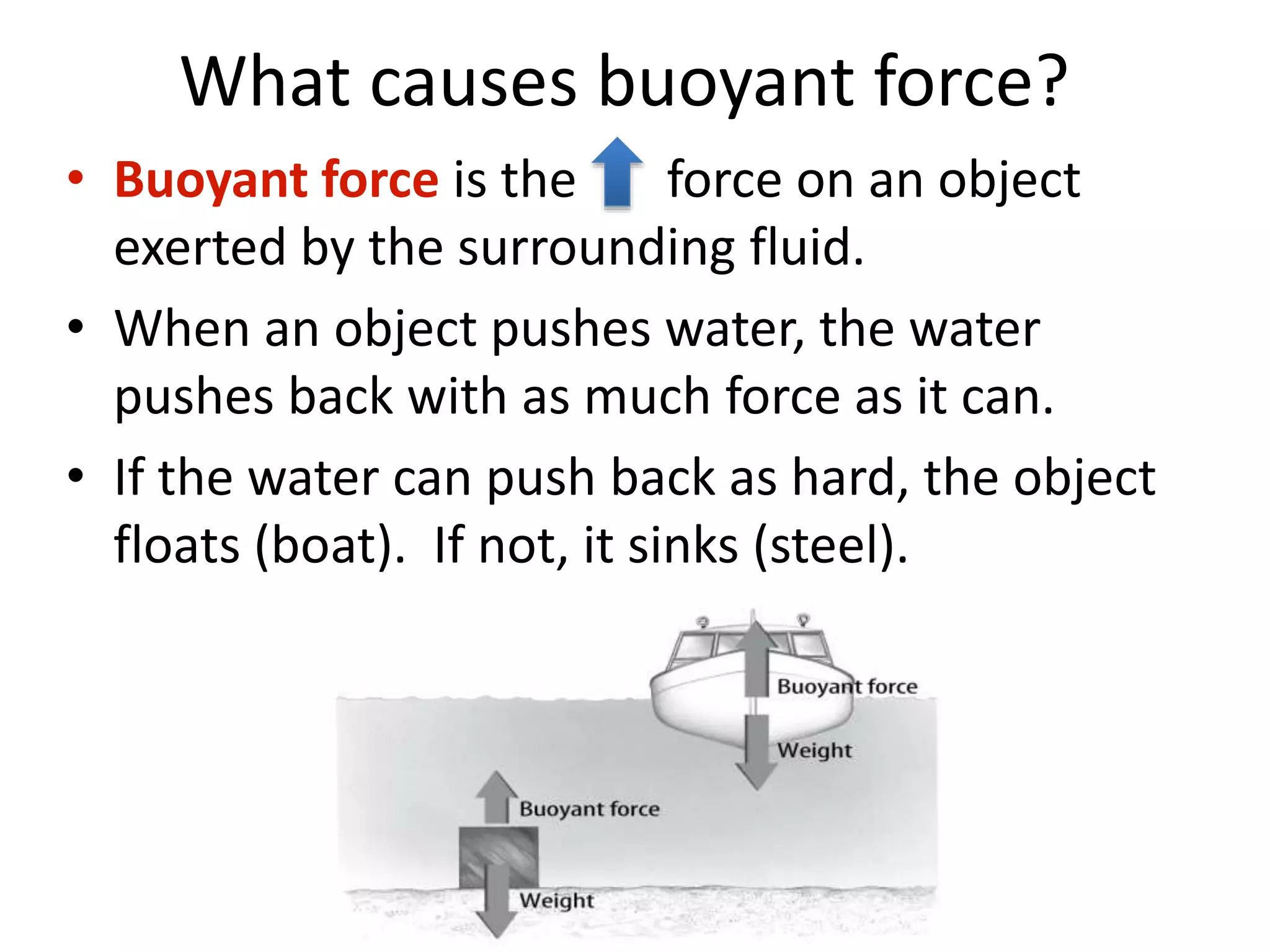
What causes buoyant force?
• Buoyant force is the force on an object
exerted by the surrounding fluid.
• When an object pushes water, the water
pushes back with as much force as it can.
• If the water can push back as hard, the object
floats (boat). If not, it sinks (steel).
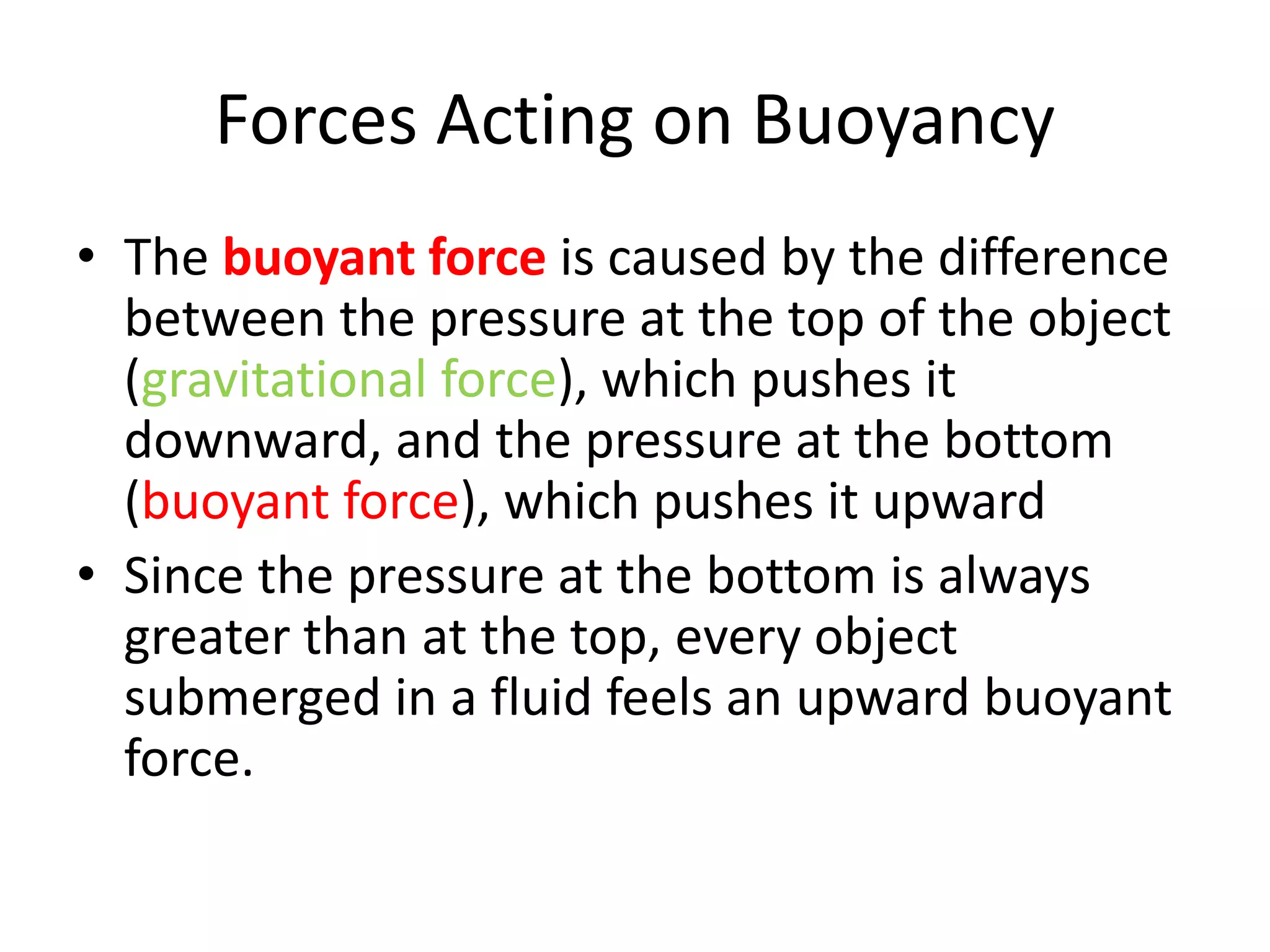
Forces Acting on Buoyancy
• The buoyant force is caused by the difference
between the pressure at the top of the object
(gravitational force), which pushes it
downward, and the pressure at the bottom
(buoyant force), which pushes it upward
• Since the pressure at the bottom is always
greater than at the top, every object
submerged in a fluid feels an upward buoyant
force.
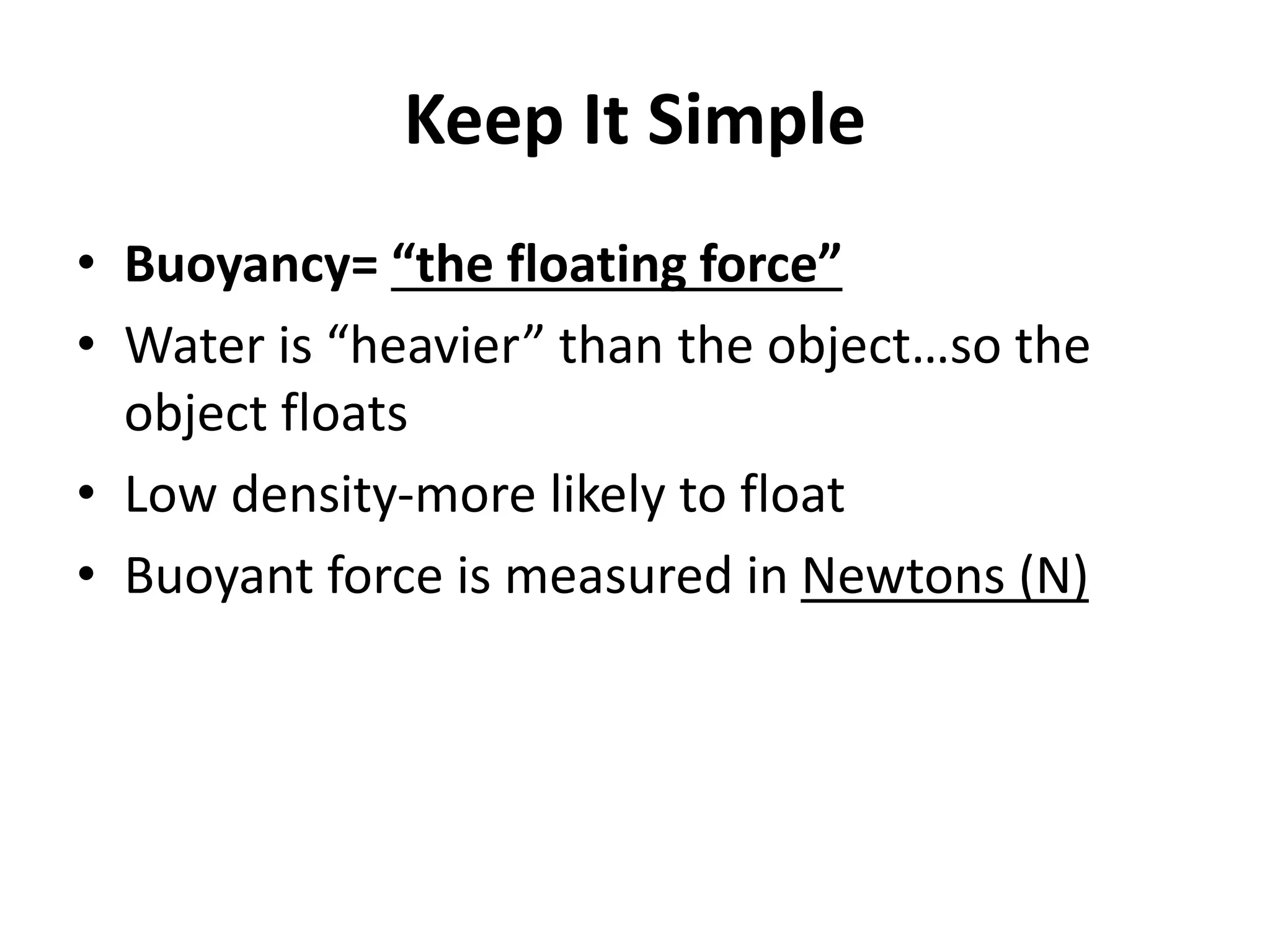
Keep It Simple
• Buoyancy= “the floating force”
• Water is “heavier” than the object…so the
object floats
• Low density-more likely to float
• Buoyant force is measured in Newtons (N)
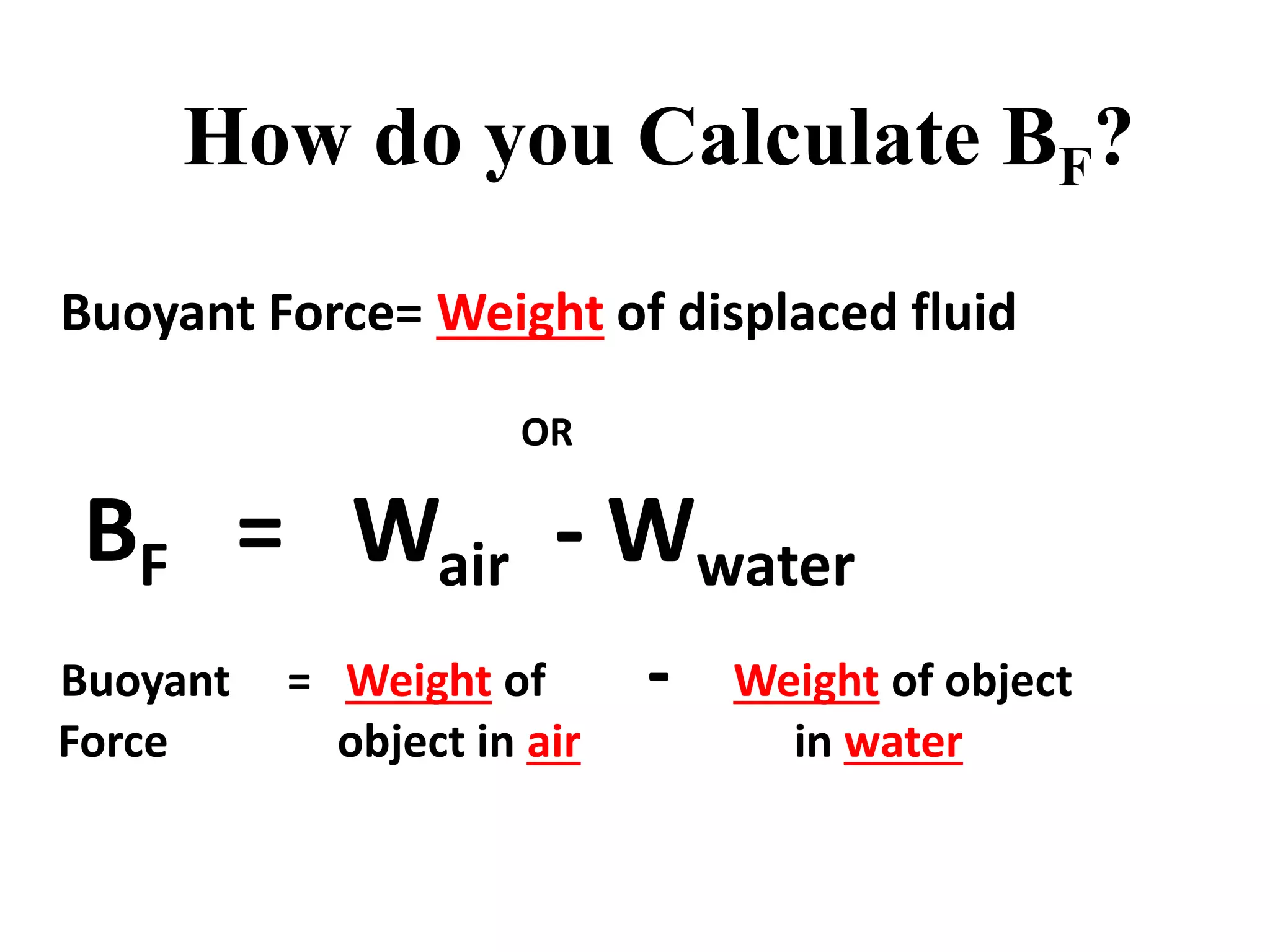
How do you Calculate BF?
Buoyant Force= Weight of displaced fluid
OR
BF = Wair - Wwater
Buoyant = Weight of - Weight of object
Force object in air in water
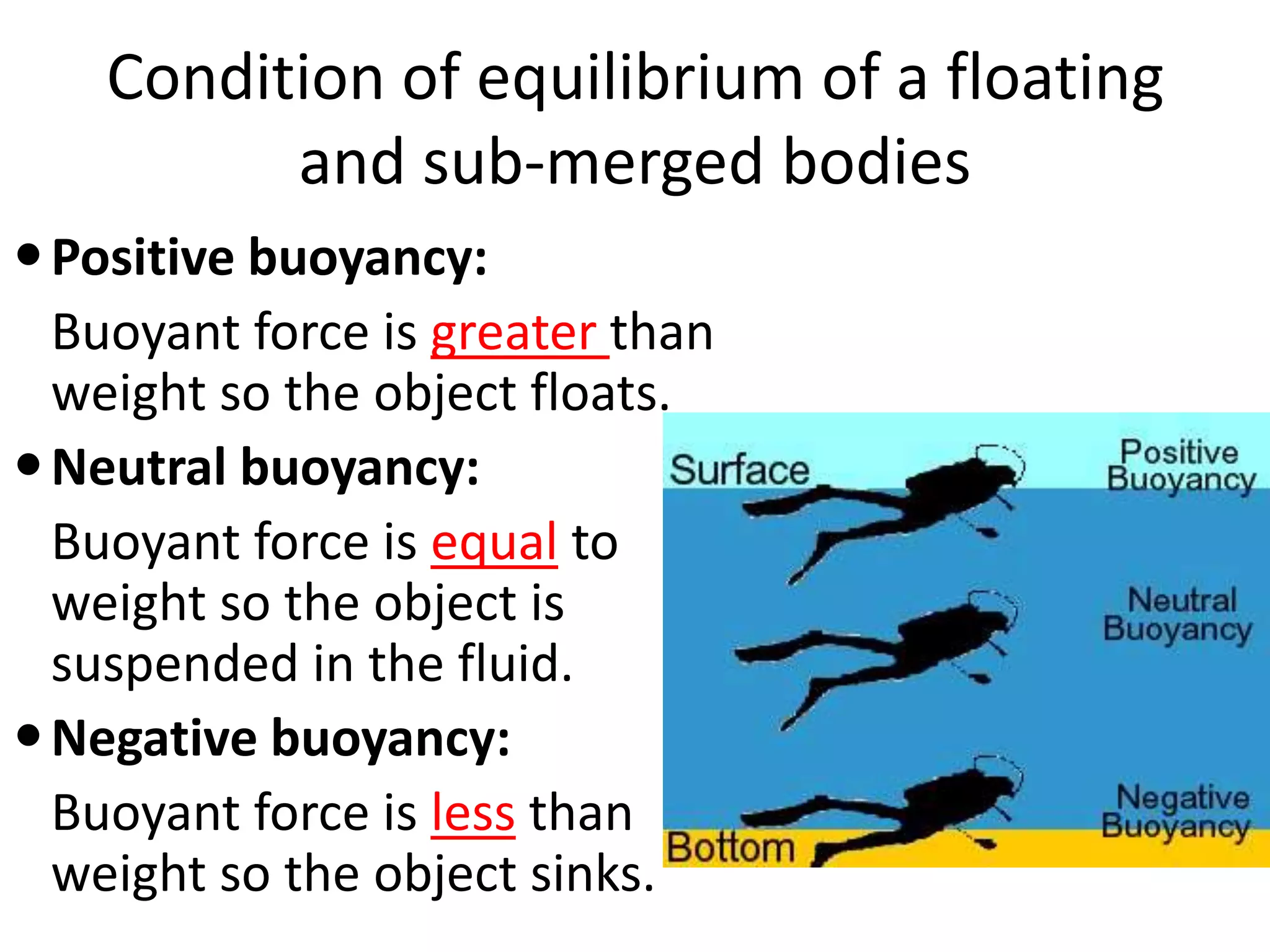
Condition of equilibrium of a floating
and sub-merged bodies
Positive buoyancy:
Buoyant force is greater than
weight so the object floats.
Neutral buoyancy:
Buoyant force is equal to
weight so the object is
suspended in the fluid.
Negative buoyancy:
Buoyant force is less than
weight so the object sinks.
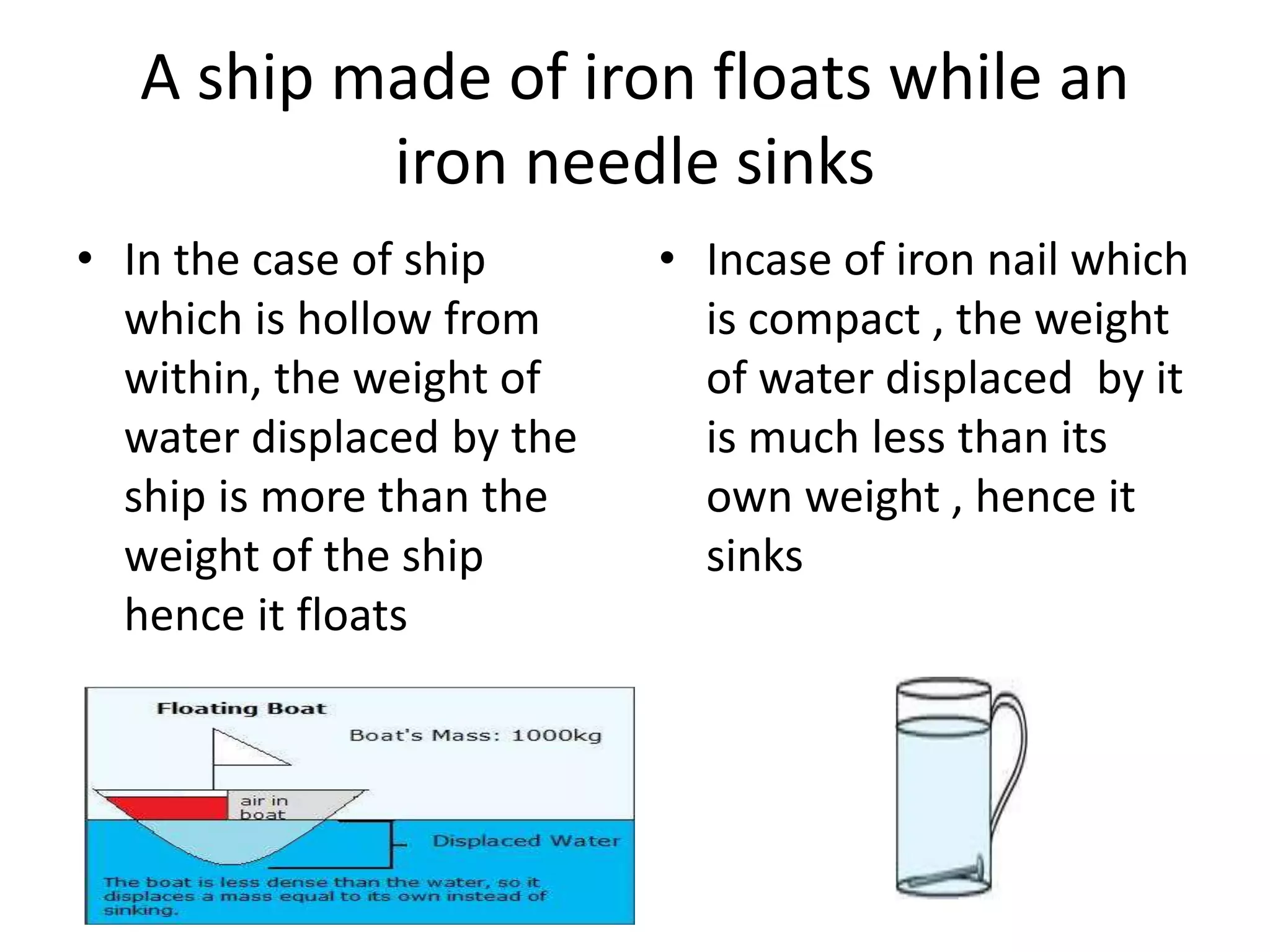
A ship made of iron floats while an
iron needle sinks
• In the case of ship
which is hollow from
within, the weight of
water displaced by the
ship is more than the
weight of the ship
hence it floats
• Incase of iron nail which
is compact , the weight
of water displaced by it
is much less than its
own weight , hence it
sinks
Why do things float?
1. Things float if they are less dense than
the fluid they are in.
2. Things float if they weigh less than the
buoyant force pushing up on them.
3. Things float if they are shaped so their
weight is spread out.
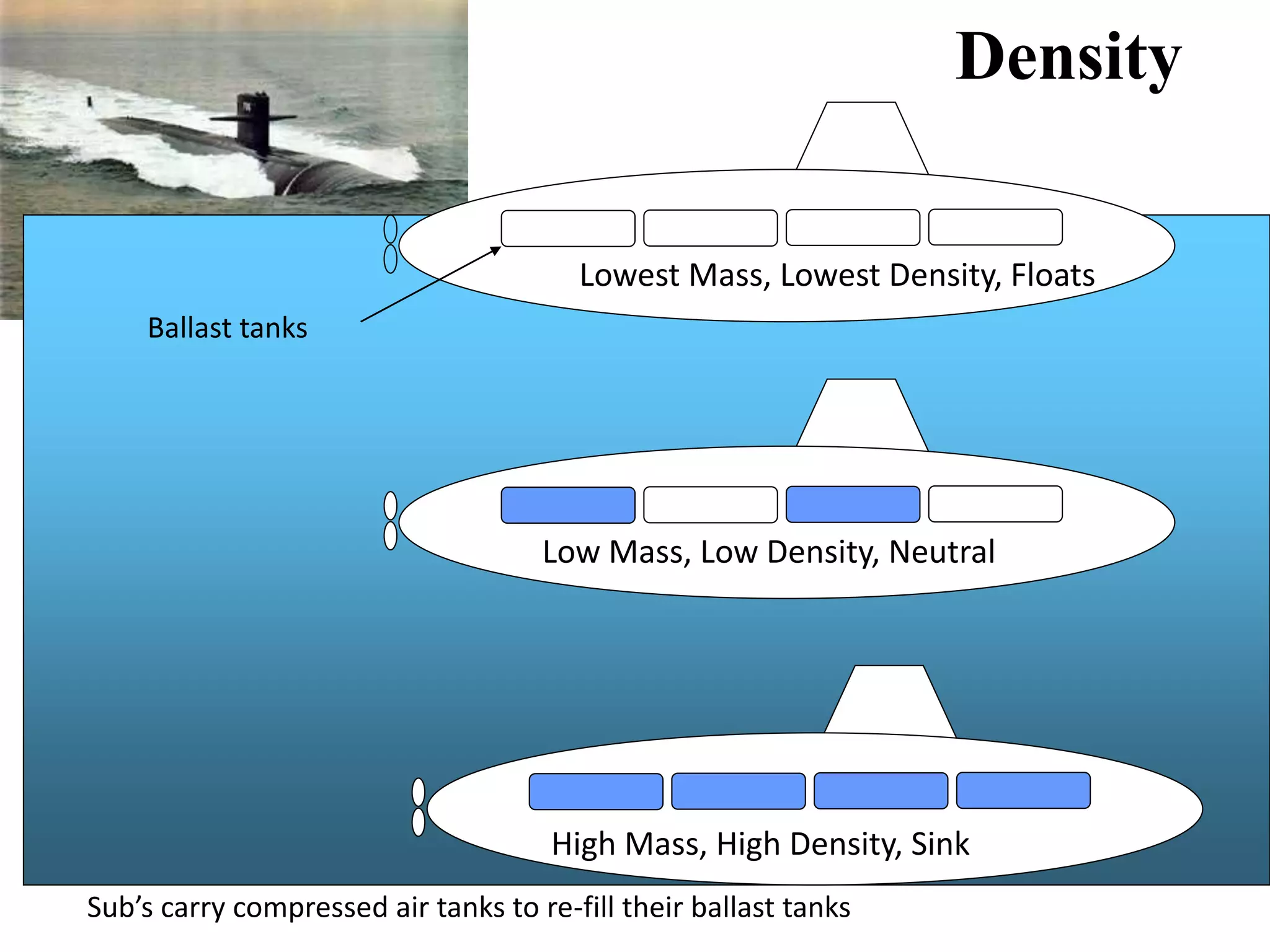
Lowest Mass, Lowest Density, Floats
Low Mass, Low Density, Neutral
High Mass, High Density, Sink
Sub’s carry compressed air tanks to re-fill their ballast tanks
Ballast tanks
Density
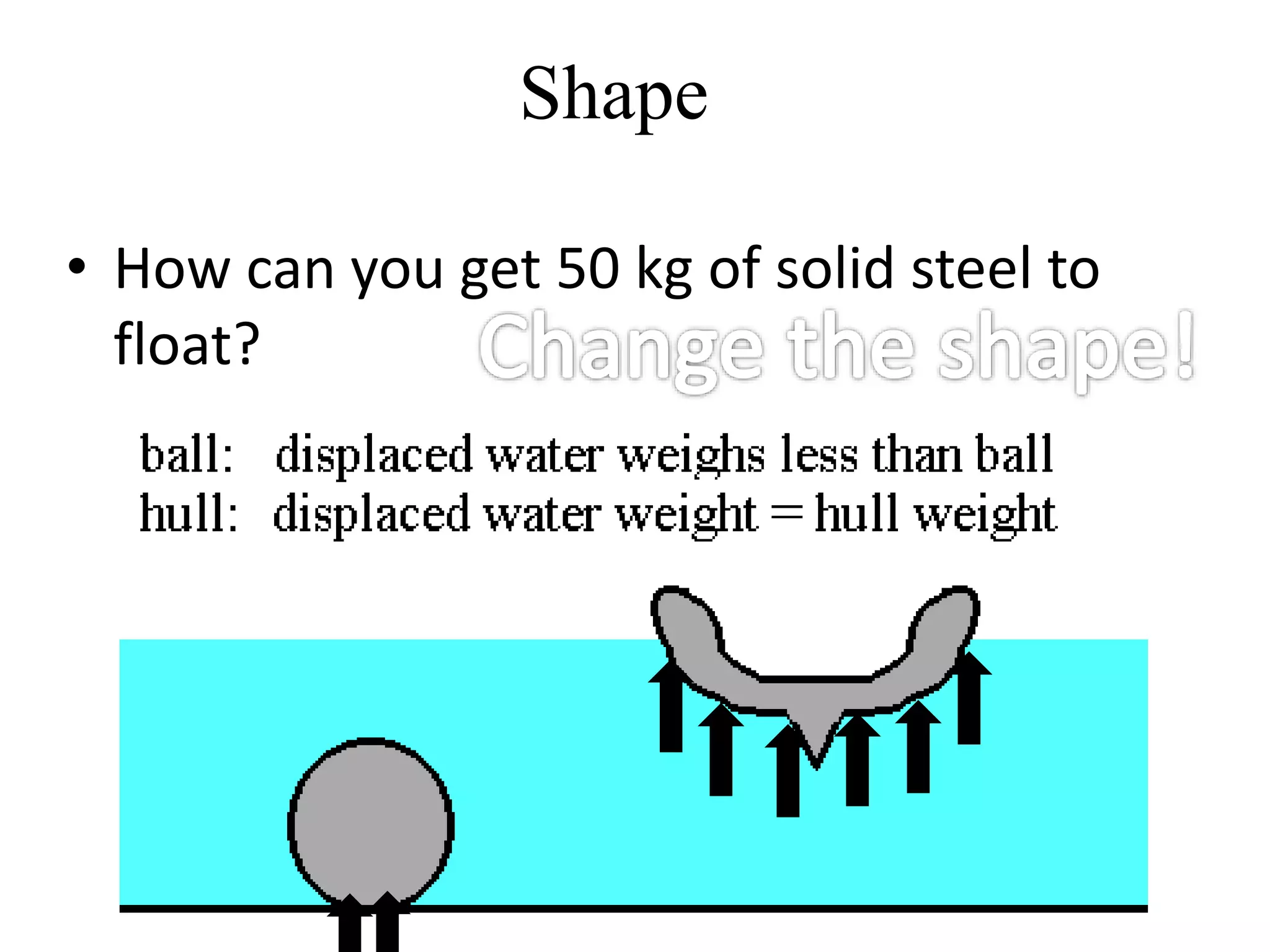
Shape
• How can you get 50 kg of solid steel to
float?
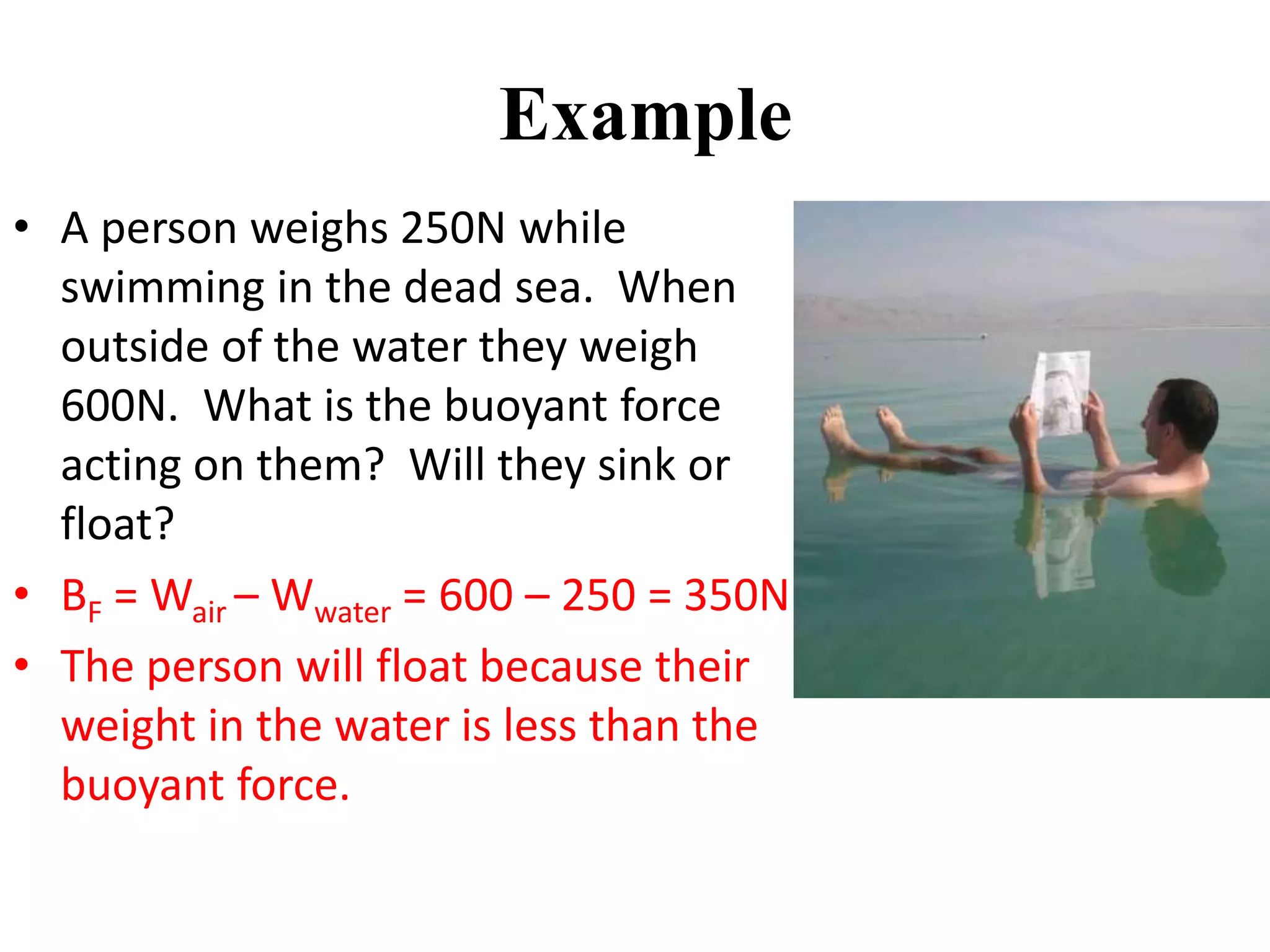
Example
• A person weighs 250N while
swimming in the dead sea. When
outside of the water they weigh
600N. What is the buoyant force
acting on them? Will they sink or
float?
• BF = Wair – Wwater = 600 – 250 = 350N
• The person will float because their
weight in the water is less than the
buoyant force.
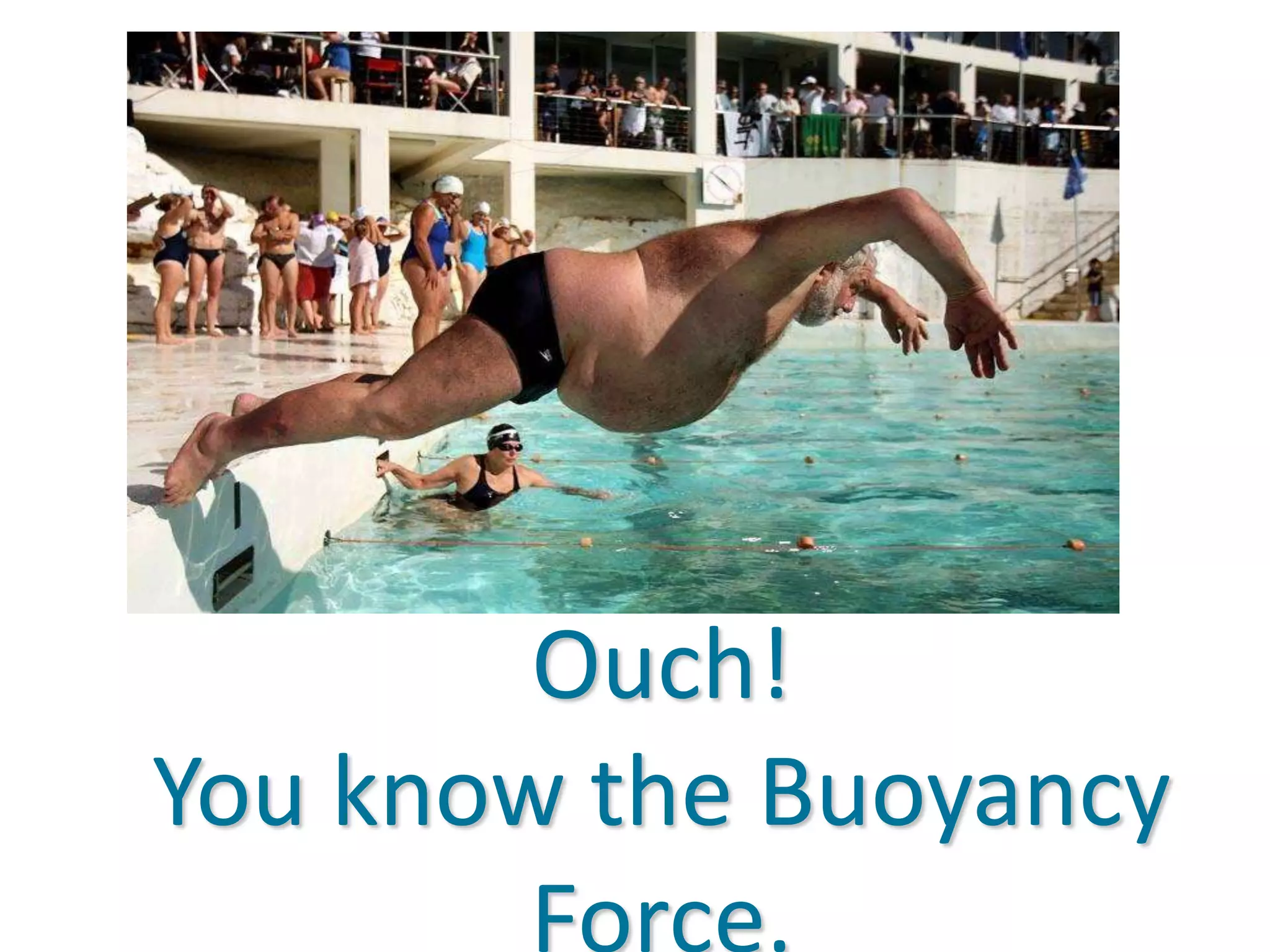
Ouch!
You know the Buoyancy
Force.
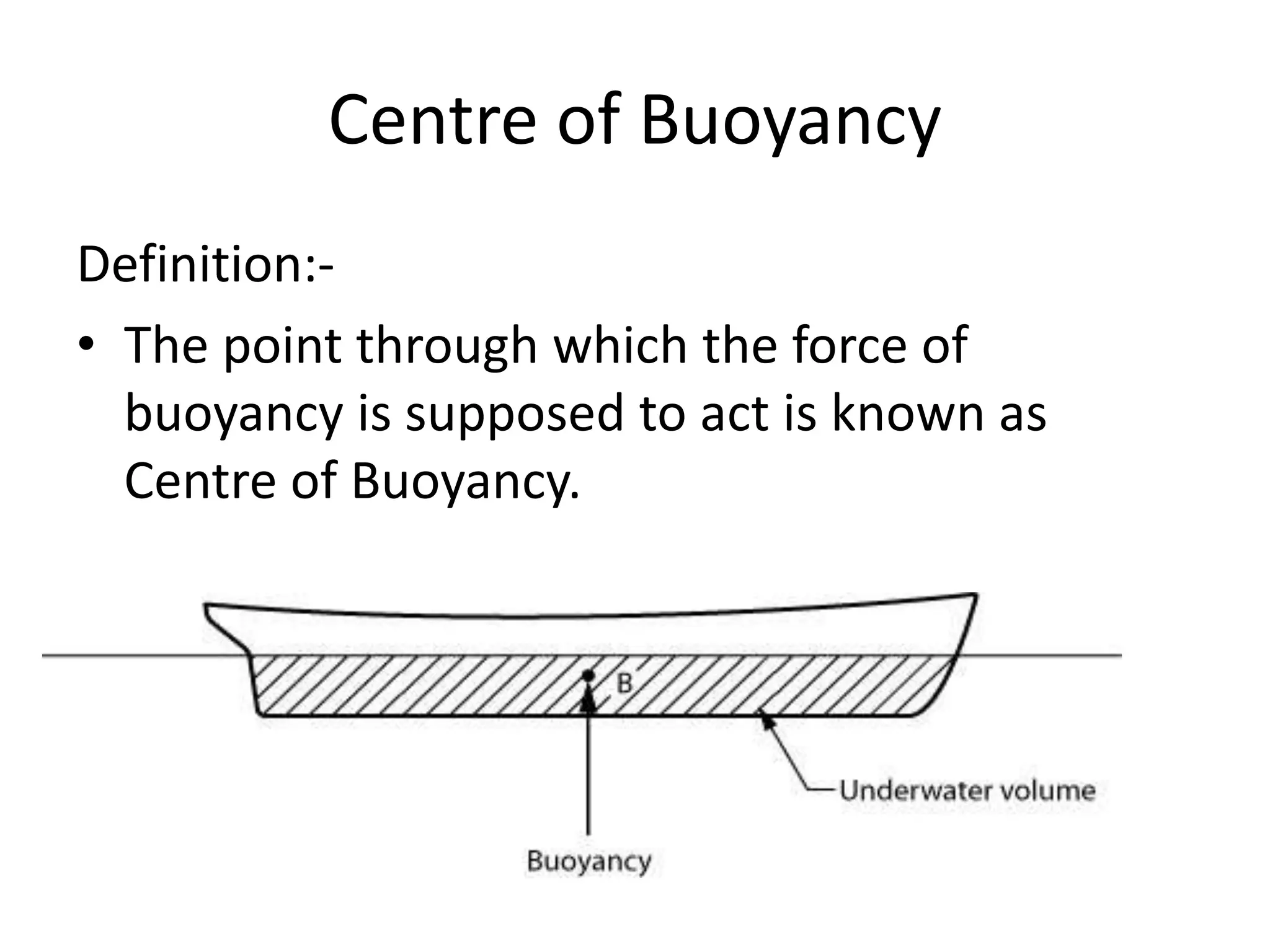
Centre of Buoyancy
Definition:-
• The point through which the force of
buoyancy is supposed to act is known as
Centre of Buoyancy.
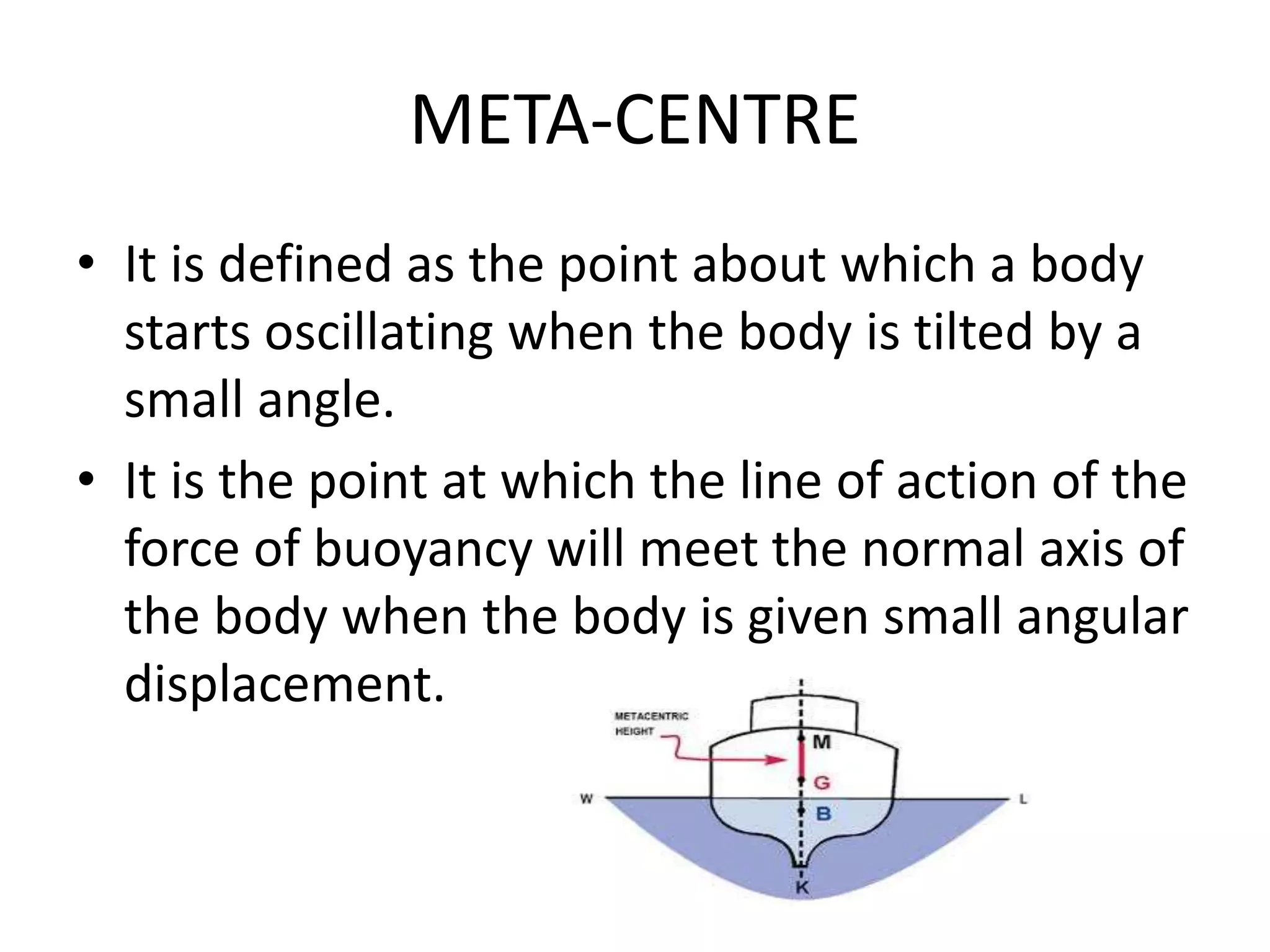
META-CENTRE
• It is defined as the point about which a body
starts oscillating when the body is tilted by a
small angle.
• It is the point at which the line of action of the
force of buoyancy will meet the normal axis of
the body when the body is given small angular
displacement.
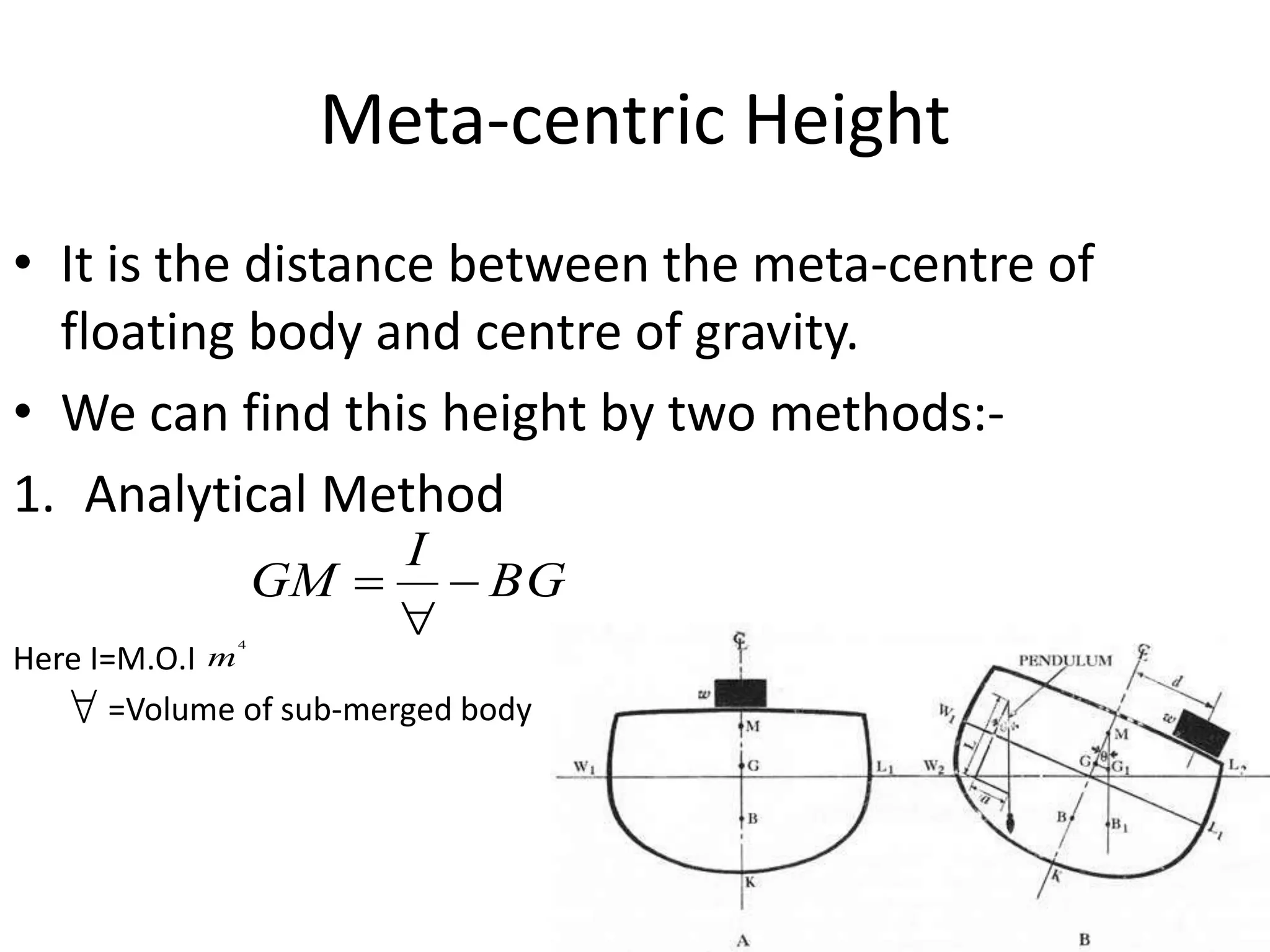
Meta-centric Height
• It is the distance between the meta-centre of
floating body and centre of gravity.
• We can find this height by two methods:-
1. Analytical Method
Here I=M.O.I
=Volume of sub-merged body
BG
I
GM 


m
4

Meta-Centric Height
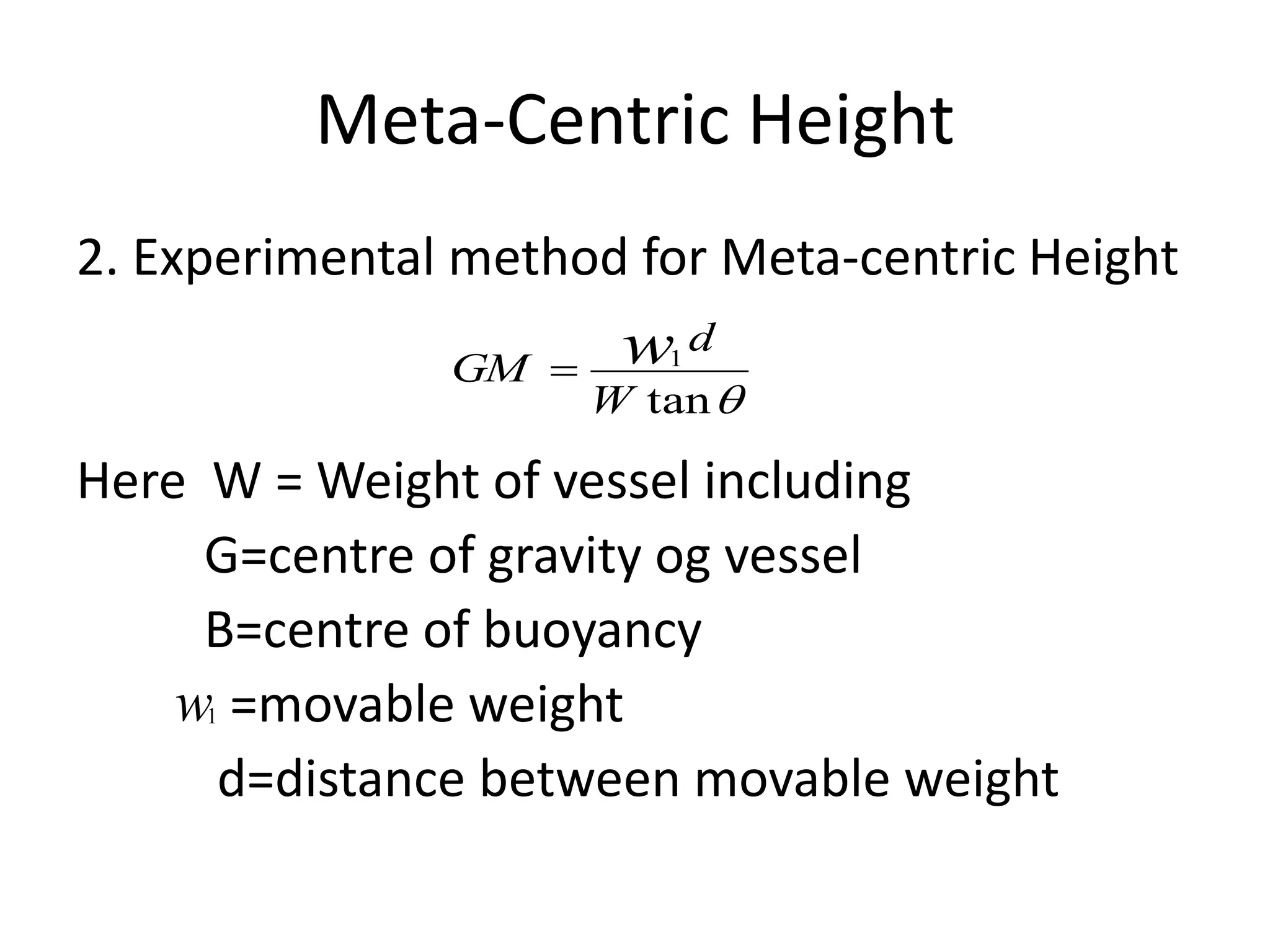
2. Experimental method for Meta-centric Height
Here W = Weight of vessel including
G=centre of gravity og vessel
B=centre of buoyancy
=movable weight
d=distance between movable weight
tan
1
W
d
GM w
w1
Condition of equilibrium of a floating
and sub-merged bodies
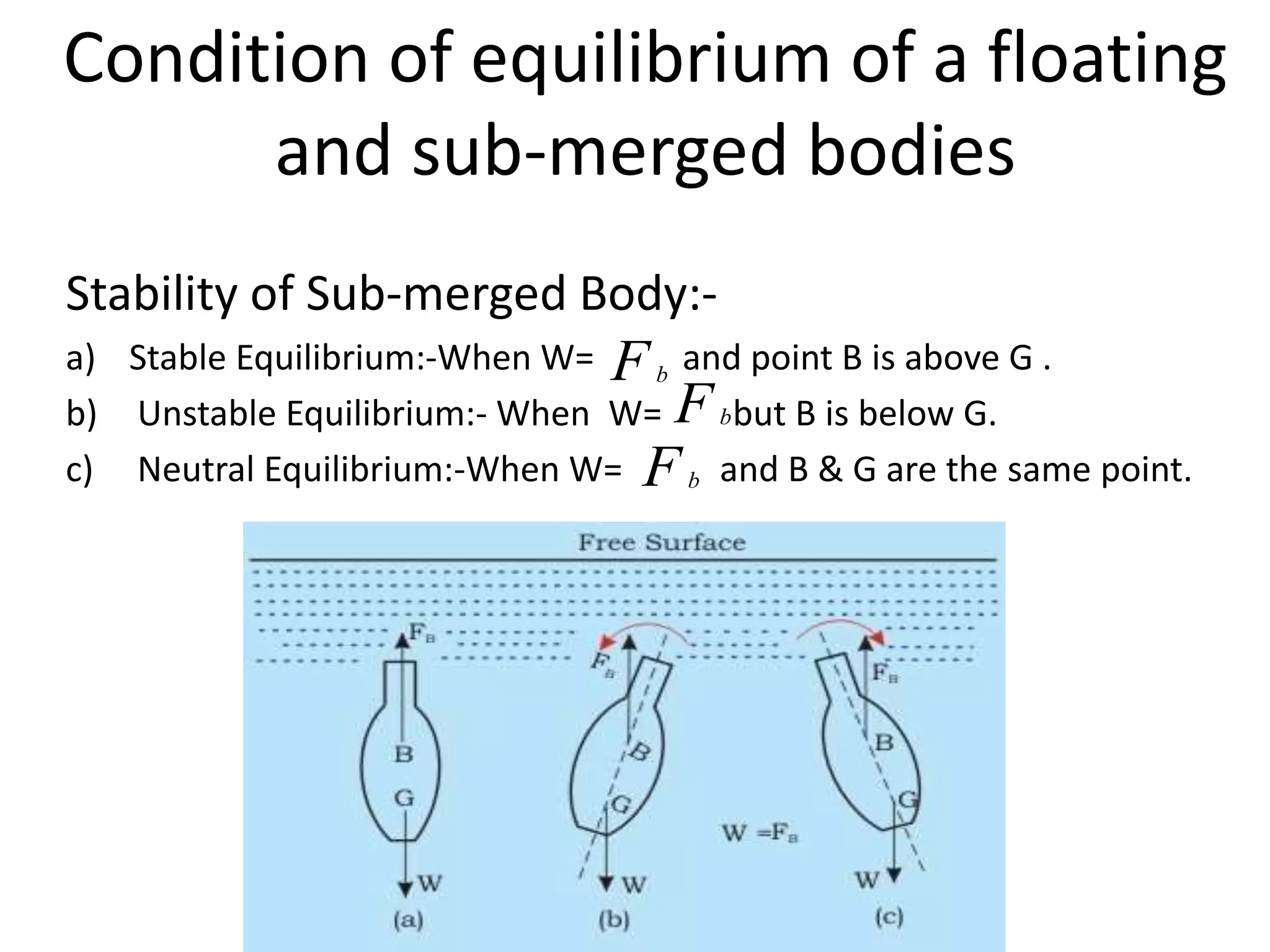
Stability of Sub-merged Body:-
a) Stable Equilibrium:-When W= and point B is above G .
b) Unstable Equilibrium:- When W= but B is below G.
c) Neutral Equilibrium:-When W= and B & G are the same point.
Fb
Fb
Fb
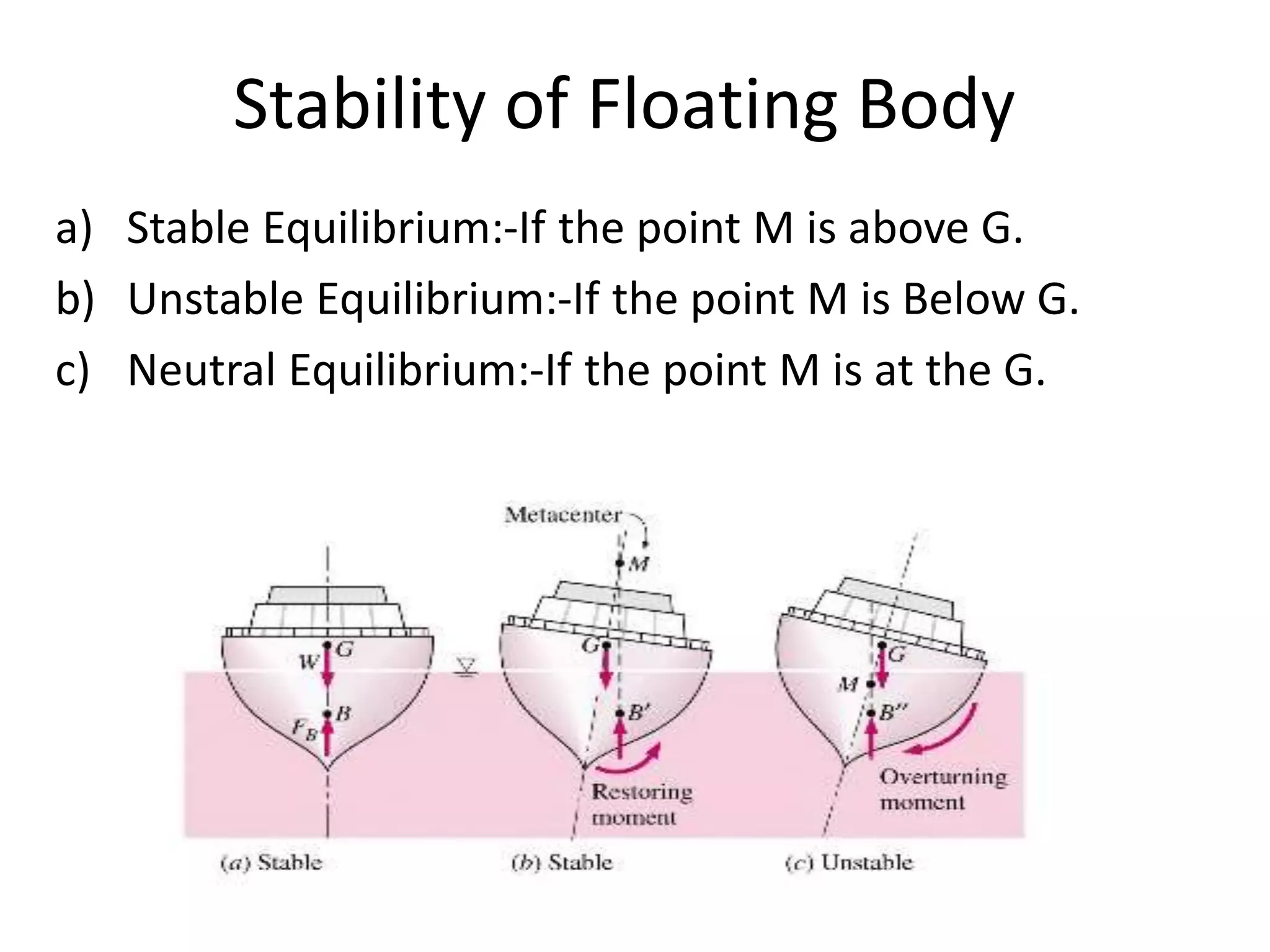
Stability of Floating Body
a) Stable Equilibrium:-If the point M is above G.
b) Unstable Equilibrium:-If the point M is Below G.
c) Neutral Equilibrium:-If the point M is at the G.
Buoyancy & floatation

Buoyancy & floatation

  • 1.
    Buoyancy And Floatation (2141906) Div.& Batch-Mechanical B-3 Group Members:- 1. Parikh Rupesh 2. Patel Abhishek Guided By:- Pro. Harshal Oza
  • 2.
    Oh buoy this isgoing to be fun Ups and Downs: Buoyancy
  • 3.
    What Is BuoyancyForce When a body is immersed in fluid, an upward force is exerted by the fluid on the body. This upward force is equal to the weight of the fluid displaced by the body and is called the force of buoyancy.
  • 4.
    What causes buoyantforce? • Buoyant force is the force on an object exerted by the surrounding fluid. • When an object pushes water, the water pushes back with as much force as it can. • If the water can push back as hard, the object floats (boat). If not, it sinks (steel).
  • 5.
    Forces Acting onBuoyancy • The buoyant force is caused by the difference between the pressure at the top of the object (gravitational force), which pushes it downward, and the pressure at the bottom (buoyant force), which pushes it upward • Since the pressure at the bottom is always greater than at the top, every object submerged in a fluid feels an upward buoyant force.
  • 6.
    Keep It Simple •Buoyancy= “the floating force” • Water is “heavier” than the object…so the object floats • Low density-more likely to float • Buoyant force is measured in Newtons (N)
  • 7.
    How do youCalculate BF? Buoyant Force= Weight of displaced fluid OR BF = Wair - Wwater Buoyant = Weight of - Weight of object Force object in air in water
  • 8.
    Condition of equilibriumof a floating and sub-merged bodies Positive buoyancy: Buoyant force is greater than weight so the object floats. Neutral buoyancy: Buoyant force is equal to weight so the object is suspended in the fluid. Negative buoyancy: Buoyant force is less than weight so the object sinks.
  • 9.
    A ship madeof iron floats while an iron needle sinks • In the case of ship which is hollow from within, the weight of water displaced by the ship is more than the weight of the ship hence it floats • Incase of iron nail which is compact , the weight of water displaced by it is much less than its own weight , hence it sinks
  • 10.
    Why do thingsfloat? 1. Things float if they are less dense than the fluid they are in. 2. Things float if they weigh less than the buoyant force pushing up on them. 3. Things float if they are shaped so their weight is spread out.
  • 11.
    Lowest Mass, LowestDensity, Floats Low Mass, Low Density, Neutral High Mass, High Density, Sink Sub’s carry compressed air tanks to re-fill their ballast tanks Ballast tanks Density
  • 12.
    Shape • How canyou get 50 kg of solid steel to float?
  • 13.
    Example • A personweighs 250N while swimming in the dead sea. When outside of the water they weigh 600N. What is the buoyant force acting on them? Will they sink or float? • BF = Wair – Wwater = 600 – 250 = 350N • The person will float because their weight in the water is less than the buoyant force.
  • 14.
    Ouch! You know theBuoyancy Force.
  • 15.
    Centre of Buoyancy Definition:- •The point through which the force of buoyancy is supposed to act is known as Centre of Buoyancy.
  • 16.
    META-CENTRE • It isdefined as the point about which a body starts oscillating when the body is tilted by a small angle. • It is the point at which the line of action of the force of buoyancy will meet the normal axis of the body when the body is given small angular displacement.
  • 17.
    Meta-centric Height • Itis the distance between the meta-centre of floating body and centre of gravity. • We can find this height by two methods:- 1. Analytical Method Here I=M.O.I =Volume of sub-merged body BG I GM    m 4 
  • 18.
    Meta-Centric Height 2. Experimentalmethod for Meta-centric Height Here W = Weight of vessel including G=centre of gravity og vessel B=centre of buoyancy =movable weight d=distance between movable weight tan 1 W d GM w w1
  • 19.
    Condition of equilibriumof a floating and sub-merged bodies Stability of Sub-merged Body:- a) Stable Equilibrium:-When W= and point B is above G . b) Unstable Equilibrium:- When W= but B is below G. c) Neutral Equilibrium:-When W= and B & G are the same point. Fb Fb Fb
  • 20.
    Stability of FloatingBody a) Stable Equilibrium:-If the point M is above G. b) Unstable Equilibrium:-If the point M is Below G. c) Neutral Equilibrium:-If the point M is at the G.