Building Online Learning Communities  Lessons Learned from the Development of a Web Based Forest Farming Course Paul Treadwell, Ken Mudge, Louise Buck, Rebecca Hargrave October 2007 – CCE System Conference
Learning Communities Learning communities can: Facilitate new learning Encourage connections Invite participation Online learning communities : Expand accessibility Diminish some barriers Create new connections
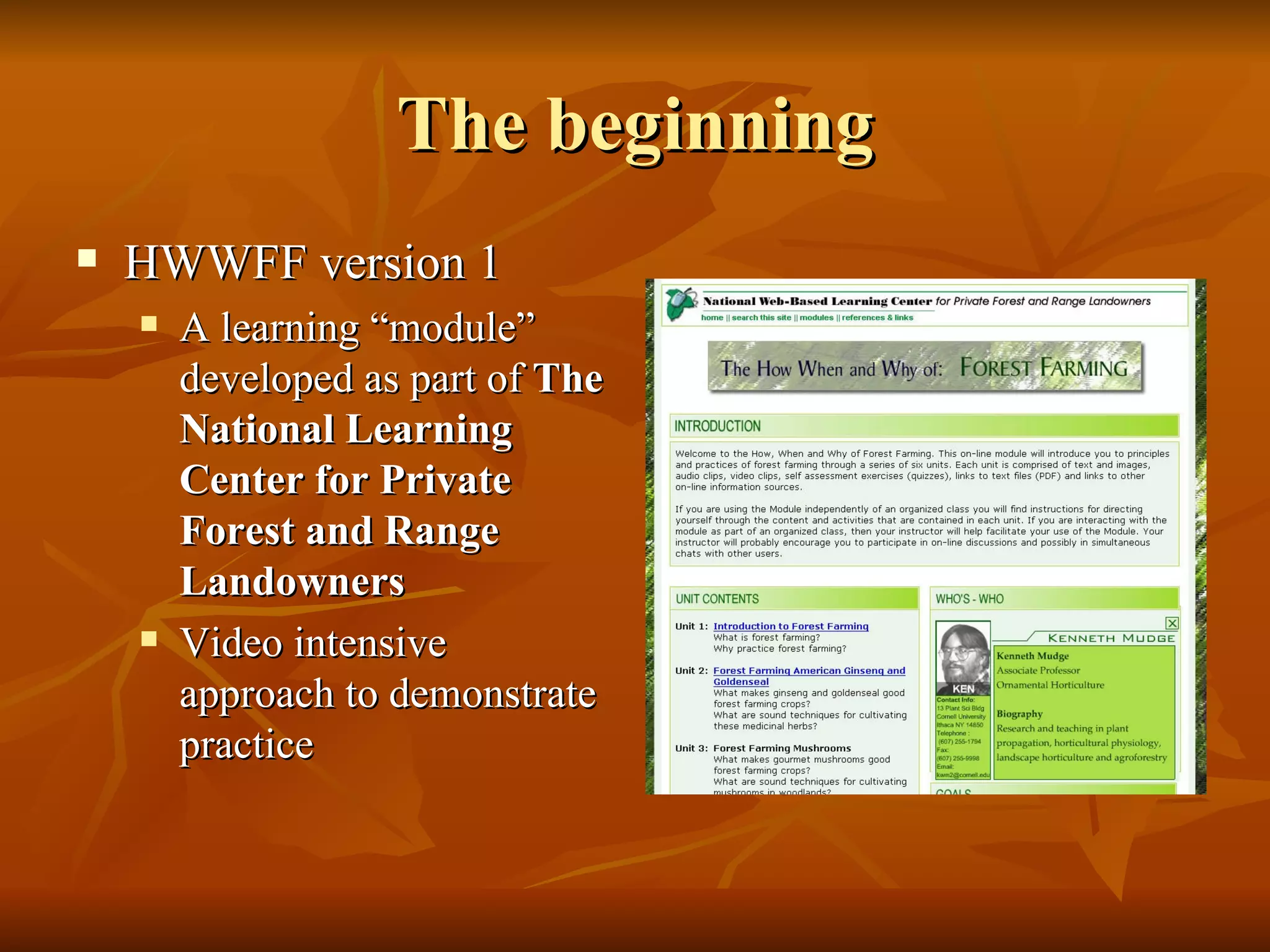
The beginning HWWFF version 1 A learning “module” developed as part of  The National Learning Center for Private Forest and Range Landowners   Video intensive approach to demonstrate practice
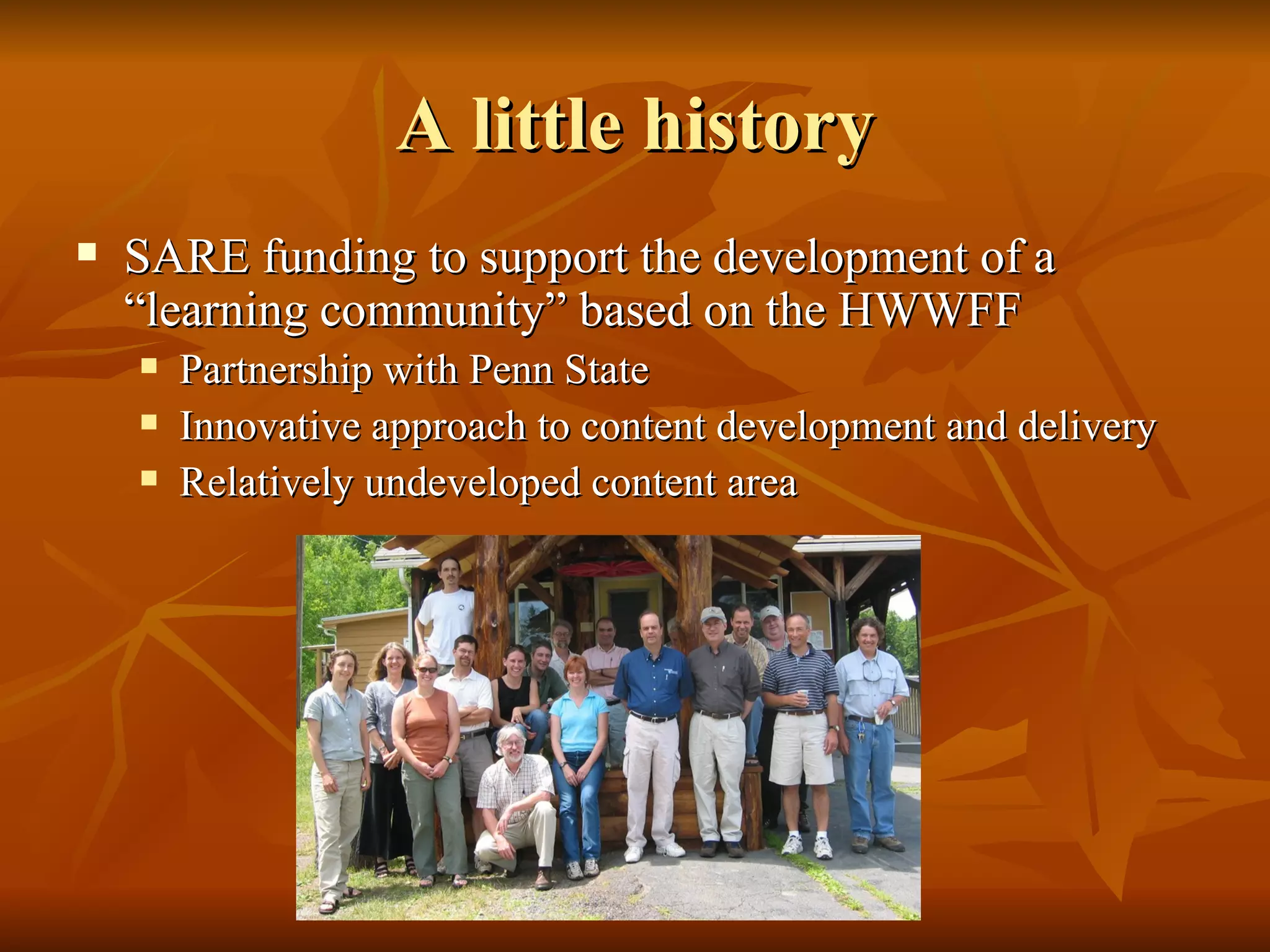
A little history SARE funding to support the development of a “learning community” based on the HWWFF Partnership with Penn State Innovative approach to content development and delivery Relatively undeveloped content area
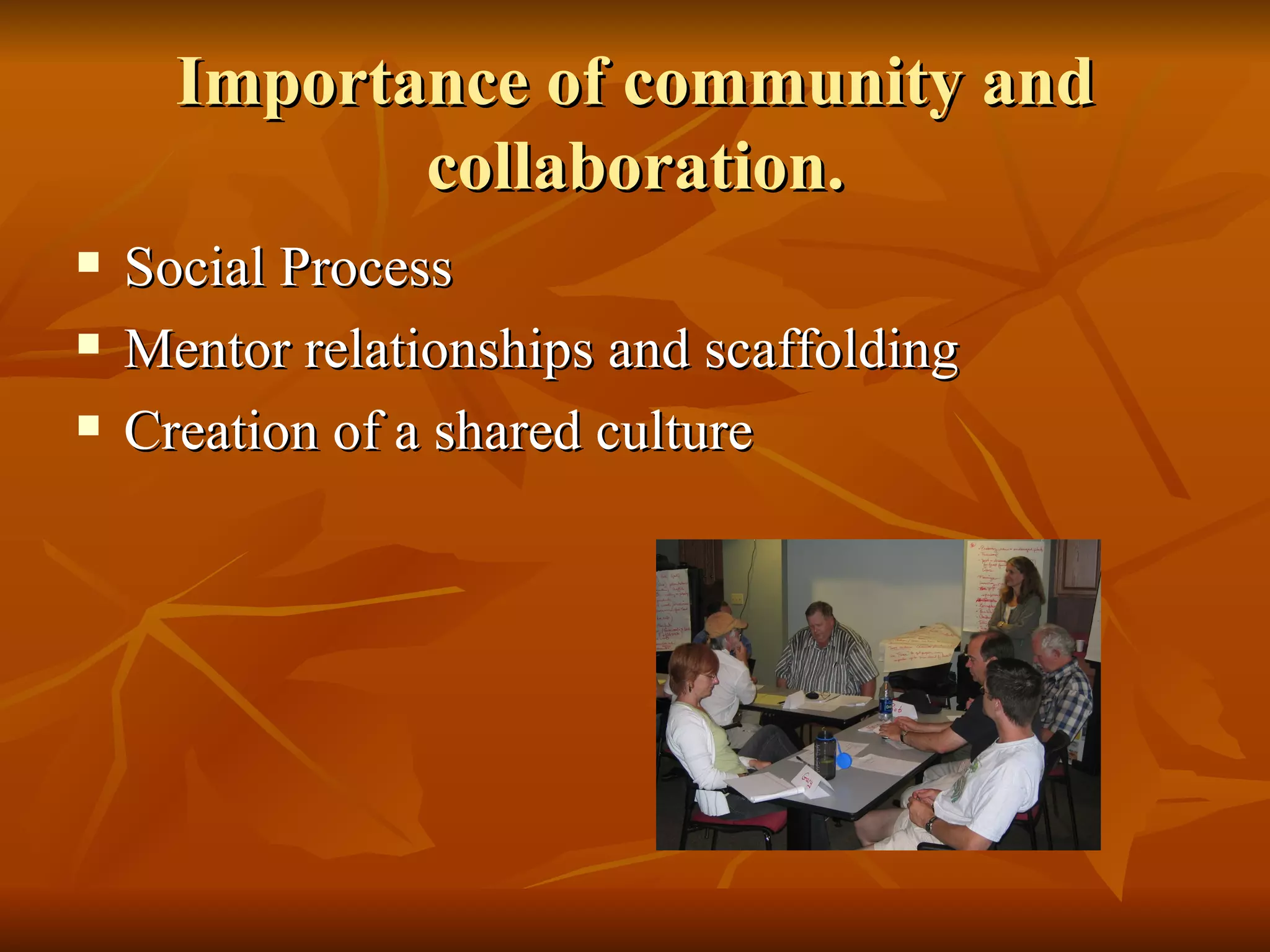
Importance of community and collaboration. Social Process Mentor relationships and scaffolding Creation of a shared culture
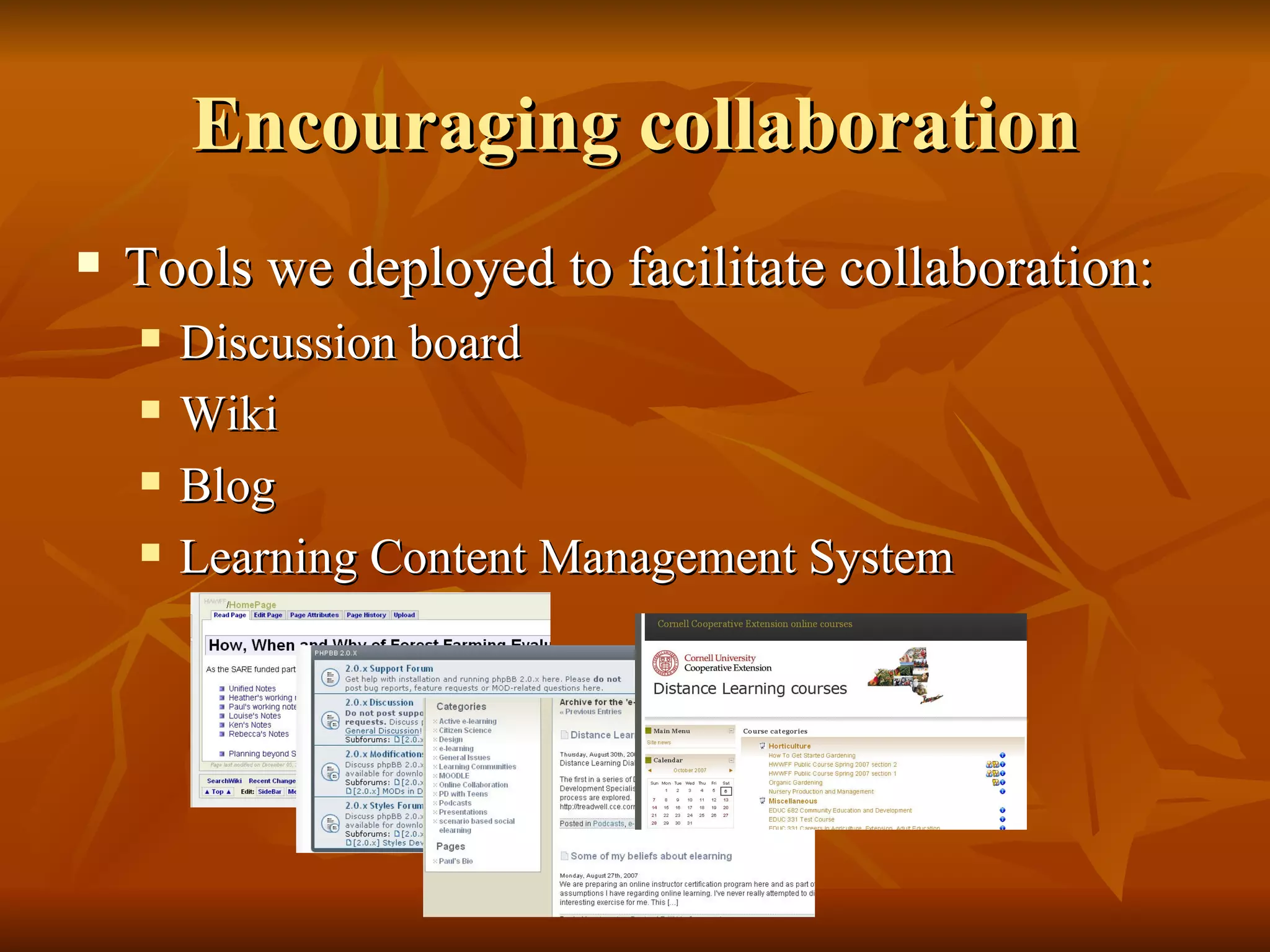
Encouraging collaboration Tools we deployed to facilitate collaboration: Discussion board  Wiki  Blog  Learning Content Management System
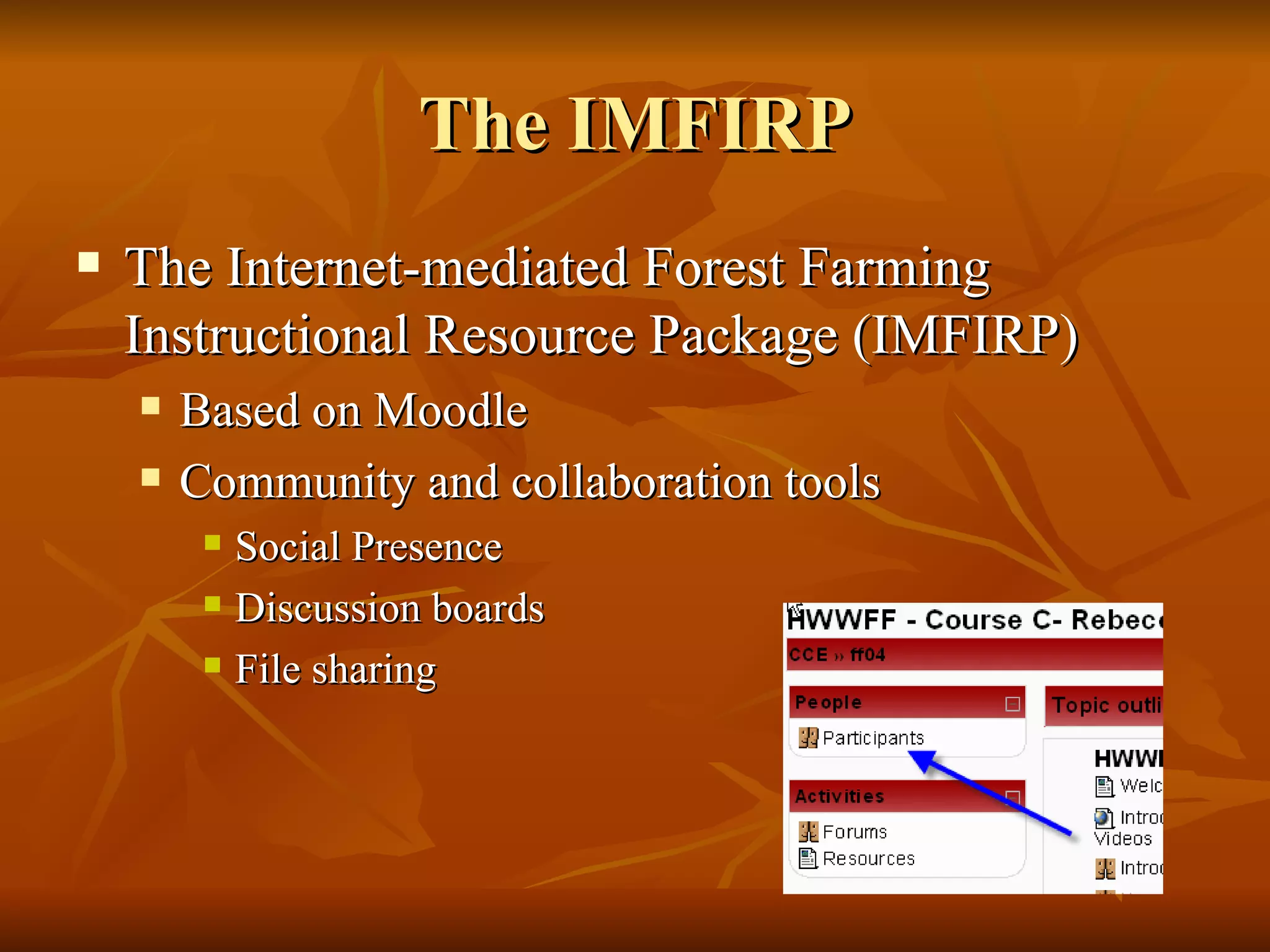
The IMFIRP The Internet-mediated Forest Farming Instructional Resource Package (IMFIRP) Based on Moodle Community and collaboration tools Social Presence Discussion boards File sharing
Contextual Challenges Disconnect between expectations and reality Sporadic Participation Backsliding – email usage Difficulties in encouraging participation Lack of motivation Lack of familiarity/comfort with hardware/software Lack of bandwidth
“Ownership” and Community Who “owns” the content developed in community? Collaborative necessities Boundaries Rules Trust
Necessity drives development Encroaching deadlines Reporting and grant requirements Narrowing of collaborative “sphere” Phase One needs: Development  New content Pilot course Evaluation and assessment tools Identification and Requirements Extension Educators Landowners
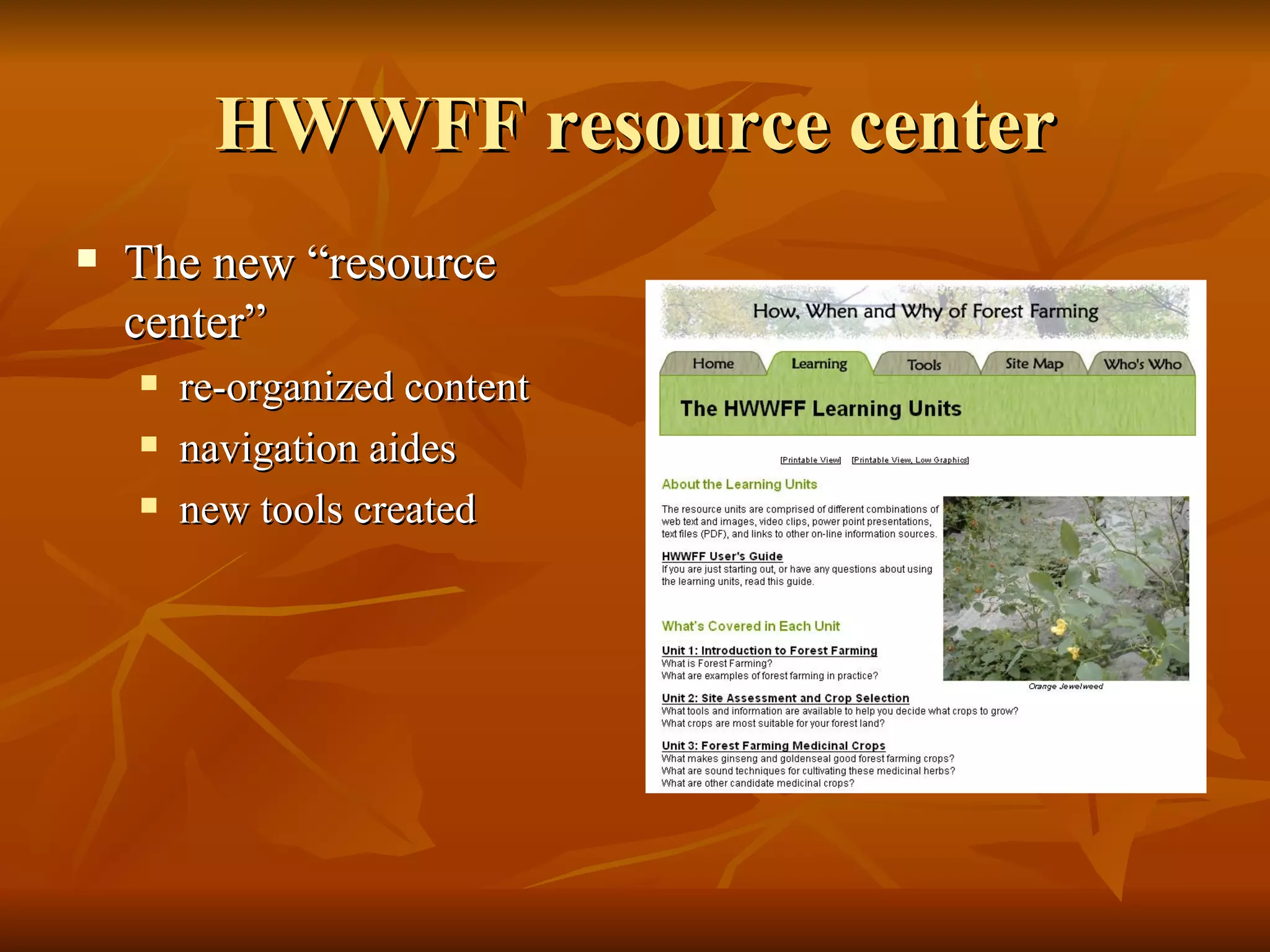
HWWFF resource center The new “resource center”  re-organized content navigation aides  new tools created
New content developments Site assessment workbook and case study Online presentation of skills  Downloadable workbook Case study workbook
The pilot The pilot course was conducted using Moodle  9 week course 3 parallel courses– 20 educators and 65 forest owners participated Pre and post course surveys
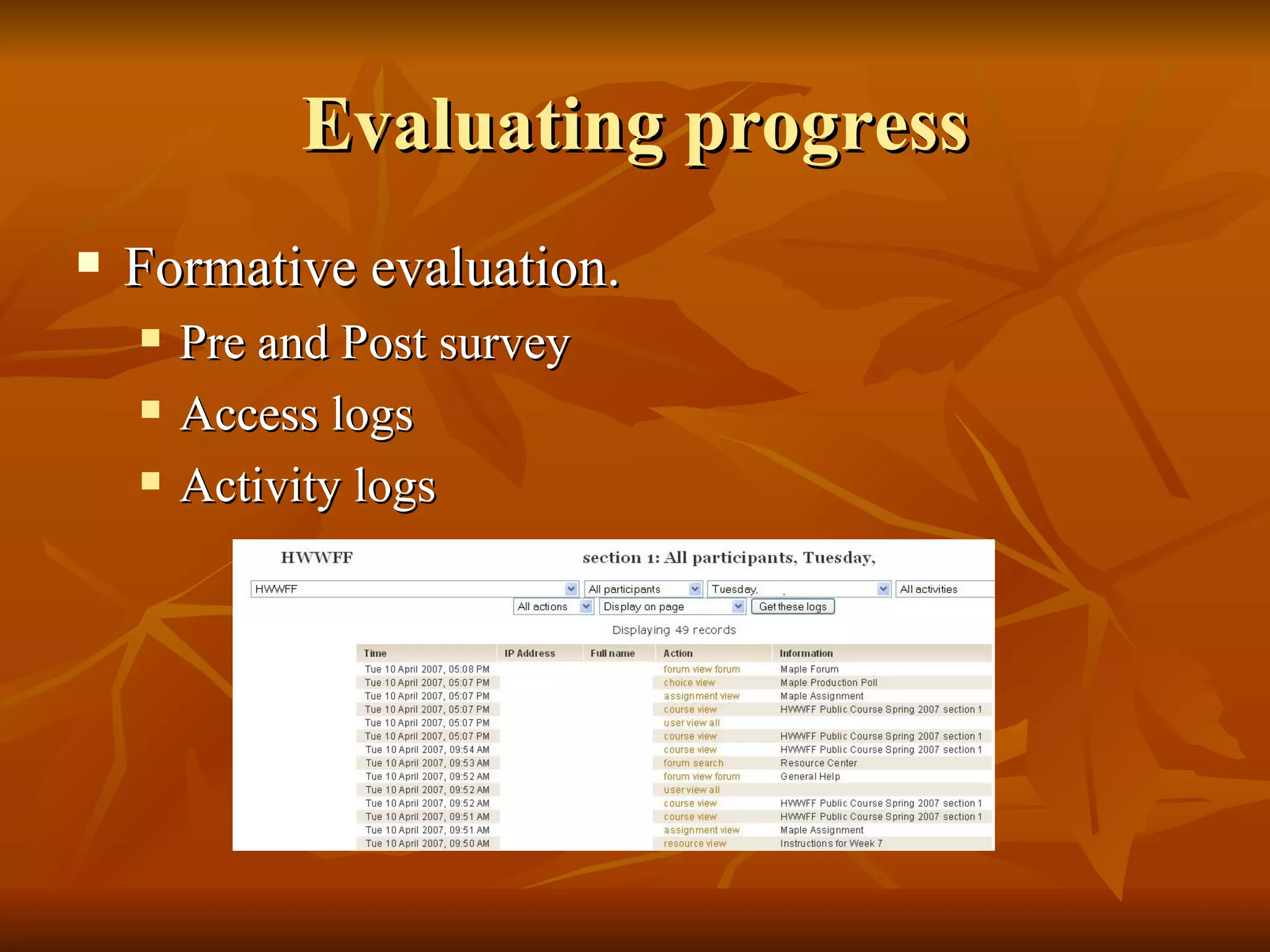
Evaluating progress Formative evaluation. Pre and Post survey Access logs Activity logs
Analysis The surveys were designed to evaluate the usability of the content and the delivery system Analysis revealed a significant relationship between connection speed and perceived ease of use of MOODLE No significant relationship between previous experience and comfort level with technology and perceived ease of use  Additional survey data and results will be made available this autumn
Lessons learned The introduction of new technologies to educators was problematic  Existing skill set is insufficiently developed Success requires: Focus on skills development Structured learning experiences for educators
HWWTFFO  The HWWTFFO provided a systematic approach to working with forest farming content to create distance learning courses Facilitated by trust and personal relationships Educators enjoyed “learning by doing” Mentor relationships essential
Bandwidth Bandwidth can be a substantial barrier to successful engagement online Strategies to compensate for “narrowband” connections include: Providing alternative paths to bandwidth intensive elements  Maintaining an awareness of the technical capacity of participants Flexibility in content development and delivery
Applying the lessons Growing awareness of the “digital divide” Discussion and creative engagement are needed around this issue CCE Online Instructor Certification program
An online learning community? During the pilot phase elements of community were apparent: Discussion boards provided a space for interaction Landowners recruited for the pilot had a local connection with educators – the online course facilitated access to broader expertise and experience With one exception no longer term “community” developed out of the project
What about the landowners? Landowners participated in the pilot to evaluate the content Impact of content on practice: Post course follow up received responses from 16 landowners Longer term follow-up needed
After SARE The How, When and Why of Forest Farming is being offered by a CCE educator, on an on-going basis The CCE Instructor Certification program has been instituted Data gathered from the pilot is being used to guide new course development
Always growing The HWWFF resource center continues to grow as more is learned
Contact us Ken Mudge –  [email_address] Paul Treadwell –  [email_address] Louise Buck –  [email_address] Rebecca Hargrave –  [email_address] The How, When and Why of Forest Farming resource center http://hwwff.cce.cornell.edu/ The How, When and Why of Forest Farming resource center http://hwwff.cce.cornell.edu/InstructorsGuide/

Building Learning Communities Online

  • 1.
    Building Online LearningCommunities Lessons Learned from the Development of a Web Based Forest Farming Course Paul Treadwell, Ken Mudge, Louise Buck, Rebecca Hargrave October 2007 – CCE System Conference
  • 2.
    Learning Communities Learningcommunities can: Facilitate new learning Encourage connections Invite participation Online learning communities : Expand accessibility Diminish some barriers Create new connections
  • 3.
    The beginning HWWFFversion 1 A learning “module” developed as part of The National Learning Center for Private Forest and Range Landowners Video intensive approach to demonstrate practice
  • 4.
    A little historySARE funding to support the development of a “learning community” based on the HWWFF Partnership with Penn State Innovative approach to content development and delivery Relatively undeveloped content area
  • 5.
    Importance of communityand collaboration. Social Process Mentor relationships and scaffolding Creation of a shared culture
  • 6.
    Encouraging collaboration Toolswe deployed to facilitate collaboration: Discussion board Wiki Blog Learning Content Management System
  • 7.
    The IMFIRP TheInternet-mediated Forest Farming Instructional Resource Package (IMFIRP) Based on Moodle Community and collaboration tools Social Presence Discussion boards File sharing
  • 8.
    Contextual Challenges Disconnectbetween expectations and reality Sporadic Participation Backsliding – email usage Difficulties in encouraging participation Lack of motivation Lack of familiarity/comfort with hardware/software Lack of bandwidth
  • 9.
    “Ownership” and CommunityWho “owns” the content developed in community? Collaborative necessities Boundaries Rules Trust
  • 10.
    Necessity drives developmentEncroaching deadlines Reporting and grant requirements Narrowing of collaborative “sphere” Phase One needs: Development New content Pilot course Evaluation and assessment tools Identification and Requirements Extension Educators Landowners
  • 11.
    HWWFF resource centerThe new “resource center” re-organized content navigation aides new tools created
  • 12.
    New content developmentsSite assessment workbook and case study Online presentation of skills Downloadable workbook Case study workbook
  • 13.
    The pilot Thepilot course was conducted using Moodle 9 week course 3 parallel courses– 20 educators and 65 forest owners participated Pre and post course surveys
  • 14.
    Evaluating progress Formativeevaluation. Pre and Post survey Access logs Activity logs
  • 15.
    Analysis The surveyswere designed to evaluate the usability of the content and the delivery system Analysis revealed a significant relationship between connection speed and perceived ease of use of MOODLE No significant relationship between previous experience and comfort level with technology and perceived ease of use Additional survey data and results will be made available this autumn
  • 16.
    Lessons learned Theintroduction of new technologies to educators was problematic Existing skill set is insufficiently developed Success requires: Focus on skills development Structured learning experiences for educators
  • 17.
    HWWTFFO TheHWWTFFO provided a systematic approach to working with forest farming content to create distance learning courses Facilitated by trust and personal relationships Educators enjoyed “learning by doing” Mentor relationships essential
  • 18.
    Bandwidth Bandwidth canbe a substantial barrier to successful engagement online Strategies to compensate for “narrowband” connections include: Providing alternative paths to bandwidth intensive elements Maintaining an awareness of the technical capacity of participants Flexibility in content development and delivery
  • 19.
    Applying the lessonsGrowing awareness of the “digital divide” Discussion and creative engagement are needed around this issue CCE Online Instructor Certification program
  • 20.
    An online learningcommunity? During the pilot phase elements of community were apparent: Discussion boards provided a space for interaction Landowners recruited for the pilot had a local connection with educators – the online course facilitated access to broader expertise and experience With one exception no longer term “community” developed out of the project
  • 21.
    What about thelandowners? Landowners participated in the pilot to evaluate the content Impact of content on practice: Post course follow up received responses from 16 landowners Longer term follow-up needed
  • 22.
    After SARE TheHow, When and Why of Forest Farming is being offered by a CCE educator, on an on-going basis The CCE Instructor Certification program has been instituted Data gathered from the pilot is being used to guide new course development
  • 23.
    Always growing TheHWWFF resource center continues to grow as more is learned
  • 24.
    Contact us KenMudge – [email_address] Paul Treadwell – [email_address] Louise Buck – [email_address] Rebecca Hargrave – [email_address] The How, When and Why of Forest Farming resource center http://hwwff.cce.cornell.edu/ The How, When and Why of Forest Farming resource center http://hwwff.cce.cornell.edu/InstructorsGuide/