Extraction of Aluminium
•To Know how aluminium is
extracted from the Bauxite
Ore.
•To know the process of
extraction.
Objective:
Aluminium: properties
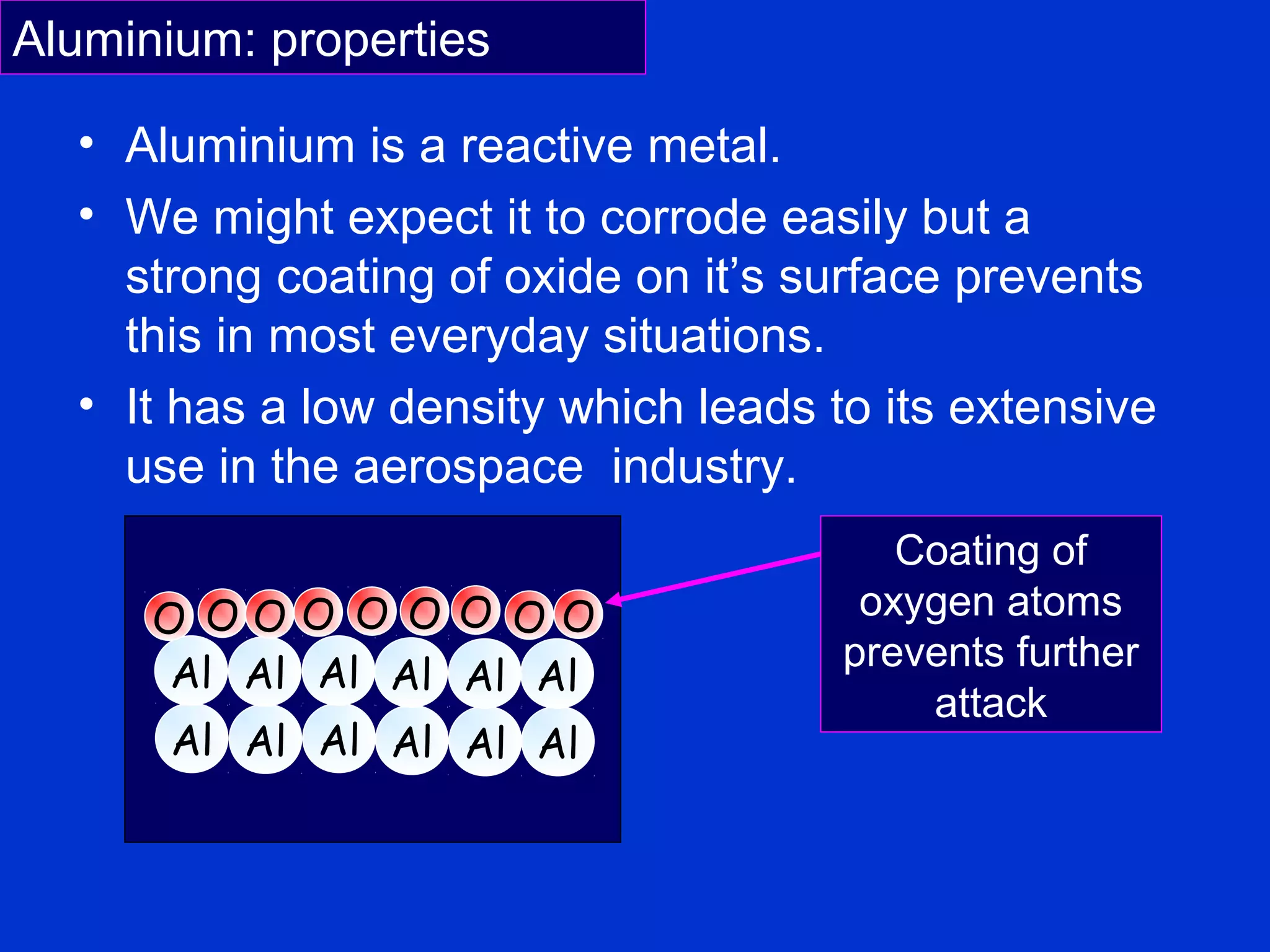
• Aluminium is a reactive metal.
• We might expect it to corrode easily but a
strong coating of oxide on it’s surface prevents
this in most everyday situations.
• It has a low density which leads to its extensive
use in the aerospace industry.
Al Al Al AlAl Al
Al Al Al AlAl Al
O O O O O OO OO
Coating of
oxygen atoms
prevents further
attack
Raw Materials
• Ore bauxite aluminium oxide
• The ore is dissolved in cryolite to lower the
melting point.
Aluminium: ores
• It occurs as bauxite ore which is a form of
aluminium oxide.
• Because aluminium is so reactive carbon is
unable to pull away the oxygen from it.
• It is extracted by electrolysis of moltenmolten bauxite.
Early attempts at this failed because bauxite is
so hard to melt.
• If cryolite is added, the bauxite melts more
easily. This is an essential step in the extraction
process.
A bauxite / cryolite mixture is melted in a steel
container containing a carbon lining.
Graphite (carbon) anodes
Tank
lined
with
carbon
cathode
Molten electrolyte
bauxite + cryolite
Steel
case
Graphite anodes are inserted into the molten electrolyte
ready for electrolysis.
Electrolytic extraction
Aluminium formation
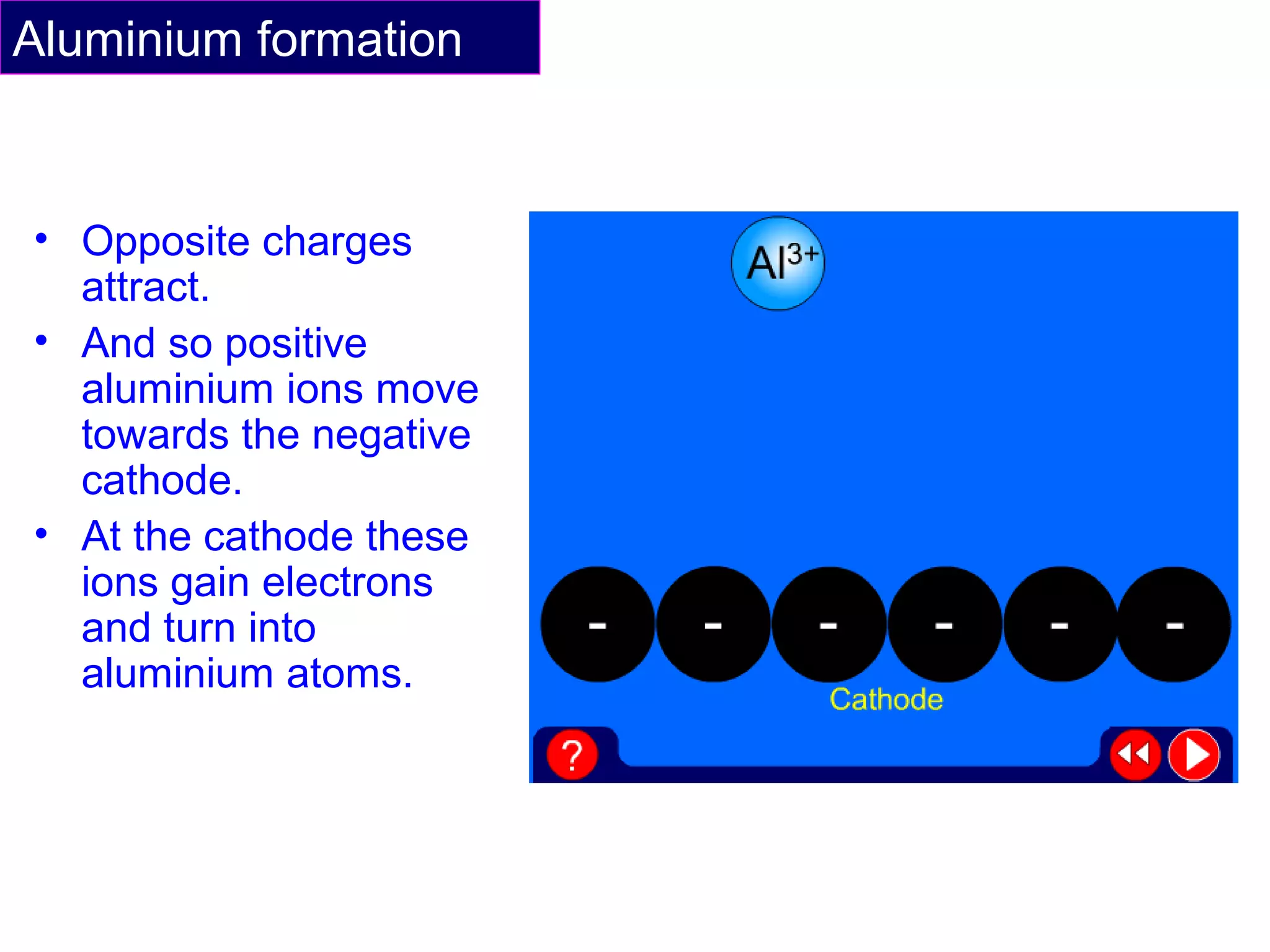
• Opposite charges
attract.
• And so positive
aluminium ions move
towards the negative
cathode.
• At the cathode these
ions gain electrons
and turn into
aluminium atoms.
Oxygen formation
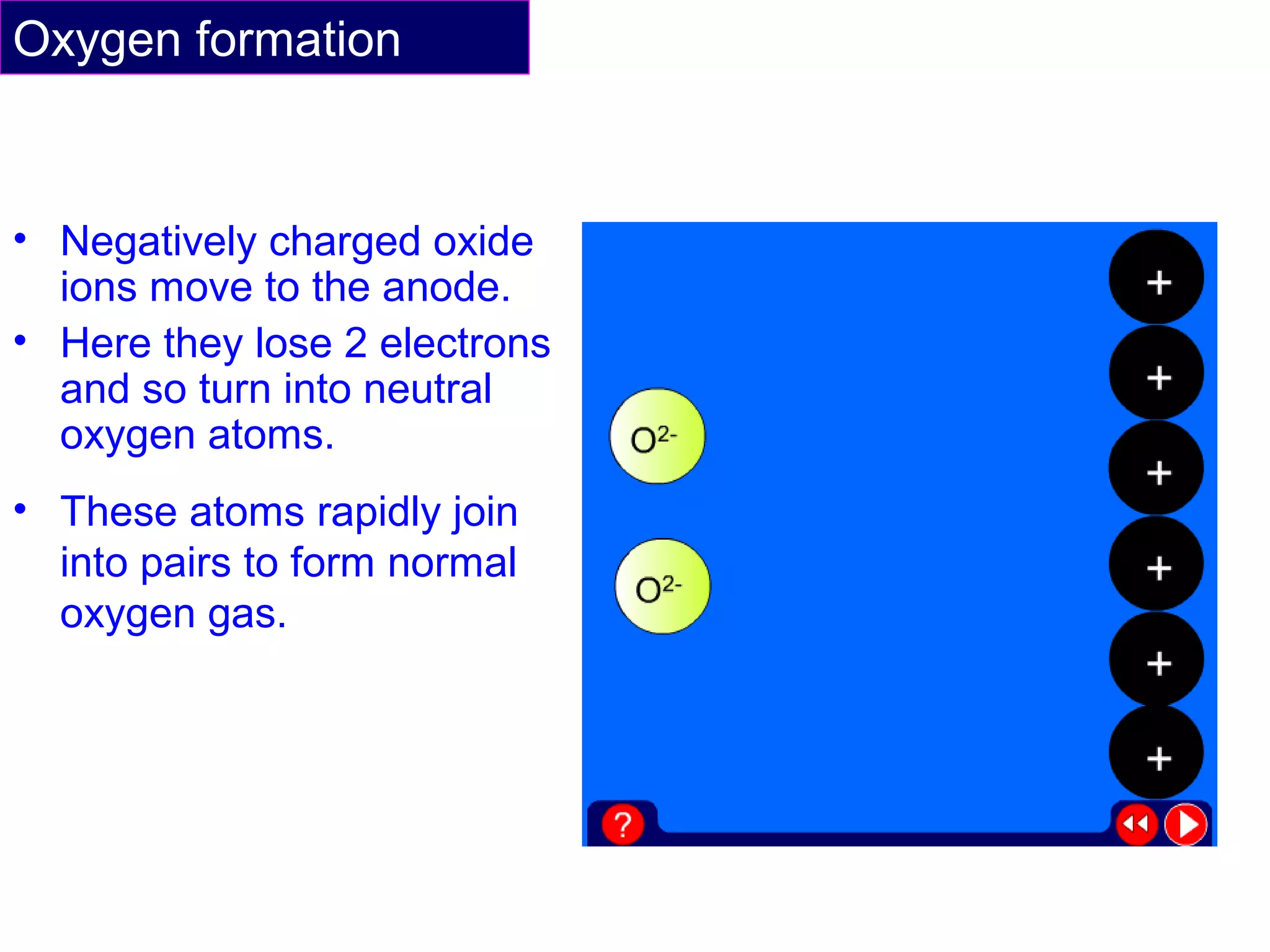
• Negatively charged oxide
ions move to the anode.
• Here they lose 2 electrons
and so turn into neutral
oxygen atoms.
• These atoms rapidly join
into pairs to form normal
oxygen gas.
Carbon dioxide formation
• Remember the electrolysis is
carried out at high
temperature.
• Under these conditions quite
a lot of the oxygen reacts
with the carbon anode.
• Carbon dioxide is formed
and the anode is rapidly
eaten away and frequently
has to be replaced.
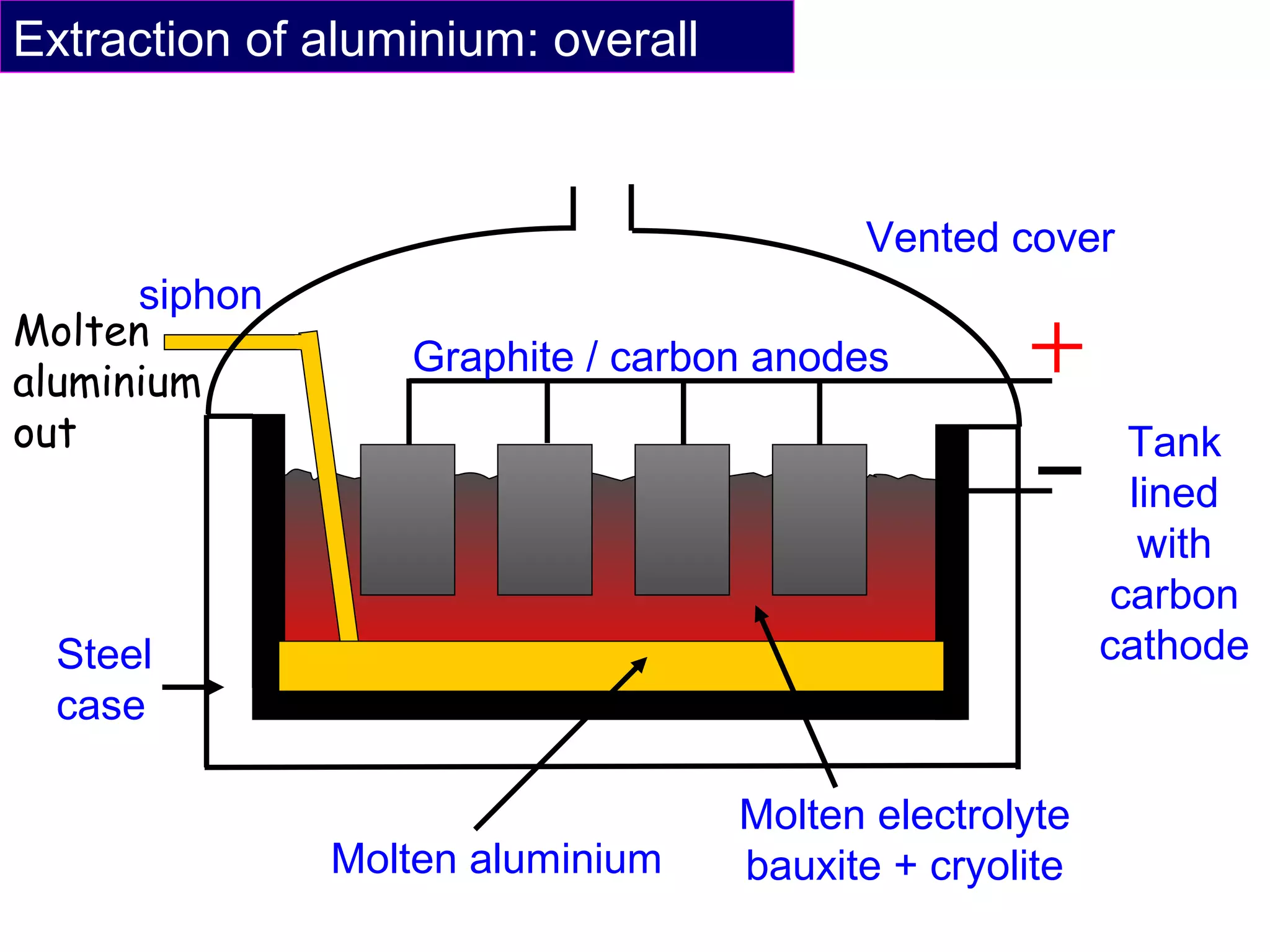
Extraction of aluminium: overall
siphon
Graphite / carbon anodes
Molten aluminium
Molten electrolyte
bauxite + cryolite
Tank
lined
with
carbon
cathode
Molten
aluminium
out
Steel
case
Vented cover
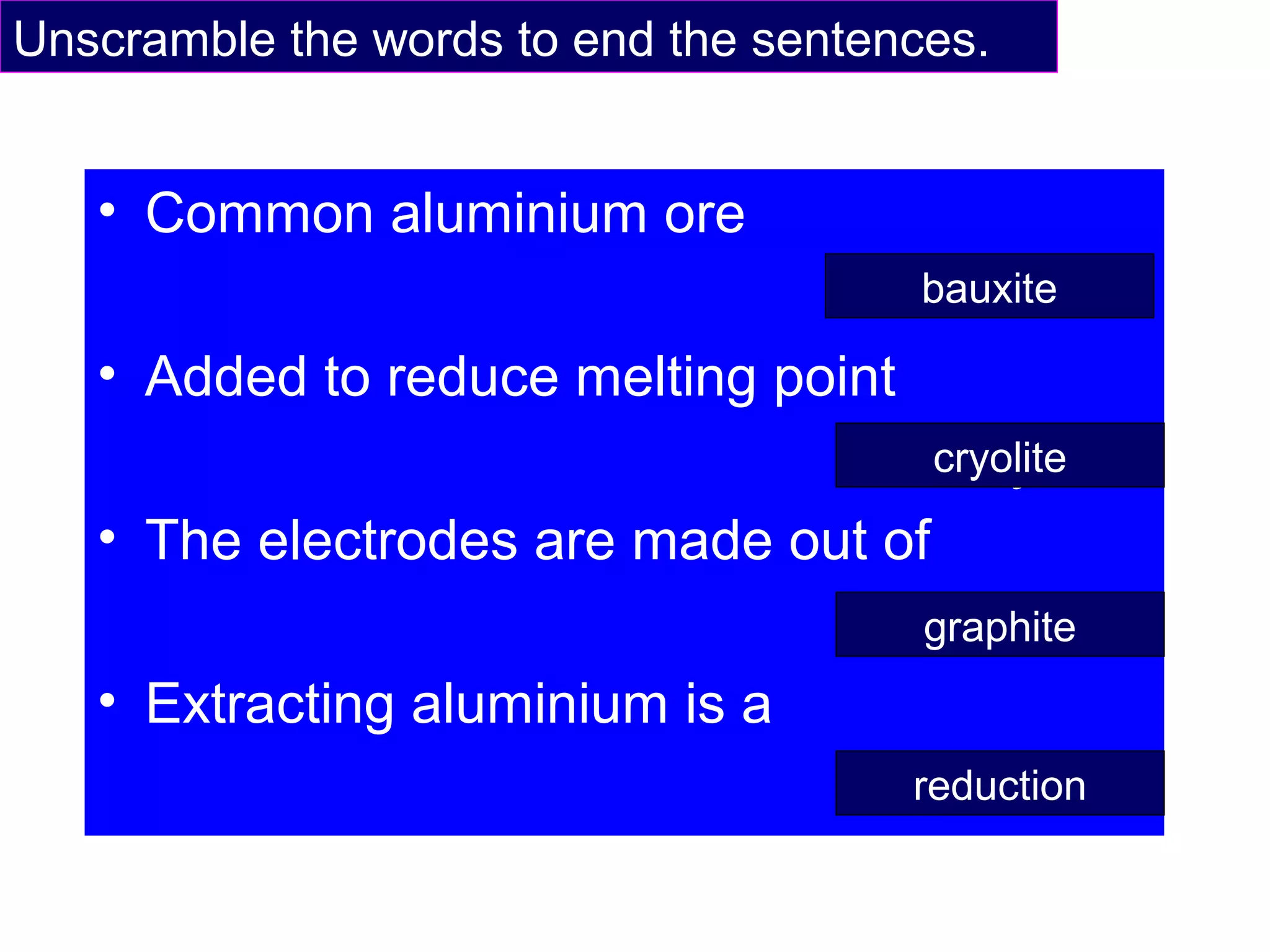
• Common aluminium ore
I axe tub
• Added to reduce melting point
City role
• The electrodes are made out of
Right ape
• Extracting aluminium is a
Cretin duo
bauxite
cryolite
graphite
reduction
Unscramble the words to end the sentences.
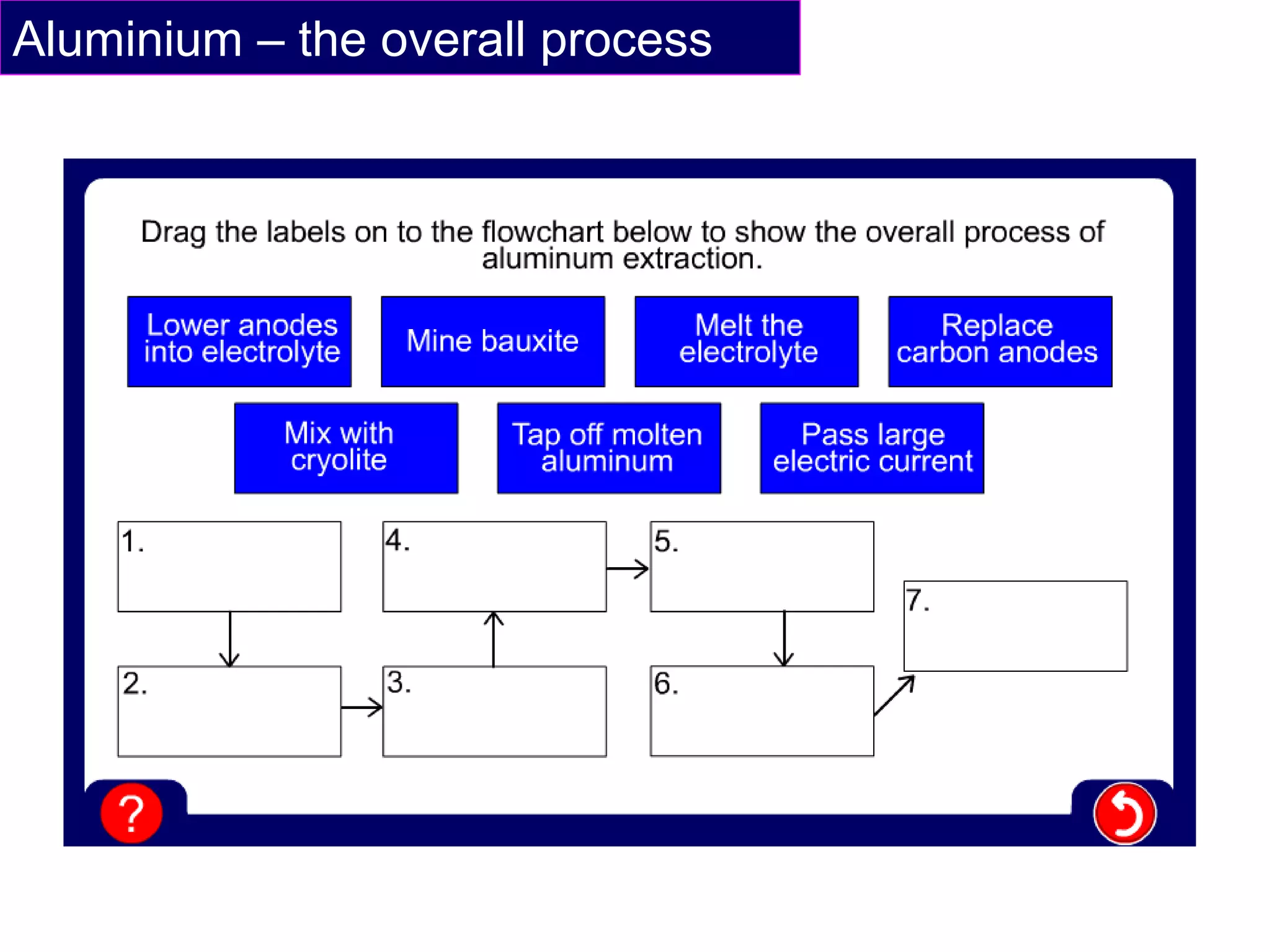
Aluminium – the overall process
1. What do we call the substance added to
the aluminium ore prior to electrolysis?
Bauxite
Electrolyte
Cryolite
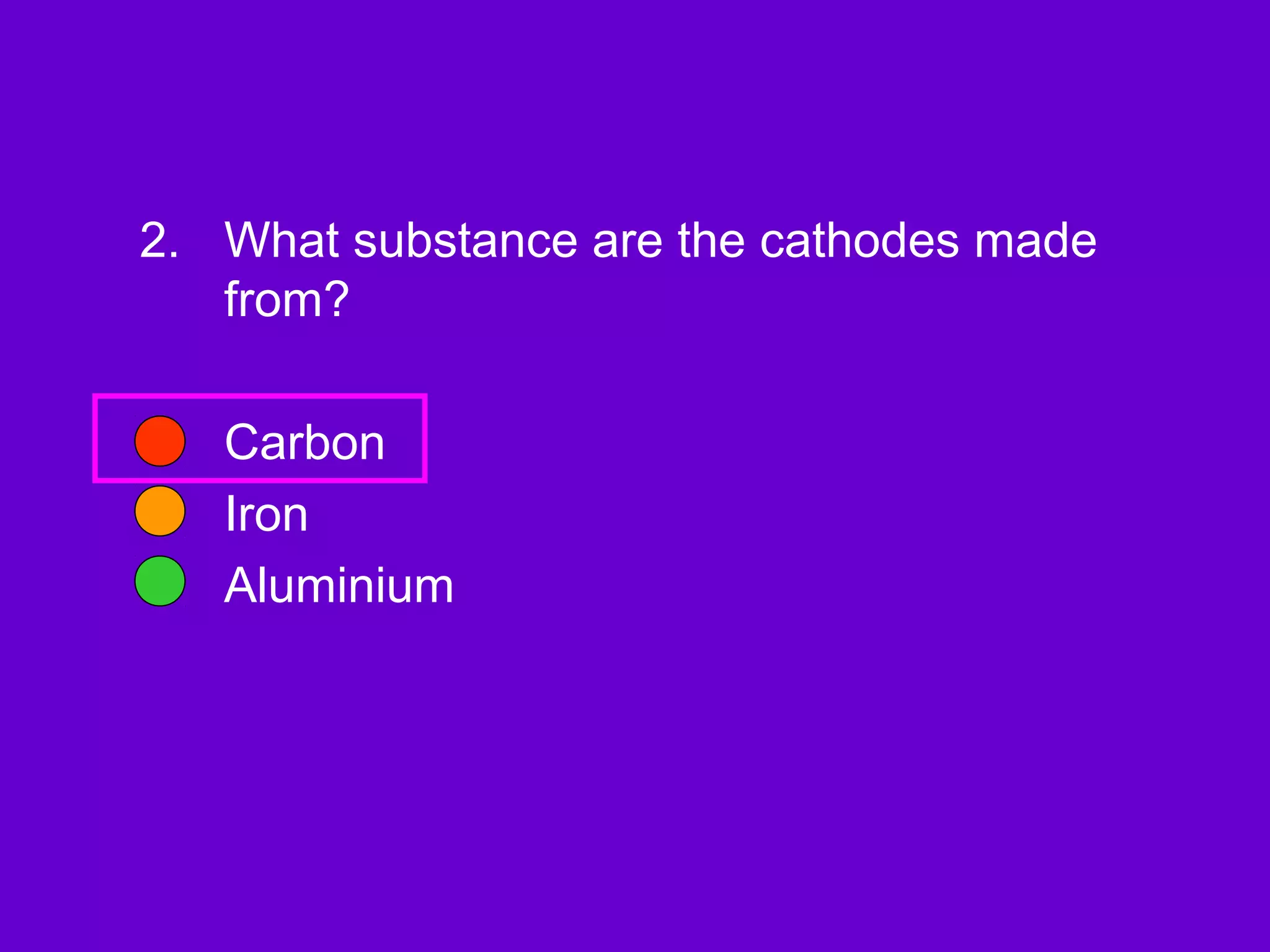
2. What substance are the cathodes made
from?
Carbon
Iron
Aluminium
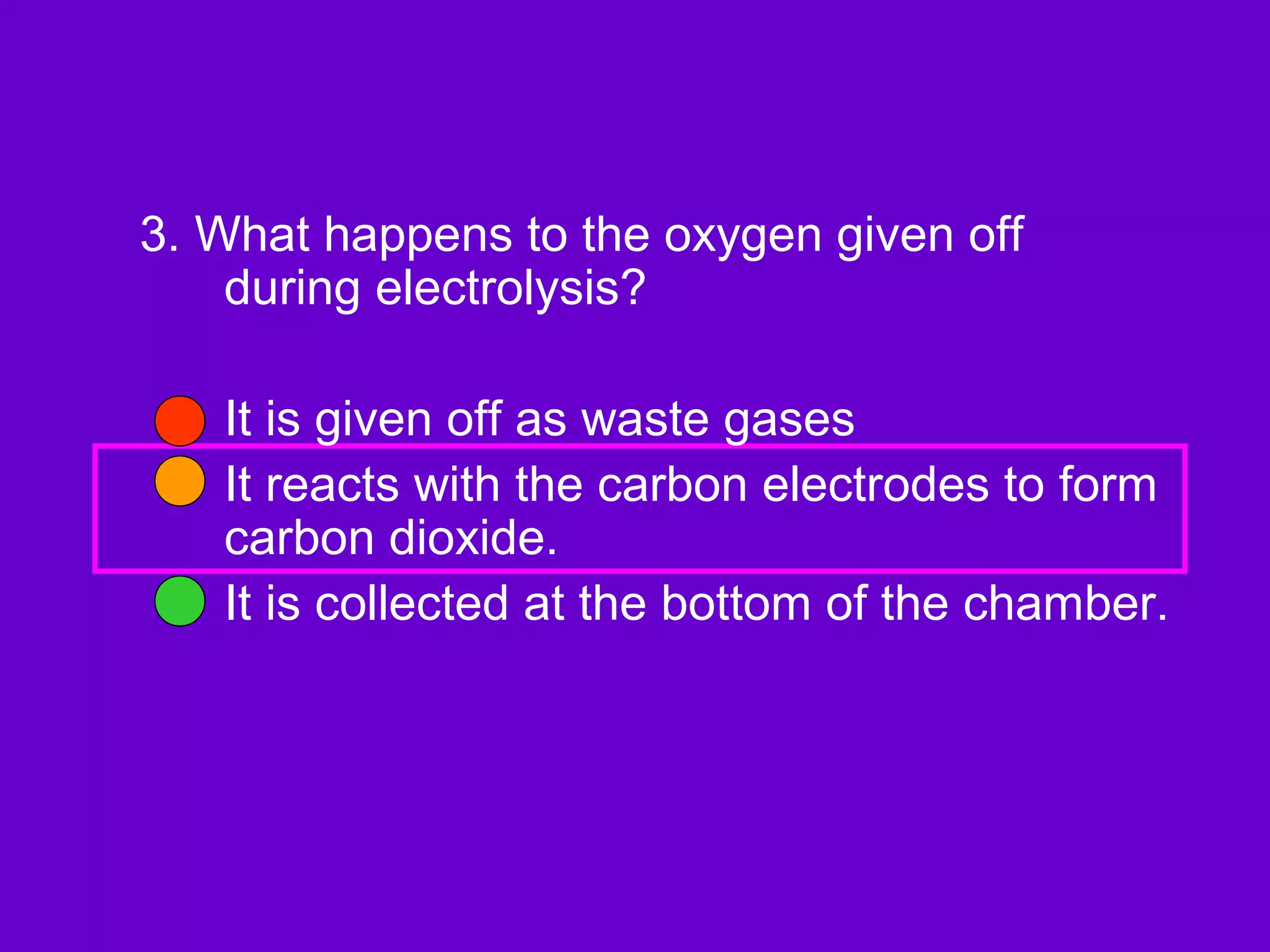
3. What happens to the oxygen given off
during electrolysis?
It is given off as waste gases
It reacts with the carbon electrodes to form
carbon dioxide.
It is collected at the bottom of the chamber.
Aluminium Extraction

Aluminium Extraction

  • 1.
    Extraction of Aluminium •ToKnow how aluminium is extracted from the Bauxite Ore. •To know the process of extraction. Objective:
  • 2.
    Aluminium: properties • Aluminiumis a reactive metal. • We might expect it to corrode easily but a strong coating of oxide on it’s surface prevents this in most everyday situations. • It has a low density which leads to its extensive use in the aerospace industry. Al Al Al AlAl Al Al Al Al AlAl Al O O O O O OO OO Coating of oxygen atoms prevents further attack
  • 3.
    Raw Materials • Orebauxite aluminium oxide • The ore is dissolved in cryolite to lower the melting point.
  • 4.
    Aluminium: ores • Itoccurs as bauxite ore which is a form of aluminium oxide. • Because aluminium is so reactive carbon is unable to pull away the oxygen from it. • It is extracted by electrolysis of moltenmolten bauxite. Early attempts at this failed because bauxite is so hard to melt. • If cryolite is added, the bauxite melts more easily. This is an essential step in the extraction process.
  • 5.
    A bauxite /cryolite mixture is melted in a steel container containing a carbon lining. Graphite (carbon) anodes Tank lined with carbon cathode Molten electrolyte bauxite + cryolite Steel case Graphite anodes are inserted into the molten electrolyte ready for electrolysis. Electrolytic extraction
  • 6.
    Aluminium formation • Oppositecharges attract. • And so positive aluminium ions move towards the negative cathode. • At the cathode these ions gain electrons and turn into aluminium atoms.
  • 7.
    Oxygen formation • Negativelycharged oxide ions move to the anode. • Here they lose 2 electrons and so turn into neutral oxygen atoms. • These atoms rapidly join into pairs to form normal oxygen gas.
  • 8.
    Carbon dioxide formation •Remember the electrolysis is carried out at high temperature. • Under these conditions quite a lot of the oxygen reacts with the carbon anode. • Carbon dioxide is formed and the anode is rapidly eaten away and frequently has to be replaced.
  • 9.
    Extraction of aluminium:overall siphon Graphite / carbon anodes Molten aluminium Molten electrolyte bauxite + cryolite Tank lined with carbon cathode Molten aluminium out Steel case Vented cover
  • 10.
    • Common aluminiumore I axe tub • Added to reduce melting point City role • The electrodes are made out of Right ape • Extracting aluminium is a Cretin duo bauxite cryolite graphite reduction Unscramble the words to end the sentences.
  • 11.
    Aluminium – theoverall process
  • 12.
    1. What dowe call the substance added to the aluminium ore prior to electrolysis? Bauxite Electrolyte Cryolite
  • 13.
    2. What substanceare the cathodes made from? Carbon Iron Aluminium
  • 14.
    3. What happensto the oxygen given off during electrolysis? It is given off as waste gases It reacts with the carbon electrodes to form carbon dioxide. It is collected at the bottom of the chamber.