Being Sherlock Holmes
Or,
Observation and Inference:
Arthur Conan Doyle
(Part 1)
Guest lecture by Patrick Mooney
Based substantially on material
by Professor Chris Newfield
English 193, Winter 2014
9 January 2014
Some quick announcements
●

●

●

●

●

The course reader should be available Friday or
Monday at SB Printing, 6549 Pardall Rd.
A copy of the syllabus is available on line at
http://is.gd/oricop.
Because the reader is not yet available, we will
we watching the 1984 TV adaptation of “Dancing
Men,” starring Jeremy Brett as Holmes.
Pay close attention to specific pieces of
evidence – the follow-up lecture will be a model
for how you complete your first assignment.
TAs will handle crashing after lecture.
Detection Structure
Assignment
•

Write a plot analysis and “breakout” of the
detection structure for:
Agatha Christie
or

Sue Grafton

•

•

DUE Week 3 in section
Not graded (provided that you do an adequate
job) – you’re practicing for later
Arthur Conan Doyle (1859-1930)
●

Studies medicine at U of Edinburgh 1876

●

His university professor Joseph Bell MD
–

model for Holmes

●

Fails as “serious” writer

●

First detective story in 1886. Nobody cares.

●

First big success “A Scandal in Bohemia” 1891
– thanks to serial character called “Sherlock
Holmes”
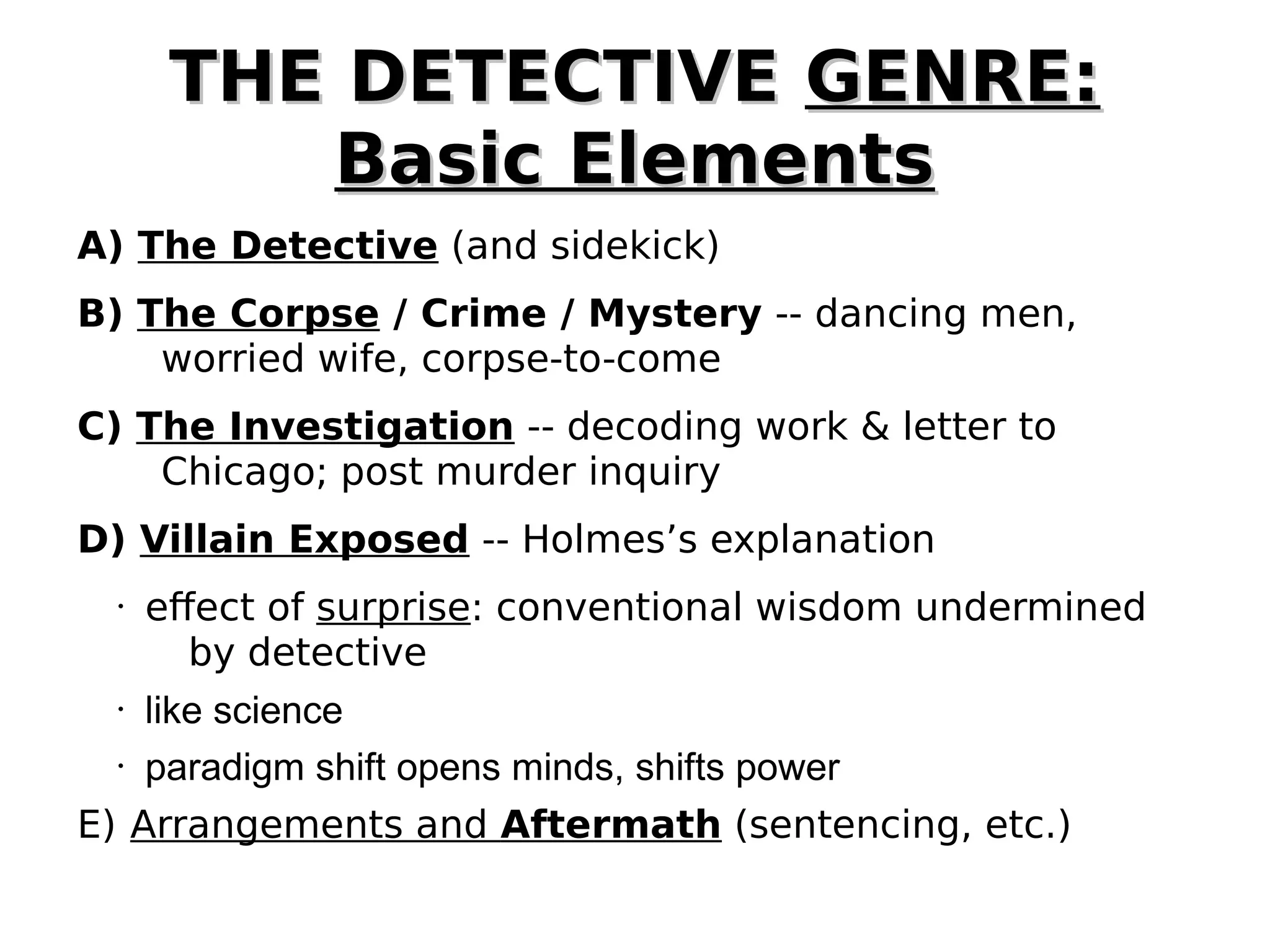
THE DETECTIVE GENRE:
Basic Elements
A) The Detective (and sidekick)
B) The Corpse / Crime / Mystery -- dancing men,
worried wife, corpse-to-come
C) The Investigation -- decoding work & letter to
Chicago; post murder inquiry
D) Villain Exposed -- Holmes’s explanation
•

•
•

effect of surprise: conventional wisdom undermined
by detective
like science
paradigm shift opens minds, shifts power

E) Arrangements and Aftermath (sentencing, etc.)
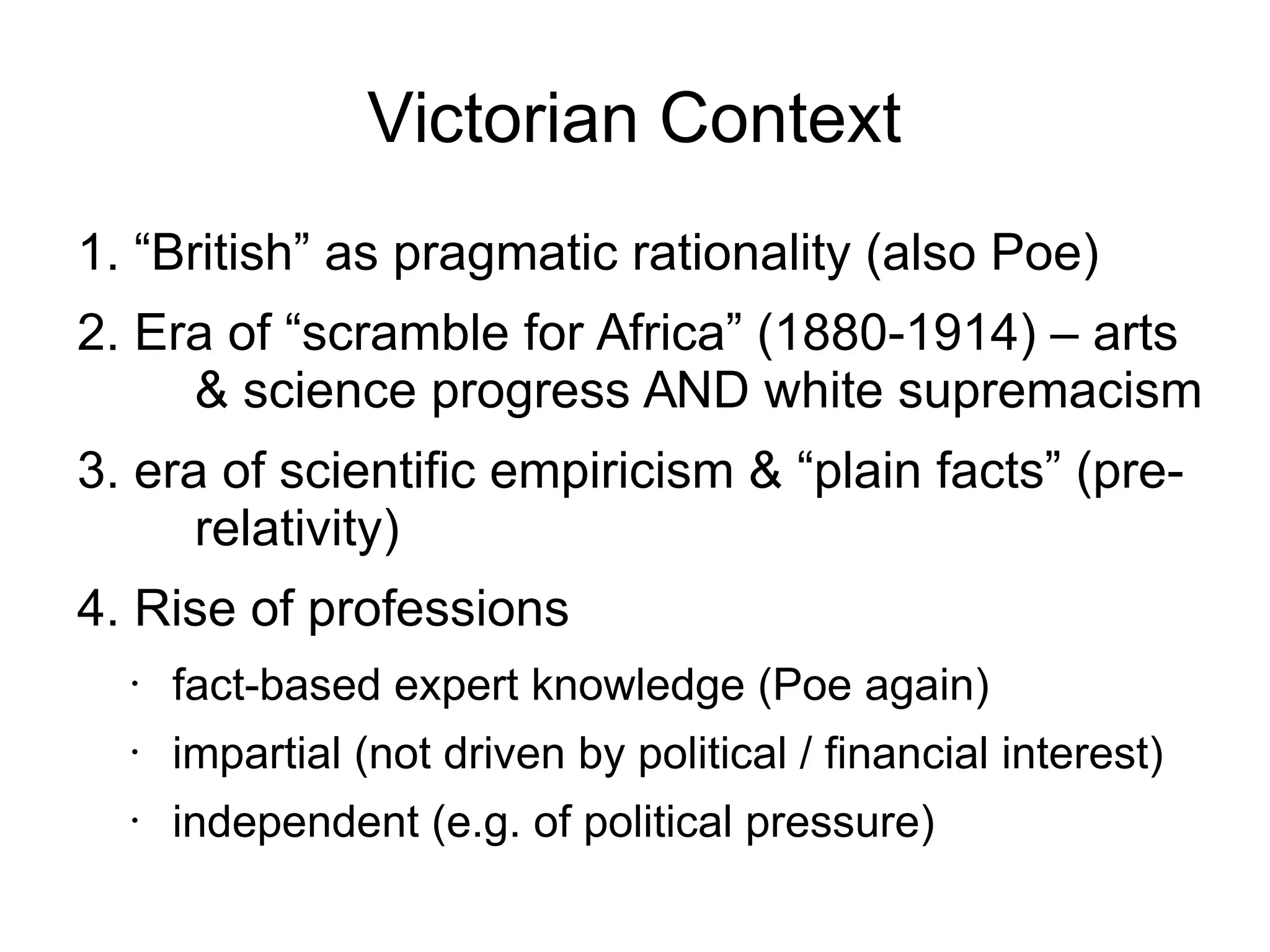
Victorian Context
1. “British” as pragmatic rationality (also Poe)
2. Era of “scramble for Africa” (1880-1914) – arts
& science progress AND white supremacism
3. era of scientific empiricism & “plain facts” (prerelativity)
4. Rise of professions
•

fact-based expert knowledge (Poe again)

•

impartial (not driven by political / financial interest)

•

independent (e.g. of political pressure)
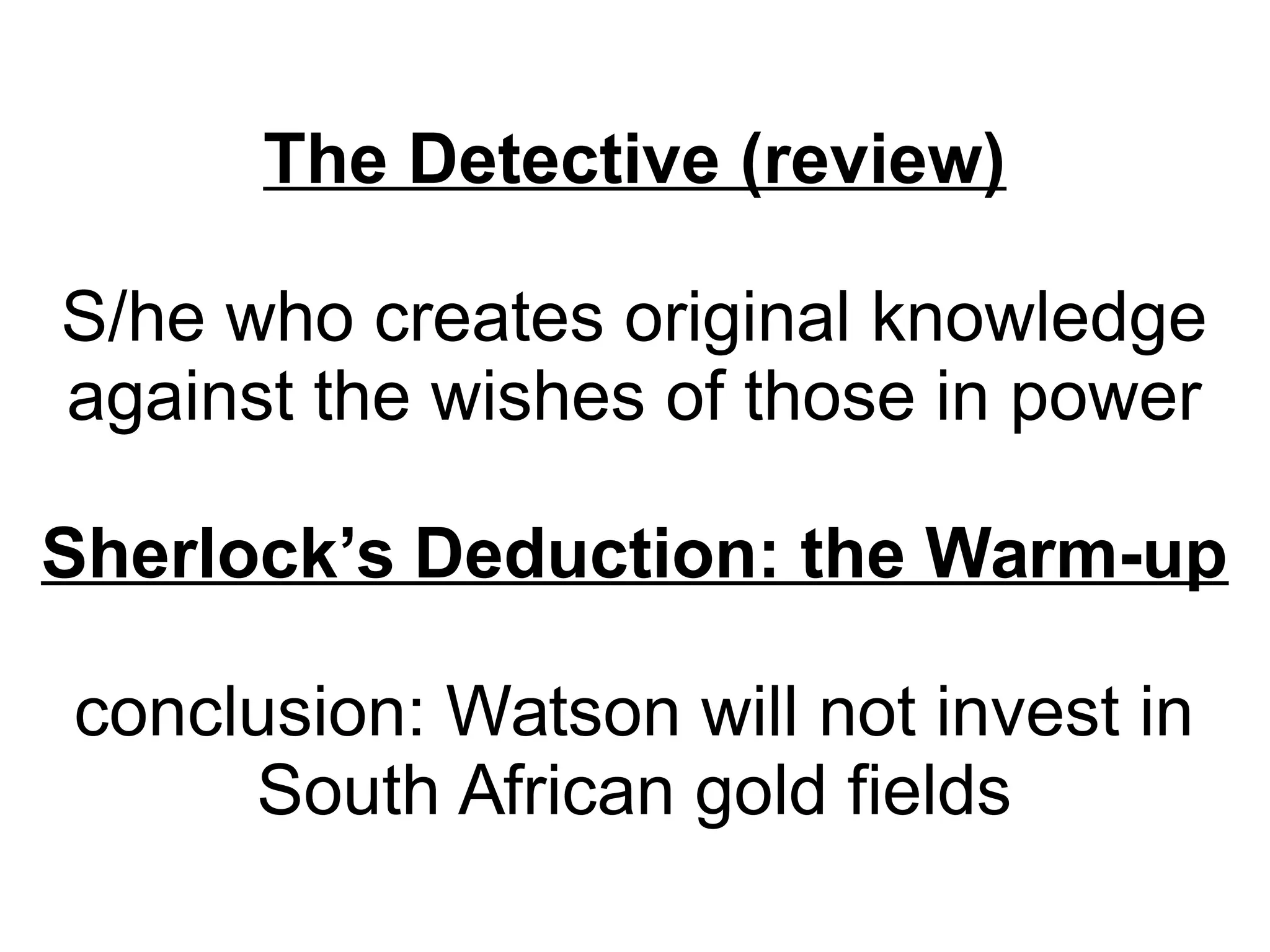
The Detective (review)
S/he who creates original knowledge
against the wishes of those in power
Sherlock’s Deduction: the Warm-up
conclusion: Watson will not invest in
South African gold fields
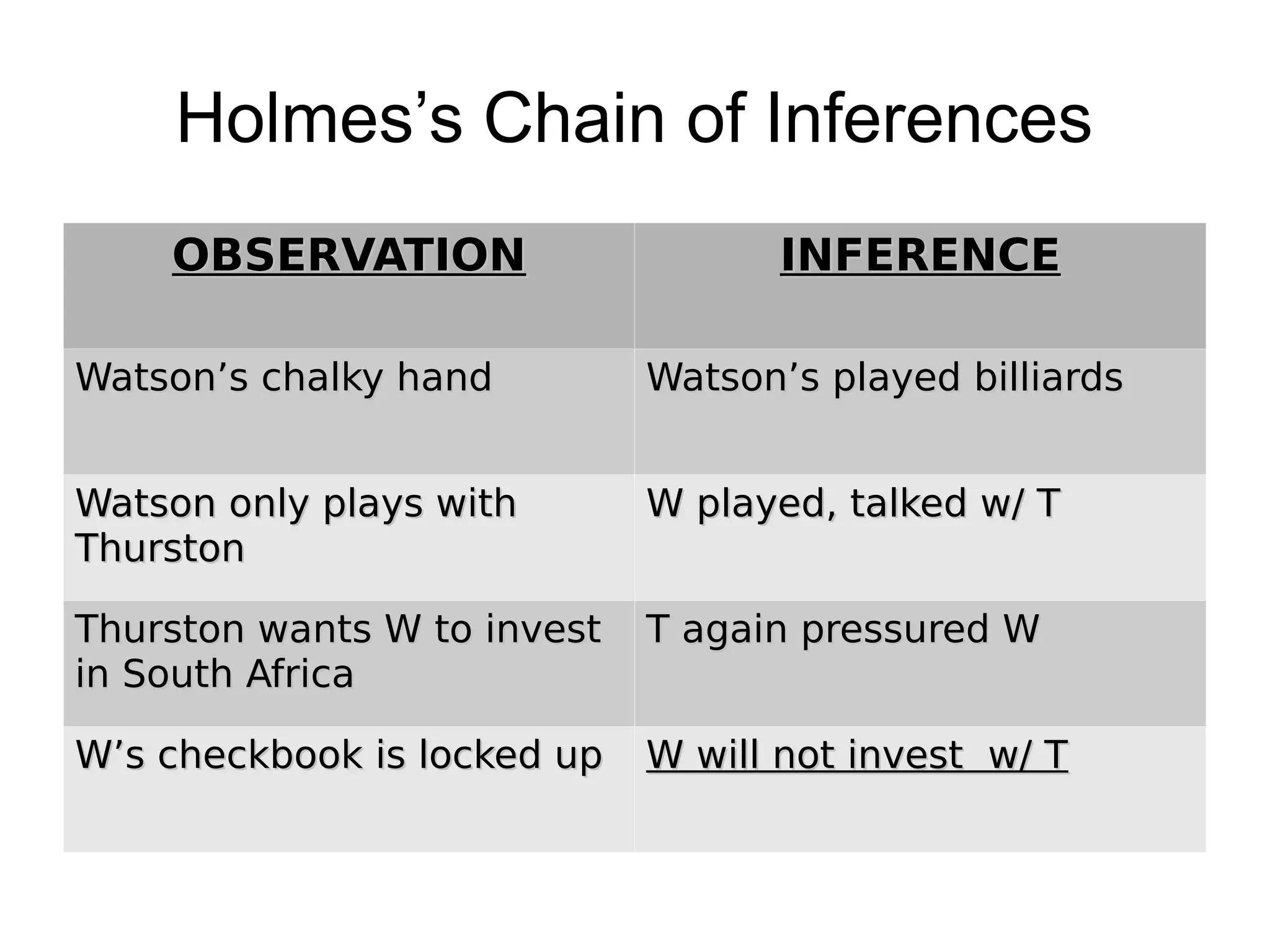
Holmes’s Chain of Inferences
OBSERVATION

INFERENCE

Watson’s chalky hand

Watson’s played billiards

Watson only plays with
Thurston

W played, talked w/ T

Thurston wants W to invest
in South Africa

T again pressured W

W’s checkbook is locked up

W will not invest w/ T
Holmes’s Character
A “Genius”
=
He Who Takes the Hidden Steps
Holmes’s Character
1) Vulnerability (to boredom and depression)
•

romantic melancholic: the “truth is out there” (the truth
is hidden)

2) Male Domesticity
•

Homosociality

•

Competitive mutual support

•

top / bottom

3) Arrogance
•

Confidence

•

No fear of unknown, no fear of hidden steps

4) Independence - unconventional thinking
The Real Test: Cubbitt
Homicide
The Conventional Wisdom
The Inspector’s Theory:
One gun, two shots
• Window closed
∴ they shot each other
•

Conventional Wisdom is
Wrong
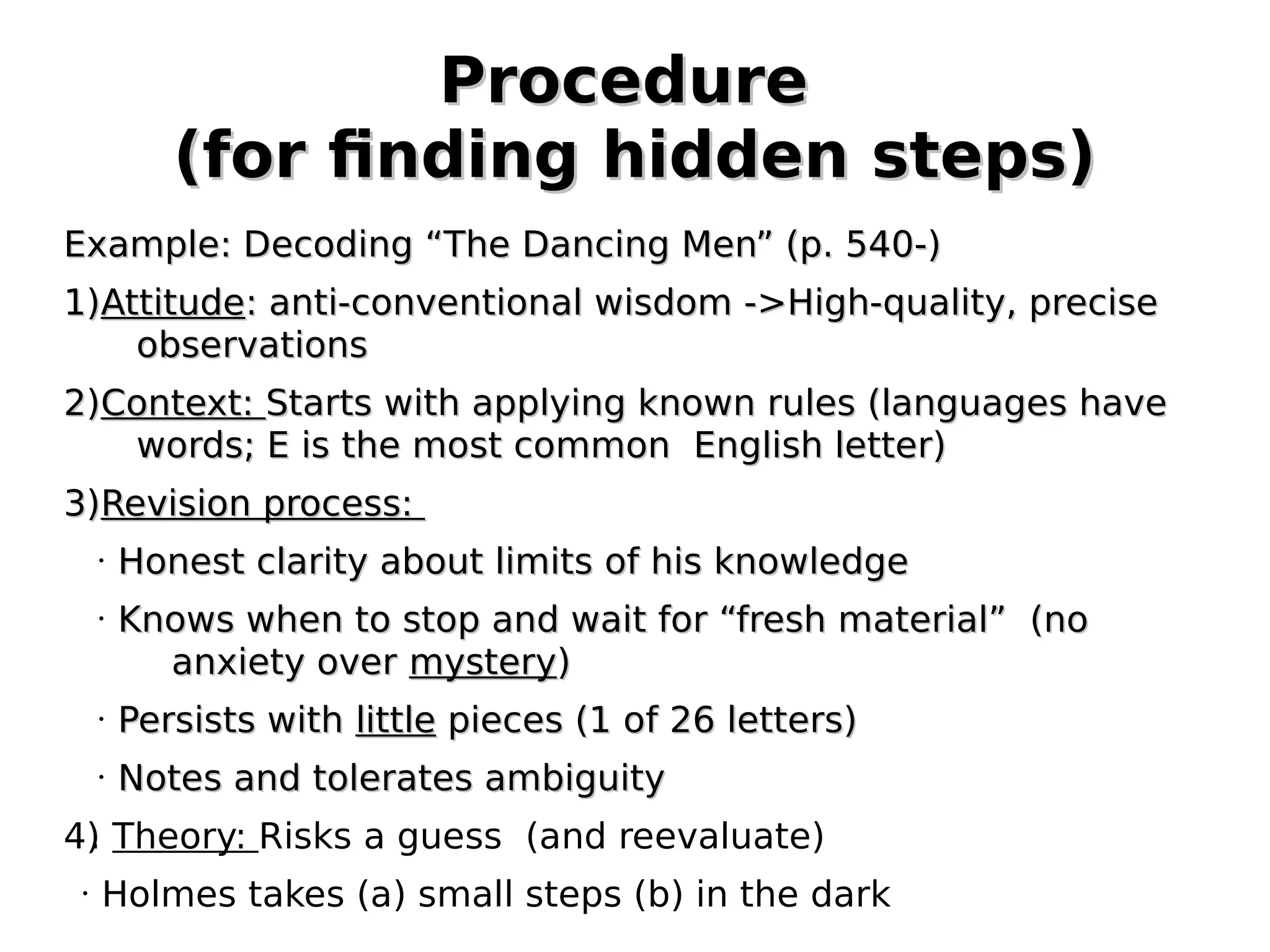
Procedure
(for finding hidden steps)
Example: Decoding “The Dancing Men” (p. 540-)
1)Attitude: anti-conventional wisdom ->High-quality, precise
observations
2)Context: Starts with applying known rules (languages have
words; E is the most common English letter)
3)Revision process:
•

•

Honest clarity about limits of his knowledge
Knows when to stop and wait for “fresh material” (no
anxiety over mystery)

•

Persists with little pieces (1 of 26 letters)

•

Notes and tolerates ambiguity

4) Theory: Risks a guess (and reevaluate)
.
•

Holmes takes (a) small steps (b) in the dark
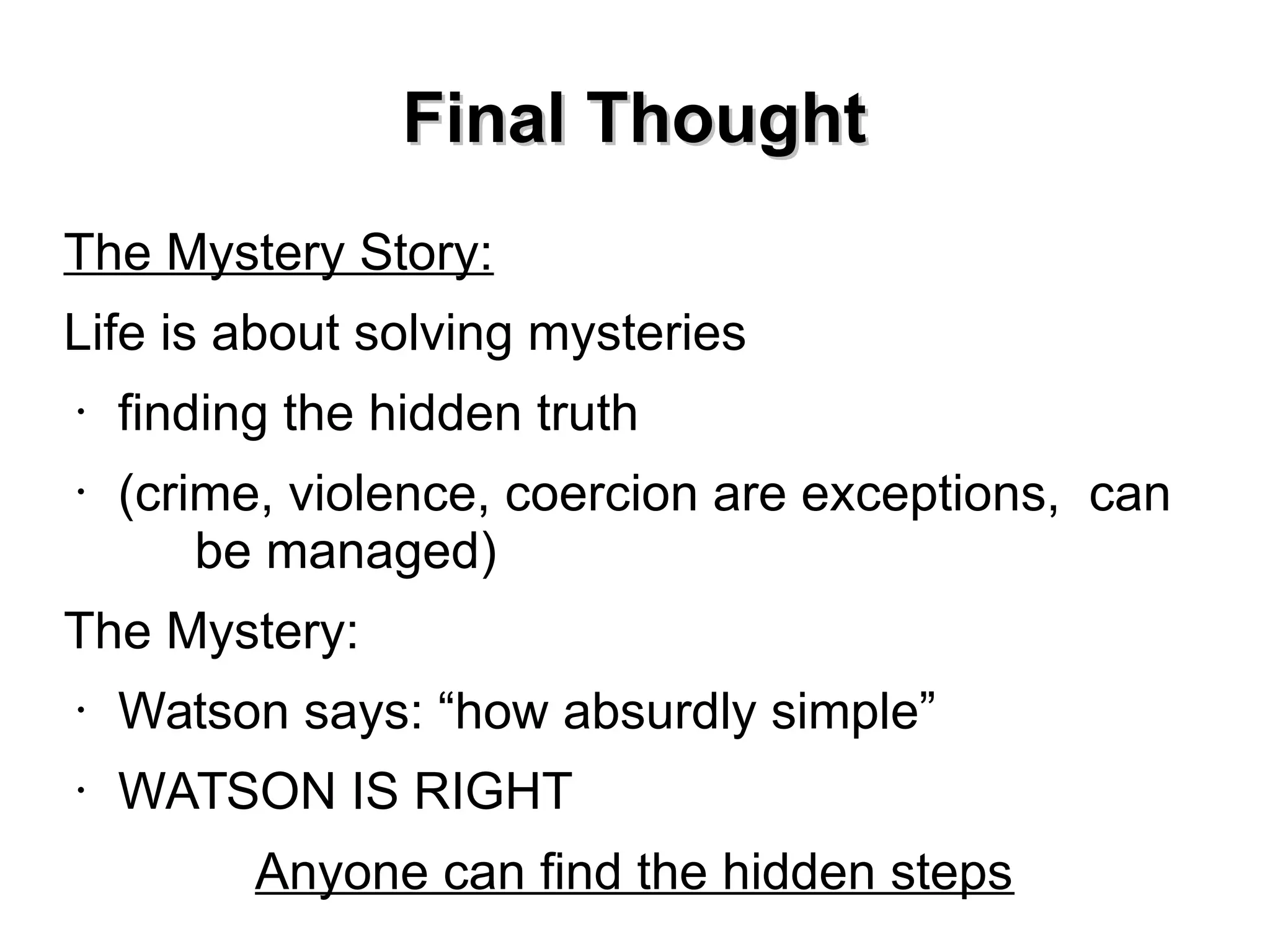
Final Thought
The Mystery Story:
Life is about solving mysteries
•
•

finding the hidden truth
(crime, violence, coercion are exceptions, can
be managed)

The Mystery:
•

Watson says: “how absurdly simple”

•

WATSON IS RIGHT
Anyone can find the hidden steps
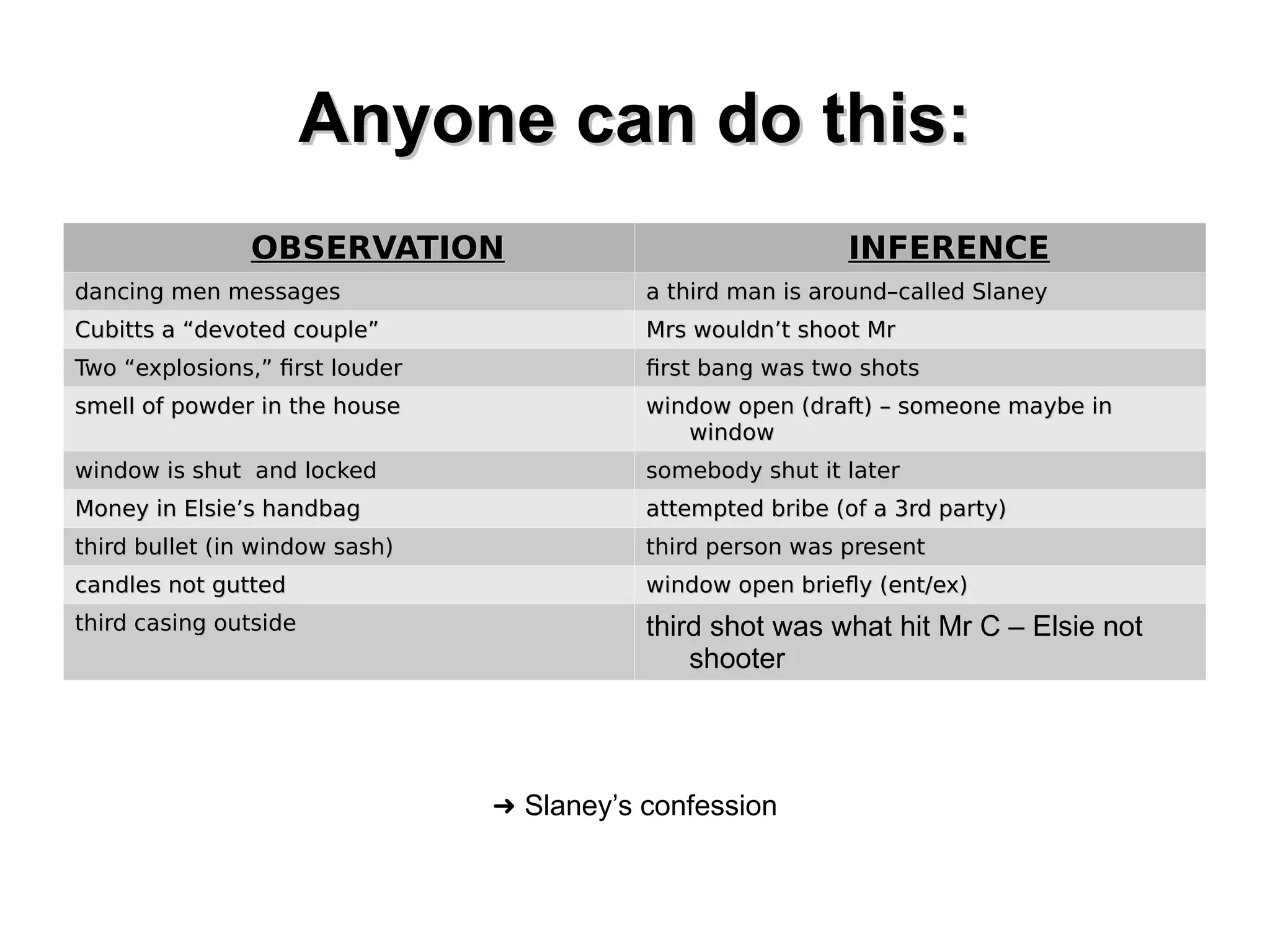
Anyone can do this:
OBSERVATION

INFERENCE

dancing men messages

a third man is around–called Slaney

Cubitts a “devoted couple”

Mrs wouldn’t shoot Mr

Two “explosions,” first louder

first bang was two shots

smell of powder in the house

window open (draft) – someone maybe in
window

window is shut and locked

somebody shut it later

Money in Elsie’s handbag

attempted bribe (of a 3rd party)

third bullet (in window sash)

third person was present

candles not gutted

window open briefly (ent/ex)

third casing outside

third shot was what hit Mr C – Elsie not
shooter

➜ Slaney’s confession

Being Sherlock Holmes: Guest Lecture, 9 January 2014

  • 1.
    Being Sherlock Holmes Or, Observationand Inference: Arthur Conan Doyle (Part 1) Guest lecture by Patrick Mooney Based substantially on material by Professor Chris Newfield English 193, Winter 2014 9 January 2014
  • 2.
    Some quick announcements ● ● ● ● ● Thecourse reader should be available Friday or Monday at SB Printing, 6549 Pardall Rd. A copy of the syllabus is available on line at http://is.gd/oricop. Because the reader is not yet available, we will we watching the 1984 TV adaptation of “Dancing Men,” starring Jeremy Brett as Holmes. Pay close attention to specific pieces of evidence – the follow-up lecture will be a model for how you complete your first assignment. TAs will handle crashing after lecture.
  • 3.
    Detection Structure Assignment • Write aplot analysis and “breakout” of the detection structure for: Agatha Christie or Sue Grafton • • DUE Week 3 in section Not graded (provided that you do an adequate job) – you’re practicing for later
  • 4.
    Arthur Conan Doyle(1859-1930) ● Studies medicine at U of Edinburgh 1876 ● His university professor Joseph Bell MD – model for Holmes ● Fails as “serious” writer ● First detective story in 1886. Nobody cares. ● First big success “A Scandal in Bohemia” 1891 – thanks to serial character called “Sherlock Holmes”
  • 5.
    THE DETECTIVE GENRE: BasicElements A) The Detective (and sidekick) B) The Corpse / Crime / Mystery -- dancing men, worried wife, corpse-to-come C) The Investigation -- decoding work & letter to Chicago; post murder inquiry D) Villain Exposed -- Holmes’s explanation • • • effect of surprise: conventional wisdom undermined by detective like science paradigm shift opens minds, shifts power E) Arrangements and Aftermath (sentencing, etc.)
  • 6.
    Victorian Context 1. “British”as pragmatic rationality (also Poe) 2. Era of “scramble for Africa” (1880-1914) – arts & science progress AND white supremacism 3. era of scientific empiricism & “plain facts” (prerelativity) 4. Rise of professions • fact-based expert knowledge (Poe again) • impartial (not driven by political / financial interest) • independent (e.g. of political pressure)
  • 7.
    The Detective (review) S/hewho creates original knowledge against the wishes of those in power Sherlock’s Deduction: the Warm-up conclusion: Watson will not invest in South African gold fields
  • 8.
    Holmes’s Chain ofInferences OBSERVATION INFERENCE Watson’s chalky hand Watson’s played billiards Watson only plays with Thurston W played, talked w/ T Thurston wants W to invest in South Africa T again pressured W W’s checkbook is locked up W will not invest w/ T
  • 9.
    Holmes’s Character A “Genius” = HeWho Takes the Hidden Steps
  • 10.
    Holmes’s Character 1) Vulnerability(to boredom and depression) • romantic melancholic: the “truth is out there” (the truth is hidden) 2) Male Domesticity • Homosociality • Competitive mutual support • top / bottom 3) Arrogance • Confidence • No fear of unknown, no fear of hidden steps 4) Independence - unconventional thinking
  • 11.
    The Real Test:Cubbitt Homicide
  • 12.
    The Conventional Wisdom TheInspector’s Theory: One gun, two shots • Window closed ∴ they shot each other • Conventional Wisdom is Wrong
  • 13.
    Procedure (for finding hiddensteps) Example: Decoding “The Dancing Men” (p. 540-) 1)Attitude: anti-conventional wisdom ->High-quality, precise observations 2)Context: Starts with applying known rules (languages have words; E is the most common English letter) 3)Revision process: • • Honest clarity about limits of his knowledge Knows when to stop and wait for “fresh material” (no anxiety over mystery) • Persists with little pieces (1 of 26 letters) • Notes and tolerates ambiguity 4) Theory: Risks a guess (and reevaluate) . • Holmes takes (a) small steps (b) in the dark
  • 14.
    Final Thought The MysteryStory: Life is about solving mysteries • • finding the hidden truth (crime, violence, coercion are exceptions, can be managed) The Mystery: • Watson says: “how absurdly simple” • WATSON IS RIGHT Anyone can find the hidden steps
  • 15.
    Anyone can dothis: OBSERVATION INFERENCE dancing men messages a third man is around–called Slaney Cubitts a “devoted couple” Mrs wouldn’t shoot Mr Two “explosions,” first louder first bang was two shots smell of powder in the house window open (draft) – someone maybe in window window is shut and locked somebody shut it later Money in Elsie’s handbag attempted bribe (of a 3rd party) third bullet (in window sash) third person was present candles not gutted window open briefly (ent/ex) third casing outside third shot was what hit Mr C – Elsie not shooter ➜ Slaney’s confession