Note taking strategiesOrna.Farrell@dbs.ie
Discussion questionsIs taking notes important?What method do you use?When do you take notes?
Why take notes?To note down factsTo contrast similarities and differencesTo summarise main pointsTo help pay attentionTo review and reviseTo record thoughts & brainstorm
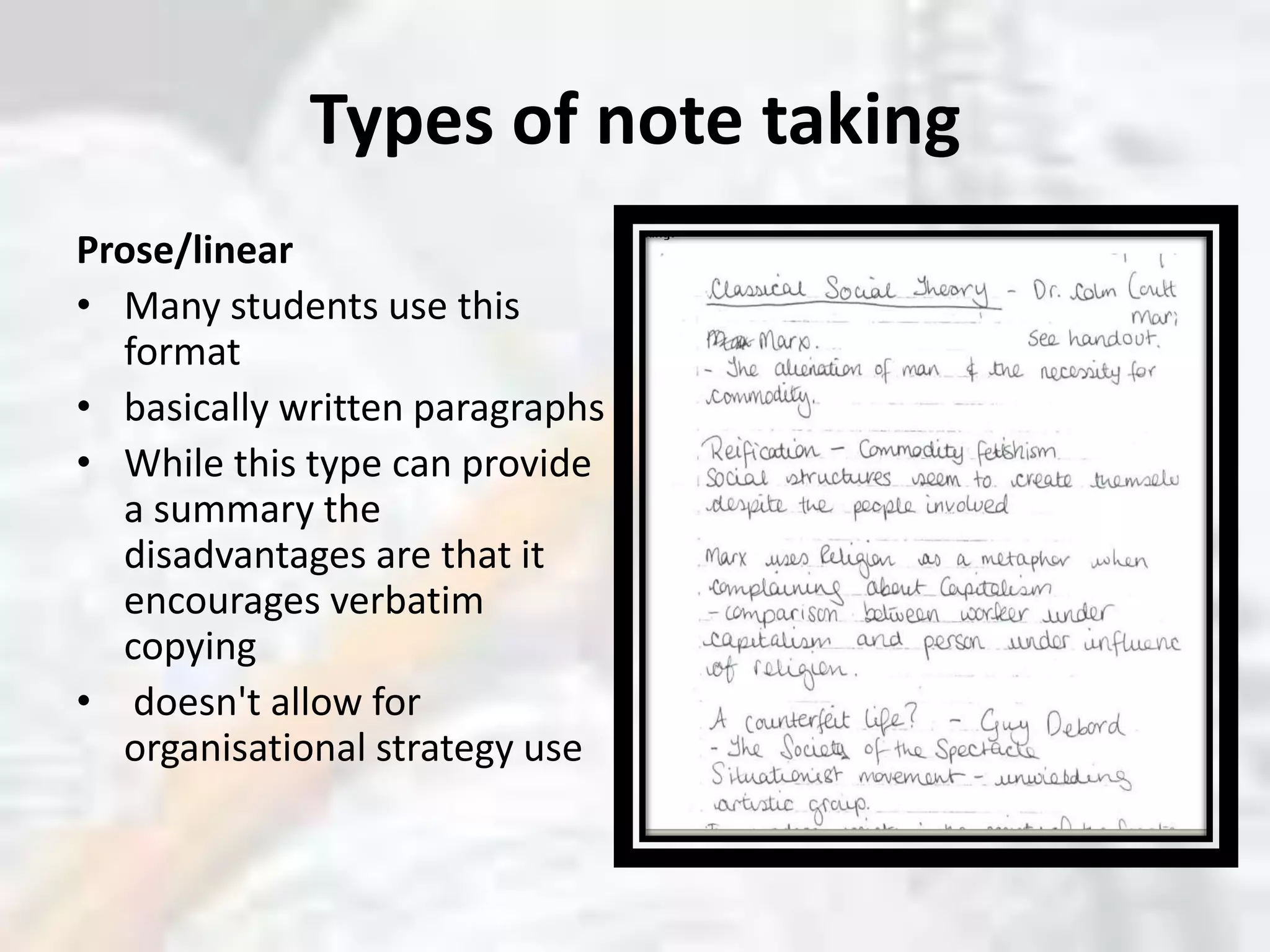
Types of note takingProse/linearMany students use this format basically written paragraphsWhile this type can provide a summary the disadvantages are that it encourages verbatim copying doesn't allow for organisational strategy use
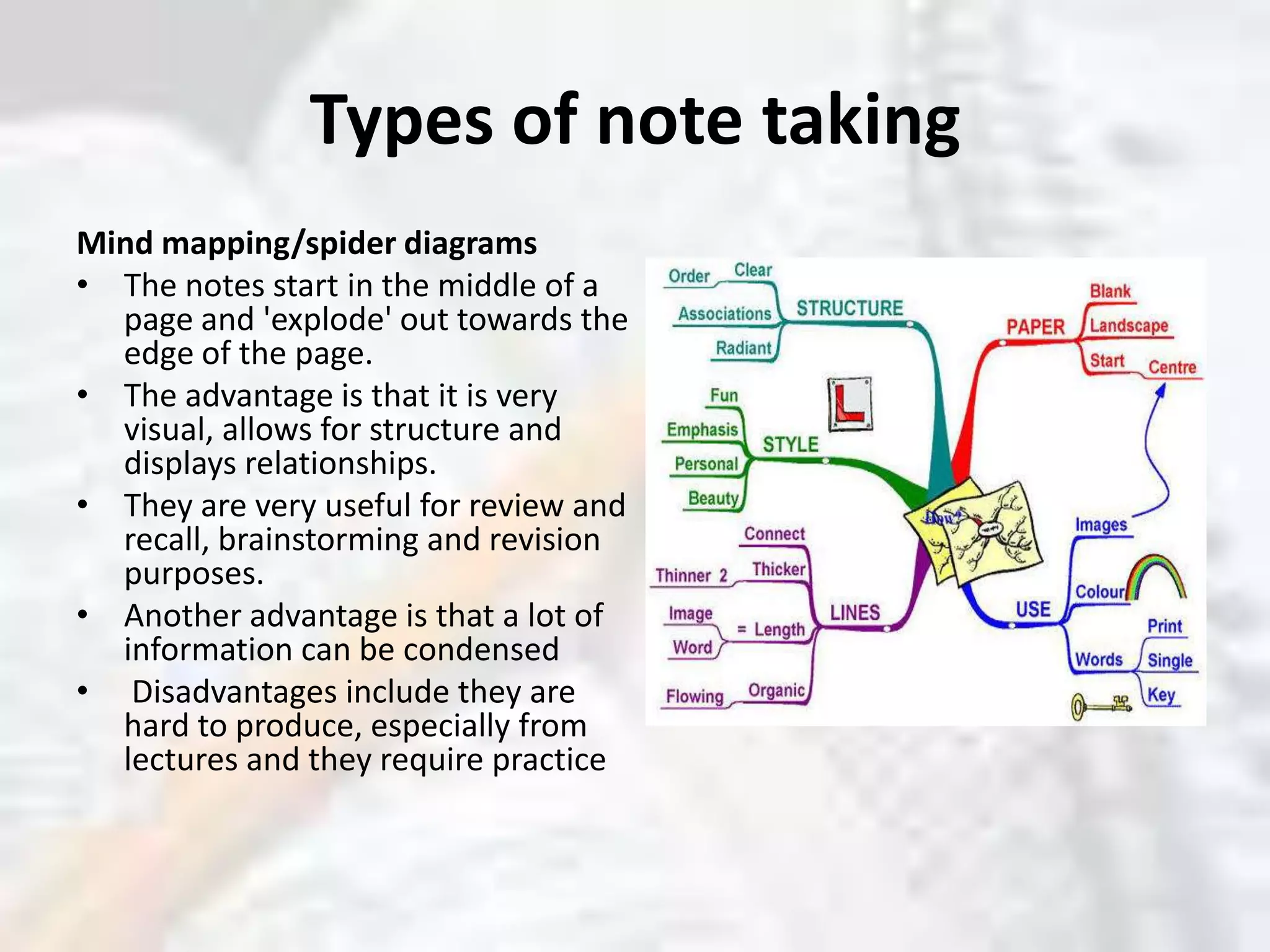
Types of note takingMind mapping/spider diagramsThe notes start in the middle of a page and 'explode' out towards the edge of the page. The advantage is that it is very visual, allows for structure and displays relationships. They are very useful for review and recall, brainstorming and revision purposes. Another advantage is that a lot of information can be condensedDisadvantages include they are hard to produce, especially from lectures and they require practice
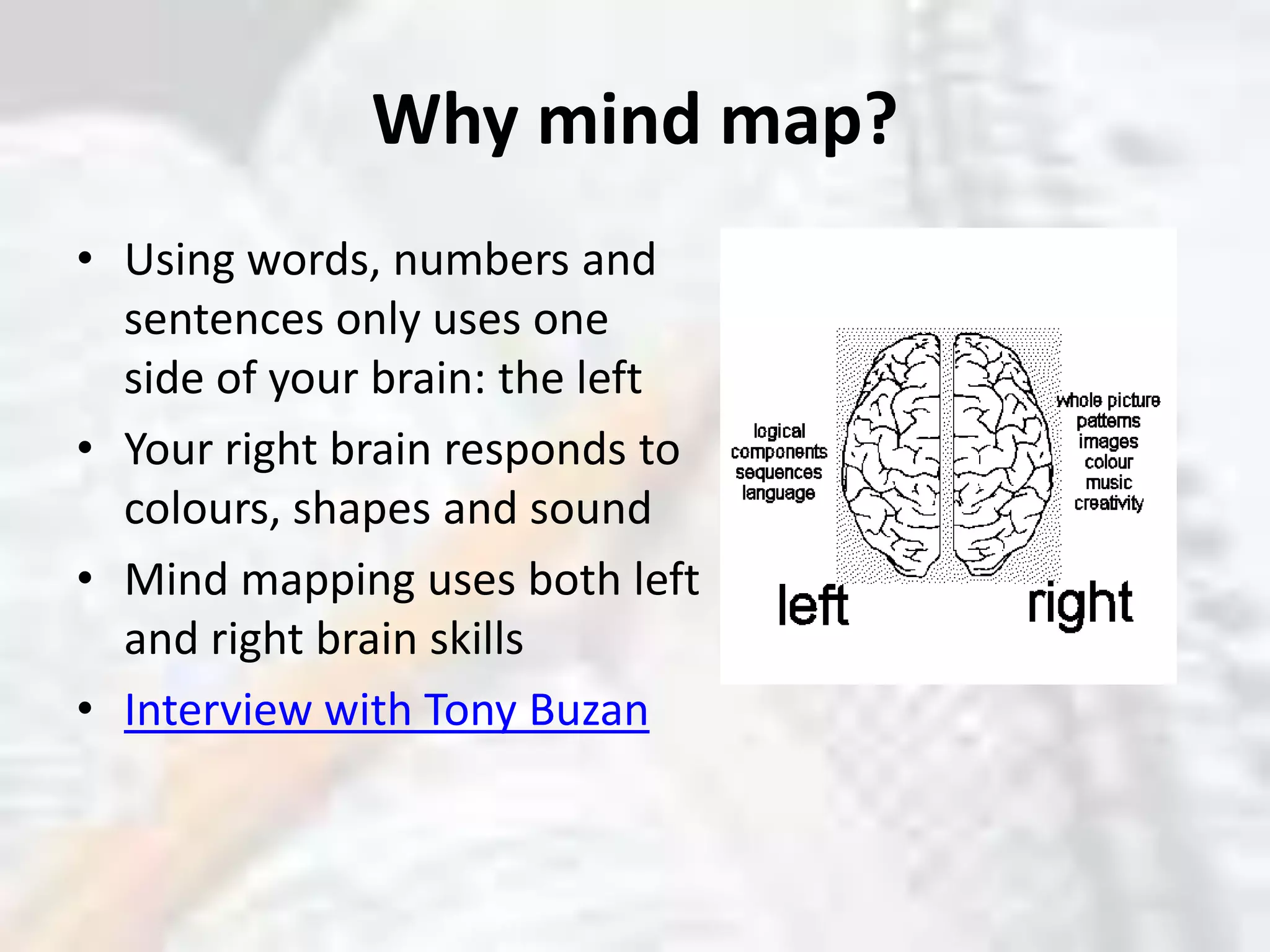
Why mind map?Using words, numbers and sentences only uses one side of your brain: the leftYour right brain responds to colours, shapes and soundMind mapping uses both left and right brain skillsInterview with Tony Buzan
Making a mind mapSpicy nodeswww.spicynodes.orgChoose a topicThe floodsClimate ChangeX factorThe Ryan report on child abuseDublin Business School	Spend five minutes creating a mind map
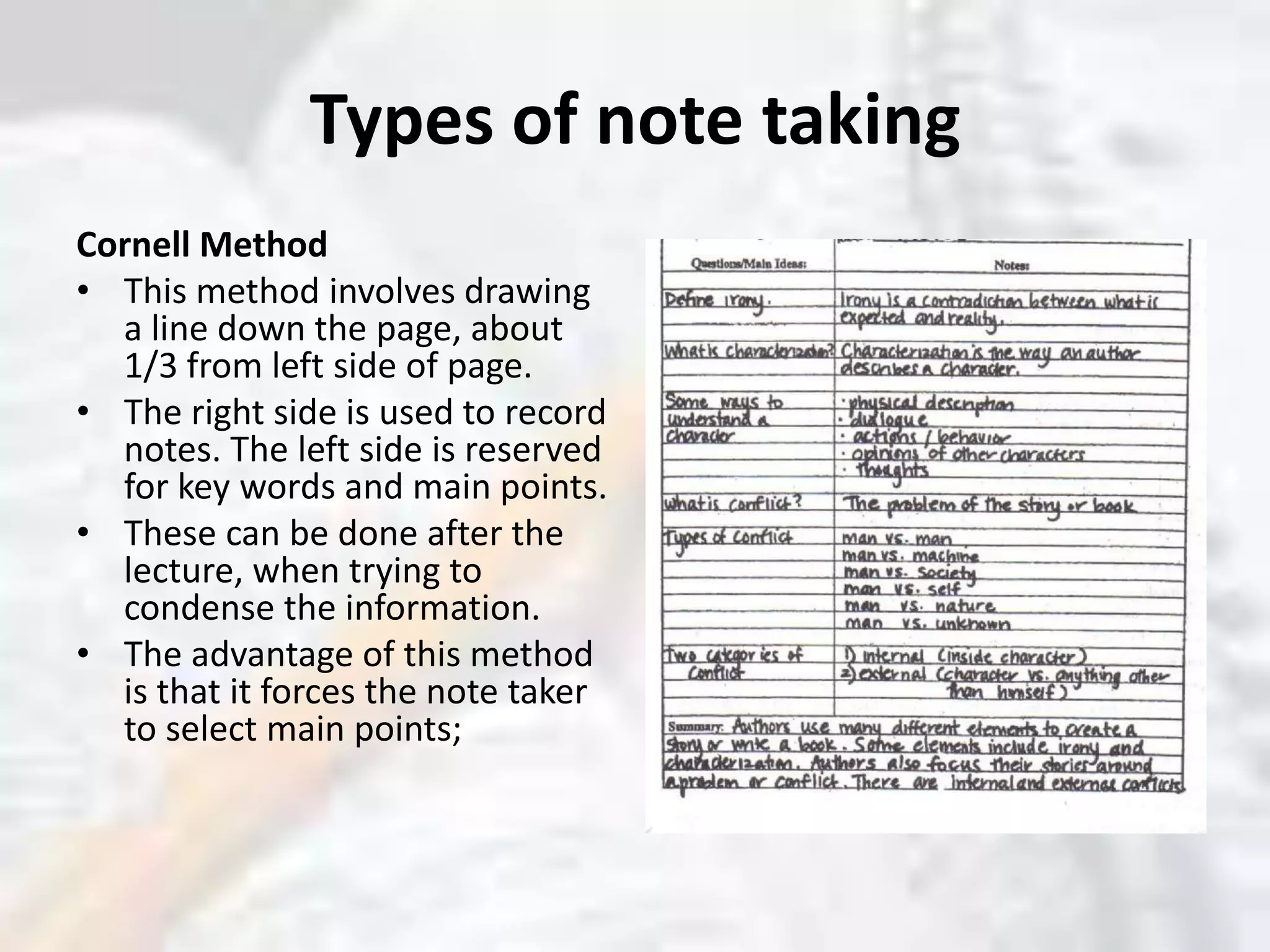
Types of note takingCornell MethodThis method involves drawing a line down the page, about 1/3 from left side of page. The right side is used to record notes. The left side is reserved for key words and main points. These can be done after the lecture, when trying to condense the information. The advantage of this method is that it forces the note taker to select main points;
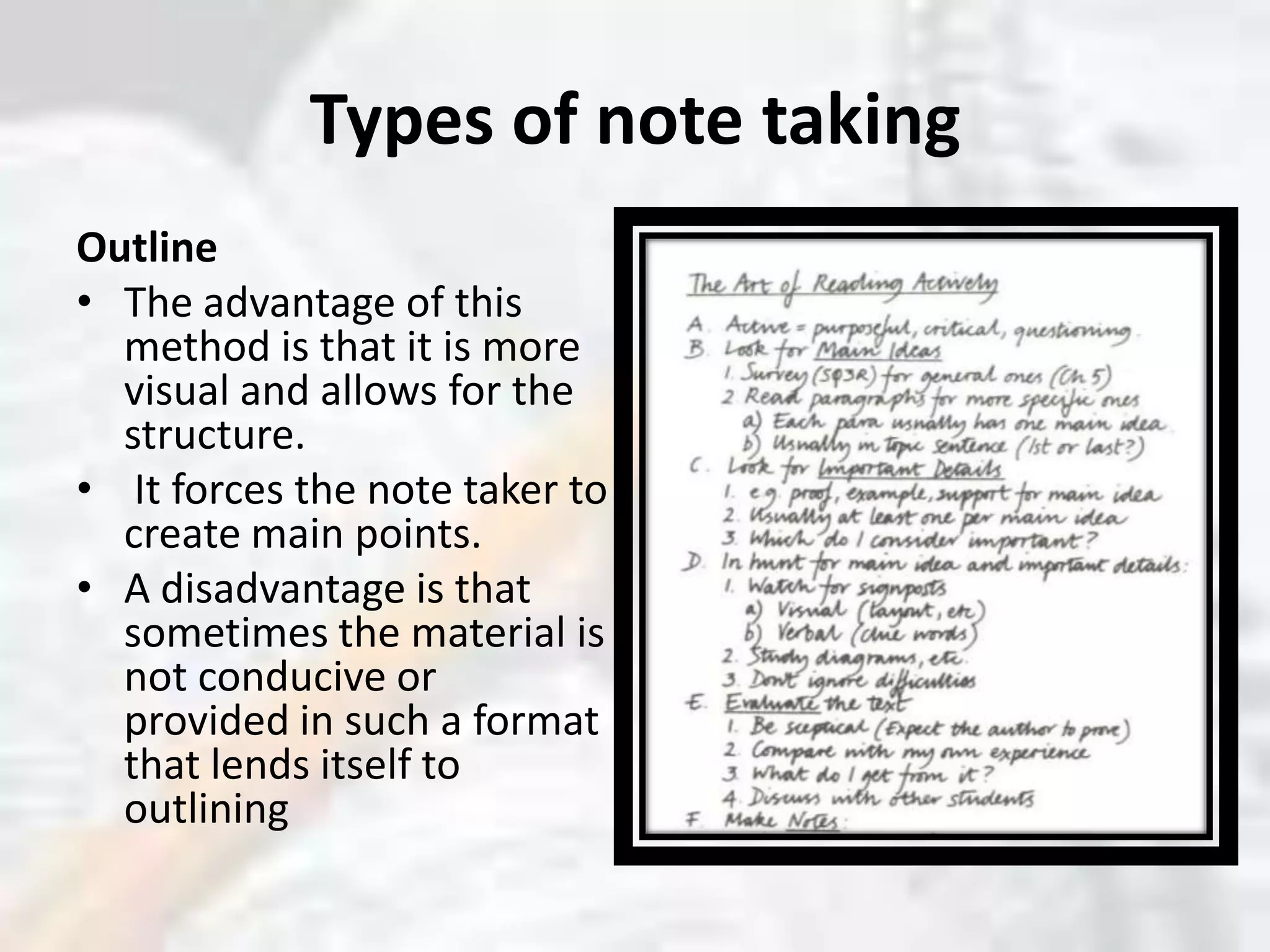
Types of note takingOutlineThe advantage of this method is that it is more visual and allows for the structure.It forces the note taker to create main points. A disadvantage is that sometimes the material is not conducive or provided in such a format that lends itself to outlining
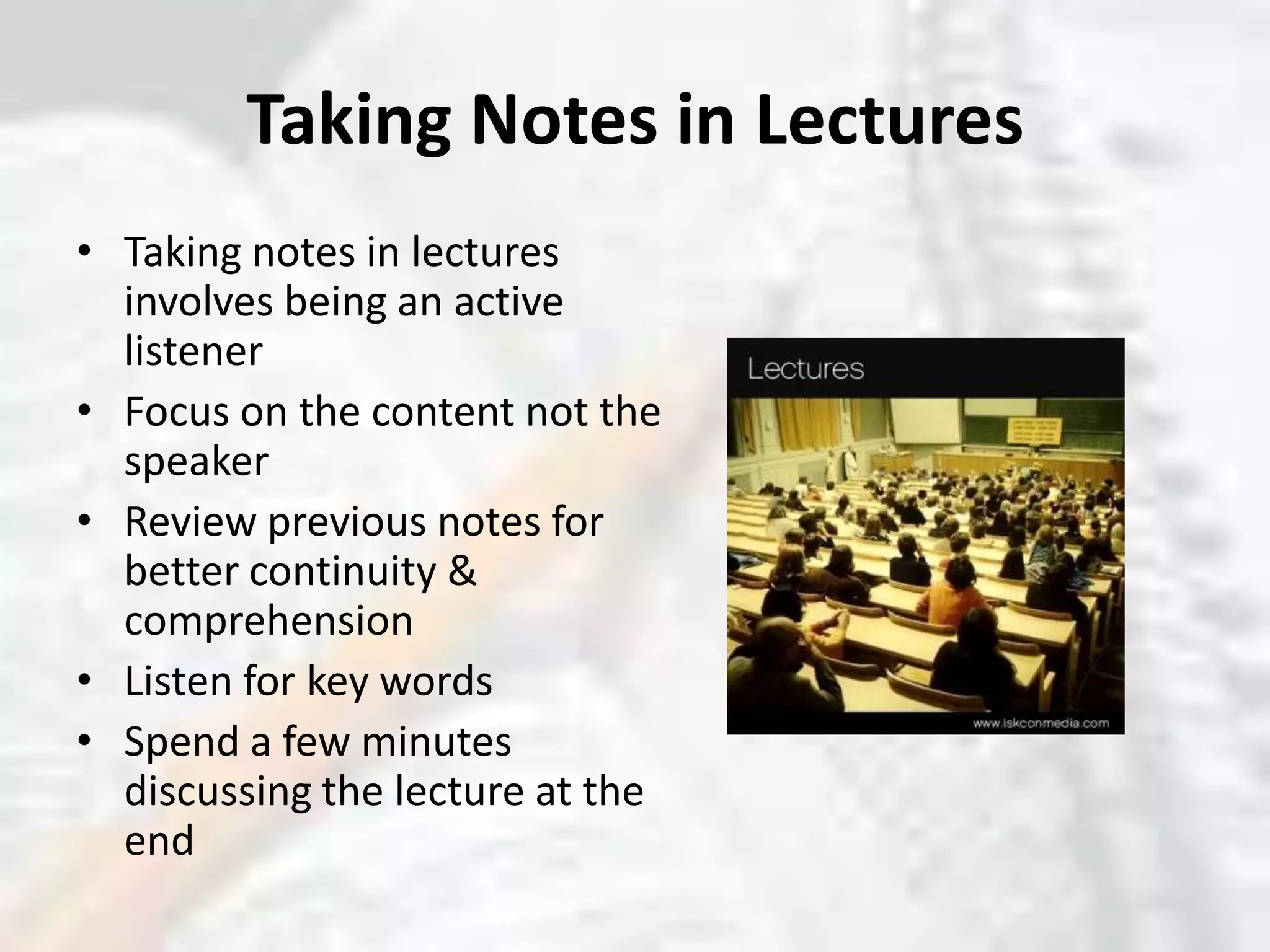
Taking Notes in LecturesTaking notes in lectures involves being an active listenerFocus on the content not the speakerReview previous notes for better continuity & comprehensionListen for key wordsSpend a few minutes discussing the lecture at the end
Taking Notes from readingsThe SQRNR Reading MethodSurvey the text Question: make questions about the textRead & underline key wordsMake notesRevise
Further readingwww.spicynodes.orgBuzan, T. (2002) How to mind map. London: Thorsons.http://www.buzanworld.com/http://www.youtube.com/watch?v=MlabrWv25qQ

Note Taking & Reading Strategies

  • 1.
  • 2.
    Discussion questionsIs takingnotes important?What method do you use?When do you take notes?
  • 3.
    Why take notes?Tonote down factsTo contrast similarities and differencesTo summarise main pointsTo help pay attentionTo review and reviseTo record thoughts & brainstorm
  • 4.
    Types of notetakingProse/linearMany students use this format basically written paragraphsWhile this type can provide a summary the disadvantages are that it encourages verbatim copying doesn't allow for organisational strategy use
  • 5.
    Types of notetakingMind mapping/spider diagramsThe notes start in the middle of a page and 'explode' out towards the edge of the page. The advantage is that it is very visual, allows for structure and displays relationships. They are very useful for review and recall, brainstorming and revision purposes. Another advantage is that a lot of information can be condensedDisadvantages include they are hard to produce, especially from lectures and they require practice
  • 6.
    Why mind map?Usingwords, numbers and sentences only uses one side of your brain: the leftYour right brain responds to colours, shapes and soundMind mapping uses both left and right brain skillsInterview with Tony Buzan
  • 7.
    Making a mindmapSpicy nodeswww.spicynodes.orgChoose a topicThe floodsClimate ChangeX factorThe Ryan report on child abuseDublin Business School Spend five minutes creating a mind map
  • 8.
    Types of notetakingCornell MethodThis method involves drawing a line down the page, about 1/3 from left side of page. The right side is used to record notes. The left side is reserved for key words and main points. These can be done after the lecture, when trying to condense the information. The advantage of this method is that it forces the note taker to select main points;
  • 9.
    Types of notetakingOutlineThe advantage of this method is that it is more visual and allows for the structure.It forces the note taker to create main points. A disadvantage is that sometimes the material is not conducive or provided in such a format that lends itself to outlining
  • 10.
    Taking Notes inLecturesTaking notes in lectures involves being an active listenerFocus on the content not the speakerReview previous notes for better continuity & comprehensionListen for key wordsSpend a few minutes discussing the lecture at the end
  • 11.
    Taking Notes fromreadingsThe SQRNR Reading MethodSurvey the text Question: make questions about the textRead & underline key wordsMake notesRevise
  • 12.
    Further readingwww.spicynodes.orgBuzan, T.(2002) How to mind map. London: Thorsons.http://www.buzanworld.com/http://www.youtube.com/watch?v=MlabrWv25qQ