AN OVERVIEW OF
CLINICAL DATA
REPOSITORY (CDR)
A presentation by
Netrah L
What is CDR?
 A Clinical Data Repository (CDR) is a
real time database that consolidates data
from a variety of clinical sources to
present a unified view of a single patient.
It is optimized to allow clinicians to
retrieve data for a single patient or to
facilitate the management of a specific
clinical trial.
 Typical data types which are often
found within a CDR include: laboratory
results, patient demographics, pharmacy
information, radiology reports, hospital
admission, transfer dates, ICD-9 codes,
discharge summaries & progress notes.
Need of CDR……
Key issues faced by the industry today in the clinical trial and
clinical safety space include:
• Non-uniform sets of data from EDC, CRO, Purchased Trial.
(Patient Data, Metadata, Financial Data)
• Data not integrated between Clinical Trial & Clinical Safety
• Performance Metrics – delay in getting
• Safety Signal Detection not effective on insufficient & poor
quality of data.
• Double Data Entry
• Reporting is mostly manual, time consuming & costly.
• Manual reconciliation of data
• High down time & maintenance window.
CDR Implementation- Challenges
Faced :
 Storage capacity
 Computing power
Reliability
Accessibility of the data
Electronic interface between all
the ancillary data sources and the
CDR
Network connection
Semantic mapping
User interface
Key features required of the CDR
architecture
 Provision for a standard format for information
collation and representation.
 The data coming from various internal and external
source systems need to be verified before
consolidation and aggregation.
 There is a definite need for storing history data. This
requirement will warrant the need for establishing a
Data Warehouse that can store time-varied data. Time
dimension would need to be implemented or a history
needs to be maintained in the staging area.
Key features required of the CDR
architecture – continued
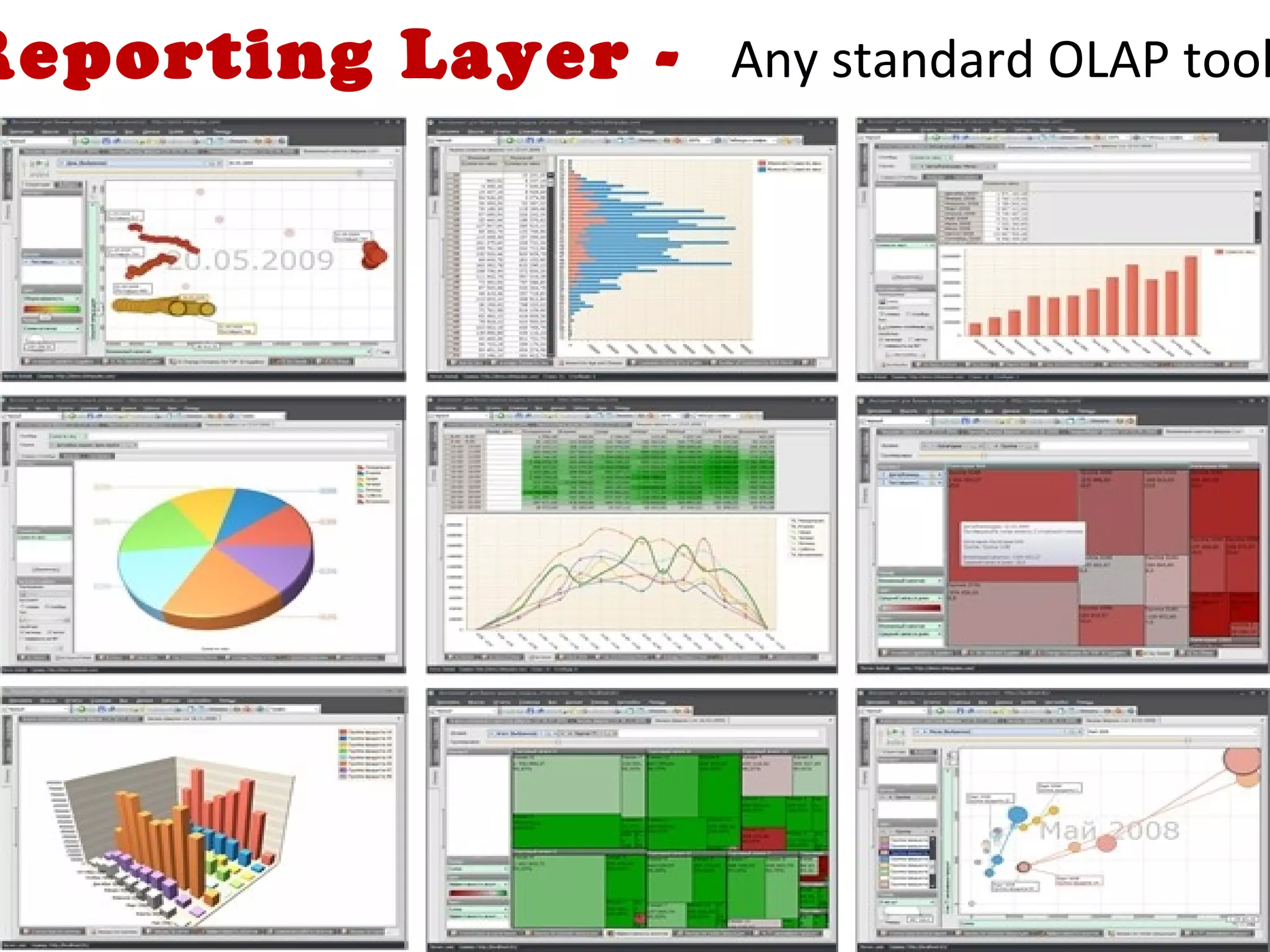
 There is a need for generating reports of an analytical
nature. This will warrant the use of a best-of-breed OLAP
tool running against a dimensionally modeled Data
Repository.
 There is a need to provide accelerated response times
for the reports. Report using a dimensionally modeled
system in which case the data access would be a simple
query against the star schema can accelerate responses.
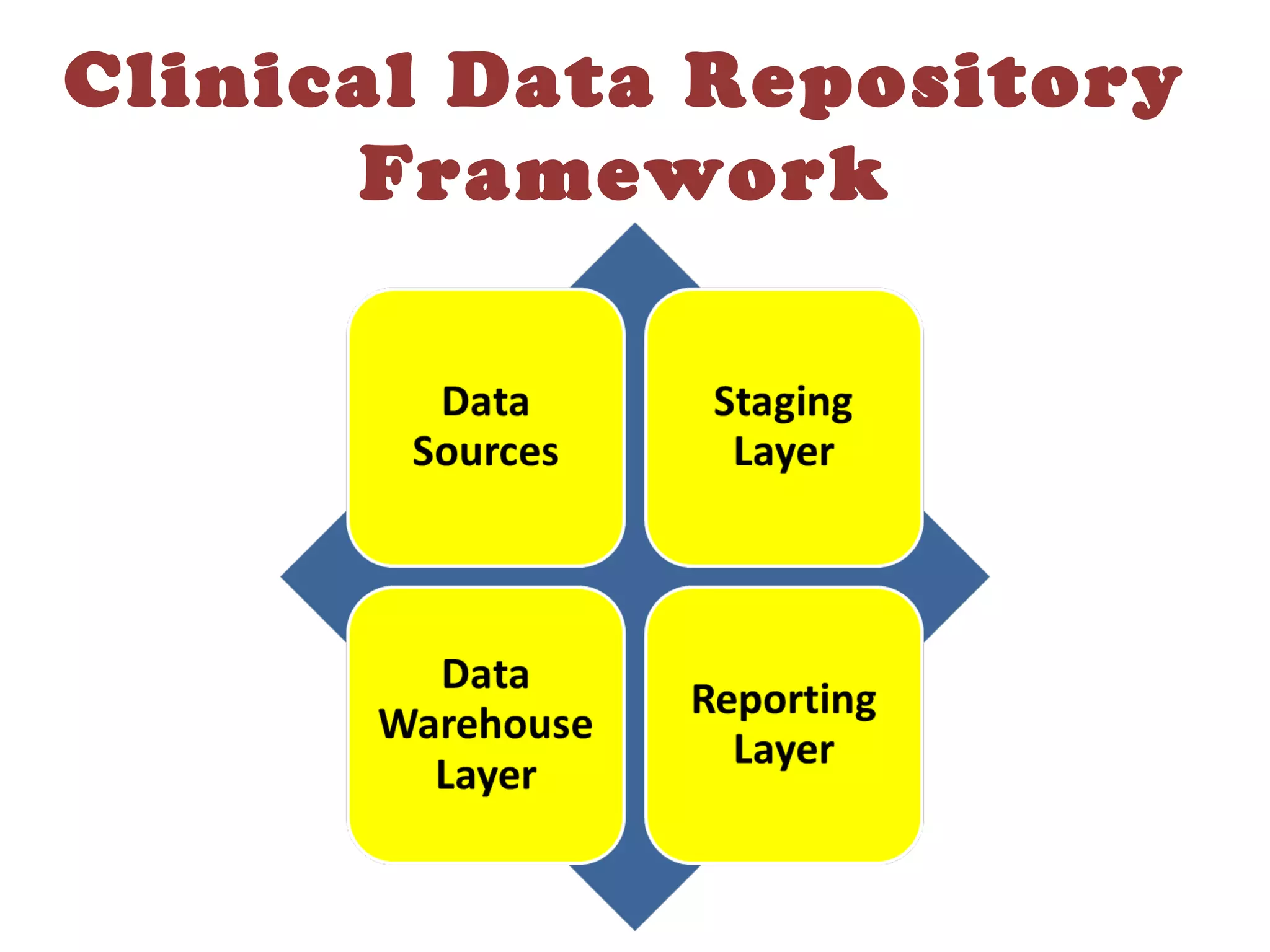
Clinical Data Repository
Framework
Data Sources
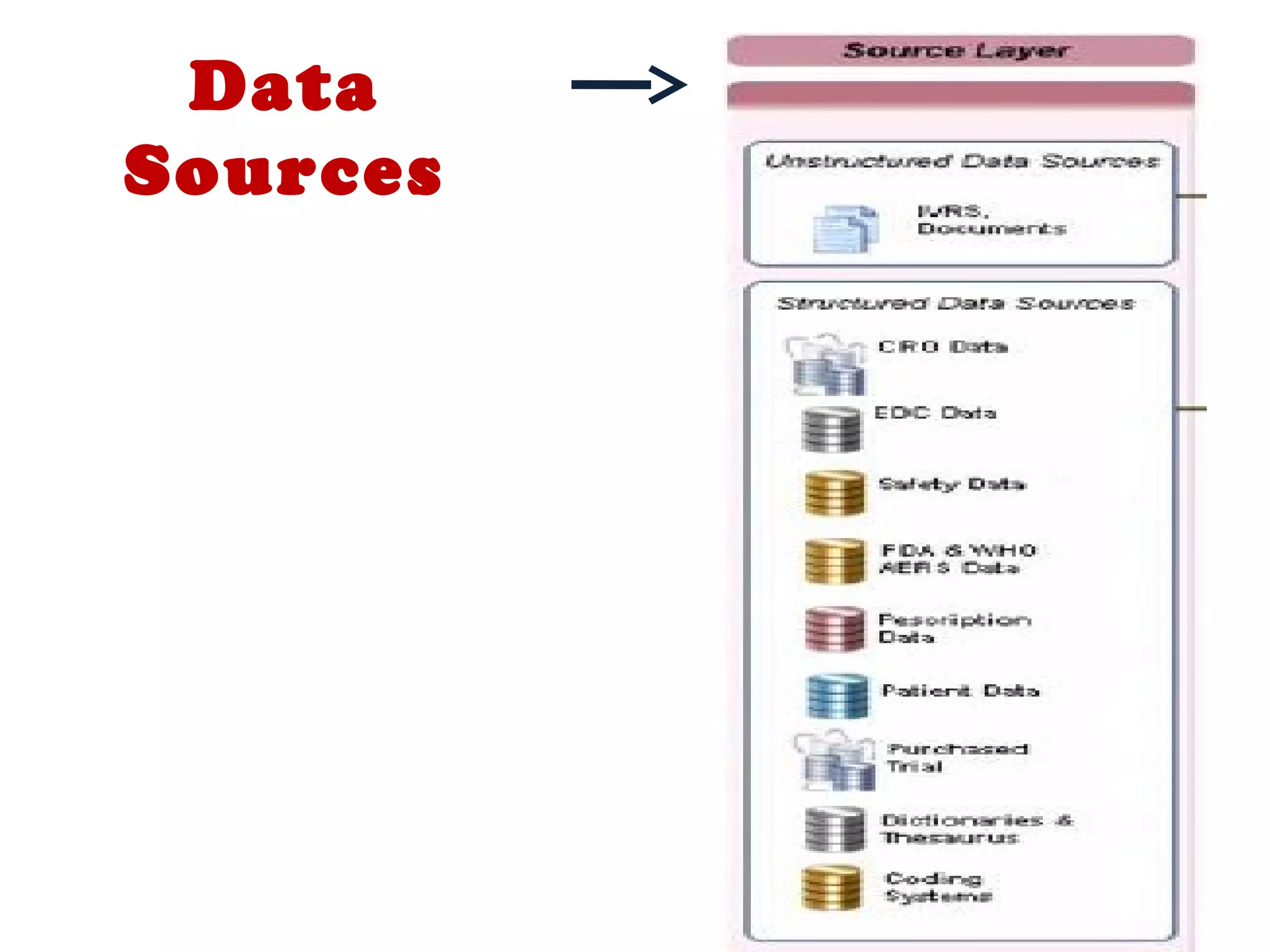
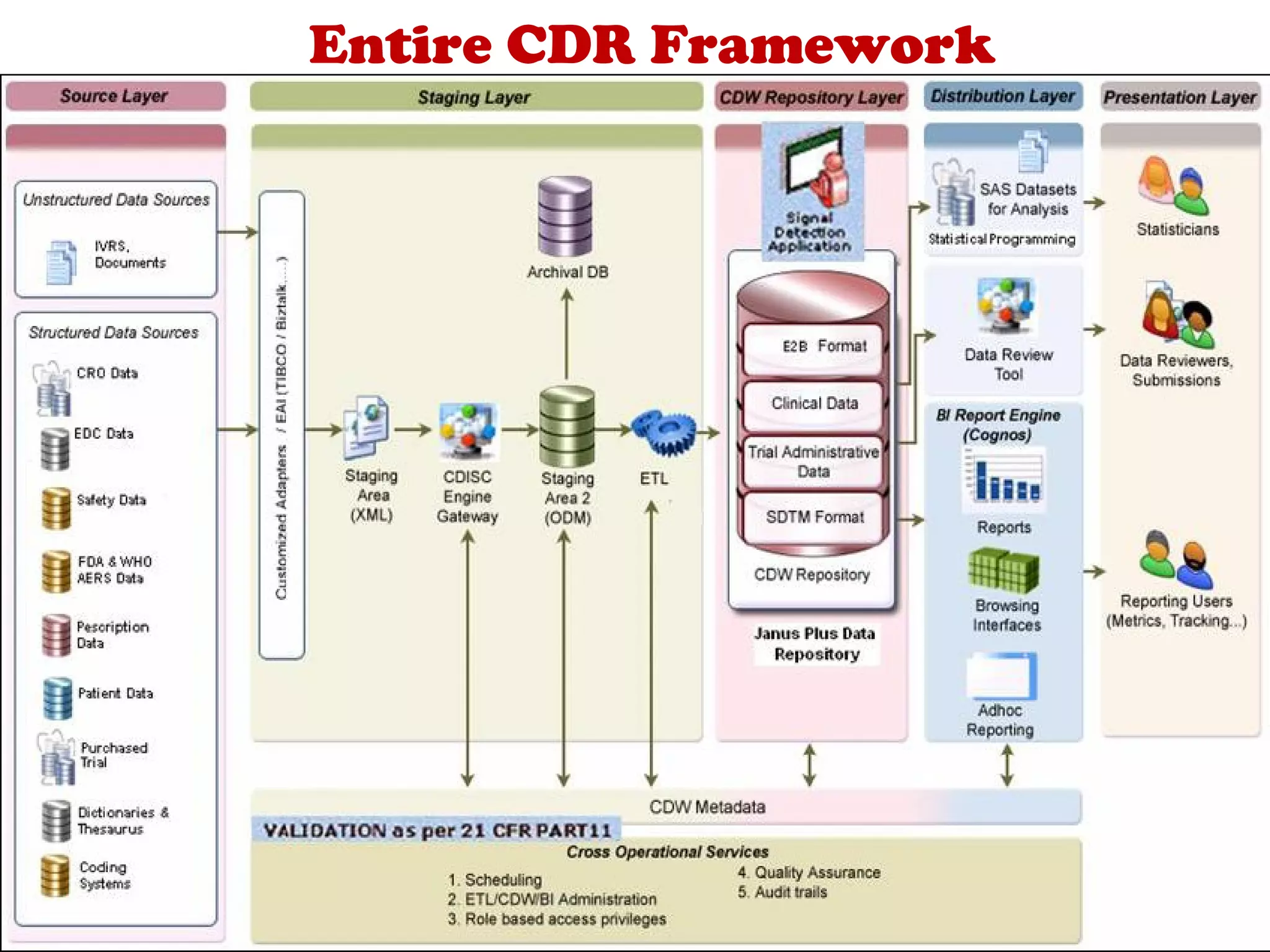
The CDR system extracts data from both the structured and
unstructured datasets.
Structured data sources - CRO Data, EDC Data, Safety data,
AERS data, Prescription Data, Patient Data, Purchased Trial
data, Dictionary Data and Coding Systems.
Unstructured datasets - the documents such as IVRS.
The Source System Interface Architecture Component
manages the extraction, verification and integration of
“changed data” from the Source System into the “Interface
Design Framework” and facilitates its transfer to the Data
Staging Subcomponent.
Data
Sources
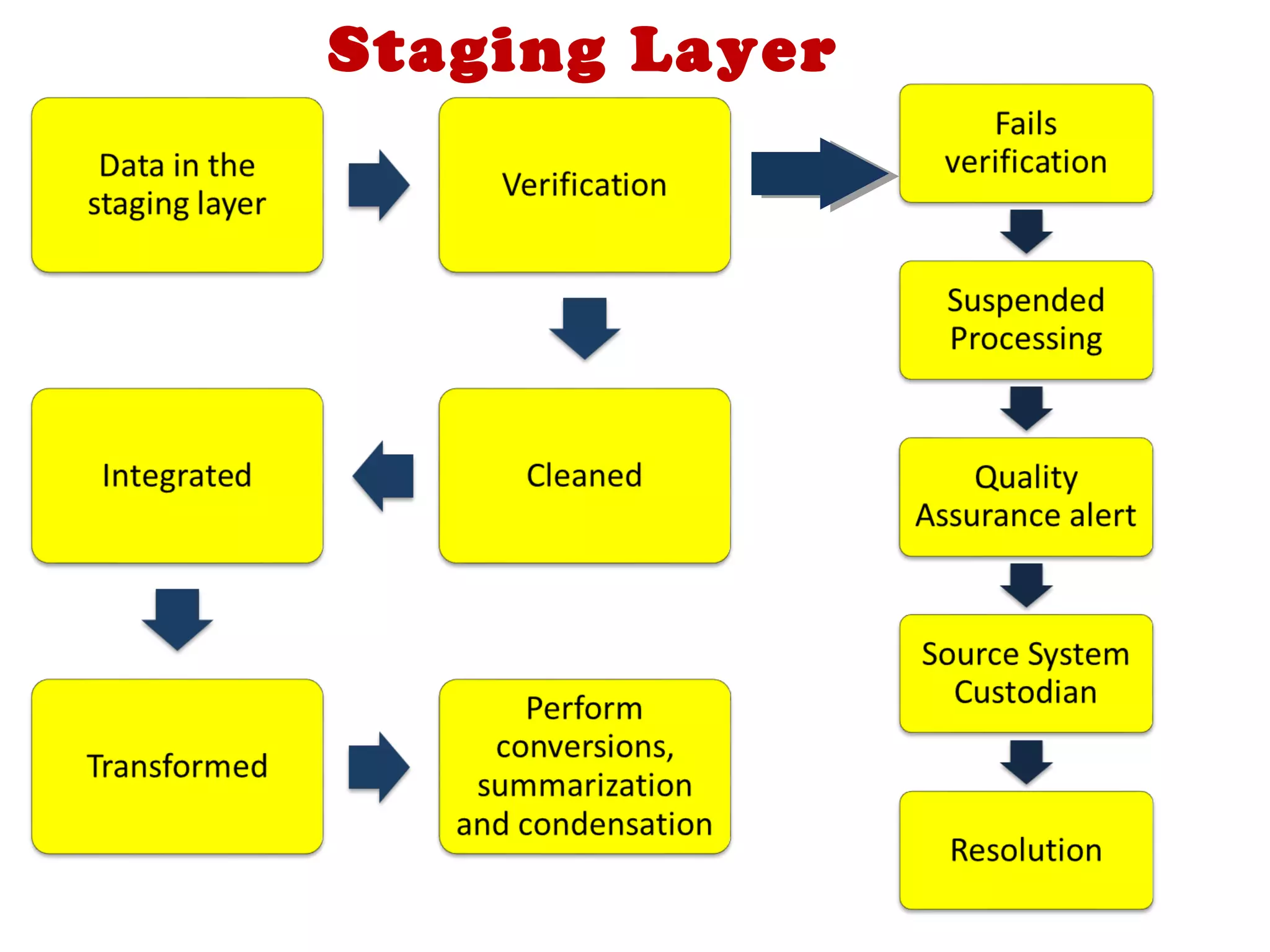
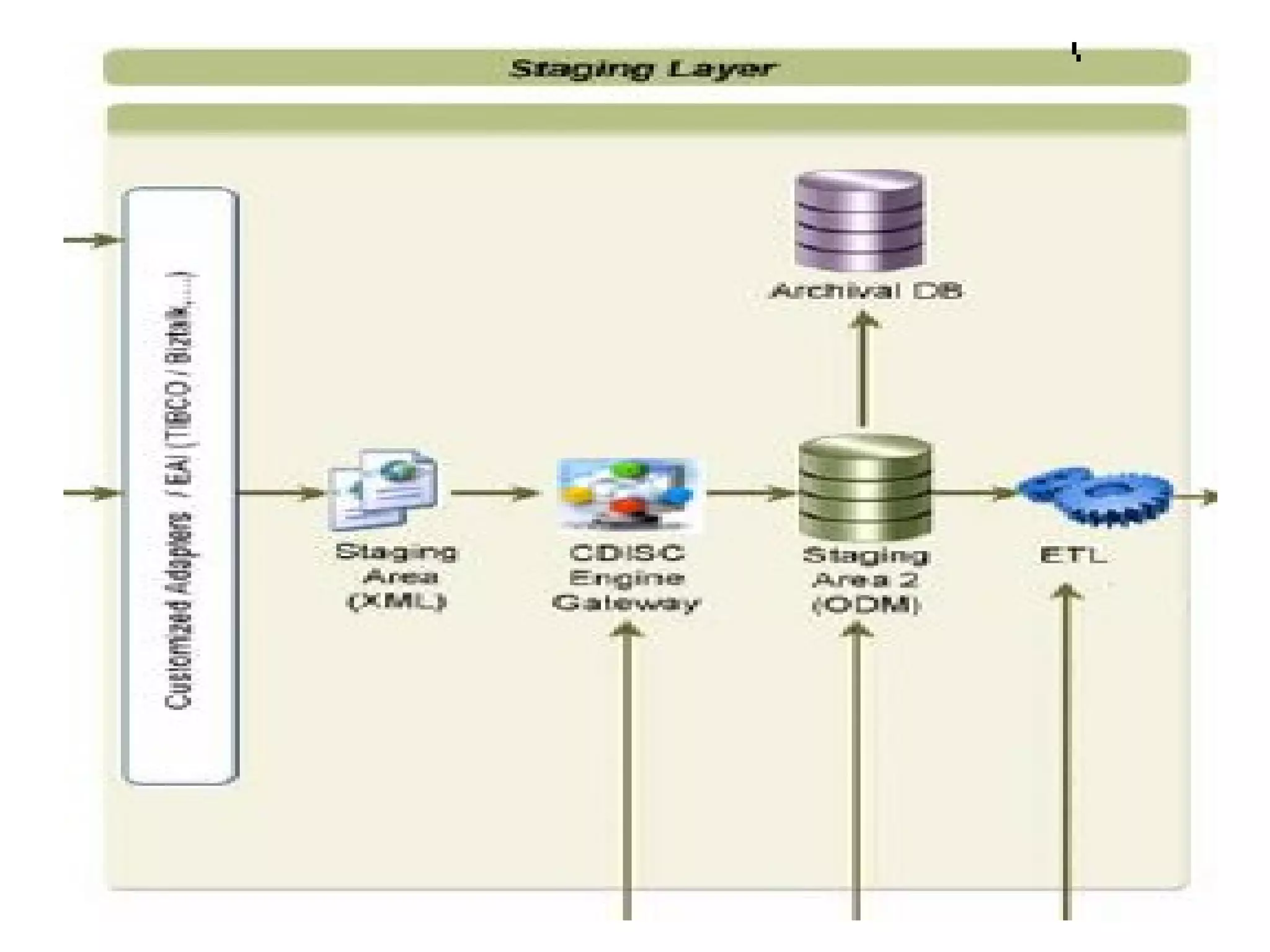
Staging Layer
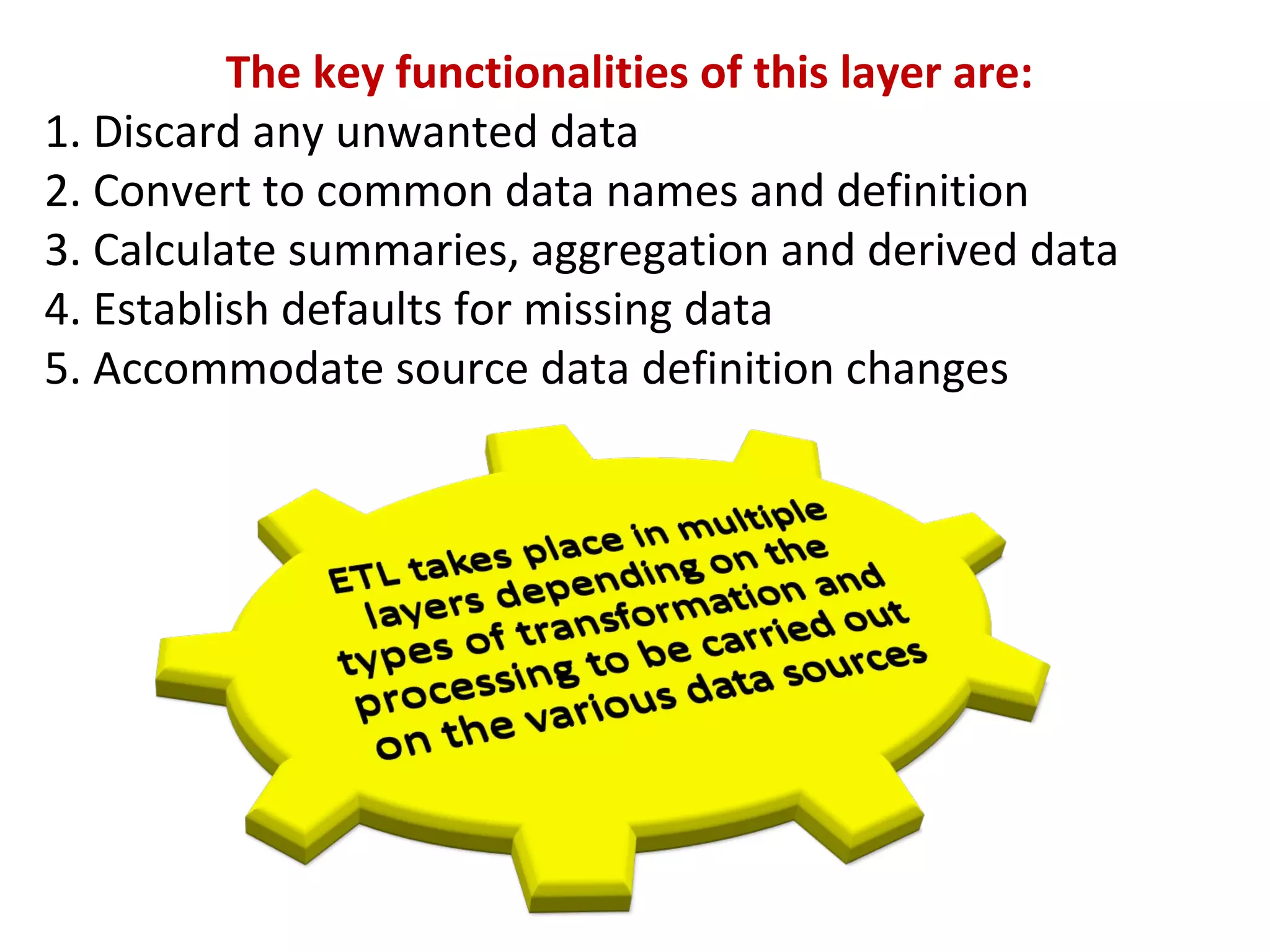
The key functionalities of this layer are:
1. Discard any unwanted data
2. Convert to common data names and definition
3. Calculate summaries, aggregation and derived data
4. Establish defaults for missing data
5. Accommodate source data definition changes
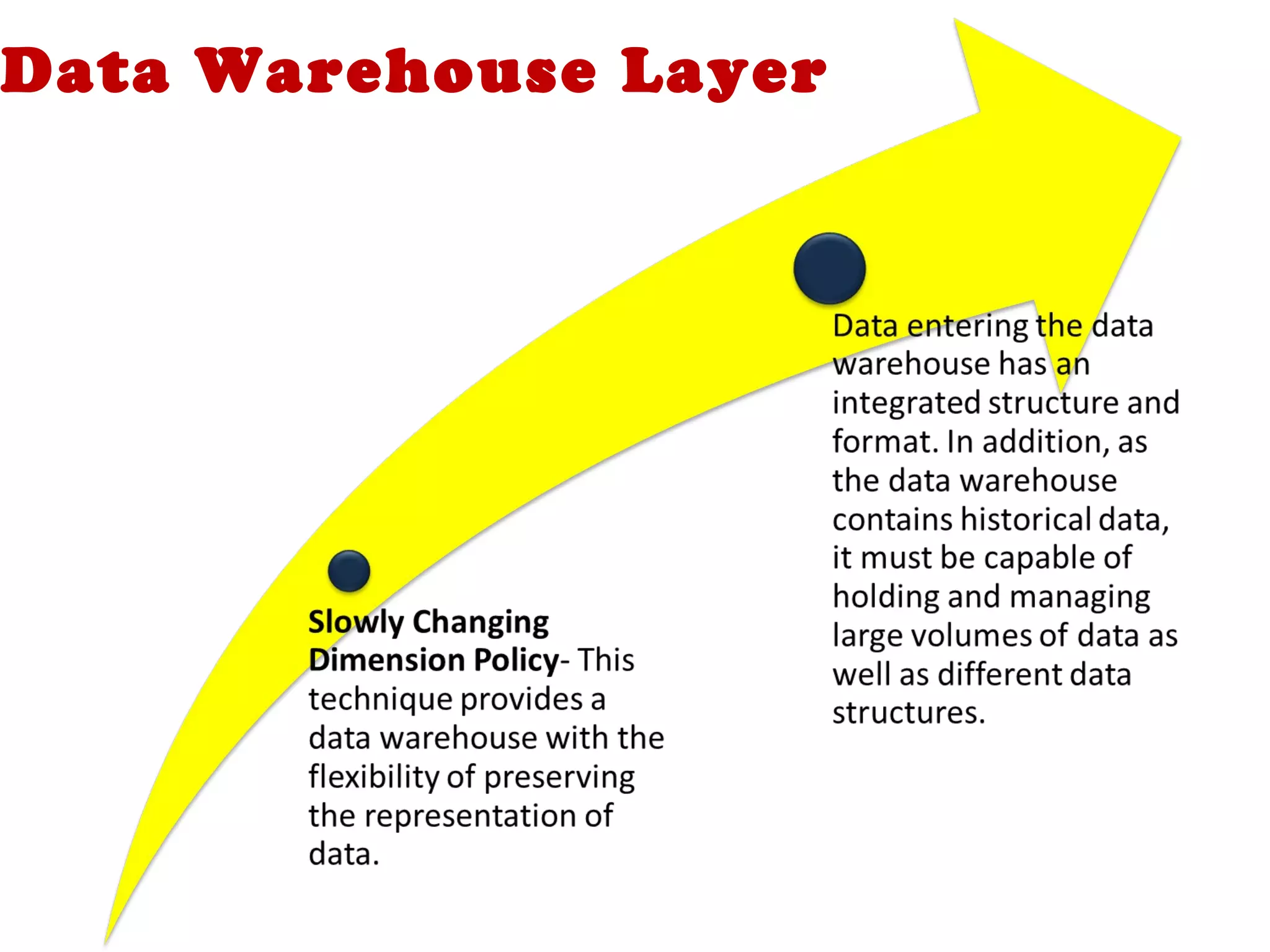
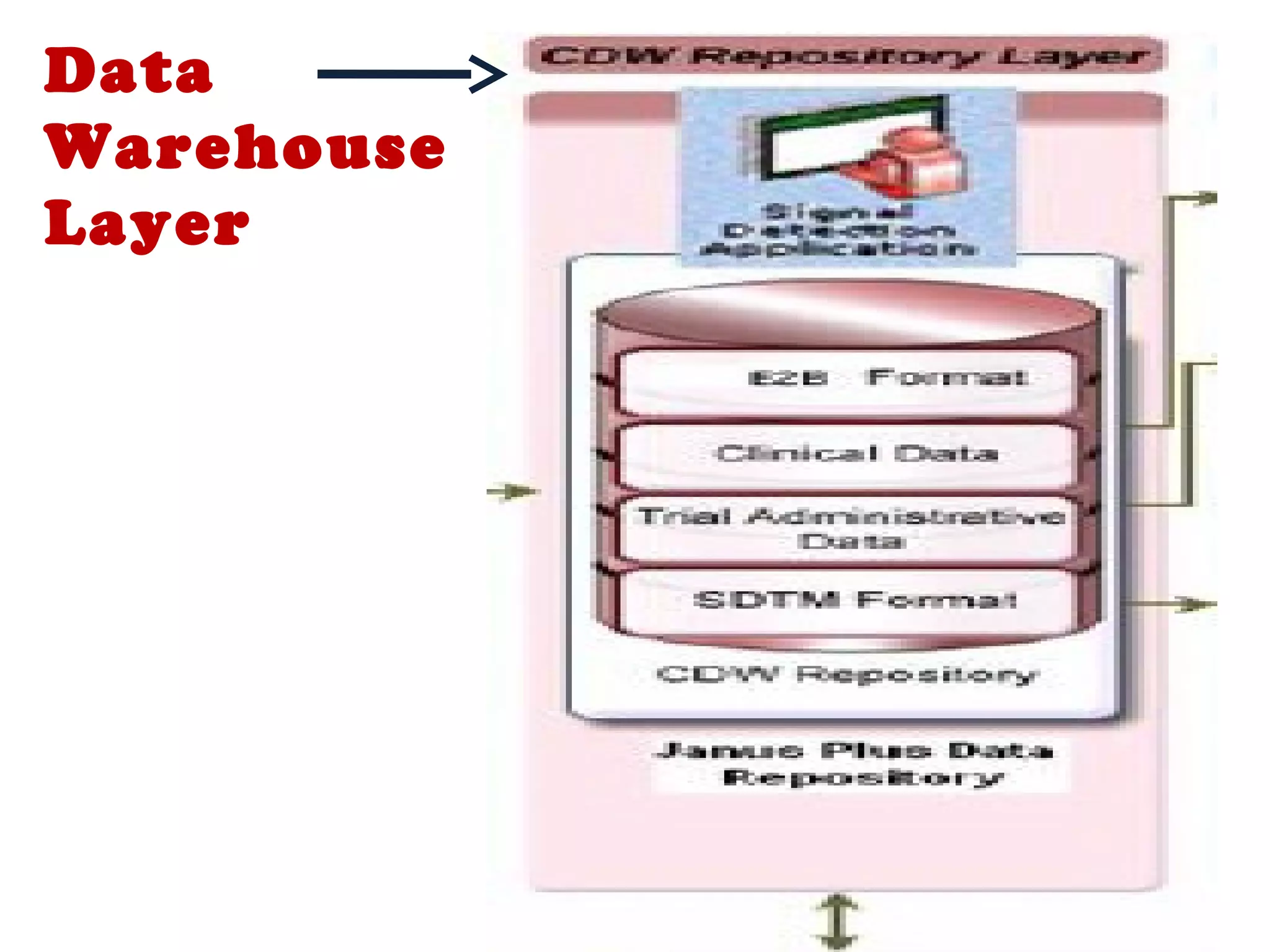
Data Warehouse Layer
Data
Warehouse
Layer
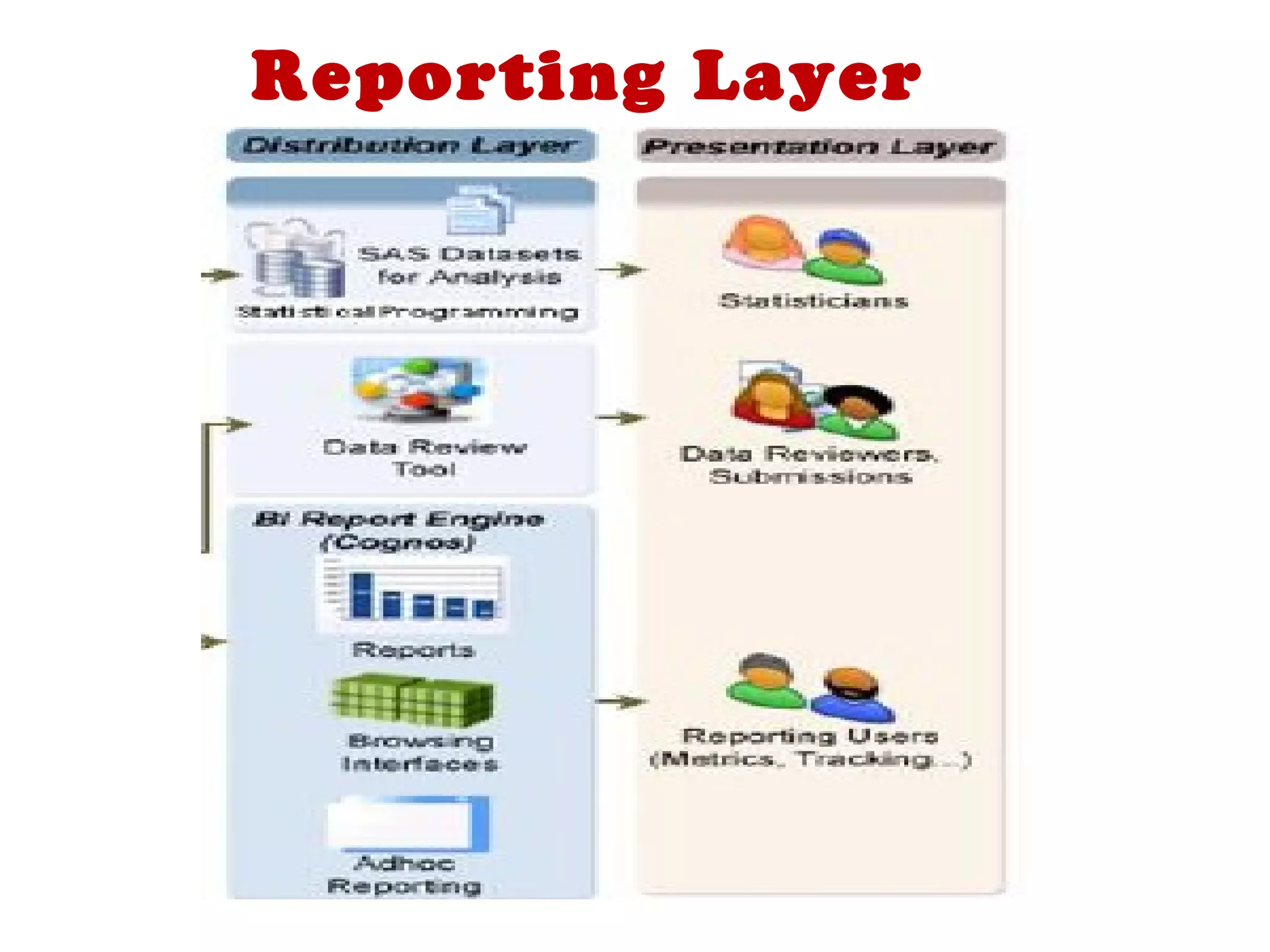
Reporting Layer
Reporting Layer - Any standard OLAP tool
Entire CDR Framework
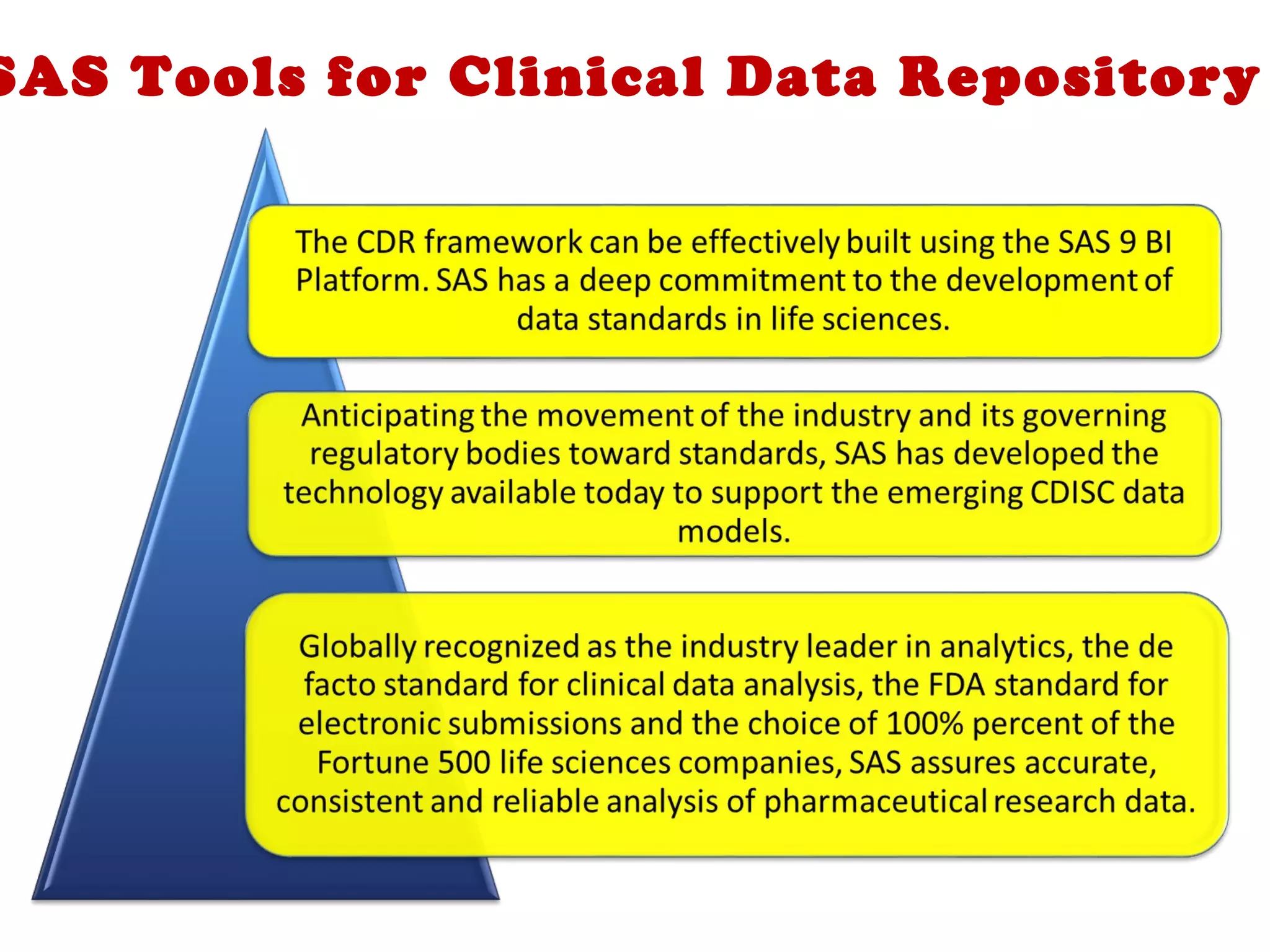
SAS Tools for Clinical Data Repository
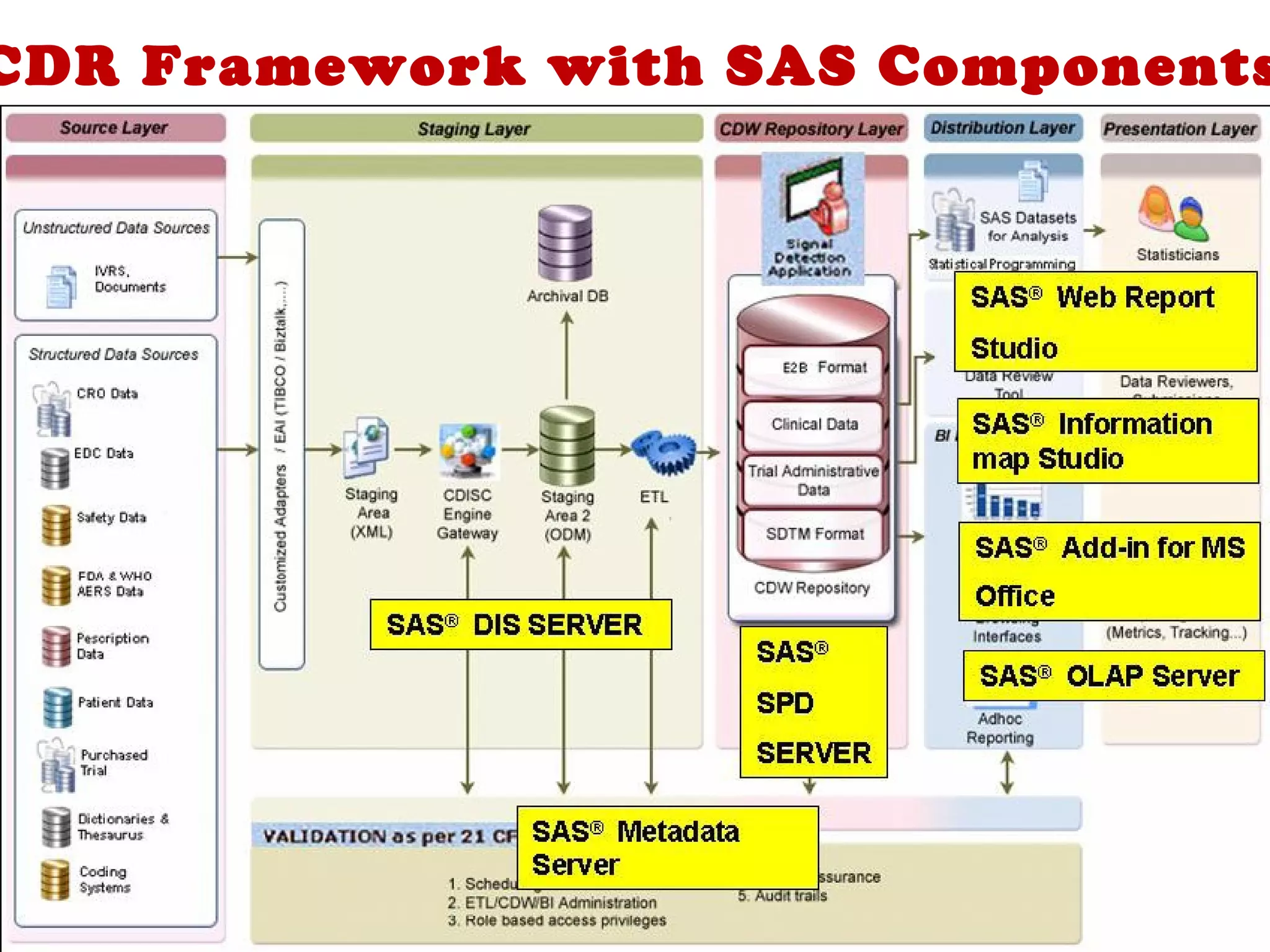
CDR Framework with SAS Components
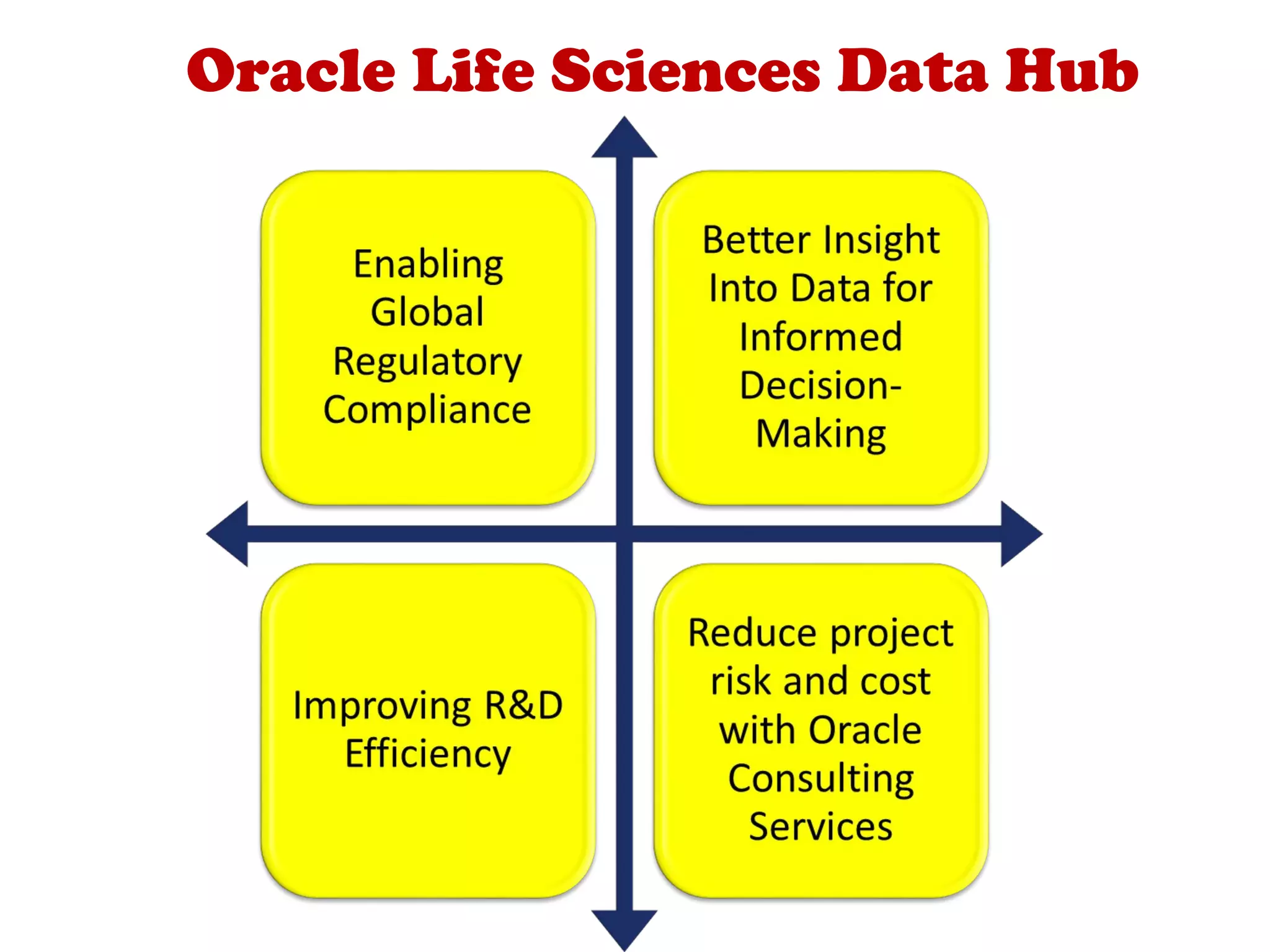
Oracle Life Sciences Data Hub
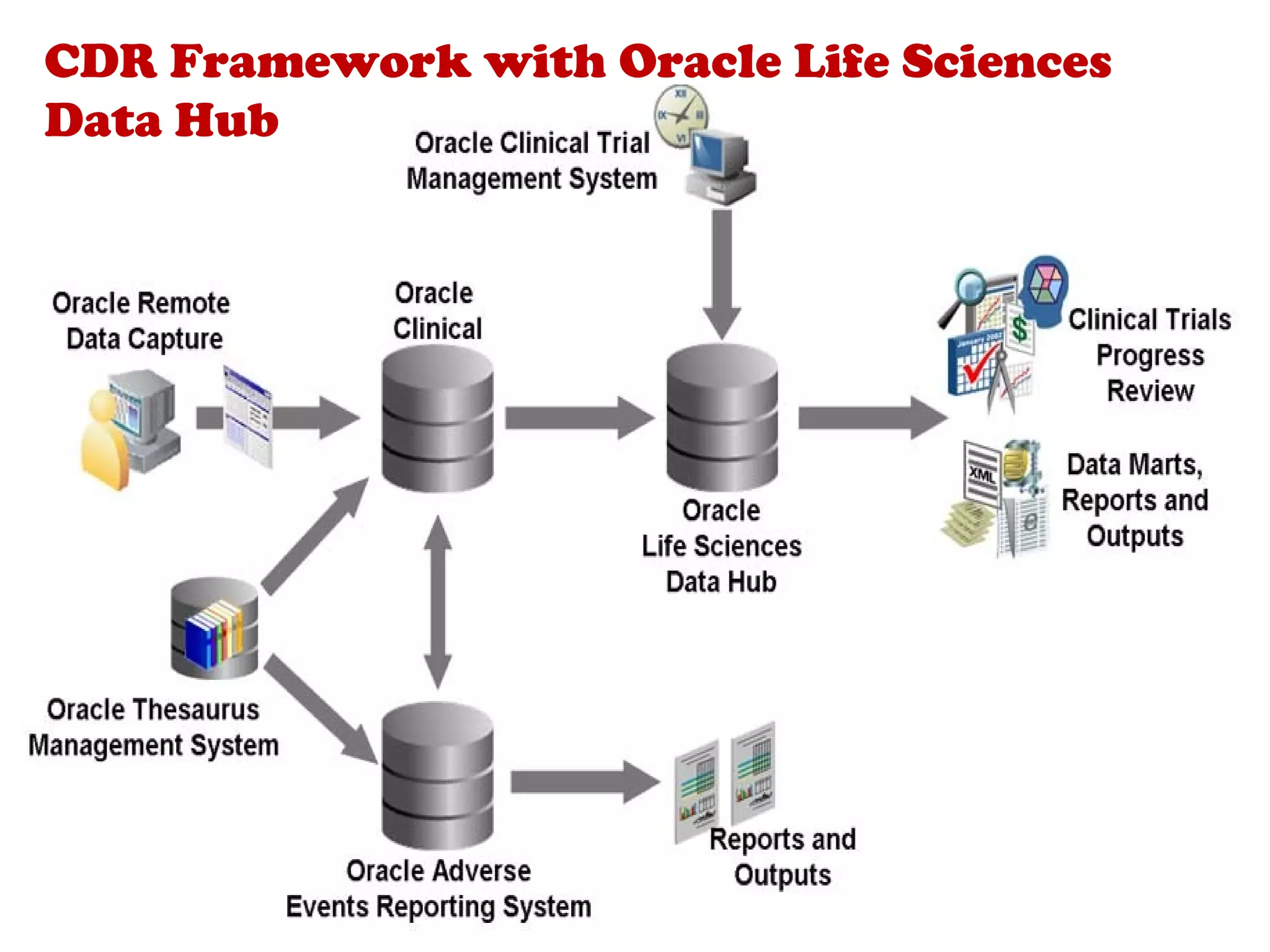
CDR Framework with Oracle Life Sciences
Data Hub
Benefits of CDR
Ability to pool data across phases
Review safety data across products
Analyze data trends using a review tool
Use data mining for targeted populations
Allow project teams to oversee and manage clinical trials
through a single user interface with role-based access
Get rapid, near real-time access to data on clinicians' desktops
Respond to regulatory authority questions quickly and
confidently
Use data to make go/no-go decisions in product development
Look for data trends on marketed products for best practices in
patient care
Provide access to investors and clinical development partners
to make business decisions
An overview of clinical data repository

An overview of clinical data repository

  • 1.
    AN OVERVIEW OF CLINICALDATA REPOSITORY (CDR) A presentation by Netrah L
  • 2.
    What is CDR? A Clinical Data Repository (CDR) is a real time database that consolidates data from a variety of clinical sources to present a unified view of a single patient. It is optimized to allow clinicians to retrieve data for a single patient or to facilitate the management of a specific clinical trial.  Typical data types which are often found within a CDR include: laboratory results, patient demographics, pharmacy information, radiology reports, hospital admission, transfer dates, ICD-9 codes, discharge summaries & progress notes.
  • 3.
    Need of CDR…… Keyissues faced by the industry today in the clinical trial and clinical safety space include: • Non-uniform sets of data from EDC, CRO, Purchased Trial. (Patient Data, Metadata, Financial Data) • Data not integrated between Clinical Trial & Clinical Safety • Performance Metrics – delay in getting • Safety Signal Detection not effective on insufficient & poor quality of data. • Double Data Entry • Reporting is mostly manual, time consuming & costly. • Manual reconciliation of data • High down time & maintenance window.
  • 4.
    CDR Implementation- Challenges Faced:  Storage capacity  Computing power Reliability Accessibility of the data Electronic interface between all the ancillary data sources and the CDR Network connection Semantic mapping User interface
  • 5.
    Key features requiredof the CDR architecture  Provision for a standard format for information collation and representation.  The data coming from various internal and external source systems need to be verified before consolidation and aggregation.  There is a definite need for storing history data. This requirement will warrant the need for establishing a Data Warehouse that can store time-varied data. Time dimension would need to be implemented or a history needs to be maintained in the staging area.
  • 6.
    Key features requiredof the CDR architecture – continued  There is a need for generating reports of an analytical nature. This will warrant the use of a best-of-breed OLAP tool running against a dimensionally modeled Data Repository.  There is a need to provide accelerated response times for the reports. Report using a dimensionally modeled system in which case the data access would be a simple query against the star schema can accelerate responses.
  • 7.
  • 8.
    Data Sources The CDRsystem extracts data from both the structured and unstructured datasets. Structured data sources - CRO Data, EDC Data, Safety data, AERS data, Prescription Data, Patient Data, Purchased Trial data, Dictionary Data and Coding Systems. Unstructured datasets - the documents such as IVRS. The Source System Interface Architecture Component manages the extraction, verification and integration of “changed data” from the Source System into the “Interface Design Framework” and facilitates its transfer to the Data Staging Subcomponent.
  • 9.
  • 10.
  • 11.
    The key functionalitiesof this layer are: 1. Discard any unwanted data 2. Convert to common data names and definition 3. Calculate summaries, aggregation and derived data 4. Establish defaults for missing data 5. Accommodate source data definition changes
  • 13.
  • 14.
  • 15.
  • 16.
    Reporting Layer -Any standard OLAP tool
  • 17.
  • 18.
    SAS Tools forClinical Data Repository
  • 19.
    CDR Framework withSAS Components
  • 20.
  • 21.
    CDR Framework withOracle Life Sciences Data Hub
  • 22.
    Benefits of CDR Abilityto pool data across phases Review safety data across products Analyze data trends using a review tool Use data mining for targeted populations Allow project teams to oversee and manage clinical trials through a single user interface with role-based access Get rapid, near real-time access to data on clinicians' desktops Respond to regulatory authority questions quickly and confidently Use data to make go/no-go decisions in product development Look for data trends on marketed products for best practices in patient care Provide access to investors and clinical development partners to make business decisions