The Inline Interface Peter Brantley  May 2007 DLF
our ui interaction is simple. static request, render, read  repeat
we’ve used metaphors. like libraries. putting things together. on the shelf of the browser. collecting things. my stuff.
user can arrange data with local tools. zotero.org but stuck locally.  not portable. not network centric. no feedback.
not the way we think.  thinking:  jumble, all the time. moving, stream, wandering, often in flood prone    channel   through the work of others.
periodic interrogation is not natural.  we are a moving network of thought. digg.  del.icio.us.  river of news. they be good.  people use them. they are fundamentally social.  social is good.
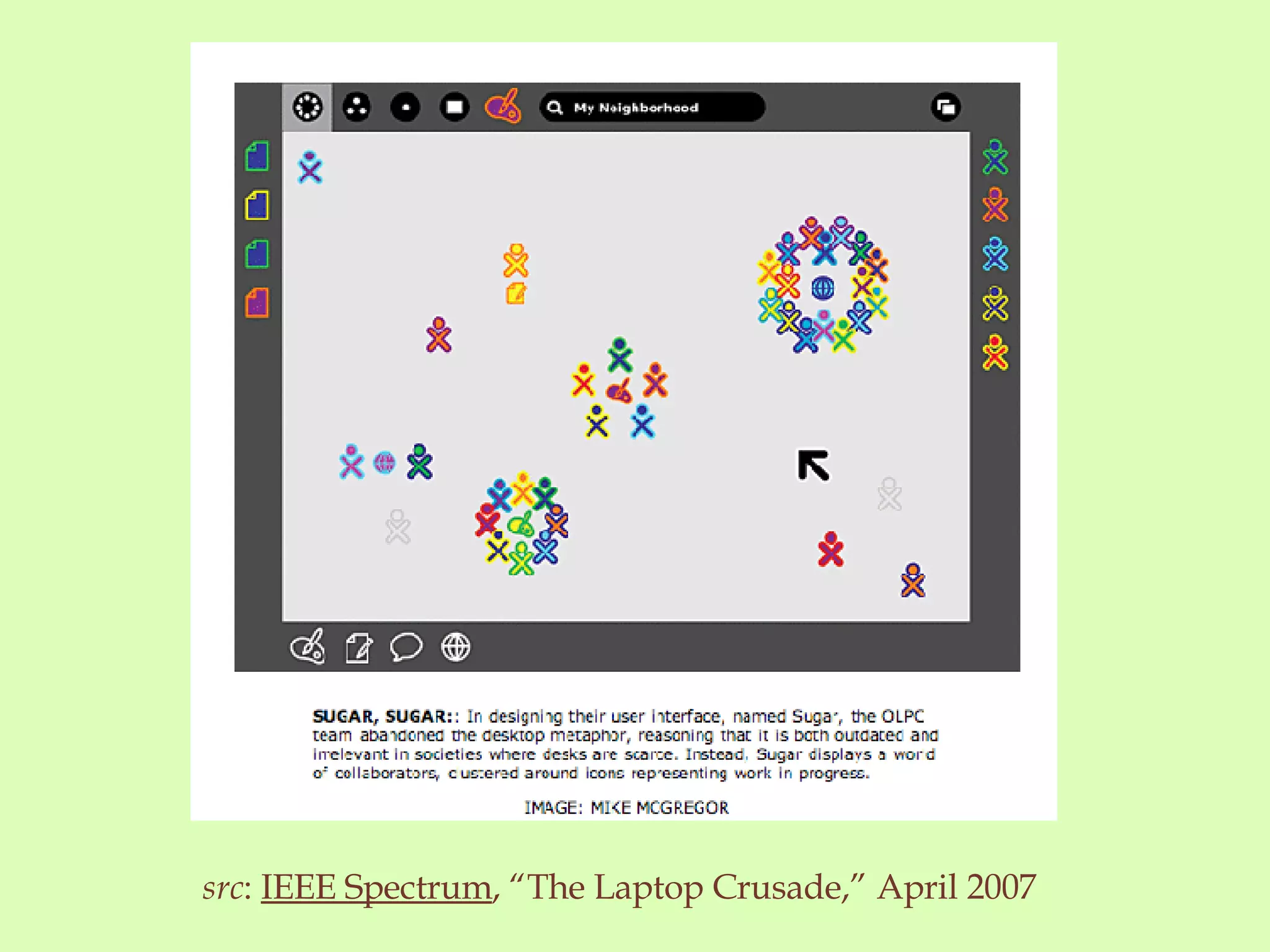
the desktop is not about selection. it needs to be about using things,  community, and collaboration. OLPC is moving to a new desktop metaphor for this very reason.
src :  IEEE Spectrum , “The Laptop Crusade,” April 2007
way we work.  stick things here or there.  try new things. keepnotestalkaboutideasputstufftogether. then we make something. share it.  repeat.
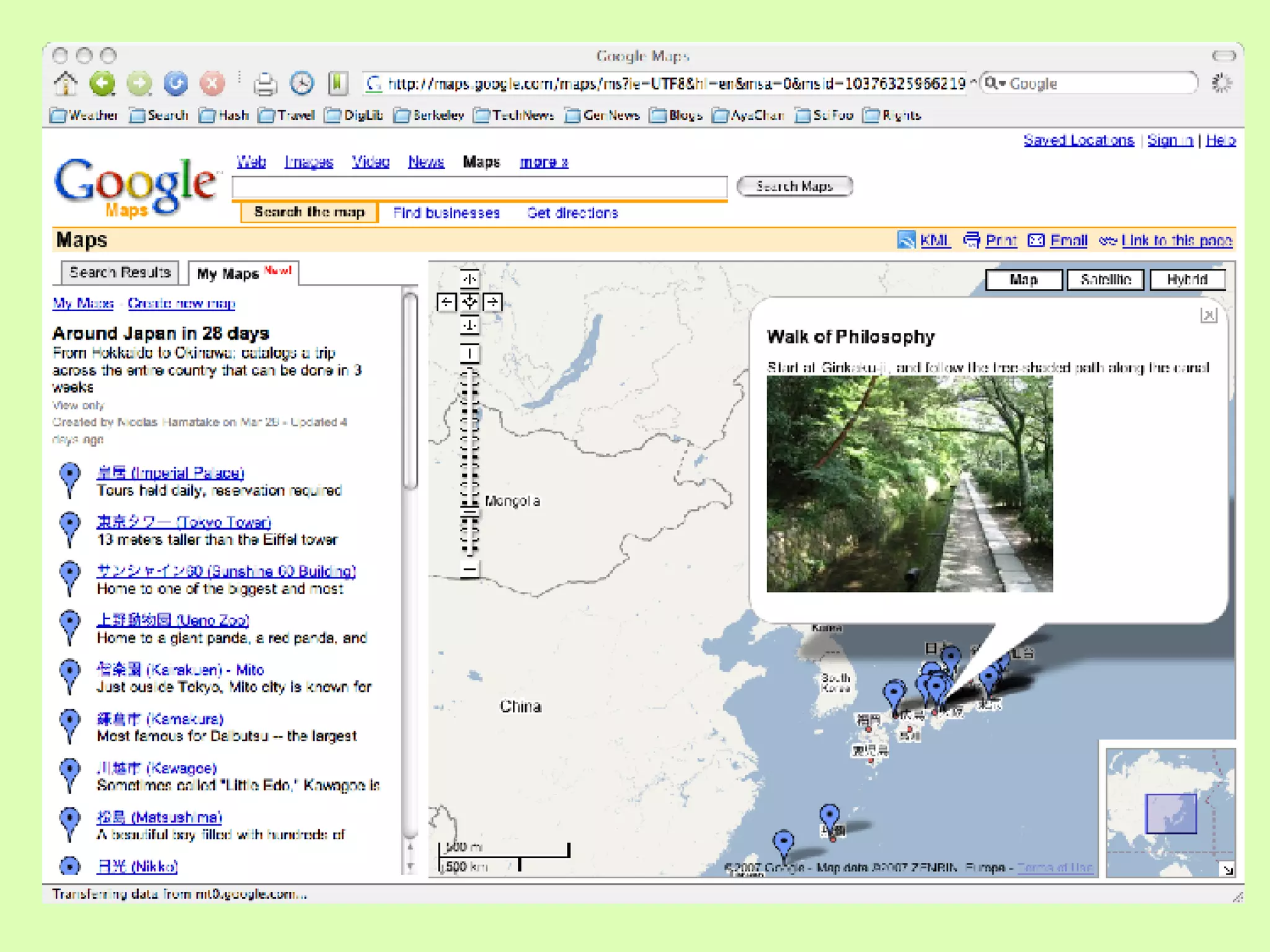
how we add “we” now: mash ups. combining things in a single place. like Google’s MyMaps. » people create their own maps. » back into main search results.  » distribute or publish urls.
 
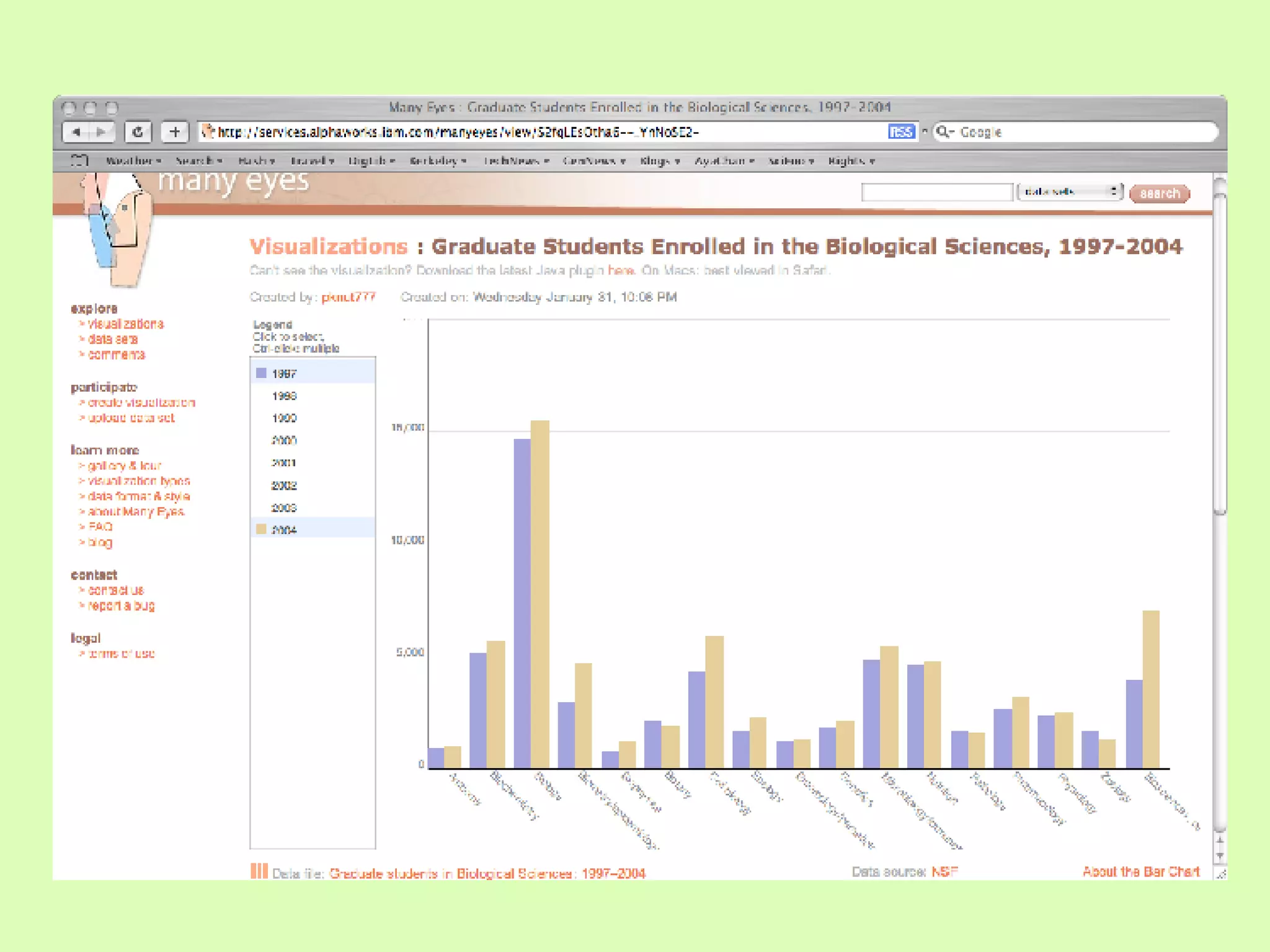
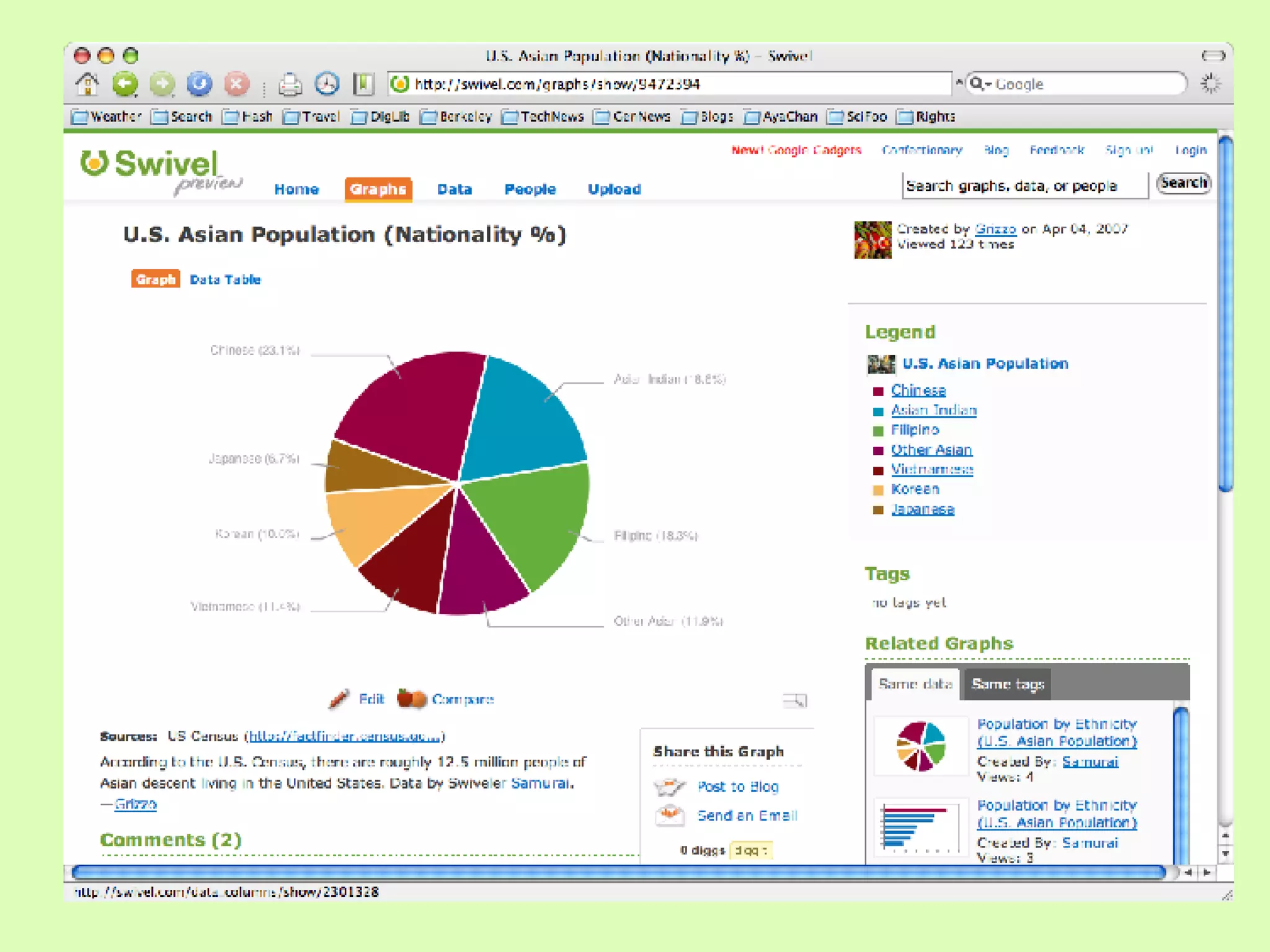
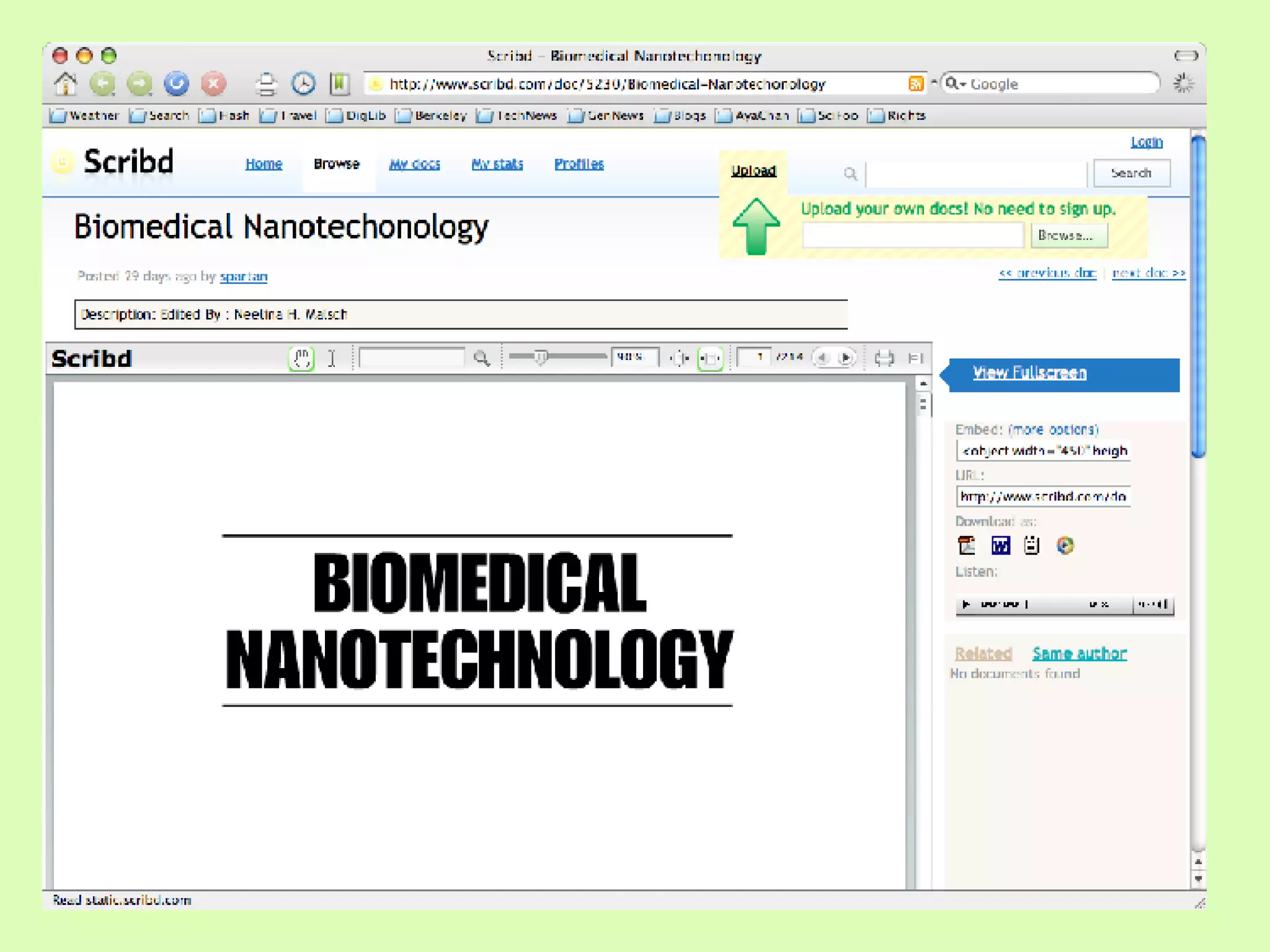
public data. uploading datasets. like simple spreadsheets. or variety of documents. linkable.  shareable.


always hard issues (that are) related  dmca / rights. authorization.  lock  <  in via aggregation.
publishers will also offer this drawing from external datasets + body of texts in their own corpus re-defines the object published. dynamic.  not just “extra” content. living content.  mutable content.
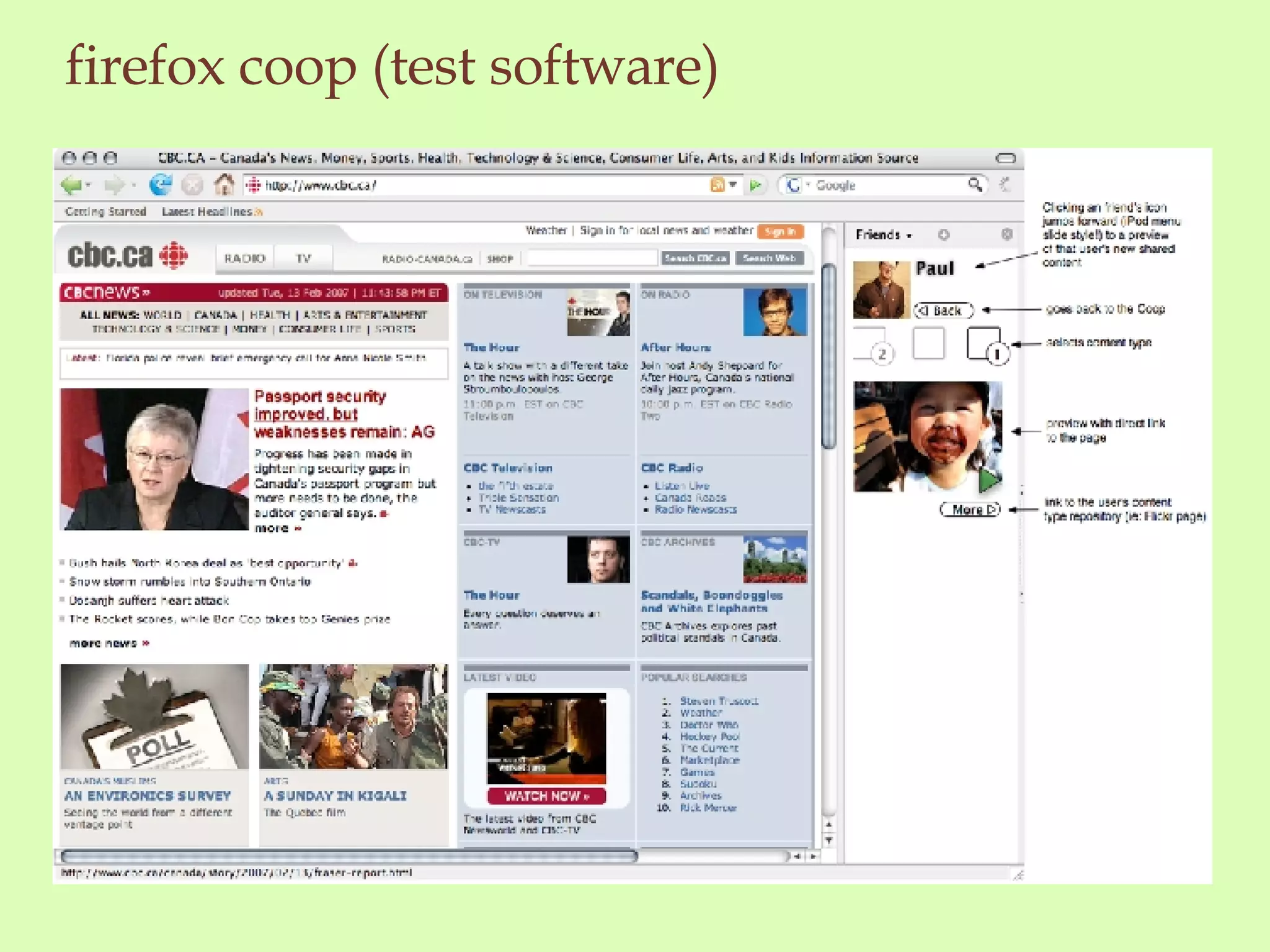
the ui goes social. browsers: flock. firefox (maybe). are my colleagues online? I want to share with them. (and firefox wants me too).
firefox coop (test software)
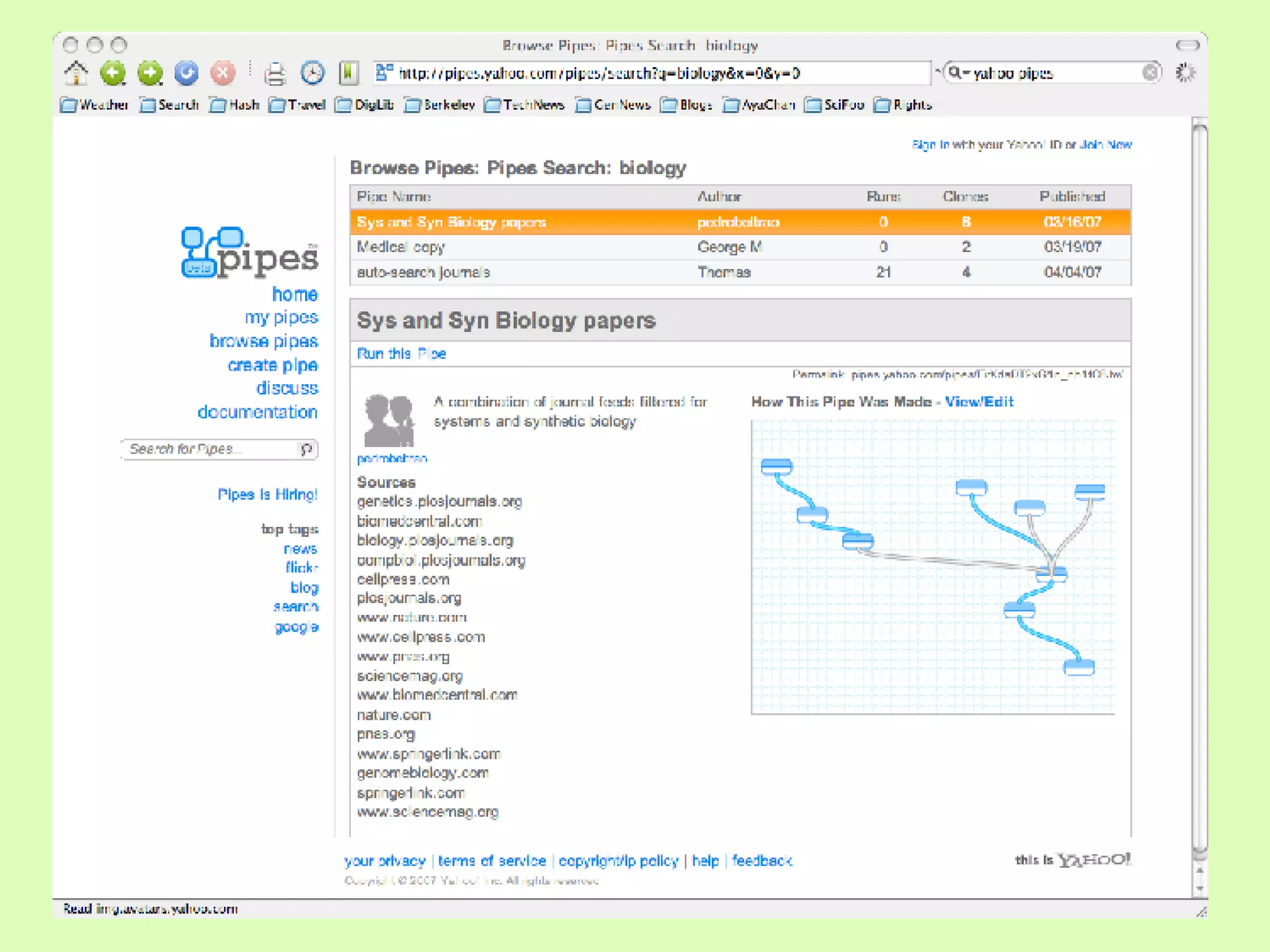
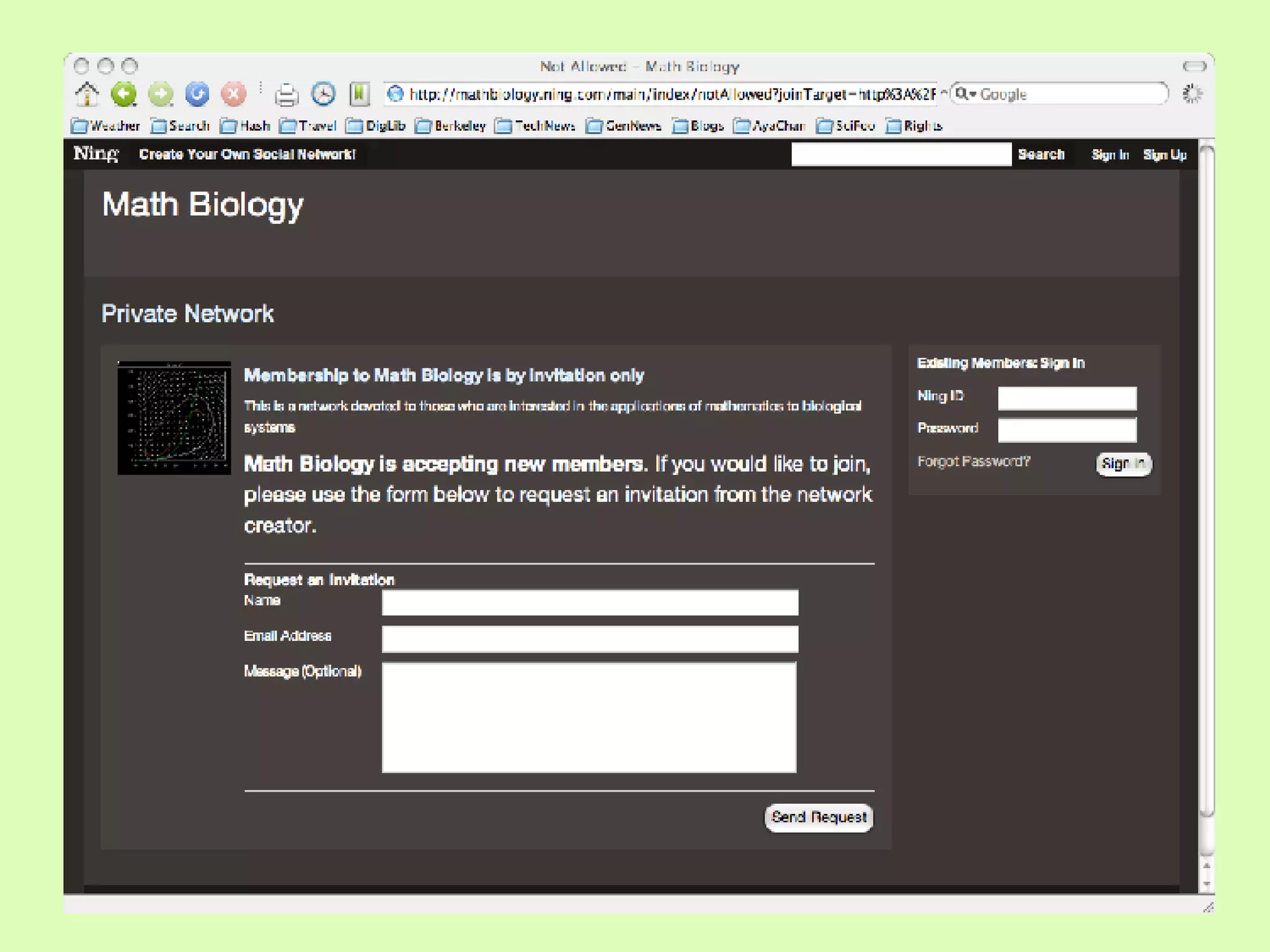
[assemble][things][into][flows] user created. pseudo-coding onscreen. some tools exist for this. Yahoo! Pipes Ning
 
 
but something more is coming. increasingly people have  a different understanding  of privacy want to share  wide open
 
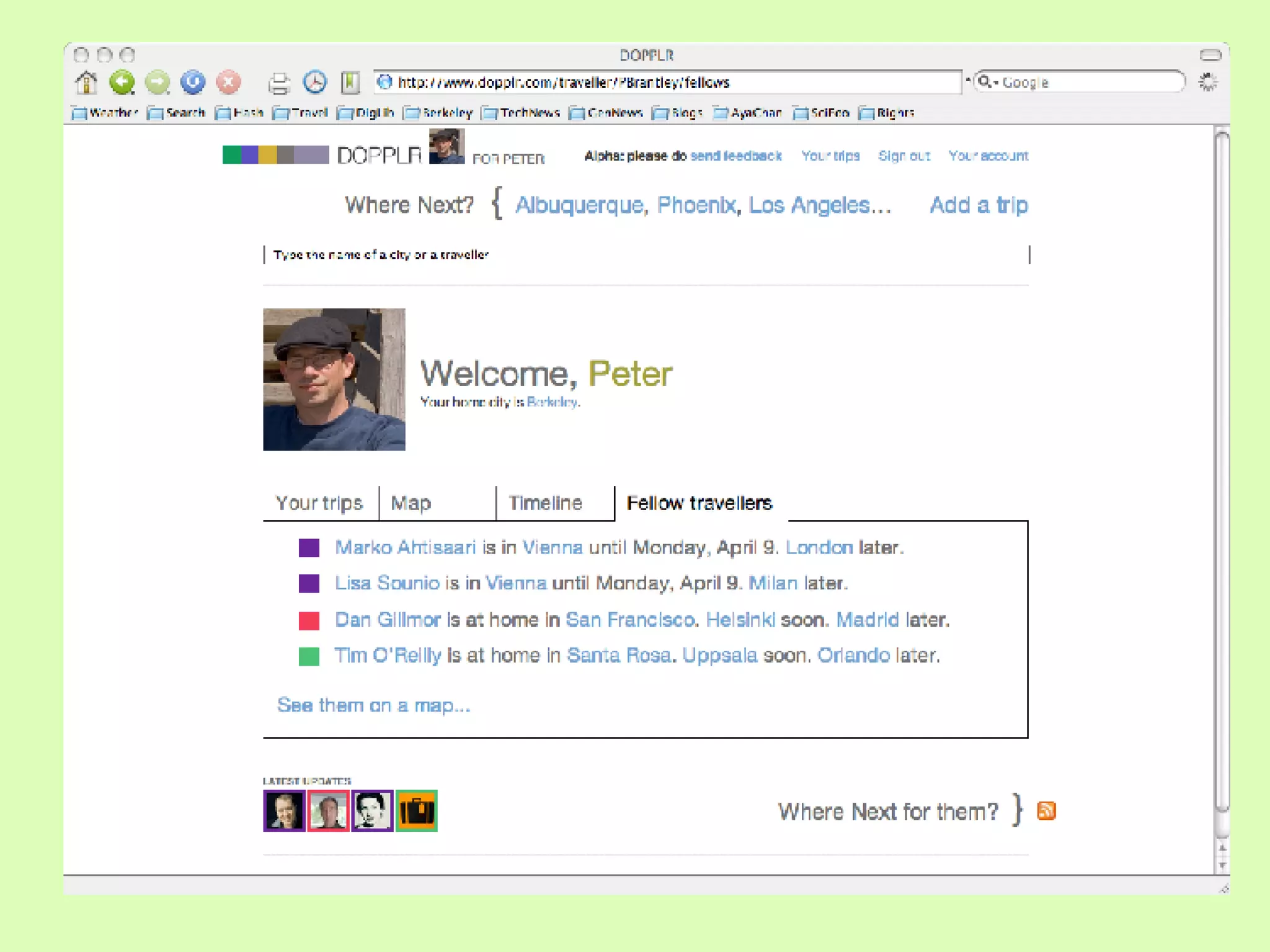
how we do our work transparency will increase privacy will often be absent  more things will be shared
most of all people will be able to access all of it loss of privacy means more access to information more ability to conjoin it more ability to create dynamic resources
down s i d e information use is tracked advantage adheres to others inserting a few select dams  in the flow of information
assume all these this: will be then what we need to build toward information integration inline with the interface and openly as possible
no answers only imaginings how can we work better ... openly & in-line
thanks !

The Inline Interface

  • 1.
    The Inline InterfacePeter Brantley May 2007 DLF
  • 2.
    our ui interactionis simple. static request, render, read repeat
  • 3.
    we’ve used metaphors.like libraries. putting things together. on the shelf of the browser. collecting things. my stuff.
  • 4.
    user can arrangedata with local tools. zotero.org but stuck locally. not portable. not network centric. no feedback.
  • 5.
    not the waywe think. thinking: jumble, all the time. moving, stream, wandering, often in flood prone  channel  through the work of others.
  • 6.
    periodic interrogation isnot natural. we are a moving network of thought. digg. del.icio.us. river of news. they be good. people use them. they are fundamentally social. social is good.
  • 7.
    the desktop isnot about selection. it needs to be about using things, community, and collaboration. OLPC is moving to a new desktop metaphor for this very reason.
  • 8.
    src : IEEE Spectrum , “The Laptop Crusade,” April 2007
  • 9.
    way we work. stick things here or there. try new things. keepnotestalkaboutideasputstufftogether. then we make something. share it. repeat.
  • 10.
    how we add“we” now: mash ups. combining things in a single place. like Google’s MyMaps. » people create their own maps. » back into main search results. » distribute or publish urls.
  • 11.
  • 12.
    public data. uploadingdatasets. like simple spreadsheets. or variety of documents. linkable. shareable.
  • 13.
  • 14.
  • 15.
  • 16.
    always hard issues(that are) related dmca / rights. authorization. lock < in via aggregation.
  • 17.
    publishers will alsooffer this drawing from external datasets + body of texts in their own corpus re-defines the object published. dynamic. not just “extra” content. living content. mutable content.
  • 18.
    the ui goessocial. browsers: flock. firefox (maybe). are my colleagues online? I want to share with them. (and firefox wants me too).
  • 19.
  • 20.
    [assemble][things][into][flows] user created.pseudo-coding onscreen. some tools exist for this. Yahoo! Pipes Ning
  • 21.
  • 22.
  • 23.
    but something moreis coming. increasingly people have a different understanding of privacy want to share wide open
  • 24.
  • 25.
    how we doour work transparency will increase privacy will often be absent more things will be shared
  • 26.
    most of allpeople will be able to access all of it loss of privacy means more access to information more ability to conjoin it more ability to create dynamic resources
  • 27.
    down s id e information use is tracked advantage adheres to others inserting a few select dams in the flow of information
  • 28.
    assume all thesethis: will be then what we need to build toward information integration inline with the interface and openly as possible
  • 29.
    no answers onlyimaginings how can we work better ... openly & in-line
  • 30.