PRESENTED BY,
P Rehitha
ROLL NO: 17AK1A0590
4th YEAR CSE 2
 Introduction
 Today’s Web
 Limitations of web
 Semantic Web
 Working
 Example
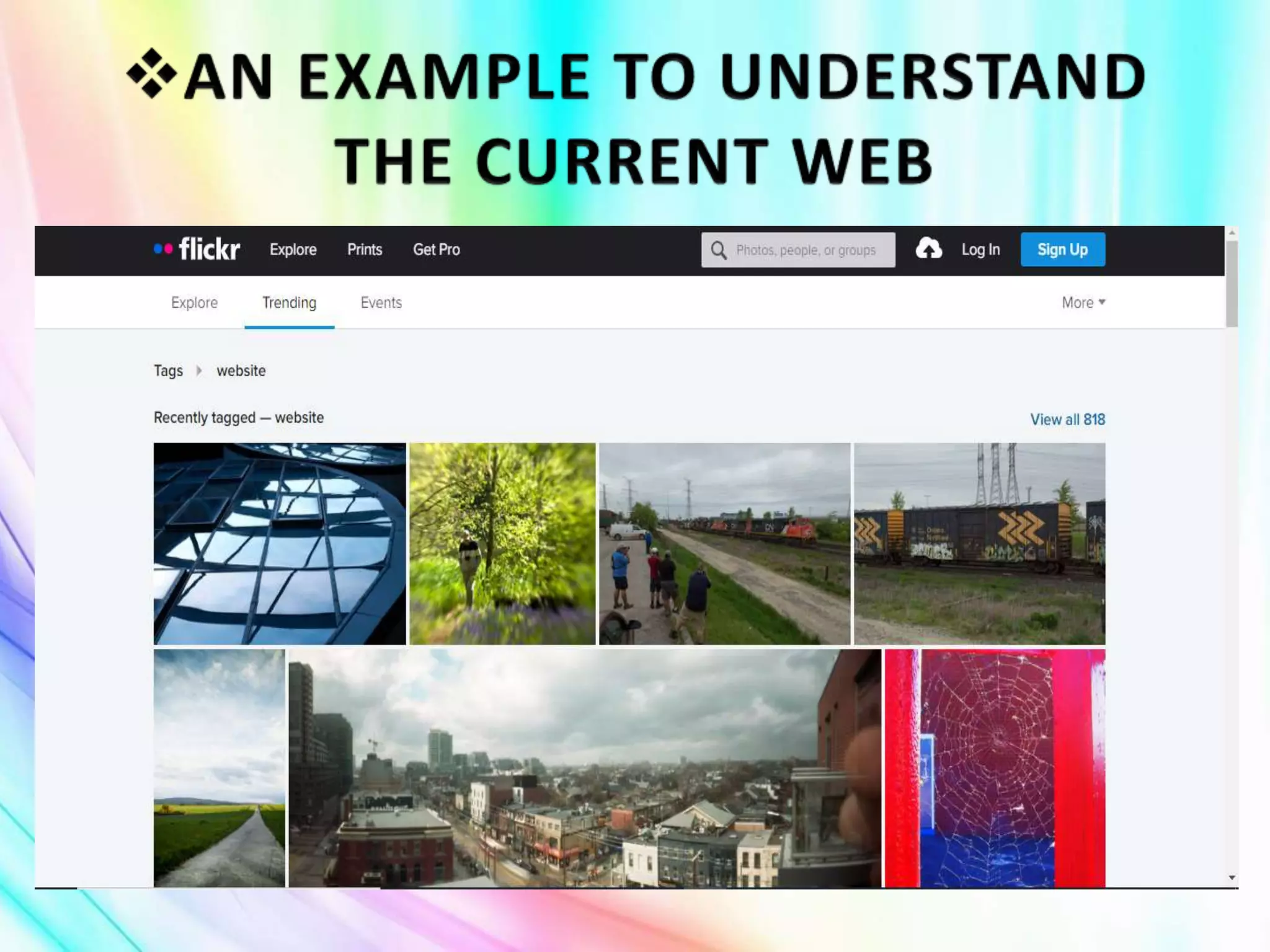
1. Flickr
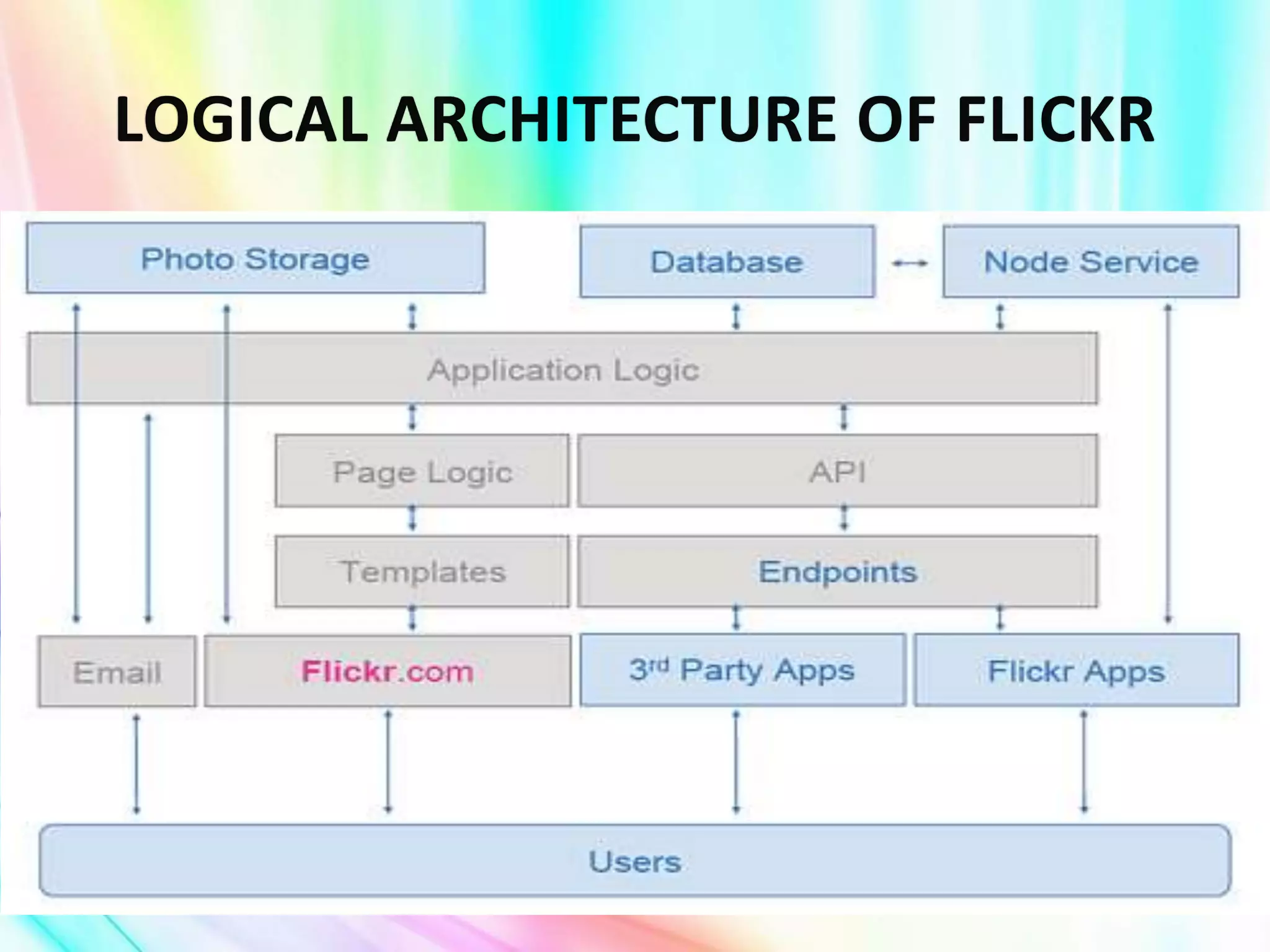
2. Logical Architecture
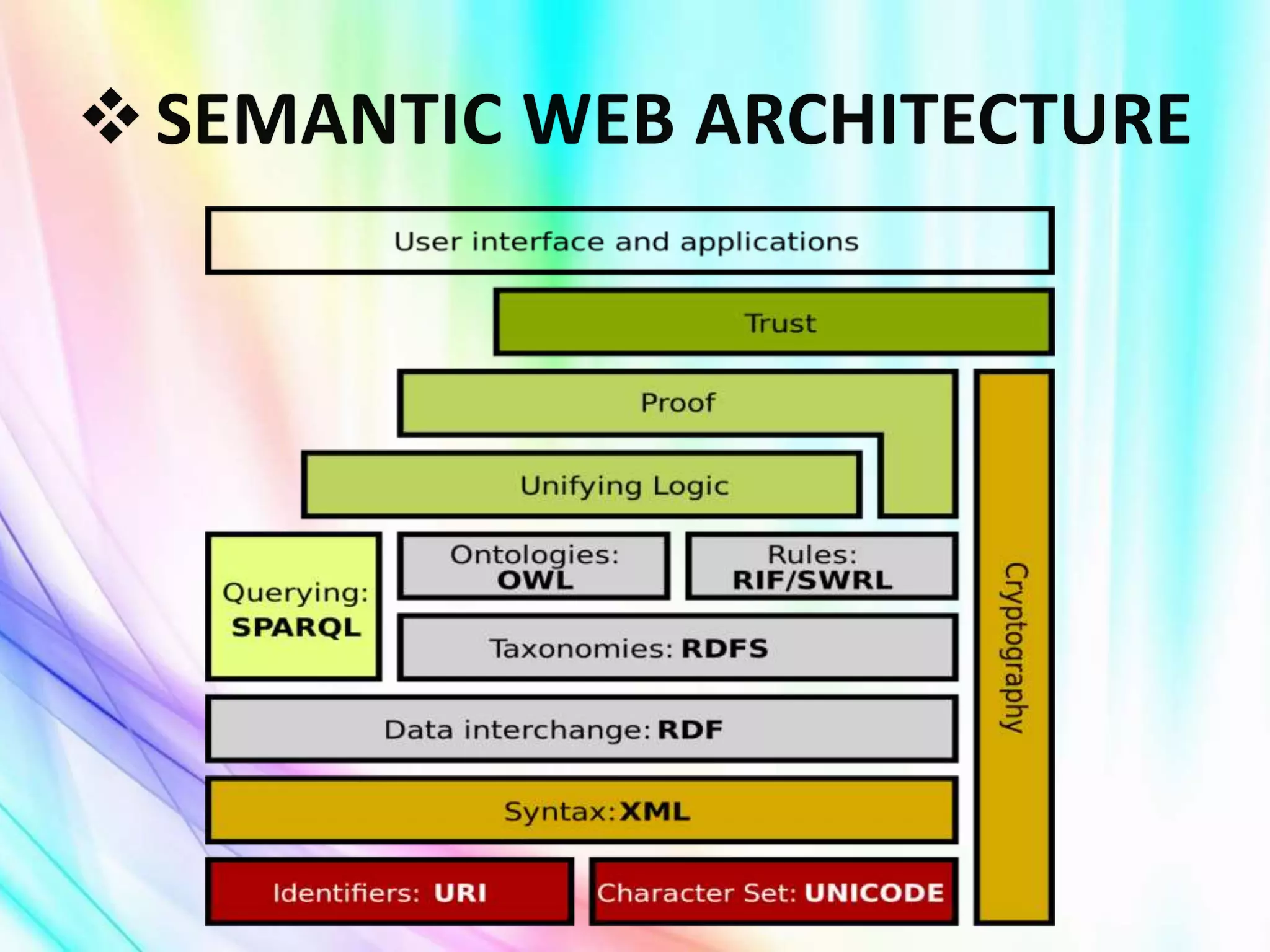
 Semantic Web Architecture
 Advantages
 Conclusion
 Reference
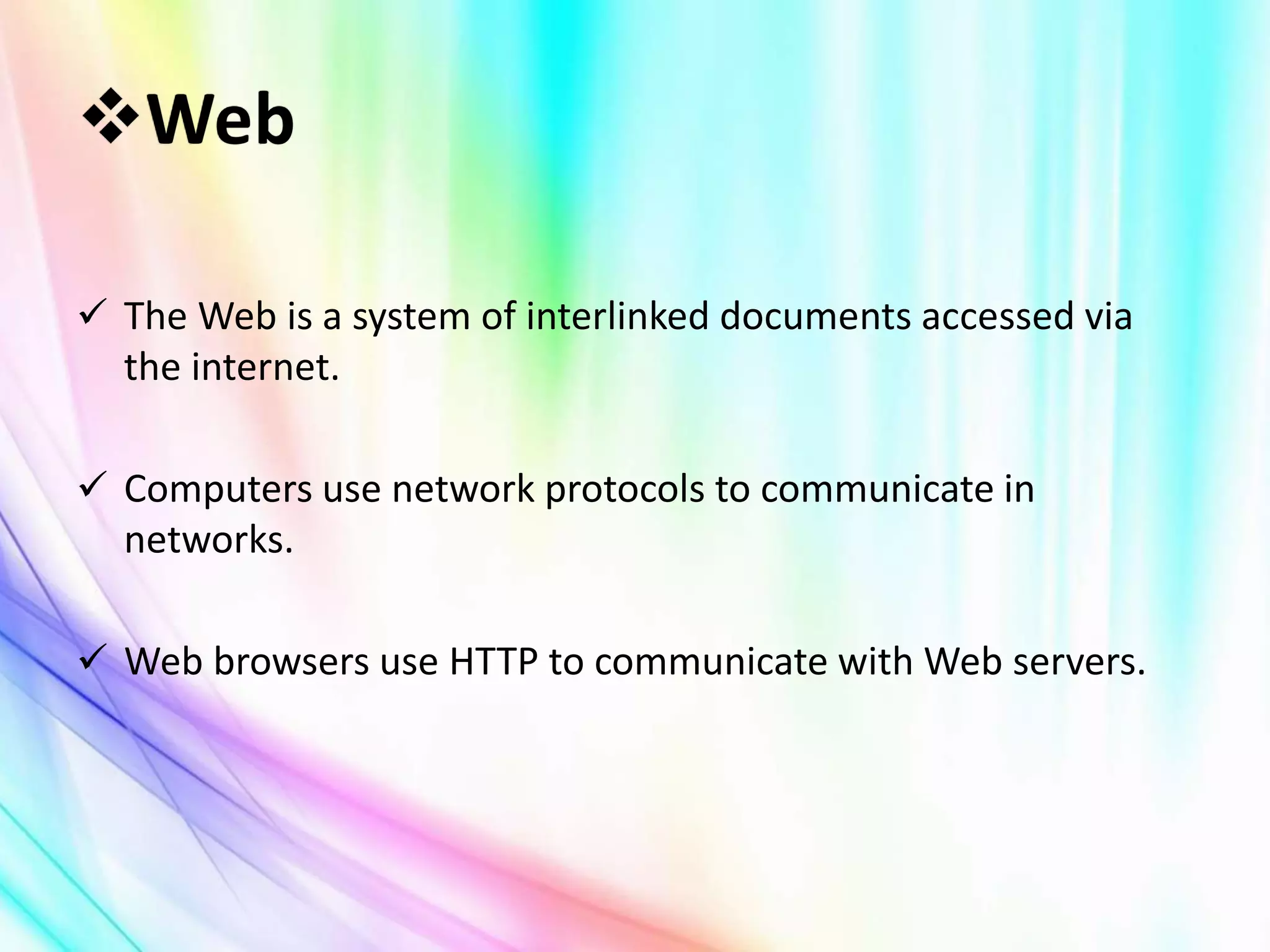
INTRODUCTION
 A PROPOSED DEVELOPMENT OF WORLD WIDE
WEB
 The Web is a system of interlinked documents accessed via
the internet.
 Computers use network protocols to communicate in
networks.
 Web browsers use HTTP to communicate with Web servers.
Semantics is related to the word “syntax”.
BUT
Syntax s how to say something and semantics is
the meaning behind what you say
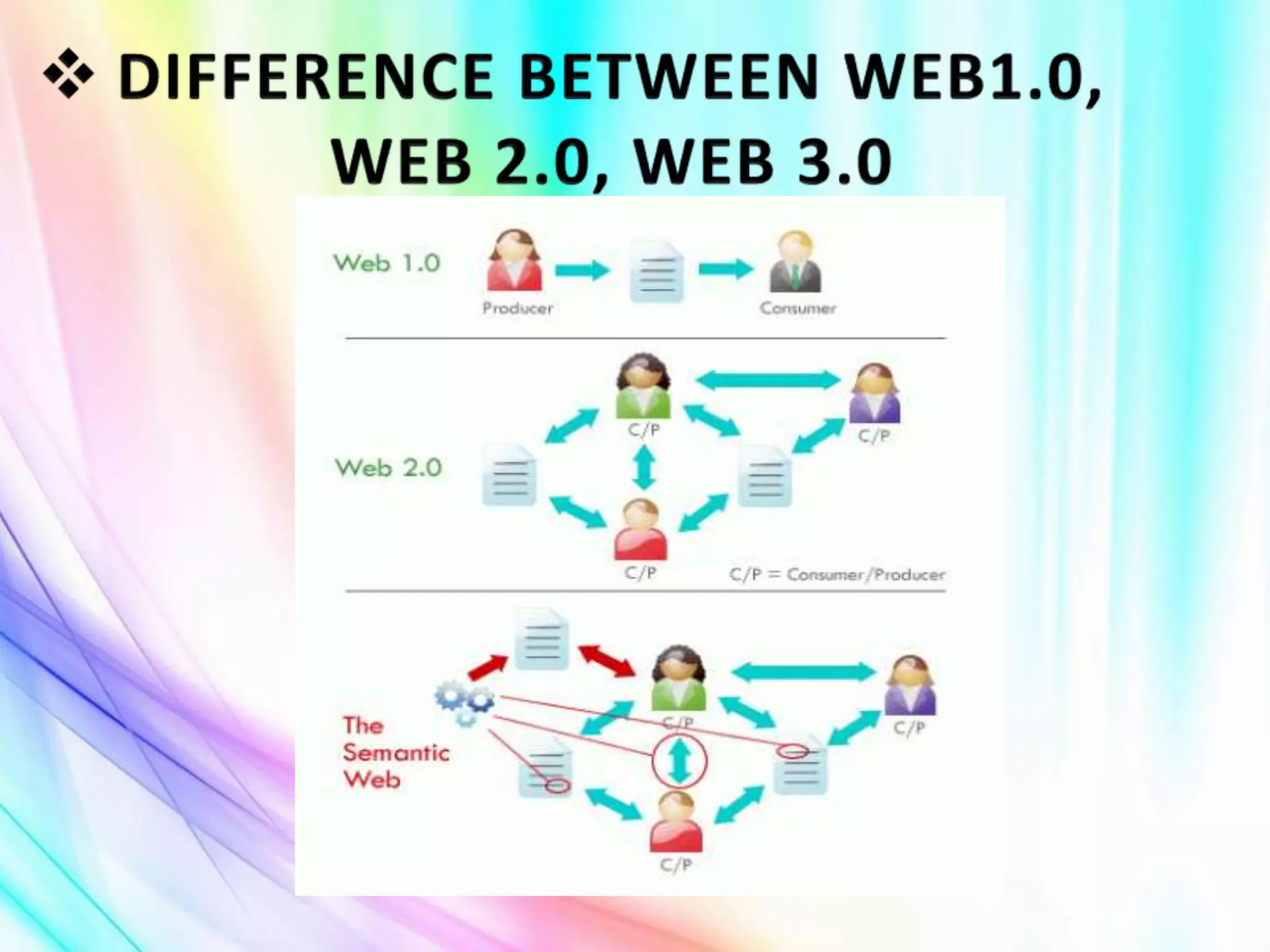
Web 2.0 :-
Web 2.0 describes World Wide Web websites
that emphasize user-generated content and
usability (ease of use, even by non-experts) for
end users.
Example:- You Tube, social networking sites such
as facebook, twitter, instagram etc.
 Most of the Web content is suitable for
human use.
 Information seeking, publishing, and using,
searching for people and products, shopping,
reviewing catalogues, etc.
 Dynamic pages generated based on
information from databases but without
original information structure found in
databases.
• The Web search results are high recall, low
precision.
• Results are highly sensitive to vocabulary.
• Results are single Web pages.
• Most of the publishing contents are not
structured to allow logical reasoning and
query answering.
 In web 2.0, web pages are written in HTML. HTML
describes the syntax not the semantics.
 If computer can understand the meaning behind
information.......
 They can learn what we are interested in.......
 They can help us better find what we want.......
AND
 This is really what the Semantics Web is all about.
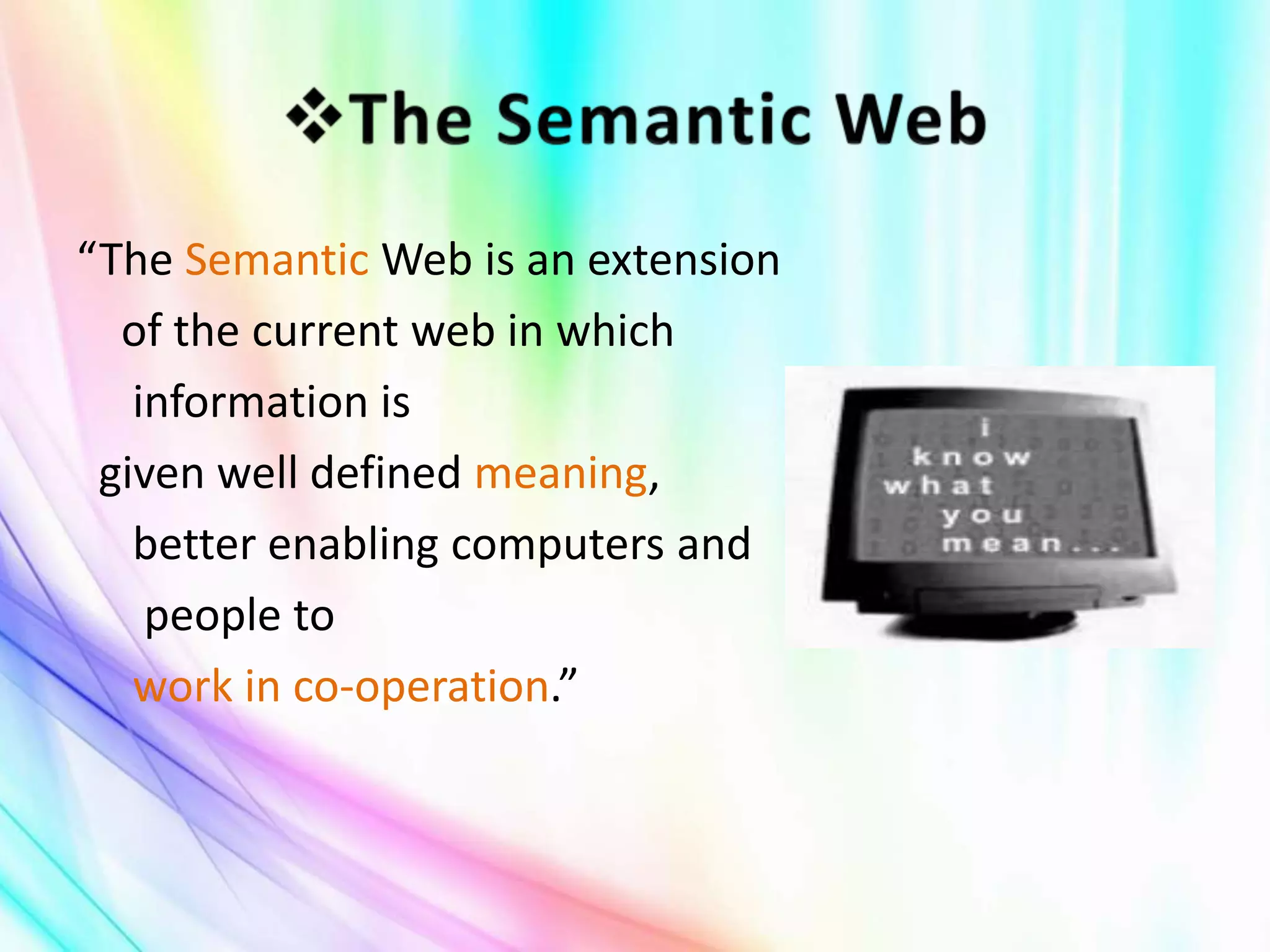
“The Semantic Web is an extension
of the current web in which
information is
given well defined meaning,
better enabling computers and
people to
work in co-operation.”
............
Today’s web is about documents but semantic
web is about things.
It can recognize people , places , events ,
companies , products , movies , etc. It can
understand the relationships between things.
The Semantic web proposes to help
computers “read” and use the web. The big
idea is pretty simple –Metadata added to web
pages can make the existing World Wide Web
machine readable. This won’t make
computers self-aware, but it will give
machines tools to find, exchange and, to a
limited extent, interpret information.
Semantic web will make search tasks faster
and easier.
Semantic web will make searches, more
personalized.
Semantic web browser will act as a personal
assistant.
The Semantic Web is an initiative that aims at
improving the current state of the World Wide
Web.
https://www.google.com
https://en.wikipedia.org/wiki/Semantic
The.mit.press.semantic web (pdf)
https://www.lifewire.com/what-is-flickr-
4147535
https://disenowebakus.net/en/web-evolution
Thank You
Any Queries ?

Semantic web

  • 1.
    PRESENTED BY, P Rehitha ROLLNO: 17AK1A0590 4th YEAR CSE 2
  • 2.
     Introduction  Today’sWeb  Limitations of web  Semantic Web  Working  Example 1. Flickr 2. Logical Architecture  Semantic Web Architecture  Advantages  Conclusion  Reference
  • 3.
    INTRODUCTION  A PROPOSEDDEVELOPMENT OF WORLD WIDE WEB
  • 4.
     The Webis a system of interlinked documents accessed via the internet.  Computers use network protocols to communicate in networks.  Web browsers use HTTP to communicate with Web servers.
  • 5.
    Semantics is relatedto the word “syntax”. BUT Syntax s how to say something and semantics is the meaning behind what you say
  • 6.
    Web 2.0 :- Web2.0 describes World Wide Web websites that emphasize user-generated content and usability (ease of use, even by non-experts) for end users. Example:- You Tube, social networking sites such as facebook, twitter, instagram etc.
  • 7.
     Most ofthe Web content is suitable for human use.  Information seeking, publishing, and using, searching for people and products, shopping, reviewing catalogues, etc.  Dynamic pages generated based on information from databases but without original information structure found in databases.
  • 8.
    • The Websearch results are high recall, low precision. • Results are highly sensitive to vocabulary. • Results are single Web pages. • Most of the publishing contents are not structured to allow logical reasoning and query answering.
  • 9.
     In web2.0, web pages are written in HTML. HTML describes the syntax not the semantics.  If computer can understand the meaning behind information.......  They can learn what we are interested in.......  They can help us better find what we want....... AND  This is really what the Semantics Web is all about.
  • 10.
    “The Semantic Webis an extension of the current web in which information is given well defined meaning, better enabling computers and people to work in co-operation.”
  • 11.
    ............ Today’s web isabout documents but semantic web is about things. It can recognize people , places , events , companies , products , movies , etc. It can understand the relationships between things.
  • 12.
    The Semantic webproposes to help computers “read” and use the web. The big idea is pretty simple –Metadata added to web pages can make the existing World Wide Web machine readable. This won’t make computers self-aware, but it will give machines tools to find, exchange and, to a limited extent, interpret information.
  • 17.
    Semantic web willmake search tasks faster and easier. Semantic web will make searches, more personalized. Semantic web browser will act as a personal assistant.
  • 18.
    The Semantic Webis an initiative that aims at improving the current state of the World Wide Web.
  • 19.
  • 20.