
Des Moines Bicycle and Trails
        Master Plan

     TAC Meeting #1
     June 18th, 2009
Project Work Plan

 β€’ Final Product: Long-Range Bicycle Network Master
   Plan
    β€’ Existing Conditions/Opportunities-and-Constraints
    β€’ Safety and Needs Assessment
    β€’ Recommended Bike Network
    β€’ Education, Encouragement, Enforcement,
      Evaluation strategies
    β€’ Funding and Implementation
    β€’ Draft and Final Plan
Build on Previous/Current
       Planning Efforts
β€’ 2006 - City applies for bicycle friendly community
  designation and is rejected
β€’ 2007 – Council adopted goals to become a bicycle
  friendly community – conducting a bicycle and trails
  master plan is a key goal
β€’ 2008 – Council adopts a complete streets policy
β€’ 2009 – Alta is hired by City to conduct master plan
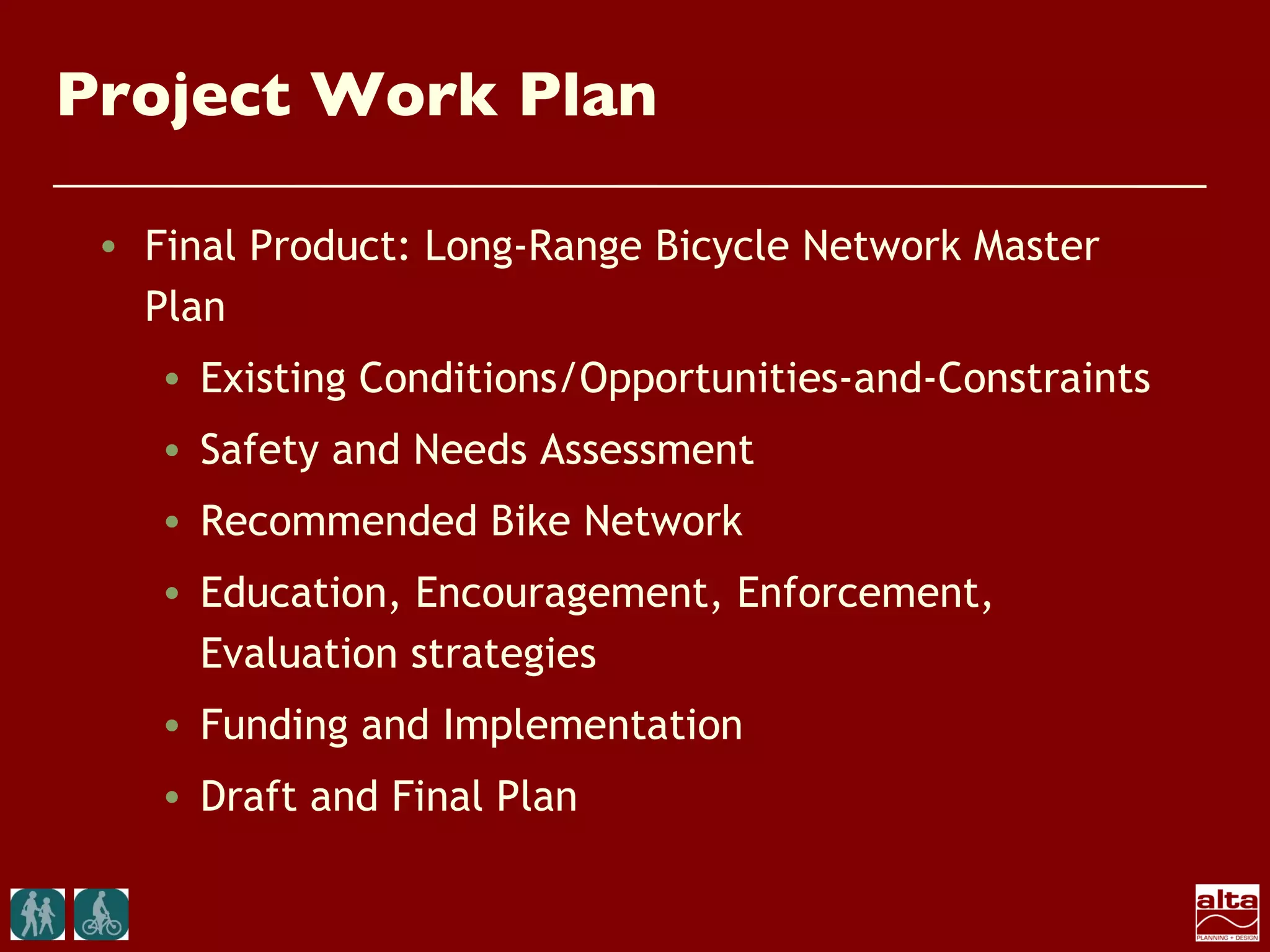
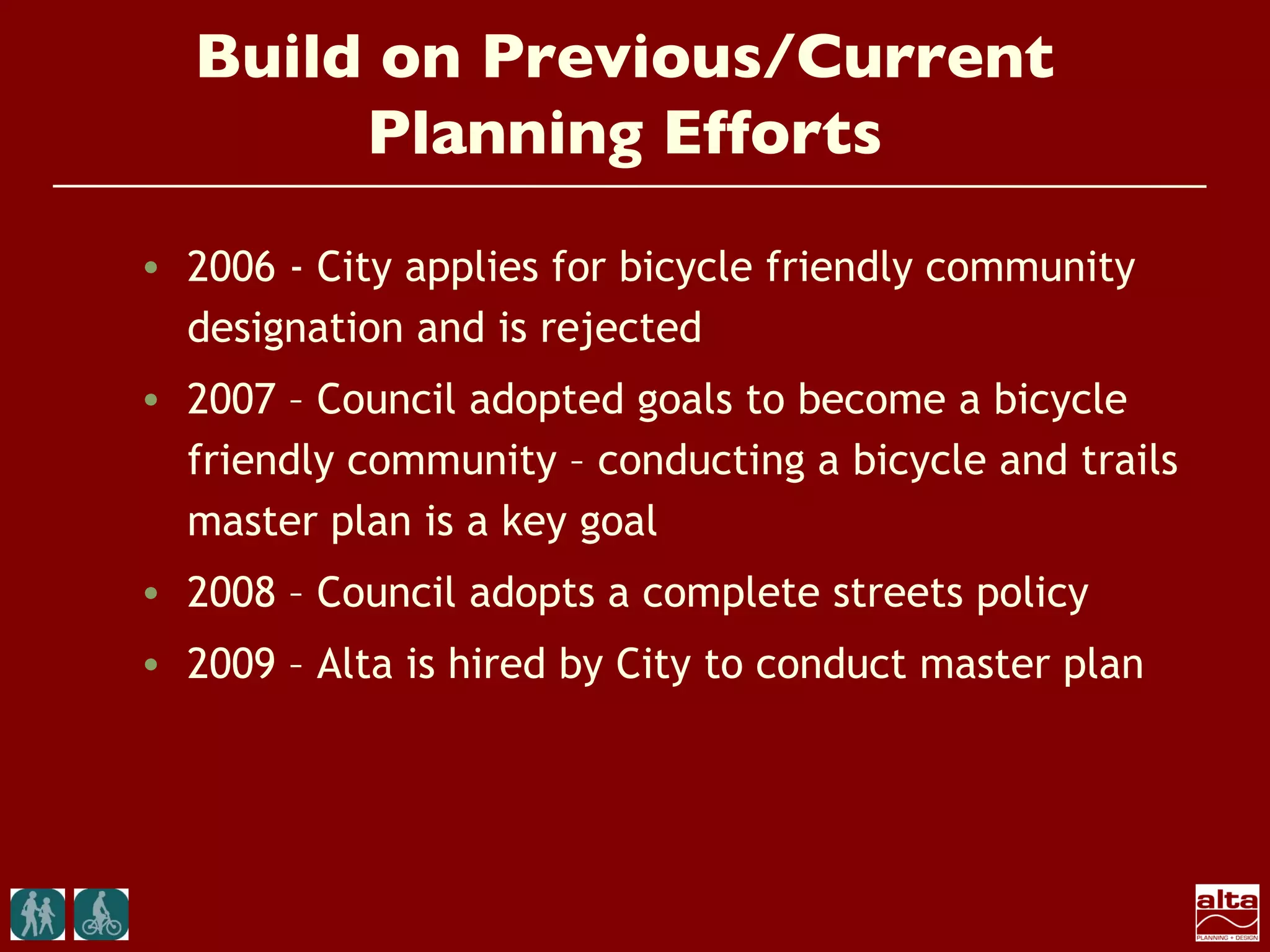
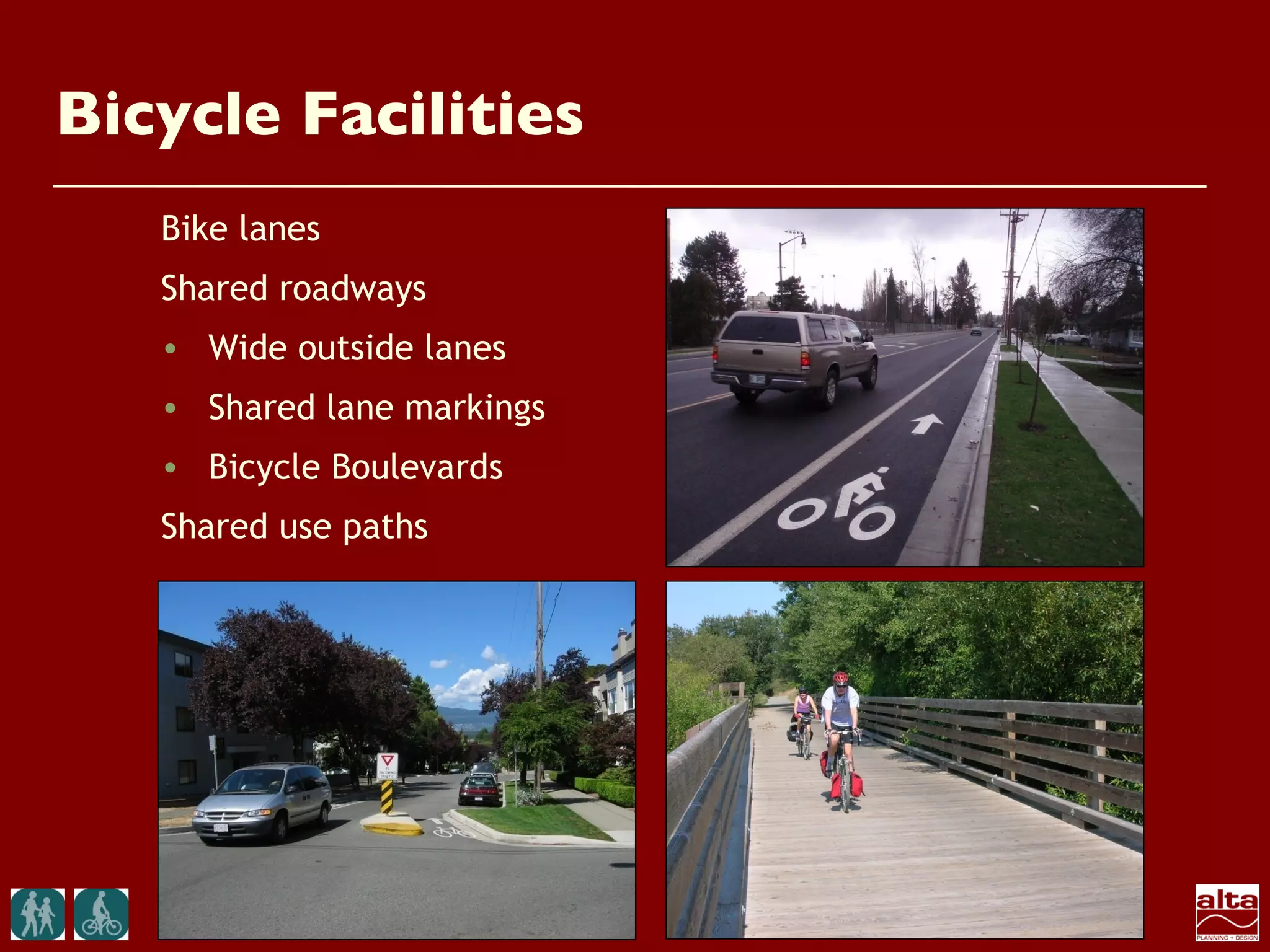
Bicycle Facilities
   Bike lanes
   Shared roadways
   β€’ Wide outside lanes
   β€’ Shared lane markings
   β€’ Bicycle Boulevards
   Shared use paths
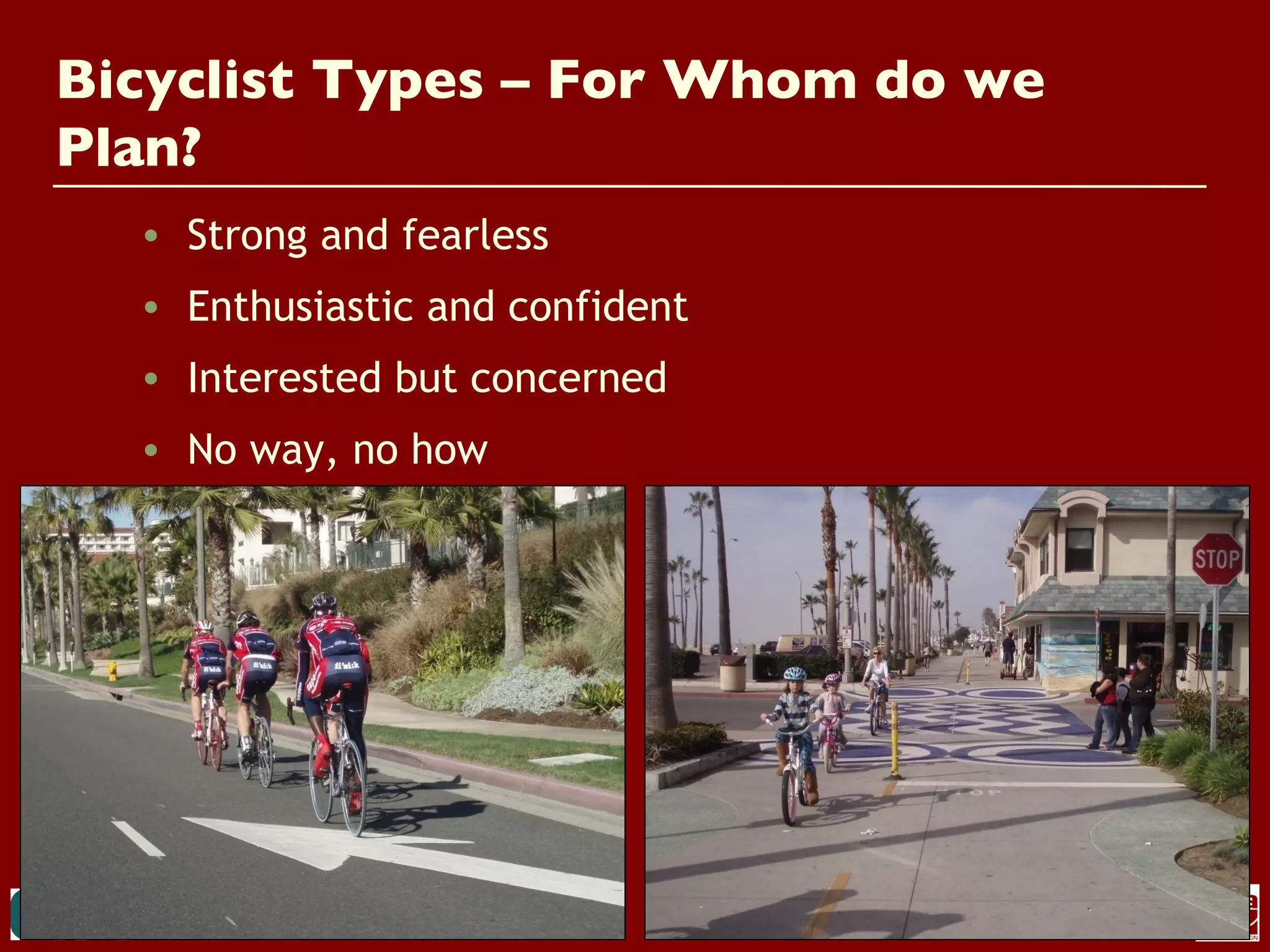
Bicyclist Types – For Whom do we
Plan?
  β€’ Strong and fearless
  β€’ Enthusiastic and confident
  β€’ Interested but concerned
  β€’ No way, no how
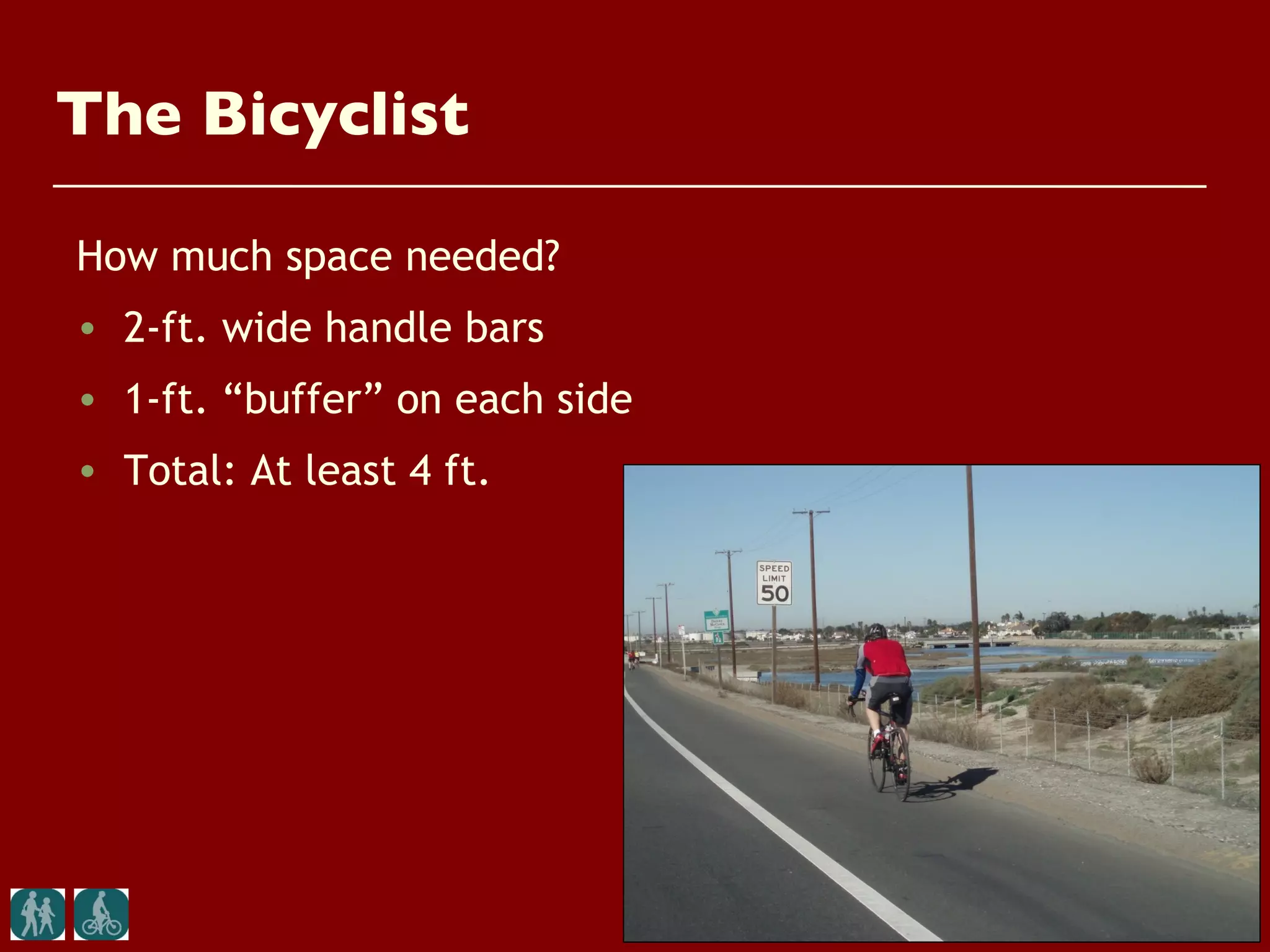
The Bicyclist

How much space needed?
β€’ 2-ft. wide handle bars
β€’ 1-ft. β€œbuffer” on each side
β€’ Total: At least 4 ft.
Bicycle Facilities – How to Select?

  Numerous factors:
     β€’ Road type (arterial, local street, etc.)
     β€’ Traffic volumes
     β€’ Speeds
     β€’ Traffic mix (e.g., trucks, buses, etc.)
     β€’ Expected users – skill, age, volume, destinations
     β€’ Road conditions, space, intersections, parking
       demand
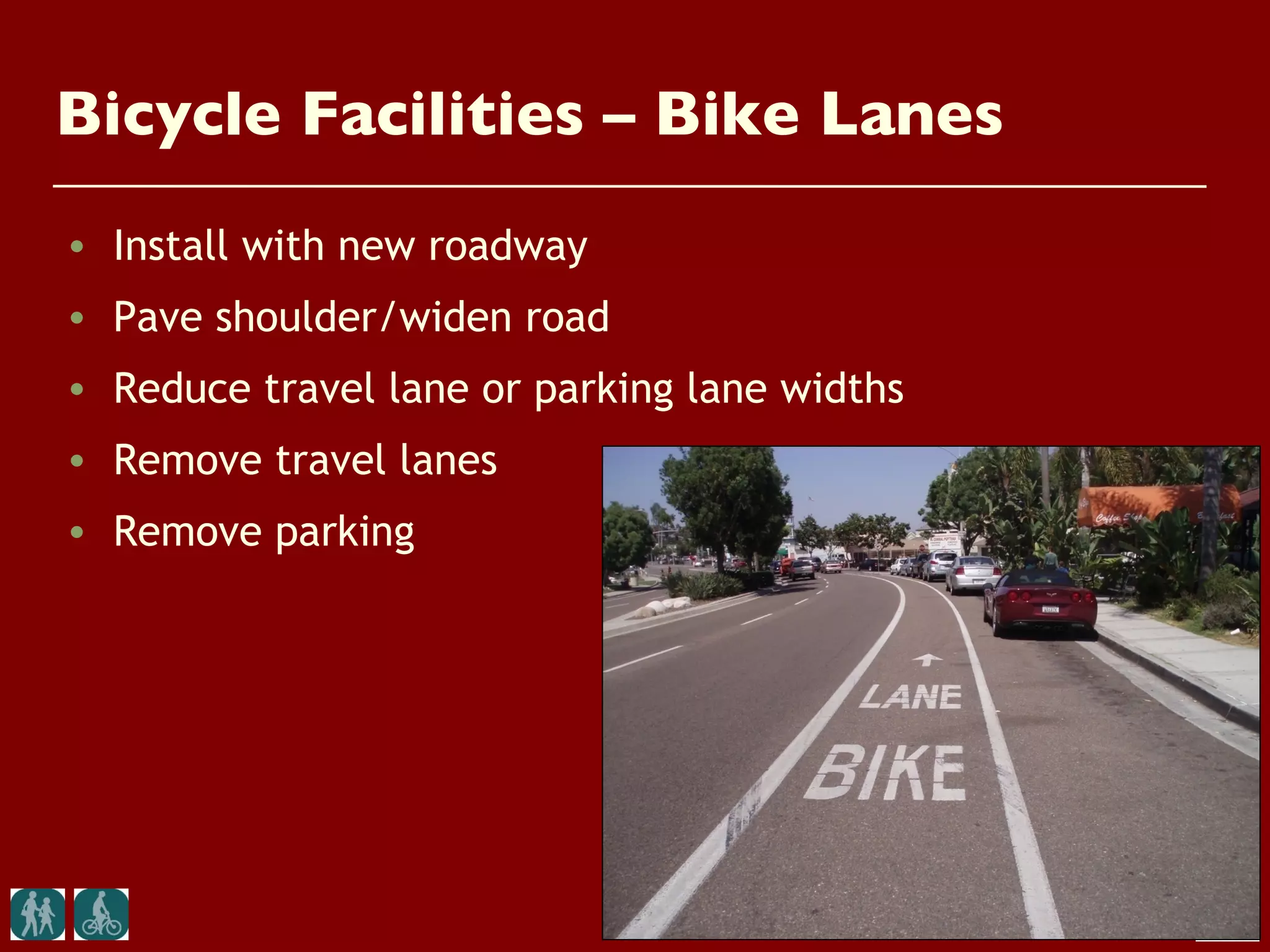
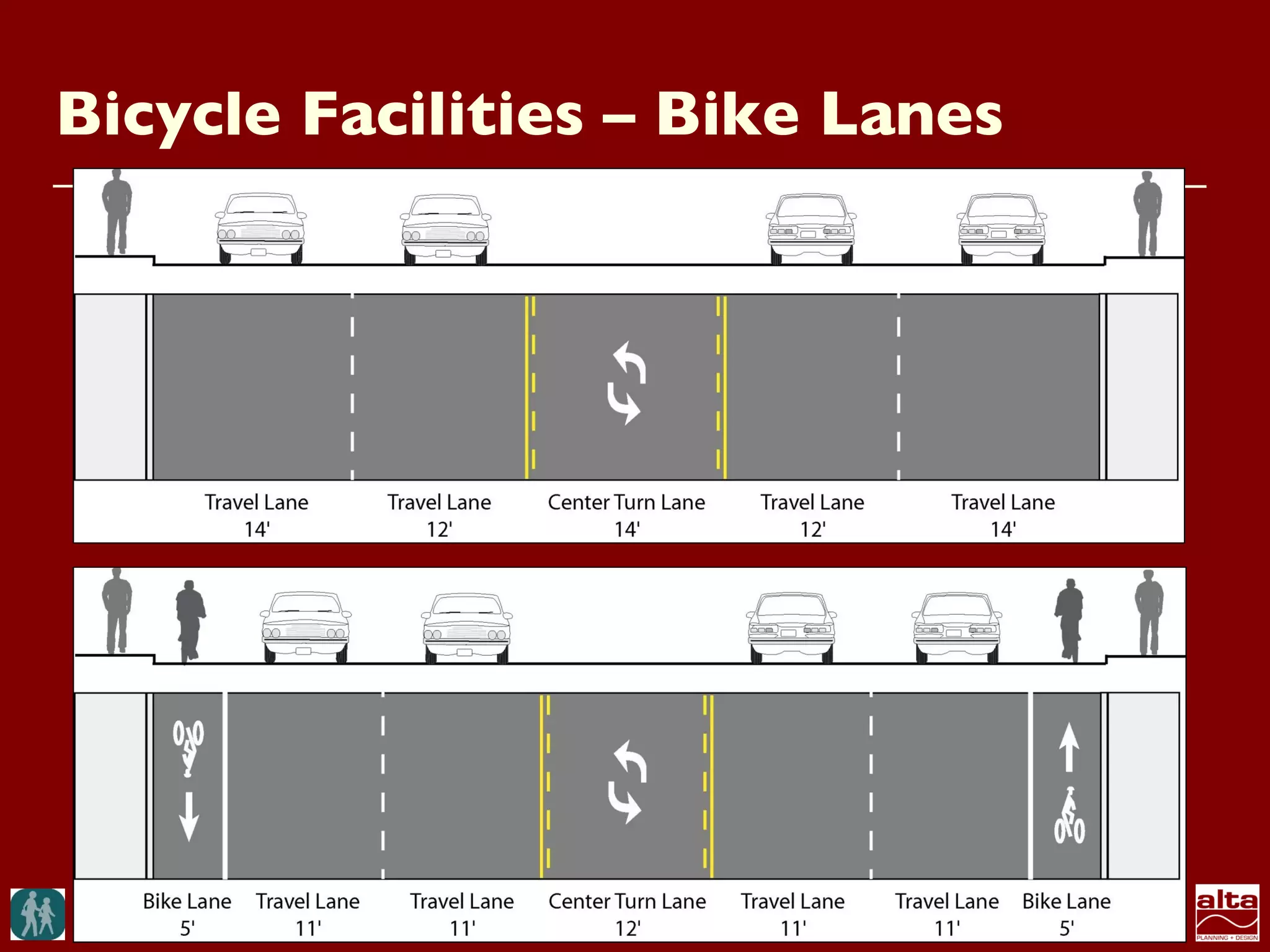
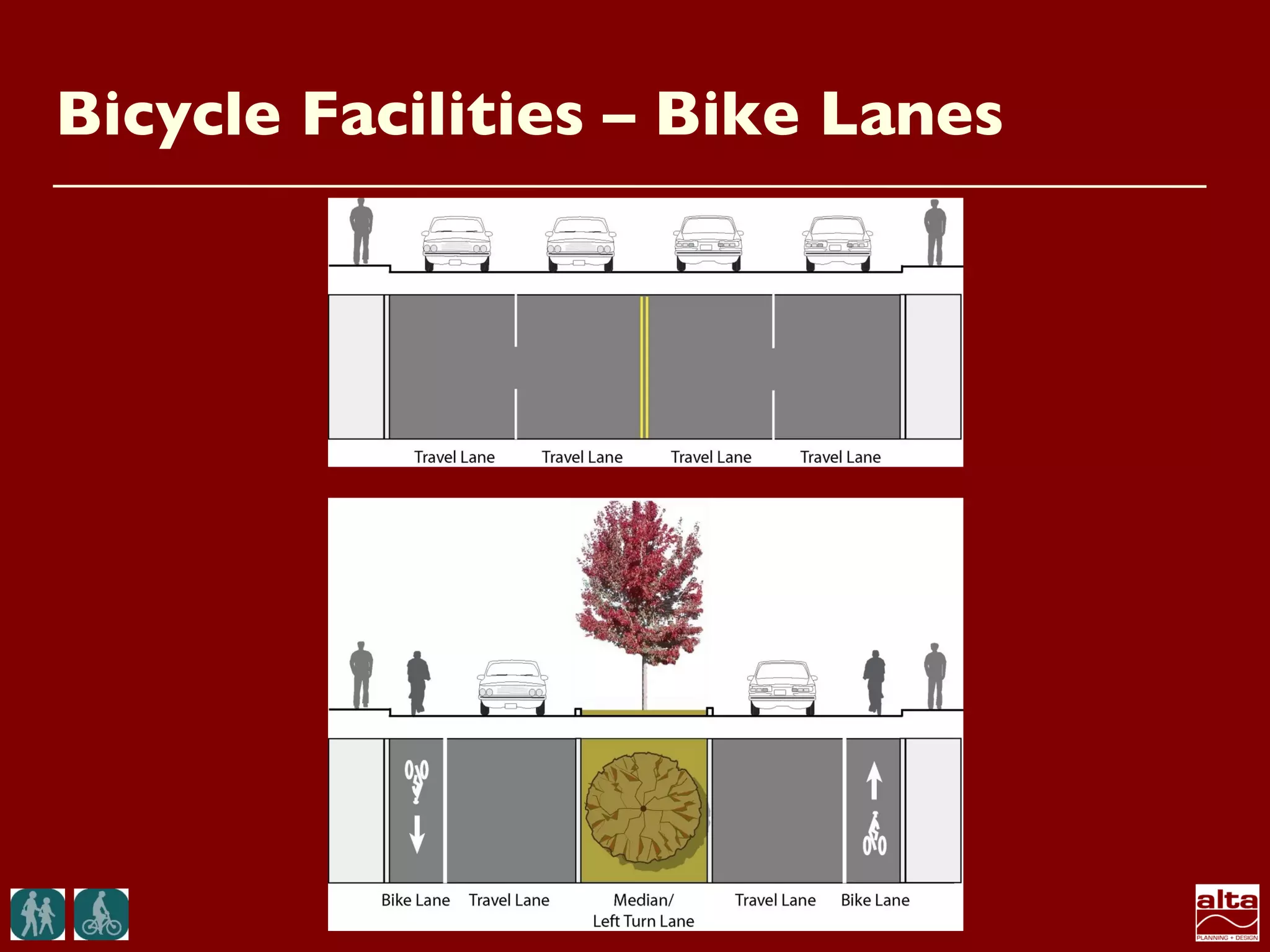
Bicycle Facilities – Bike Lanes
β€’ Install with new roadway
β€’ Pave shoulder/widen road
β€’ Reduce travel lane or parking lane widths
β€’ Remove travel lanes
β€’ Remove parking
Bicycle Facilities – Bike Lanes
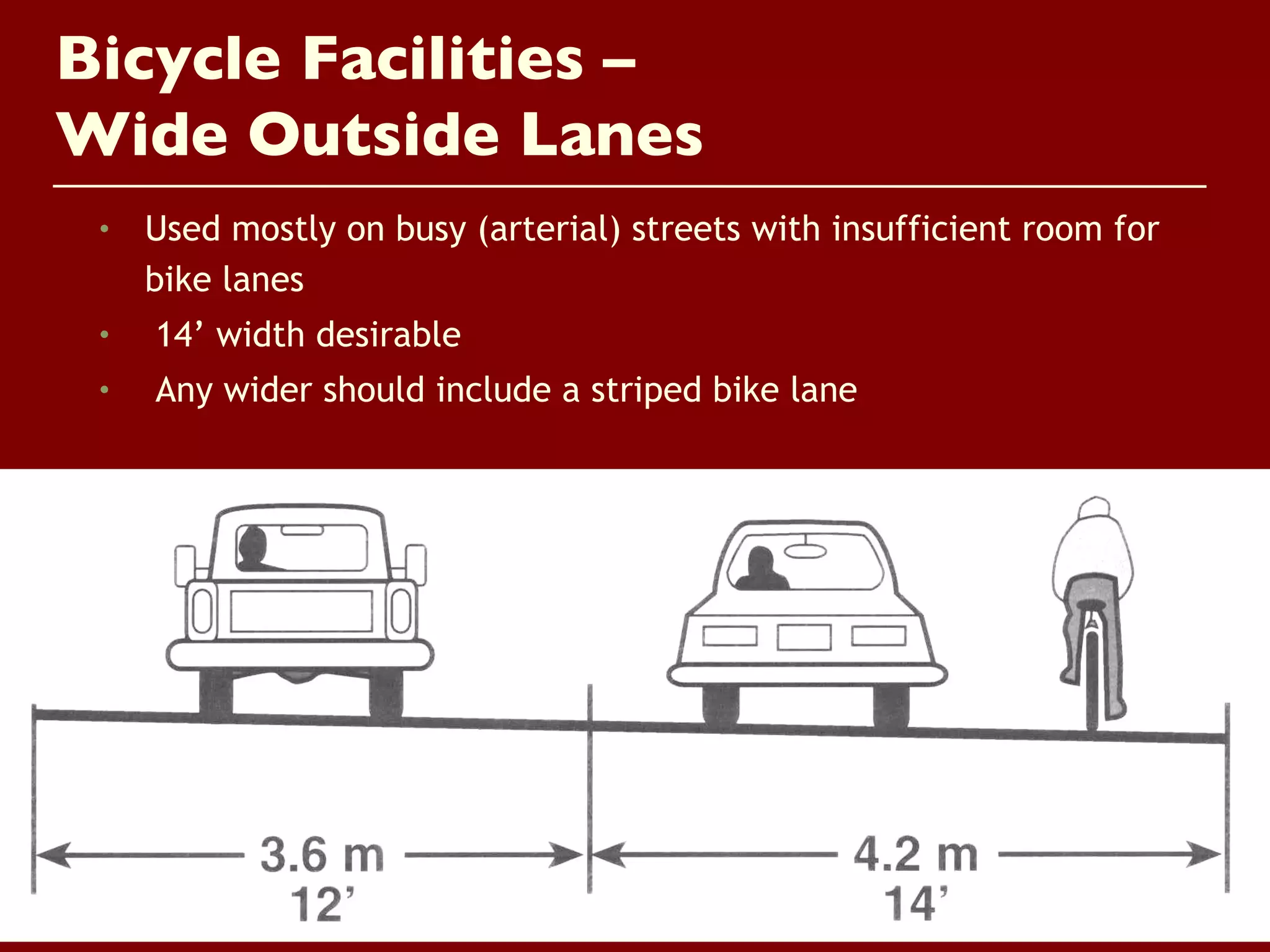
Bicycle Facilities –
Wide Outside Lanes
 β€’   Used mostly on busy (arterial) streets with insufficient room for
     bike lanes
 β€’   14’ width desirable
 β€’   Any wider should include a striped bike lane
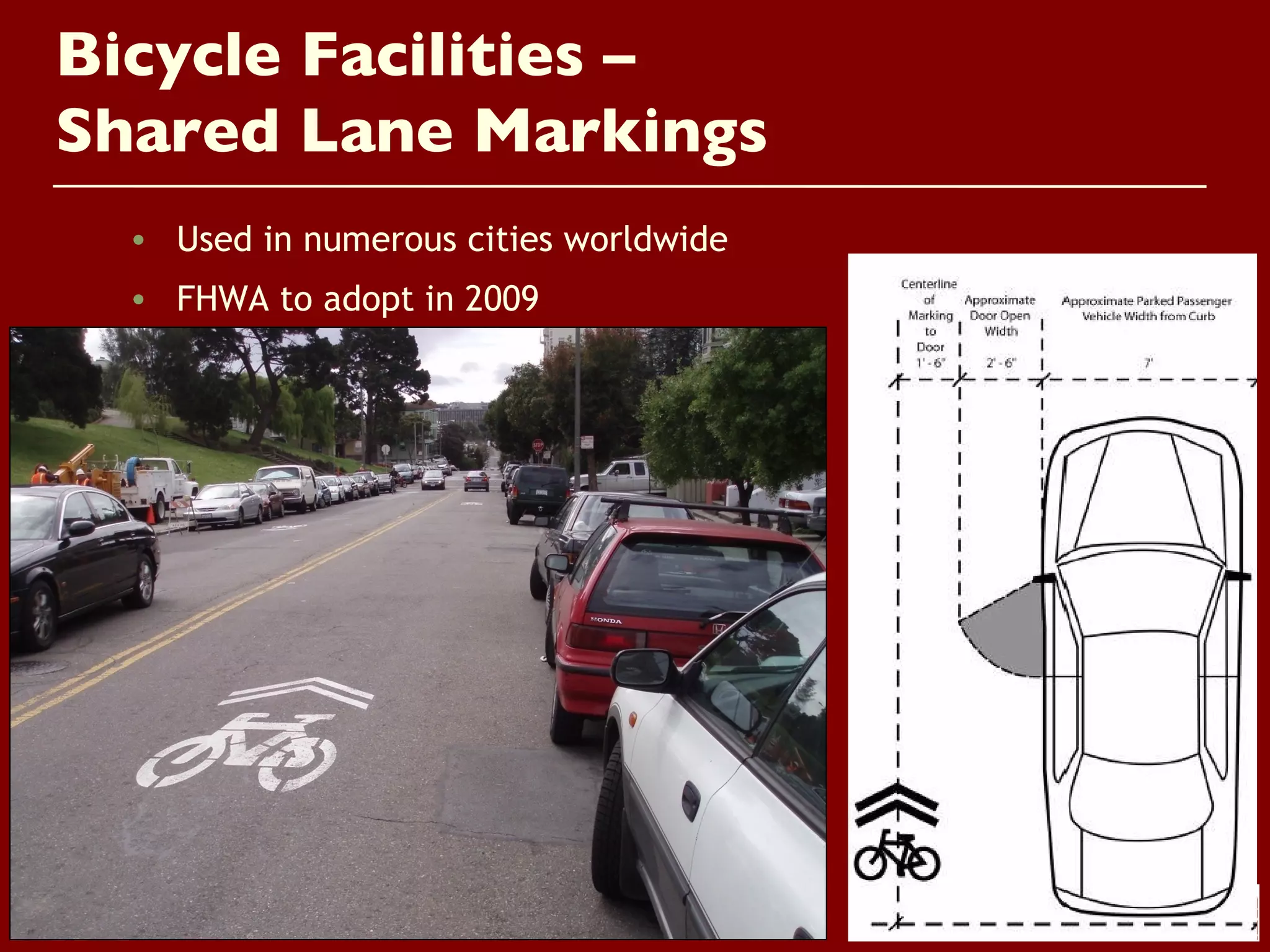
Bicycle Facilities –
Shared Lane Markings
  β€’ Used in numerous cities worldwide
  β€’ FHWA to adopt in 2009
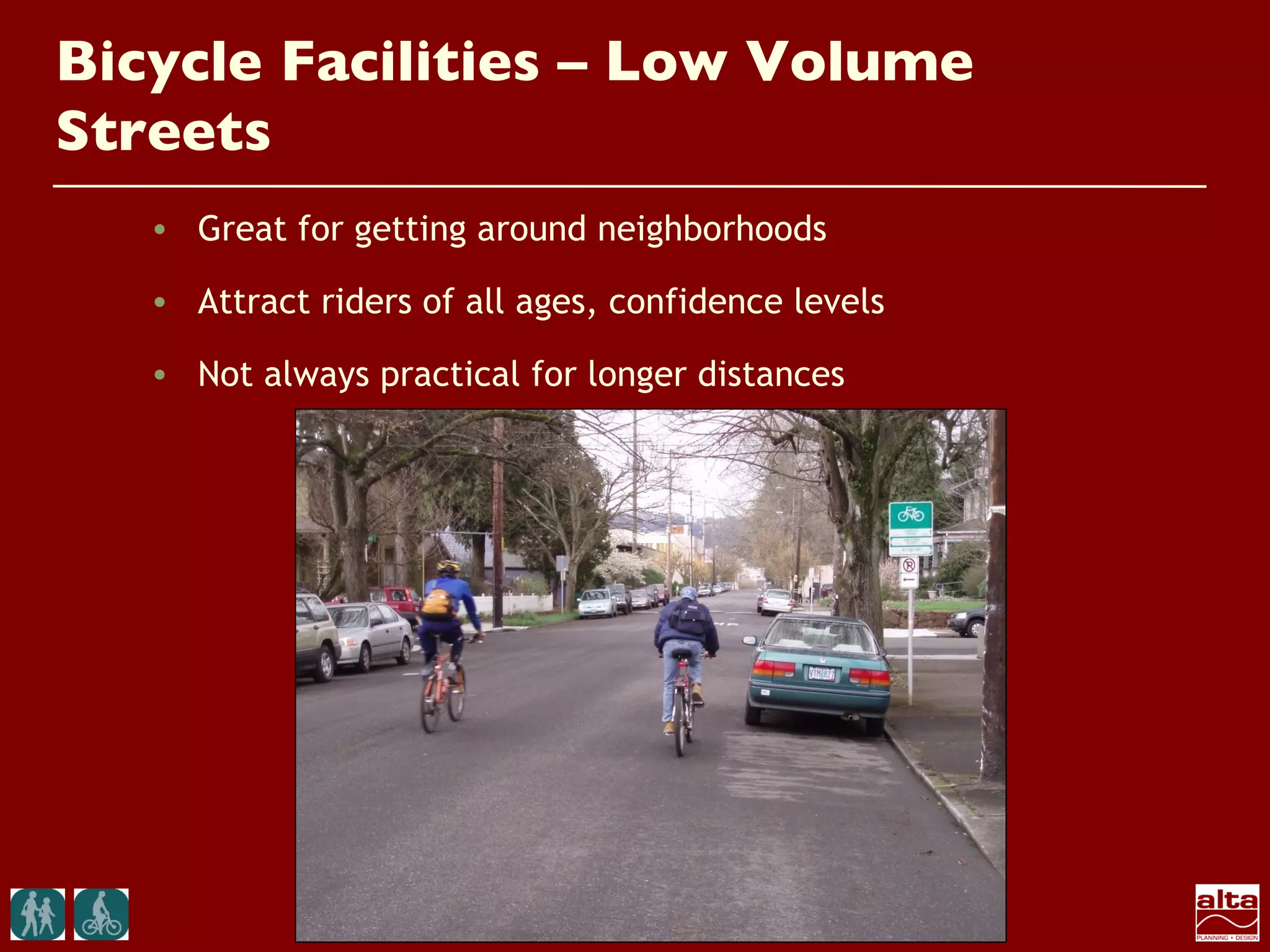
Bicycle Facilities – Low Volume
Streets
   β€’ Great for getting around neighborhoods

   β€’ Attract riders of all ages, confidence levels

   β€’ Not always practical for longer distances
Bicycle Facilities – Bicycle
Boulevards
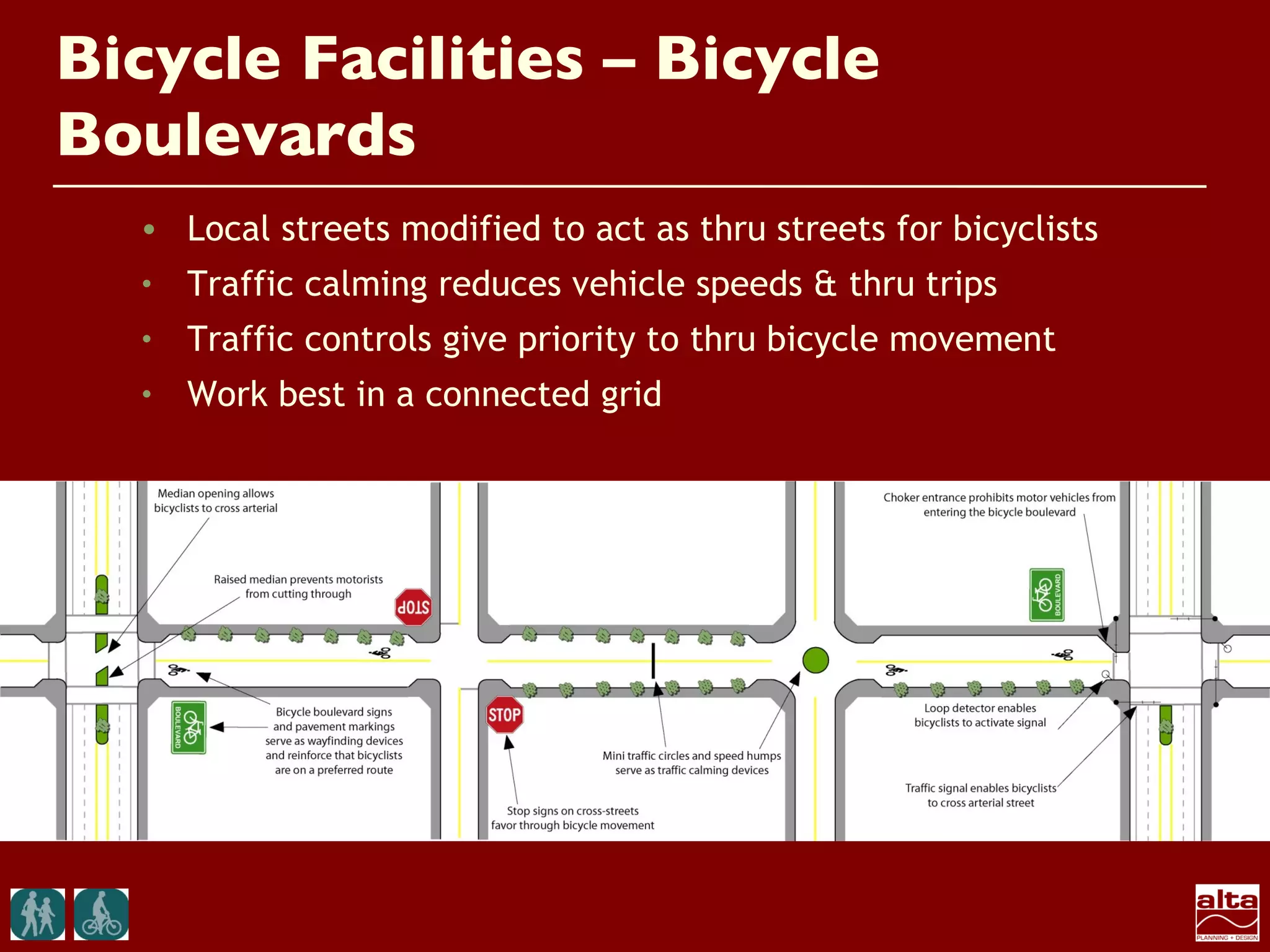
  β€’ Local streets modified to act as thru streets for bicyclists
  β€’   Traffic calming reduces vehicle speeds & thru trips
  β€’   Traffic controls give priority to thru bicycle movement
  β€’   Work best in a connected grid
Bicycle Facilities – Bicycle
Boulevards


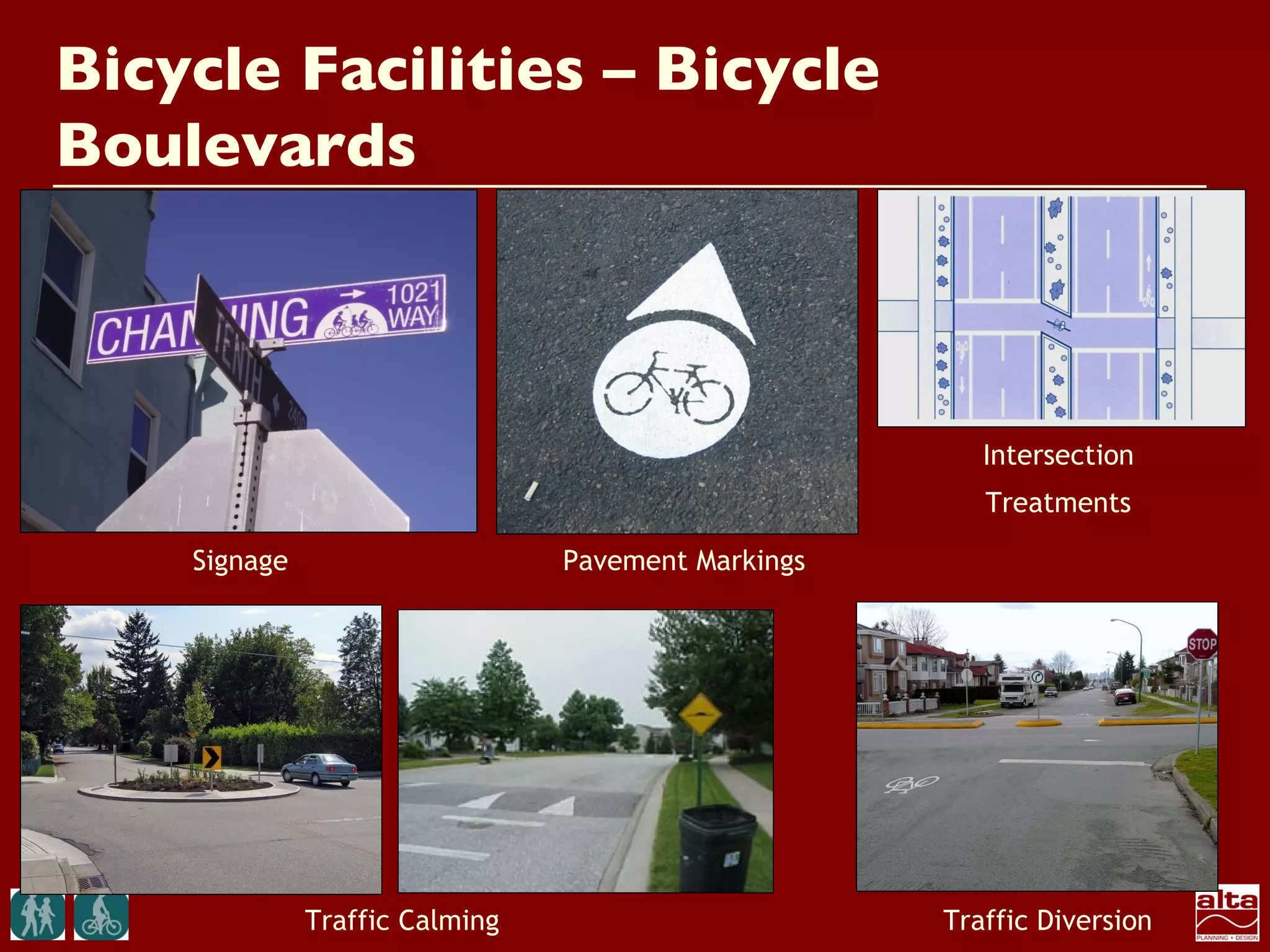
                                                       Intersection
                                                       Treatments

    Signage                     Pavement Markings


              Traffic Calming                       Traffic Diversion
Bicycle Facilities - Challenges
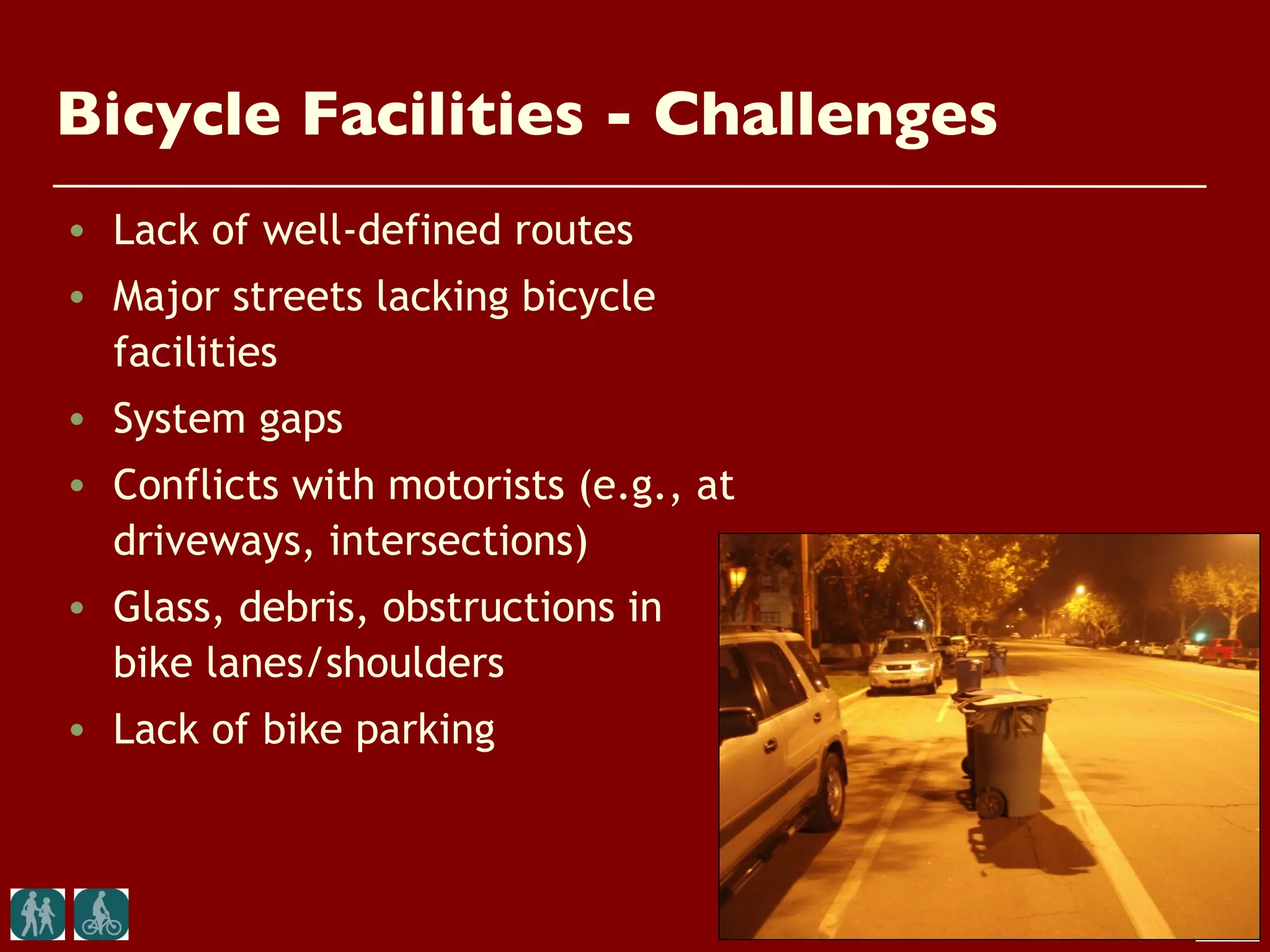
β€’ Lack of well-defined routes
β€’ Major streets lacking bicycle
  facilities
β€’ System gaps
β€’ Conflicts with motorists (e.g., at
  driveways, intersections)
β€’ Glass, debris, obstructions in
  bike lanes/shoulders
β€’ Lack of bike parking
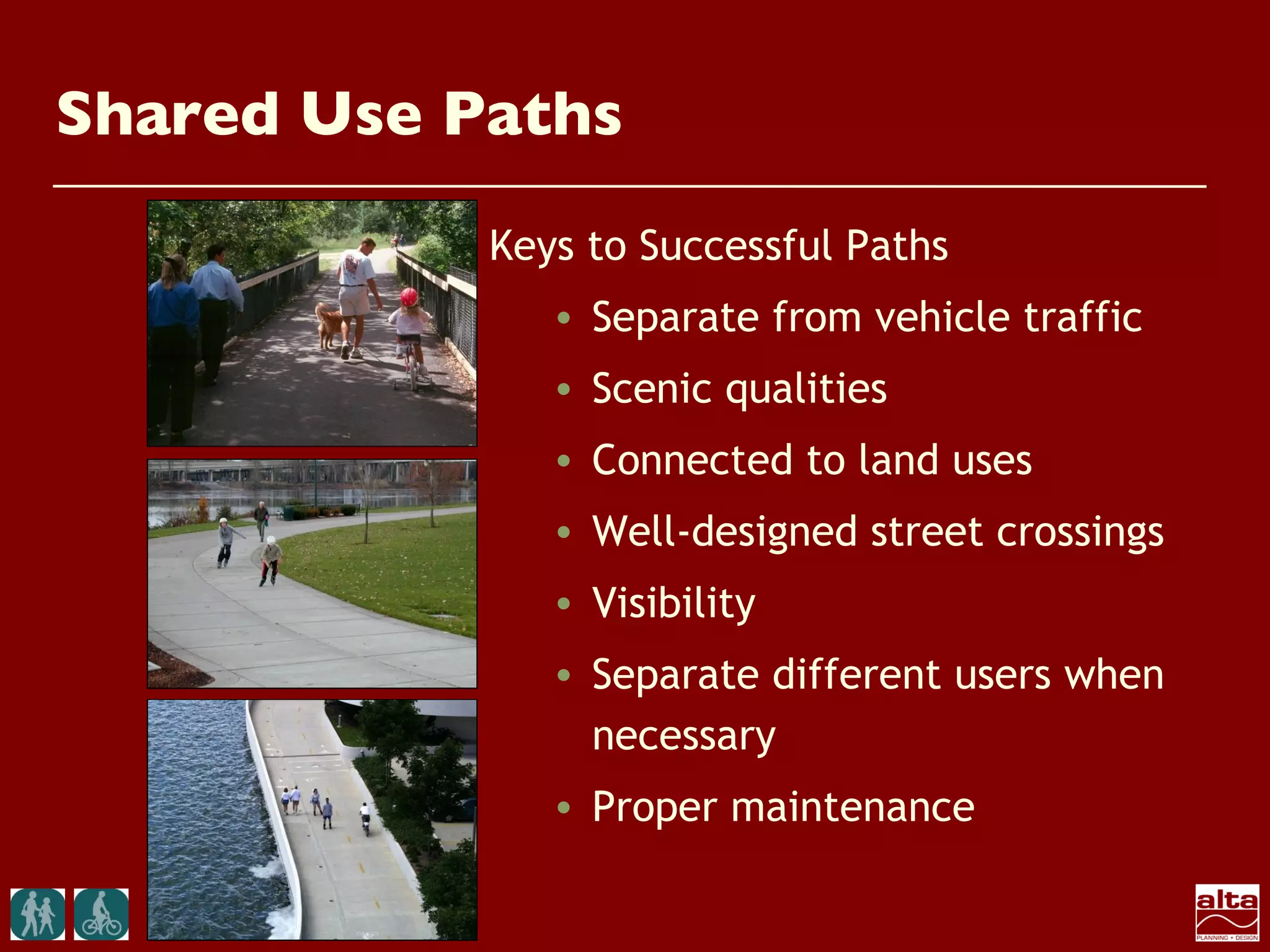
Shared Use Paths
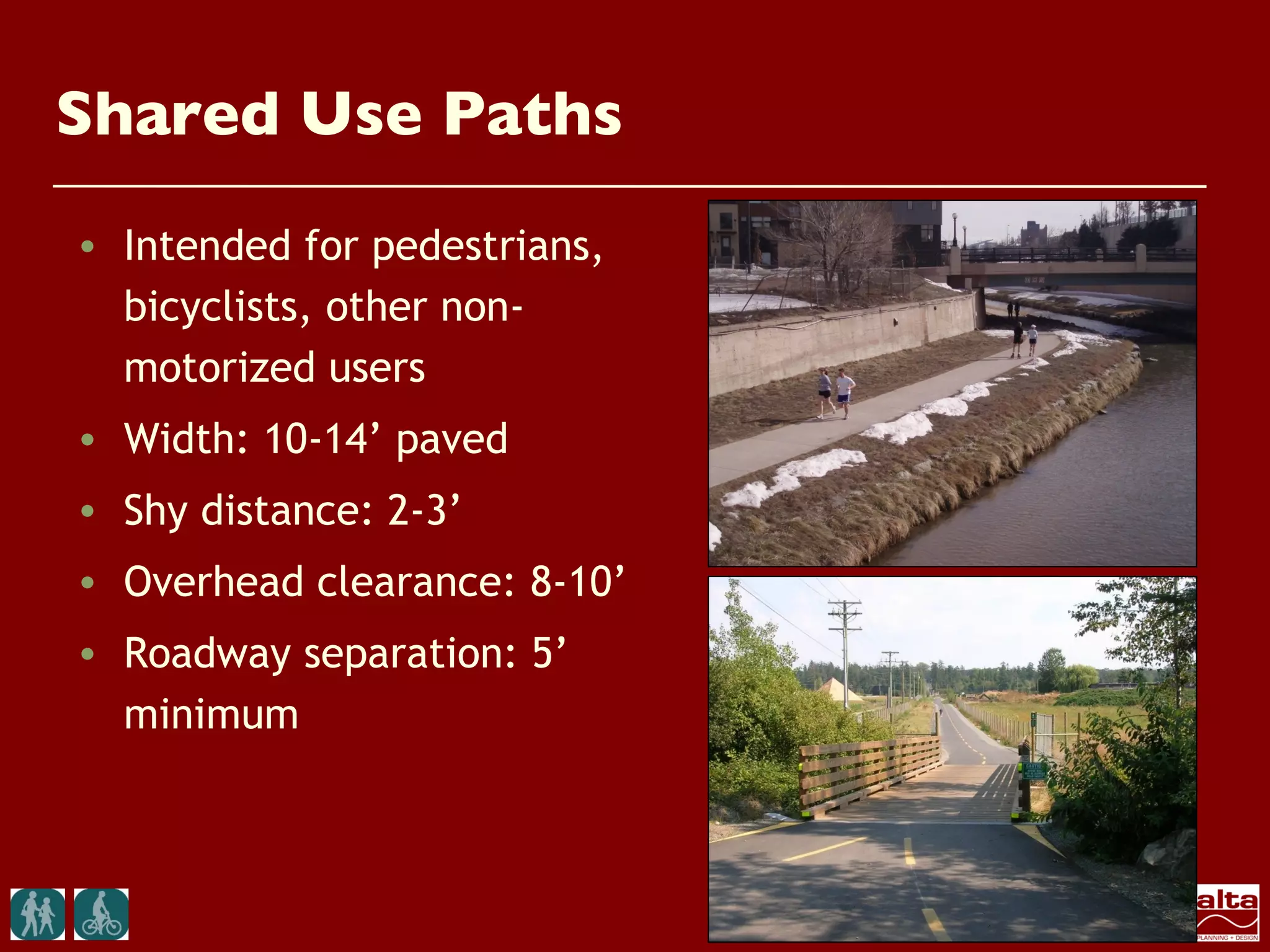
β€’ Intended for pedestrians,
  bicyclists, other non-
  motorized users
β€’ Width: 10-14’ paved
β€’ Shy distance: 2-3’
β€’ Overhead clearance: 8-10’
β€’ Roadway separation: 5’
  minimum
Shared Use Paths
            Keys to Successful Paths
               β€’ Separate from vehicle traffic
               β€’ Scenic qualities
               β€’ Connected to land uses
               β€’ Well-designed street crossings
               β€’ Visibility
               β€’ Separate different users when
                 necessary
               β€’ Proper maintenance
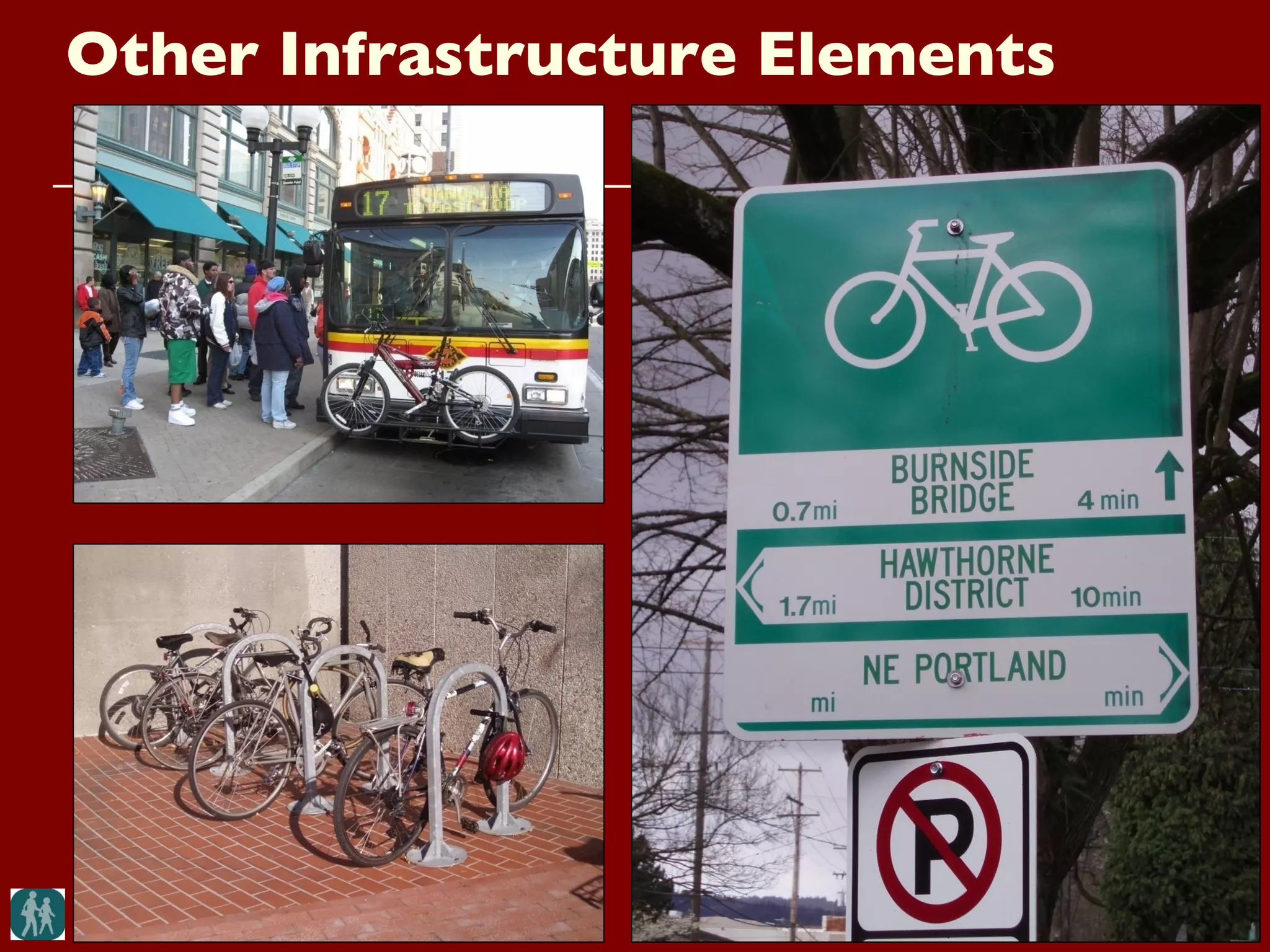
Other Infrastructure Elements
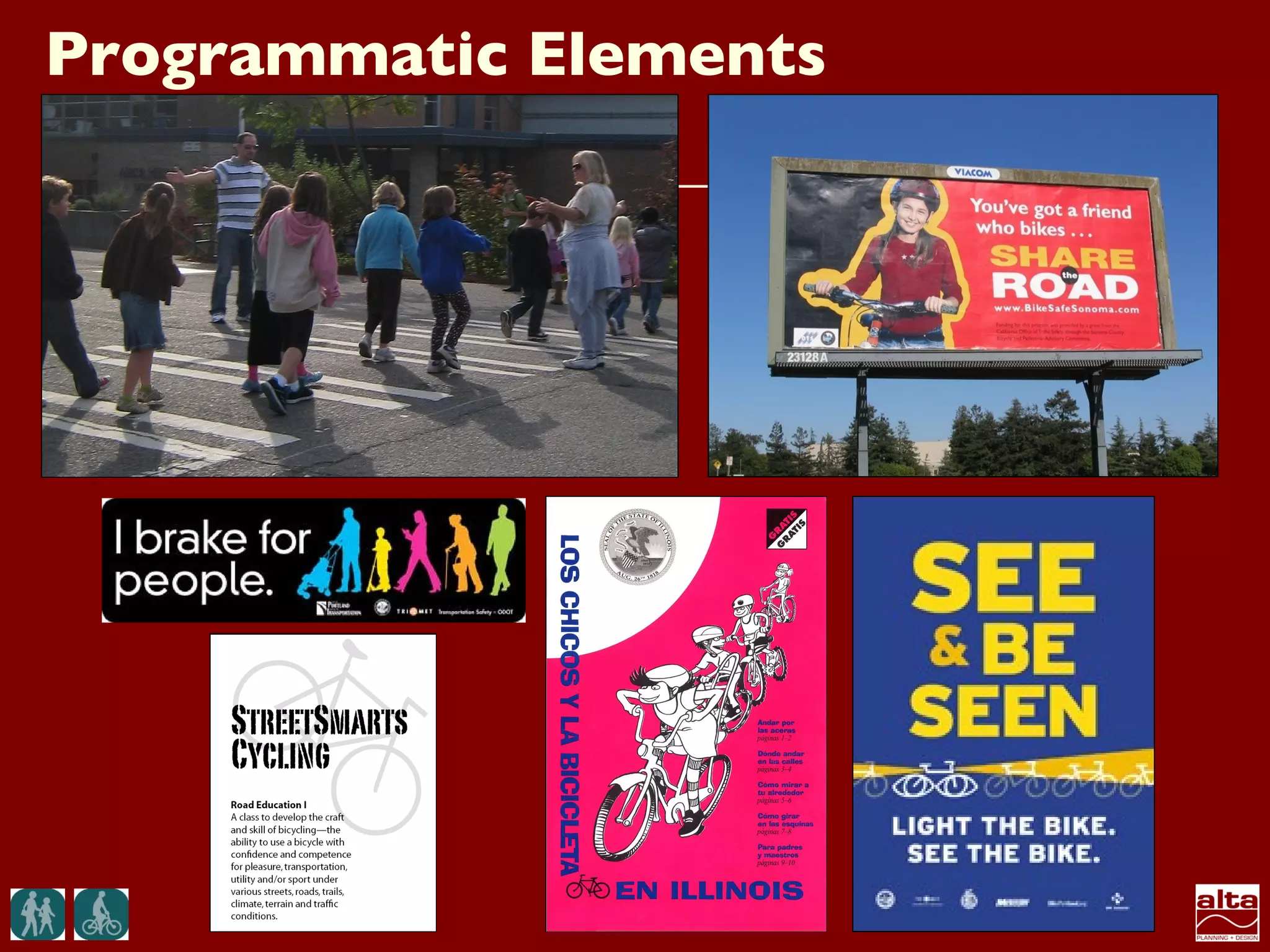
Programmatic Elements
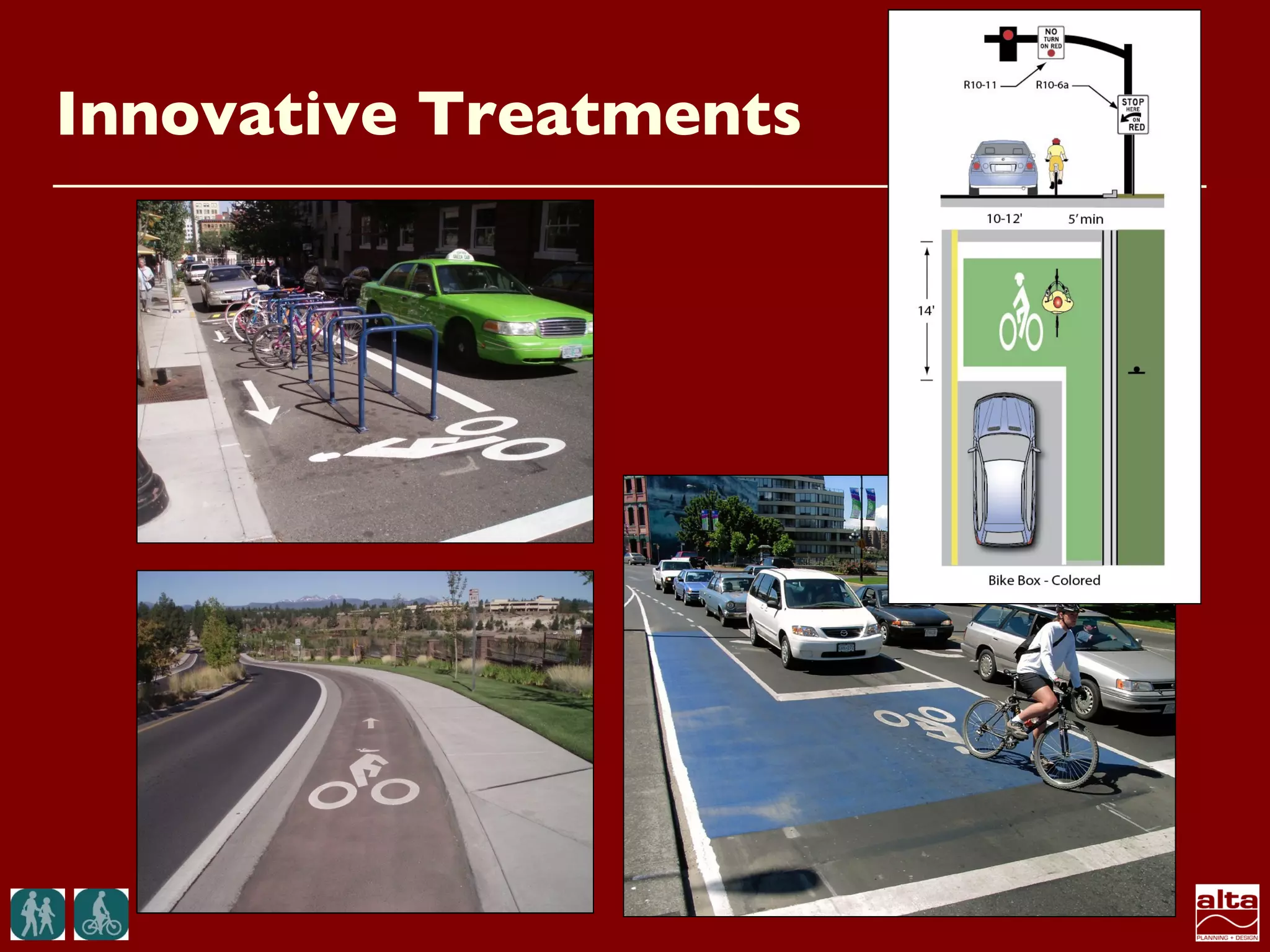
Innovative Treatments
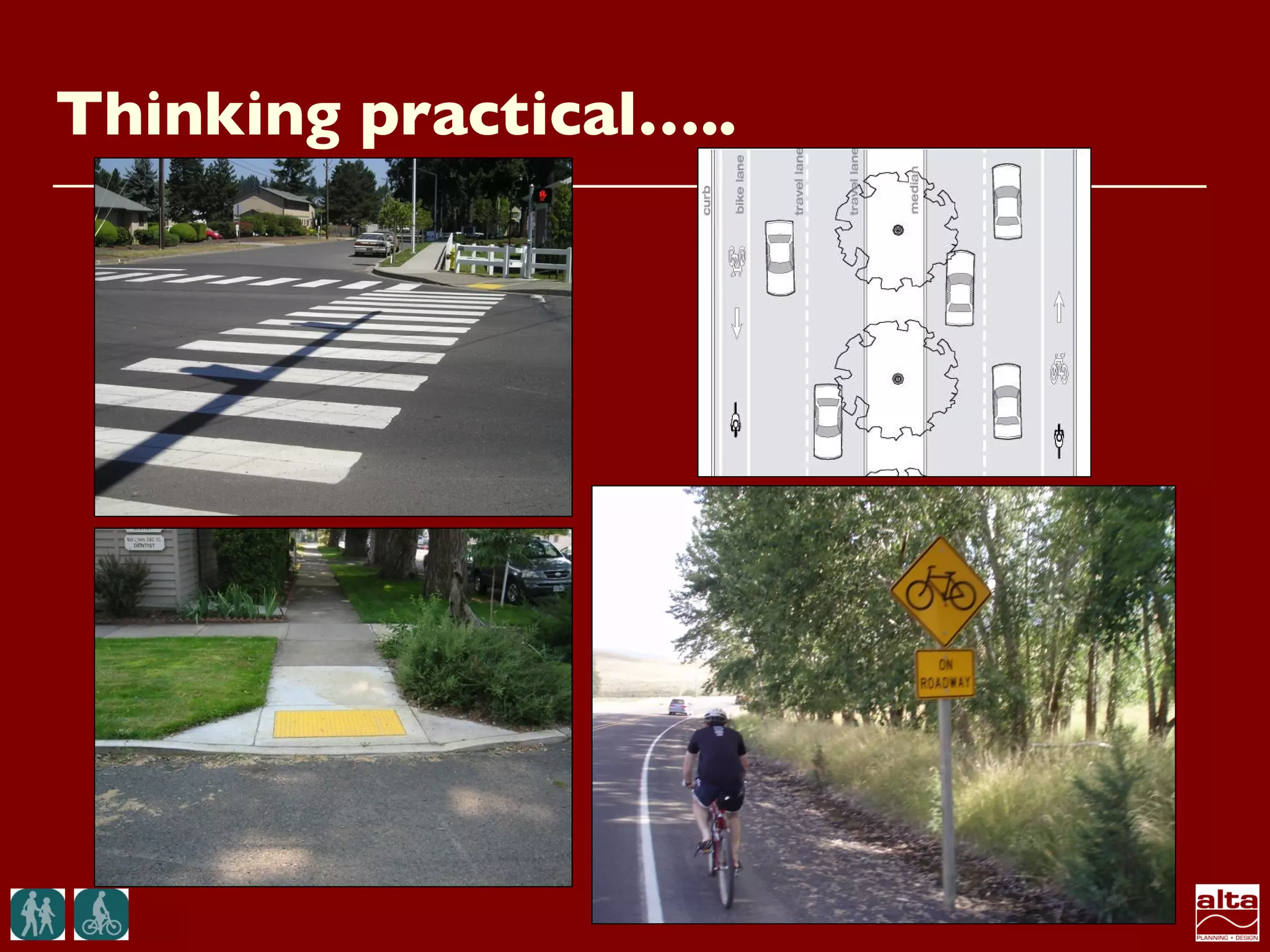
Thinking practical…..
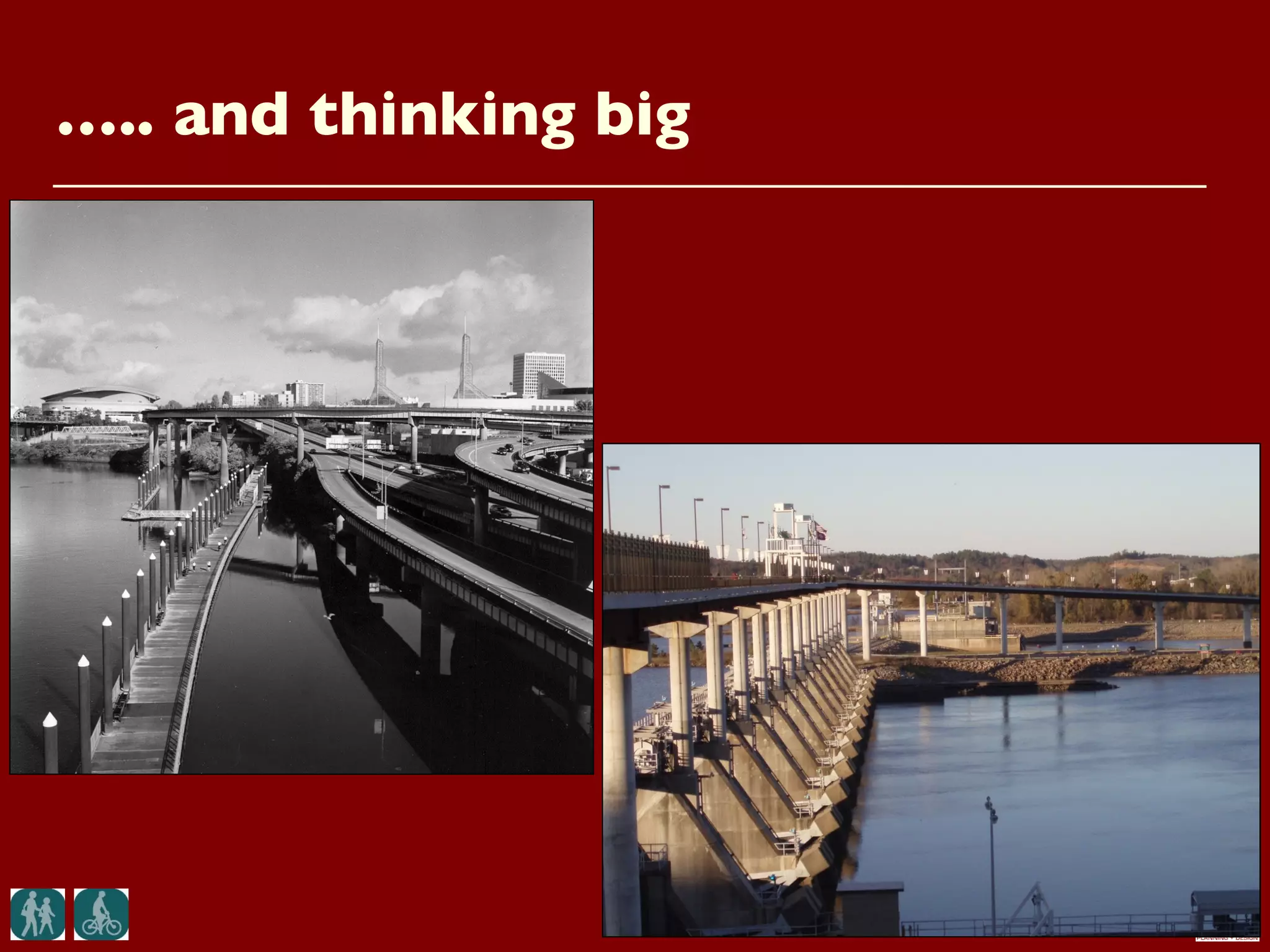
….. and thinking big
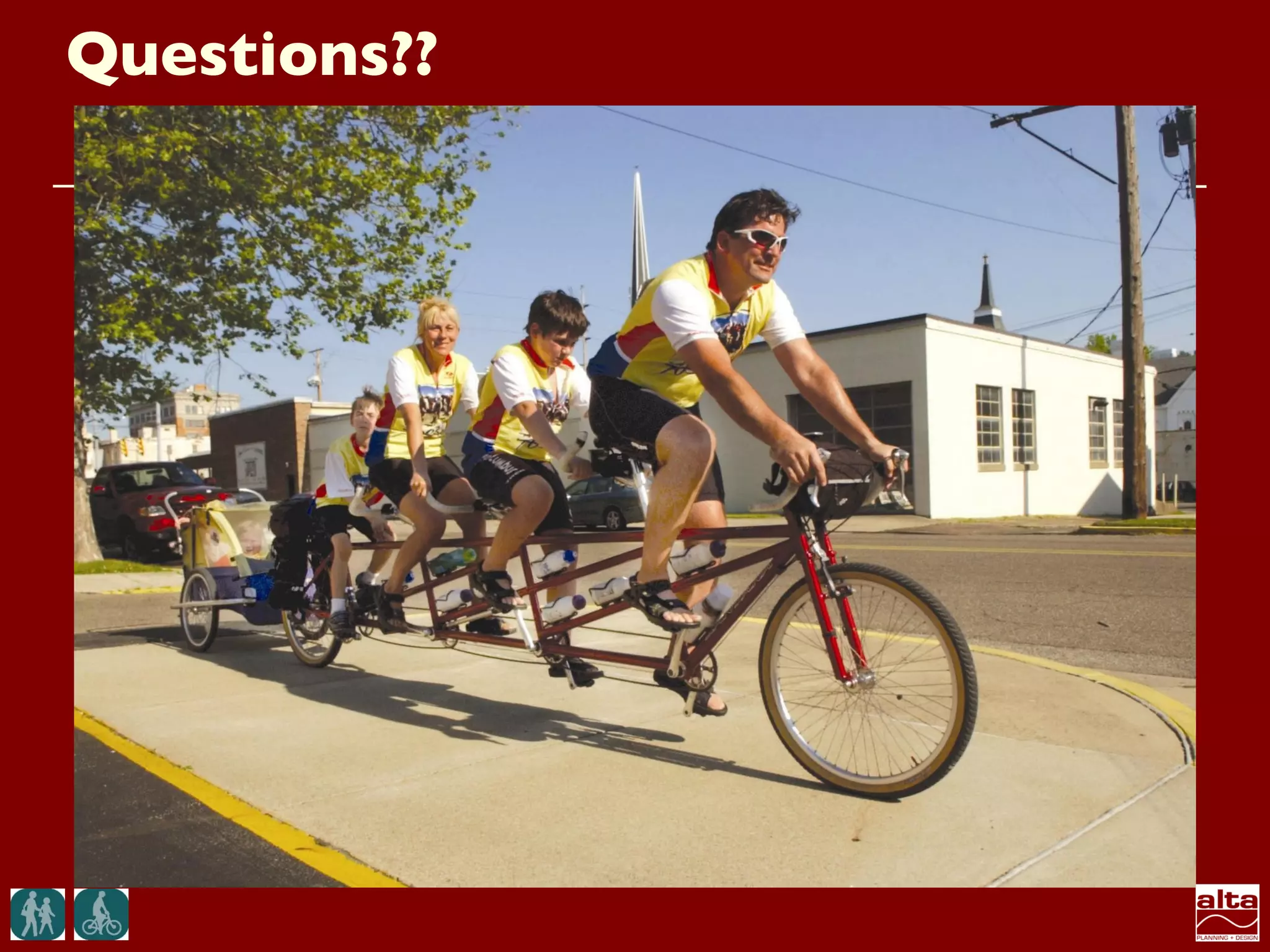
Questions??

Des Moines Bike Planning Overview

  • 1.
    Des Moines Bicycleand Trails Master Plan TAC Meeting #1 June 18th, 2009
  • 2.
    Project Work Plan β€’ Final Product: Long-Range Bicycle Network Master Plan β€’ Existing Conditions/Opportunities-and-Constraints β€’ Safety and Needs Assessment β€’ Recommended Bike Network β€’ Education, Encouragement, Enforcement, Evaluation strategies β€’ Funding and Implementation β€’ Draft and Final Plan
  • 3.
    Build on Previous/Current Planning Efforts β€’ 2006 - City applies for bicycle friendly community designation and is rejected β€’ 2007 – Council adopted goals to become a bicycle friendly community – conducting a bicycle and trails master plan is a key goal β€’ 2008 – Council adopts a complete streets policy β€’ 2009 – Alta is hired by City to conduct master plan
  • 4.
    Bicycle Facilities Bike lanes Shared roadways β€’ Wide outside lanes β€’ Shared lane markings β€’ Bicycle Boulevards Shared use paths
  • 5.
    Bicyclist Types –For Whom do we Plan? β€’ Strong and fearless β€’ Enthusiastic and confident β€’ Interested but concerned β€’ No way, no how
  • 6.
    The Bicyclist How muchspace needed? β€’ 2-ft. wide handle bars β€’ 1-ft. β€œbuffer” on each side β€’ Total: At least 4 ft.
  • 7.
    Bicycle Facilities –How to Select? Numerous factors: β€’ Road type (arterial, local street, etc.) β€’ Traffic volumes β€’ Speeds β€’ Traffic mix (e.g., trucks, buses, etc.) β€’ Expected users – skill, age, volume, destinations β€’ Road conditions, space, intersections, parking demand
  • 8.
    Bicycle Facilities –Bike Lanes β€’ Install with new roadway β€’ Pave shoulder/widen road β€’ Reduce travel lane or parking lane widths β€’ Remove travel lanes β€’ Remove parking
  • 9.
  • 10.
  • 11.
    Bicycle Facilities – WideOutside Lanes β€’ Used mostly on busy (arterial) streets with insufficient room for bike lanes β€’ 14’ width desirable β€’ Any wider should include a striped bike lane
  • 12.
    Bicycle Facilities – SharedLane Markings β€’ Used in numerous cities worldwide β€’ FHWA to adopt in 2009
  • 13.
    Bicycle Facilities –Low Volume Streets β€’ Great for getting around neighborhoods β€’ Attract riders of all ages, confidence levels β€’ Not always practical for longer distances
  • 14.
    Bicycle Facilities –Bicycle Boulevards β€’ Local streets modified to act as thru streets for bicyclists β€’ Traffic calming reduces vehicle speeds & thru trips β€’ Traffic controls give priority to thru bicycle movement β€’ Work best in a connected grid
  • 15.
    Bicycle Facilities –Bicycle Boulevards Intersection Treatments Signage Pavement Markings Traffic Calming Traffic Diversion
  • 16.
    Bicycle Facilities -Challenges β€’ Lack of well-defined routes β€’ Major streets lacking bicycle facilities β€’ System gaps β€’ Conflicts with motorists (e.g., at driveways, intersections) β€’ Glass, debris, obstructions in bike lanes/shoulders β€’ Lack of bike parking
  • 17.
    Shared Use Paths β€’Intended for pedestrians, bicyclists, other non- motorized users β€’ Width: 10-14’ paved β€’ Shy distance: 2-3’ β€’ Overhead clearance: 8-10’ β€’ Roadway separation: 5’ minimum
  • 18.
    Shared Use Paths Keys to Successful Paths β€’ Separate from vehicle traffic β€’ Scenic qualities β€’ Connected to land uses β€’ Well-designed street crossings β€’ Visibility β€’ Separate different users when necessary β€’ Proper maintenance
  • 19.
  • 20.
  • 21.
  • 22.
  • 23.
  • 24.