Shared Spaces for Healthy and Active Places – Can
they work in Canberra?
AITPM 2014 National Conference
Presented by : Peter Strang
Director
GTA Consultants
Peter.Strang@gta.com.au
1
Shared Spaces for Healthy and Active Places
– Can they work in Canberra?
Co-Authors
Peter Strang, CTA Consultants
Brett Maynard, GTA Consultants
Brigette Humphrey-Robinson, GTA Consultants
Ben McHugh, Roads ACT
2
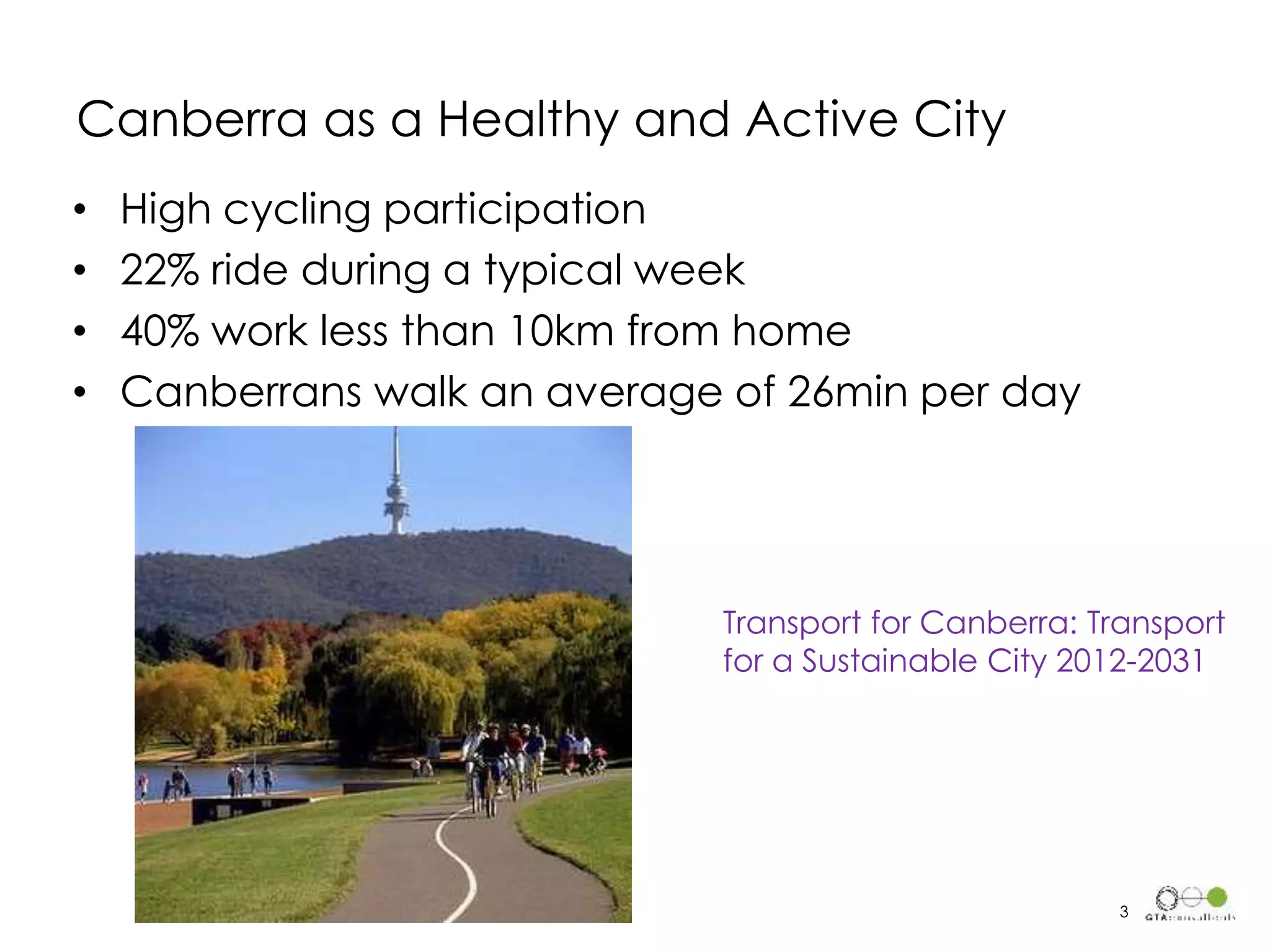
Canberra as a Healthy and Active City
• High cycling participation
• 22% ride during a typical week
• 40% work less than 10km from home
• Canberrans walk an average of 26min per day
Transport for Canberra: Transport
for a Sustainable City 2012-2031
3
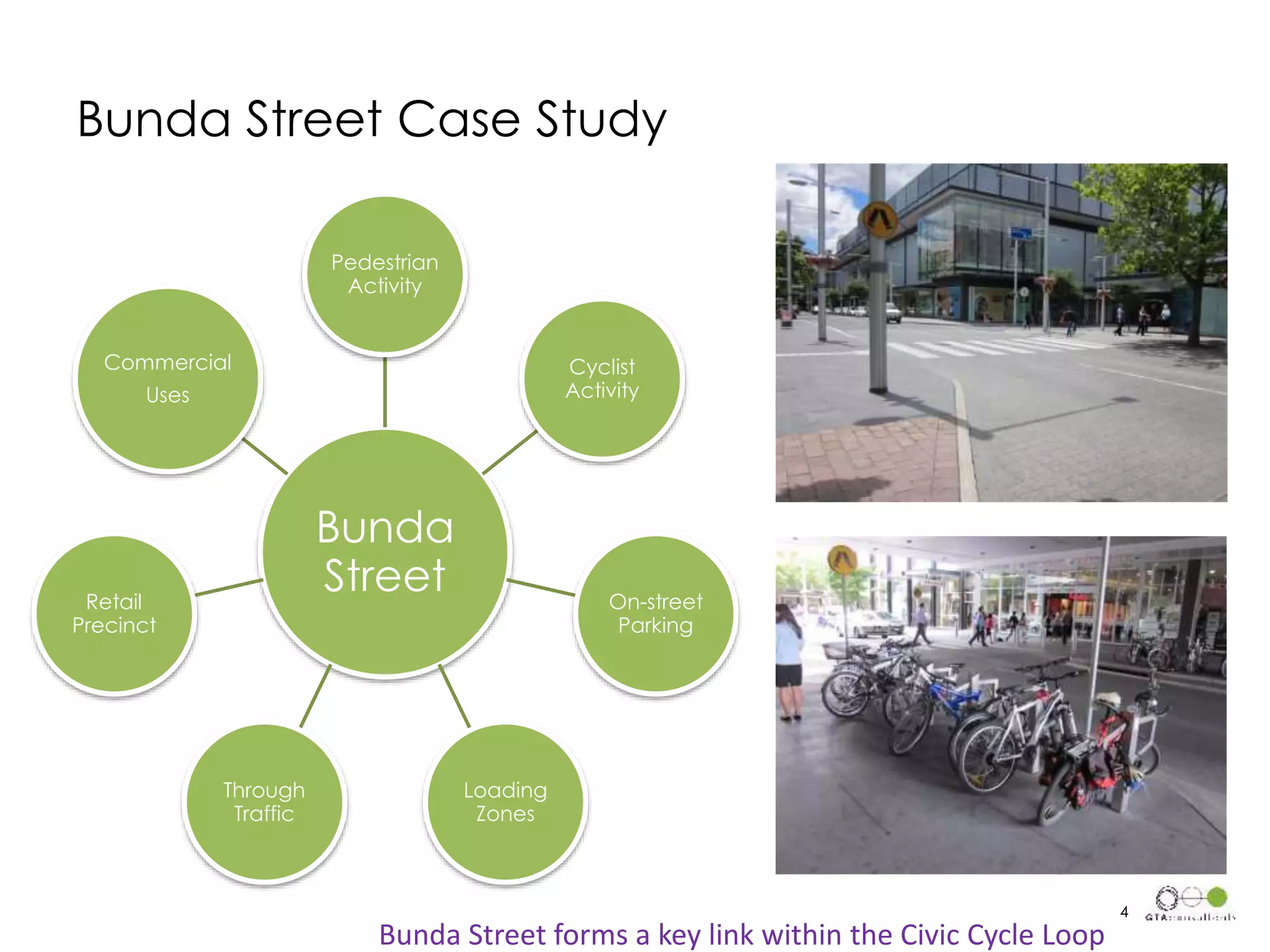
Bunda Street Case Study
4
Bunda
Street
Pedestrian
Activity
Cyclist
Activity
On-street
Parking
Loading
Zones
Through
Traffic
Retail
Precinct
Commercial
Uses
Bunda Street forms a key link within the Civic Cycle Loop
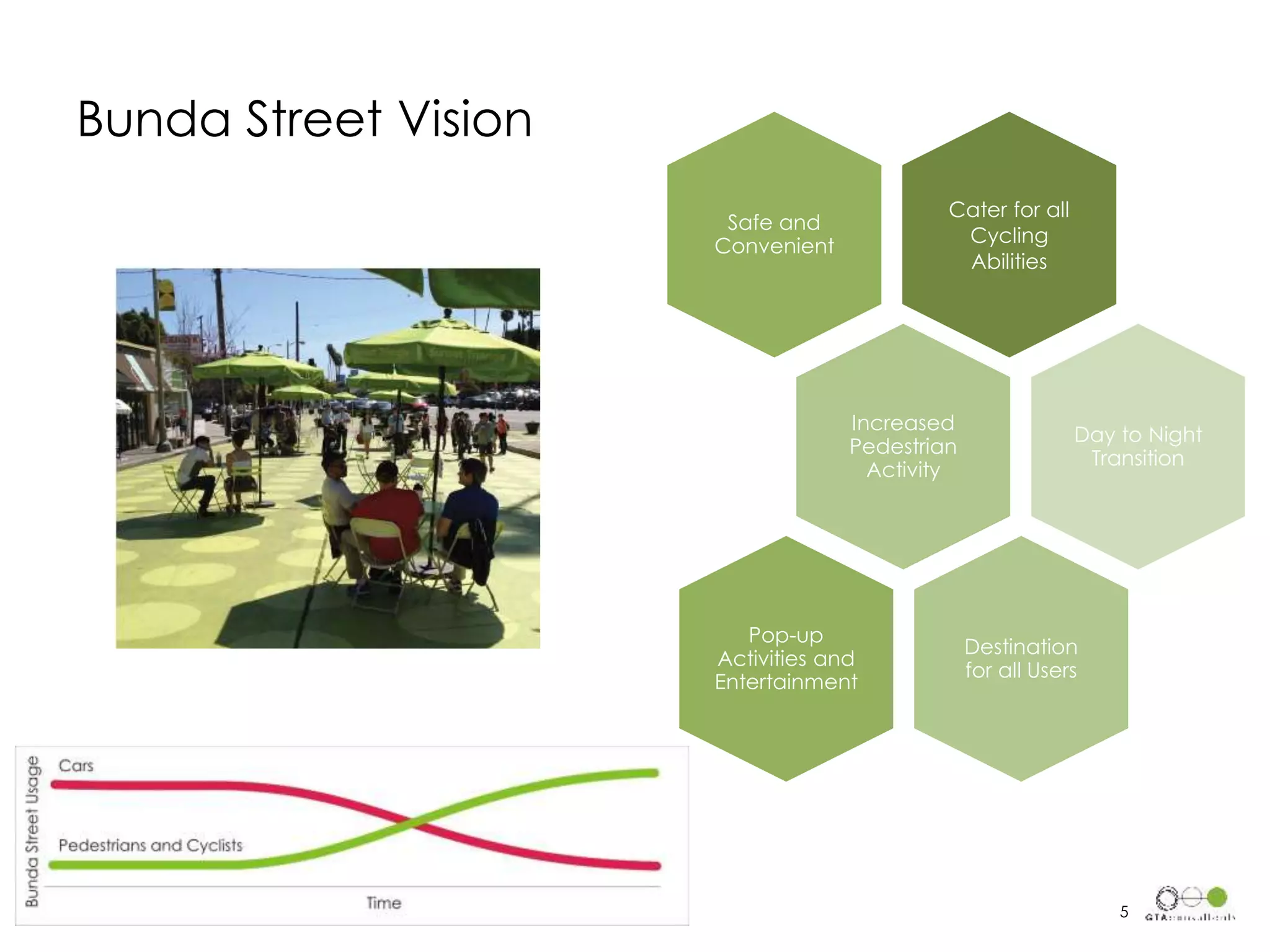
Bunda Street Vision
5
Cater for all
Cycling
Abilities
Safe and
Convenient
Increased
Pedestrian
Activity
Day to Night
Transition
Destination
for all Users
Pop-up
Activities and
Entertainment
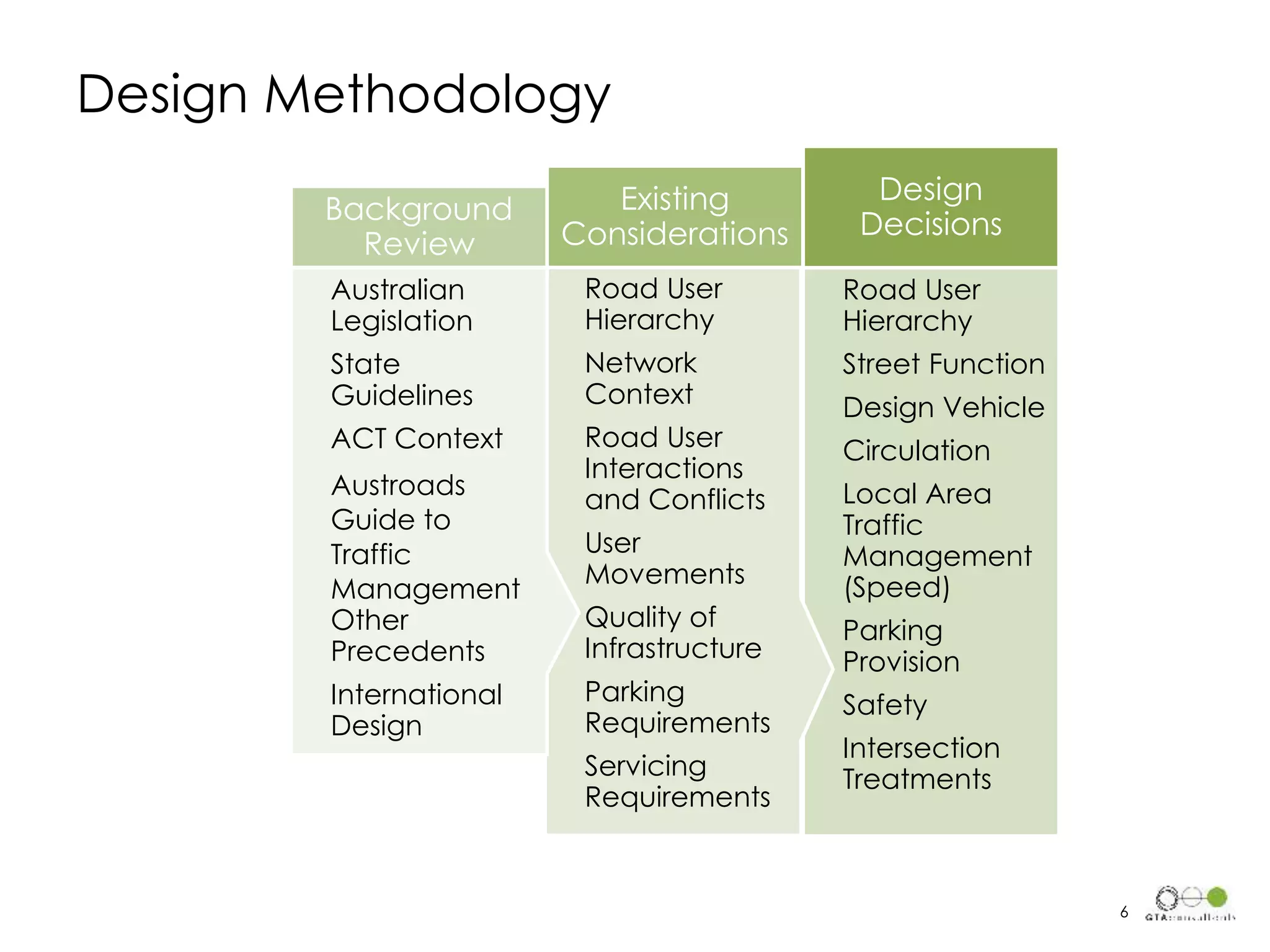
Design Methodology
Road User
Hierarchy
Street Function
Design Vehicle
Circulation
Local Area
Traffic
Management
(Speed)
Parking
Provision
Safety
Intersection
Treatments
Design
Decisions
Road User
Hierarchy
Network
Context
Road User
Interactions
and Conflicts
User
Movements
Quality of
Infrastructure
Parking
Requirements
Servicing
Requirements
Existing
Considerations
Australian
Legislation
State
Guidelines
ACT Context
Austroads
Guide to
Traffic
Management
Other
Precedents
International
Design
Background
Review
6
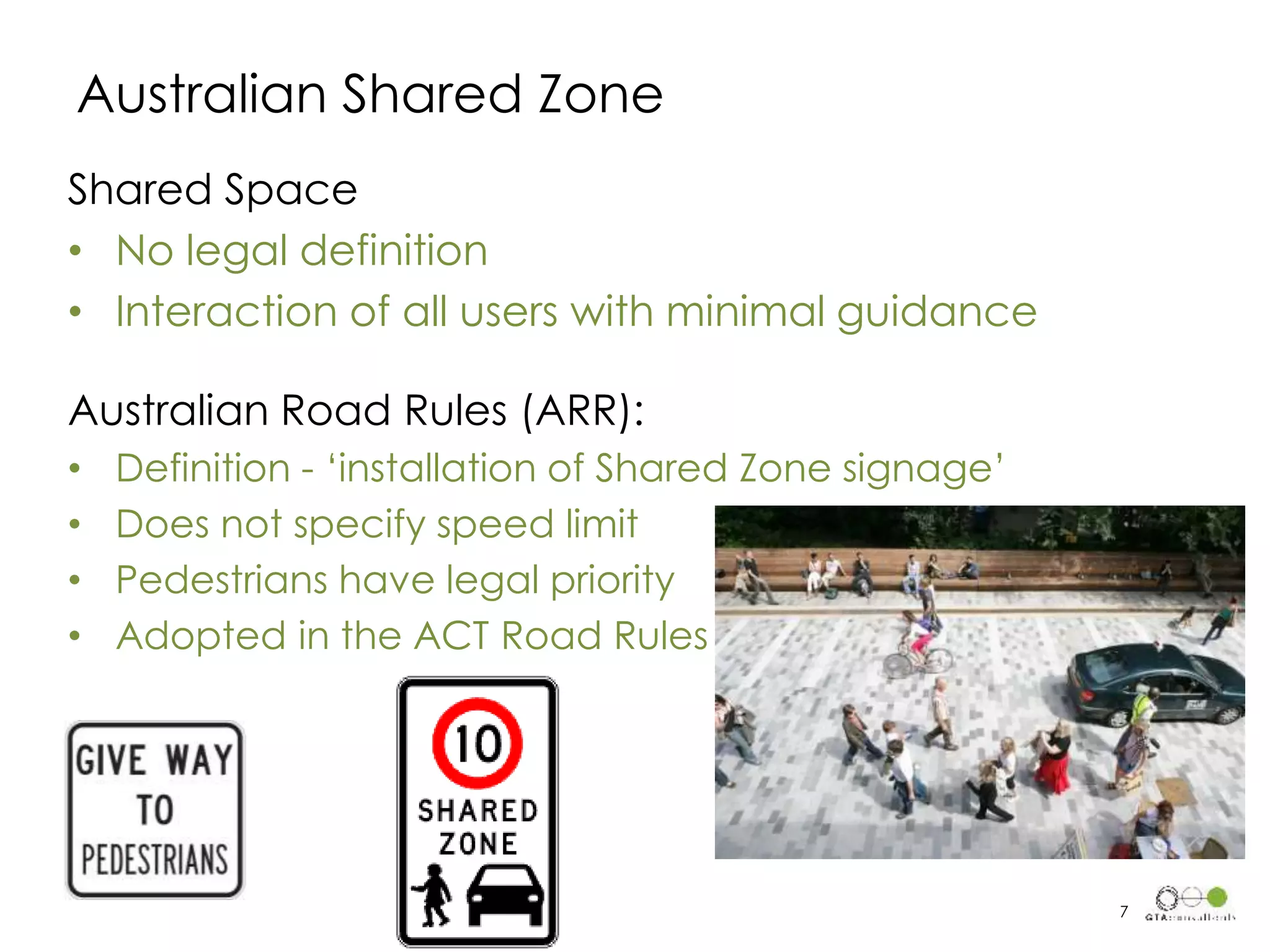
Australian Shared Zone
Shared Space
• No legal definition
• Interaction of all users with minimal guidance
Australian Road Rules (ARR):
• Definition - ‘installation of Shared Zone signage’
• Does not specify speed limit
• Pedestrians have legal priority
• Adopted in the ACT Road Rules
7
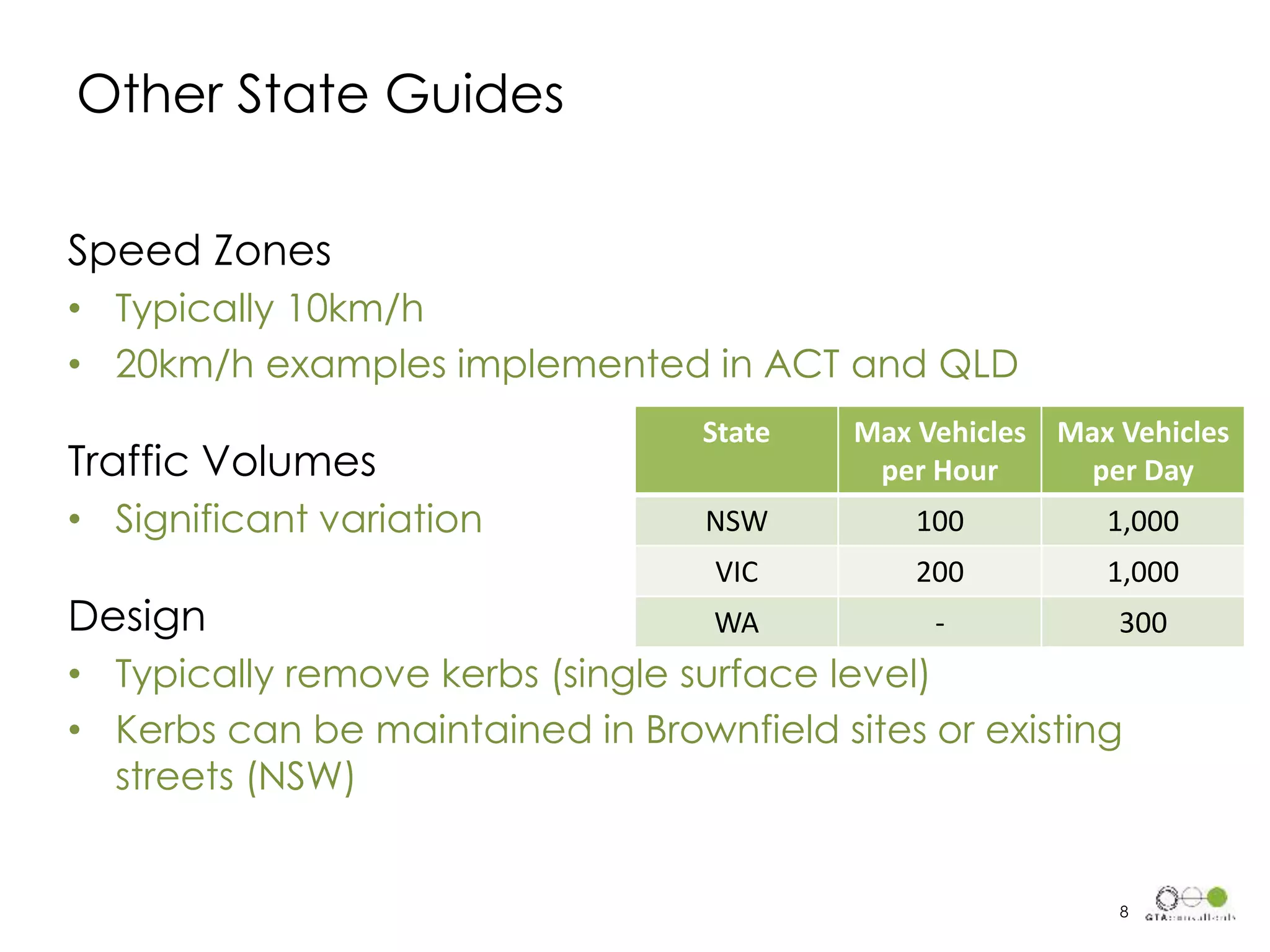
Other State Guides
Speed Zones
• Typically 10km/h
• 20km/h examples implemented in ACT and QLD
Traffic Volumes
• Significant variation
Design
• Typically remove kerbs (single surface level)
• Kerbs can be maintained in Brownfield sites or existing
streets (NSW)
State Max Vehicles
per Hour
Max Vehicles
per Day
NSW 100 1,000
VIC 200 1,000
WA - 300
8
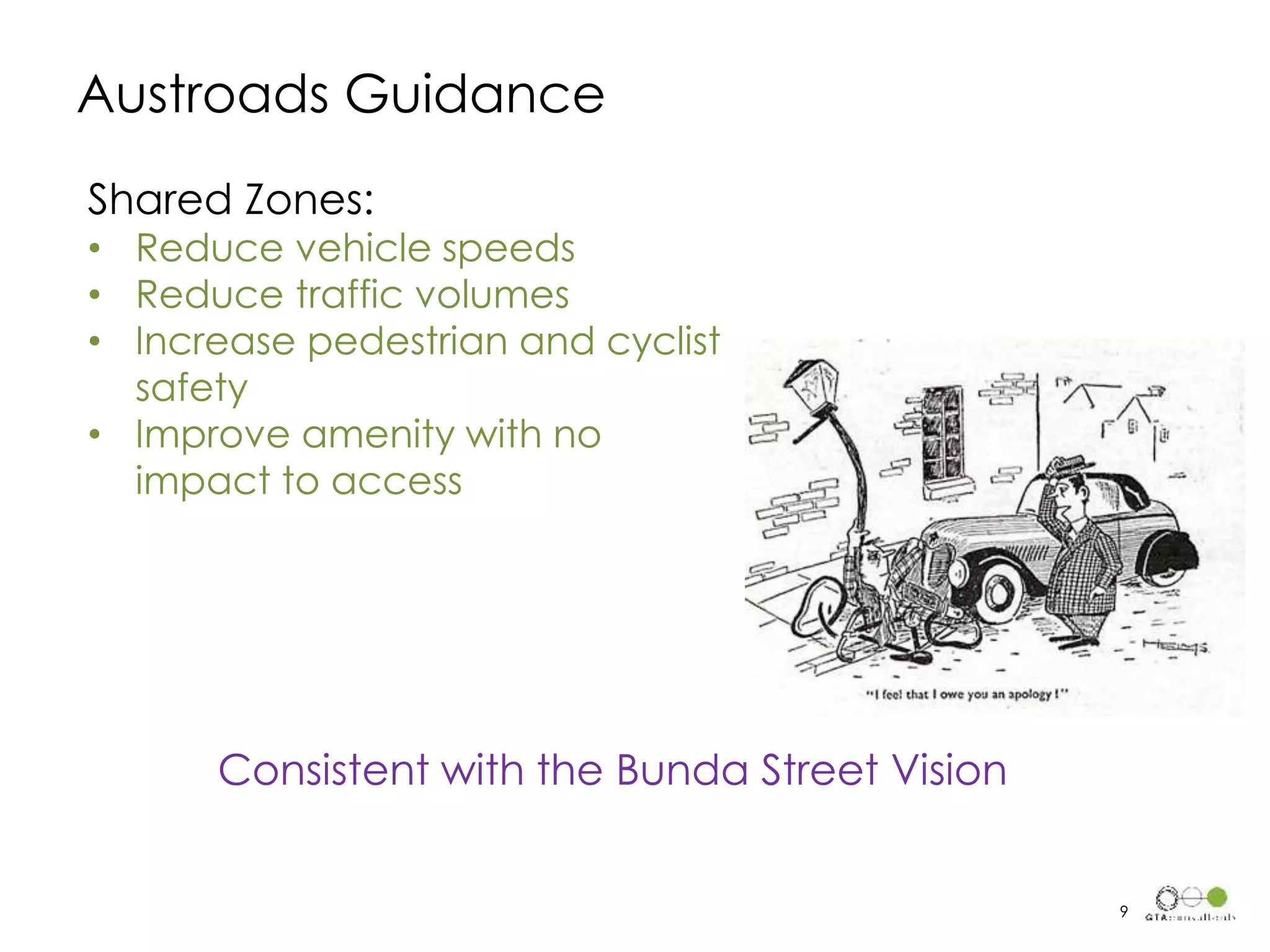
Austroads Guidance
Shared Zones:
• Reduce vehicle speeds
• Reduce traffic volumes
• Increase pedestrian and cyclist
safety
• Improve amenity with no
impact to access
9
Consistent with the Bunda Street Vision
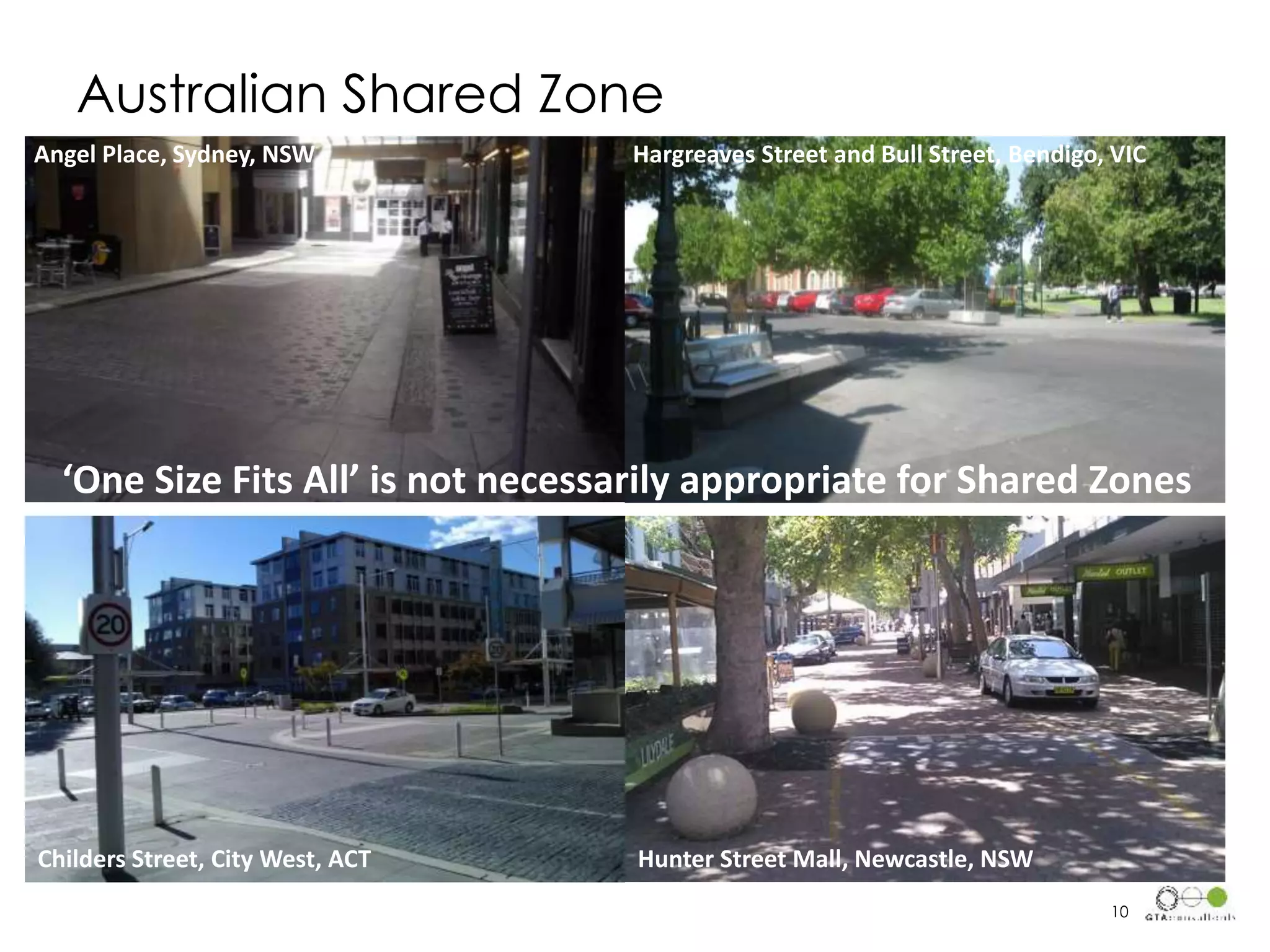
Australian Shared Zone
Angel Place, Sydney, NSW
Childers Street, City West, ACT Hunter Street Mall, Newcastle, NSW
Hargreaves Street and Bull Street, Bendigo, VIC
‘One Size Fits All’ is not necessarily appropriate for Shared Zones
10
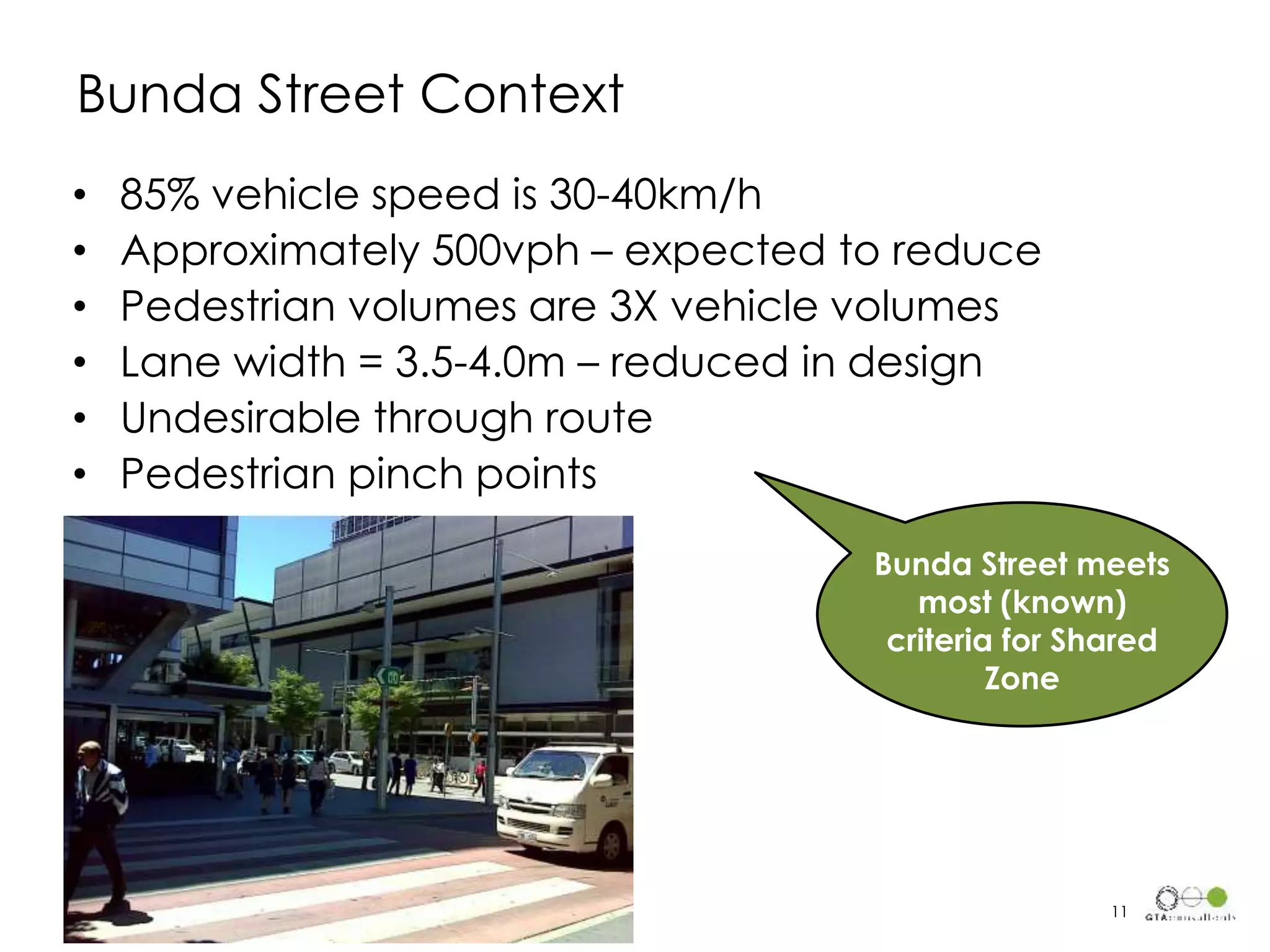
• 85% vehicle speed is 30-40km/h
• Approximately 500vph – expected to reduce
• Pedestrian volumes are 3X vehicle volumes
• Lane width = 3.5-4.0m – reduced in design
• Undesirable through route
• Pedestrian pinch points
Bunda Street Context
Bunda Street meets
most (known)
criteria for Shared
Zone
11
Key Design Considerations and Challenges
• Speed limit – safe, practical
• Retro-fitting the Woonerf Principle
• Parking and loading – requirement of small business
• Funding limitations – staged approach
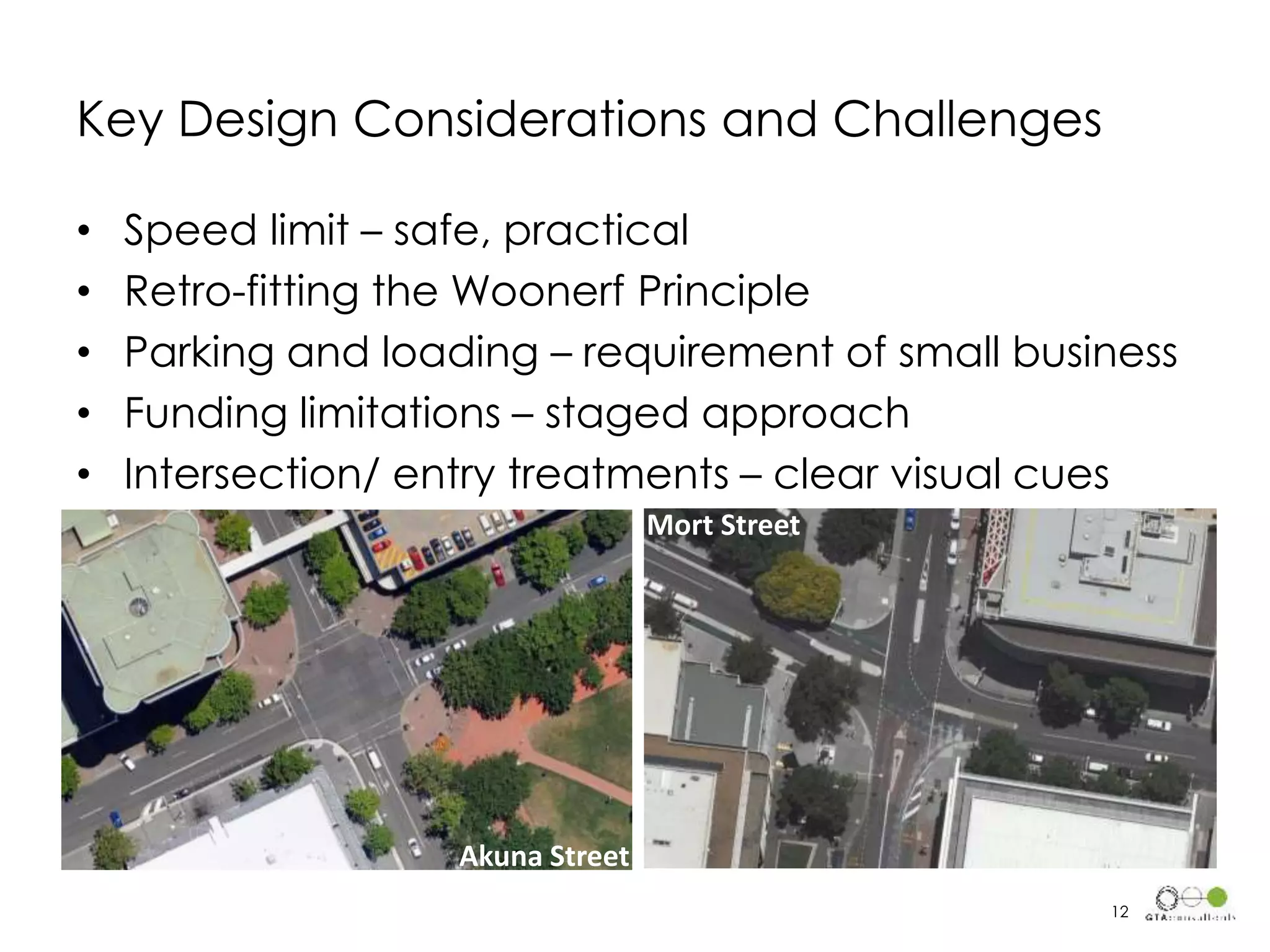
• Intersection/ entry treatments – clear visual cues
12
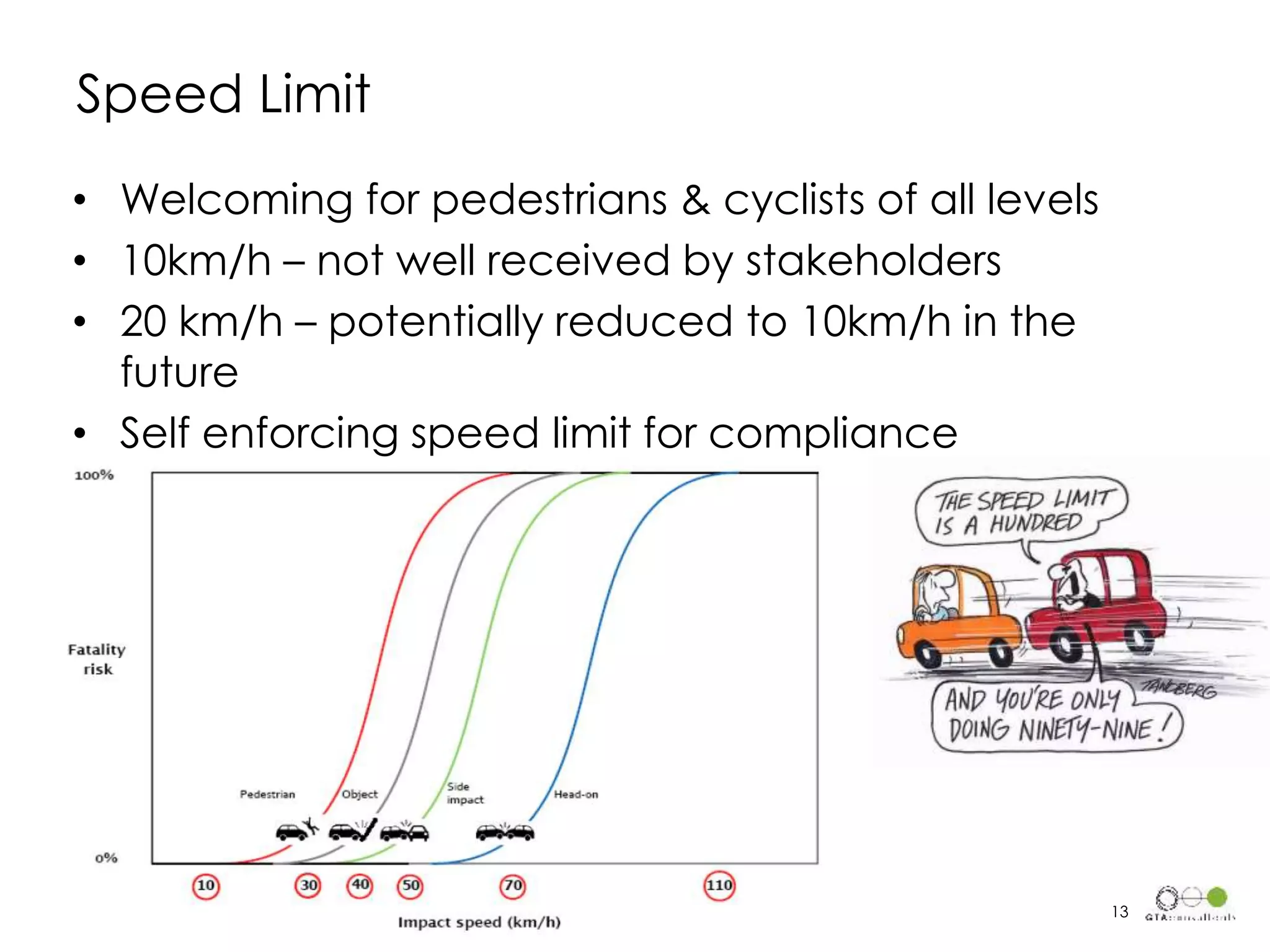
Akuna Street
Mort Street
• Welcoming for pedestrians & cyclists of all levels
• 10km/h – not well received by stakeholders
• 20 km/h – potentially reduced to 10km/h in the
future
• Self enforcing speed limit for compliance
• Reduced fatality rate
Speed Limit
13
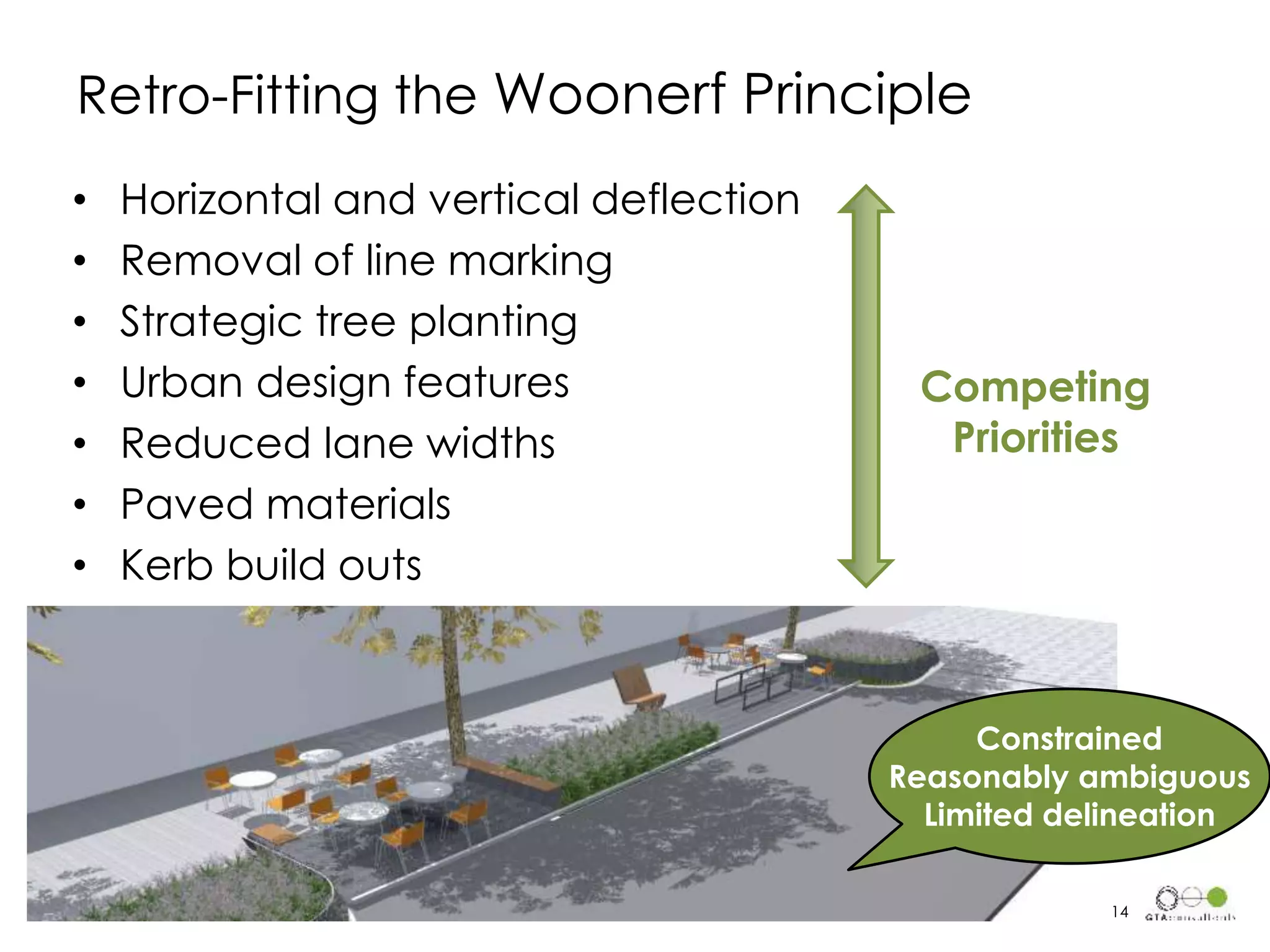
• Horizontal and vertical deflection
• Removal of line marking
• Strategic tree planting
• Urban design features
• Reduced lane widths
• Paved materials
• Kerb build outs
Retro-Fitting the Woonerf Principle
Constrained
Reasonably ambiguous
Limited delineation
14
Competing
Priorities
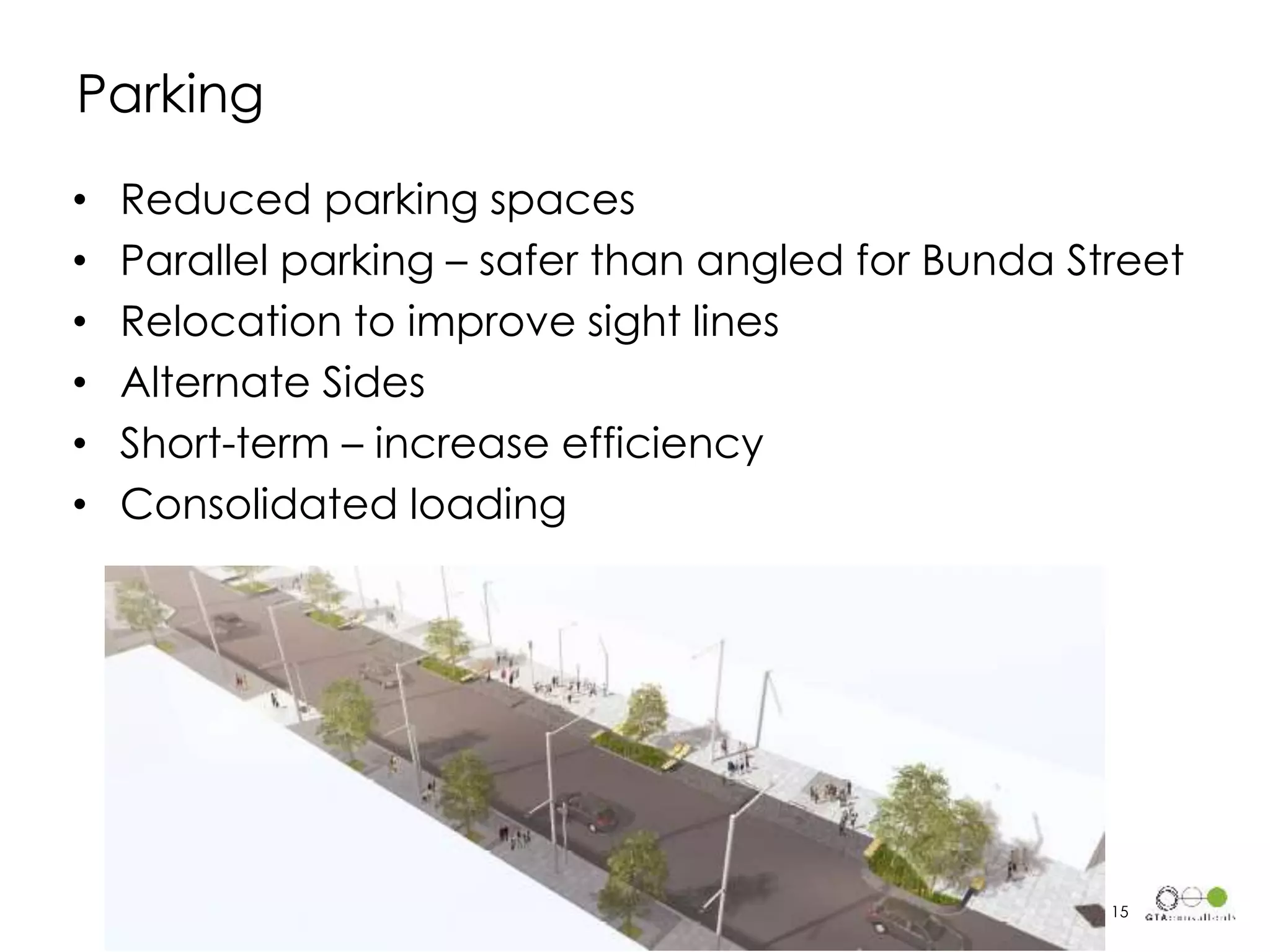
• Reduced parking spaces
• Parallel parking – safer than angled for Bunda Street
• Relocation to improve sight lines
• Alternate Sides
• Short-term – increase efficiency
• Consolidated loading
Parking
15
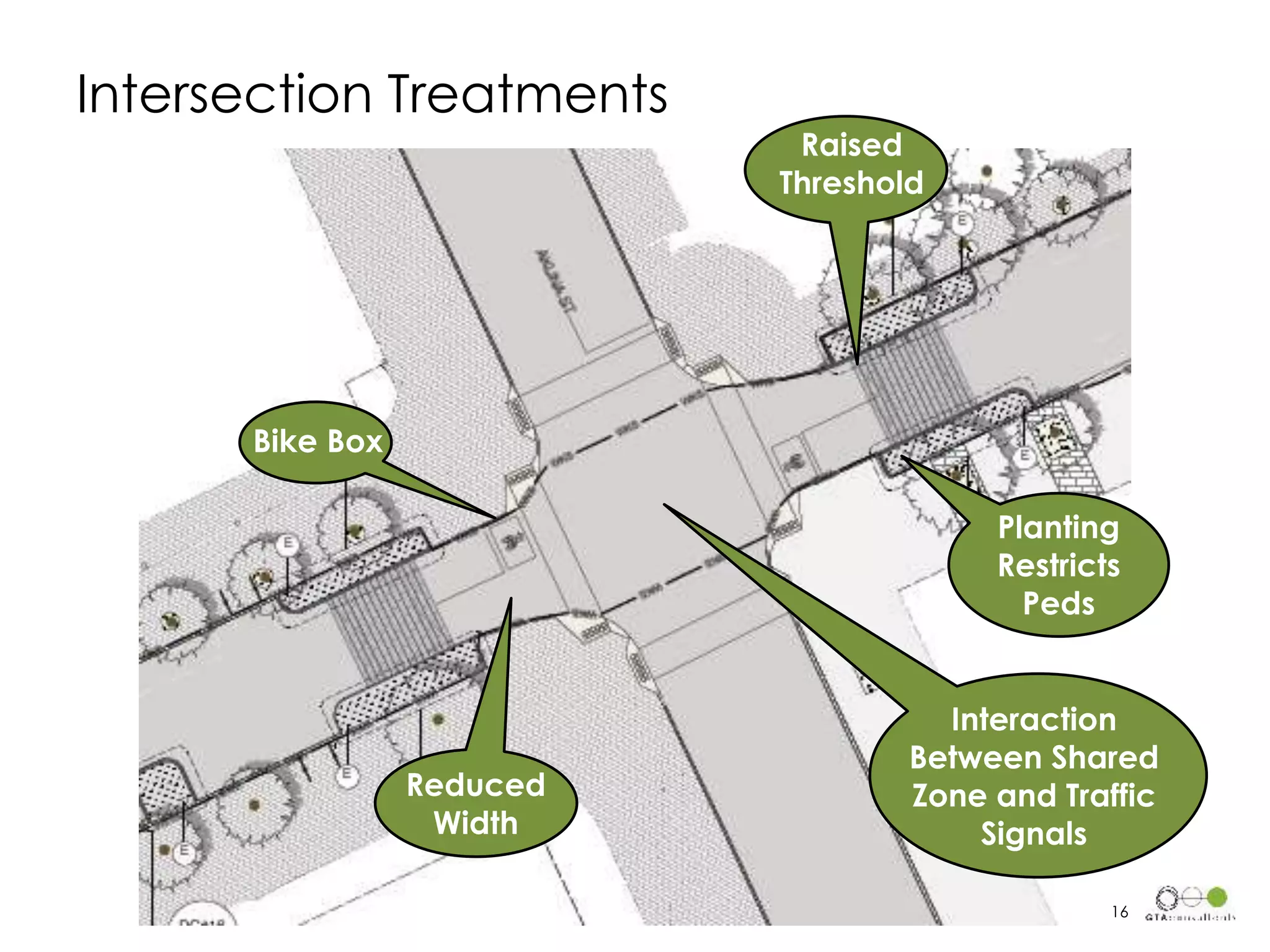
Intersection Treatments
Bike Box
Raised
Threshold
Reduced
Width
Planting
Restricts
Peds
16
Interaction
Between Shared
Zone and Traffic
Signals
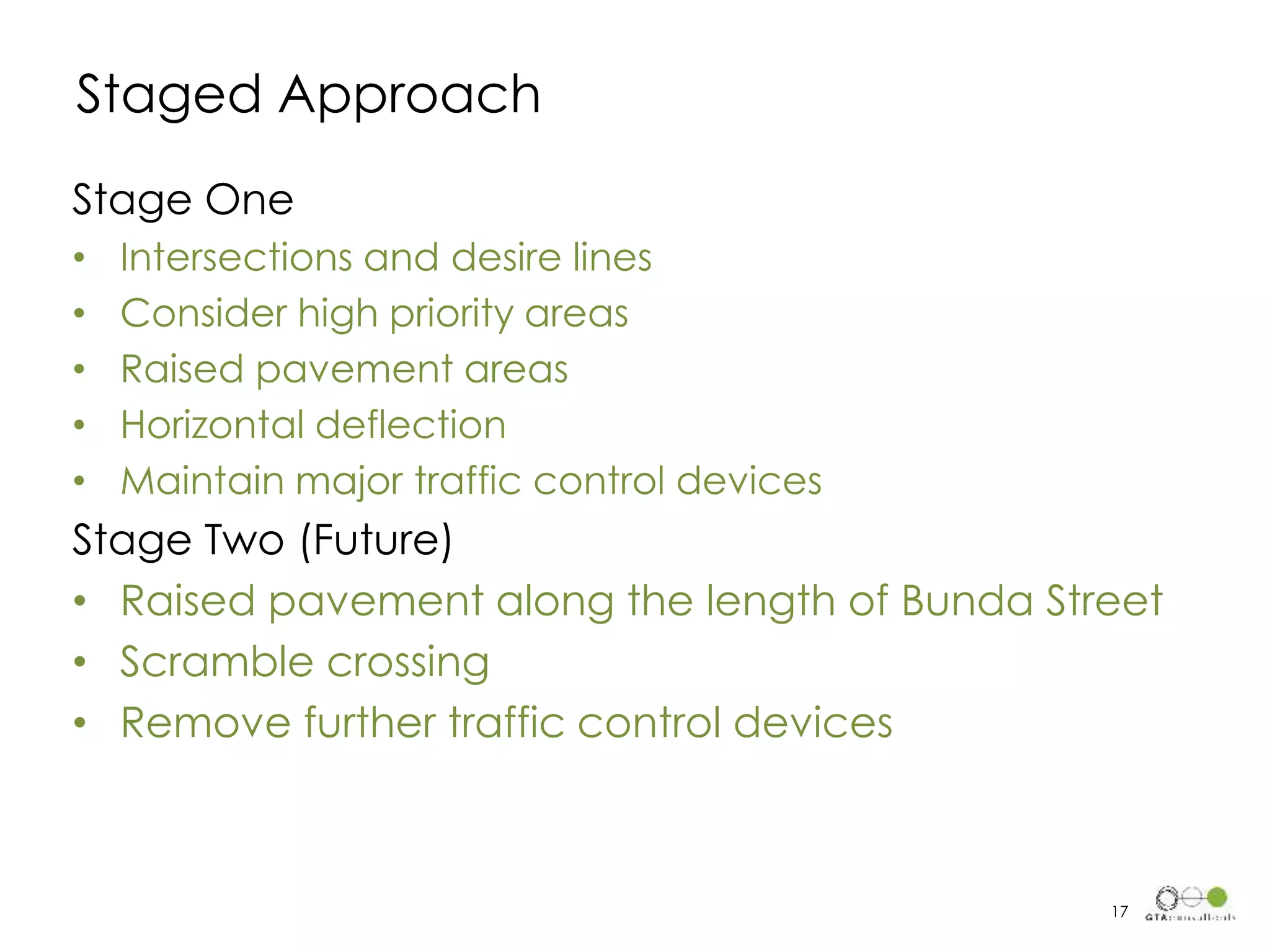
Stage One
• Intersections and desire lines
• Consider high priority areas
• Raised pavement areas
• Horizontal deflection
• Maintain major traffic control devices
Stage Two (Future)
• Raised pavement along the length of Bunda Street
• Scramble crossing
• Remove further traffic control devices
Staged Approach
17
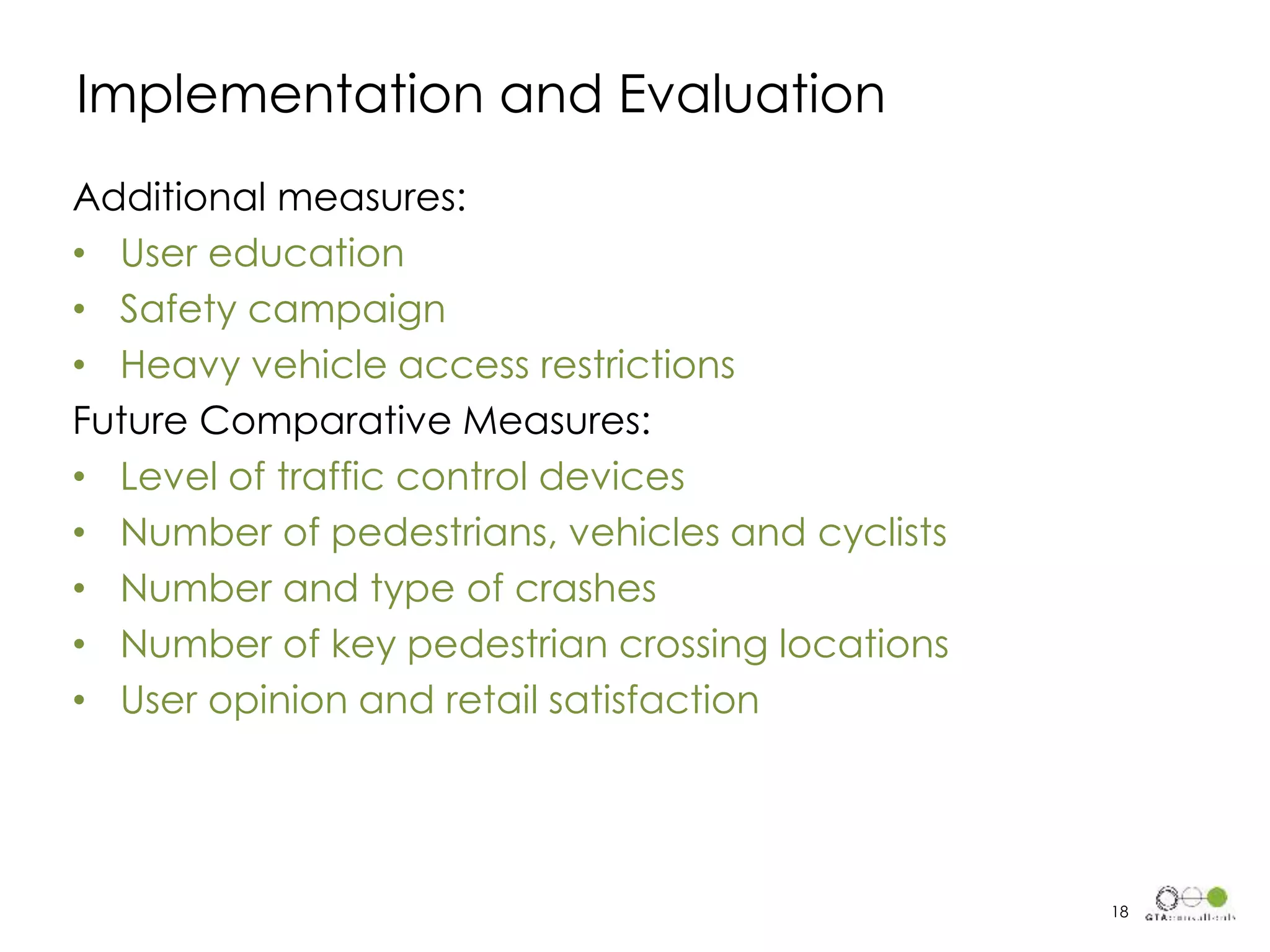
Additional measures:
• User education
• Safety campaign
• Heavy vehicle access restrictions
Future Comparative Measures:
• Level of traffic control devices
• Number of pedestrians, vehicles and cyclists
• Number and type of crashes
• Number of key pedestrian crossing locations
• User opinion and retail satisfaction
Implementation and Evaluation
18
Thank you!
Any Questions?
Peter.Strang@gta.com.au
19

Brett Maynard

  • 1.
    Shared Spaces forHealthy and Active Places – Can they work in Canberra? AITPM 2014 National Conference Presented by : Peter Strang Director GTA Consultants Peter.Strang@gta.com.au 1
  • 2.
    Shared Spaces forHealthy and Active Places – Can they work in Canberra? Co-Authors Peter Strang, CTA Consultants Brett Maynard, GTA Consultants Brigette Humphrey-Robinson, GTA Consultants Ben McHugh, Roads ACT 2
  • 3.
    Canberra as aHealthy and Active City • High cycling participation • 22% ride during a typical week • 40% work less than 10km from home • Canberrans walk an average of 26min per day Transport for Canberra: Transport for a Sustainable City 2012-2031 3
  • 4.
    Bunda Street CaseStudy 4 Bunda Street Pedestrian Activity Cyclist Activity On-street Parking Loading Zones Through Traffic Retail Precinct Commercial Uses Bunda Street forms a key link within the Civic Cycle Loop
  • 5.
    Bunda Street Vision 5 Caterfor all Cycling Abilities Safe and Convenient Increased Pedestrian Activity Day to Night Transition Destination for all Users Pop-up Activities and Entertainment
  • 6.
    Design Methodology Road User Hierarchy StreetFunction Design Vehicle Circulation Local Area Traffic Management (Speed) Parking Provision Safety Intersection Treatments Design Decisions Road User Hierarchy Network Context Road User Interactions and Conflicts User Movements Quality of Infrastructure Parking Requirements Servicing Requirements Existing Considerations Australian Legislation State Guidelines ACT Context Austroads Guide to Traffic Management Other Precedents International Design Background Review 6
  • 7.
    Australian Shared Zone SharedSpace • No legal definition • Interaction of all users with minimal guidance Australian Road Rules (ARR): • Definition - ‘installation of Shared Zone signage’ • Does not specify speed limit • Pedestrians have legal priority • Adopted in the ACT Road Rules 7
  • 8.
    Other State Guides SpeedZones • Typically 10km/h • 20km/h examples implemented in ACT and QLD Traffic Volumes • Significant variation Design • Typically remove kerbs (single surface level) • Kerbs can be maintained in Brownfield sites or existing streets (NSW) State Max Vehicles per Hour Max Vehicles per Day NSW 100 1,000 VIC 200 1,000 WA - 300 8
  • 9.
    Austroads Guidance Shared Zones: •Reduce vehicle speeds • Reduce traffic volumes • Increase pedestrian and cyclist safety • Improve amenity with no impact to access 9 Consistent with the Bunda Street Vision
  • 10.
    Australian Shared Zone AngelPlace, Sydney, NSW Childers Street, City West, ACT Hunter Street Mall, Newcastle, NSW Hargreaves Street and Bull Street, Bendigo, VIC ‘One Size Fits All’ is not necessarily appropriate for Shared Zones 10
  • 11.
    • 85% vehiclespeed is 30-40km/h • Approximately 500vph – expected to reduce • Pedestrian volumes are 3X vehicle volumes • Lane width = 3.5-4.0m – reduced in design • Undesirable through route • Pedestrian pinch points Bunda Street Context Bunda Street meets most (known) criteria for Shared Zone 11
  • 12.
    Key Design Considerationsand Challenges • Speed limit – safe, practical • Retro-fitting the Woonerf Principle • Parking and loading – requirement of small business • Funding limitations – staged approach • Intersection/ entry treatments – clear visual cues 12 Akuna Street Mort Street
  • 13.
    • Welcoming forpedestrians & cyclists of all levels • 10km/h – not well received by stakeholders • 20 km/h – potentially reduced to 10km/h in the future • Self enforcing speed limit for compliance • Reduced fatality rate Speed Limit 13
  • 14.
    • Horizontal andvertical deflection • Removal of line marking • Strategic tree planting • Urban design features • Reduced lane widths • Paved materials • Kerb build outs Retro-Fitting the Woonerf Principle Constrained Reasonably ambiguous Limited delineation 14 Competing Priorities
  • 15.
    • Reduced parkingspaces • Parallel parking – safer than angled for Bunda Street • Relocation to improve sight lines • Alternate Sides • Short-term – increase efficiency • Consolidated loading Parking 15
  • 16.
  • 17.
    Stage One • Intersectionsand desire lines • Consider high priority areas • Raised pavement areas • Horizontal deflection • Maintain major traffic control devices Stage Two (Future) • Raised pavement along the length of Bunda Street • Scramble crossing • Remove further traffic control devices Staged Approach 17
  • 18.
    Additional measures: • Usereducation • Safety campaign • Heavy vehicle access restrictions Future Comparative Measures: • Level of traffic control devices • Number of pedestrians, vehicles and cyclists • Number and type of crashes • Number of key pedestrian crossing locations • User opinion and retail satisfaction Implementation and Evaluation 18
  • 19.