BIKEINFRASTRUCTURES
Victor Andrade, Ole B. Jensen, Henrik Harder, Jens Madsen
Goal
To investigate bike infrastructure cases – based on a web-
based questionnaire.

To make an assessment with respect to the state of
knowledge as well as evidence of effects.
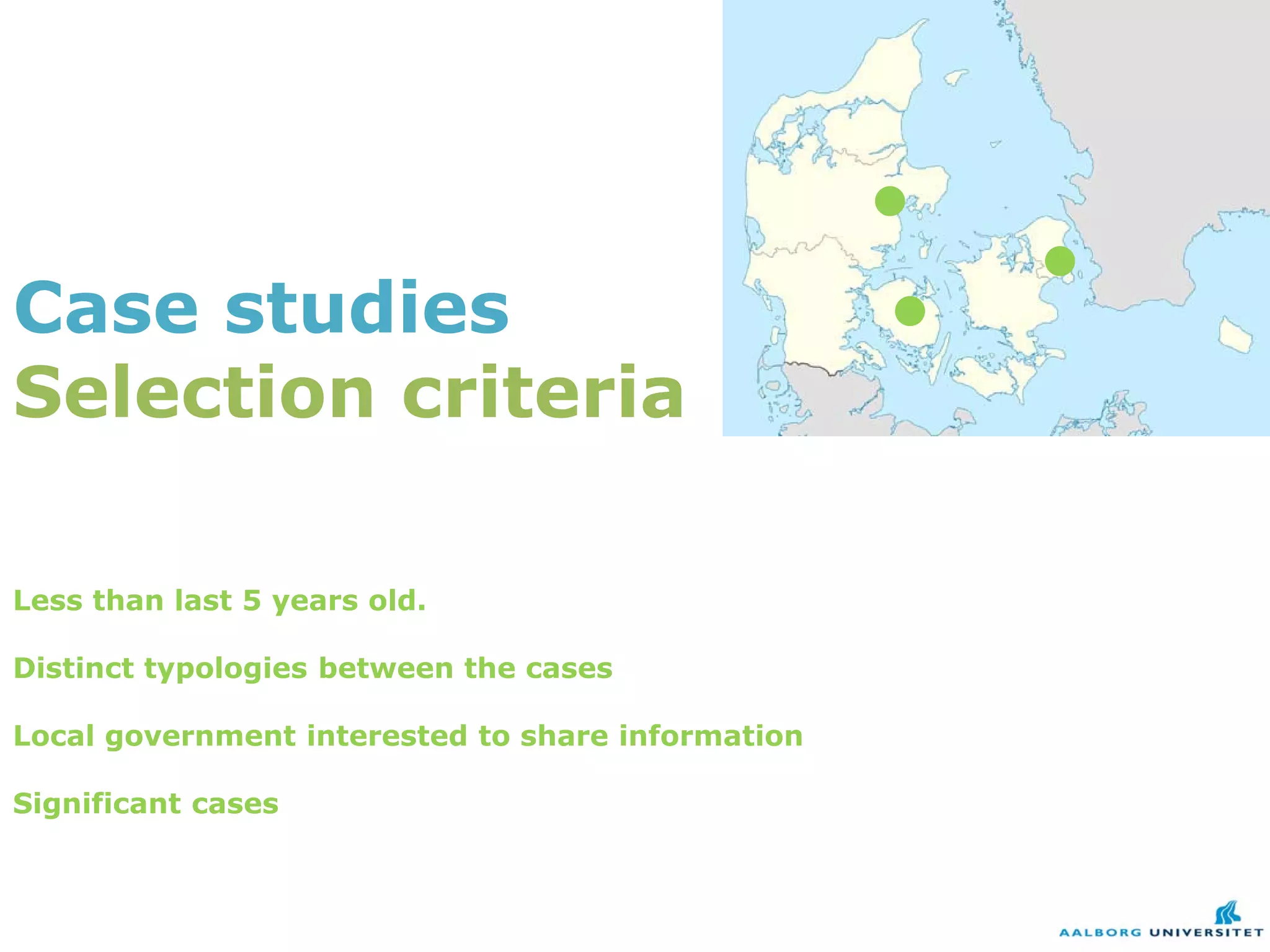
Case studies
Selection criteria

Less than last 5 years old.

Distinct typologies between the cases

Local government interested to share information

Significant cases
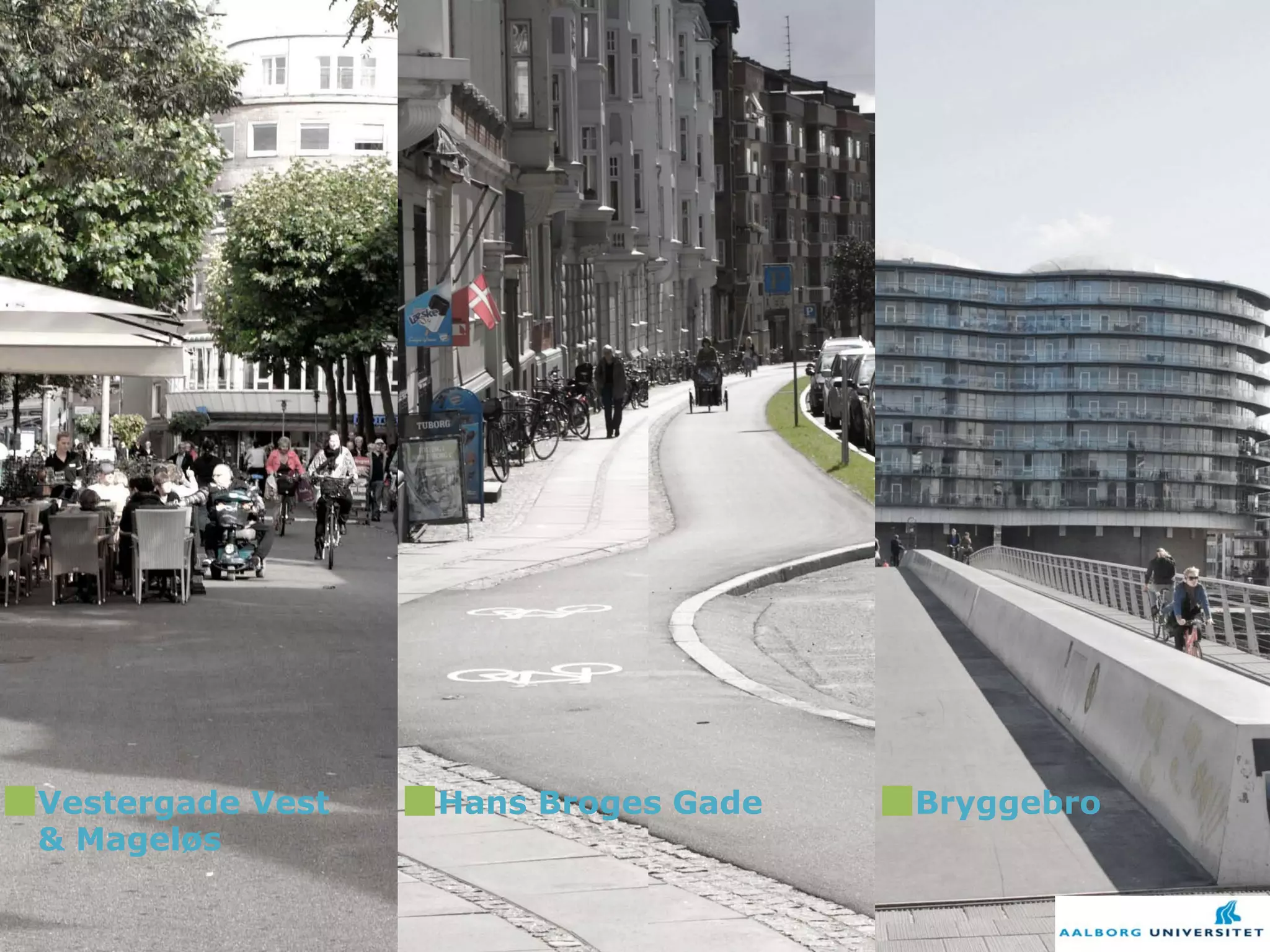
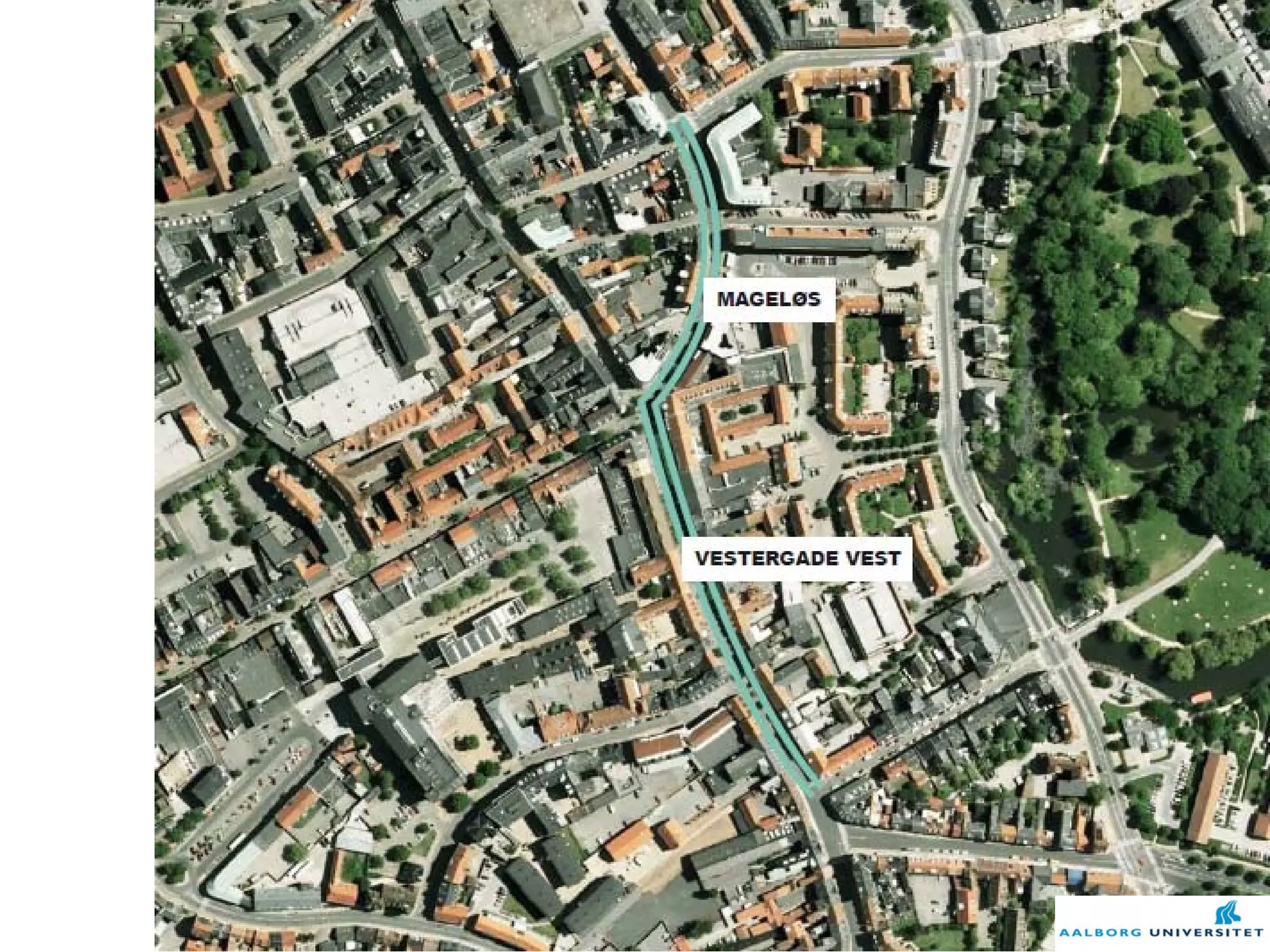
Vestergade Vest   Hans Broges Gade   Bryggebro
& Mageløs
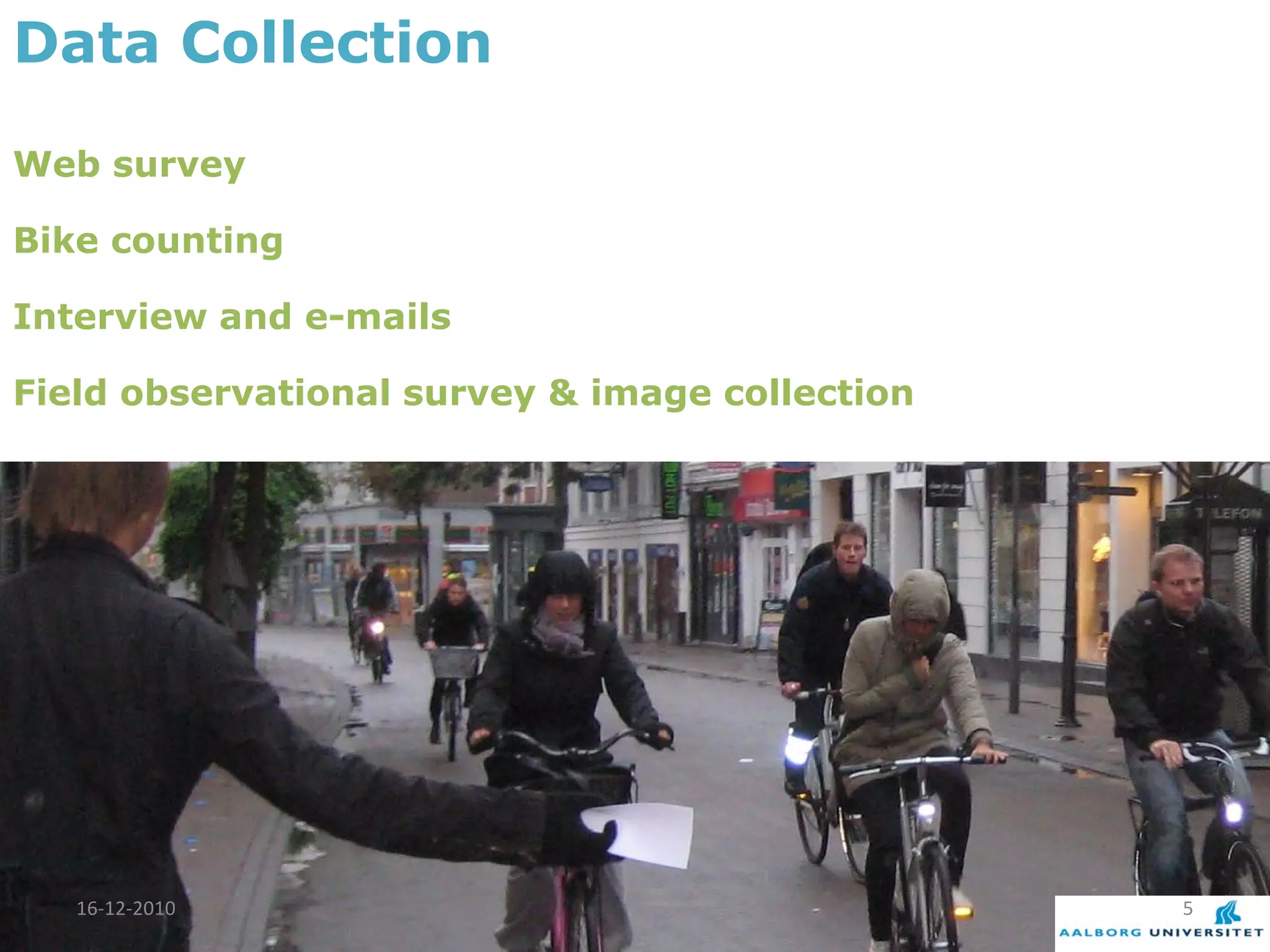
Data Collection

Web survey

Bike counting

Interview and e-mails

Field observational survey & image collection


   16-12-2010                                   5
Structure
City Scale
•Municipality vision
•Bicycle network

Infrastructure Scale
•Before and after
•The costs of the infrastructure
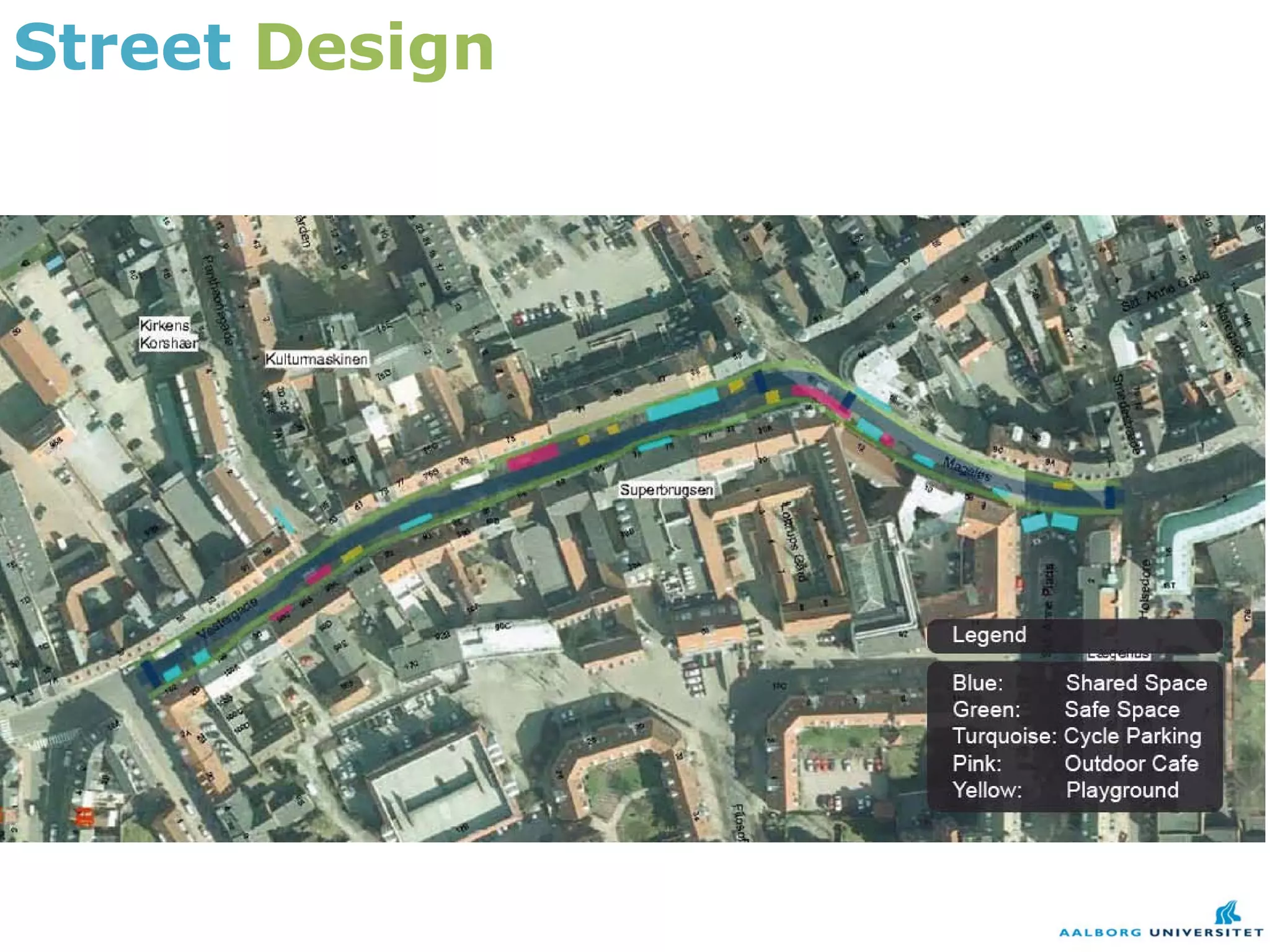
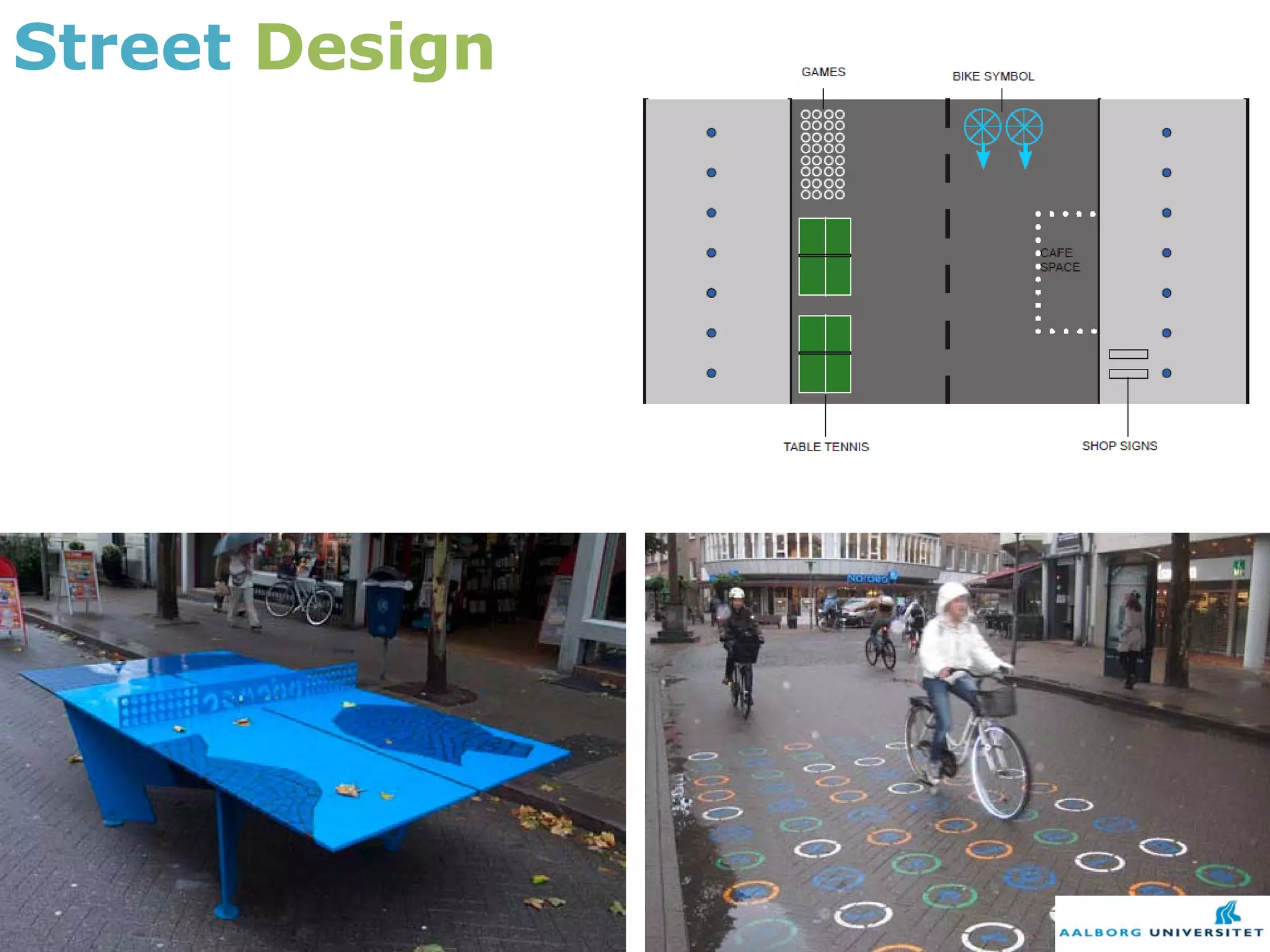
•Design characteristics and streetscape
•Cyclist countings
•The web survey
•Main findings
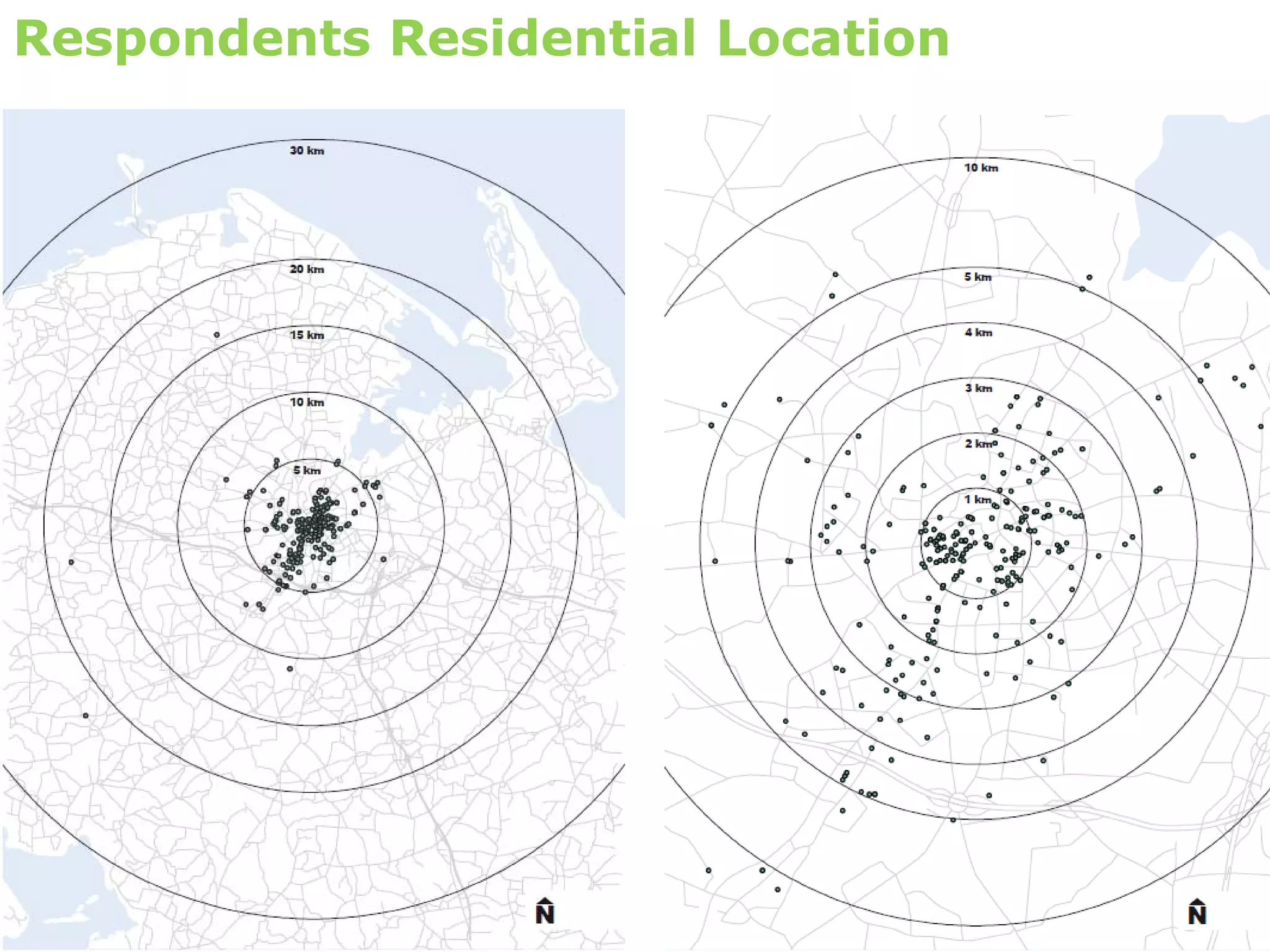
•Residential location of respondents
•Descriptive statistics
•Relations between socio-demographic variables and web-
survey answers
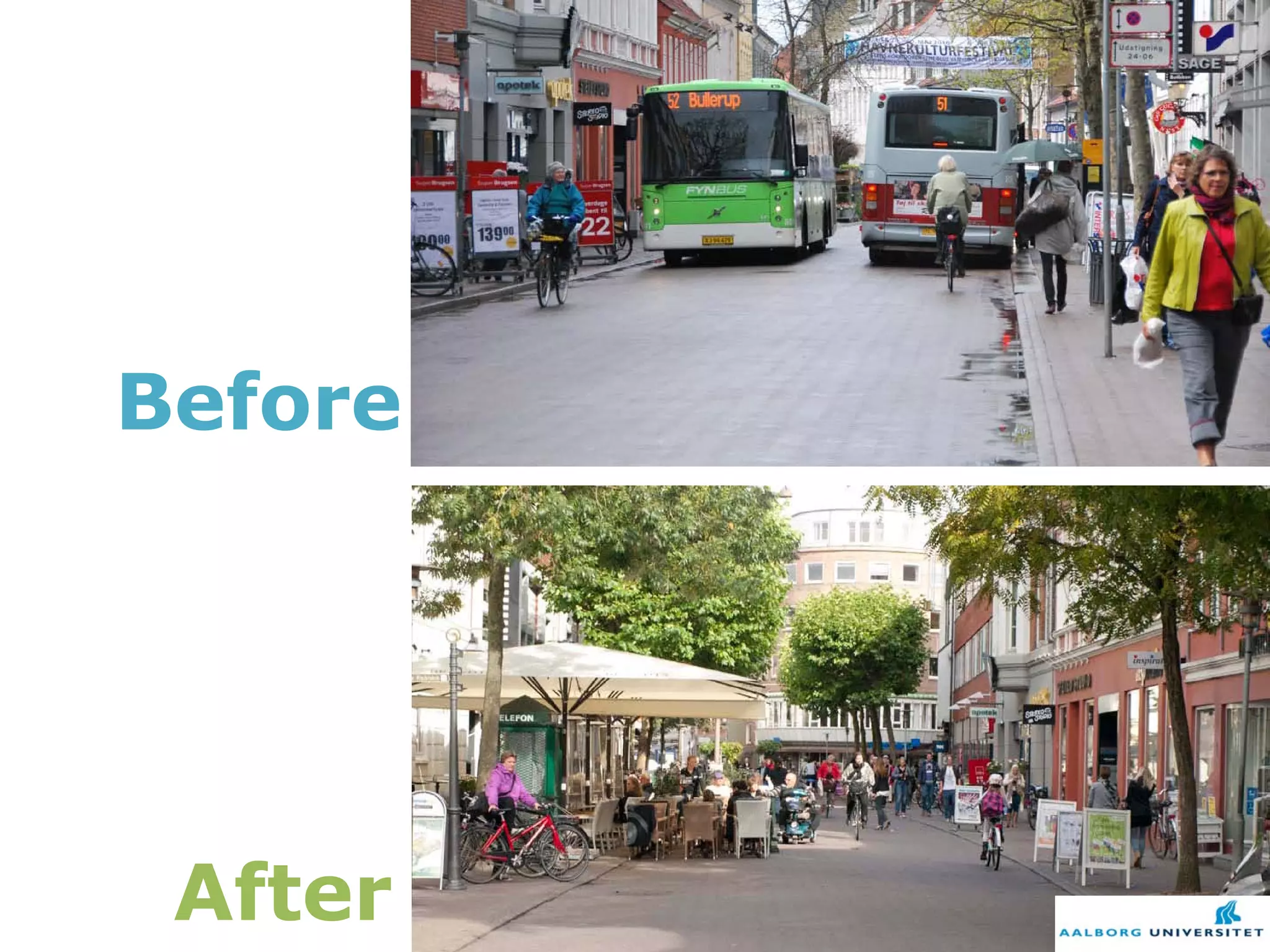
Before


 After
Street Design
Street Design
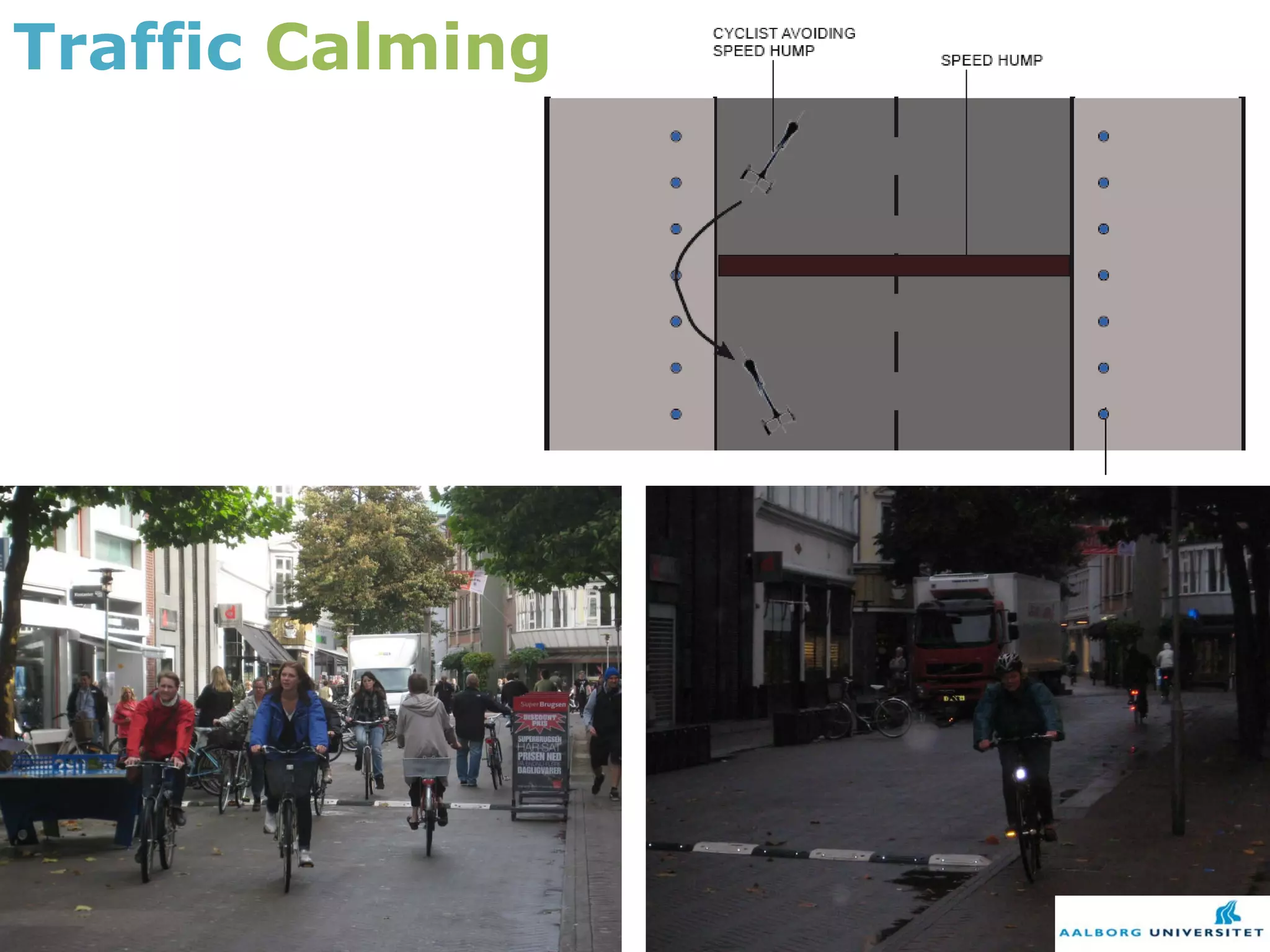
Traffic Calming
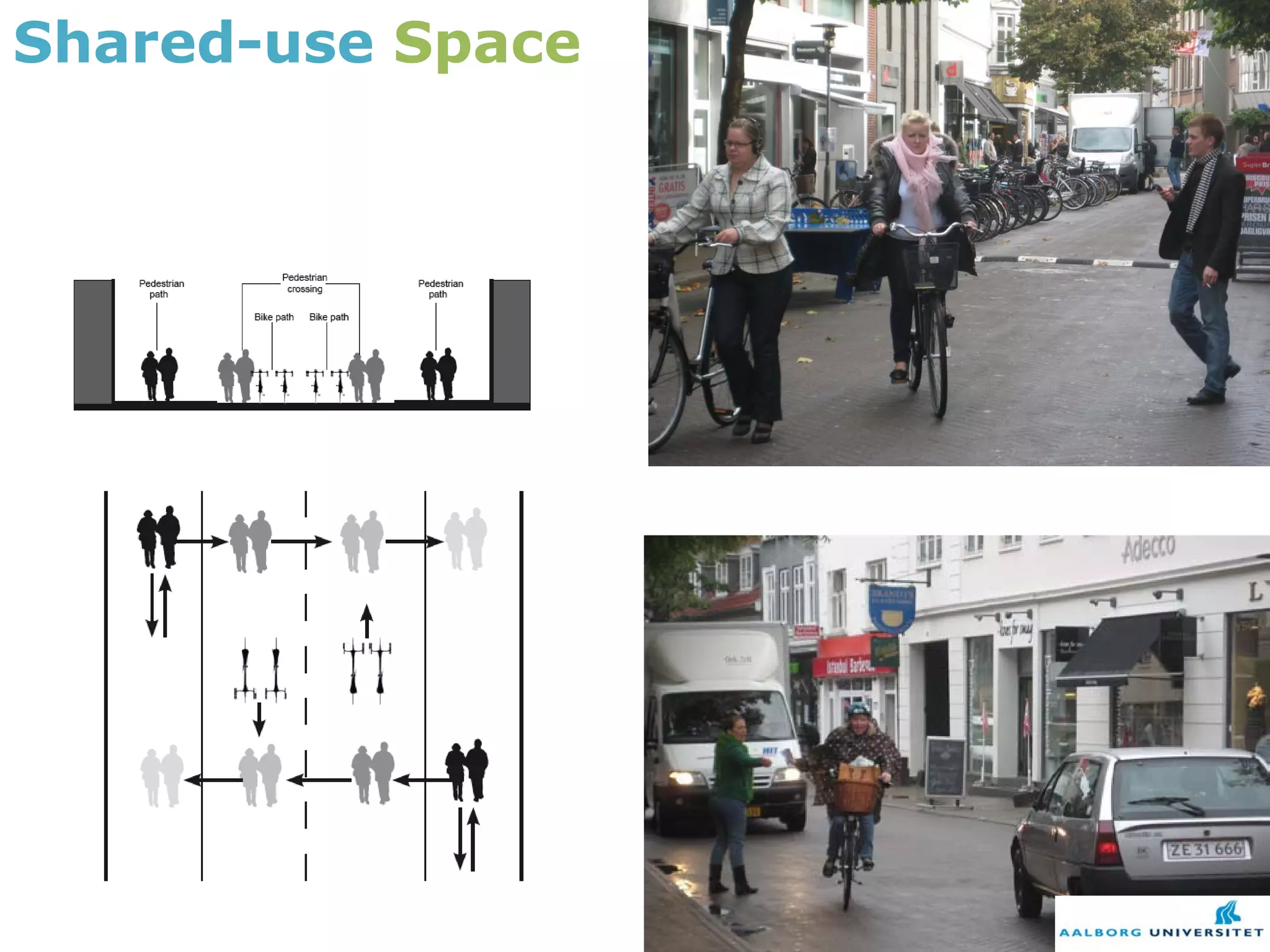
Shared-use Space
Respondents Residential Location
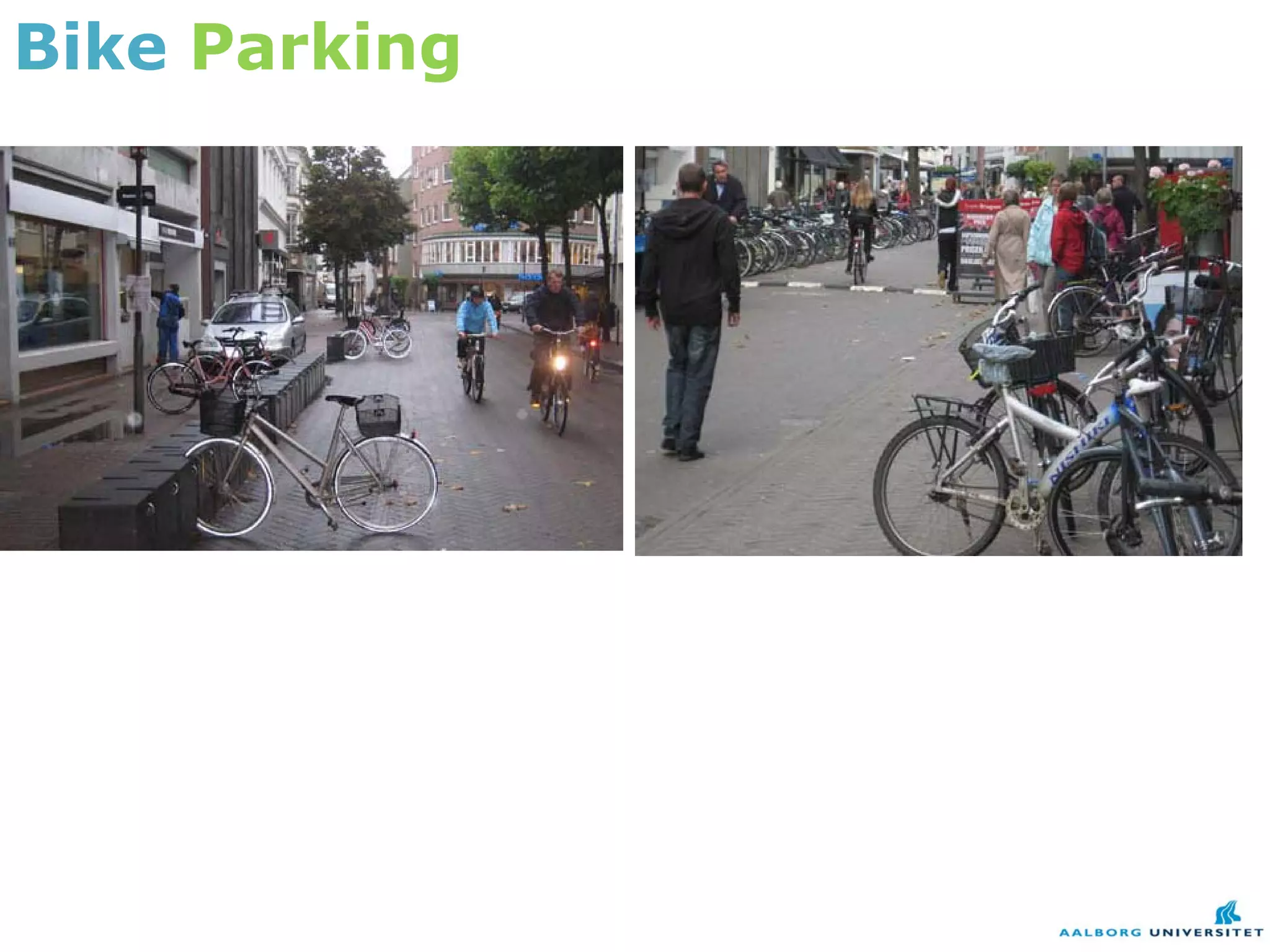
Bike Parking
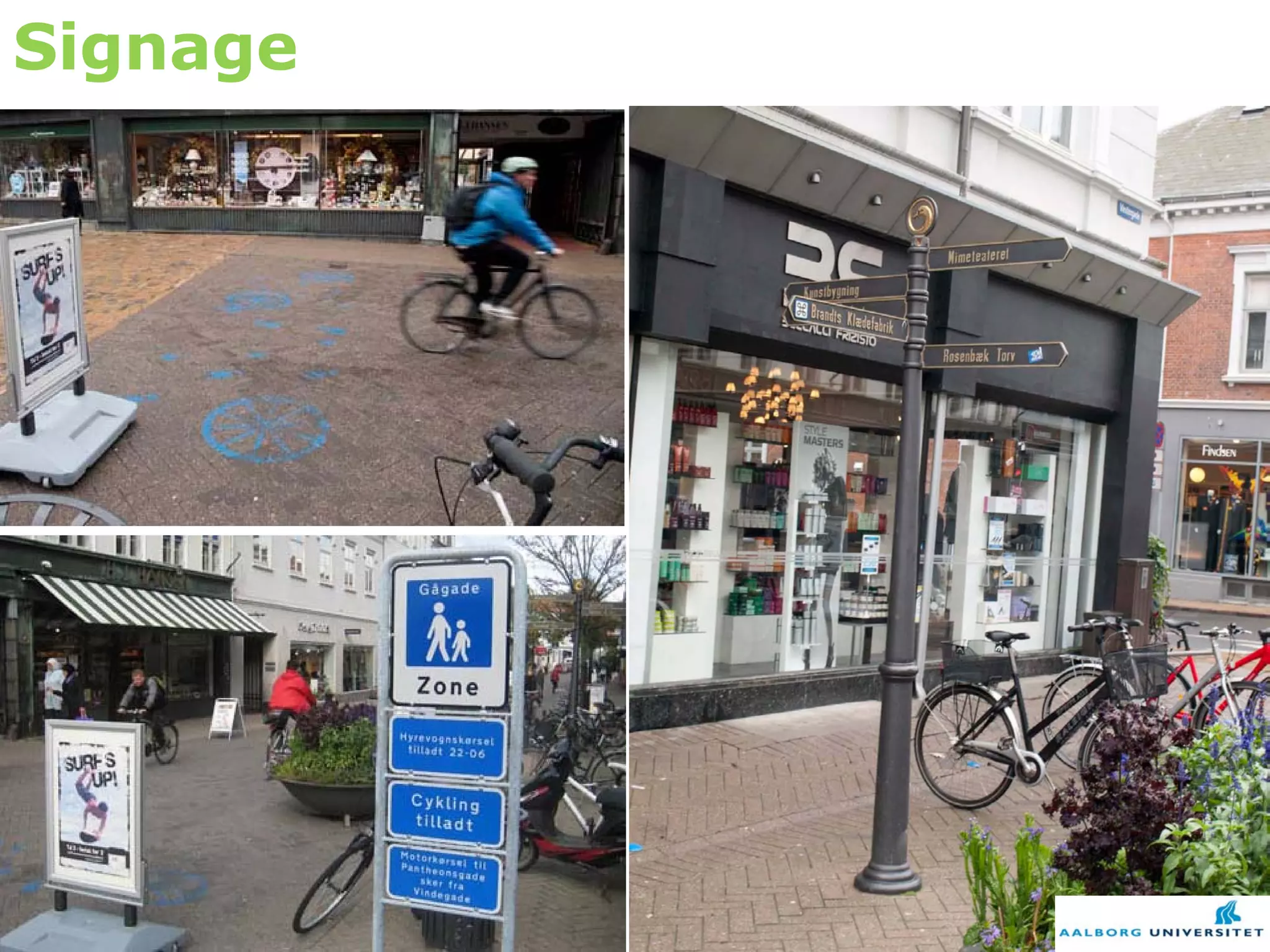
Signage
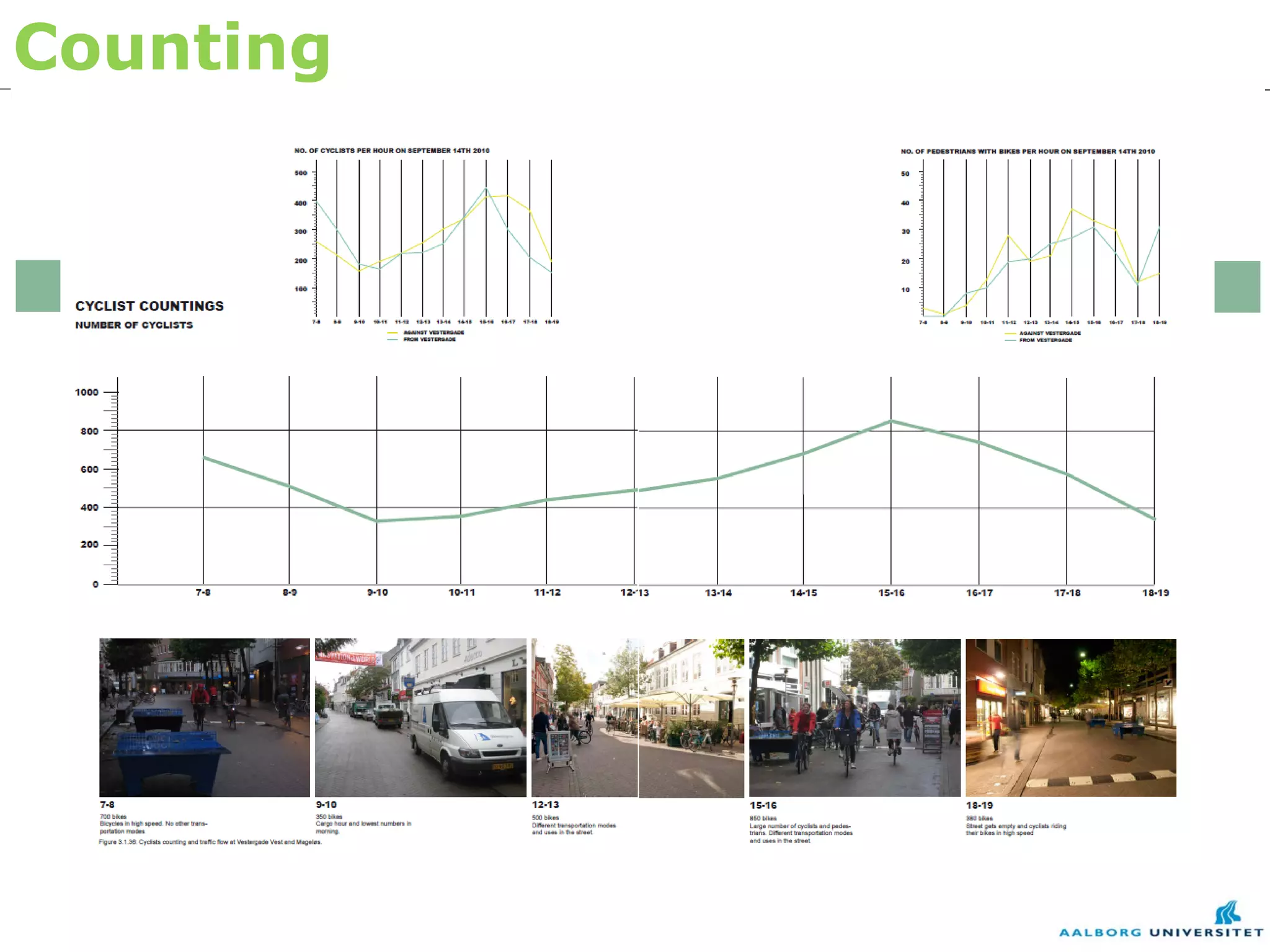
Counting
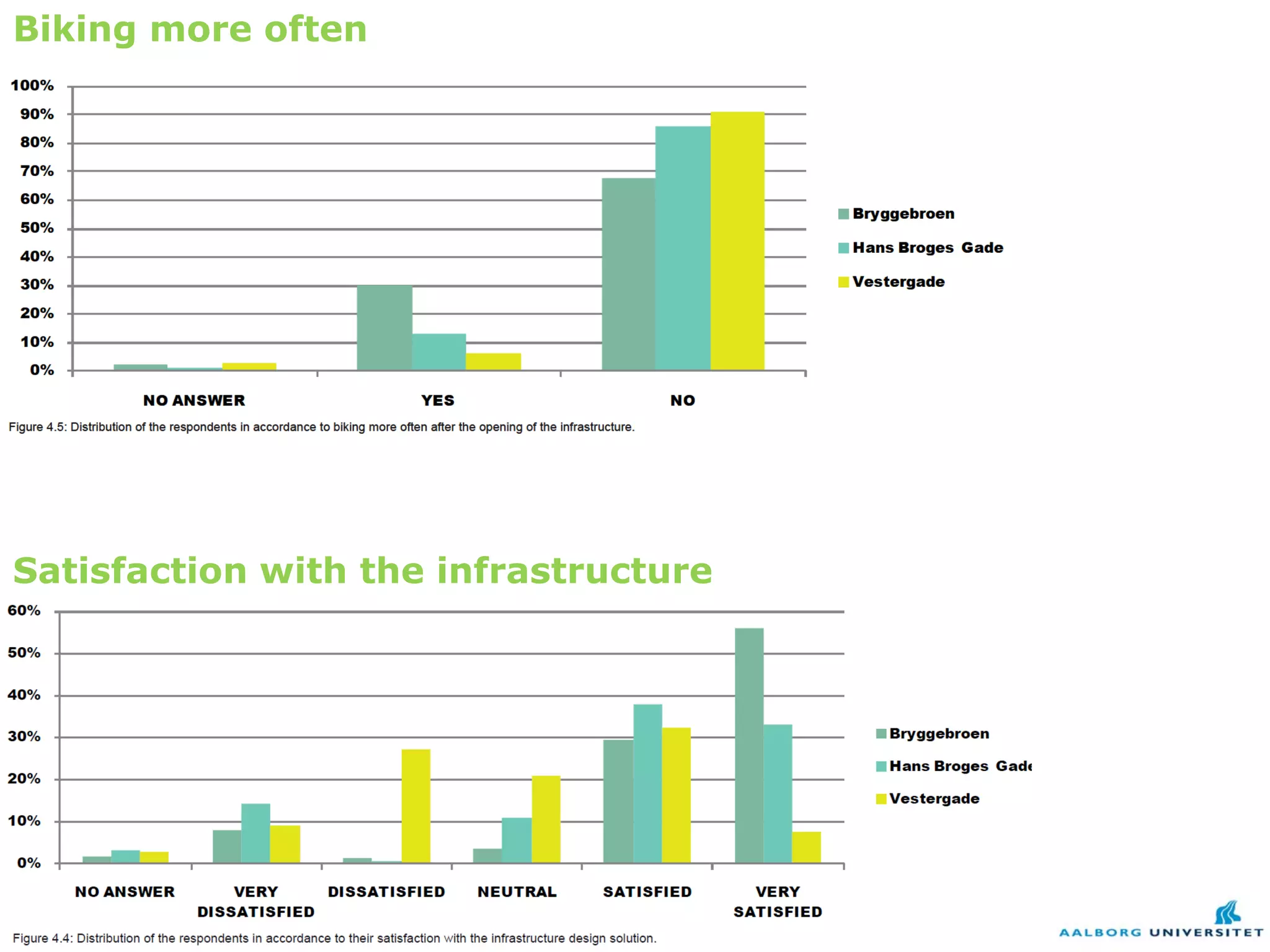
Biking more often


Satisfaction with the infrastructure
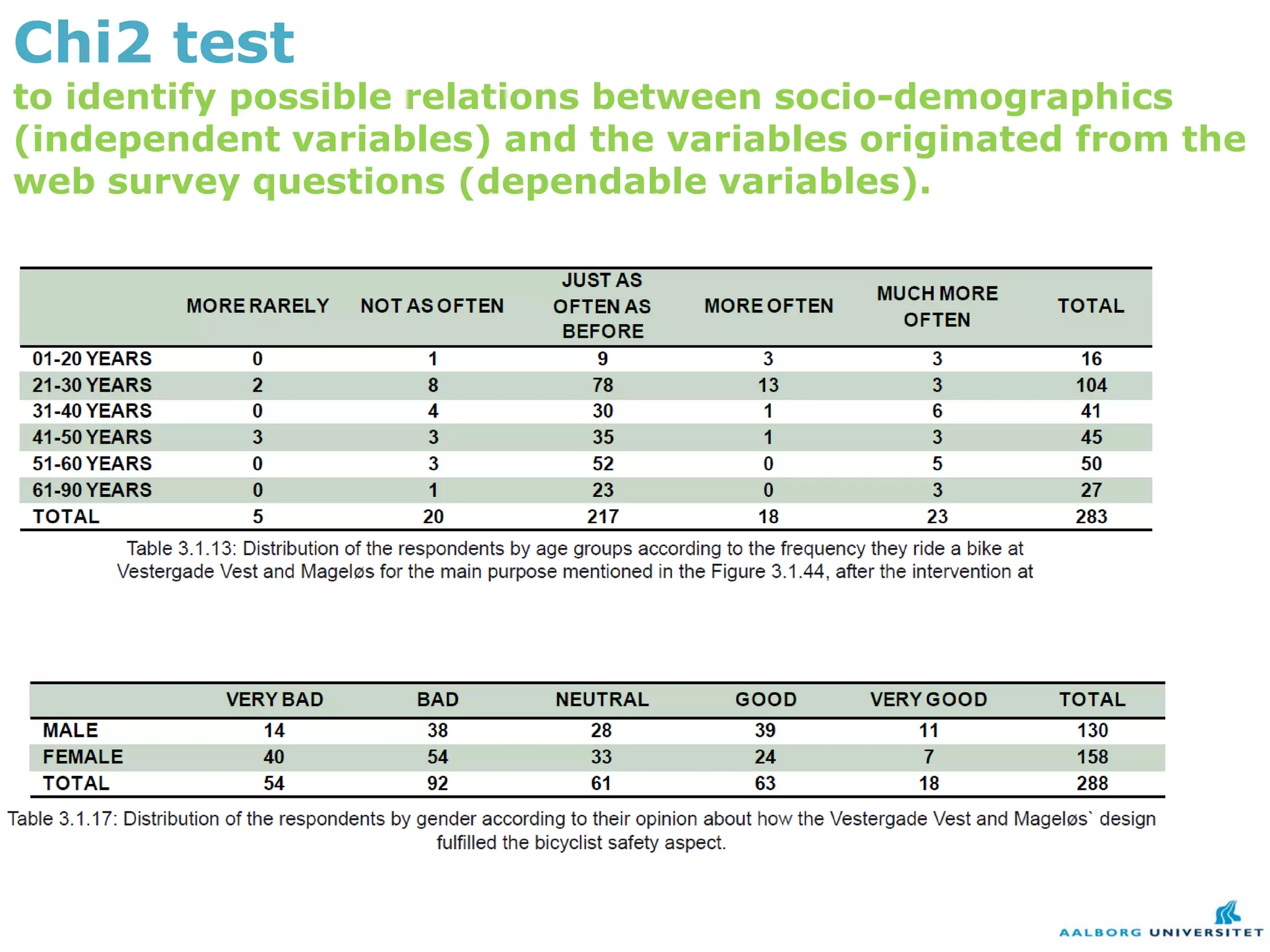
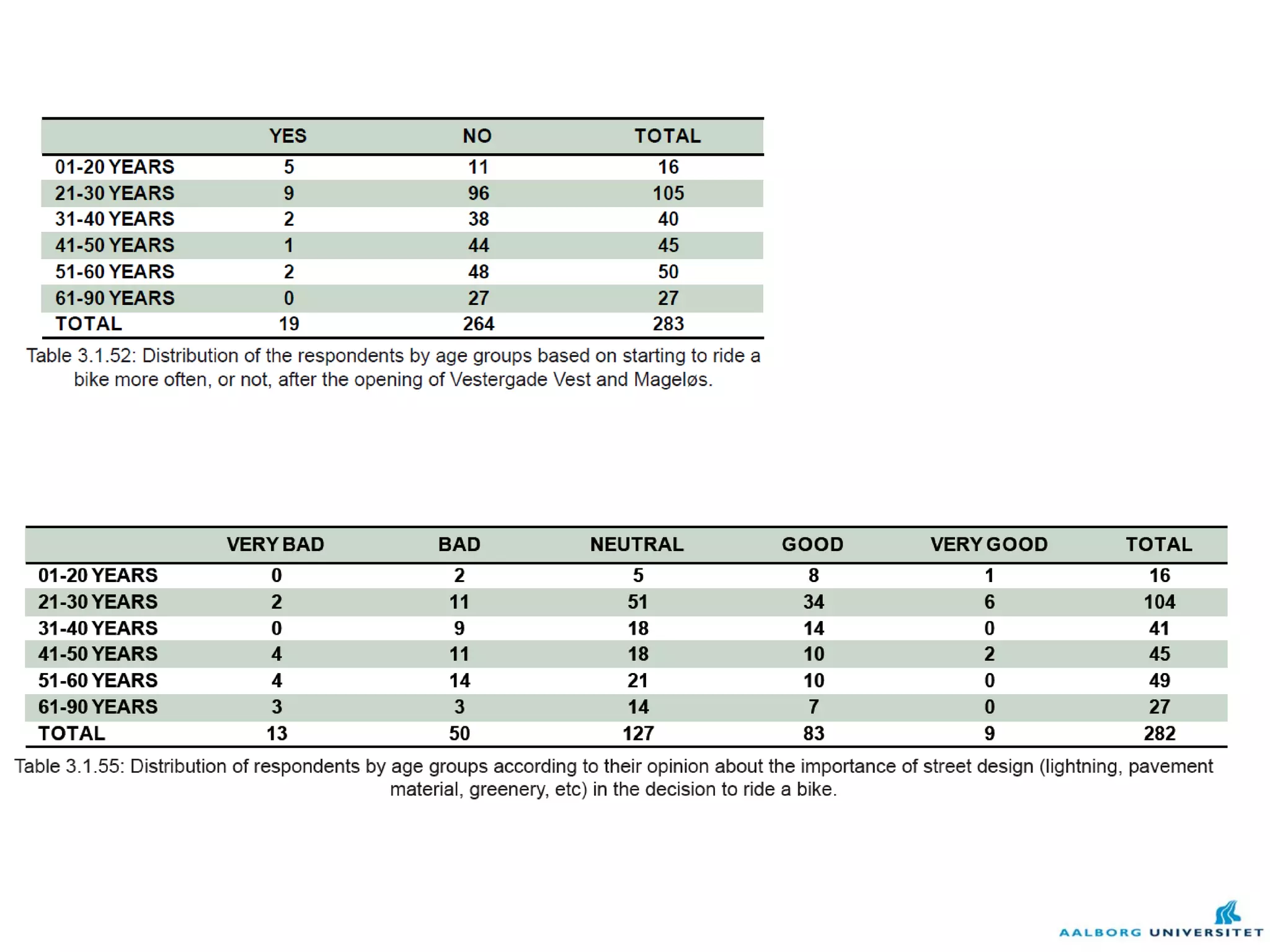
Chi2 test
to identify possible relations between socio-demographics
(independent variables) and the variables originated from the
web survey questions (dependable variables).


                                                         20
21
Final Considerations

The findings highlight important factors as
such the relevance of fast connectivity and
safety for cyclists.


Fast connectivity and safety are strategic
dimensions of a design solution that must
be taken in consideration.
Final Considerations
Shared-used spaces seem to present more
challenges for the cyclists who need to ride
their bikes and, at the same time, negotiate
their space with pedestrians.

Shared-use spaces are not common in
Denmark, but they can be an alternative
way to create more lively cities enhancing a
variety of experiences.

The findings indicate that purpose-built
bicycle-only facilities are perceived by
cyclists as safer environments to ride a bike.
Final Considerations

The three studied typologies have both
advantages and disadvantages and there is
not one better than another, the choice
depend on the political goal behind.

When deciding to implement or improve a
bike infrastructure, the particular qualities
and potentials of each typology should be
analyzed in order to decide what kind of
bike infrastructure would be appropriate to
be implemented.
Final Considerations
The majority of respondents in the cases
answered that they ride a bike in their
respectively infrastructures with the main
purpose to go to work.

The result indicates that different typologies
or a conjugation of typologies can be
efficiently used for commuting.

What seems to be important is how fast the
infrastructure connects the cyclists to their
destination and how safe it is to ride a bike
in the infrastructure.
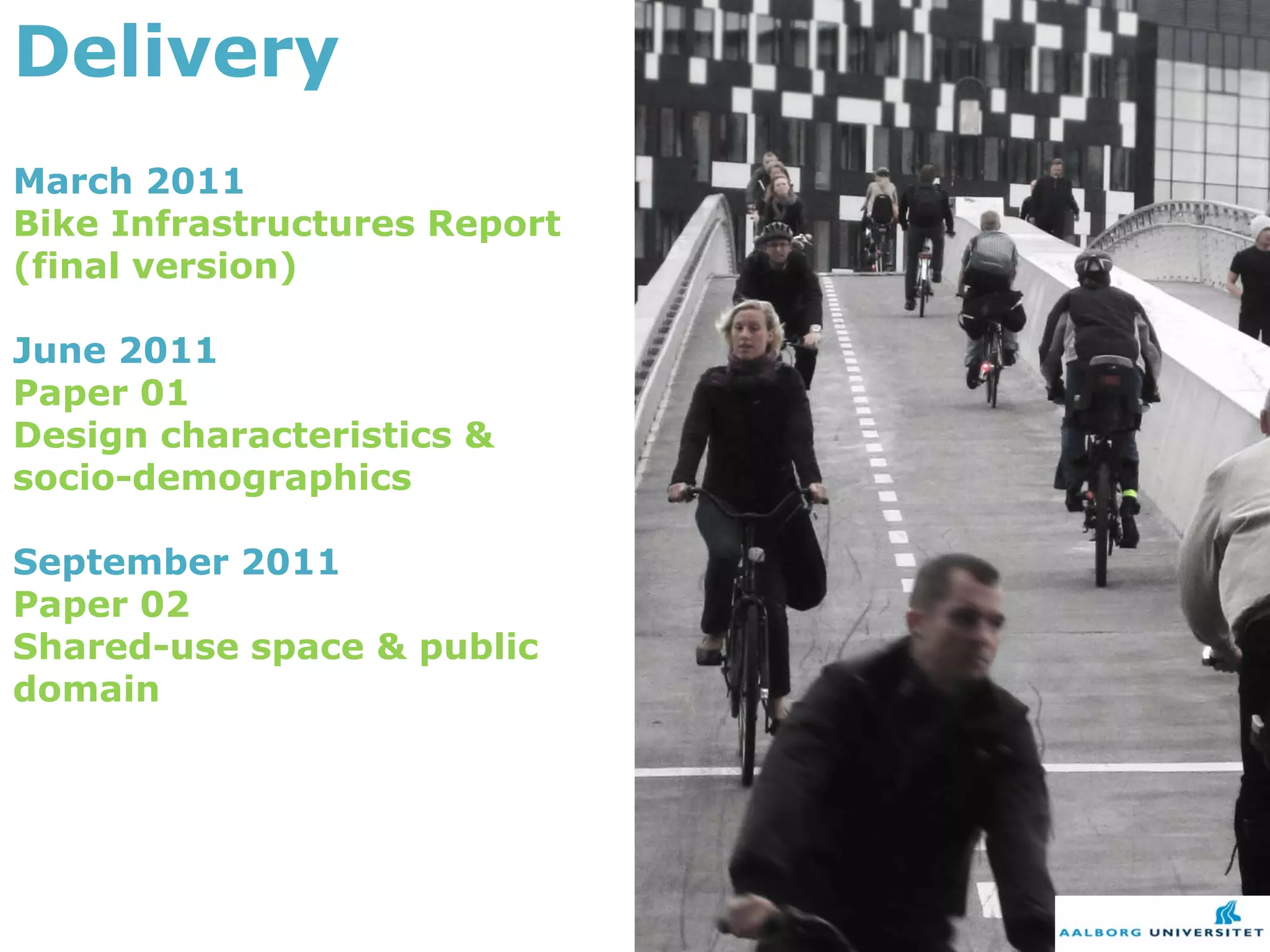
Delivery
March 2011
Bike Infrastructures Report
(final version)

June 2011
Paper 01
Design characteristics &
socio-demographics

September 2011
Paper 02
Shared-use space & public
domain

Victor | Bikability Workshop Decemver 2010

  • 1.
    BIKEINFRASTRUCTURES Victor Andrade, OleB. Jensen, Henrik Harder, Jens Madsen
  • 2.
    Goal To investigate bikeinfrastructure cases – based on a web- based questionnaire. To make an assessment with respect to the state of knowledge as well as evidence of effects.
  • 3.
    Case studies Selection criteria Lessthan last 5 years old. Distinct typologies between the cases Local government interested to share information Significant cases
  • 4.
    Vestergade Vest Hans Broges Gade Bryggebro & Mageløs
  • 5.
    Data Collection Web survey Bikecounting Interview and e-mails Field observational survey & image collection 16-12-2010 5
  • 6.
    Structure City Scale •Municipality vision •Bicyclenetwork Infrastructure Scale •Before and after •The costs of the infrastructure •Design characteristics and streetscape •Cyclist countings •The web survey •Main findings •Residential location of respondents •Descriptive statistics •Relations between socio-demographic variables and web- survey answers
  • 8.
  • 9.
  • 10.
  • 12.
  • 13.
  • 14.
  • 15.
  • 16.
  • 17.
  • 18.
    Biking more often Satisfactionwith the infrastructure
  • 19.
    Chi2 test to identifypossible relations between socio-demographics (independent variables) and the variables originated from the web survey questions (dependable variables). 20
  • 20.
  • 21.
    Final Considerations The findingshighlight important factors as such the relevance of fast connectivity and safety for cyclists. Fast connectivity and safety are strategic dimensions of a design solution that must be taken in consideration.
  • 22.
    Final Considerations Shared-used spacesseem to present more challenges for the cyclists who need to ride their bikes and, at the same time, negotiate their space with pedestrians. Shared-use spaces are not common in Denmark, but they can be an alternative way to create more lively cities enhancing a variety of experiences. The findings indicate that purpose-built bicycle-only facilities are perceived by cyclists as safer environments to ride a bike.
  • 23.
    Final Considerations The threestudied typologies have both advantages and disadvantages and there is not one better than another, the choice depend on the political goal behind. When deciding to implement or improve a bike infrastructure, the particular qualities and potentials of each typology should be analyzed in order to decide what kind of bike infrastructure would be appropriate to be implemented.
  • 24.
    Final Considerations The majorityof respondents in the cases answered that they ride a bike in their respectively infrastructures with the main purpose to go to work. The result indicates that different typologies or a conjugation of typologies can be efficiently used for commuting. What seems to be important is how fast the infrastructure connects the cyclists to their destination and how safe it is to ride a bike in the infrastructure.
  • 25.
    Delivery March 2011 Bike InfrastructuresReport (final version) June 2011 Paper 01 Design characteristics & socio-demographics September 2011 Paper 02 Shared-use space & public domain