GERUNDS AND INFINITIVES
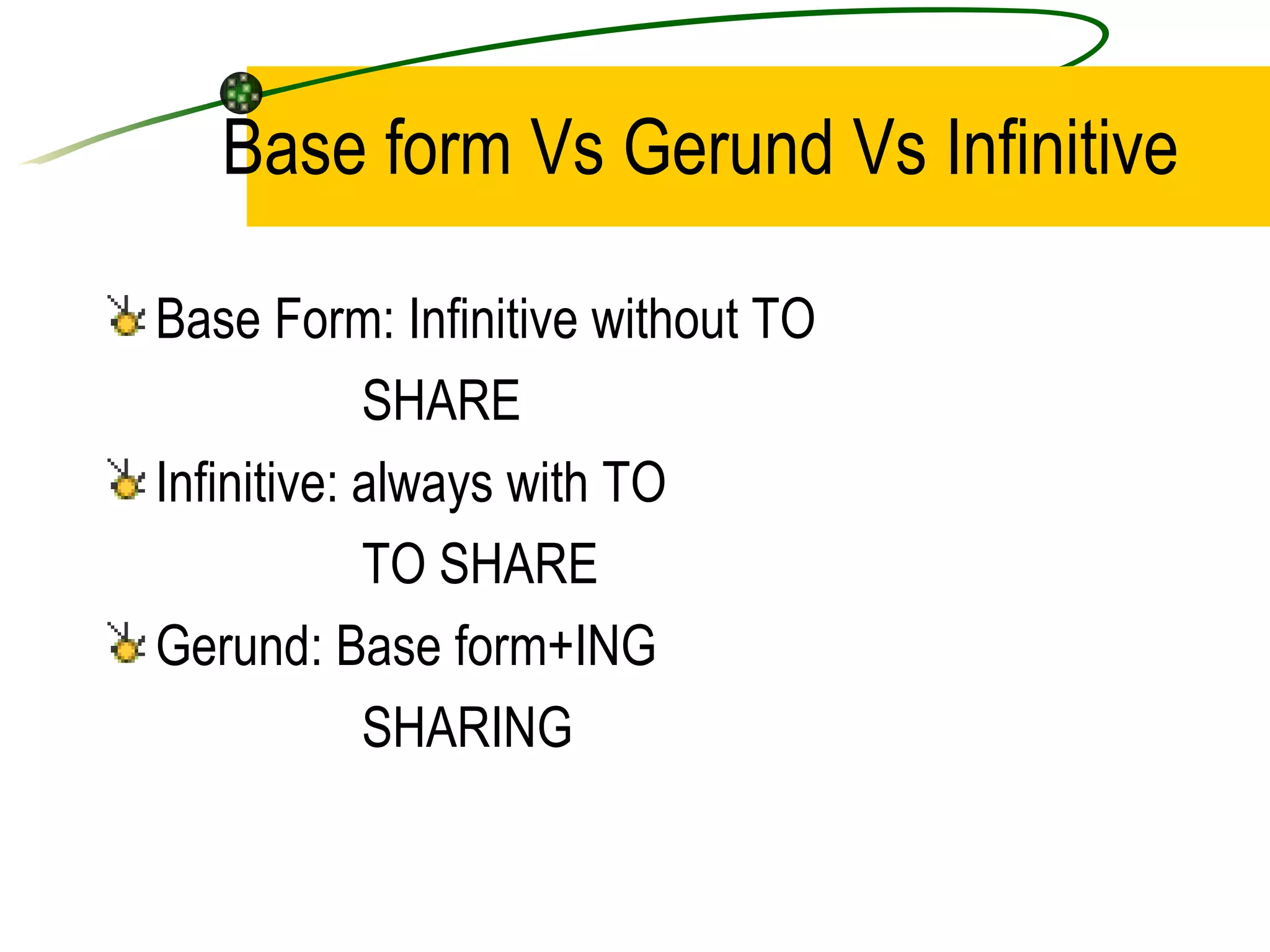
Base form Vs Gerund Vs Infinitive Base Form: Infinitive without TO SHARE Infinitive: always with TO TO SHARE Gerund: Base form+ING SHARING
BASE FORM After some perception verbs such as HEAR, FEEL or SEE and the verbs LET and MAKE: I saw you  leave  home. My parents don’t let me  stay out  late
GERUNDS As a subject of a sentence: After prepositions: Smoking  kills. I thought of  calling  you, but it was late. After  having  lunch, they go to school.
GERUNDS As a Direct Object of certain verbs: After certain expressions: Continue Miss Enjoy Prefer Finish Recommend Like/dislike Suggest Love/hate Can’t help Look forward to Can’t stand Spend (time) Feel like Don’t mind It’s no use Would mind Be/Get used to
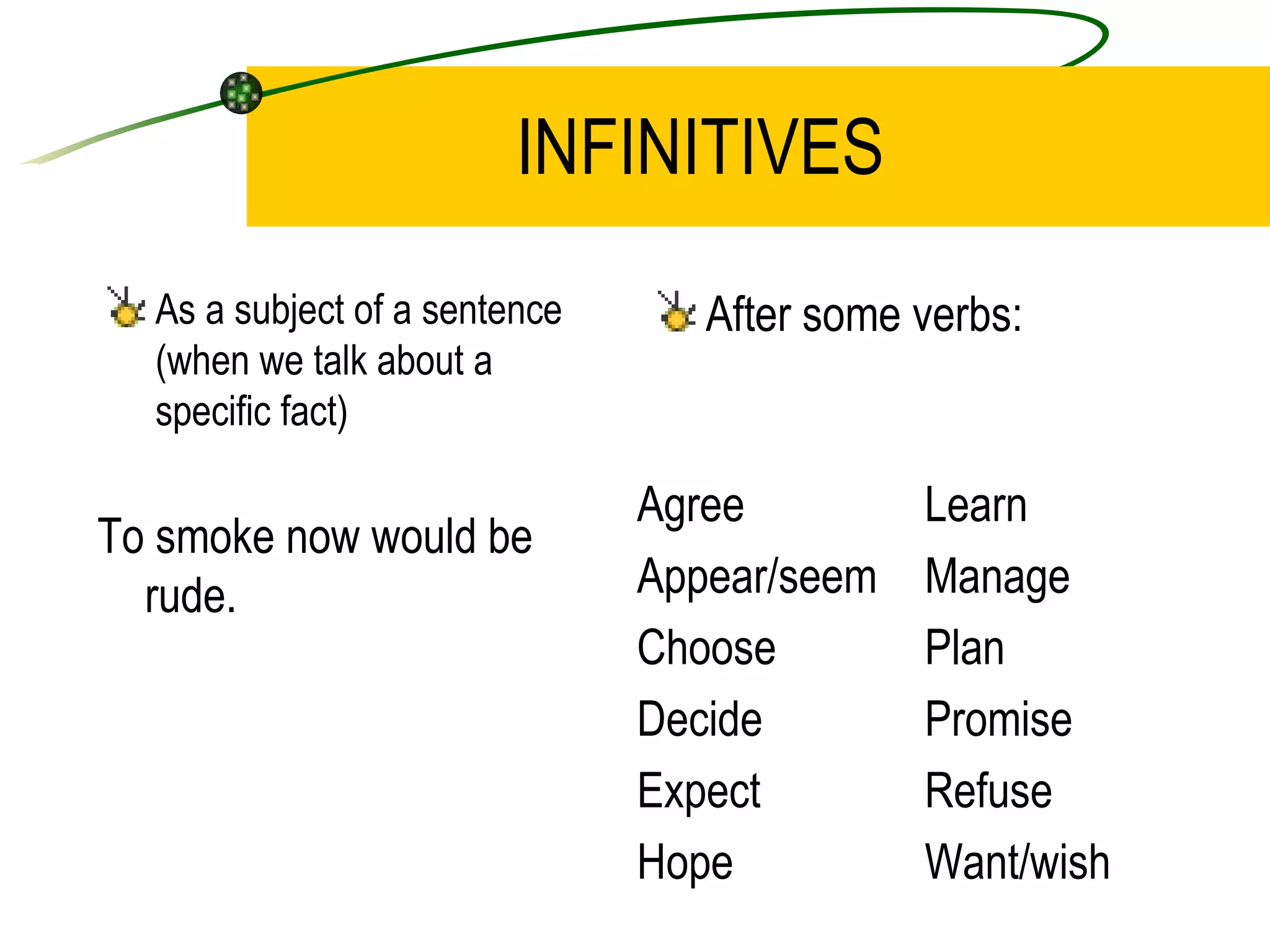
INFINITIVES As a subject of a sentence (when we talk about a specific fact) After some verbs: To smoke  now would be rude. Agree   Learn Appear/seem   Manage Choose   Plan Decide   Promise Expect   Refuse Hope   Want/wish
INFINITIVES After certain adjectives and adverbs: After Indirect Object of certain verbs: Busy Happy Ready Tired Slowly Fast Low High Advise   Teach Invite   Persuade Tell   Warn
VERBS FOLLOWED BY BOTH Without change in meaning: With change in meaning: Begin Propose Forbid Intend Start Stop Remeber Forget Regret
STOP STOP + GERUND: To leave an habit STOP + INFINITIVE: To interrupt an action for doing something else You should stop smoking, it will kill you! Let’s stop here to have a drink!
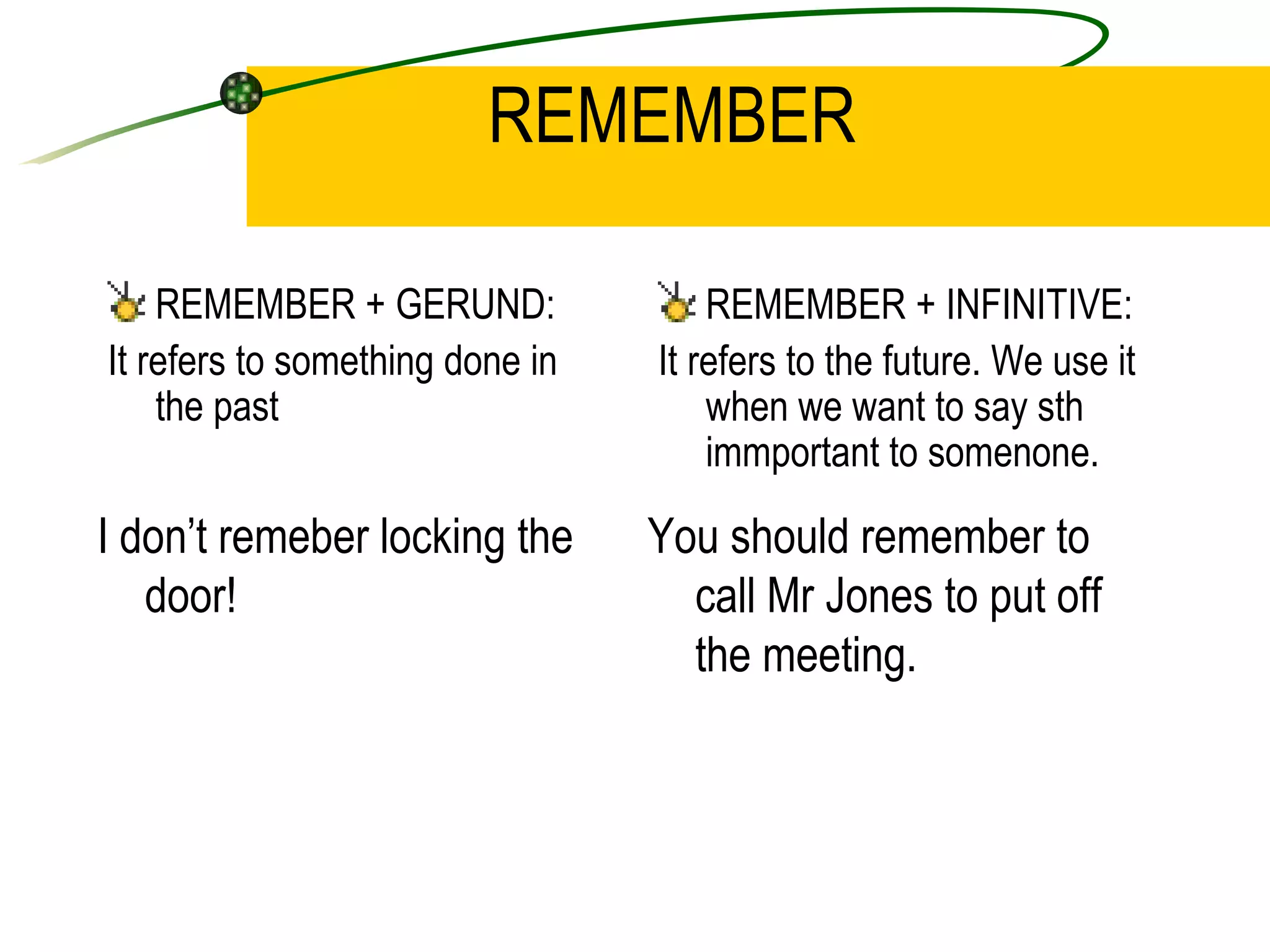
REMEMBER REMEMBER + GERUND: It refers to something done in the past REMEMBER + INFINITIVE: It refers to the future. We use it when we want to say sth immportant to somenone. I don’t remeber locking the door! You should remember to call Mr Jones to put off the meeting.
REGRET REGRET + GERUND: To regret something from the past. REGRET + INFINITIVE: To make bad news public. She regrets breaking up with him. I regret to tell you that we don’t have any vacancy to be filled.
FORGET FORGET + GERUND: To express that we’ve forgotten something which was done in the past. FORGET + INFINITIVE: To forget doing something. I forgot talking to you! (you talked, but you don’t remember) I forgot to call you on your birthday. (you didn’t call, so you didn’t remember)

Gerunds And Infinitives

  • 1.
  • 2.
    Base form VsGerund Vs Infinitive Base Form: Infinitive without TO SHARE Infinitive: always with TO TO SHARE Gerund: Base form+ING SHARING
  • 3.
    BASE FORM Aftersome perception verbs such as HEAR, FEEL or SEE and the verbs LET and MAKE: I saw you leave home. My parents don’t let me stay out late
  • 4.
    GERUNDS As asubject of a sentence: After prepositions: Smoking kills. I thought of calling you, but it was late. After having lunch, they go to school.
  • 5.
    GERUNDS As aDirect Object of certain verbs: After certain expressions: Continue Miss Enjoy Prefer Finish Recommend Like/dislike Suggest Love/hate Can’t help Look forward to Can’t stand Spend (time) Feel like Don’t mind It’s no use Would mind Be/Get used to
  • 6.
    INFINITIVES As asubject of a sentence (when we talk about a specific fact) After some verbs: To smoke now would be rude. Agree Learn Appear/seem Manage Choose Plan Decide Promise Expect Refuse Hope Want/wish
  • 7.
    INFINITIVES After certainadjectives and adverbs: After Indirect Object of certain verbs: Busy Happy Ready Tired Slowly Fast Low High Advise Teach Invite Persuade Tell Warn
  • 8.
    VERBS FOLLOWED BYBOTH Without change in meaning: With change in meaning: Begin Propose Forbid Intend Start Stop Remeber Forget Regret
  • 9.
    STOP STOP +GERUND: To leave an habit STOP + INFINITIVE: To interrupt an action for doing something else You should stop smoking, it will kill you! Let’s stop here to have a drink!
  • 10.
    REMEMBER REMEMBER +GERUND: It refers to something done in the past REMEMBER + INFINITIVE: It refers to the future. We use it when we want to say sth immportant to somenone. I don’t remeber locking the door! You should remember to call Mr Jones to put off the meeting.
  • 11.
    REGRET REGRET +GERUND: To regret something from the past. REGRET + INFINITIVE: To make bad news public. She regrets breaking up with him. I regret to tell you that we don’t have any vacancy to be filled.
  • 12.
    FORGET FORGET +GERUND: To express that we’ve forgotten something which was done in the past. FORGET + INFINITIVE: To forget doing something. I forgot talking to you! (you talked, but you don’t remember) I forgot to call you on your birthday. (you didn’t call, so you didn’t remember)