Game DesignDesignPetri Lankoskiaalto.fi
ScheduleLecture 1:Design (Petri Lankoski)Lecture 2: Narrative Design (MikkoRautalahti, Remedy)Lecture 3: Narrative Design (MikkoRautalahti, Remedy)Lecture 4: Level Design for Casual Games (Petri Ikonen, Digital Chocolate)Lecture 5: Game Design and Design Patterns (JussiHolopainen, Nokia Research Center)Lecture 6:Level Design (JarkkoKainulainen, Bugbear Entertainment)
Takeaway from WorkshopYou can generate ideas and design games based on your ideasSometimes this requires a lot of work and can be painful“I write only when inspiration strikes. Fortunately it strikes every morning at nine o’clock sharp.” (Somerset Maugham)
Game Design?Is about understanding restrictions FinancialResourcesSkillsTechnologyIs about creating more restrictions1st/3rd person game / management game / war game …Is about creating engaging gameplay within those restrictions
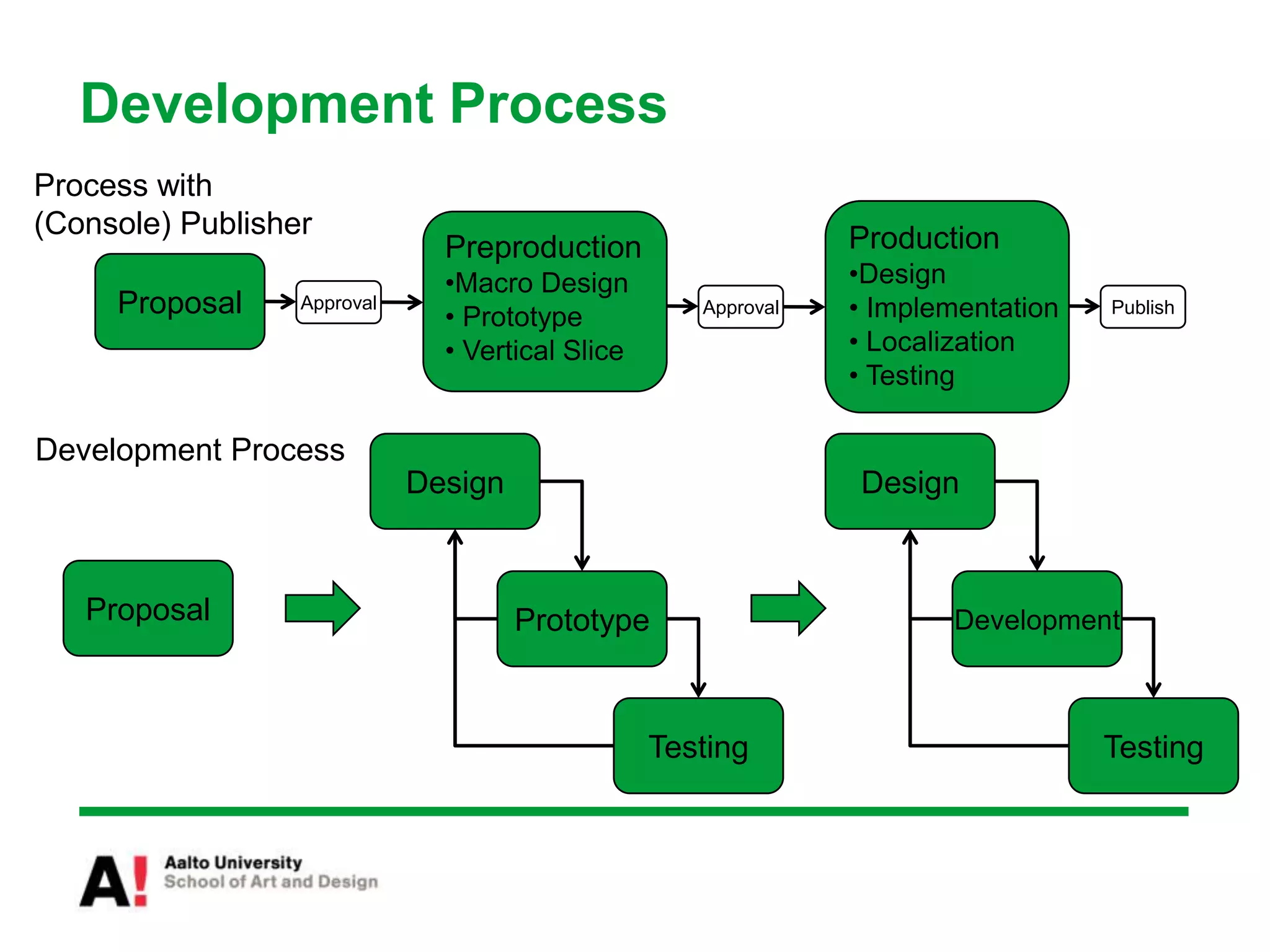
Development ProcessProcess with (Console) PublisherProductionDesign
 Implementation
 Localization
 TestingPreproductionMacro Design
 Prototype
 Vertical SliceProposalApprovalApprovalPublishDevelopment ProcessDesignDesignProposalPrototypeDevelopmentTestingTesting
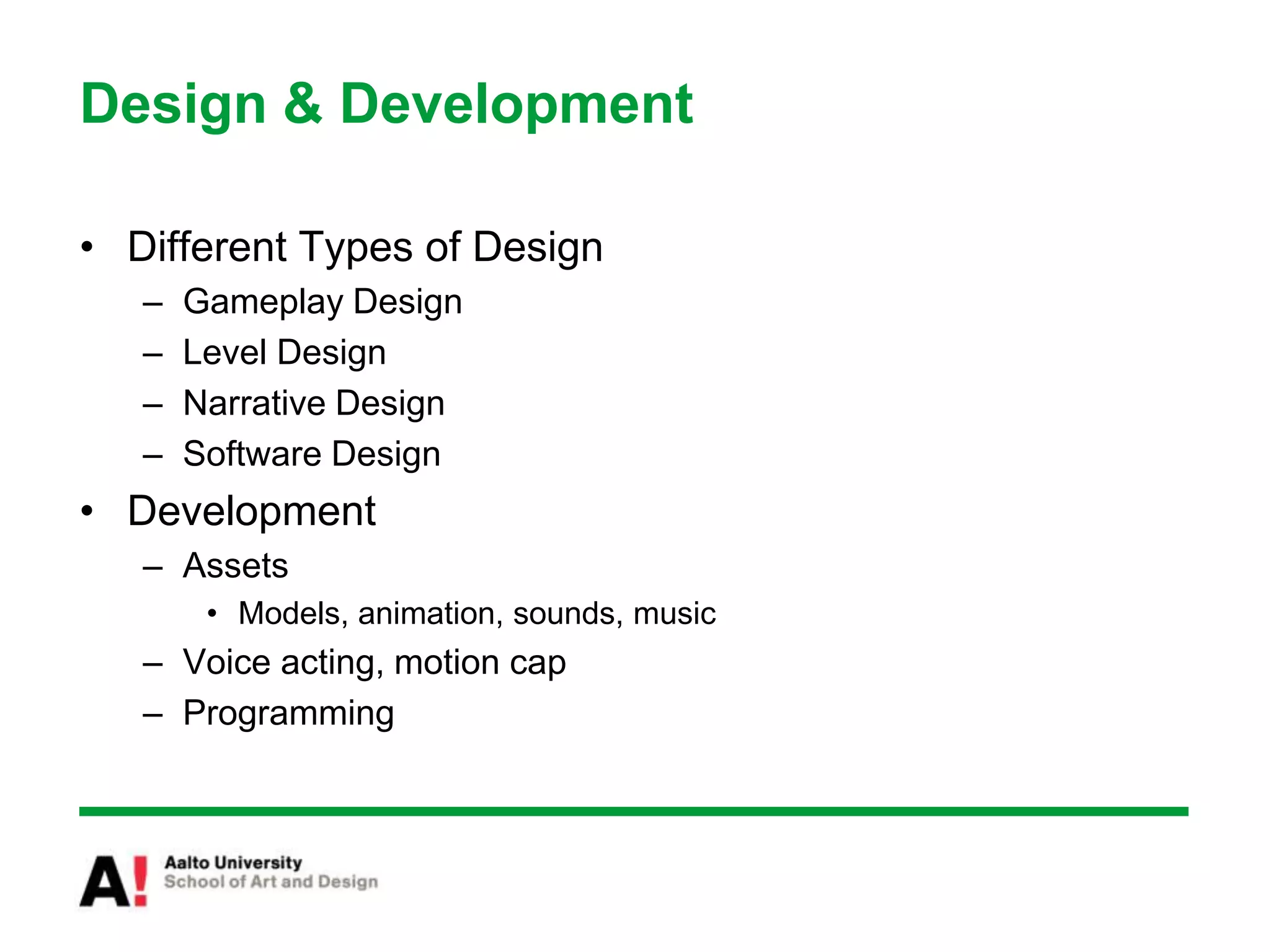
Design & DevelopmentDifferent Types of DesignGameplay DesignLevel DesignNarrative DesignSoftware DesignDevelopmentAssetsModels, animation, sounds, musicVoice acting, motion capProgramming
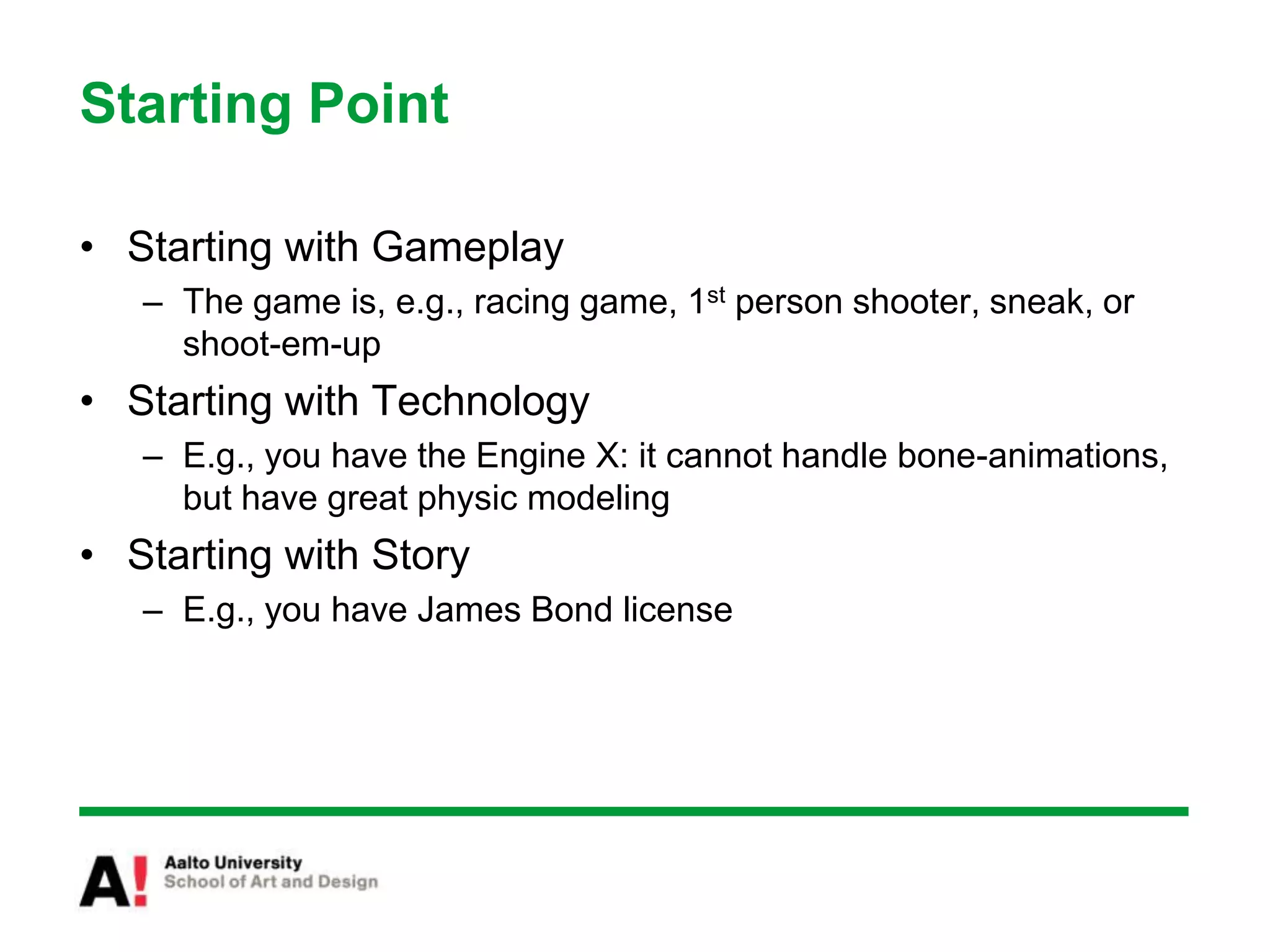
Starting PointStarting with GameplayThe game is, e.g., racing game, 1st person shooter, sneak, or shoot-em-upStarting with TechnologyE.g., you have the Engine X: it cannot handle bone-animations, but have great physic modelingStarting with StoryE.g., you have James Bond license
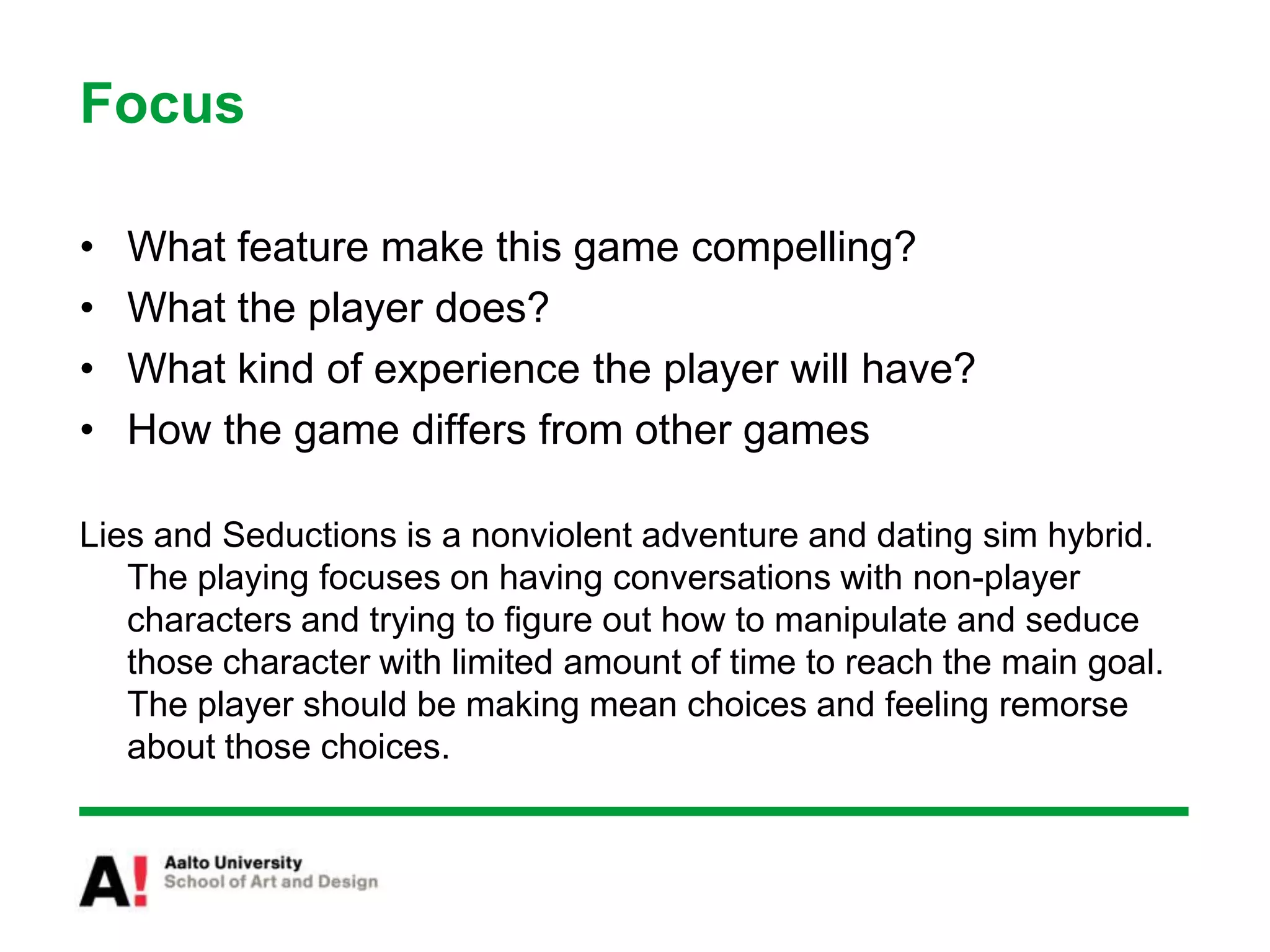
FocusWhat feature make this game compelling?What the player does?What kind of experience the player will have?How the game differs from other gamesLies and Seductions is a nonviolent adventure and dating sim hybrid. The playing focuses on having conversations with non-player characters and trying to figure out how to manipulate and seduce those character with limited amount of time to reach the main goal. The player should be making mean choices and feeling remorse about those choices.
FocusFocus should guide the designDoes this design choice reflect the focus?Focus can be changedBut should be changed accidentally
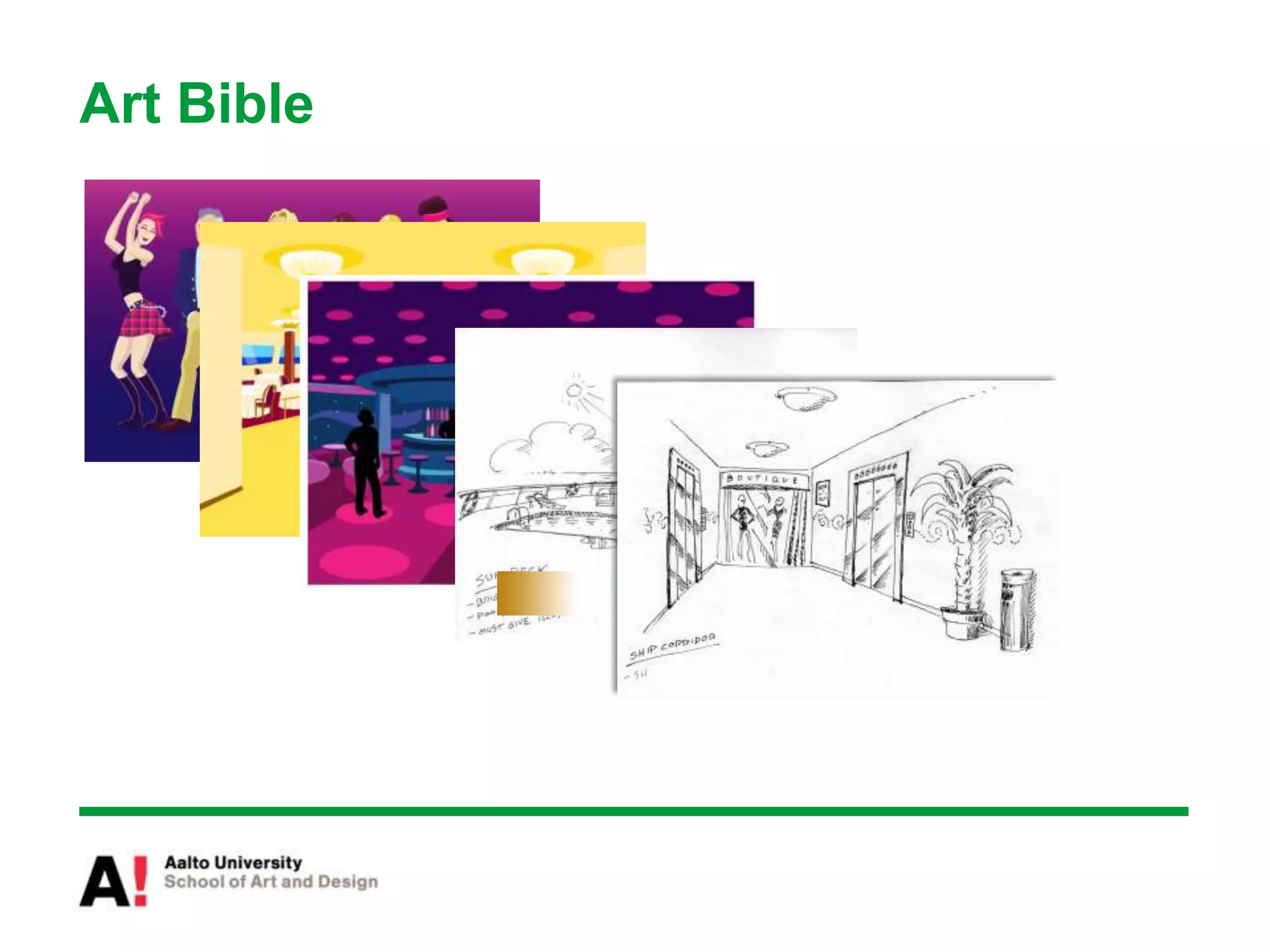
Documenting DesignMacro DesignA short document describing the main features of the gameDesign DocumentDescribes the game in detailArt BibleConcept art of the game (characters, items, places, etc.)Color palette(s) of the game Story BibleStory in detailDialogue ScriptAssets List
Other Ways to Communicate DesignPrototypesPhysical, digitalGood to communicate gameplayIn gameplay-driven titles defining by prototype might be enoughScenarios & Storyboards
Design DocumentOverviewFocusGame MechanicsWhat the player(s) doInterface (controls, etc)the Player’s view to game (1st / 3rd person camera)Game ElementsComponentsAI / ProceduresThe important system features
Design DocumentStory OverviewStory bible describes story and dialogue in detail if necessaryGame ProgressionLevels, progression from a level to a level, mapsSystem MenusE.g., start menu, options menuStructure can vary based on the gameNot every game has a storyFossilized documentKeep it up to date

Game Design, Lecture1: Design

  • 1.
  • 2.
    ScheduleLecture 1:Design (PetriLankoski)Lecture 2: Narrative Design (MikkoRautalahti, Remedy)Lecture 3: Narrative Design (MikkoRautalahti, Remedy)Lecture 4: Level Design for Casual Games (Petri Ikonen, Digital Chocolate)Lecture 5: Game Design and Design Patterns (JussiHolopainen, Nokia Research Center)Lecture 6:Level Design (JarkkoKainulainen, Bugbear Entertainment)
  • 3.
    Takeaway from WorkshopYoucan generate ideas and design games based on your ideasSometimes this requires a lot of work and can be painful“I write only when inspiration strikes. Fortunately it strikes every morning at nine o’clock sharp.” (Somerset Maugham)
  • 4.
    Game Design?Is aboutunderstanding restrictions FinancialResourcesSkillsTechnologyIs about creating more restrictions1st/3rd person game / management game / war game …Is about creating engaging gameplay within those restrictions
  • 5.
    Development ProcessProcess with(Console) PublisherProductionDesign
  • 6.
  • 7.
  • 8.
  • 9.
  • 10.
    Vertical SliceProposalApprovalApprovalPublishDevelopmentProcessDesignDesignProposalPrototypeDevelopmentTestingTesting
  • 11.
    Design & DevelopmentDifferentTypes of DesignGameplay DesignLevel DesignNarrative DesignSoftware DesignDevelopmentAssetsModels, animation, sounds, musicVoice acting, motion capProgramming
  • 12.
    Starting PointStarting withGameplayThe game is, e.g., racing game, 1st person shooter, sneak, or shoot-em-upStarting with TechnologyE.g., you have the Engine X: it cannot handle bone-animations, but have great physic modelingStarting with StoryE.g., you have James Bond license
  • 13.
    FocusWhat feature makethis game compelling?What the player does?What kind of experience the player will have?How the game differs from other gamesLies and Seductions is a nonviolent adventure and dating sim hybrid. The playing focuses on having conversations with non-player characters and trying to figure out how to manipulate and seduce those character with limited amount of time to reach the main goal. The player should be making mean choices and feeling remorse about those choices.
  • 14.
    FocusFocus should guidethe designDoes this design choice reflect the focus?Focus can be changedBut should be changed accidentally
  • 15.
    Documenting DesignMacro DesignAshort document describing the main features of the gameDesign DocumentDescribes the game in detailArt BibleConcept art of the game (characters, items, places, etc.)Color palette(s) of the game Story BibleStory in detailDialogue ScriptAssets List
  • 16.
    Other Ways toCommunicate DesignPrototypesPhysical, digitalGood to communicate gameplayIn gameplay-driven titles defining by prototype might be enoughScenarios & Storyboards
  • 17.
    Design DocumentOverviewFocusGame MechanicsWhatthe player(s) doInterface (controls, etc)the Player’s view to game (1st / 3rd person camera)Game ElementsComponentsAI / ProceduresThe important system features
  • 18.
    Design DocumentStory OverviewStorybible describes story and dialogue in detail if necessaryGame ProgressionLevels, progression from a level to a level, mapsSystem MenusE.g., start menu, options menuStructure can vary based on the gameNot every game has a storyFossilized documentKeep it up to date
  • 19.
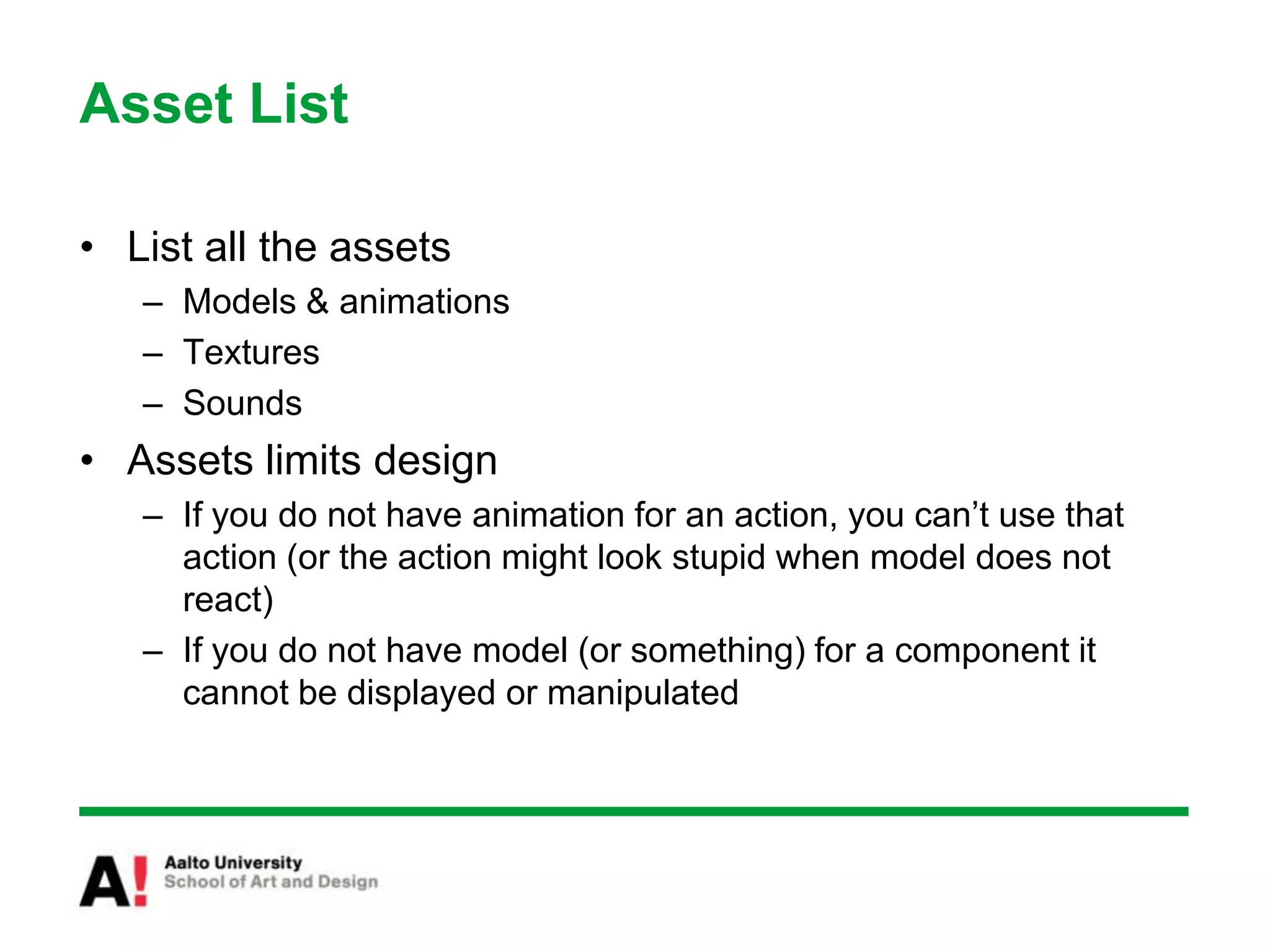
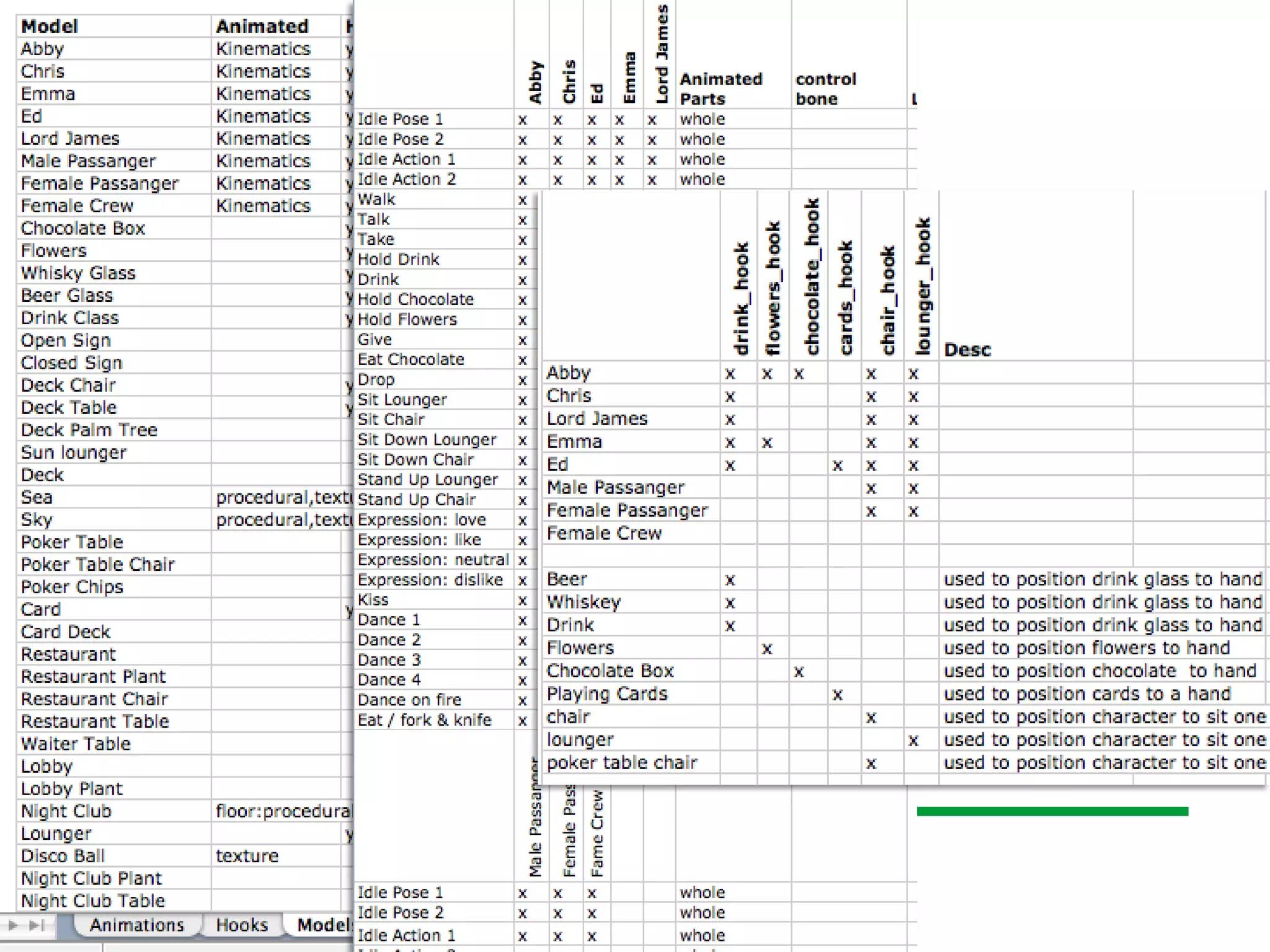
    Asset ListList allthe assetsModels & animationsTexturesSoundsAssets limits designIf you do not have animation for an action, you can’t use that action (or the action might look stupid when model does not react)If you do not have model (or something) for a component it cannot be displayed or manipulated
  • 20.
  • 21.
  • 22.
    The Function ofDocumentsThe documents are for describing the game to the development teamTo ensure that all are developing the same gameExamples:Art bible & Asset listAnimators & modelersTechnical people (selecting/writing shades, mo)Design documentGame DesignersLevel designersNarrative designersProgrammers
  • 23.
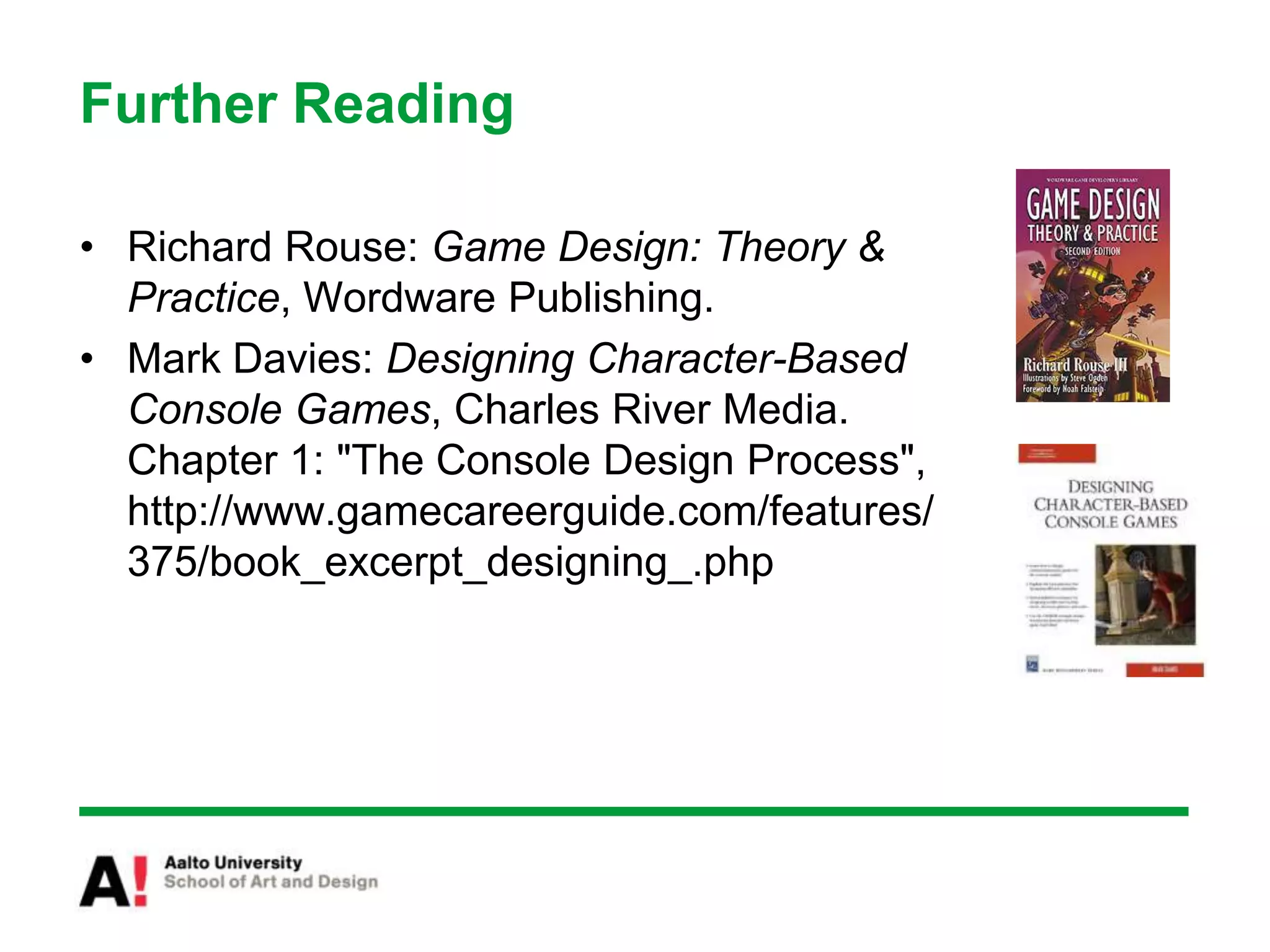
    Further ReadingRichard Rouse:Game Design: Theory & Practice, Wordware Publishing.Mark Davies: Designing Character-Based Console Games, Charles River Media. Chapter 1: "The Console Design Process", http://www.gamecareerguide.com/features/375/book_excerpt_designing_.php

Editor's Notes

  • #5 The Songs of North example; no push/need to poll, latency 1s+, data transfer was expensive, positioning was incredible expensive,