Recap
• Play sessionrecording
• Choosing clips to show that are relevant to your RQ
• Creating questions for the clips
• Conducing interviews (record the interview)
• Showing a clip
• Asking question
• Asking clarifications if needed
3.
RQ: for interviews
&analysis
What information does players use to find their way in
Iketsu?
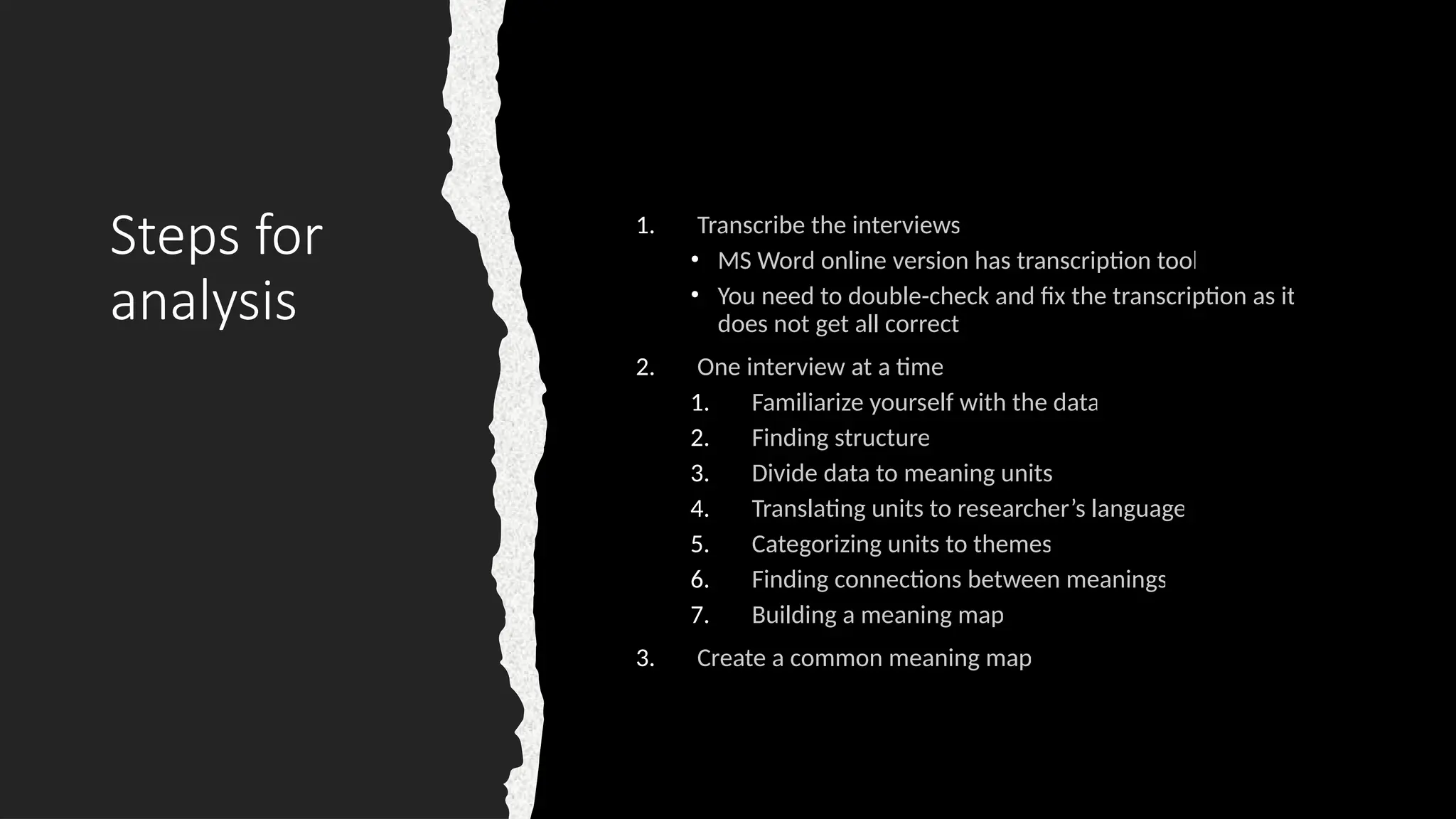
Steps for
analysis
1. Transcribethe interviews
• MS Word online version has transcription tool
• You need to double-check and fix the transcription as it
does not get all correct
2. One interview at a time
1. Familiarize yourself with the data
2. Finding structure
3. Divide data to meaning units
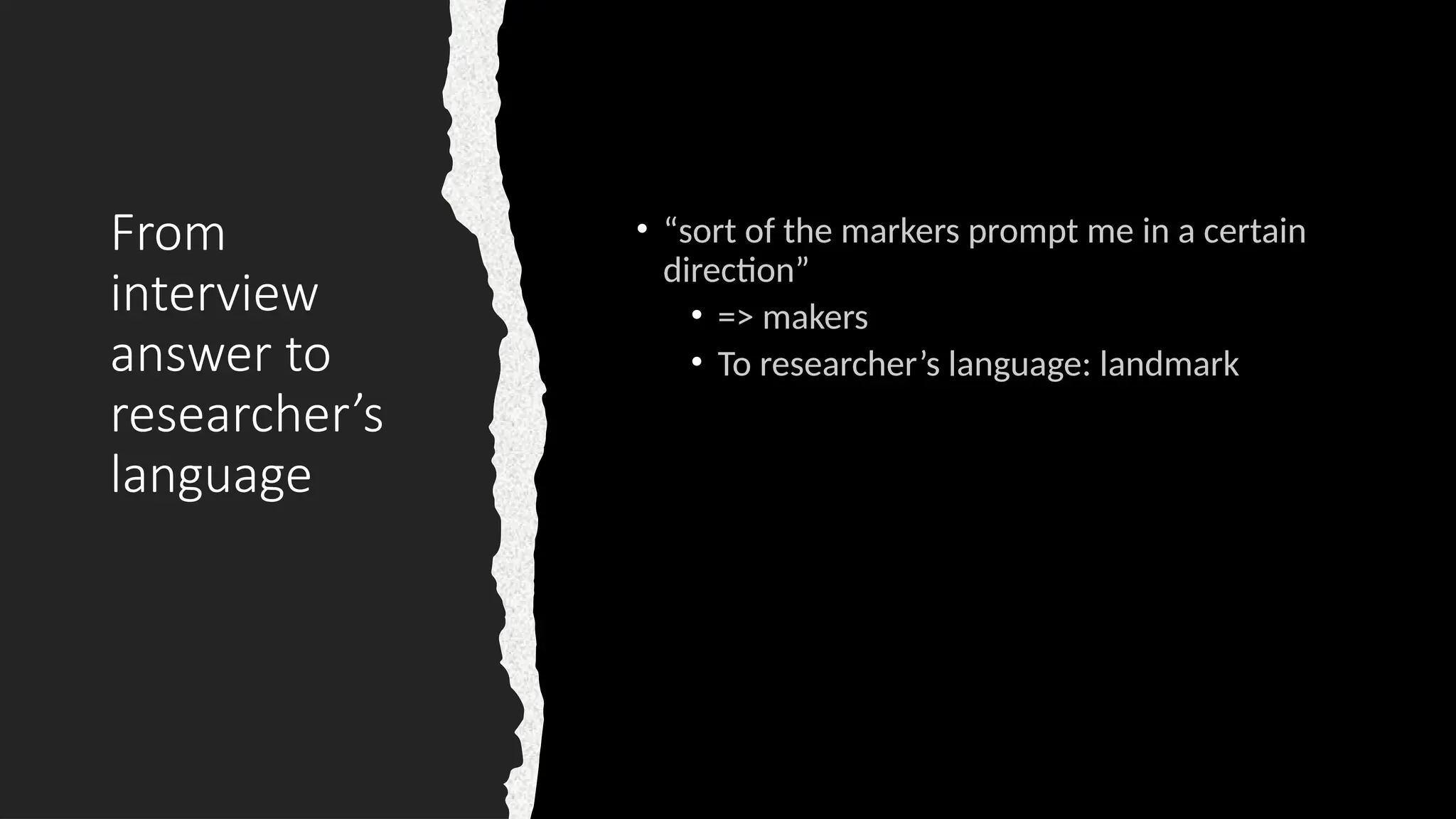
4. Translating units to researcher’s language
5. Categorizing units to themes
6. Finding connections between meanings
7. Building a meaning map
3. Create a common meaning map
Group work: Analyzingone interview
• Find meaning units
• Find themes
• Create individual meaning map
8.
EPP Example
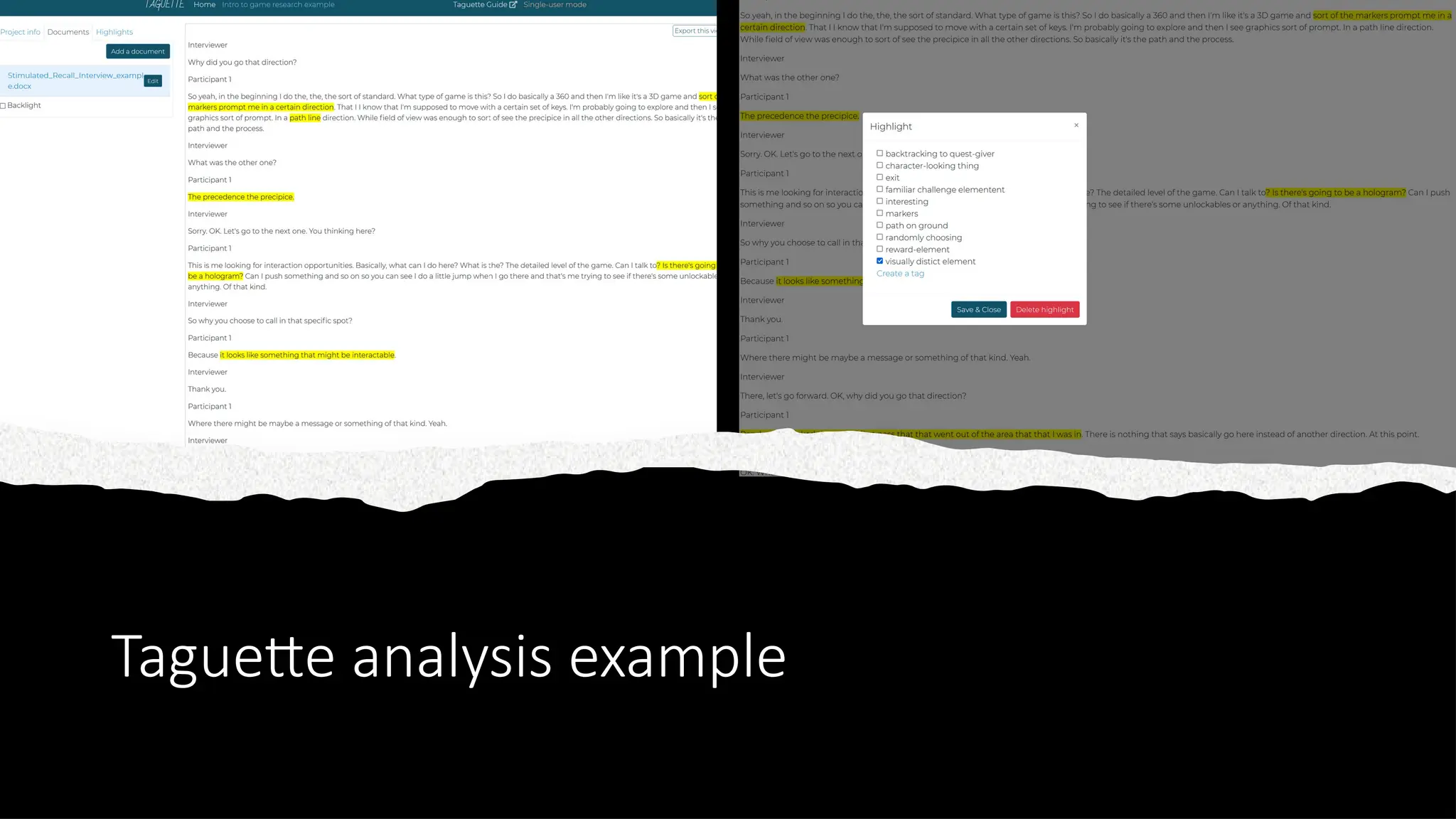
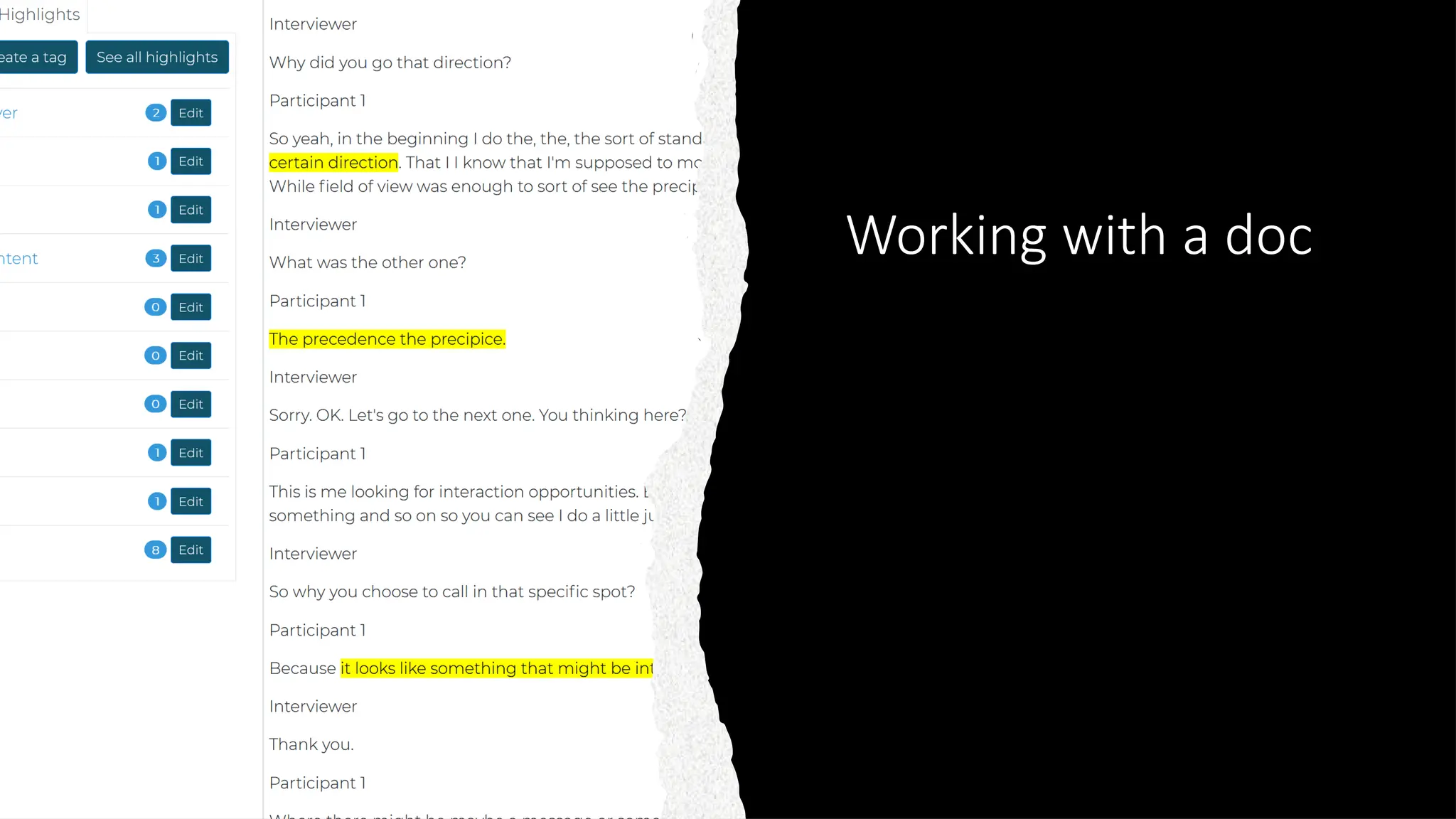
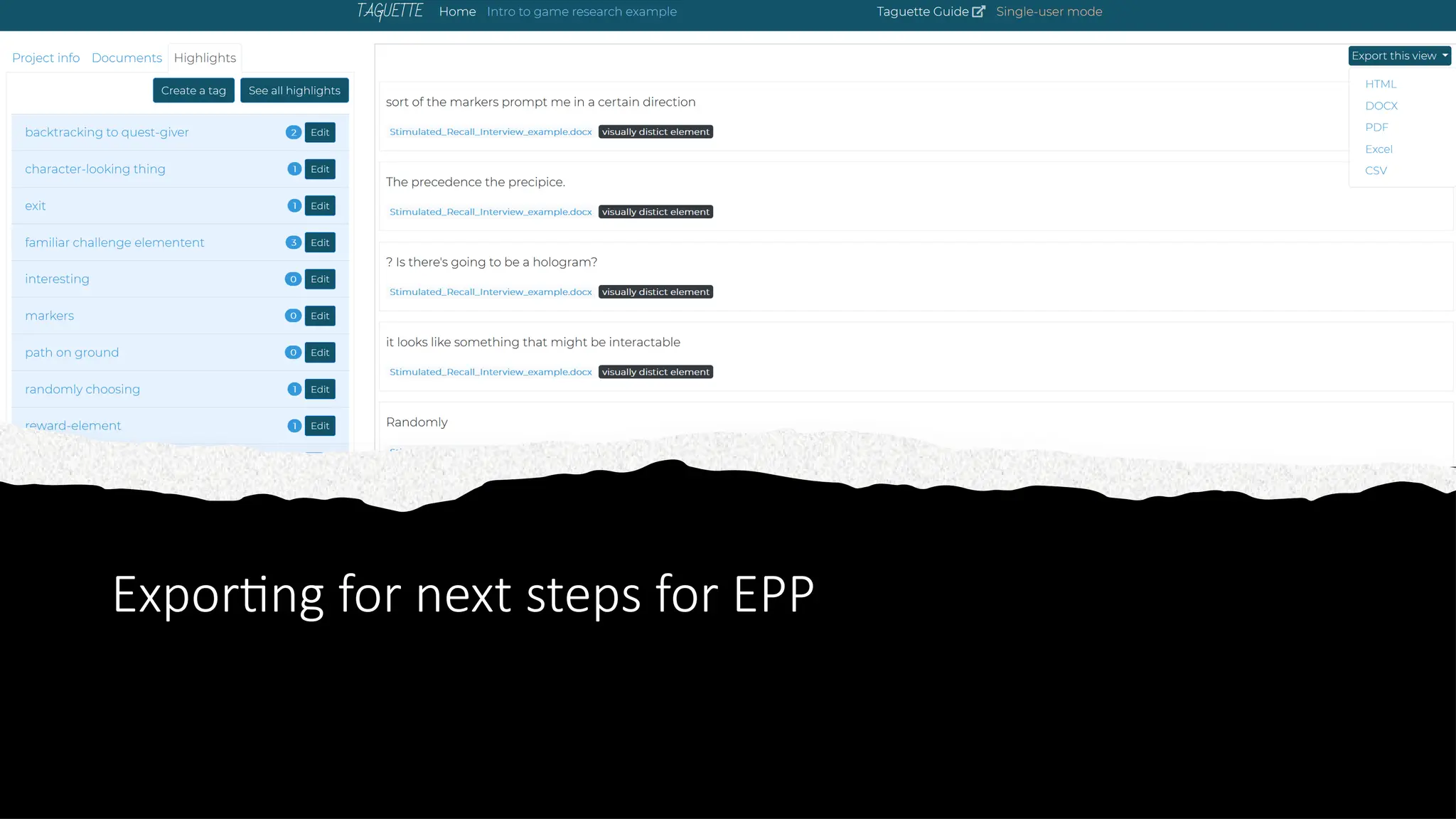
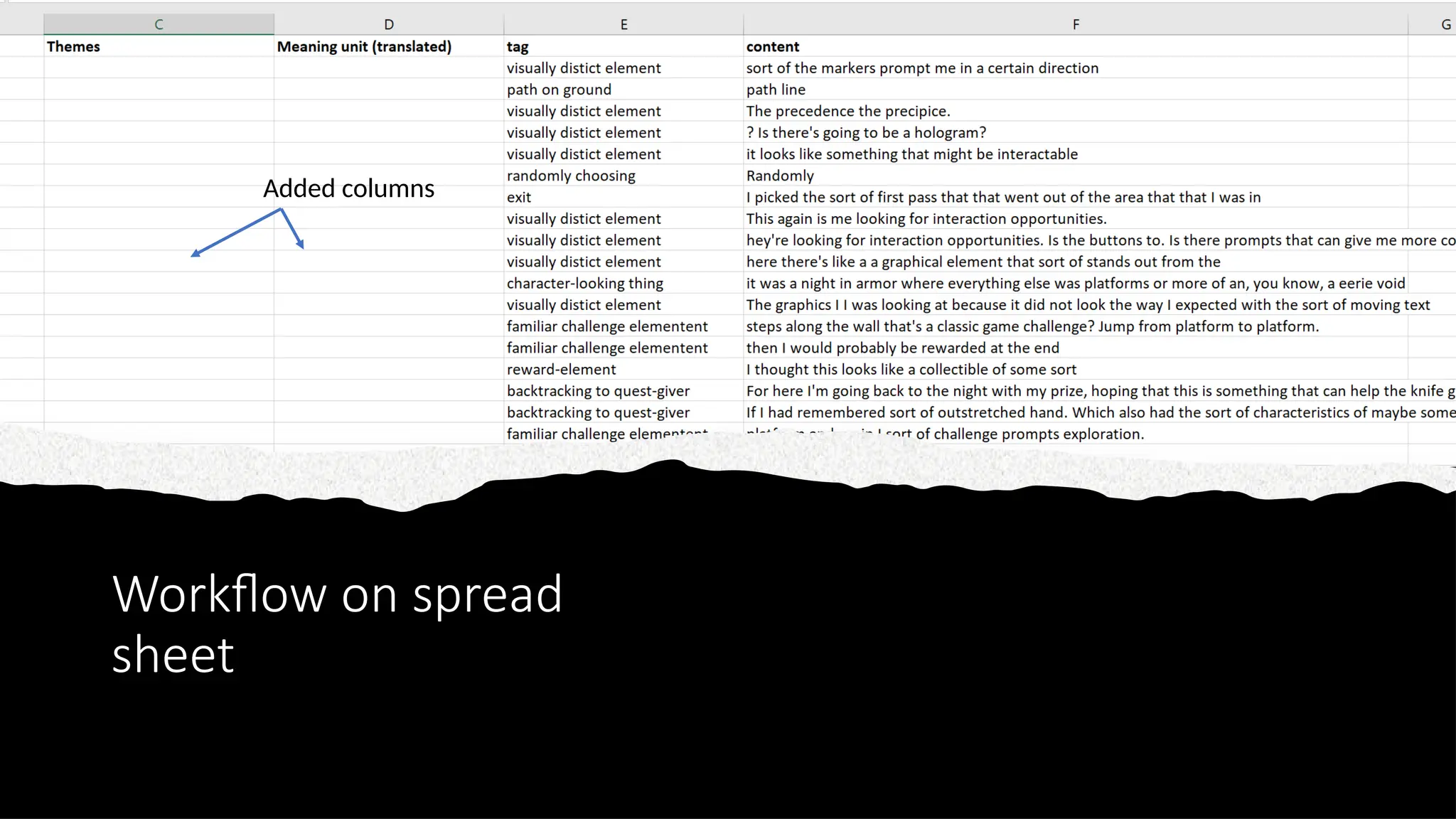
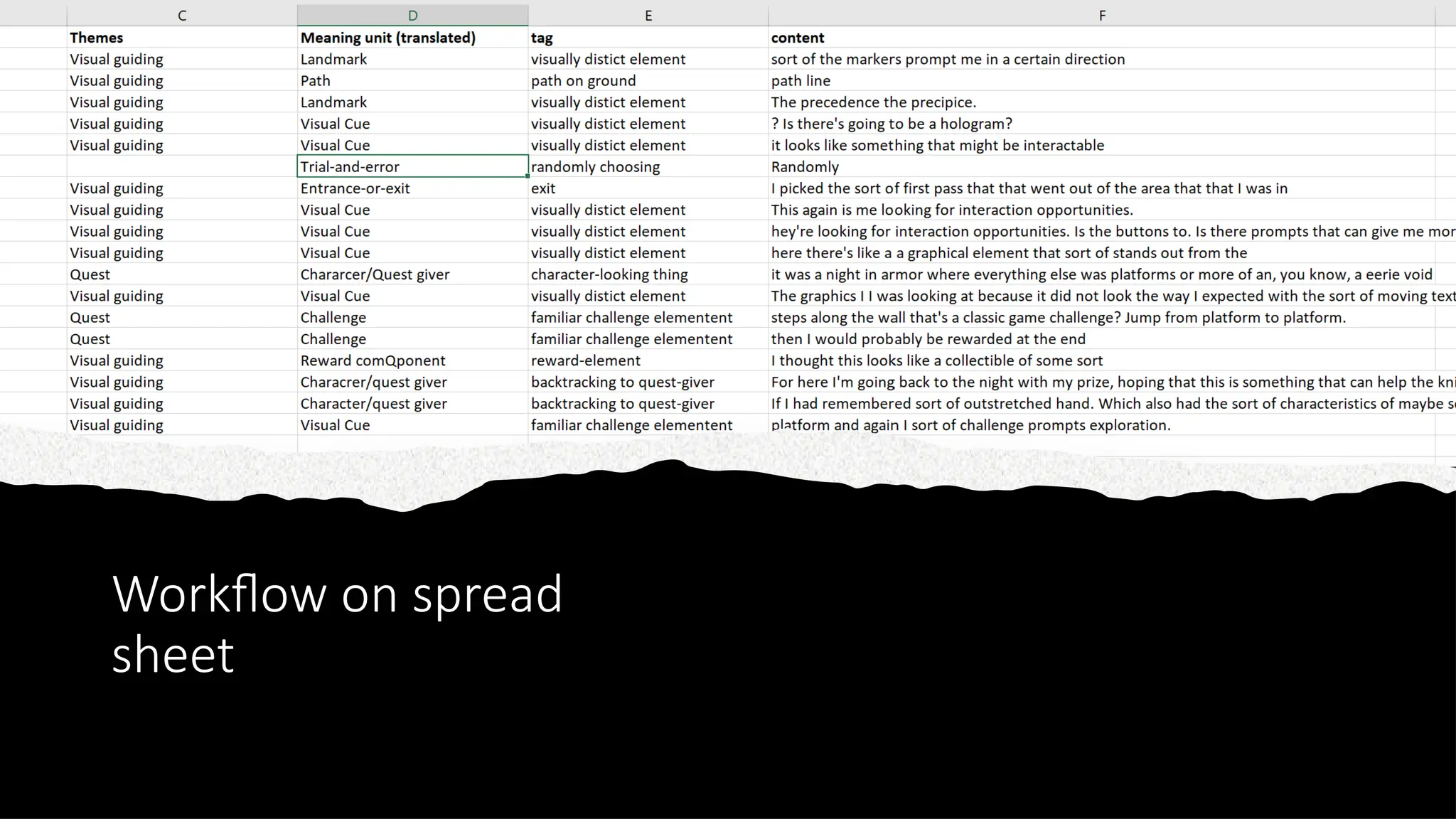
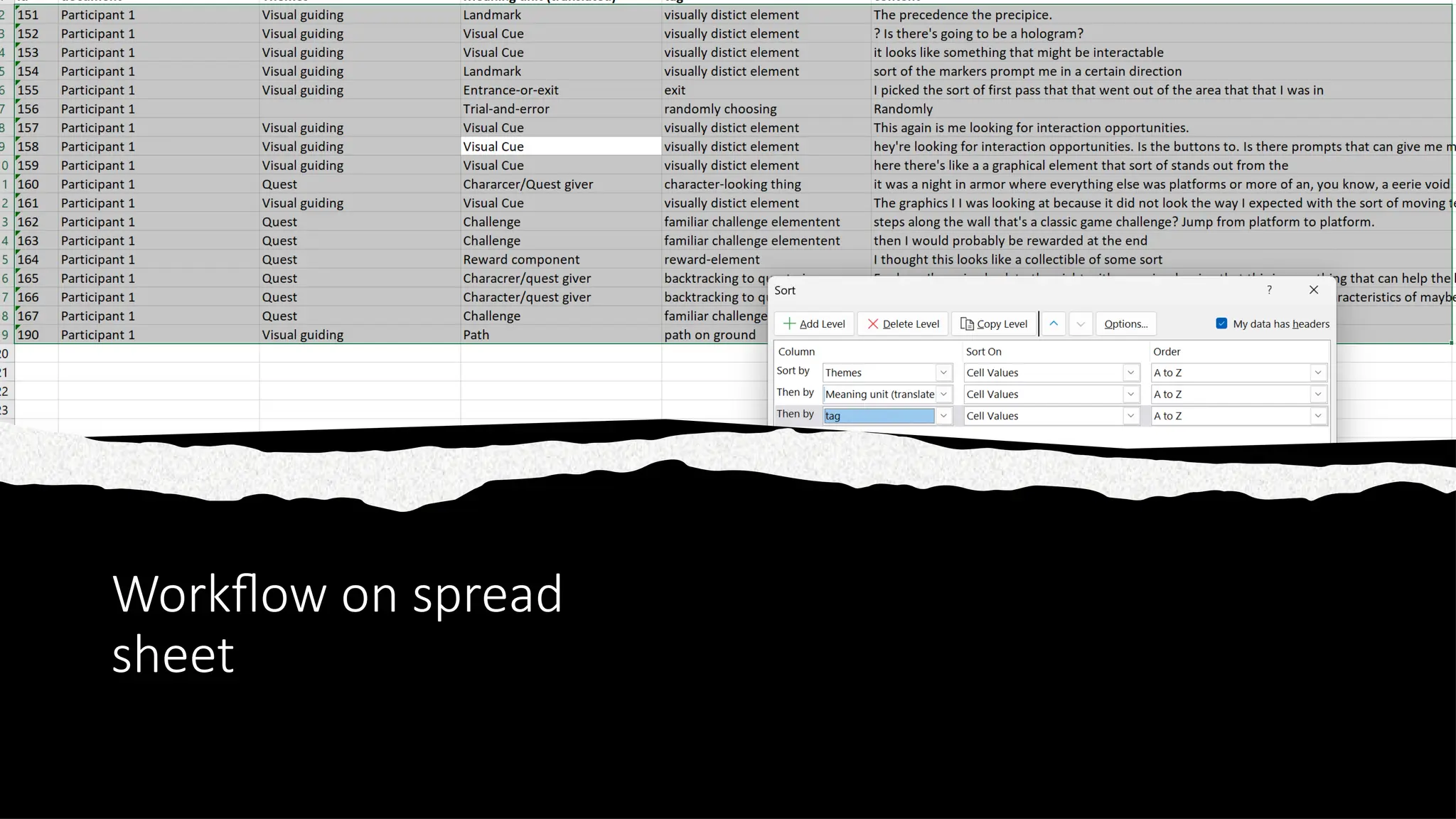
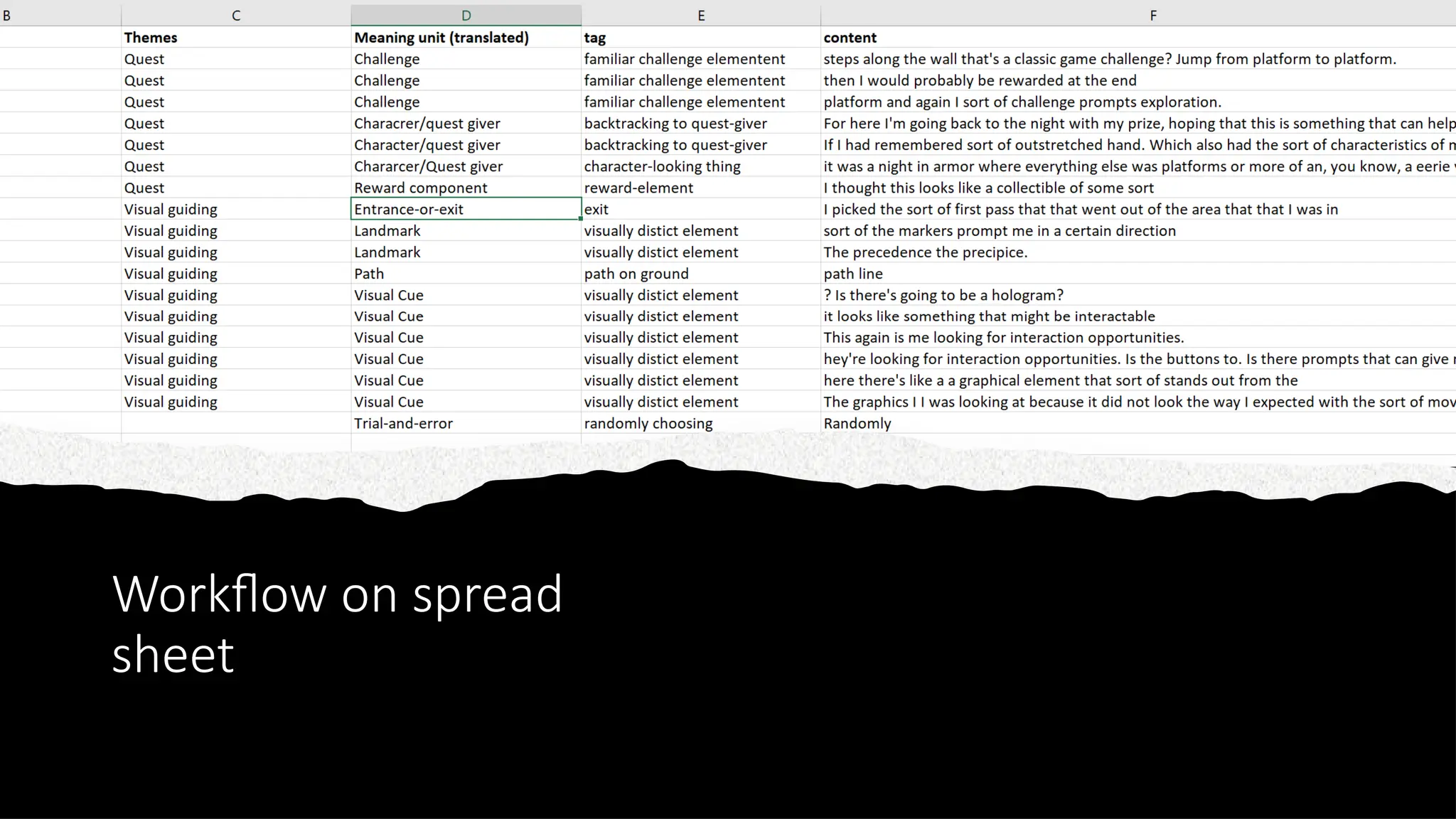
• Analysiswith Taguette & MS Excel
• This is not the possible thematization of the
data
• Themes are interpretation so there are multiple
good ways to do themes
• Themes must answer to the RQ
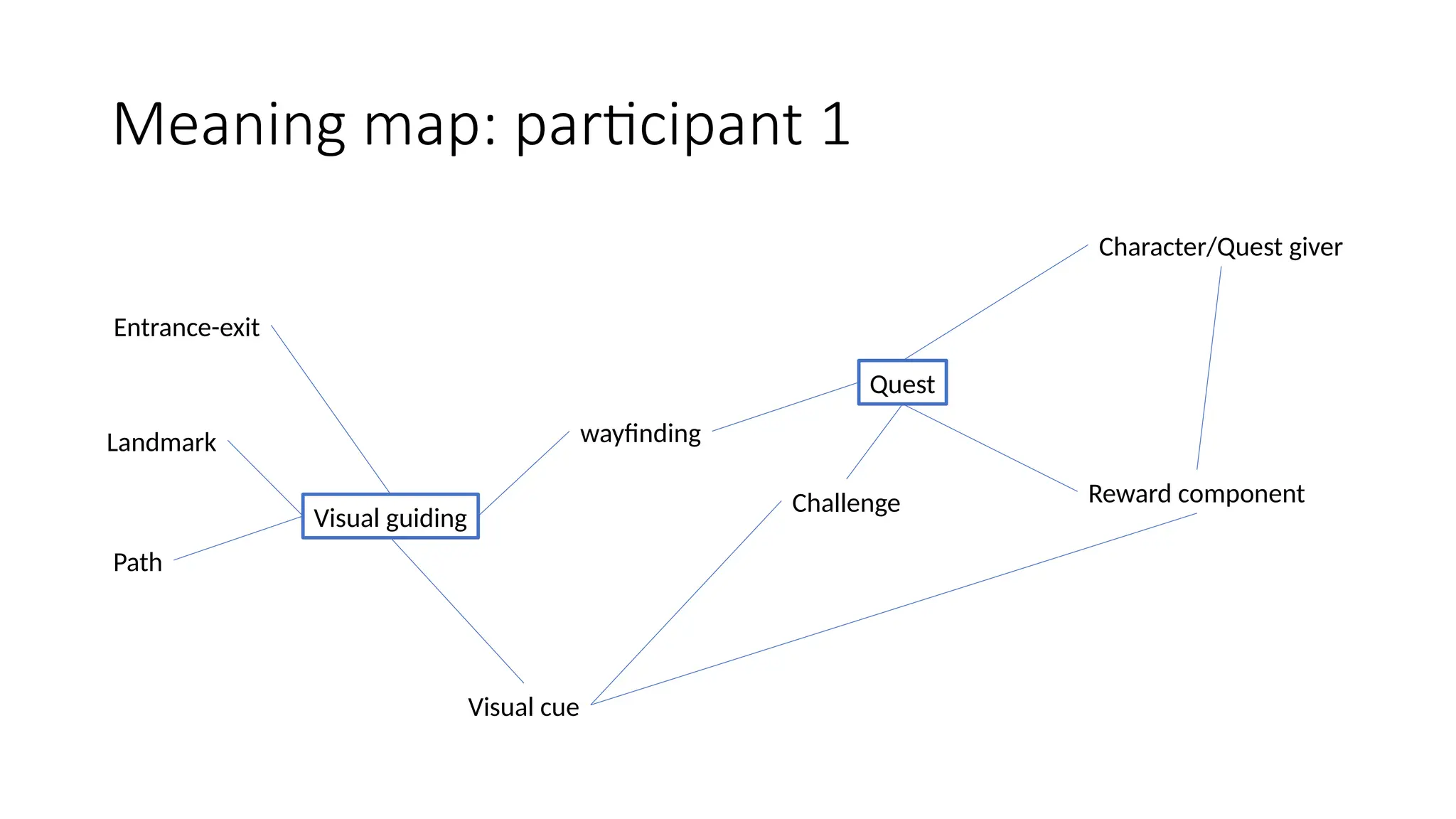
Meaning map: participant1
wayfinding
Quest
Visual guiding
Challenge
Character/Quest giver
Reward component
Entrance-exit
Landmark
Path
Visual cue
17.
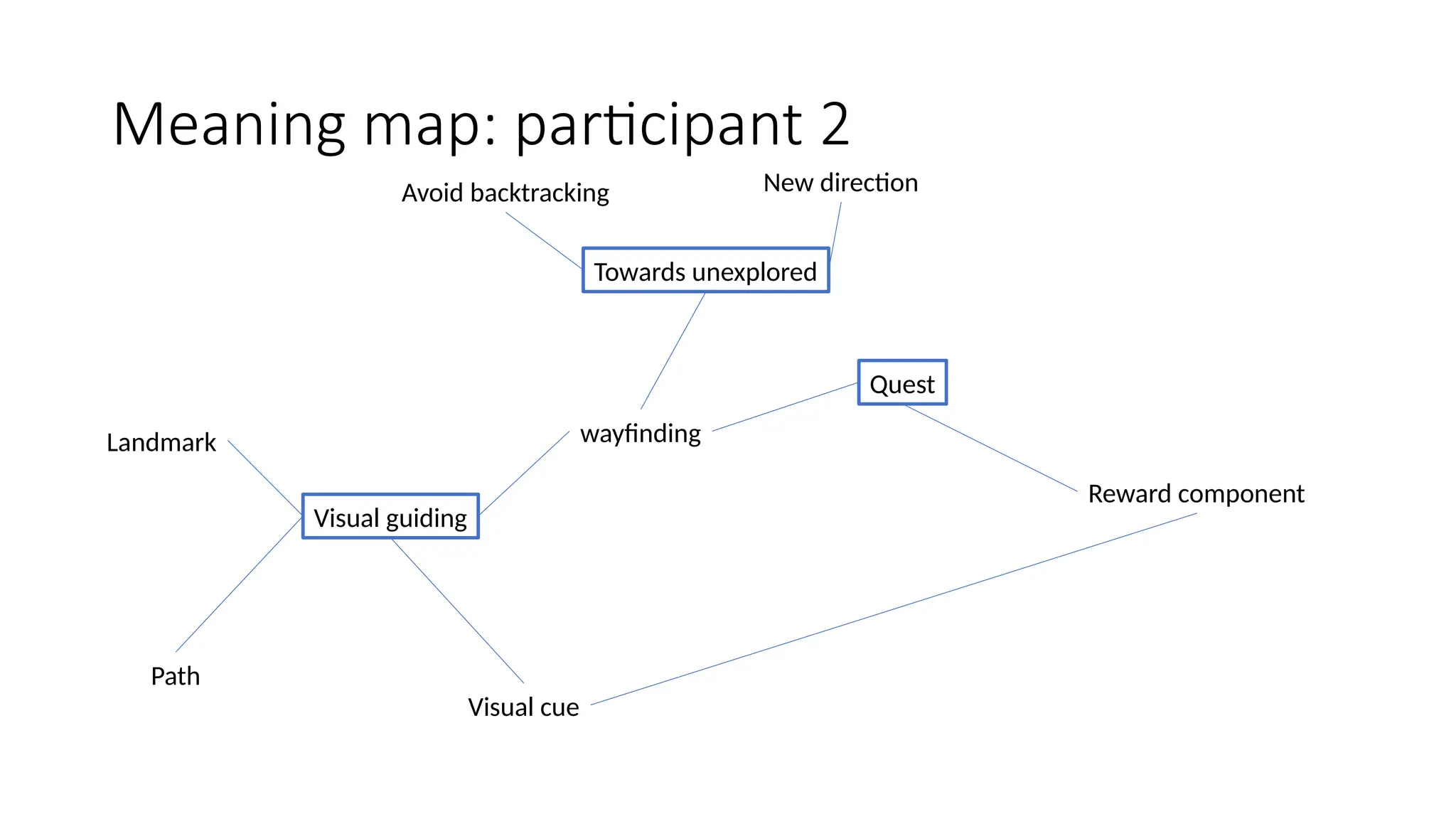
Meaning map: participant2
wayfinding
Quest
Visual guiding
Reward component
Landmark
Path
Visual cue
Towards unexplored
New direction
Avoid backtracking
18.
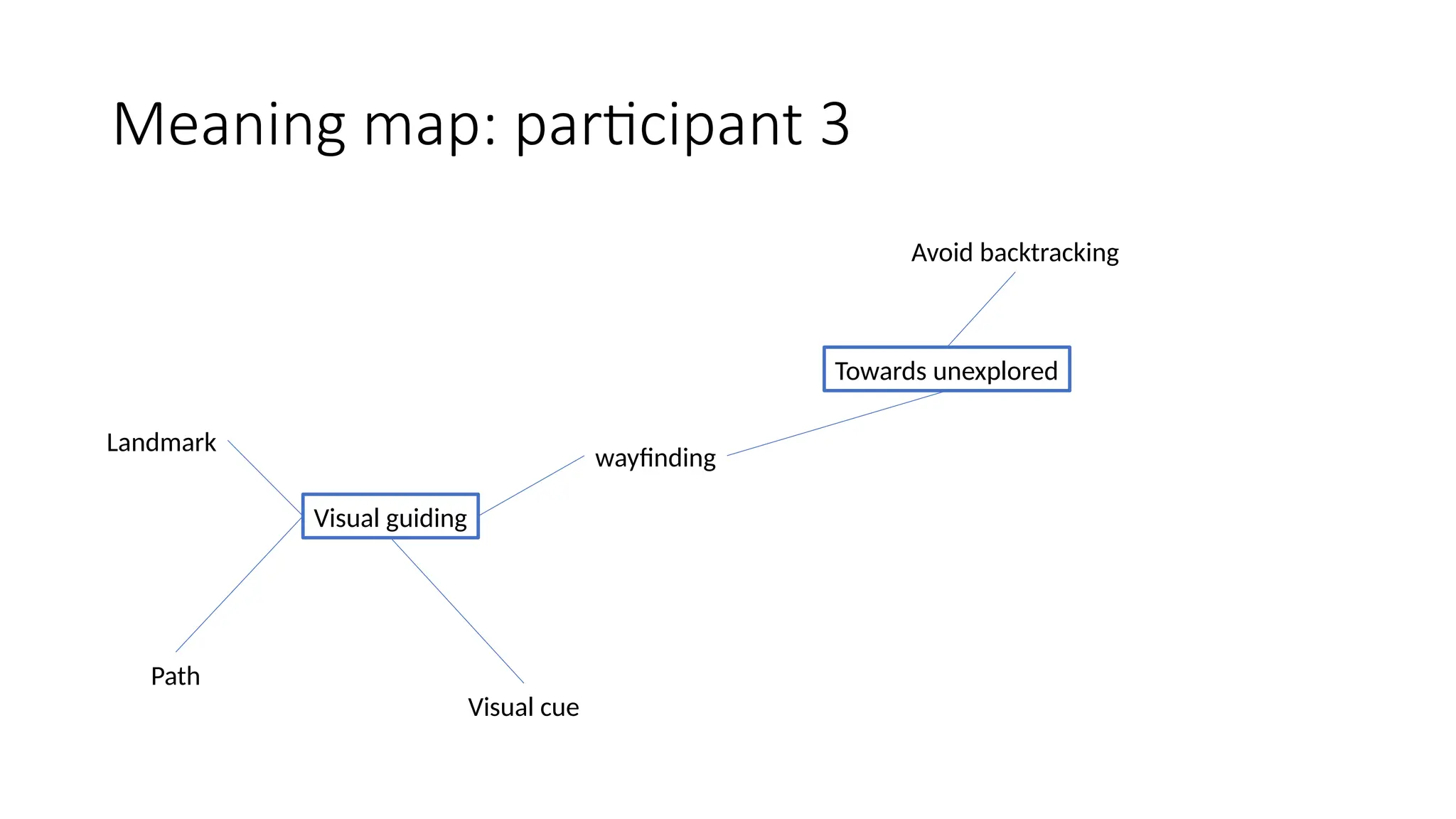
Meaning map: participant3
wayfinding
Visual guiding
Landmark
Path
Visual cue
Towards unexplored
Avoid backtracking
19.
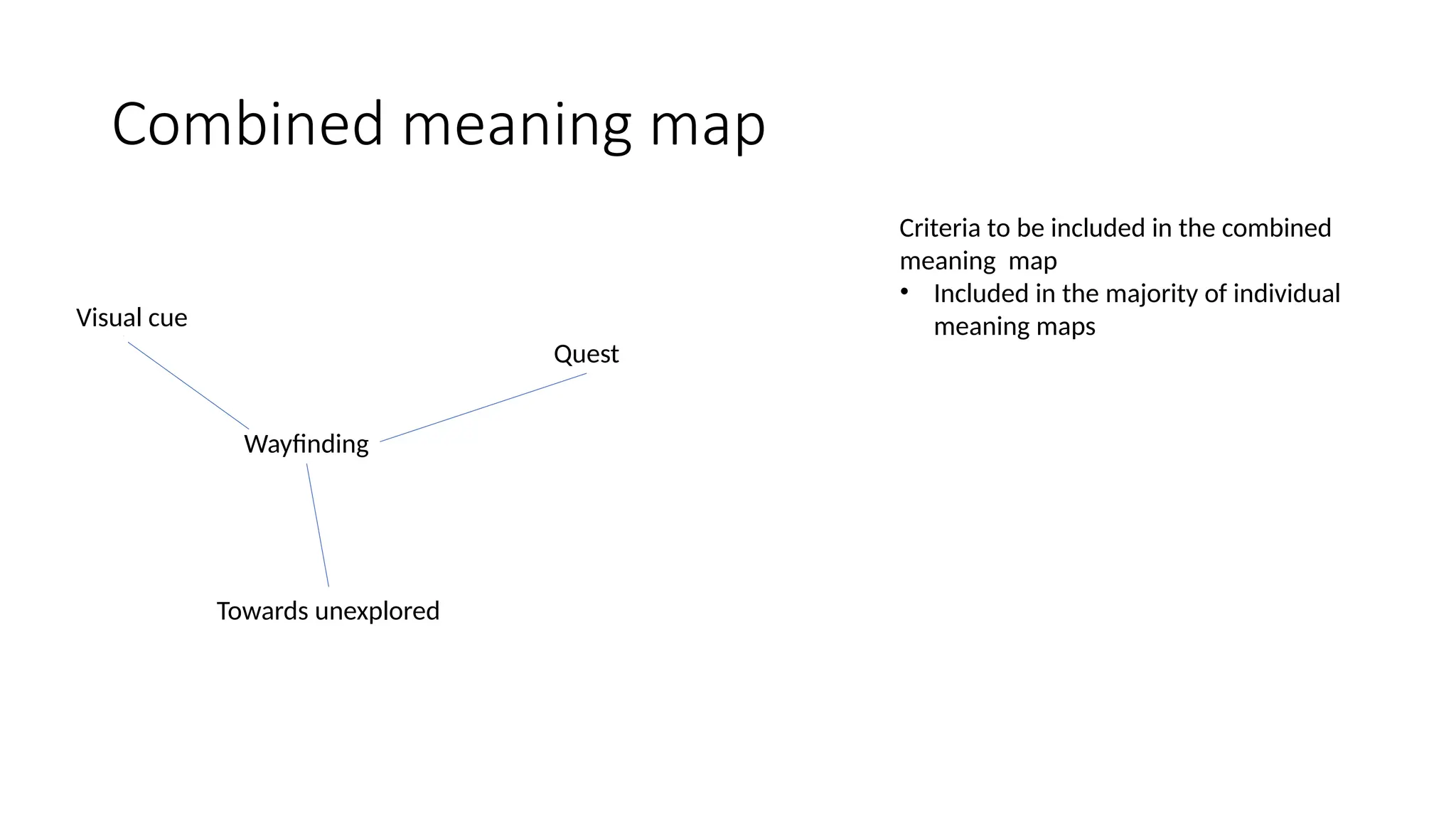
Combined meaning map
Wayfinding
Visualcue
Quest
Towards unexplored
Criteria to be included in the combined
meaning map
• Included in the majority of individual
meaning maps
20.
[H1] Results
• [H2]Theme: Visual guiding
• Description of paths, landmarks, entrance-exit, and visual cues and how they are used in wayfinding
• Quotations from the data
• [H2] Theme: Quest leads
• Description of characters/quest giver, challenge, and reward and how they participant used them in
wayfinding
• Quotations from the data
• [H2] Theme: Toward unexplored
• Description of avoiding backtracking and finding new areas is guiding the players
• Quotations from the data
Renamed theme as
Quest is not
descriptive in terms of
RQ



![[H1] Results
• [H2] Theme: Visual guiding
• Description of paths, landmarks, entrance-exit, and visual cues and how they are used in wayfinding
• Quotations from the data
• [H2] Theme: Quest leads
• Description of characters/quest giver, challenge, and reward and how they participant used them in
wayfinding
• Quotations from the data
• [H2] Theme: Toward unexplored
• Description of avoiding backtracking and finding new areas is guiding the players
• Quotations from the data
Renamed theme as
Quest is not
descriptive in terms of
RQ](https://image.slidesharecdn.com/epp-analysis-250213172828-1899c08a/75/Qualitative-analysis-with-EPP-and-Taguette-20-2048.jpg)


