Content Oriented Architectures (COA)

Loading...

Flash Player 9 (or above) is needed to view presentations.
We have detected that you do not have it on your computer. To install it, go here.

0 comments

Post a comment

    Post a comment
    Embed Video
    Edit your comment Cancel

    1 Favorite

    Content Oriented Architectures (COA) - Presentation Transcript

    1. Content Oriented Architectures Putting Content at the Center Joe Gollner of CM Projects jgollner@stilo.com / www.stilo.com Vice President, Enterprise Solutions Stilo International
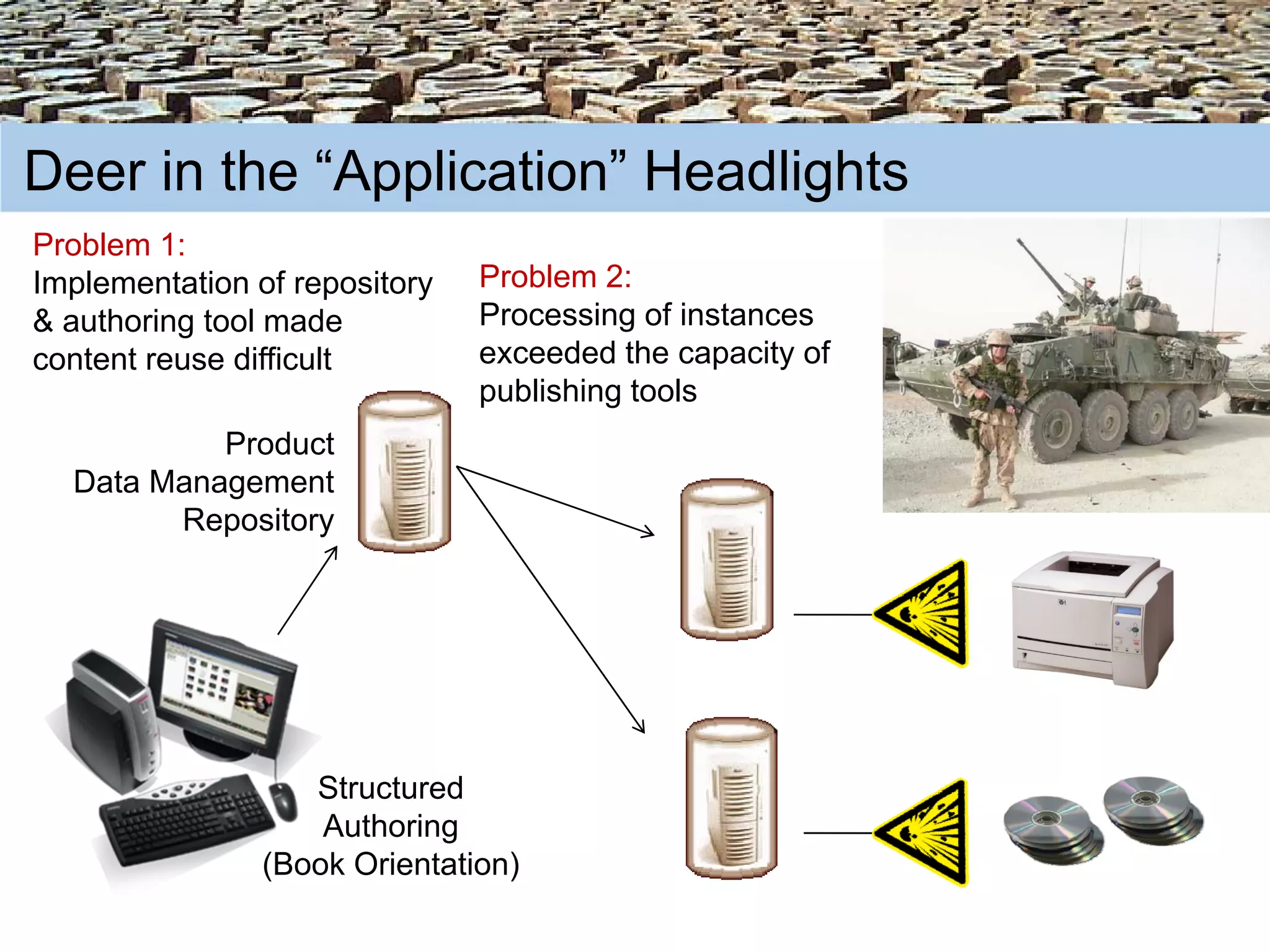
    2. Deer in the “Application” Headlights Problem 1: Problem 2: Implementation of repository Processing of instances & authoring tool made exceeded the capacity of content reuse difficult publishing tools Product Data Management Repository Structured Authoring (Book Orientation)
    3. Topics The Perils of Application Orientation Case Study: An Unhappy Tale The Attractions of Application Orientation A Tale of Three Projects Saved from Destruction Content Oriented Architectures
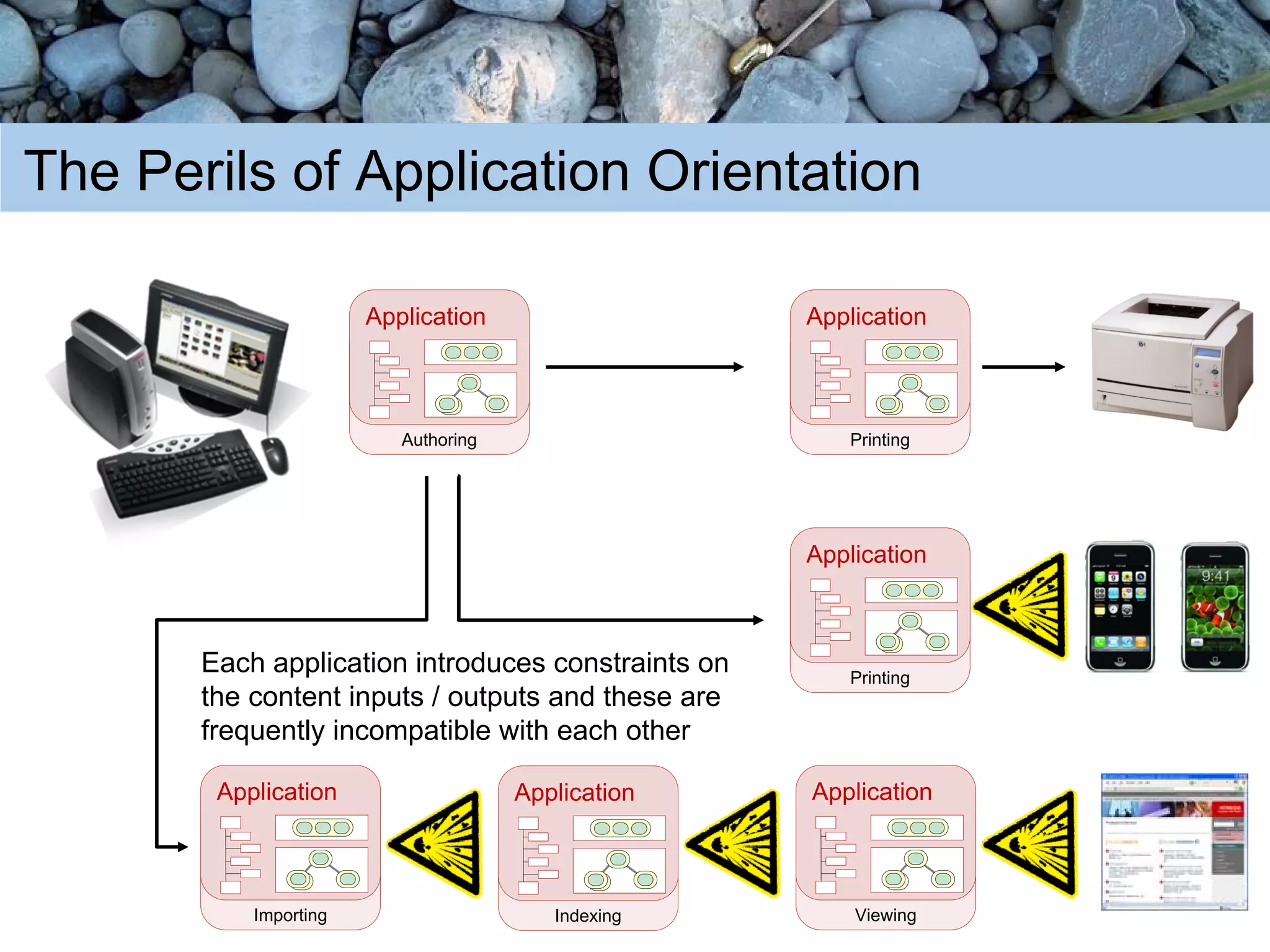
    4. The Perils of Application Orientation Application Application Authoring Printing Application Each application introduces constraints on Printing the content inputs / outputs and these are frequently incompatible with each other Application Application Application Importing Viewing Indexing
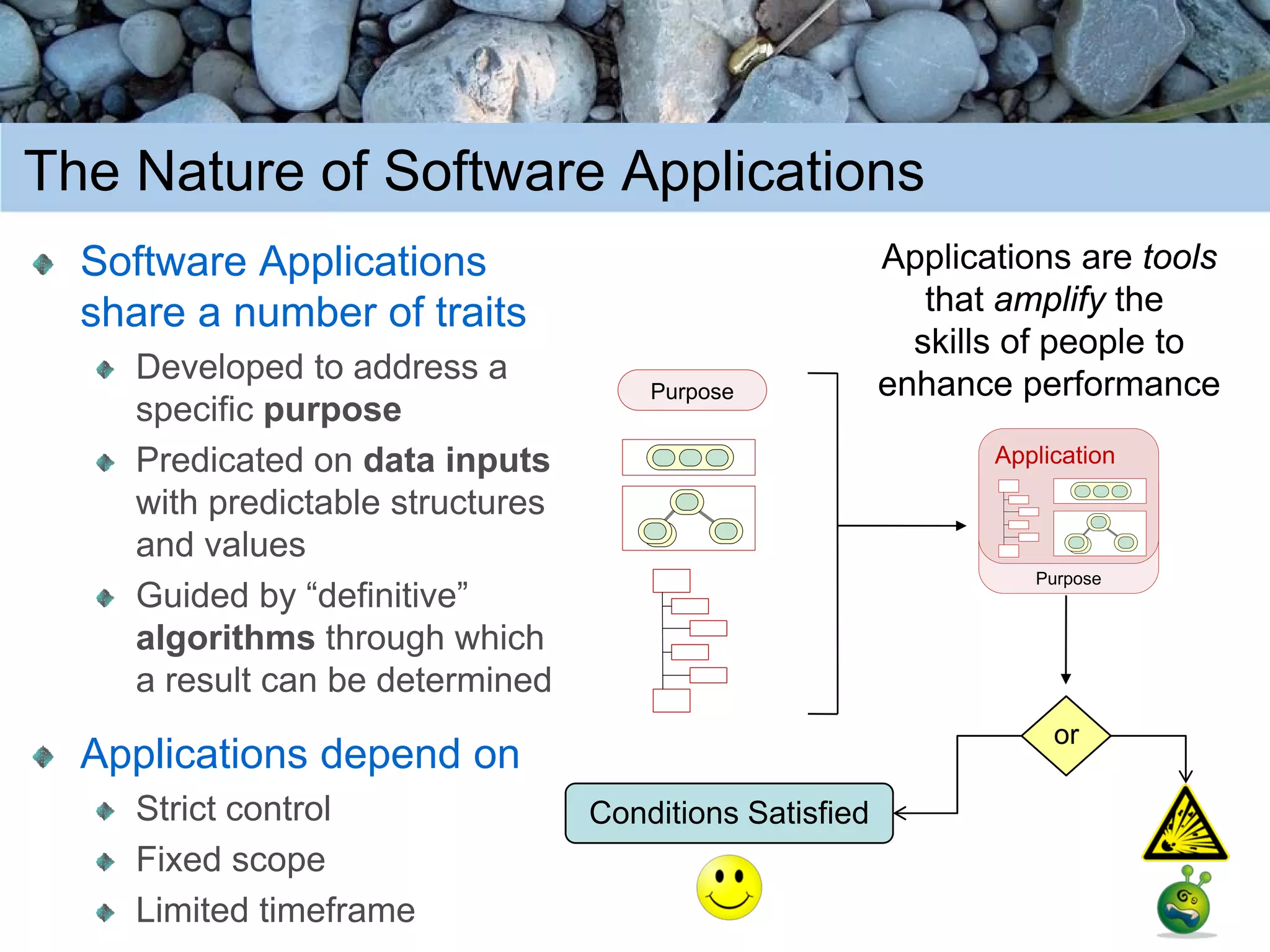
    5. The Nature of Software Applications Applications are tools Software Applications that amplify the share a number of traits skills of people to Developed to address a enhance performance Purpose specific purpose Application Predicated on data inputs with predictable structures and values Purpose Guided by “definitive” algorithms through which a result can be determined or Applications depend on Strict control Conditions Satisfied Fixed scope Limited timeframe
    6. The Limits of Integration Application Application Application Viewing Web Publishing PDF Publishing Application Application Failure Threshold Application Authoring Importing Indexing Application Application Application Exporting Loading Storing
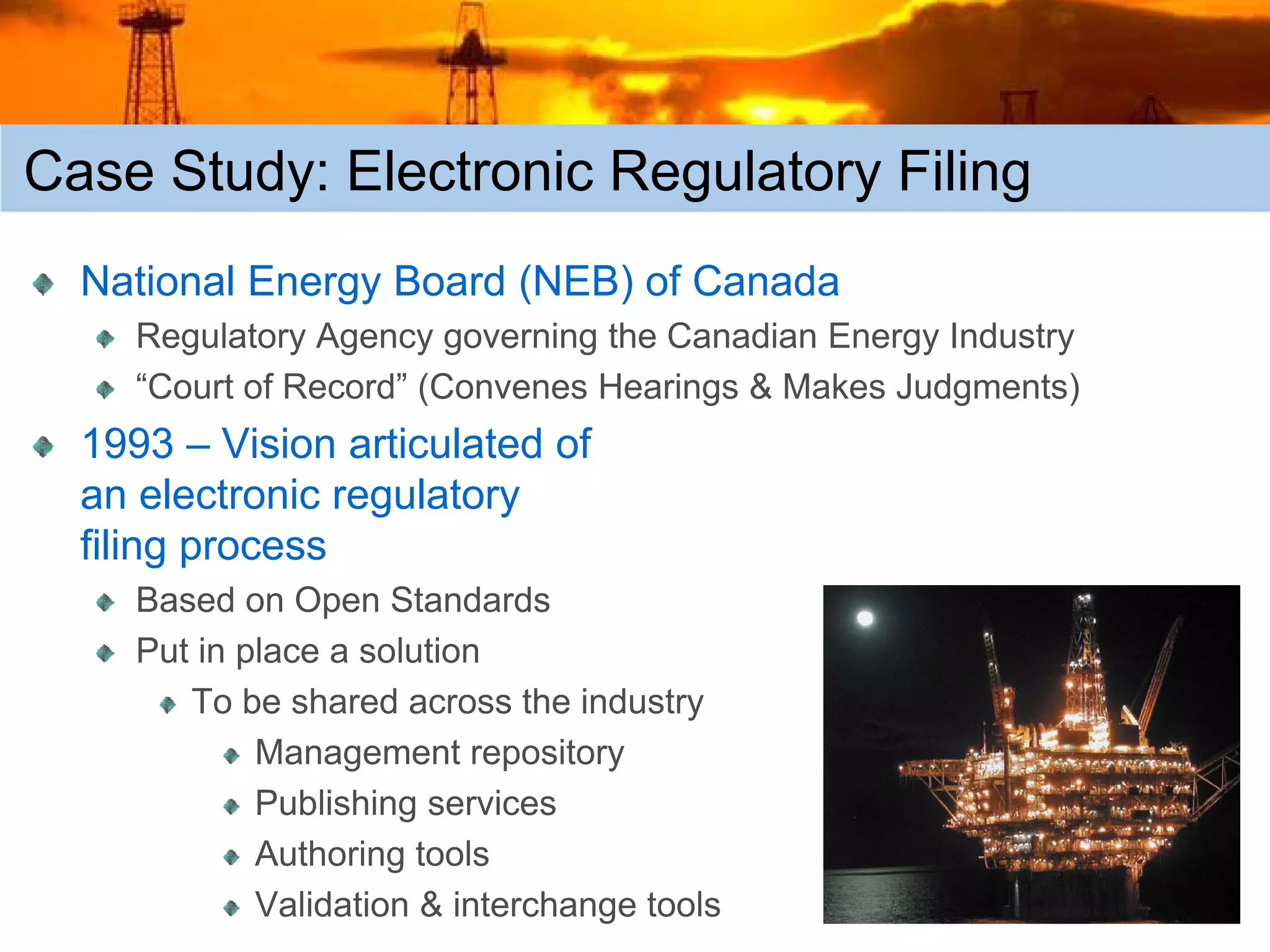
    7. Case Study: Electronic Regulatory Filing National Energy Board (NEB) of Canada Regulatory Agency governing the Canadian Energy Industry “Court of Record” (Convenes Hearings & Makes Judgments) 1993 – Vision articulated of an electronic regulatory filing process Based on Open Standards Put in place a solution To be shared across the industry Management repository Publishing services Authoring tools Validation & interchange tools
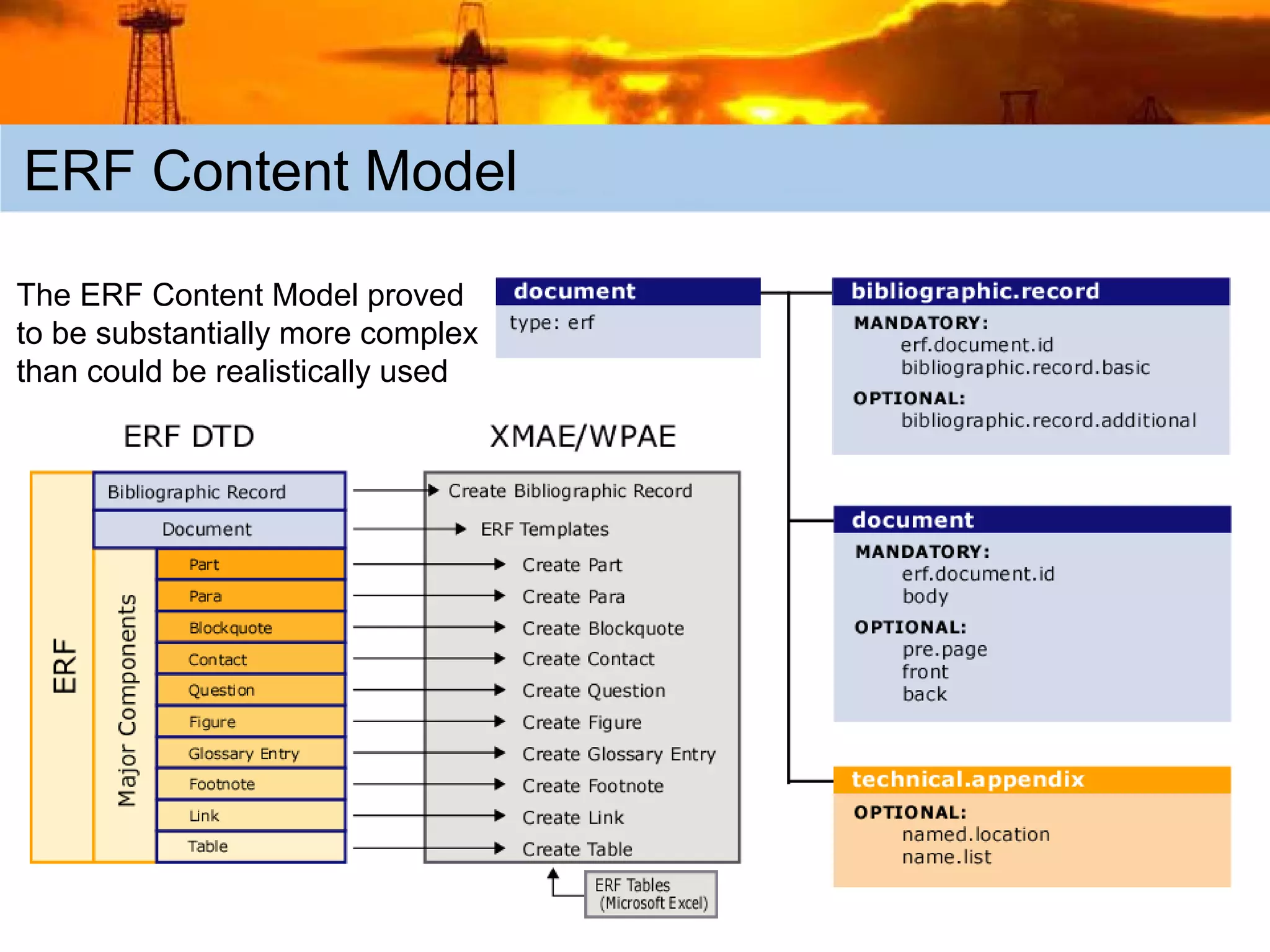
    8. ERF Content Model The ERF Content Model proved to be substantially more complex than could be realistically used
    9. Electronic Regulatory Application Architecture Recipe for Disaster: - Complex DTD - Customized authoring tools - WordPerfect - XMetal - MS Excel - Over-burdened repository - Astoria - Over-burdened publishing tool - FrameMaker
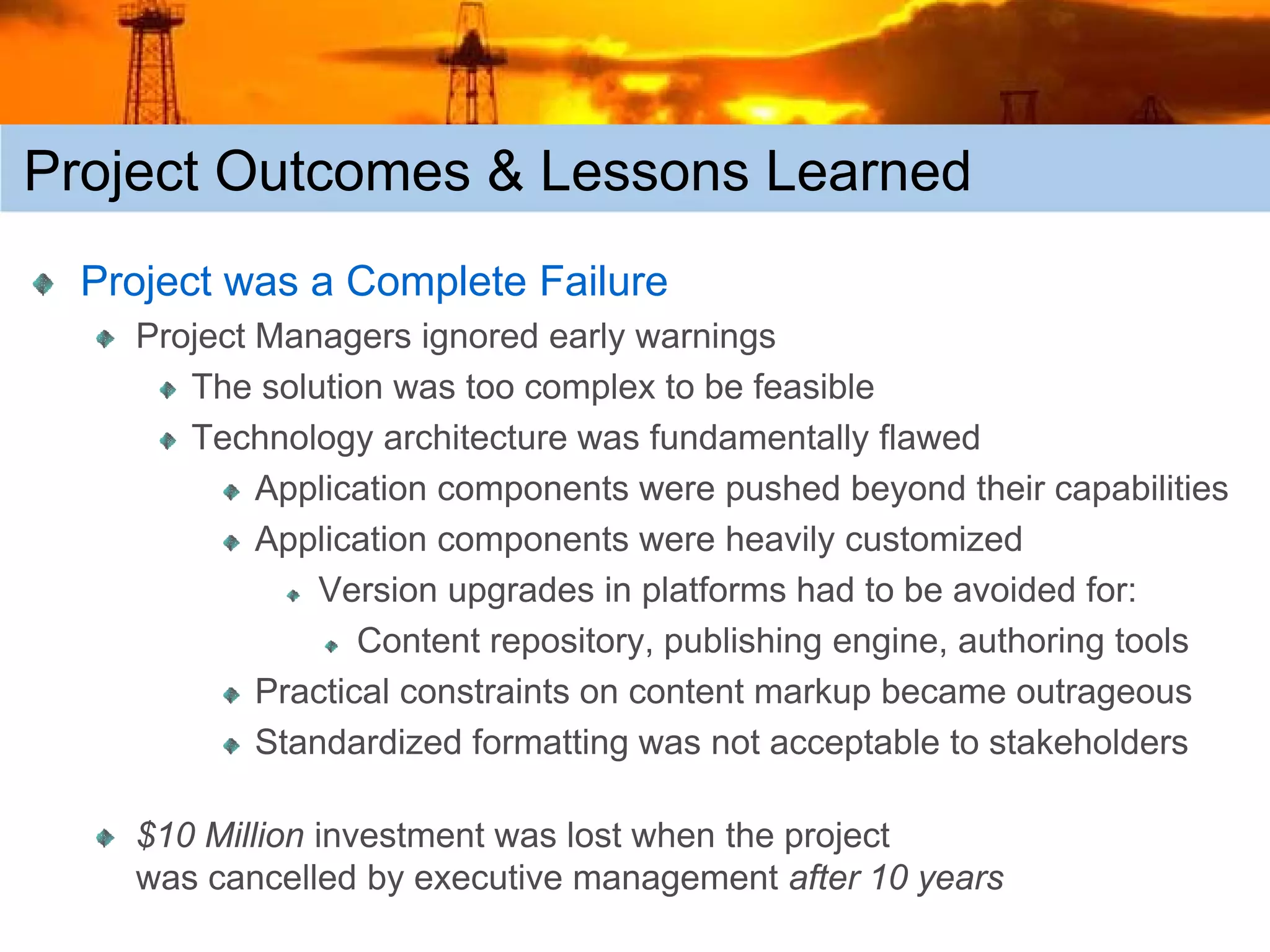
    10. Project Outcomes & Lessons Learned Project was a Complete Failure Project Managers ignored early warnings The solution was too complex to be feasible Technology architecture was fundamentally flawed Application components were pushed beyond their capabilities Application components were heavily customized Version upgrades in platforms had to be avoided for: Content repository, publishing engine, authoring tools Practical constraints on content markup became outrageous Standardized formatting was not acceptable to stakeholders $10 Million investment was lost when the project was cancelled by executive management after 10 years
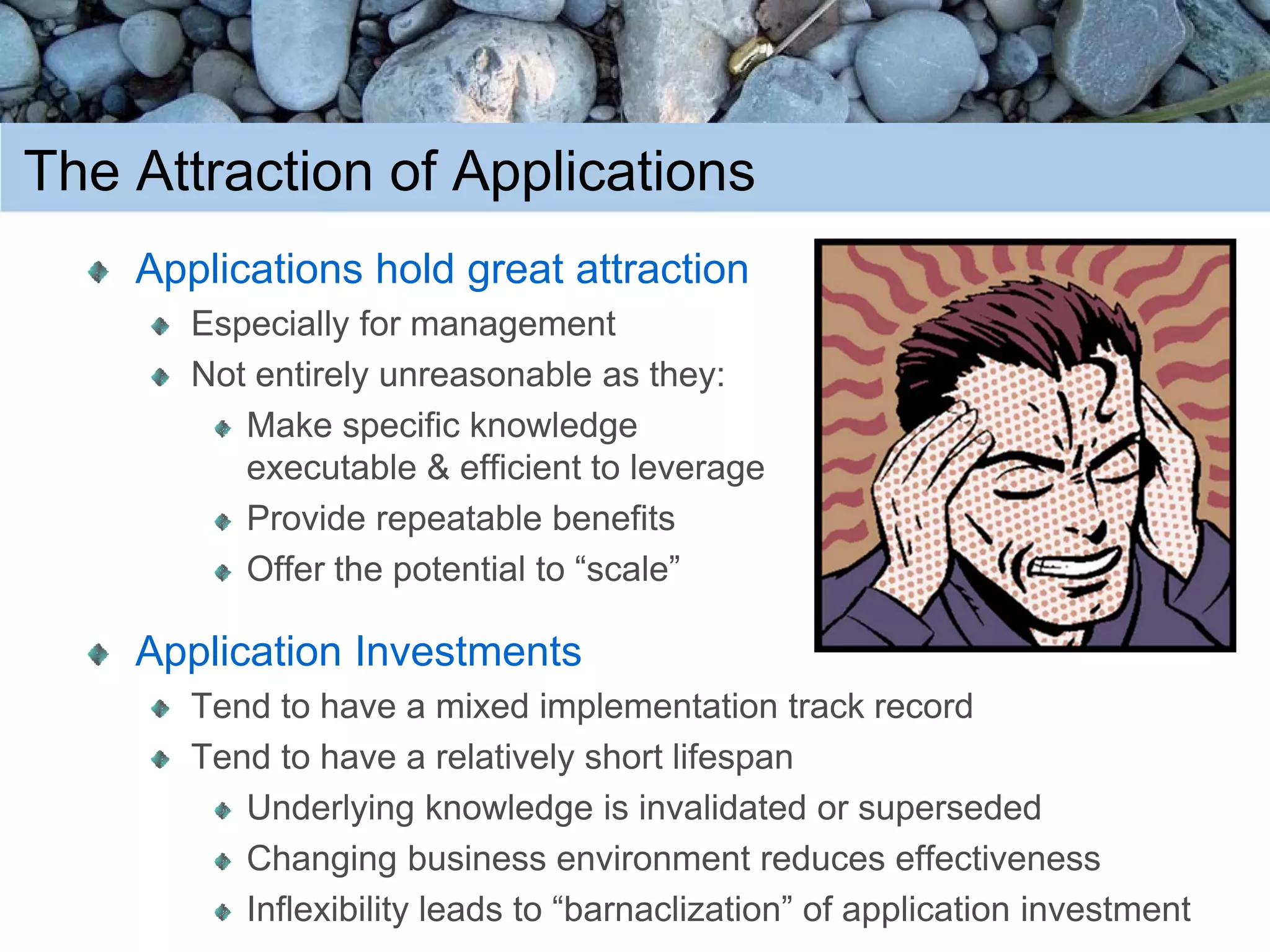
    11. The Attraction of Applications Applications hold great attraction Especially for management Not entirely unreasonable as they: Make specific knowledge executable & efficient to leverage Provide repeatable benefits Offer the potential to “scale” Application Investments Tend to have a mixed implementation track record Tend to have a relatively short lifespan Underlying knowledge is invalidated or superseded Changing business environment reduces effectiveness Inflexibility leads to “barnaclization” of application investment
    12. A Tale of Three Projects Saved from Destruction Software Engineering Solution Scenario: Metropolitan Area Network equipment supplier finds its core business strategy threatened by application limitations. Global Case Management System Scenario: Massive project to integrate a variety of content services into a global CRM platform threatened to become an even bigger project due to fundamental application incompatibilities. Multi-national Defense System Project Scenario: Large system acquisition project threatened to be halted due to the cost and complexity of the application integration tasks, made more challenging by extremely onerous security requirements.
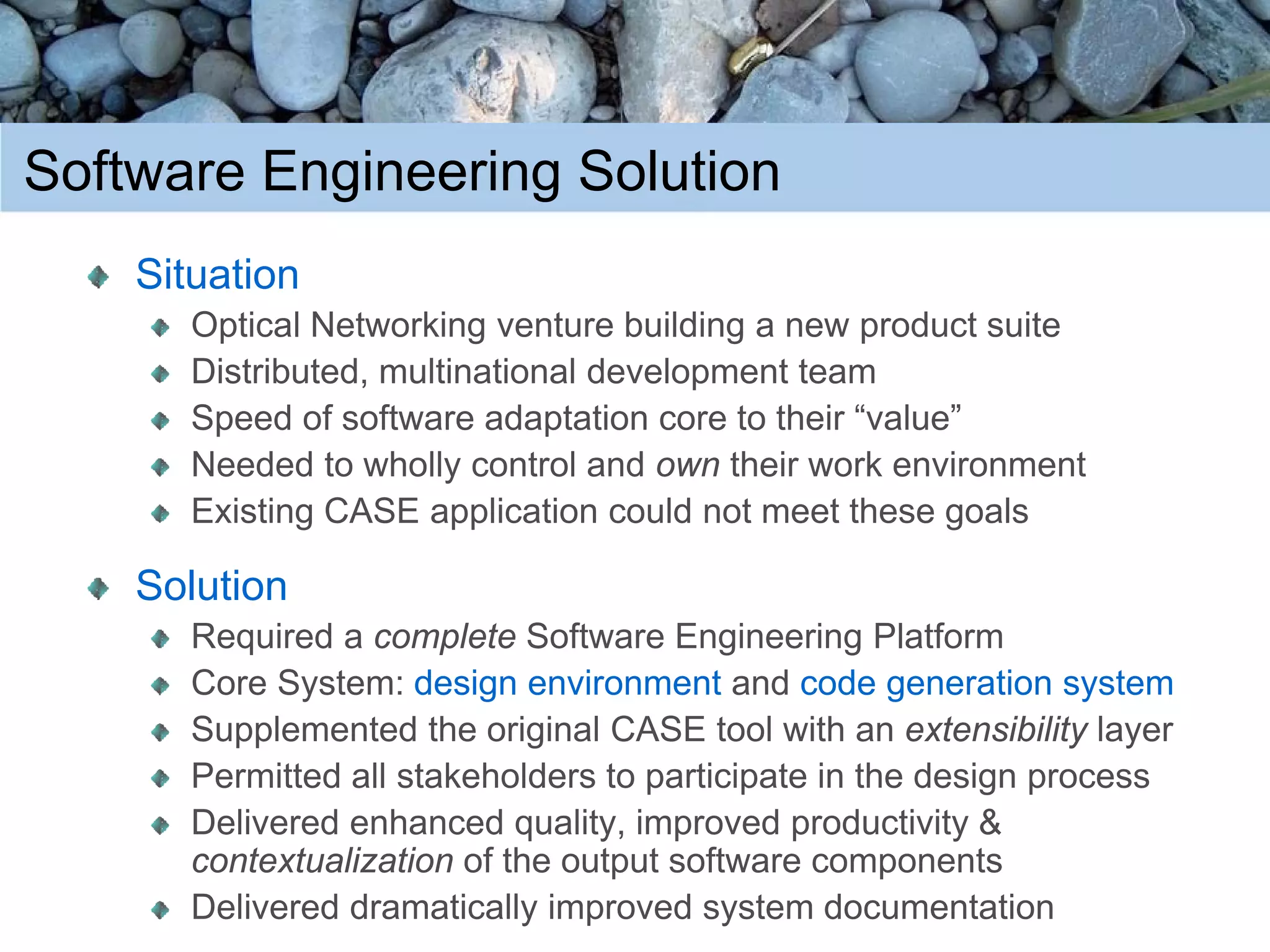
    13. Software Engineering Solution Situation Optical Networking venture building a new product suite Distributed, multinational development team Speed of software adaptation core to their “value” Needed to wholly control and own their work environment Existing CASE application could not meet these goals Solution Required a complete Software Engineering Platform Core System: design environment and code generation system Supplemented the original CASE tool with an extensibility layer Permitted all stakeholders to participate in the design process Delivered enhanced quality, improved productivity & contextualization of the output software components Delivered dramatically improved system documentation
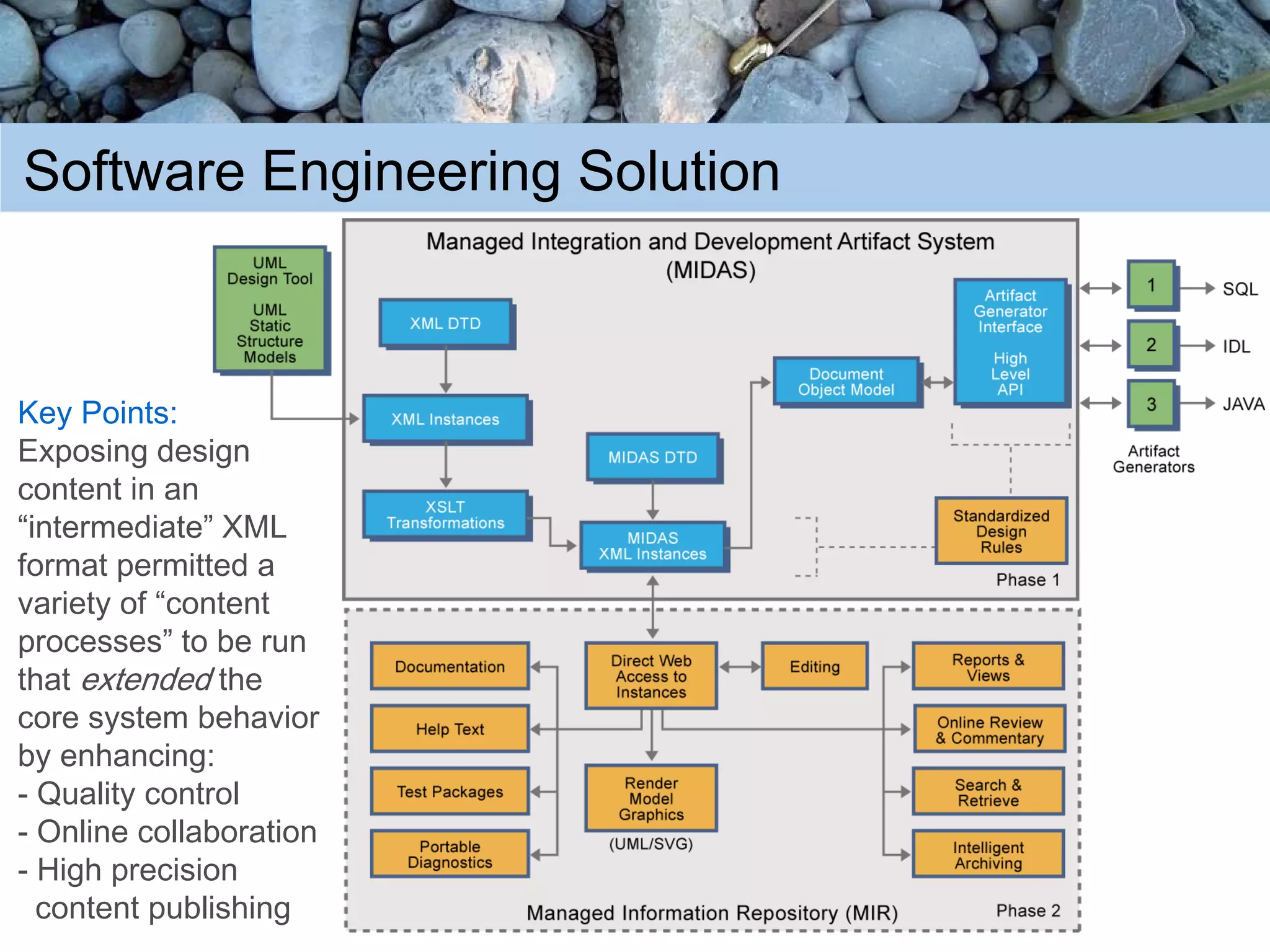
    14. Software Engineering Solution Key Points: Exposing design content in an “intermediate” XML format permitted a variety of “content processes” to be run that extended the core system behavior by enhancing: - Quality control - Online collaboration - High precision content publishing
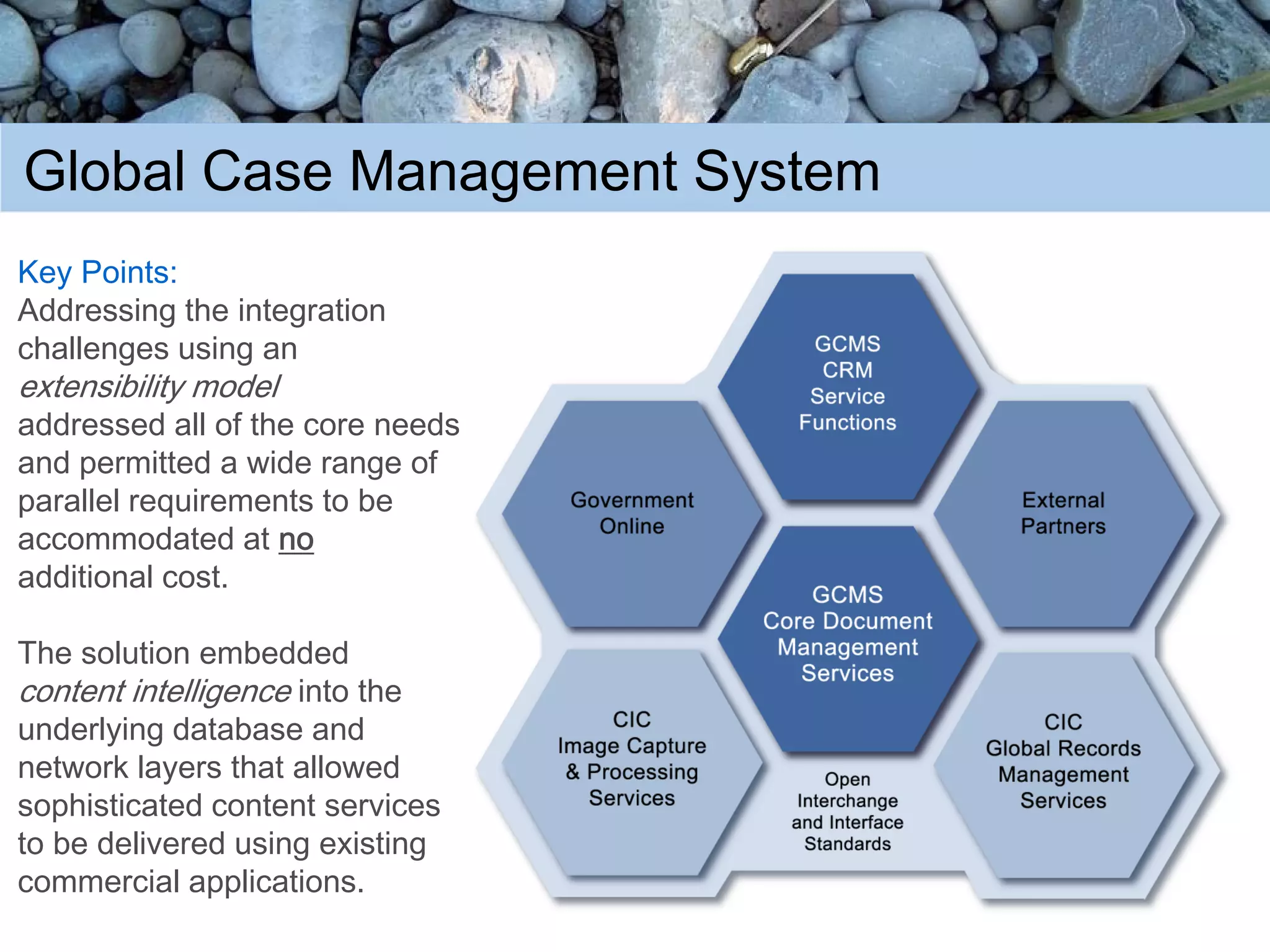
    15. Global Case Management System Situation Large-scale solution for an Immigration and Citizenship Case Management system supporting global user community Content Management dimension of the requirements were both very challenging and absolutely essential Initial concept was to integrate a COTS DM / CMS into the enterprise CRM package and to deploy a hybrid environment Forecasted cost of this integration ran to over $50 Million and serious integration & deployment risks were identified Solution Rigorous requirements discovery & distillation effort undertaken Numerous alternative architectures were evaluated By focusing on the core requirements, introducing a content specification governing interfaces & adding effective content processes – the $50 Million budget was effectively eliminated
    16. Global Case Management System Key Points: Addressing the integration challenges using an extensibility model addressed all of the core needs and permitted a wide range of parallel requirements to be accommodated at no additional cost. The solution embedded content intelligence into the underlying database and network layers that allowed sophisticated content services to be delivered using existing commercial applications.
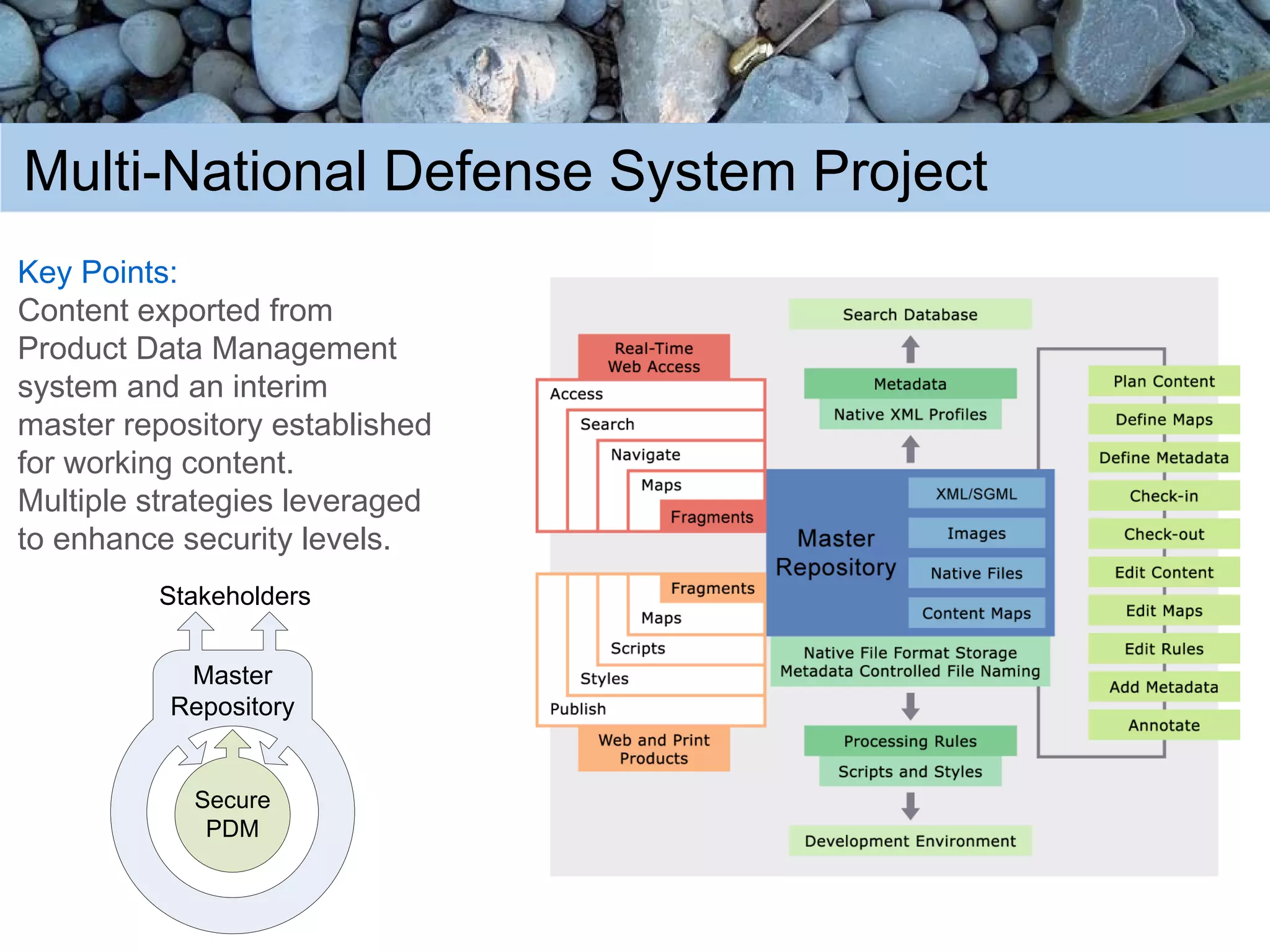
    17. Multi-National Defense System Project Situation Very large NATO Defense System Project Design & development work to be performed across 13 countries Original Collaboration environment depended on a large investment in security applications to facilitate direct access to PDM environment Expenses, incompatibilities between different PDM platforms, and security concerns all became an issue Solution Content architecture established for content interchange Simple CMS developed to act as a “master repository” Content exported from source PDM to repository Interchange protocols / collaboration processes put in place Multi-level security including content-based measures
    18. Multi-National Defense System Project Key Points: Content exported from Product Data Management system and an interim master repository established for working content. Multiple strategies leveraged to enhance security levels. Stakeholders Master Repository Secure PDM
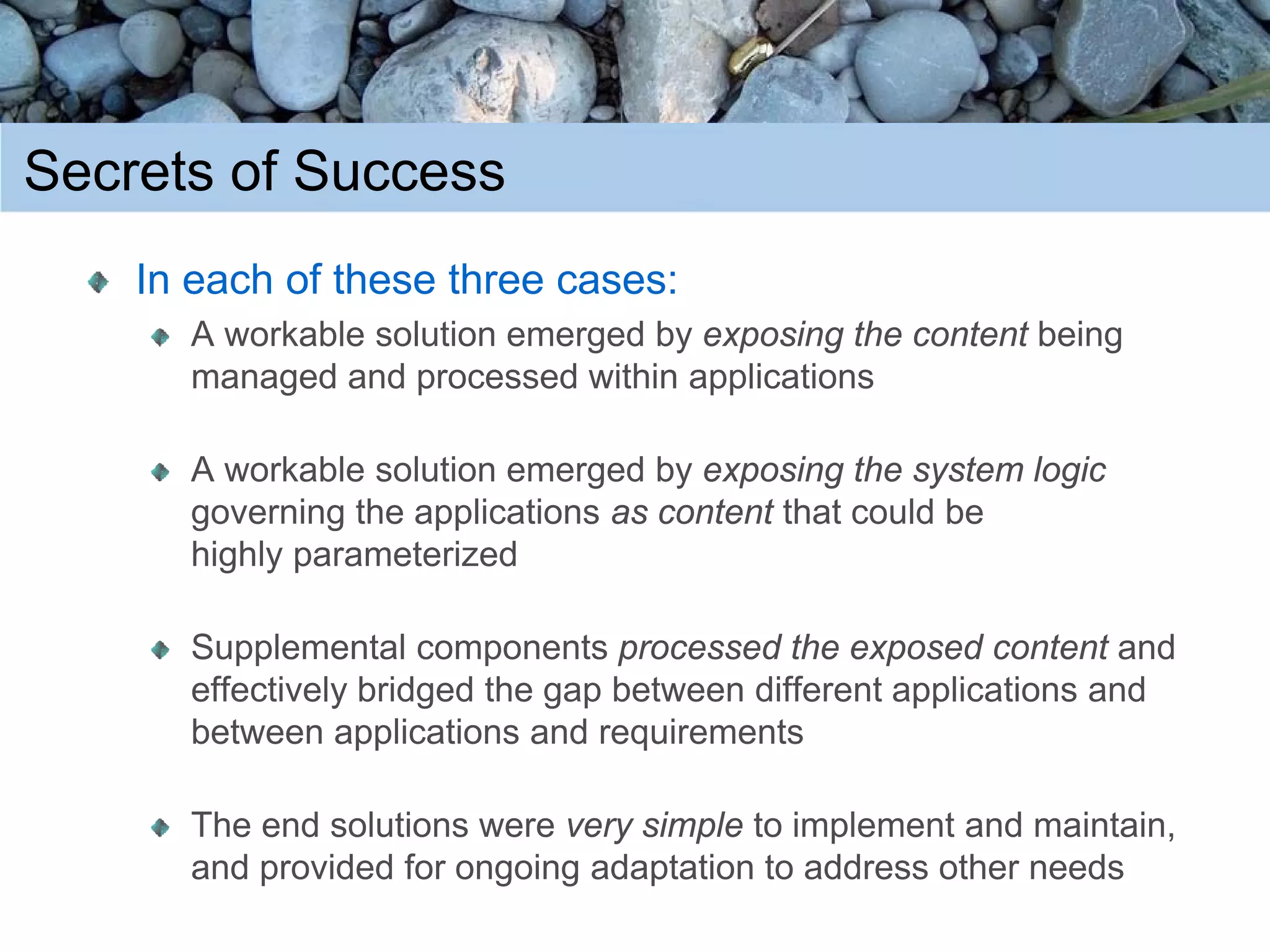
    19. Secrets of Success In each of these three cases: A workable solution emerged by exposing the content being managed and processed within applications A workable solution emerged by exposing the system logic governing the applications as content that could be highly parameterized Supplemental components processed the exposed content and effectively bridged the gap between different applications and between applications and requirements The end solutions were very simple to implement and maintain, and provided for ongoing adaptation to address other needs
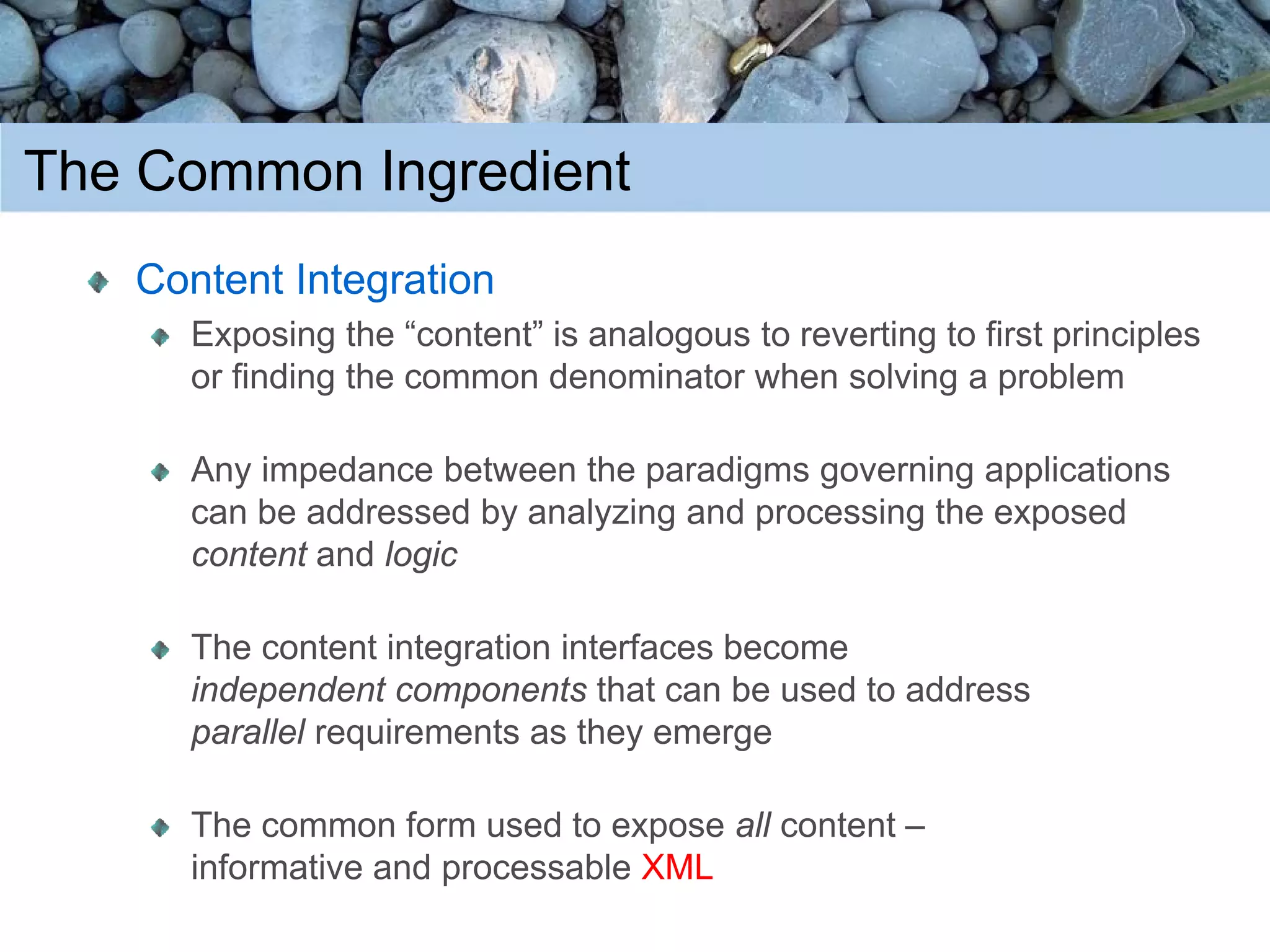
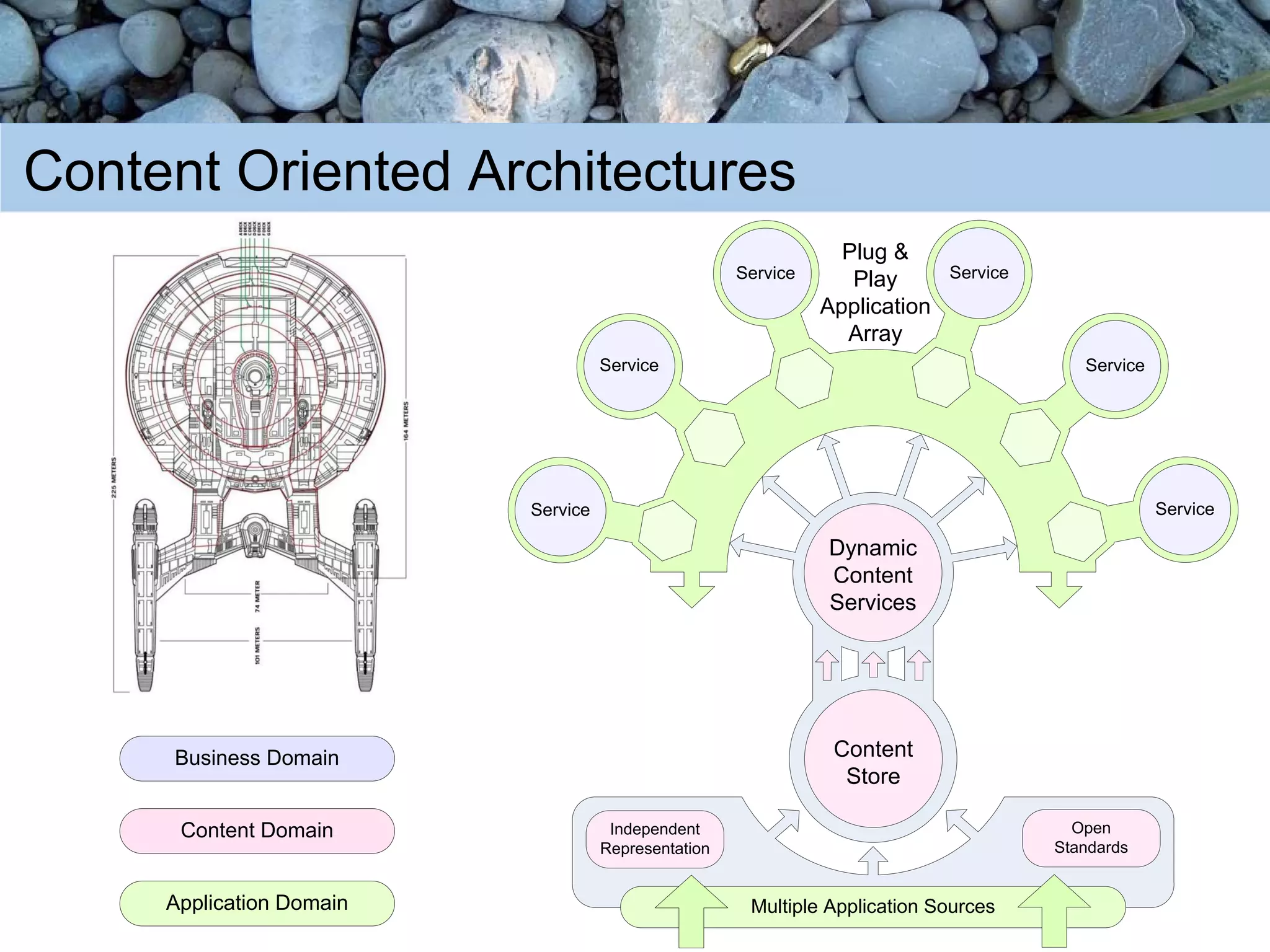
    20. The Common Ingredient Content Integration Exposing the “content” is analogous to reverting to first principles or finding the common denominator when solving a problem Any impedance between the paradigms governing applications can be addressed by analyzing and processing the exposed content and logic The content integration interfaces become independent components that can be used to address parallel requirements as they emerge The common form used to expose all content – informative and processable XML
    21. Content Oriented Architectures Plug & Service Service Play Application Array Service Service Service Service Dynamic Content Services Content Business Domain Store Open Content Domain Independent Standards Representation Application Domain Multiple Application Sources
    22. The Benefits of Content Oriented Architectures Application Filter Application Indexing Simplify Markup Importing Application Validator Filter Application Viewing Validation Filter Update Metadata Exporting Achieving application Application Filter Content independence, increased system flexibility, improved usability, ... Authoring …by exposing content & adding transformation filters & validators that solve incompatibilities
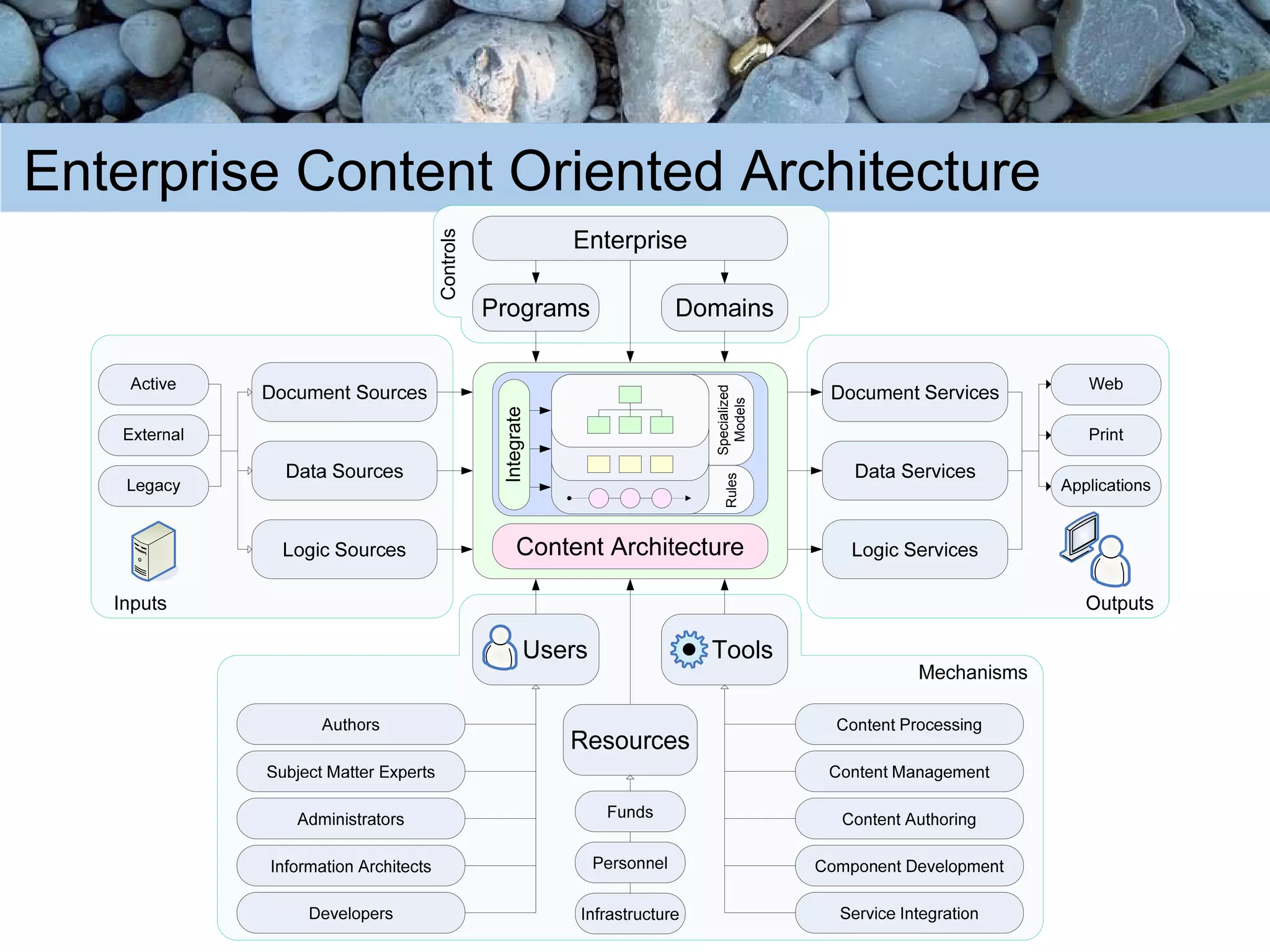
    23. Enterprise Content Oriented Architecture Controls Specialized Models Integrate Rules
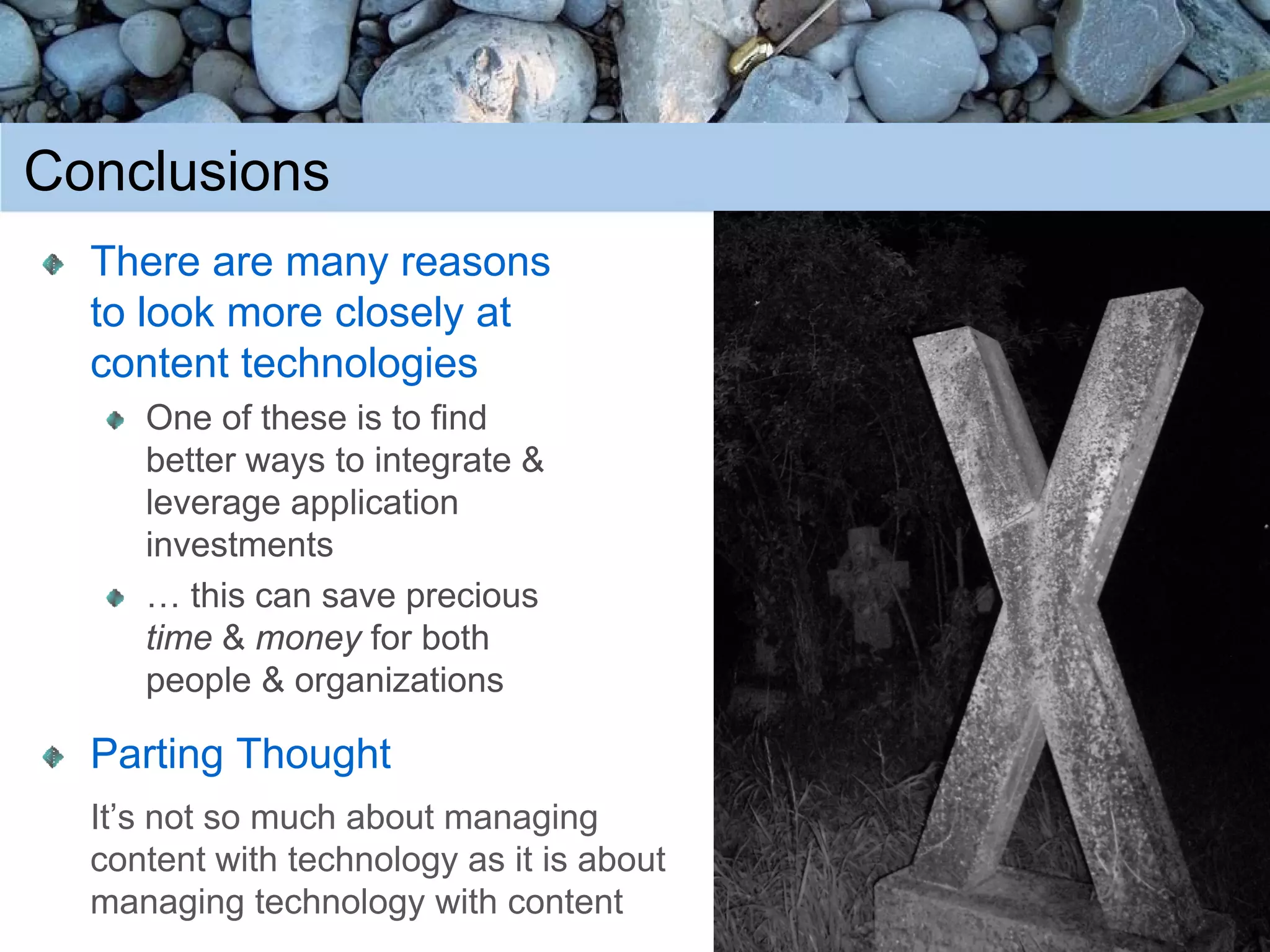
    24. Conclusions There are many reasons to look more closely at content technologies One of these is to find better ways to integrate & leverage application investments … this can save precious time & money for both people & organizations Parting Thought It’s not so much about managing content with technology as it is about managing technology with content

    + Joe GollnerJoe Gollner, 7 months ago

    custom

    337 views, 1 favs, 0 embeds more stats

    This presentation uses case studies to introduce th more

    More info about this document

    © All Rights Reserved

    Go to text version

    • Total Views 337
      • 337 on SlideShare
      • 0 from embeds
    • Comments 0
    • Favorites 1
    • Downloads 0
    Most viewed embeds

    more

    All embeds

    less

    Flagged as inappropriate Flag as inappropriate
    Flag as inappropriate

    Select your reason for flagging this presentation as inappropriate. If needed, use the feedback form to let us know more details.

    Cancel
    File a copyright complaint
    Having problems? Go to our helpdesk?

    Categories