Chapter 19 Heredity Lesson 5 - Discontinuous and Continuous Variation
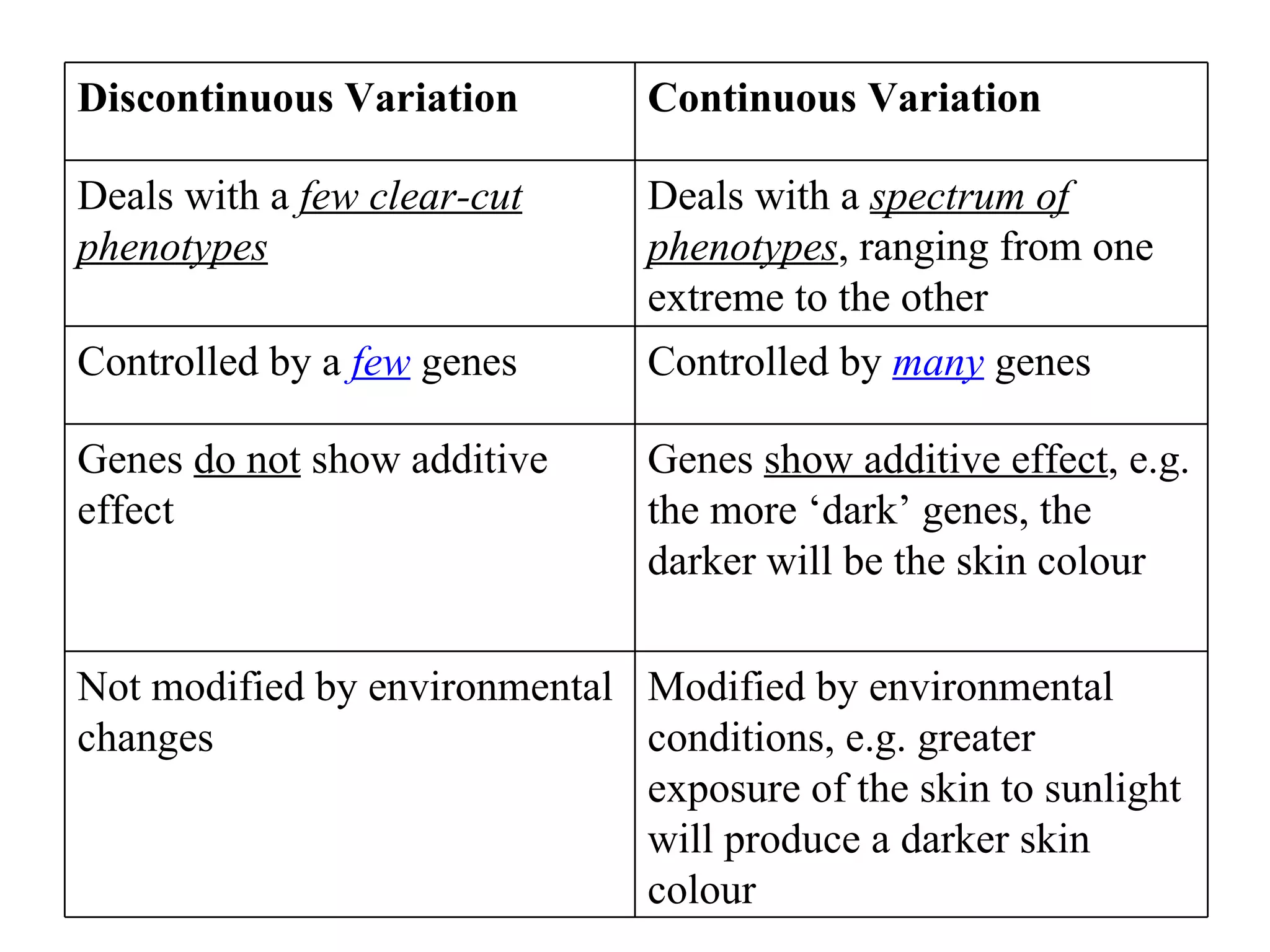
There are two types of variation: discontinuous and continuous. Discontinuous variation results in distinct phenotypes controlled by one or a few genes, like pea plant height. Continuous variation produces a spectrum of intermediate phenotypes controlled additively by many genes, such as human skin color. Continuous traits can also be influenced by the environment, unlike discontinuous traits. Both natural and artificial selection can act on variations to influence evolution over generations.
Lesson Objectives (j)describe the difference between continuous and discontinuous variation and give examples of each (k) state that competition which arises from variation leads to differential survival of, and reproduction by, those organisms best fitted to the environment (l) give examples of environmental factors that act as forces of natural selection (m) assess the importance of natural selection as a possible mechanism for evolution (n) give examples of artificial selection such as in the production of economically important plants and animals
3.
Variations Variations aredifferences in traits of characteristics between individuals of the same species Discontinuous variations e.g. Mendel’s pea plants either tall or short and had no intermediate forms between these traits Easily distinguishable and not affected by environmental conditions Brought about by one or a few genes
4.
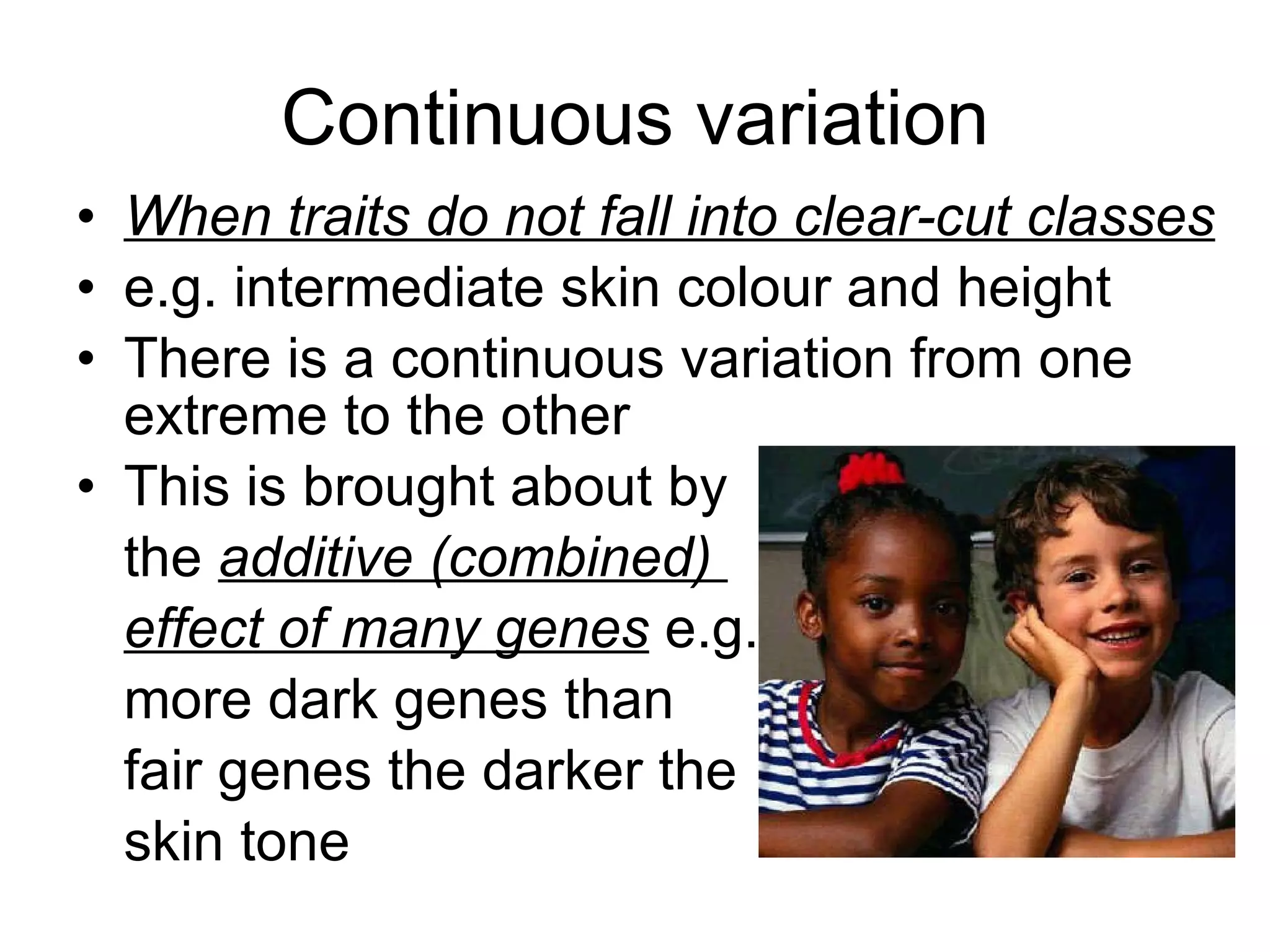
Continuous variation Whentraits do not fall into clear-cut classes e.g. intermediate skin colour and height There is a continuous variation from one extreme to the other This is brought about by the additive (combined) effect of many genes e.g. more dark genes than fair genes the darker the skin tone
5.
Modified by environmentalconditions, e.g. greater exposure of the skin to sunlight will produce a darker skin colour Not modified by environmental changes Genes show additive effect , e.g. the more ‘dark’ genes, the darker will be the skin colour Genes do not show additive effect Controlled by many genes Controlled by a few genes Deals with a spectrum of phenotypes , ranging from one extreme to the other Deals with a few clear-cut phenotypes Continuous Variation Discontinuous Variation
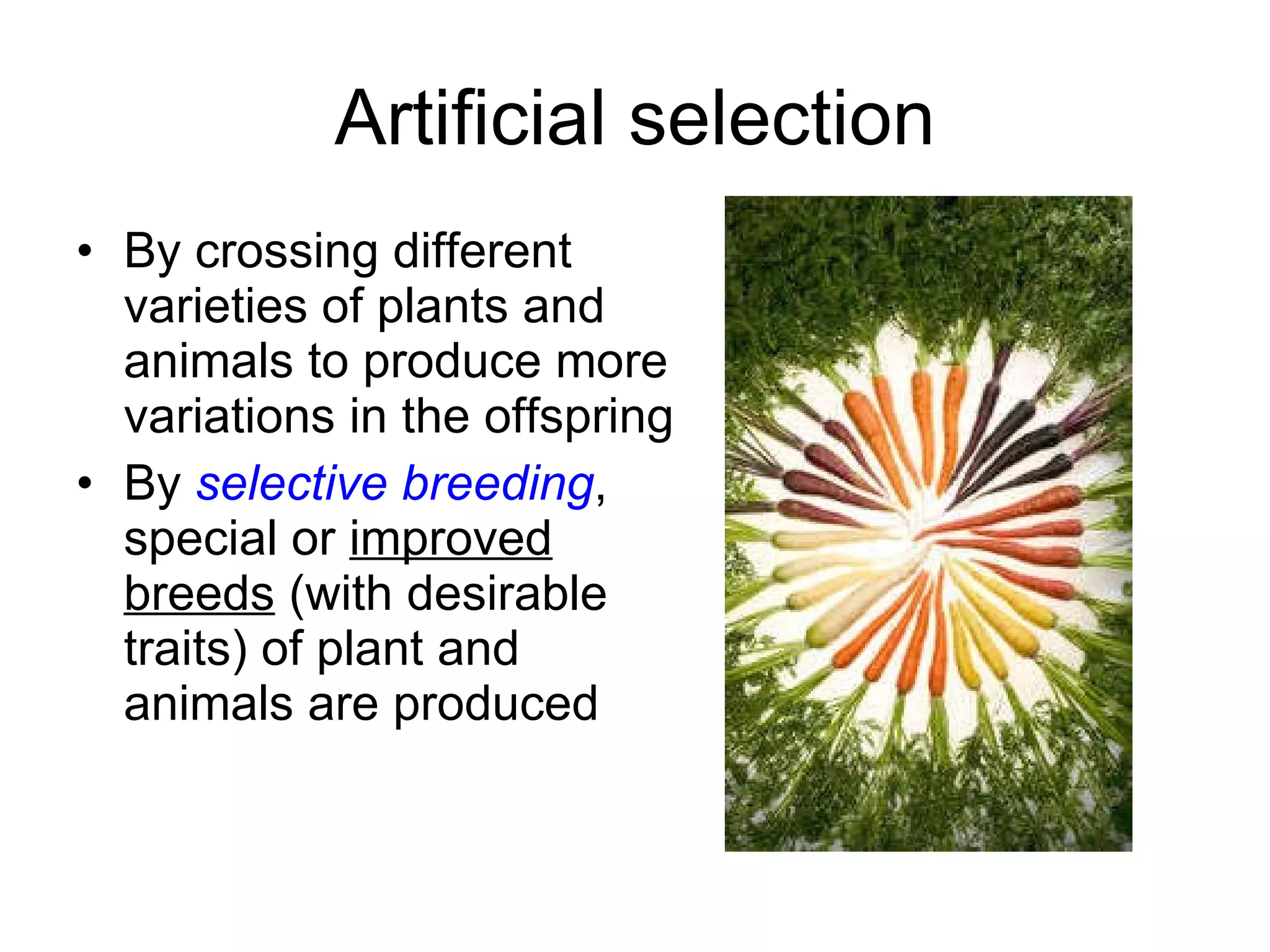
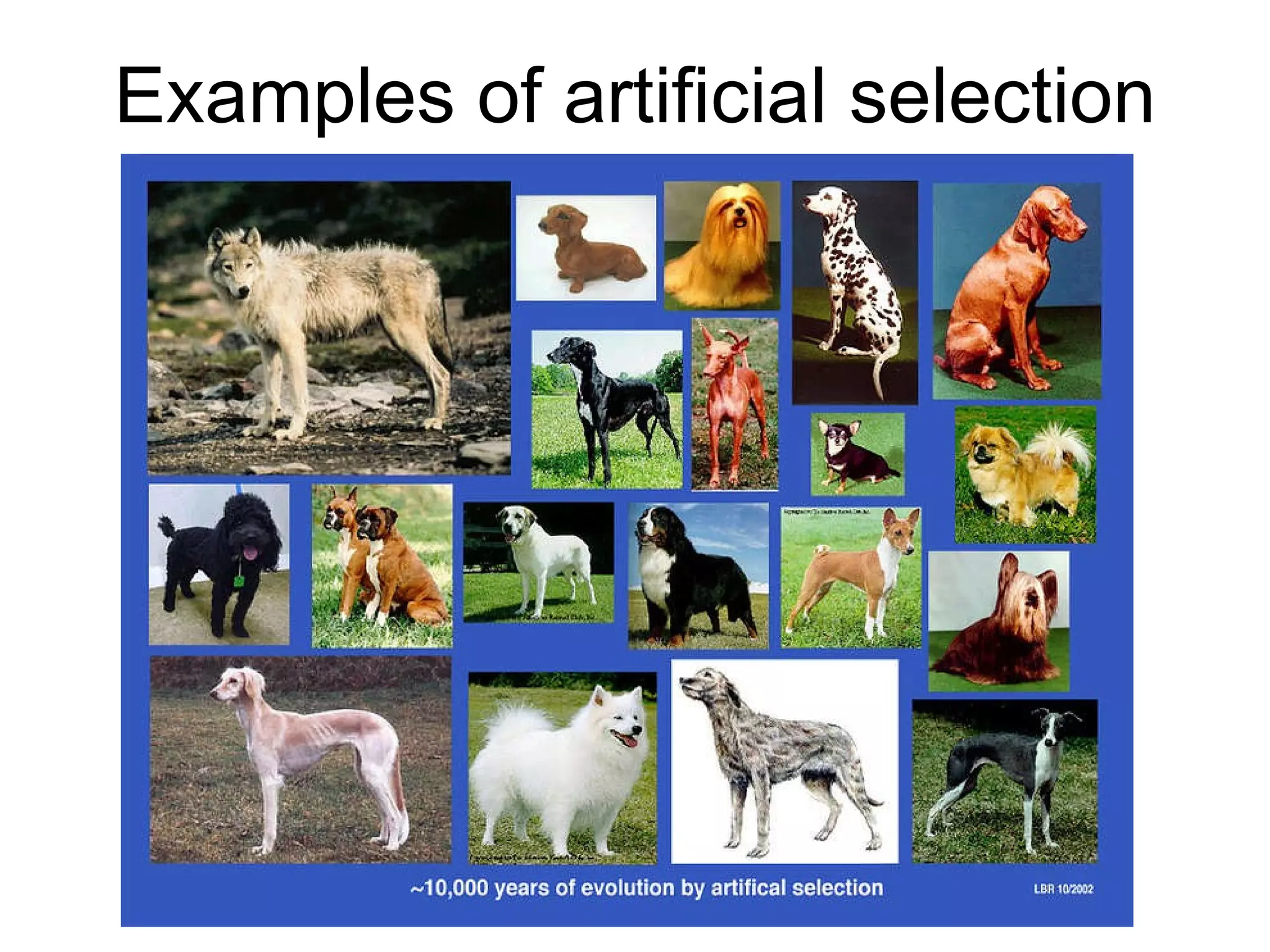
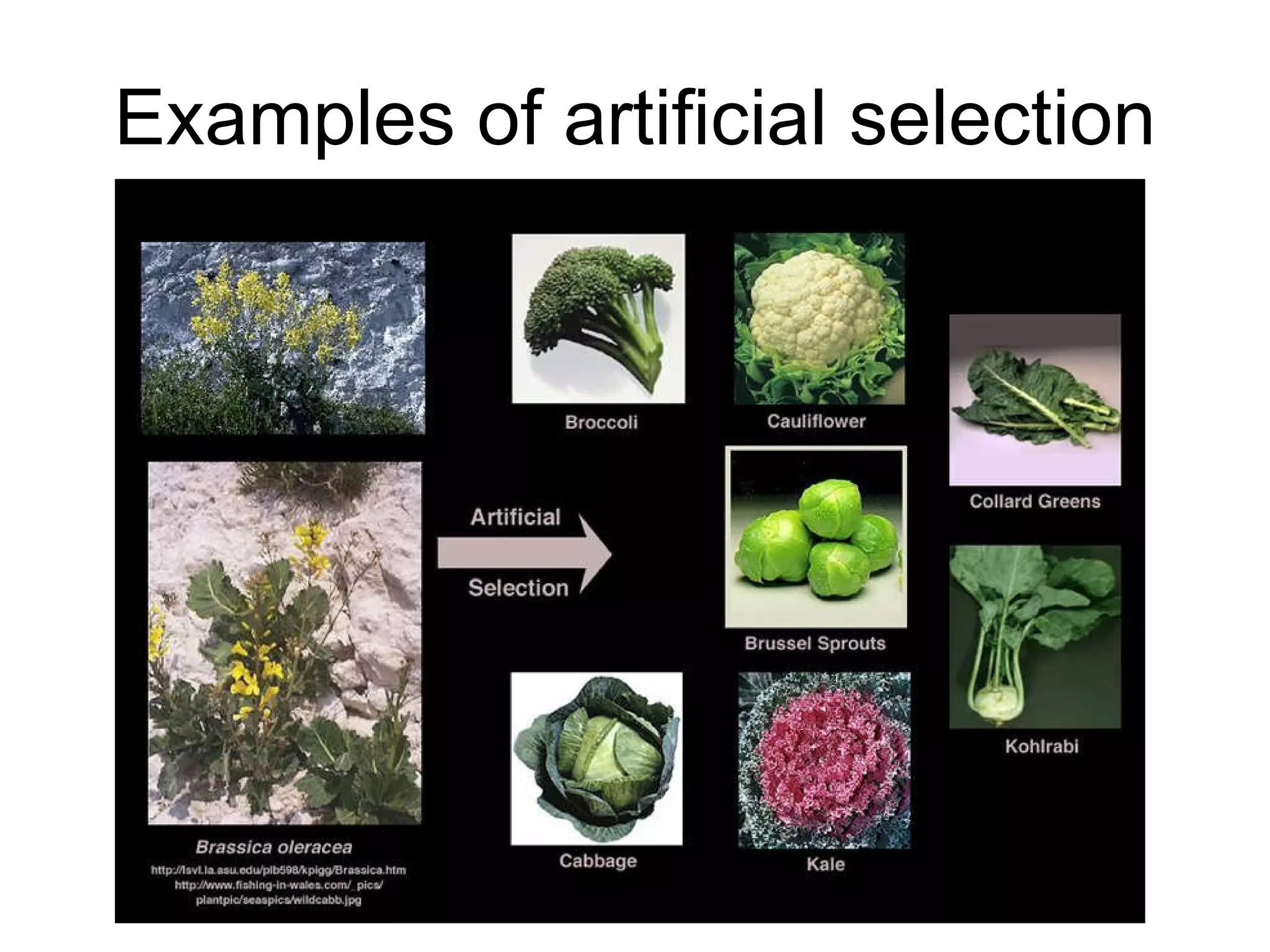
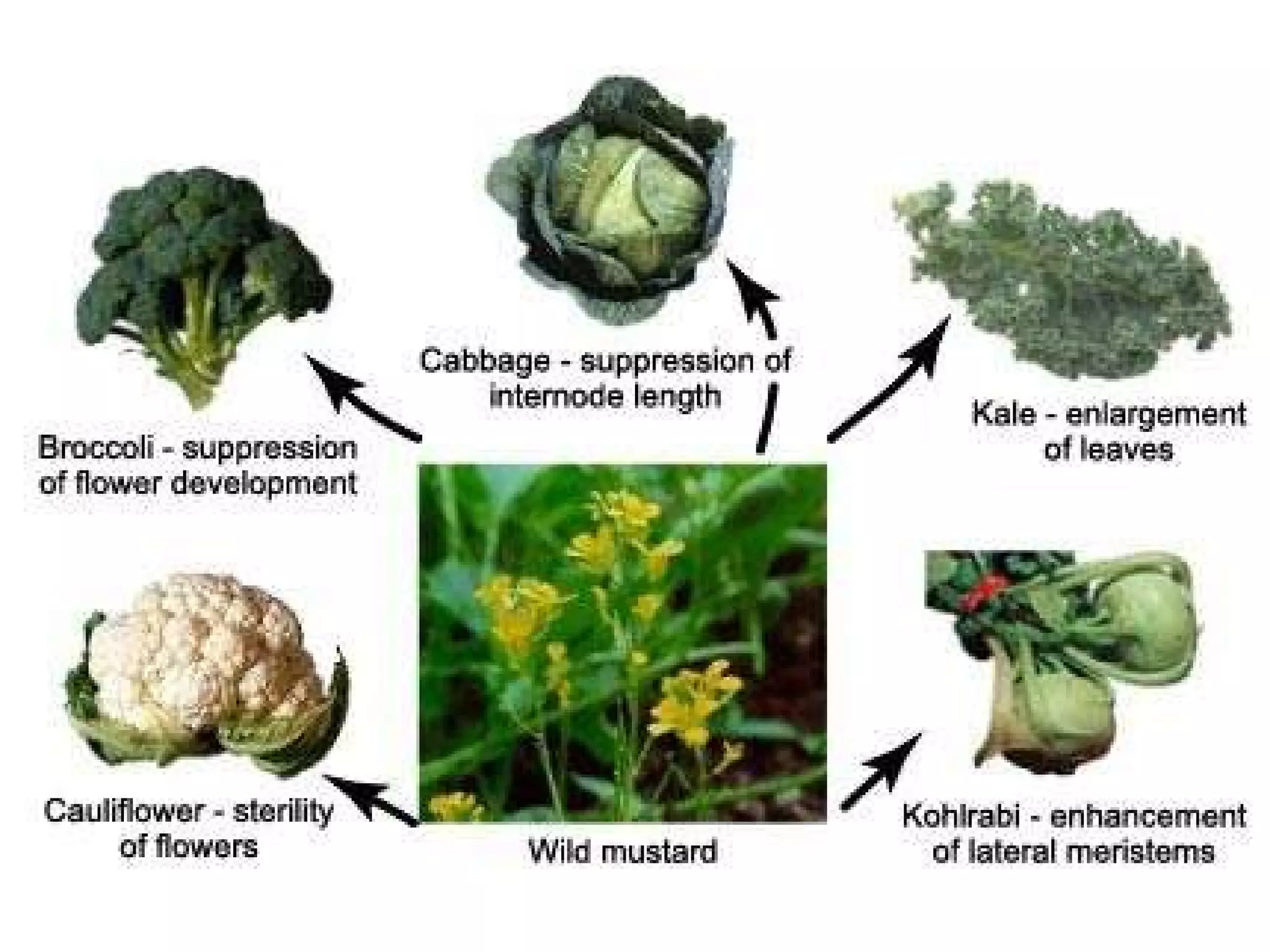
Artificial selection Bycrossing different varieties of plants and animals to produce more variations in the offspring By selective breeding , special or improved breeds (with desirable traits) of plant and animals are produced


![6[1].1 form 5](https://cdn.slidesharecdn.com/ss_thumbnails/61-1-variationinorganisms-120603005250-phpapp01-thumbnail.jpg?width=640&height=640&fit=bounds)


