The Spine & Spinal Cord Faisal Majid 4 th  year (Endo BSc) MM Education rep [email_address]
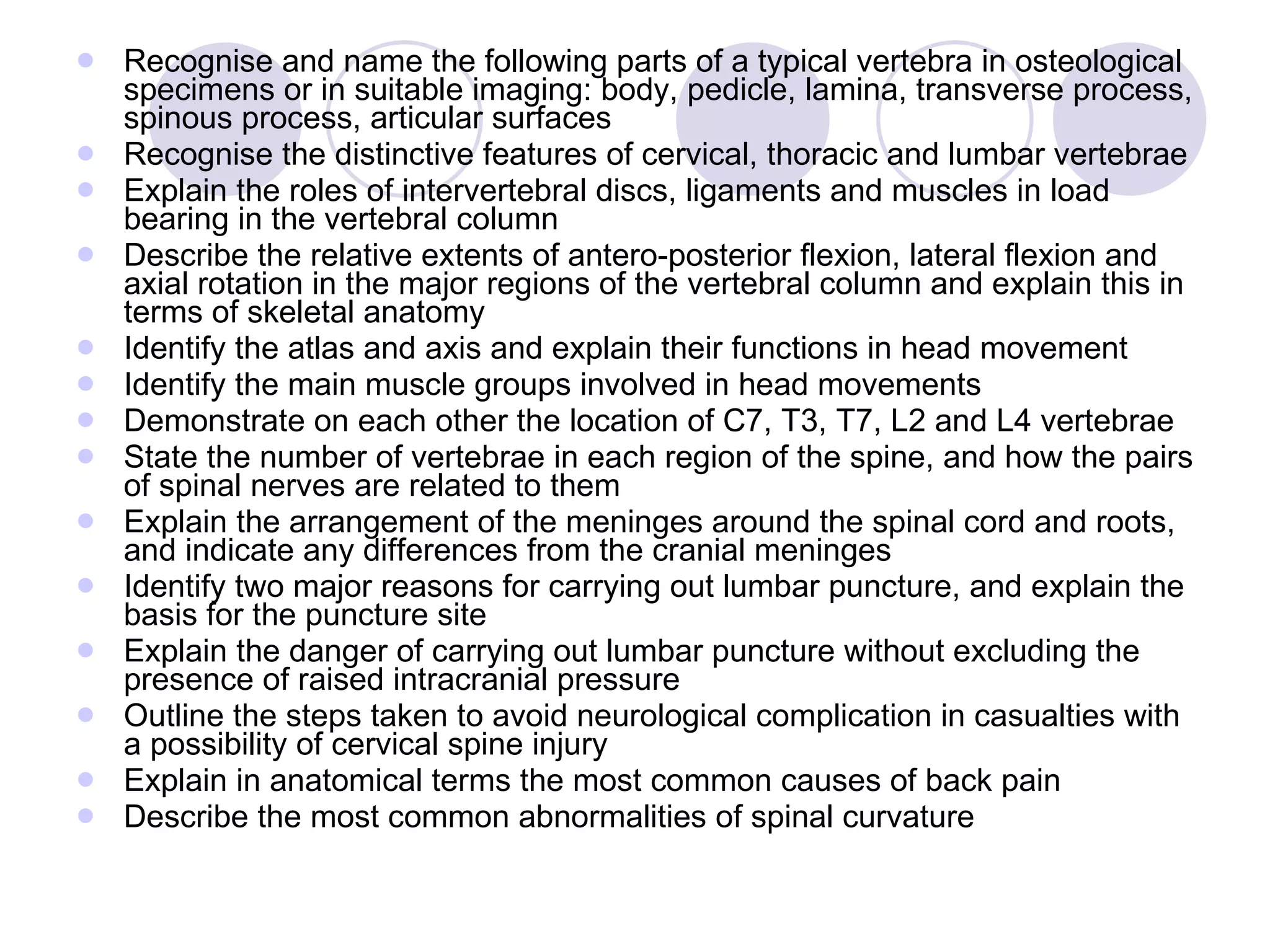
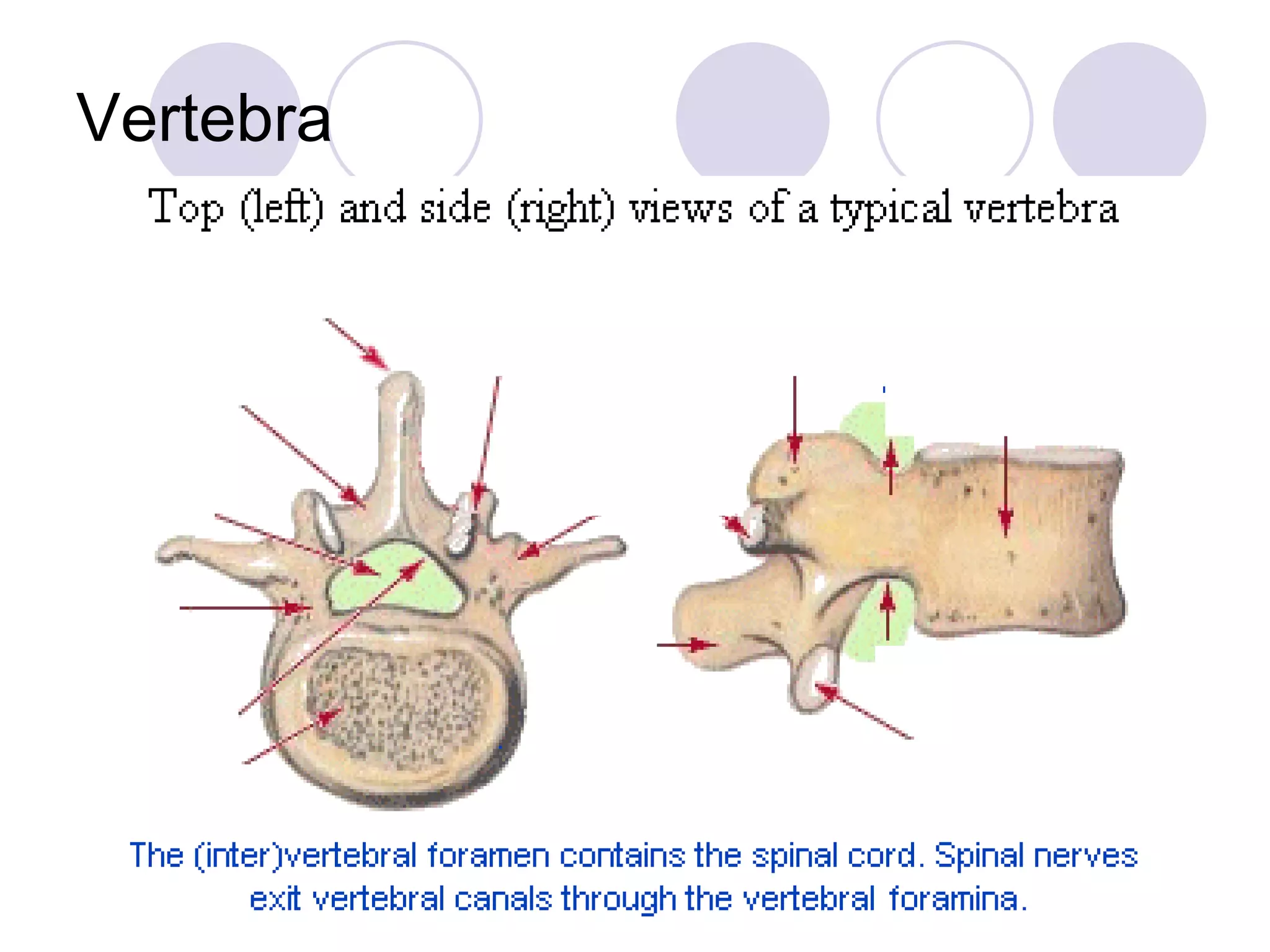
Recognise and name the following parts of a typical vertebra in osteological specimens or in suitable imaging: body, pedicle, lamina, transverse process, spinous process, articular surfaces Recognise the distinctive features of cervical, thoracic and lumbar vertebrae Explain the roles of intervertebral discs, ligaments and muscles in load bearing in the vertebral column Describe the relative extents of antero-posterior flexion, lateral flexion and axial rotation in the major regions of the vertebral column and explain this in terms of skeletal anatomy Identify the atlas and axis and explain their functions in head movement Identify the main muscle groups involved in head movements Demonstrate on each other the location of C7, T3, T7, L2 and L4 vertebrae State the number of vertebrae in each region of the spine, and how the pairs of spinal nerves are related to them  Explain the arrangement of the meninges around the spinal cord and roots, and indicate any differences from the cranial meninges Identify two major reasons for carrying out lumbar puncture, and explain the basis for the puncture site Explain the danger of carrying out lumbar puncture without excluding the presence of raised intracranial pressure Outline the steps taken to avoid neurological complication in casualties with a possibility of cervical spine injury Explain in anatomical terms the most common causes of back pain Describe the most common abnormalities of spinal curvature
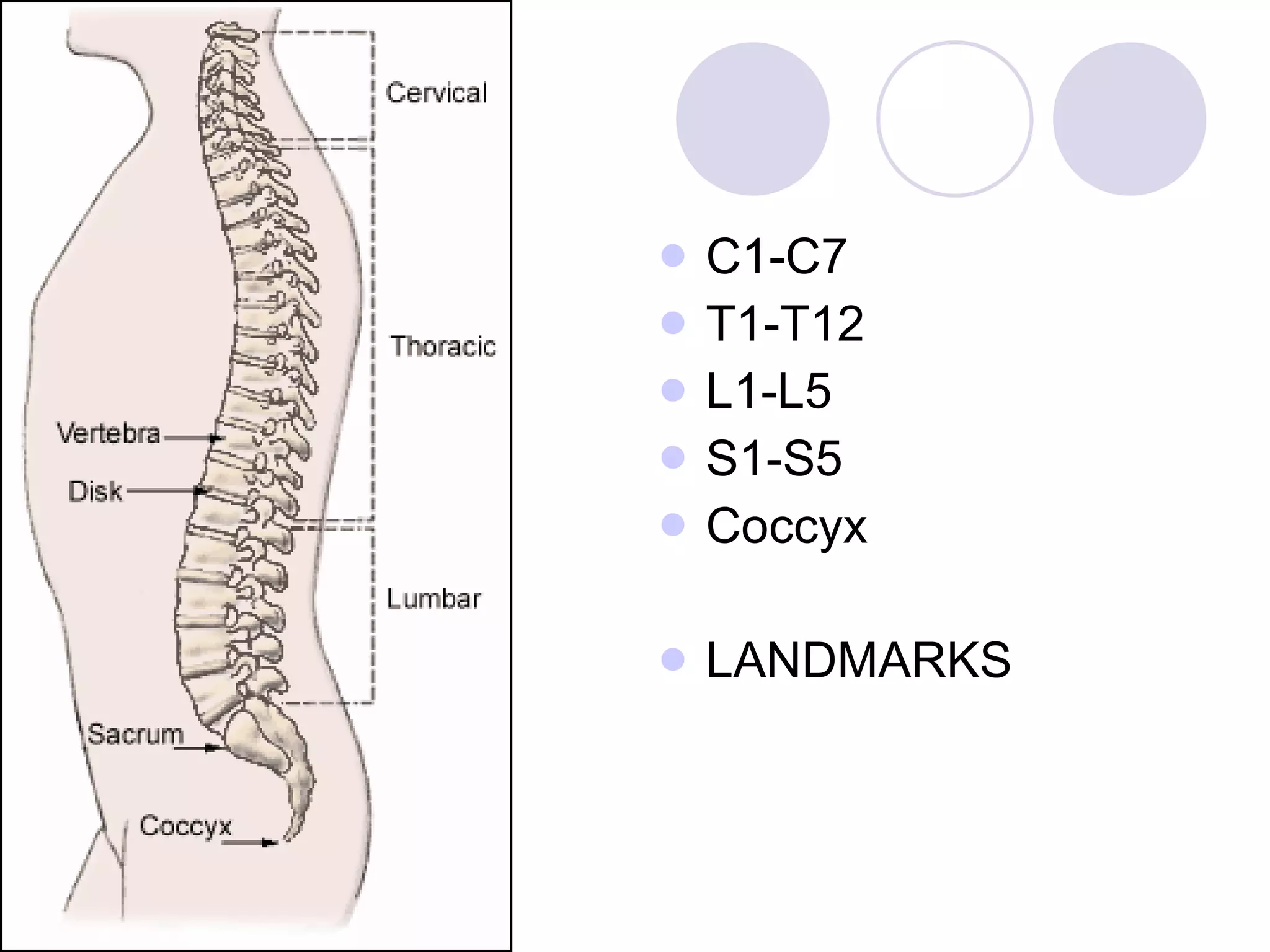
C1-C7 T1-T12 L1-L5 S1-S5 Coccyx LANDMARKS
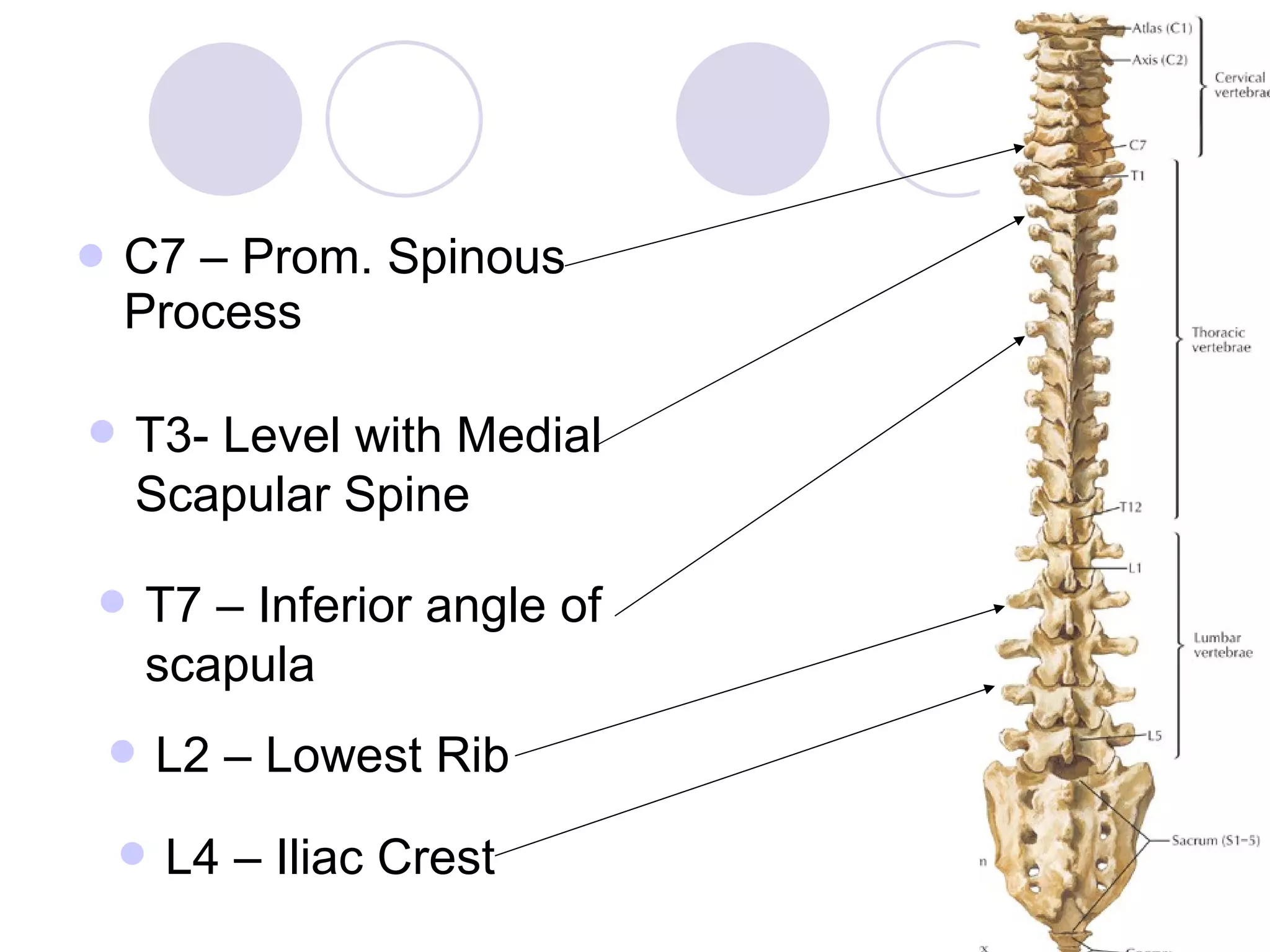
C7 – Prom. Spinous Process T3- Level with Medial Scapular Spine T7 – Inferior angle of scapula L2 – Lowest Rib L4 – Iliac Crest
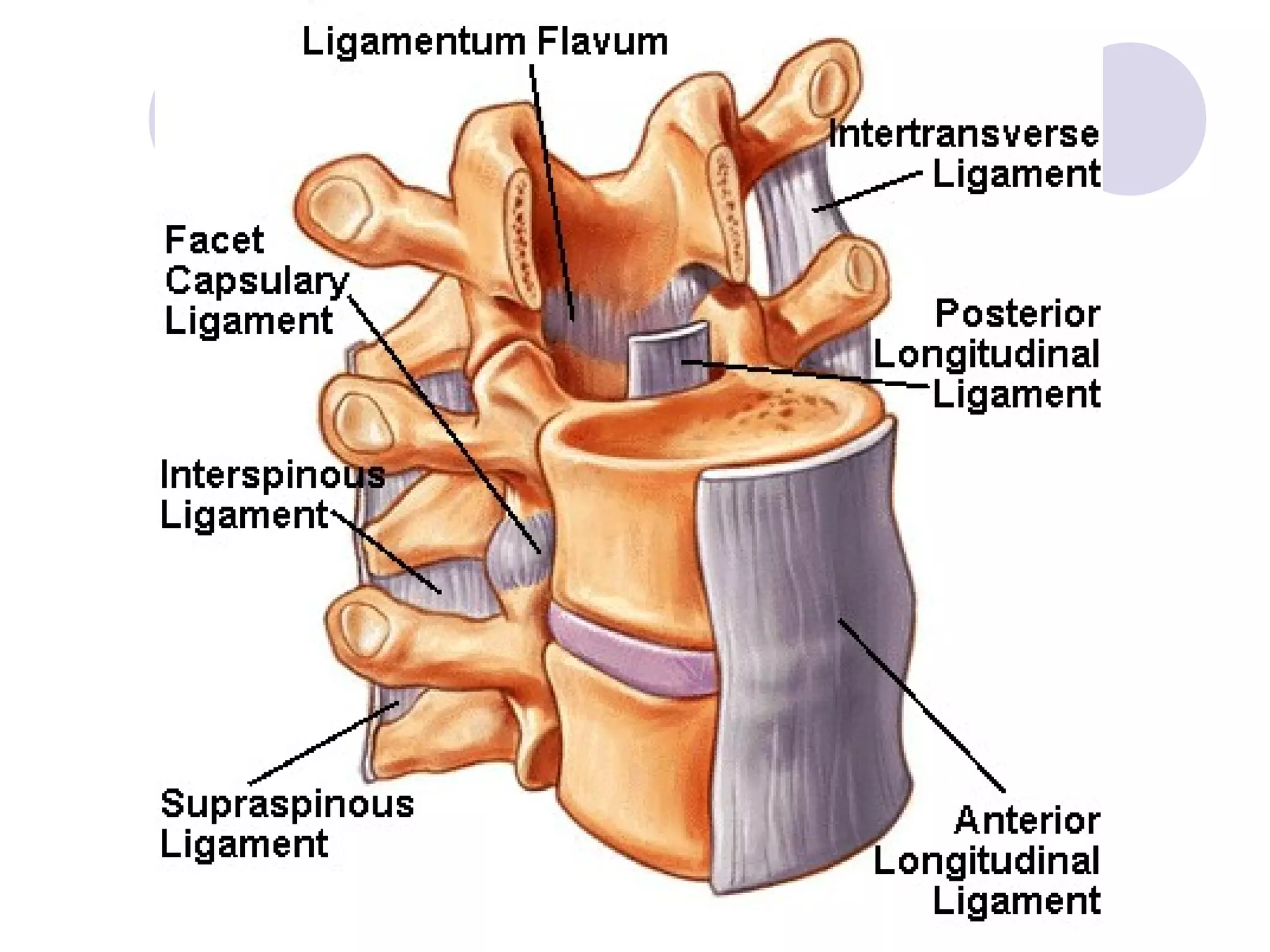
Vertebra
 
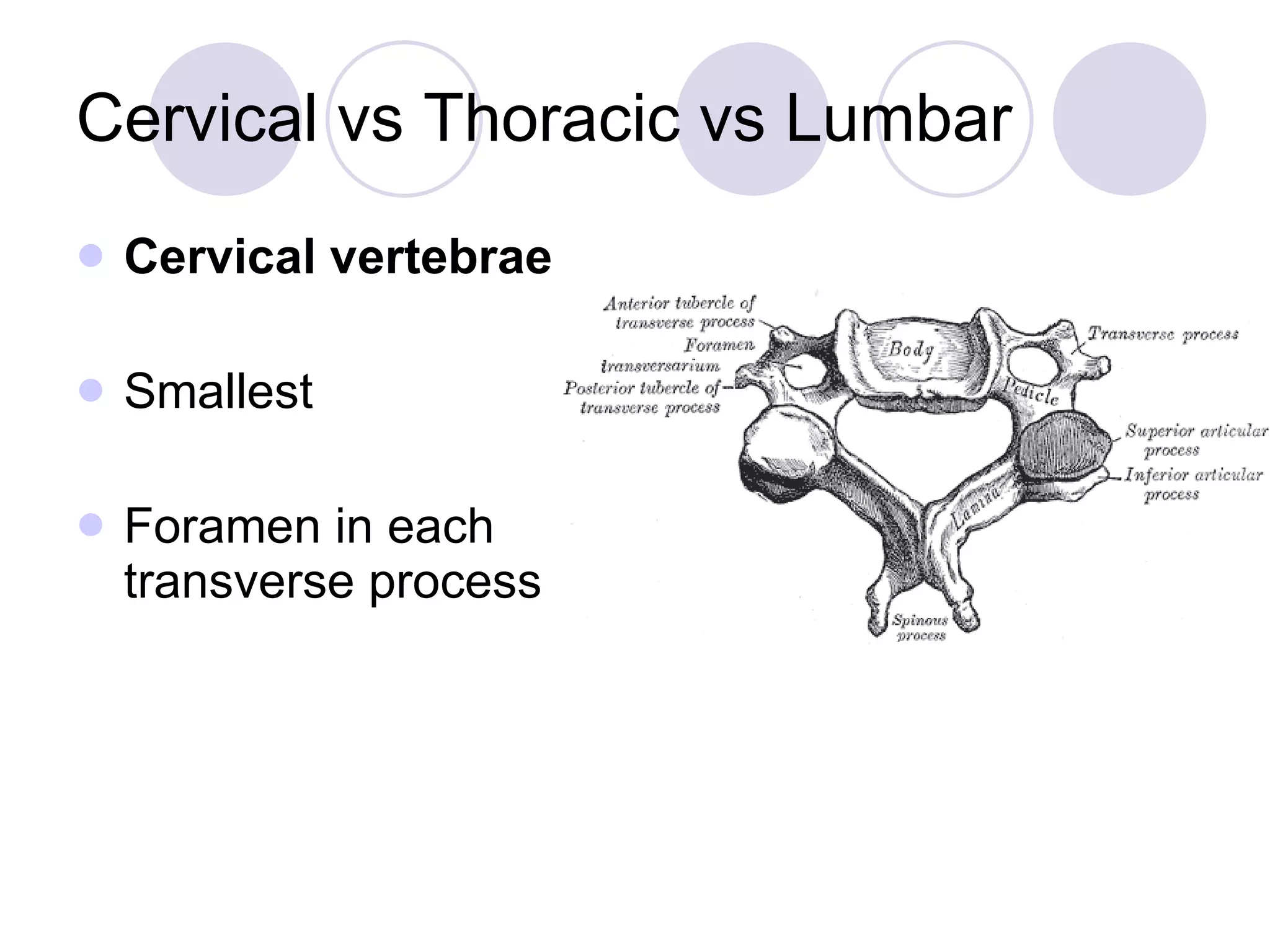
Cervical vs Thoracic vs Lumbar Cervical vertebrae   Smallest Foramen in each transverse process
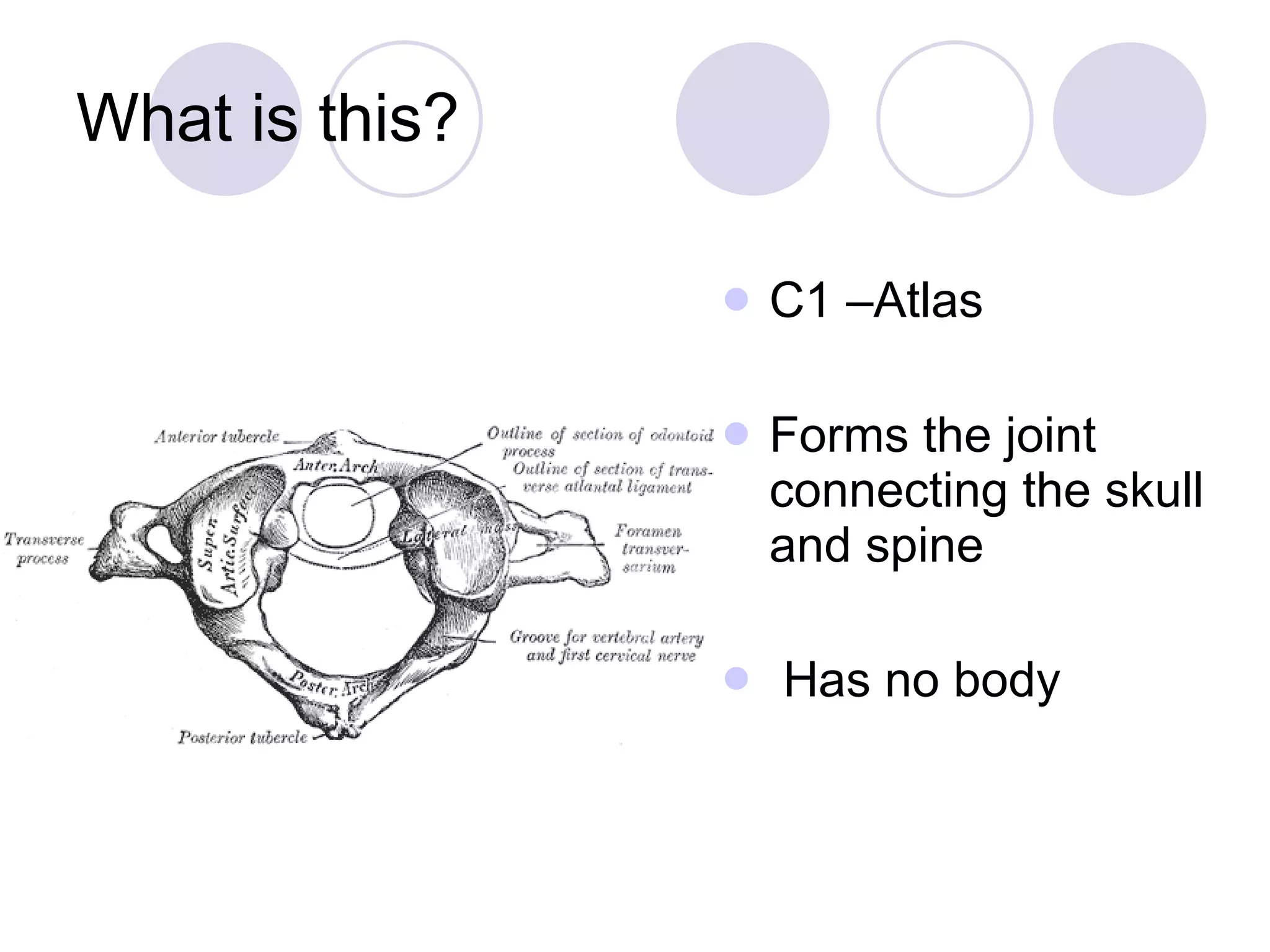
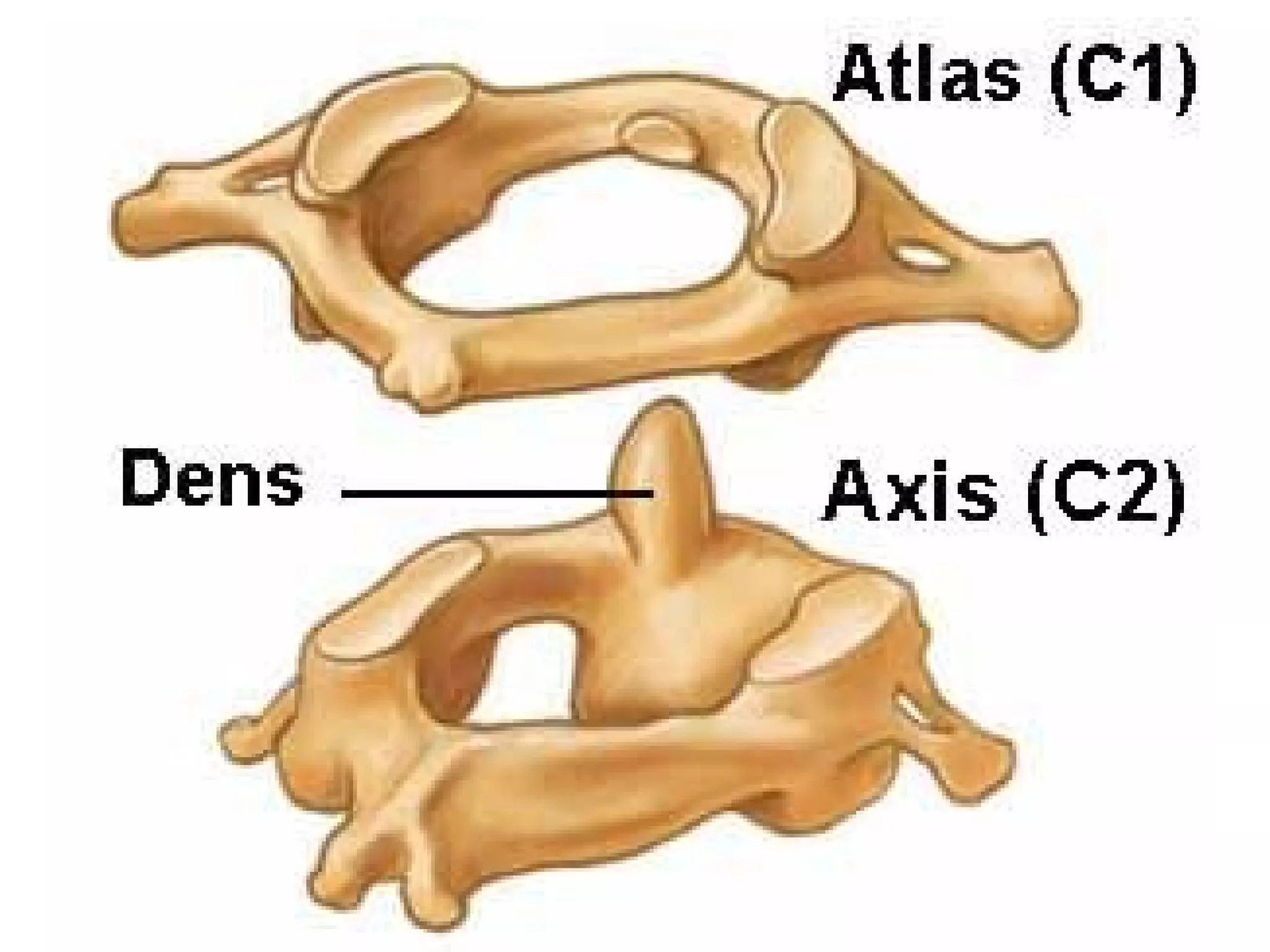
What is this? C1 –Atlas Forms the joint connecting the skull and spine Has no body
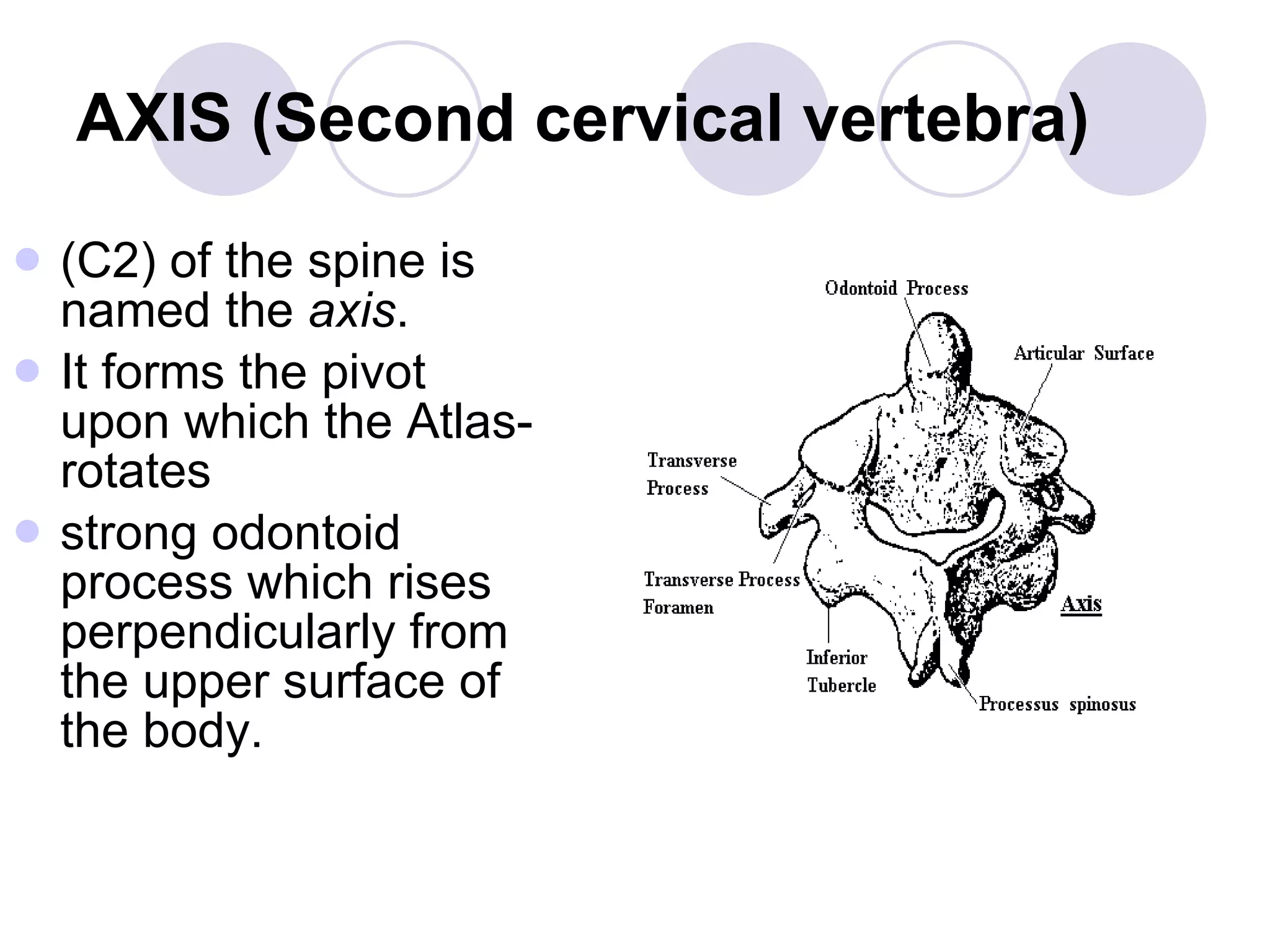
AXIS (Second cervical vertebra) (C2) of the spine is named the  axis .  It forms the pivot upon which the Atlas- rotates strong odontoid process which rises perpendicularly from the upper surface of the body.
 
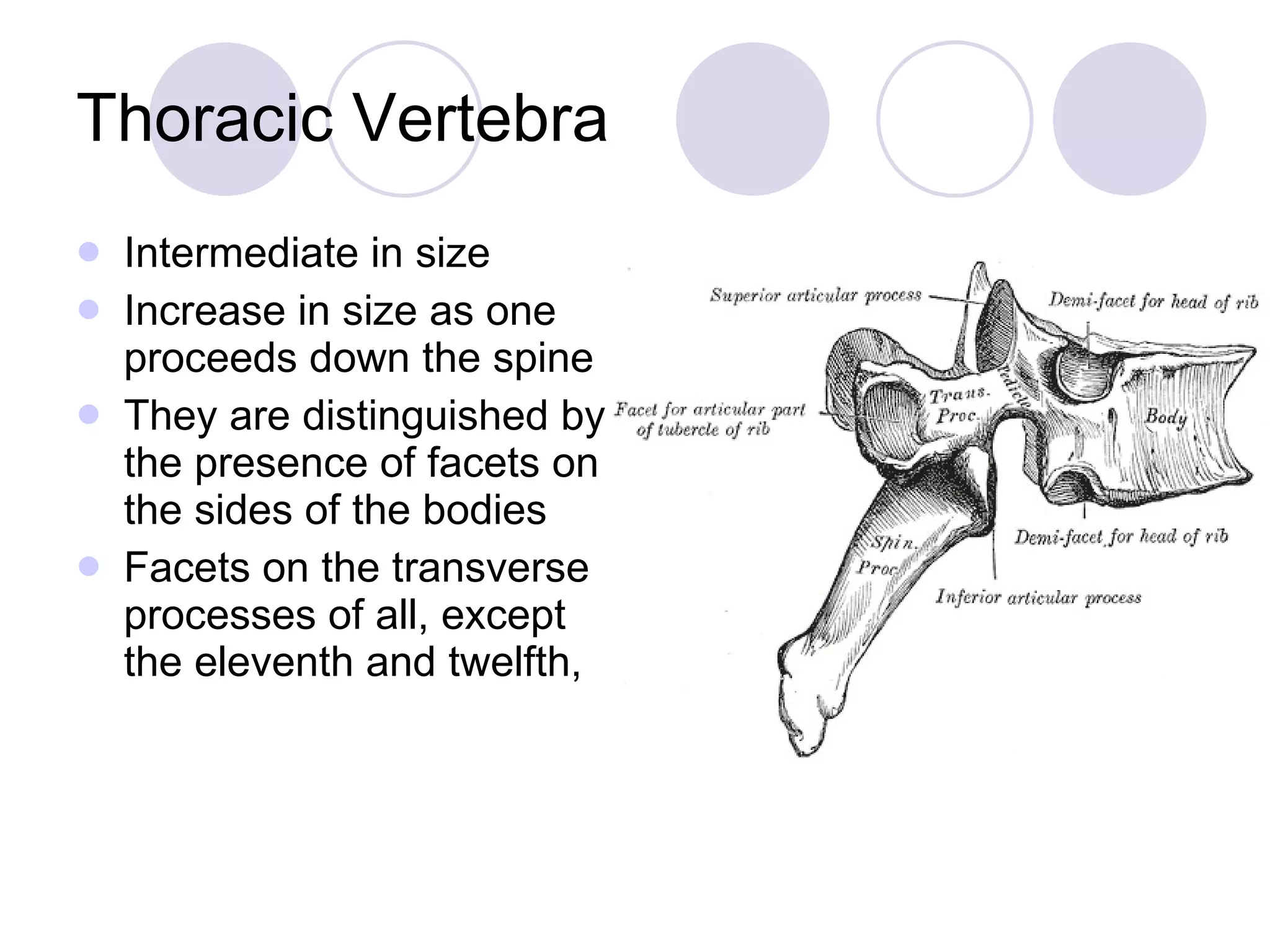
Thoracic Vertebra Intermediate in size Increase in size as one proceeds down the spine They are distinguished by the presence of facets on the sides of the bodies  Facets on the transverse processes of all, except the eleventh and twelfth,
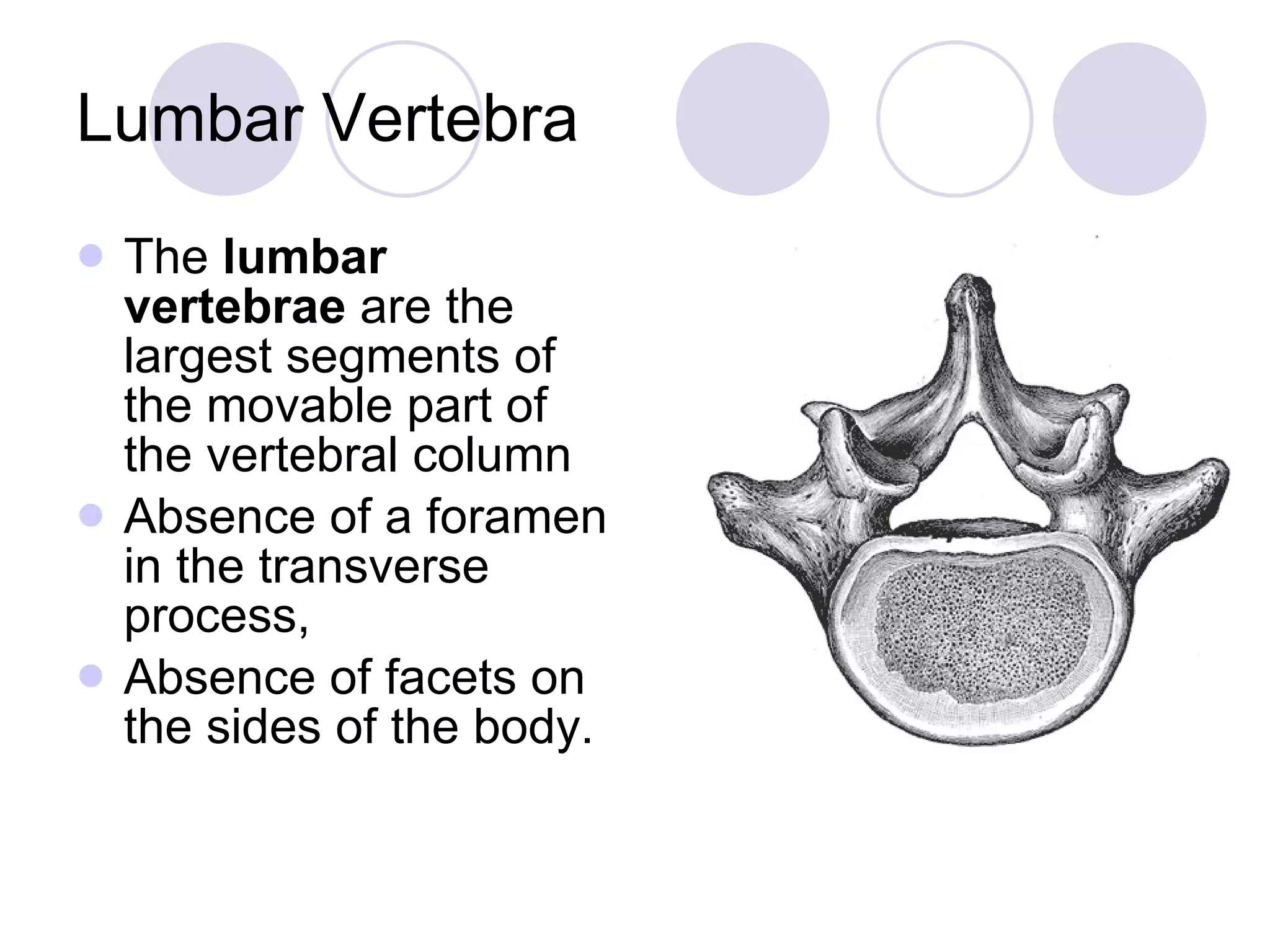
Lumbar Vertebra The  lumbar vertebrae  are the largest segments of the movable part of the vertebral column Absence of a foramen in the transverse process, Absence of facets on the sides of the body.
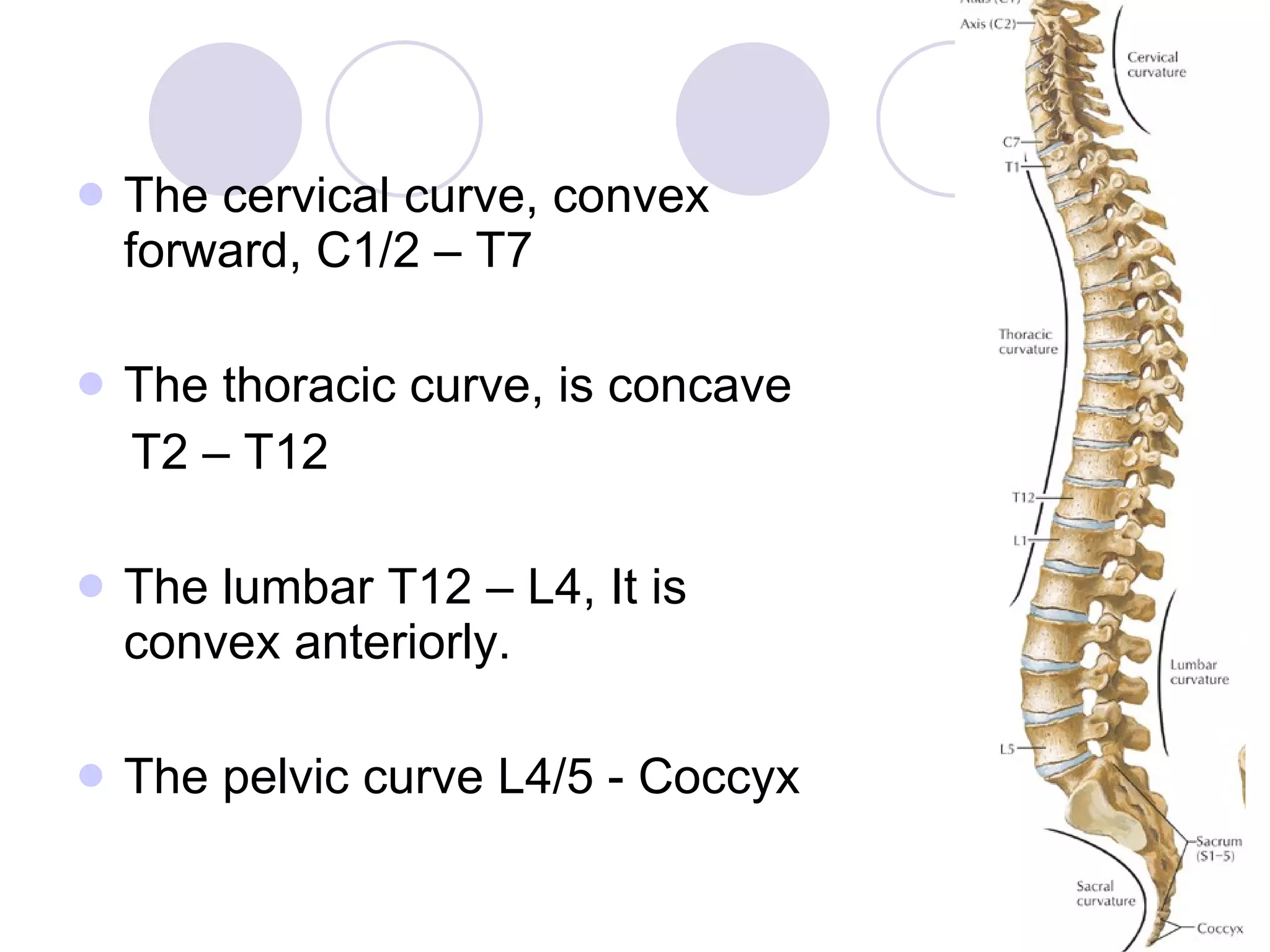
The cervical curve, convex forward, C1/2 – T7 The thoracic curve, is concave T2 – T12  The lumbar T12 – L4, It is convex anteriorly. The pelvic curve L4/5 - Coccyx
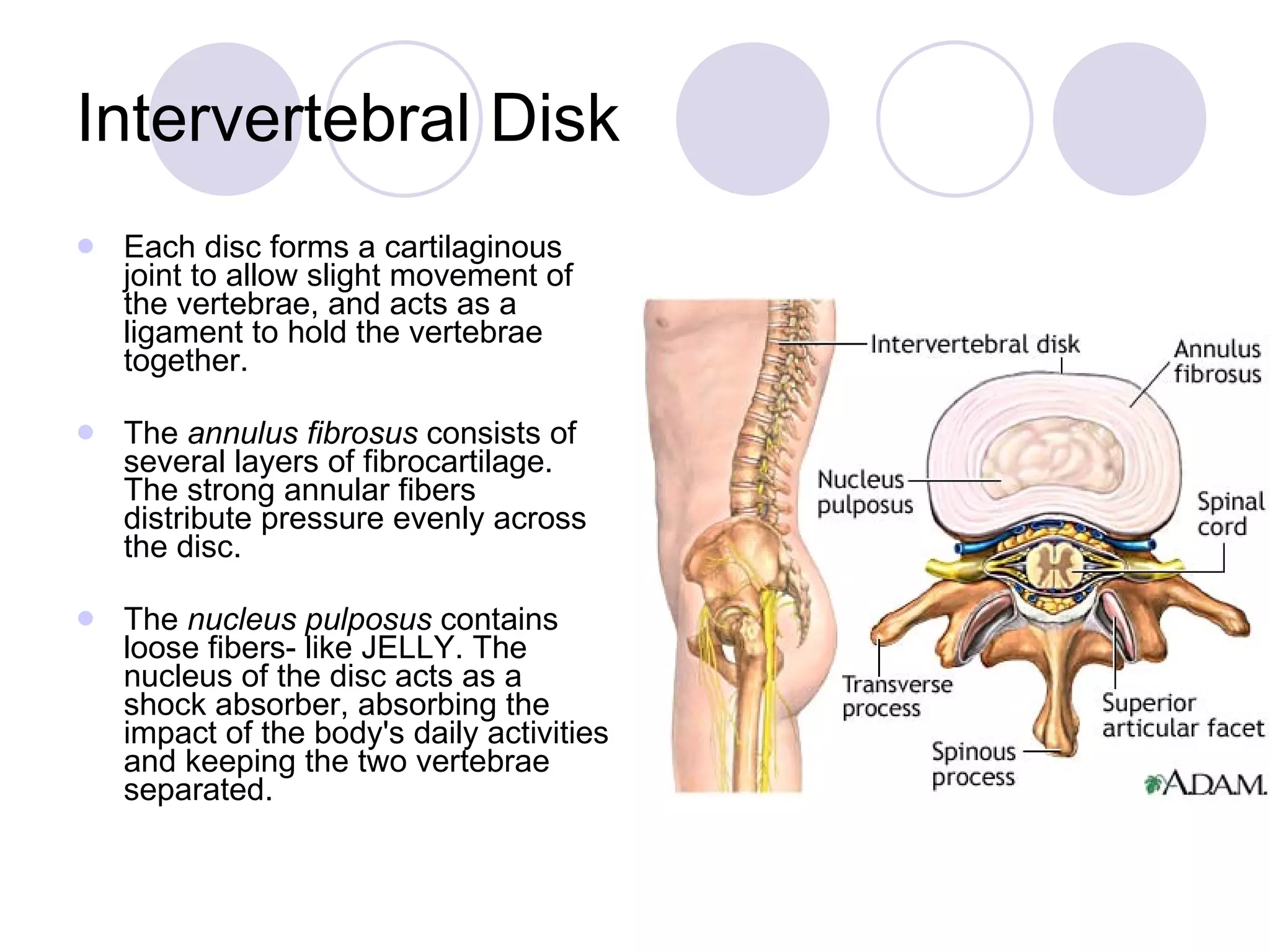
Intervertebral Disk Each disc forms a cartilaginous joint to allow slight movement of the vertebrae, and acts as a ligament to hold the vertebrae together. The  annulus fibrosus  consists of several layers of fibrocartilage. The strong annular fibers distribute pressure evenly across the disc.  The  nucleus pulposus  contains loose fibers- like JELLY. The nucleus of the disc acts as a shock absorber, absorbing the impact of the body's daily activities and keeping the two vertebrae separated.
Intervertebral Disk - INJURY Degenerative Disk Disease: As people age, the  nucleus pulposus  begins to dehydrate, which limits its ability to absorb shock. The  annulus fibrosus  gets weaker with age and begins to tear. While this may not cause pain in some people, in others one or both of these may cause chronic pain. Disk Herniation: When the  annulus fibrosus  tears due to an injury or the aging process, the  nucleus pulposus  can begin to extrude through the tear.  Leads to Pinched nerve: Radiating pain, numbness, tingling, and diminished strength and/or range of motion.  Radicular Pain
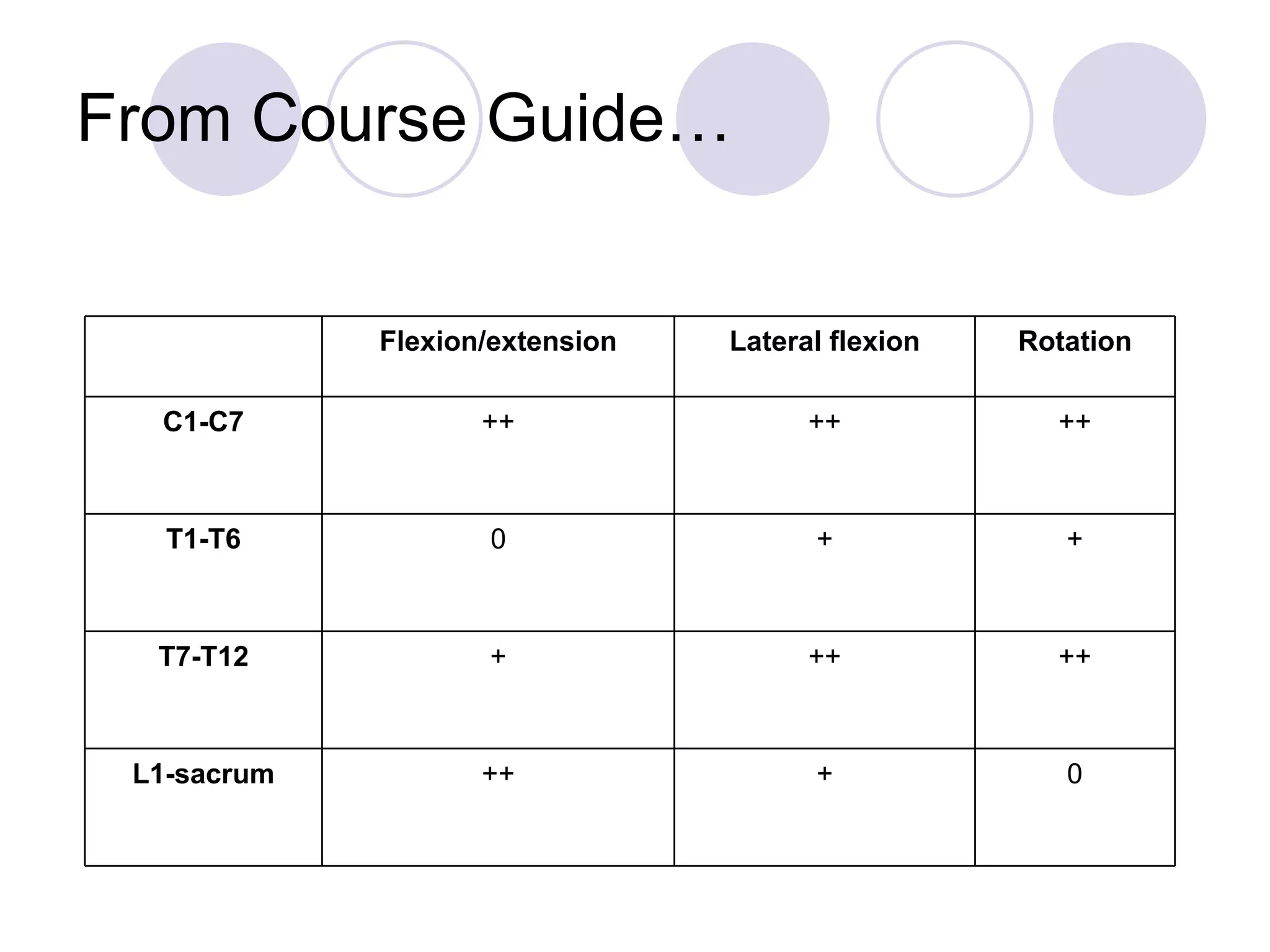
From Course Guide Why is backache more common in the lumbar region? The lower spine is subject to increased stresses of weight-bearing. We tend to abuse our backs, particularly when lifting heavy objects. Extending the spine from the fully flexed position under a heavy load can inflame intervertebral joints or place unequal pressure on the intervertebral disks, leading to local joint pain and referred neurological pain, if there is also pressure on the spinal nerve. Additional attempts to rotate the spine at the same time creates extra stress on the lumbar joints. Good practice includes holding the load close to the body, and using extension of the knee joints instead of extension of the spine to raise the load.
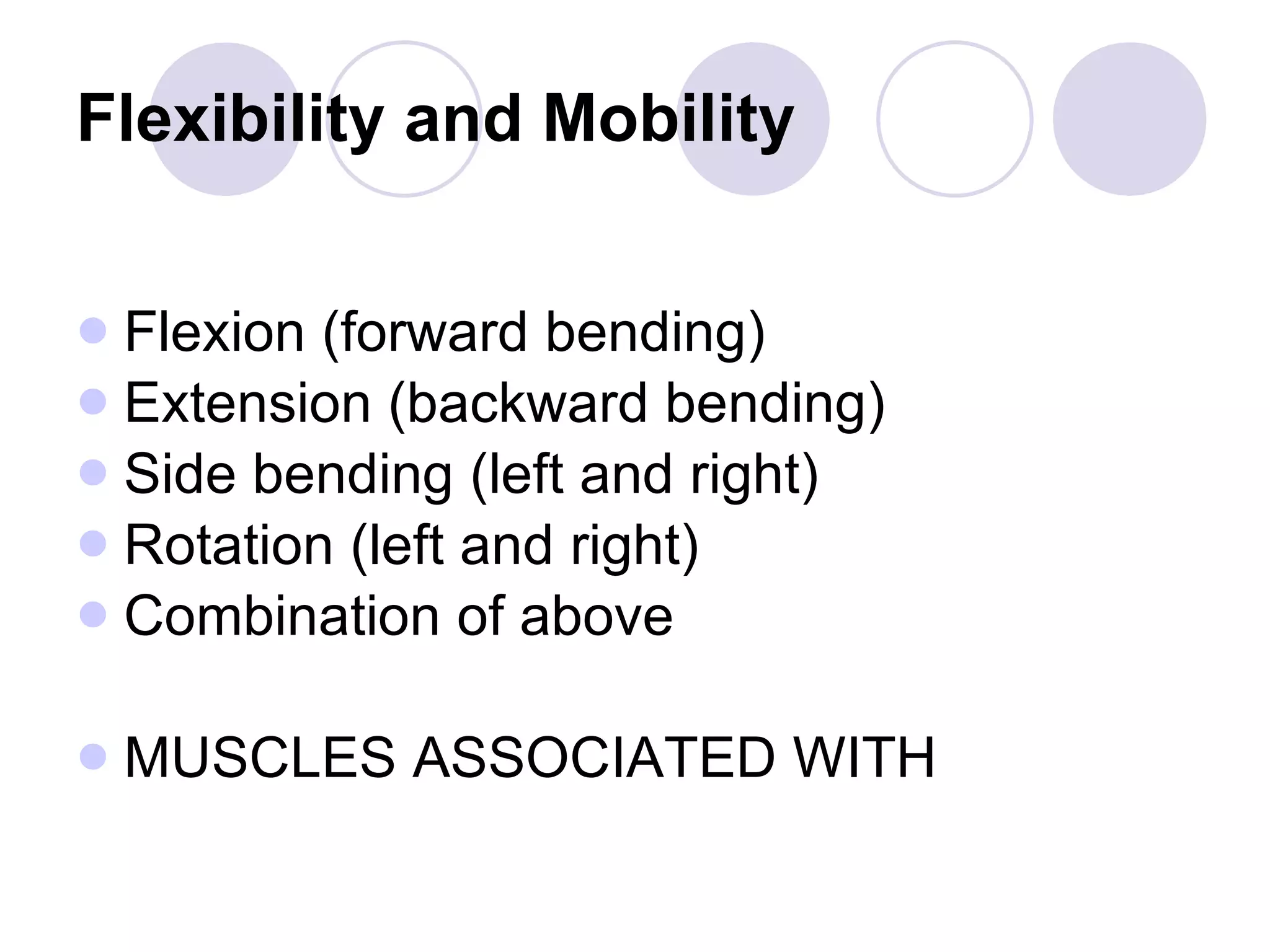
Flexibility and Mobility Flexion (forward bending)  Extension (backward bending)  Side bending (left and right)  Rotation (left and right)  Combination of above  MUSCLES ASSOCIATED WITH
From Course Guide… 0 + ++ L1-sacrum ++ ++ + T7-T12 + + 0 T1-T6 ++ ++ ++ C1-C7 Rotation Lateral flexion Flexion/extension
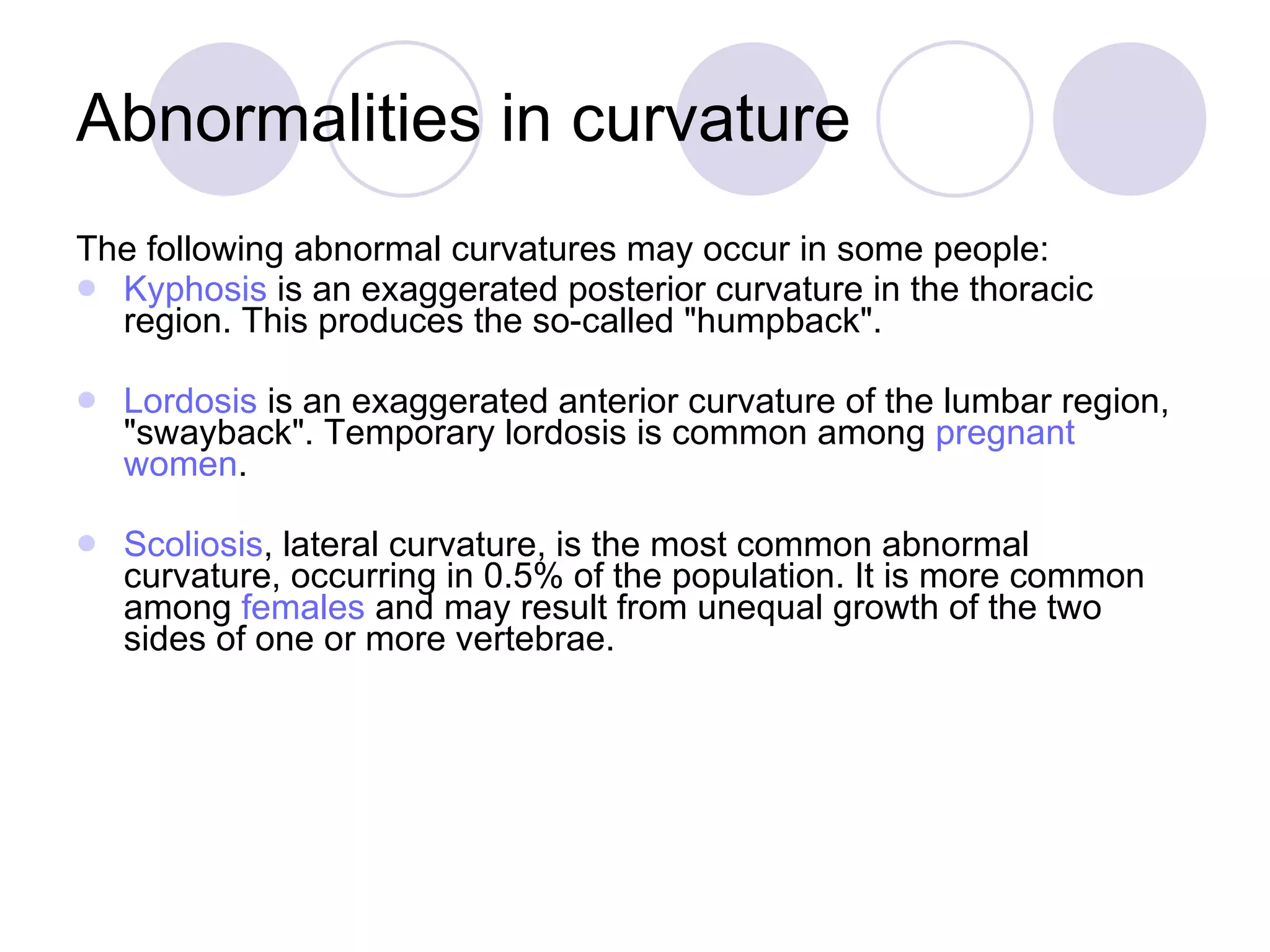
Abnormalities in curvature The following abnormal curvatures may occur in some people: Kyphosis  is an exaggerated posterior curvature in the thoracic region. This produces the so-called "humpback". Lordosis  is an exaggerated anterior curvature of the lumbar region, "swayback". Temporary lordosis is common among  pregnant   women .  Scoliosis , lateral curvature, is the most common abnormal curvature, occurring in 0.5% of the population. It is more common among  females  and may result from unequal growth of the two sides of one or more vertebrae.
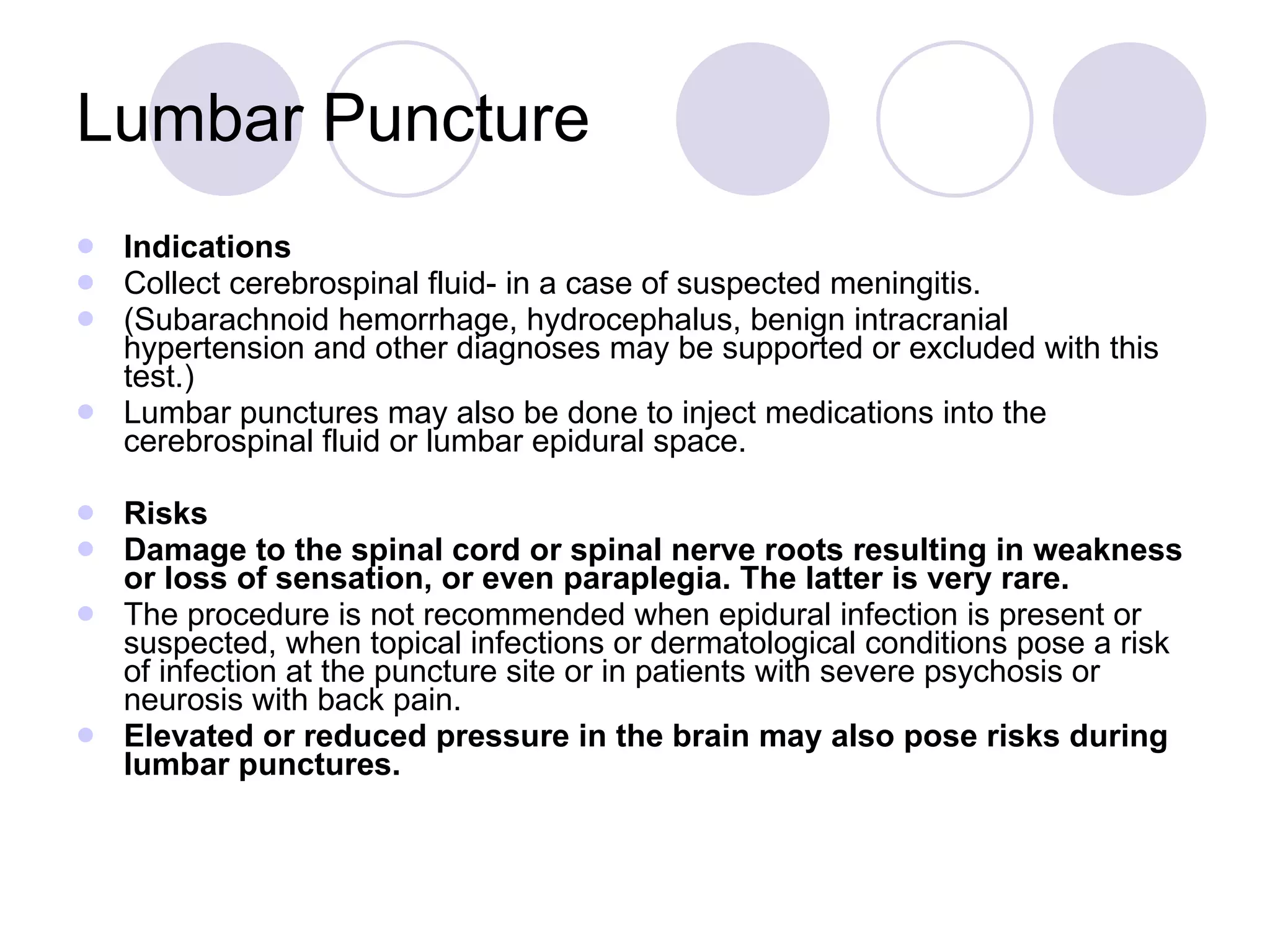
Lumbar Puncture Indications Collect cerebrospinal fluid- in a case of suspected meningitis. (Subarachnoid hemorrhage, hydrocephalus, benign intracranial hypertension and other diagnoses may be supported or excluded with this test.) Lumbar punctures may also be done to inject medications into the cerebrospinal fluid or lumbar epidural space. Risks Damage to the spinal cord or spinal nerve roots resulting in weakness or loss of sensation, or even paraplegia. The latter is very rare.  The procedure is not recommended when epidural infection is present or suspected, when topical infections or dermatological conditions pose a risk of infection at the puncture site or in patients with severe psychosis or neurosis with back pain.  Elevated or reduced pressure in the brain may also pose risks during lumbar punctures.
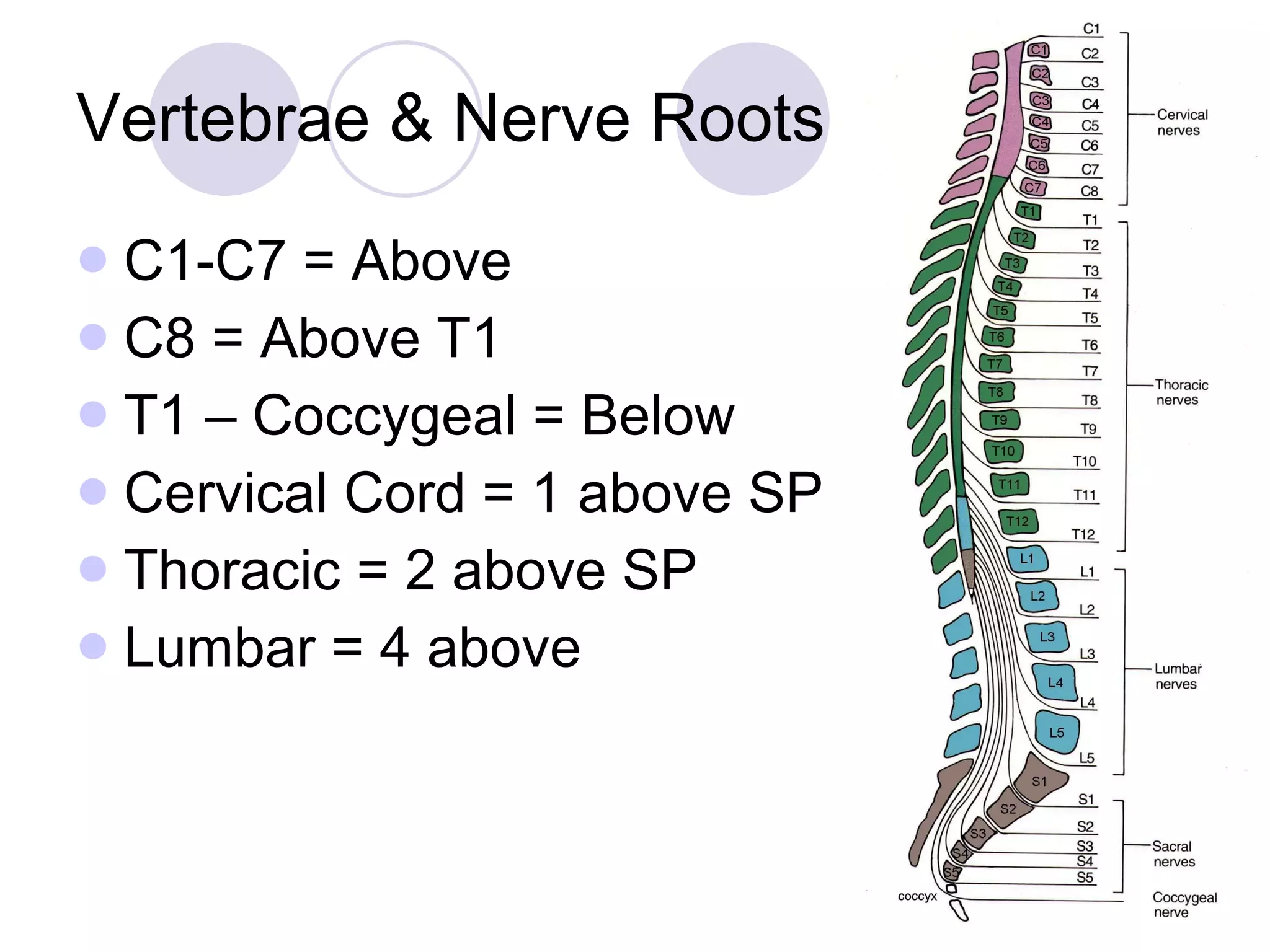
Vertebrae & Nerve Roots C1-C7 = Above C8 = Above T1 T1 – Coccygeal = Below Cervical Cord = 1 above SP Thoracic = 2 above SP Lumbar = 4 above
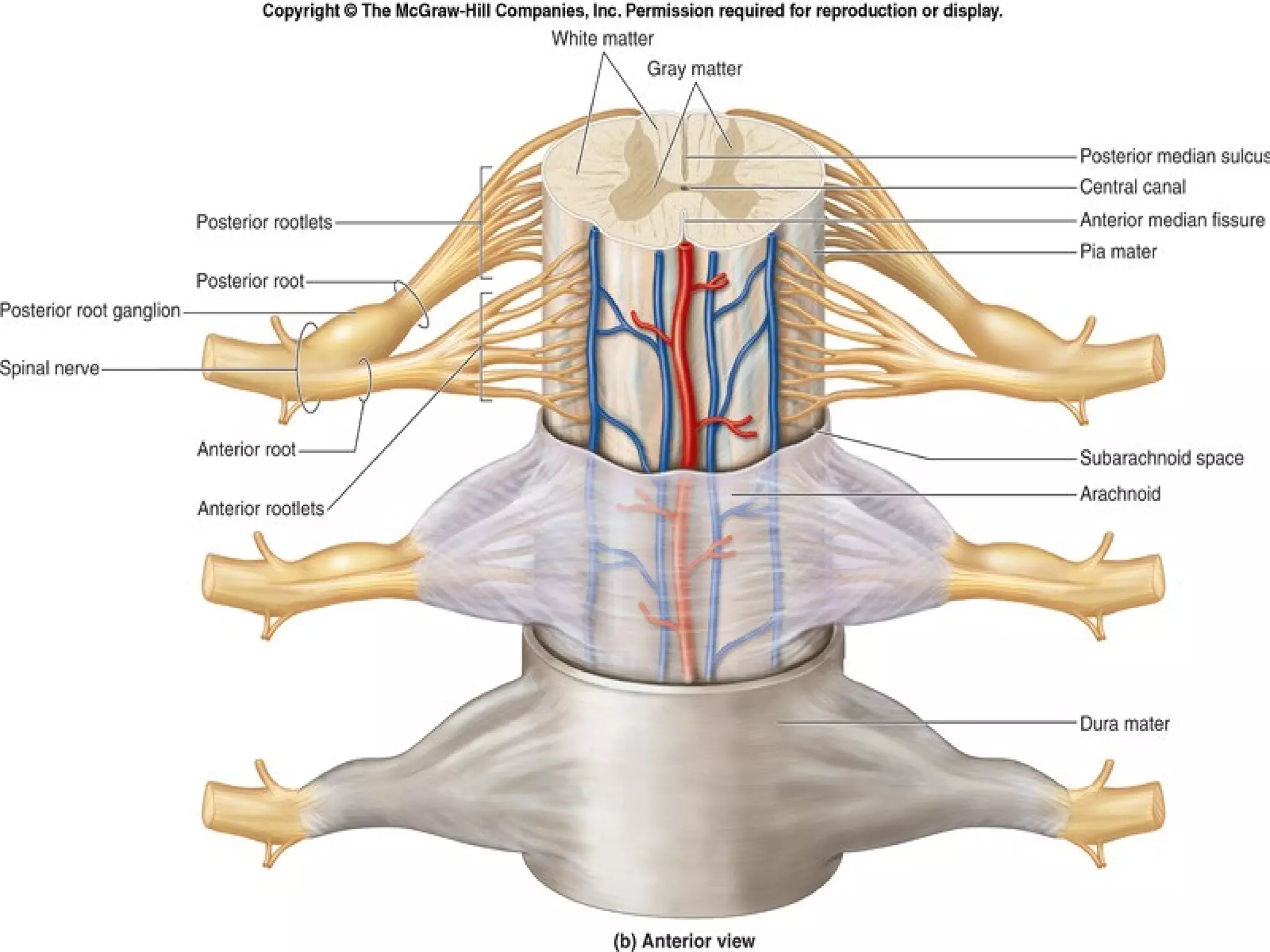
Spinal Cord
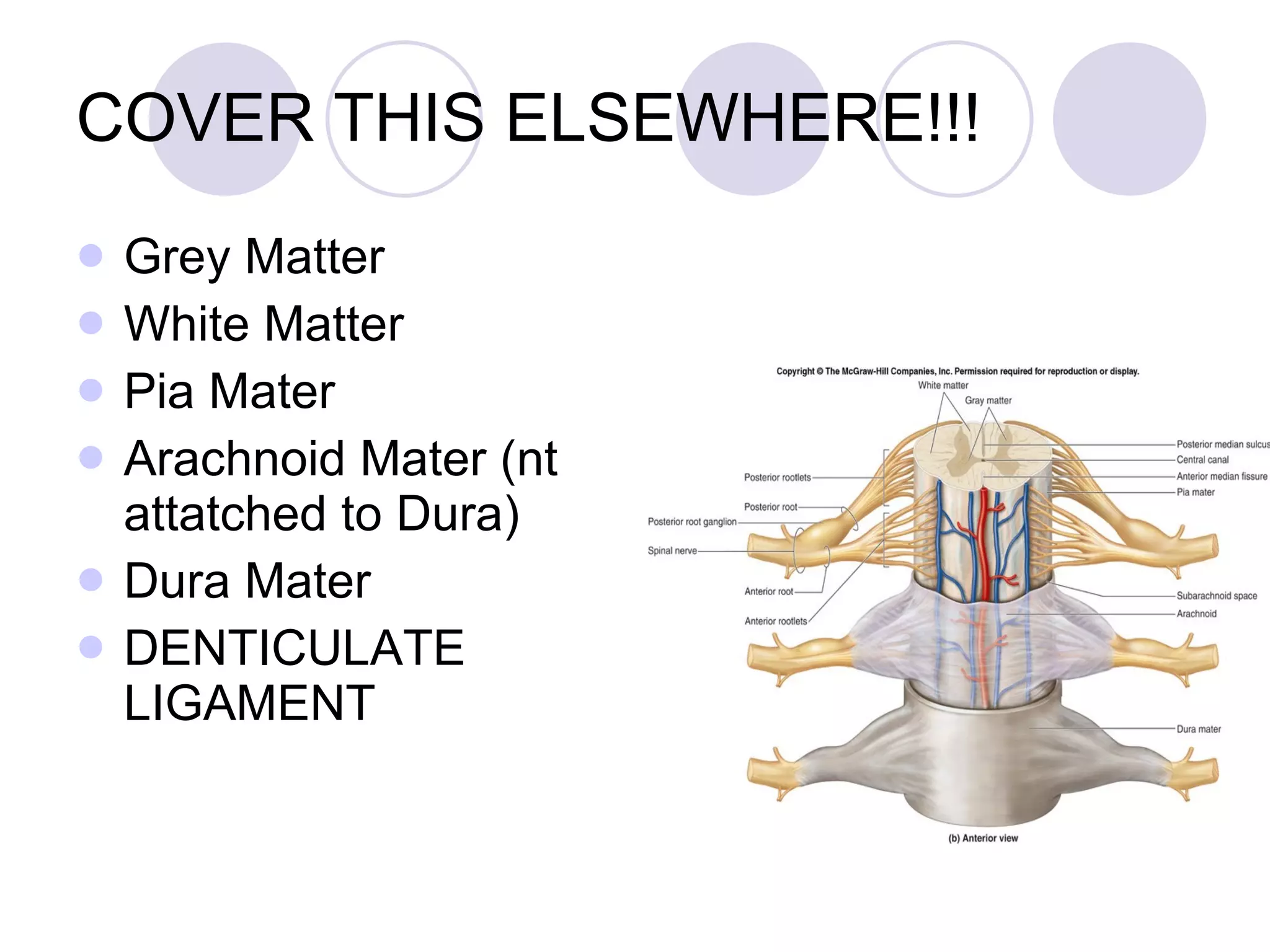
COVER THIS ELSEWHERE!!! Grey Matter White Matter Pia Mater Arachnoid Mater (nt attatched to Dura) Dura Mater DENTICULATE LIGAMENT
Lesion Through Cord Motor innervation: Partial lesion- Normally via 2 or more segments of motor neurones, so may WEAKEN but unlikely to paralyse Problem is – WHITE MATTER
Factors affecting the severity of a spinal lesion Loss of neural tissue - obvious Vertical level – Higher up, the greater the damage Transverse plane – What Diameter has a lesion
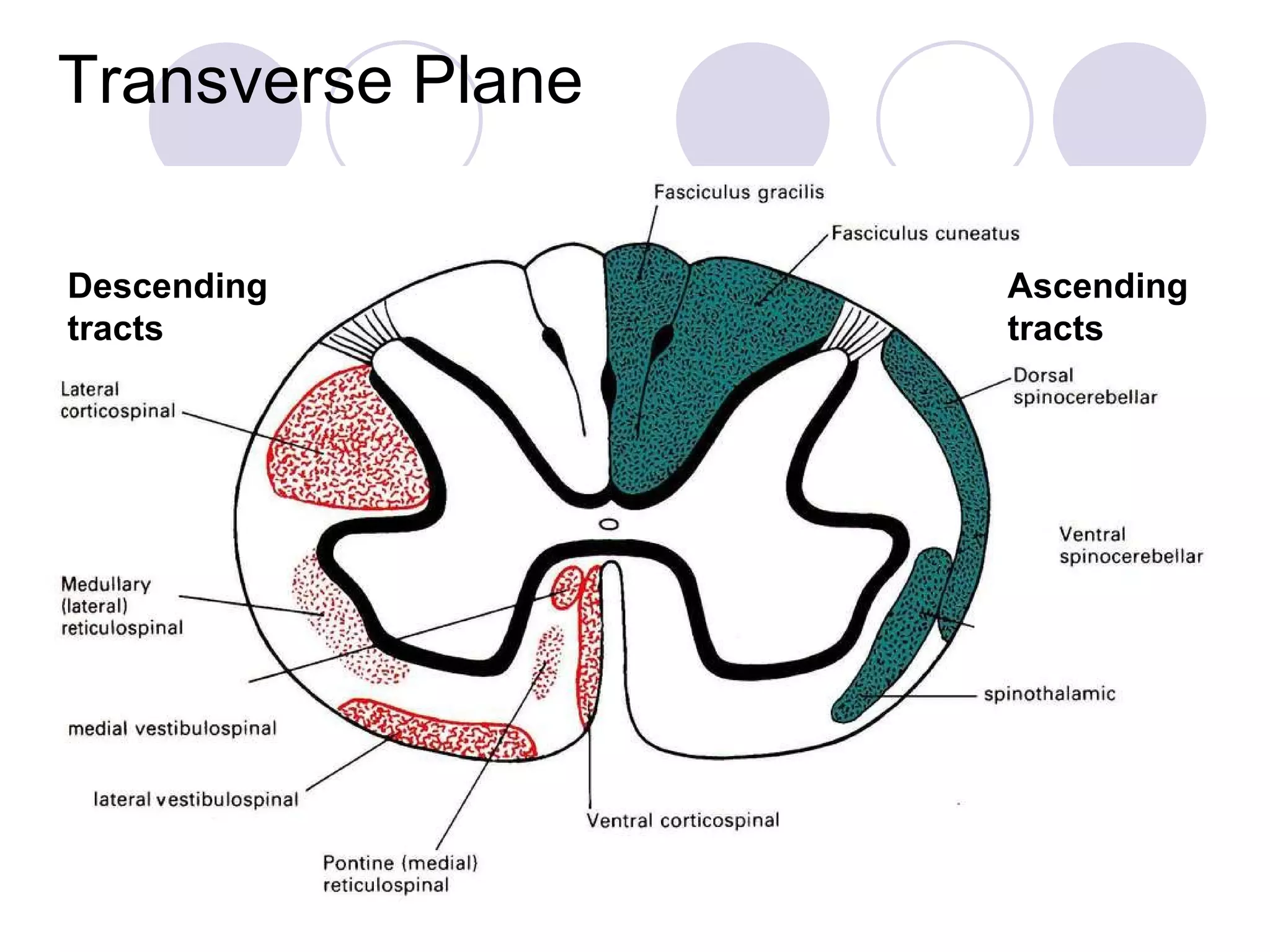
Transverse Plane Descending tracts Ascending tracts
Remember Where is it coming from (Up or Down) Where does it synapse Where does it cross over How many Synapses
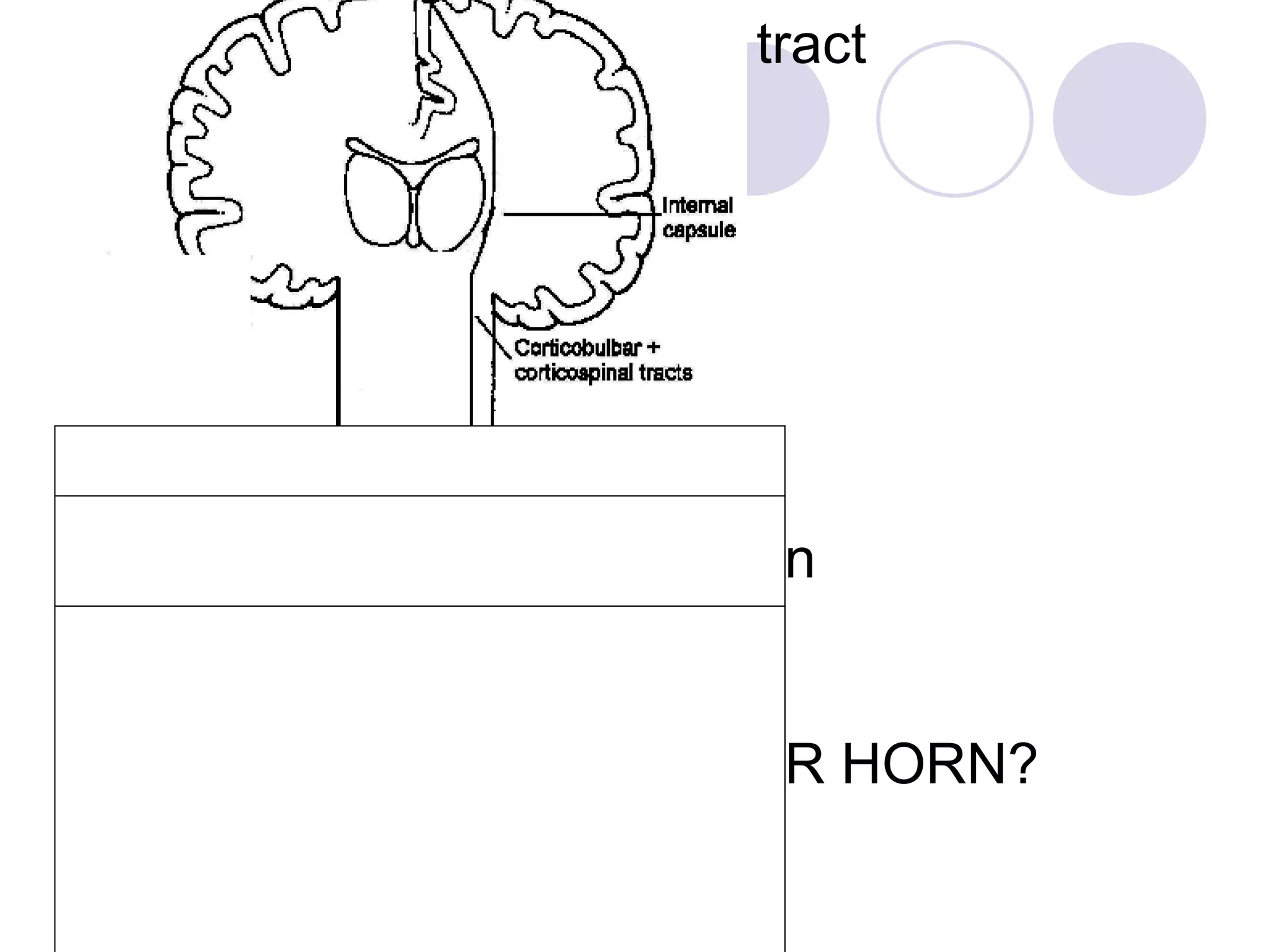
Lateral corticospinal tract MOTOR UP –DOWN Motor cortex Internal Capsule Pyramidal Decussation Lateral Corticospinal Synapse in ANTERIOR HORN?
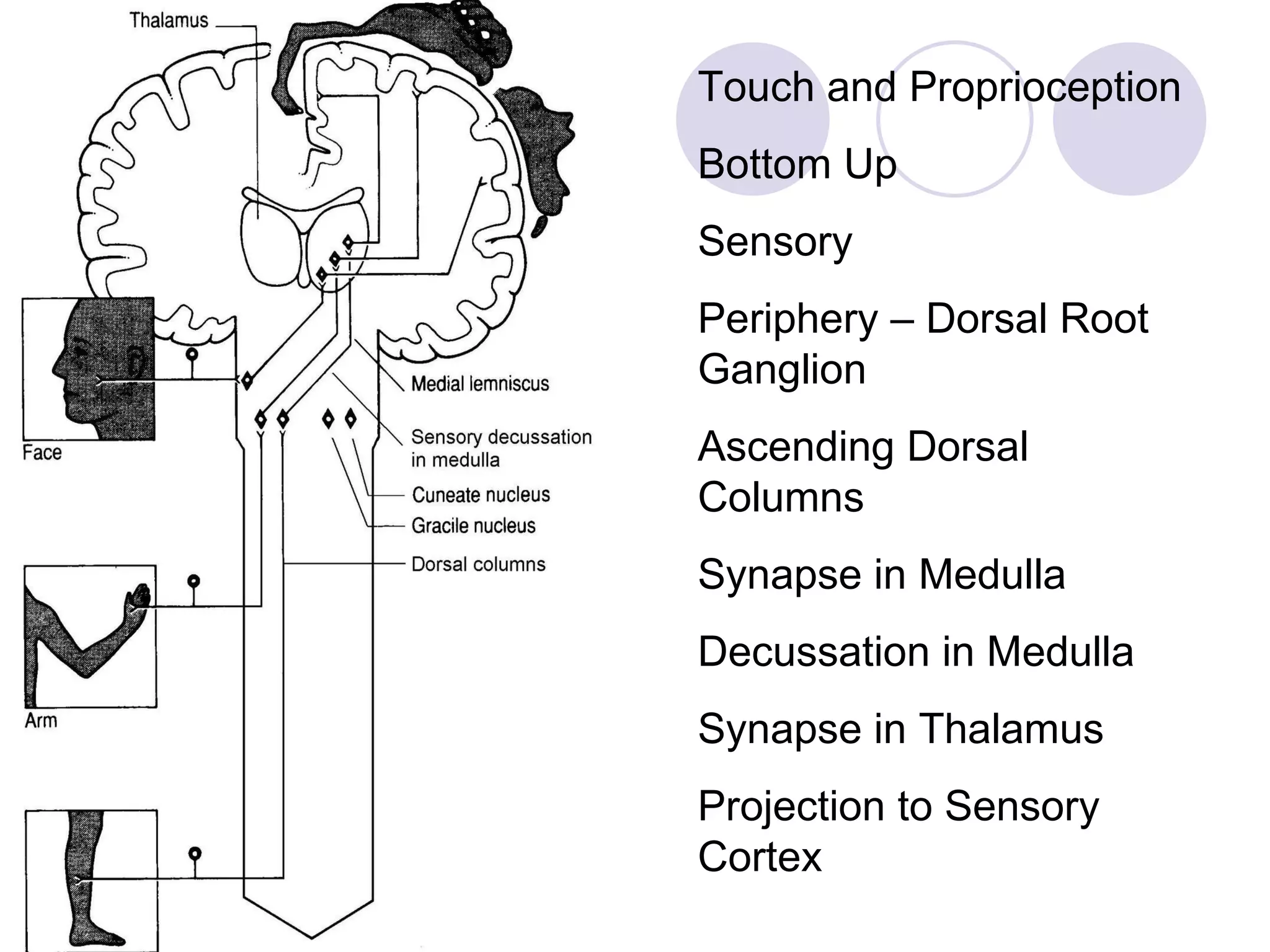
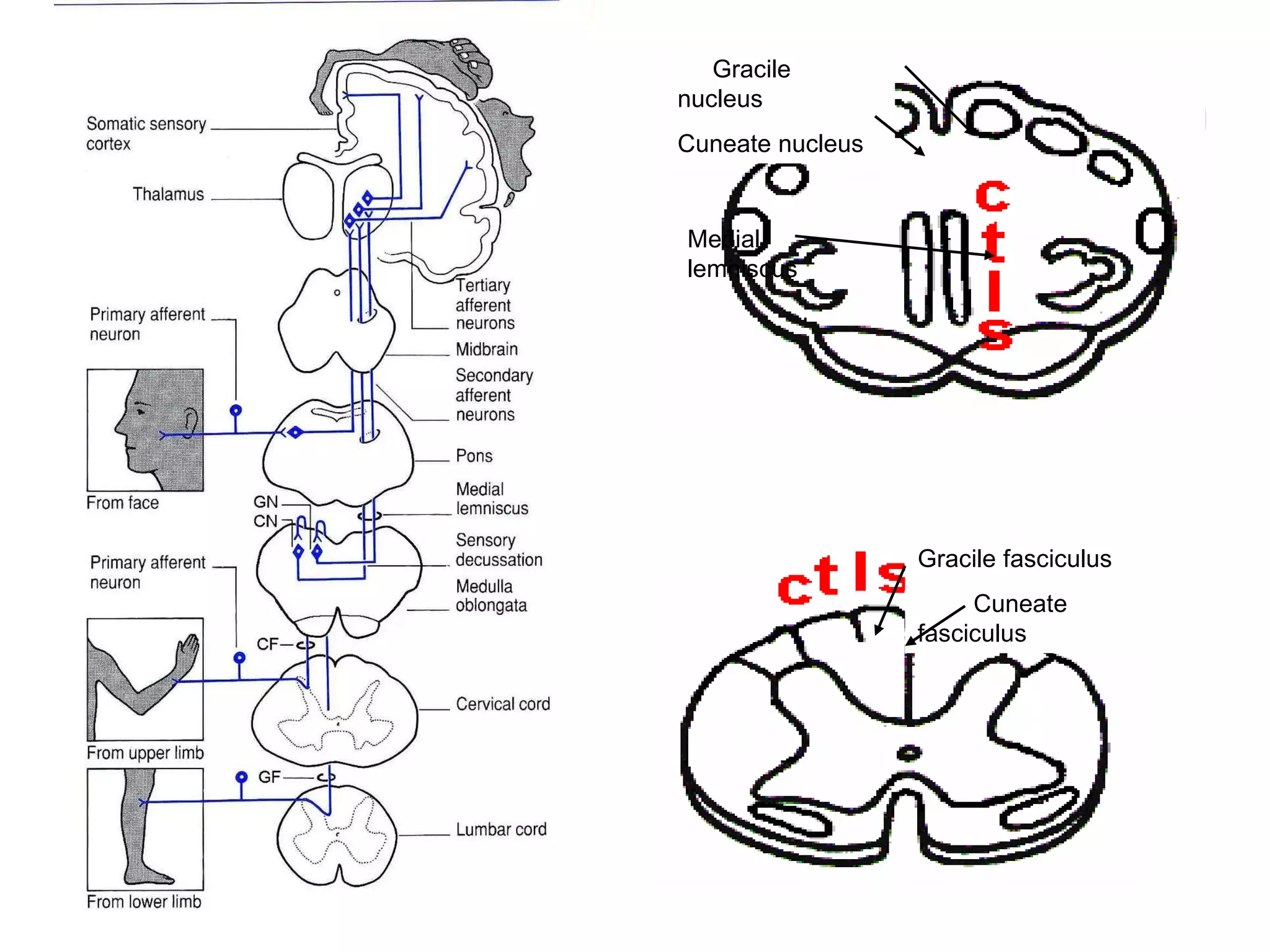
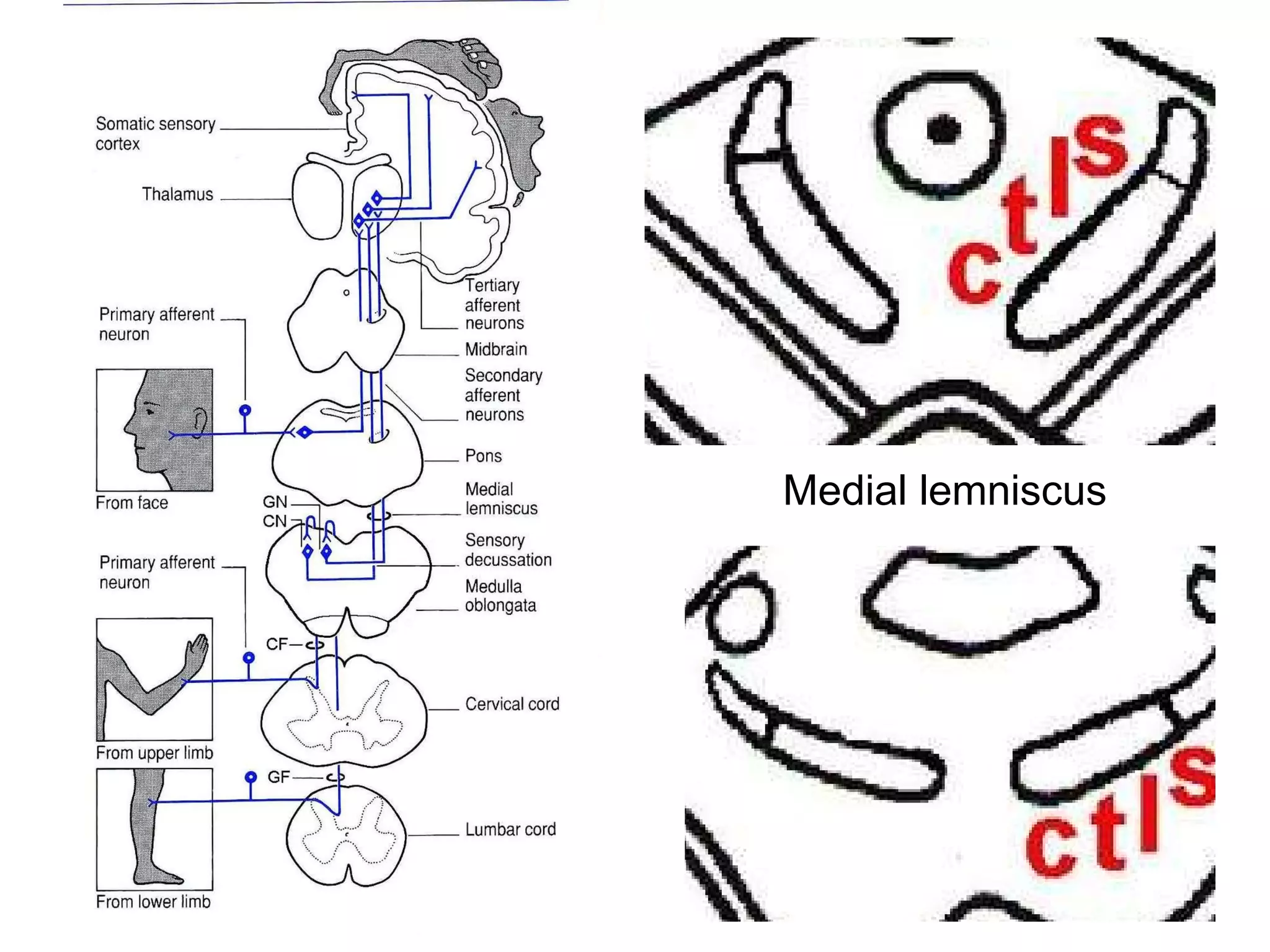
Dorsal columns Touch and Proprioception Bottom Up Sensory Periphery – Dorsal Root Ganglion Ascending Dorsal Columns Synapse in Medulla Decussation in Medulla Synapse in Thalamus Projection to Sensory Cortex
Central pathway [touch & proprioception] Fasciculus Gracilis (M) Fasciculus Cuneatus (L) Tirgeminal CROSS IN MEDULLA UMN – CONTRALATERAL LMN - IPSILATERAL
Gracile fasciculus Cuneate fasciculus Gracile nucleus Cuneate nucleus Medial lemniscus
Medial lemniscus
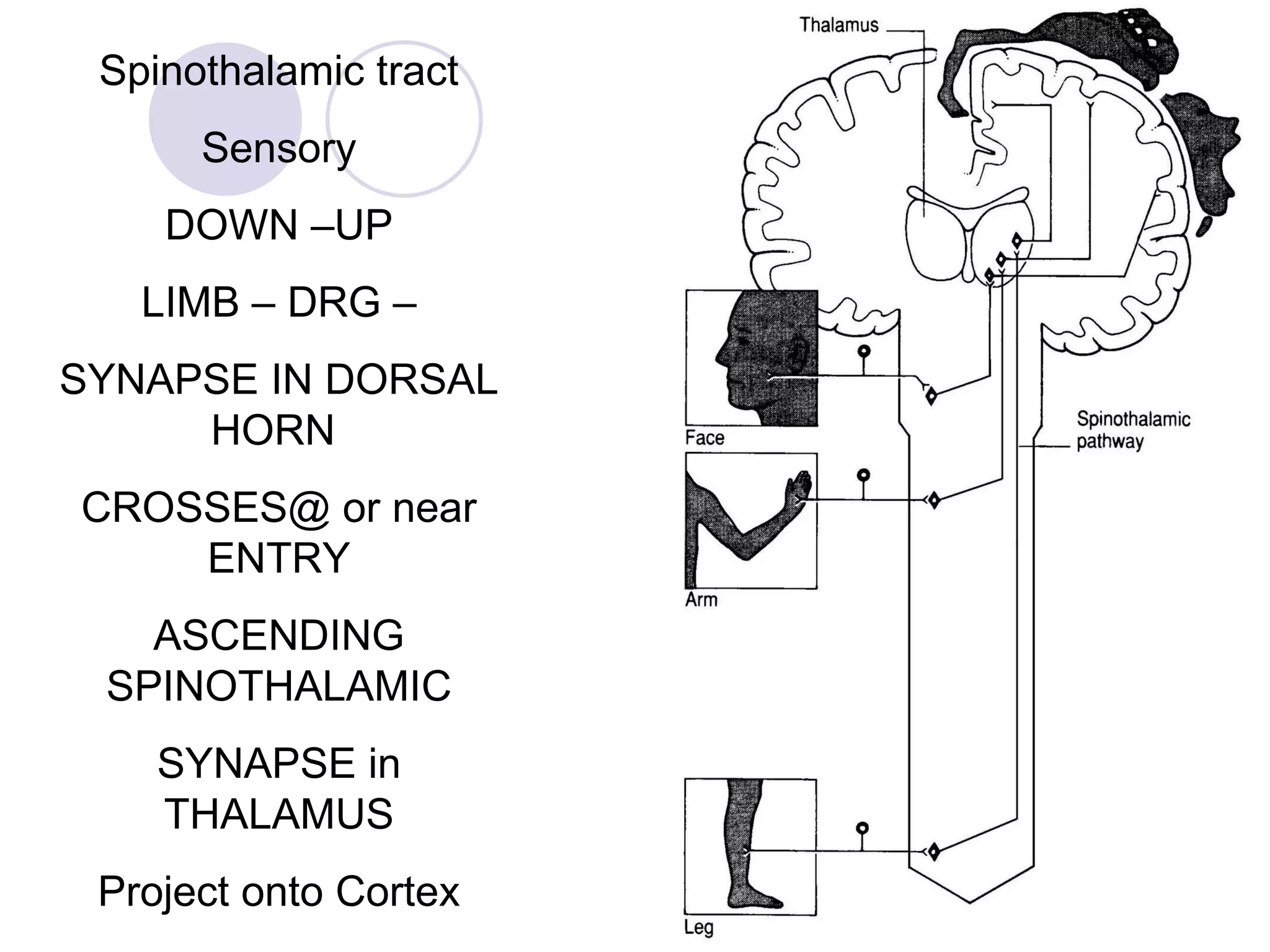
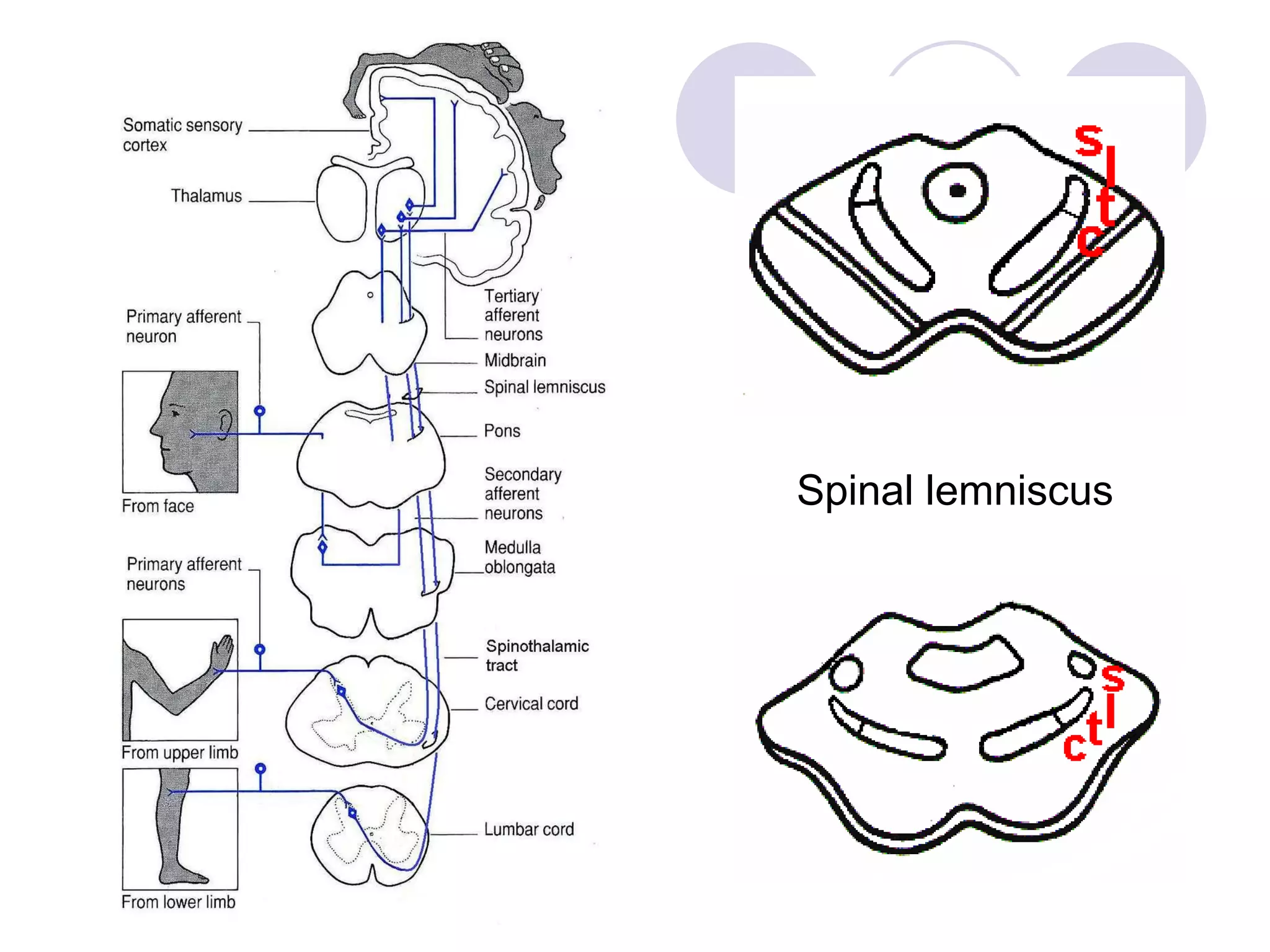
Spinothalamic tract Sensory DOWN –UP LIMB – DRG – SYNAPSE IN DORSAL HORN  CROSSES@ or near ENTRY ASCENDING SPINOTHALAMIC SYNAPSE in THALAMUS Project onto Cortex
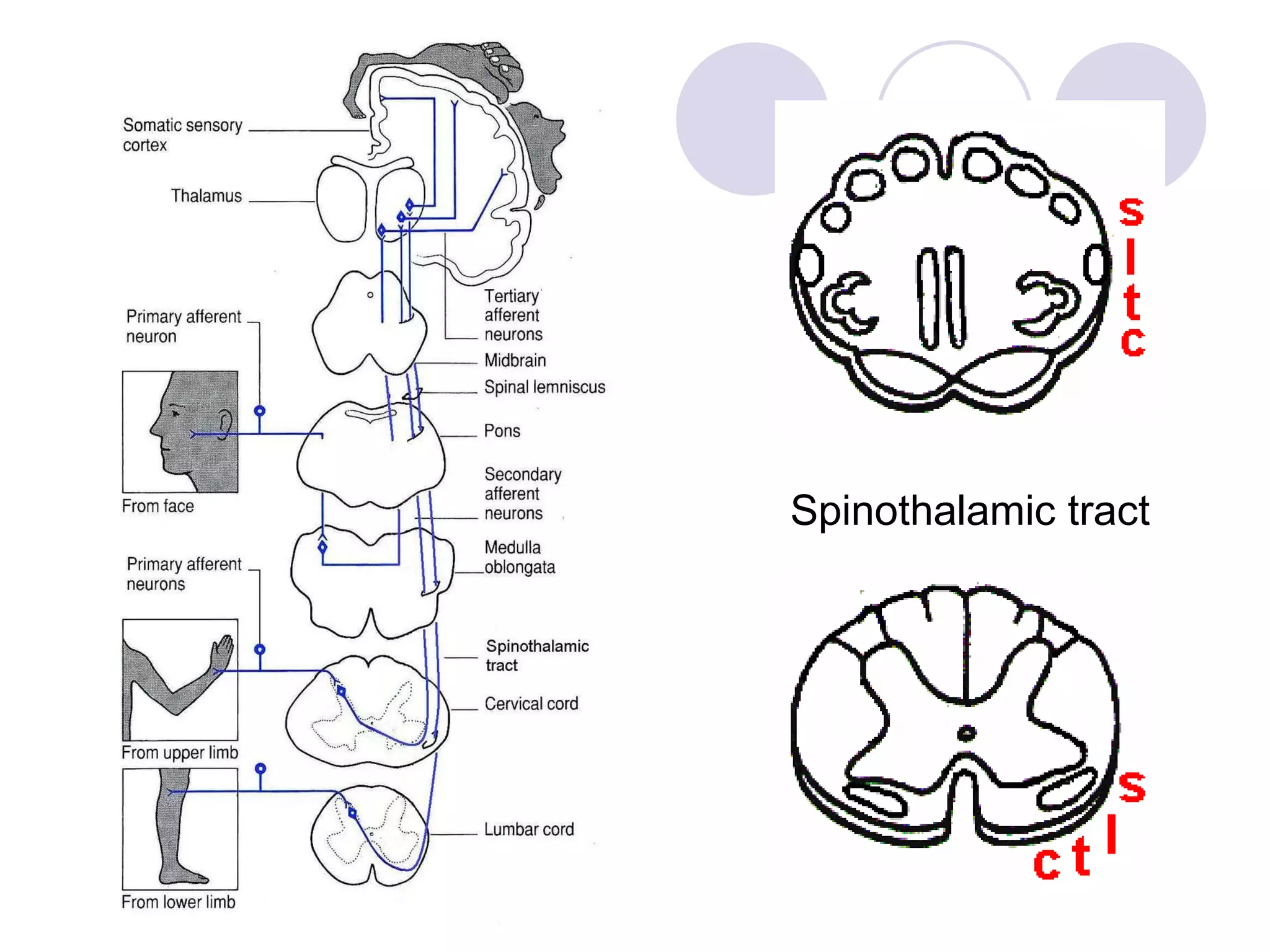
Central pathway [pain & temperature] SLTC TRIGEMINAL UMN – Contralateral LMN - CONTRALATERAL
s c c Spinothalamic tract
Spinal lemniscus
SPINAL TRAUMA NERVE ROOT: Herniated Disk/ Spondylosis Cervical & Lumbar Pain Paraesthesia Weakness & muscle wasting Reduced Sensation Loss of Reflexes
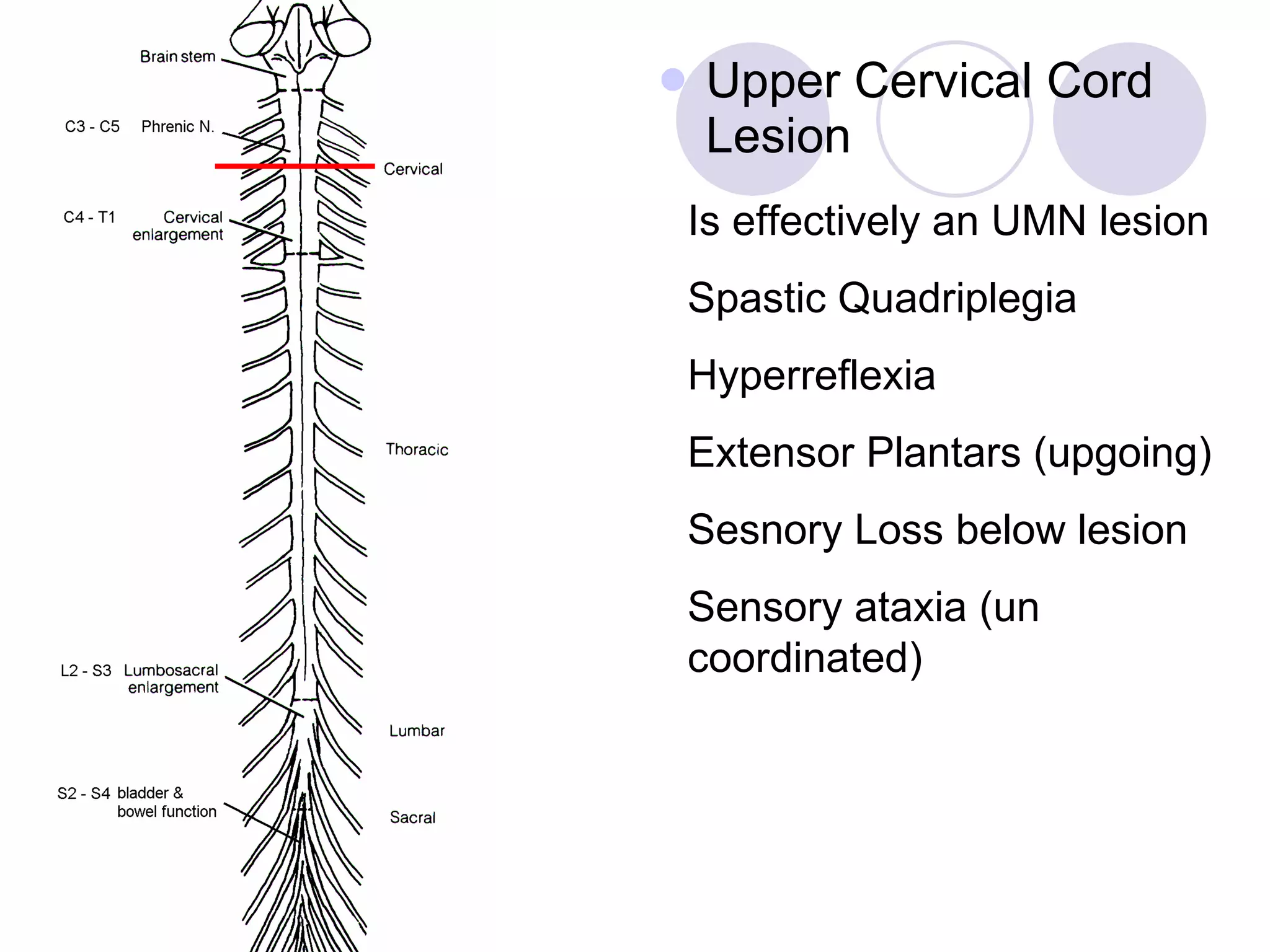
Upper Cervical Cord Lesion Is effectively an UMN lesion Spastic Quadriplegia Hyperreflexia Extensor Plantars (upgoing) Sesnory Loss below lesion Sensory ataxia (un coordinated)
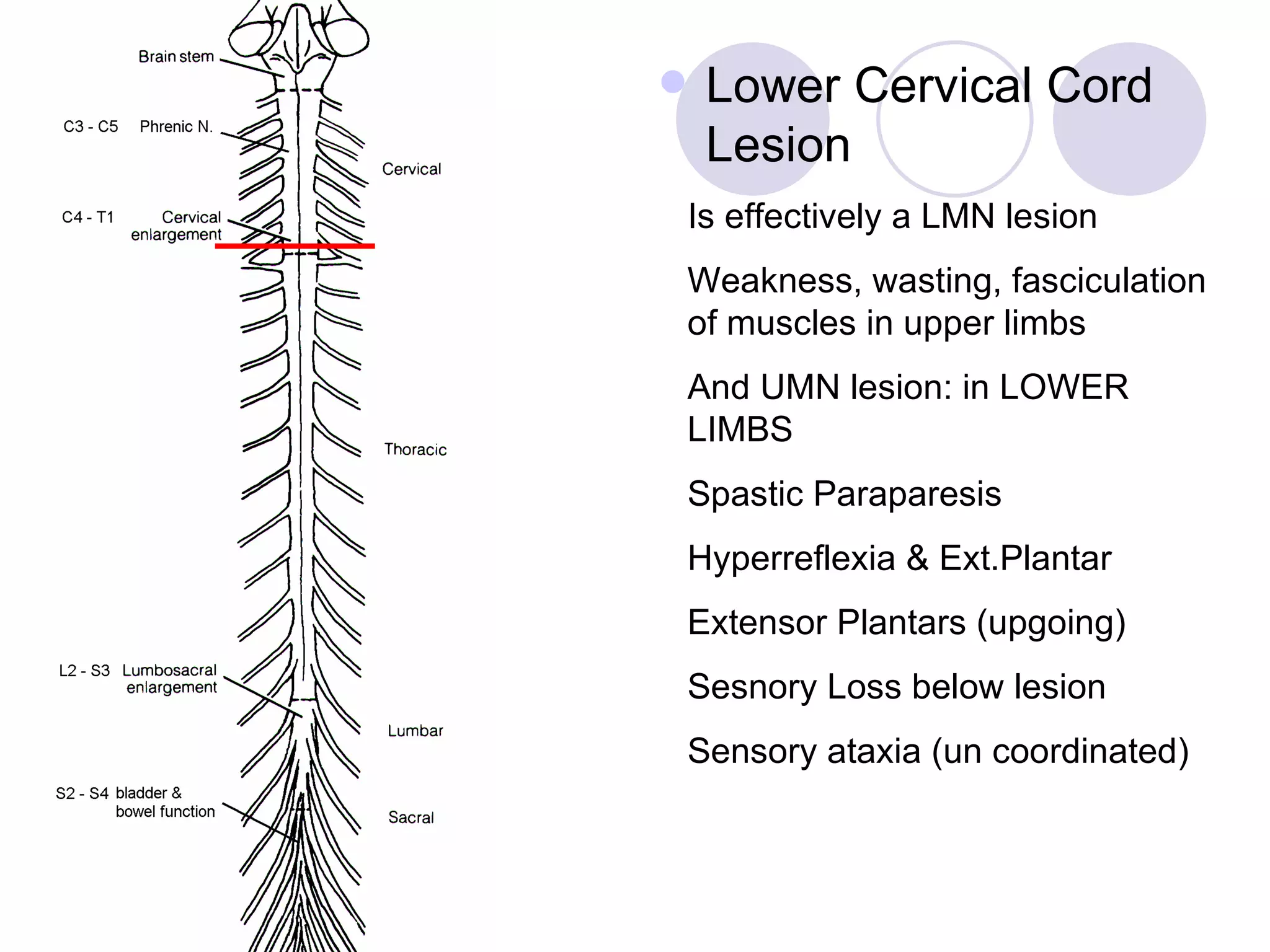
Lower Cervical Cord Lesion Is effectively a LMN lesion Weakness, wasting, fasciculation of muscles in upper limbs And UMN lesion: in LOWER LIMBS Spastic Paraparesis Hyperreflexia & Ext.Plantar  Extensor Plantars (upgoing) Sesnory Loss below lesion Sensory ataxia (un coordinated)
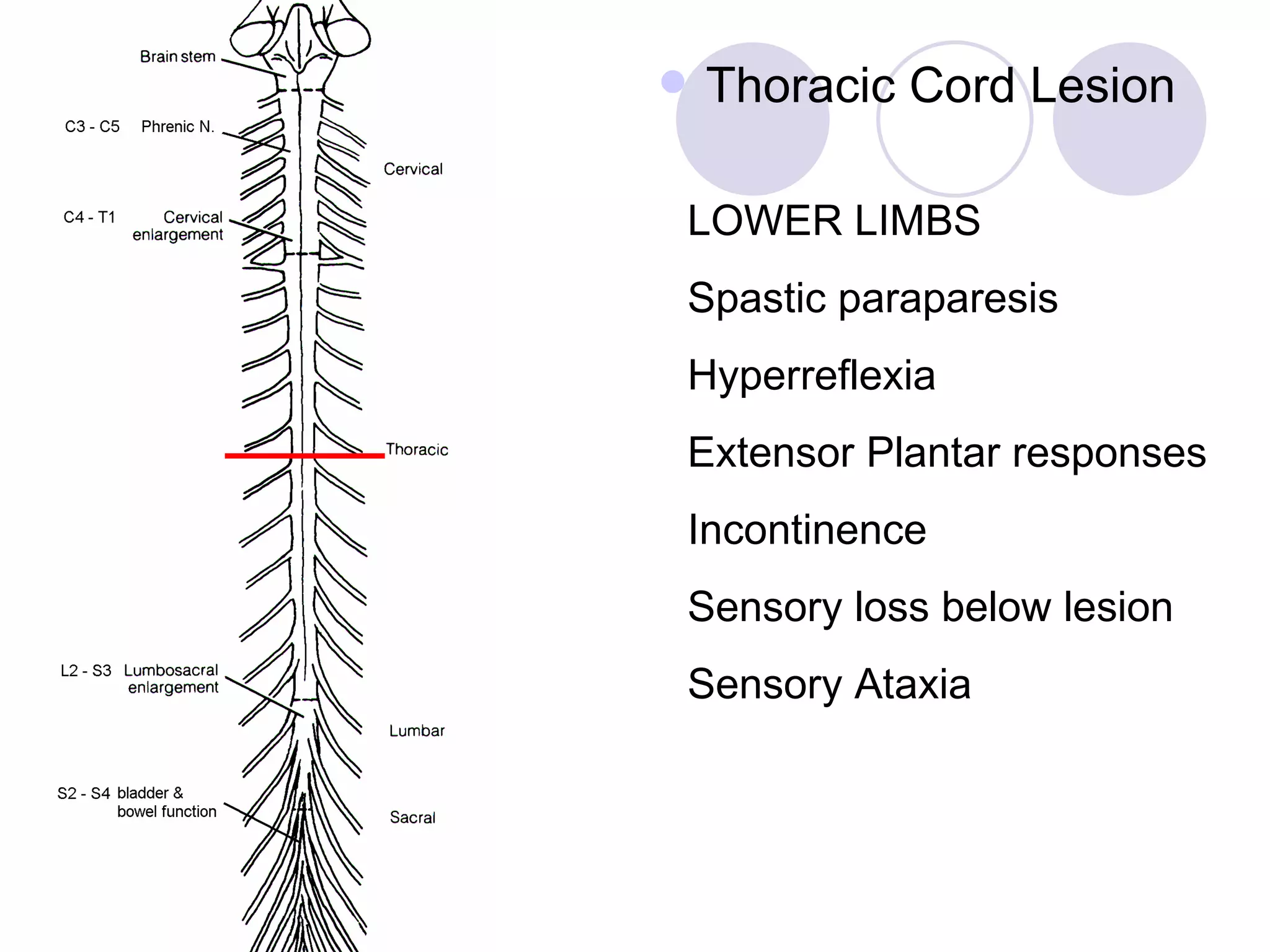
Thoracic Cord Lesion LOWER LIMBS Spastic paraparesis Hyperreflexia Extensor Plantar responses Incontinence Sensory loss below lesion Sensory Ataxia
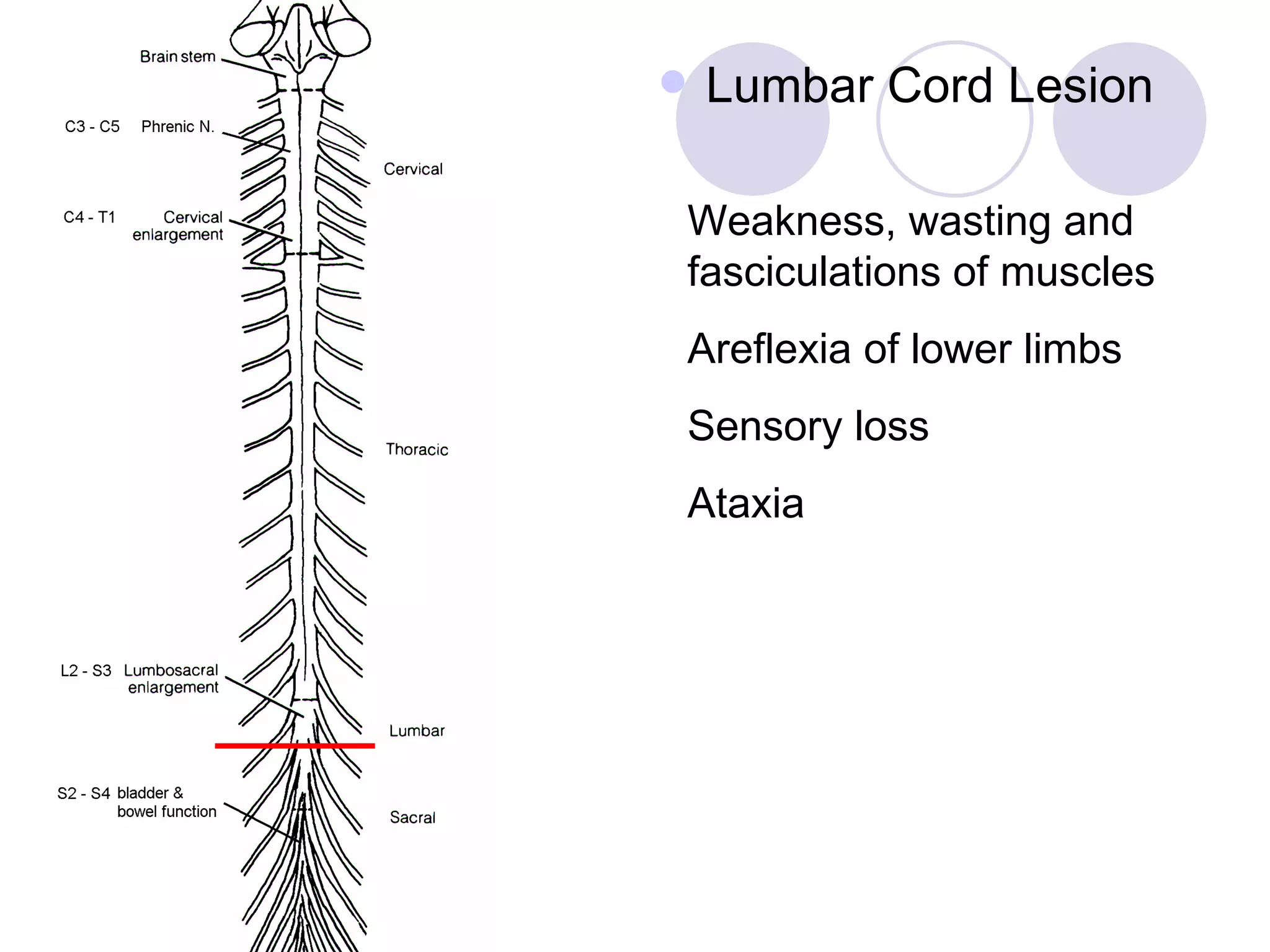
Lumbar Cord Lesion Weakness, wasting and fasciculations of muscles Areflexia of lower limbs Sensory loss Ataxia
Brown-Sequard syndrome
 
FRACTURE Basics GO look at your lecture -  it is good Learn what is on there…… it’s better than mine Quick run through
Priority 1 – Save a life Priority 2 – Save the Spine
Spinal Trauma - Initially If spinal trauma indicated then…. ASSUME IT- until excluded Gunshot – Head= dnt immobilise Stab – dnt immobilise
Pre- hospital ACHIEVE ALIGNMENT Conscious – Active Unconscious – Passive—but be careful Long Spinal board
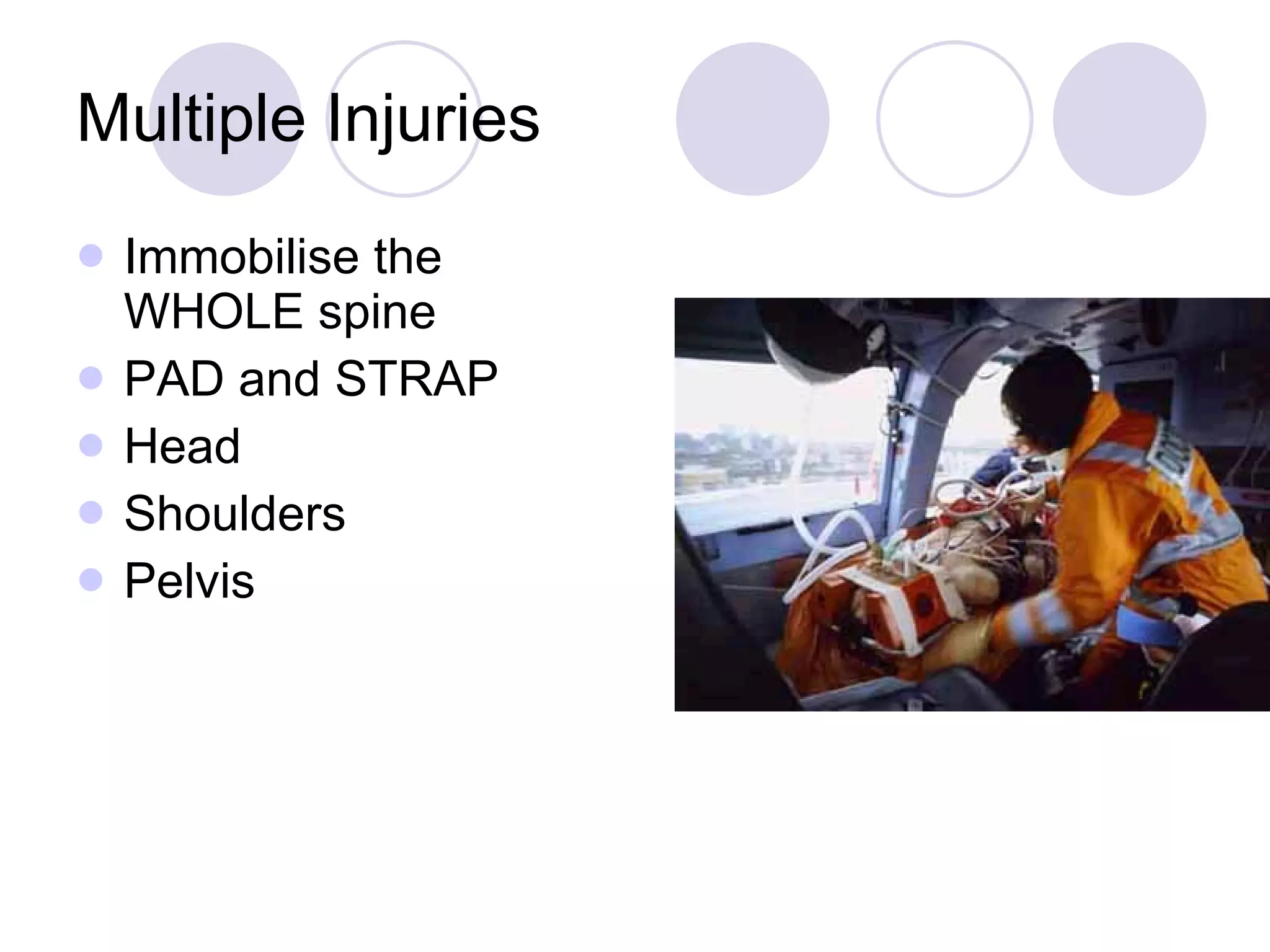
Multiple Injuries Immobilise the WHOLE spine PAD and STRAP Head Shoulders Pelvis
In Hospital Off board – Onto firm trolley Log roll ABC  DEFG  now more relevant REMEMBER: Spinal immobilisation is a priority in multiple trauma, spinal clearance is not.  TREAT THE TRAUMA, then worry about the spine
Spinal Clearance Asymptomatic injury – possible but VERY unlikely to be serious Can’t clear in the field – normally radiology Clinical clearance: Fully alert and orientated  No head injury  No drugs or alcohol  No neck pain  No abnormal neurology  No significant other 'distracting' injury (another injury which may 'distract' the patient from complaining about a possible spinal injury).
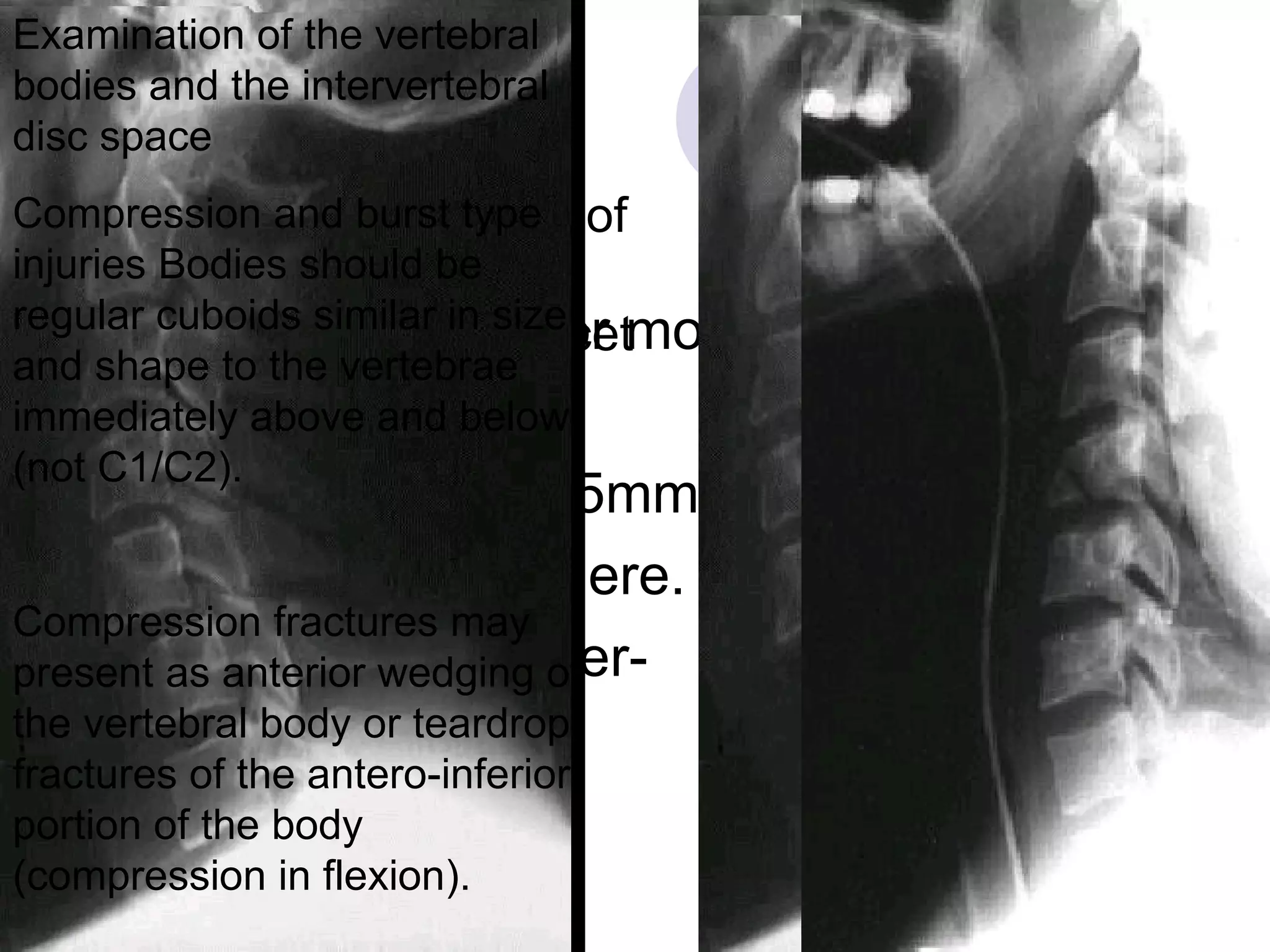
Radiology Lateral: C7-T1 junction Alignment: Posterior more significant than ant. A translation of > 3.5mm is significant anywhere.  Spinal canal diameter-  >18mm  Anterior subluxation of one vertebra on another indicates facet dislocation.  Examination of the vertebral bodies and the intervertebral disc space Compression and burst type injuries Bodies should be regular cuboids similar in size and shape to the vertebrae immediately above and below (not C1/C2). Compression fractures may present as anterior wedging of the vertebral body or teardrop fractures of the antero-inferior portion of the body (compression in flexion).
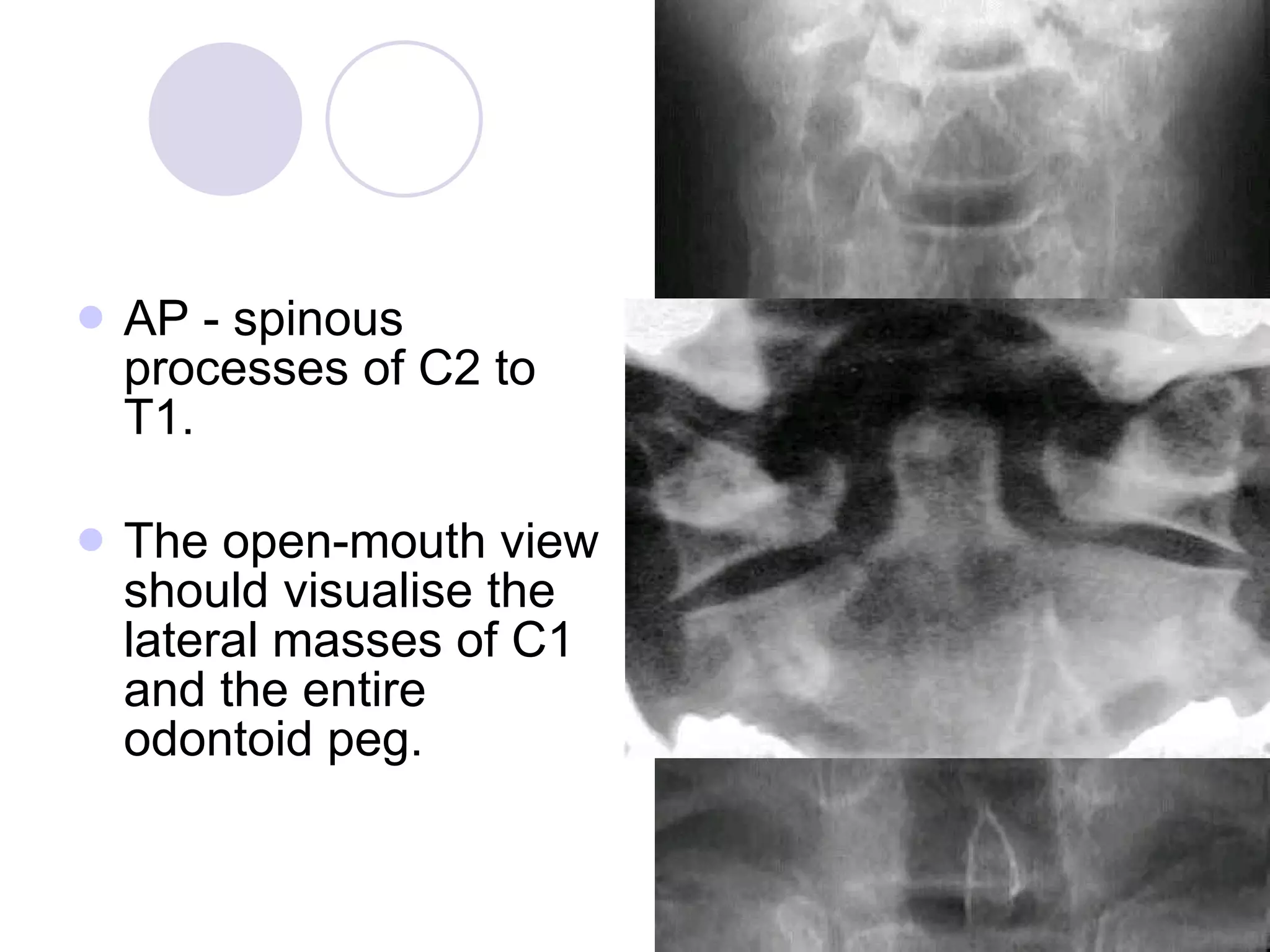
AP - spinous processes of C2 to T1.  The open-mouth view should visualise the lateral masses of C1 and the entire odontoid peg.
Additionally CT scan if required Soft Tissue injury – image appropriately ? MRI
Unconscious, Intubated Patients The odontoid view is unreliable in intubated patients. Clinical examination is impossible in the unconscious patient. Plain film radiology cannot exclude ligamentous instability. Watch/MRI/CT/Fluroscopy
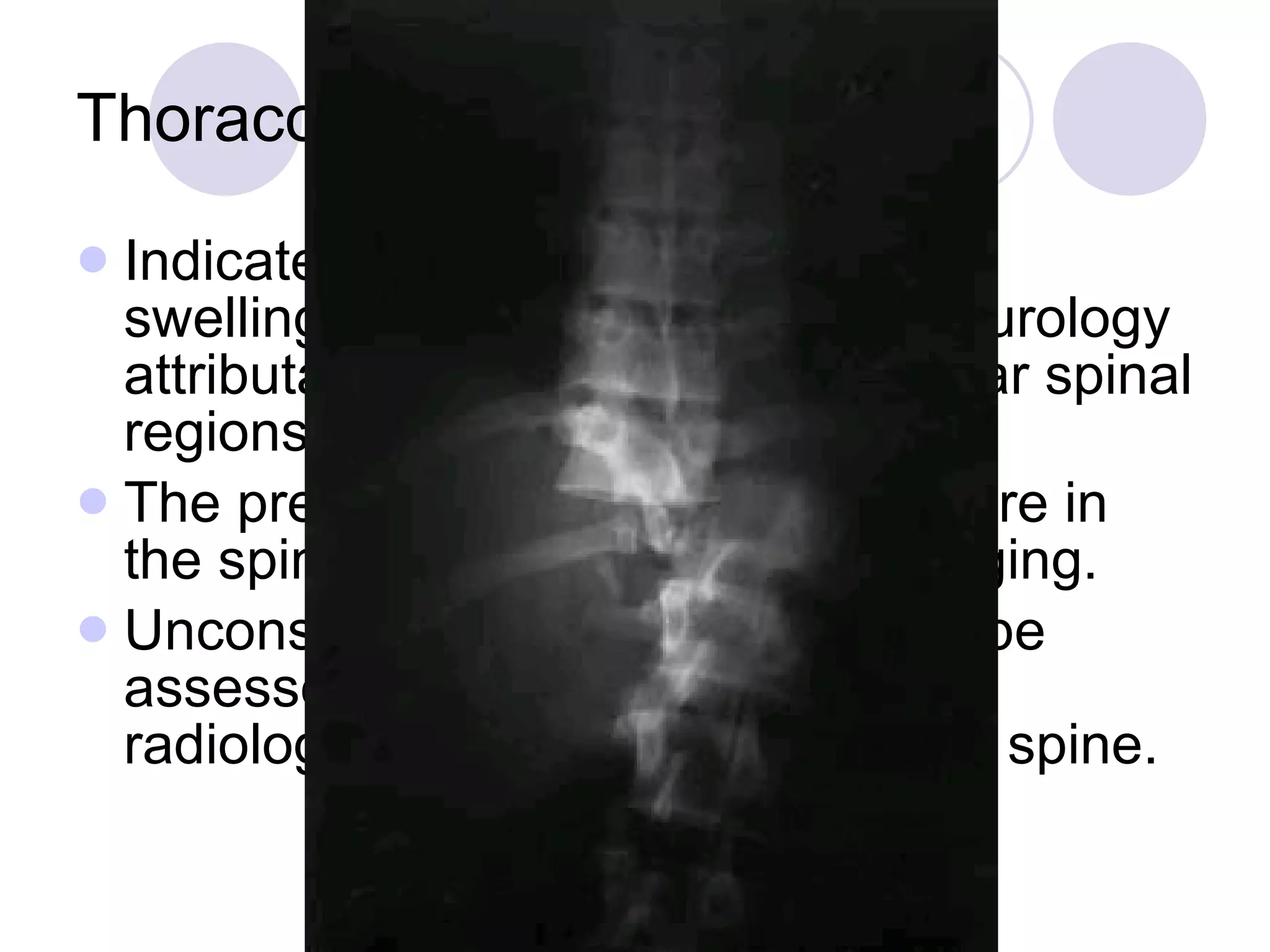
Thoracolumbar spine Indicated if there is pain, bruising, swelling, deformity or abnormal neurology attributable to the thoracic or lumbar spinal regions. The presence of a fracture anywhere in the spine mandates full spinal imaging. Unconscious patients who cannot be assessed clinically also require radiological clearance of the whole spine.
To Download This Lecture Please Visit Our Website union.ic.ac.uk/medic/muslim

The spine & spinal cord

  • 1.
    The Spine &Spinal Cord Faisal Majid 4 th year (Endo BSc) MM Education rep [email_address]
  • 2.
    Recognise and namethe following parts of a typical vertebra in osteological specimens or in suitable imaging: body, pedicle, lamina, transverse process, spinous process, articular surfaces Recognise the distinctive features of cervical, thoracic and lumbar vertebrae Explain the roles of intervertebral discs, ligaments and muscles in load bearing in the vertebral column Describe the relative extents of antero-posterior flexion, lateral flexion and axial rotation in the major regions of the vertebral column and explain this in terms of skeletal anatomy Identify the atlas and axis and explain their functions in head movement Identify the main muscle groups involved in head movements Demonstrate on each other the location of C7, T3, T7, L2 and L4 vertebrae State the number of vertebrae in each region of the spine, and how the pairs of spinal nerves are related to them Explain the arrangement of the meninges around the spinal cord and roots, and indicate any differences from the cranial meninges Identify two major reasons for carrying out lumbar puncture, and explain the basis for the puncture site Explain the danger of carrying out lumbar puncture without excluding the presence of raised intracranial pressure Outline the steps taken to avoid neurological complication in casualties with a possibility of cervical spine injury Explain in anatomical terms the most common causes of back pain Describe the most common abnormalities of spinal curvature
  • 3.
    C1-C7 T1-T12 L1-L5S1-S5 Coccyx LANDMARKS
  • 4.
    C7 – Prom.Spinous Process T3- Level with Medial Scapular Spine T7 – Inferior angle of scapula L2 – Lowest Rib L4 – Iliac Crest
  • 5.
  • 6.
  • 7.
    Cervical vs Thoracicvs Lumbar Cervical vertebrae Smallest Foramen in each transverse process
  • 8.
    What is this?C1 –Atlas Forms the joint connecting the skull and spine Has no body
  • 9.
    AXIS (Second cervicalvertebra) (C2) of the spine is named the axis . It forms the pivot upon which the Atlas- rotates strong odontoid process which rises perpendicularly from the upper surface of the body.
  • 10.
  • 11.
    Thoracic Vertebra Intermediatein size Increase in size as one proceeds down the spine They are distinguished by the presence of facets on the sides of the bodies Facets on the transverse processes of all, except the eleventh and twelfth,
  • 12.
    Lumbar Vertebra The lumbar vertebrae are the largest segments of the movable part of the vertebral column Absence of a foramen in the transverse process, Absence of facets on the sides of the body.
  • 13.
    The cervical curve,convex forward, C1/2 – T7 The thoracic curve, is concave T2 – T12 The lumbar T12 – L4, It is convex anteriorly. The pelvic curve L4/5 - Coccyx
  • 14.
    Intervertebral Disk Eachdisc forms a cartilaginous joint to allow slight movement of the vertebrae, and acts as a ligament to hold the vertebrae together. The annulus fibrosus consists of several layers of fibrocartilage. The strong annular fibers distribute pressure evenly across the disc. The nucleus pulposus contains loose fibers- like JELLY. The nucleus of the disc acts as a shock absorber, absorbing the impact of the body's daily activities and keeping the two vertebrae separated.
  • 15.
    Intervertebral Disk -INJURY Degenerative Disk Disease: As people age, the nucleus pulposus begins to dehydrate, which limits its ability to absorb shock. The annulus fibrosus gets weaker with age and begins to tear. While this may not cause pain in some people, in others one or both of these may cause chronic pain. Disk Herniation: When the annulus fibrosus tears due to an injury or the aging process, the nucleus pulposus can begin to extrude through the tear. Leads to Pinched nerve: Radiating pain, numbness, tingling, and diminished strength and/or range of motion. Radicular Pain
  • 16.
    From Course GuideWhy is backache more common in the lumbar region? The lower spine is subject to increased stresses of weight-bearing. We tend to abuse our backs, particularly when lifting heavy objects. Extending the spine from the fully flexed position under a heavy load can inflame intervertebral joints or place unequal pressure on the intervertebral disks, leading to local joint pain and referred neurological pain, if there is also pressure on the spinal nerve. Additional attempts to rotate the spine at the same time creates extra stress on the lumbar joints. Good practice includes holding the load close to the body, and using extension of the knee joints instead of extension of the spine to raise the load.
  • 17.
    Flexibility and MobilityFlexion (forward bending) Extension (backward bending) Side bending (left and right) Rotation (left and right) Combination of above MUSCLES ASSOCIATED WITH
  • 18.
    From Course Guide…0 + ++ L1-sacrum ++ ++ + T7-T12 + + 0 T1-T6 ++ ++ ++ C1-C7 Rotation Lateral flexion Flexion/extension
  • 19.
    Abnormalities in curvatureThe following abnormal curvatures may occur in some people: Kyphosis is an exaggerated posterior curvature in the thoracic region. This produces the so-called "humpback". Lordosis is an exaggerated anterior curvature of the lumbar region, "swayback". Temporary lordosis is common among pregnant women . Scoliosis , lateral curvature, is the most common abnormal curvature, occurring in 0.5% of the population. It is more common among females and may result from unequal growth of the two sides of one or more vertebrae.
  • 20.
    Lumbar Puncture IndicationsCollect cerebrospinal fluid- in a case of suspected meningitis. (Subarachnoid hemorrhage, hydrocephalus, benign intracranial hypertension and other diagnoses may be supported or excluded with this test.) Lumbar punctures may also be done to inject medications into the cerebrospinal fluid or lumbar epidural space. Risks Damage to the spinal cord or spinal nerve roots resulting in weakness or loss of sensation, or even paraplegia. The latter is very rare. The procedure is not recommended when epidural infection is present or suspected, when topical infections or dermatological conditions pose a risk of infection at the puncture site or in patients with severe psychosis or neurosis with back pain. Elevated or reduced pressure in the brain may also pose risks during lumbar punctures.
  • 21.
    Vertebrae & NerveRoots C1-C7 = Above C8 = Above T1 T1 – Coccygeal = Below Cervical Cord = 1 above SP Thoracic = 2 above SP Lumbar = 4 above
  • 22.
  • 23.
    COVER THIS ELSEWHERE!!!Grey Matter White Matter Pia Mater Arachnoid Mater (nt attatched to Dura) Dura Mater DENTICULATE LIGAMENT
  • 24.
    Lesion Through CordMotor innervation: Partial lesion- Normally via 2 or more segments of motor neurones, so may WEAKEN but unlikely to paralyse Problem is – WHITE MATTER
  • 25.
    Factors affecting theseverity of a spinal lesion Loss of neural tissue - obvious Vertical level – Higher up, the greater the damage Transverse plane – What Diameter has a lesion
  • 26.
    Transverse Plane Descendingtracts Ascending tracts
  • 27.
    Remember Where isit coming from (Up or Down) Where does it synapse Where does it cross over How many Synapses
  • 28.
    Lateral corticospinal tractMOTOR UP –DOWN Motor cortex Internal Capsule Pyramidal Decussation Lateral Corticospinal Synapse in ANTERIOR HORN?
  • 29.
    Dorsal columns Touchand Proprioception Bottom Up Sensory Periphery – Dorsal Root Ganglion Ascending Dorsal Columns Synapse in Medulla Decussation in Medulla Synapse in Thalamus Projection to Sensory Cortex
  • 30.
    Central pathway [touch& proprioception] Fasciculus Gracilis (M) Fasciculus Cuneatus (L) Tirgeminal CROSS IN MEDULLA UMN – CONTRALATERAL LMN - IPSILATERAL
  • 31.
    Gracile fasciculus Cuneatefasciculus Gracile nucleus Cuneate nucleus Medial lemniscus
  • 32.
  • 33.
    Spinothalamic tract SensoryDOWN –UP LIMB – DRG – SYNAPSE IN DORSAL HORN CROSSES@ or near ENTRY ASCENDING SPINOTHALAMIC SYNAPSE in THALAMUS Project onto Cortex
  • 34.
    Central pathway [pain& temperature] SLTC TRIGEMINAL UMN – Contralateral LMN - CONTRALATERAL
  • 35.
    s c cSpinothalamic tract
  • 36.
  • 37.
    SPINAL TRAUMA NERVEROOT: Herniated Disk/ Spondylosis Cervical & Lumbar Pain Paraesthesia Weakness & muscle wasting Reduced Sensation Loss of Reflexes
  • 38.
    Upper Cervical CordLesion Is effectively an UMN lesion Spastic Quadriplegia Hyperreflexia Extensor Plantars (upgoing) Sesnory Loss below lesion Sensory ataxia (un coordinated)
  • 39.
    Lower Cervical CordLesion Is effectively a LMN lesion Weakness, wasting, fasciculation of muscles in upper limbs And UMN lesion: in LOWER LIMBS Spastic Paraparesis Hyperreflexia & Ext.Plantar Extensor Plantars (upgoing) Sesnory Loss below lesion Sensory ataxia (un coordinated)
  • 40.
    Thoracic Cord LesionLOWER LIMBS Spastic paraparesis Hyperreflexia Extensor Plantar responses Incontinence Sensory loss below lesion Sensory Ataxia
  • 41.
    Lumbar Cord LesionWeakness, wasting and fasciculations of muscles Areflexia of lower limbs Sensory loss Ataxia
  • 42.
  • 43.
  • 44.
    FRACTURE Basics GOlook at your lecture - it is good Learn what is on there…… it’s better than mine Quick run through
  • 45.
    Priority 1 –Save a life Priority 2 – Save the Spine
  • 46.
    Spinal Trauma -Initially If spinal trauma indicated then…. ASSUME IT- until excluded Gunshot – Head= dnt immobilise Stab – dnt immobilise
  • 47.
    Pre- hospital ACHIEVEALIGNMENT Conscious – Active Unconscious – Passive—but be careful Long Spinal board
  • 48.
    Multiple Injuries Immobilisethe WHOLE spine PAD and STRAP Head Shoulders Pelvis
  • 49.
    In Hospital Offboard – Onto firm trolley Log roll ABC DEFG now more relevant REMEMBER: Spinal immobilisation is a priority in multiple trauma, spinal clearance is not. TREAT THE TRAUMA, then worry about the spine
  • 50.
    Spinal Clearance Asymptomaticinjury – possible but VERY unlikely to be serious Can’t clear in the field – normally radiology Clinical clearance: Fully alert and orientated No head injury No drugs or alcohol No neck pain No abnormal neurology No significant other 'distracting' injury (another injury which may 'distract' the patient from complaining about a possible spinal injury).
  • 51.
    Radiology Lateral: C7-T1junction Alignment: Posterior more significant than ant. A translation of > 3.5mm is significant anywhere. Spinal canal diameter- >18mm Anterior subluxation of one vertebra on another indicates facet dislocation. Examination of the vertebral bodies and the intervertebral disc space Compression and burst type injuries Bodies should be regular cuboids similar in size and shape to the vertebrae immediately above and below (not C1/C2). Compression fractures may present as anterior wedging of the vertebral body or teardrop fractures of the antero-inferior portion of the body (compression in flexion).
  • 52.
    AP - spinousprocesses of C2 to T1. The open-mouth view should visualise the lateral masses of C1 and the entire odontoid peg.
  • 53.
    Additionally CT scanif required Soft Tissue injury – image appropriately ? MRI
  • 54.
    Unconscious, Intubated PatientsThe odontoid view is unreliable in intubated patients. Clinical examination is impossible in the unconscious patient. Plain film radiology cannot exclude ligamentous instability. Watch/MRI/CT/Fluroscopy
  • 55.
    Thoracolumbar spine Indicatedif there is pain, bruising, swelling, deformity or abnormal neurology attributable to the thoracic or lumbar spinal regions. The presence of a fracture anywhere in the spine mandates full spinal imaging. Unconscious patients who cannot be assessed clinically also require radiological clearance of the whole spine.
  • 56.
    To Download ThisLecture Please Visit Our Website union.ic.ac.uk/medic/muslim

Editor's Notes

  • #5 C7 (only cervical vertebra with a prominent spinous process) T3 (level with the medial end of the scapular spine) T7 (level with the inferior angle of the scapula) L2 (level of lowest rib) L4 (level of the iliac crest)
  • #8 Cervical vertebrae ( Vertebrae cervicales ) are the smallest of the true vertebrae , and can be readily distinguished from those of the thoracic or lumbar regions by the presence of a foramen (hole) in each transverse process. The first, second, and seventh cervical vertebrae present exceptional features and must be separately described, though the other four have common characteristics. he transverse processes are each pierced by the foramen transversarium , which, in the upper six vertebrae, gives passage to the vertebral artery and vein , as well as a plexus of sympathetic nerves .
  • #9 First cervical vertebra ( Atlas ) The first cervical vertebra (C1) The Atlas is the topmost vertebra, and – along with the Axis – forms the joint connecting the skull and spine . Its chief peculiarity is that it has no body, and this is due to the fact that the body of the atlas has fused with that of the next vertebra.
  • #10 Second cervical vertebra ( Axis ) The second cervical vertebra (C2) of the spine is named the axis . It forms the pivot upon which the first cervical vertebra (the Atlas ), which carries the head , rotates. The most distinctive characteristic of this bone is the strong odontoid process which rises perpendicularly from the upper surface of the body. The body is deeper in front than behind, and prolonged downward anteriorly so as to overlap the upper and front part of the third vertebra.
  • #11 Seventh cervical vertebra Seventh cervical vertebra The most distinctive characteristic of this vertebra is the existence of a long and prominent spinous process, hence the name vertebra prominens . This process is thick, nearly horizontal in direction, not bifurcated, but terminating in a tubercle to which the lower end of the ligamentum nuchae is attached. The transverse processes are of considerable size, their posterior roots are large and prominent, while the anterior are small and faintly marked; the upper surface of each has usually a shallow sulcus for the eighth spinal nerve , and its extremity seldom presents more than a trace of bifurcation. The foramen transversarium may be as large as that in the other cervical vertebrae, but is generally smaller on one or both sides; occasionally it is double, sometimes it is absent. On the left side it occasionally gives passage to the vertebral artery ; more frequently the vertebral vein traverses it on both sides; but the usual arrangement is for both artery and vein to pass in front of the transverse process, and not through the foramen. Sometimes the anterior root of the transverse process attains a large size and exists as a separate bone, which is known as a cervical rib .
  • #13 The lumbar vertebrae are the largest segments of the movable part of the vertebral column , and can be distinguished by the absence of a foramen (hole) in the transverse process, and by the absence of facets on the sides of the body.
  • #14 Curves Viewed laterally the vertebral column presents several curves, which correspond to the different regions of the column, and are called cervical , thoracic , lumbar , and pelvic. The cervical curve, convex forward, begins at the apex of the odontoid ( tooth-like ) process, and ends at the middle of the second thoracic vertebra; it is the least marked of all the curves. The thoracic curve, concave forward, begins at the middle of the second and ends at the middle of the twelfth thoracic vertebra. Its most prominent point behind corresponds to the spinous process of the seventh thoracic vertebra. The lumbar curve is more marked in the female than in the male ; it begins at the middle of the last thoracic vertebra, and ends at the sacrovertebral angle. It is convex anteriorly, the convexity of the lower three vertebrae being much greater than that of the upper two. The pelvic curve begins at the sacrovertebral articulation, and ends at the point of the coccyx ; its concavity is directed downward and forward. The thoracic and pelvic curves are termed primary curves, because they alone are present during fetal life. In the early embryo , the vertebral column is C-shaped, and the cervical and lumbar curvatures are not yet present in a newborn infant. The cervical and lumbar curves are compensatory or secondary , and are developed after birth , the former when the child is able to hold up its head (at three or four months), and to sit upright (at nine months), the latter at twelve or eighteen months, when the child begins to walk . The vertebral column also has a slight lateral curvature, the convexity of which is directed toward the right side. This may be produced by muscular action, most persons using the right arm in preference to the left, especially in making long-continued efforts, when the body is curved to the right side. In support of this explanation it has been found that in one or two individuals who were left-handed, the convexity was to the left side. This curvature is regarded by others as being produced by the aortic arch and upper part of the descending thoracic aorta – a view which is supported by the fact that in cases where the viscera are transposed and the aorta is on the right side, the convexity of the curve is directed to the left side. .
  • #15 Intervertebral discs lie between adjacent vertebrae in the spine . Each disc forms a cartilaginous joint to allow slight movement of the vertebrae, and acts as a ligament to hold the vertebrae together. Discs consist of an outer annulus fibrosus , which surrounds the inner nucleus pulposus . The annulus fibrosus consists of several layers of fibrocartilage . The strong annular fibers contain the nucleus pulposus and distribute pressure evenly across the disc. The nucleus pulposus contains loose fibers suspended in a mucoprotein gel the consistency of jelly . The nucleus of the disc acts as a shock absorber, absorbing the impact of the body's daily activities and keeping the two vertebrae separated. The disc can be likened to a doughnut: whereby the annulus fibrosis is similar to the dough and the nucleus pulposis is the jelly. If one presses down on the front of the doughnut the jelly moves posteriorly or to the back. When one develops a prolapsed disc the jelly/ nucleus pulposis is forced out of the doughnut/ disc and may put pressure on the nerve located near the disc. This will give one the symptoms of sciatica. There is one disc between each pair of vertebrae, except for the first cervical segment, the atlas . The atlas is a ring around the roughly cone-shaped extension of the axis (second cervical segment). The axis acts as a post around which the atlas can rotate, allowing the neck to swivel. There are a total of twenty-three discs in the spine , which are identified by specifying the particular vertebrae they separate. For example, the disc between the fifth and sixth cervical vertabrae is designated "C5-6". [ edit ] .
  • #16 As people age, the nucleus pulposus begins to dehydrate, which limits its ability to absorb shock. The annulus fibrosus gets weaker with age and begins to tear. While this may not cause pain in some people, in others one or both of these may cause chronic pain. Pain due to the inability of the dehydrating nucleus pulposus to absorb shock is called axial pain or disc space pain. One generally refers to the gradual dehydration of the nucleus pulposus as degenerative disc disease. When the annulus fibrosus tears due to an injury or the aging process, the nucleus pulposus can begin to extrude through the tear. This is called disc herniation. Near the posterior side of each disc, all along the spine, major spinal nerves extend out to different organs, tissues, extremities etc. It is very common for the herniated disc to press against these nerves (pinched nerve) causing radiating pain, numbness, tingling, and diminished strength and/or range of motion. In addition, the contact of the inner nuclear gel, which contains inflammatory proteins, with a nerve can also cause significant pain. Nerve-related pain is called radicular pain. Herniated discs go by many names and these can mean different things to different medical professionals. A slipped disc, ruptured disc, or a bulging disc can all refer to the same medical condition
  • #21 n medicine, a lumbar puncture (colloquially known as a spinal tap ) is a diagnostic procedure that is done to collect a sample of cerebrospinal fluid (CSF) for biochemical, microbiological and cytological analysis, or rarely to relieve increased CSF pressure. [edit] Procedure A lumbar puncture requires aseptic technique and performance by qualified and skilled medical practitioners. In performing a lumbar puncture (in an adult), first the patient is usually placed in a left (or right) lateral position with his/her neck bent in full flexion and knees bent in full flexion up to his/her chest, approximating a fetal position as much as possible. It is also possible to have the patient sit on a stool and bend his/her head and shoulders forward. The area around the lower back is prepared using aseptic technique. Once the appropriate location is palpated, a spinal needle is inserted, usually between the lumbar vertebrae L3/L4 or L4/L5 and pushed in until there is a "give" that indicates the needle is past the dura mater. The stylet from the spinal needle is then withdrawn and drops of cerebrospinal fluid are collected. The opening and closing pressures of the cerebrospinal fluid may be taken during this collection. The procedure is ended by withdrawing the needle while placing pressure on the puncture site. The patient should then lie on his/her back for at least six hours and be monitored for any signs of neurological problems. The technique described is almost identical to that used in spinal anesthesia, except that spinal anesthesia is more often done with the patient in a sitting position. Patient anxiety during the procedure can lead to increased CSF fluid pressure, especially if the person holds their breath, tenses their muscles or flexes their knees too tightly against their chest. Diagnostic analysis of changes in fluid pressure during lumbar puncture procedures requires attention both to the patient's condition during the procedure and to their medical history. Diagnostics Increases in CSF pressure after withdrawal of fluid can indicate congestive heart failure, cerebral edema, subarachnoid hemorrhage, hypo-osmolality resulting from hemodialysis, meningeal inflammation, purulent meningitis or tuberculous meningitis. Decreases in CSF pressure can indicate complete subarachnoid blockage, leakage of spinal fluid, severe dehydration, hyperosmolality, or circulatory collapse. Significant changes in pressure during the procedure can indicate tumors or spinal blockage resulting in a large pool of CSF, or hydrocephalus associated with large volumes of CSF. Lumbar puncture for the purpose of reducing pressure is performed in some patients with idiopathic intracranial hypertension (also called pseudotumor cerebri.) The presence of white blood cells in cerebrospinal fluid is called pleocytosis. Up to three monocytes can be normal; the presence of granulocytes is always an abnormal finding. A large number of granulocytes often heralds bacterial meningitis. White cells can also indicate reaction to repeated lumbar punctures, reactions to prior injections of medicines or dyes, central nervous system hemorrhage, leukemia, recent epileptic seizure, or a metastatic tumor. When peripheral blood contaminates the withdrawn CSF, a common procedural complication, white blood cells will be present along with erythrocytes, and their ratio will be the same as that in the peripheral blood.
  • #47 The diagnosis of an unstable spinal injury and its subsequent management can be difficult, and a missed spine injury can have devastating long-term consequences. Spinal column injury must therefore be presumed until it is excluded.
  • #51 Provided these preconditions are met, the neck may then be examined. If there is no bruising or deformity, no tenderness and a pain free range of active movements, the cervical spine can be cleared. Radiographic studies of the cervical spine are not indicated. Conscious, symptomatic patients
  • #52 Occipit – T1 should be seen, pull down on arms, swimmers pose, if cnt get it need to do CT to visualise C7-T1 2) Next, examine the alignment of the columns of the cervical spine. The anterior vertebral line, posterior vertebral line and spinolaminar line should have a smooth curve with no steps or discontinuities. Note that malalignment of the posterior vertebral bodies is more significant than that anteriorly, which may be due to rotation. A translation of > 3.5mm is significant anywhere. Spinal canal diameter (between posterior cortex of vertebral bodies and spinolaminar line) should be 18mm or greater. Narowing of the canal is definitely present if this is reduced to 14mm or less. 3) Anterior subluxation of one vertebra on another indicates facet dislocation. Less than 50% of the width of a vertebral body and this is a unifacet dislocation. More than 50% is a bilateral facet dislocation. This is usually accompanied by widening of the interspinous and interlaminar spaces. 4) Examination of the vertebral bodies and the intervertebral disc space will reveal compression and burst type injuries. Bodies should be regular cuboids similar in size and shape to the vertebrae immediately above and below (not C1/C2). Compression fractures may present as anterior wedging of the vertebral body or teardrop fractures of the antero-inferior portion of the body (compression in flexion). The presence of a compression type injury as shown, with malalignment of the anterior or posterior cortices or anterior compression of greater than 40% of normal body height indicates a burst fracture, with retropulsion of fragments of the vertebral body into the spinal canal.
  • #53 The antero-posterior view must include the spinous processes of all the cervical vertebrae from C2 to T1. The open-mouth view should visualise the lateral masses of C1 and the entire odontoid peg. Bite blocks may improve the open-mouth view. In the unconscious, intubated patient the open mouth view is inadequate and should be replaced by a CT scan from the occiput to C2.