Improving your Agile Process

Loading...

Flash Player 9 (or above) is needed to view presentations.
We have detected that you do not have it on your computer. To install it, go here.
0 comments

Post a comment

    Post a comment
    Embed Video
    Edit your comment Cancel

    1 Favorite

    Improving your Agile Process - Presentation Transcript

    1. Improving your Agile Process
    2. First...who are we?
    3. We reduce home energy use
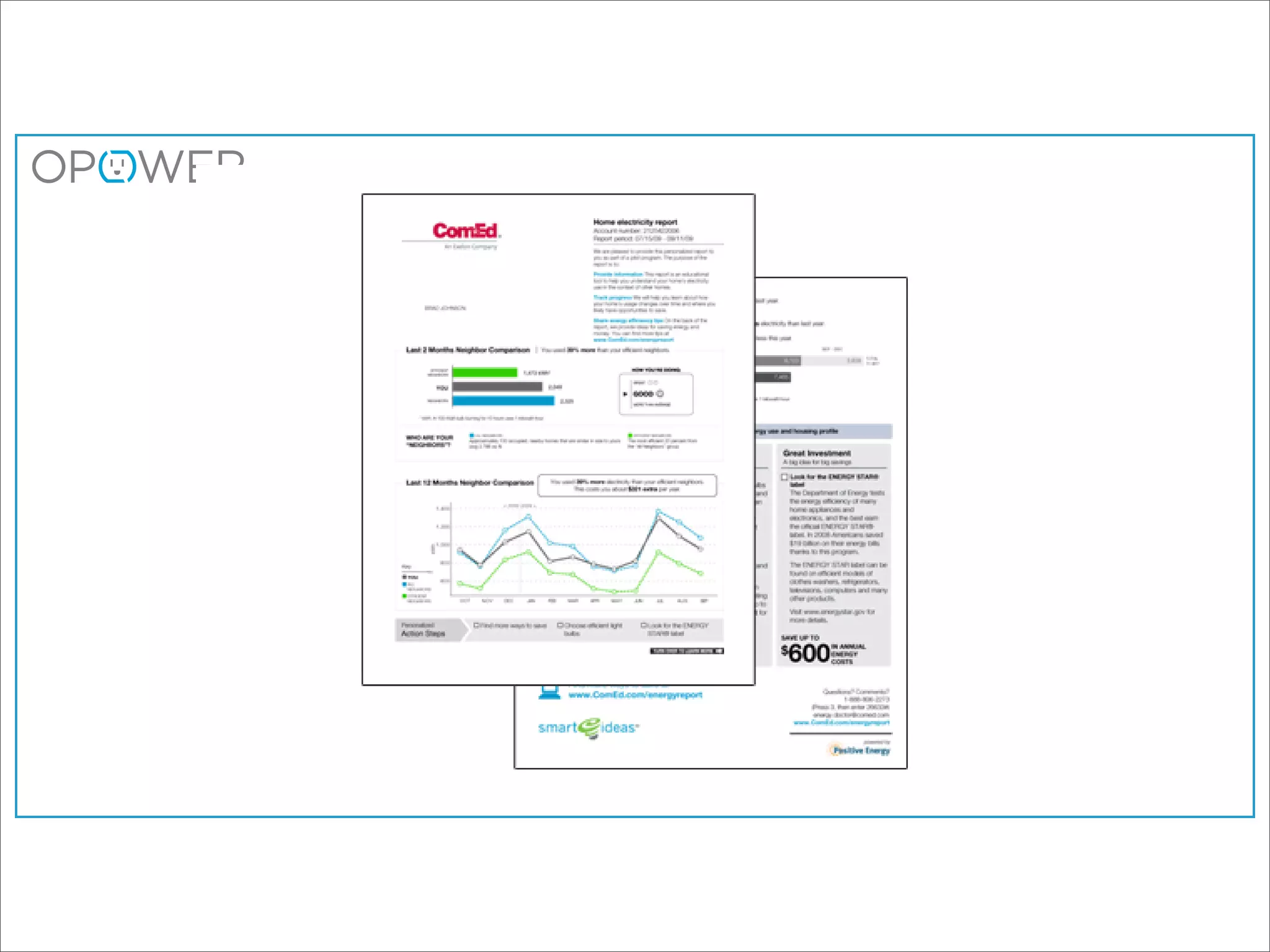
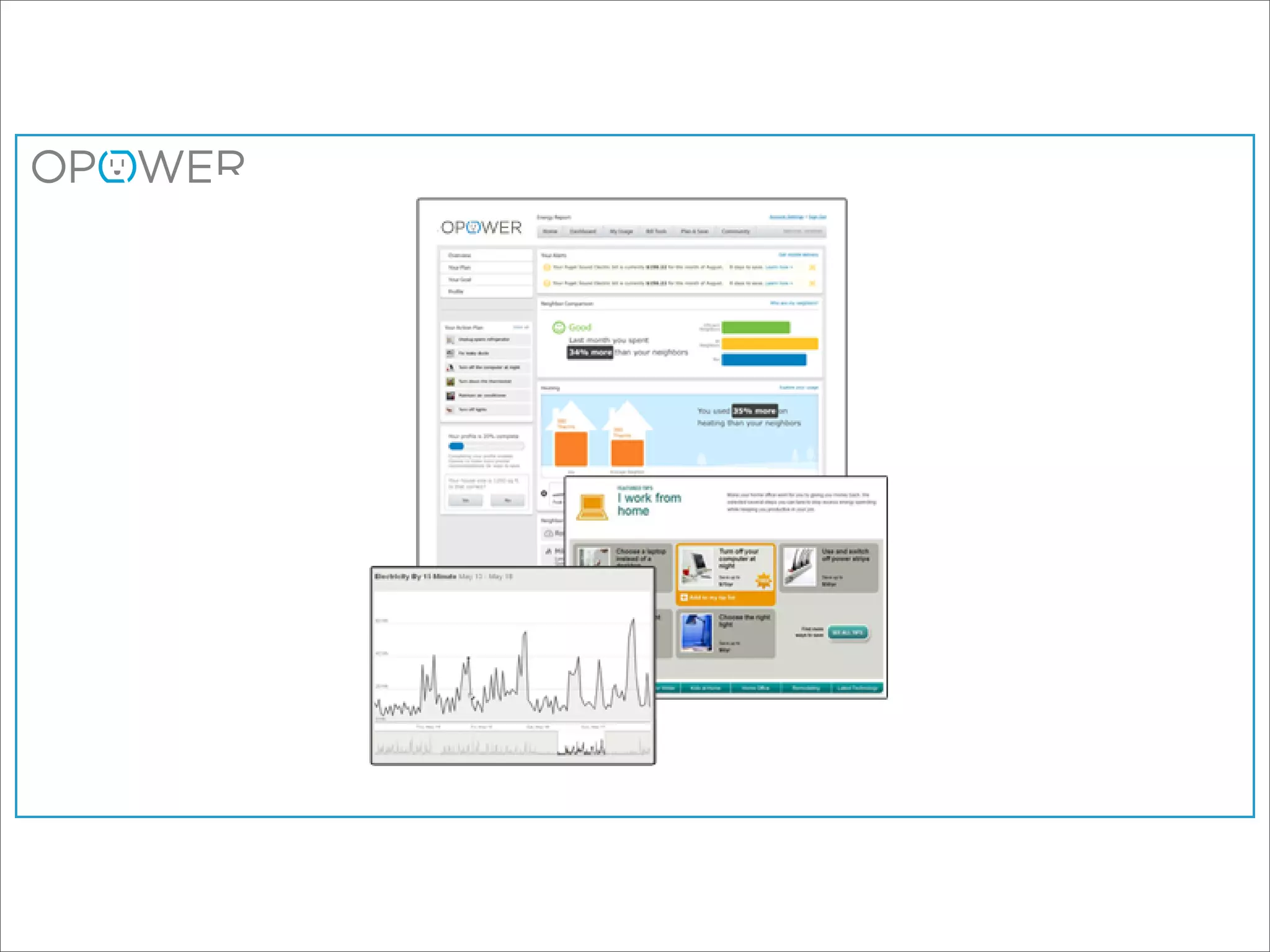
    4. We reduce home energy use by showing people how much they use
    5. We reduce home energy use by showing people how much they use and then they actually use less!
    6. Agile means:
    7. Agile means: short iterations
    8. Agile means: short iterations a metric sh*t-ton of practices chosen from a salad bar
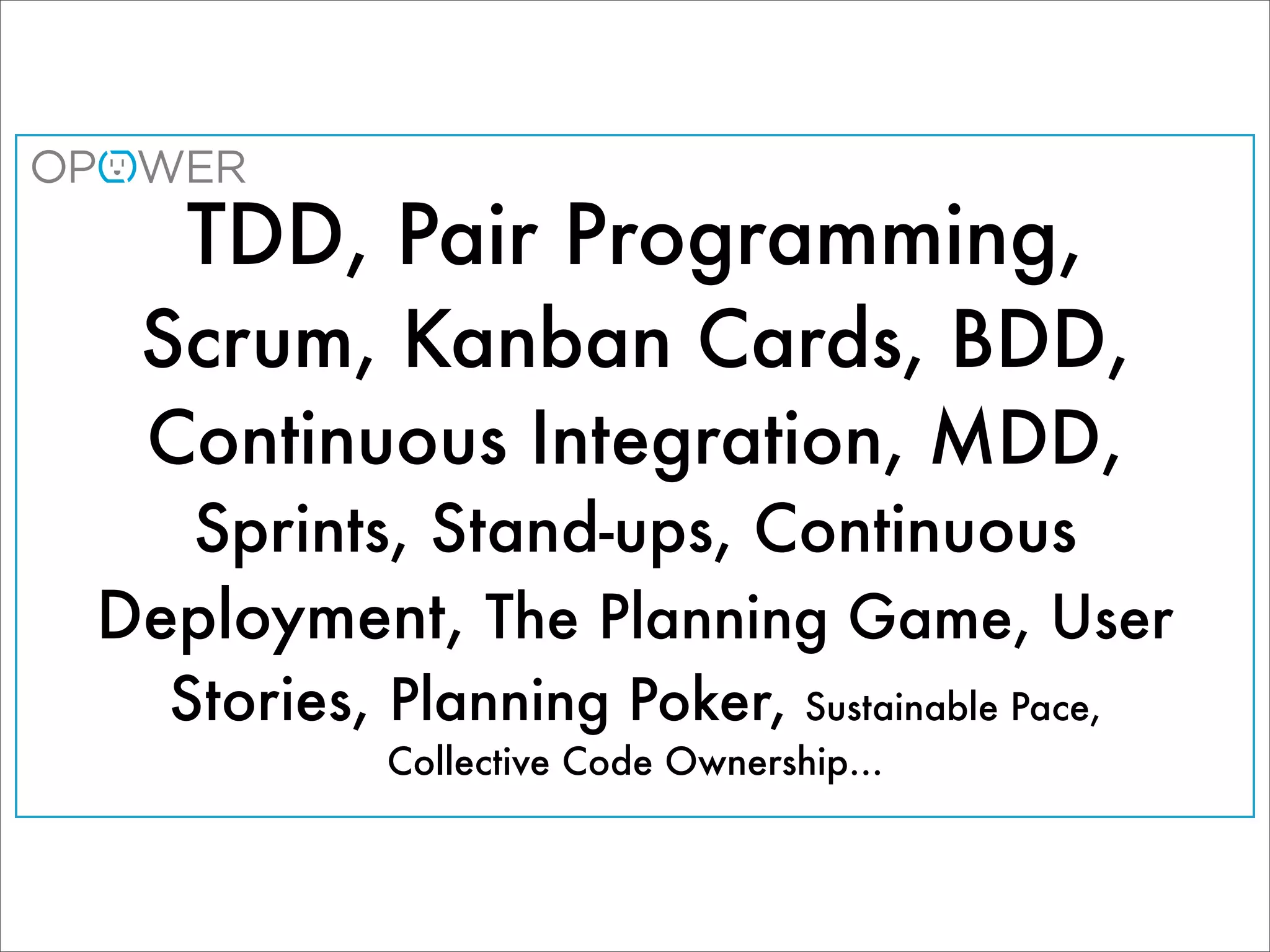
    9. TDD, Pair Programming, Scrum, Kanban Cards, BDD, Continuous Integration, MDD, Sprints, Stand-ups, Continuous Deployment, The Planning Game, User Stories, Planning Poker, Sustainable Pace, Collective Code Ownership...
    10. Adopting agile?
    11. Adopting agile? Which practices?
    12. Already agile-ish?
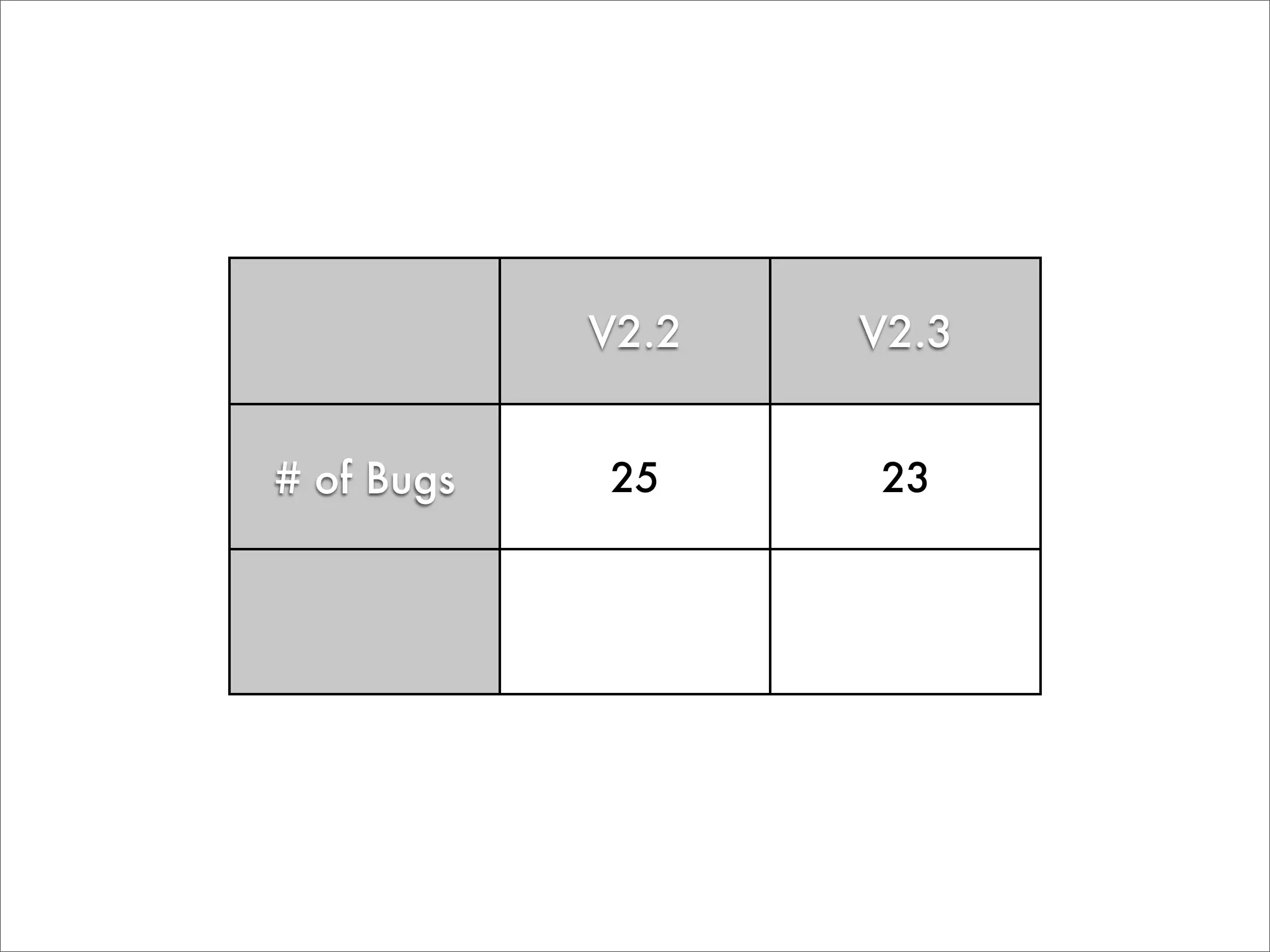
    13. Already agile-ish? Which practices will help us and why?
    14. Pick what feels good?
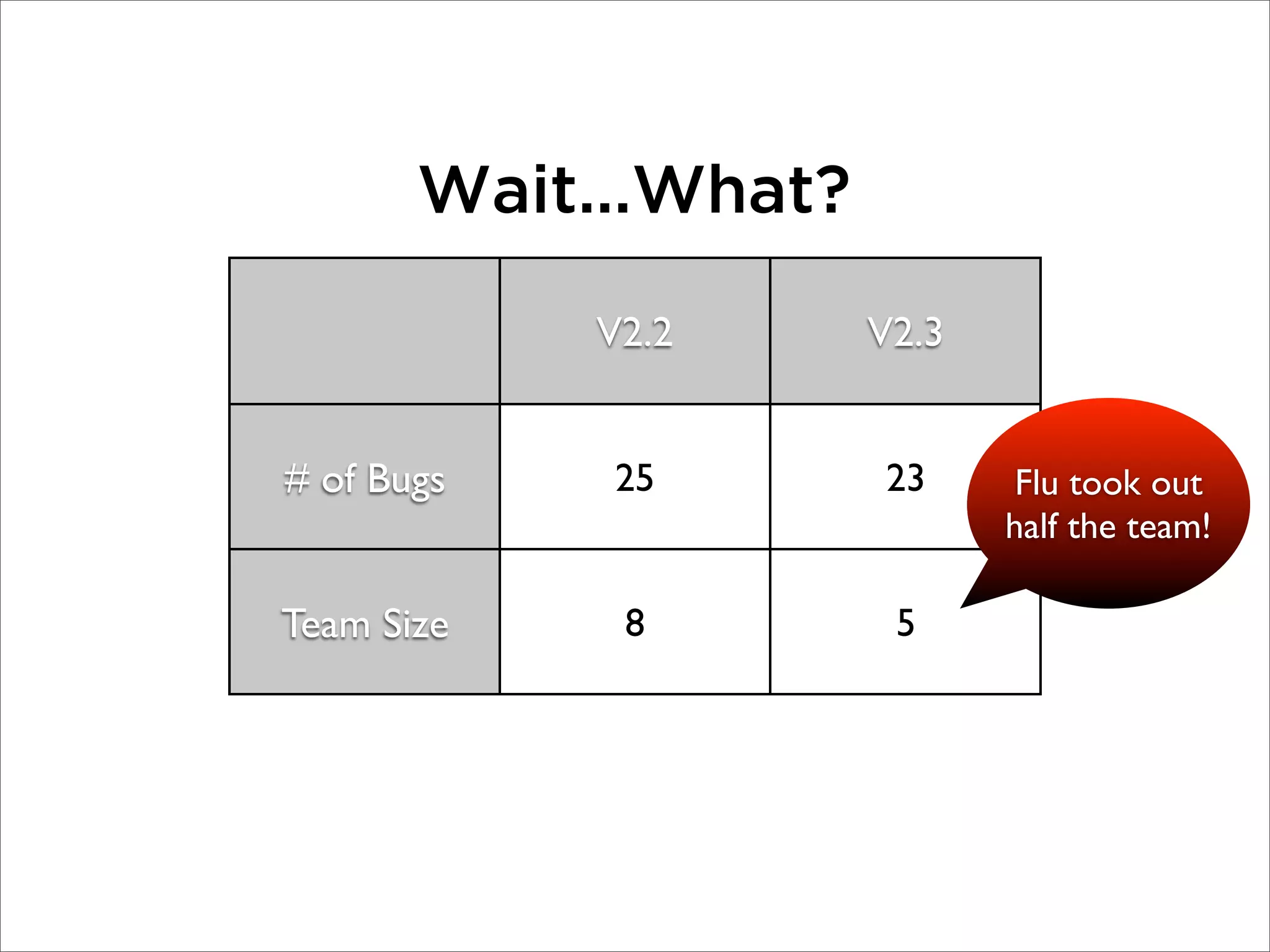
    15. Pick what feels good? Study your process and target problem areas.
    16. Scientific Method!
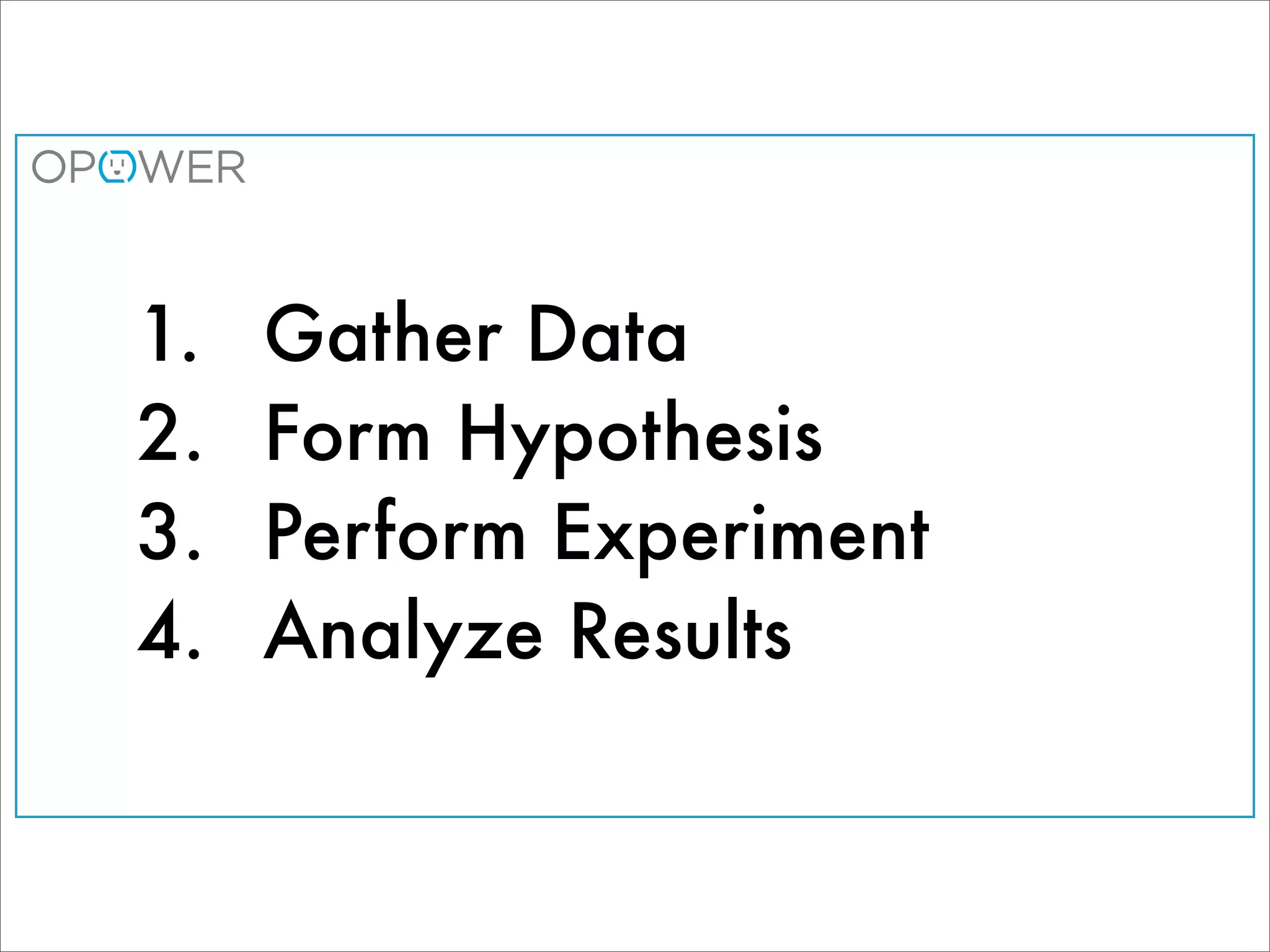
    17. 1. Gather Data 2. Form Hypothesis 3. Perform Experiment 4. Analyze Results
    18. 1. Gather Data
    19. Quantify: good things (to increase)
    20. Quantify: good things (to increase) bad things (to decrease)
    21. The Big Bad: Bugs
    22. The Big Bad: Bugs (you are using a bug tracker, right?)
    23. “We wrote less bugs than the previous iteration. We rule!” (Right?)
    24. V2.2 V2.3 # of Bugs 25 23
    25. Wait...What? V2.2 V2.3 # of Bugs 25 23 Flu took out half the team! Team Size 8 5
    26. Raw measurements must be put in context
    27. What is the “size” of an iteration?
    28. LOC?
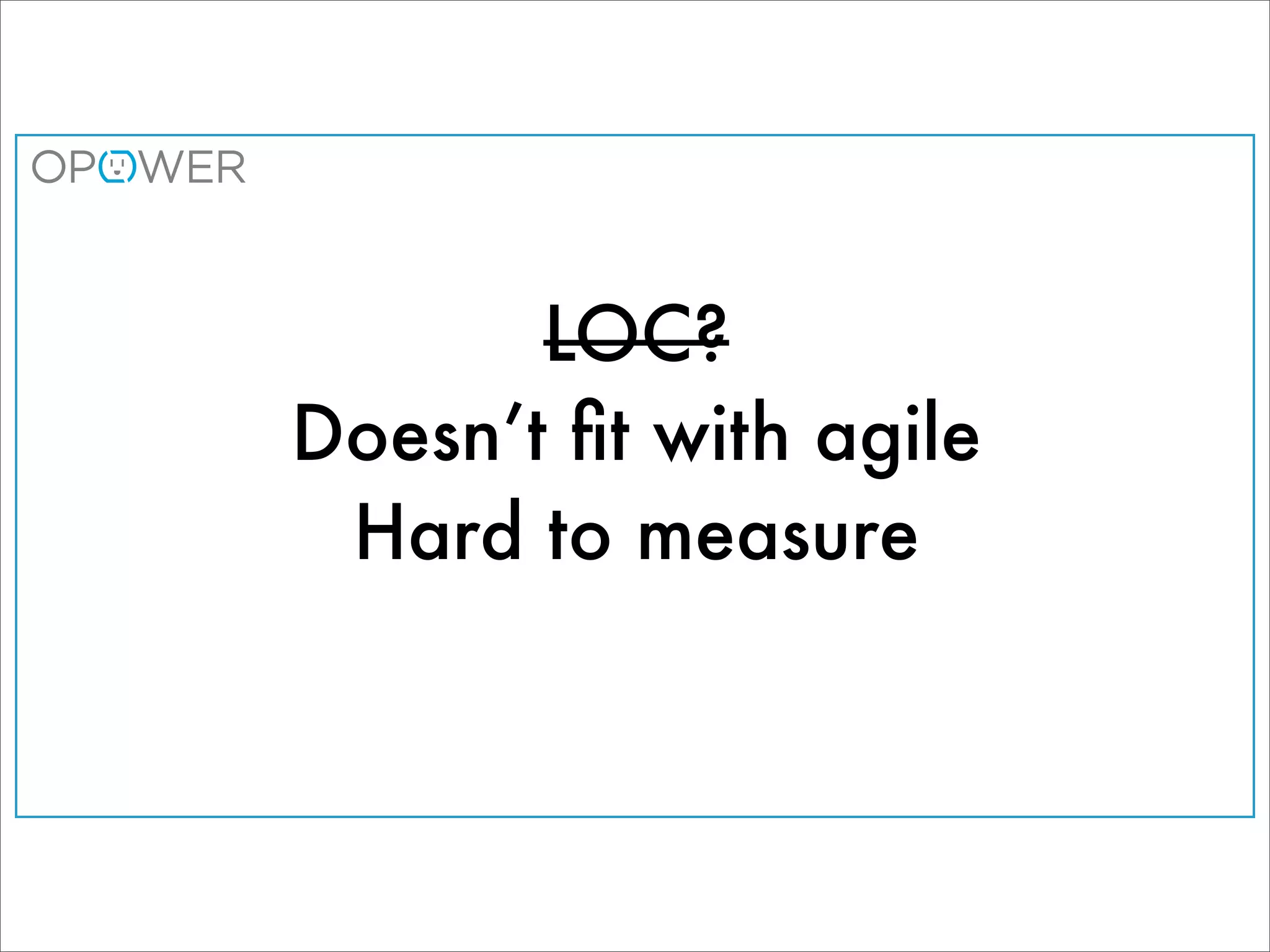
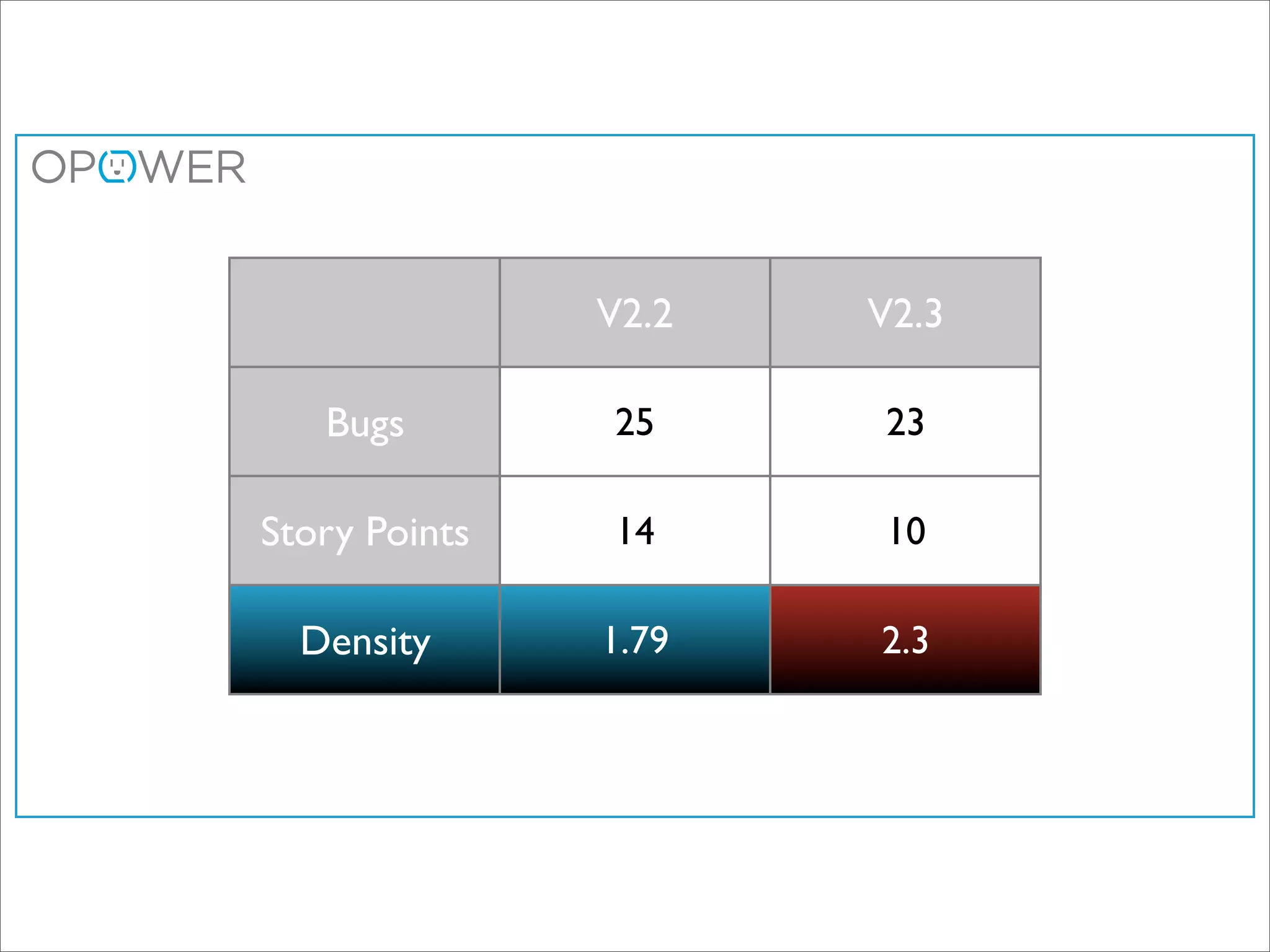
    29. LOC? Doesn’t fit with agile Hard to measure
    30. Hours/Days?
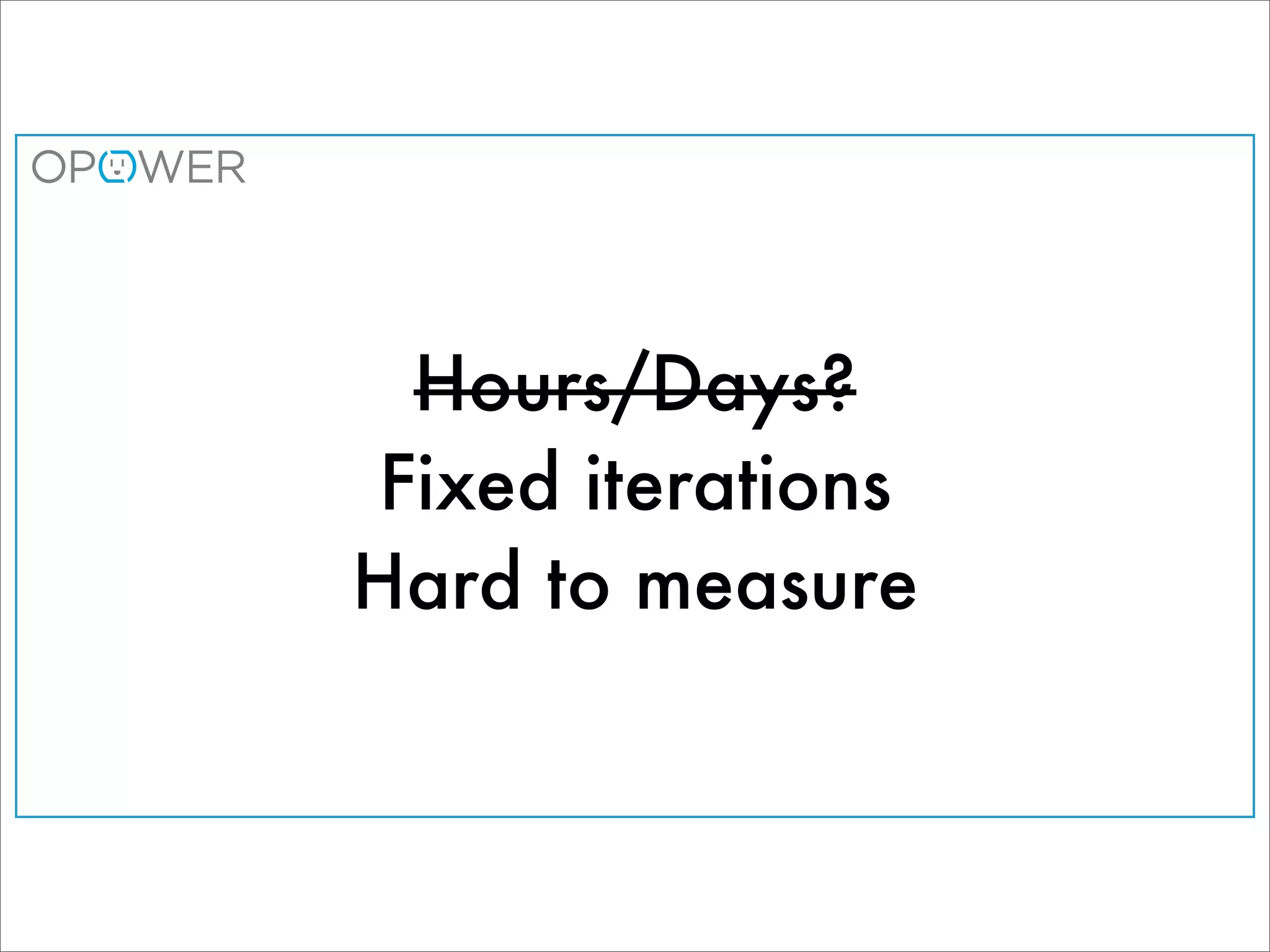
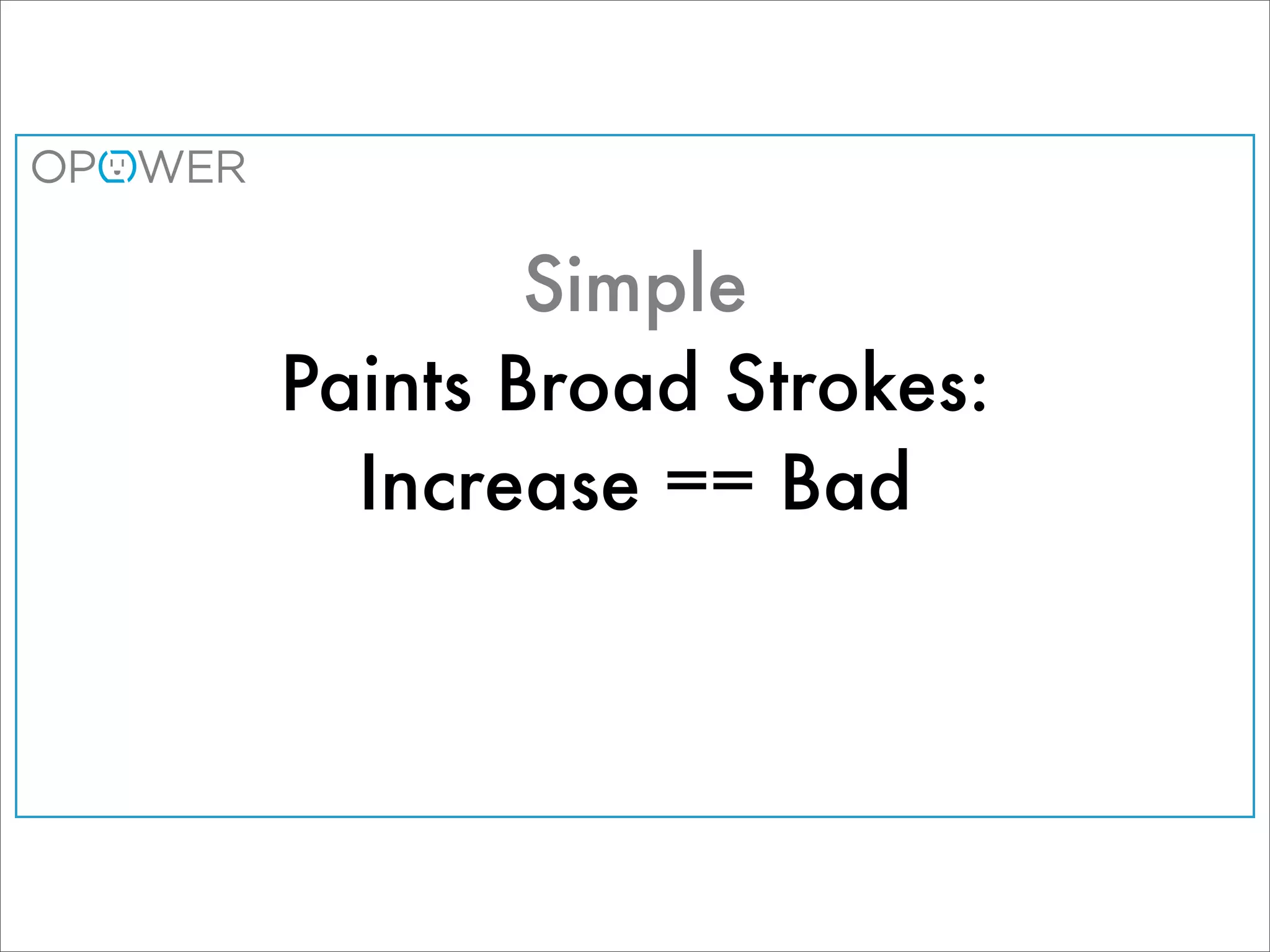
    31. Hours/Days? Fixed iterations Hard to measure
    32. We use “Story Points”
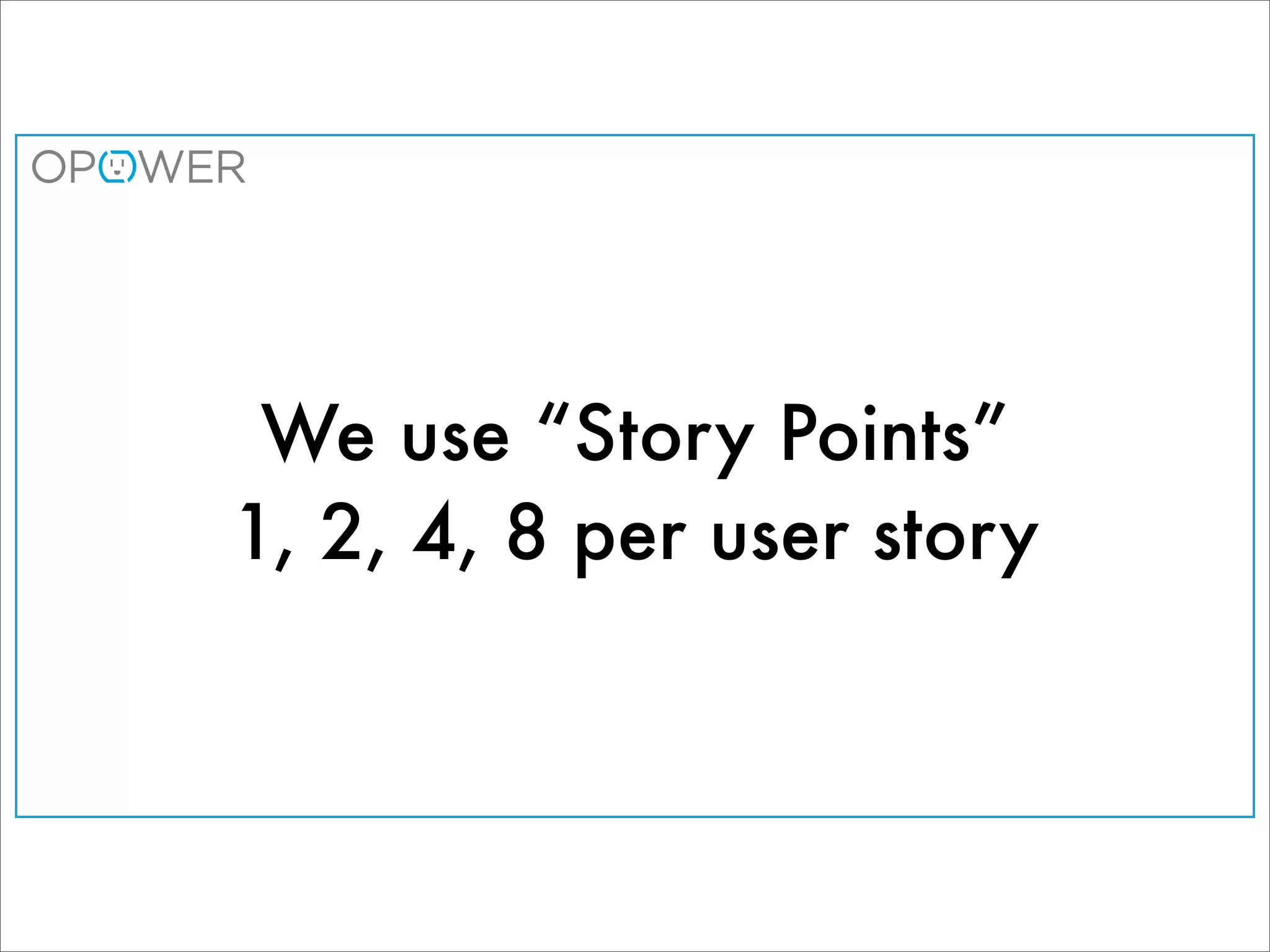
    33. We use “Story Points” 1, 2, 4, 8 per user story
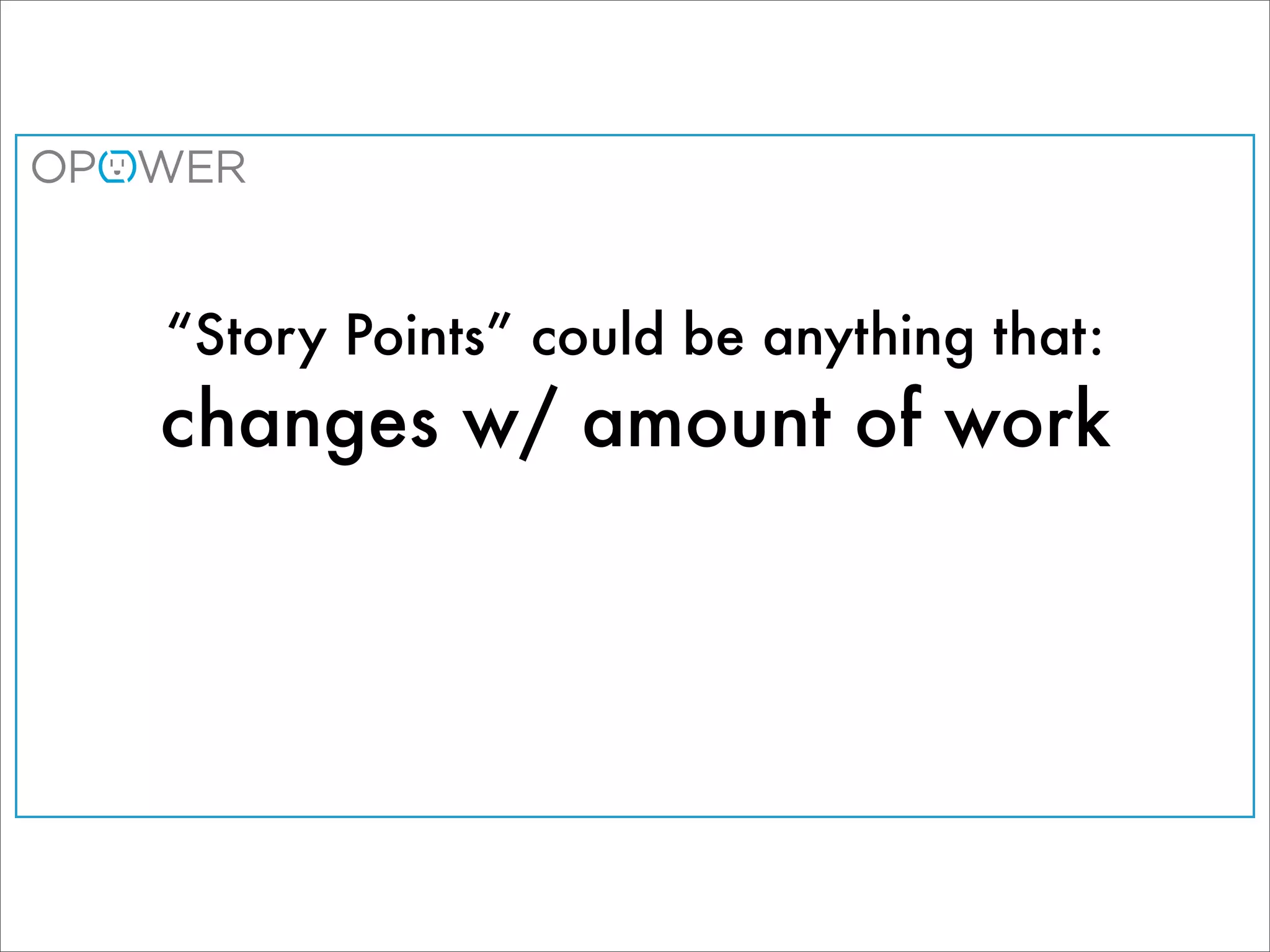
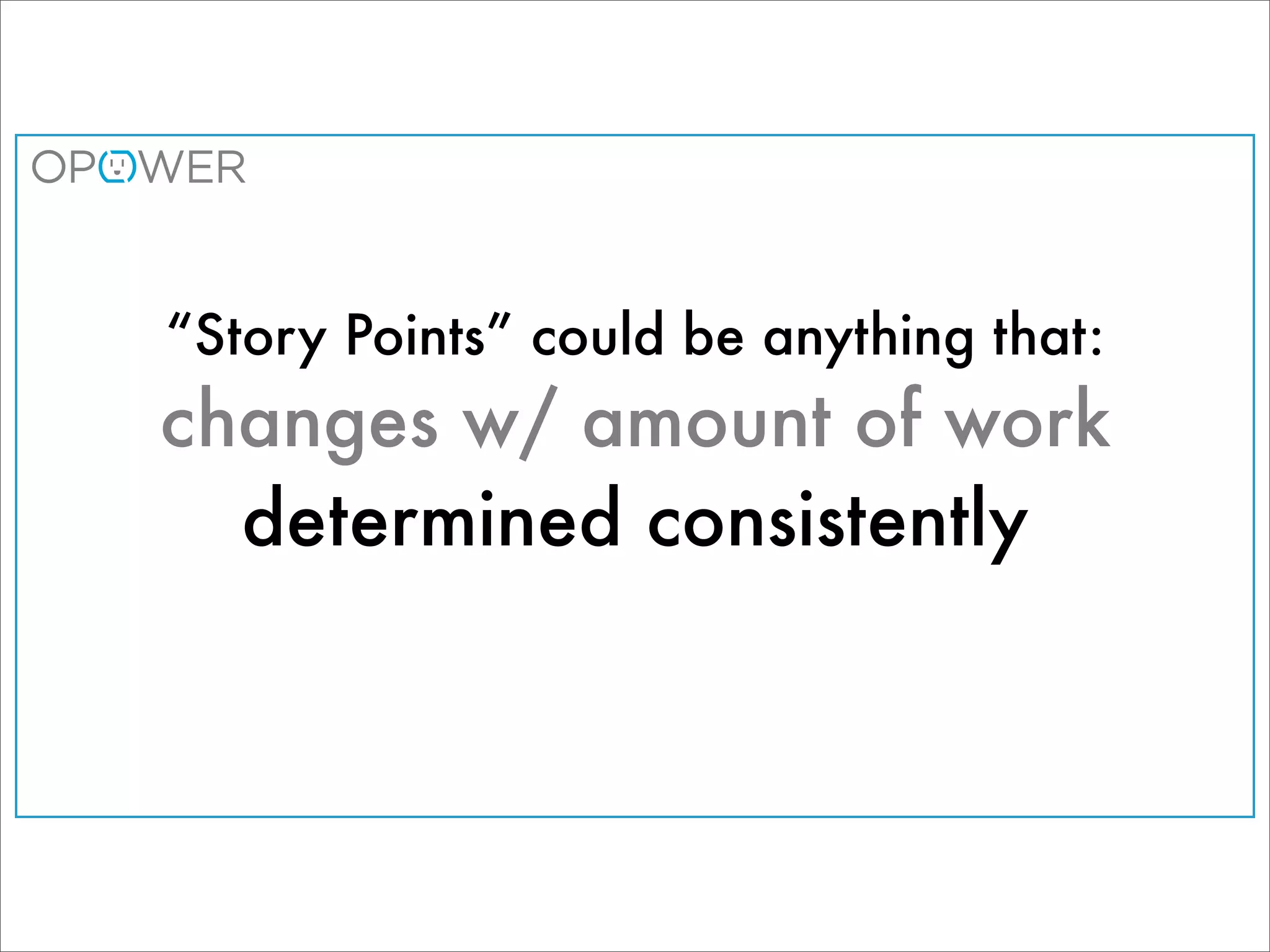
    34. “Story Points” could be anything that:
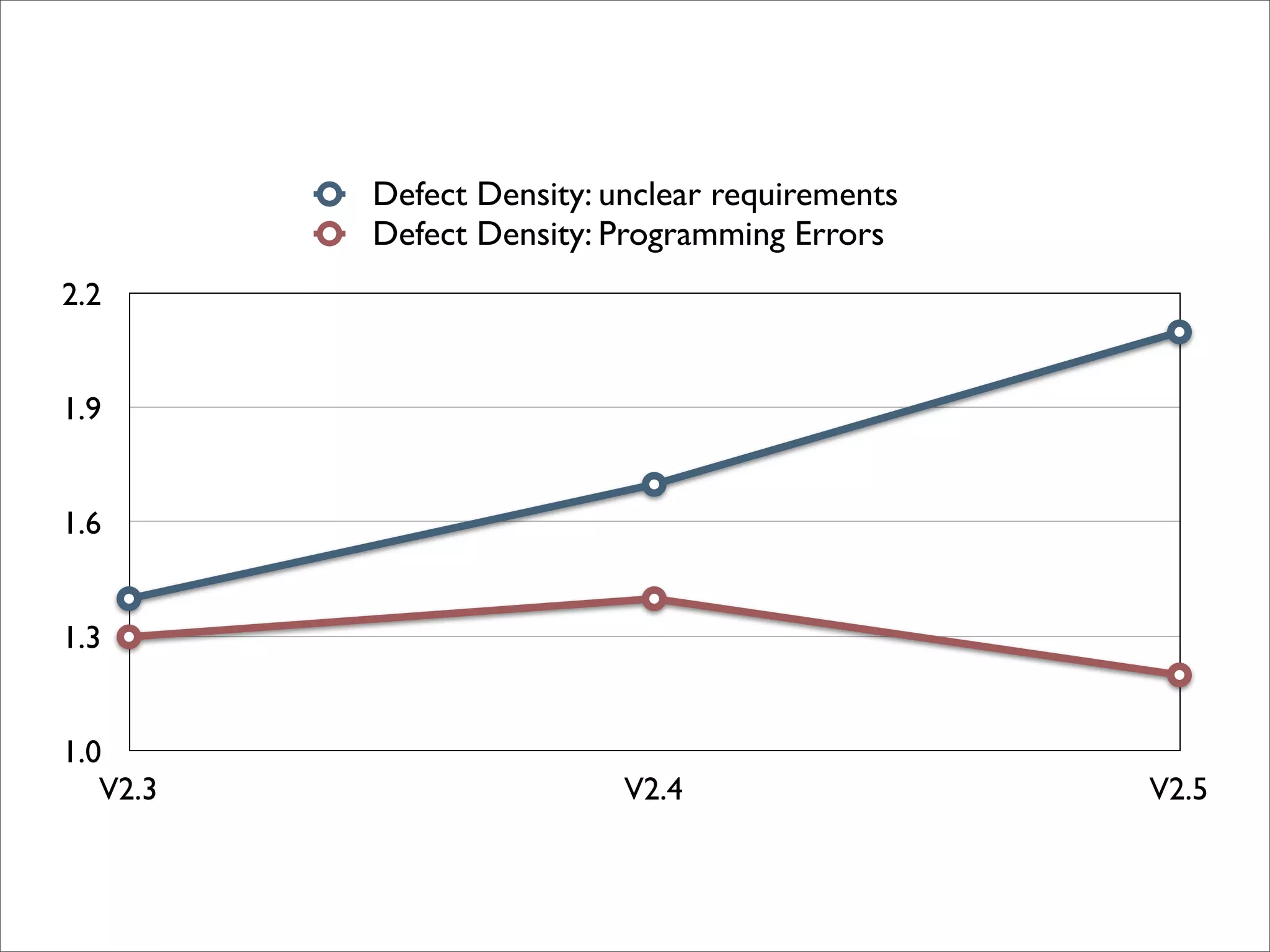
    35. “Story Points” could be anything that: changes w/ amount of work
    36. “Story Points” could be anything that: changes w/ amount of work determined consistently
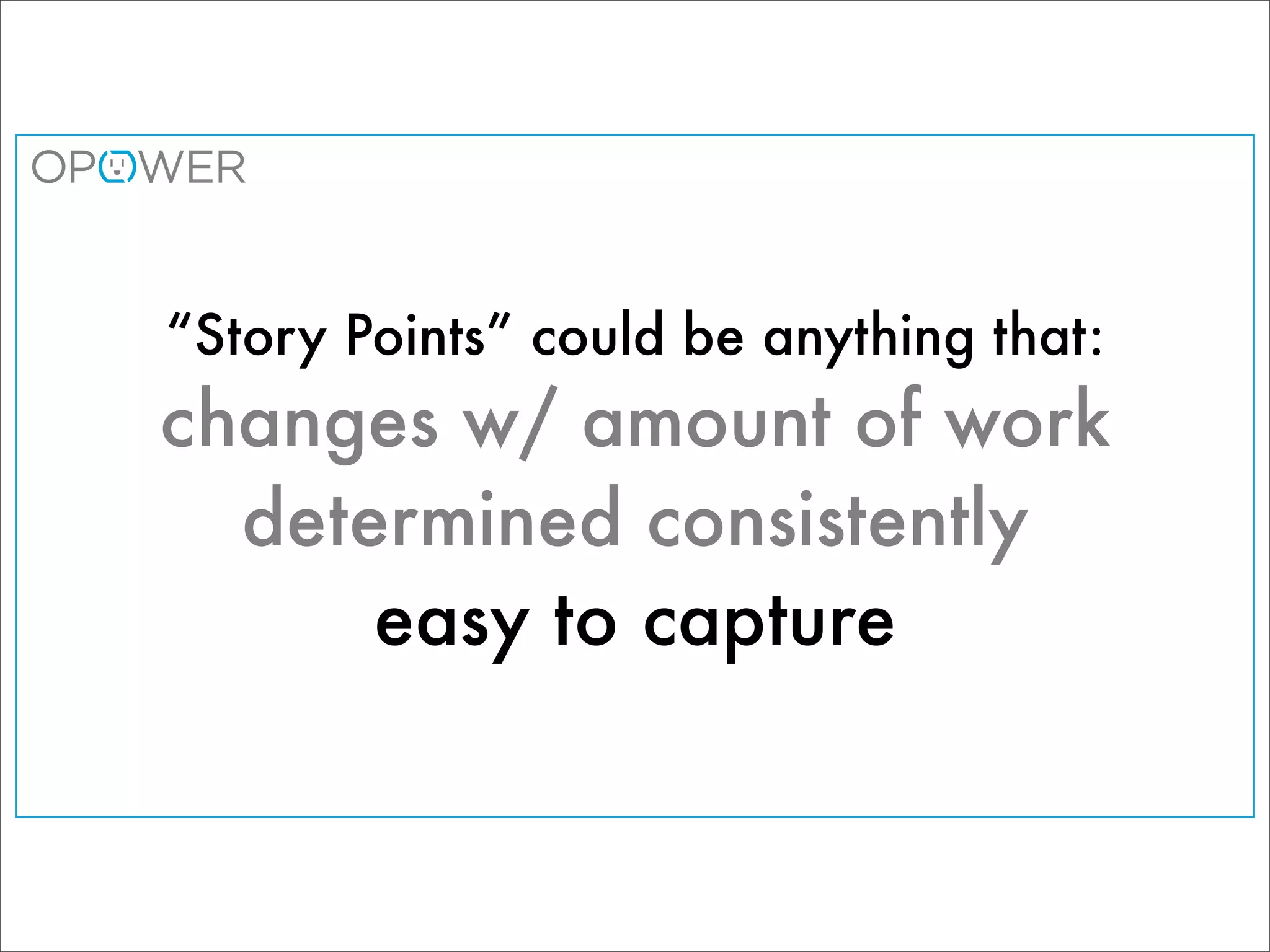
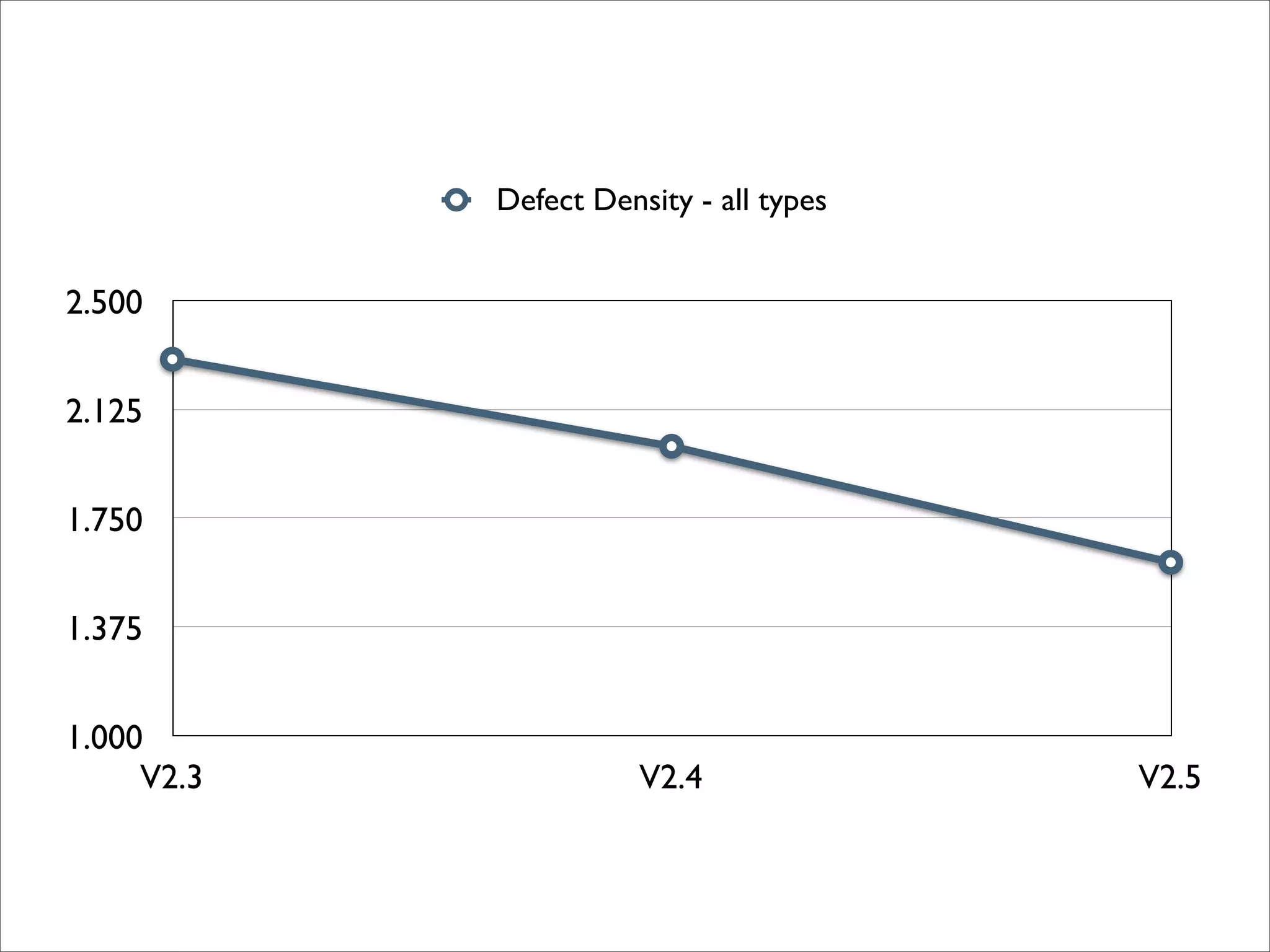
    37. “Story Points” could be anything that: changes w/ amount of work determined consistently easy to capture
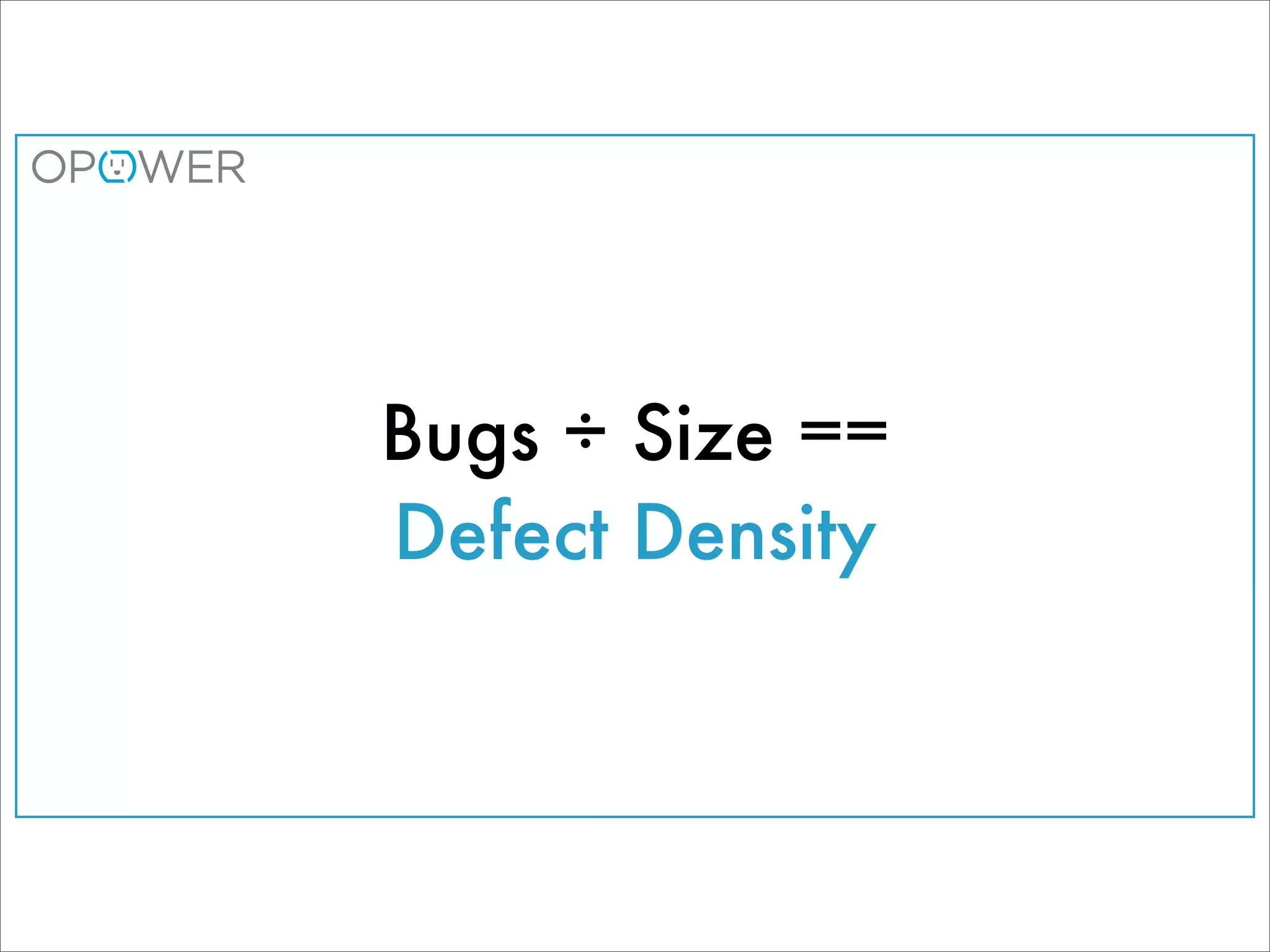
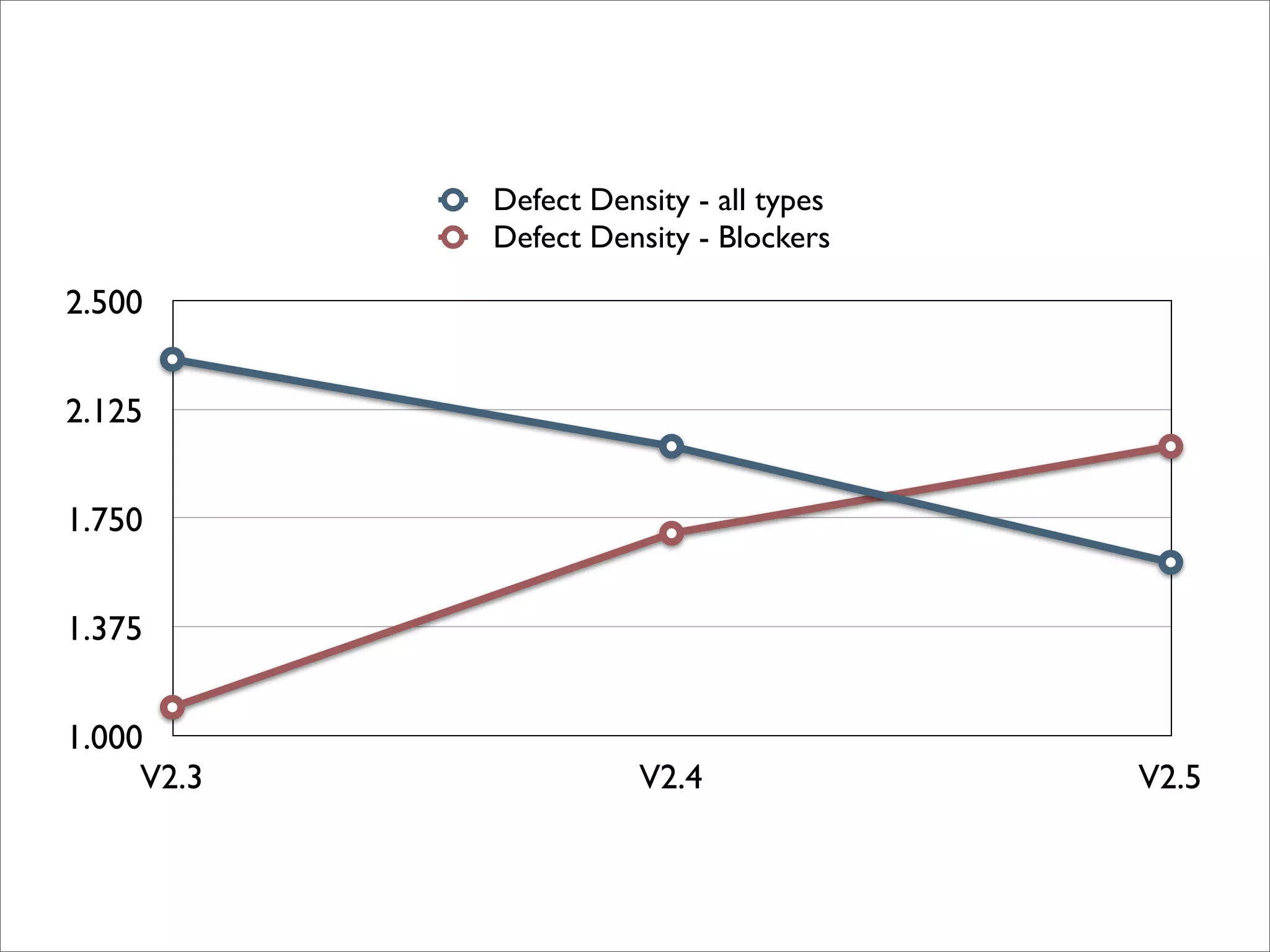
    38. Bugs ÷ Size == Defect Density
    39. V2.2 V2.3 Bugs 25 23 Story Points 14 10 Density 1.79 2.3
    40. Simple
    41. Simple Paints Broad Strokes: Increase == Bad
    42. Simple Paints Broad Strokes: Increase == Bad Almost enough to draw conclusions
    43. With a smallamount of additional meta-data...
    44. With a amount of additional small meta-data... ...you can gain incredible insights
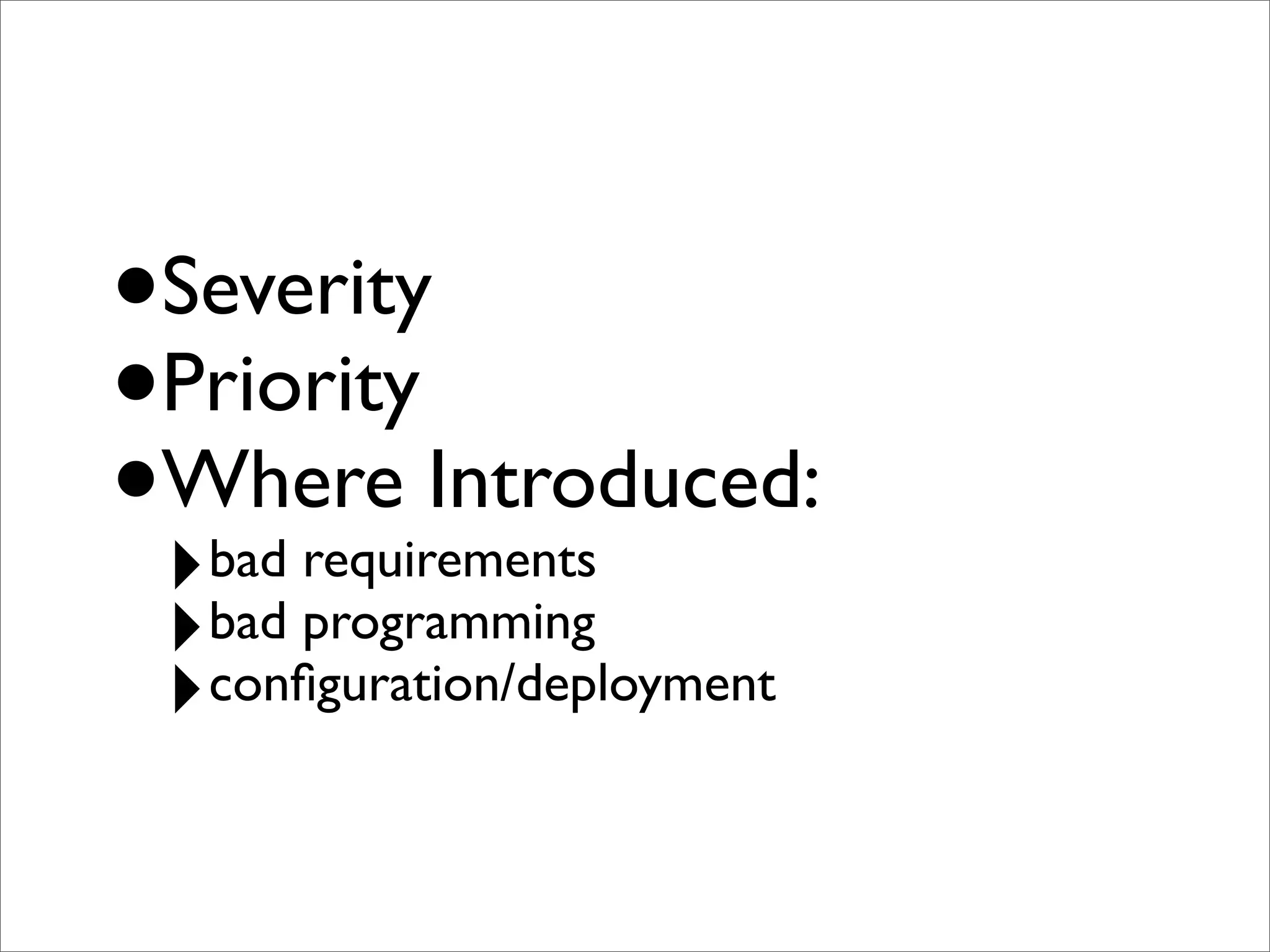
    45. •Severity •Priority •‣ Where Introduced: bad requirements ‣bad programming ‣configuration/deployment
    46. Defect Density: unclear requirements Defect Density: Programming Errors 2.2 1.9 1.6 1.3 1.0 V2.3 V2.4 V2.5
    47. Defect Density - all types 2.500 2.125 1.750 1.375 1.000 V2.3 V2.4 V2.5
    48. Defect Density - all types Defect Density - Blockers 2.500 2.125 1.750 1.375 1.000 V2.3 V2.4 V2.5
    49. 2. Form Hypothesis
    50. Metrics give us insight to focus on problem areas
    51. Form a hypothesis about problem areas and potential solutions
    52. Agile practices are a goldmine
    53. Agile practices are a goldmine ...if used sensibly in the context of your process
    54. Example: “Increasing test coverage will reduce our defect density”
    55. Example: “Pair Programming will reduce ‘bad programmer’ bugs”
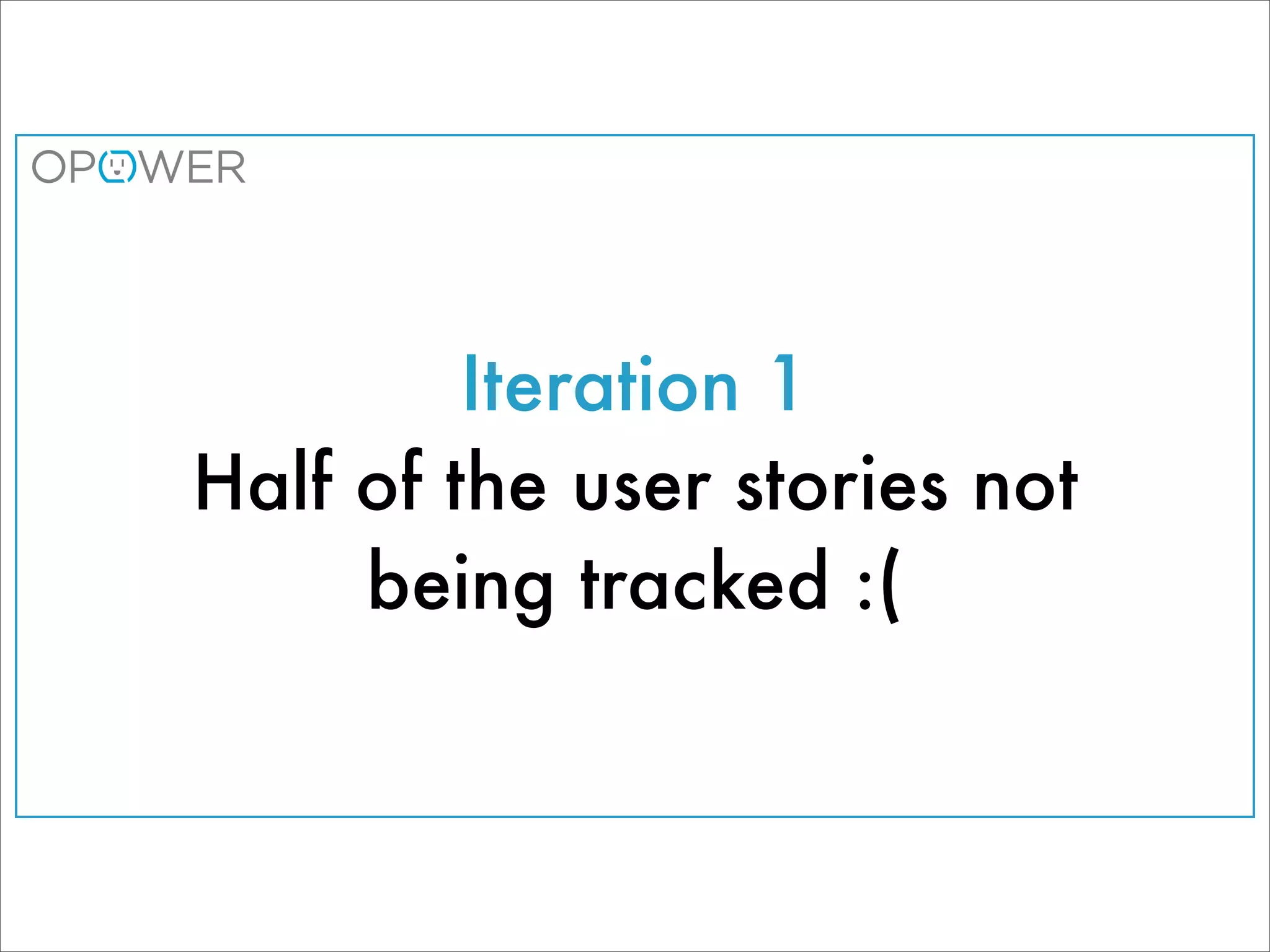
    56. Example: “BDD will help clarify requirements so we implement the right thing”
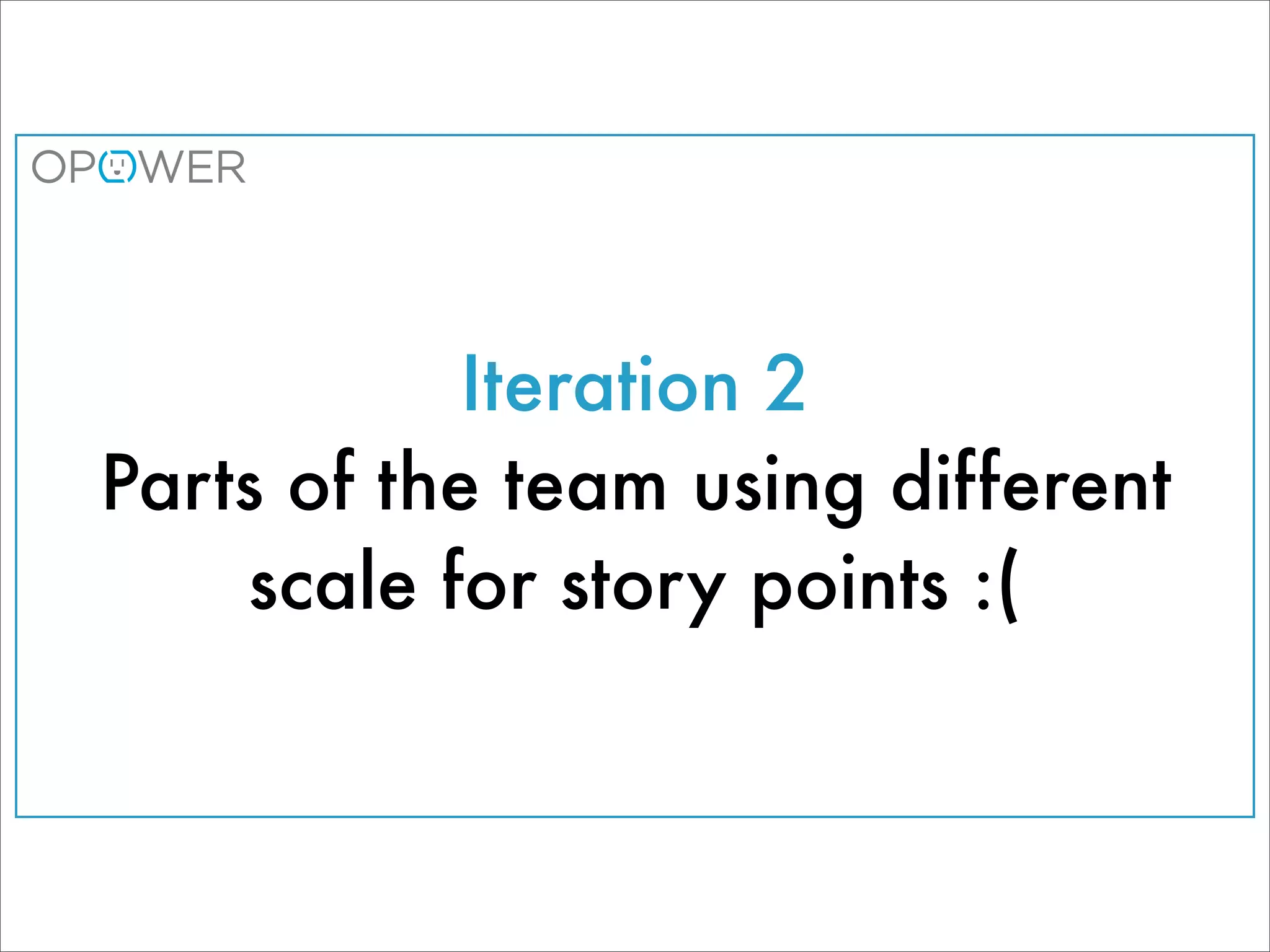
    57. 3. Perform Experiment
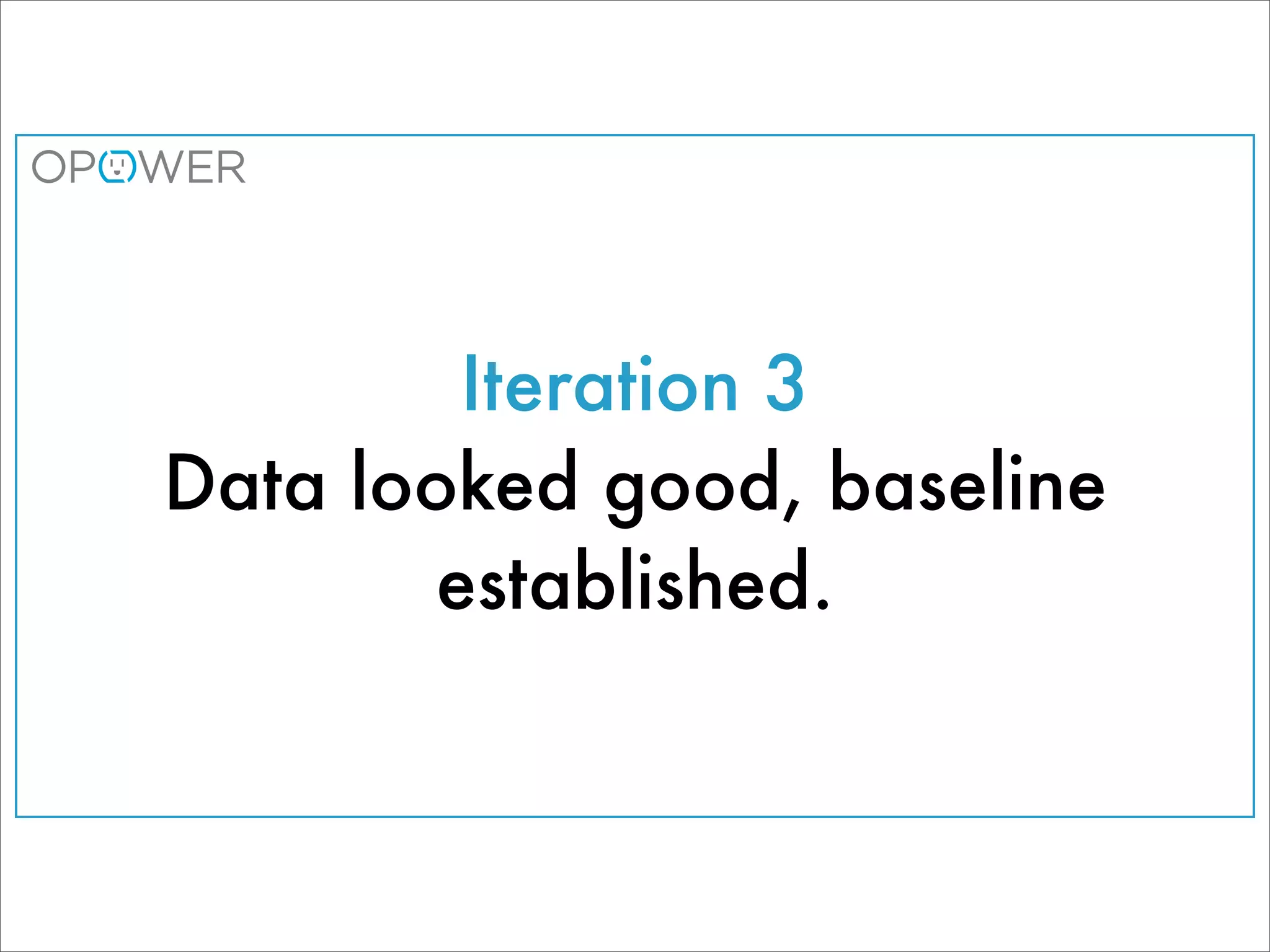
    58. On the next iteration, test your hypothesis
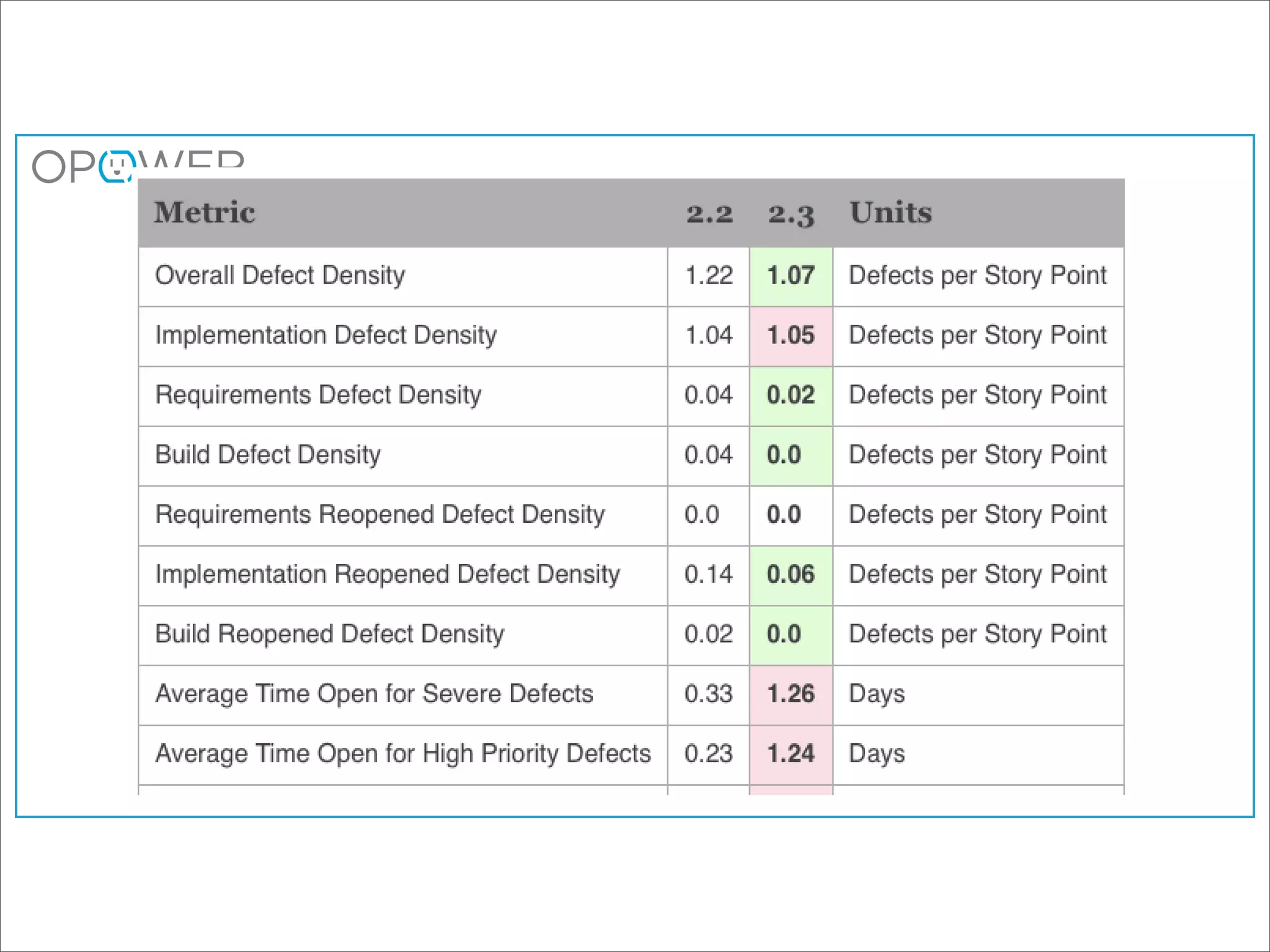
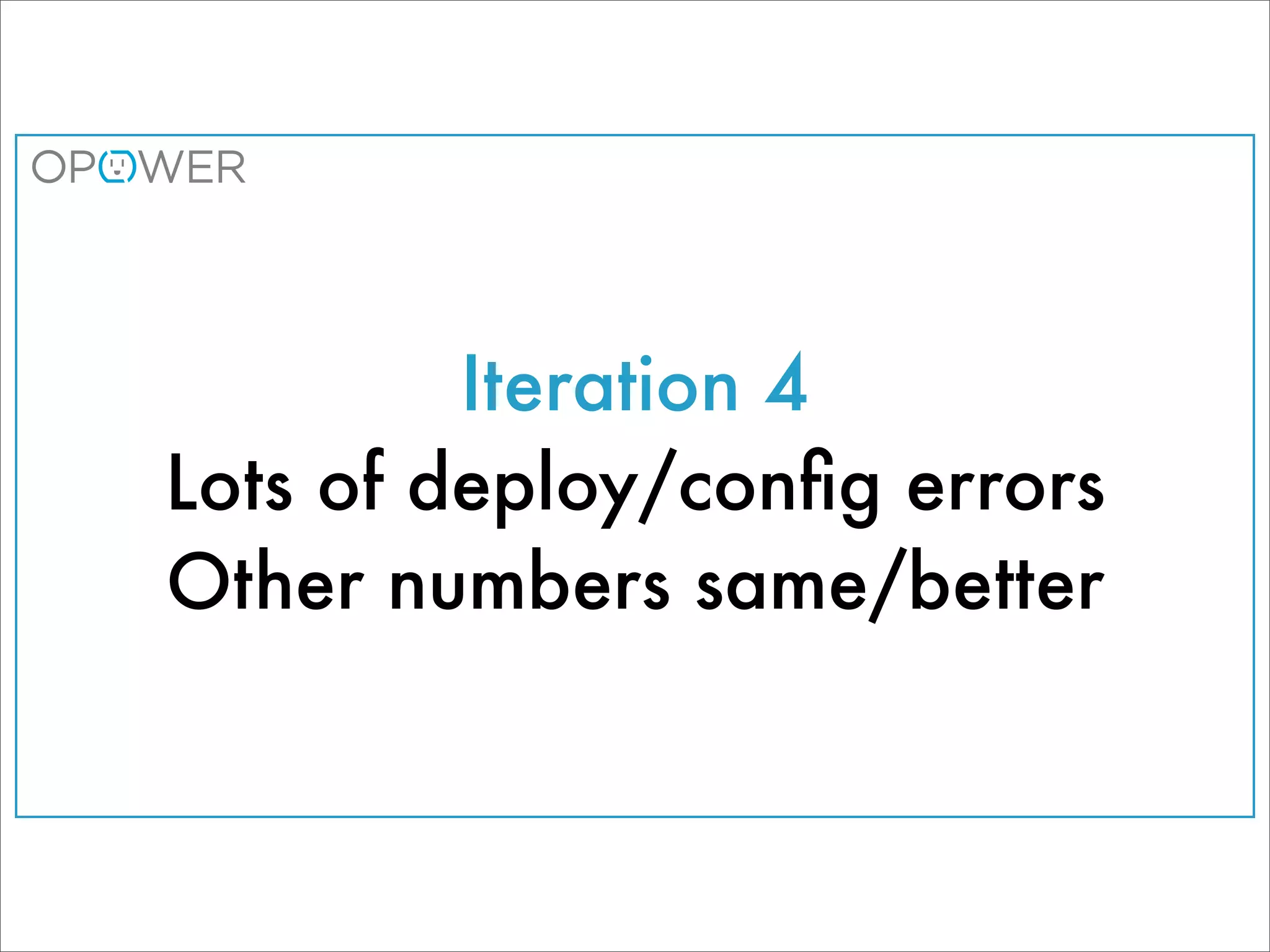
    59. Start slowly; implement one change, chosen for maximum impact
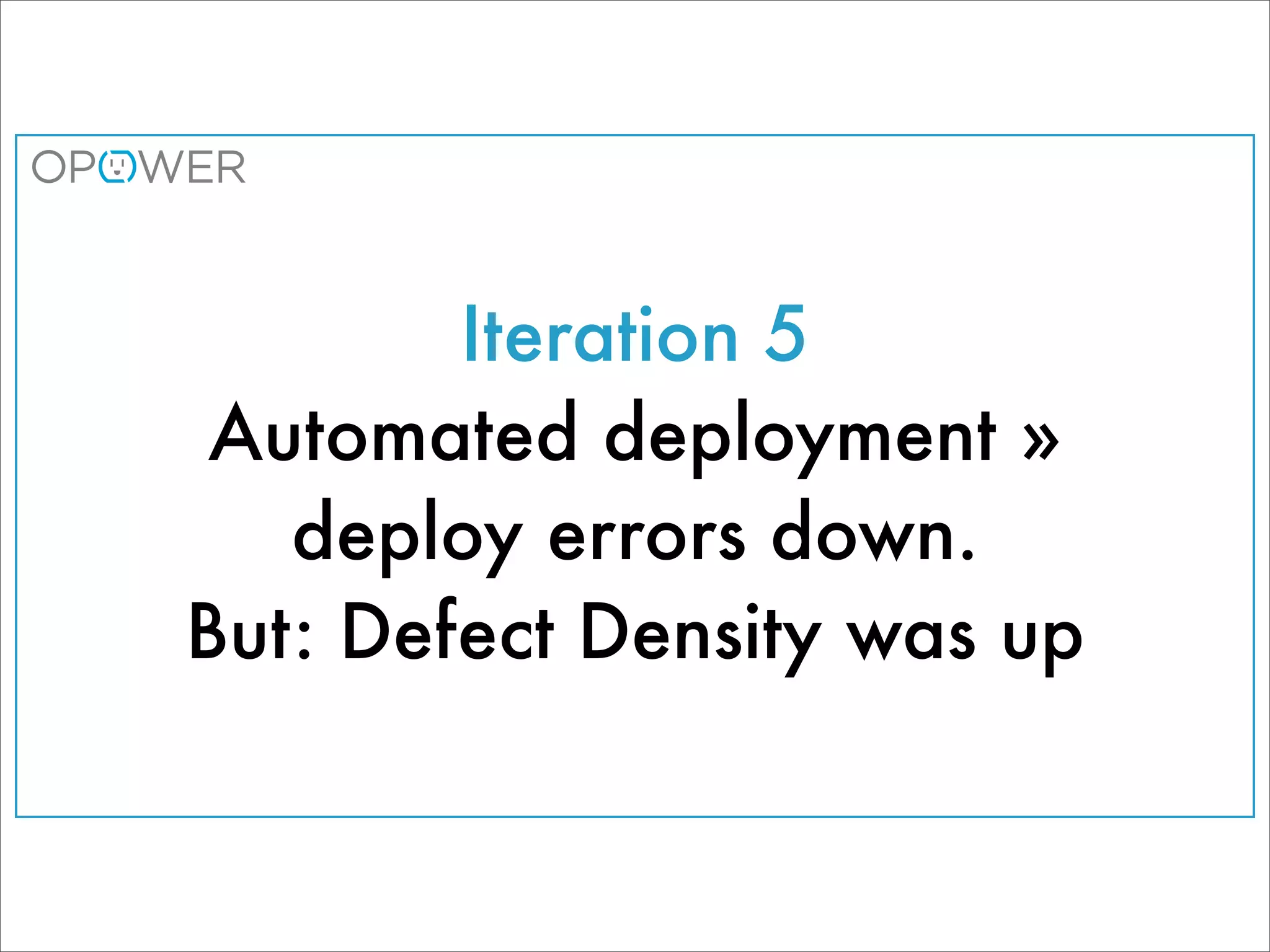
    60. 4. Analyze Results
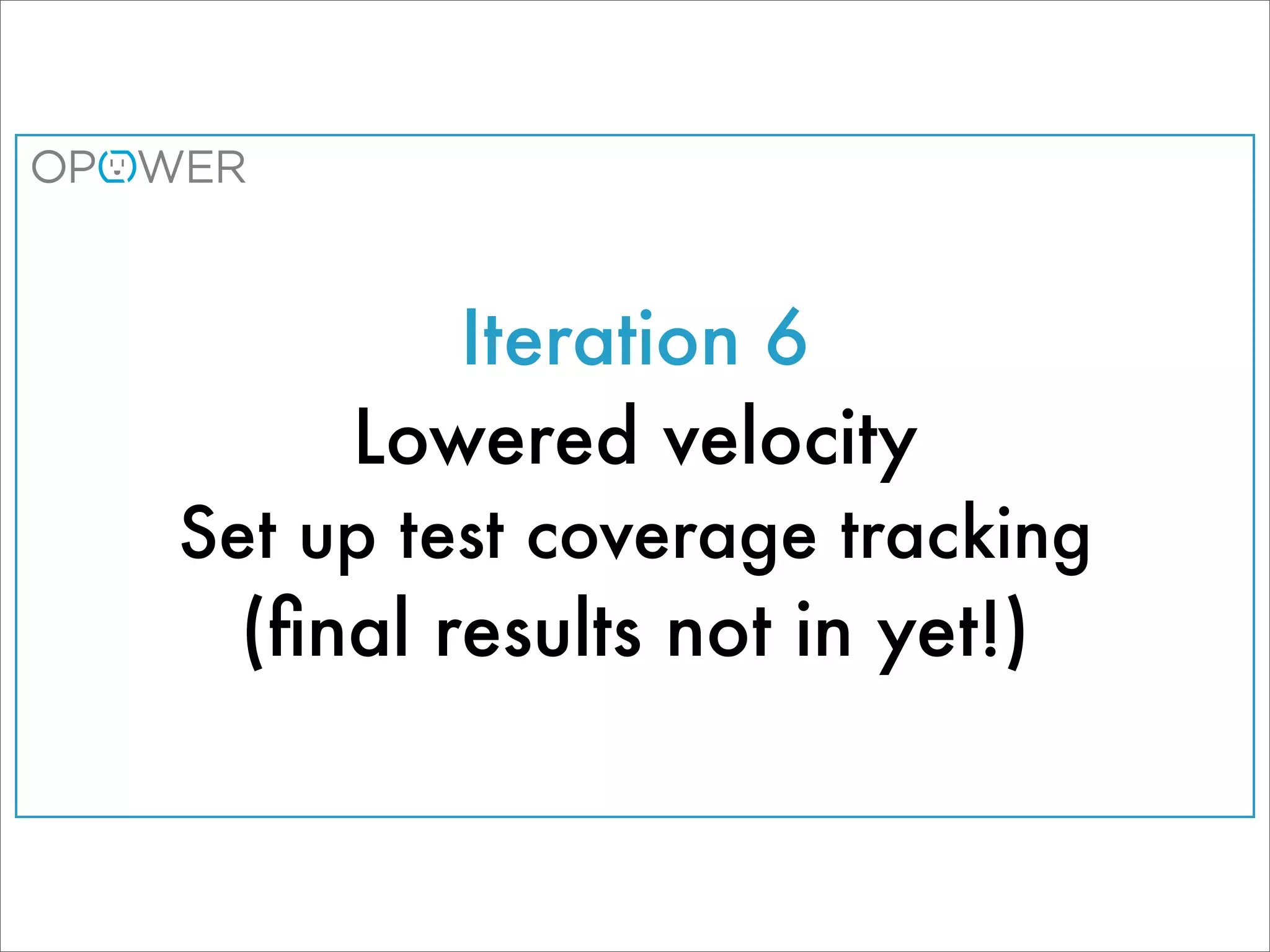
    61. The next iteration’s metrics should prove/disprove your hypothesis
    62. Repeat until profit!
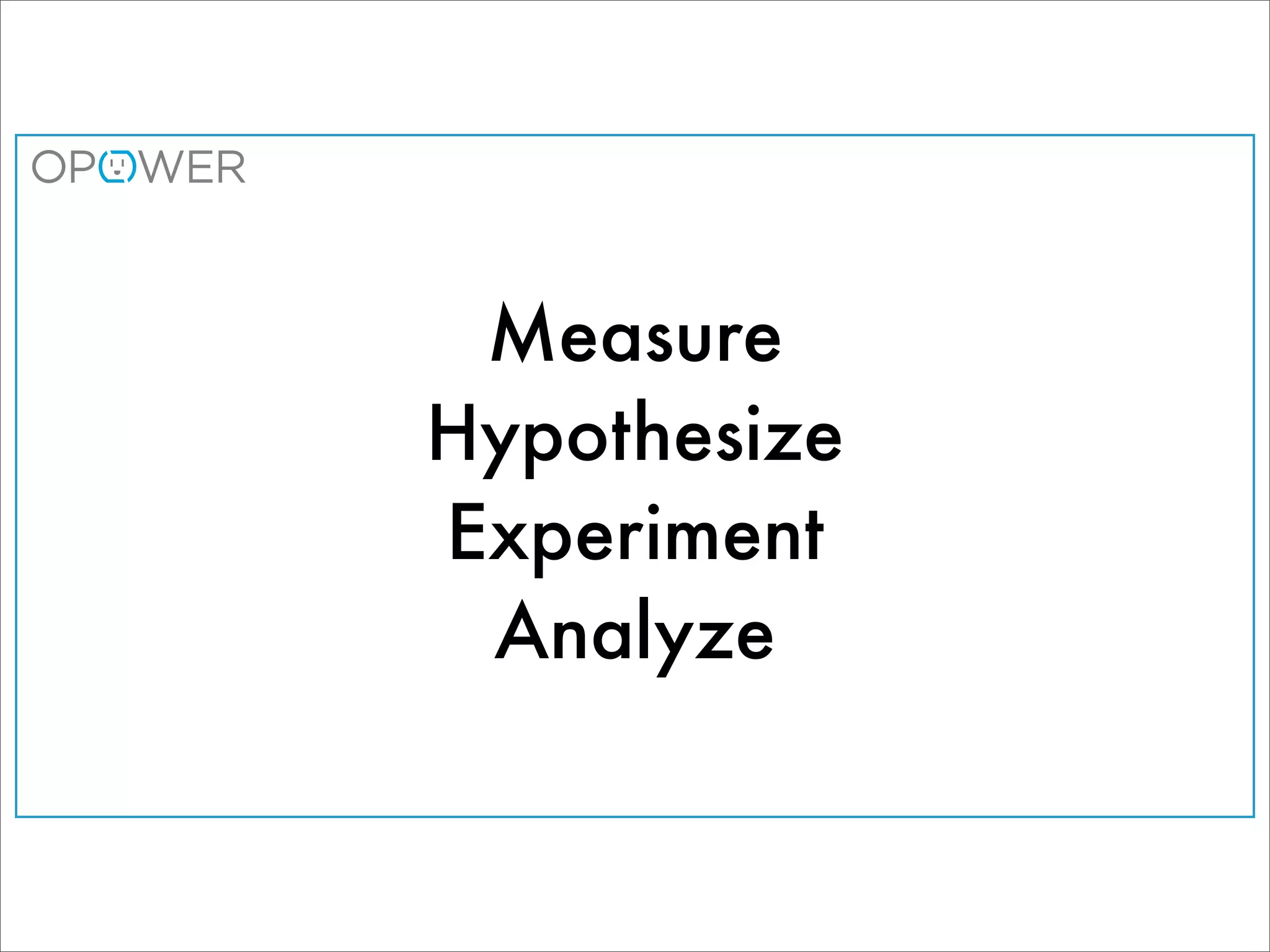
    63. This improvement method isn’t perfect
    64. This improvement method isn’t perfect but it’s a GREAT start
    65. How has this helped OPOWER?
    66. Iteration 1 Half of the user stories not being tracked :(
    67. Iteration 2 Parts of the team using different scale for story points :(
    68. Iteration 3 Data looked good, baseline established.
    69. Iteration 4 Lots of deploy/config errors Other numbers same/better
    70. Iteration 5 Automated deployment » deploy errors down. But: Defect Density was up
    71. Iteration 6 Lowered velocity Set up test coverage tracking (final results not in yet!)
    72. Scientific Method
    73. Measure Hypothesize Experiment Analyze
    74. dave@opower.com http://www.opower.com @davetron5000

    + David CopelandDavid Copeland, 1 month ago

    custom

    186 views, 1 favs, 1 embeds more stats

    Slides from my lightning talk at DevDays DC on how more

    More info about this document

    CC Attribution-NonCommercial LicenseCC Attribution-NonCommercial License

    Go to text version

    • Total Views 186
      • 174 on SlideShare
      • 12 from embeds
    • Comments 0
    • Favorites 1
    • Downloads 3
    Most viewed embeds
    • 12 views on http://www.heyitsopower.com

    more

    All embeds
    • 12 views on http://www.heyitsopower.com

    less

    Flagged as inappropriate Flag as inappropriate
    Flag as inappropriate

    Select your reason for flagging this presentation as inappropriate. If needed, use the feedback form to let us know more details.

    Cancel
    File a copyright complaint
    Having problems? Go to our helpdesk?

    Categories