Creating change
from within
 The Agile Developer story
 By
 Dror Helper
About.Me
• Software Developer 9+ years

• Team’s technical lead

• TDD/Unit testing enthusiast

• Some SCRUM/Kanban background

• Blogger – http://blog.drorhelper.com
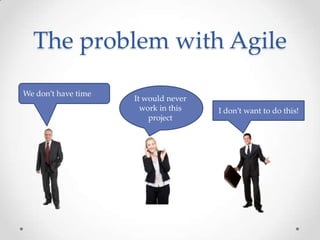
The problem with Agile
We don’t have time
                     It would never
                       work in this   I don’t want to do this!
                         project
So what can a single
    person do?
Let me tell you
 about the last
year and a half
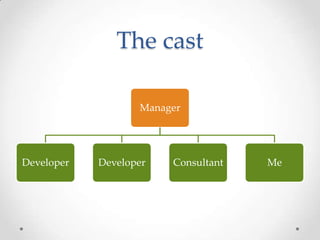
The cast

                   Manager


Developer   Developer   Consultant   Me
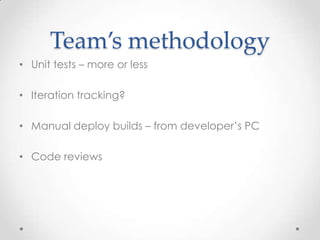
Team’s methodology
• Unit tests – more or less

• Iteration tracking?

• Manual deploy builds – from developer’s PC

• Code reviews
My   1 st   week on the job
Let’s do TDD!
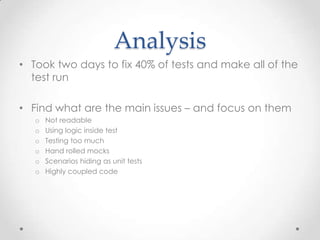
Analysis
• Took two days to fix 40% of tests and make all of the
  test run

• Find what are the main issues – and focus on them
   o   Not readable
   o   Using logic inside test
   o   Testing too much
   o   Hand rolled mocks
   o   Scenarios hiding as unit tests
   o   Highly coupled code
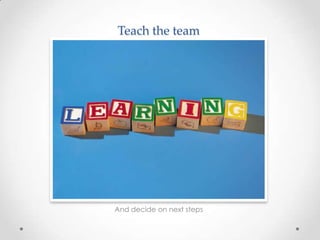
Teach the team


And decide on next steps
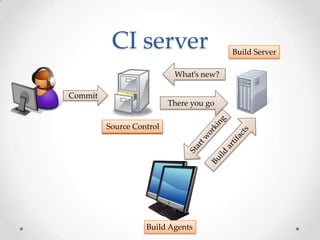
CI server                      Build Server

                           What’s new?

Commit
                          There you go

         Source Control


                   Build Agents
Immediate steps
•   Using MSTest
•   Write test before fixing bug
•   Fix existing tests when implementing new features
•   Delete obsolete tests
Code reviews
Then came mocking
• Hard to explain at the beginning
• Instead show them!
   o Free tools – low cost upfront
   o Commercial products

• Get rid of existing hand-rolled mocks
And excuses
•   “I didn’t have enough time so I didn’t write a test”
•   Crisis mode
•   I cannot test it – so I won’t…
•   There’s no need to test everything
•   It’s much better to have one big test

• Remember not to be discouraged
Today
•   More than 3000 tests
•   Good code coverage
•   Most features are developed using TDD
•   CI server run all tests on commit

• Change code without fear
How to decide
 what to do?
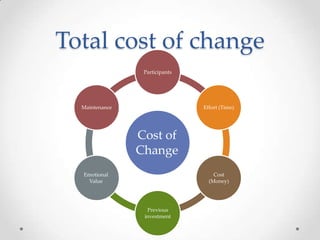
Total cost of change
                 Participants


  Maintenance                   Effort (Time)


                Cost of
                Change
  Emotional                         Cost
   Value                          (Money)


                  Previous
                 investment
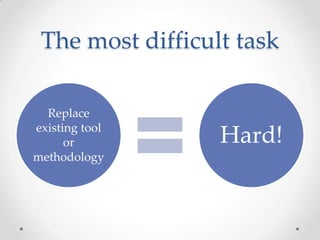
The most difficult task

  Replace
existing tool
      or          Hard!
methodology
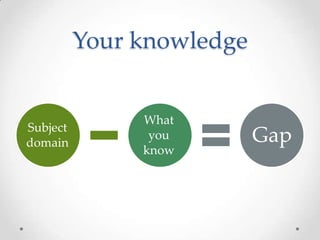
Your knowledge


               What
Subject
domain
                you        Gap
               know
Iteration
tracking
In the beginning
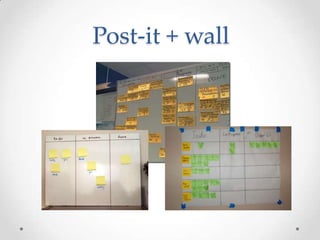
Post-it + wall
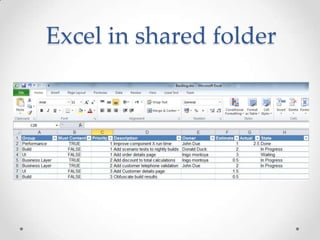
Excel in shared folder
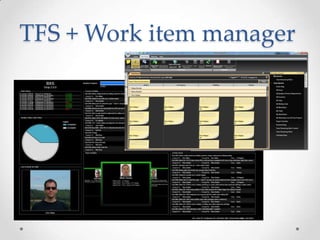
TFS + Work item manager
Tips and tricks
The power of code reviews
Effective Code reviews
• Advise don’t force
• Review the code not the person
• It’s ok to discuss the good things as well

• You should get reviewed as well!
• After a while team members can review each other
Have the right attitude
•   Be positive
•   Don’t tell them what to so - suggest improvements
•   Don’t force – convince
•   Be ready to change if proven wrong
•   Don’t be “that guy”
Communicate!
•   Email
•   Phone call
•   Face to face
•   Presentation
•   Coder reviews
•   Pair programming
•   Daily meetings
Create success record
Enlist Help
Because You cannot do it all by yourself
Change is iterative
• Hard to perform big changes overnight
• Small incremental changes
• Teach the team about the “boy scout rule”.
Be pragmatic!
•   Every action should have a purpose
•   If it doesn’t work – change it!
•   Names are not important – just what you do
•   Practices can be adapted for the team
•   Don’t be a strict task master


     Know where to draw the line

Journey not a destination
Aftermath
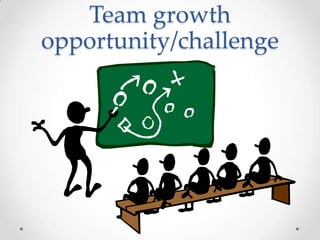
Team growth
opportunity/challenge
The end?
•   TDD & unit tests
•   CI server
•   Code reviews before commit
•   Automatic deployment
•   Task board and iterations
•   Better estimations
•   Faster time to deploy
Thank you

Creating change from within - Agile Practitioners 2012

  • 1.
    Creating change from within The Agile Developer story By Dror Helper
  • 2.
    About.Me • Software Developer9+ years • Team’s technical lead • TDD/Unit testing enthusiast • Some SCRUM/Kanban background • Blogger – http://blog.drorhelper.com
  • 3.
    The problem withAgile We don’t have time It would never work in this I don’t want to do this! project
  • 4.
    So what cana single person do?
  • 5.
    Let me tellyou about the last year and a half
  • 6.
    The cast Manager Developer Developer Consultant Me
  • 7.
    Team’s methodology • Unittests – more or less • Iteration tracking? • Manual deploy builds – from developer’s PC • Code reviews
  • 8.
    My 1 st week on the job
  • 9.
  • 10.
    Analysis • Took twodays to fix 40% of tests and make all of the test run • Find what are the main issues – and focus on them o Not readable o Using logic inside test o Testing too much o Hand rolled mocks o Scenarios hiding as unit tests o Highly coupled code
  • 11.
    Teach the team Anddecide on next steps
  • 12.
    CI server Build Server What’s new? Commit There you go Source Control Build Agents
  • 13.
    Immediate steps • Using MSTest • Write test before fixing bug • Fix existing tests when implementing new features • Delete obsolete tests
  • 14.
  • 15.
    Then came mocking •Hard to explain at the beginning • Instead show them! o Free tools – low cost upfront o Commercial products • Get rid of existing hand-rolled mocks
  • 16.
    And excuses • “I didn’t have enough time so I didn’t write a test” • Crisis mode • I cannot test it – so I won’t… • There’s no need to test everything • It’s much better to have one big test • Remember not to be discouraged
  • 17.
    Today • More than 3000 tests • Good code coverage • Most features are developed using TDD • CI server run all tests on commit • Change code without fear
  • 18.
    How to decide what to do?
  • 19.
    Total cost ofchange Participants Maintenance Effort (Time) Cost of Change Emotional Cost Value (Money) Previous investment
  • 20.
    The most difficulttask Replace existing tool or Hard! methodology
  • 21.
    Your knowledge What Subject domain you Gap know
  • 22.
  • 23.
  • 24.
  • 25.
  • 26.
    TFS + Workitem manager
  • 27.
  • 28.
    The power ofcode reviews
  • 29.
    Effective Code reviews •Advise don’t force • Review the code not the person • It’s ok to discuss the good things as well • You should get reviewed as well! • After a while team members can review each other
  • 30.
    Have the rightattitude • Be positive • Don’t tell them what to so - suggest improvements • Don’t force – convince • Be ready to change if proven wrong • Don’t be “that guy”
  • 31.
    Communicate! • Email • Phone call • Face to face • Presentation • Coder reviews • Pair programming • Daily meetings
  • 32.
  • 33.
    Enlist Help Because Youcannot do it all by yourself
  • 34.
    Change is iterative •Hard to perform big changes overnight • Small incremental changes • Teach the team about the “boy scout rule”.
  • 35.
    Be pragmatic! • Every action should have a purpose • If it doesn’t work – change it! • Names are not important – just what you do • Practices can be adapted for the team • Don’t be a strict task master Know where to draw the line

  • 36.
    Journey not adestination
  • 37.
  • 38.
  • 39.
    The end? • TDD & unit tests • CI server • Code reviews before commit • Automatic deployment • Task board and iterations • Better estimations • Faster time to deploy
  • 40.

Editor's Notes

  • #10 We’ve started with sticky notes
  • #12 Several lessons for the whole teamHow to write better testsMocking frameworksWhat is TDDAgree with the whole team on the next tasks
  • #13 Now all of the tests must passNew tests have to runNew code have to be tested
  • #23 We’ve started with sticky notes
  • #24 We had nothing
  • #25 Pros:High visibilityEasy to use and maintainCons:Statistics are not automatically createdNeed to go into the room
  • #26 Pros:Can access from anywhereCan be sent in emailCons:Only one editor at a timeNeed to add statisticsNot automatic
  • #29 Teach best practices – in the right contextTrack progressFind common issuesAlso pair programming – although I found that managers are more likely to
  • #31 Don’t force – convinceIt’s ok to be wrong
  • #37 Choose you short and long term goalsHave patienceDon’t burn out