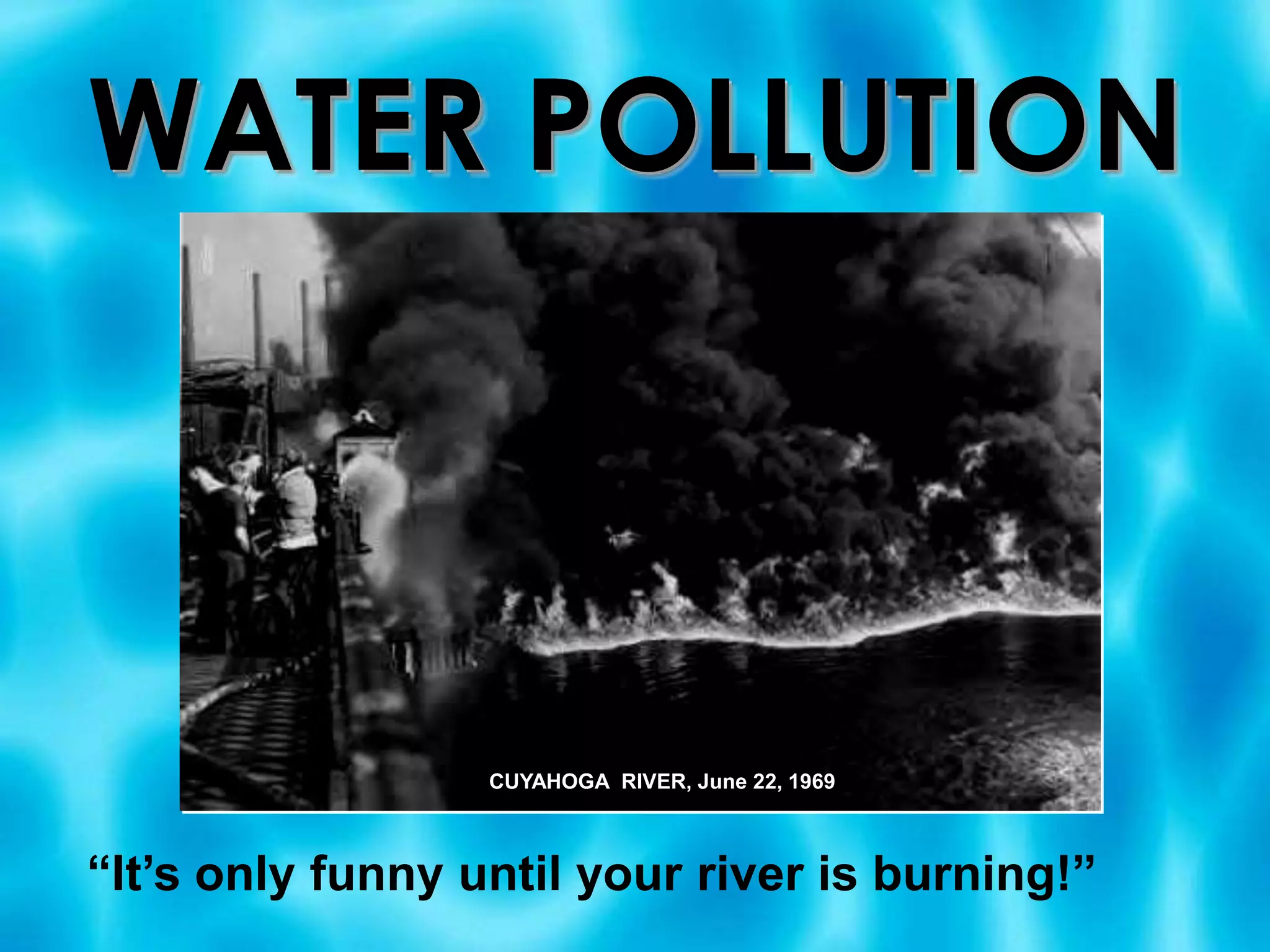
WATER POLLUTIONCUYAHOGA  RIVER, June 22, 1969“It’s only funny until your river is burning!”
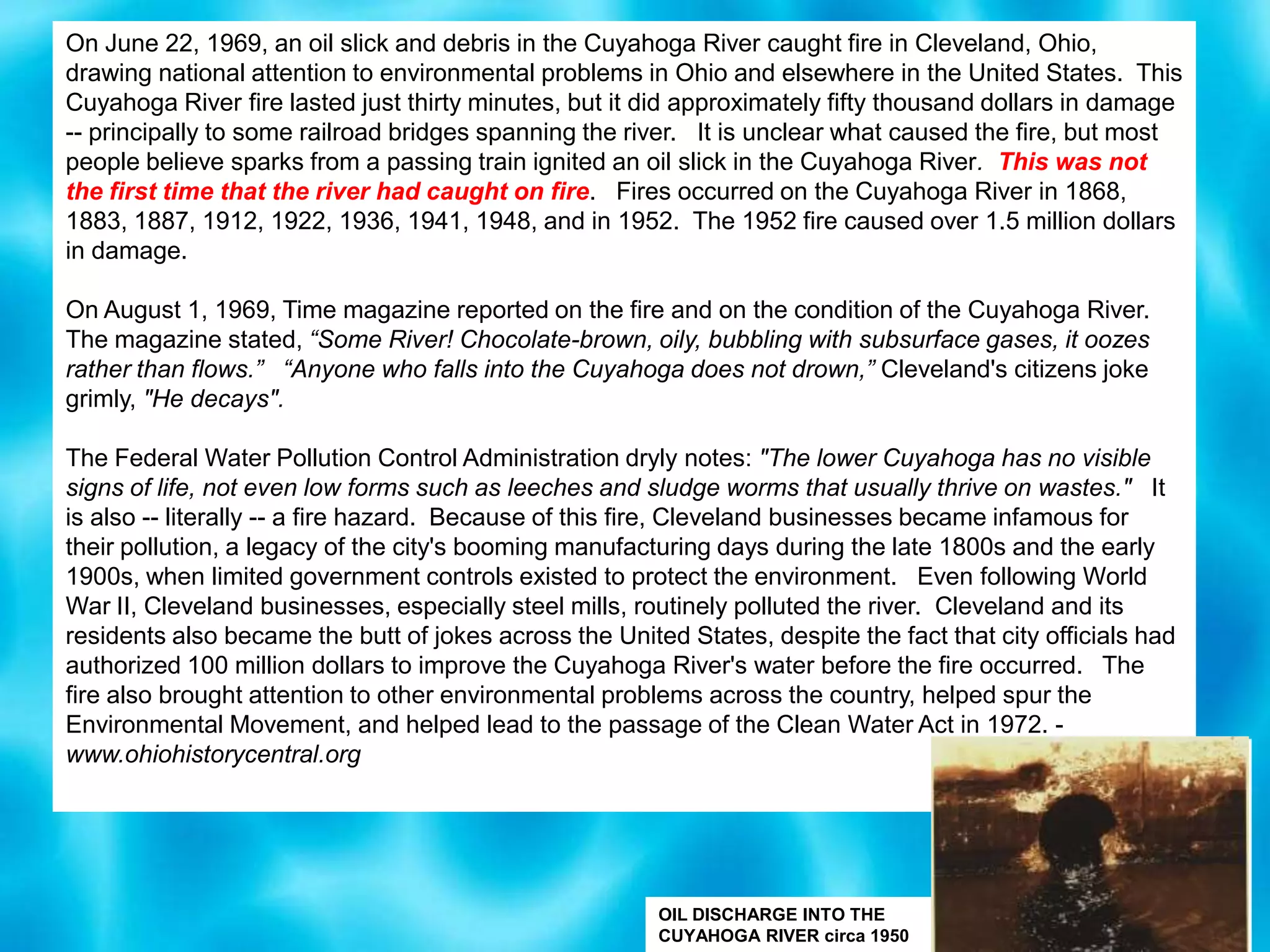
On June 22, 1969, an oil slick and debris in the Cuyahoga River caught fire in Cleveland, Ohio, drawing national attention to environmental problems in Ohio and elsewhere in the United States.  This Cuyahoga River fire lasted just thirty minutes, but it did approximately fifty thousand dollars in damage -- principally to some railroad bridges spanning the river.   It is unclear what caused the fire, but most people believe sparks from a passing train ignited an oil slick in the Cuyahoga River.  This was not the first time that the river had caught on fire.   Fires occurred on the Cuyahoga River in 1868, 1883, 1887, 1912, 1922, 1936, 1941, 1948, and in 1952.  The 1952 fire caused over 1.5 million dollars in damage. On August 1, 1969, Time magazine reported on the fire and on the condition of the Cuyahoga River.  The magazine stated, “Some River! Chocolate-brown, oily, bubbling with subsurface gases, it oozes rather than flows.”   “Anyone who falls into the Cuyahoga does not drown,” Cleveland's citizens joke grimly, "He decays".  The Federal Water Pollution Control Administration dryly notes: "The lower Cuyahoga has no visible signs of life, not even low forms such as leeches and sludge worms that usually thrive on wastes."   It is also -- literally -- a fire hazard.  Because of this fire, Cleveland businesses became infamous for their pollution, a legacy of the city's booming manufacturing days during the late 1800s and the early 1900s, when limited government controls existed to protect the environment.   Even following World War II, Cleveland businesses, especially steel mills, routinely polluted the river.  Cleveland and its residents also became the butt of jokes across the United States, despite the fact that city officials had authorized 100 million dollars to improve the Cuyahoga River's water before the fire occurred.   The fire also brought attention to other environmental problems across the country, helped spur the Environmental Movement, and helped lead to the passage of the Clean Water Act in 1972. - www.ohiohistorycentral.orgOIL DISCHARGE INTO THE CUYAHOGA RIVER circa 1950
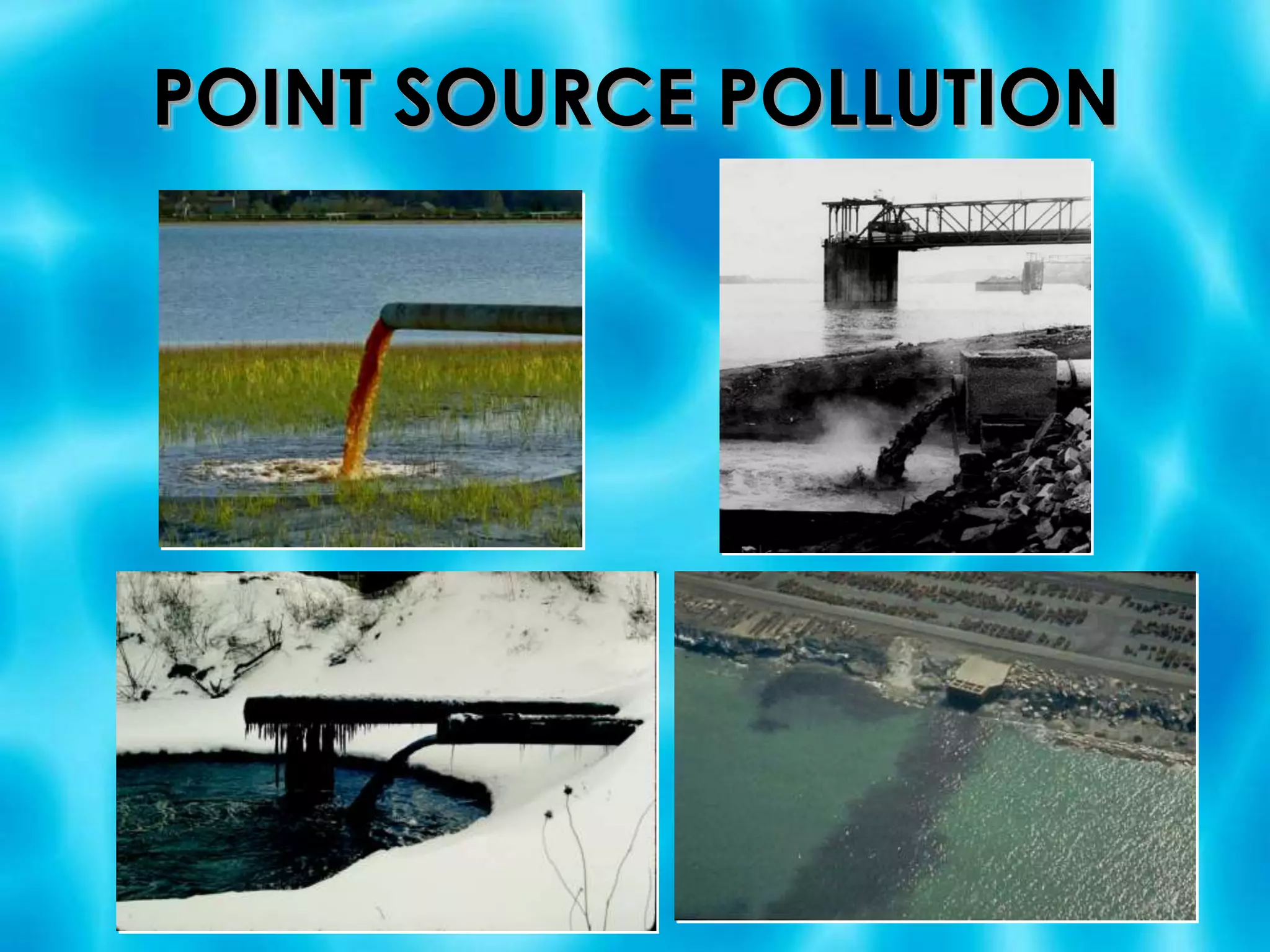
TYPES OF WATER POLLUTIONPOINT SOURCEpollution flowing from a single and identifiable source such as discharge pipe from a factory, roadway, or leaking underground storage tankNON-POINT SOURCEpollution collected by rain falling over a larger watershed which is then carried by runoff to a nearby lake or stream, or by infiltration into the groundwater POINT SOURCE POLLUTION
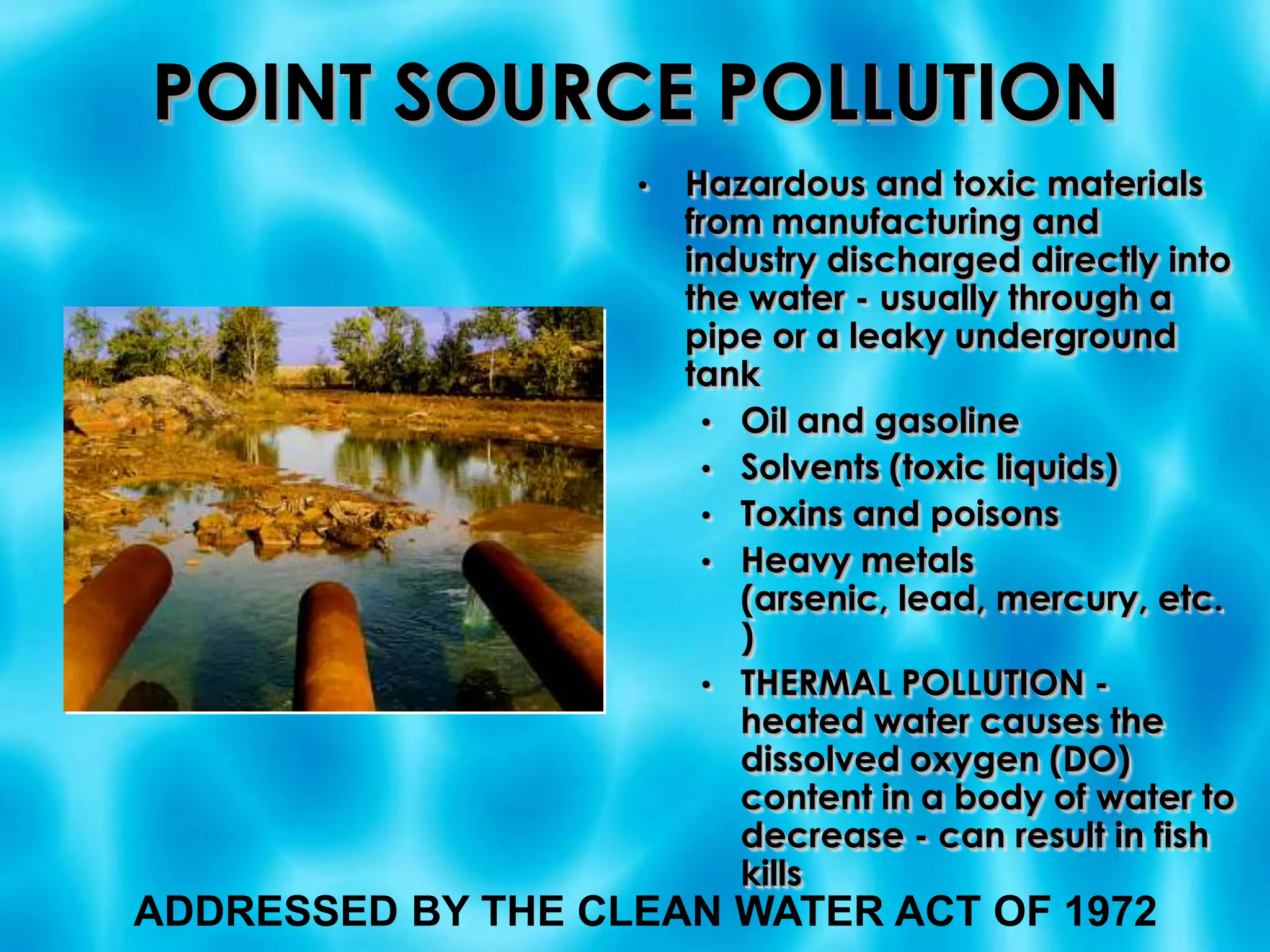
POINT SOURCE POLLUTIONHazardous and toxic materials from manufacturing and industry discharged directly into the water - usually through a pipe or a leaky underground tank
Oil and gasoline
Solvents (toxic liquids)
Toxins and poisons
Heavy metals (arsenic, lead, mercury, etc.)
THERMAL POLLUTION - heated water causes the dissolved oxygen (DO) content in a body of water to decrease - can result in fish killsADDRESSED BY THE CLEAN WATER ACT OF 1972
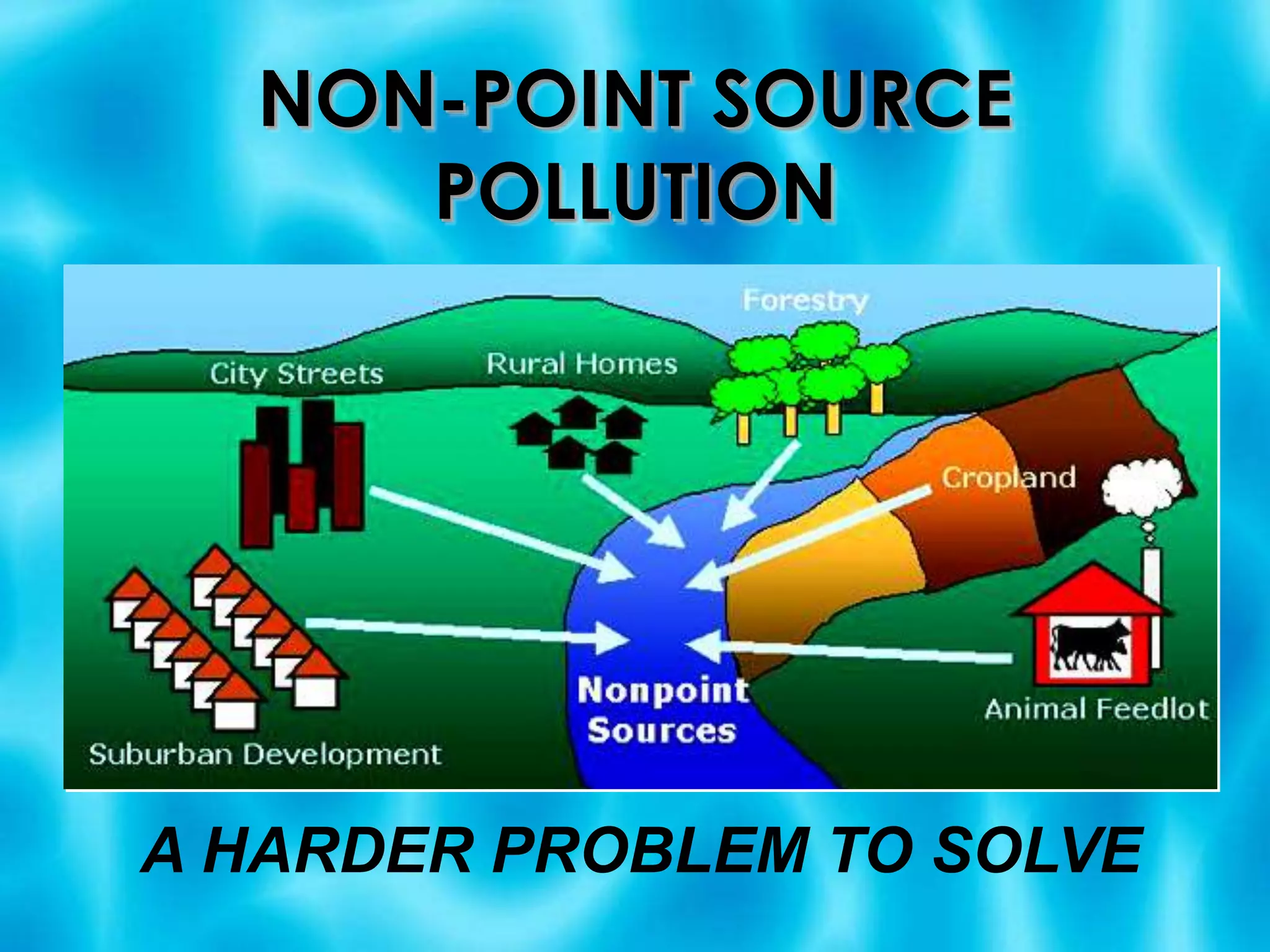
NON-POINT SOURCE POLLUTIONA HARDER PROBLEM TO SOLVE
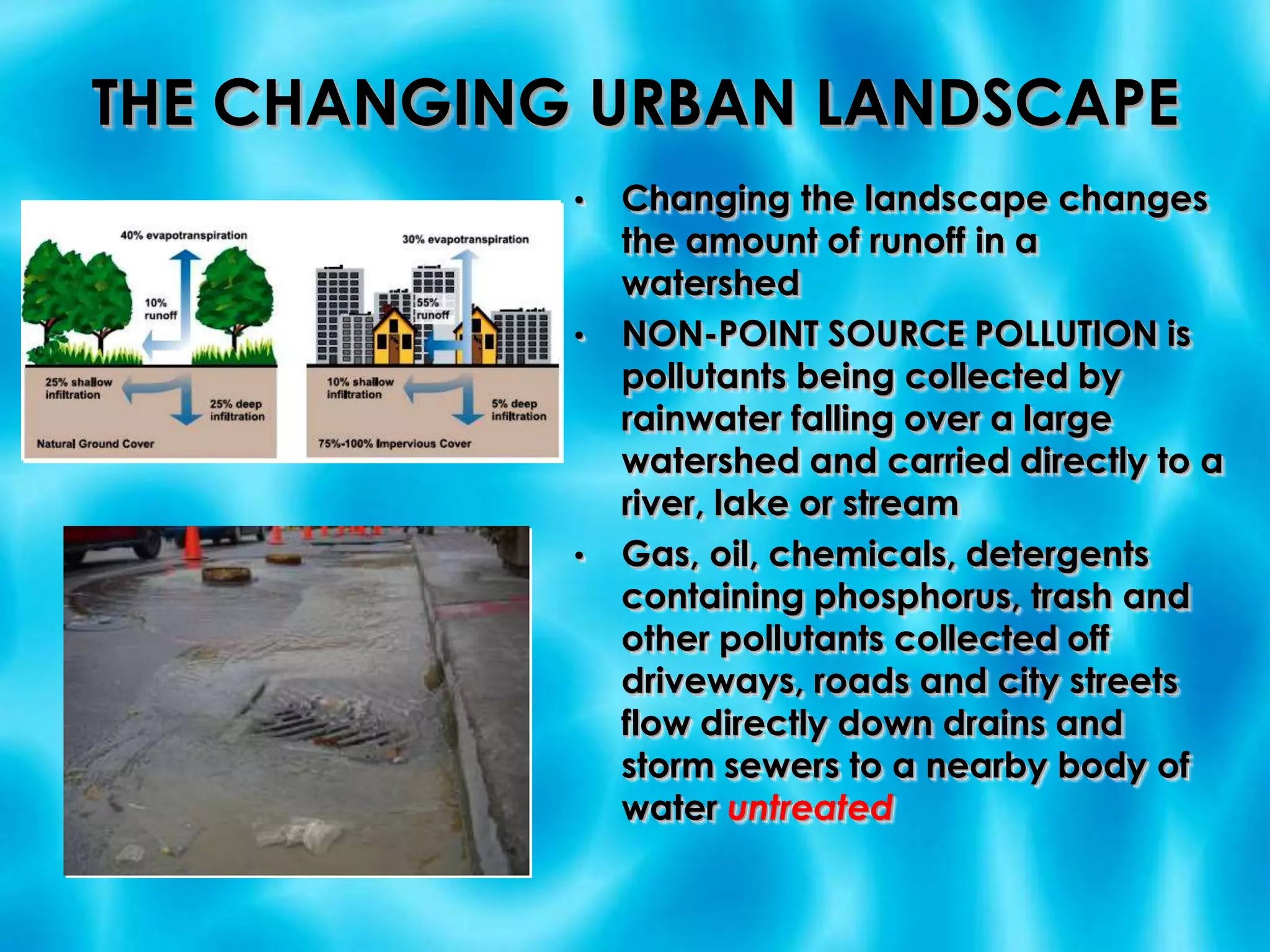
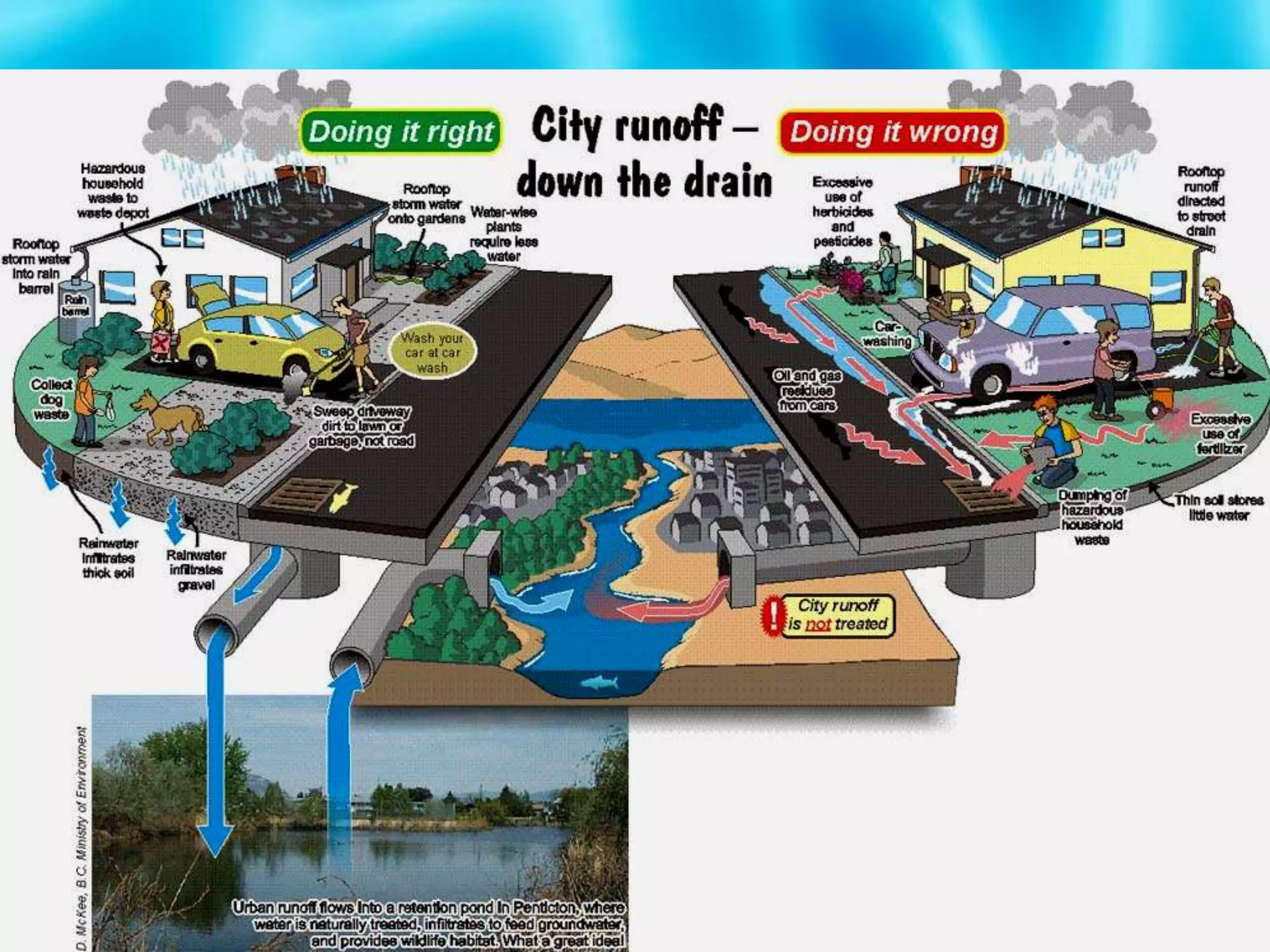
THE CHANGING URBAN LANDSCAPEChanging the landscape changes the amount of runoff in a watershed
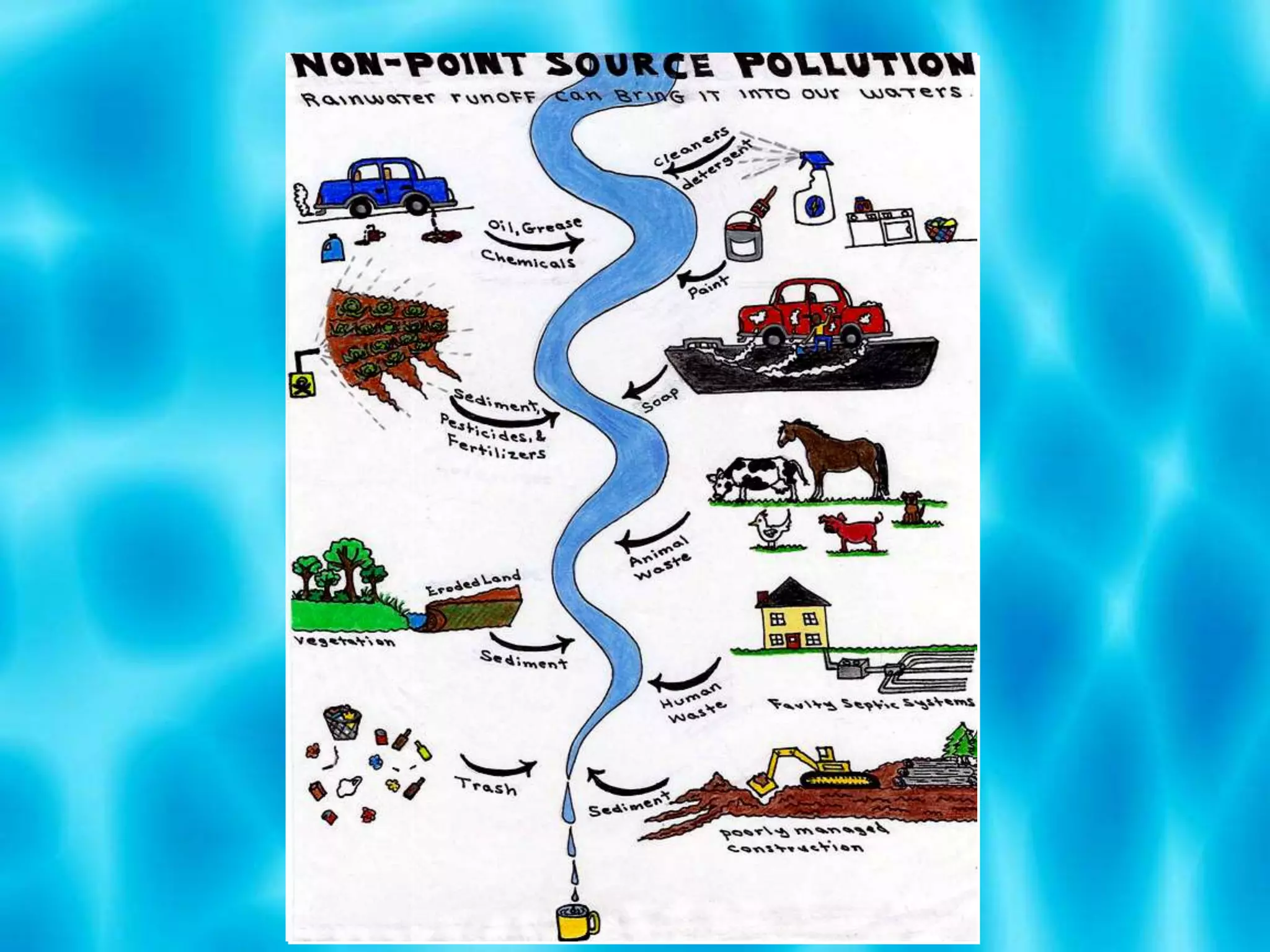
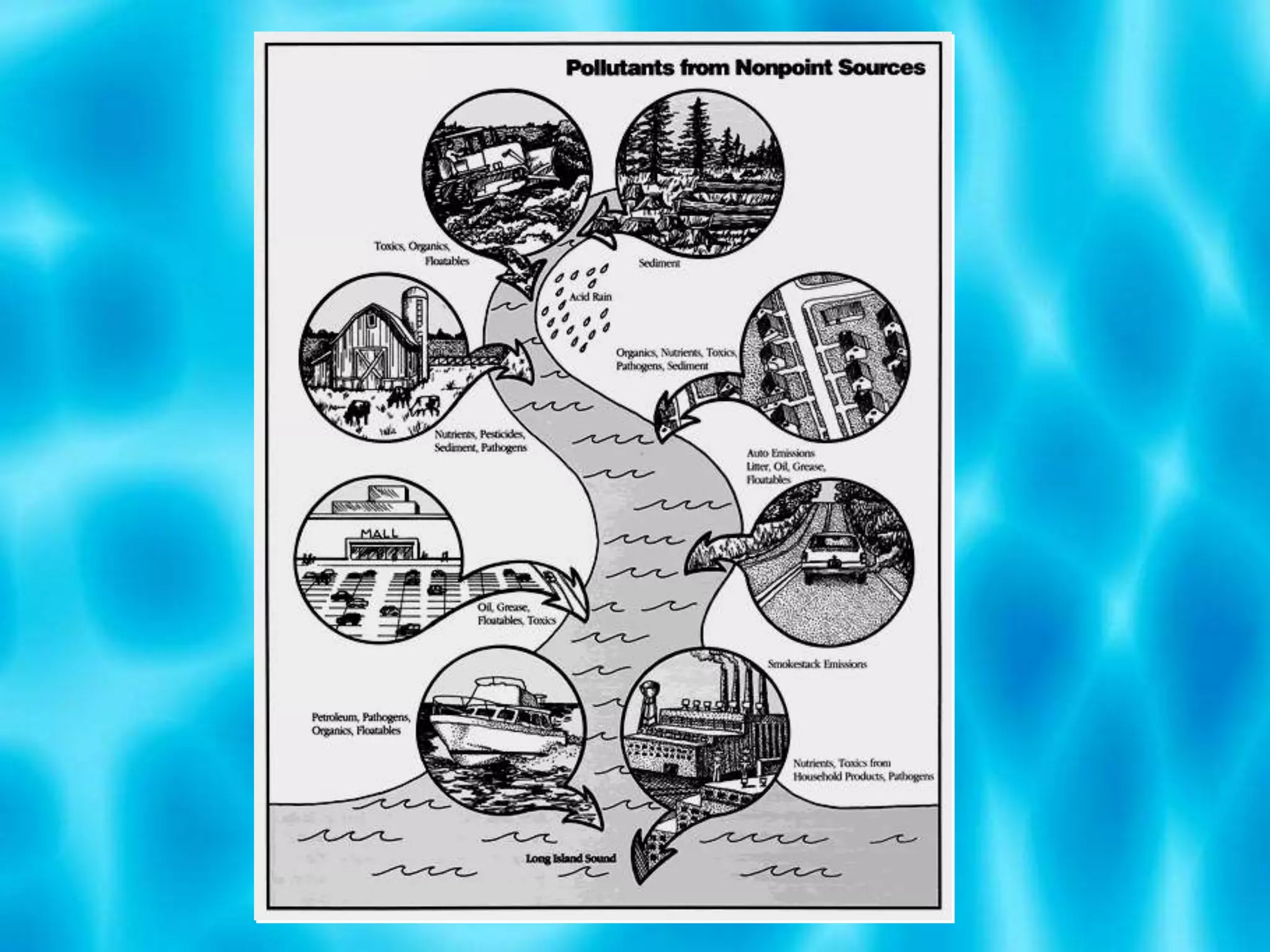
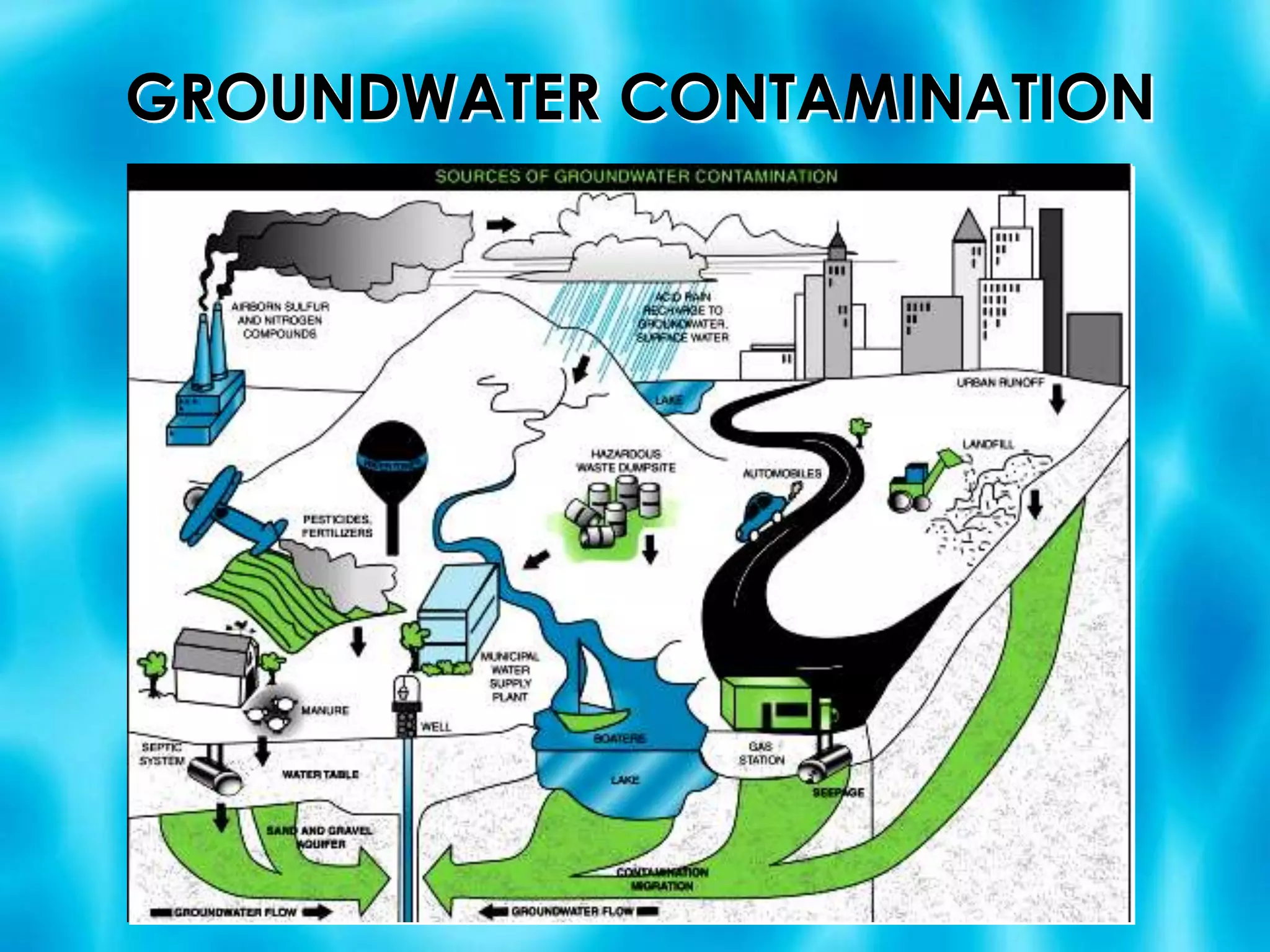
NON-POINT SOURCE POLLUTION is pollutants being collected by rainwater falling over a large watershed and carried directly to a river, lake or stream
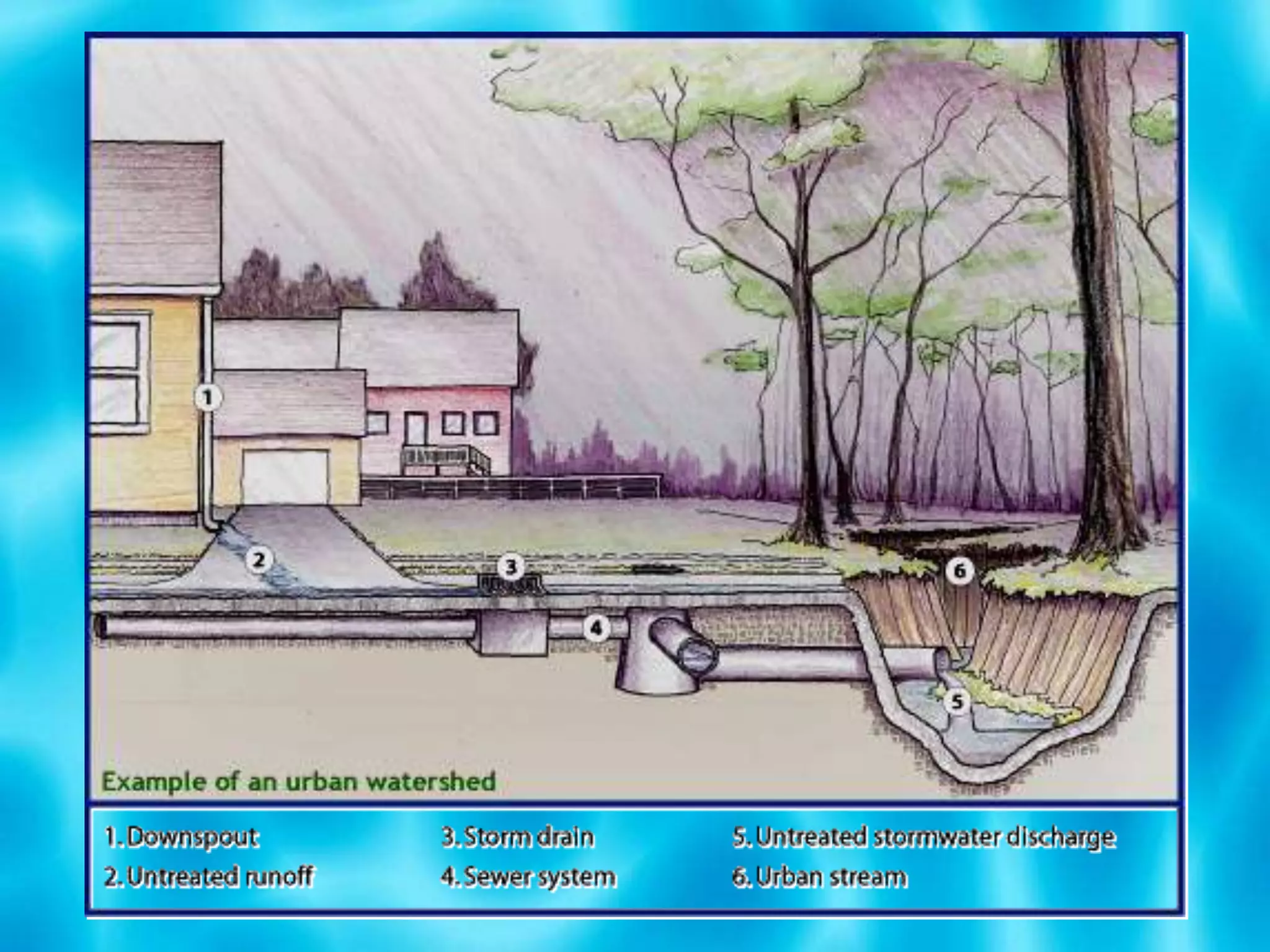
Gas, oil, chemicals, detergents containing phosphorus, trash and other pollutants collected off driveways, roads and city streets flow directly down drains and storm sewers to a nearby body of water untreated
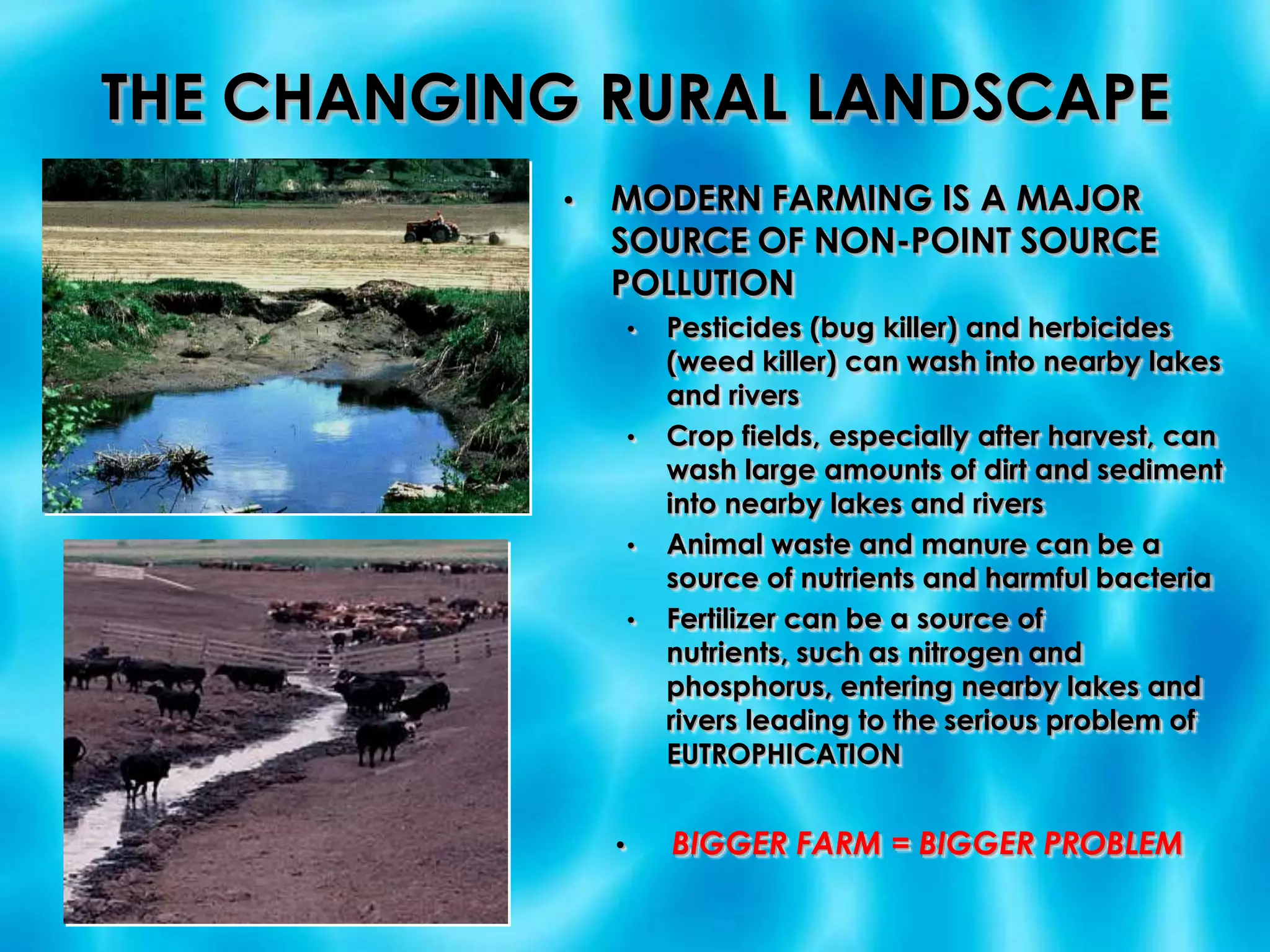
THE CHANGING RURAL LANDSCAPEMODERN FARMING IS A MAJOR SOURCE OF NON-POINT SOURCE POLLUTION
Pesticides (bug killer) and herbicides (weed killer) can wash into nearby lakes and rivers

Water pollution power point

  • 1.
    WATER POLLUTIONCUYAHOGA RIVER, June 22, 1969“It’s only funny until your river is burning!”
  • 2.
    On June 22,1969, an oil slick and debris in the Cuyahoga River caught fire in Cleveland, Ohio, drawing national attention to environmental problems in Ohio and elsewhere in the United States. This Cuyahoga River fire lasted just thirty minutes, but it did approximately fifty thousand dollars in damage -- principally to some railroad bridges spanning the river. It is unclear what caused the fire, but most people believe sparks from a passing train ignited an oil slick in the Cuyahoga River. This was not the first time that the river had caught on fire. Fires occurred on the Cuyahoga River in 1868, 1883, 1887, 1912, 1922, 1936, 1941, 1948, and in 1952. The 1952 fire caused over 1.5 million dollars in damage. On August 1, 1969, Time magazine reported on the fire and on the condition of the Cuyahoga River. The magazine stated, “Some River! Chocolate-brown, oily, bubbling with subsurface gases, it oozes rather than flows.” “Anyone who falls into the Cuyahoga does not drown,” Cleveland's citizens joke grimly, "He decays".  The Federal Water Pollution Control Administration dryly notes: "The lower Cuyahoga has no visible signs of life, not even low forms such as leeches and sludge worms that usually thrive on wastes." It is also -- literally -- a fire hazard. Because of this fire, Cleveland businesses became infamous for their pollution, a legacy of the city's booming manufacturing days during the late 1800s and the early 1900s, when limited government controls existed to protect the environment. Even following World War II, Cleveland businesses, especially steel mills, routinely polluted the river. Cleveland and its residents also became the butt of jokes across the United States, despite the fact that city officials had authorized 100 million dollars to improve the Cuyahoga River's water before the fire occurred. The fire also brought attention to other environmental problems across the country, helped spur the Environmental Movement, and helped lead to the passage of the Clean Water Act in 1972. - www.ohiohistorycentral.orgOIL DISCHARGE INTO THE CUYAHOGA RIVER circa 1950
  • 3.
    TYPES OF WATERPOLLUTIONPOINT SOURCEpollution flowing from a single and identifiable source such as discharge pipe from a factory, roadway, or leaking underground storage tankNON-POINT SOURCEpollution collected by rain falling over a larger watershed which is then carried by runoff to a nearby lake or stream, or by infiltration into the groundwater POINT SOURCE POLLUTION
  • 4.
    POINT SOURCE POLLUTIONHazardousand toxic materials from manufacturing and industry discharged directly into the water - usually through a pipe or a leaky underground tank
  • 5.
  • 6.
  • 7.
  • 8.
    Heavy metals (arsenic,lead, mercury, etc.)
  • 9.
    THERMAL POLLUTION -heated water causes the dissolved oxygen (DO) content in a body of water to decrease - can result in fish killsADDRESSED BY THE CLEAN WATER ACT OF 1972
  • 10.
    NON-POINT SOURCE POLLUTIONAHARDER PROBLEM TO SOLVE
  • 11.
    THE CHANGING URBANLANDSCAPEChanging the landscape changes the amount of runoff in a watershed
  • 12.
    NON-POINT SOURCE POLLUTIONis pollutants being collected by rainwater falling over a large watershed and carried directly to a river, lake or stream
  • 13.
    Gas, oil, chemicals,detergents containing phosphorus, trash and other pollutants collected off driveways, roads and city streets flow directly down drains and storm sewers to a nearby body of water untreated
  • 14.
    THE CHANGING RURALLANDSCAPEMODERN FARMING IS A MAJOR SOURCE OF NON-POINT SOURCE POLLUTION
  • 15.
    Pesticides (bug killer)and herbicides (weed killer) can wash into nearby lakes and rivers
  • 16.
    Crop fields, especiallyafter harvest, can wash large amounts of dirt and sediment into nearby lakes and rivers
  • 17.
    Animal waste andmanure can be a source of nutrients and harmful bacteria
  • 18.
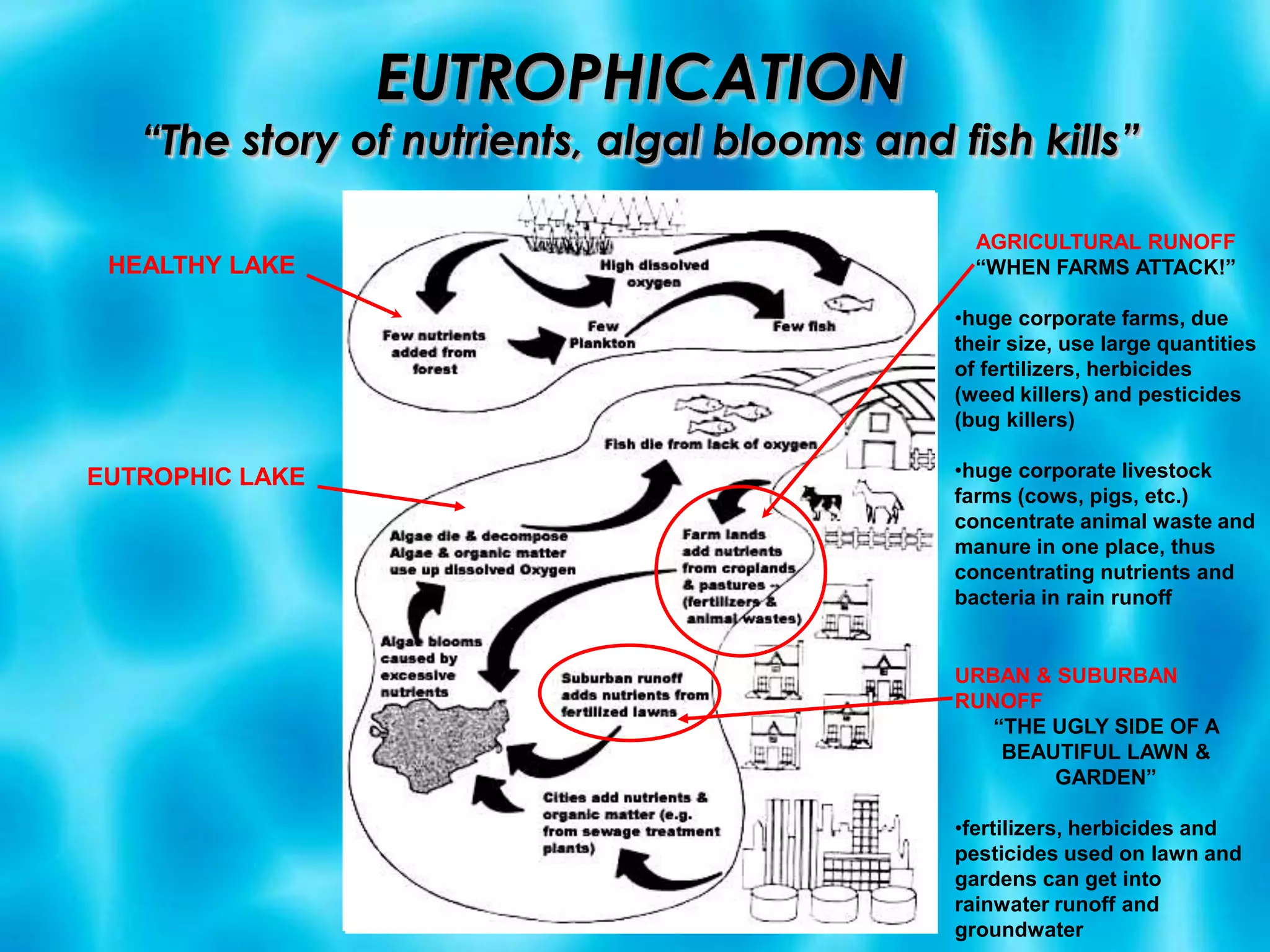
    Fertilizer can bea source of nutrients, such as nitrogen and phosphorus, entering nearby lakes and rivers leading to the serious problem of EUTROPHICATION
  • 19.
    BIGGER FARM =BIGGER PROBLEMEUTROPHICATION“The story of nutrients, algal blooms and fish kills”AGRICULTURAL RUNOFF“WHEN FARMS ATTACK!”huge corporate farms, due their size, use large quantities of fertilizers, herbicides (weed killers) and pesticides (bug killers)
  • 20.
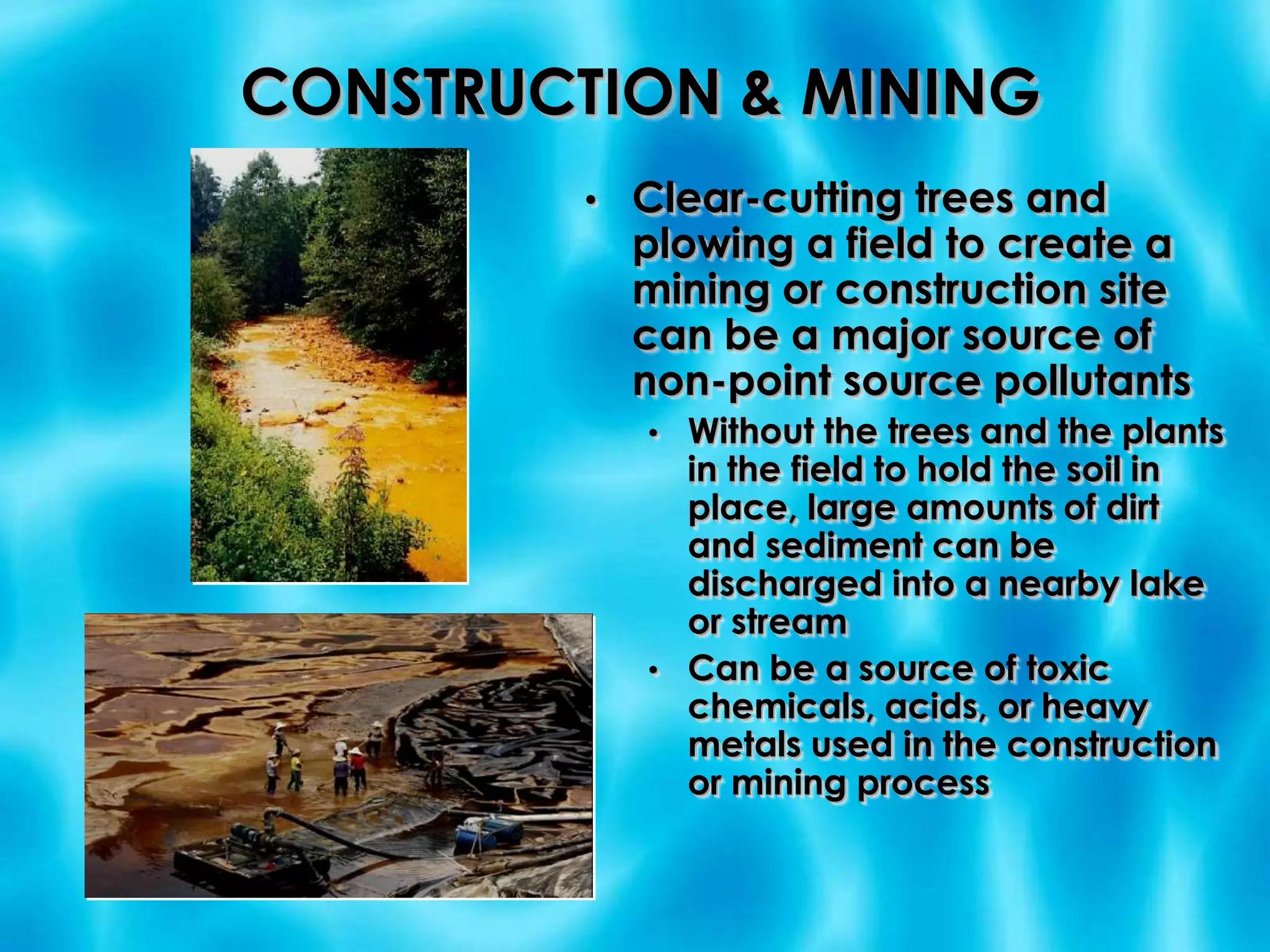
    huge corporate livestockfarms (cows, pigs, etc.) concentrate animal waste and manure in one place, thus concentrating nutrients and bacteria in rain runoffHEALTHY LAKEEUTROPHIC LAKEURBAN & SUBURBAN RUNOFF“THE UGLY SIDE OF A BEAUTIFUL LAWN & GARDEN”fertilizers, herbicides and pesticides used on lawn and gardens can get into rainwater runoff and groundwaterCONSTRUCTION & MININGClear-cutting trees and plowing a field to create a mining or construction site can be a major source of non-point source pollutants
  • 21.
    Without the treesand the plants in the field to hold the soil in place, large amounts of dirt and sediment can be discharged into a nearby lake or stream
  • 22.
    Can be asource of toxic chemicals, acids, or heavy metals used in the construction or mining process
  • 24.