Legality of Object
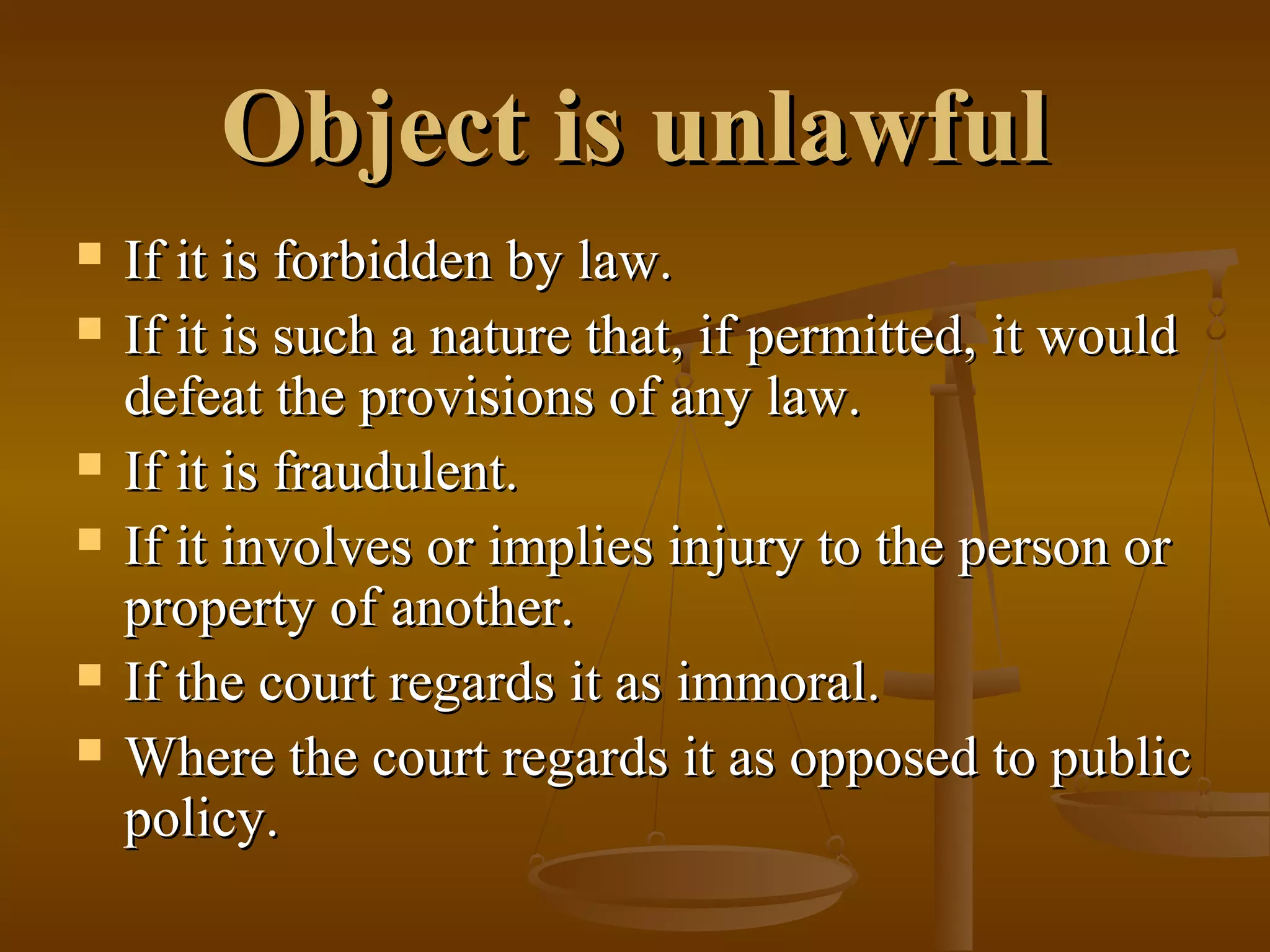
Object is unlawful
   If it is forbidden by law.
   If it is such a nature that, if permitted, it would
    defeat the provisions of any law.
   If it is fraudulent.
   If it involves or implies injury to the person or
    property of another.
   If the court regards it as immoral.
   Where the court regards it as opposed to public
    policy.
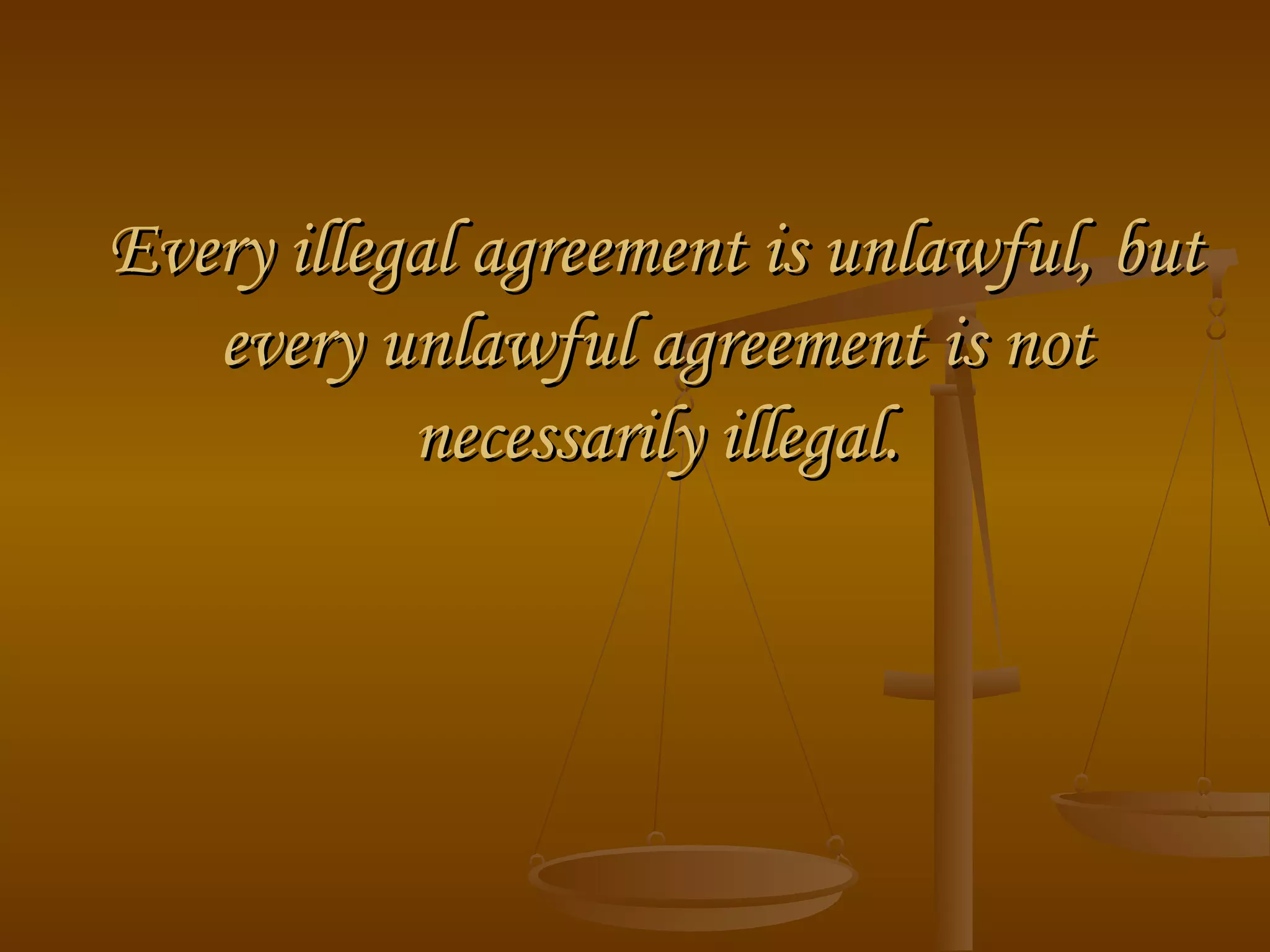
Every illegal agreement is unlawful, but
   every unlawful agreement is not
           necessarily illegal.
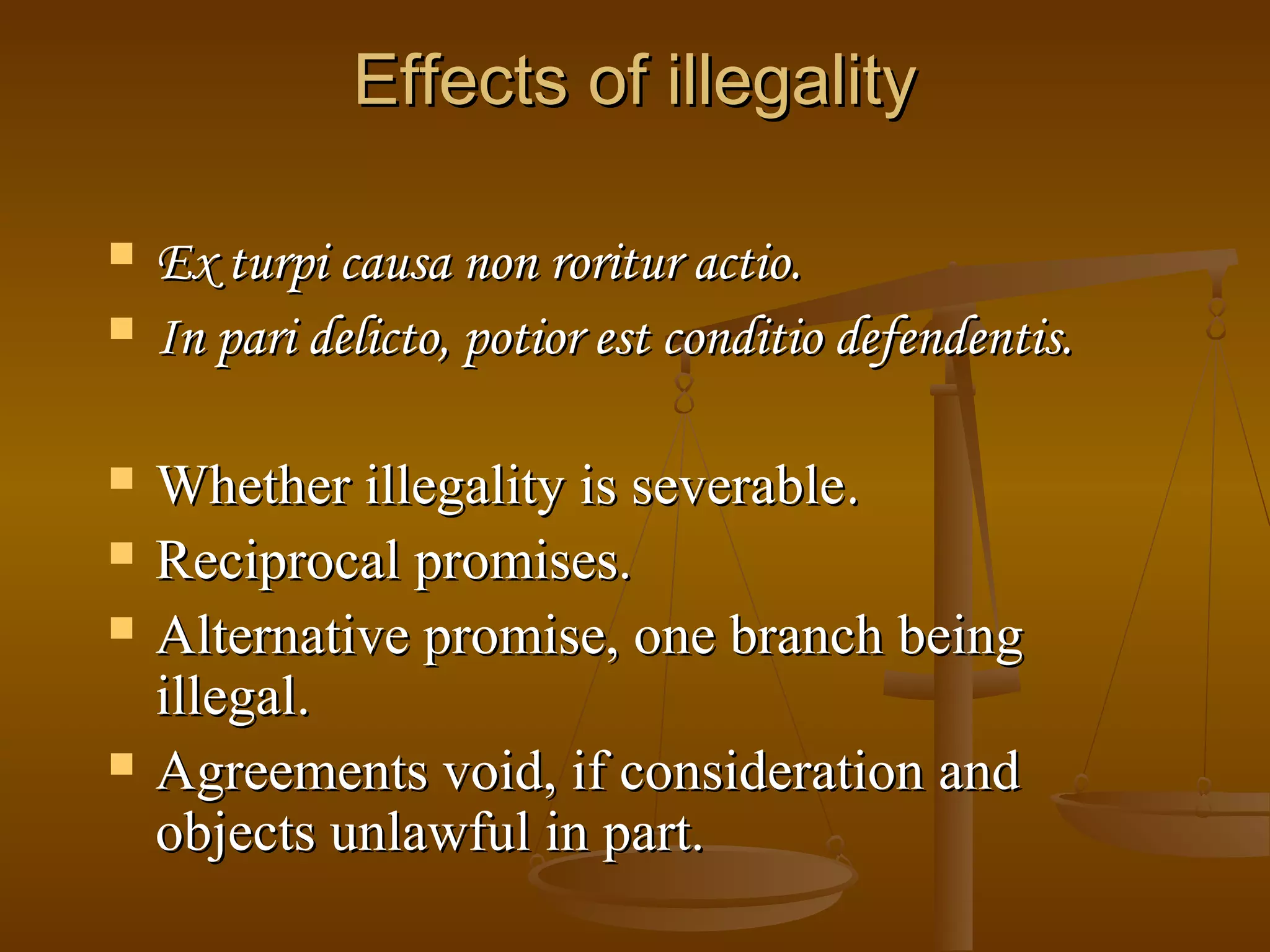
Effects of illegality

   Ex turpi causa non roritur actio.
   In pari delicto, potior est conditio defendentis.

   Whether illegality is severable.
   Reciprocal promises.
   Alternative promise, one branch being
    illegal.
   Agreements void, if consideration and
    objects unlawful in part.
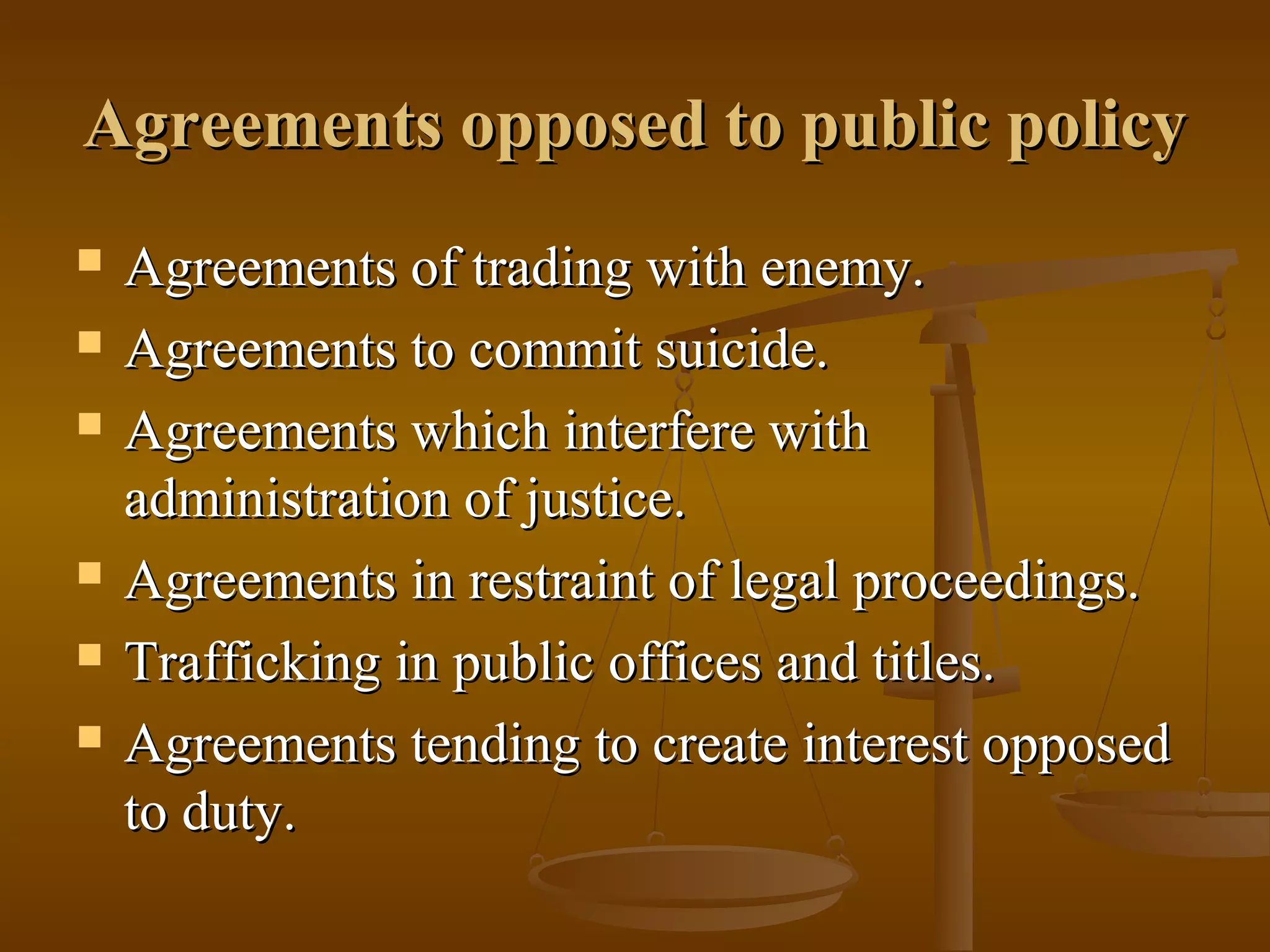
Agreements opposed to public policy
   Agreements of trading with enemy.
   Agreements to commit suicide.
   Agreements which interfere with
    administration of justice.
   Agreements in restraint of legal proceedings.
   Trafficking in public offices and titles.
   Agreements tending to create interest opposed
    to duty.
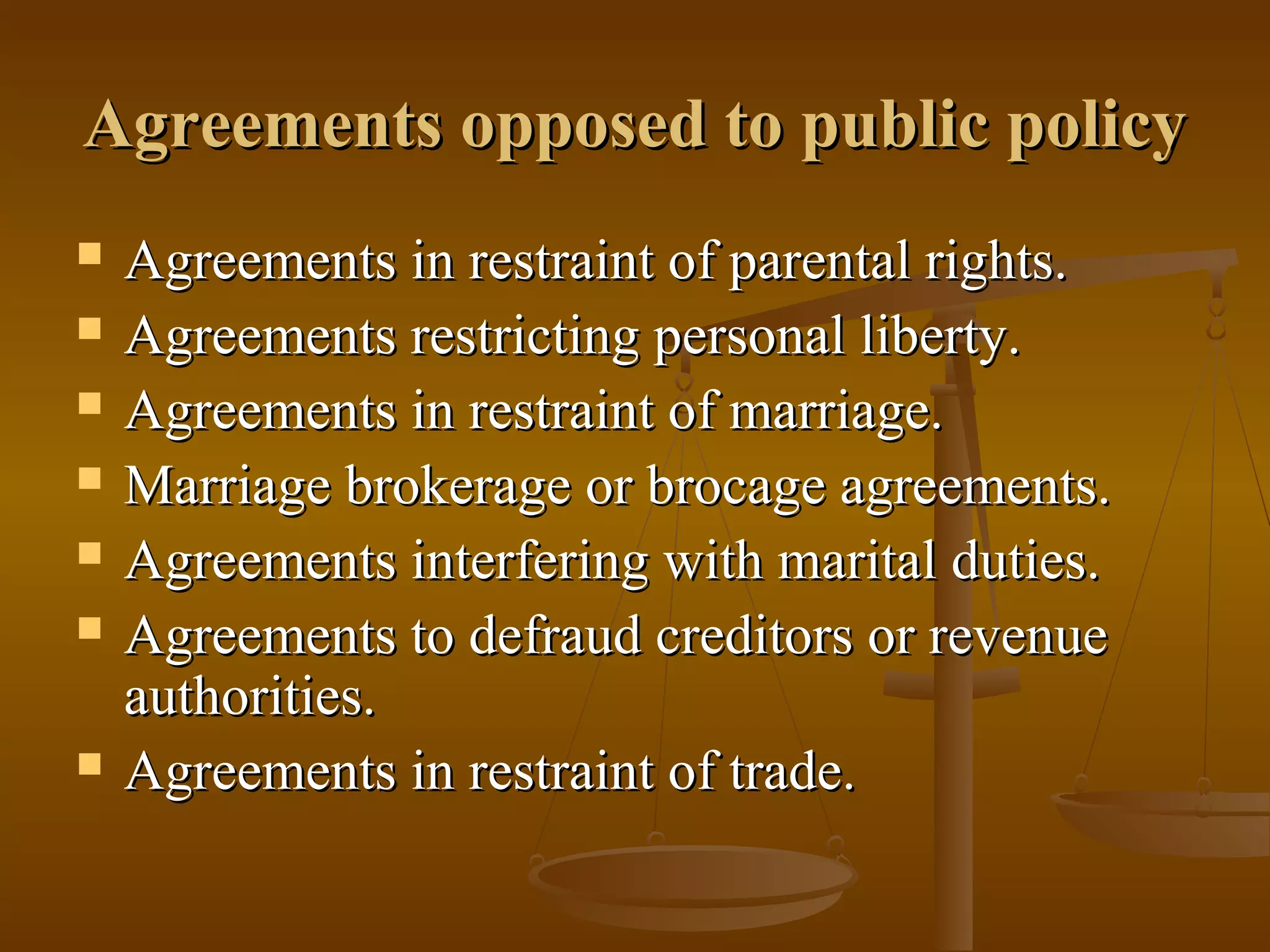
Agreements opposed to public policy
   Agreements in restraint of parental rights.
   Agreements restricting personal liberty.
   Agreements in restraint of marriage.
   Marriage brokerage or brocage agreements.
   Agreements interfering with marital duties.
   Agreements to defraud creditors or revenue
    authorities.
   Agreements in restraint of trade.
Trade combinations
Service contracts
Legality of object-7

Legality of object-7

  • 1.
  • 2.
    Object is unlawful  If it is forbidden by law.  If it is such a nature that, if permitted, it would defeat the provisions of any law.  If it is fraudulent.  If it involves or implies injury to the person or property of another.  If the court regards it as immoral.  Where the court regards it as opposed to public policy.
  • 3.
    Every illegal agreementis unlawful, but every unlawful agreement is not necessarily illegal.
  • 4.
    Effects of illegality  Ex turpi causa non roritur actio.  In pari delicto, potior est conditio defendentis.  Whether illegality is severable.  Reciprocal promises.  Alternative promise, one branch being illegal.  Agreements void, if consideration and objects unlawful in part.
  • 5.
    Agreements opposed topublic policy  Agreements of trading with enemy.  Agreements to commit suicide.  Agreements which interfere with administration of justice.  Agreements in restraint of legal proceedings.  Trafficking in public offices and titles.  Agreements tending to create interest opposed to duty.
  • 6.
    Agreements opposed topublic policy  Agreements in restraint of parental rights.  Agreements restricting personal liberty.  Agreements in restraint of marriage.  Marriage brokerage or brocage agreements.  Agreements interfering with marital duties.  Agreements to defraud creditors or revenue authorities.  Agreements in restraint of trade.
  • 7.
  • 8.