Systems Analysis and Design
Key Ideas Many failed systems were abandoned because analysts tried to build wonderful systems without understanding the organization. The primarily goal is to create value for the organization.
Key Ideas The  systems analyst  is a key person analyzing the business, identifying opportunities for improvement, and designing information systems to implement these ideas. It is important to understand and develop through practice the skills needed to successfully design and implement new information systems.
THE SYSTEMS DEVELOPMENT LIFE CYCLE
Major Attributes of the Life Cycle The project -- Moves systematically through phases where each phase has a standard set of outputs Produces project deliverables Uses deliverables in implementation Results in actual information system Uses  gradual refinement
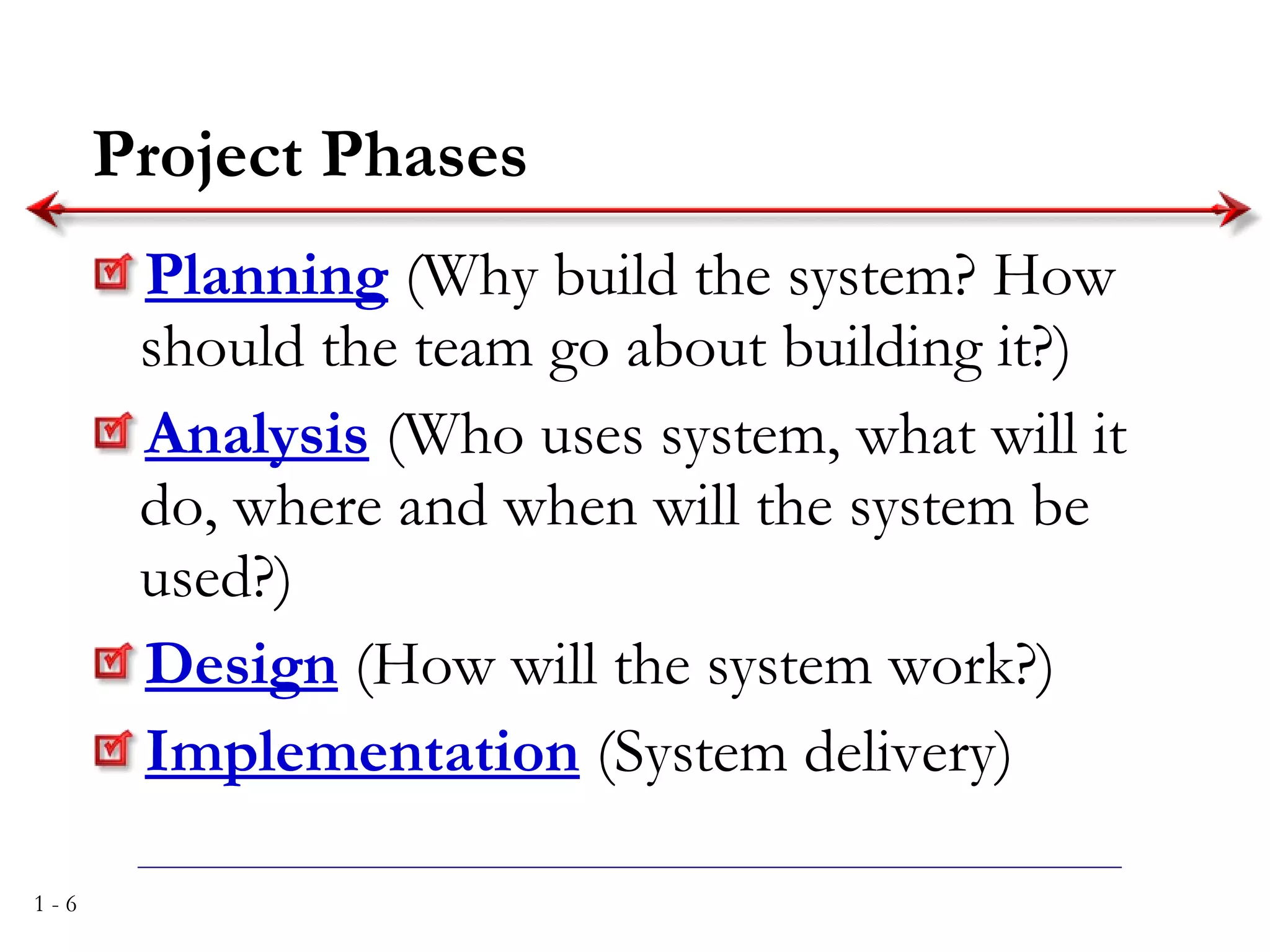
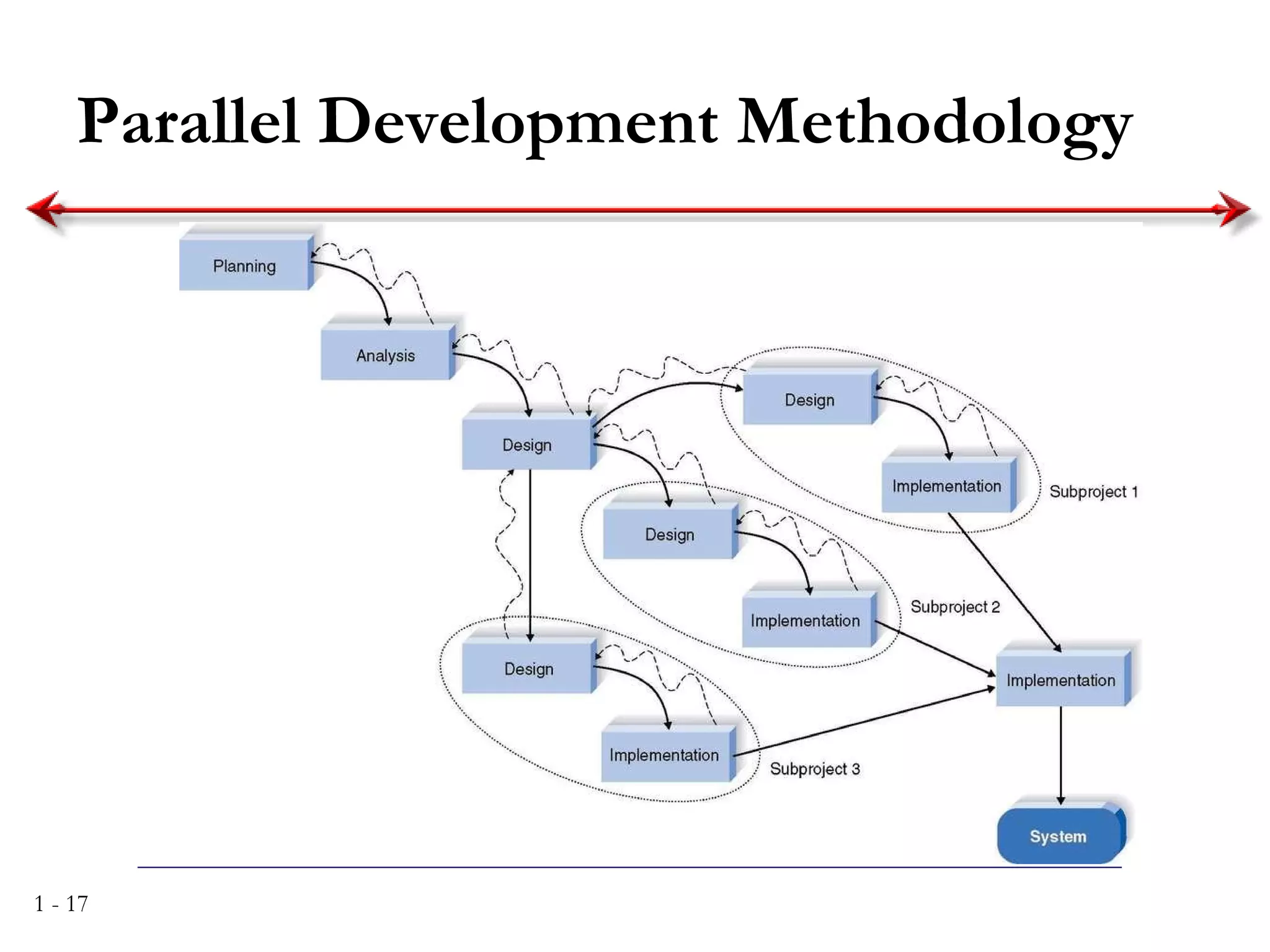
Project Phases Planning  (Why build the system? How should the team go about building it?) Analysis   (Who uses system, what will it do, where and when will the system be used?) Design  (How will the system work?) Implementation  (System delivery)
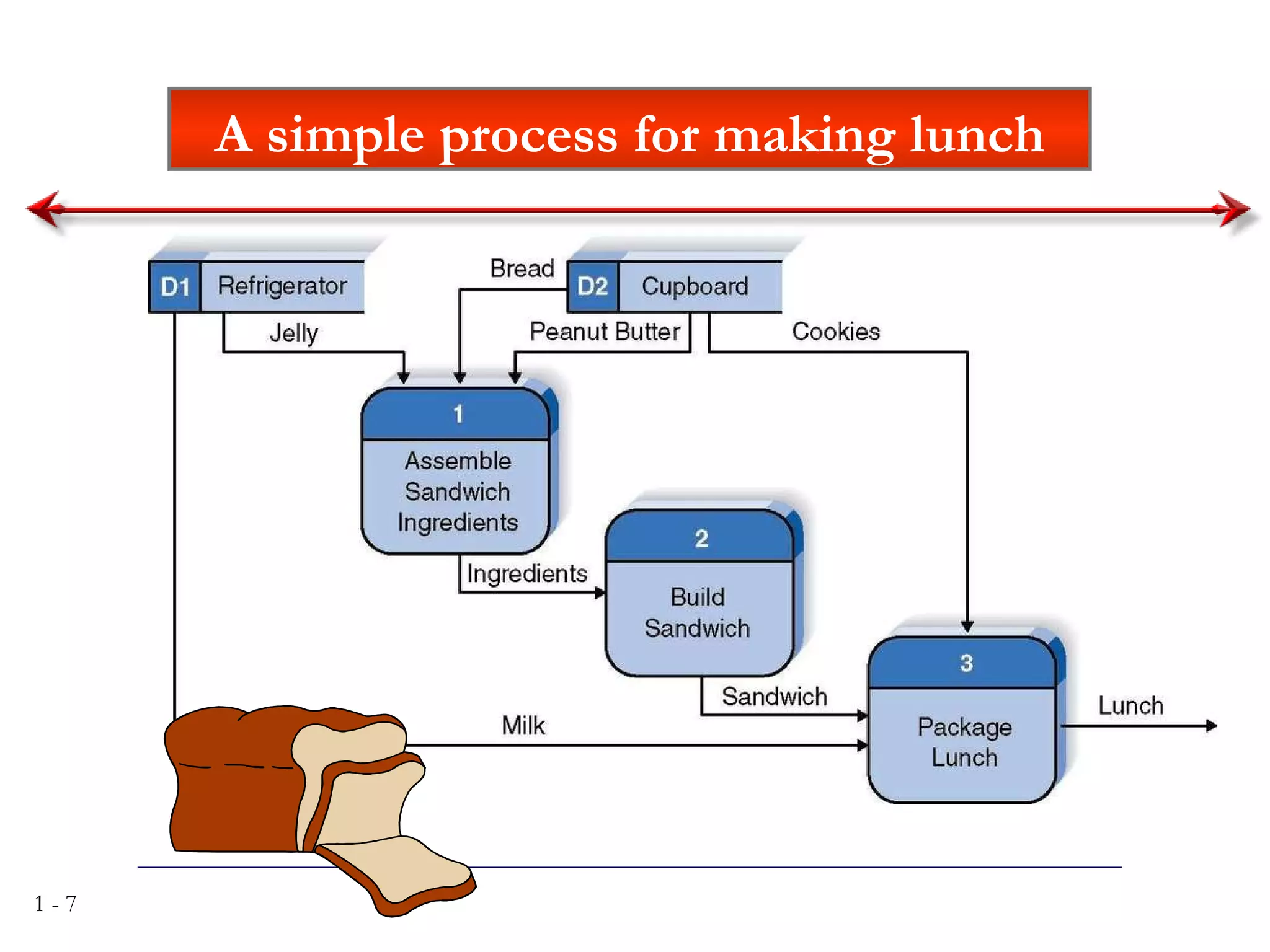
A simple process for making lunch
Identifying business value Analyze feasibility Develop work plan Staff the project Control and direct project Planning
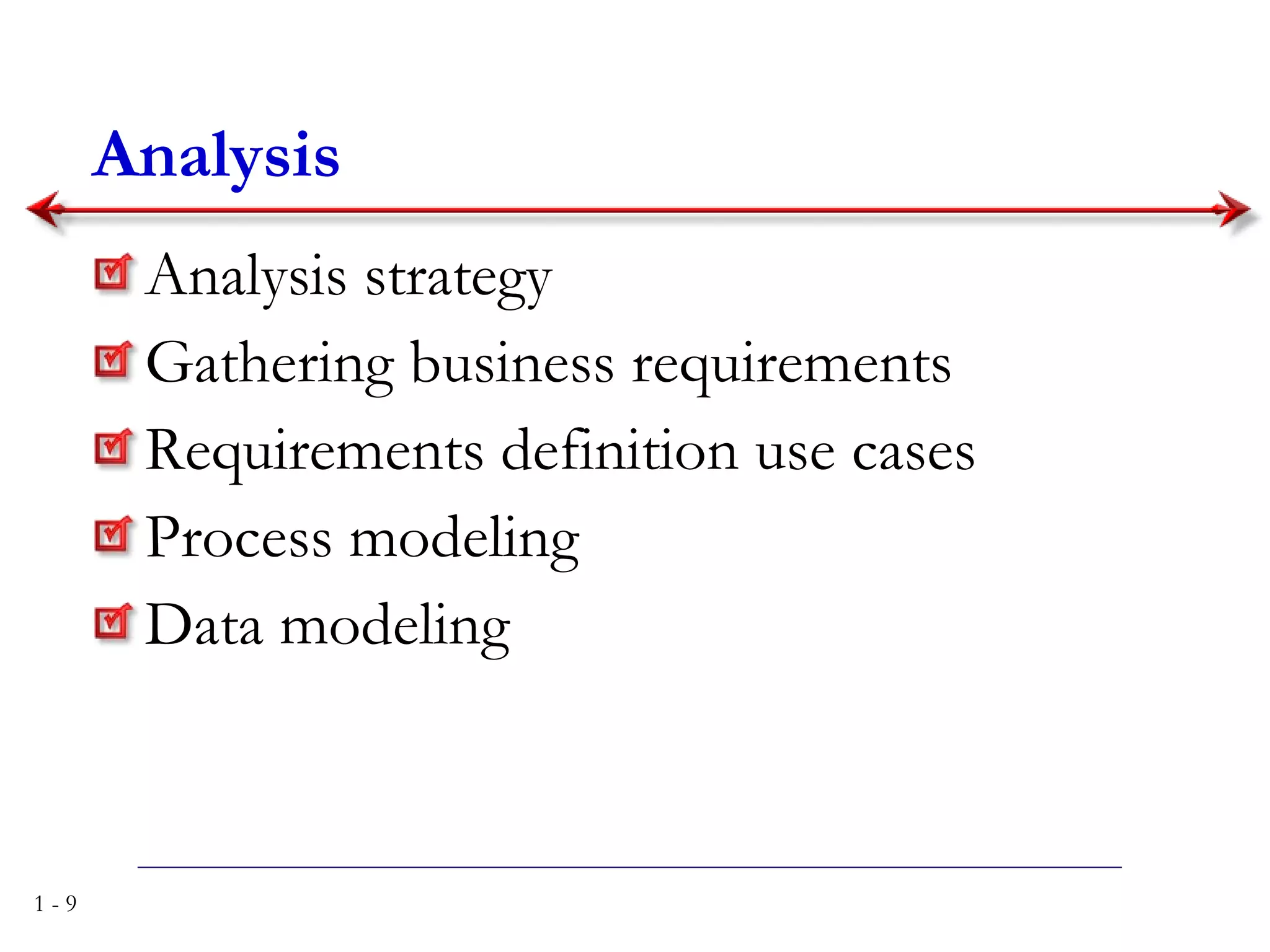
Analysis strategy Gathering business requirements Requirements definition use cases Process modeling Data modeling Analysis
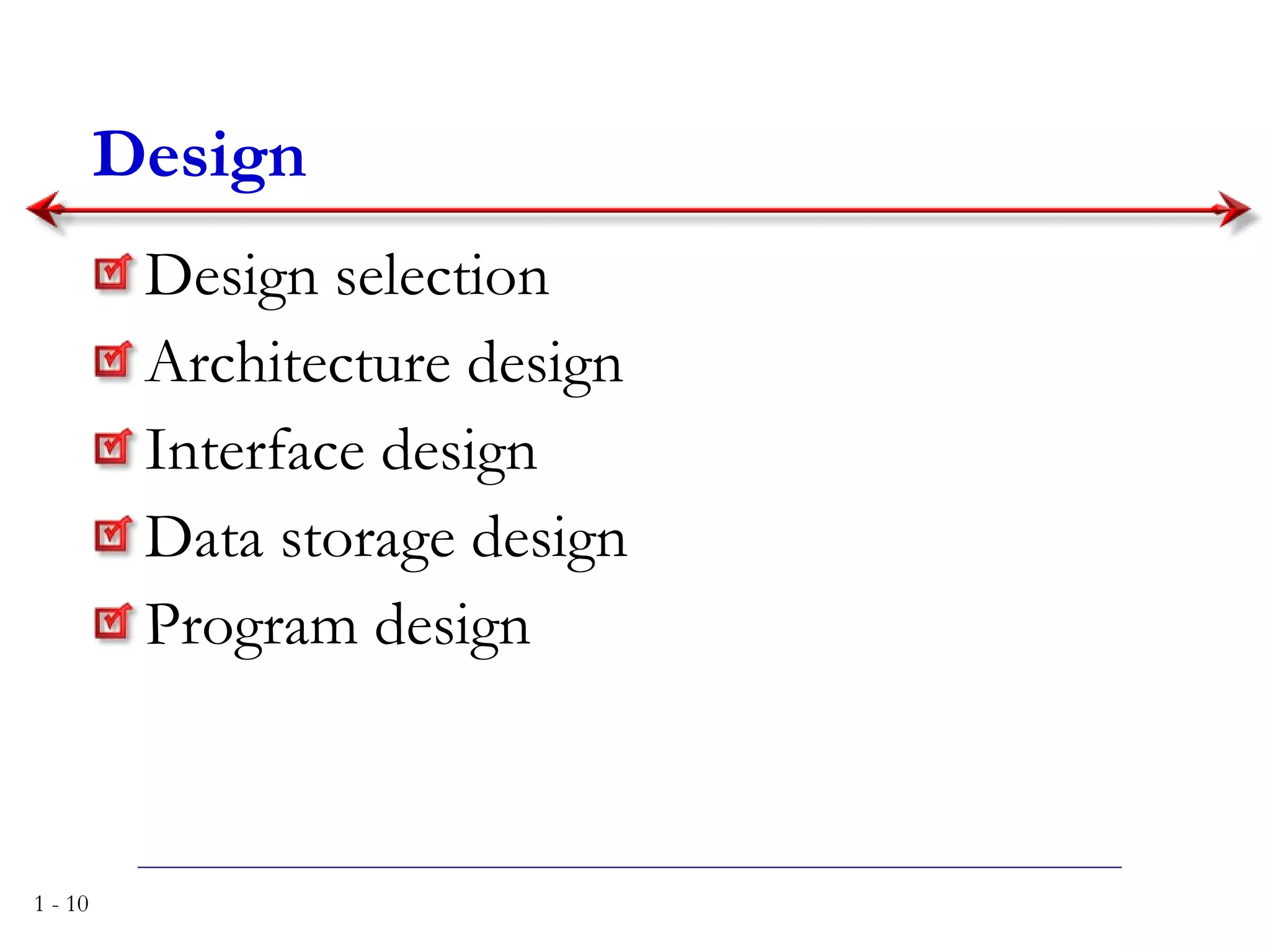
Design selection Architecture design Interface design Data storage design Program design Design
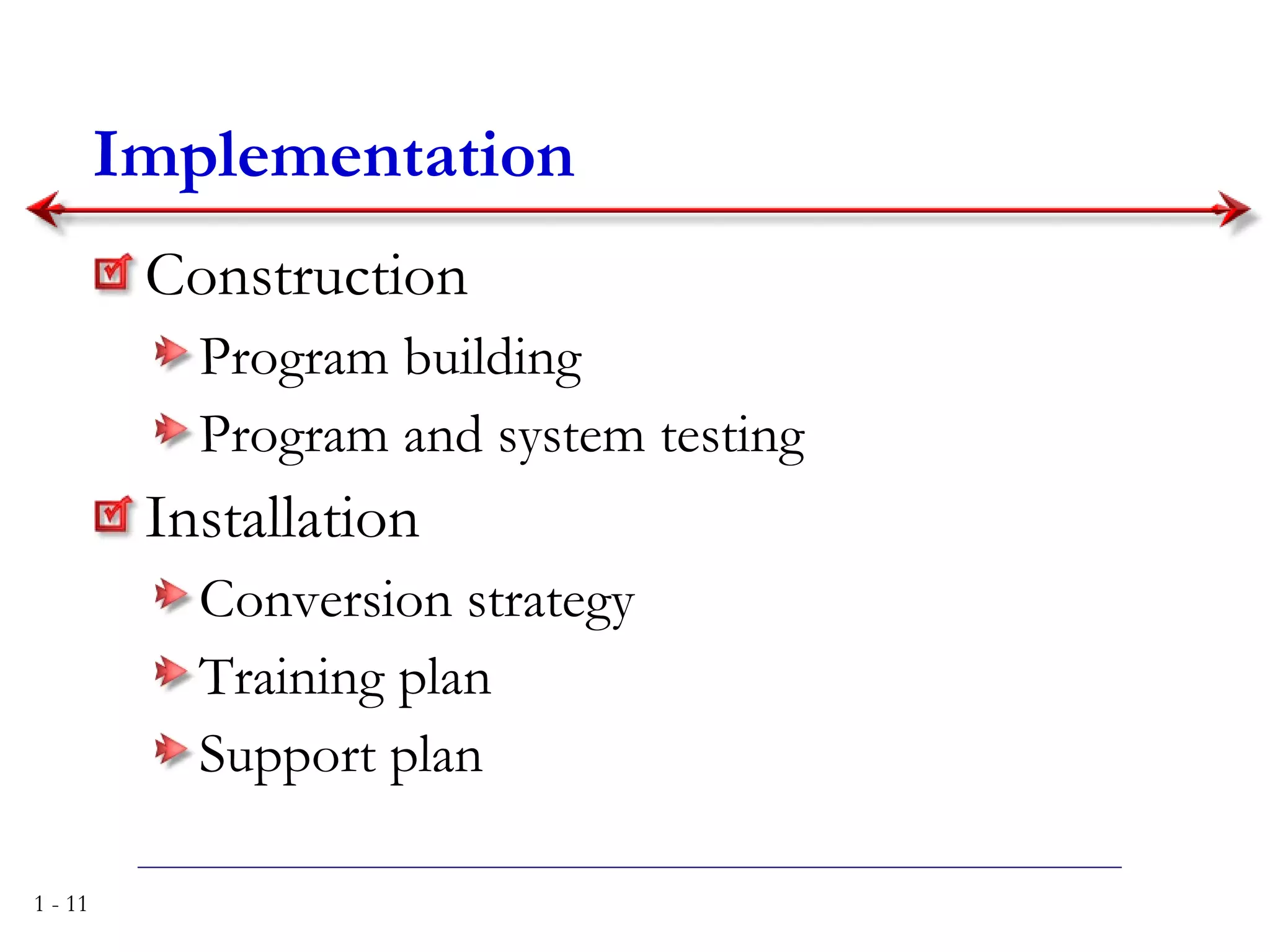
Construction Program building Program and system testing Installation Conversion strategy Training plan Support plan Implementation
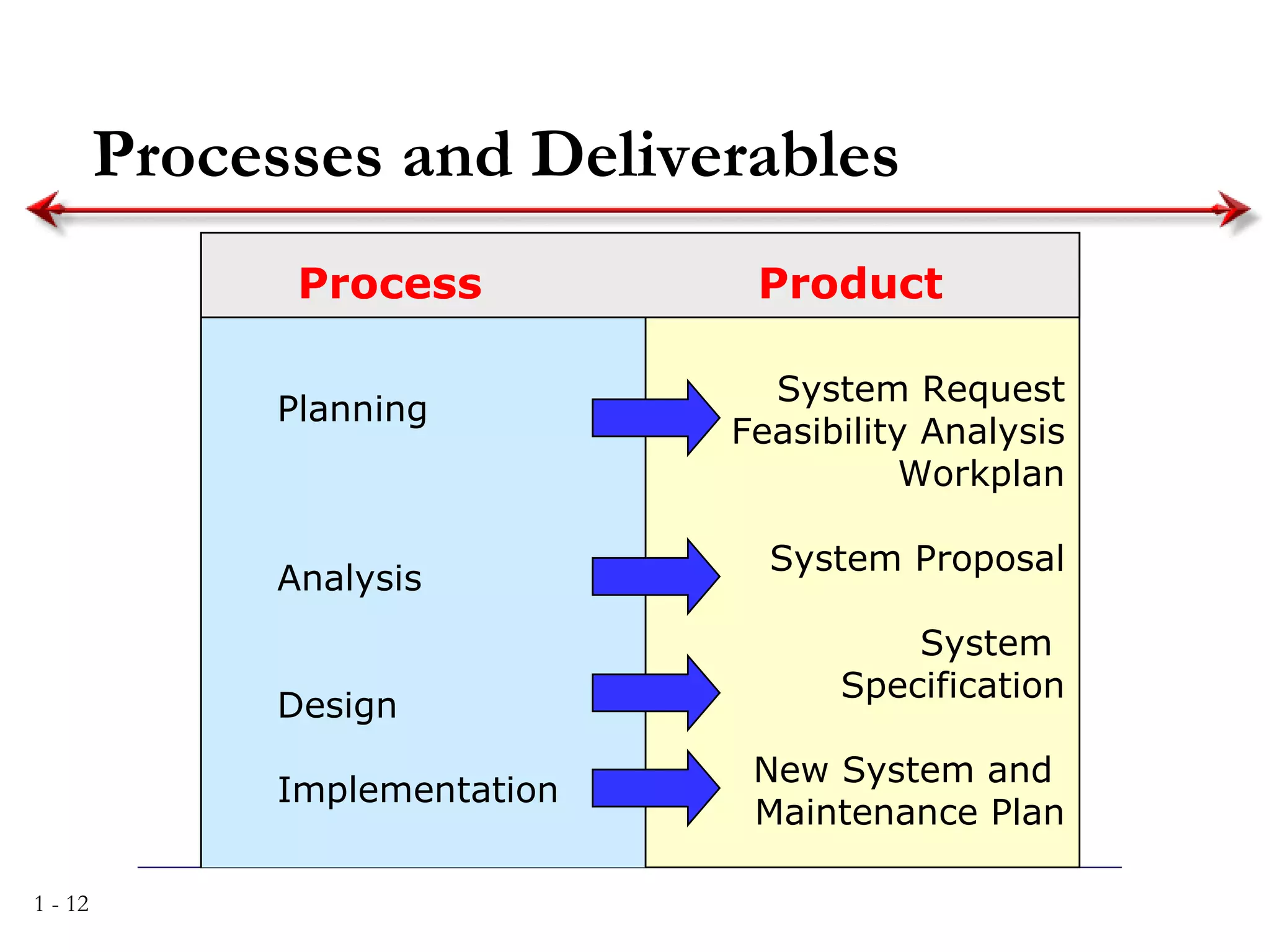
Processes and Deliverables Process Product Planning Analysis Design Implementation System Request Feasibility Analysis Workplan System Proposal System  Specification New System and  Maintenance Plan
SYSTEM DEVELOPMENT METHODOLOGIES
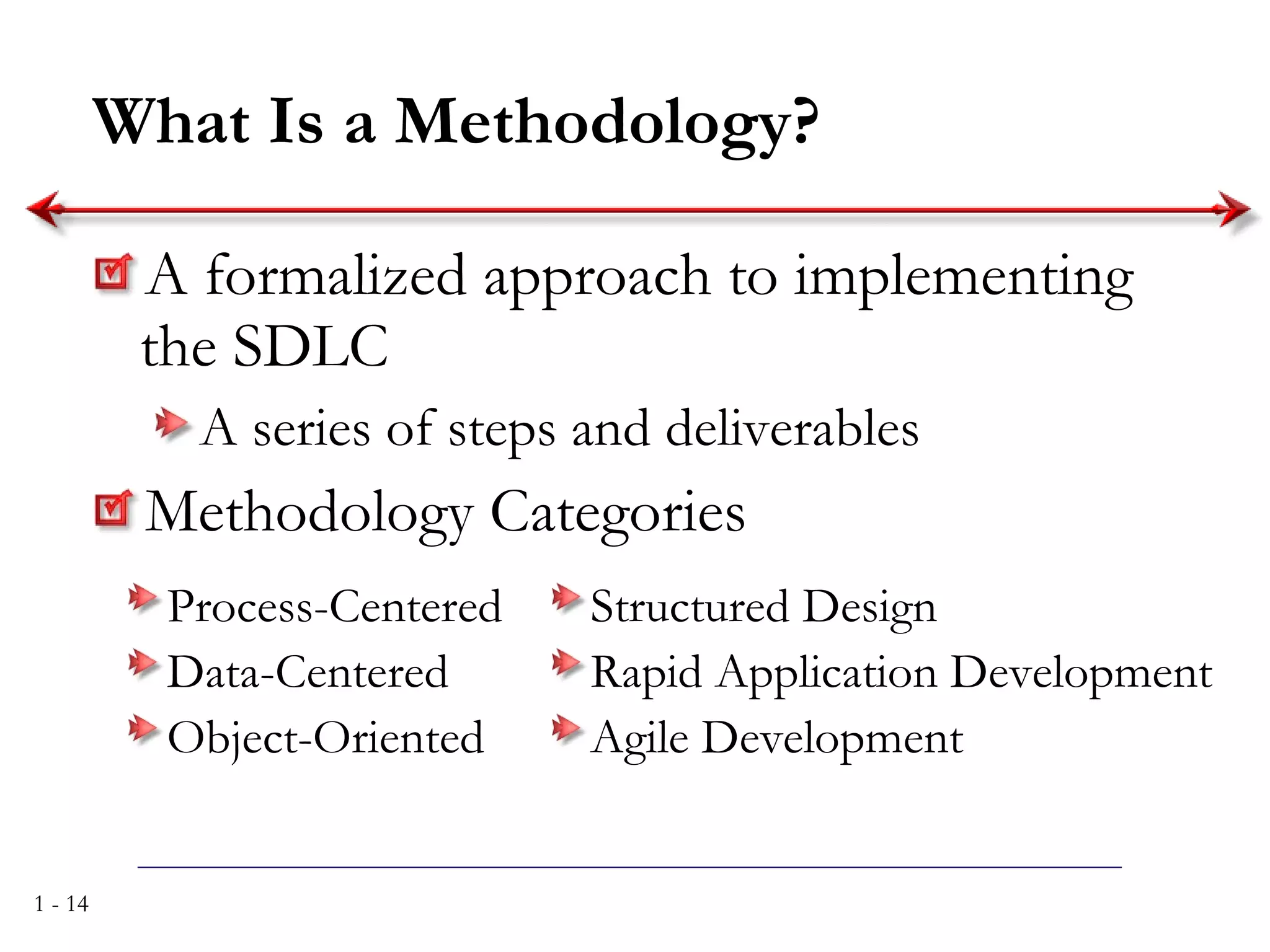
What Is a Methodology? A formalized approach to implementing the SDLC A series of steps and deliverables Methodology Categories Process-Centered Data-Centered Object-Oriented Structured Design Rapid Application Development Agile Development
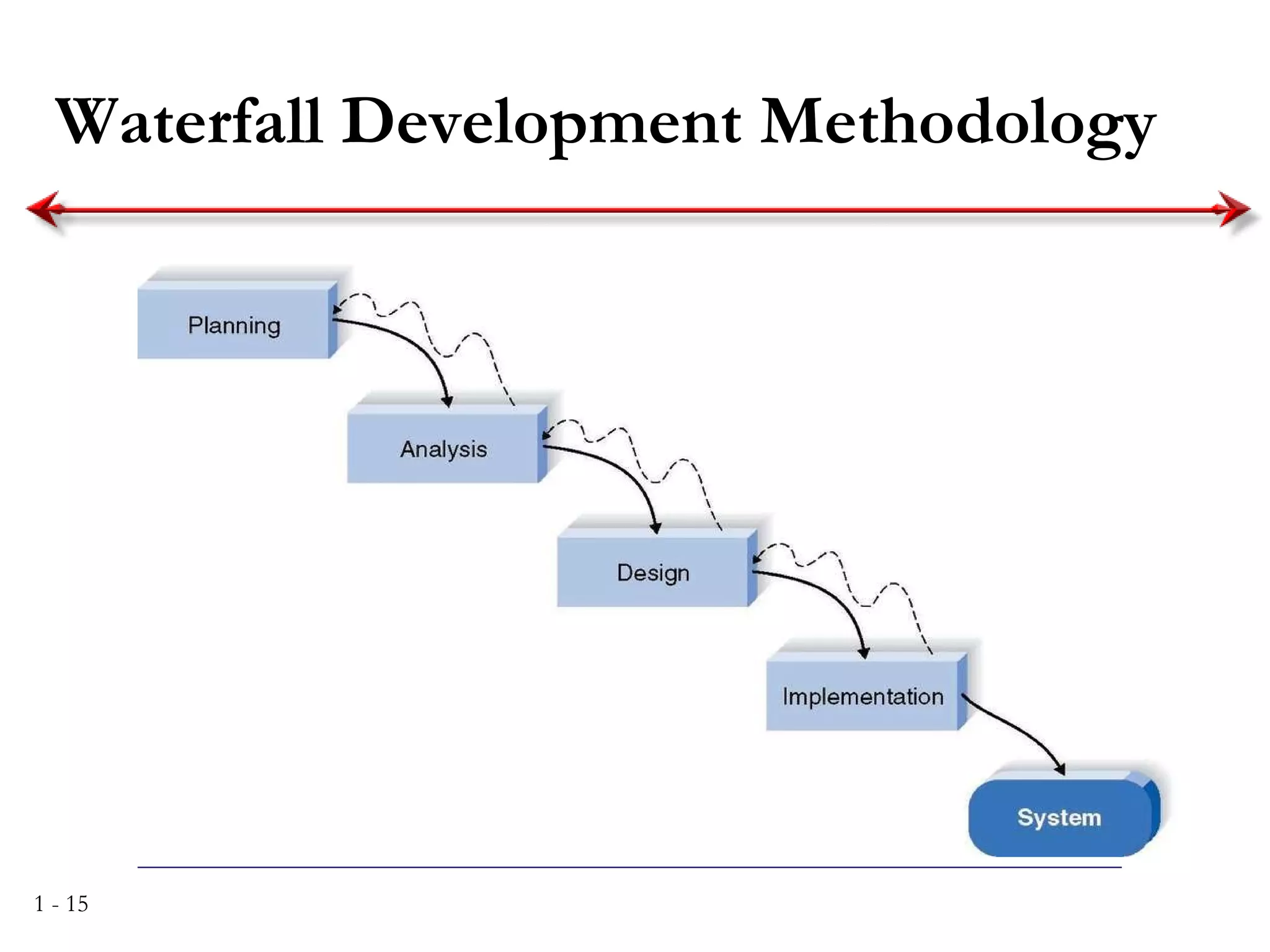
Waterfall Development Methodology
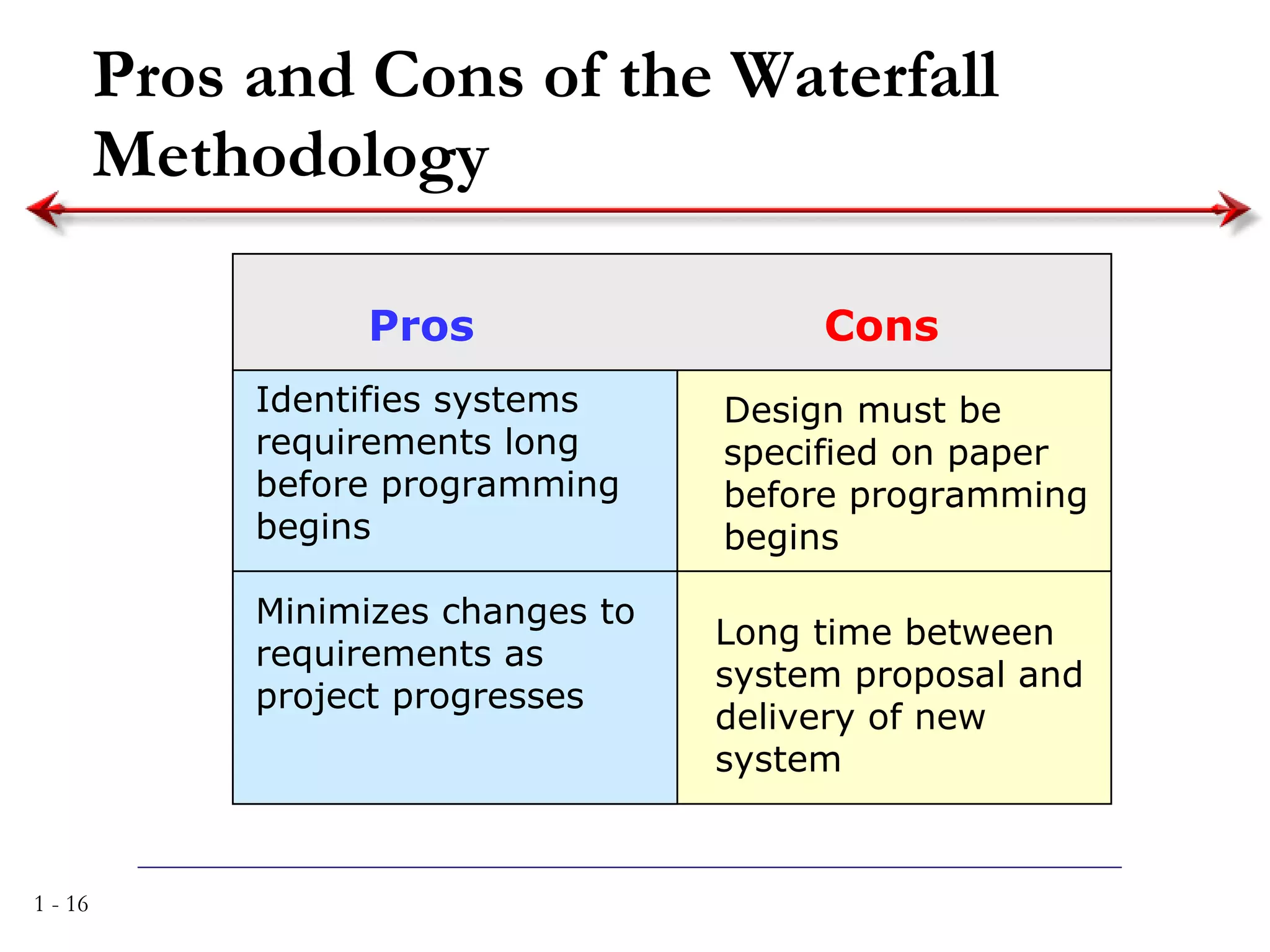
Pros and Cons of the Waterfall Methodology Pros Cons Identifies systems  requirements long  before programming  begins Minimizes changes to  requirements as project progresses Design must be  specified on paper  before programming  begins Long time between  system proposal and  delivery of new  system
Parallel Development Methodology
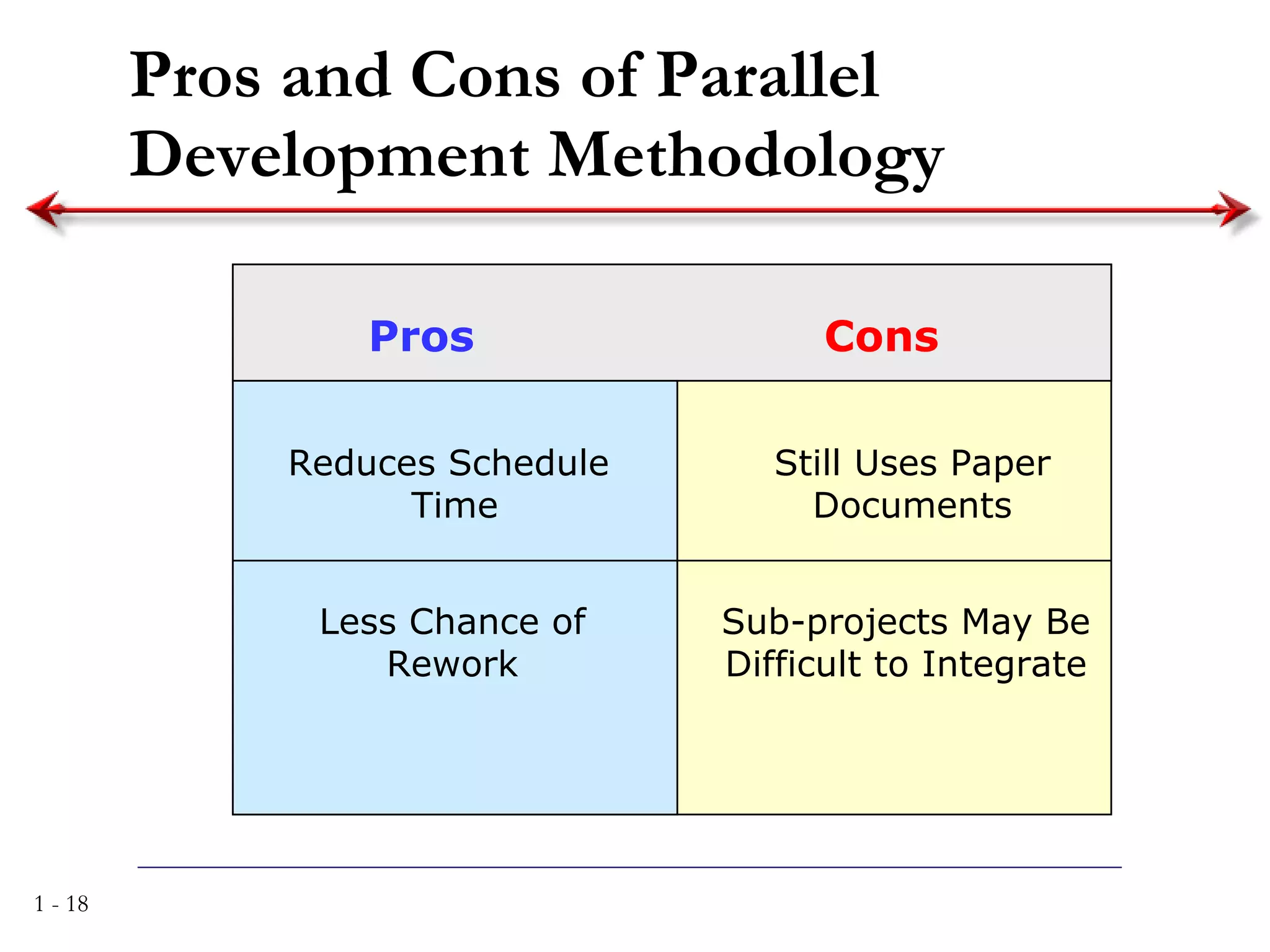
Pros and Cons of Parallel Development Methodology Pros Cons Reduces Schedule Time Less Chance of Rework Still Uses Paper Documents Sub-projects May Be Difficult to Integrate
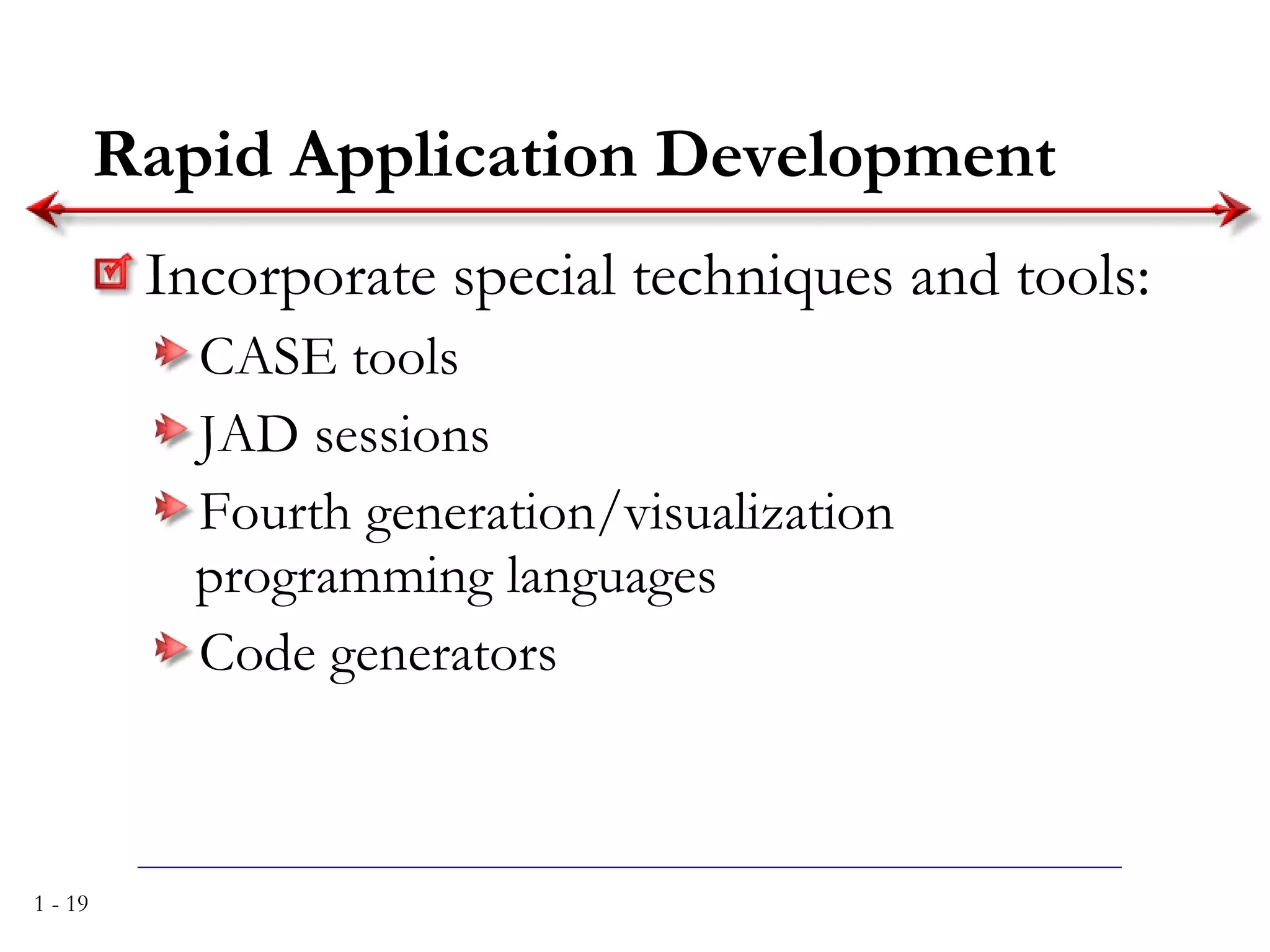
Rapid Application Development Incorporate special techniques and tools: CASE tools JAD sessions Fourth generation/visualization programming languages Code generators
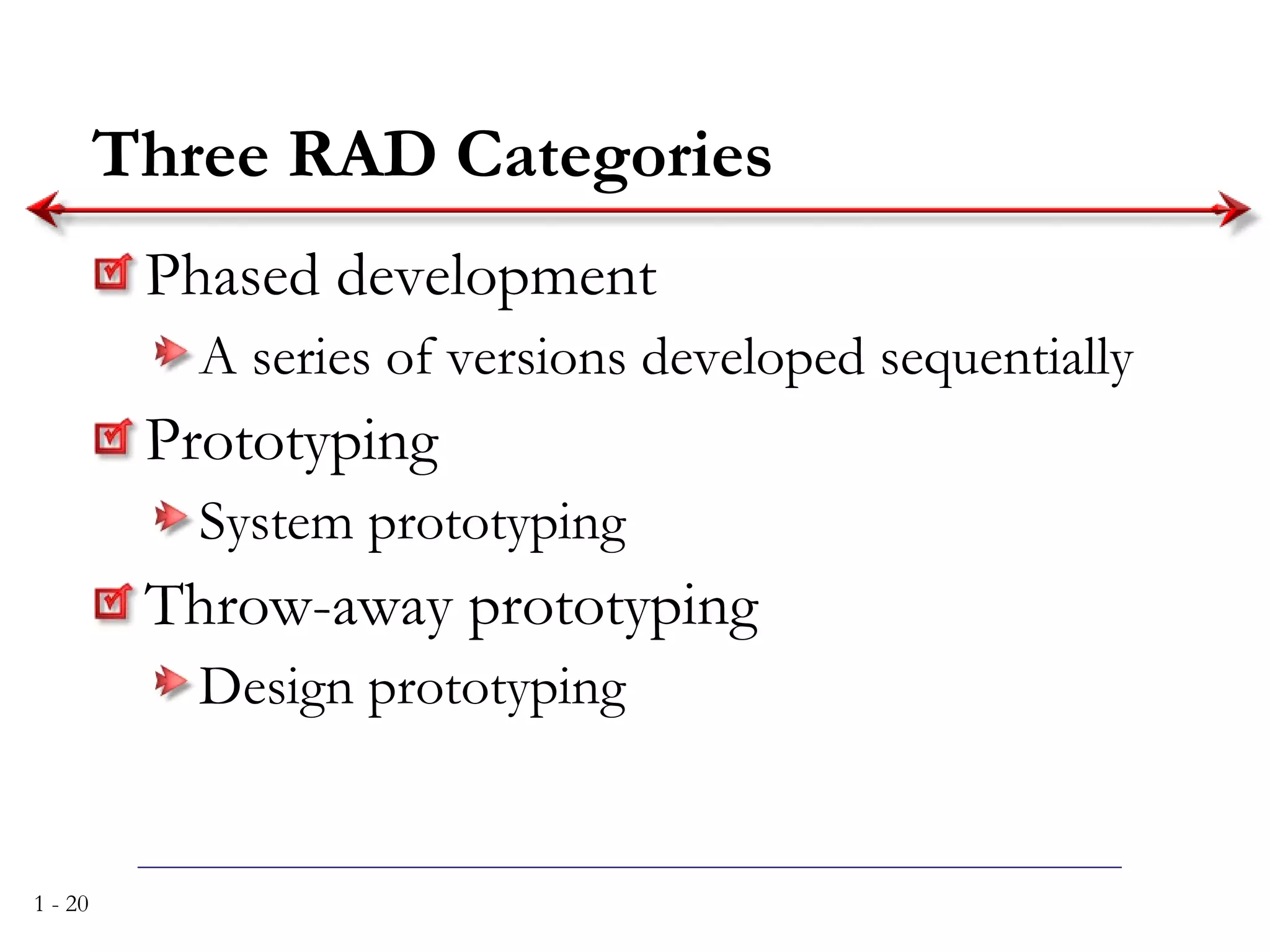
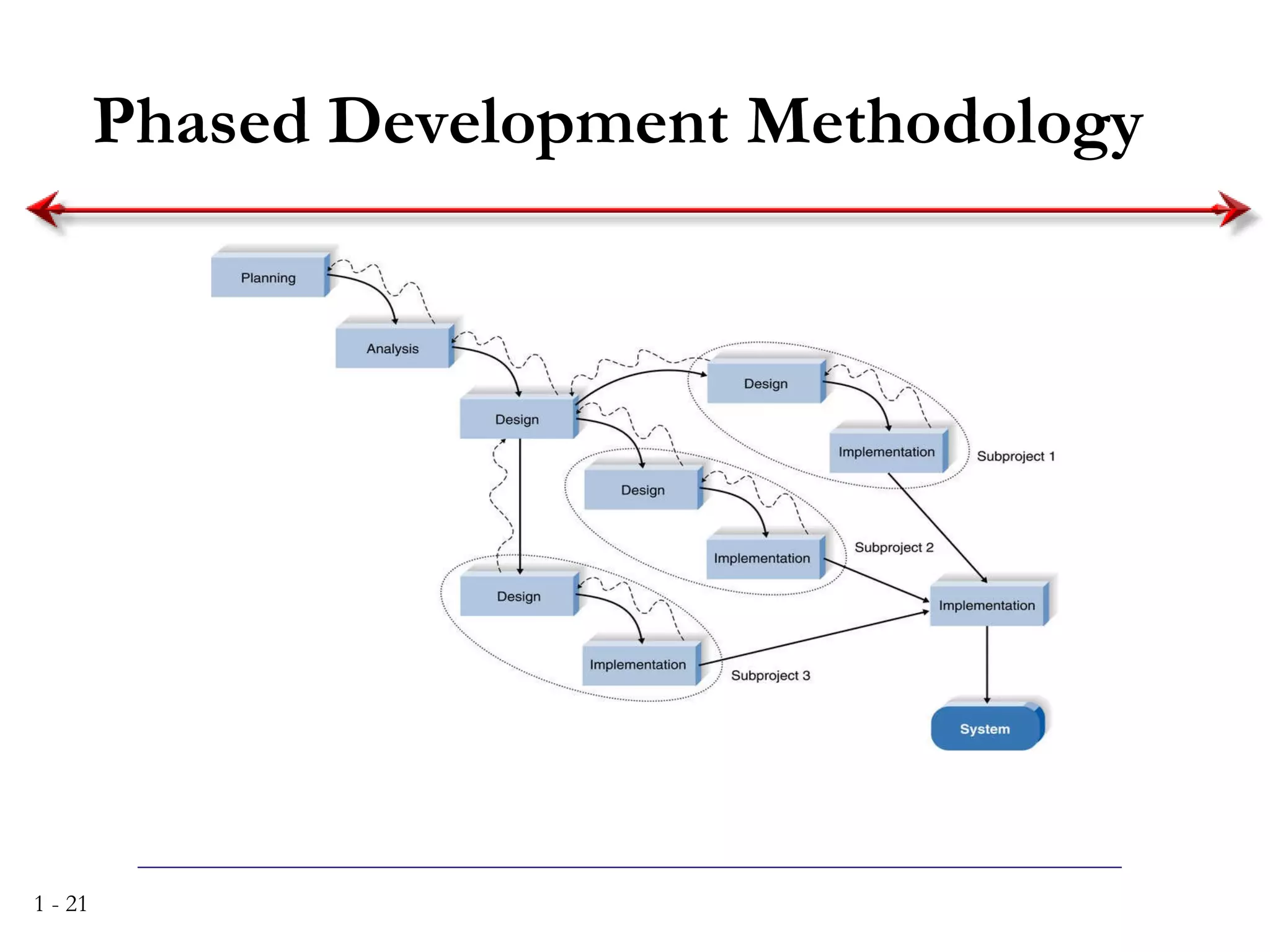
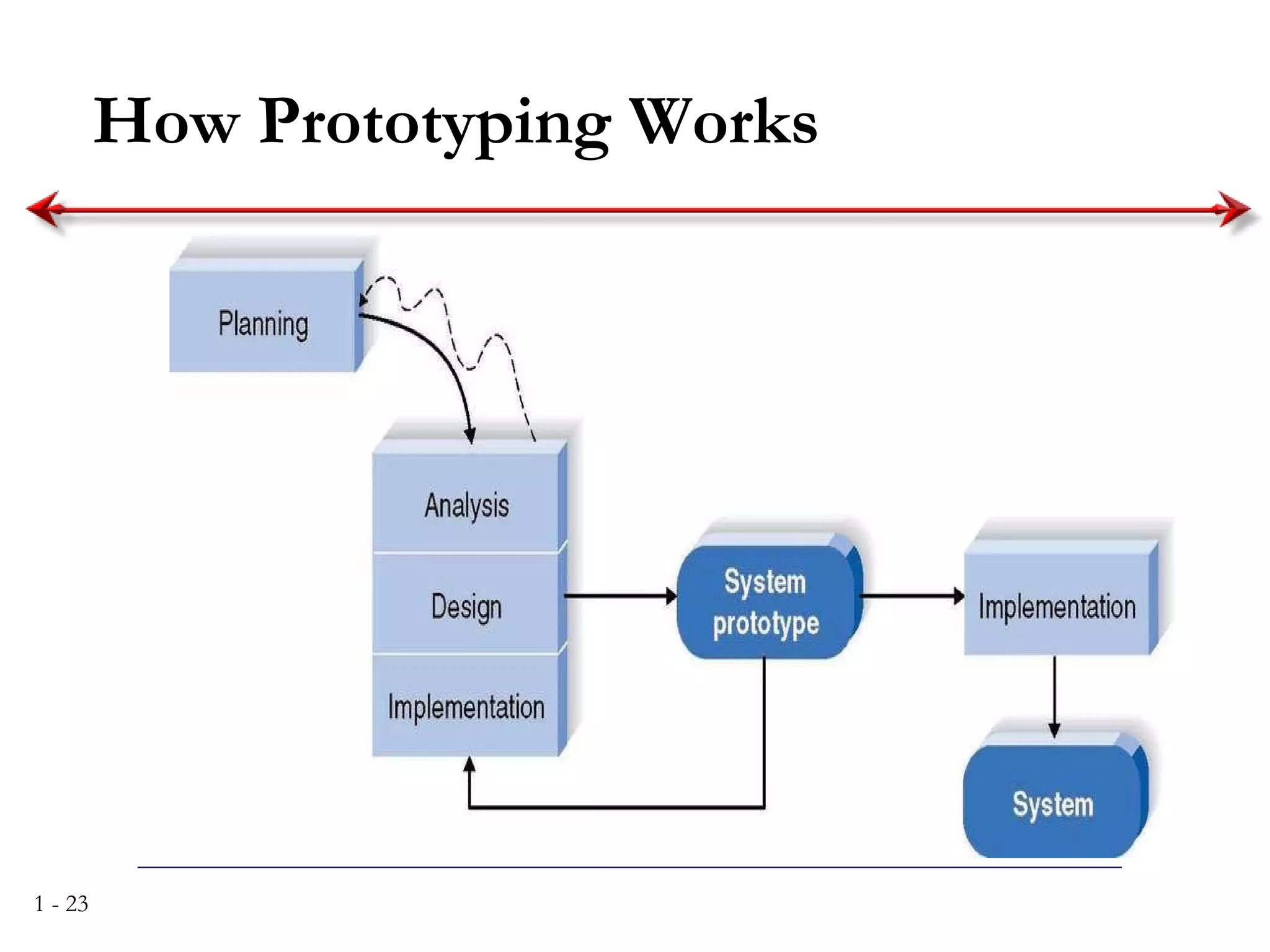
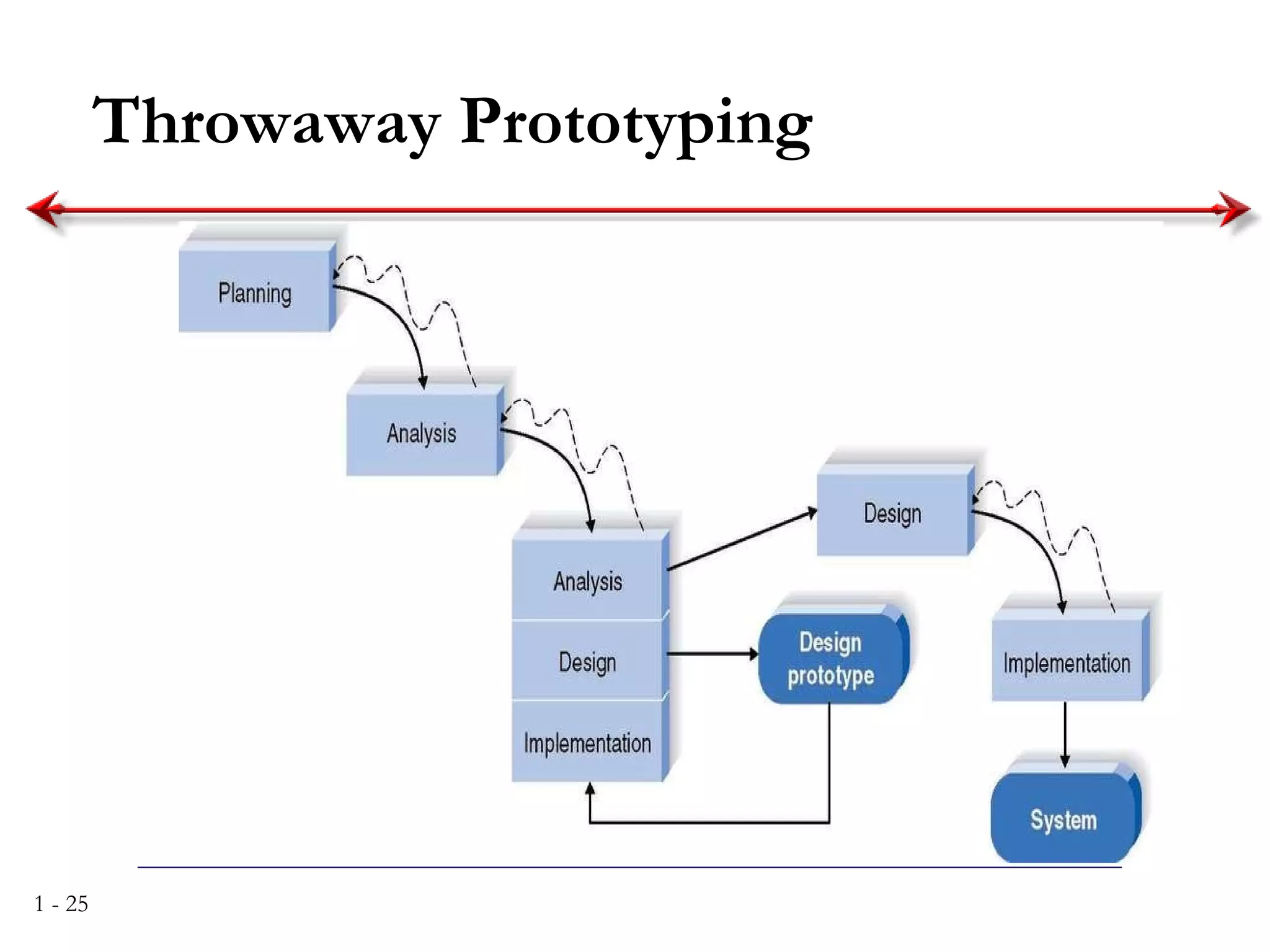
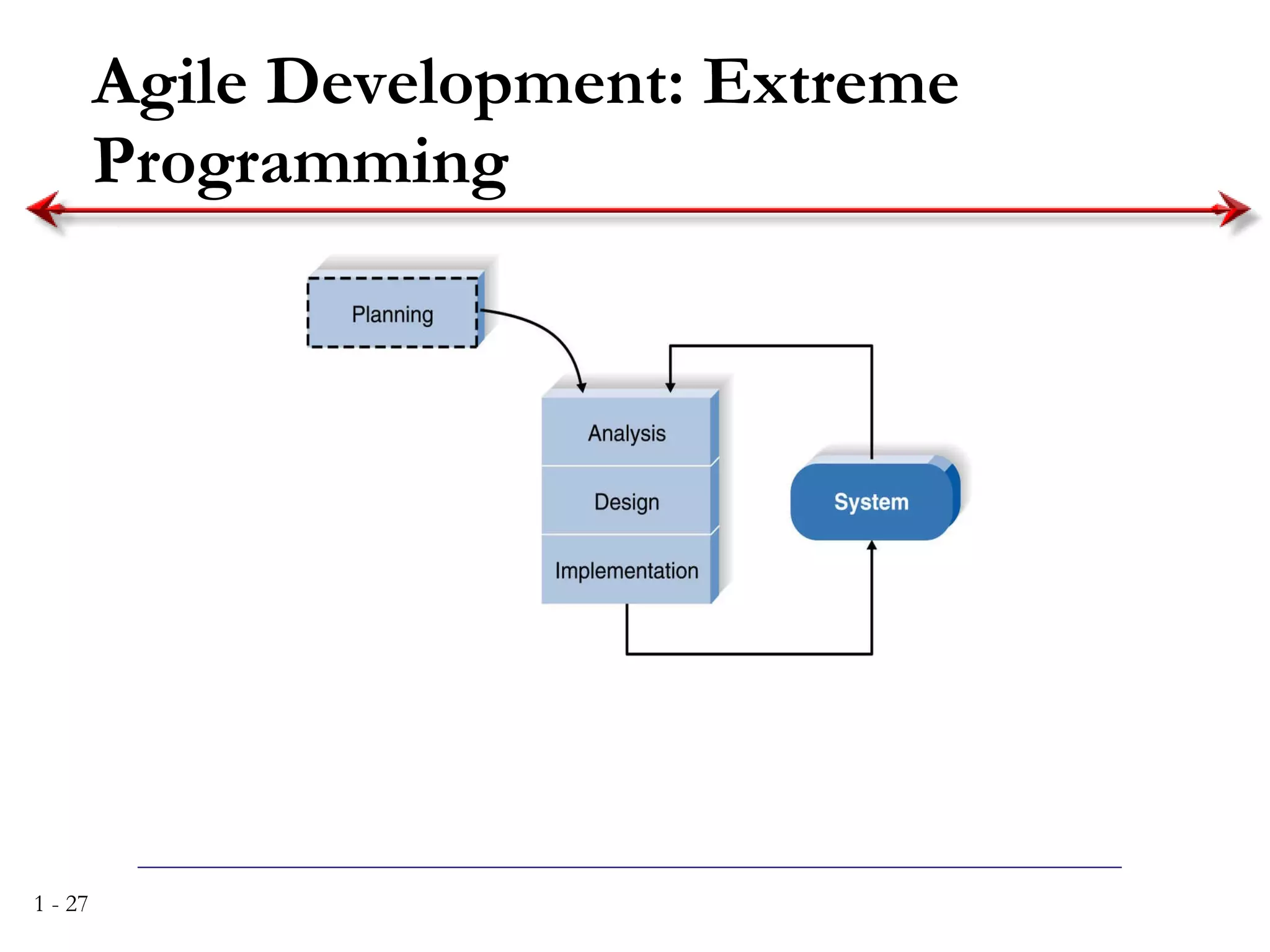
Three RAD Categories Phased development A series of versions developed sequentially Prototyping System prototyping Throw-away prototyping Design prototyping
Phased Development Methodology Insert Figure 1-4 here
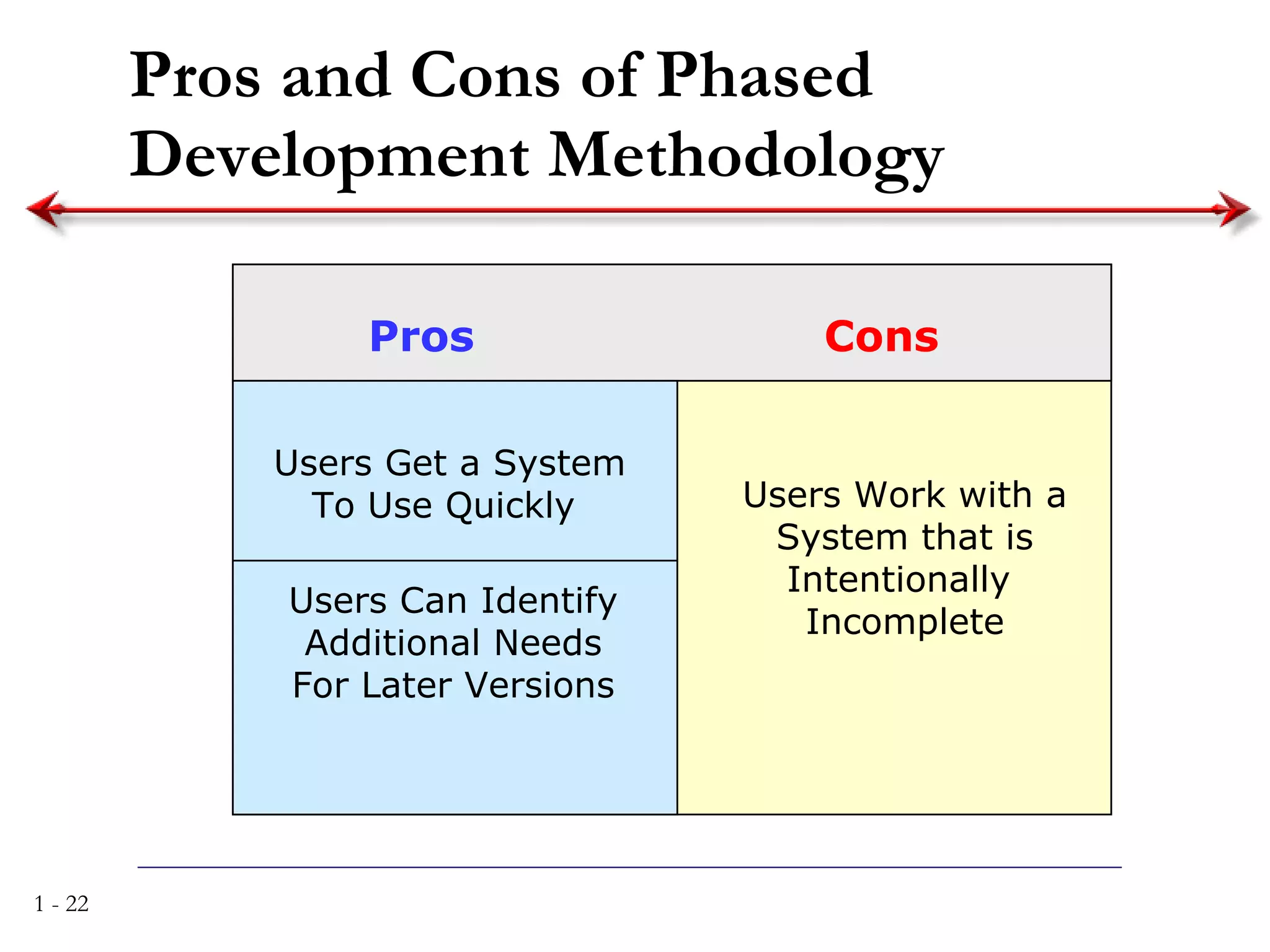
Pros and Cons of Phased Development Methodology Pros Cons Users Get a System To Use Quickly  Users Can Identify Additional Needs For Later Versions Users Work with a System that is Intentionally  Incomplete
How Prototyping Works
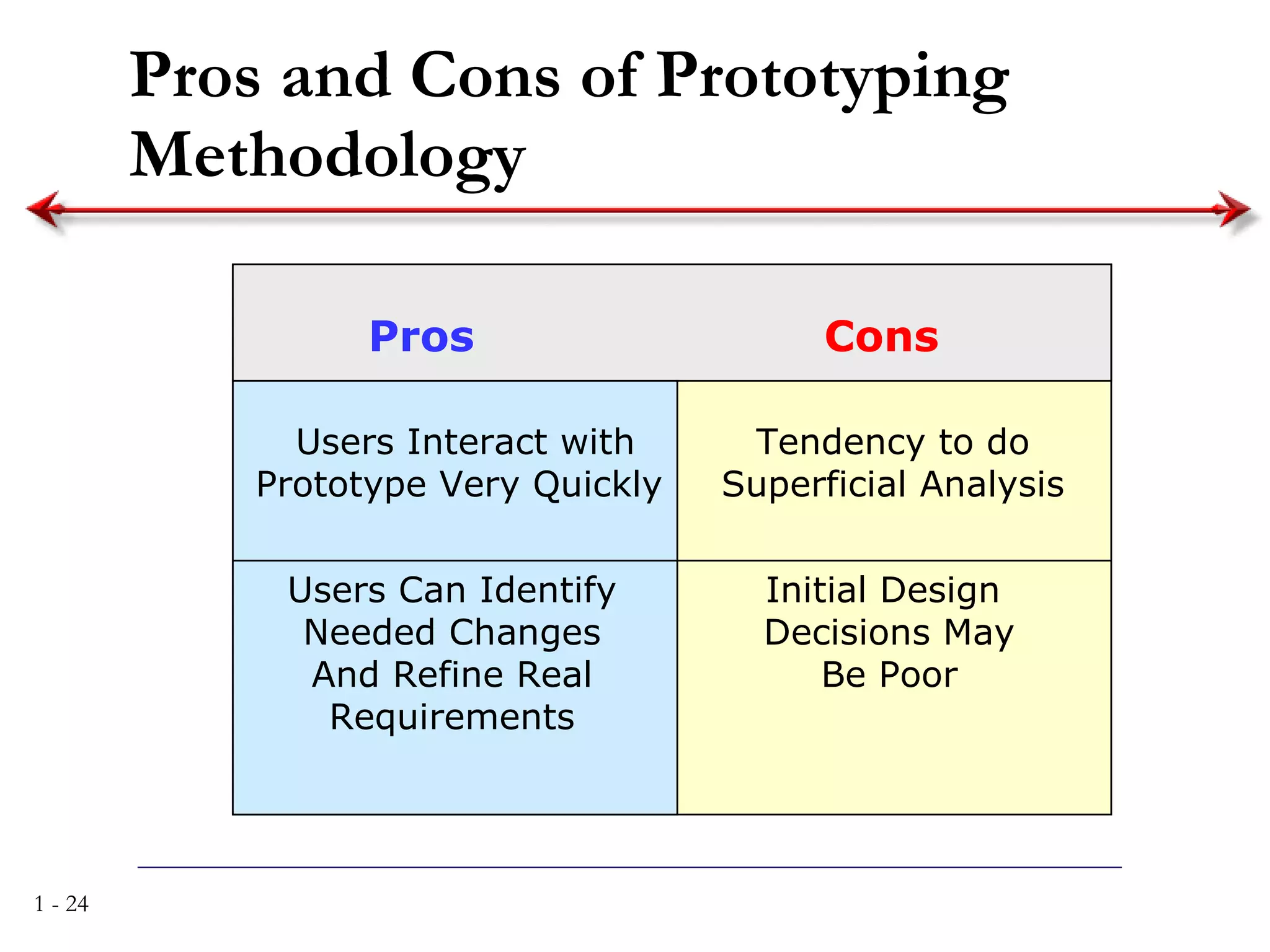
Pros and Cons of Prototyping Methodology Pros Cons Users Interact with Prototype Very Quickly  Users Can Identify Needed Changes And Refine Real Requirements Tendency to do Superficial Analysis Initial Design  Decisions May Be Poor
Throwaway Prototyping
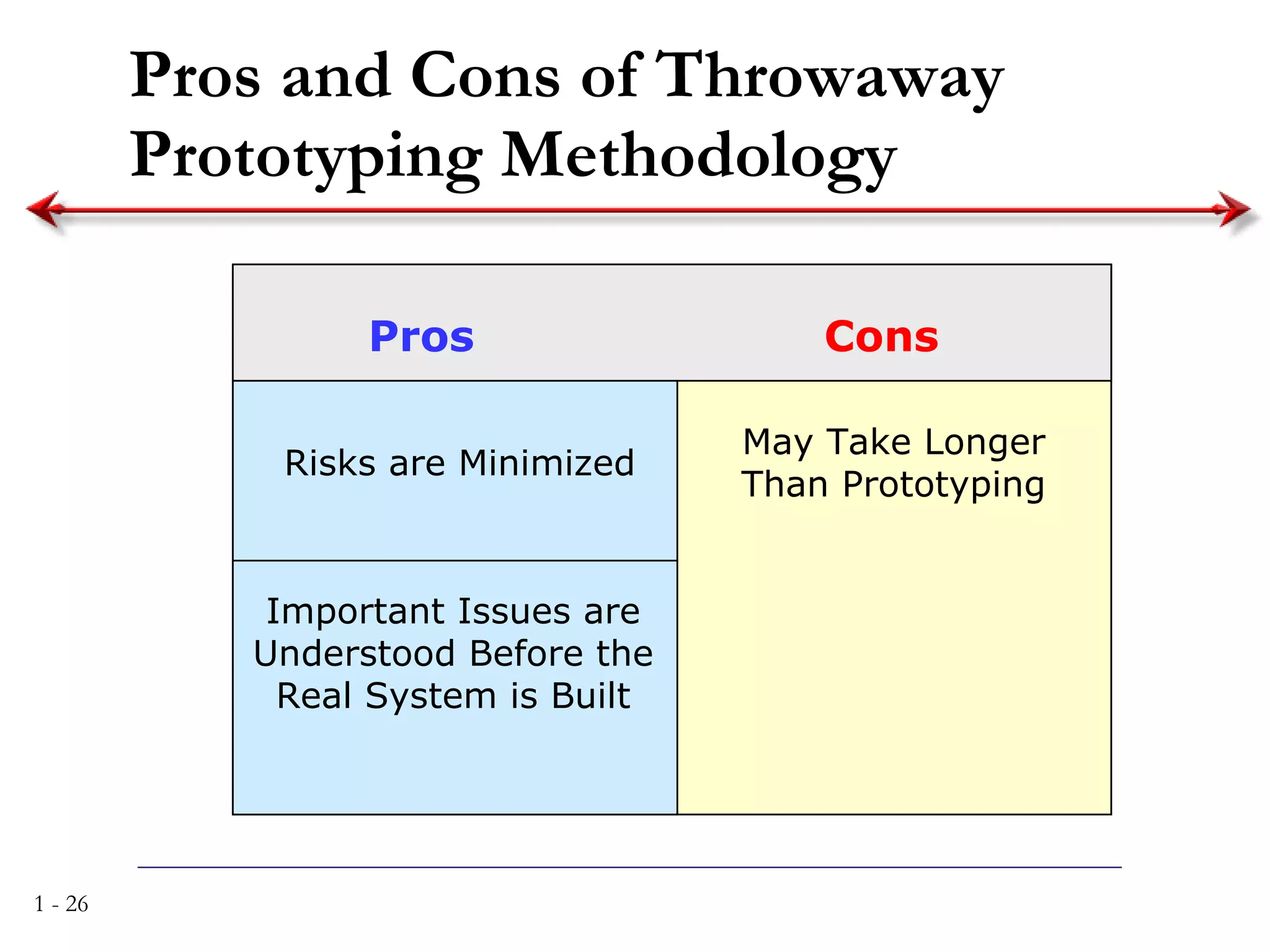
Pros and Cons of Throwaway Prototyping Methodology Pros Cons Risks are Minimized  Important Issues are Understood Before the Real System is Built May Take Longer Than Prototyping
Agile Development: Extreme Programming
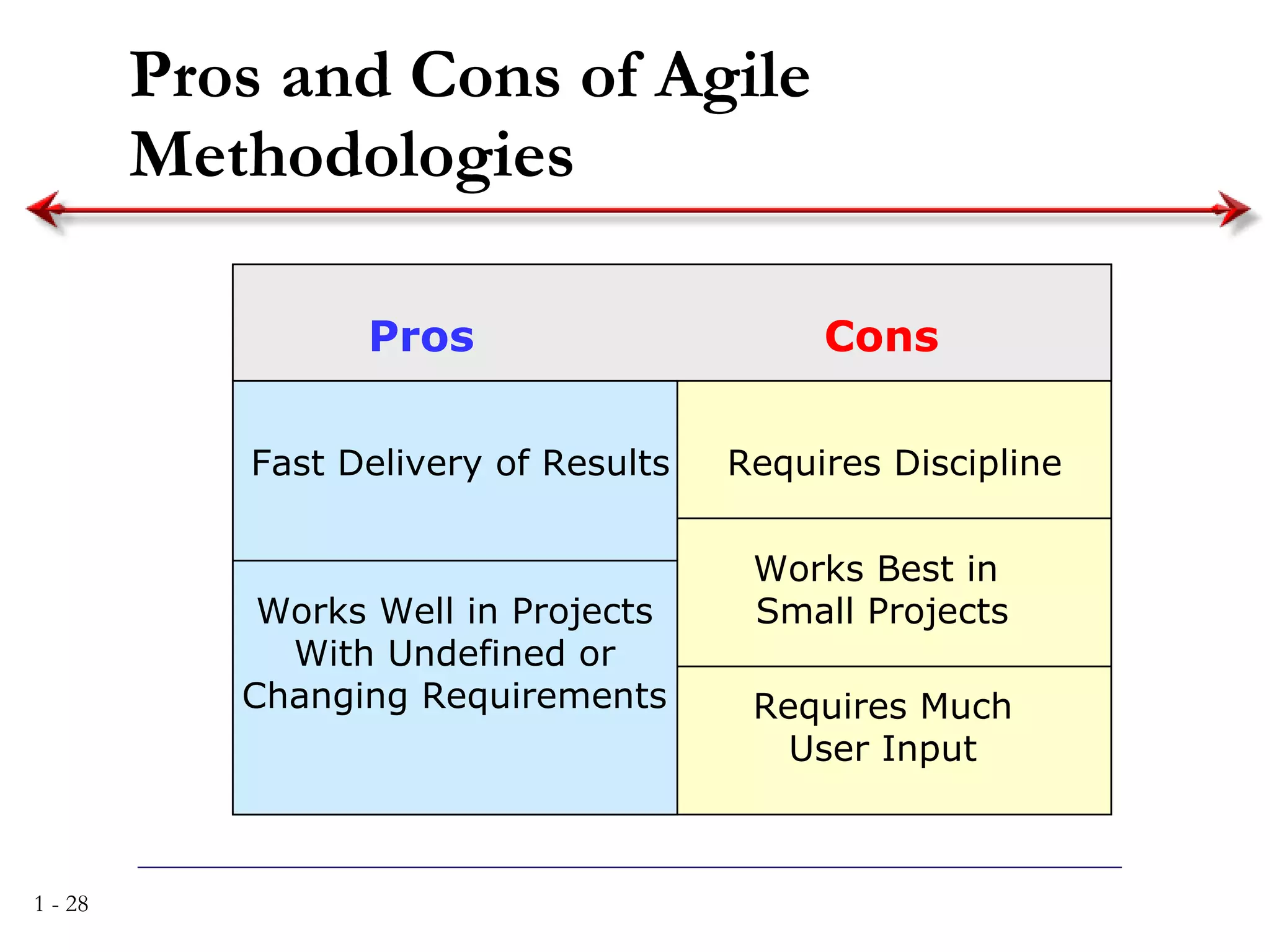
Pros and Cons of Agile Methodologies Pros Cons Fast Delivery of Results  Works Well in Projects With Undefined or Changing Requirements Requires Discipline Works Best in  Small Projects Requires Much User Input
Criteria for Selecting the Appropriate Methodology Clear user requirements Familiarity with technology Complexity of system Reliability of system Time schedule Schedule visibility
TEAM ROLES AND SKILLS
Information Systems Roles Business analyst Systems analyst Infrastructure analyst Change management analyst Project manager
Summary The Systems Development Lifecycle  consists of four stages: Planning, Analysis, Design, and Implementation There are six  major development methodologies : the waterfall method, the parallel development method, the phased development method, system prototyping, design prototyping, and agile development. There are five  major team roles : business analyst, systems analyst, infrastructure analyst, change management analyst and project manager.

System Analysis and Design

  • 1.
  • 2.
    Key Ideas Manyfailed systems were abandoned because analysts tried to build wonderful systems without understanding the organization. The primarily goal is to create value for the organization.
  • 3.
    Key Ideas The systems analyst is a key person analyzing the business, identifying opportunities for improvement, and designing information systems to implement these ideas. It is important to understand and develop through practice the skills needed to successfully design and implement new information systems.
  • 4.
  • 5.
    Major Attributes ofthe Life Cycle The project -- Moves systematically through phases where each phase has a standard set of outputs Produces project deliverables Uses deliverables in implementation Results in actual information system Uses gradual refinement
  • 6.
    Project Phases Planning (Why build the system? How should the team go about building it?) Analysis (Who uses system, what will it do, where and when will the system be used?) Design (How will the system work?) Implementation (System delivery)
  • 7.
    A simple processfor making lunch
  • 8.
    Identifying business valueAnalyze feasibility Develop work plan Staff the project Control and direct project Planning
  • 9.
    Analysis strategy Gatheringbusiness requirements Requirements definition use cases Process modeling Data modeling Analysis
  • 10.
    Design selection Architecturedesign Interface design Data storage design Program design Design
  • 11.
    Construction Program buildingProgram and system testing Installation Conversion strategy Training plan Support plan Implementation
  • 12.
    Processes and DeliverablesProcess Product Planning Analysis Design Implementation System Request Feasibility Analysis Workplan System Proposal System Specification New System and Maintenance Plan
  • 13.
  • 14.
    What Is aMethodology? A formalized approach to implementing the SDLC A series of steps and deliverables Methodology Categories Process-Centered Data-Centered Object-Oriented Structured Design Rapid Application Development Agile Development
  • 15.
  • 16.
    Pros and Consof the Waterfall Methodology Pros Cons Identifies systems requirements long before programming begins Minimizes changes to requirements as project progresses Design must be specified on paper before programming begins Long time between system proposal and delivery of new system
  • 17.
  • 18.
    Pros and Consof Parallel Development Methodology Pros Cons Reduces Schedule Time Less Chance of Rework Still Uses Paper Documents Sub-projects May Be Difficult to Integrate
  • 19.
    Rapid Application DevelopmentIncorporate special techniques and tools: CASE tools JAD sessions Fourth generation/visualization programming languages Code generators
  • 20.
    Three RAD CategoriesPhased development A series of versions developed sequentially Prototyping System prototyping Throw-away prototyping Design prototyping
  • 21.
    Phased Development MethodologyInsert Figure 1-4 here
  • 22.
    Pros and Consof Phased Development Methodology Pros Cons Users Get a System To Use Quickly Users Can Identify Additional Needs For Later Versions Users Work with a System that is Intentionally Incomplete
  • 23.
  • 24.
    Pros and Consof Prototyping Methodology Pros Cons Users Interact with Prototype Very Quickly Users Can Identify Needed Changes And Refine Real Requirements Tendency to do Superficial Analysis Initial Design Decisions May Be Poor
  • 25.
  • 26.
    Pros and Consof Throwaway Prototyping Methodology Pros Cons Risks are Minimized Important Issues are Understood Before the Real System is Built May Take Longer Than Prototyping
  • 27.
  • 28.
    Pros and Consof Agile Methodologies Pros Cons Fast Delivery of Results Works Well in Projects With Undefined or Changing Requirements Requires Discipline Works Best in Small Projects Requires Much User Input
  • 29.
    Criteria for Selectingthe Appropriate Methodology Clear user requirements Familiarity with technology Complexity of system Reliability of system Time schedule Schedule visibility
  • 30.
  • 31.
    Information Systems RolesBusiness analyst Systems analyst Infrastructure analyst Change management analyst Project manager
  • 32.
    Summary The SystemsDevelopment Lifecycle consists of four stages: Planning, Analysis, Design, and Implementation There are six major development methodologies : the waterfall method, the parallel development method, the phased development method, system prototyping, design prototyping, and agile development. There are five major team roles : business analyst, systems analyst, infrastructure analyst, change management analyst and project manager.