PANCREATITIS
By : Ankita Priydarshini
Roll No. - 21
ANATOMY
RELATIONS OF PANCREAS
ARTERIAL SUPPLY
VENOUS DRAINAGE
NERVE SUPPLY
LYMPHATIC DRAINAGE
PHYSIOLOGY
ACUTE PANCREATITIS
A group of reversible lesions characterised by inflammation of the pancreas.
Acute pancreatitis is a condition in which activated pancreatic enzymes leak
into the substance of the pancreas and initiate the auto-digestion of the gland.
Etiology
• Non-traumatic(75%)
Biliary tract diseases
Alcohol
Viral infection (EBV, CMV, mumps)
Drugs (steroid, thiazide, furosemide)
Scorpion bites
Metabolic (Hyperlipidemia, Hypertriglyceridemia)
• Traumatic (5%)
Operative trauma
Blunt/penetrating trauma
Post - ERCP (back pressure of contrast)
• Idiopathic(20%)
Pathophysiology
Proenzy
me
Defective
intracellular
transport and
secretion of
pancreatic
zymogens
Reflux of infected bile
or duodenal contents
into pancreatic duct
(sphincter of Oddi
dysfunction)
Hyperstimulation of
pancreas (alcohol,
triglycerides
Pancreatic duct
obstruction
(common bile duct
stones, tumors)
Activated
proteolytic
enzymes
ACUTE PANCREATITIS
Pancreatic
secretory trypsin
inhibitors
+
+
+
+
-
Clinical presentation
Mid-epigastric pain with tenderness. Sudden severe pain occurring often within 12-
24 hours of a large meal or alcohol. The pain is persistent and radiates frequently
through to the back to either shoulder or to one iliac fossa before spreading to
involve the whole abdomen. Exacerbated on walking and lying supine. Relieved on
sitting and leaning forward.
Nausea and vomiting has always been the presentation of acute pancreatitis in the
majority of cases.
When pancreatitis is extremely severe, it mimics septic shock; fever, hypotension,
respiratory distress from ARDS, elevation of the WBC and a rigid abdomen.
Abdominal Presentation
Tenderness in epigastrium
Although severe pain, there may be little or no guarding of abdominal muscles
at first. Later the upper abdomen becomes tender and rigid as peritoneal
irritation increases.
Mild abdominal distention if paralytic ileus develops.
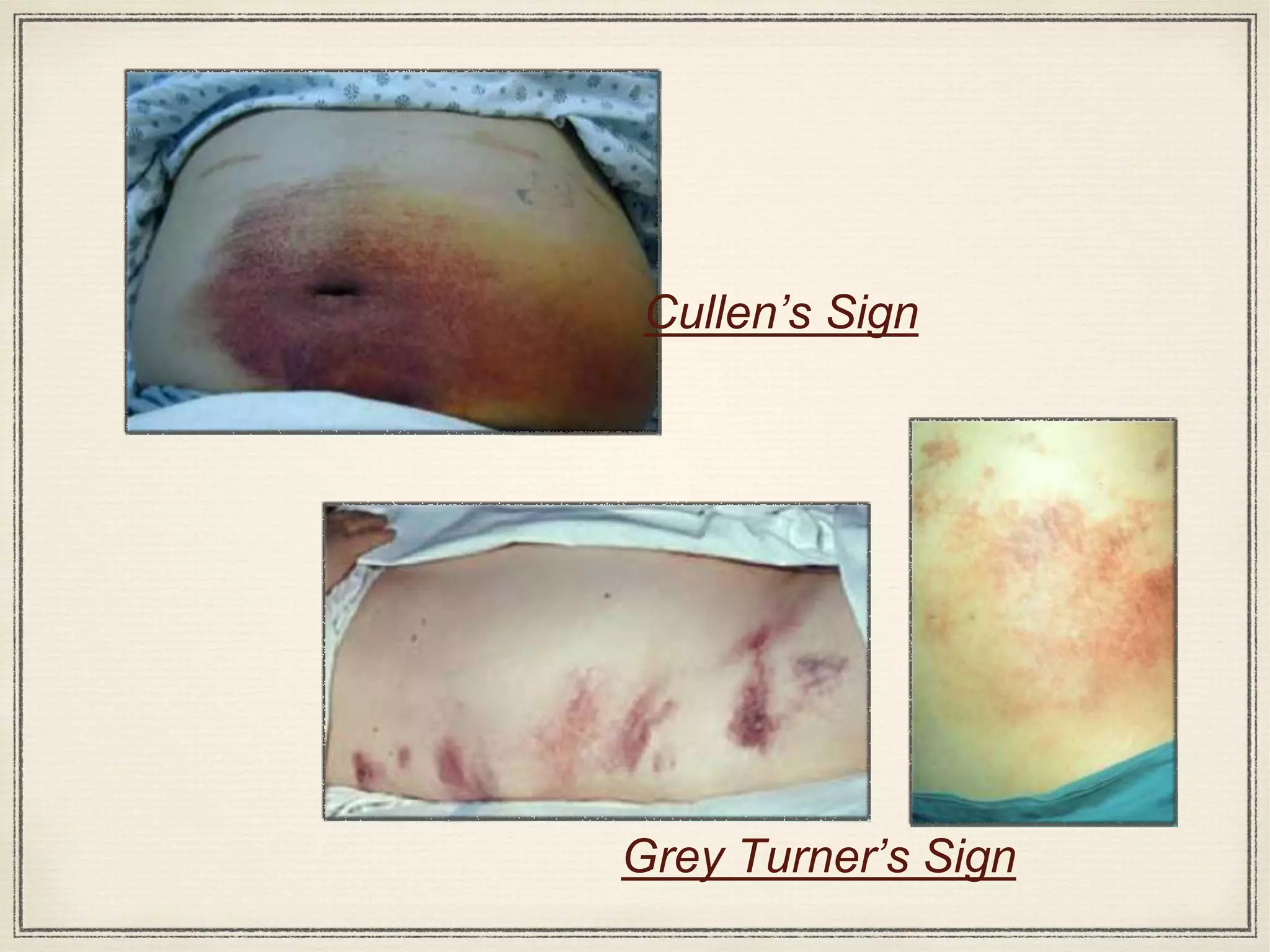
Severe advanced cases may develop bruising and discoloration in the left flank
(Grey Turner’s sign due to tissue catabolism of Hb) and around the umbilicus
(Cullen’s sign due to hemoperitoneum). These are the rare and late signs of
extensive pancreatic destruction.
Cullen’s Sign
Grey Turner’s Sign
Complications of Acute Pancreatitis
CHRONIC PANCREATITIS
It is defined as permanent & irreversible damage to pancreas with
histologic evidence of chronic inflammation, fibrosis & destruction of
exocrine (acinar cells) & endocrine (islets of Langerhans) tissues.
Etiology
• T - Toxic - alcohol/tobacco/dietary/drug
• I- Idiopathic
• G- Genetic Mutations -CFTR/SPINK1
• A- Autoimmune primary with Sjogren/Crohn’s disease
• R- Recurrent & severe acute / ischemia
• O- Obstructive - annular pancreas/stenotic papilla/ duodenal
obstruction/trauma/pancreatic duct stones
TIGAR-O Risk Factor
Pathophysiology
Sentinel Accute
Pancreatitis
Events (SAPE)
Hypothesis
Clinical presentation
Type -A : pain-free intervals
Type -B : unrelenting pain
Mallet Guys Sign - In right knee chest position, if left
hypochondrium is palpated tenderness can be elicited.
Triad of Chronic Pancreatitis
Pancreatic calcification
Steatorrhoea
Diabetes mellitus
Clinical Presentation
Stage A - 85%, recurrent/acute episodic pain with weight loss
Stage B - Severe prolonged progressive pain with impaired pancreatic
function with cholestasis, pseudocyst.
Stage C - Severe exocrine / endocrine deficiency. less severe pain,
complication like pseudocysts & obstruction
Complications
THANK YOU!!

Pancreatitis

  • 1.
    PANCREATITIS By : AnkitaPriydarshini Roll No. - 21
  • 2.
  • 3.
  • 4.
  • 5.
  • 6.
  • 7.
  • 8.
  • 10.
    ACUTE PANCREATITIS A groupof reversible lesions characterised by inflammation of the pancreas. Acute pancreatitis is a condition in which activated pancreatic enzymes leak into the substance of the pancreas and initiate the auto-digestion of the gland.
  • 11.
    Etiology • Non-traumatic(75%) Biliary tractdiseases Alcohol Viral infection (EBV, CMV, mumps) Drugs (steroid, thiazide, furosemide) Scorpion bites Metabolic (Hyperlipidemia, Hypertriglyceridemia) • Traumatic (5%) Operative trauma Blunt/penetrating trauma Post - ERCP (back pressure of contrast) • Idiopathic(20%)
  • 14.
    Pathophysiology Proenzy me Defective intracellular transport and secretion of pancreatic zymogens Refluxof infected bile or duodenal contents into pancreatic duct (sphincter of Oddi dysfunction) Hyperstimulation of pancreas (alcohol, triglycerides Pancreatic duct obstruction (common bile duct stones, tumors) Activated proteolytic enzymes ACUTE PANCREATITIS Pancreatic secretory trypsin inhibitors + + + + -
  • 18.
    Clinical presentation Mid-epigastric painwith tenderness. Sudden severe pain occurring often within 12- 24 hours of a large meal or alcohol. The pain is persistent and radiates frequently through to the back to either shoulder or to one iliac fossa before spreading to involve the whole abdomen. Exacerbated on walking and lying supine. Relieved on sitting and leaning forward. Nausea and vomiting has always been the presentation of acute pancreatitis in the majority of cases. When pancreatitis is extremely severe, it mimics septic shock; fever, hypotension, respiratory distress from ARDS, elevation of the WBC and a rigid abdomen.
  • 20.
    Abdominal Presentation Tenderness inepigastrium Although severe pain, there may be little or no guarding of abdominal muscles at first. Later the upper abdomen becomes tender and rigid as peritoneal irritation increases. Mild abdominal distention if paralytic ileus develops. Severe advanced cases may develop bruising and discoloration in the left flank (Grey Turner’s sign due to tissue catabolism of Hb) and around the umbilicus (Cullen’s sign due to hemoperitoneum). These are the rare and late signs of extensive pancreatic destruction.
  • 21.
  • 22.
  • 29.
    CHRONIC PANCREATITIS It isdefined as permanent & irreversible damage to pancreas with histologic evidence of chronic inflammation, fibrosis & destruction of exocrine (acinar cells) & endocrine (islets of Langerhans) tissues.
  • 30.
  • 32.
    • T -Toxic - alcohol/tobacco/dietary/drug • I- Idiopathic • G- Genetic Mutations -CFTR/SPINK1 • A- Autoimmune primary with Sjogren/Crohn’s disease • R- Recurrent & severe acute / ischemia • O- Obstructive - annular pancreas/stenotic papilla/ duodenal obstruction/trauma/pancreatic duct stones TIGAR-O Risk Factor
  • 33.
  • 36.
    Clinical presentation Type -A: pain-free intervals Type -B : unrelenting pain
  • 37.
    Mallet Guys Sign- In right knee chest position, if left hypochondrium is palpated tenderness can be elicited.
  • 38.
    Triad of ChronicPancreatitis Pancreatic calcification Steatorrhoea Diabetes mellitus
  • 39.
    Clinical Presentation Stage A- 85%, recurrent/acute episodic pain with weight loss Stage B - Severe prolonged progressive pain with impaired pancreatic function with cholestasis, pseudocyst. Stage C - Severe exocrine / endocrine deficiency. less severe pain, complication like pseudocysts & obstruction
  • 40.
  • 42.