Heart Disease and Molecular Degeneration The New Paradigm Presented by  Chris Masterjohn, Doctoral Candidate (UConn) Cholesterol-And-Health.Com
Cholesterol… What does it mean to you?
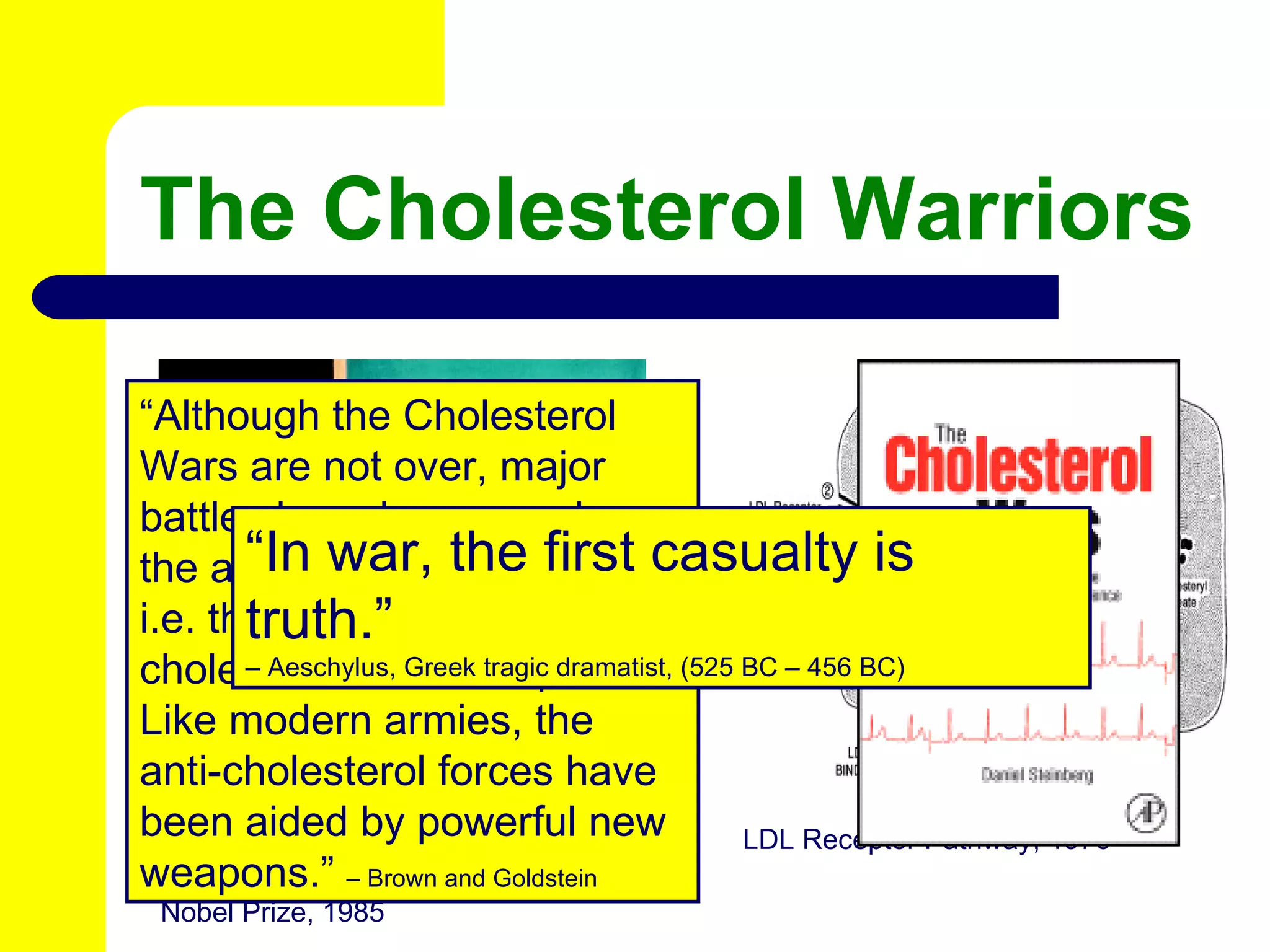
The Cholesterol Warriors Joseph Goldstein and Michael Brown Nobel Prize, 1985 LDL Receptor Pathway, 1976 “ Although the Cholesterol Wars are not over, major battles have been won by the anti-cholesterol forces, i.e. those who condemn cholesterol as the culprit.  Like modern armies, the anti-cholesterol forces have been aided by powerful new weapons.”  – Brown and Goldstein “ In war, the first casualty is truth.” –  Aeschylus, Greek tragic dramatist, (525 BC – 456 BC)
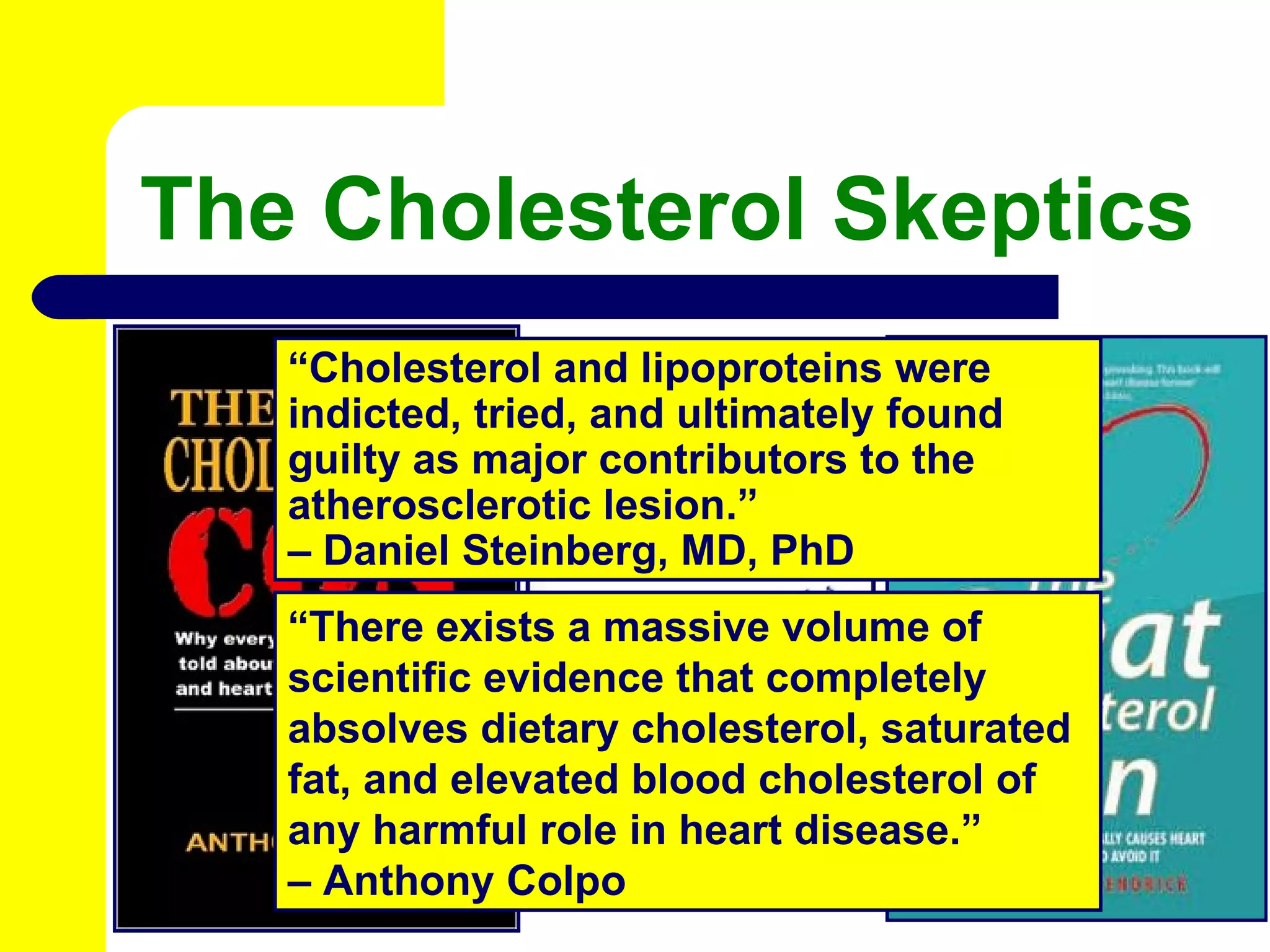
The Cholesterol Skeptics “ Cholesterol and lipoproteins were indicted, tried, and ultimately found guilty as major contributors to the atherosclerotic lesion.” –  Daniel Steinberg, MD, PhD “ There exists a massive volume of scientific evidence that completely absolves dietary cholesterol, saturated fat, and elevated blood cholesterol of any harmful role in heart disease.” –  Anthony Colpo
Heart Disease and Molecular Degeneration The cholesterol-fed rabbit  is  relevant. Familial hypercholesterolemia  is  important. Blood lipids  do  play a role in heart disease. High cholesterol levels do  not  cause heart disease. Atherosclerosis is an adaptive,  homeostatic response  to a pathological process. A disease of  molecular degeneration  and  cellular   miscommunication .
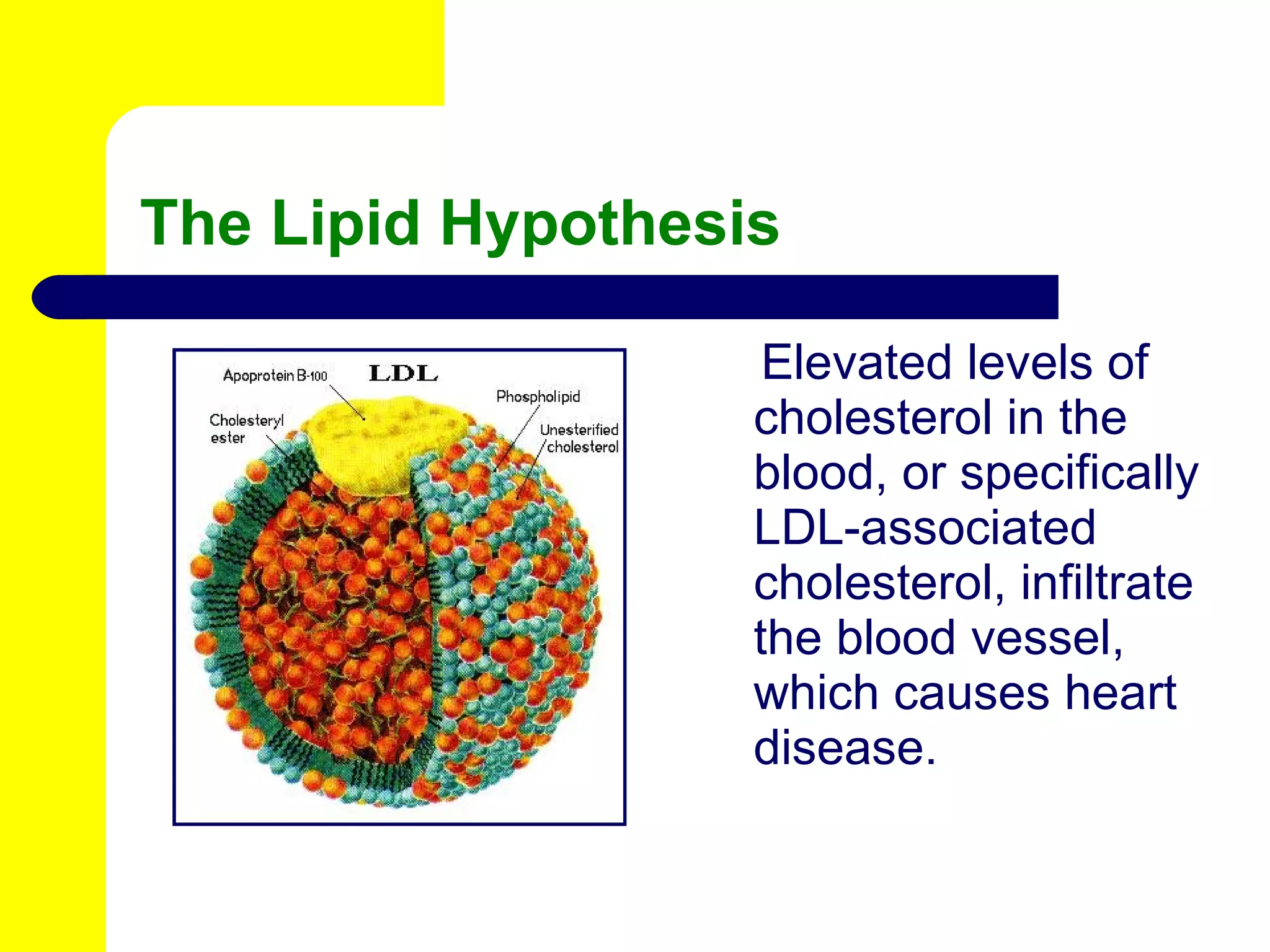
The Lipid Hypothesis Elevated levels of cholesterol in the blood, or specifically LDL-associated cholesterol, infiltrate the blood vessel, which causes heart disease.
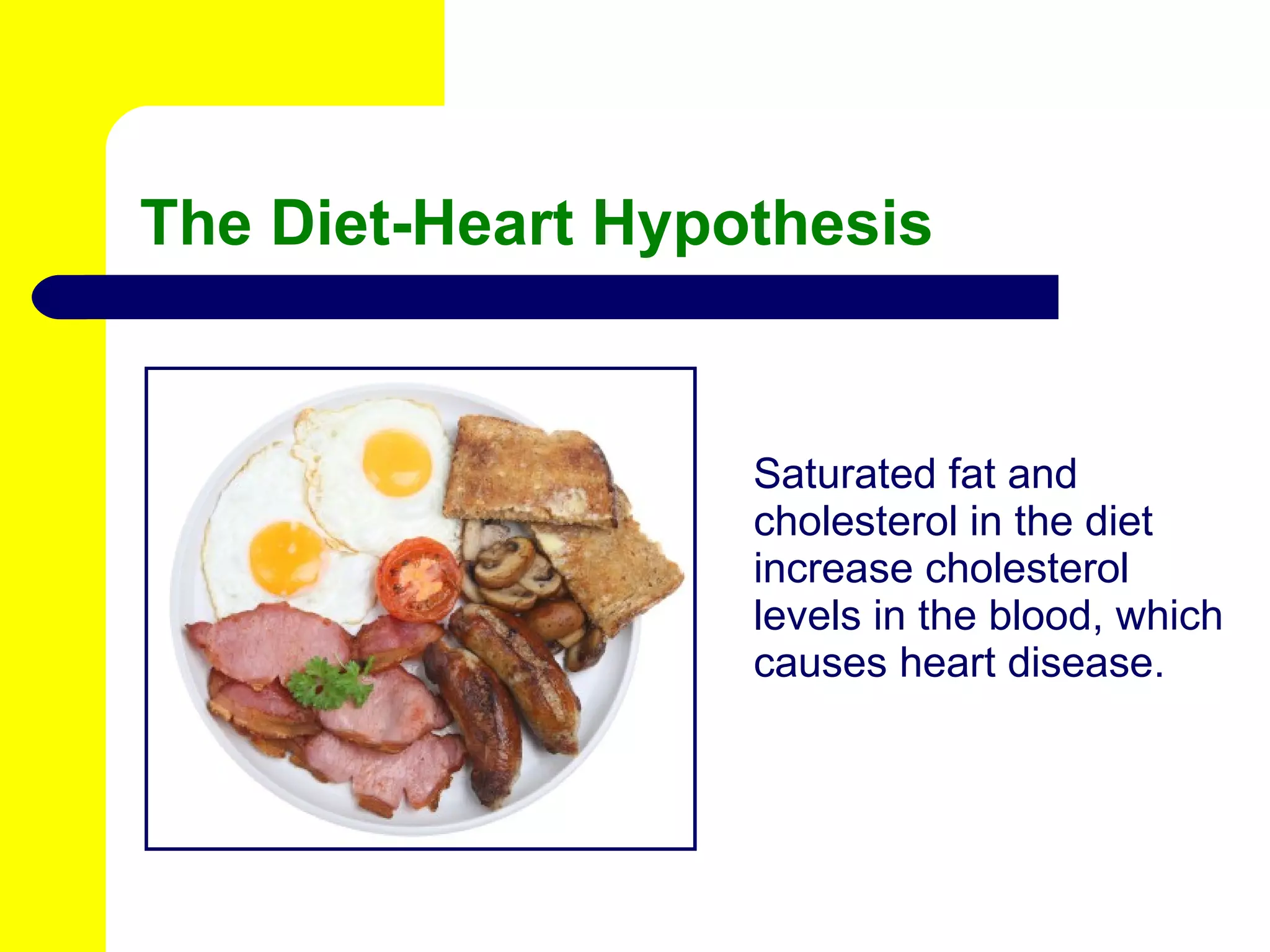
The Diet-Heart Hypothesis Saturated fat and cholesterol in the diet increase cholesterol levels in the blood, which causes heart disease.
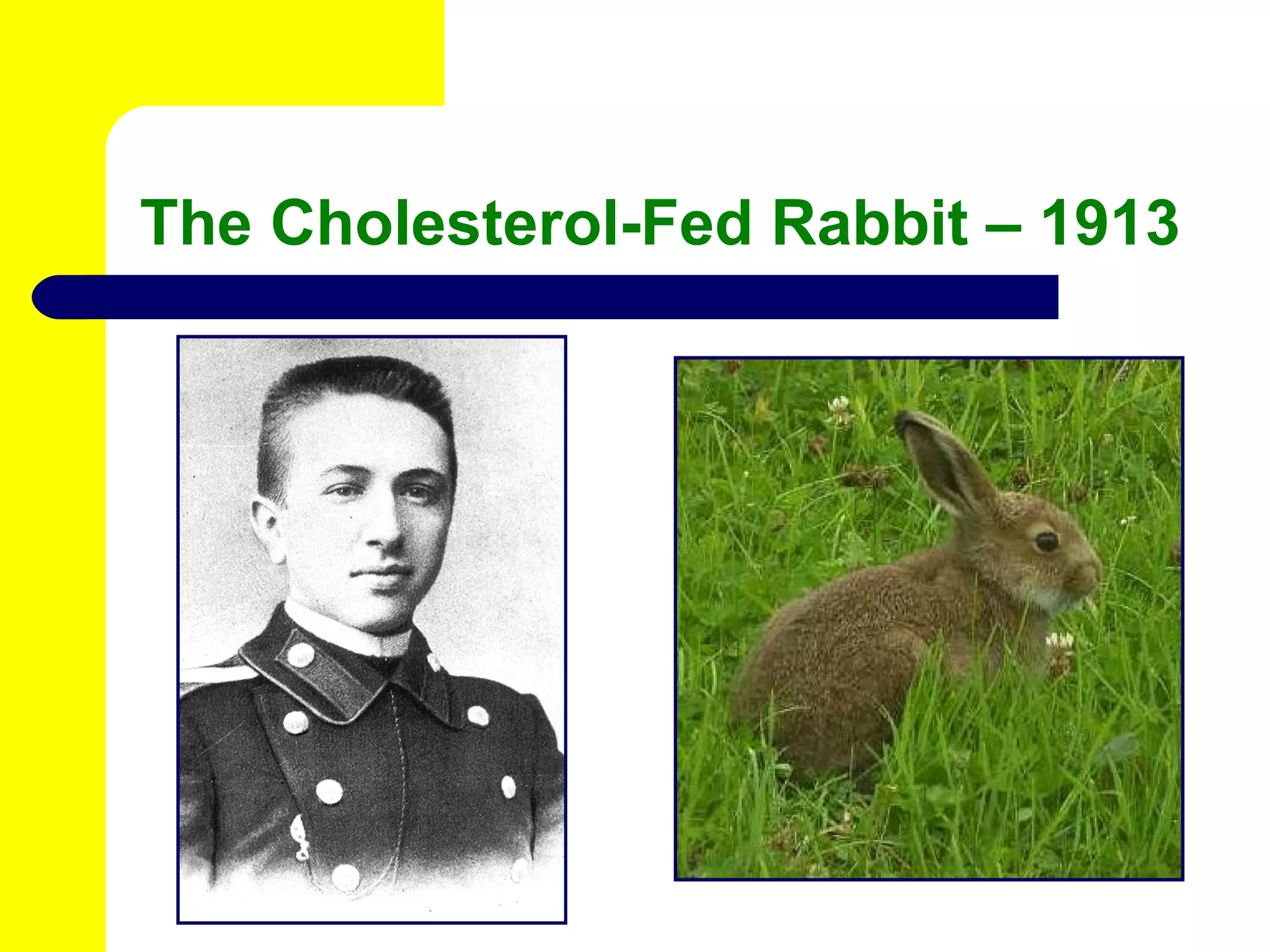
The Cholesterol-Fed Rabbit – 1913
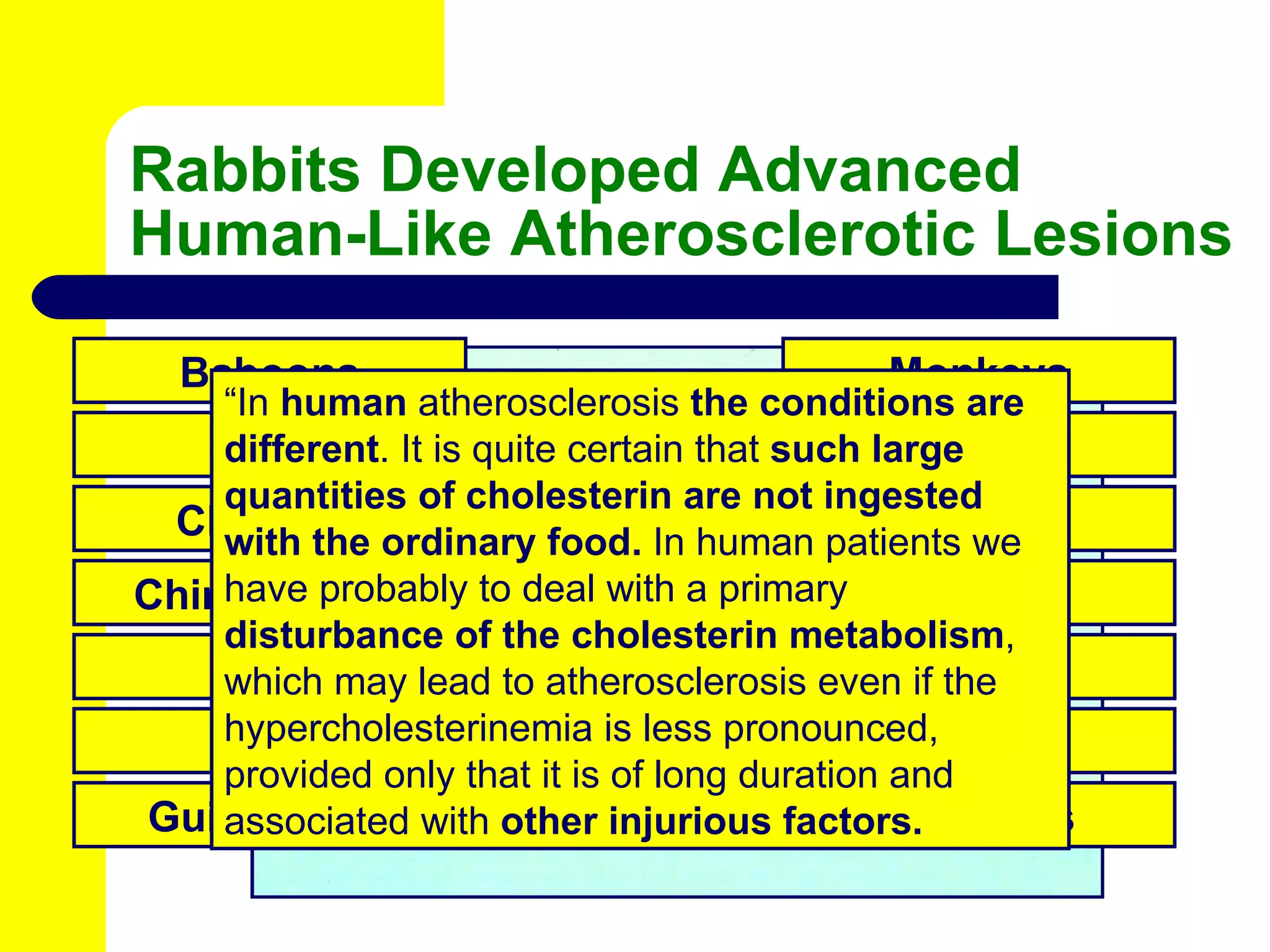
Rabbits Developed Advanced Human-Like Atherosclerotic Lesions Baboons Cats Chickens Chimpanzees Dogs Goats Monkeys Mice Parrots Pigs Pigeons Rats Guinea Pigs Hamsters “ In  human  atherosclerosis  the conditions are different . It is quite certain that  such large quantities of cholesterin are not ingested with the ordinary food.  In human patients we have probably to deal with a primary  disturbance of the cholesterin metabolism , which may lead to atherosclerosis even if the hypercholesterinemia is less pronounced, provided only that it is of long duration and associated with  other injurious factors.
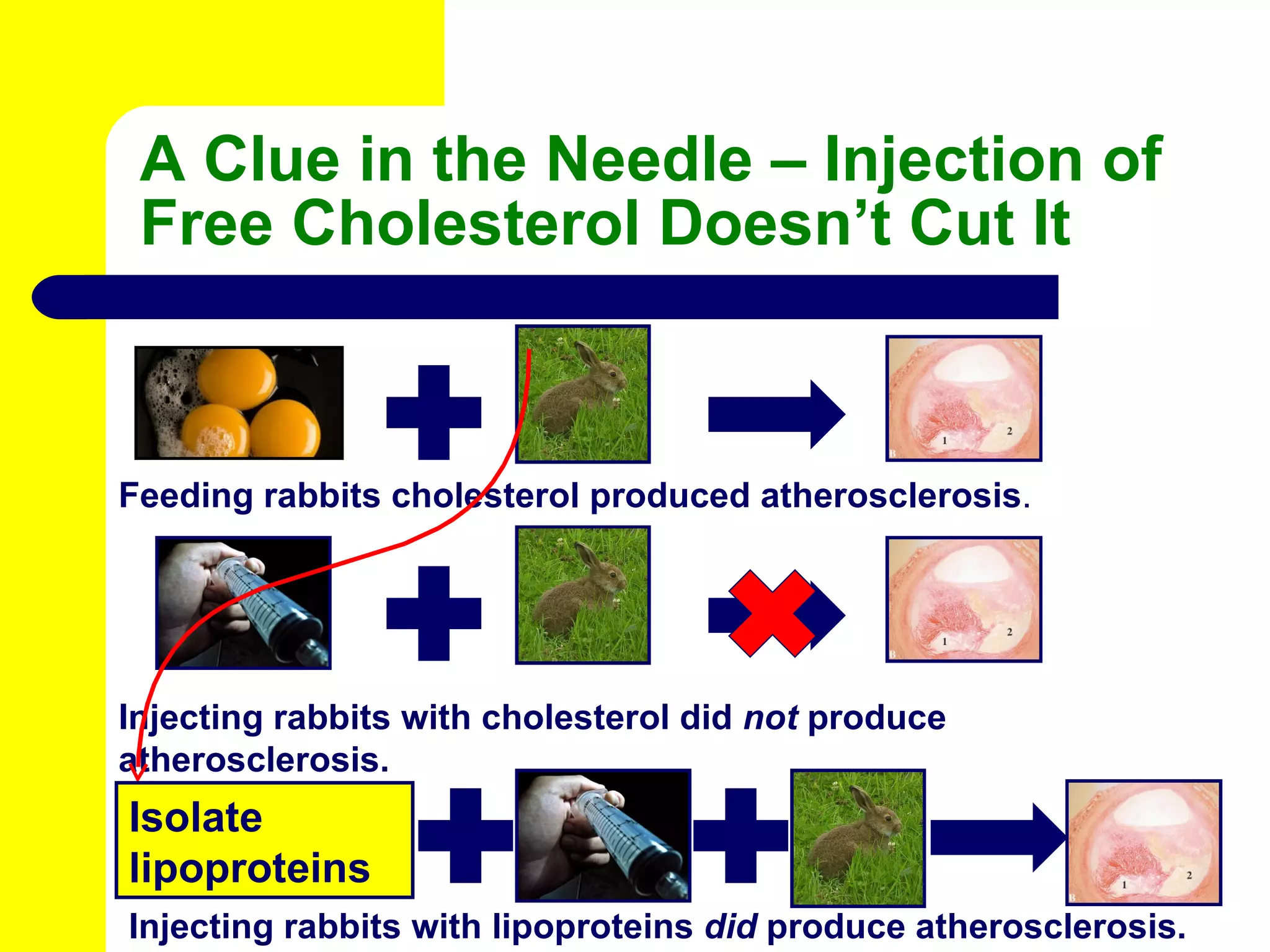
A Clue in the Needle – Injection of Free Cholesterol Doesn’t Cut It Feeding rabbits cholesterol produced atherosclerosis . Injecting rabbits with cholesterol did  not  produce atherosclerosis. Isolate lipoproteins Injecting rabbits with lipoproteins  did  produce atherosclerosis.
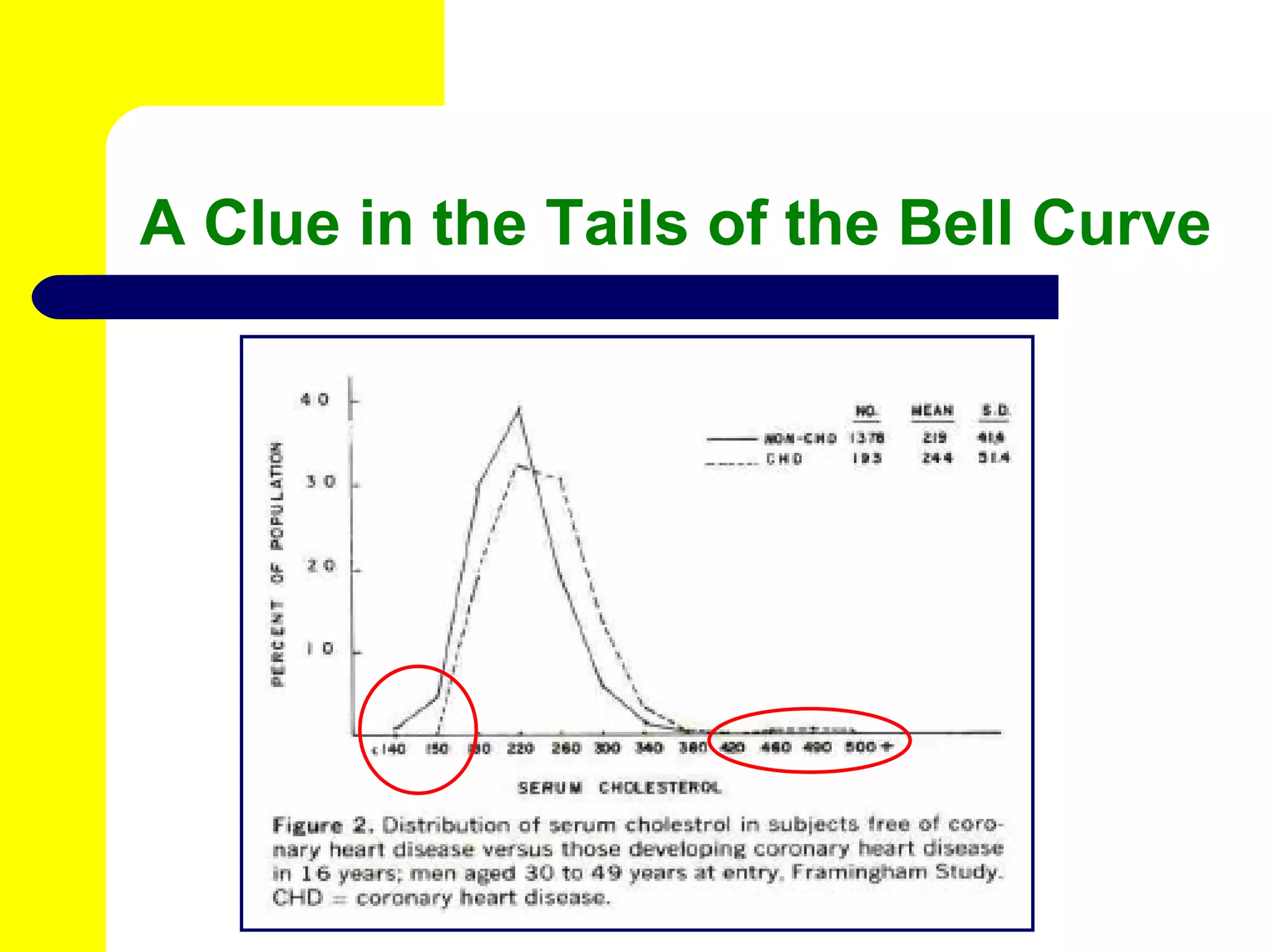
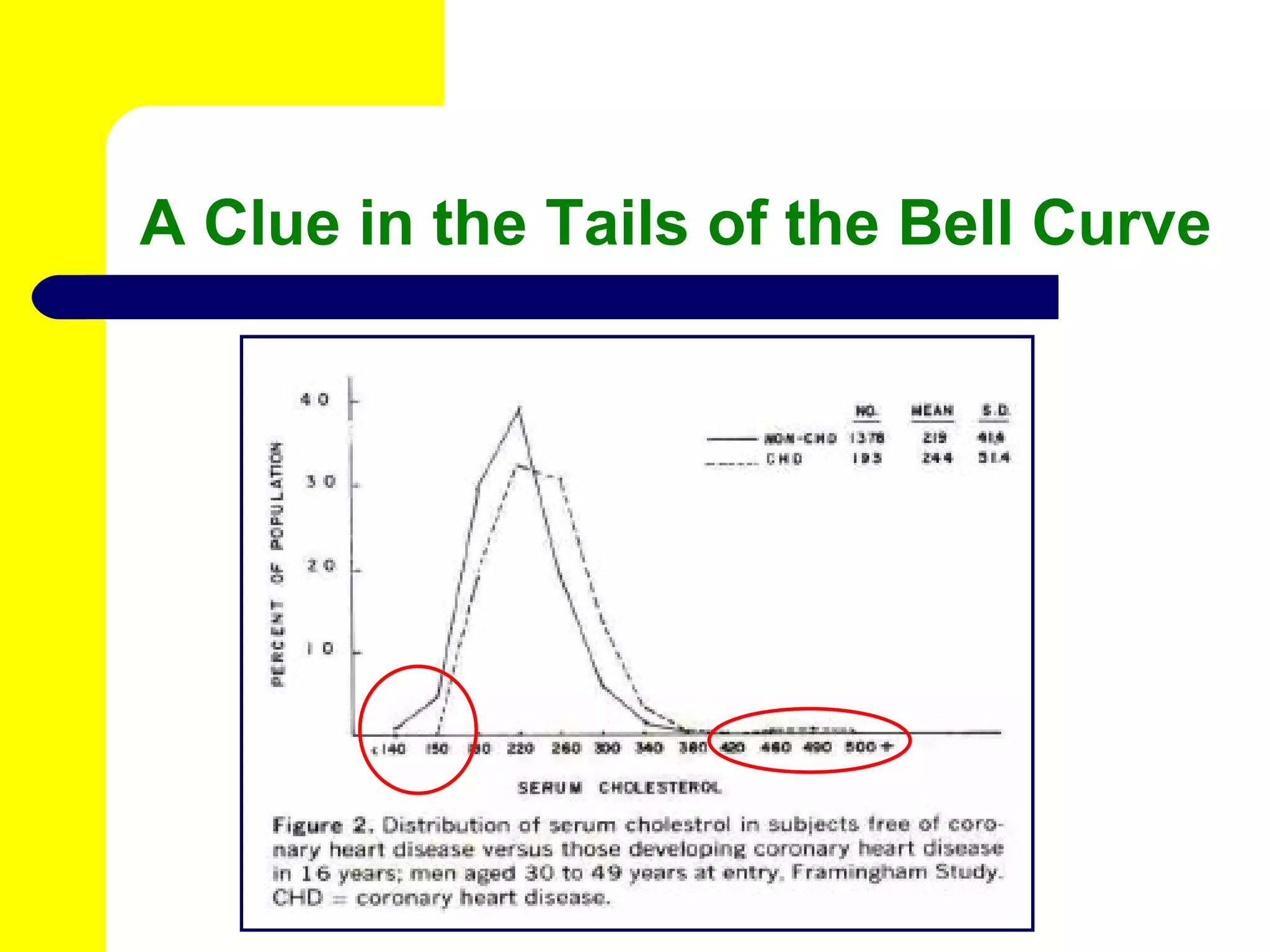
A Clue in the Tails of the Bell Curve
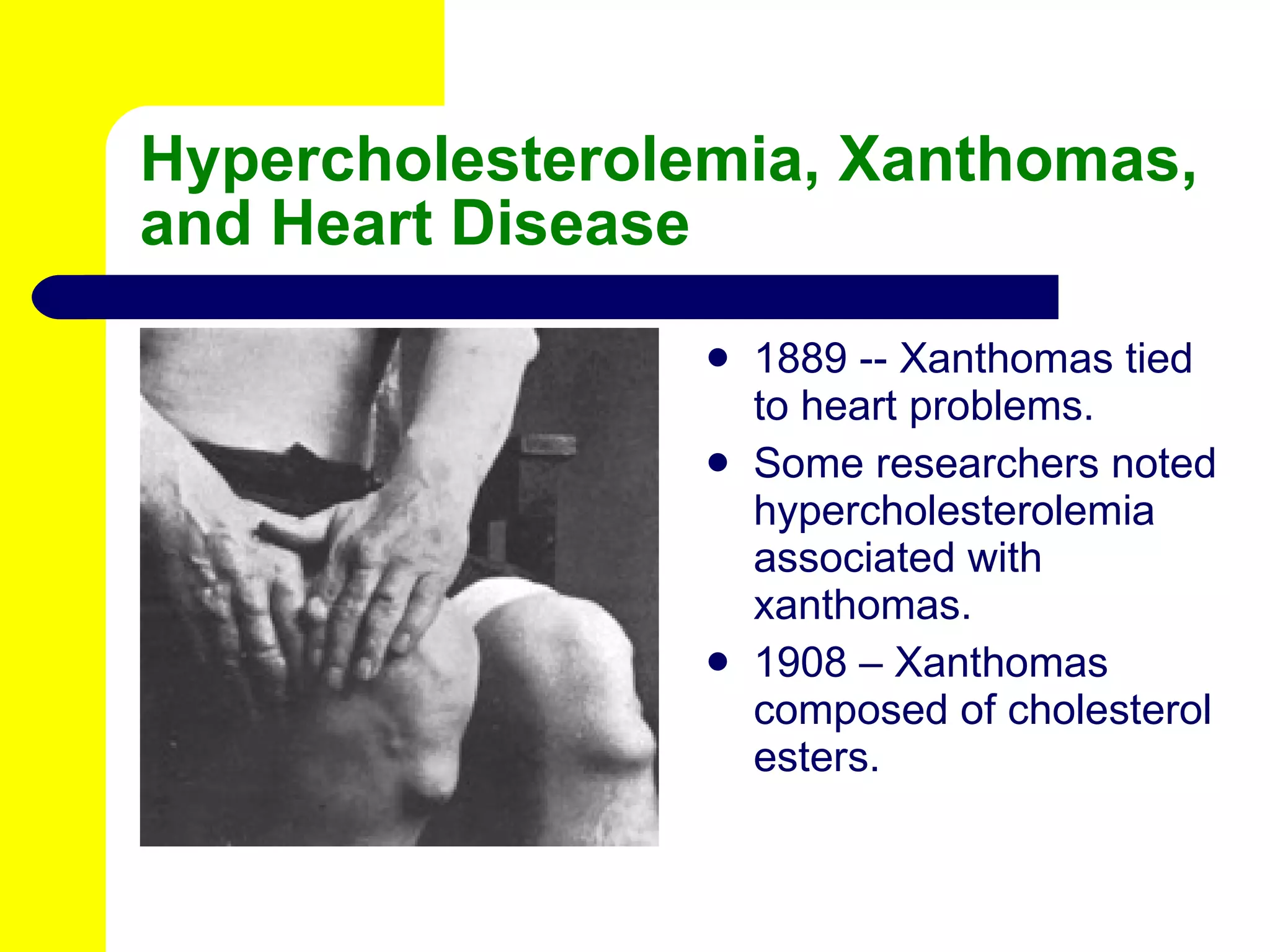
Hypercholesterolemia, Xanthomas, and Heart Disease 1889 -- Xanthomas tied to heart problems. Some researchers noted hypercholesterolemia associated with xanthomas. 1908 – Xanthomas composed of cholesterol esters.
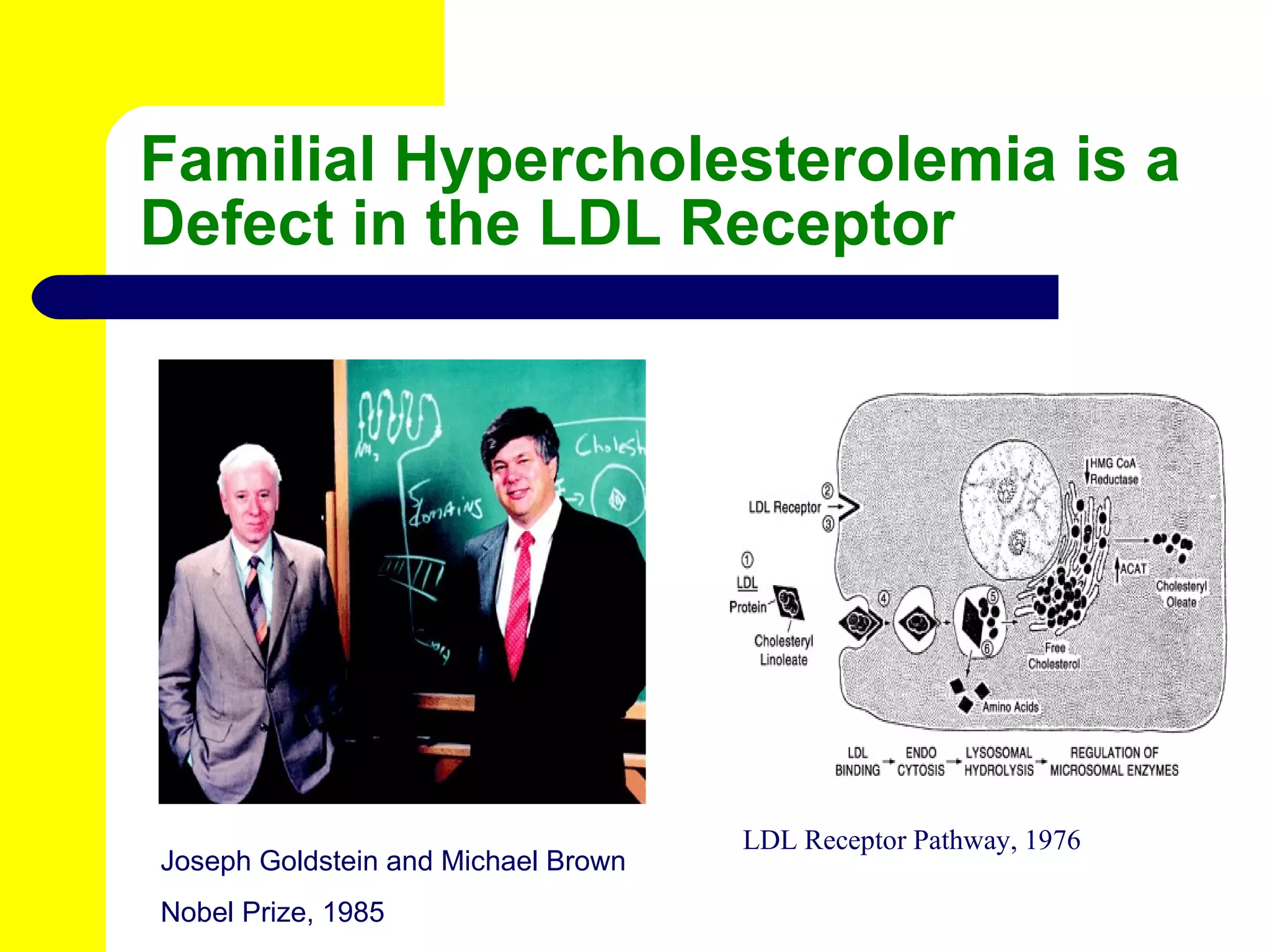
Familial Hypercholesterolemia is a Defect in the LDL Receptor Joseph Goldstein and Michael Brown Nobel Prize, 1985 LDL Receptor Pathway, 1976
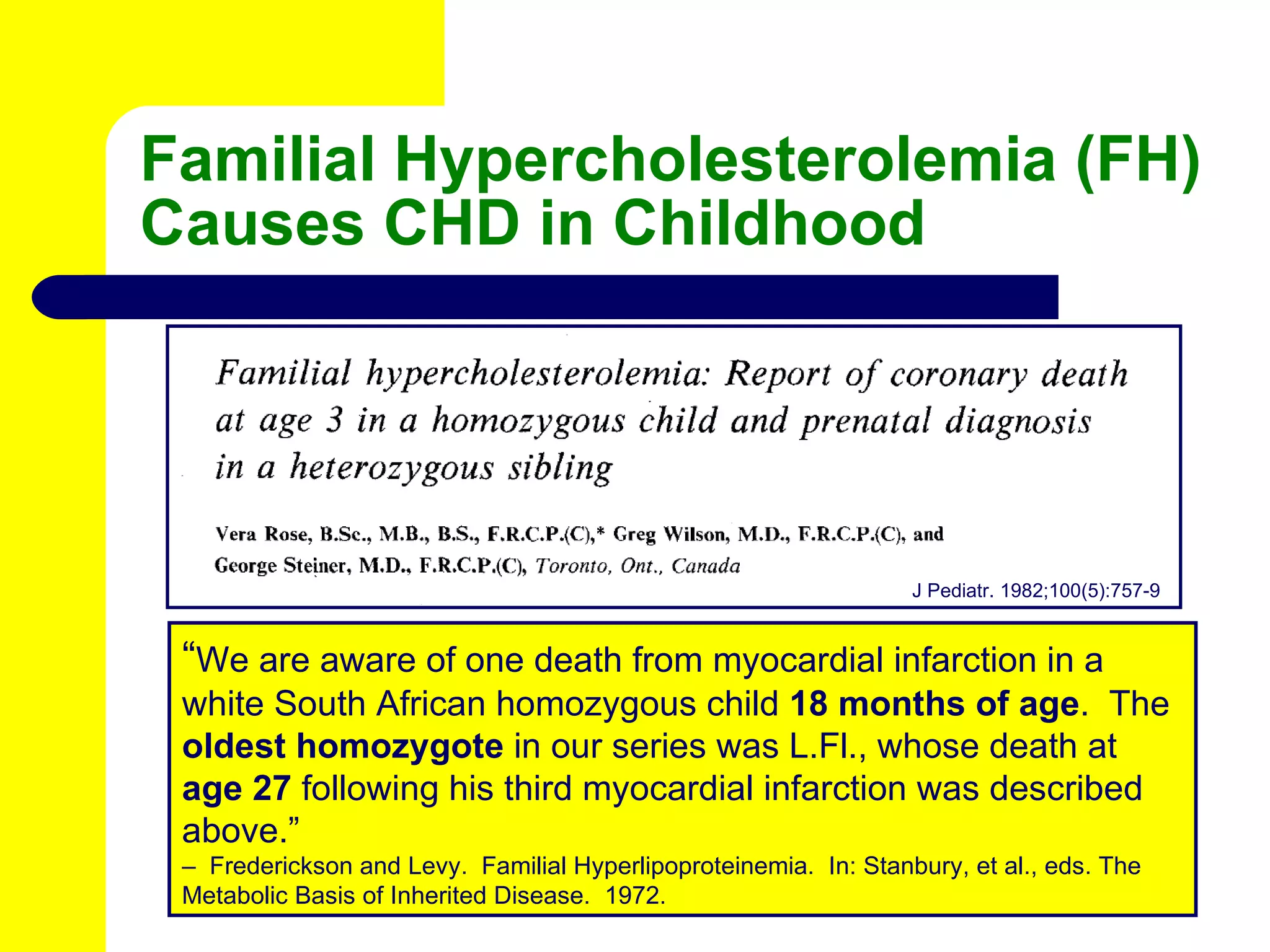
Familial Hypercholesterolemia (FH) Causes CHD in Childhood J Pediatr. 1982;100(5):757-9 “ We are aware of one death from myocardial infarction in a white South African homozygous child  18 months of age .  The  oldest homozygote  in our series was L.Fl., whose death at  age 27  following his third myocardial infarction was described above.” –  Frederickson and Levy.  Familial Hyperlipoproteinemia.  In: Stanbury, et al., eds. The Metabolic Basis of Inherited Disease.  1972.
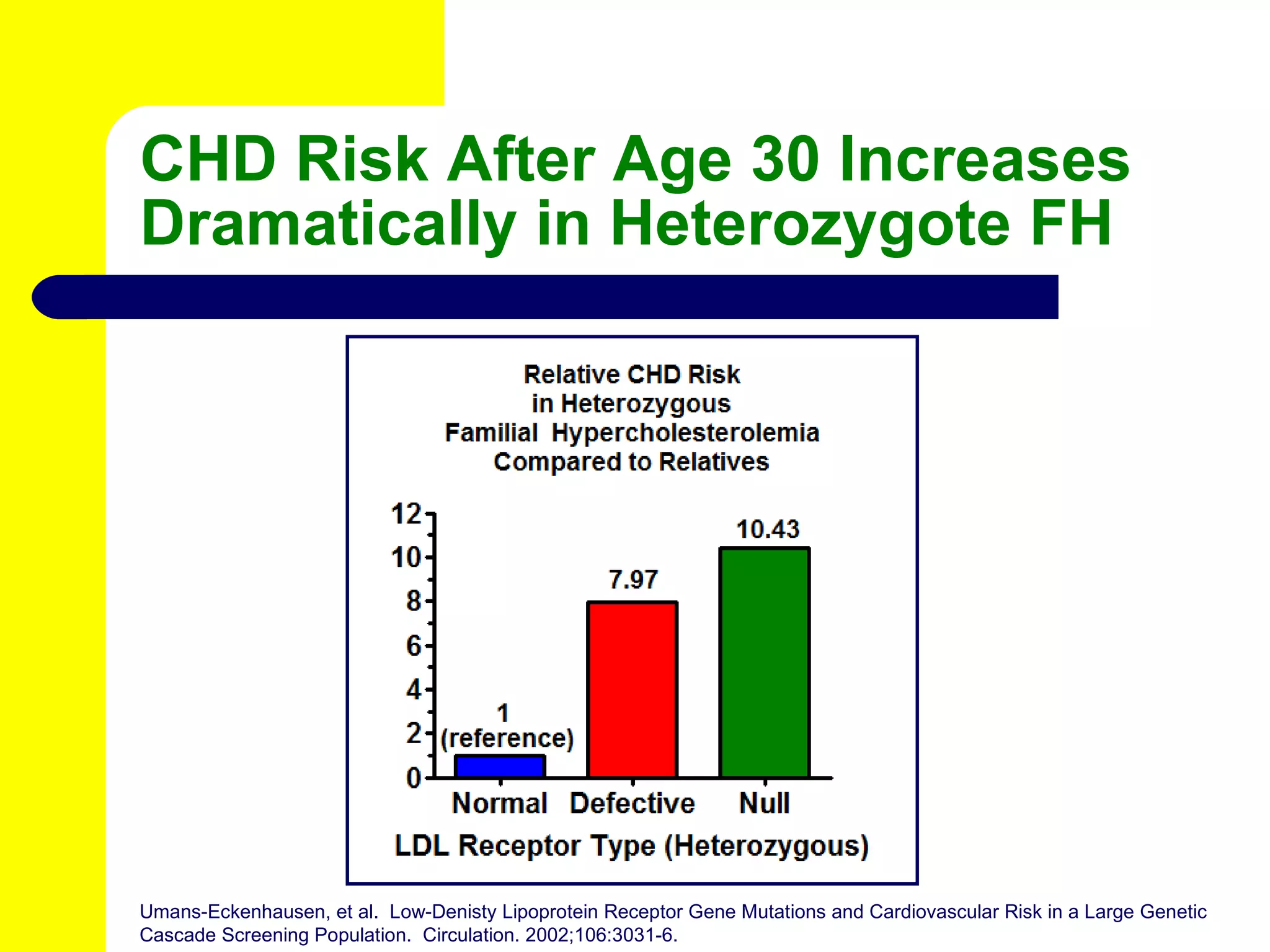
CHD Risk After Age 30 Increases Dramatically in Heterozygote FH Umans-Eckenhausen, et al.  Low-Denisty Lipoprotein Receptor Gene Mutations and Cardiovascular Risk in a Large Genetic Cascade Screening Population.  Circulation. 2002;106:3031-6.
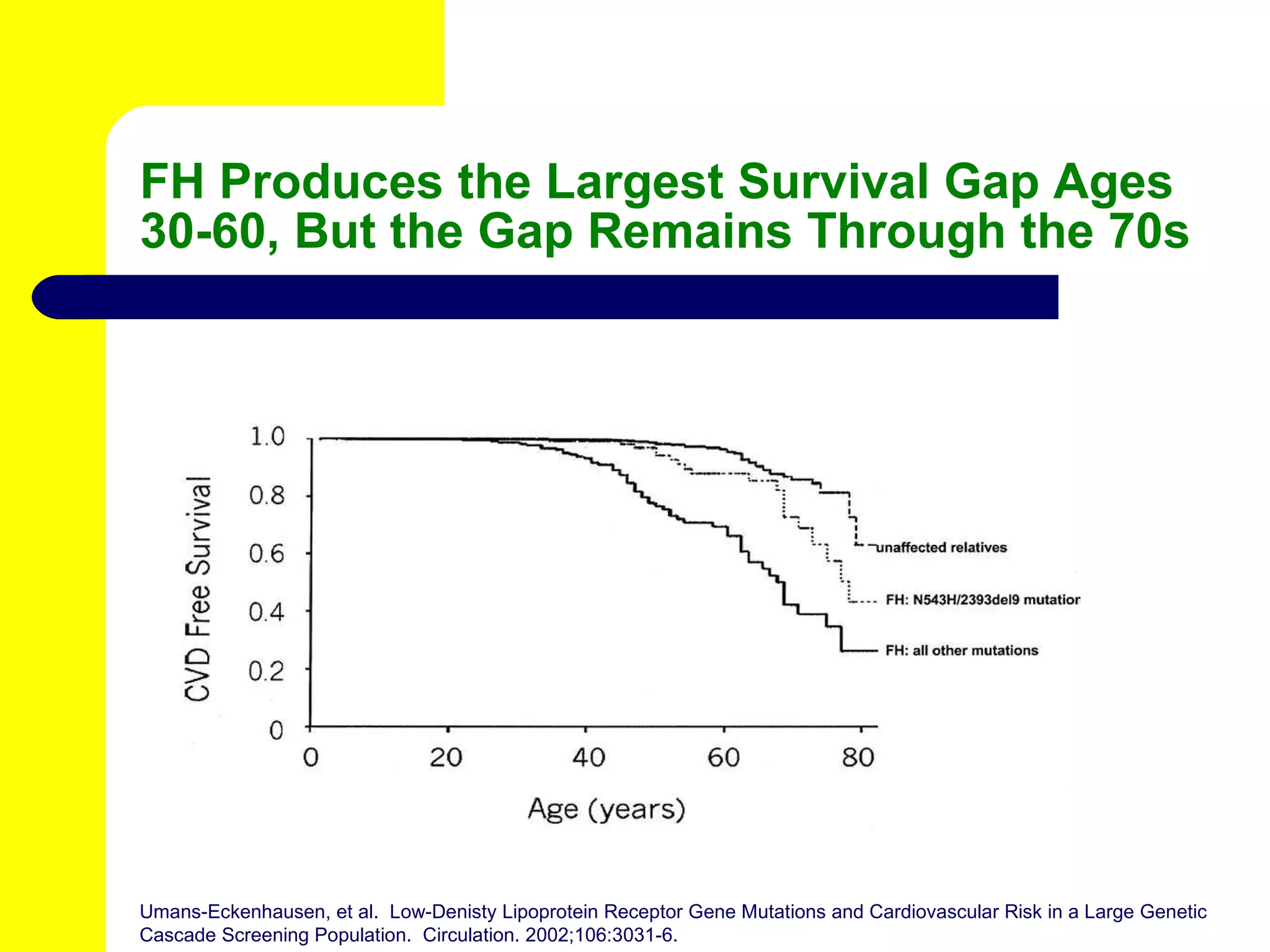
FH Produces the Largest Survival Gap Ages 30-60, But the Gap Remains Through the 70s Umans-Eckenhausen, et al.  Low-Denisty Lipoprotein Receptor Gene Mutations and Cardiovascular Risk in a Large Genetic Cascade Screening Population.  Circulation. 2002;106:3031-6.
A Clue in the Tails of the Bell Curve
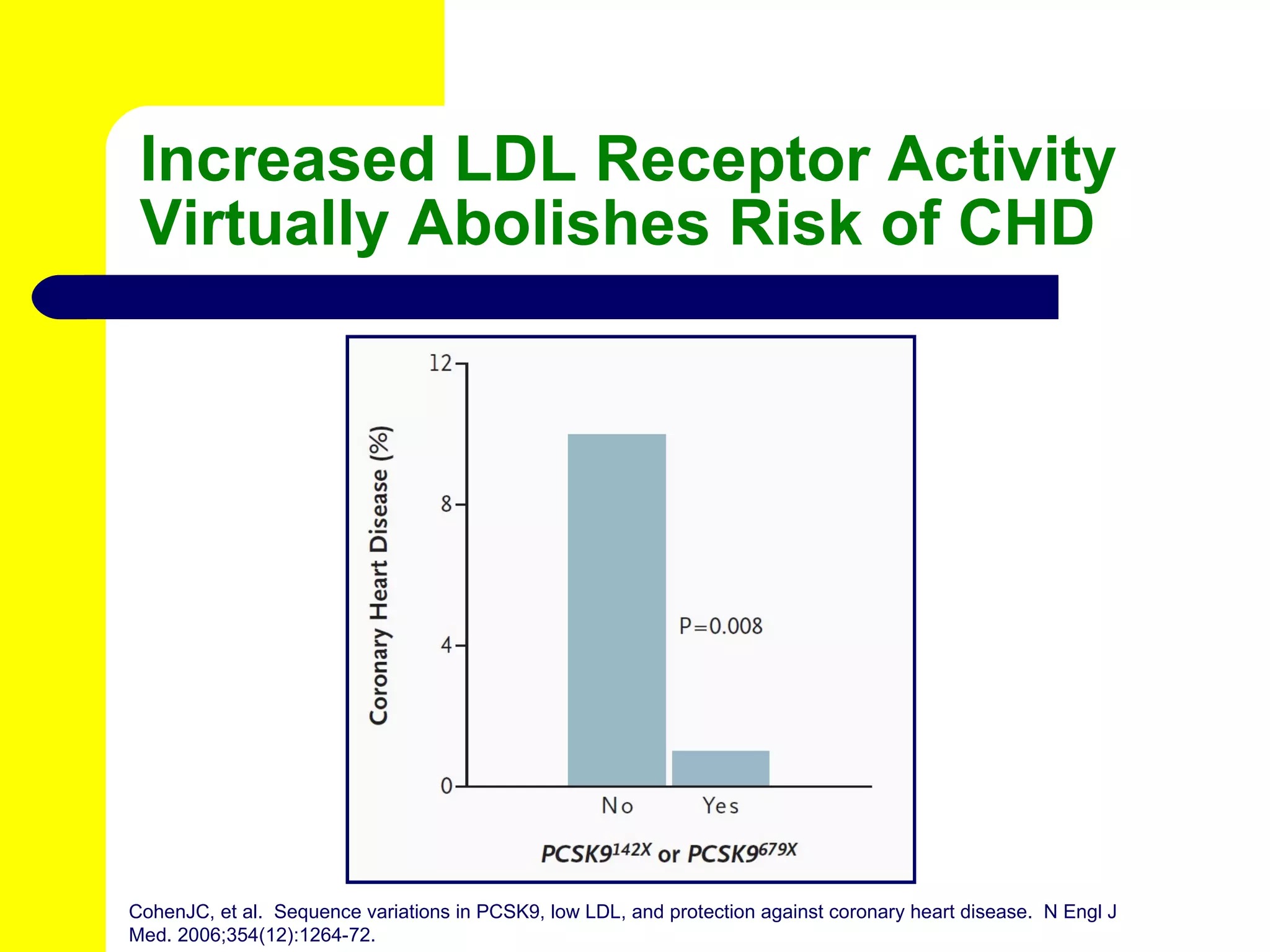
Increased LDL Receptor Activity Virtually Abolishes Risk of CHD CohenJC, et al.  Sequence variations in PCSK9, low LDL, and protection against coronary heart disease.  N Engl J Med. 2006;354(12):1264-72.
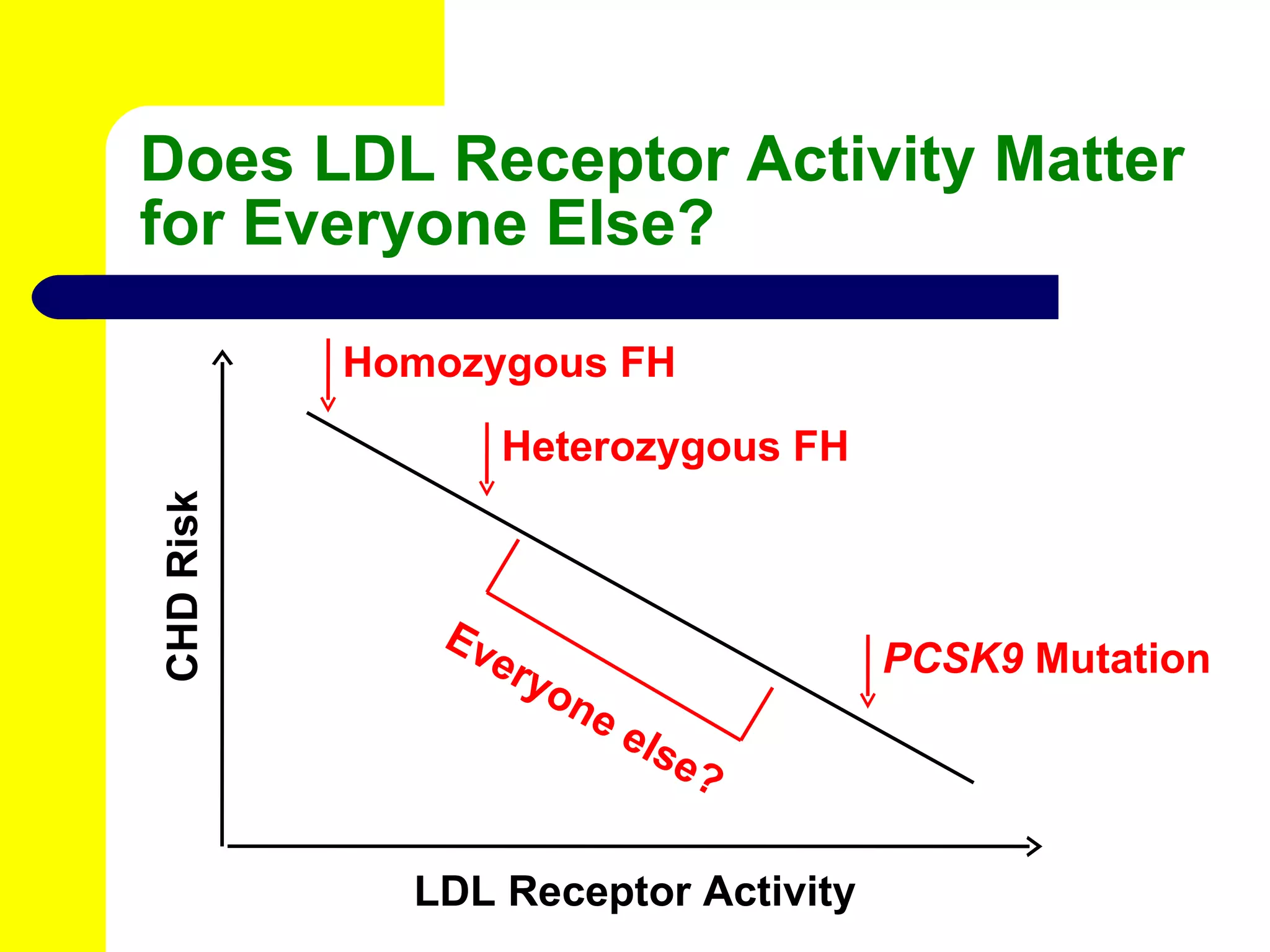
Does LDL Receptor Activity Matter for Everyone Else? LDL Receptor Activity CHD Risk Homozygous FH Heterozygous FH PCSK9  Mutation Everyone else?
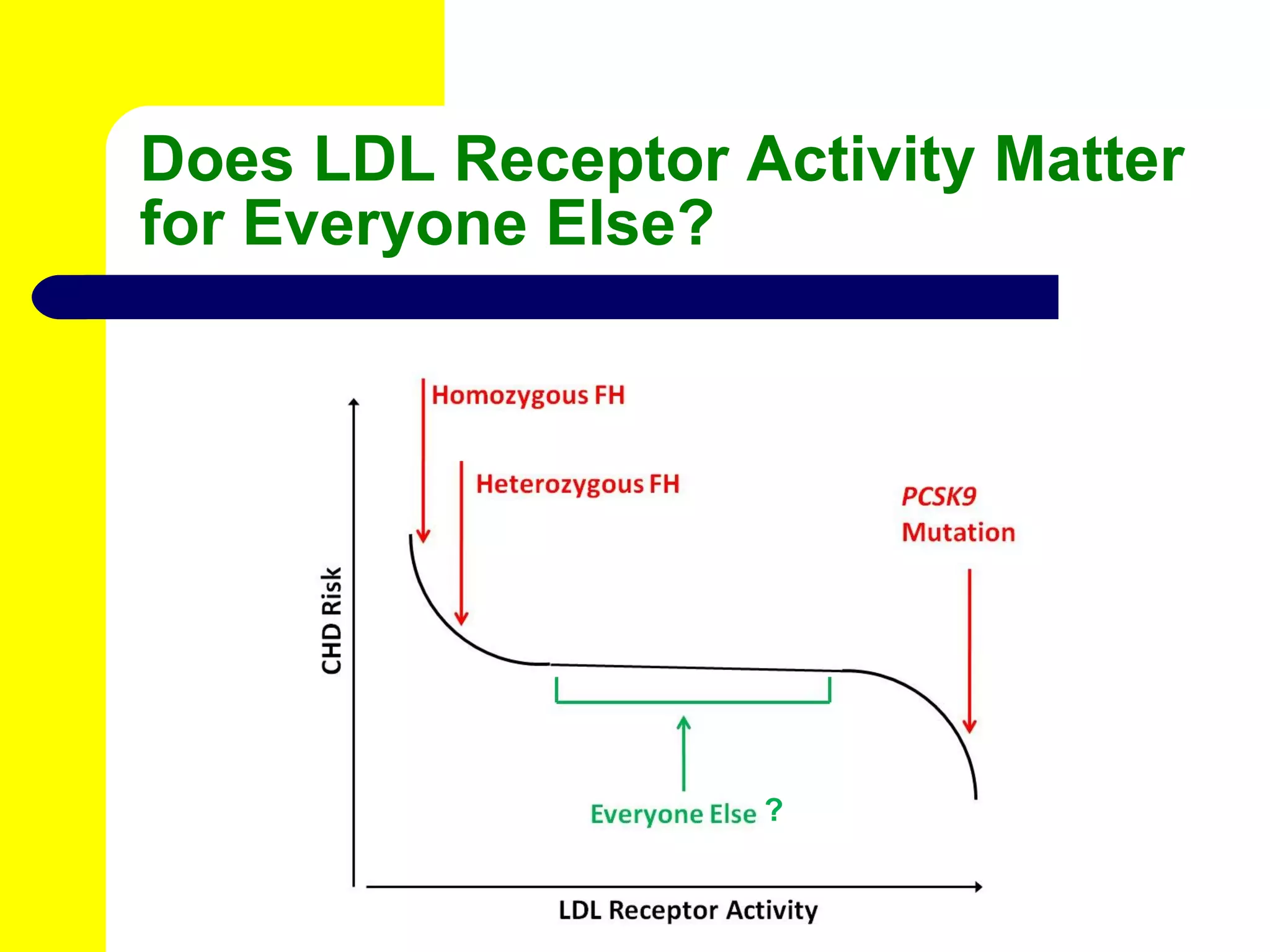
Does LDL Receptor Activity Matter for Everyone Else? ?
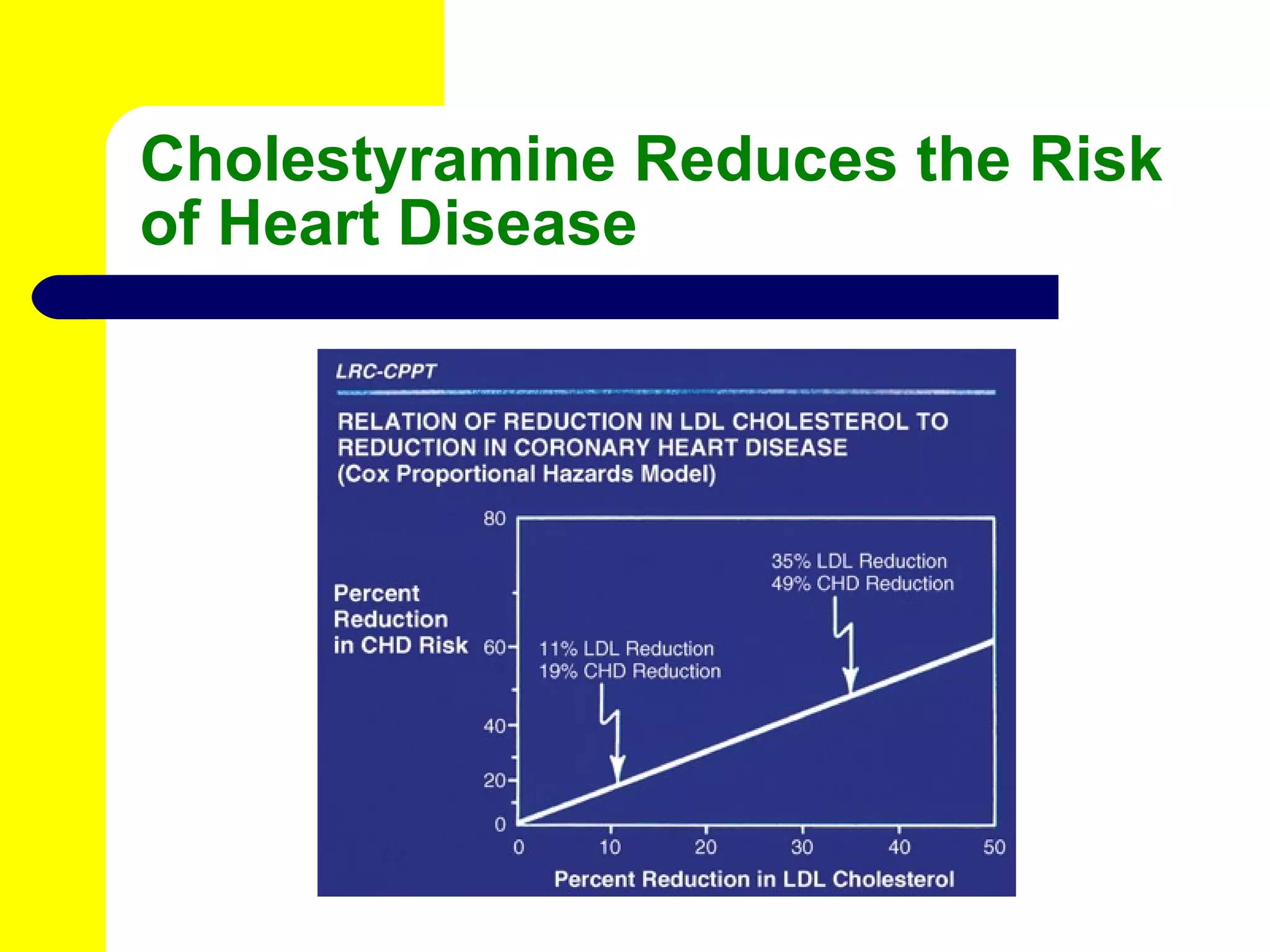
Cholestyramine Reduces the Risk of Heart Disease
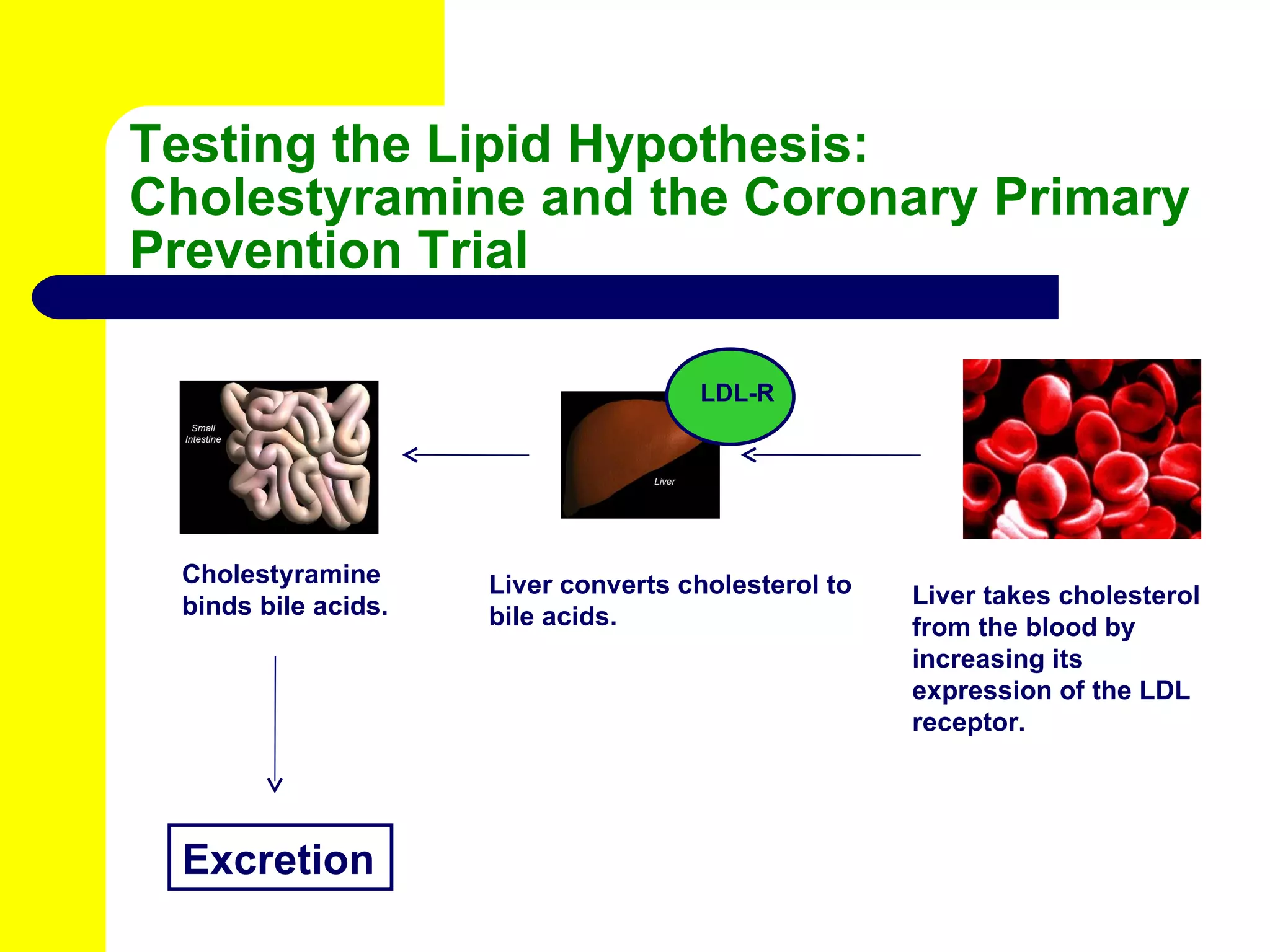
Testing the Lipid Hypothesis: Cholestyramine and the Coronary Primary Prevention Trial Cholestyramine binds bile acids. Excretion Liver converts cholesterol to bile acids. LDL-R Liver takes cholesterol from the blood by increasing its expression of the LDL receptor.
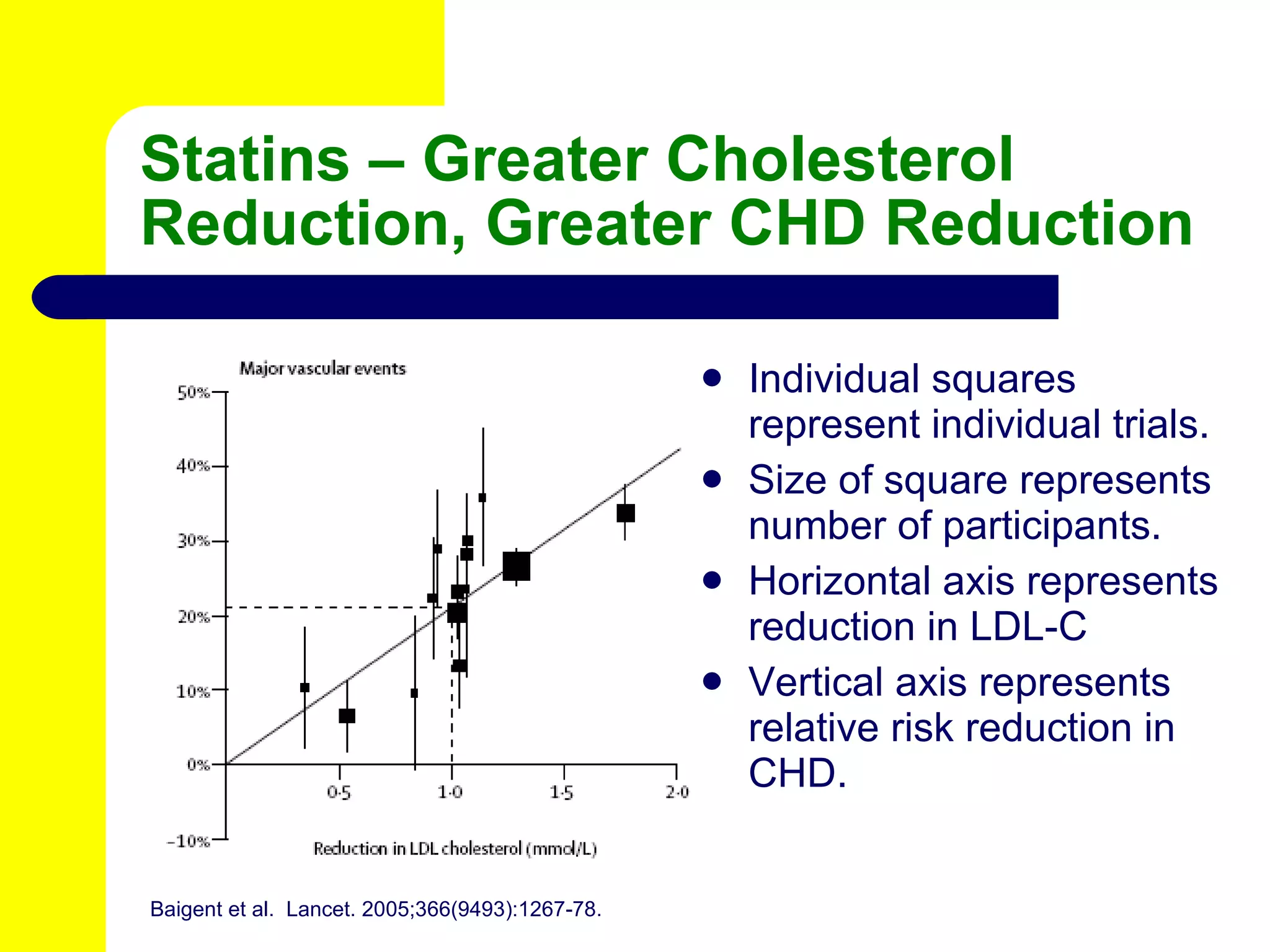
Statins – Greater Cholesterol Reduction, Greater CHD Reduction Individual squares represent individual trials. Size of square represents number of participants. Horizontal axis represents reduction in LDL-C Vertical axis represents relative risk reduction in CHD. Baigent et al.  Lancet. 2005;366(9493):1267-78.
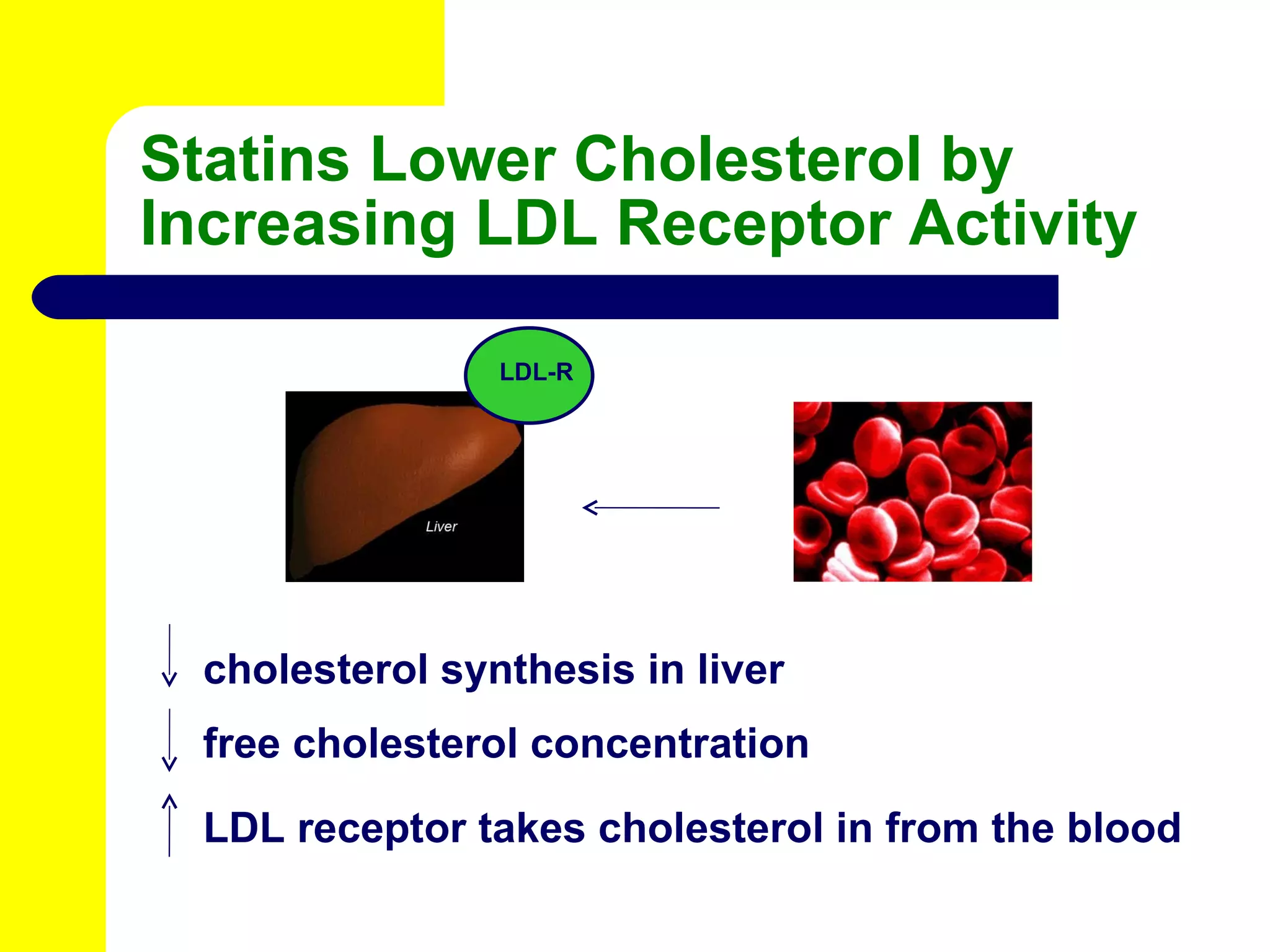
Statins Lower Cholesterol by Increasing LDL Receptor Activity cholesterol synthesis in liver  free cholesterol concentration LDL-R LDL receptor takes cholesterol in from the blood
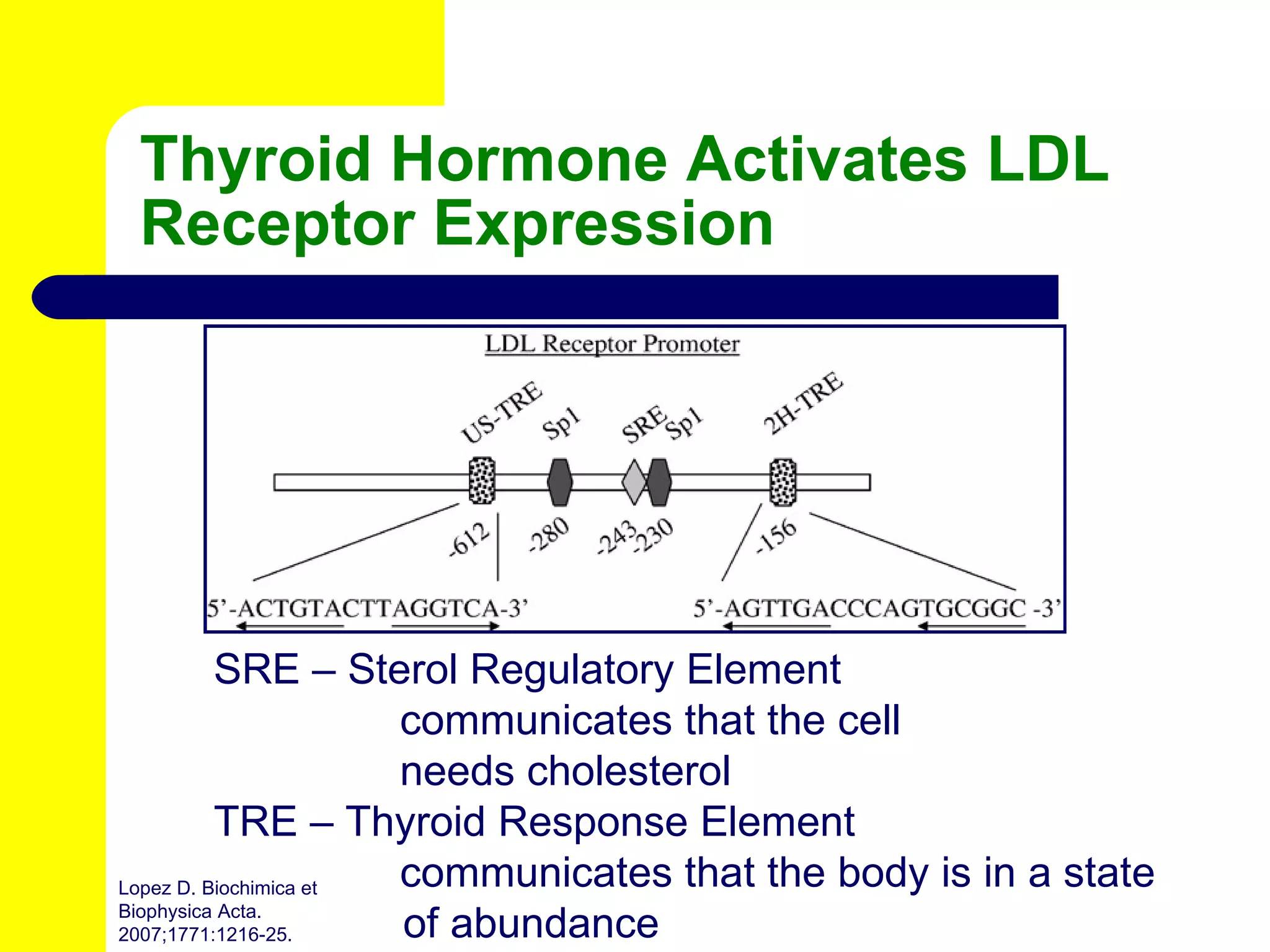
Thyroid Hormone Activates LDL Receptor Expression SRE – Sterol Regulatory Element   communicates that the cell      needs cholesterol TRE – Thyroid Response Element   communicates that the body is in a state   of abundance Lopez D. Biochimica et Biophysica Acta. 2007;1771:1216-25.
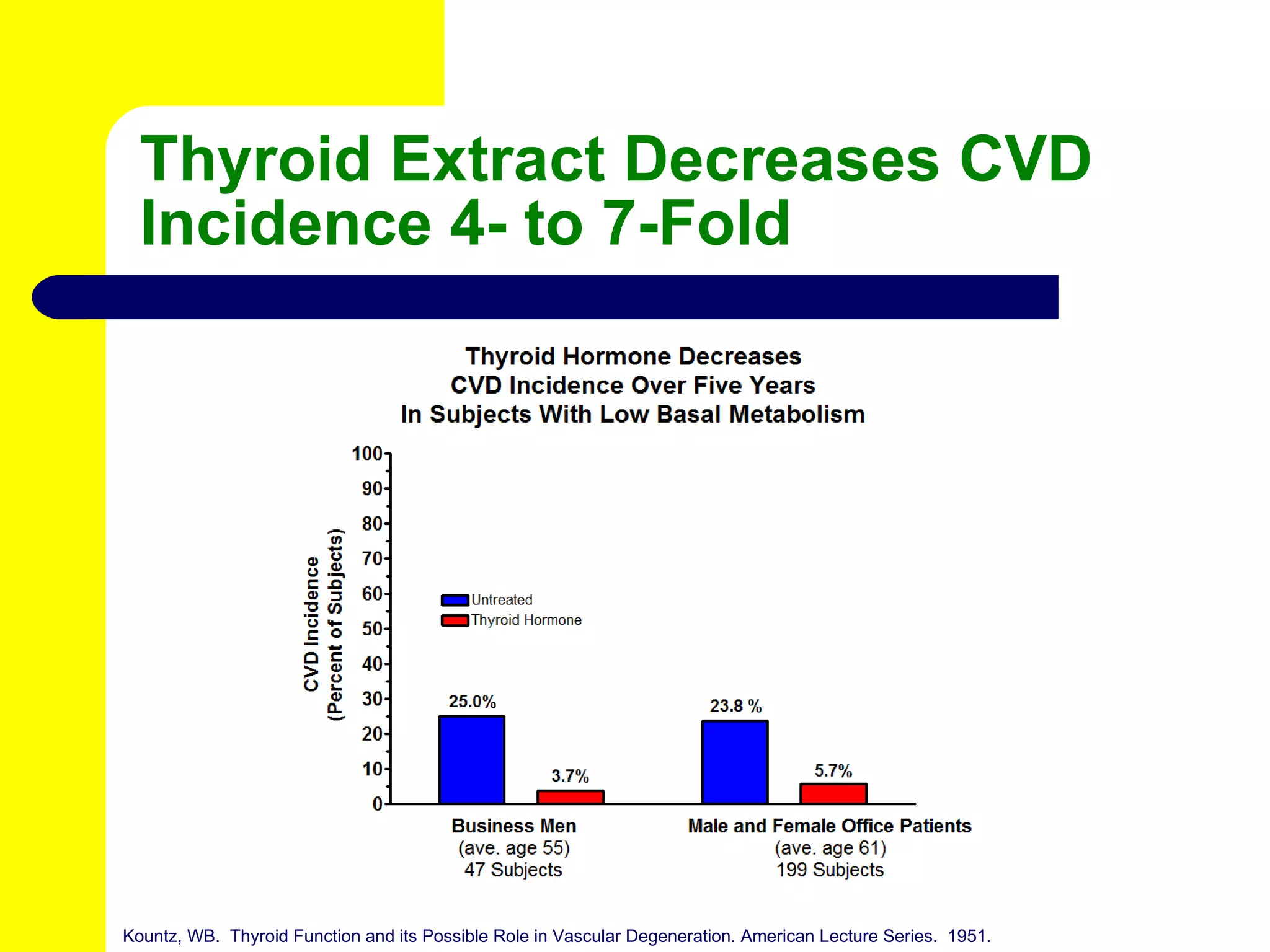
Thyroid Extract Decreases CVD Incidence 4- to 7-Fold Kountz, WB.  Thyroid Function and its Possible Role in Vascular Degeneration. American Lecture Series.  1951.
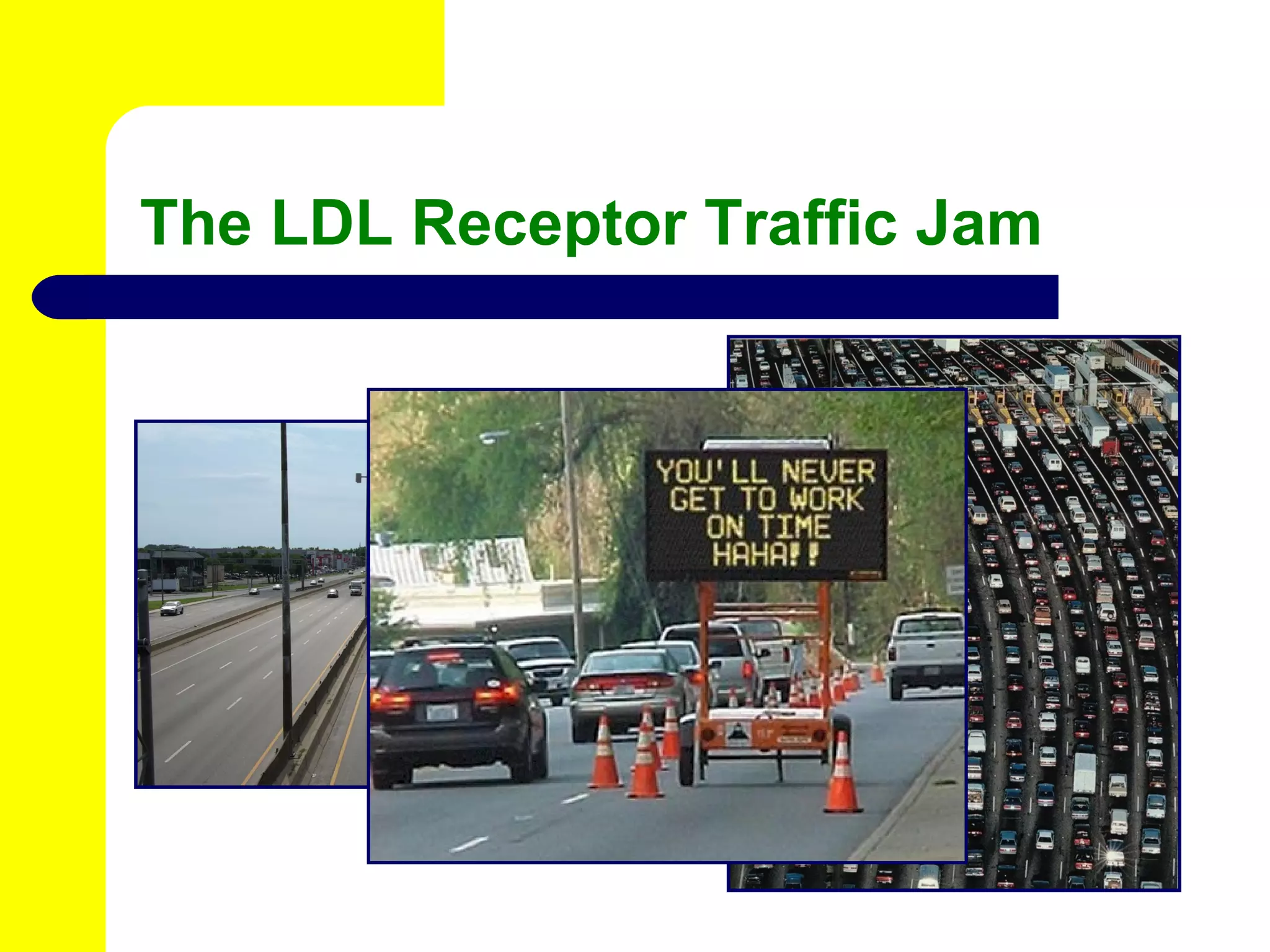
The LDL Receptor Traffic Jam
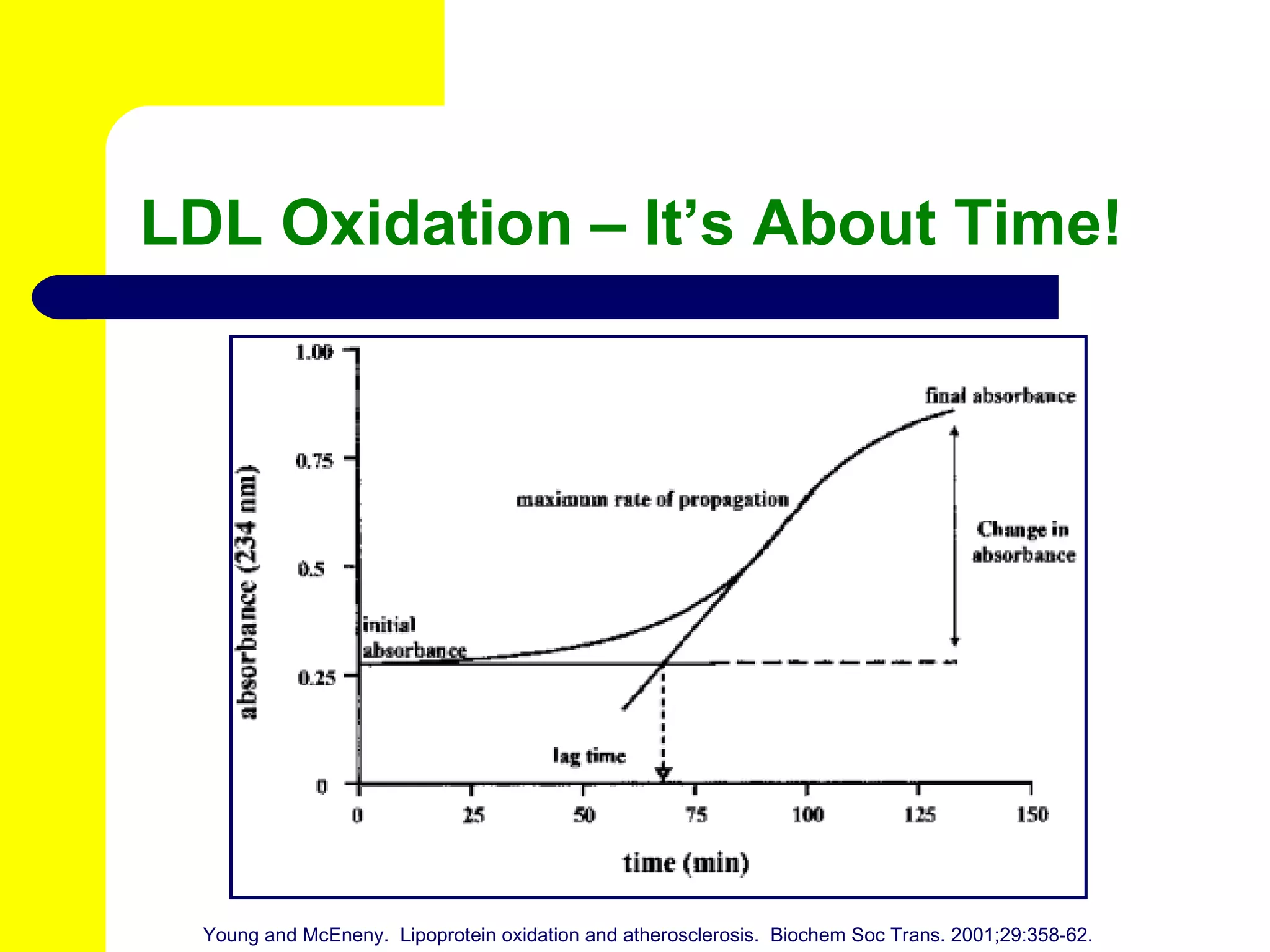
LDL Oxidation – It’s About Time! Young and McEneny.  Lipoprotein oxidation and atherosclerosis.  Biochem Soc Trans. 2001;29:358-62.
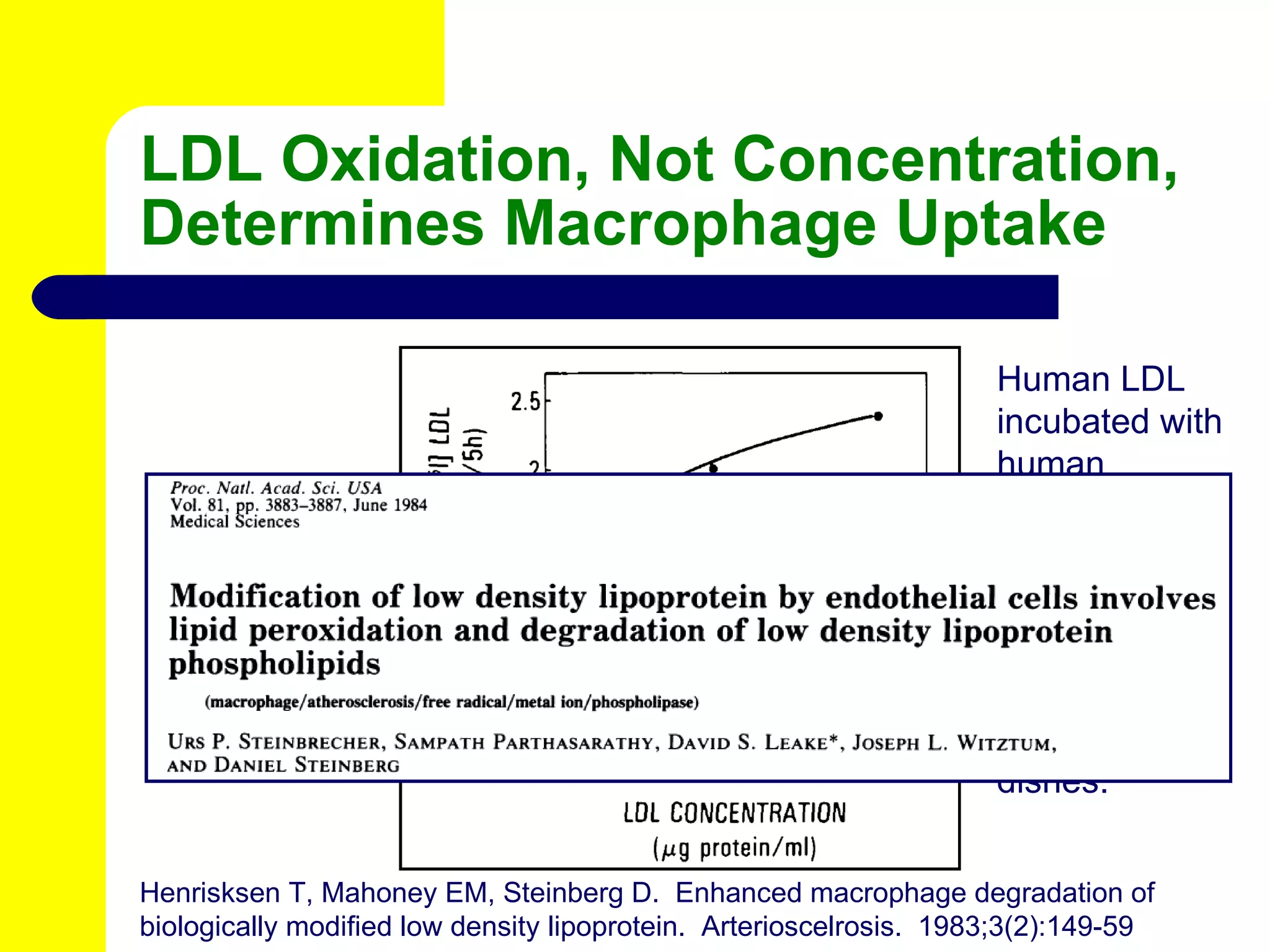
LDL Oxidation, Not Concentration, Determines Macrophage Uptake Human LDL incubated with human endothelial cells. Human LDL incubated in cell-free dishes. Henrisksen T, Mahoney EM, Steinberg D.  Enhanced macrophage degradation of biologically modified low density lipoprotein.  Arterioscelrosis.  1983;3(2):149-59
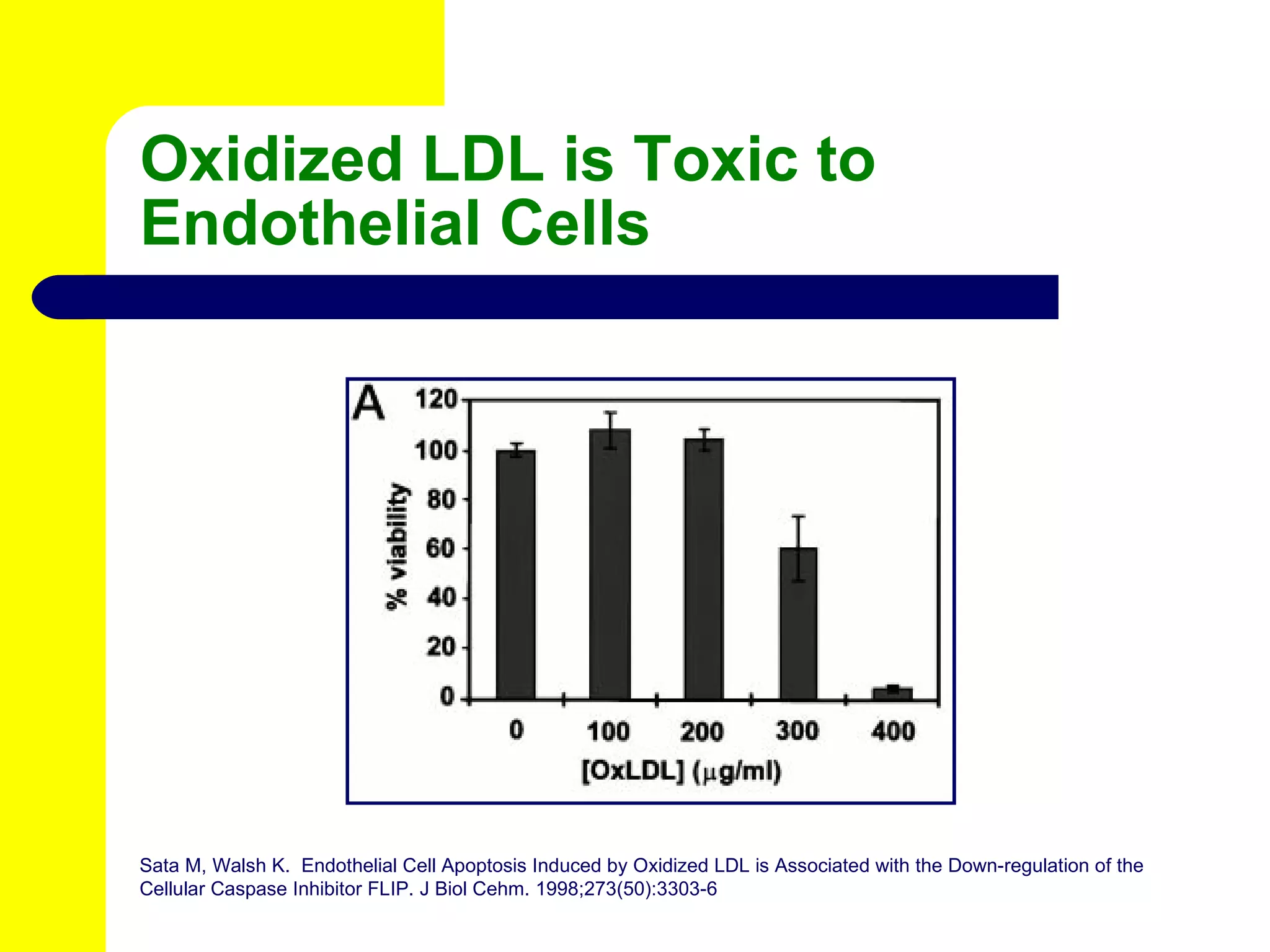
Oxidized LDL is Toxic to Endothelial Cells Sata M, Walsh K.  Endothelial Cell Apoptosis Induced by Oxidized LDL is Associated with the Down-regulation of the Cellular Caspase Inhibitor FLIP. J Biol Cehm. 1998;273(50):3303-6
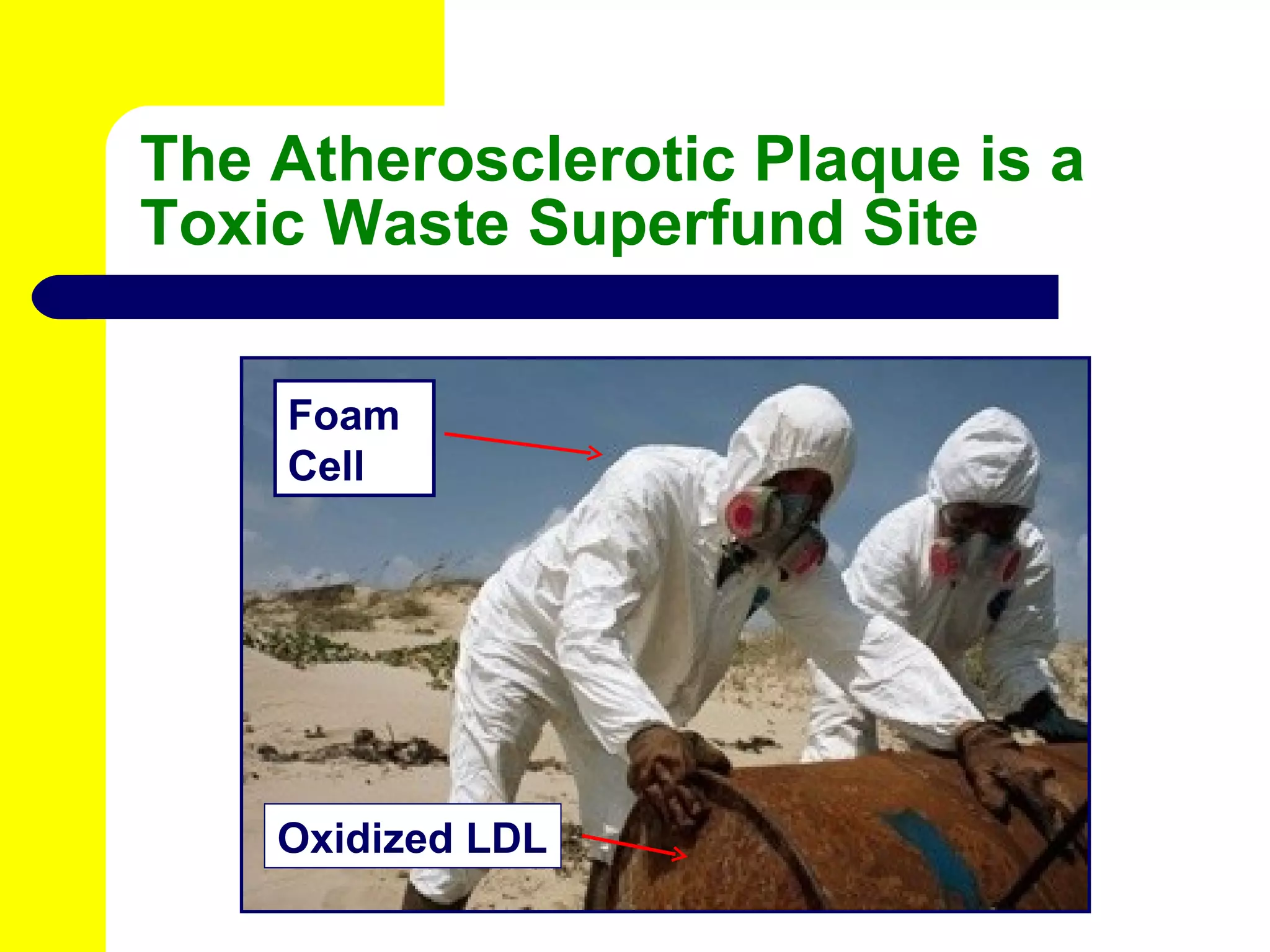
The Atherosclerotic Plaque is a Toxic Waste Superfund Site Foam Cell Oxidized LDL
Strategies for Preventing Atherosclerosis Optimize thyroid status Support the antioxidant defense system Support proper regulation of inflammation
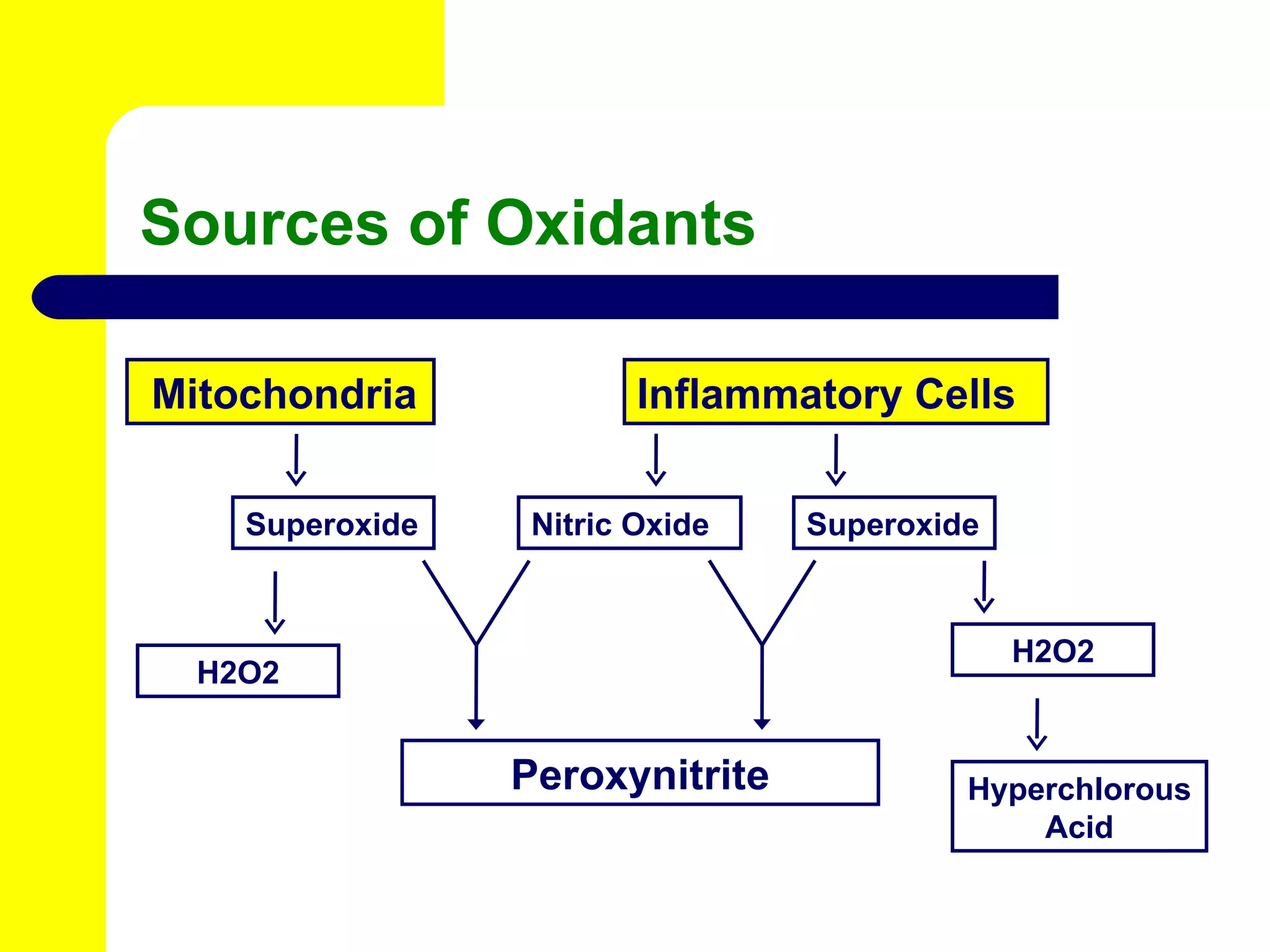
Sources of Oxidants Mitochondria Inflammatory Cells Superoxide H2O2 Superoxide Nitric Oxide H2O2 Hyperchlorous Acid Peroxynitrite
Lipid Peroxidation Begins When Vitamin C Disappears Frei, et al. Ascorbate is an outstanding antioxidant in human blood plasma. Proc Natl Acad Sci USA. 1989;86:6377-81.
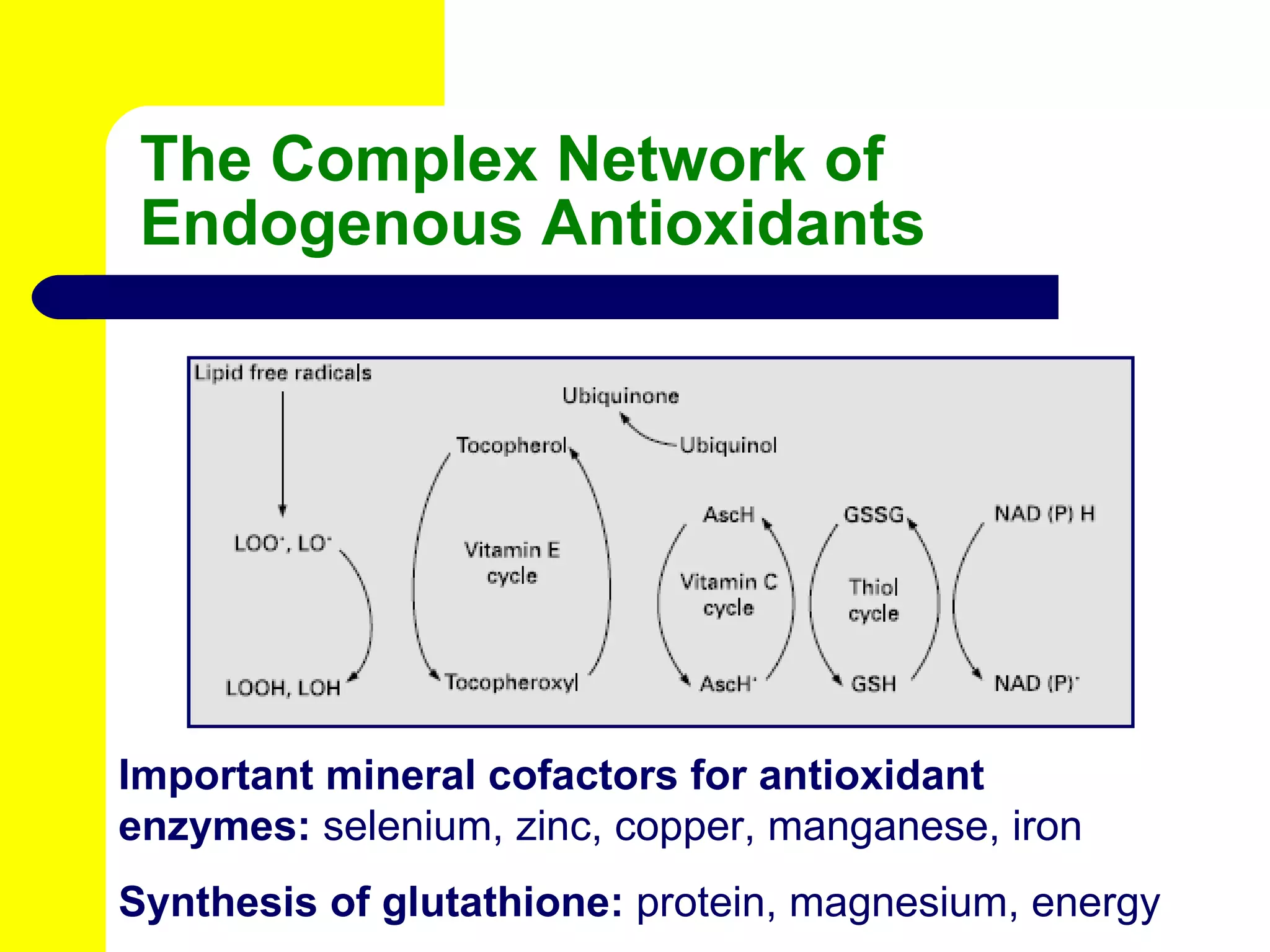
The Complex Network of Endogenous Antioxidants Important mineral cofactors for antioxidant enzymes:  selenium, zinc, copper, manganese, iron Synthesis of glutathione:  protein, magnesium, energy
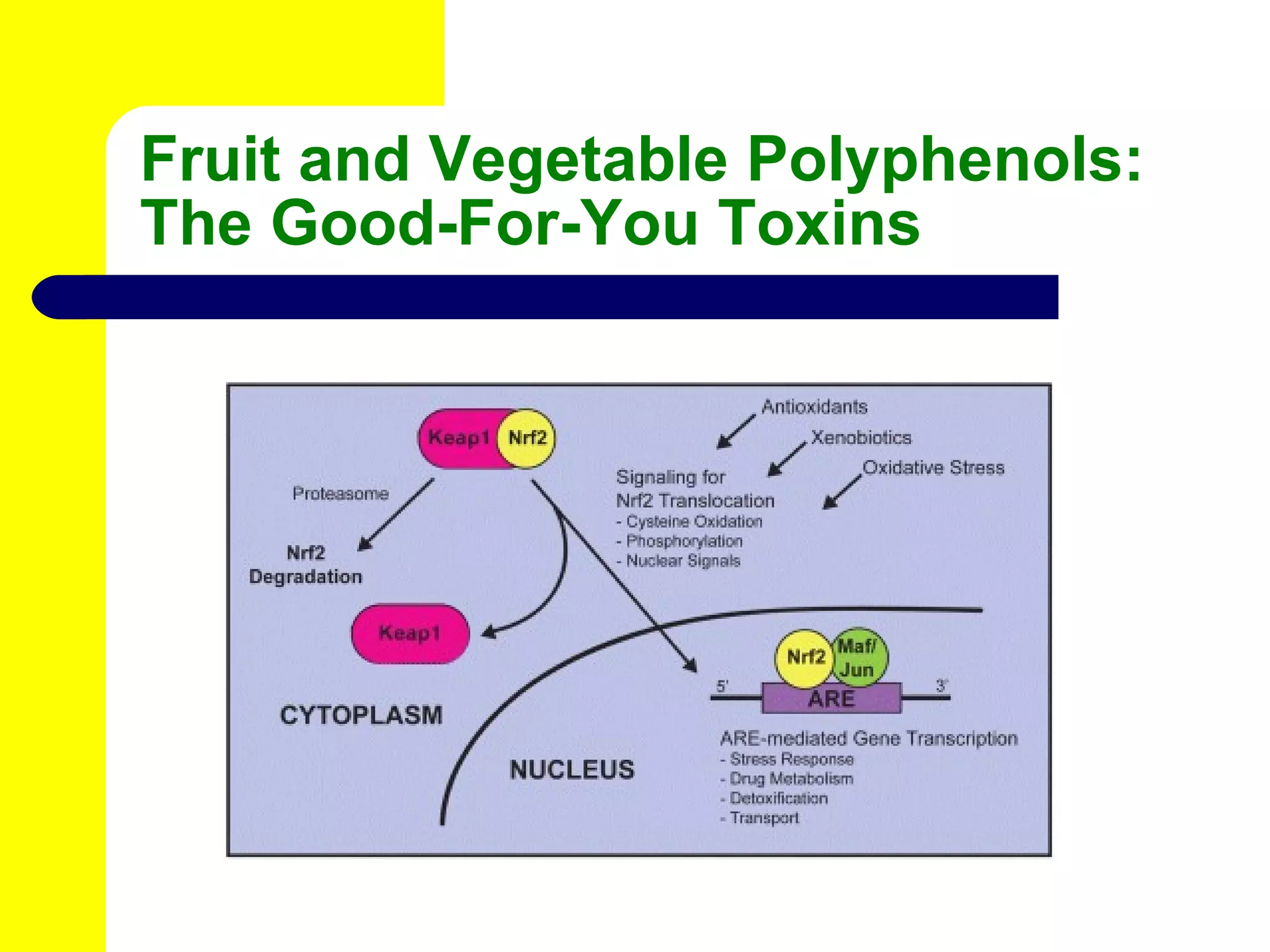
Fruit and Vegetable Polyphenols: The Good-For-You Toxins
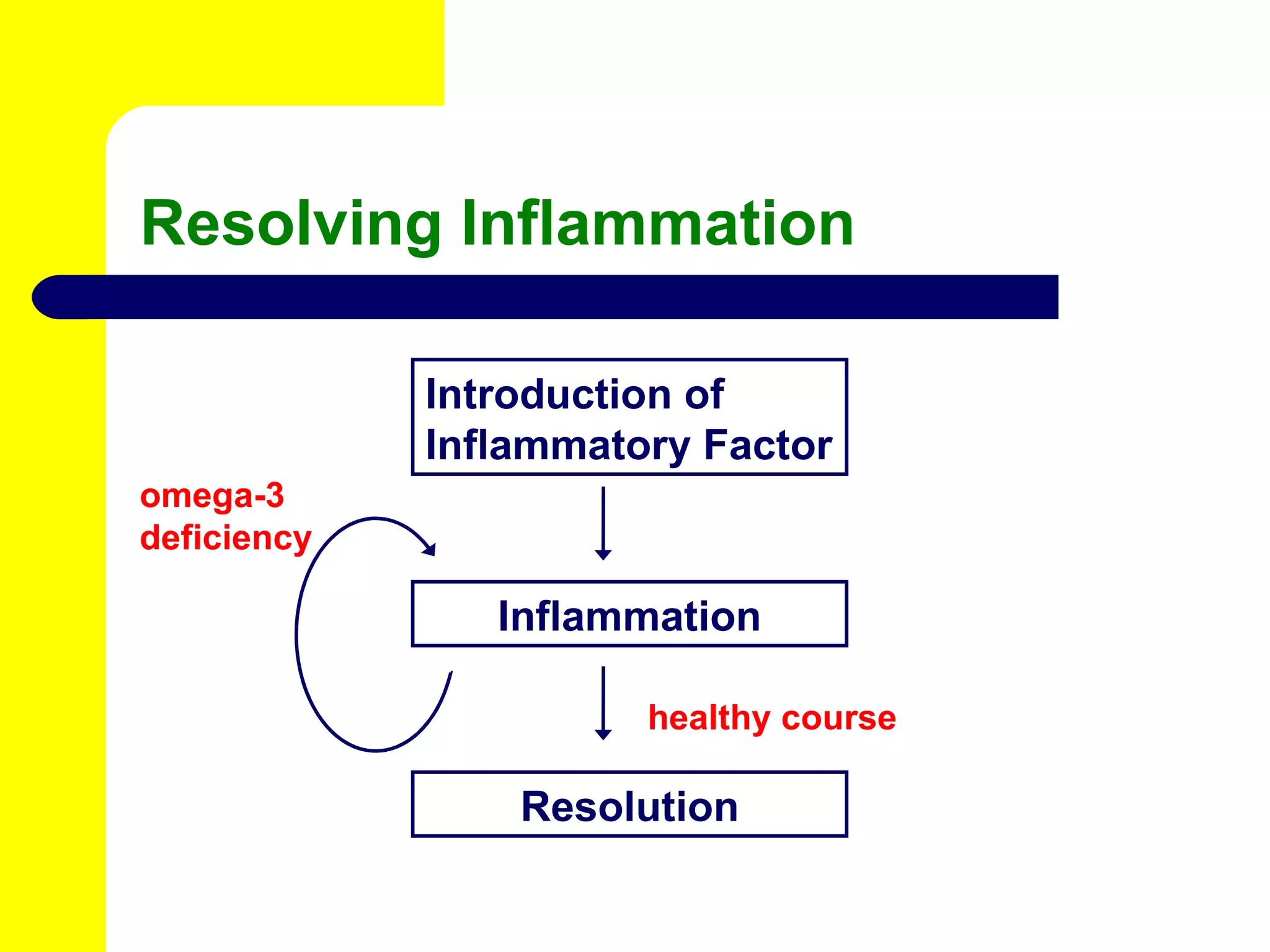
Resolving Inflammation Introduction of Inflammatory Factor Inflammation Resolution omega-3 deficiency healthy course
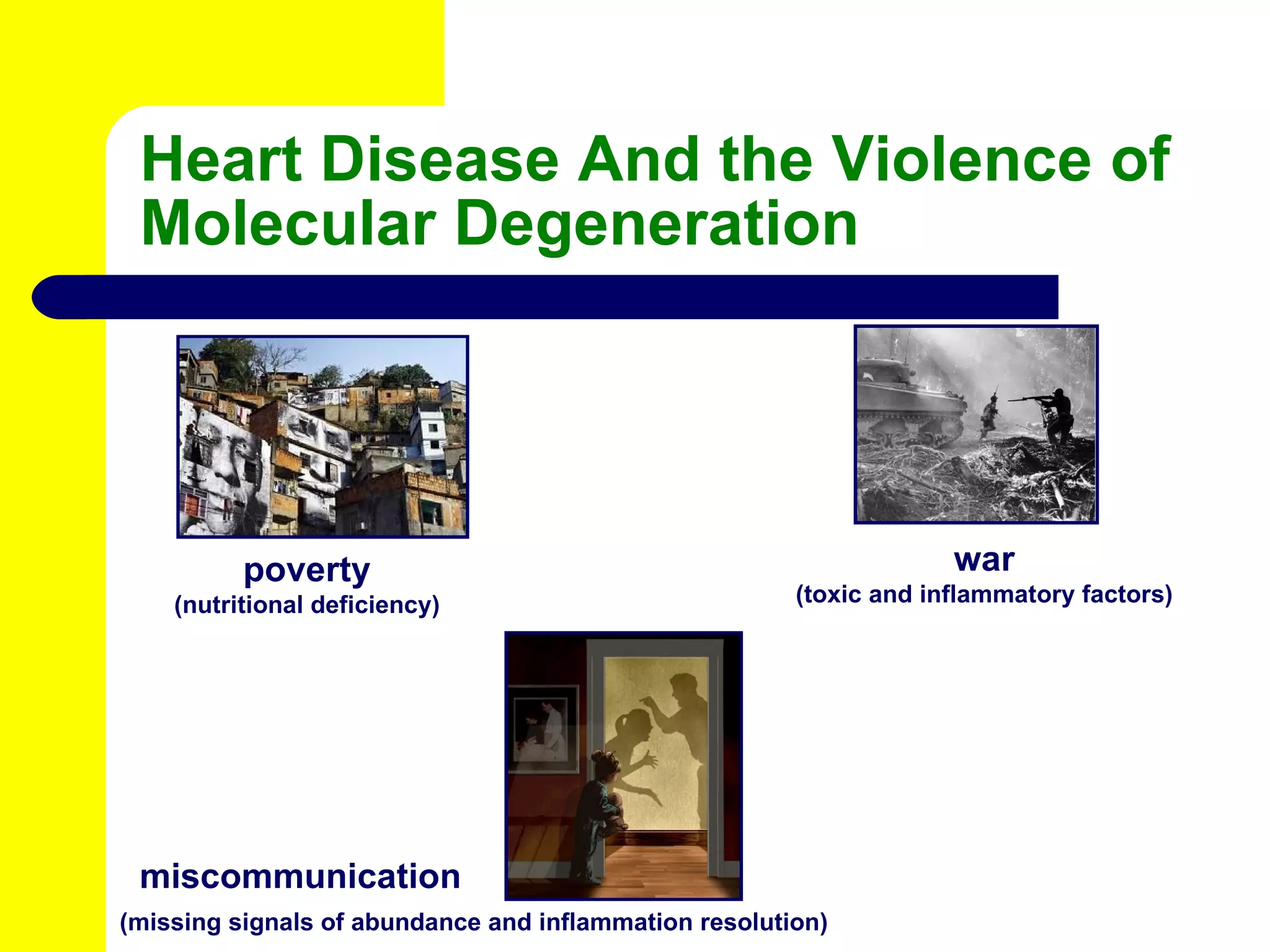
Heart Disease And the Violence of Molecular Degeneration poverty (nutritional deficiency) war (toxic and inflammatory factors) miscommunication (missing signals of abundance and inflammation resolution)
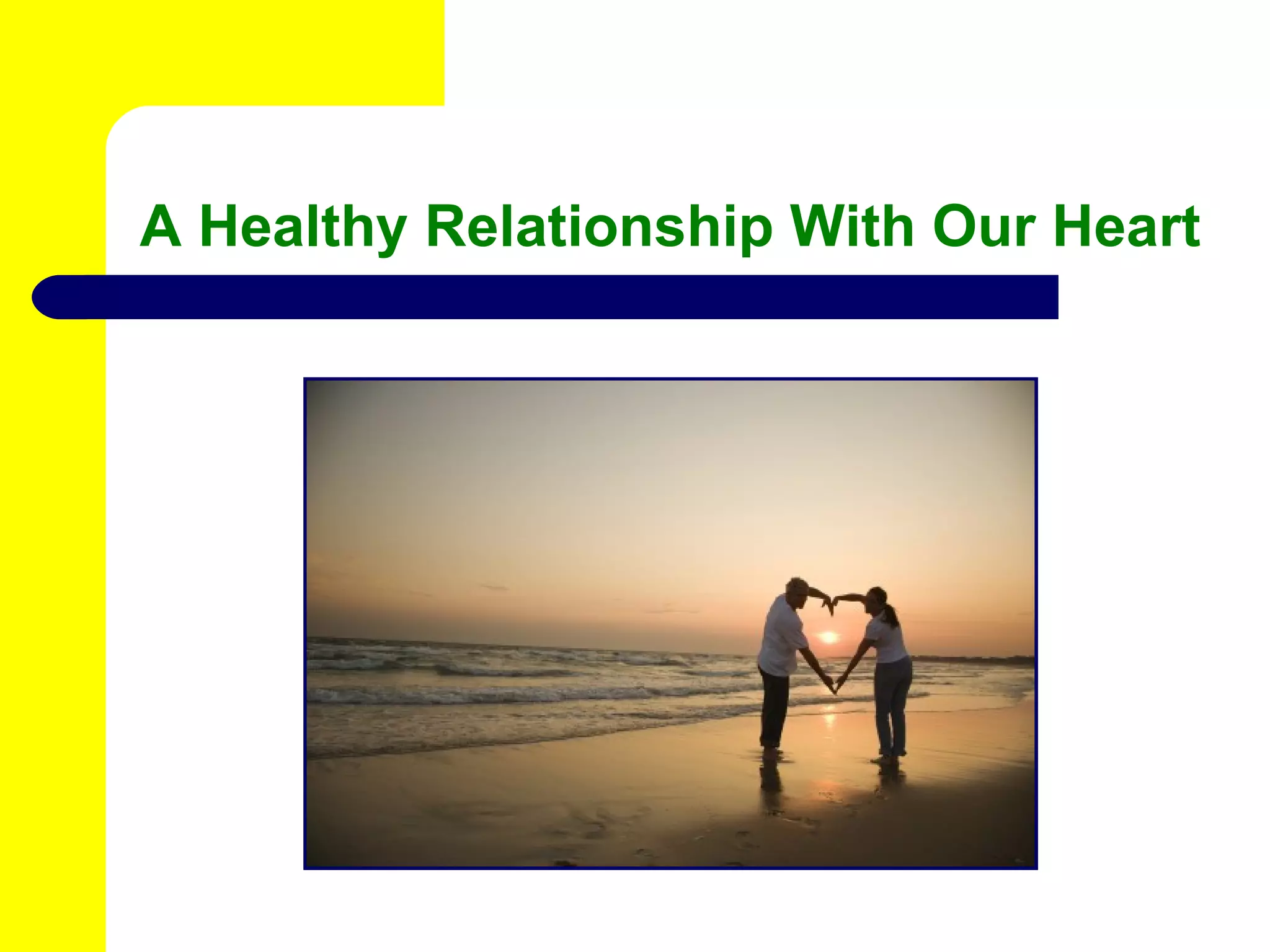
A Healthy Relationship With Our Heart

AHS11 Chris Masterjohn - Heart Disease and Macular Degeneration

  • 1.
    Heart Disease andMolecular Degeneration The New Paradigm Presented by Chris Masterjohn, Doctoral Candidate (UConn) Cholesterol-And-Health.Com
  • 2.
    Cholesterol… What doesit mean to you?
  • 3.
    The Cholesterol WarriorsJoseph Goldstein and Michael Brown Nobel Prize, 1985 LDL Receptor Pathway, 1976 “ Although the Cholesterol Wars are not over, major battles have been won by the anti-cholesterol forces, i.e. those who condemn cholesterol as the culprit. Like modern armies, the anti-cholesterol forces have been aided by powerful new weapons.” – Brown and Goldstein “ In war, the first casualty is truth.” – Aeschylus, Greek tragic dramatist, (525 BC – 456 BC)
  • 4.
    The Cholesterol Skeptics“ Cholesterol and lipoproteins were indicted, tried, and ultimately found guilty as major contributors to the atherosclerotic lesion.” – Daniel Steinberg, MD, PhD “ There exists a massive volume of scientific evidence that completely absolves dietary cholesterol, saturated fat, and elevated blood cholesterol of any harmful role in heart disease.” – Anthony Colpo
  • 5.
    Heart Disease andMolecular Degeneration The cholesterol-fed rabbit is relevant. Familial hypercholesterolemia is important. Blood lipids do play a role in heart disease. High cholesterol levels do not cause heart disease. Atherosclerosis is an adaptive, homeostatic response to a pathological process. A disease of molecular degeneration and cellular miscommunication .
  • 6.
    The Lipid HypothesisElevated levels of cholesterol in the blood, or specifically LDL-associated cholesterol, infiltrate the blood vessel, which causes heart disease.
  • 7.
    The Diet-Heart HypothesisSaturated fat and cholesterol in the diet increase cholesterol levels in the blood, which causes heart disease.
  • 8.
  • 9.
    Rabbits Developed AdvancedHuman-Like Atherosclerotic Lesions Baboons Cats Chickens Chimpanzees Dogs Goats Monkeys Mice Parrots Pigs Pigeons Rats Guinea Pigs Hamsters “ In human atherosclerosis the conditions are different . It is quite certain that such large quantities of cholesterin are not ingested with the ordinary food. In human patients we have probably to deal with a primary disturbance of the cholesterin metabolism , which may lead to atherosclerosis even if the hypercholesterinemia is less pronounced, provided only that it is of long duration and associated with other injurious factors.
  • 10.
    A Clue inthe Needle – Injection of Free Cholesterol Doesn’t Cut It Feeding rabbits cholesterol produced atherosclerosis . Injecting rabbits with cholesterol did not produce atherosclerosis. Isolate lipoproteins Injecting rabbits with lipoproteins did produce atherosclerosis.
  • 11.
    A Clue inthe Tails of the Bell Curve
  • 12.
    Hypercholesterolemia, Xanthomas, andHeart Disease 1889 -- Xanthomas tied to heart problems. Some researchers noted hypercholesterolemia associated with xanthomas. 1908 – Xanthomas composed of cholesterol esters.
  • 13.
    Familial Hypercholesterolemia isa Defect in the LDL Receptor Joseph Goldstein and Michael Brown Nobel Prize, 1985 LDL Receptor Pathway, 1976
  • 14.
    Familial Hypercholesterolemia (FH)Causes CHD in Childhood J Pediatr. 1982;100(5):757-9 “ We are aware of one death from myocardial infarction in a white South African homozygous child 18 months of age . The oldest homozygote in our series was L.Fl., whose death at age 27 following his third myocardial infarction was described above.” – Frederickson and Levy. Familial Hyperlipoproteinemia. In: Stanbury, et al., eds. The Metabolic Basis of Inherited Disease. 1972.
  • 15.
    CHD Risk AfterAge 30 Increases Dramatically in Heterozygote FH Umans-Eckenhausen, et al. Low-Denisty Lipoprotein Receptor Gene Mutations and Cardiovascular Risk in a Large Genetic Cascade Screening Population. Circulation. 2002;106:3031-6.
  • 16.
    FH Produces theLargest Survival Gap Ages 30-60, But the Gap Remains Through the 70s Umans-Eckenhausen, et al. Low-Denisty Lipoprotein Receptor Gene Mutations and Cardiovascular Risk in a Large Genetic Cascade Screening Population. Circulation. 2002;106:3031-6.
  • 17.
    A Clue inthe Tails of the Bell Curve
  • 18.
    Increased LDL ReceptorActivity Virtually Abolishes Risk of CHD CohenJC, et al. Sequence variations in PCSK9, low LDL, and protection against coronary heart disease. N Engl J Med. 2006;354(12):1264-72.
  • 19.
    Does LDL ReceptorActivity Matter for Everyone Else? LDL Receptor Activity CHD Risk Homozygous FH Heterozygous FH PCSK9 Mutation Everyone else?
  • 20.
    Does LDL ReceptorActivity Matter for Everyone Else? ?
  • 21.
    Cholestyramine Reduces theRisk of Heart Disease
  • 22.
    Testing the LipidHypothesis: Cholestyramine and the Coronary Primary Prevention Trial Cholestyramine binds bile acids. Excretion Liver converts cholesterol to bile acids. LDL-R Liver takes cholesterol from the blood by increasing its expression of the LDL receptor.
  • 23.
    Statins – GreaterCholesterol Reduction, Greater CHD Reduction Individual squares represent individual trials. Size of square represents number of participants. Horizontal axis represents reduction in LDL-C Vertical axis represents relative risk reduction in CHD. Baigent et al. Lancet. 2005;366(9493):1267-78.
  • 24.
    Statins Lower Cholesterolby Increasing LDL Receptor Activity cholesterol synthesis in liver free cholesterol concentration LDL-R LDL receptor takes cholesterol in from the blood
  • 25.
    Thyroid Hormone ActivatesLDL Receptor Expression SRE – Sterol Regulatory Element communicates that the cell needs cholesterol TRE – Thyroid Response Element communicates that the body is in a state of abundance Lopez D. Biochimica et Biophysica Acta. 2007;1771:1216-25.
  • 26.
    Thyroid Extract DecreasesCVD Incidence 4- to 7-Fold Kountz, WB. Thyroid Function and its Possible Role in Vascular Degeneration. American Lecture Series. 1951.
  • 27.
    The LDL ReceptorTraffic Jam
  • 28.
    LDL Oxidation –It’s About Time! Young and McEneny. Lipoprotein oxidation and atherosclerosis. Biochem Soc Trans. 2001;29:358-62.
  • 29.
    LDL Oxidation, NotConcentration, Determines Macrophage Uptake Human LDL incubated with human endothelial cells. Human LDL incubated in cell-free dishes. Henrisksen T, Mahoney EM, Steinberg D. Enhanced macrophage degradation of biologically modified low density lipoprotein. Arterioscelrosis. 1983;3(2):149-59
  • 30.
    Oxidized LDL isToxic to Endothelial Cells Sata M, Walsh K. Endothelial Cell Apoptosis Induced by Oxidized LDL is Associated with the Down-regulation of the Cellular Caspase Inhibitor FLIP. J Biol Cehm. 1998;273(50):3303-6
  • 31.
    The Atherosclerotic Plaqueis a Toxic Waste Superfund Site Foam Cell Oxidized LDL
  • 32.
    Strategies for PreventingAtherosclerosis Optimize thyroid status Support the antioxidant defense system Support proper regulation of inflammation
  • 33.
    Sources of OxidantsMitochondria Inflammatory Cells Superoxide H2O2 Superoxide Nitric Oxide H2O2 Hyperchlorous Acid Peroxynitrite
  • 34.
    Lipid Peroxidation BeginsWhen Vitamin C Disappears Frei, et al. Ascorbate is an outstanding antioxidant in human blood plasma. Proc Natl Acad Sci USA. 1989;86:6377-81.
  • 35.
    The Complex Networkof Endogenous Antioxidants Important mineral cofactors for antioxidant enzymes: selenium, zinc, copper, manganese, iron Synthesis of glutathione: protein, magnesium, energy
  • 36.
    Fruit and VegetablePolyphenols: The Good-For-You Toxins
  • 37.
    Resolving Inflammation Introductionof Inflammatory Factor Inflammation Resolution omega-3 deficiency healthy course
  • 38.
    Heart Disease Andthe Violence of Molecular Degeneration poverty (nutritional deficiency) war (toxic and inflammatory factors) miscommunication (missing signals of abundance and inflammation resolution)
  • 39.
    A Healthy RelationshipWith Our Heart