Navigating The Long Tail

Loading...

Flash Player 9 (or above) is needed to view presentations.
We have detected that you do not have it on your computer. To install it, go here.

1 comments

Comments 1 - 1 of 1 previous next Post a comment

  • + AmitRanjan Amit Ranjan 3 years ago
    a slidecast for this would help to set the context better; but still I got the gist...
Post a comment
Embed Video
Edit your comment Cancel

4 Favorites

Navigating The Long Tail - Presentation Transcript

  1. Navigating the Long Tail September 2007
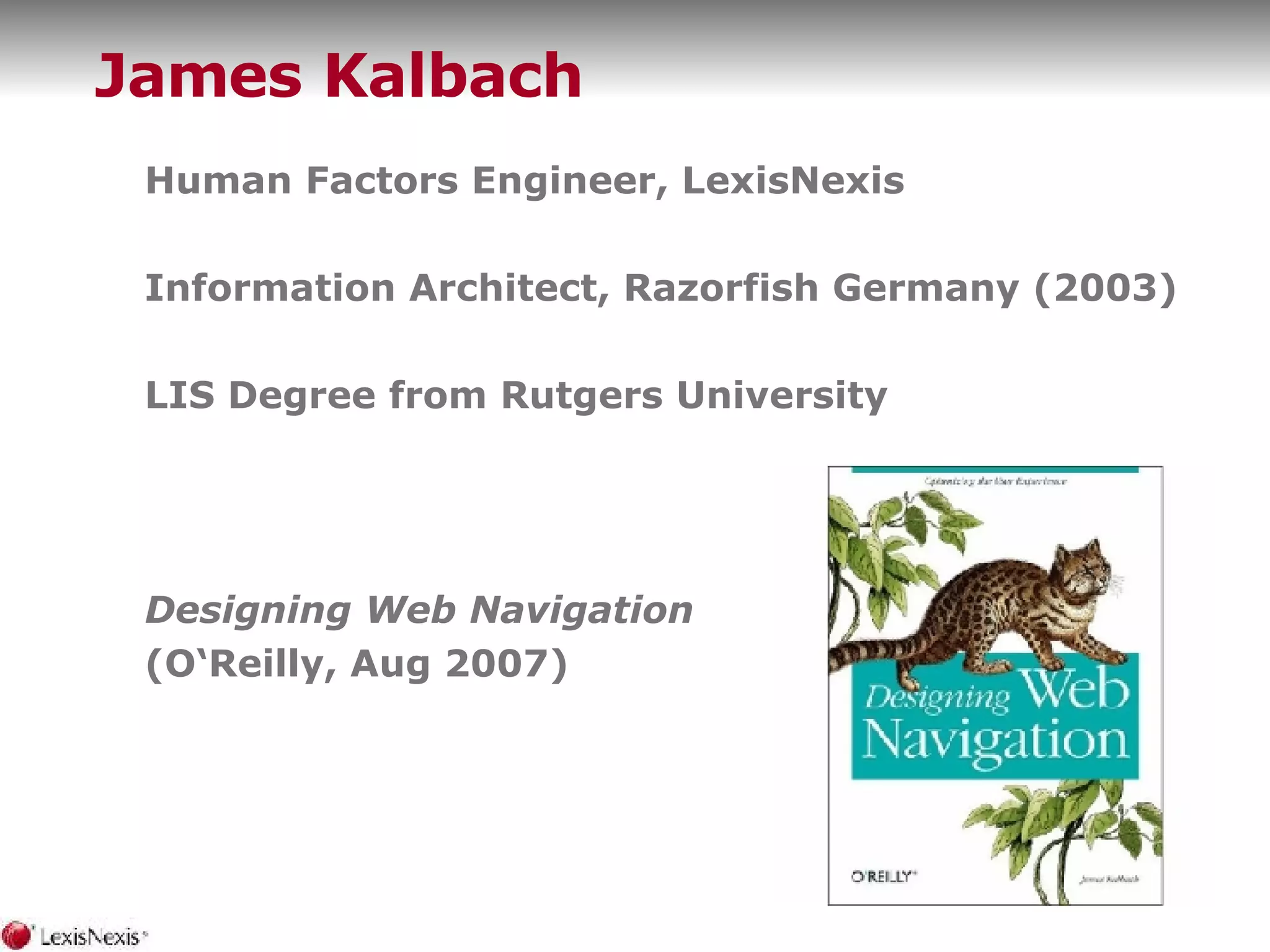
    • Human Factors Engineer, LexisNexis
    • Information Architect, Razorfish Germany (2003)
    • LIS Degree from Rutgers University
    • Designing Web Navigation
    • (O‘Reilly, Aug 2007)
    James Kalbach
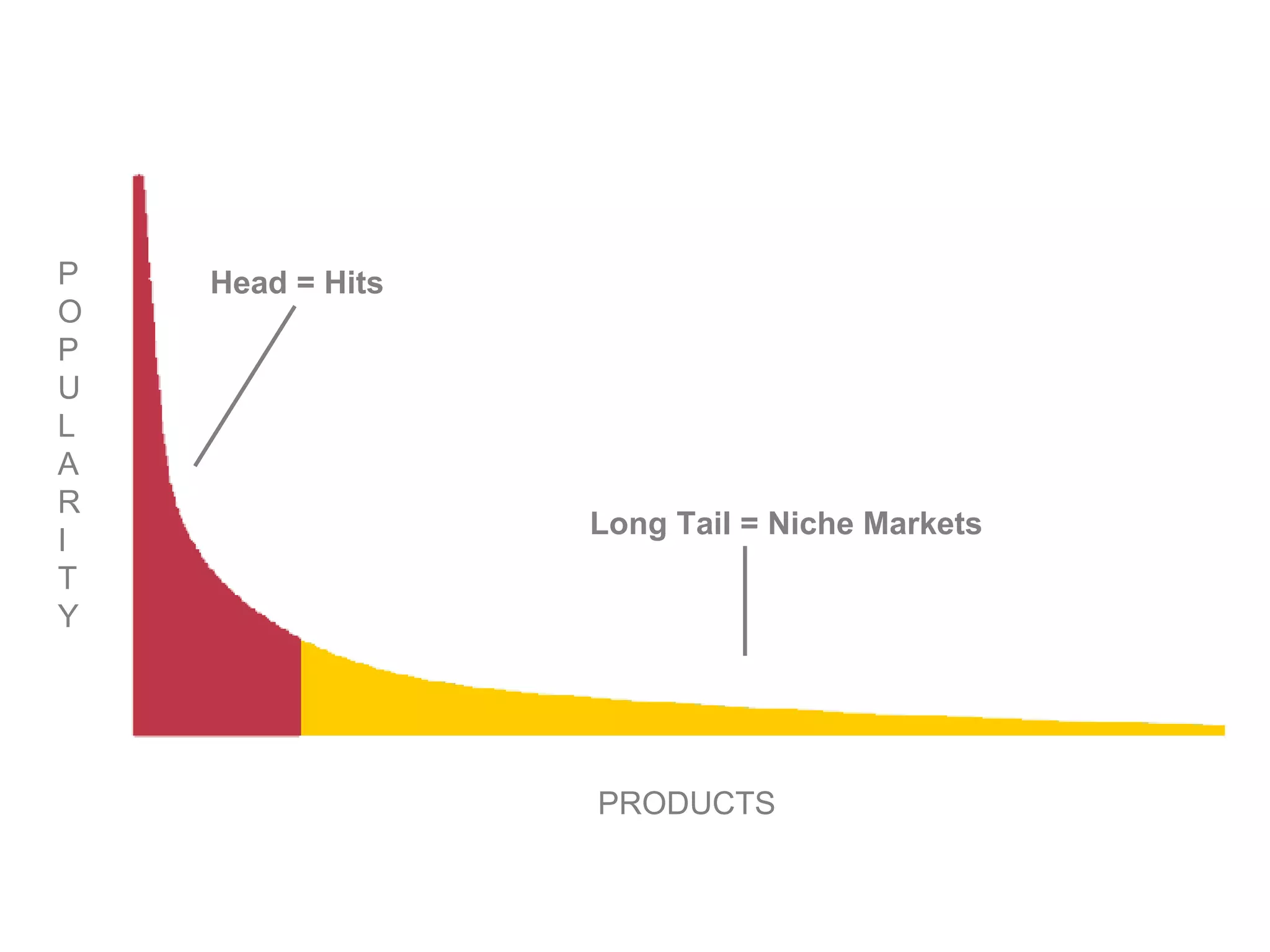
  2. P O P U L A R I T Y PRODUCTS Head = Hits Long Tail = Niche Markets
    • The hits now compete with an infinite number of niche markets, of any size .
    • Increasingly, the mass market is turning into a mass of niches.
    “ ” “ ”
  3.  
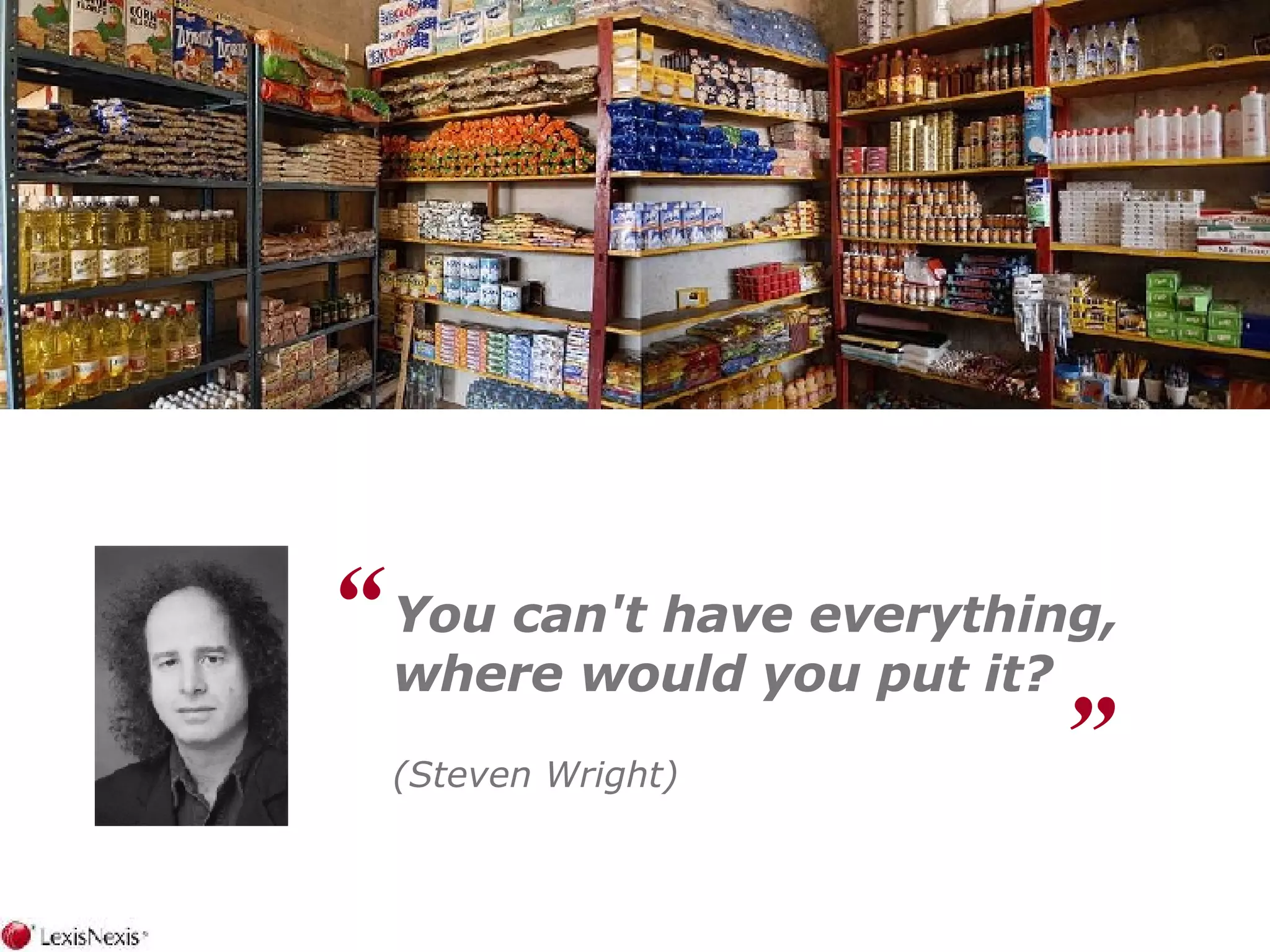
  4. You can't have everything, where would you put it? (Steven Wright) “ ”
    • Metadata
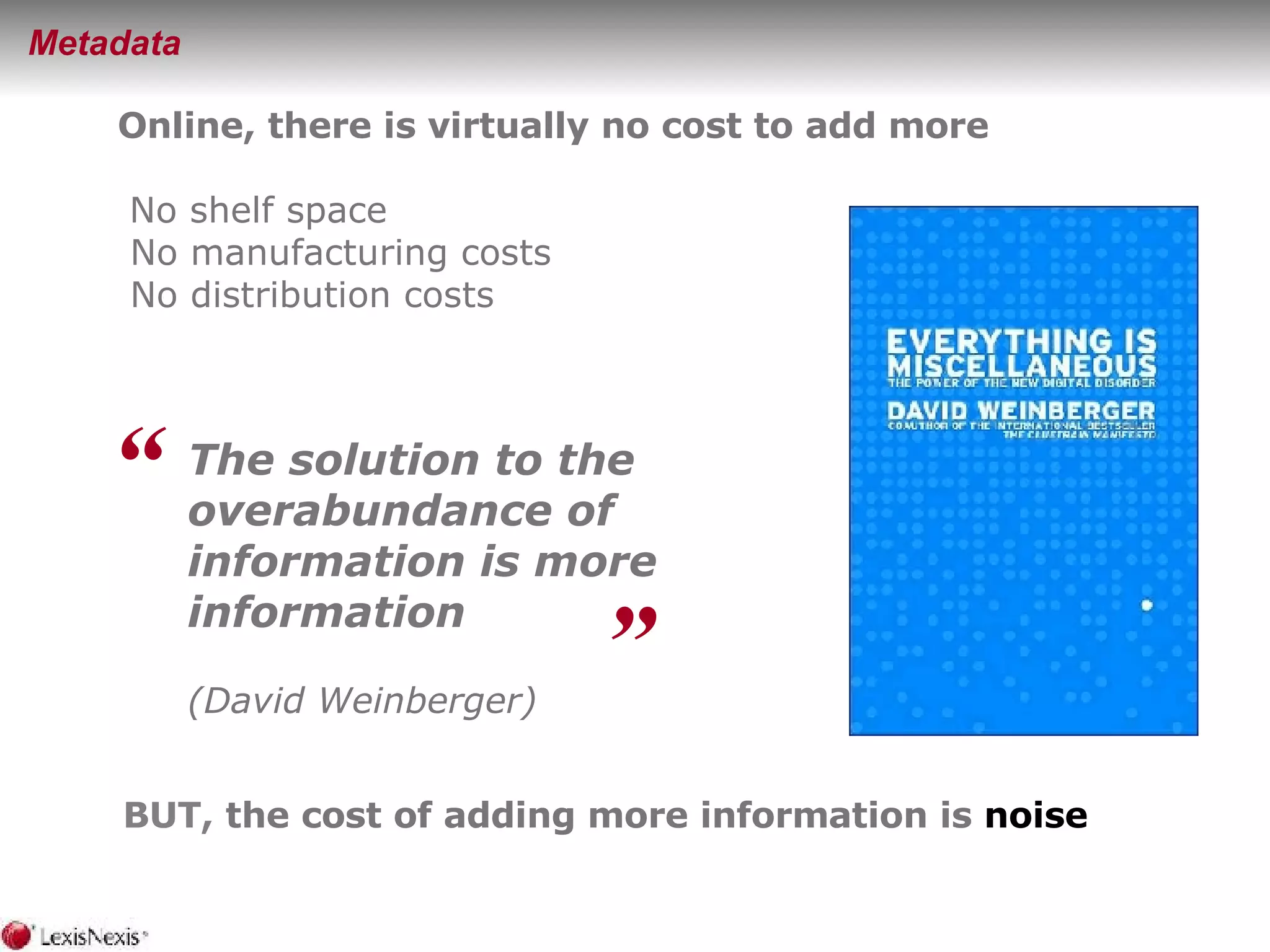
    BUT, the cost of adding more information is noise Online, there is virtually no cost to add more No shelf space No manufacturing costs No distribution costs The solution to the overabundance of information is more information (David Weinberger) “ ”
    • Navigation Layer
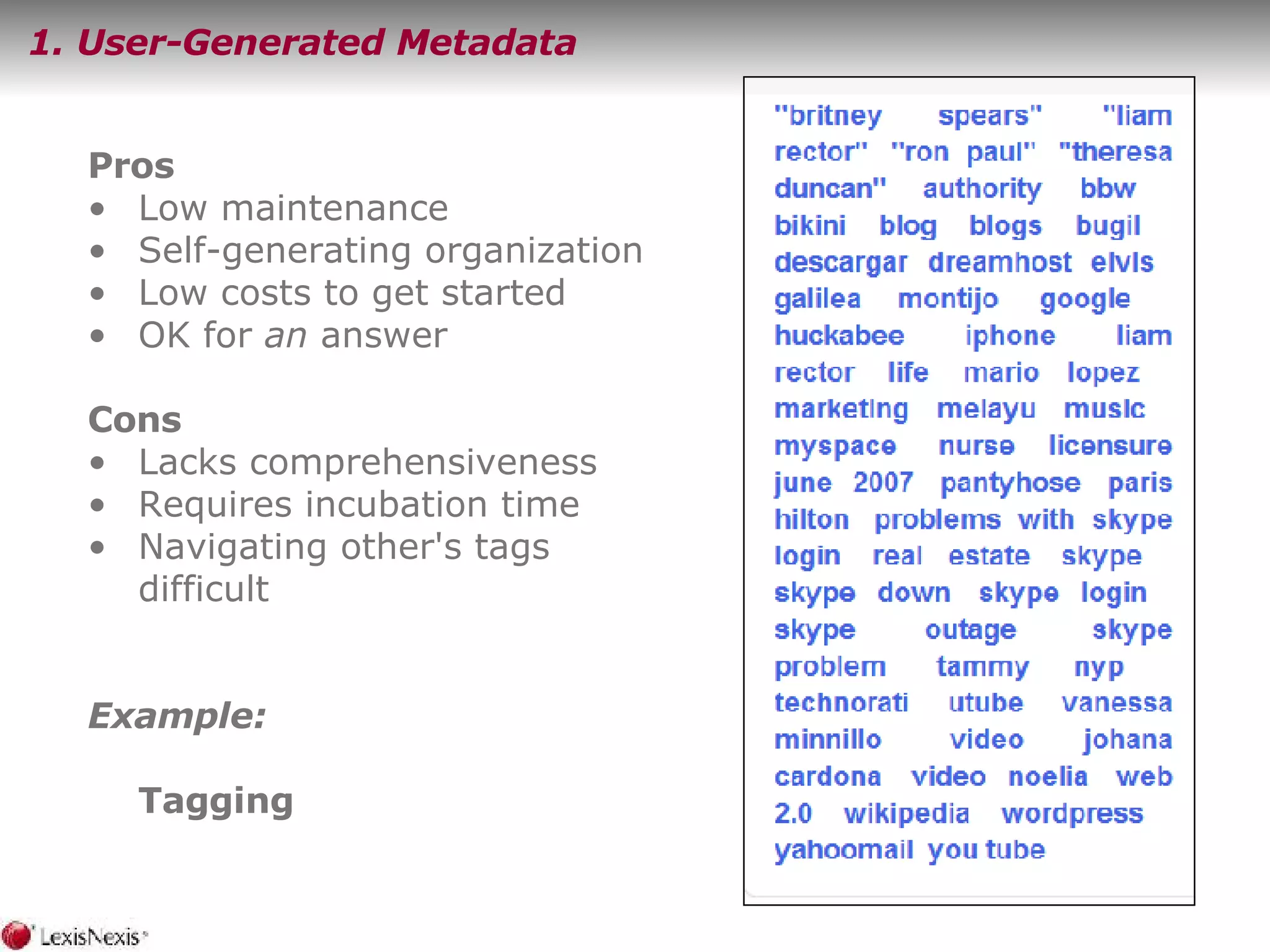
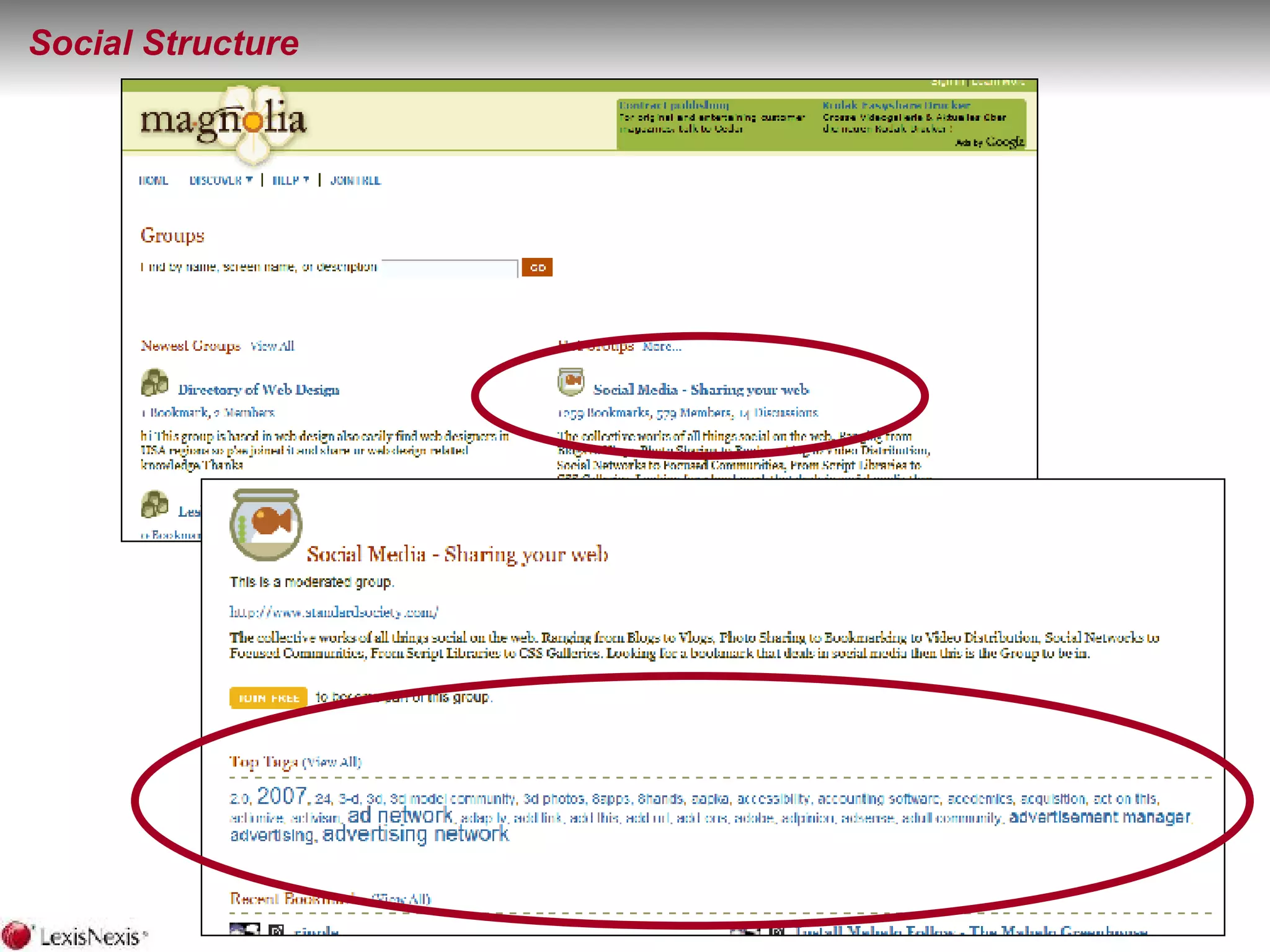
    • 1. User-Generated Metadata
    • Pros
    • Low maintenance
    • Self-generating organization
    • Low costs to get started
    • OK for an answer
    • Cons
    • Lacks comprehensiveness
    • Requires incubation time
    • Navigating other's tags difficult
    • Example:
    • Tagging
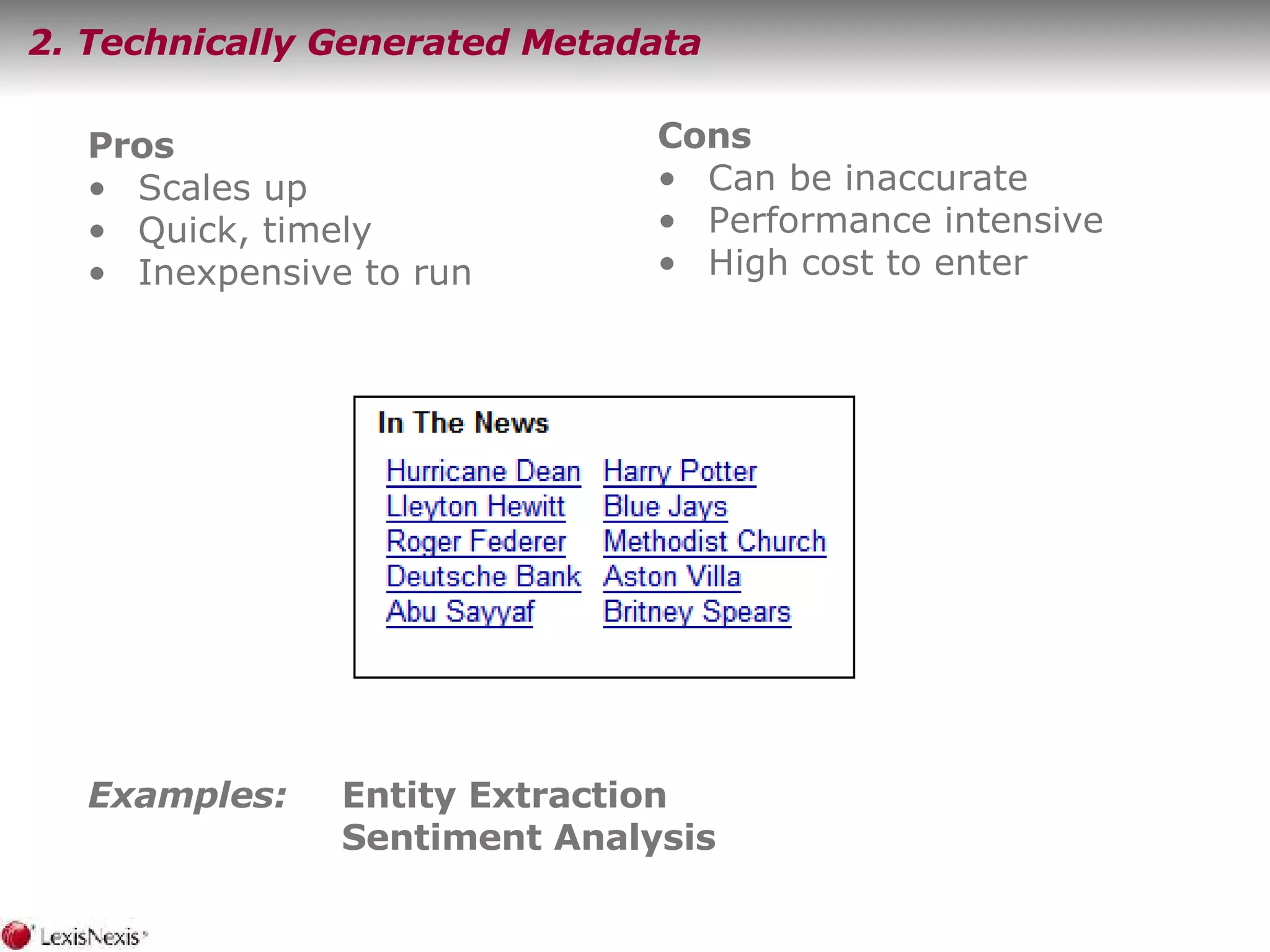
    • 2. Technically Generated Metadata
    • Pros
    • Scales up
    • Quick, timely
    • Inexpensive to run
    • Cons
    • Can be inaccurate
    • Performance intensive
    • High cost to enter
    Examples: Entity Extraction Sentiment Analysis
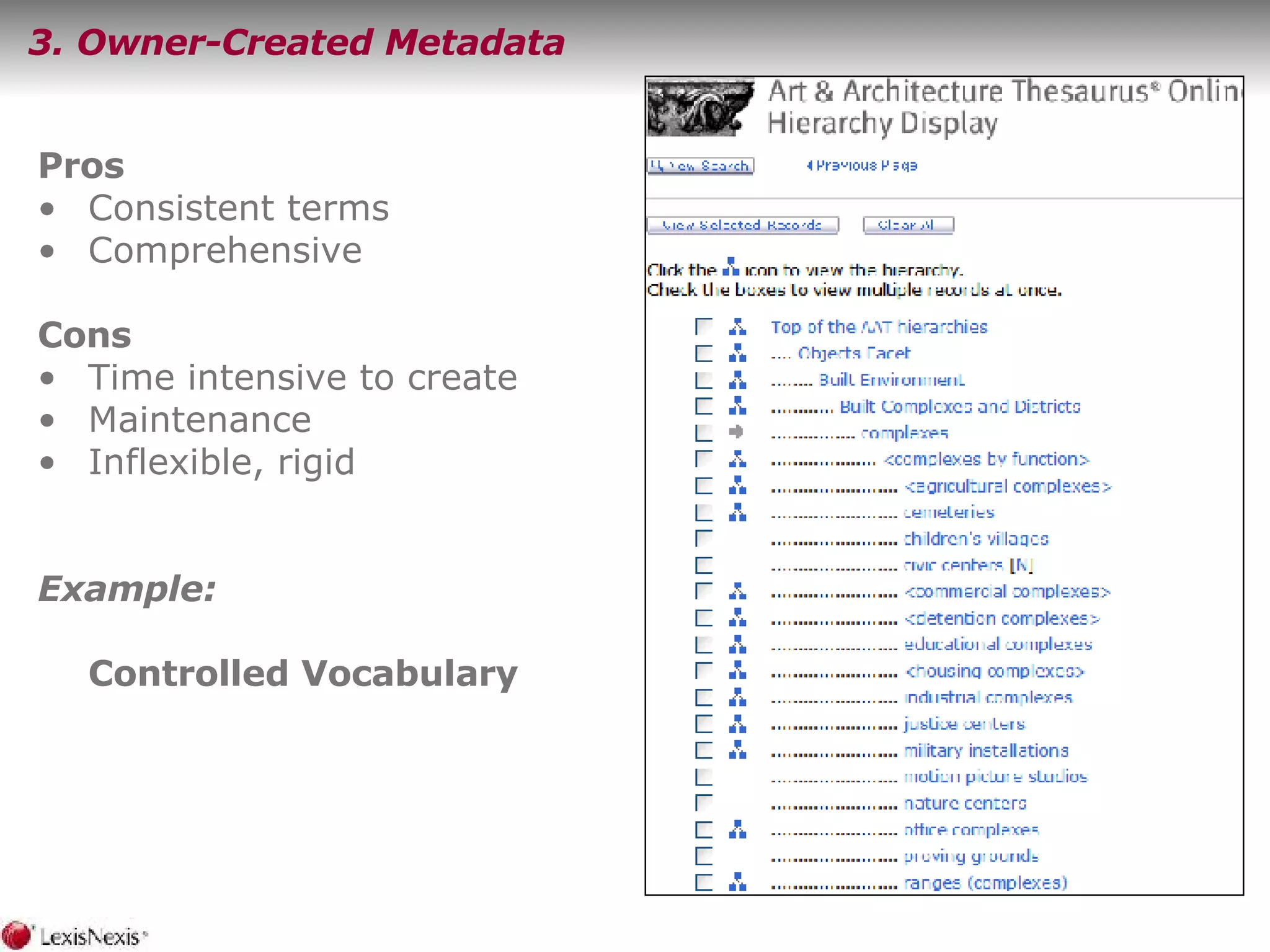
    • 3. Owner-Created Metadata
    • Pros
    • Consistent terms
    • Comprehensive
    • Cons
    • Time intensive to create
    • Maintenance
    • Inflexible, rigid
    • Example:
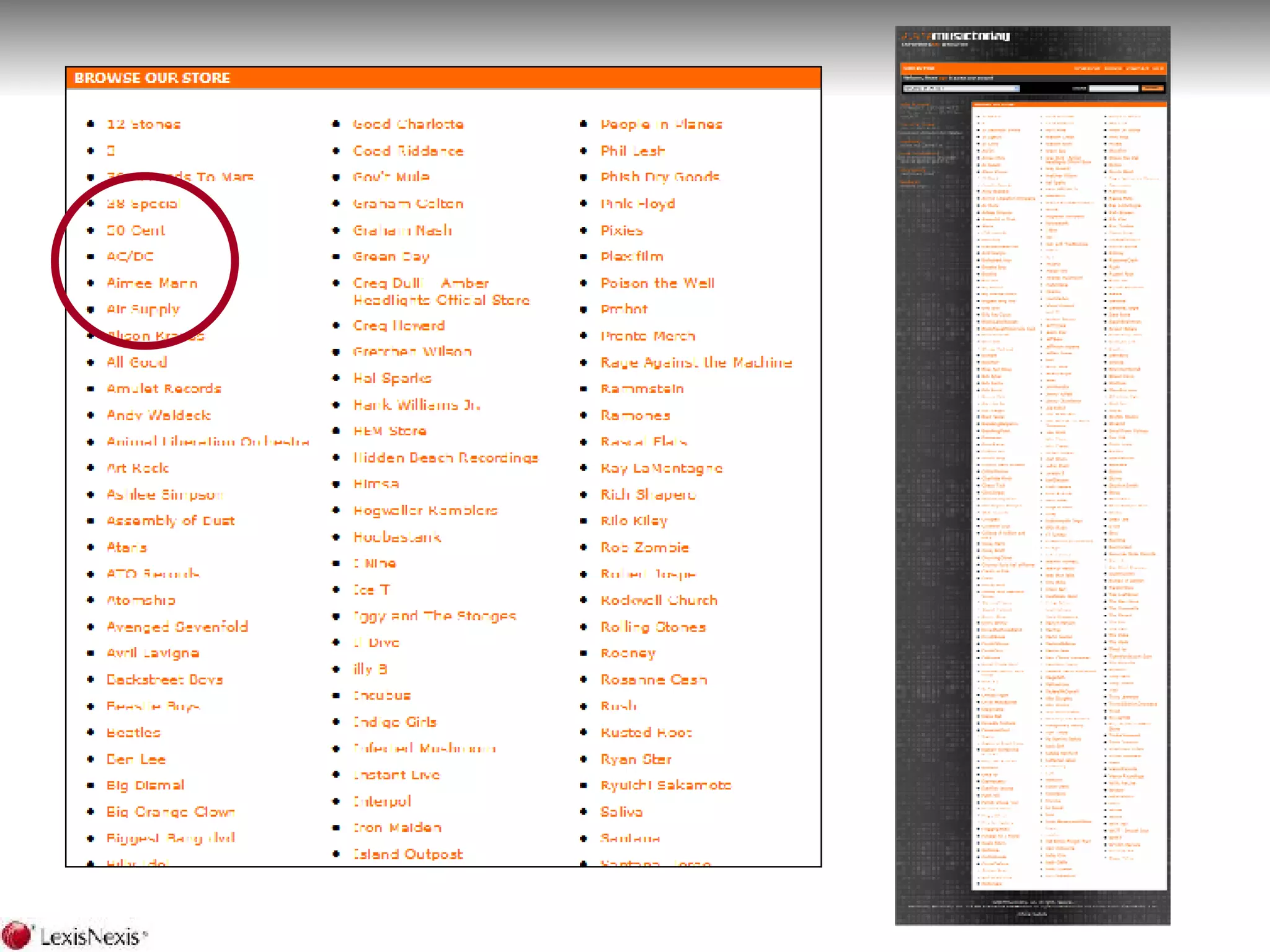
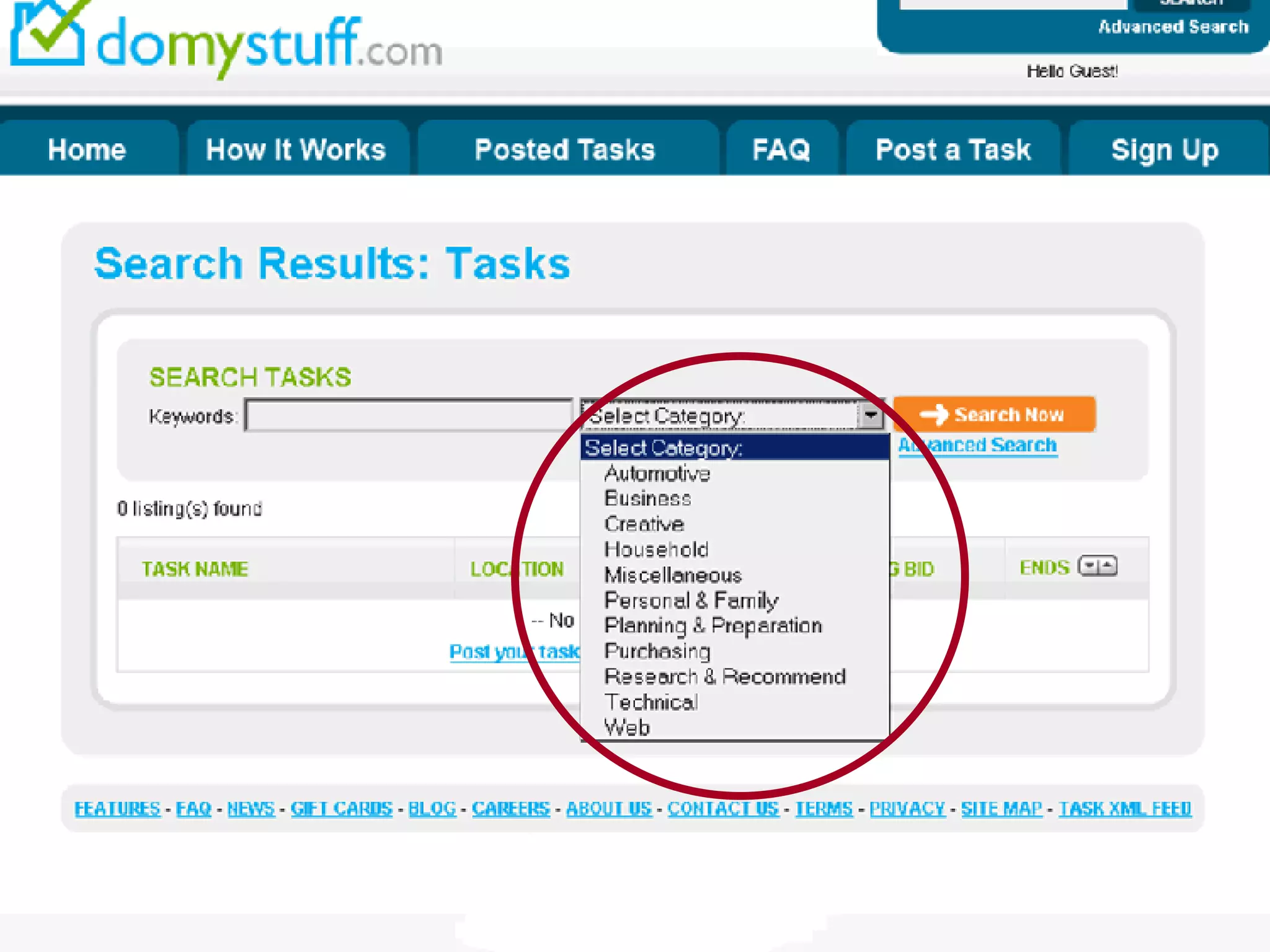
    • Controlled Vocabulary
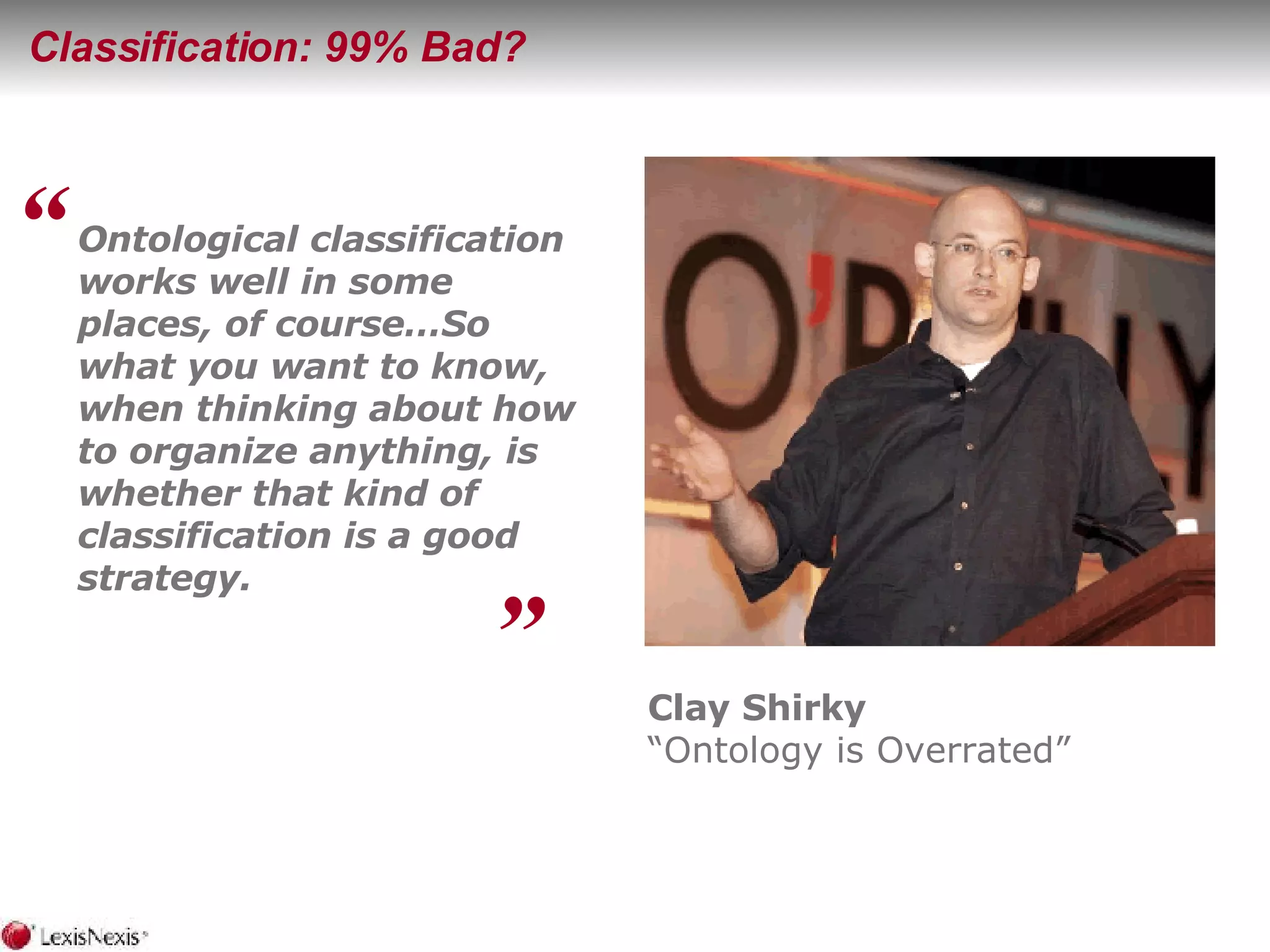
    • Classification: 99% Bad?
    Ontological classification works well in some places, of course…So what you want to know, when thinking about how to organize anything, is whether that kind of classification is a good strategy. “ ” Clay Shirky “ Ontology is Overrated”
  5.  
  6.  
  7.  
  8.  
    • Social Structure
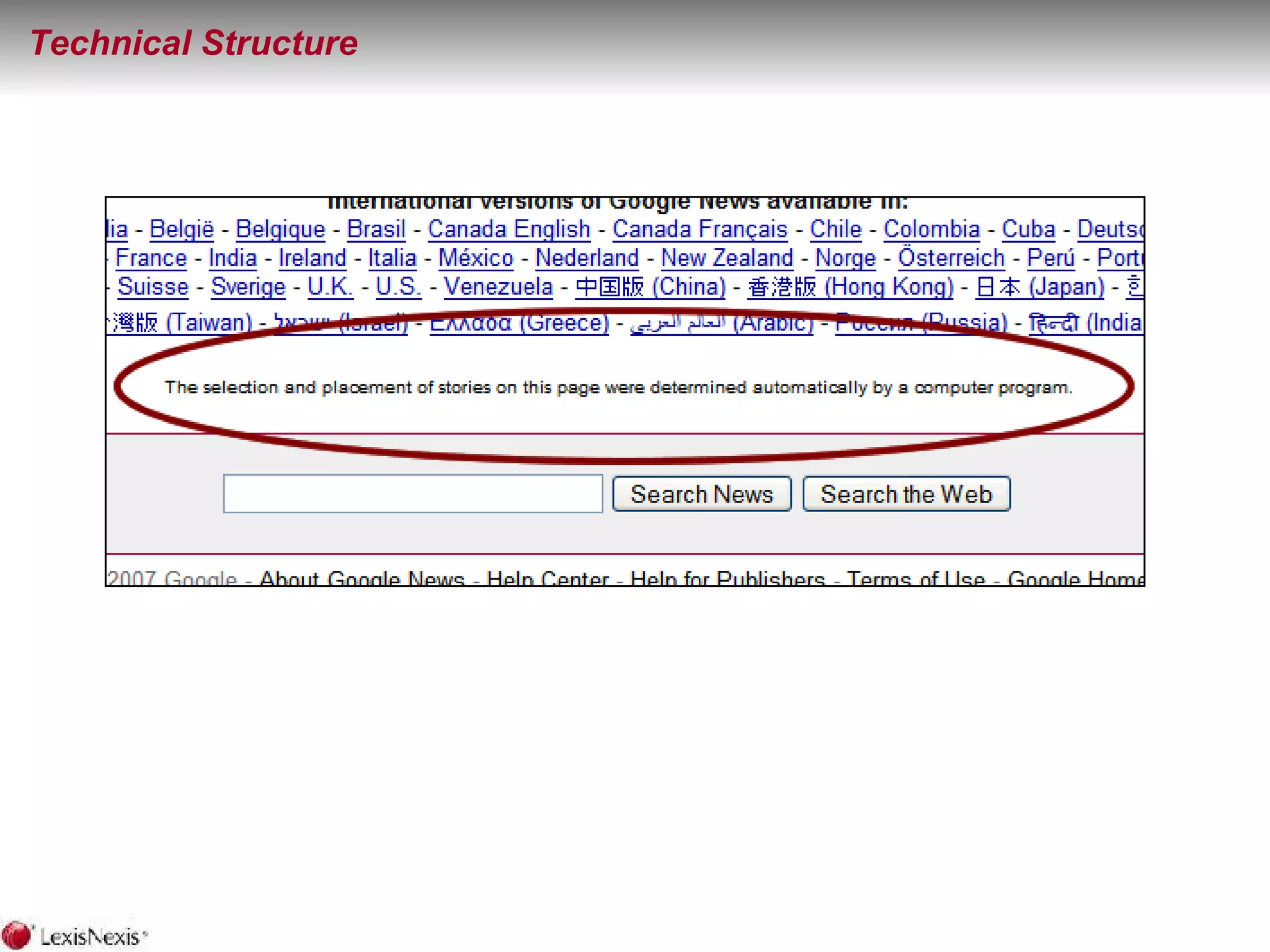
    • Technical Structure
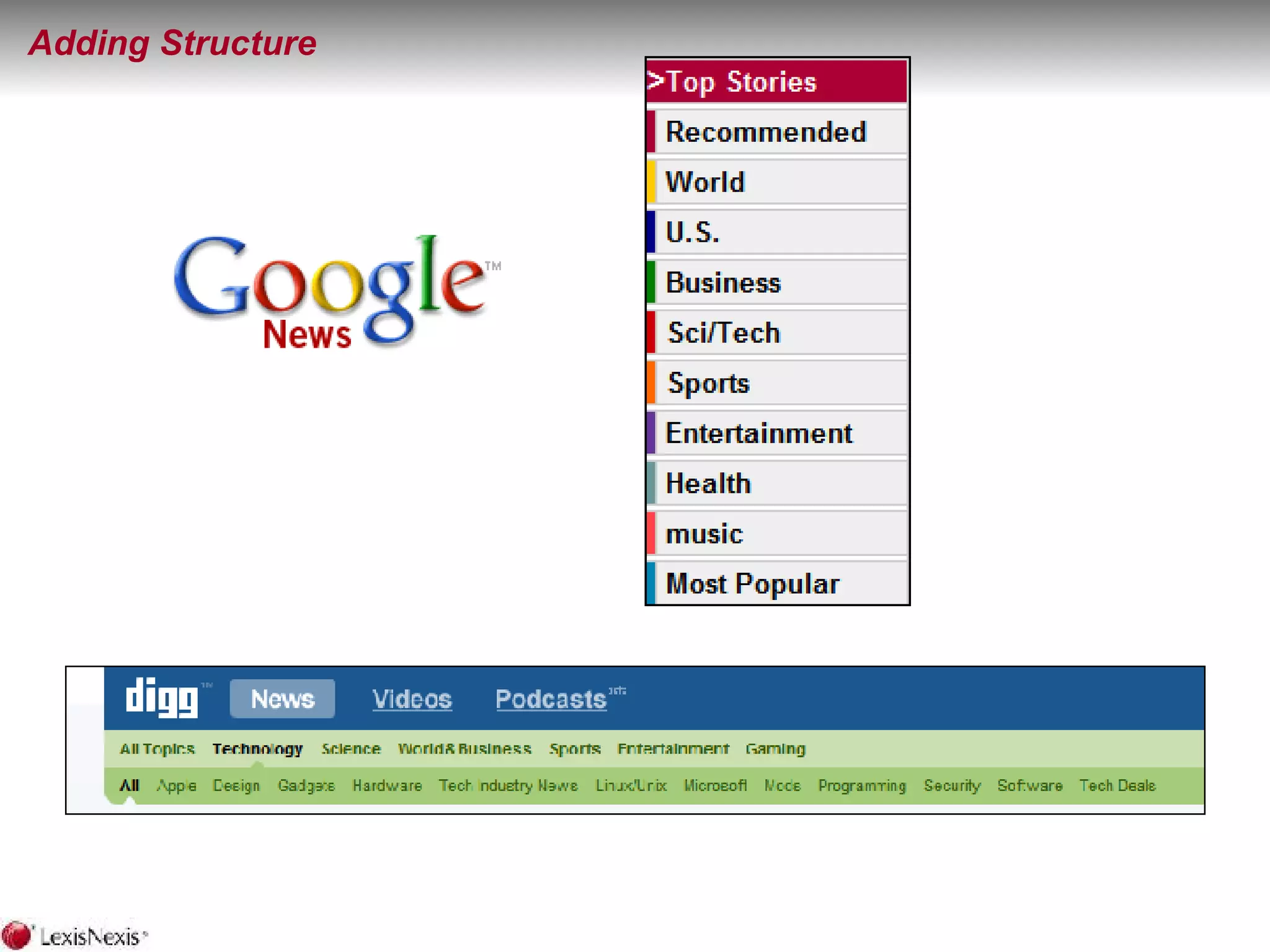
    • Adding Structure
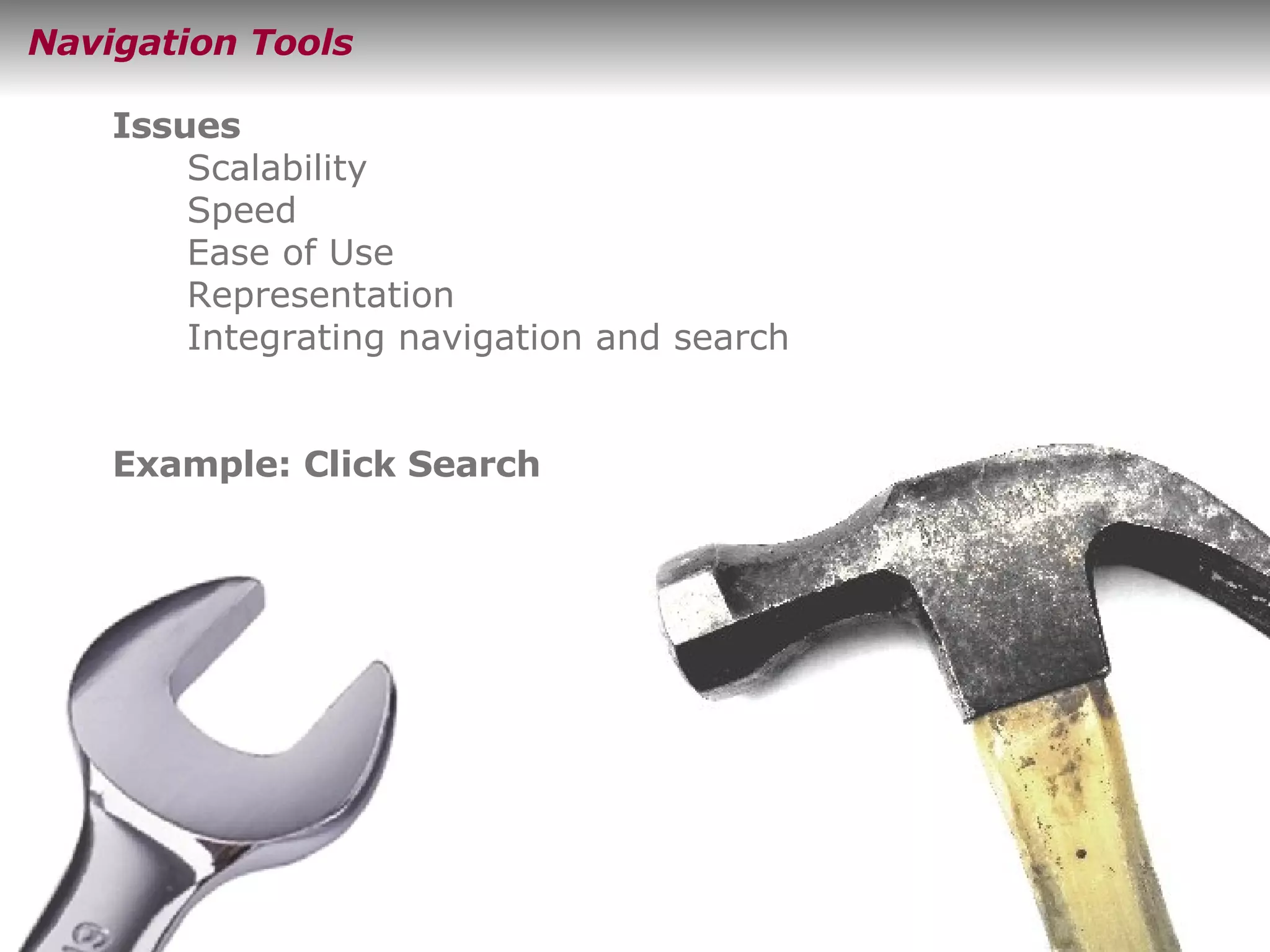
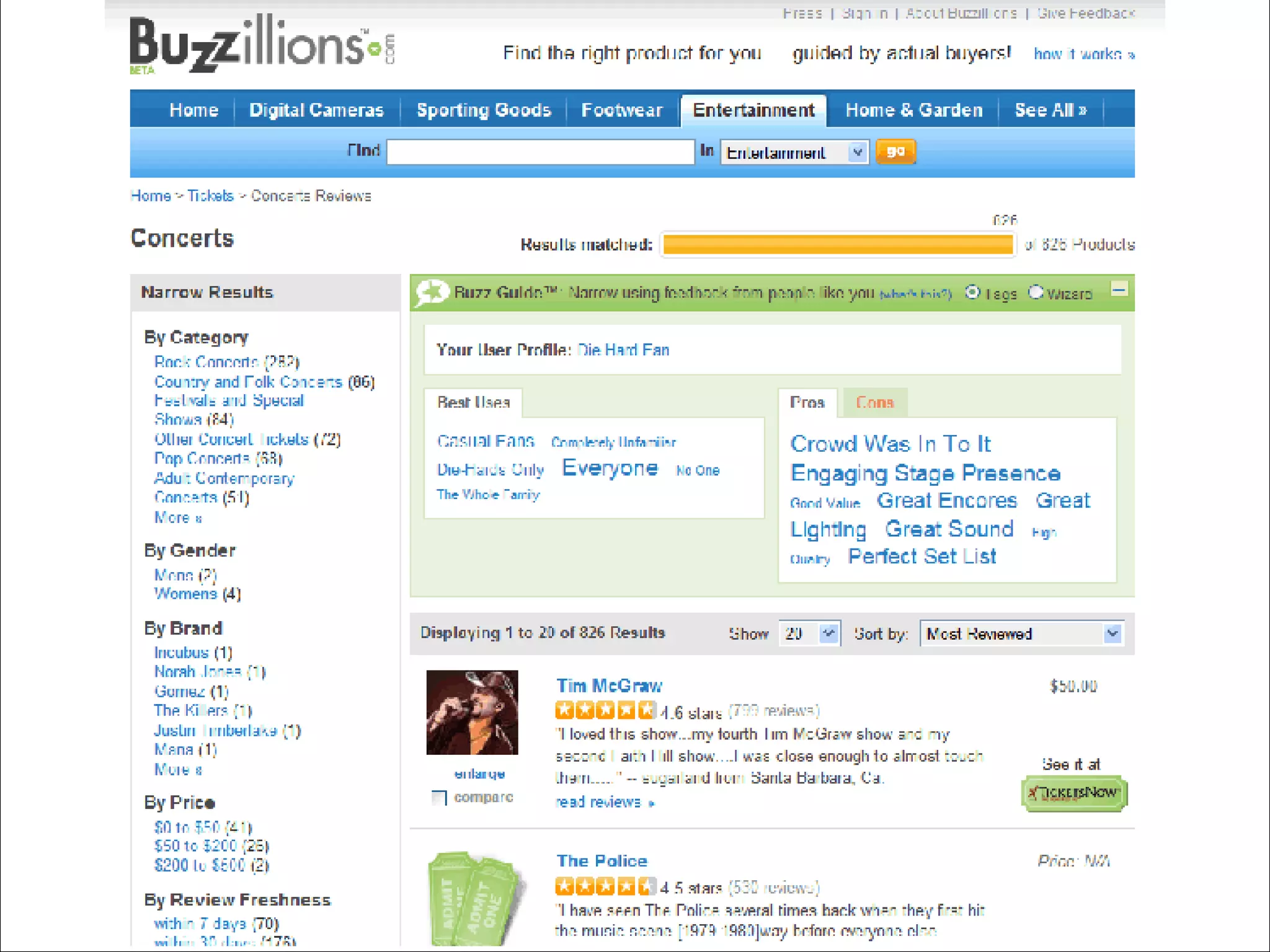
    • Navigation Tools
      • Issues
        • Scalability
        • Speed
        • Ease of Use
        • Representation
        • Integrating navigation and search
      • Example: Click Search
  9.  
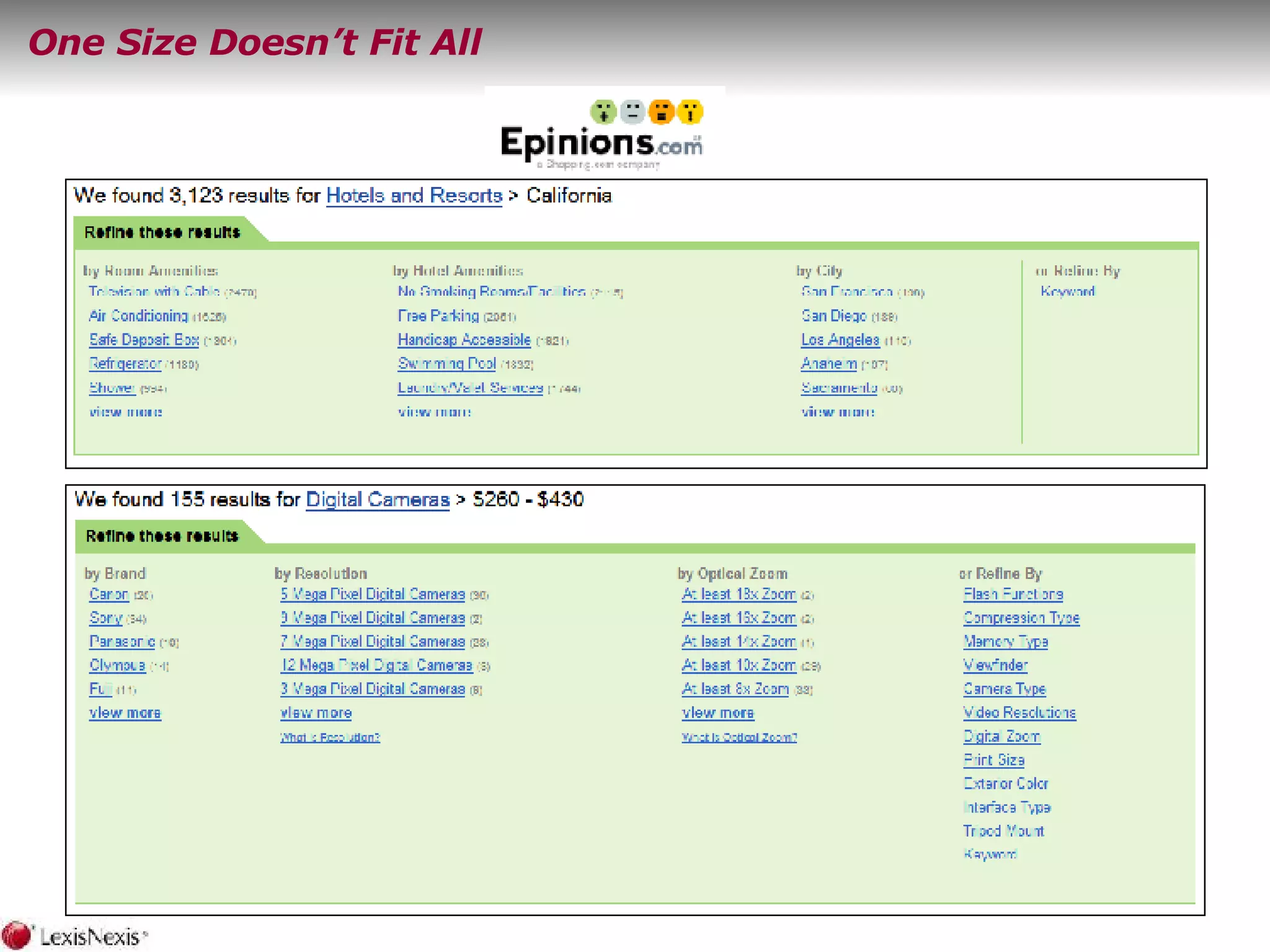
    • One Size Doesn’t Fit All
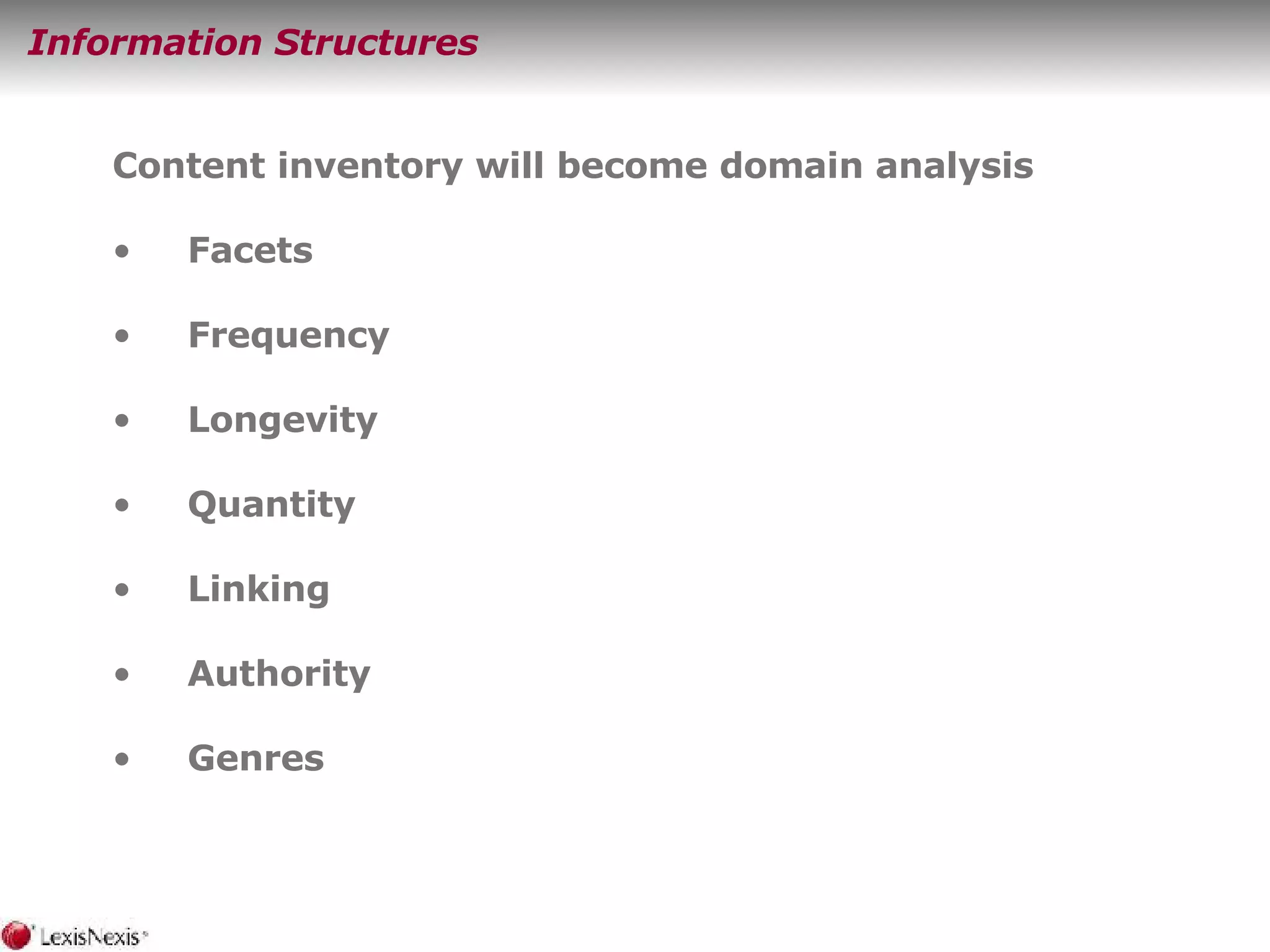
    • Information Structures
      • Content inventory will become domain analysis
      • Facets
      • Frequency
      • Longevity
      • Quantity
      • Linking
      • Authority
      • Genres
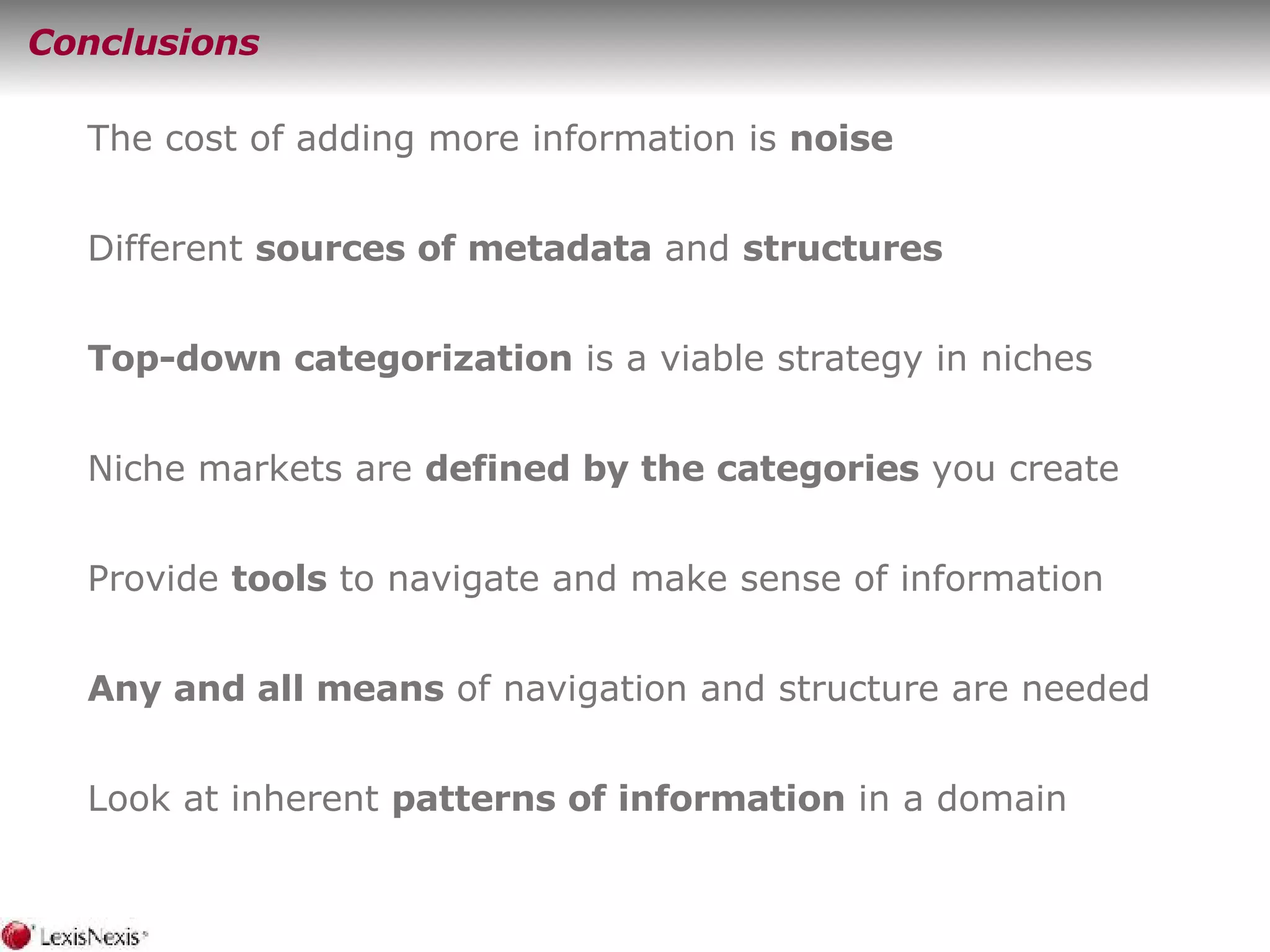
    • Conclusions
    The cost of adding more information is noise Different sources of metadata and structures Top-down categorization is a viable strategy in niches Niche markets are defined by the categories you create Provide tools to navigate and make sense of information Any and all means of navigation and structure are needed Look at inherent patterns of information in a domain
  10. Thank You [email_address]

+ KalbachKalbach, 3 years ago

custom

2684 views, 4 favs, 0 embeds more stats

More info about this document

© All Rights Reserved

Go to text version

  • Total Views 2684
    • 2684 on SlideShare
    • 0 from embeds
  • Comments 1
  • Favorites 4
  • Downloads 137
Most viewed embeds

more

All embeds

less

Flagged as inappropriate Flag as inappropriate
Flag as inappropriate

Select your reason for flagging this presentation as inappropriate. If needed, use the feedback form to let us know more details.

Cancel
File a copyright complaint
Having problems? Go to our helpdesk?

Categories