Malte Ackermann 
Product Owner 
May 7, 2014 
4 PM (CET) 
www.intland.com
Agenda 
•Introduction to Intland 
•Overview of the Agile-Waterfall Hybrid Model 
•Use cases of Agile-Waterfall Hybrid 
•Hybrid Framework Example 
•Benefits of Using the Agile-Waterfall Hybrid Model 
•Challenges of Agile-Waterfall Hybrid 
•Live demonstration
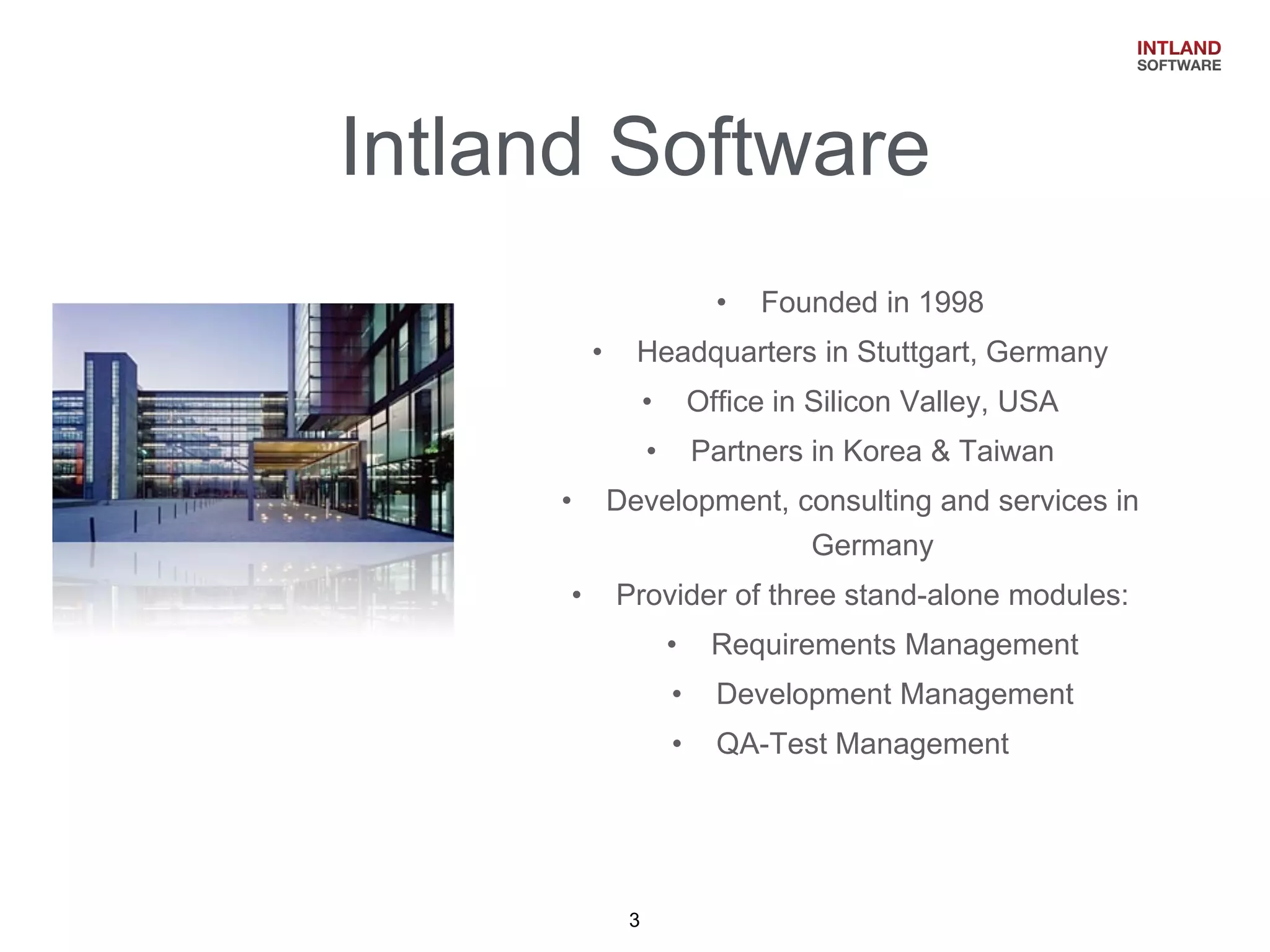
Intland Software 
•Founded in 1998 
•Headquarters in Stuttgart, Germany 
•Office in Silicon Valley, USA 
•Partners in Korea & Taiwan 
•Development, consulting and services in Germany 
•Provider of three stand-alone modules: 
•Requirements Management 
•Development Management 
•QA-Test Management 
3
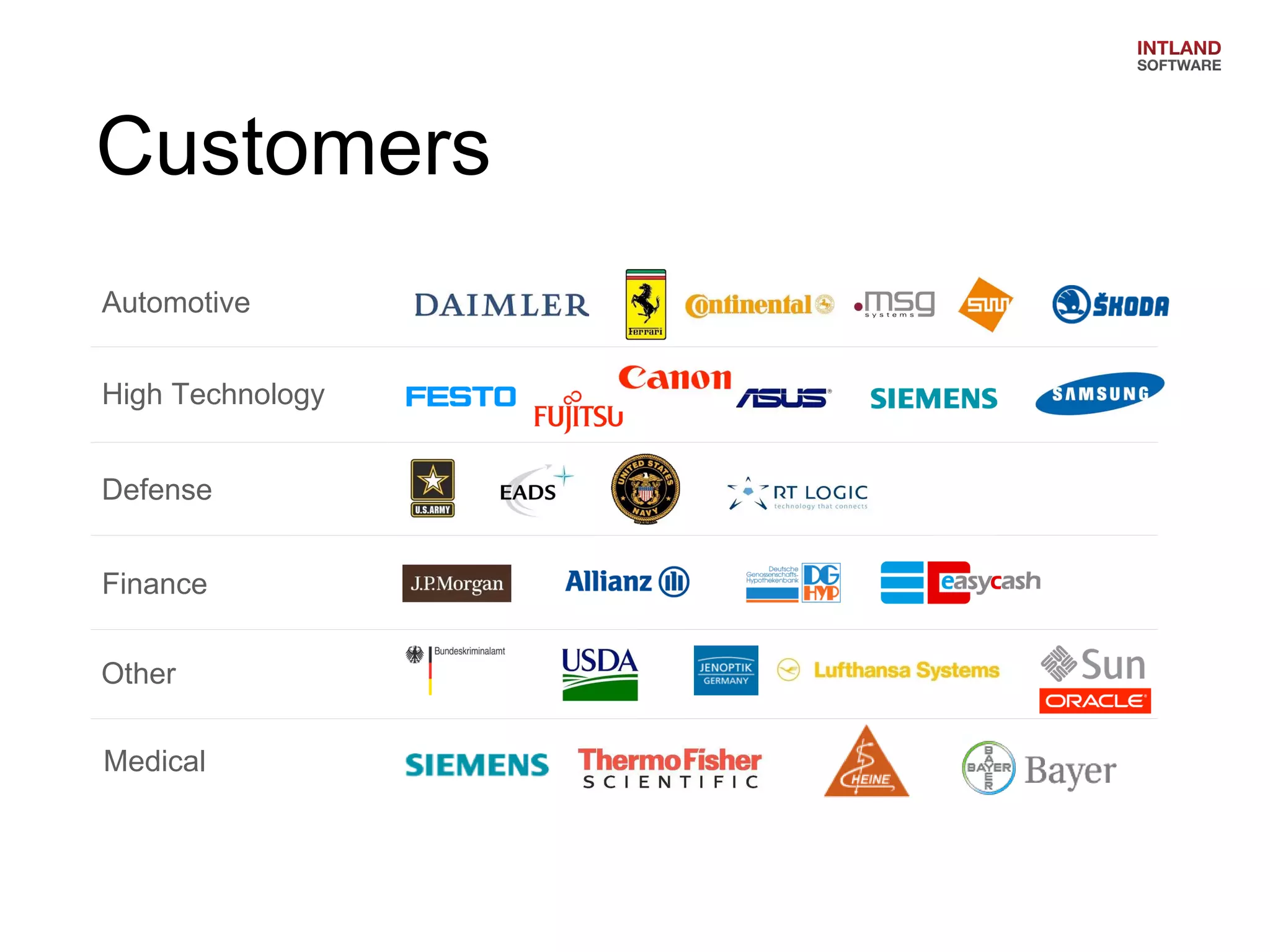
Customers 
Automotive 
High Technology 
Defense 
Other 
Finance 
Medical
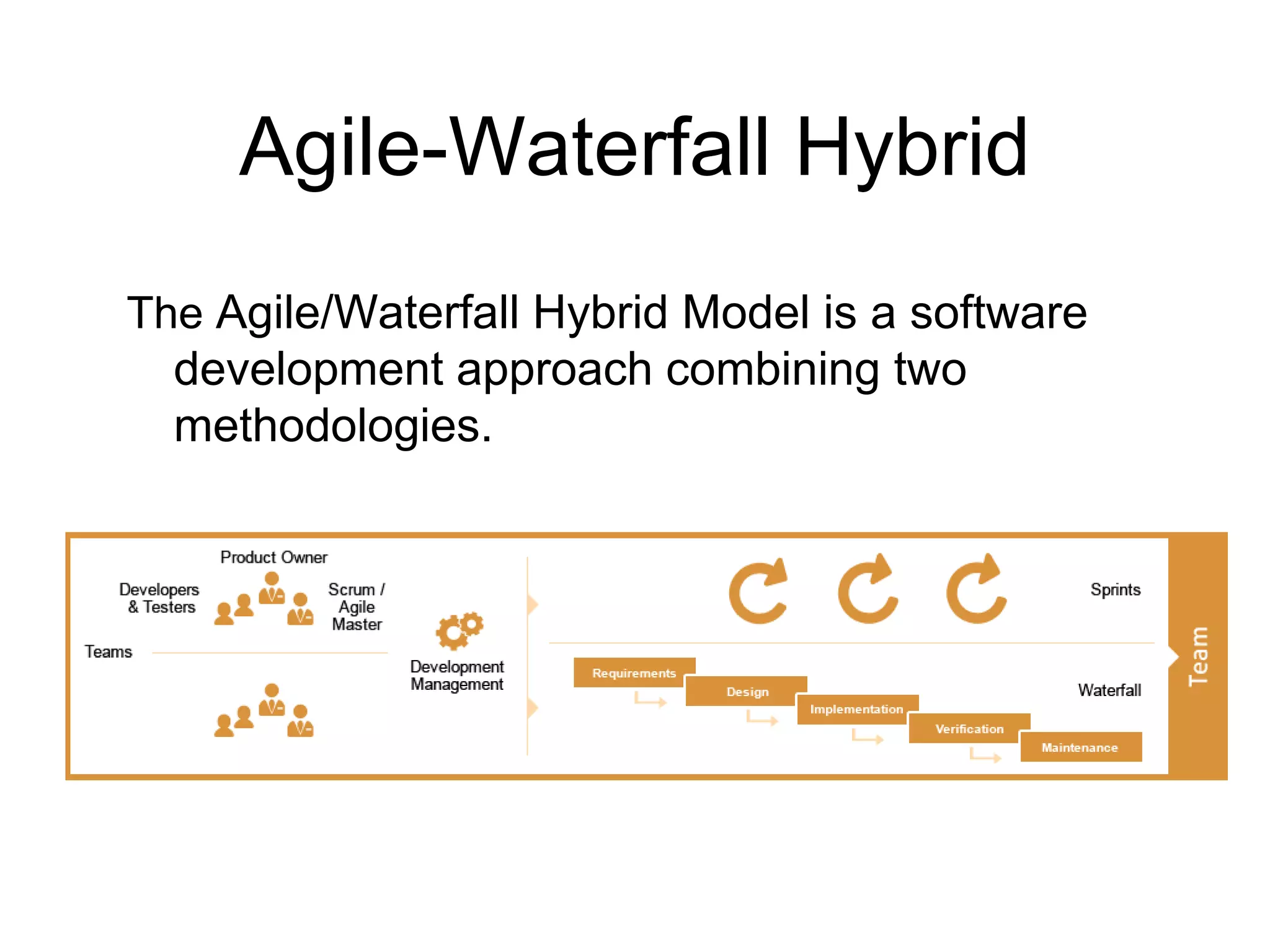
The Agile/Waterfall Hybrid Model is a software development approach combining two methodologies. 
Agile-Waterfall Hybrid
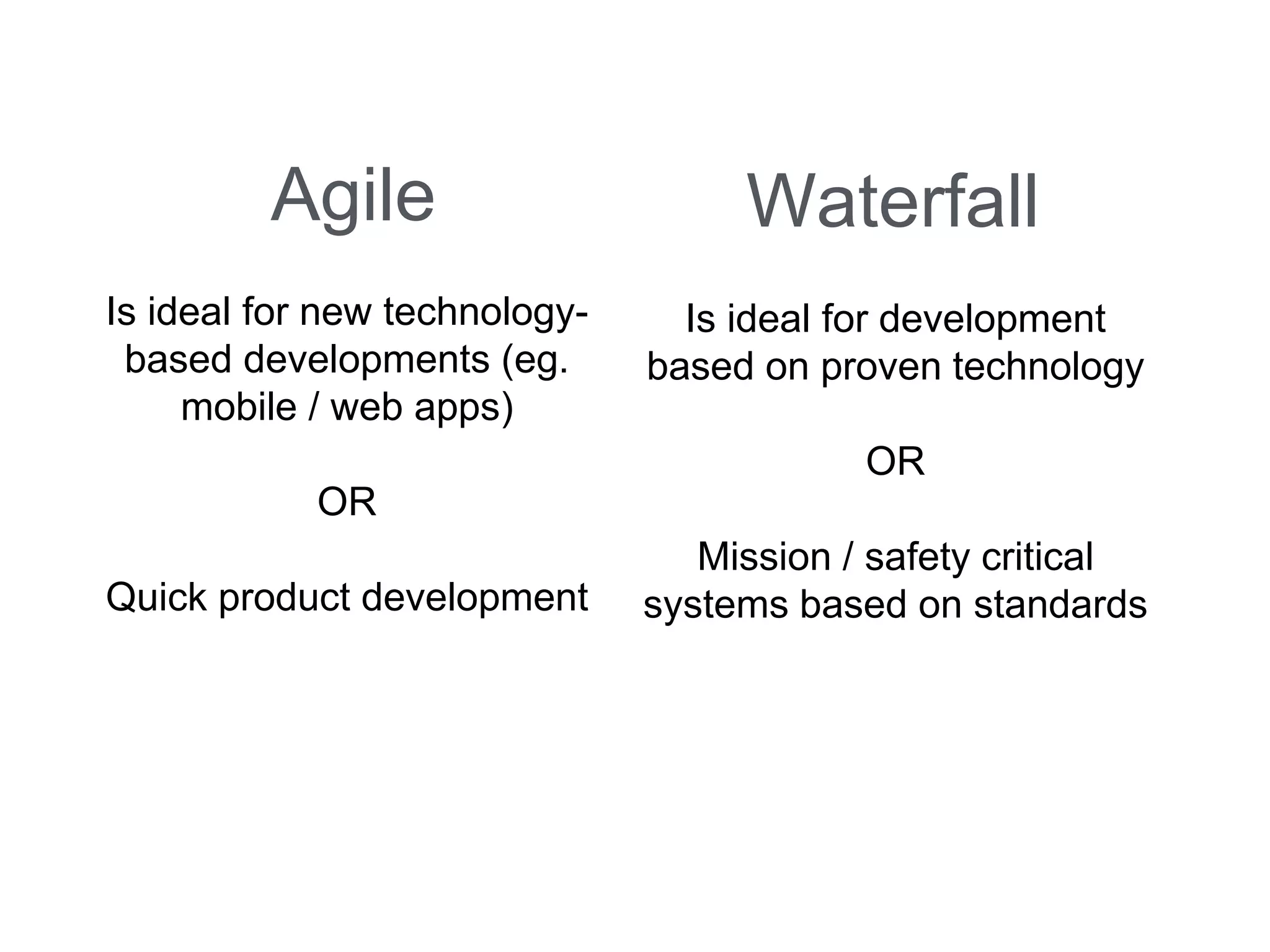
Agile 
Is ideal for new technology- based developments (eg. mobile / web apps) 
OR 
Quick product development 
Waterfall 
Is ideal for development based on proven technology 
OR 
Mission / safety critical systems based on standards
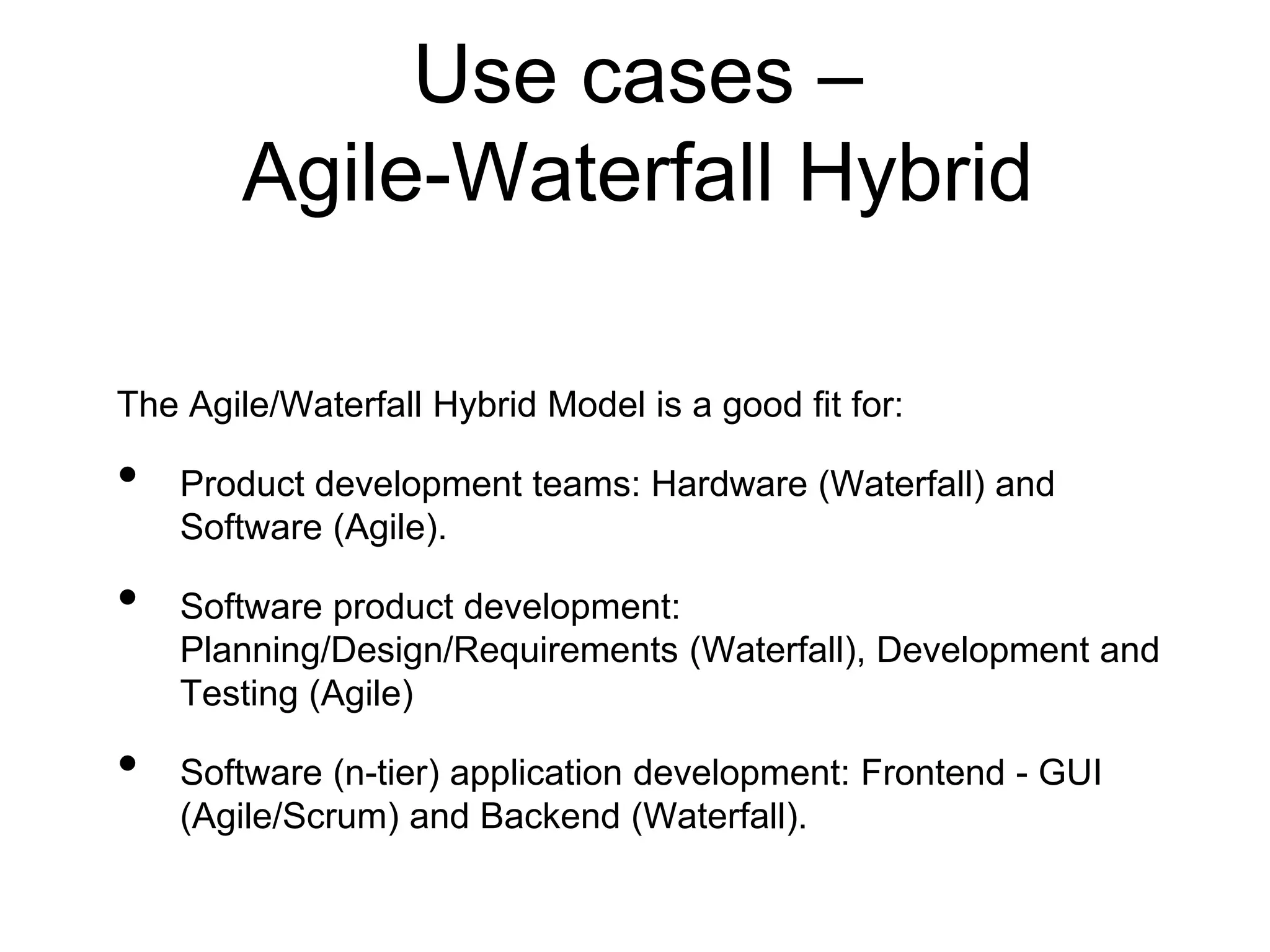
The Agile/Waterfall Hybrid Model is a good fit for: 
•Product development teams: Hardware (Waterfall) and Software (Agile). 
•Software product development: Planning/Design/Requirements (Waterfall), Development and Testing (Agile) 
•Software (n-tier) application development: Frontend -GUI (Agile/Scrum) and Backend (Waterfall). 
Use cases – Agile-Waterfall Hybrid
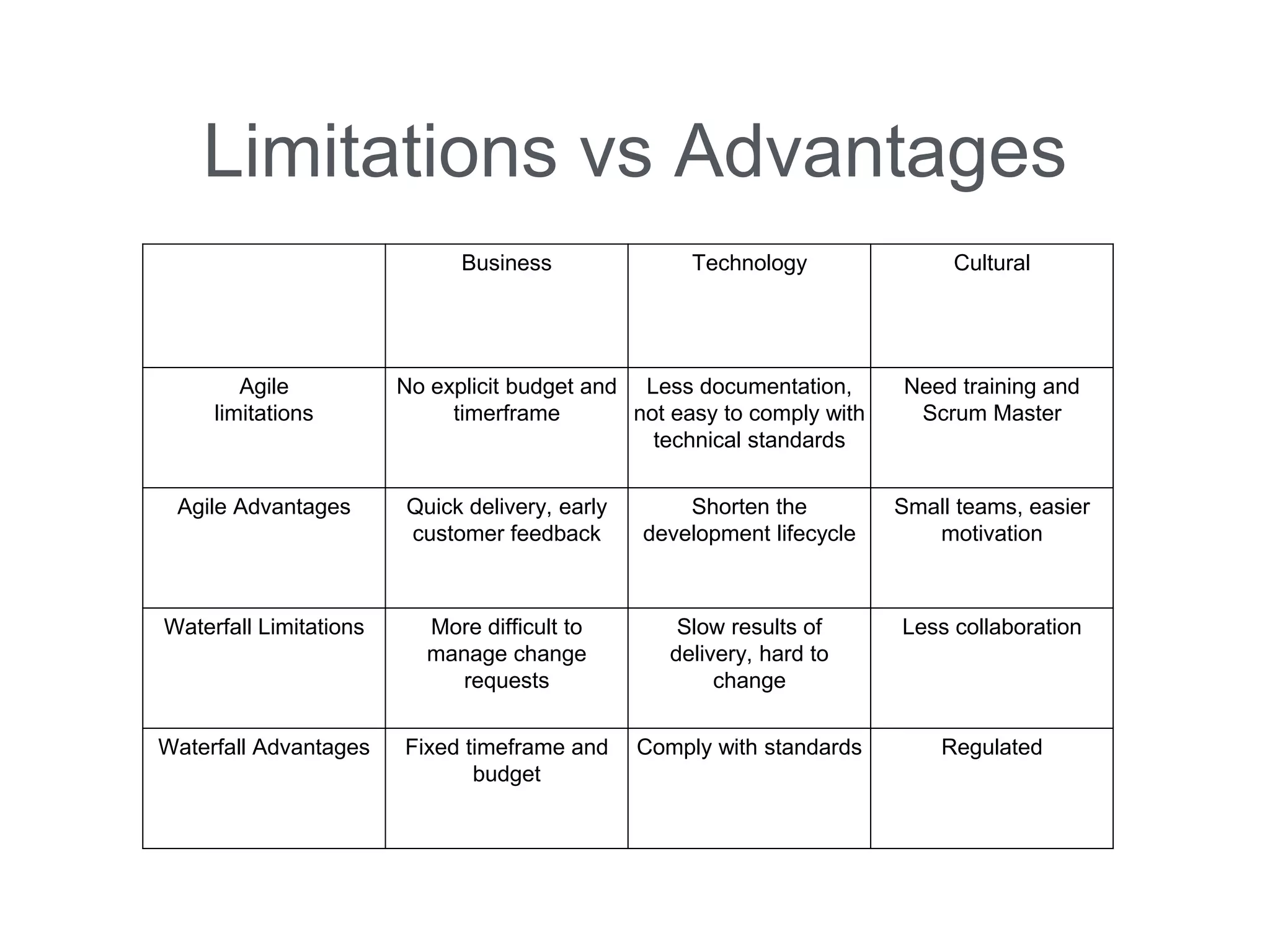
Limitations vs Advantages 
Business 
Technology 
Cultural 
Agile 
limitations 
No explicit budget and timerframe 
Less documentation, not easy to comply with technical standards 
Need training and Scrum Master 
Agile Advantages 
Quick delivery, early customer feedback 
Shorten the development lifecycle 
Small teams, easier motivation 
Waterfall Limitations 
More difficult to manage change requests 
Slow results of delivery, hard to change 
Less collaboration 
Waterfall Advantages 
Fixed timeframe and budget 
Comply with standards 
Regulated
Hybrid in Practice 
•Product Planning –System Architecture Design – System Requirements with Waterfall 
•Development and Testing with Agile-Scrum (Sprints) 
•Comply with regulated processes and standards 
•Needs closer cooperation of both types of teams
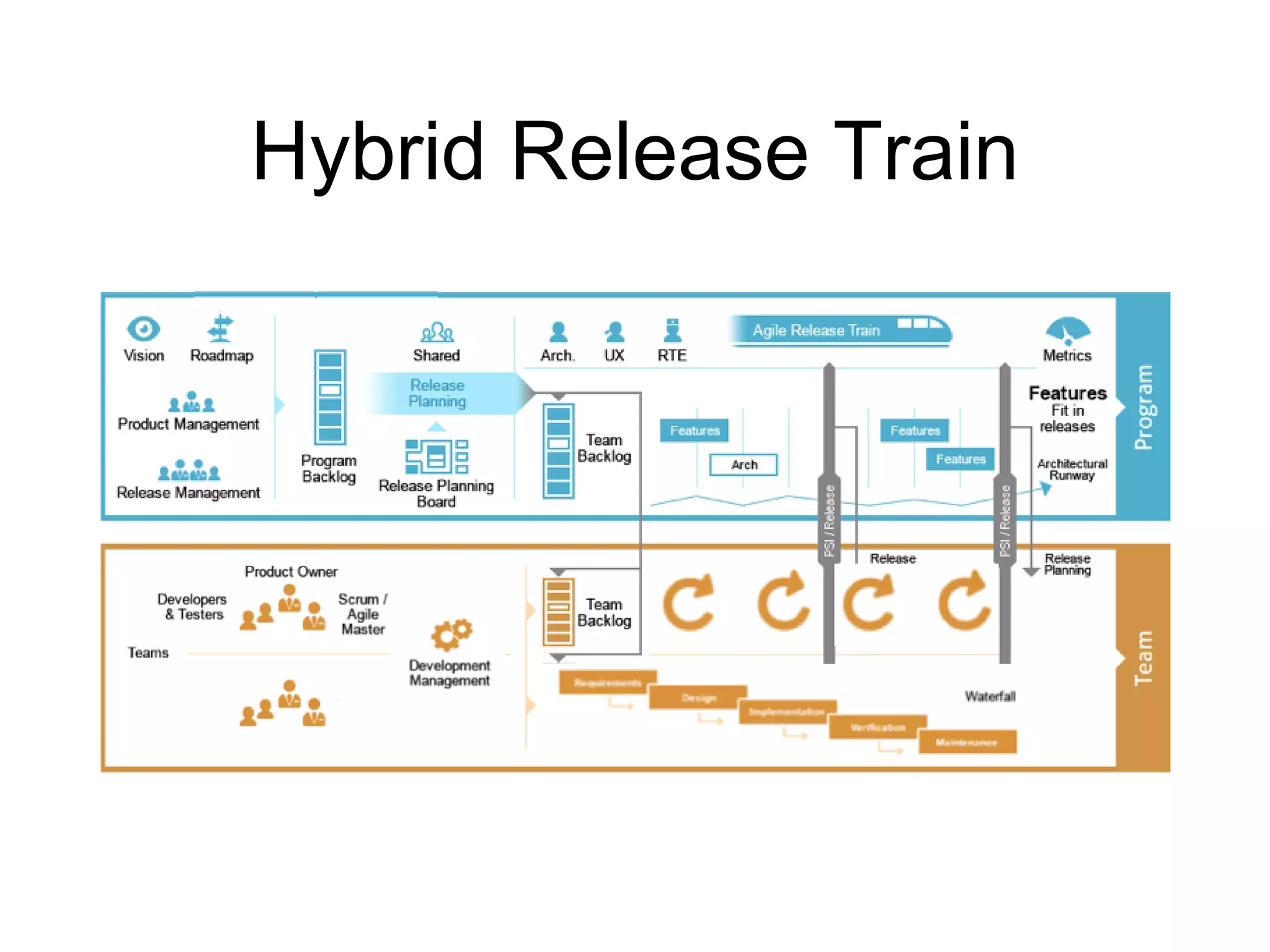
Hybrid Release Train
Benefits of the Hybrid Model 
•Reduced time for design, analysis and planning 
•Accelerates development –short iterations 
•More customer feedback, flexibility for changes 
•Quick turnaround, with continual product releases 
•Keep deadlines and budget (external customers) 
•Meet audit and regulations requirements
Hybrid Challenges 
•Cultural differences: working with Waterfall teams means more documentation, less cooperation. With Agile teams, it's the opposite: less documentation and more cooperation (daily stand up/retrospective). 
•Technical challenges 
•Dependency tracking, overseeing complex structures/hierarchies 
•Merging both approaches in the release(s)
Watch our webinar video: Agile-Waterfall Hybrid

Software Development with Agile Waterfall Hybrid Method

  • 1.
    Malte Ackermann ProductOwner May 7, 2014 4 PM (CET) www.intland.com
  • 2.
    Agenda •Introduction toIntland •Overview of the Agile-Waterfall Hybrid Model •Use cases of Agile-Waterfall Hybrid •Hybrid Framework Example •Benefits of Using the Agile-Waterfall Hybrid Model •Challenges of Agile-Waterfall Hybrid •Live demonstration
  • 3.
    Intland Software •Foundedin 1998 •Headquarters in Stuttgart, Germany •Office in Silicon Valley, USA •Partners in Korea & Taiwan •Development, consulting and services in Germany •Provider of three stand-alone modules: •Requirements Management •Development Management •QA-Test Management 3
  • 4.
    Customers Automotive HighTechnology Defense Other Finance Medical
  • 5.
    The Agile/Waterfall HybridModel is a software development approach combining two methodologies. Agile-Waterfall Hybrid
  • 6.
    Agile Is idealfor new technology- based developments (eg. mobile / web apps) OR Quick product development Waterfall Is ideal for development based on proven technology OR Mission / safety critical systems based on standards
  • 7.
    The Agile/Waterfall HybridModel is a good fit for: •Product development teams: Hardware (Waterfall) and Software (Agile). •Software product development: Planning/Design/Requirements (Waterfall), Development and Testing (Agile) •Software (n-tier) application development: Frontend -GUI (Agile/Scrum) and Backend (Waterfall). Use cases – Agile-Waterfall Hybrid
  • 8.
    Limitations vs Advantages Business Technology Cultural Agile limitations No explicit budget and timerframe Less documentation, not easy to comply with technical standards Need training and Scrum Master Agile Advantages Quick delivery, early customer feedback Shorten the development lifecycle Small teams, easier motivation Waterfall Limitations More difficult to manage change requests Slow results of delivery, hard to change Less collaboration Waterfall Advantages Fixed timeframe and budget Comply with standards Regulated
  • 9.
    Hybrid in Practice •Product Planning –System Architecture Design – System Requirements with Waterfall •Development and Testing with Agile-Scrum (Sprints) •Comply with regulated processes and standards •Needs closer cooperation of both types of teams
  • 10.
  • 11.
    Benefits of theHybrid Model •Reduced time for design, analysis and planning •Accelerates development –short iterations •More customer feedback, flexibility for changes •Quick turnaround, with continual product releases •Keep deadlines and budget (external customers) •Meet audit and regulations requirements
  • 12.
    Hybrid Challenges •Culturaldifferences: working with Waterfall teams means more documentation, less cooperation. With Agile teams, it's the opposite: less documentation and more cooperation (daily stand up/retrospective). •Technical challenges •Dependency tracking, overseeing complex structures/hierarchies •Merging both approaches in the release(s)
  • 13.
    Watch our webinarvideo: Agile-Waterfall Hybrid