Waterfall with Agile/Scrum
Development
July 5th 2016
Contact: Peter Dye
peterldye@hotmail.com
Contents
1. The Agile Development Progress
2. Software Assurance with Agile
3. Waterfall Lifecycle with Agile
• Agile/Scrum Process
4. A Few Key Agile Differences
5. Why Agile Development?
6. Agile for Waterfall Methodologies
7. Overview
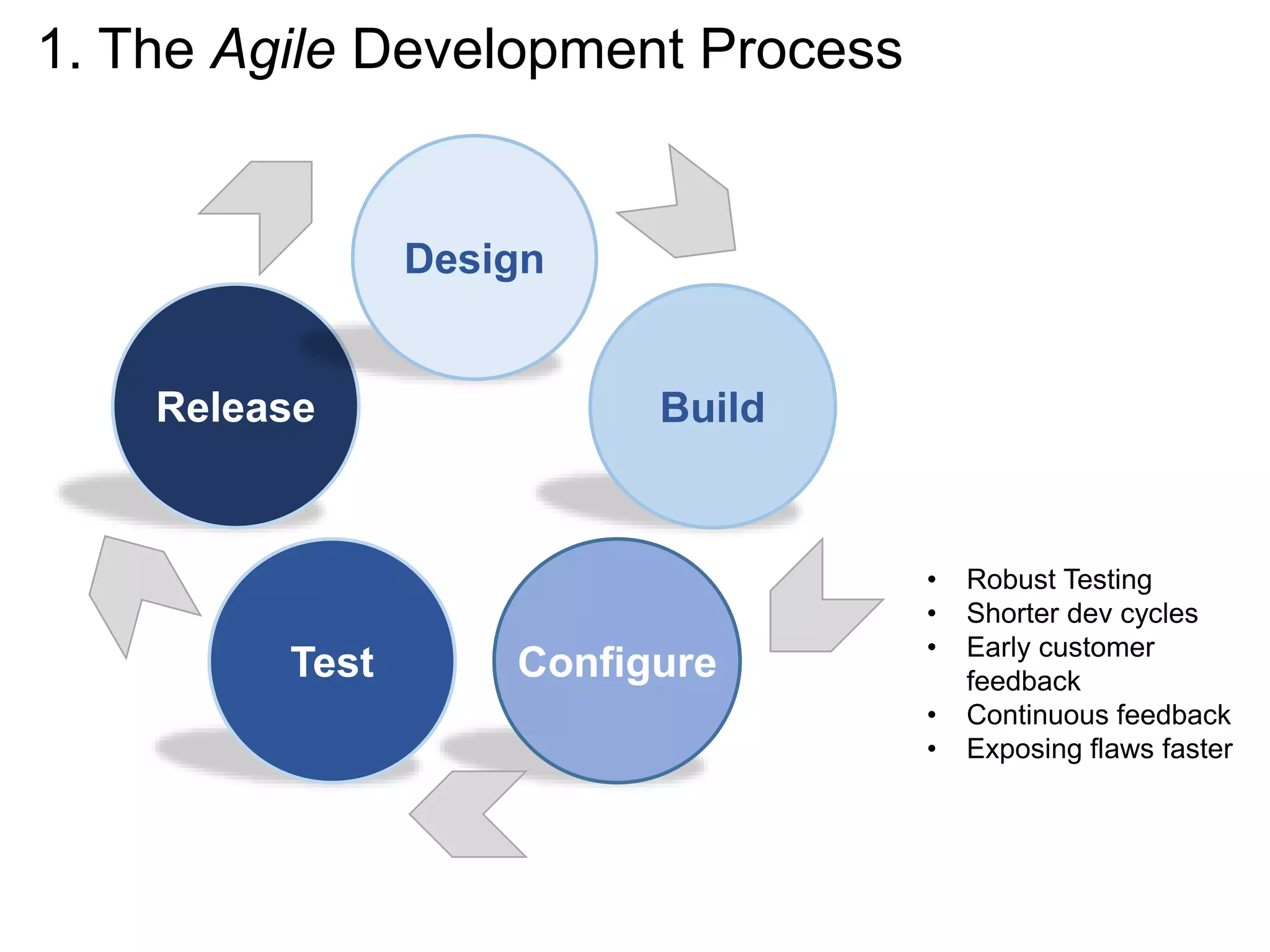
1. The Agile Development Process
BuildRelease
ConfigureTest
Design
• Robust Testing
• Shorter dev cycles
• Early customer
feedback
• Continuous feedback
• Exposing flaws faster
2. Software Assurance with Agile/SCRUM
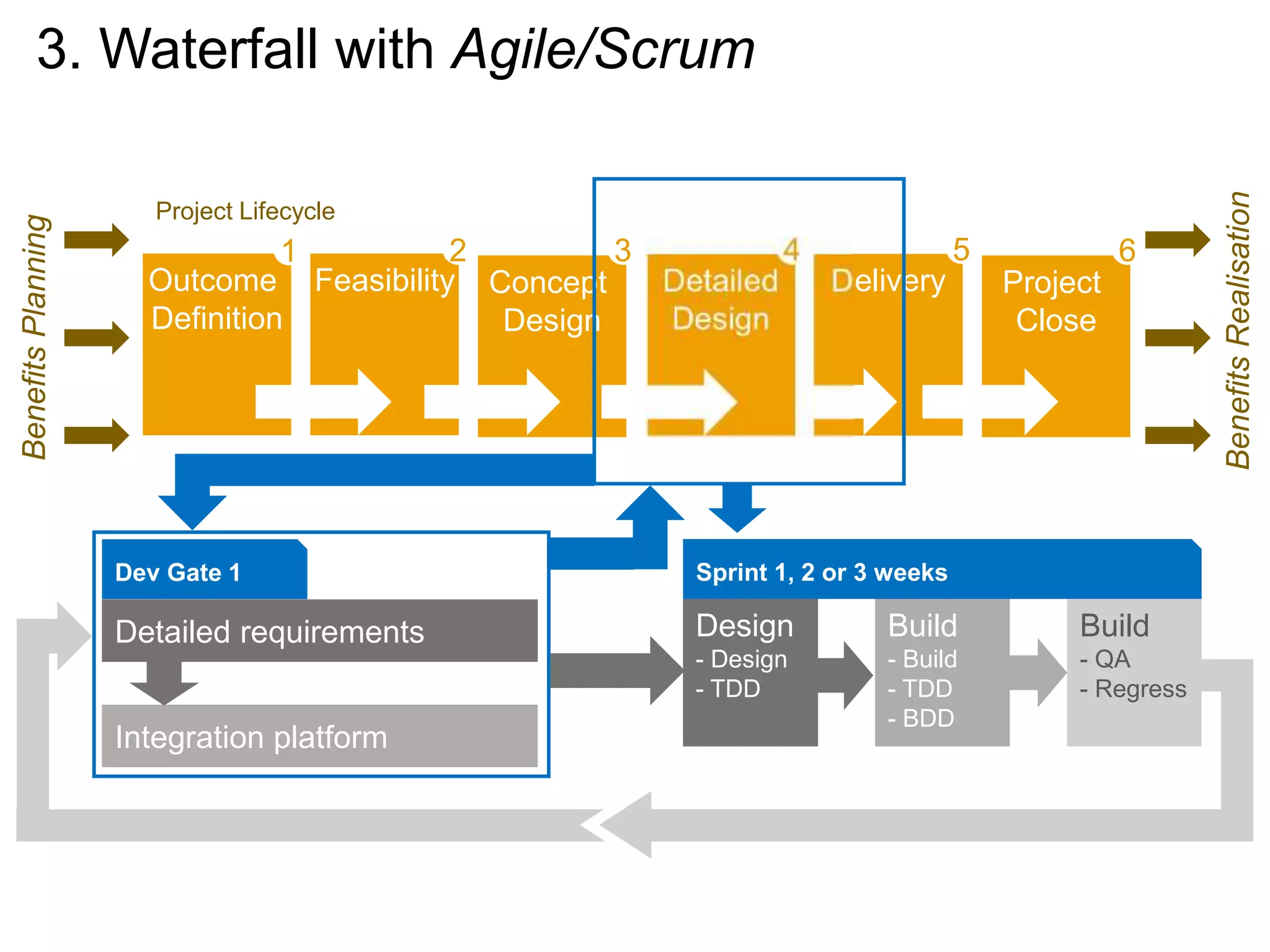
• Agile/SCRUM can work with existing Waterfall
methodologies
• Functional requirements and testing are critical
• Every Sprint is checked against the Functional
requirements for compliance
• TDD Test Driven & BDD Behaviour Driven
Development (QA Team)
• Code is Unit tested (TDD) by the developer in each
Sprint
• Fail faster is the Agile Mantra
• Test Automation & BDD normally performed by QA
Project
Close
6
Delivery
5
Concept
Design
3
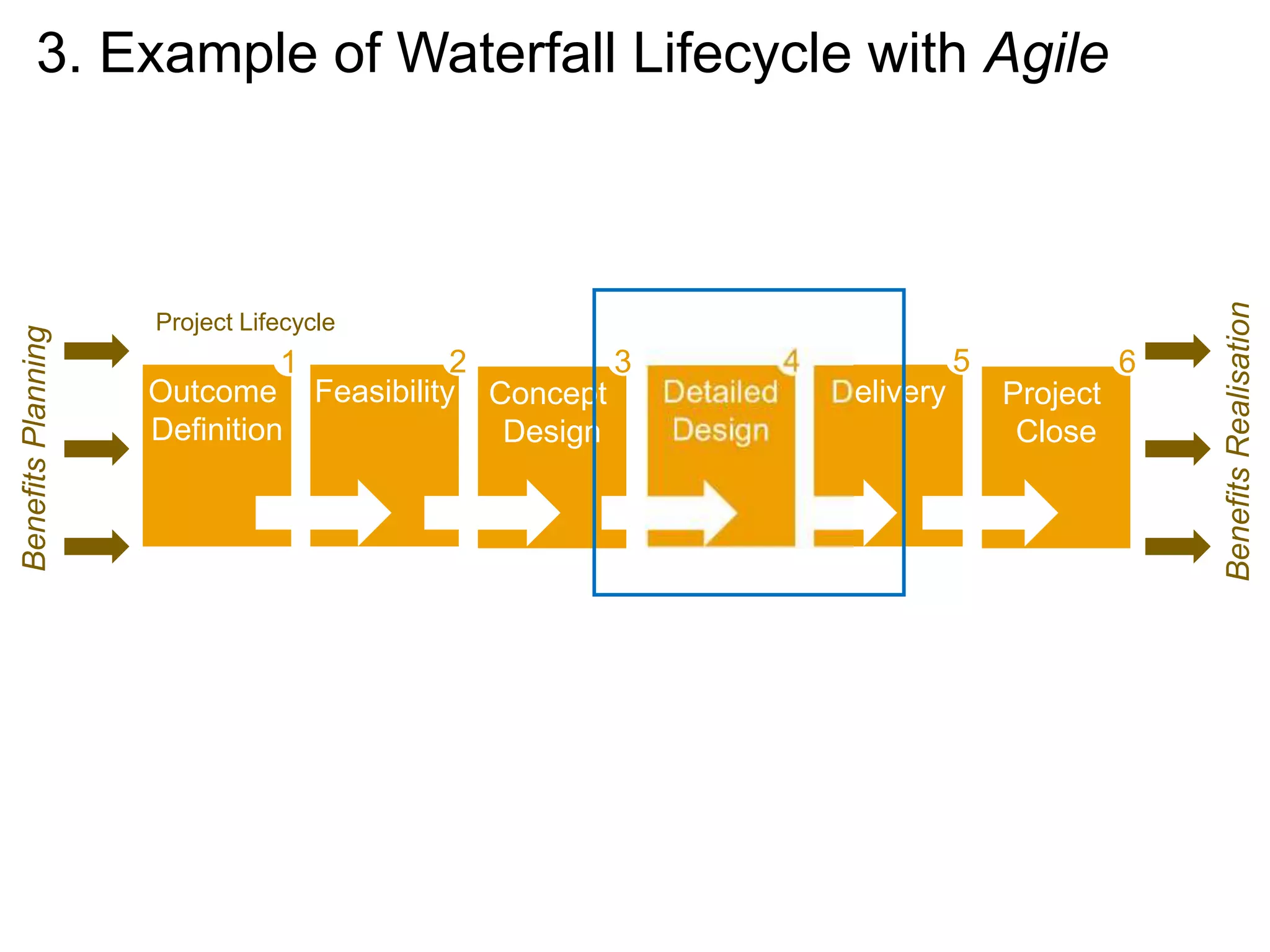
3. Example of Waterfall Lifecycle with AgileBenefitsPlanning
BenefitsRealisation
Project Lifecycle
Feasibility
2
Outcome
Definition
1
Detailed
Design
4
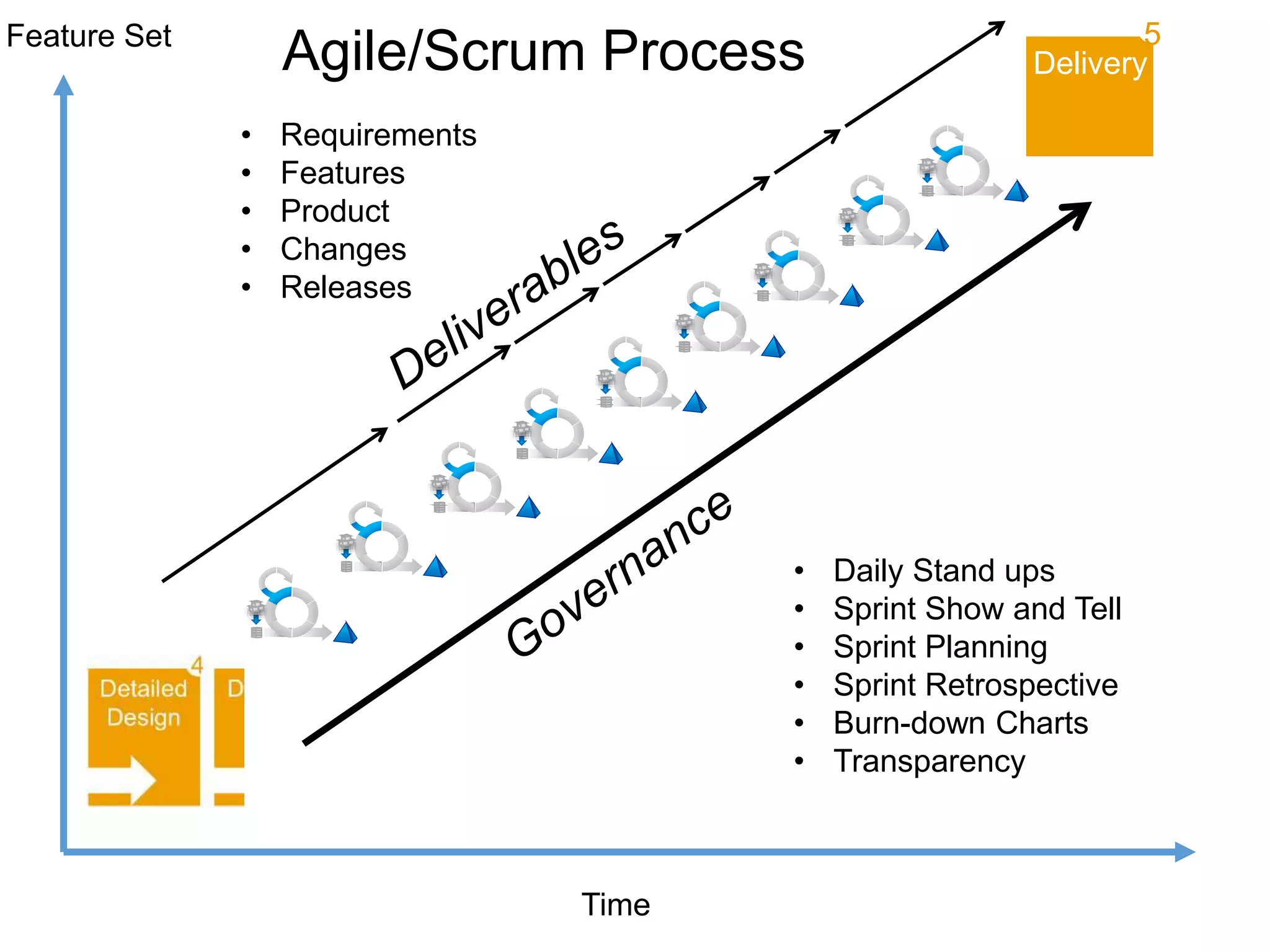
Feature Set
Time
Delivery
5
• Daily Stand ups
• Sprint Show and Tell
• Sprint Planning
• Sprint Retrospective
• Burn-down Charts
• Transparency
• Requirements
• Features
• Product
• Changes
• Releases
Agile/Scrum Process
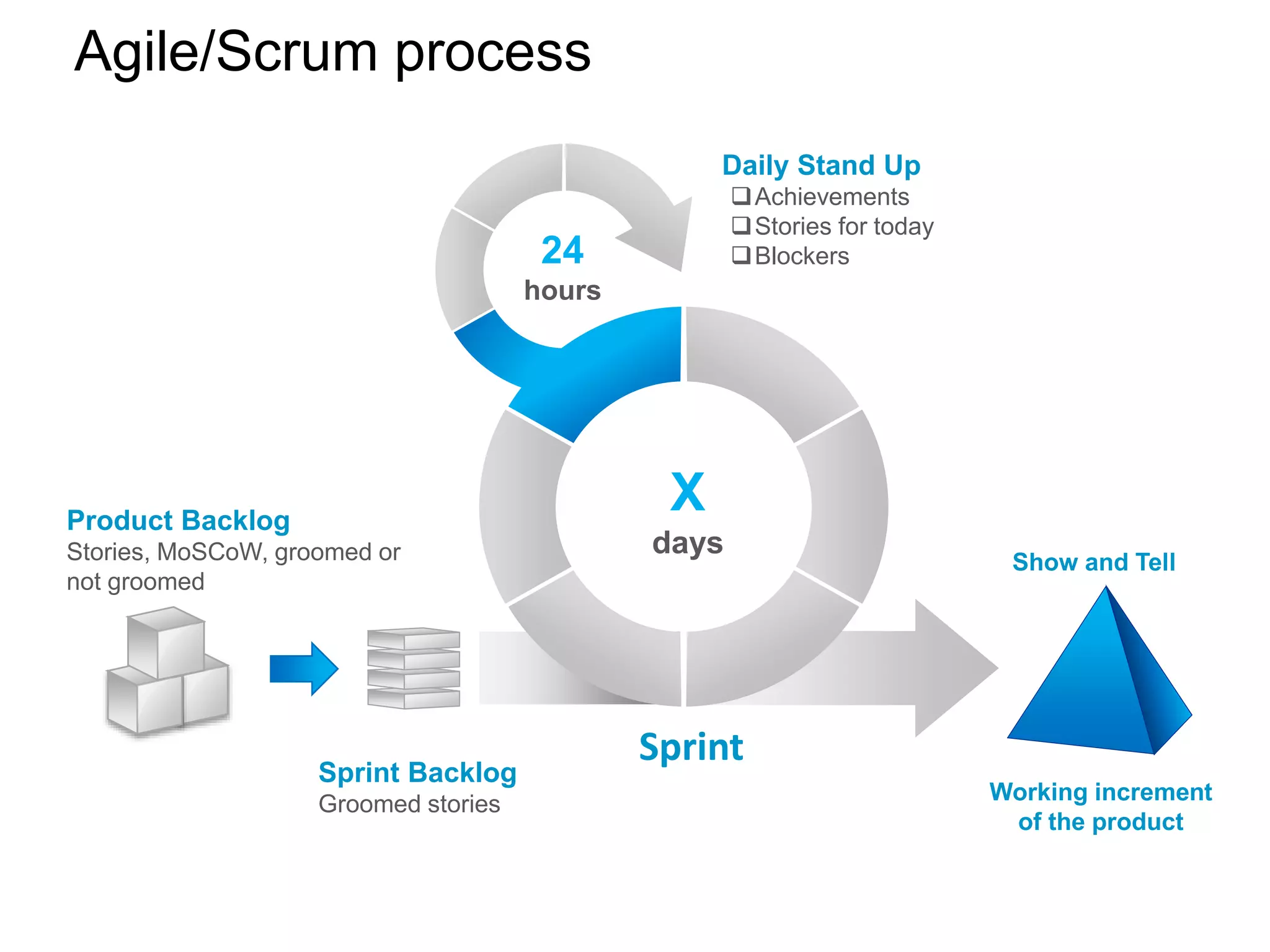
X
days
24
hours
Product Backlog
Stories, MoSCoW, groomed or
not groomed
Sprint Backlog
Groomed stories
Sprint
Daily Stand Up
Achievements
Stories for today
Blockers
Working increment
of the product
Agile/Scrum process
Show and Tell
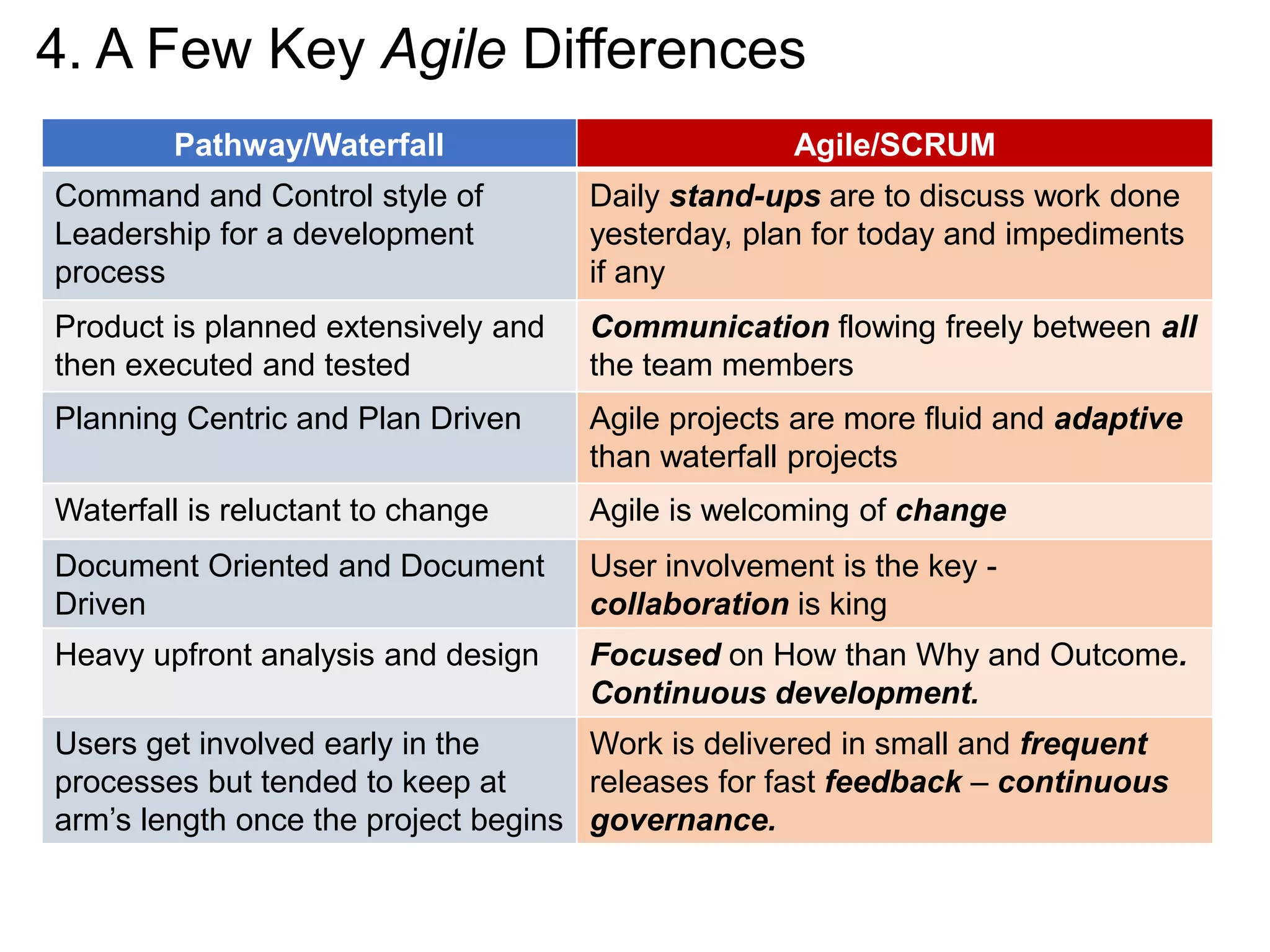
4. A Few Key Agile Differences
Pathway/Waterfall Agile/SCRUM
Command and Control style of
Leadership for a development
process
Daily stand-ups are to discuss work done
yesterday, plan for today and impediments
if any
Product is planned extensively and
then executed and tested
Communication flowing freely between all
the team members
Planning Centric and Plan Driven Agile projects are more fluid and adaptive
than waterfall projects
Waterfall is reluctant to change Agile is welcoming of change
Document Oriented and Document
Driven
User involvement is the key -
collaboration is king
Heavy upfront analysis and design Focused on How than Why and Outcome.
Continuous development.
Users get involved early in the
processes but tended to keep at
arm’s length once the project begins
Work is delivered in small and frequent
releases for fast feedback – continuous
governance.
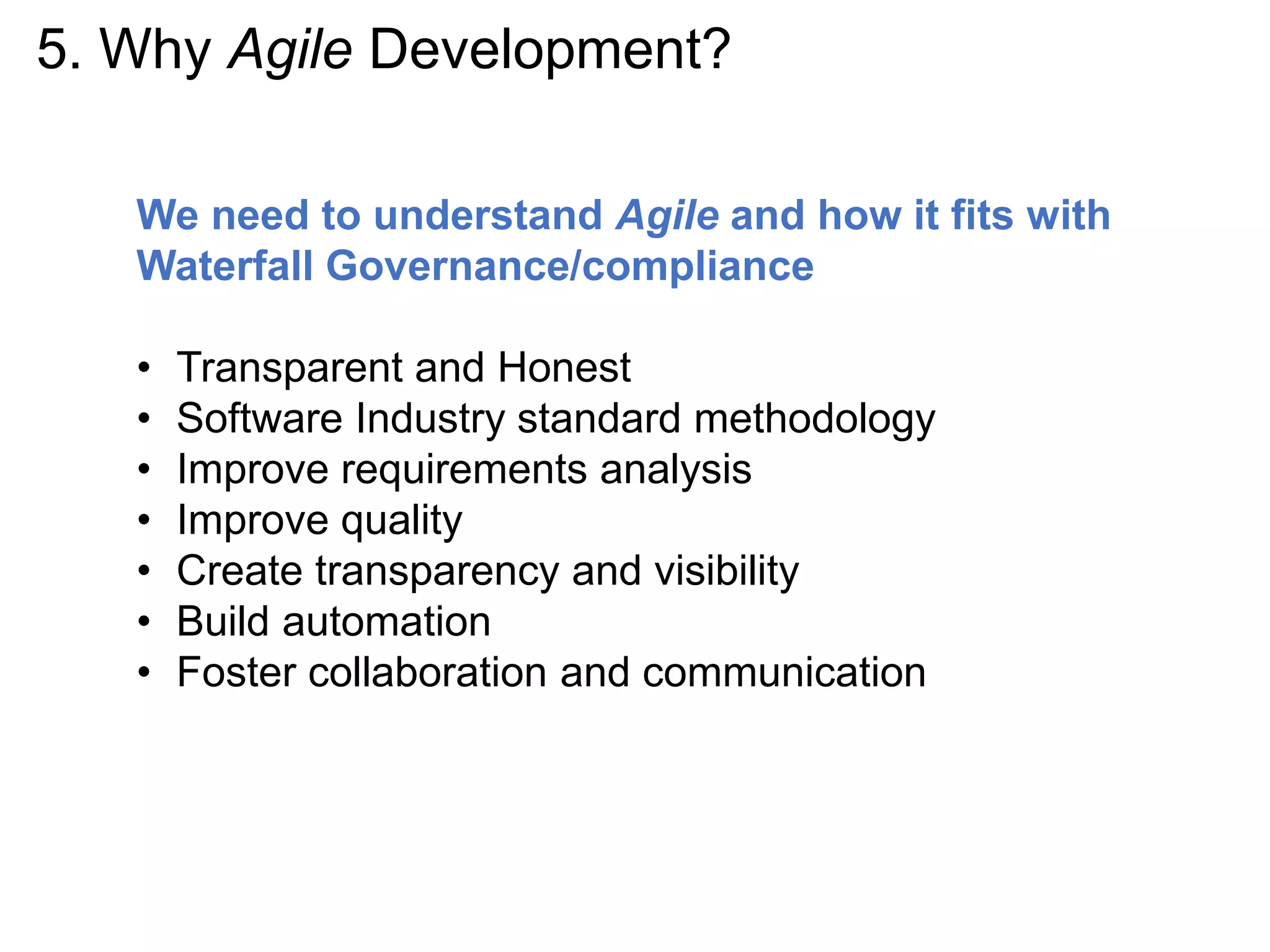
5. Why Agile Development?
We need to understand Agile and how it fits with
Waterfall Governance/compliance
• Transparent and Honest
• Software Industry standard methodology
• Improve requirements analysis
• Improve quality
• Create transparency and visibility
• Build automation
• Foster collaboration and communication
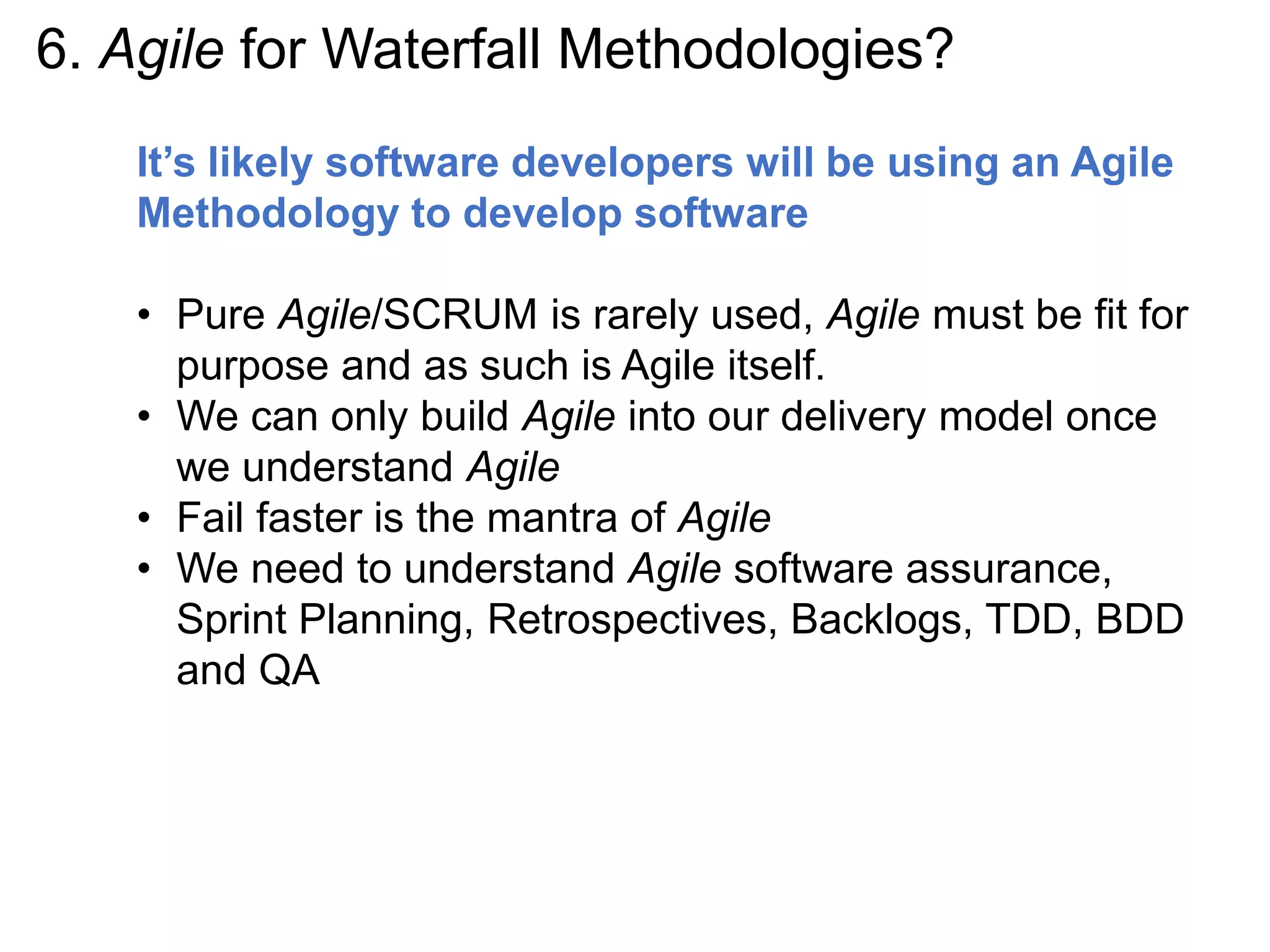
6. Agile for Waterfall Methodologies?
It’s likely software developers will be using an Agile
Methodology to develop software
• Pure Agile/SCRUM is rarely used, Agile must be fit for
purpose and as such is Agile itself.
• We can only build Agile into our delivery model once
we understand Agile
• Fail faster is the mantra of Agile
• We need to understand Agile software assurance,
Sprint Planning, Retrospectives, Backlogs, TDD, BDD
and QA
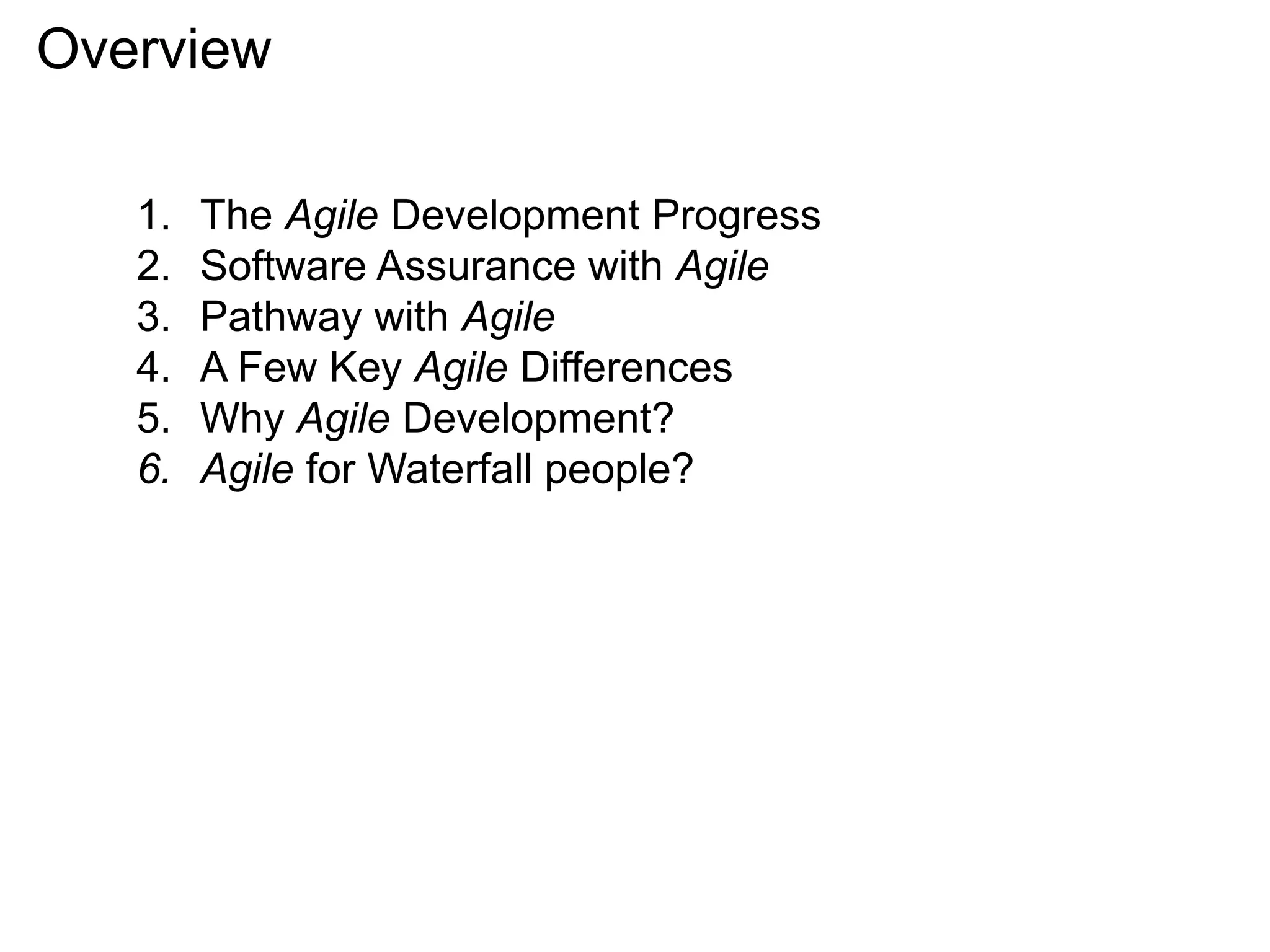
Overview
1. The Agile Development Progress
2. Software Assurance with Agile
3. Pathway with Agile
4. A Few Key Agile Differences
5. Why Agile Development?
6. Agile for Waterfall people?
Thank you for your time
Contact:
Peter Dye
peterldye@hotmail.com
Project
Close
6
Delivery
5
Concept
Design
3
3. Waterfall with Agile/ScrumBenefitsPlanning
BenefitsRealisation
Project Lifecycle
Detailed requirements Design
- Design
- TDD
Integration platform
Build
- Build
- TDD
- BDD
Build
- QA
- Regress
Dev Gate 1
Feasibility
2
Outcome
Definition
1
Detailed
Design
4
Sprint 1, 2 or 3 weeks

Agile with Waterfall

  • 1.
    Waterfall with Agile/Scrum Development July5th 2016 Contact: Peter Dye peterldye@hotmail.com
  • 2.
    Contents 1. The AgileDevelopment Progress 2. Software Assurance with Agile 3. Waterfall Lifecycle with Agile • Agile/Scrum Process 4. A Few Key Agile Differences 5. Why Agile Development? 6. Agile for Waterfall Methodologies 7. Overview
  • 3.
    1. The AgileDevelopment Process BuildRelease ConfigureTest Design • Robust Testing • Shorter dev cycles • Early customer feedback • Continuous feedback • Exposing flaws faster
  • 4.
    2. Software Assurancewith Agile/SCRUM • Agile/SCRUM can work with existing Waterfall methodologies • Functional requirements and testing are critical • Every Sprint is checked against the Functional requirements for compliance • TDD Test Driven & BDD Behaviour Driven Development (QA Team) • Code is Unit tested (TDD) by the developer in each Sprint • Fail faster is the Agile Mantra • Test Automation & BDD normally performed by QA
  • 5.
    Project Close 6 Delivery 5 Concept Design 3 3. Example ofWaterfall Lifecycle with AgileBenefitsPlanning BenefitsRealisation Project Lifecycle Feasibility 2 Outcome Definition 1 Detailed Design 4
  • 6.
    Feature Set Time Delivery 5 • DailyStand ups • Sprint Show and Tell • Sprint Planning • Sprint Retrospective • Burn-down Charts • Transparency • Requirements • Features • Product • Changes • Releases Agile/Scrum Process
  • 7.
    X days 24 hours Product Backlog Stories, MoSCoW,groomed or not groomed Sprint Backlog Groomed stories Sprint Daily Stand Up Achievements Stories for today Blockers Working increment of the product Agile/Scrum process Show and Tell
  • 8.
    4. A FewKey Agile Differences Pathway/Waterfall Agile/SCRUM Command and Control style of Leadership for a development process Daily stand-ups are to discuss work done yesterday, plan for today and impediments if any Product is planned extensively and then executed and tested Communication flowing freely between all the team members Planning Centric and Plan Driven Agile projects are more fluid and adaptive than waterfall projects Waterfall is reluctant to change Agile is welcoming of change Document Oriented and Document Driven User involvement is the key - collaboration is king Heavy upfront analysis and design Focused on How than Why and Outcome. Continuous development. Users get involved early in the processes but tended to keep at arm’s length once the project begins Work is delivered in small and frequent releases for fast feedback – continuous governance.
  • 9.
    5. Why AgileDevelopment? We need to understand Agile and how it fits with Waterfall Governance/compliance • Transparent and Honest • Software Industry standard methodology • Improve requirements analysis • Improve quality • Create transparency and visibility • Build automation • Foster collaboration and communication
  • 10.
    6. Agile forWaterfall Methodologies? It’s likely software developers will be using an Agile Methodology to develop software • Pure Agile/SCRUM is rarely used, Agile must be fit for purpose and as such is Agile itself. • We can only build Agile into our delivery model once we understand Agile • Fail faster is the mantra of Agile • We need to understand Agile software assurance, Sprint Planning, Retrospectives, Backlogs, TDD, BDD and QA
  • 11.
    Overview 1. The AgileDevelopment Progress 2. Software Assurance with Agile 3. Pathway with Agile 4. A Few Key Agile Differences 5. Why Agile Development? 6. Agile for Waterfall people?
  • 12.
    Thank you foryour time Contact: Peter Dye peterldye@hotmail.com
  • 13.
    Project Close 6 Delivery 5 Concept Design 3 3. Waterfall withAgile/ScrumBenefitsPlanning BenefitsRealisation Project Lifecycle Detailed requirements Design - Design - TDD Integration platform Build - Build - TDD - BDD Build - QA - Regress Dev Gate 1 Feasibility 2 Outcome Definition 1 Detailed Design 4 Sprint 1, 2 or 3 weeks

Editor's Notes

  • #2 This presentation is an example of how Agile can work within a Waterfall gated approach. This is not meant to be an authoritative guide, I wrote this to be a short guide for new people new to Agile/Scrum process.
  • #8 MoSCoW Prioritisation Must have Should have Could have Won’t have (this time around) The secret of success when using this technique is to be sure that those requirements classed as a ‘Must’, really are. There is a natural tendency of business people to consider most things as ‘Musts’ when in reality they are not. Two questions to ask in order to challenge the validity of a ‘Must’ are: If this requirement is not delivered, would you want the rest of the solution? Can this requirement be satisfied in another way i.e. is there a possible work-around? If the answer to either question is yes, then the requirement is not a ‘Must’. The MoSCoW technique is an easy one to learn, but there are some specific considerations to using it in this type of approach