AGILE & KANBAN IN
COORDINATION
Ryan Polk
Team Background & History
¨    18 Engineers
¨    Relatively mature and expansive codebase
      ¤    C# / .Net
      ¤    MS Team Foundation Server (TFS)
¨    System – 5.0
      ¤    Over 4 years in development.
      ¤    Large scale feature upgrades = 60% of the work.
¨    Over the last 2 years we have worked to transition from a “Laissez-
      faire” waterfall team to a simple and well tuned Lean / Agile team.


                                               MY ROLE: My role in the team is both as one of
                                               the development team managers and as Agile
                                               coach for the company as a whole.
How We Got Here
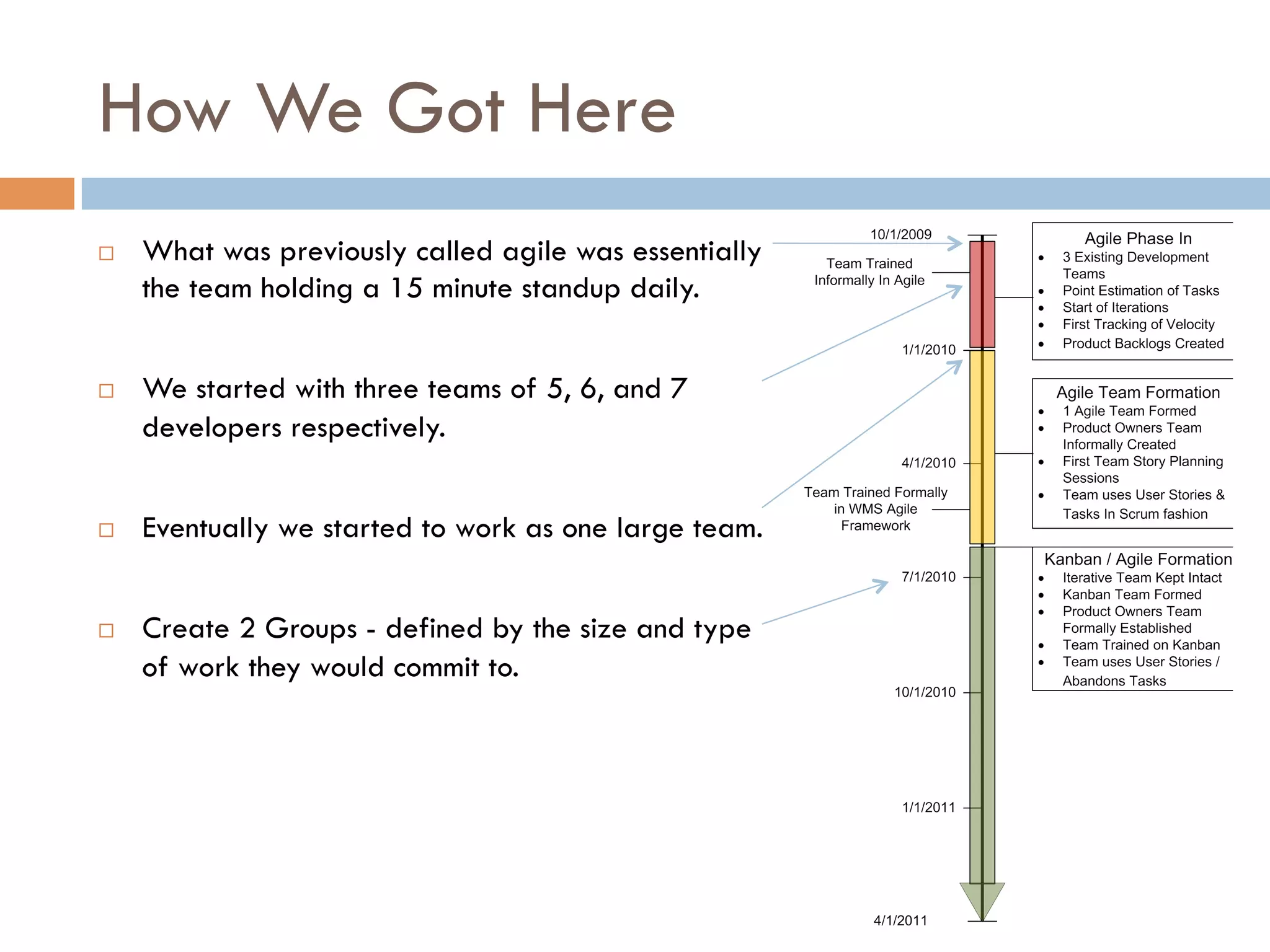
¨    What was previously called agile was essentially
      the team holding a 15 minute standup daily.


¨    We started with three teams of 5, 6, and 7
      developers respectively.


¨    Eventually we started to work as one large team.


¨    Create 2 Groups - defined by the size and type
      of work they would commit to.
Defining Agile - Adding in Kanban

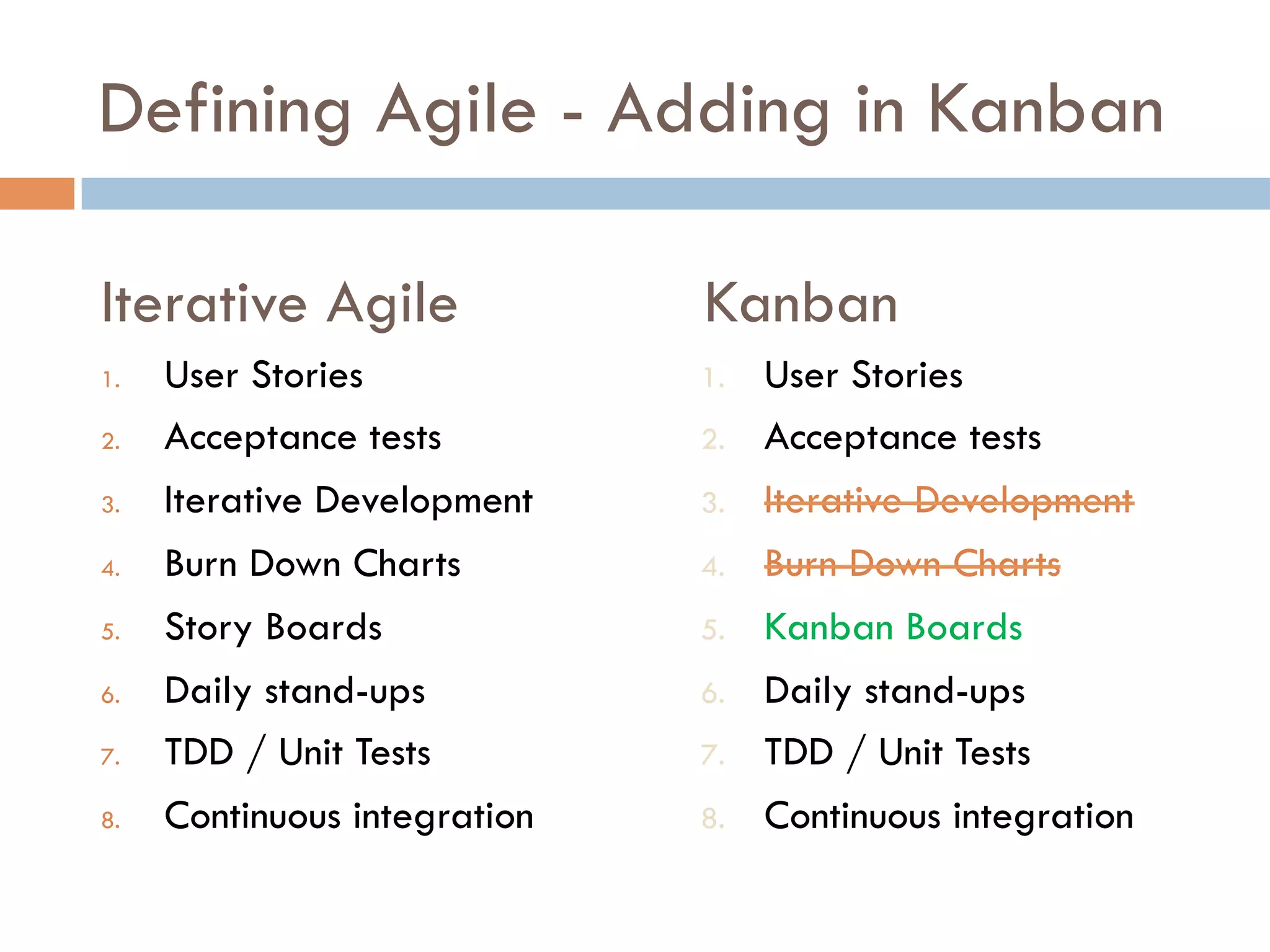
Iterative Agile                Kanban
1.    User Stories             1.    User Stories
2.    Acceptance tests         2.    Acceptance tests
3.    Iterative Development    3.    Iterative Development
4.    Burn Down Charts         4.    Burn Down Charts
5.    Story Boards             5.    Kanban Boards
6.    Daily stand-ups          6.    Daily stand-ups
7.    TDD / Unit Tests         7.    TDD / Unit Tests
8.    Continuous integration   8.    Continuous integration
Organization & Product Ownership
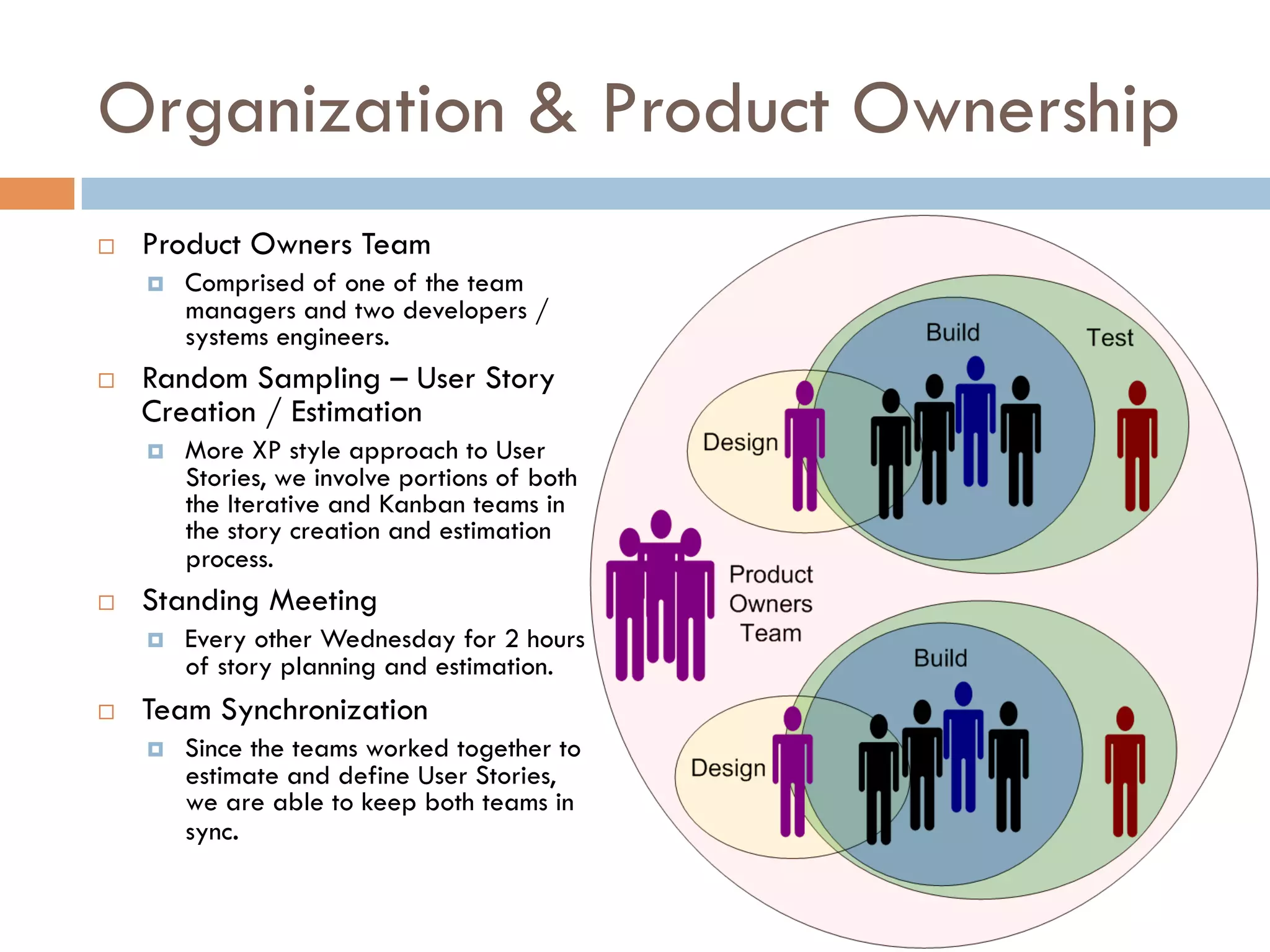
¨    Product Owners Team
      ¤    Comprised of one of the team
            managers and two developers /
            systems engineers.
¨    Random Sampling – User Story
      Creation / Estimation
      ¤    More XP style approach to User
            Stories, we involve portions of both
            the Iterative and Kanban teams in
            the story creation and estimation
            process.
¨    Standing Meeting
      ¤    Every other Wednesday for 2 hours
            of story planning and estimation.
¨    Team Synchronization
      ¤    Since the teams worked together to
            estimate and define User Stories,
            we are able to keep both teams in
            sync.
Iterative / Kanban Development

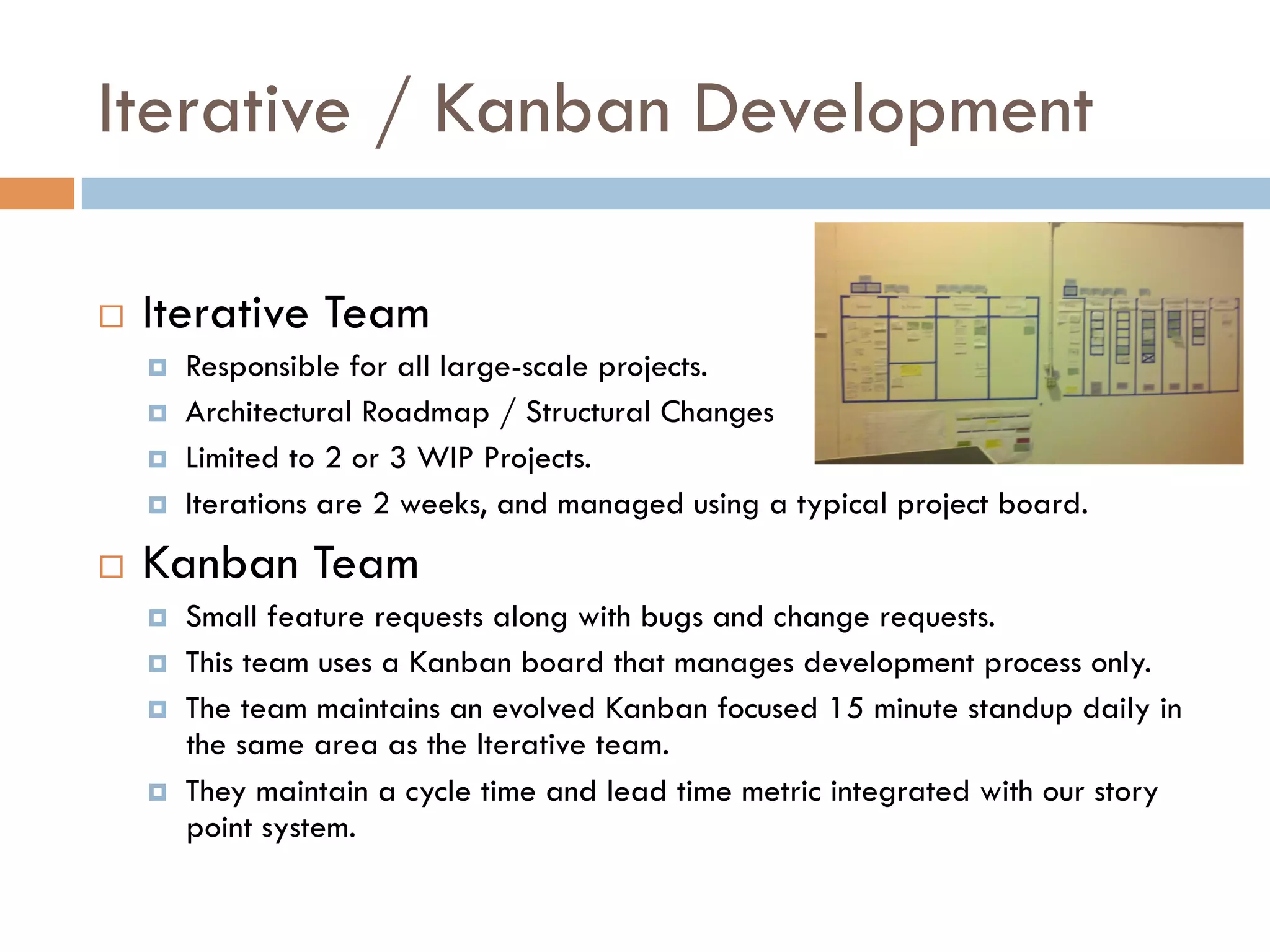
¨    Iterative Team
      ¤    Responsible for all large-scale projects.
      ¤    Architectural Roadmap / Structural Changes
      ¤    Limited to 2 or 3 WIP Projects.
      ¤    Iterations are 2 weeks, and managed using a typical project board.
¨    Kanban Team
      ¤    Small feature requests along with bugs and change requests.
      ¤    This team uses a Kanban board that manages development process only.
      ¤    The team maintains an evolved Kanban focused 15 minute standup daily in
            the same area as the Iterative team.
      ¤    They maintain a cycle time and lead time metric integrated with our story
            point system.
WIP Limits – With Story Points
¨    Board WIP limits
      ¤    Constraining the number of stories allowed in each queue.
      ¤    Imposing a limit to the maximum amount of points in certain queues.
      ¤    The two primary queues we were concerned with were the Development
            and Verify / Accept queues.


¨    Team WIP Limits – By Story Size
      ¤    Only stories of a certain size (8 Points) and below would be allowed on the
            board.
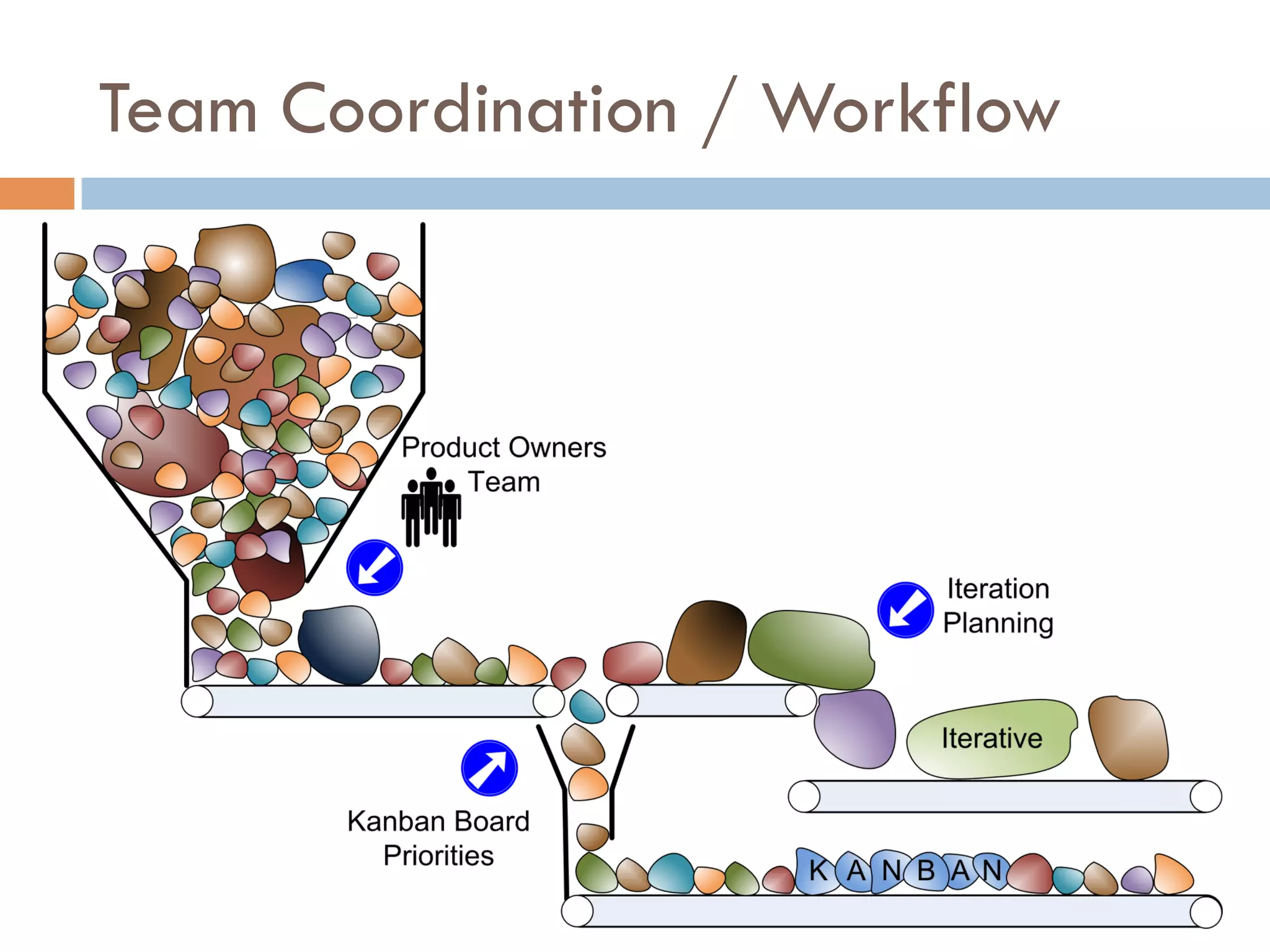
Team Coordination / Workflow
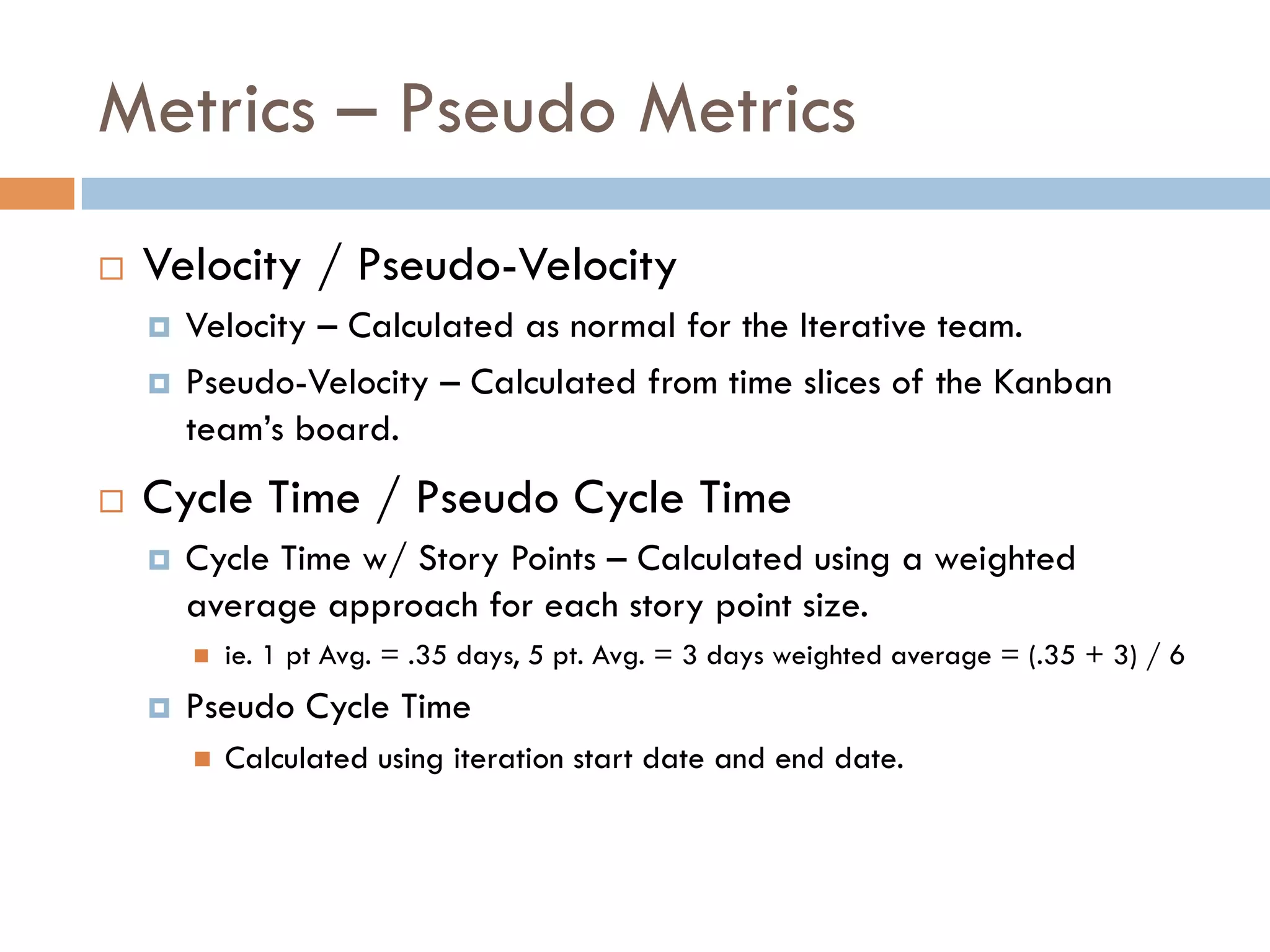
Metrics – Pseudo Metrics
¨    Velocity / Pseudo-Velocity
      ¤  Velocity – Calculated as normal for the Iterative team.
      ¤  Pseudo-Velocity – Calculated from time slices of the Kanban
          team’s board.
¨    Cycle Time / Pseudo Cycle Time
      ¤    Cycle Time w/ Story Points – Calculated using a weighted
            average approach for each story point size.
            n    ie. 1 pt Avg. = .35 days, 5 pt. Avg. = 3 days weighted average = (.35 + 3) / 6
      ¤    Pseudo Cycle Time
            n    Calculated using iteration start date and end date.
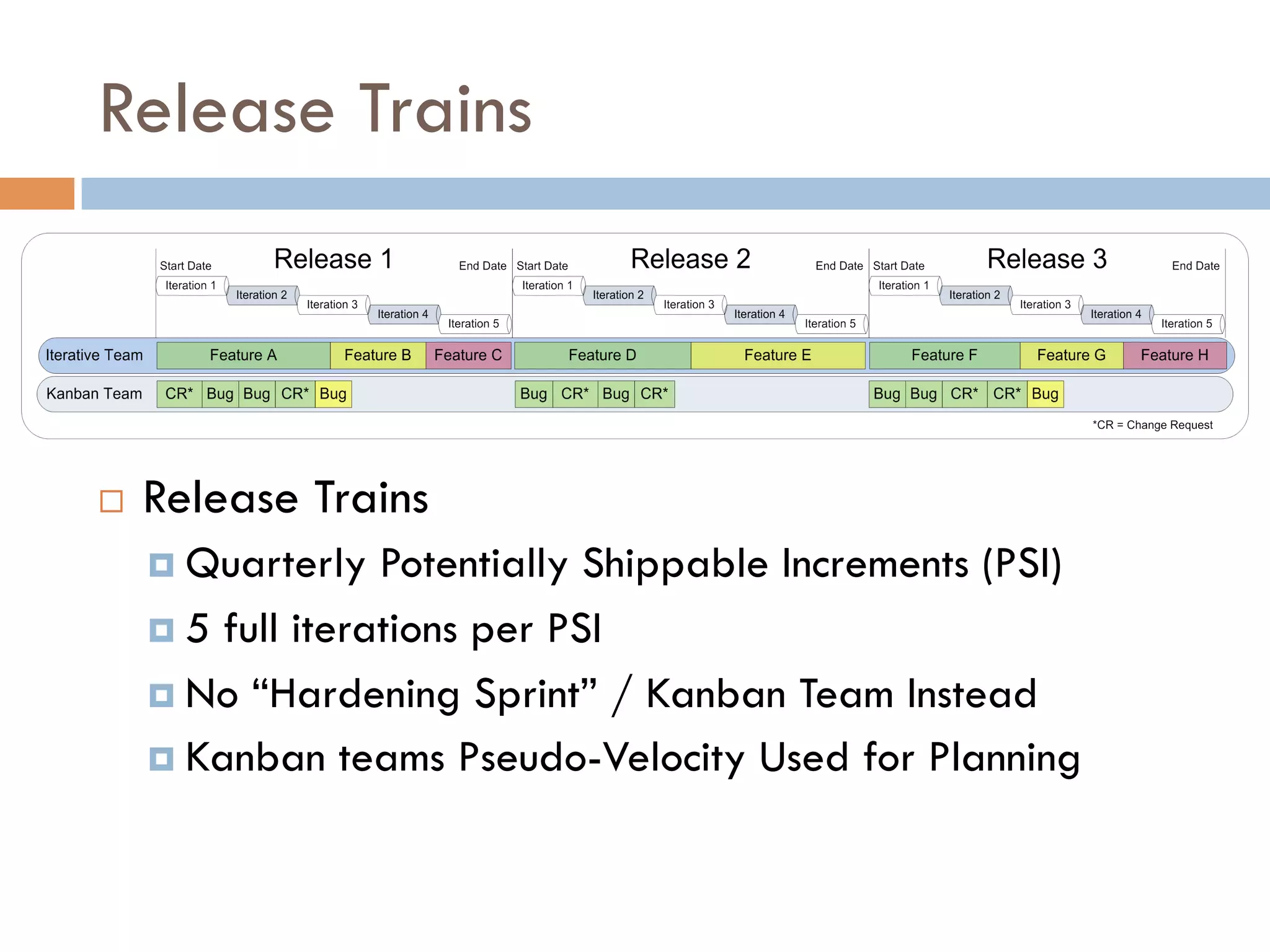
Release Trains


¨    Release Trains
      ¤  Quarterly   Potentially Shippable Increments (PSI)
      ¤  5 full iterations per PSI

      ¤  No “Hardening Sprint” / Kanban Team Instead
      ¤  Kanban teams Pseudo-Velocity Used for Planning
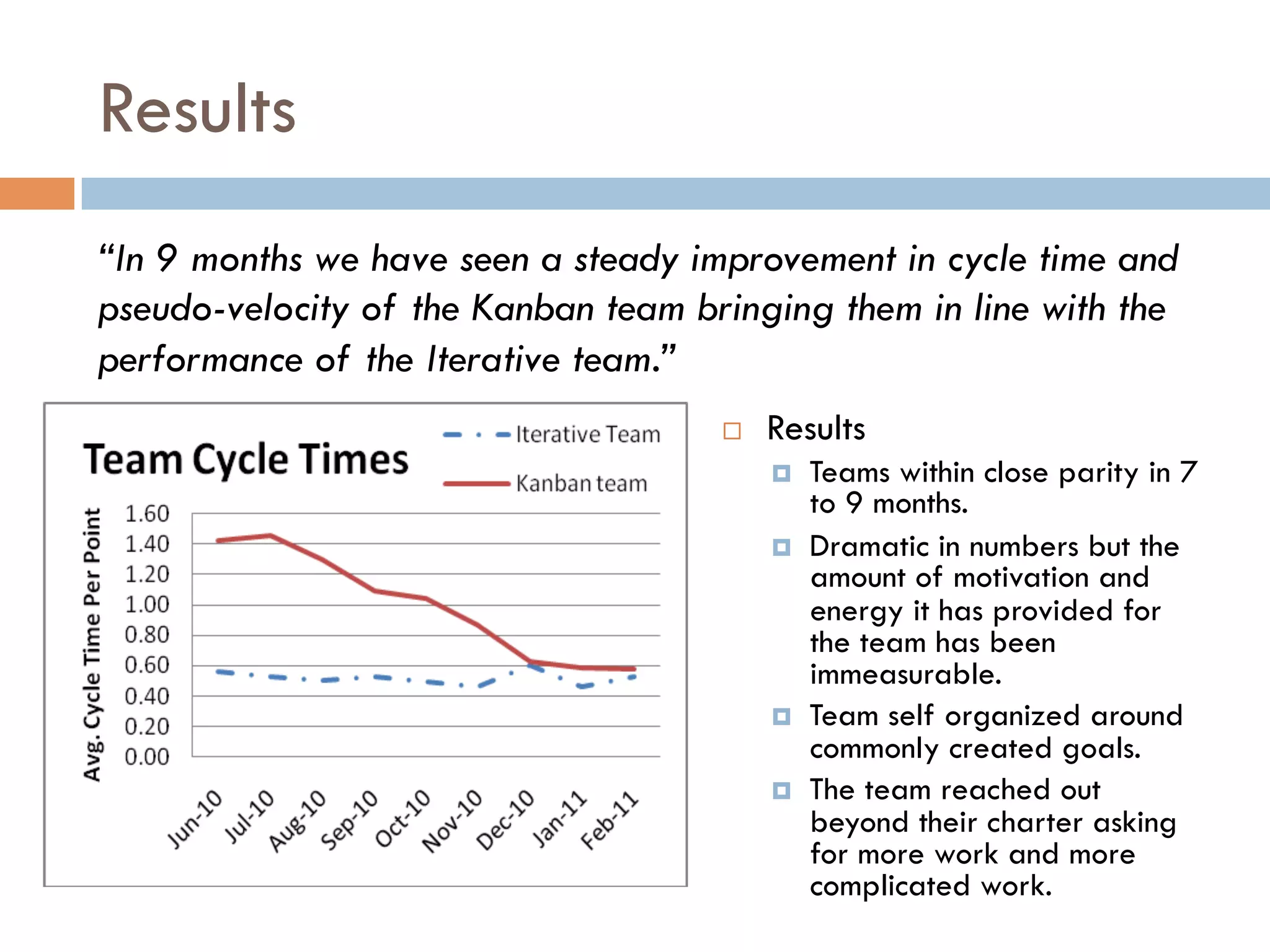
Results
“In 9 months we have seen a steady improvement in cycle time and
pseudo-velocity of the Kanban team bringing them in line with the
performance of the Iterative team.”
                                     ¨    Results
                                           ¤    Teams within close parity in 7
                                                 to 9 months.
                                           ¤    Dramatic in numbers but the
                                                 amount of motivation and
                                                 energy it has provided for
                                                 the team has been
                                                 immeasurable.
                                           ¤    Team self organized around
                                                 commonly created goals.
                                           ¤    The team reached out
                                                 beyond their charter asking
                                                 for more work and more
                                                 complicated work.
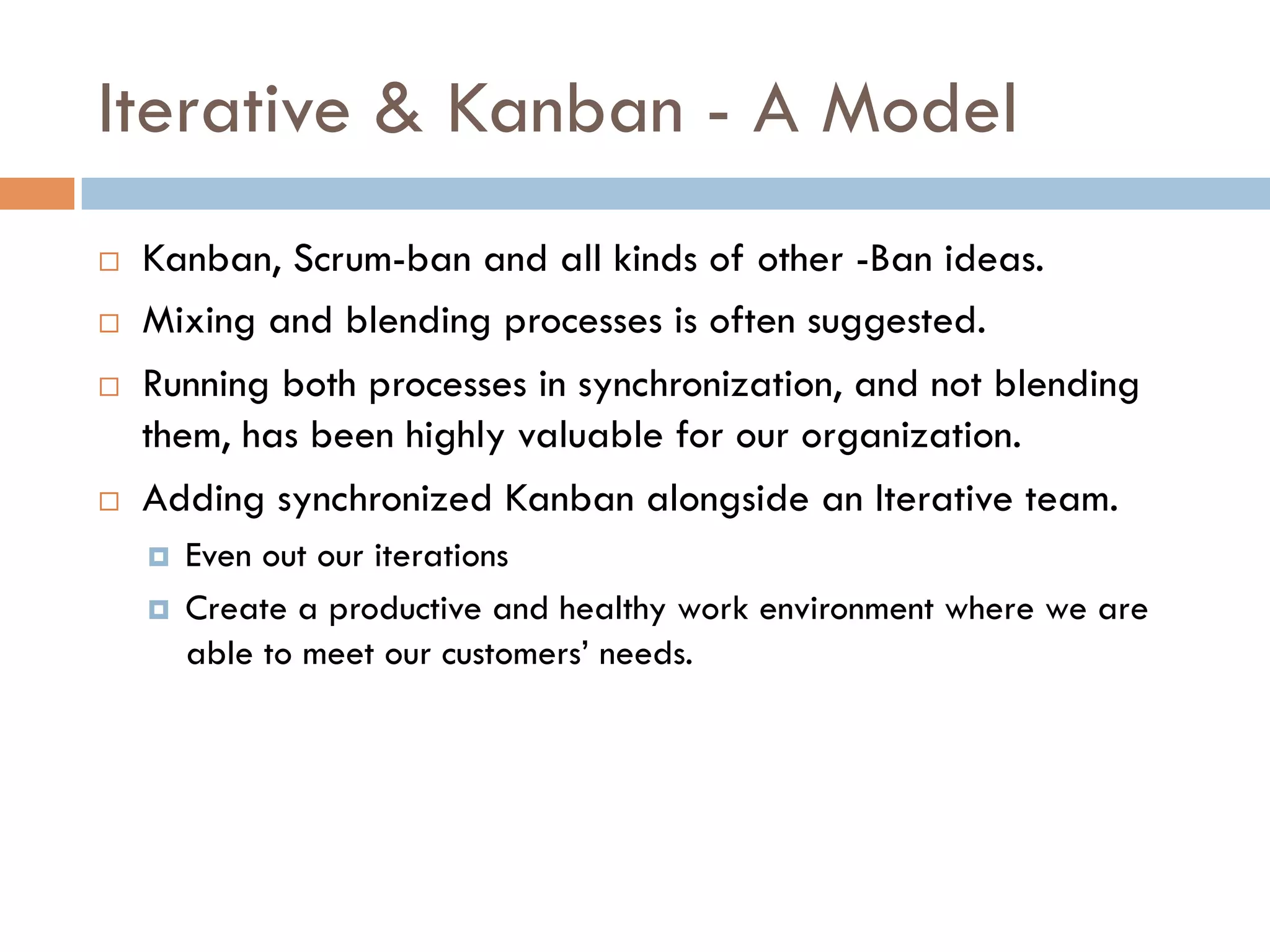
Iterative & Kanban - A Model
¨    Kanban, Scrum-ban and all kinds of other -Ban ideas.
¨    Mixing and blending processes is often suggested.
¨    Running both processes in synchronization, and not blending
      them, has been highly valuable for our organization.
¨    Adding synchronized Kanban alongside an Iterative team.
      ¤    Even out our iterations
      ¤    Create a productive and healthy work environment where we are
            able to meet our customers’ needs.
Questions?
Discussion, Debate, Contact Me @
¨  Email: rpolk@rallydev.com
¨  Blog: http://www.spryyeti.com

¨  Twitter: spry_yeti

¨  LinkedIn: rpolk – http://linkedin.com/rpolk
Resources & References
¨    Dean Leffingwell, “Scaling Software Agility”, Addison Wesley, 2007.


¨    Alan Shalloway, Guy Beaver, and James R. Trott, “Lean - Agile Software
      Development - Achieving Enterprise Agility”, Addison Wesley, 2009.


¨    Mary and Tom Poppendieck, “Leading Lean Software Development – Results Are
      Not The Point”, Addison Wesley, 2009.


¨    Jeff Patton, “Kanban Development Oversimplified”,
      http://agileproductdesign.com/blog/2009/kanban_over_simplified.html, 2009


¨    David Joyce, “Kanban for Software Engineering”,
      http://leanandkanban.files.wordpress.com/2009/04/kanban-for-software-
      engineering-apr-242.pdf, 2009.

Agile & kanban in Coordination

  • 1.
    AGILE & KANBANIN COORDINATION Ryan Polk
  • 2.
    Team Background &History ¨  18 Engineers ¨  Relatively mature and expansive codebase ¤  C# / .Net ¤  MS Team Foundation Server (TFS) ¨  System – 5.0 ¤  Over 4 years in development. ¤  Large scale feature upgrades = 60% of the work. ¨  Over the last 2 years we have worked to transition from a “Laissez- faire” waterfall team to a simple and well tuned Lean / Agile team. MY ROLE: My role in the team is both as one of the development team managers and as Agile coach for the company as a whole.
  • 3.
    How We GotHere ¨  What was previously called agile was essentially the team holding a 15 minute standup daily. ¨  We started with three teams of 5, 6, and 7 developers respectively. ¨  Eventually we started to work as one large team. ¨  Create 2 Groups - defined by the size and type of work they would commit to.
  • 4.
    Defining Agile -Adding in Kanban Iterative Agile Kanban 1.  User Stories 1.  User Stories 2.  Acceptance tests 2.  Acceptance tests 3.  Iterative Development 3.  Iterative Development 4.  Burn Down Charts 4.  Burn Down Charts 5.  Story Boards 5.  Kanban Boards 6.  Daily stand-ups 6.  Daily stand-ups 7.  TDD / Unit Tests 7.  TDD / Unit Tests 8.  Continuous integration 8.  Continuous integration
  • 5.
    Organization & ProductOwnership ¨  Product Owners Team ¤  Comprised of one of the team managers and two developers / systems engineers. ¨  Random Sampling – User Story Creation / Estimation ¤  More XP style approach to User Stories, we involve portions of both the Iterative and Kanban teams in the story creation and estimation process. ¨  Standing Meeting ¤  Every other Wednesday for 2 hours of story planning and estimation. ¨  Team Synchronization ¤  Since the teams worked together to estimate and define User Stories, we are able to keep both teams in sync.
  • 6.
    Iterative / KanbanDevelopment ¨  Iterative Team ¤  Responsible for all large-scale projects. ¤  Architectural Roadmap / Structural Changes ¤  Limited to 2 or 3 WIP Projects. ¤  Iterations are 2 weeks, and managed using a typical project board. ¨  Kanban Team ¤  Small feature requests along with bugs and change requests. ¤  This team uses a Kanban board that manages development process only. ¤  The team maintains an evolved Kanban focused 15 minute standup daily in the same area as the Iterative team. ¤  They maintain a cycle time and lead time metric integrated with our story point system.
  • 7.
    WIP Limits –With Story Points ¨  Board WIP limits ¤  Constraining the number of stories allowed in each queue. ¤  Imposing a limit to the maximum amount of points in certain queues. ¤  The two primary queues we were concerned with were the Development and Verify / Accept queues. ¨  Team WIP Limits – By Story Size ¤  Only stories of a certain size (8 Points) and below would be allowed on the board.
  • 8.
  • 9.
    Metrics – PseudoMetrics ¨  Velocity / Pseudo-Velocity ¤  Velocity – Calculated as normal for the Iterative team. ¤  Pseudo-Velocity – Calculated from time slices of the Kanban team’s board. ¨  Cycle Time / Pseudo Cycle Time ¤  Cycle Time w/ Story Points – Calculated using a weighted average approach for each story point size. n  ie. 1 pt Avg. = .35 days, 5 pt. Avg. = 3 days weighted average = (.35 + 3) / 6 ¤  Pseudo Cycle Time n  Calculated using iteration start date and end date.
  • 10.
    Release Trains ¨  Release Trains ¤  Quarterly Potentially Shippable Increments (PSI) ¤  5 full iterations per PSI ¤  No “Hardening Sprint” / Kanban Team Instead ¤  Kanban teams Pseudo-Velocity Used for Planning
  • 11.
    Results “In 9 monthswe have seen a steady improvement in cycle time and pseudo-velocity of the Kanban team bringing them in line with the performance of the Iterative team.” ¨  Results ¤  Teams within close parity in 7 to 9 months. ¤  Dramatic in numbers but the amount of motivation and energy it has provided for the team has been immeasurable. ¤  Team self organized around commonly created goals. ¤  The team reached out beyond their charter asking for more work and more complicated work.
  • 12.
    Iterative & Kanban- A Model ¨  Kanban, Scrum-ban and all kinds of other -Ban ideas. ¨  Mixing and blending processes is often suggested. ¨  Running both processes in synchronization, and not blending them, has been highly valuable for our organization. ¨  Adding synchronized Kanban alongside an Iterative team. ¤  Even out our iterations ¤  Create a productive and healthy work environment where we are able to meet our customers’ needs.
  • 13.
  • 14.
    Discussion, Debate, ContactMe @ ¨  Email: rpolk@rallydev.com ¨  Blog: http://www.spryyeti.com ¨  Twitter: spry_yeti ¨  LinkedIn: rpolk – http://linkedin.com/rpolk
  • 15.
    Resources & References ¨  Dean Leffingwell, “Scaling Software Agility”, Addison Wesley, 2007. ¨  Alan Shalloway, Guy Beaver, and James R. Trott, “Lean - Agile Software Development - Achieving Enterprise Agility”, Addison Wesley, 2009. ¨  Mary and Tom Poppendieck, “Leading Lean Software Development – Results Are Not The Point”, Addison Wesley, 2009. ¨  Jeff Patton, “Kanban Development Oversimplified”, http://agileproductdesign.com/blog/2009/kanban_over_simplified.html, 2009 ¨  David Joyce, “Kanban for Software Engineering”, http://leanandkanban.files.wordpress.com/2009/04/kanban-for-software- engineering-apr-242.pdf, 2009.