Gráinne Conole
University of Leicester
OLDS MOOC – Week 3
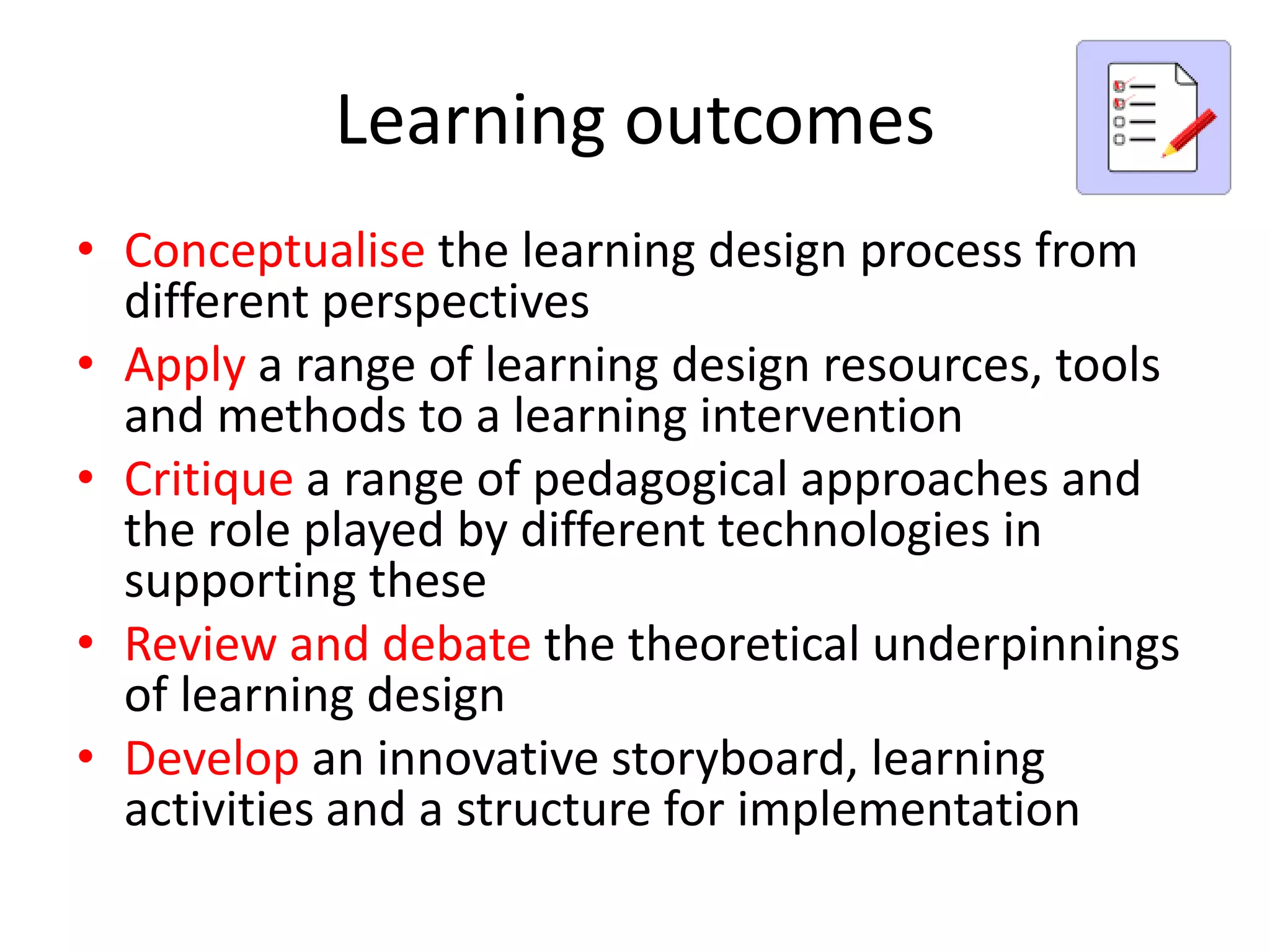
Learning outcomes
• Conceptualise the learning design process from
  different perspectives
• Apply a range of learning design resources, tools
  and methods to a learning intervention
• Critique a range of pedagogical approaches and
  the role played by different technologies in
  supporting these
• Review and debate the theoretical underpinnings
  of learning design
• Develop an innovative storyboard, learning
  activities and a structure for implementation
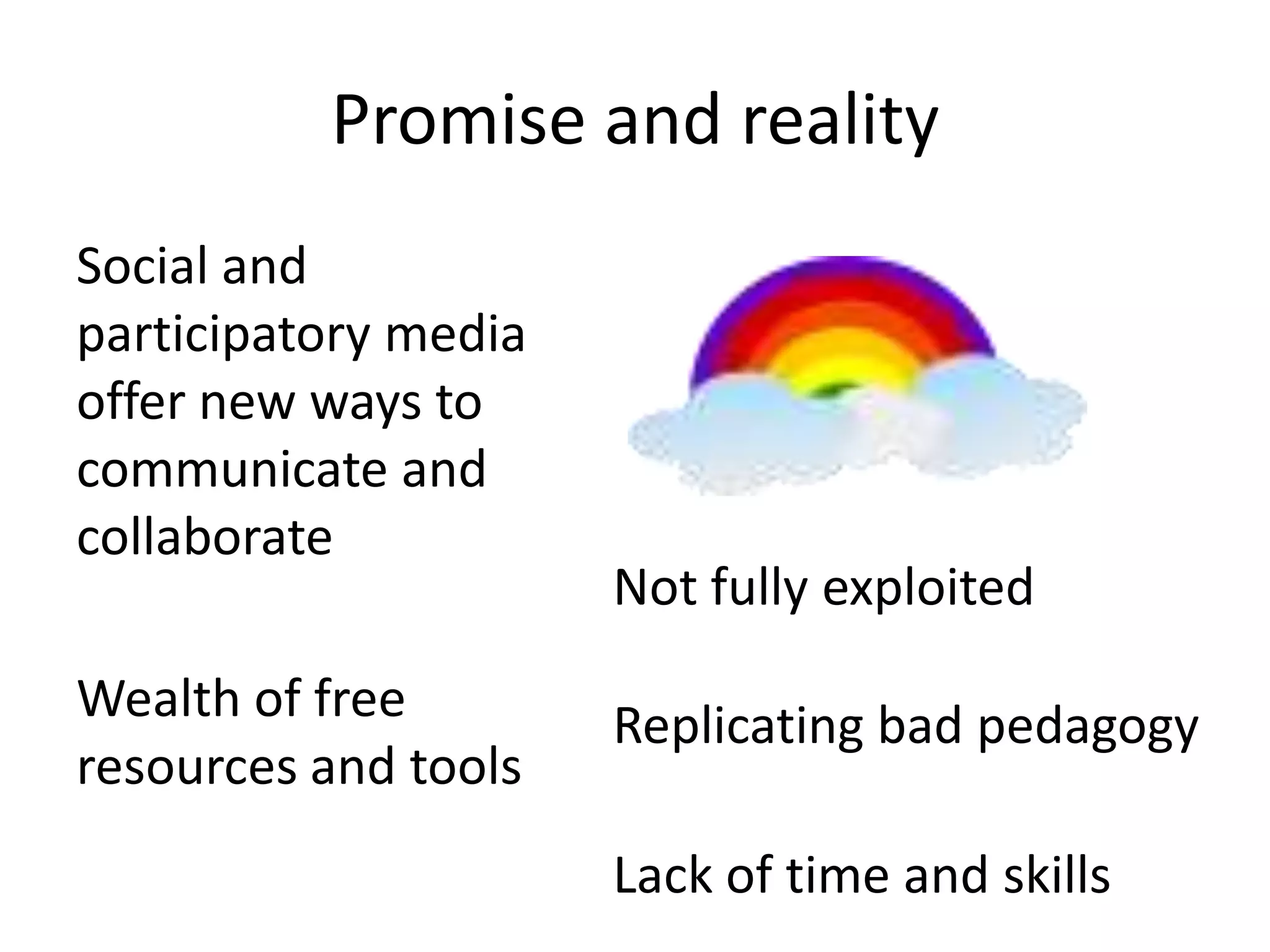
Promise and reality
Social and
participatory media
offer new ways to
communicate and
collaborate
                      Not fully exploited
Wealth of free        Replicating bad pedagogy
resources and tools
                      Lack of time and skills
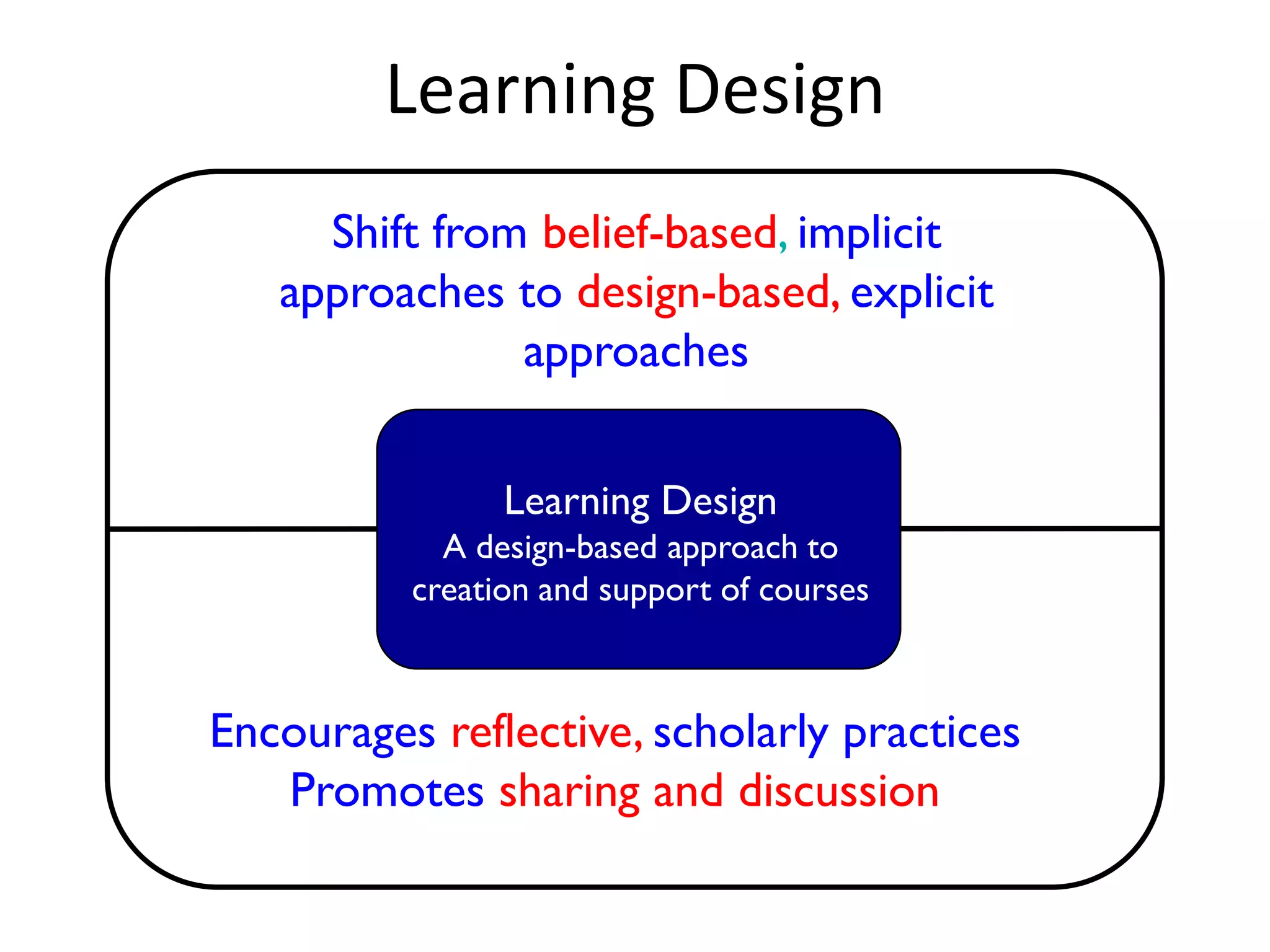
Learning Design
     Shift from belief-based, implicit
   approaches to design-based, explicit
               approaches

                Learning Design
            A design-based approach to
          creation and support of courses


Encourages reflective, scholarly practices
   Promotes sharing and discussion
Gabi Witthaus


                Ming Nie
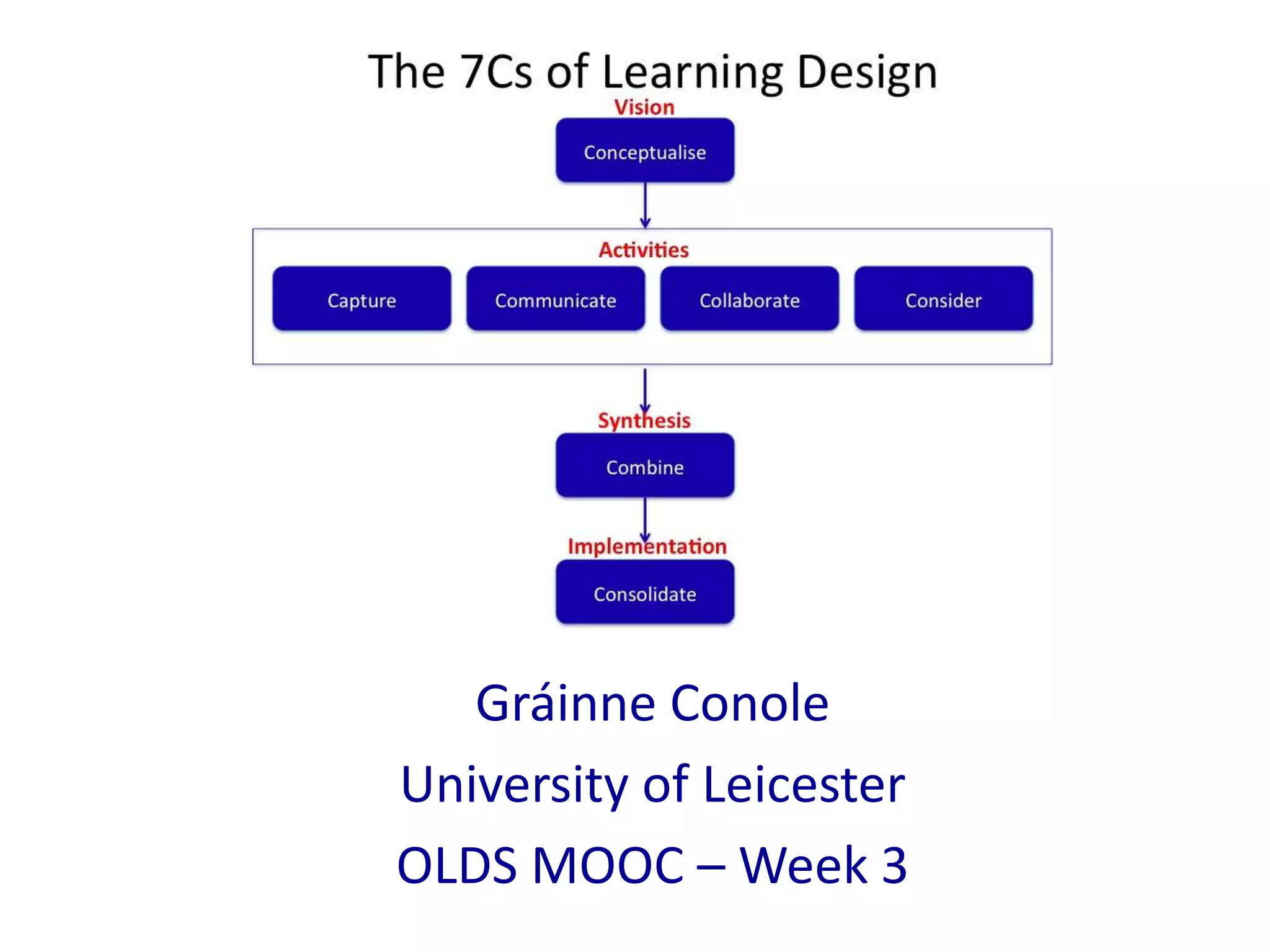
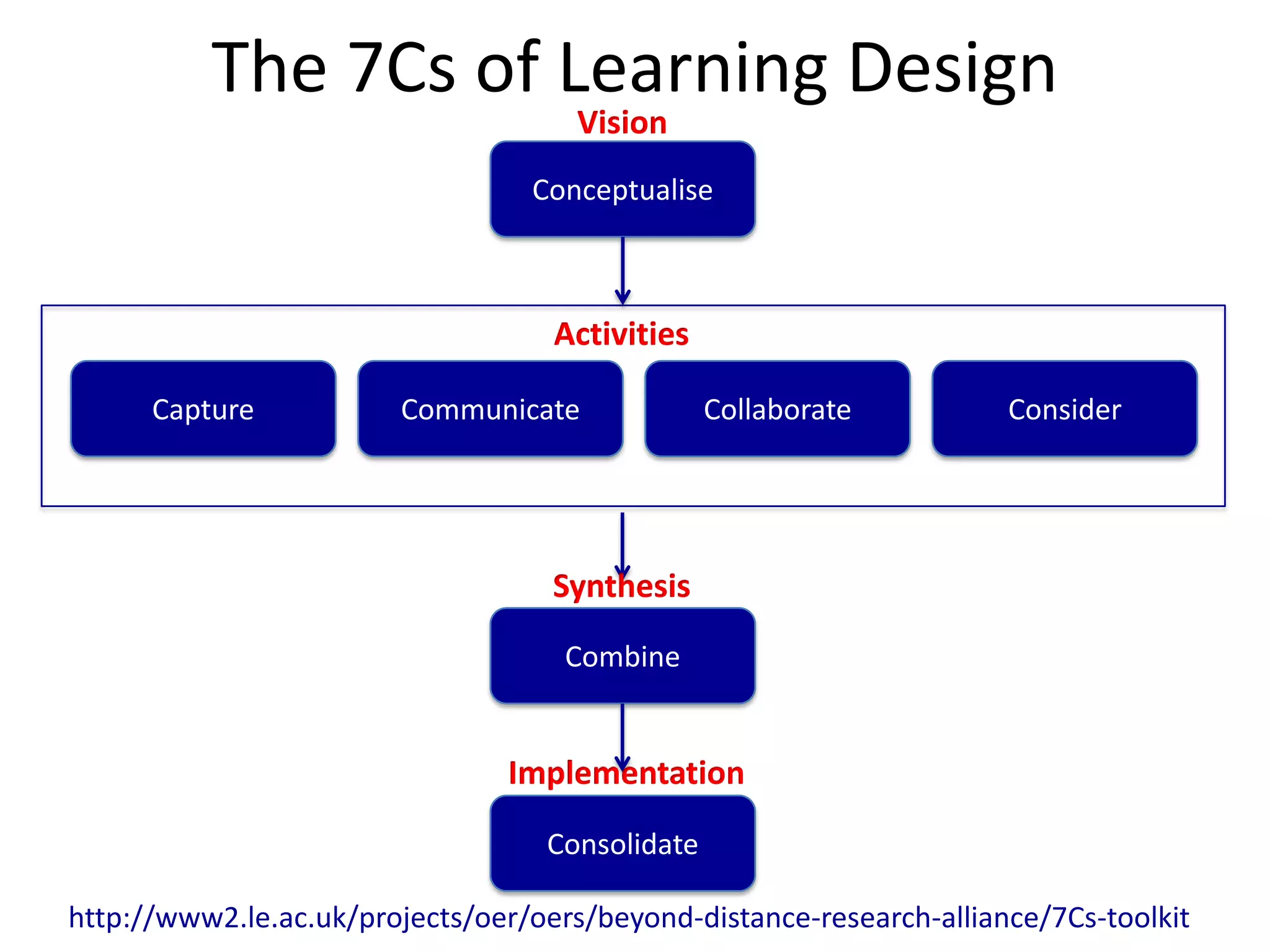
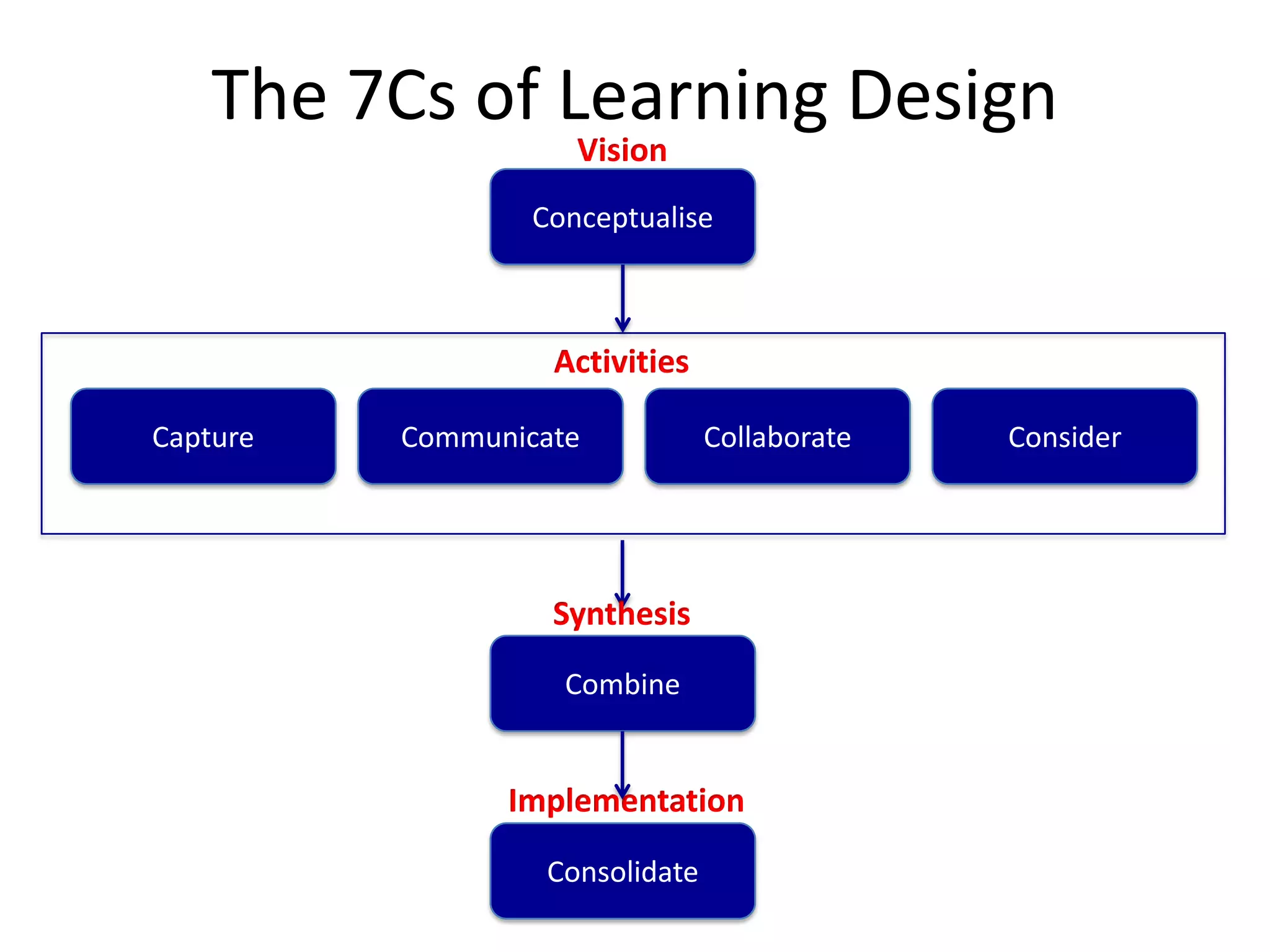
The 7Cs of Learning Design
                                      Vision
                                  Conceptualise


                                    Activities

      Capture           Communicate              Collaborate          Consider


                                    Synthesis
                                     Combine


                                Implementation
                                   Consolidate

http://www2.le.ac.uk/projects/oer/oers/beyond-distance-research-alliance/7Cs-toolkit
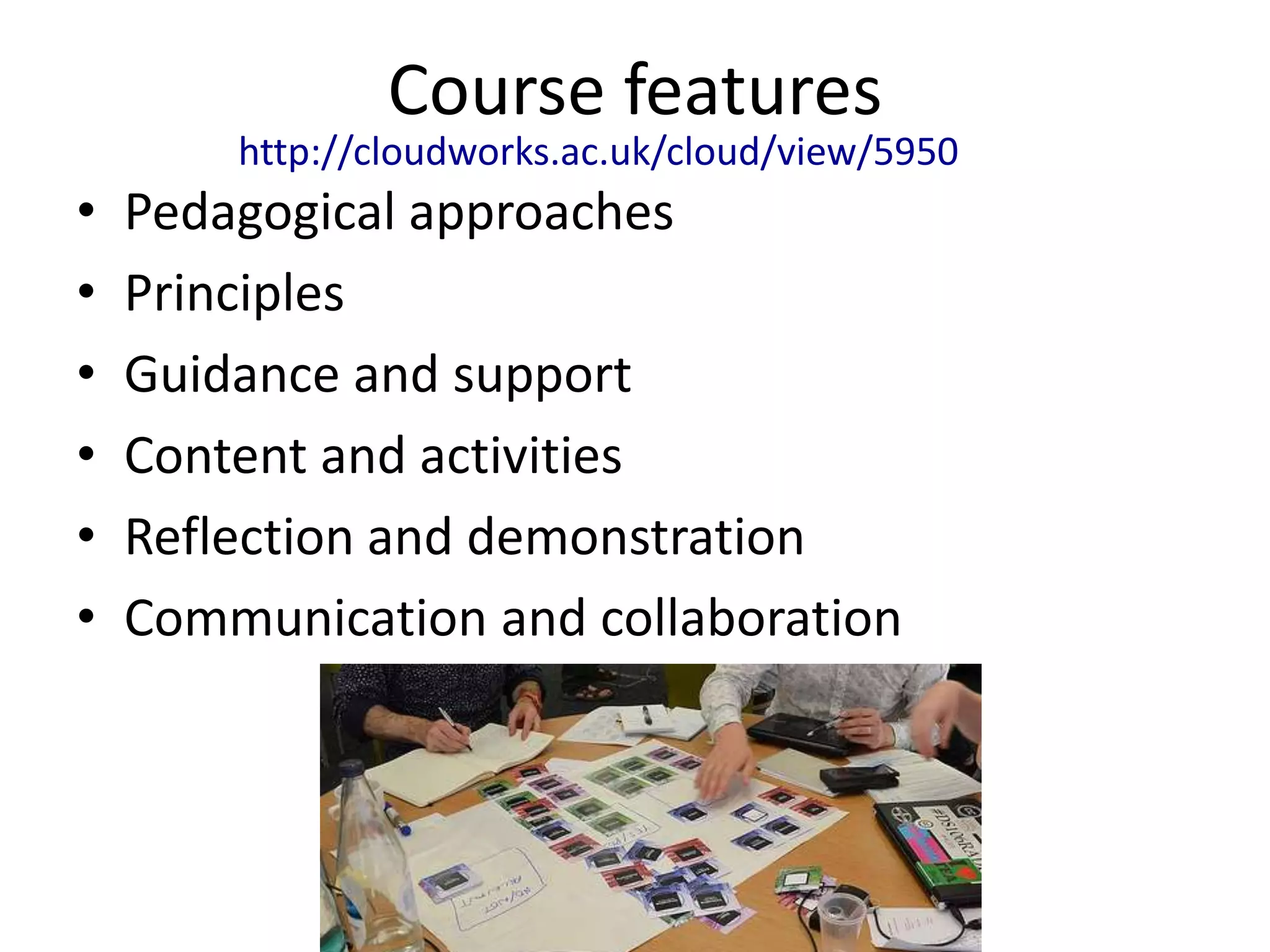
Course features
        http://cloudworks.ac.uk/cloud/view/5950
•   Pedagogical approaches
•   Principles
•   Guidance and support
•   Content and activities
•   Reflection and demonstration
•   Communication and collaboration
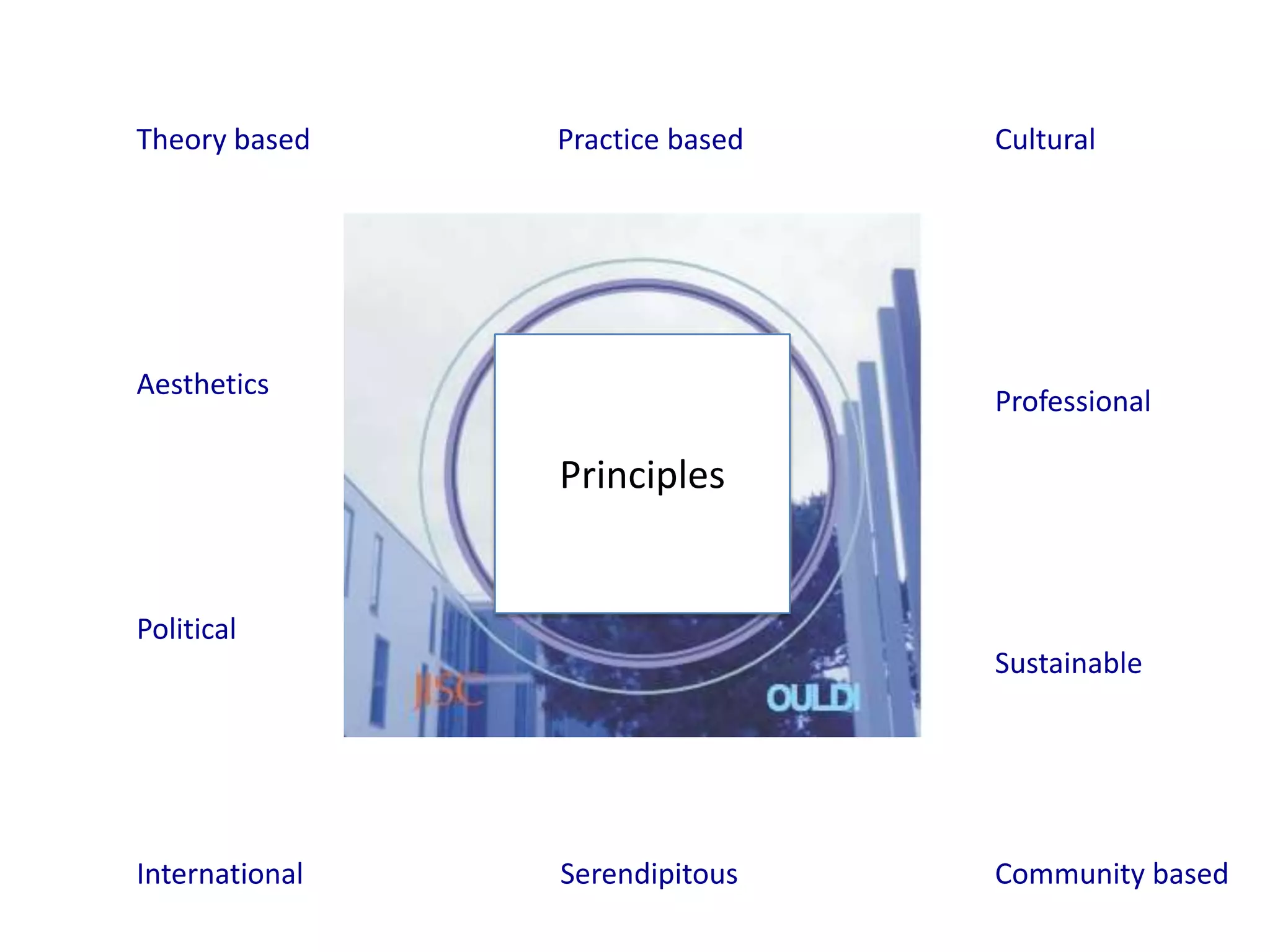
Theory based    Practice based   Cultural


Aesthetics
                                 Professional

                Principles


Political
                                 Sustainable


International   Serendipitous    Community based
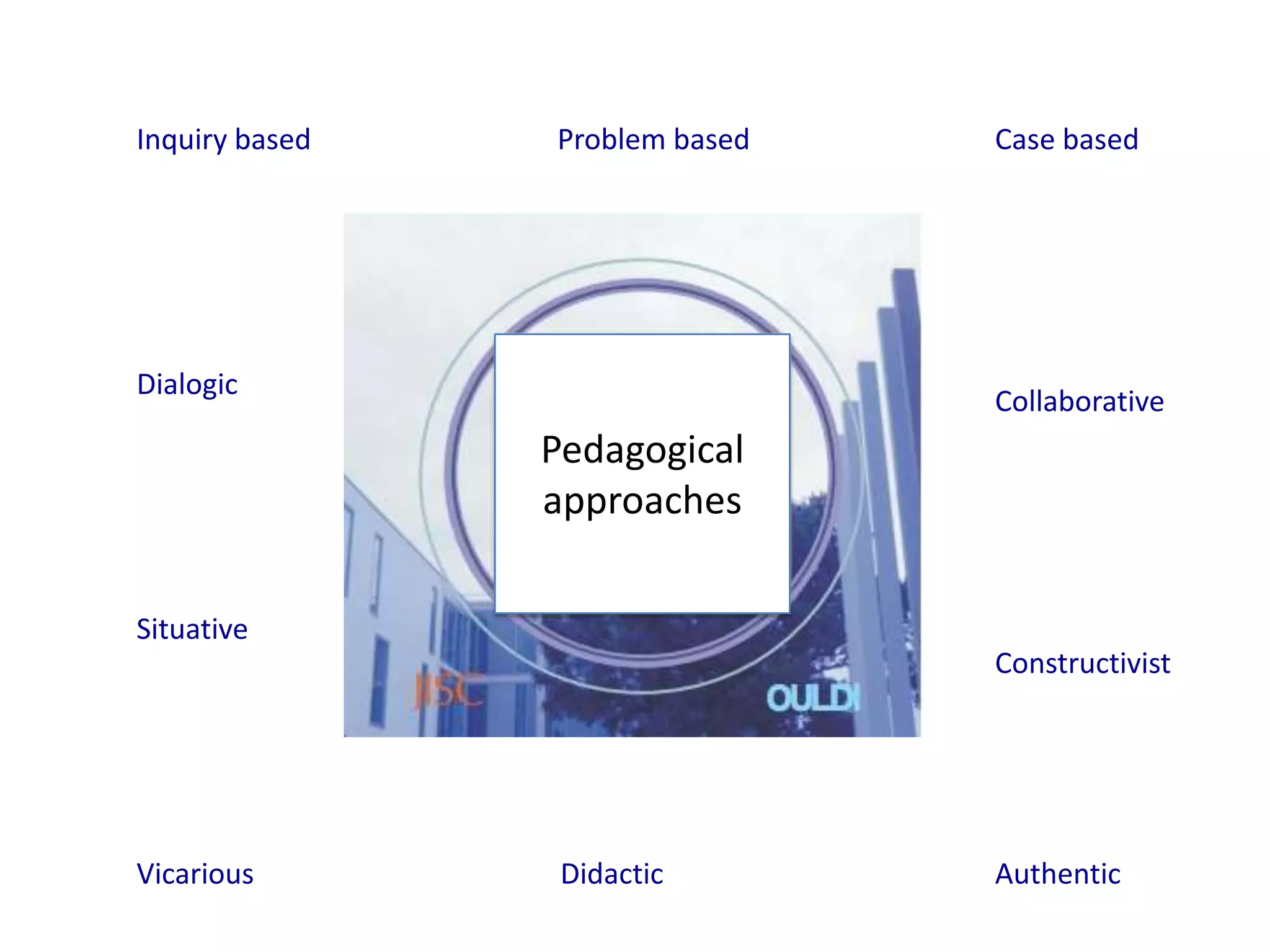
Inquiry based   Problem based   Case based


Dialogic
                                Collaborative
                Pedagogical
                approaches

Situative
                                Constructivist


Vicarious        Didactic       Authentic
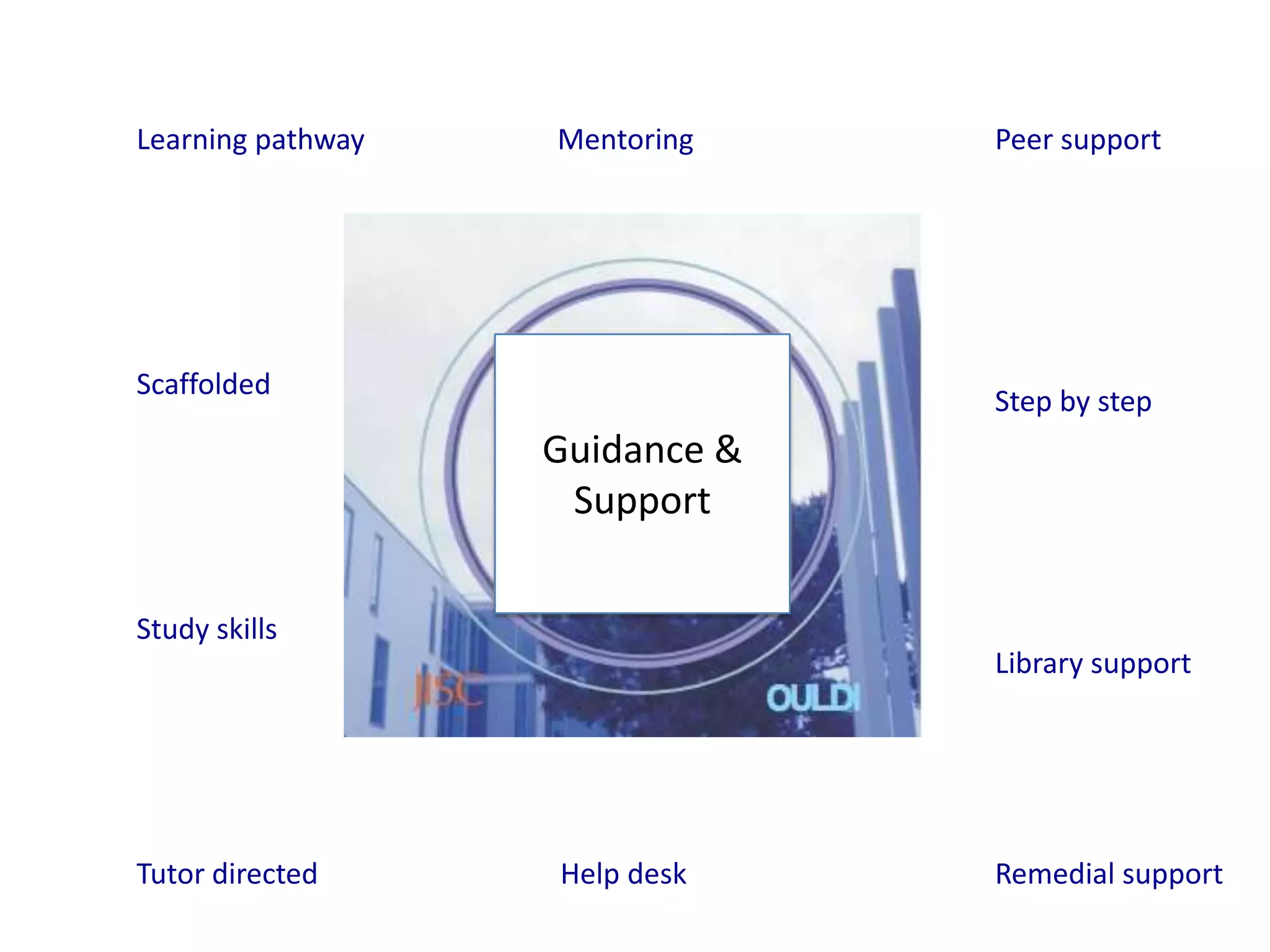
Learning pathway   Mentoring    Peer support


Scaffolded
                                Step by step
                   Guidance &
                    Support

Study skills
                                Library support


Tutor directed     Help desk    Remedial support
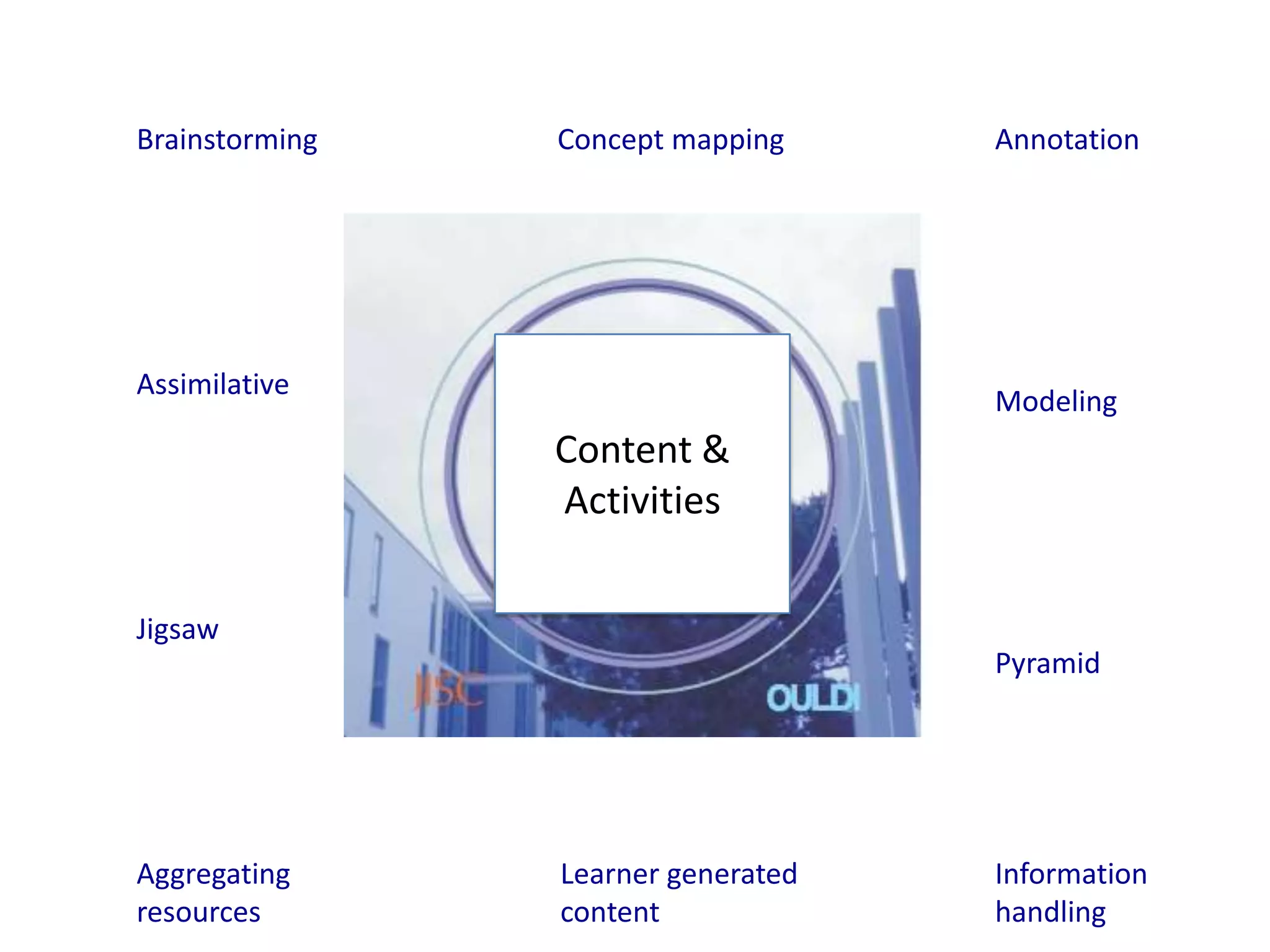
Brainstorming   Concept mapping     Annotation


Assimilative
                                    Modeling
                Content &
                Activities

Jigsaw
                                    Pyramid


Aggregating     Learner generated   Information
resources       content             handling
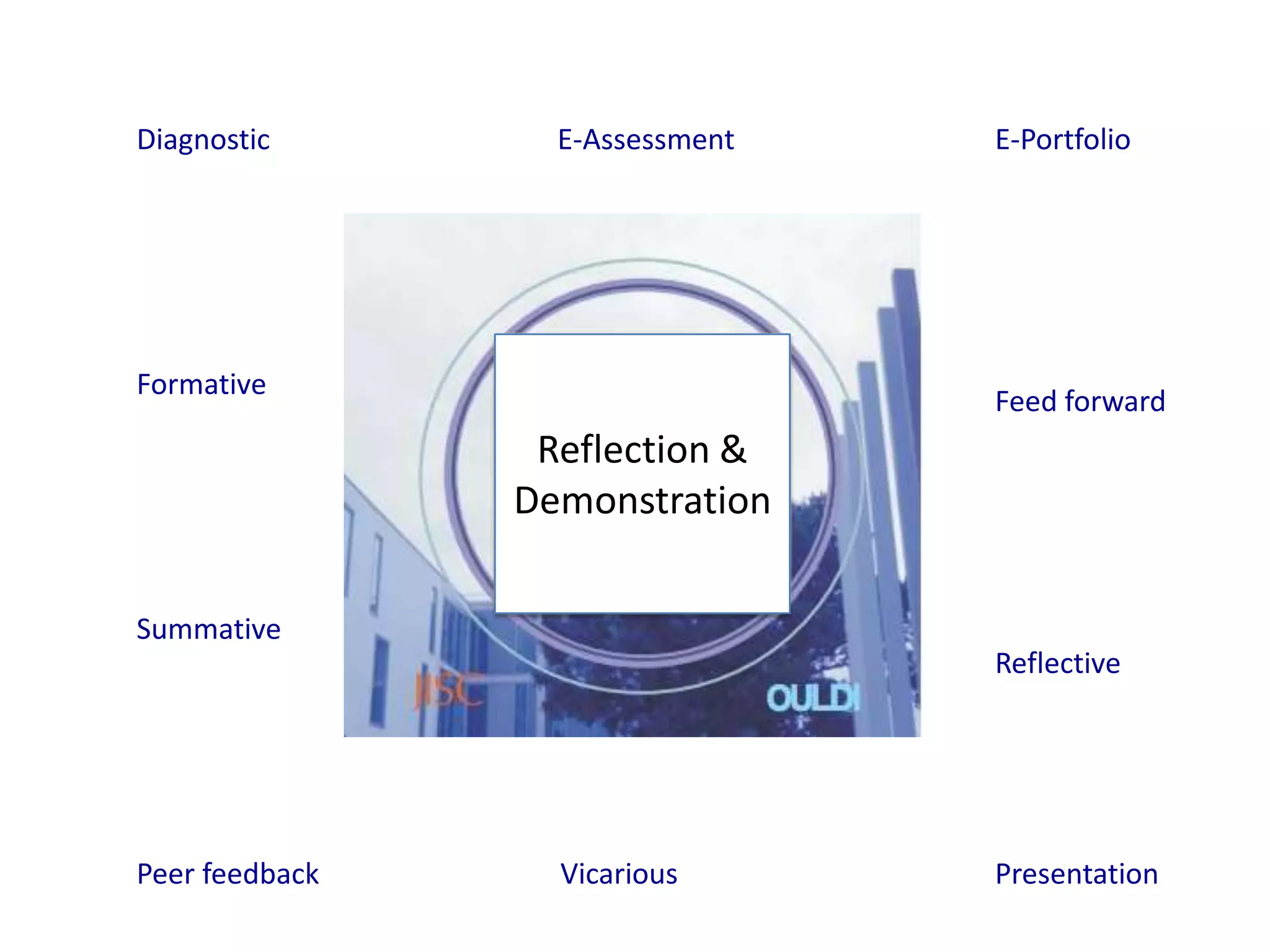
Diagnostic        E-Assessment   E-Portfolio


Formative
                                 Feed forward
                 Reflection &
                Demonstration

Summative
                                 Reflective


Peer feedback     Vicarious      Presentation
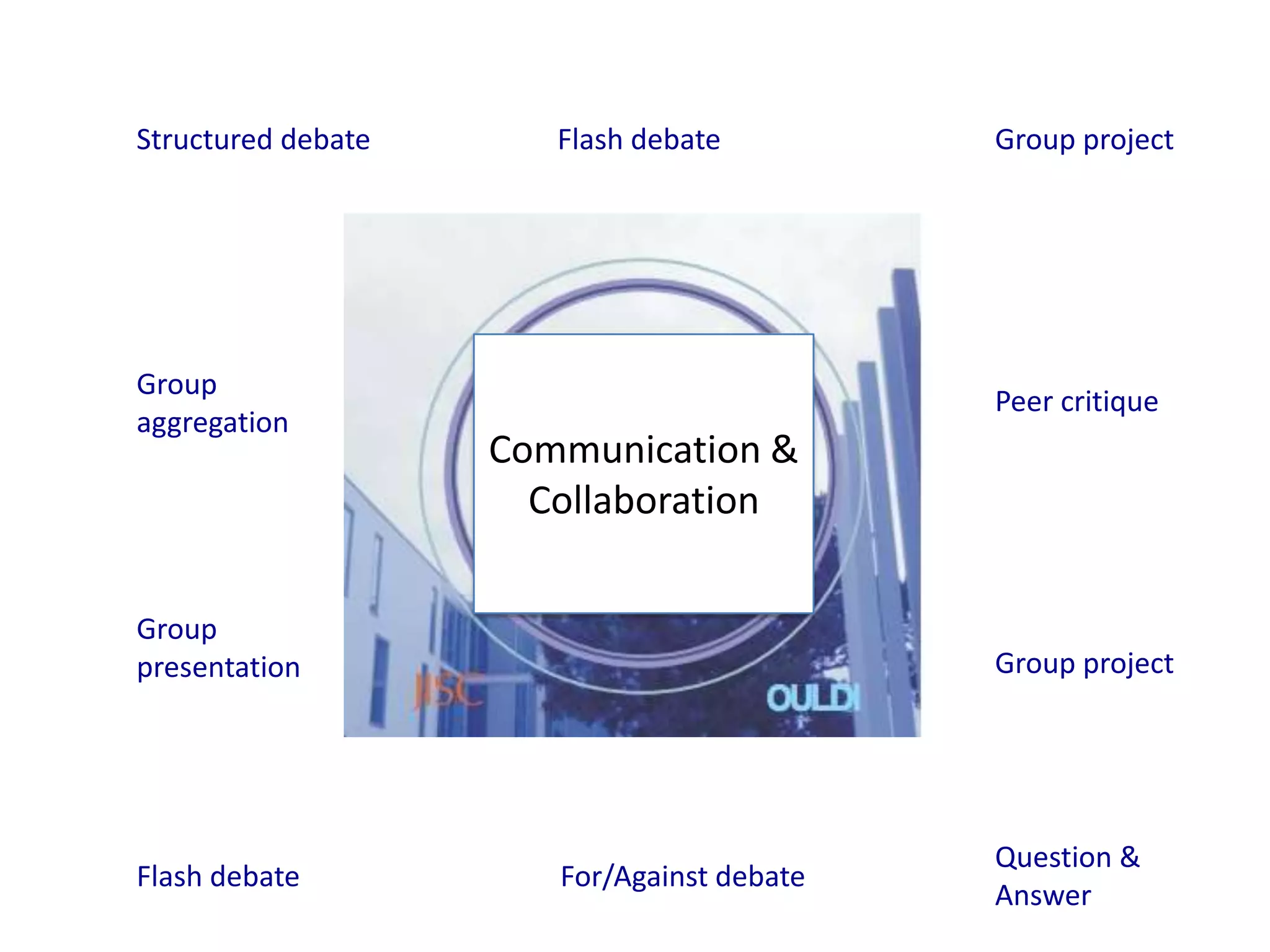
Structured debate      Flash debate         Group project


Group
                                            Peer critique
aggregation
                    Communication &
                      Collaboration

Group
presentation                                Group project


                                            Question &
Flash debate           For/Against debate
                                            Answer
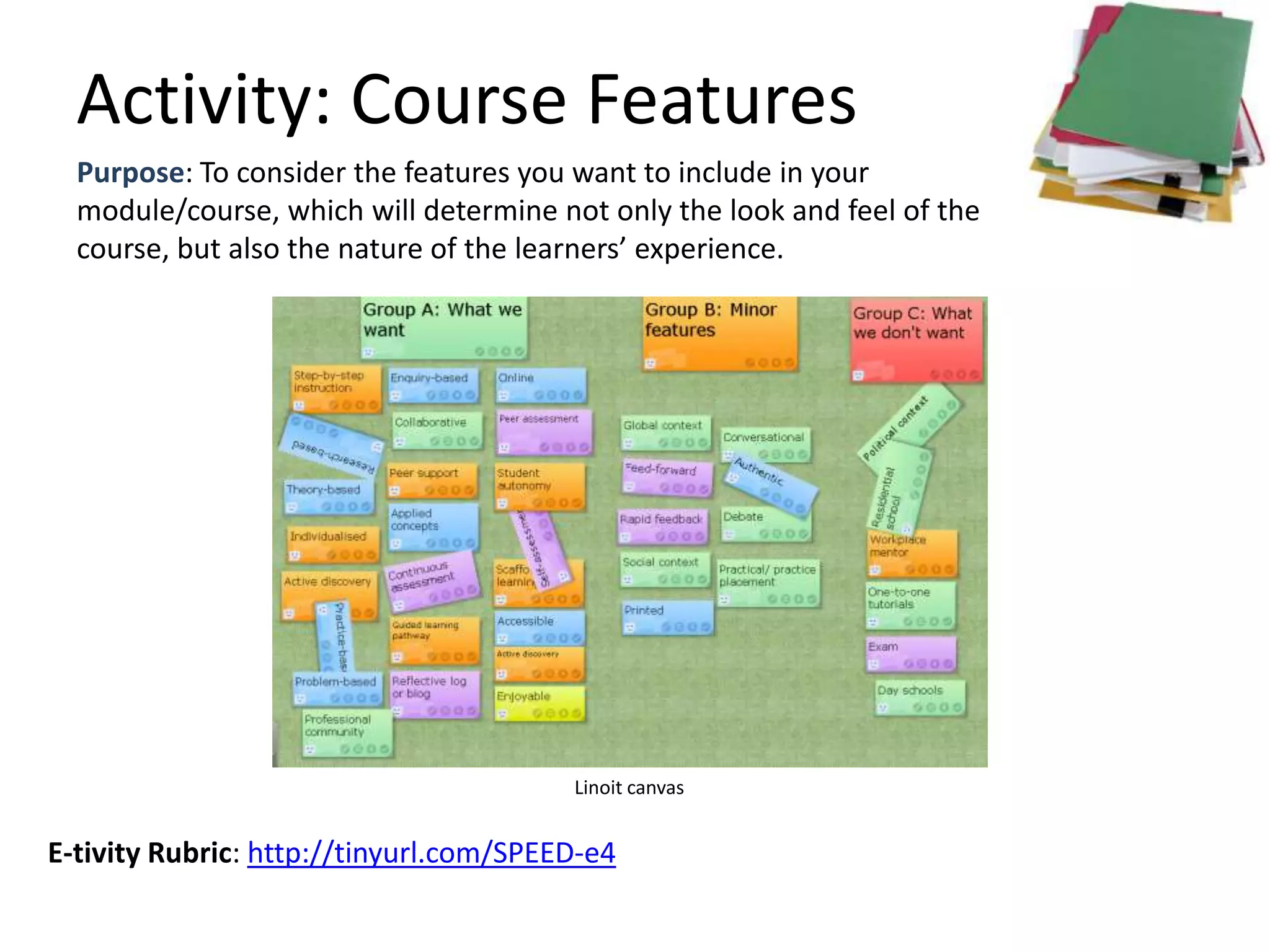
Activity: Course Features
  Purpose: To consider the features you want to include in your
  module/course, which will determine not only the look and feel of the
  course, but also the nature of the learners’ experience.


                                        Linoit canvas


E-tivity Rubric: http://tinyurl.com/SPEED-e4
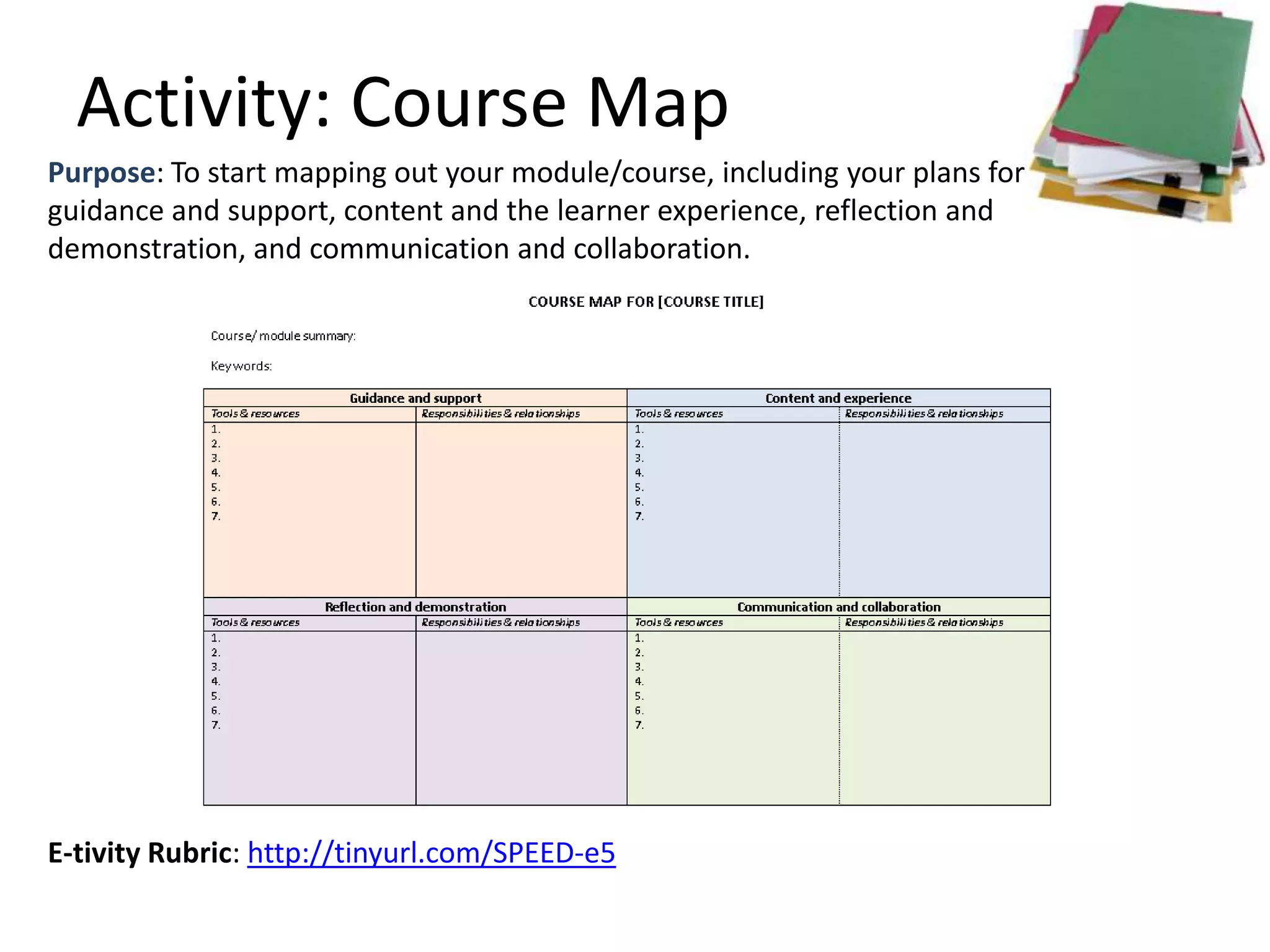
Activity: Course Map
Purpose: To start mapping out your module/course, including your plans for
guidance and support, content and the learner experience, reflection and
demonstration, and communication and collaboration.


E-tivity Rubric: http://tinyurl.com/SPEED-e5
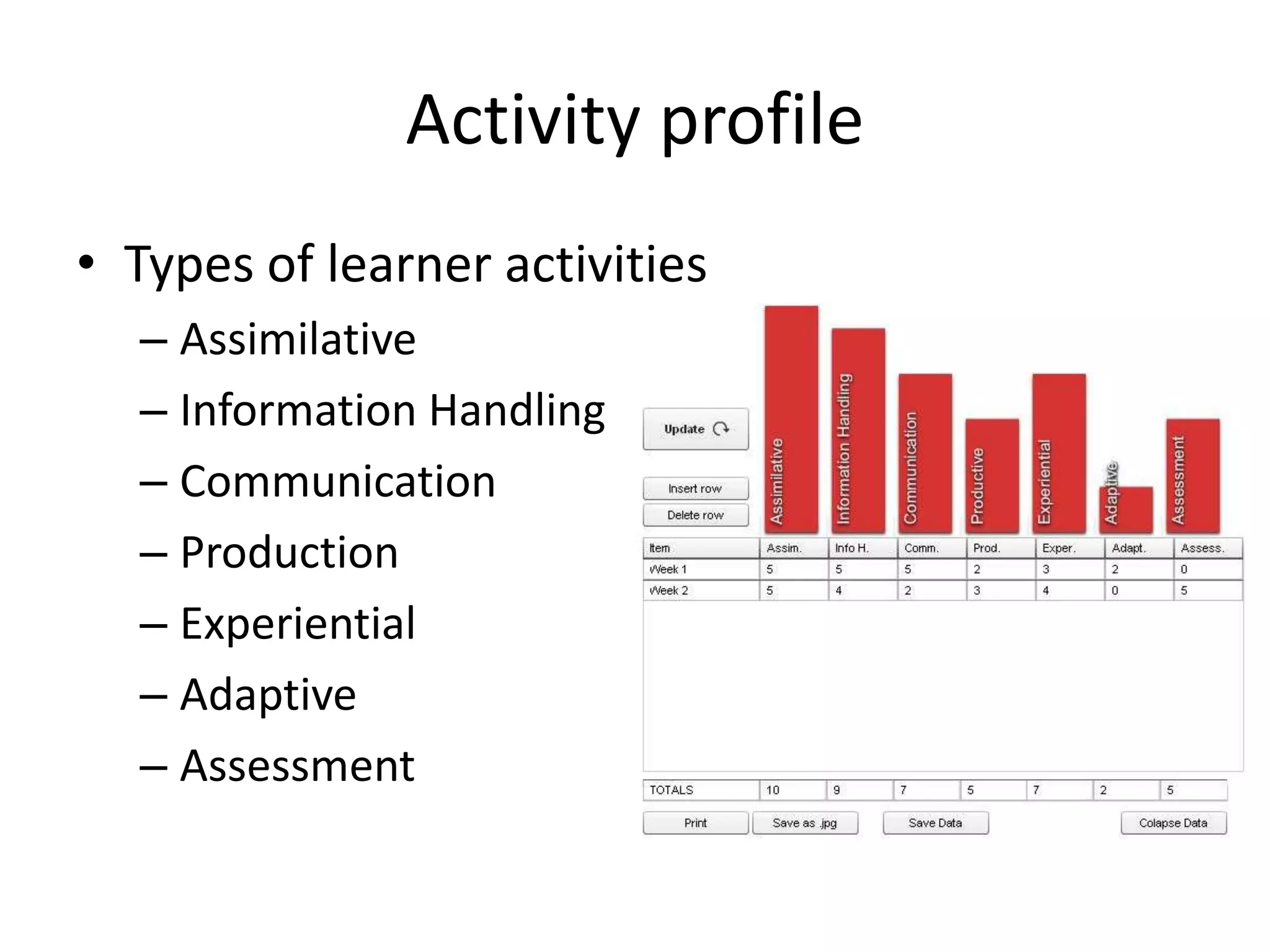
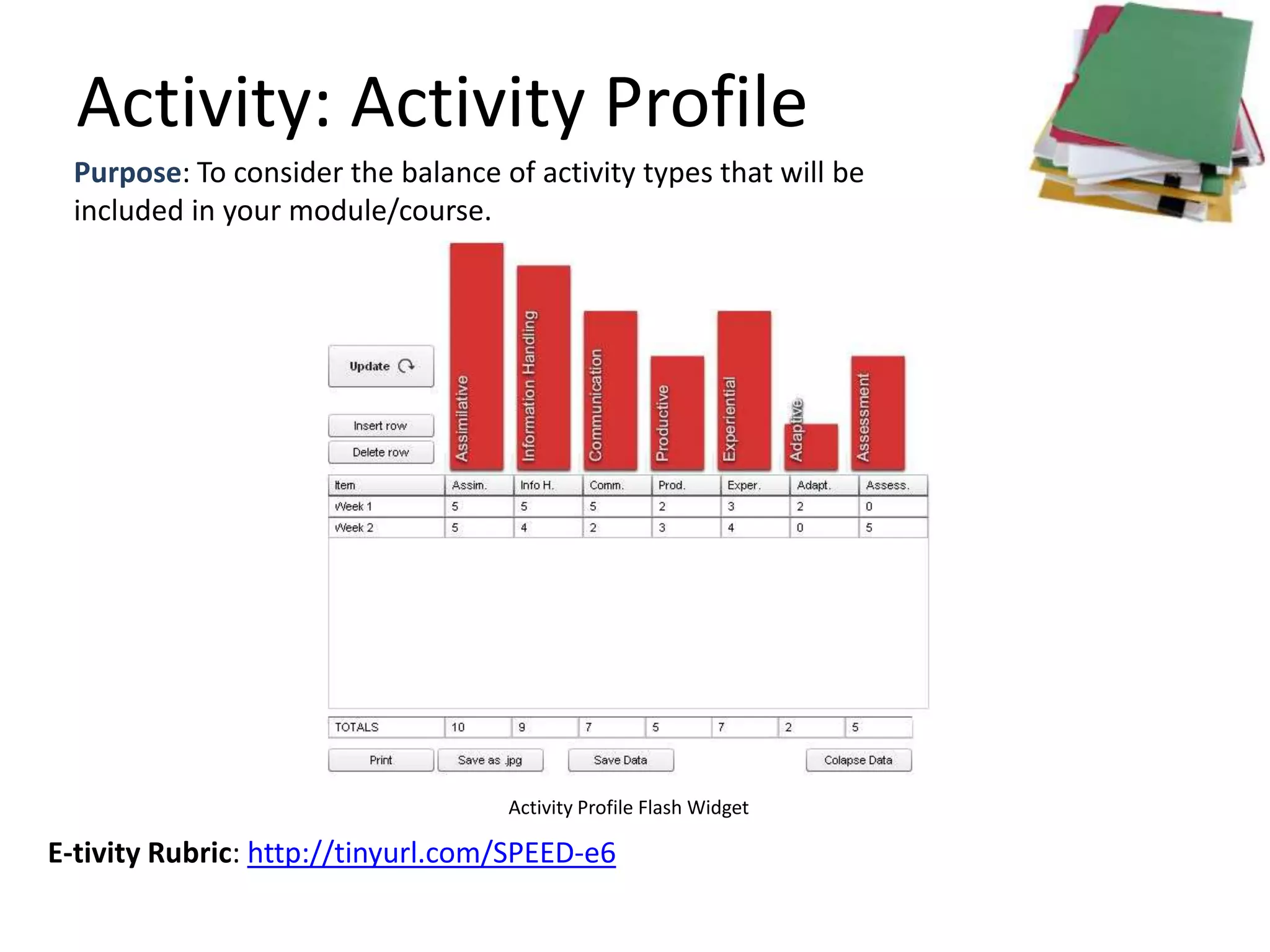
Activity profile
• Types of learner activities
  – Assimilative
  – Information Handling
  – Communication
  – Production
  – Experiential
  – Adaptive
  – Assessment
Activity: Activity Profile
  Purpose: To consider the balance of activity types that will be
  included in your module/course.


                                    Activity Profile Flash Widget

E-tivity Rubric: http://tinyurl.com/SPEED-e6
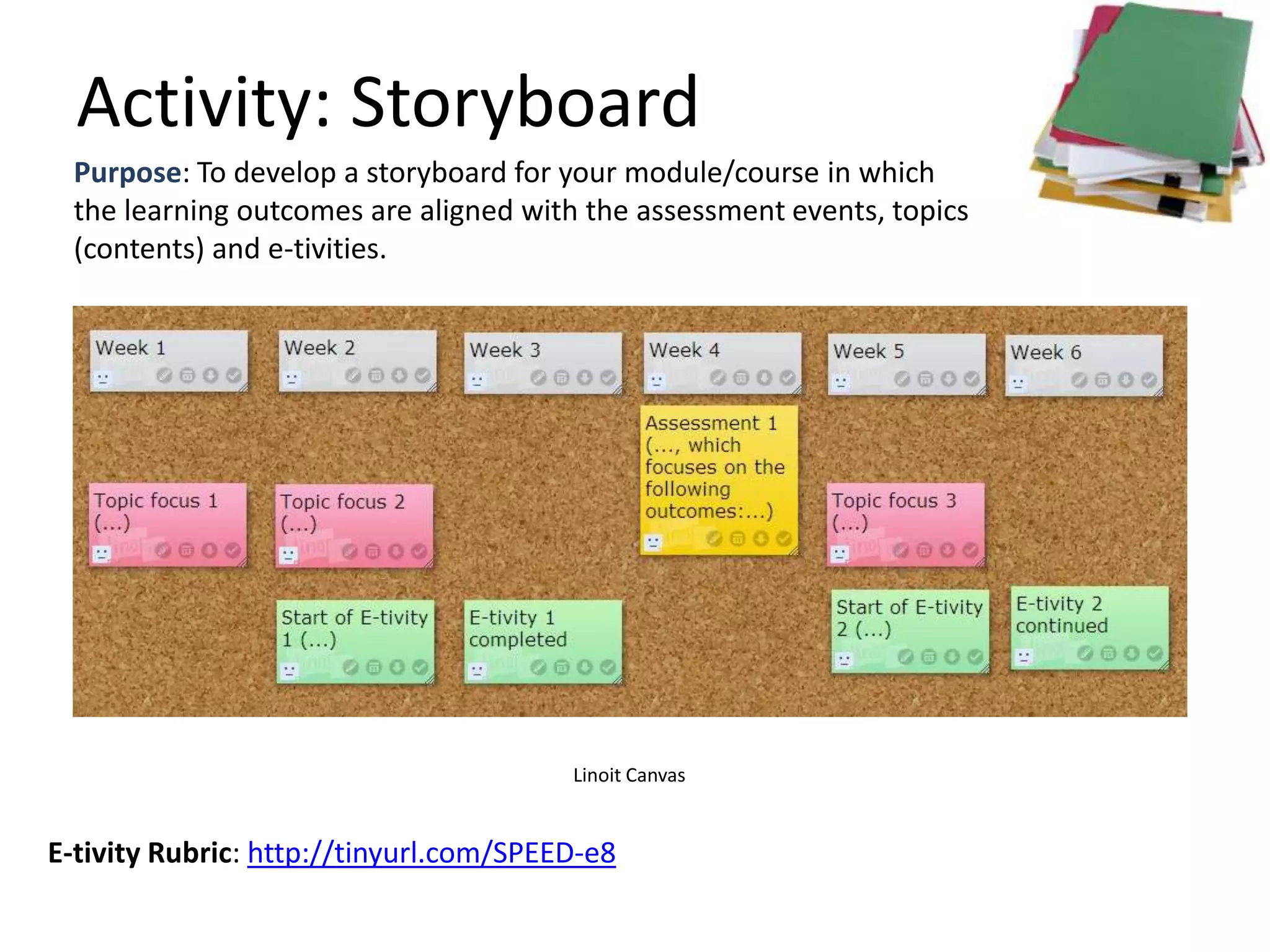
Activity: Storyboard
  Purpose: To develop a storyboard for your module/course in which
  the learning outcomes are aligned with the assessment events, topics
  (contents) and e-tivities.


                                        Linoit Canvas


E-tivity Rubric: http://tinyurl.com/SPEED-e8
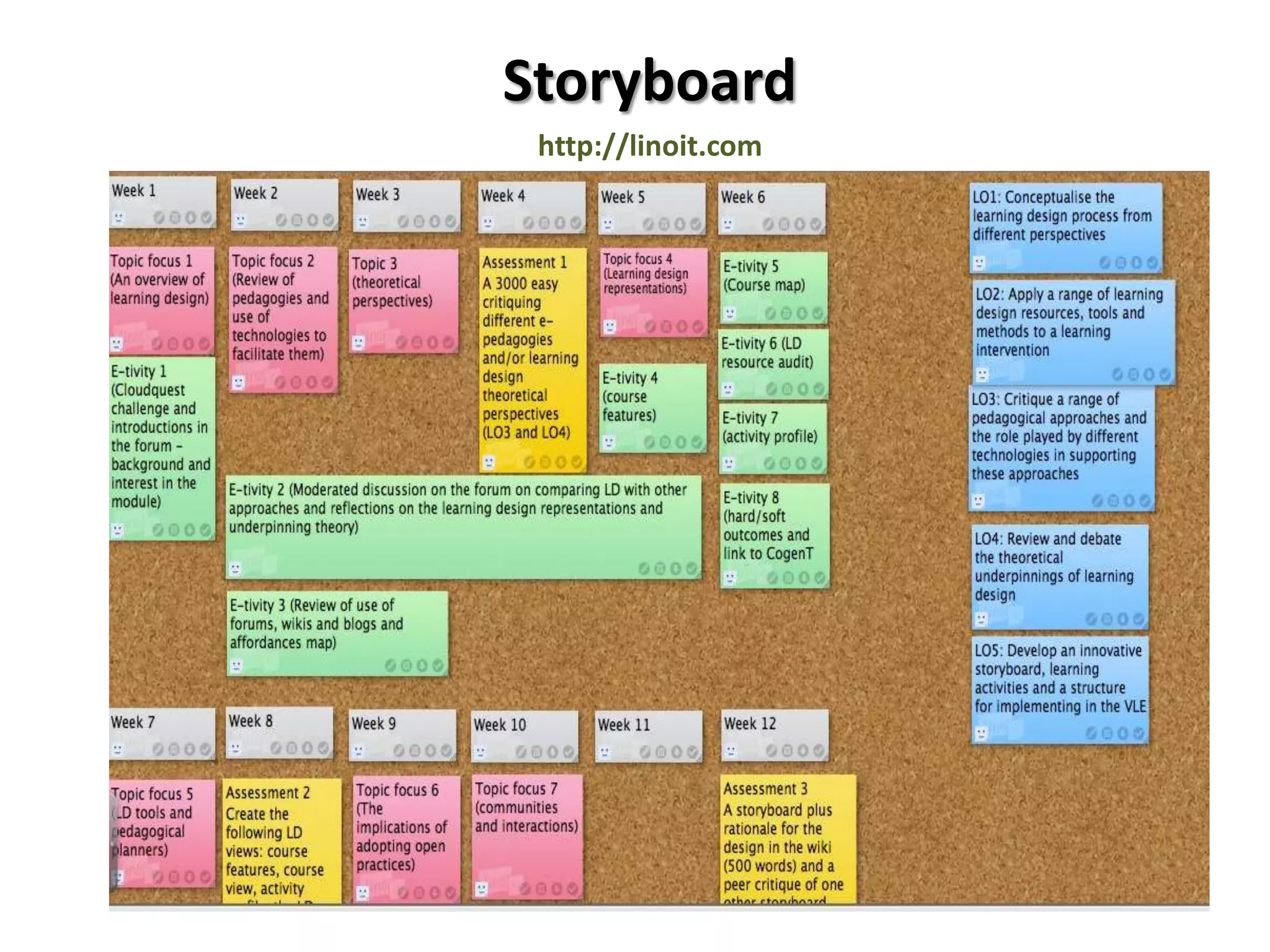
Storyboard
 http://linoit.com
The 7Cs of Learning Design
                     Vision
                  Conceptualise


                   Activities

Capture   Communicate            Collaborate   Consider


                   Synthesis
                    Combine


                Implementation
                   Consolidate
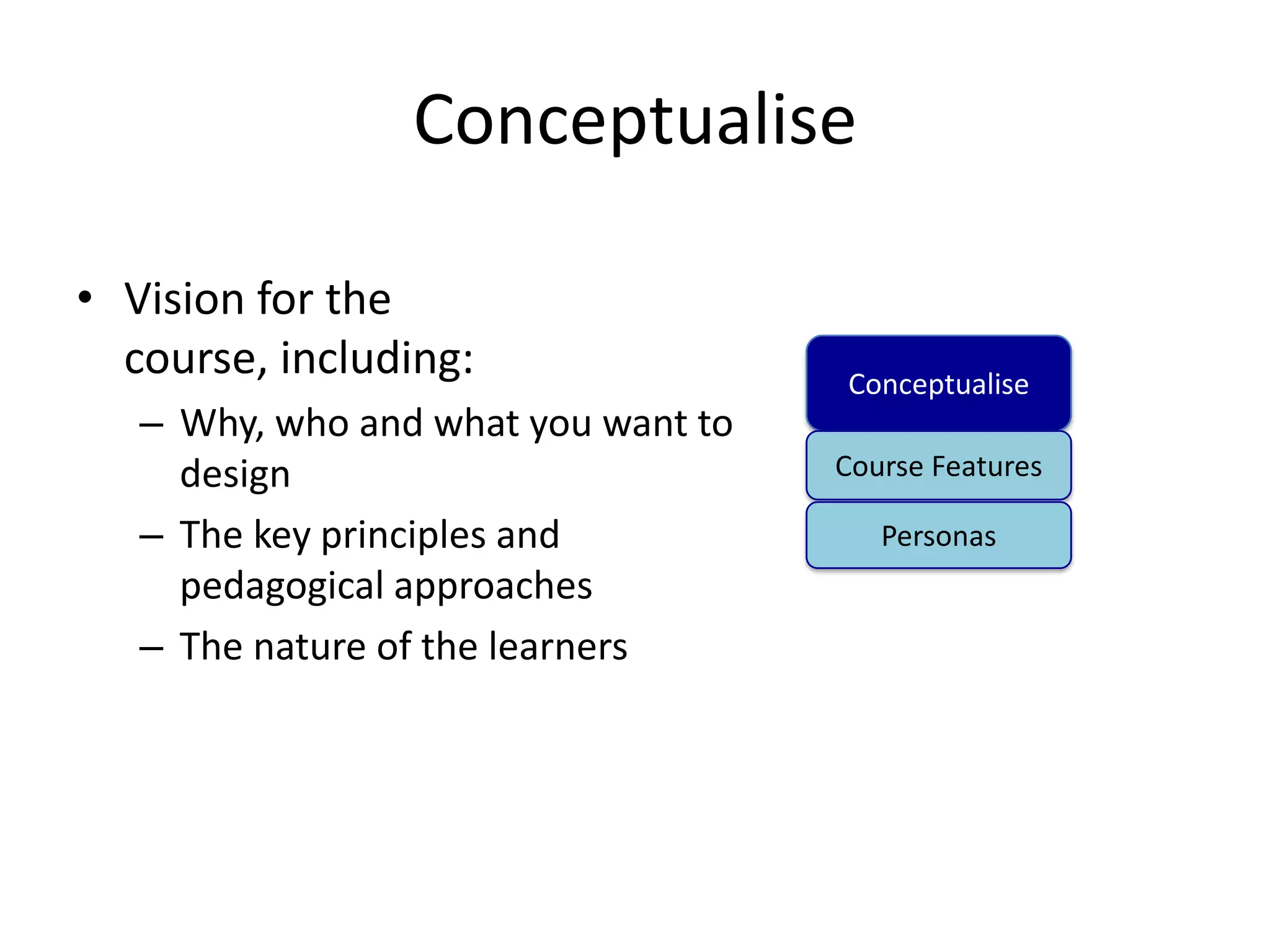
Conceptualise

• Vision for the
  course, including:                 Conceptualise
   – Why, who and what you want to
     design                          Course Features

   – The key principles and             Personas
     pedagogical approaches
   – The nature of the learners
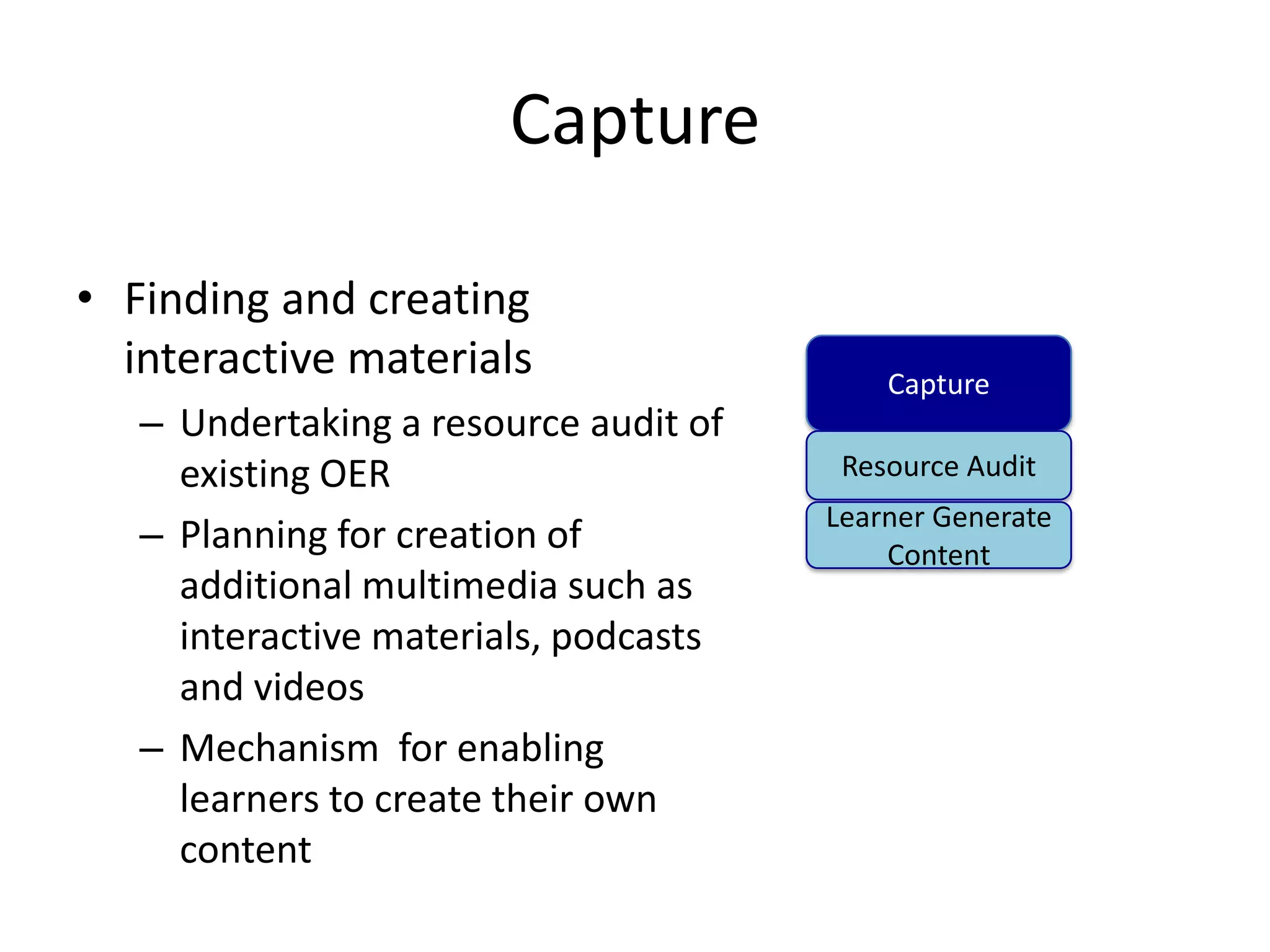
Capture

• Finding and creating
  interactive materials                    Capture
   – Undertaking a resource audit of
     existing OER                       Resource Audit
                                       Learner Generate
   – Planning for creation of              Content
     additional multimedia such as
     interactive materials, podcasts
     and videos
   – Mechanism for enabling
     learners to create their own
     content
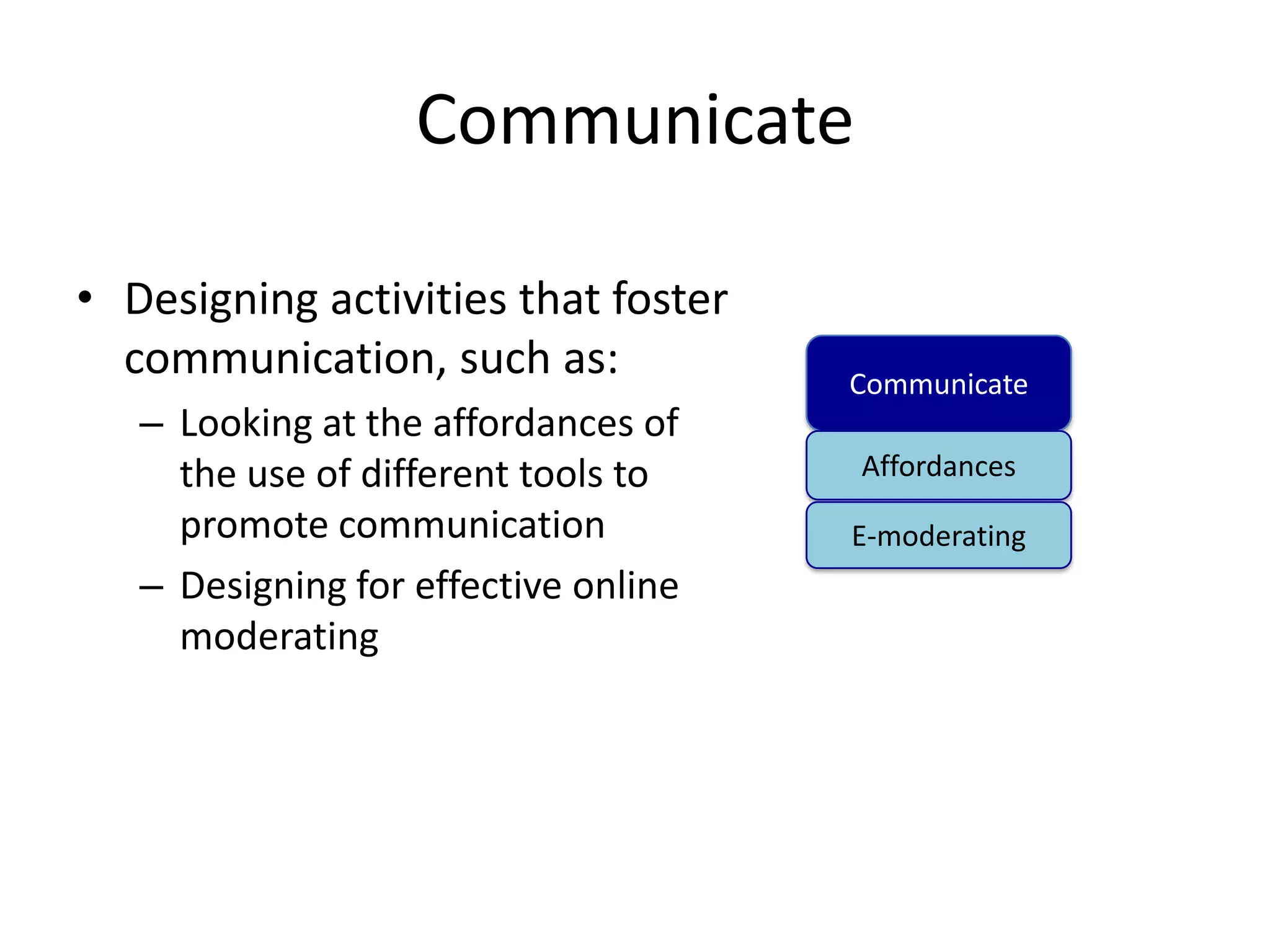
Communicate

• Designing activities that foster
  communication, such as:             Communicate
   – Looking at the affordances of
     the use of different tools to    Affordances
     promote communication            E-moderating
   – Designing for effective online
     moderating
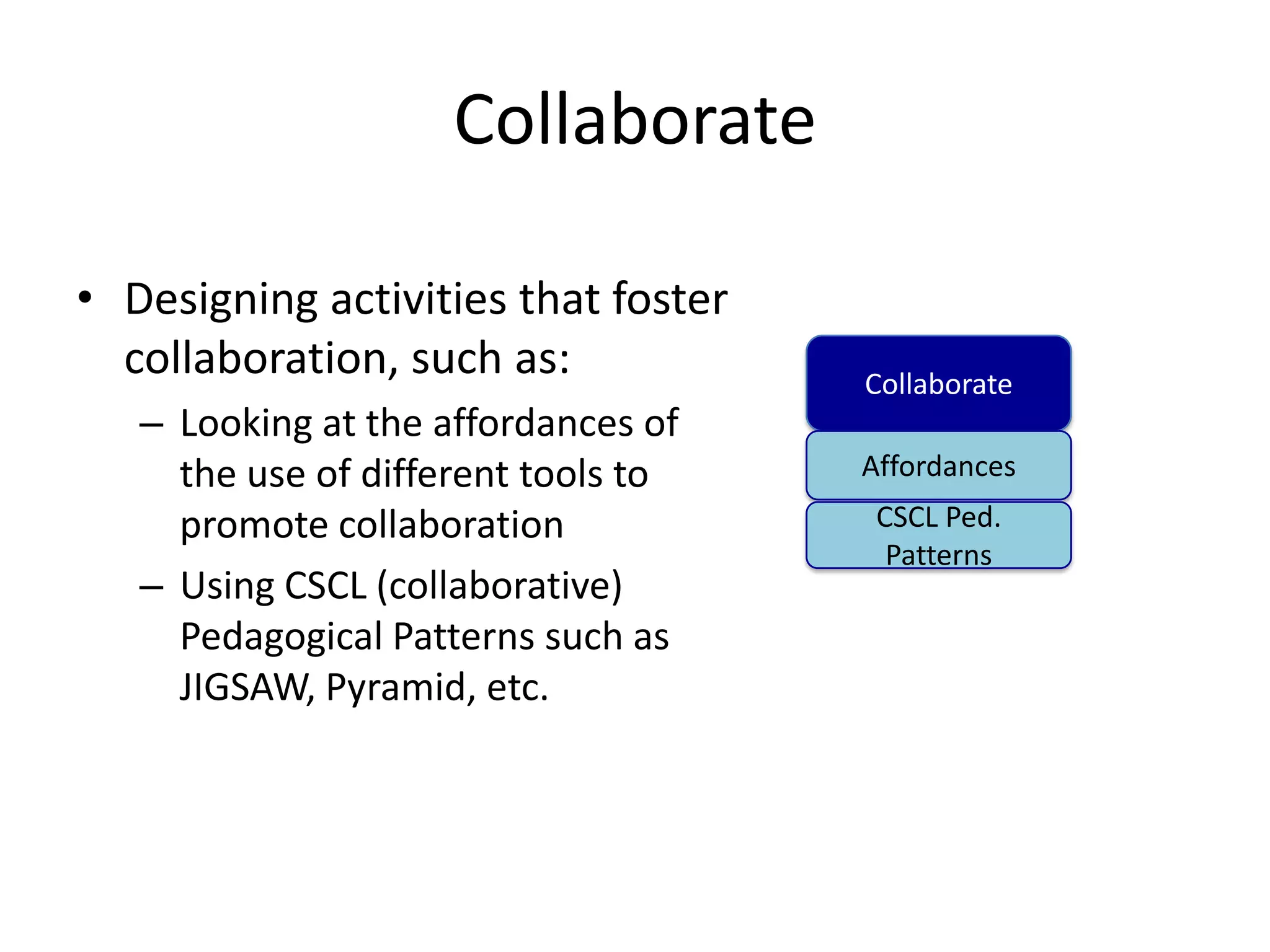
Collaborate

• Designing activities that foster
  collaboration, such as:            Collaborate
   – Looking at the affordances of
     the use of different tools to   Affordances
     promote collaboration            CSCL Ped.
                                       Patterns
   – Using CSCL (collaborative)
     Pedagogical Patterns such as
     JIGSAW, Pyramid, etc.
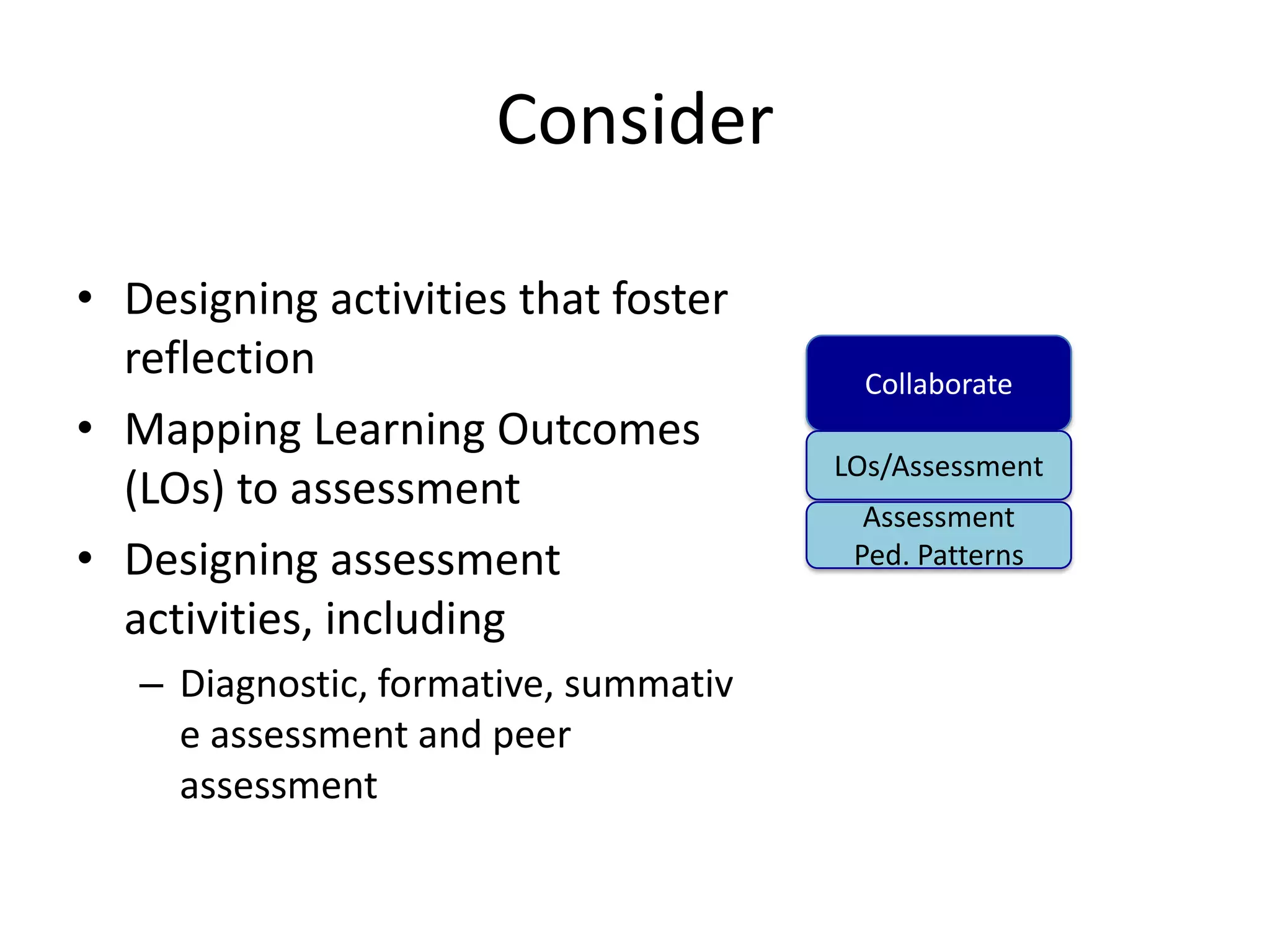
Consider

• Designing activities that foster
  reflection                             Collaborate
• Mapping Learning Outcomes
                                       LOs/Assessment
  (LOs) to assessment                    Assessment
• Designing assessment                  Ped. Patterns

  activities, including
   – Diagnostic, formative, summativ
     e assessment and peer
     assessment
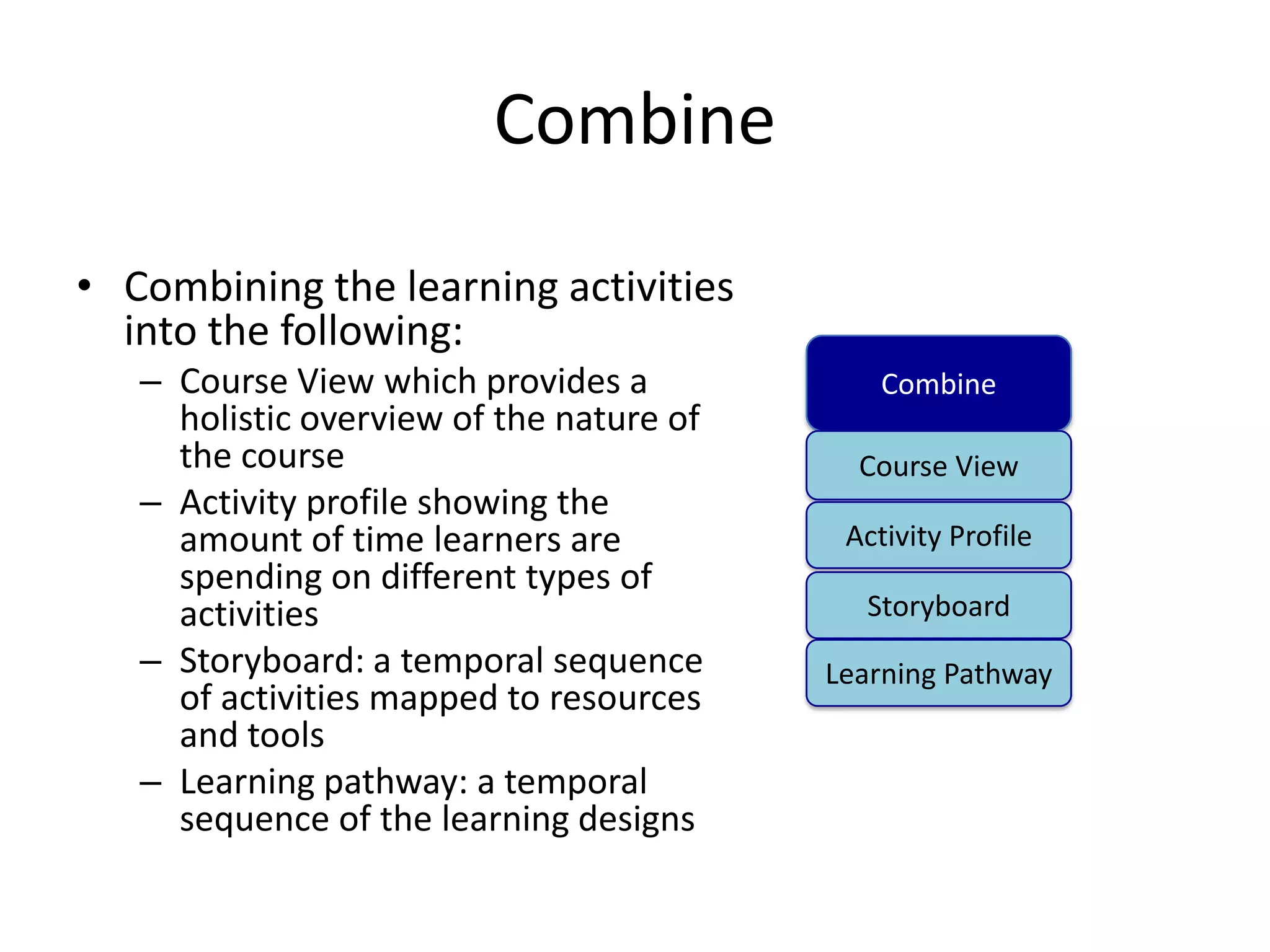
Combine

• Combining the learning activities
  into the following:
   – Course View which provides a             Combine
     holistic overview of the nature of
     the course                             Course View
   – Activity profile showing the
     amount of time learners are           Activity Profile
     spending on different types of
     activities                             Storyboard
   – Storyboard: a temporal sequence      Learning Pathway
     of activities mapped to resources
     and tools
   – Learning pathway: a temporal
     sequence of the learning designs
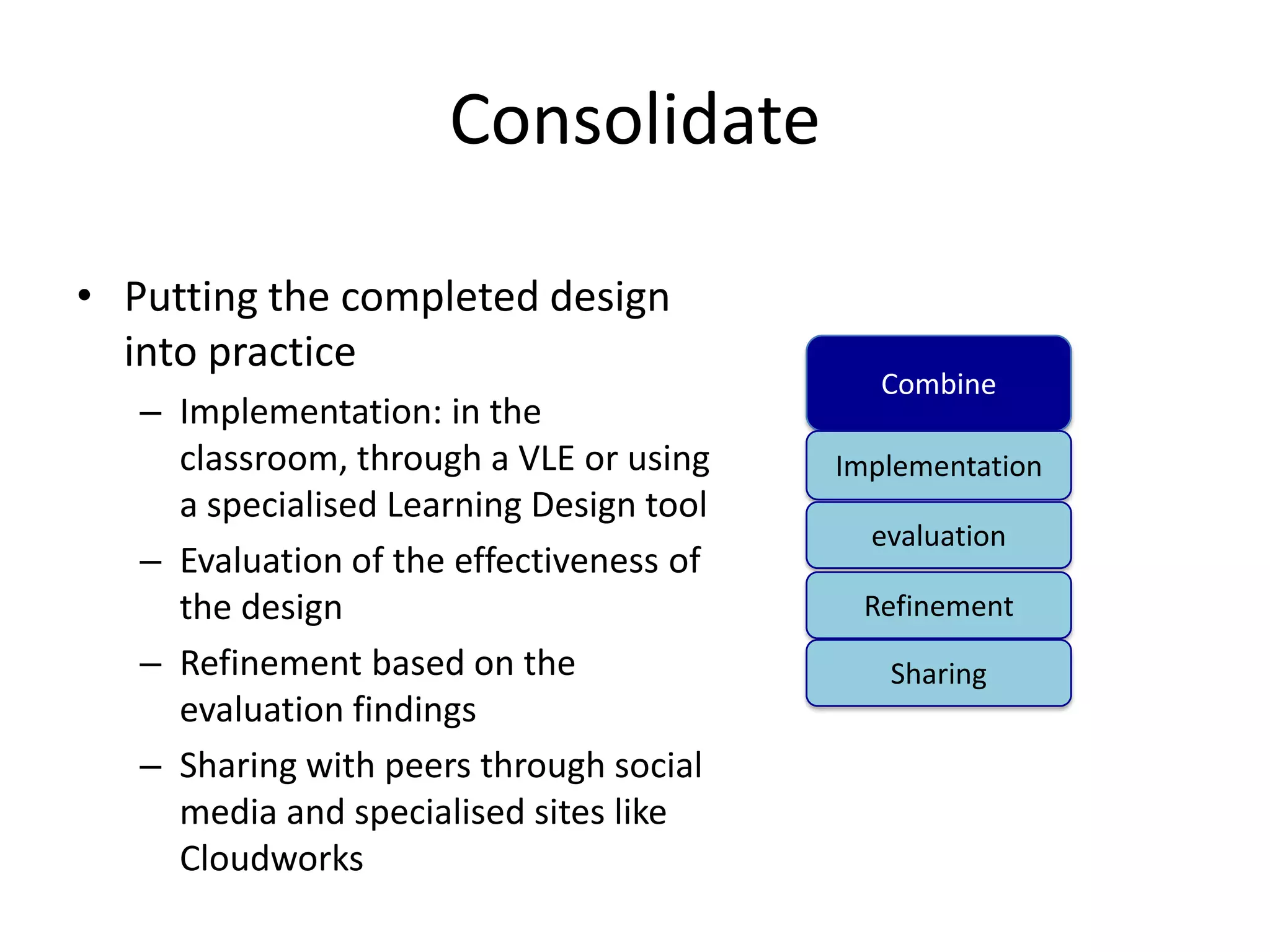
Consolidate

• Putting the completed design
  into practice
                                             Combine
   – Implementation: in the
     classroom, through a VLE or using    Implementation
     a specialised Learning Design tool
                                            evaluation
   – Evaluation of the effectiveness of
     the design                            Refinement
   – Refinement based on the                 Sharing
     evaluation findings
   – Sharing with peers through social
     media and specialised sites like
     Cloudworks

7 cs learning_design_mooc

  • 1.
    Gráinne Conole University ofLeicester OLDS MOOC – Week 3
  • 2.
    Learning outcomes • Conceptualisethe learning design process from different perspectives • Apply a range of learning design resources, tools and methods to a learning intervention • Critique a range of pedagogical approaches and the role played by different technologies in supporting these • Review and debate the theoretical underpinnings of learning design • Develop an innovative storyboard, learning activities and a structure for implementation
  • 3.
    Promise and reality Socialand participatory media offer new ways to communicate and collaborate Not fully exploited Wealth of free Replicating bad pedagogy resources and tools Lack of time and skills
  • 4.
    Learning Design Shift from belief-based, implicit approaches to design-based, explicit approaches Learning Design A design-based approach to creation and support of courses Encourages reflective, scholarly practices Promotes sharing and discussion
  • 5.
  • 6.
    The 7Cs ofLearning Design Vision Conceptualise Activities Capture Communicate Collaborate Consider Synthesis Combine Implementation Consolidate http://www2.le.ac.uk/projects/oer/oers/beyond-distance-research-alliance/7Cs-toolkit
  • 7.
    Course features http://cloudworks.ac.uk/cloud/view/5950 • Pedagogical approaches • Principles • Guidance and support • Content and activities • Reflection and demonstration • Communication and collaboration
  • 8.
    Theory based Practice based Cultural Aesthetics Professional Principles Political Sustainable International Serendipitous Community based
  • 9.
    Inquiry based Problem based Case based Dialogic Collaborative Pedagogical approaches Situative Constructivist Vicarious Didactic Authentic
  • 10.
    Learning pathway Mentoring Peer support Scaffolded Step by step Guidance & Support Study skills Library support Tutor directed Help desk Remedial support
  • 11.
    Brainstorming Concept mapping Annotation Assimilative Modeling Content & Activities Jigsaw Pyramid Aggregating Learner generated Information resources content handling
  • 12.
    Diagnostic E-Assessment E-Portfolio Formative Feed forward Reflection & Demonstration Summative Reflective Peer feedback Vicarious Presentation
  • 13.
    Structured debate Flash debate Group project Group Peer critique aggregation Communication & Collaboration Group presentation Group project Question & Flash debate For/Against debate Answer
  • 14.
    Activity: Course Features Purpose: To consider the features you want to include in your module/course, which will determine not only the look and feel of the course, but also the nature of the learners’ experience. Linoit canvas E-tivity Rubric: http://tinyurl.com/SPEED-e4
  • 15.
    Activity: Course Map Purpose:To start mapping out your module/course, including your plans for guidance and support, content and the learner experience, reflection and demonstration, and communication and collaboration. E-tivity Rubric: http://tinyurl.com/SPEED-e5
  • 16.
    Activity profile • Typesof learner activities – Assimilative – Information Handling – Communication – Production – Experiential – Adaptive – Assessment
  • 17.
    Activity: Activity Profile Purpose: To consider the balance of activity types that will be included in your module/course. Activity Profile Flash Widget E-tivity Rubric: http://tinyurl.com/SPEED-e6
  • 18.
    Activity: Storyboard Purpose: To develop a storyboard for your module/course in which the learning outcomes are aligned with the assessment events, topics (contents) and e-tivities. Linoit Canvas E-tivity Rubric: http://tinyurl.com/SPEED-e8
  • 19.
  • 20.
    The 7Cs ofLearning Design Vision Conceptualise Activities Capture Communicate Collaborate Consider Synthesis Combine Implementation Consolidate
  • 21.
    Conceptualise • Vision forthe course, including: Conceptualise – Why, who and what you want to design Course Features – The key principles and Personas pedagogical approaches – The nature of the learners
  • 22.
    Capture • Finding andcreating interactive materials Capture – Undertaking a resource audit of existing OER Resource Audit Learner Generate – Planning for creation of Content additional multimedia such as interactive materials, podcasts and videos – Mechanism for enabling learners to create their own content
  • 23.
    Communicate • Designing activitiesthat foster communication, such as: Communicate – Looking at the affordances of the use of different tools to Affordances promote communication E-moderating – Designing for effective online moderating
  • 24.
    Collaborate • Designing activitiesthat foster collaboration, such as: Collaborate – Looking at the affordances of the use of different tools to Affordances promote collaboration CSCL Ped. Patterns – Using CSCL (collaborative) Pedagogical Patterns such as JIGSAW, Pyramid, etc.
  • 25.
    Consider • Designing activitiesthat foster reflection Collaborate • Mapping Learning Outcomes LOs/Assessment (LOs) to assessment Assessment • Designing assessment Ped. Patterns activities, including – Diagnostic, formative, summativ e assessment and peer assessment
  • 26.
    Combine • Combining thelearning activities into the following: – Course View which provides a Combine holistic overview of the nature of the course Course View – Activity profile showing the amount of time learners are Activity Profile spending on different types of activities Storyboard – Storyboard: a temporal sequence Learning Pathway of activities mapped to resources and tools – Learning pathway: a temporal sequence of the learning designs
  • 27.
    Consolidate • Putting thecompleted design into practice Combine – Implementation: in the classroom, through a VLE or using Implementation a specialised Learning Design tool evaluation – Evaluation of the effectiveness of the design Refinement – Refinement based on the Sharing evaluation findings – Sharing with peers through social media and specialised sites like Cloudworks