





Learning Disability-Thinking outside the box

Loading...

Flash Player 9 (or above) is needed to view presentations.
We have detected that you do not have it on your computer. To install it, go here.

3 comments

Comments 1 - 3 of 3 previous next Post a comment

  • + zuhal ZUHAL S 1 month ago
    good show :))
  • + GreenBeingNancy Nancy Poh 2 months ago
    Love this every useful and educational information you shared here. Looking at the list of people with learning disability, I am sure that it is a very motivational piece for those who share the same problem.
  • + MariamAllam Mariam Allam 2 months ago
    Very good show, thanks for sharing
Post a comment
Embed Video
Edit your comment Cancel

10 Favorites & 3 Groups

Learning Disability-Thinking outside the box - Presentation Transcript

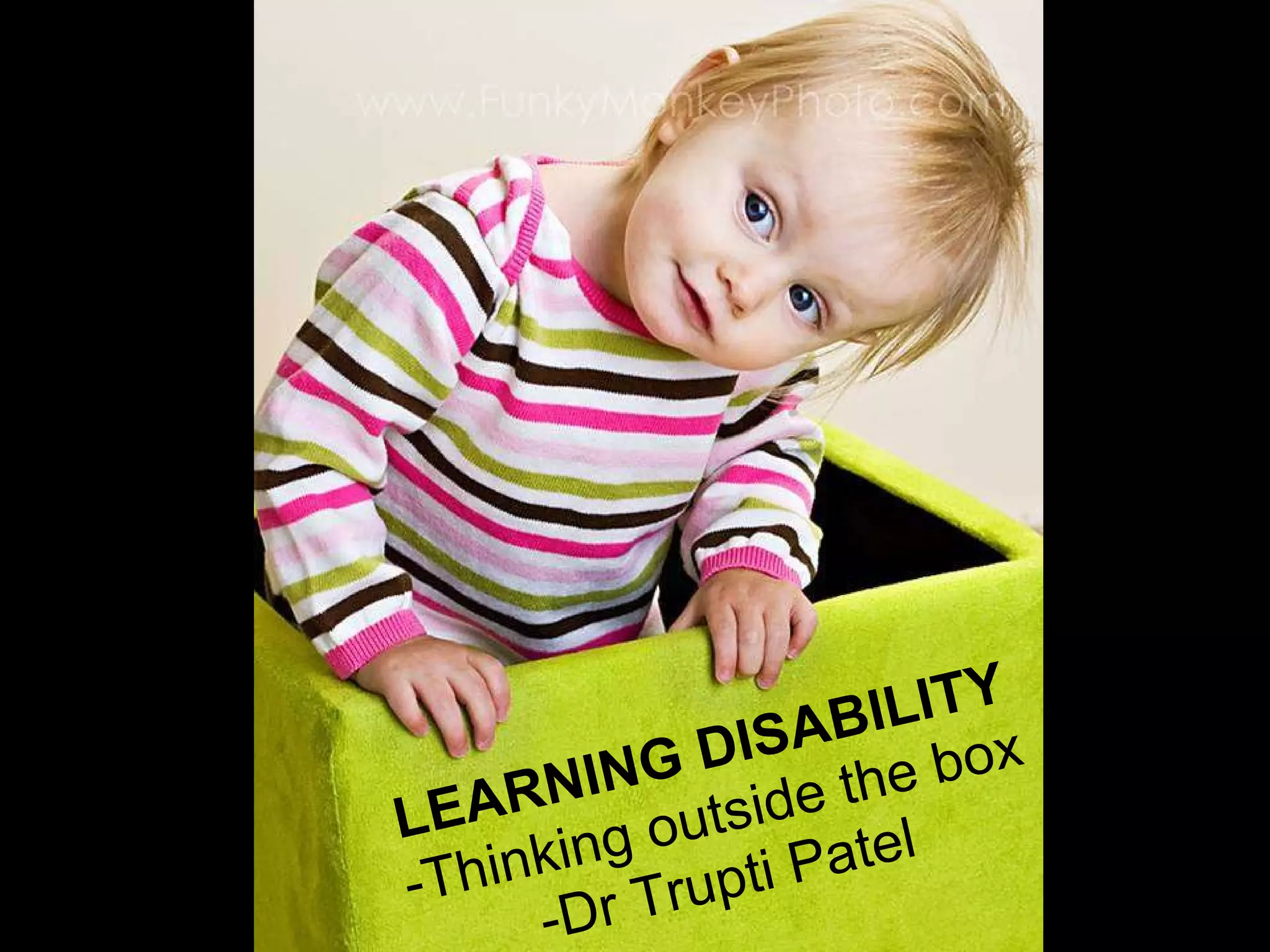
  1. LEARNING DISABILITY -Thinking outside the box -Dr Trupti Patel
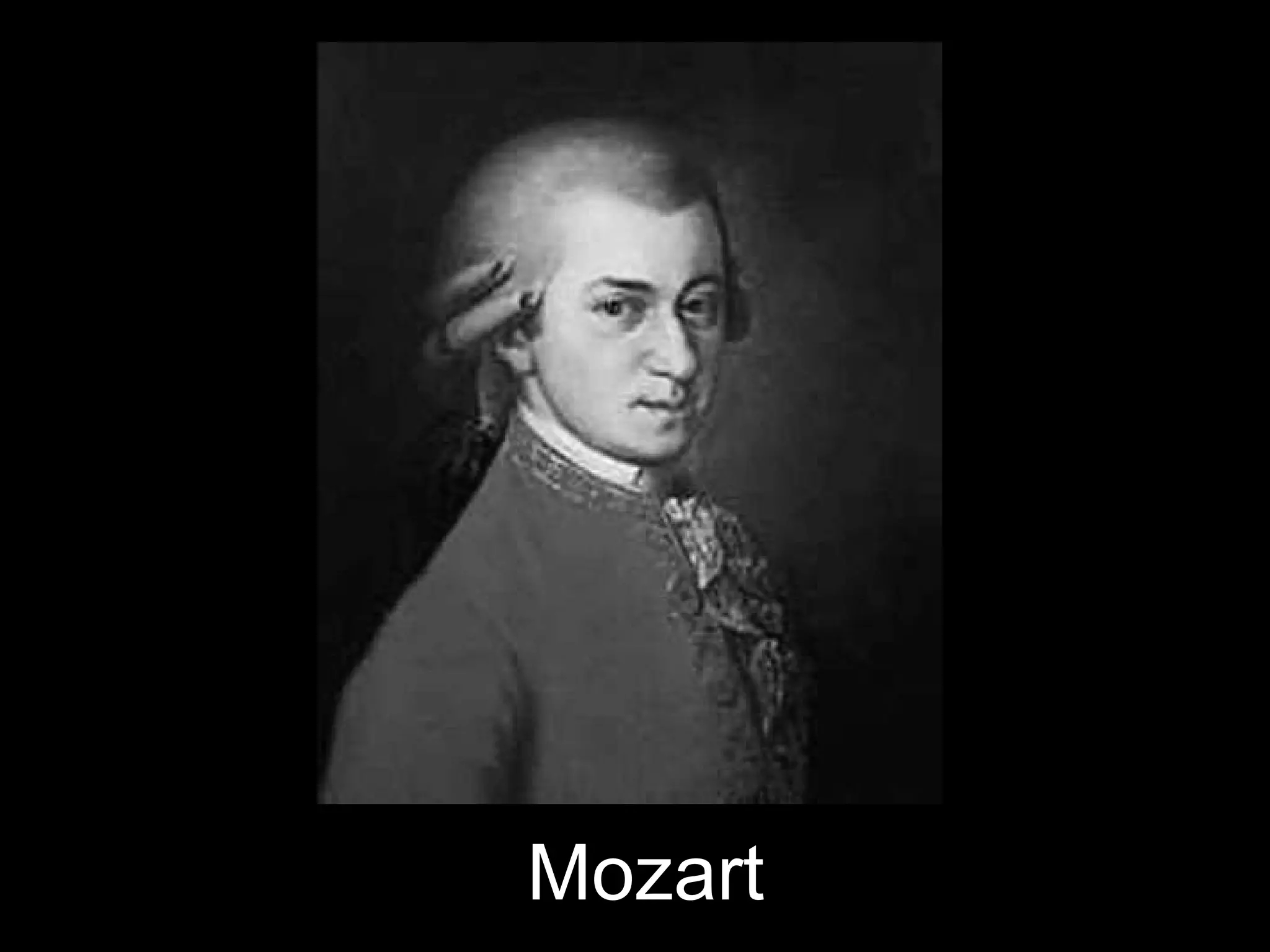
  2. Mozart
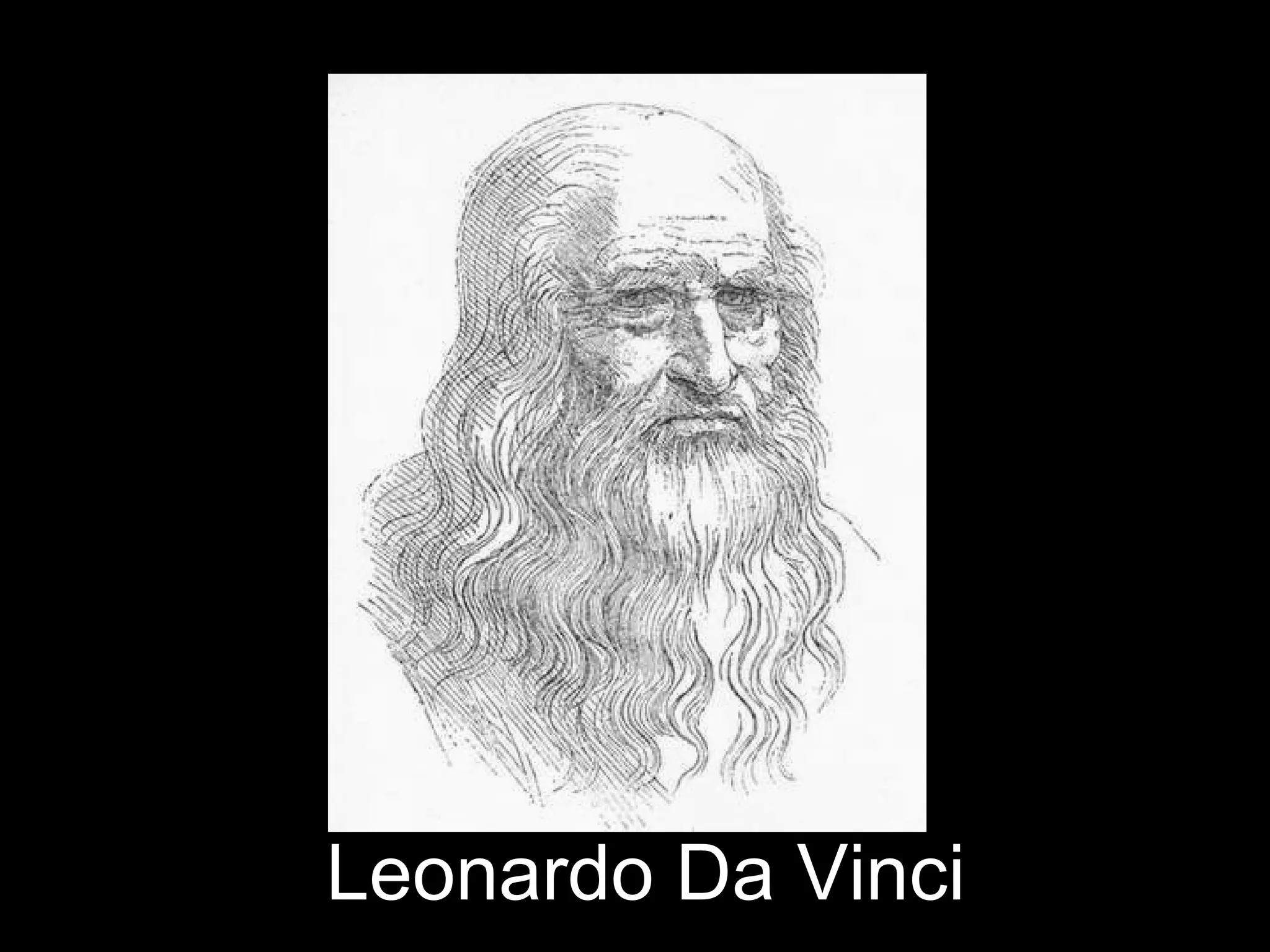
  3. Leonardo Da Vinci
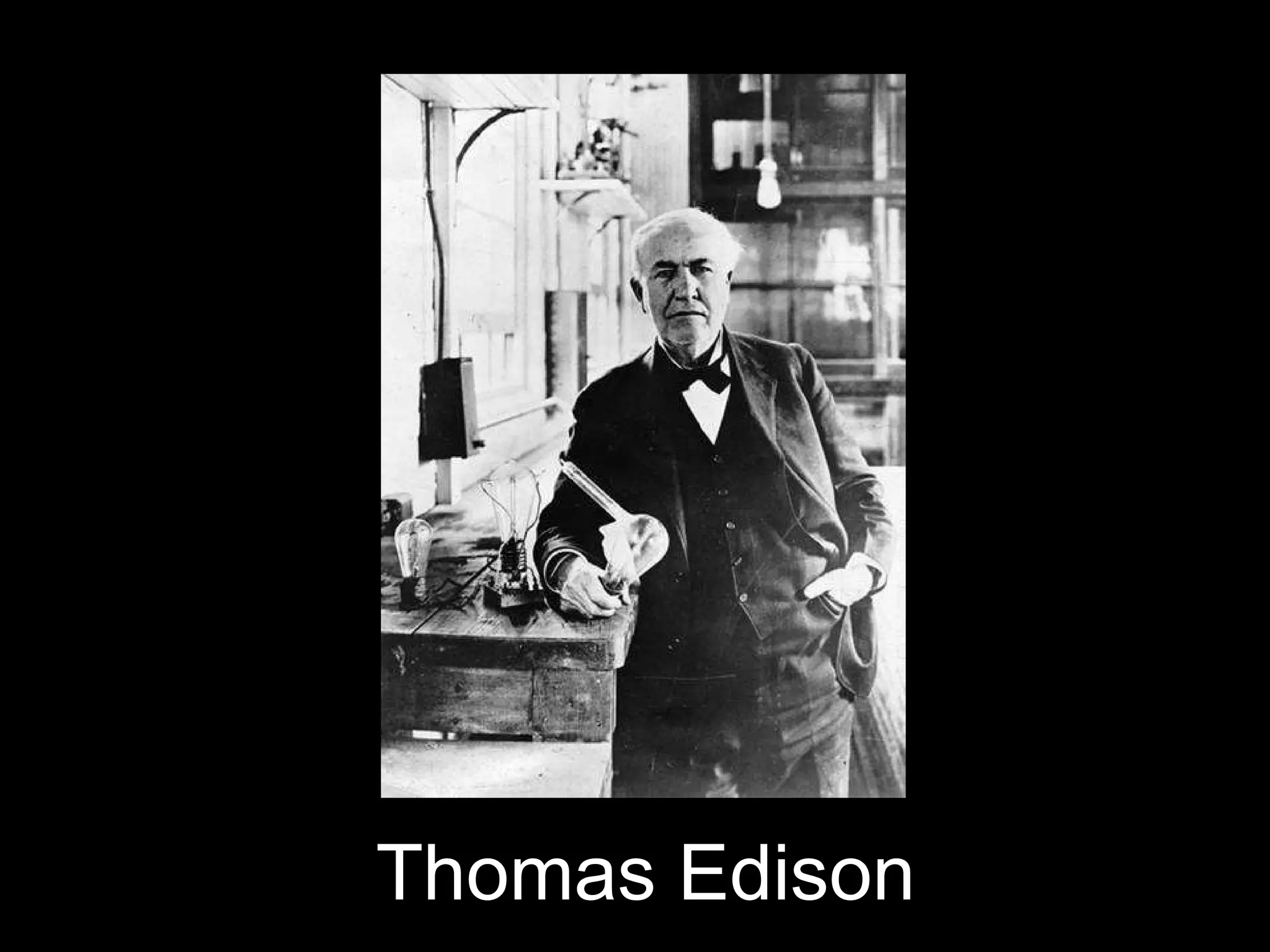
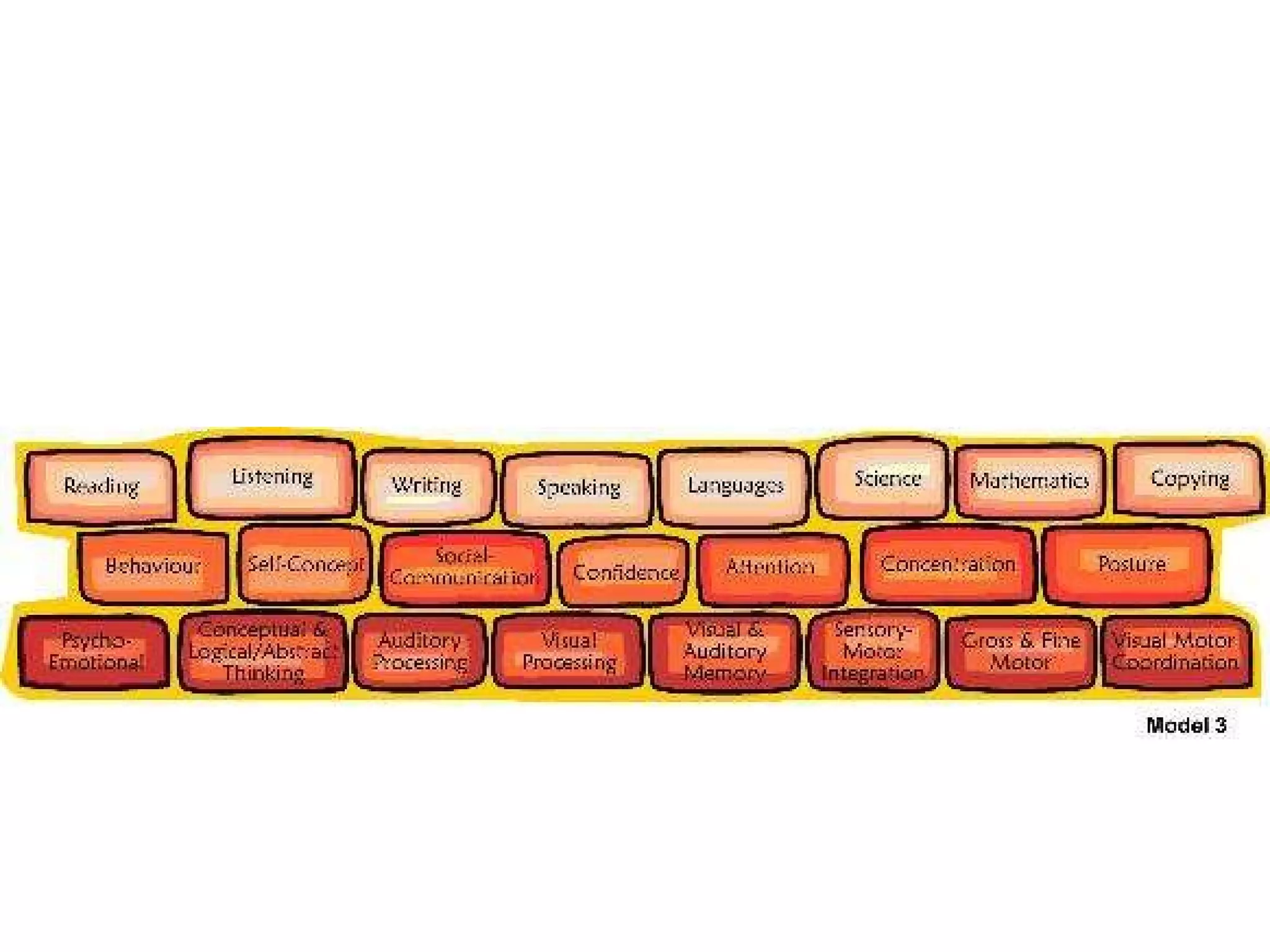
  4. Thomas Edison
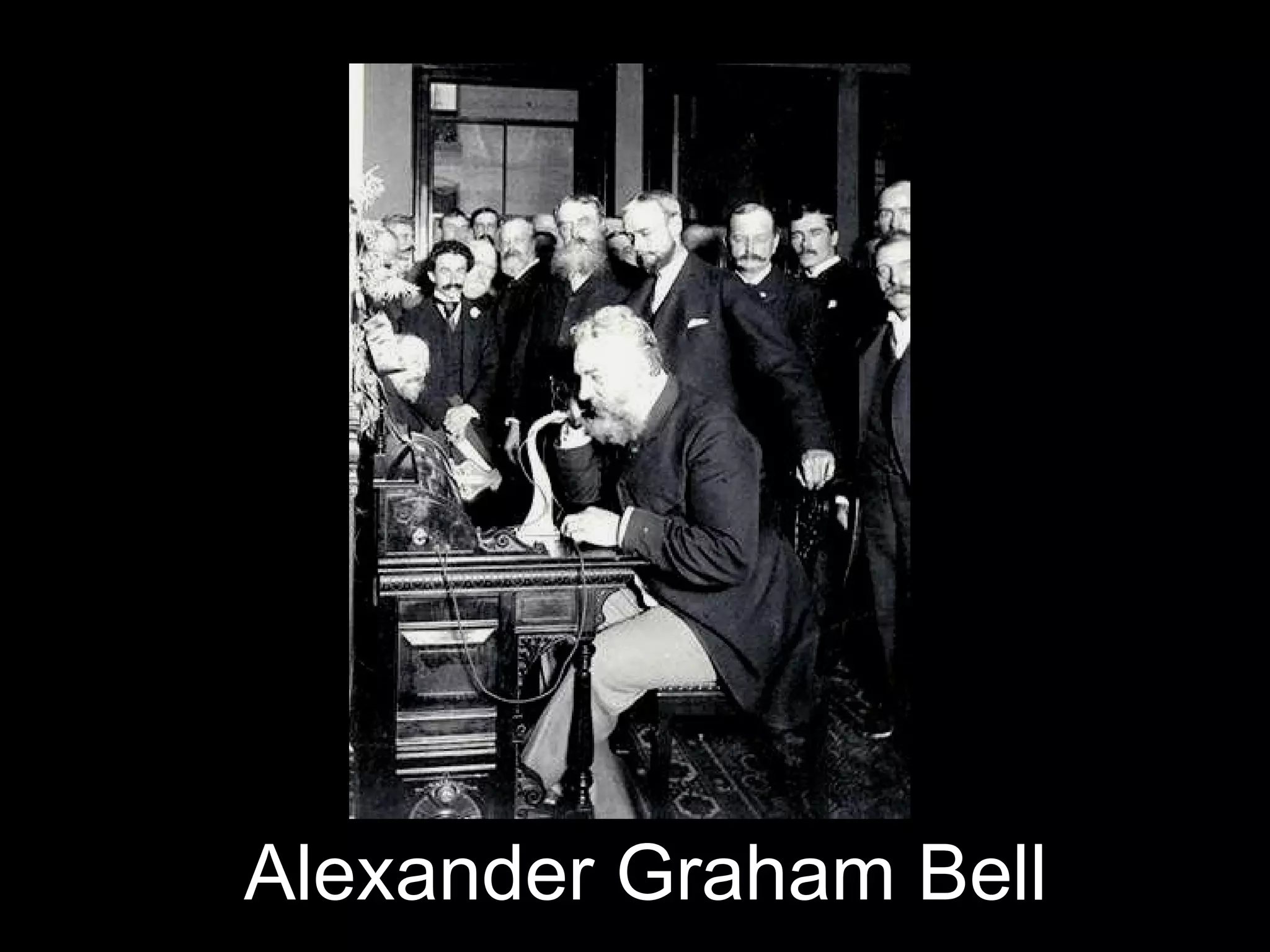
  5. Alexander Graham Bell
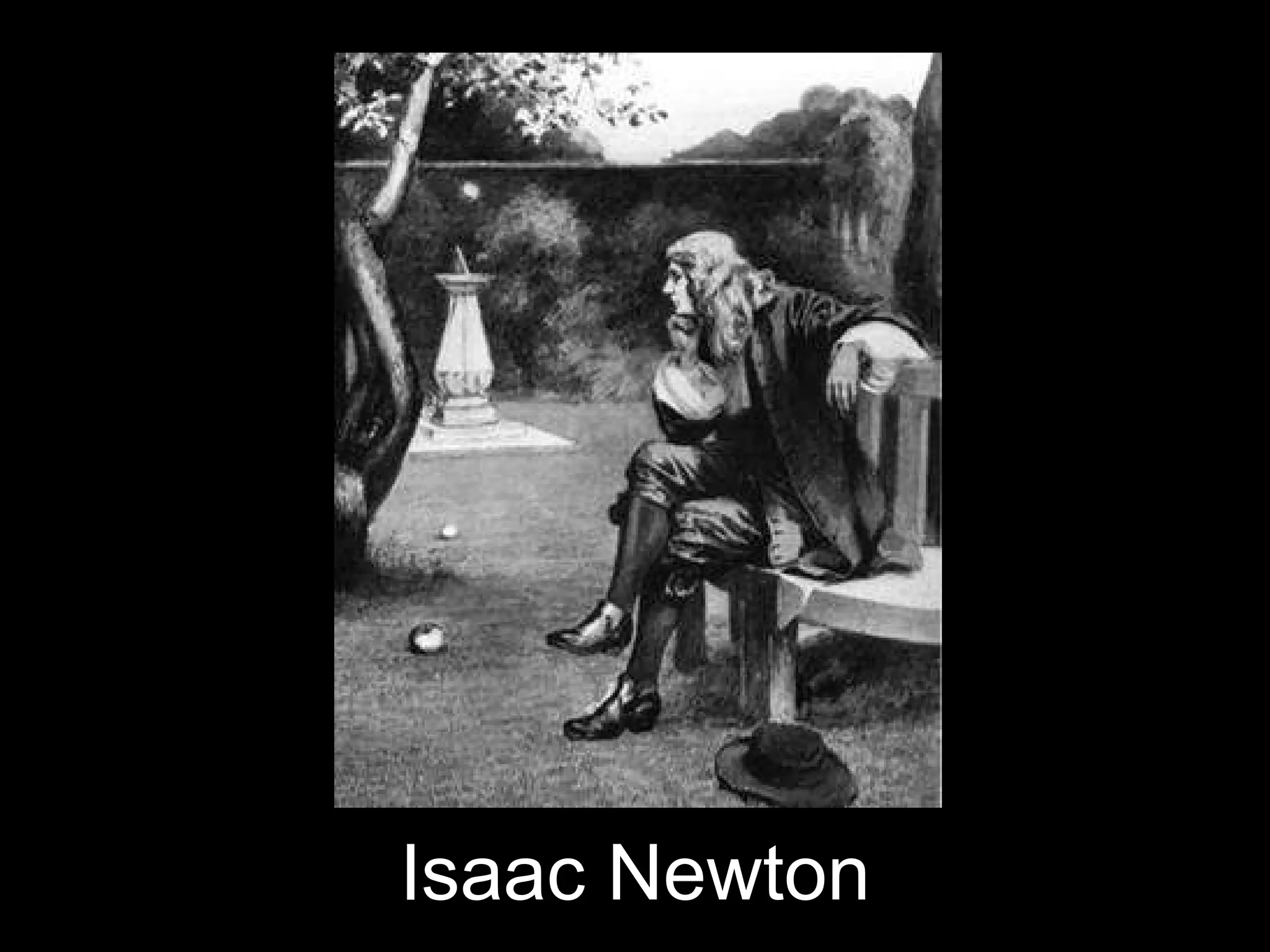
  6. Isaac Newton
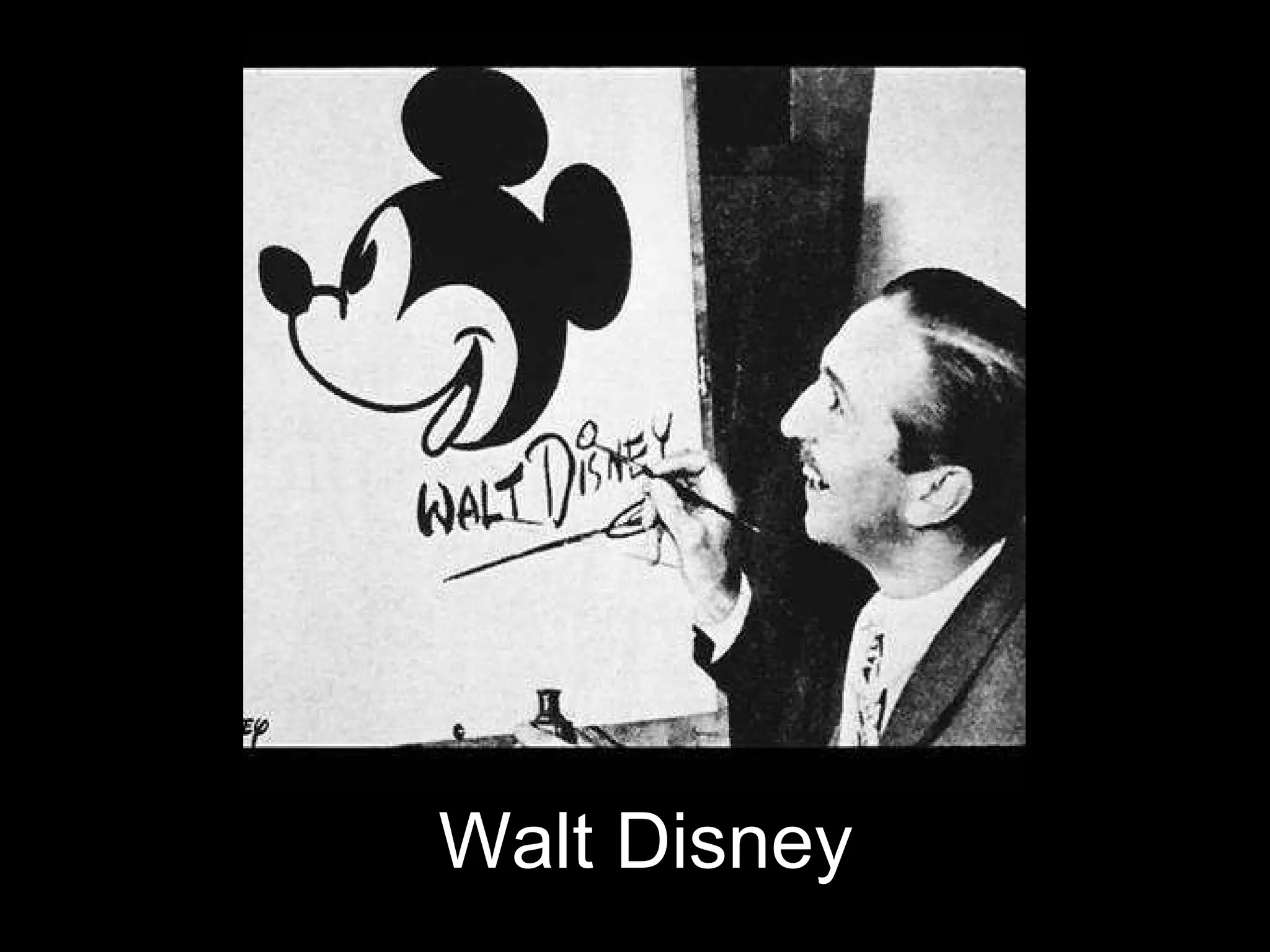
  7. Walt Disney
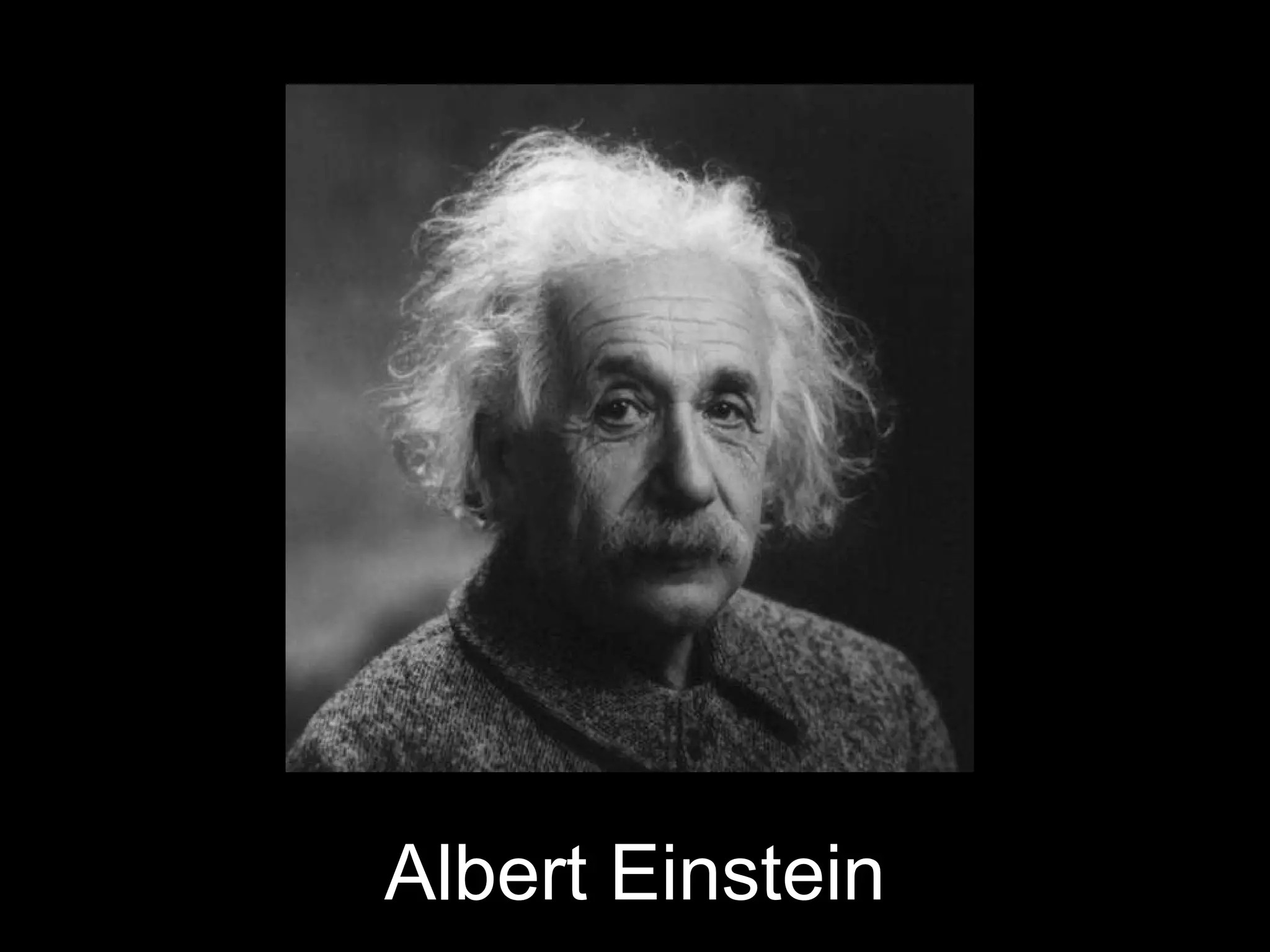
  8. Albert Einstein
  9. Winston Churchill
  10. Bill Gates
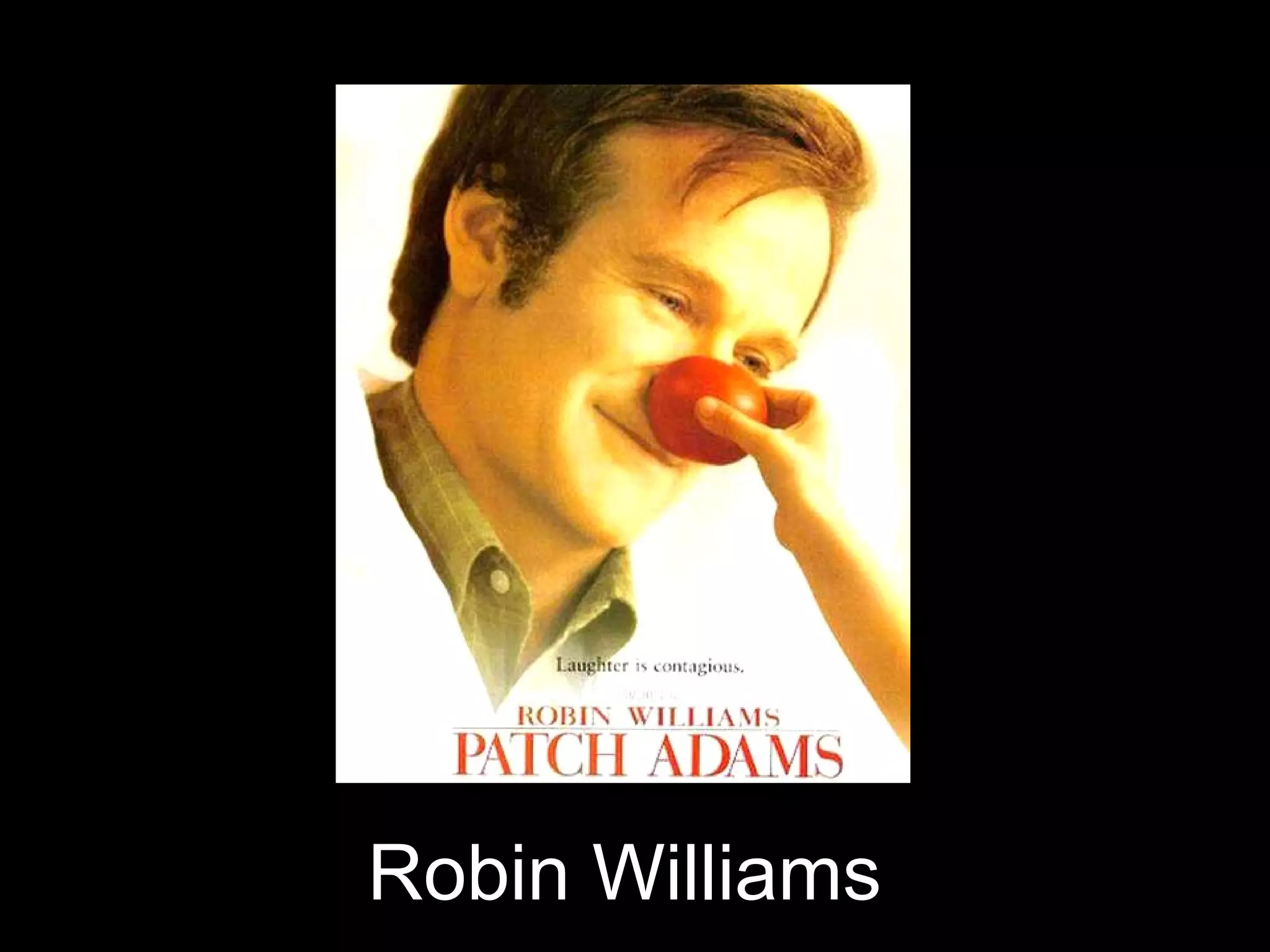
  11. Robin Williams
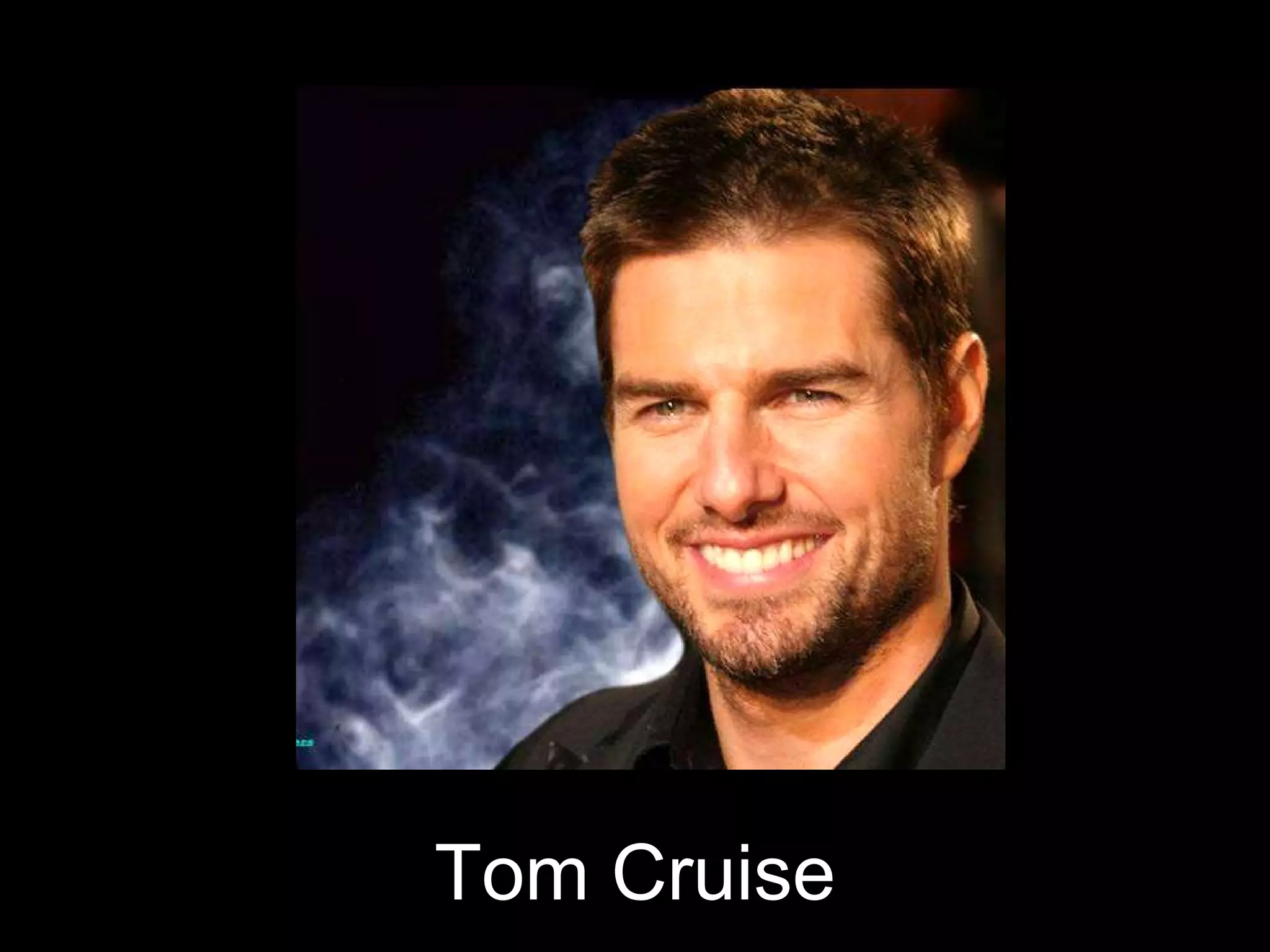
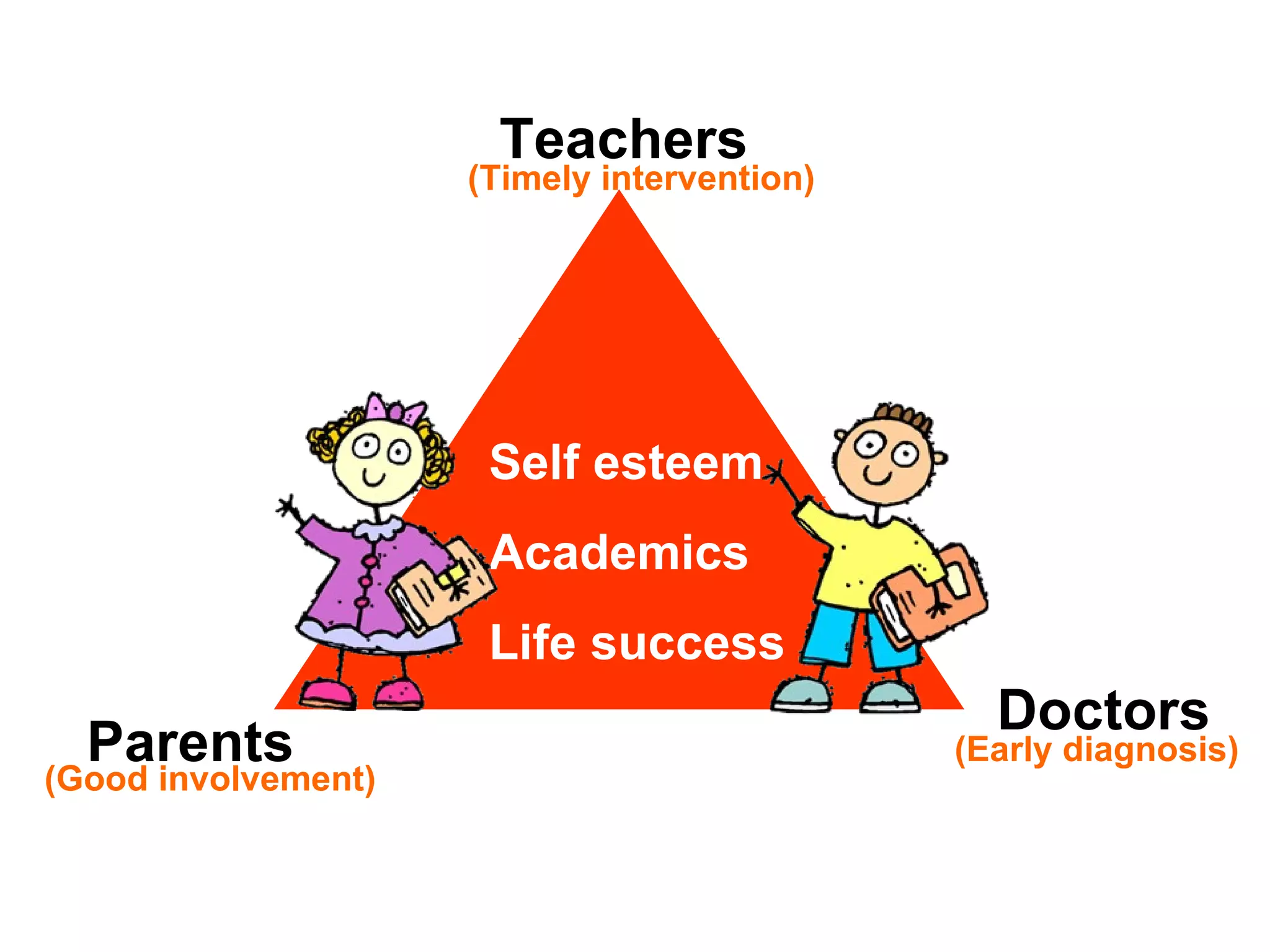
  12. Tom Cruise
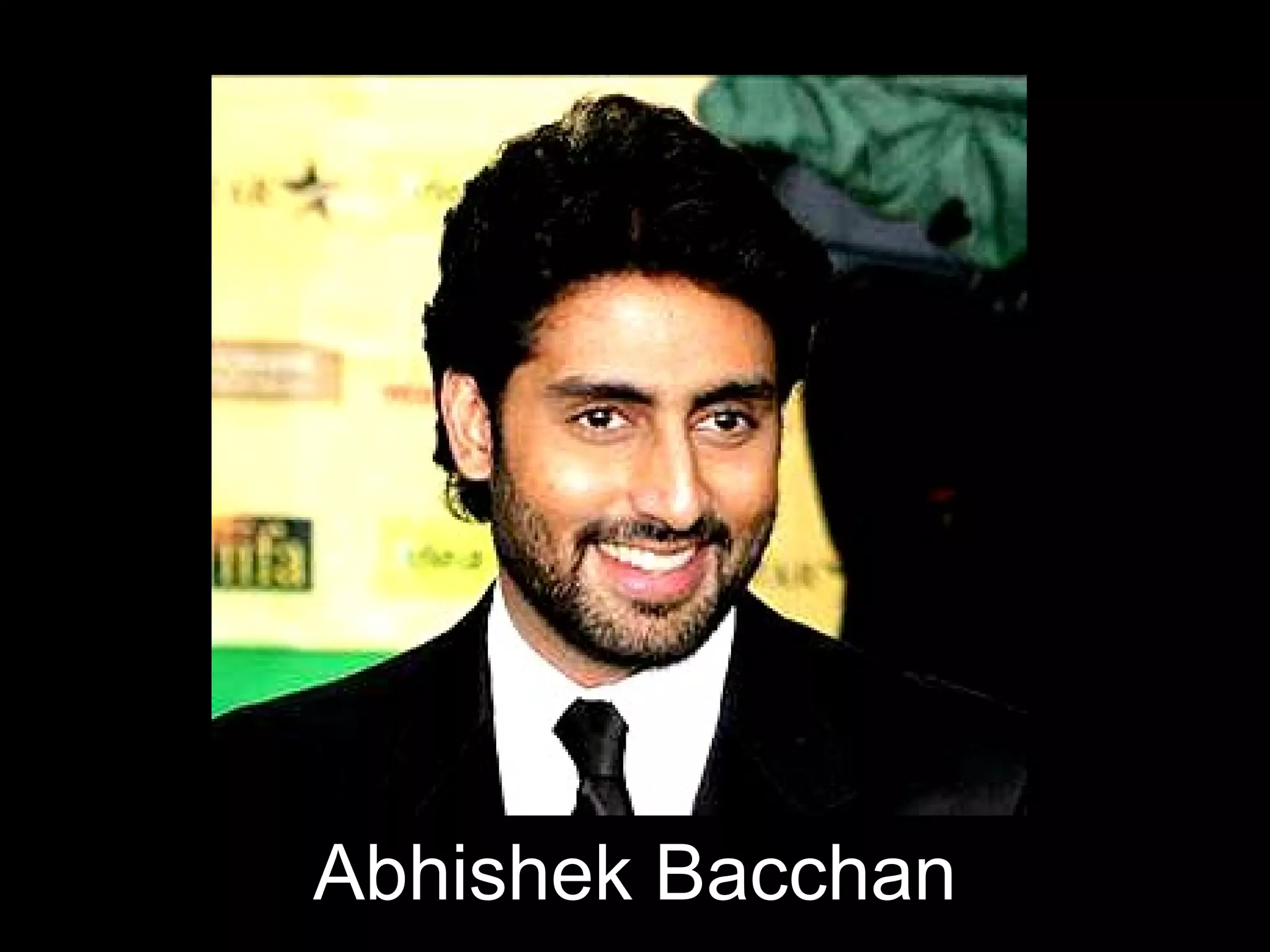
  13. Abhishek Bacchan
  14. The world wouldn’t have been the same without these people? What is common in all of them?
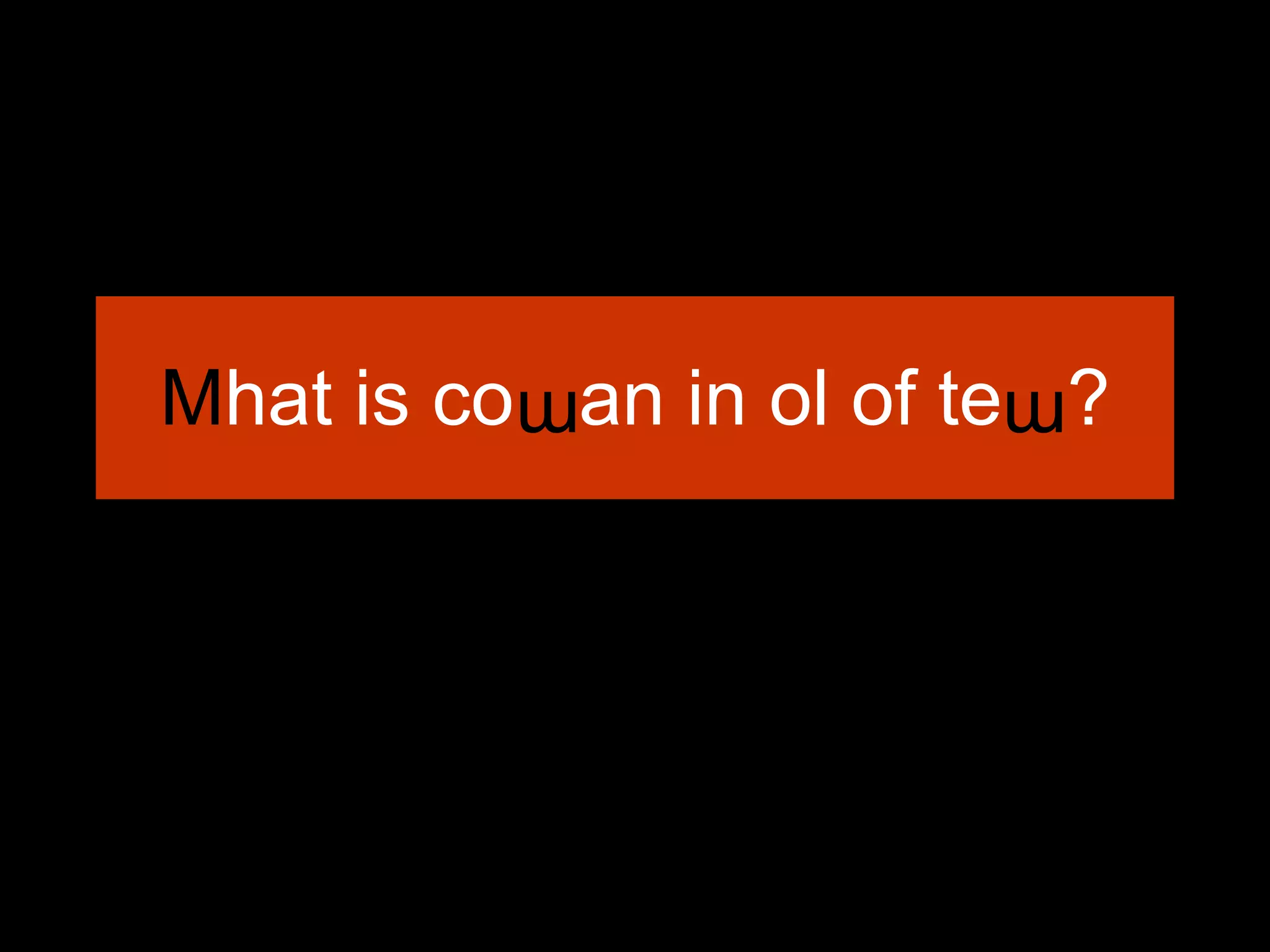
  15. M hat is co an in ol of te ? m m
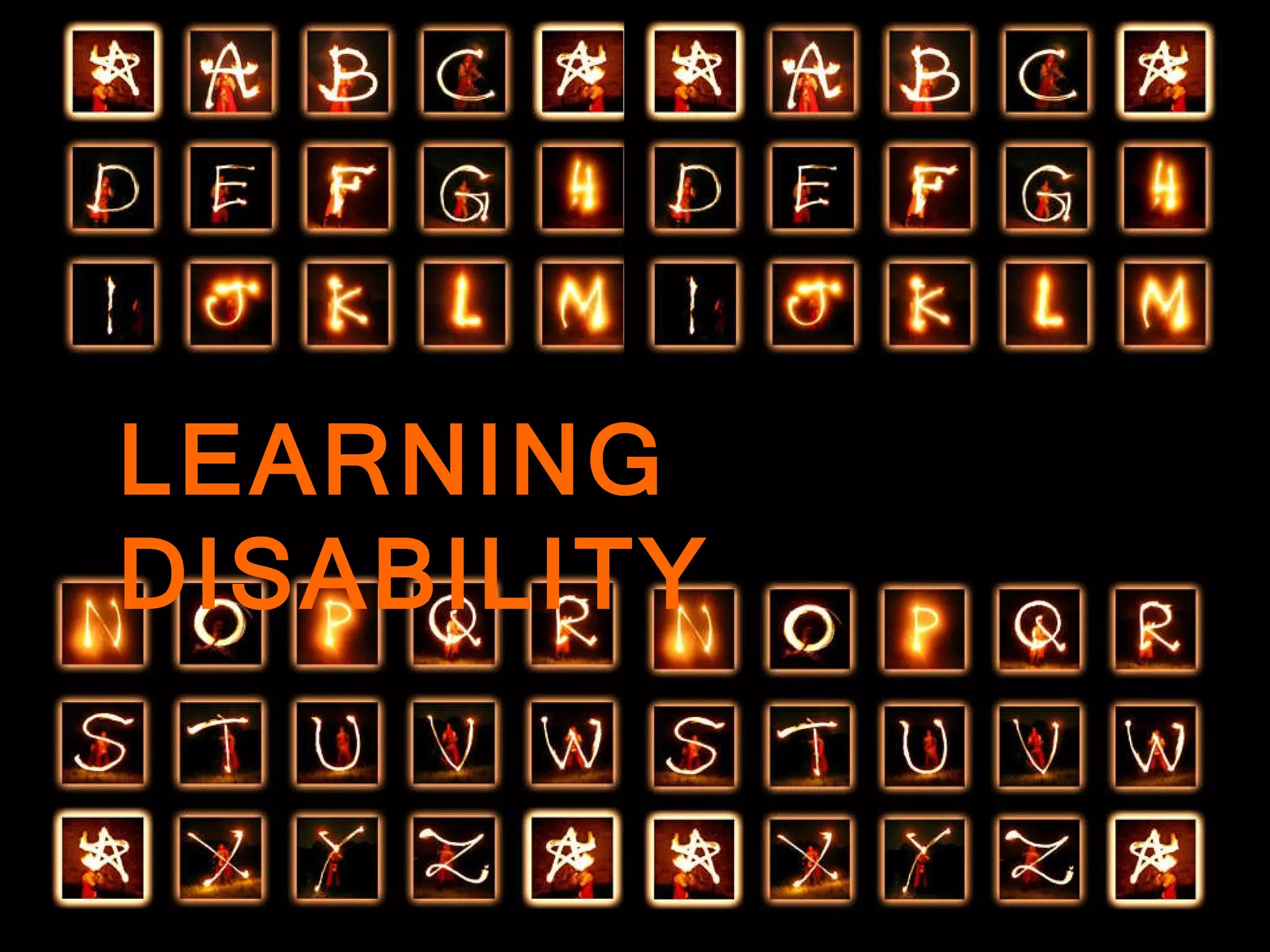
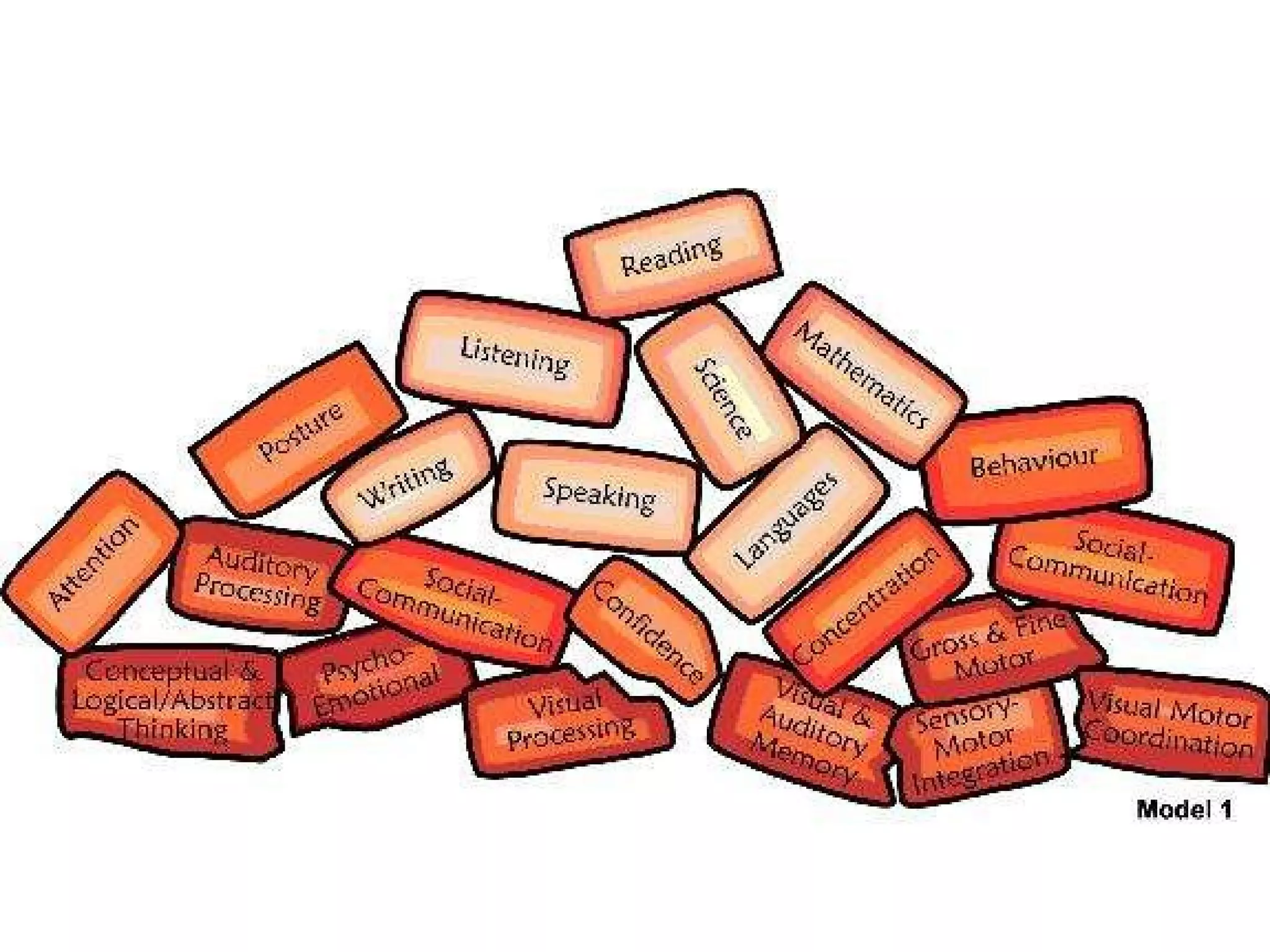
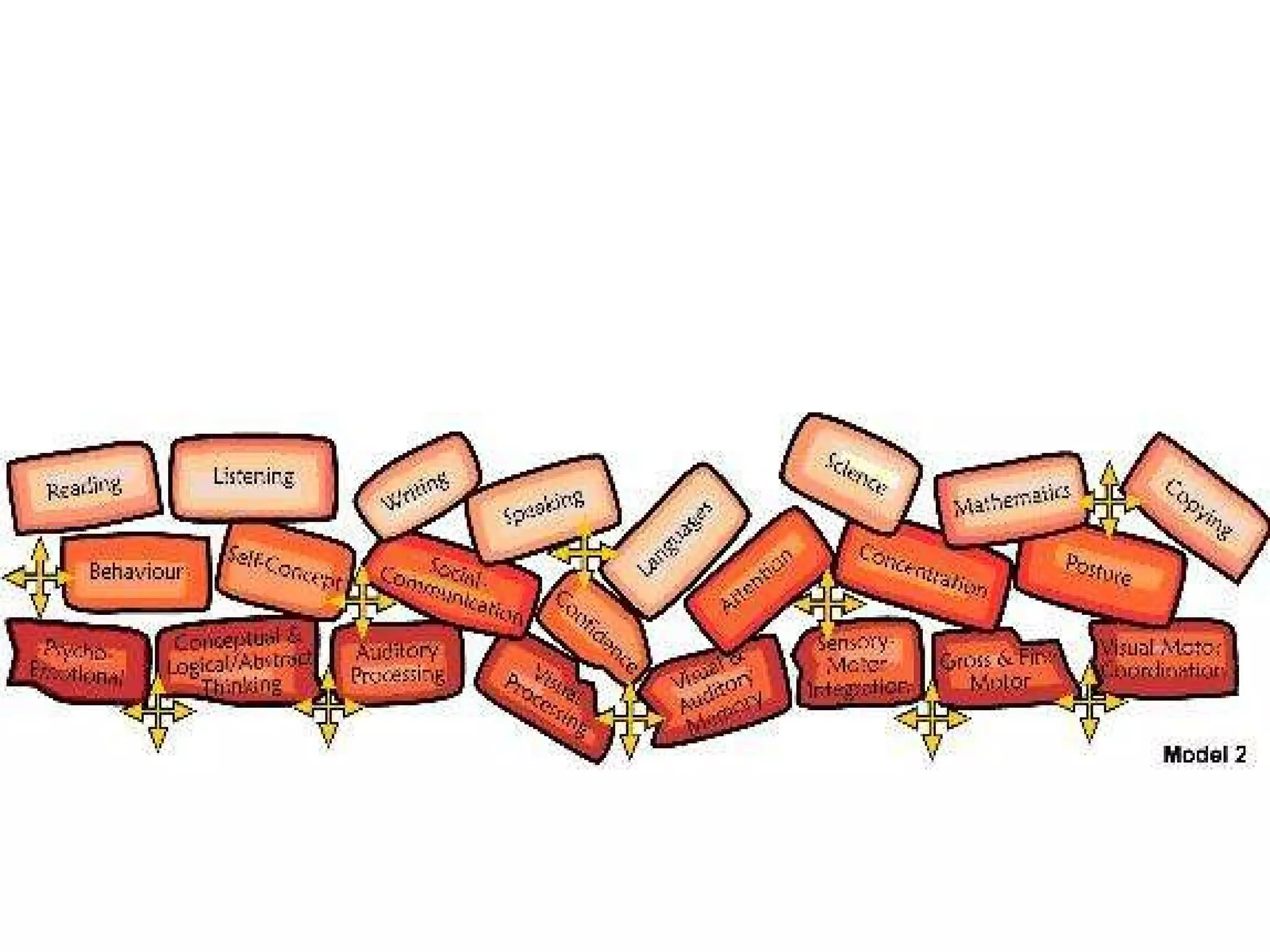
  16. LEARNING DISABILITY
  17. What do you think LD is?
  18. Try cutting a circle out of a paper using your left hand (if you are right handed)
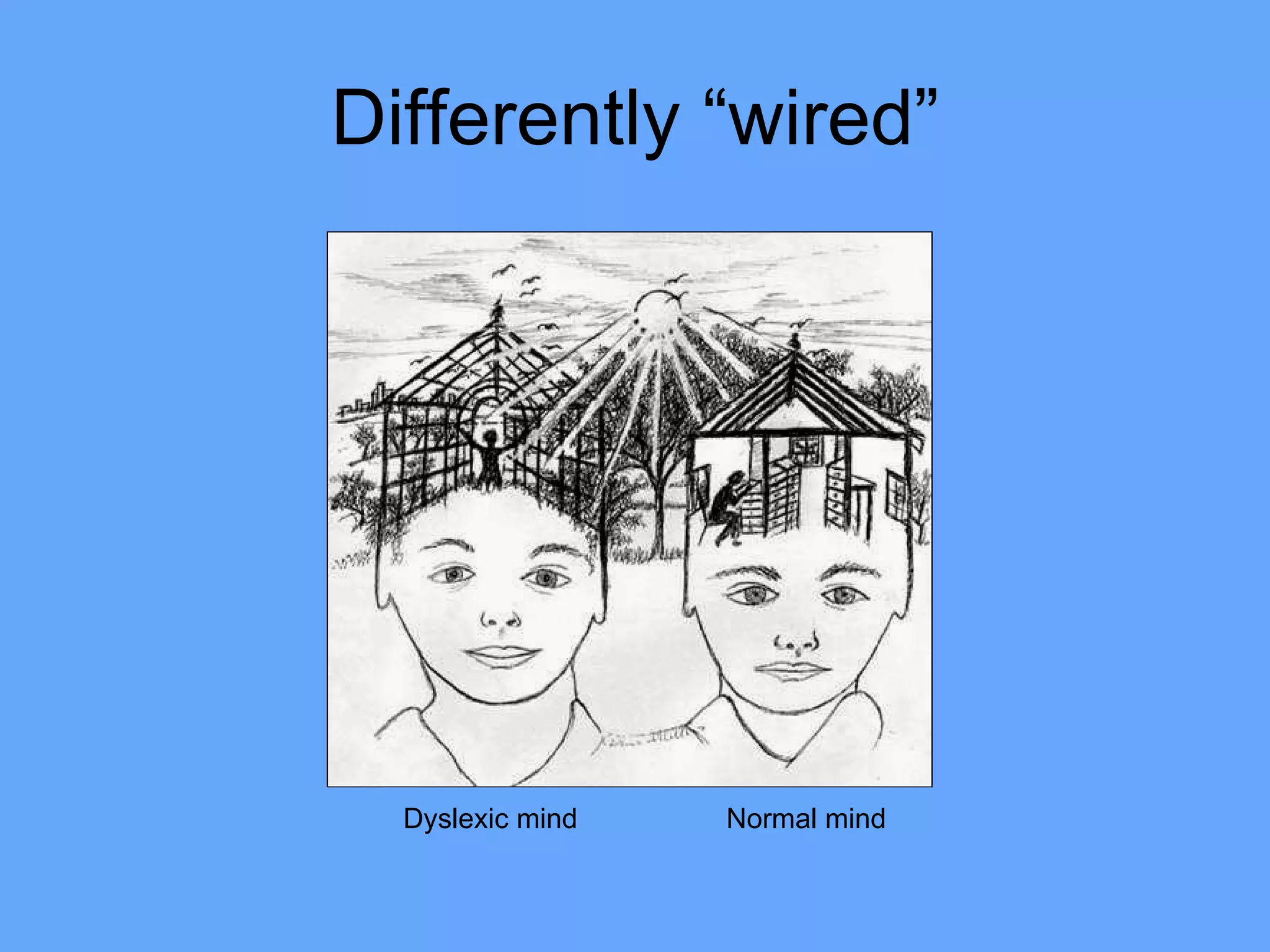
  19. Differently “wired” Dyslexic mind Normal mind
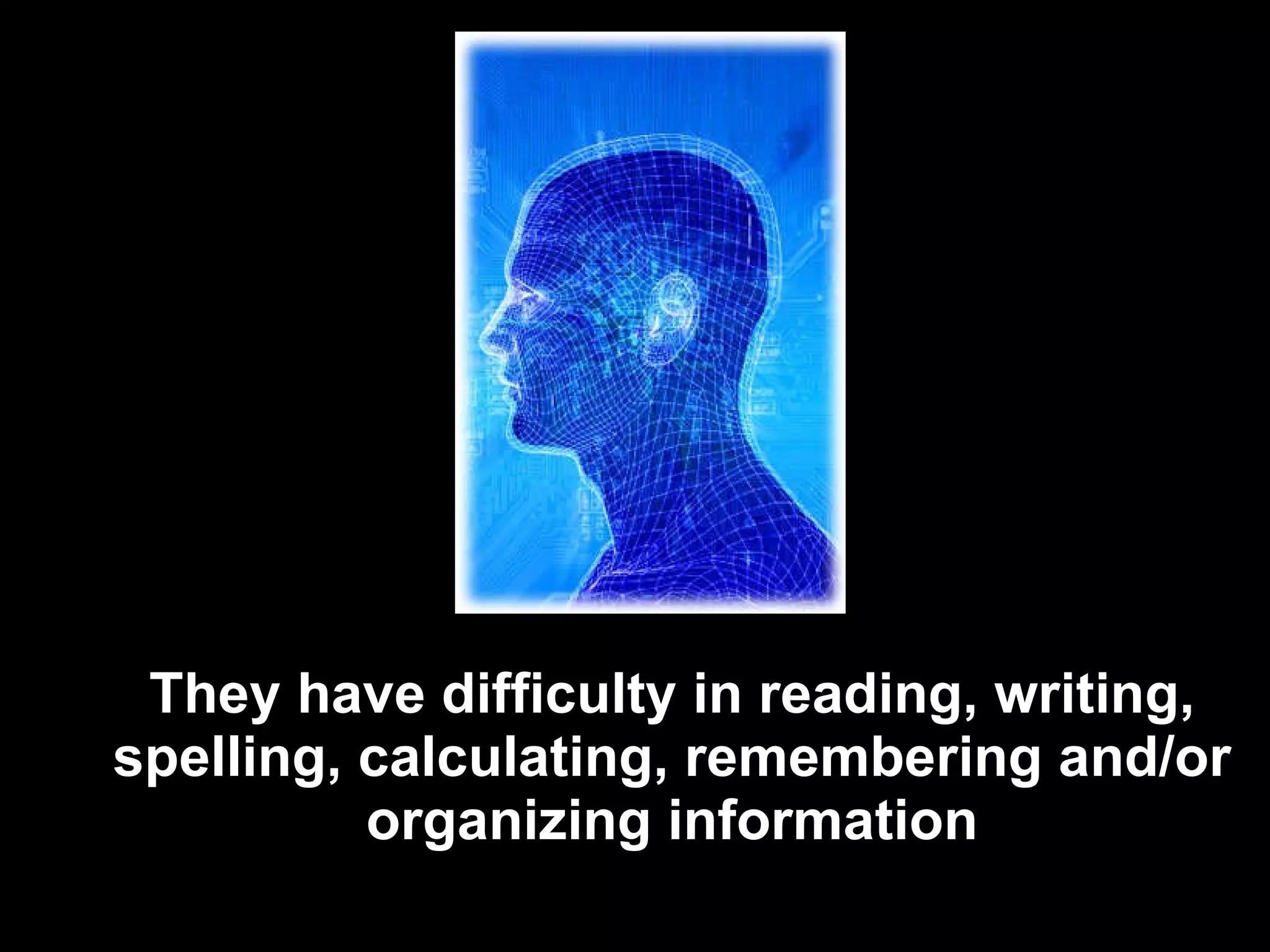
  20. They have difficulty in reading, writing, spelling, calculating, remembering and/or organizing information
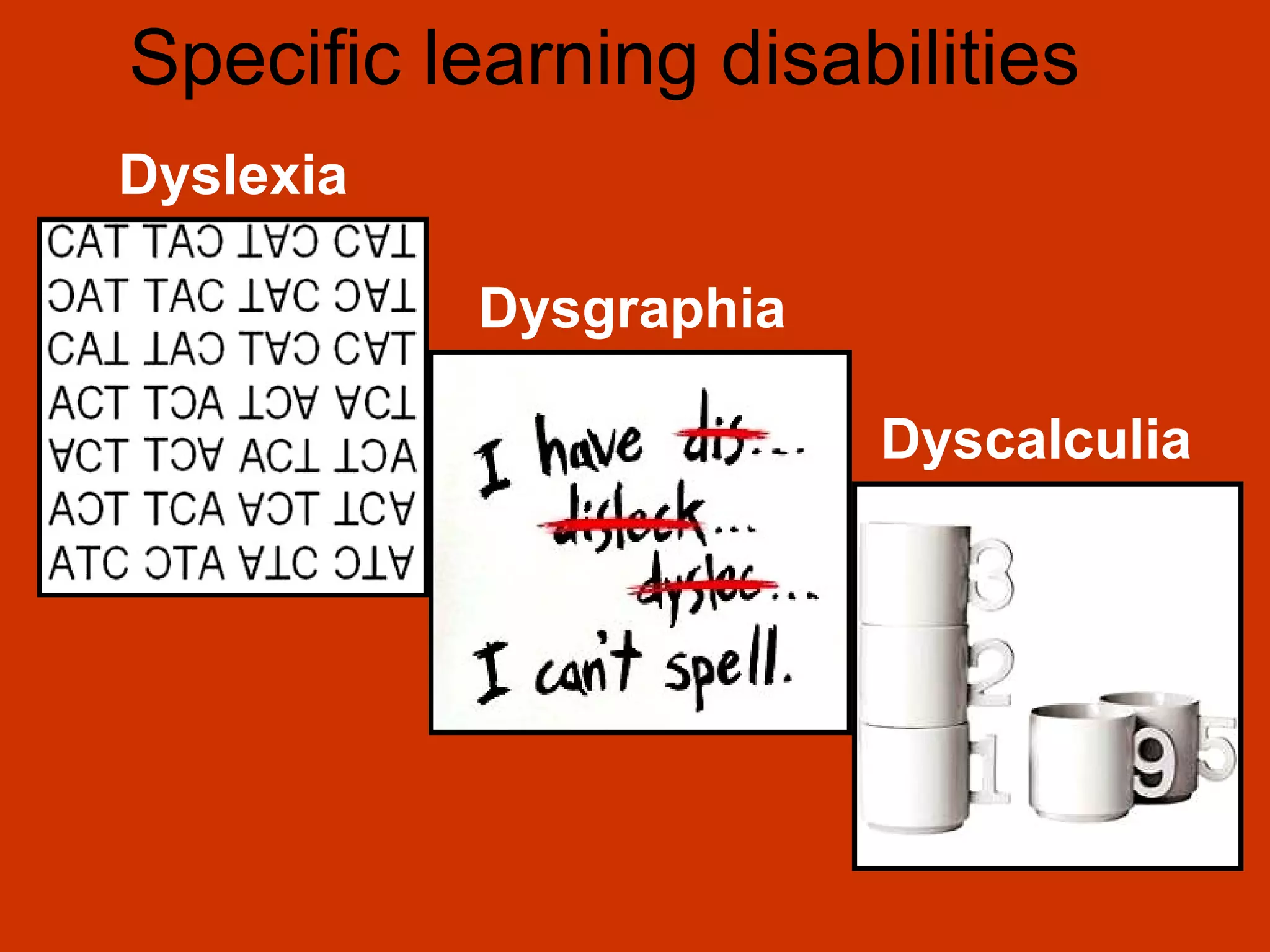
  21. Specific learning disabilities Dyslexia Dysgraphia Dyscalculia
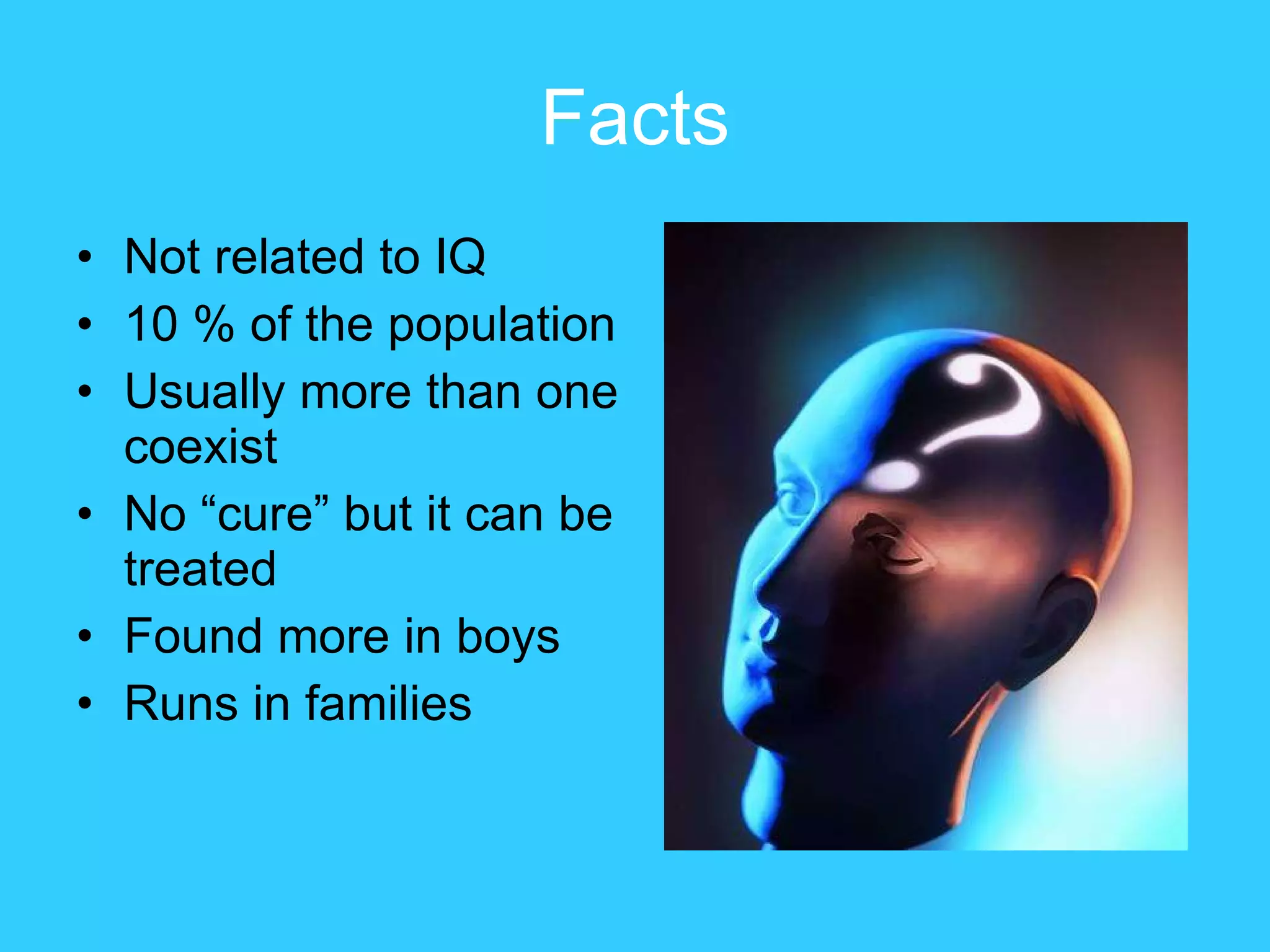
  22. Facts
    • Not related to IQ
    • 10 % of the population
    • Usually more than one coexist
    • No “cure” but it can be treated
    • Found more in boys
    • Runs in families
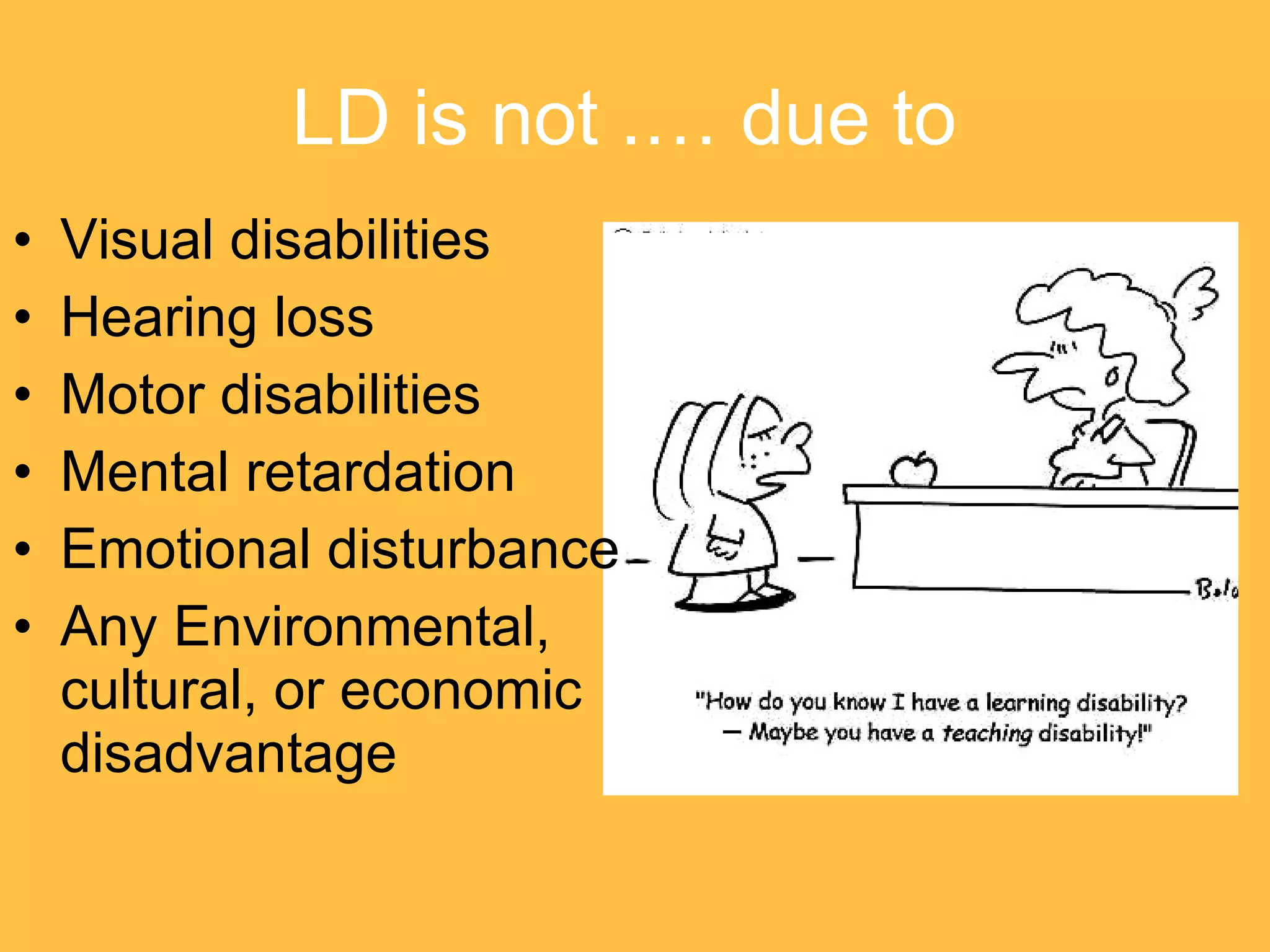
  23. LD is not .… due to
    • Visual disabilities
    • Hearing loss
    • Motor disabilities
    • Mental retardation
    • Emotional disturbance
    • Any Environmental, cultural, or economic disadvantage
  24. It is better to build children than to repair adults
  25.  
  26.  
  27.  
  28. Teachers Parents Doctors Self esteem Academics Life success (Timely intervention) (Early diagnosis) (Good involvement)
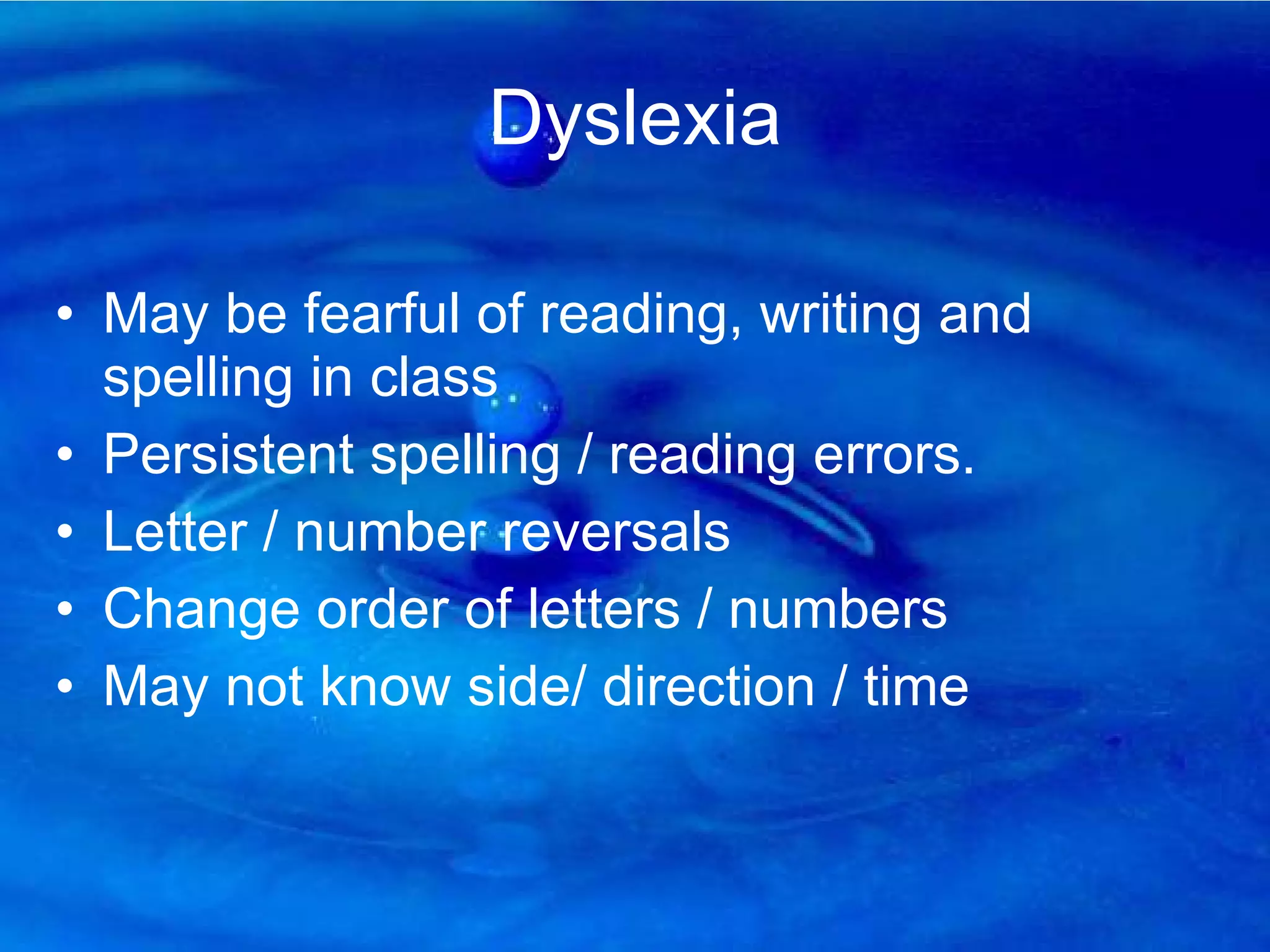
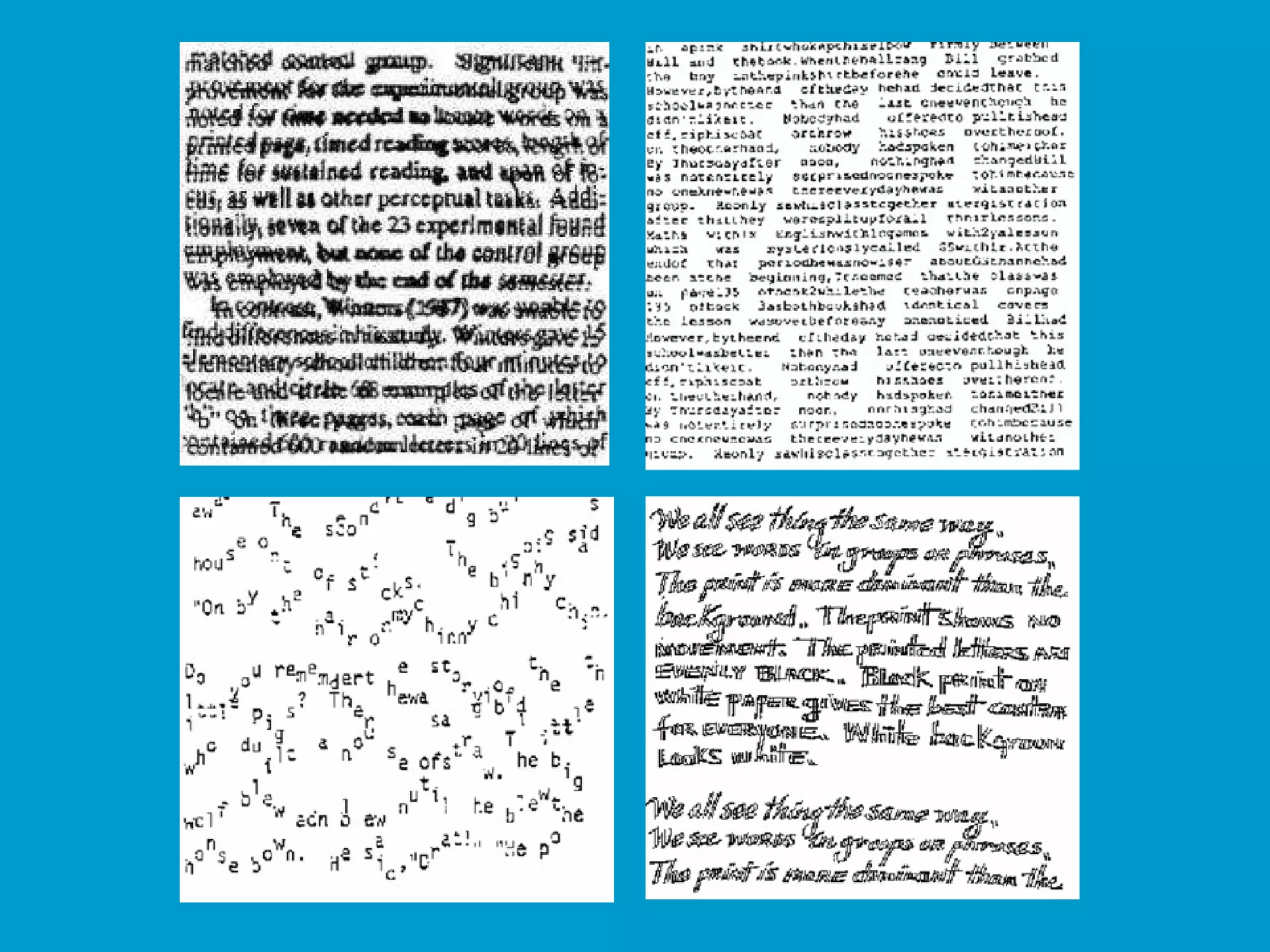
  29. Dyslexia
    • May be fearful of reading, writing and spelling in class
    • Persistent spelling / reading errors.
    • Letter / number reversals
    • Change order of letters / numbers
    • May not know side/ direction / time
  30.  
  31. Dysgraphia
    • Tight, awkward pencil grip and body position
    • Illegible handwriting
    • Avoid writing or drawing tasks
    • Unfinished or omitted words in sentences
    • Difficulty organizing thoughts on paper
    • Mostly associated with other disabilities
  32. Do not worry about your problems with mathematics, I assure you mine are far greater. –Albert Einstein
  33. Dyscalculia
    • Trouble counting and sequencing
    • Confuses time/side/ direction
    • Poor handling of money
    • Forgets phone numbers, maps etc
    • Can’t grasp Quantity concepts
    • Always anxious about Algebra/geometry
  34. TIPS AND STRATEGIES 1.Change for better 2.Best classroom practices 3.Accommodations
  35. Change your attitude The biggest disease today is not tuberculosis or leprosy but it is feeling of being unwanted -Mother Teresa
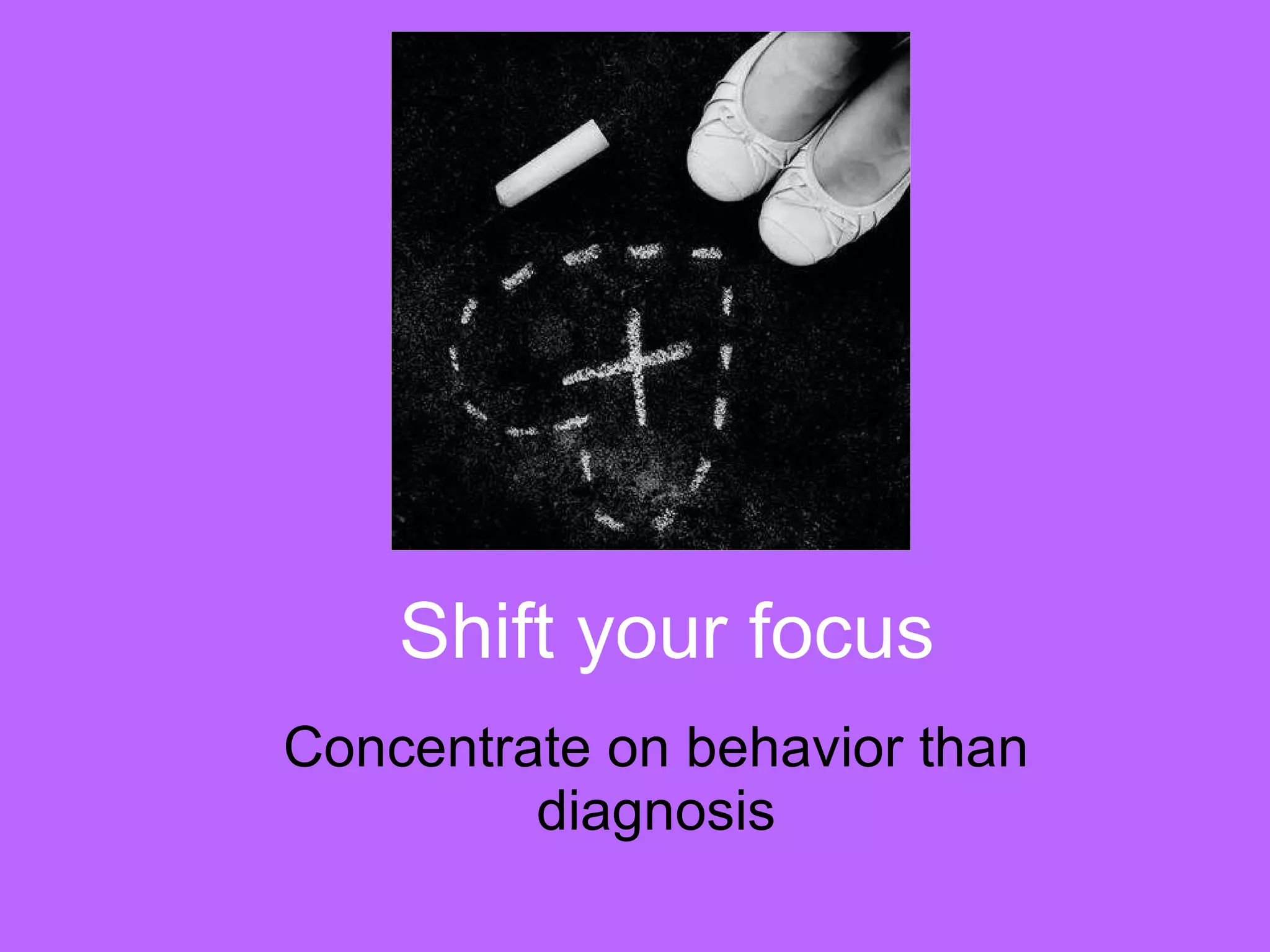
  36. Shift your focus Concentrate on behavior than diagnosis
  37. Always be hopeful I’m looking for a lot of men with an infinite capacity for not knowing what cannot be done -Henry ford
  38. Preserve Self Esteem Self esteem is the way one feels about oneself
  39. Children learn what they live Praise-they learn to appreciate Ridicule-they learn to be shy Encouragement-they learn to like themselves Criticism-they learn to condemn Tolerance-they learn to be patient Acceptance-they learn to find love in this world.
  40. Have patience Do not expect a “breakthrough” Start by doing what is necessary, then what is possible and suddenly, you are doing the impossible. -St Francis Assisi
  41. TIPS AND STRATEGIES 1.Change for better 2.Best classroom practices 3.Accommodations
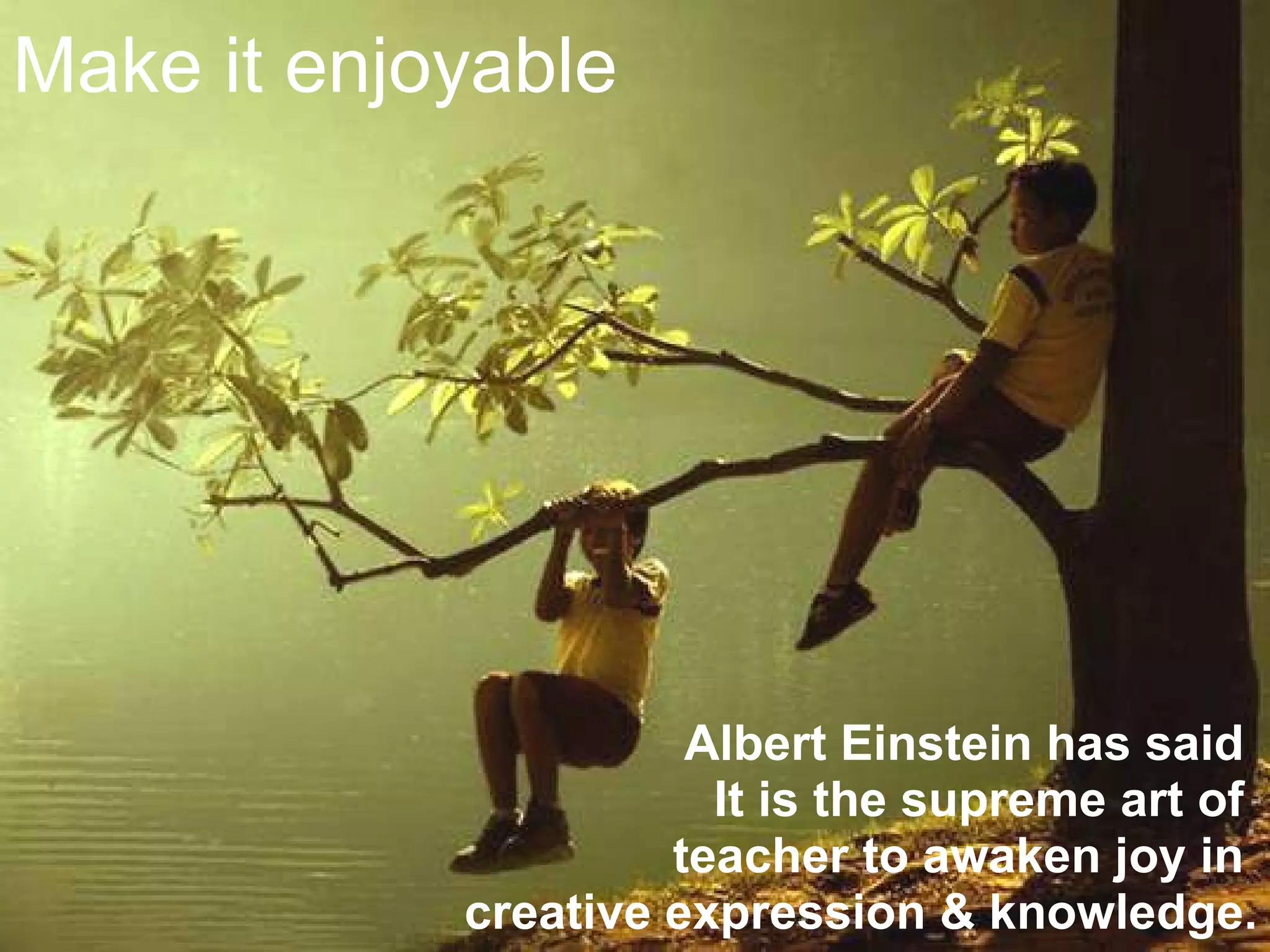
  42. Make it enjoyable Albert Einstein has said It is the supreme art of teacher to awaken joy in creative expression & knowledge.
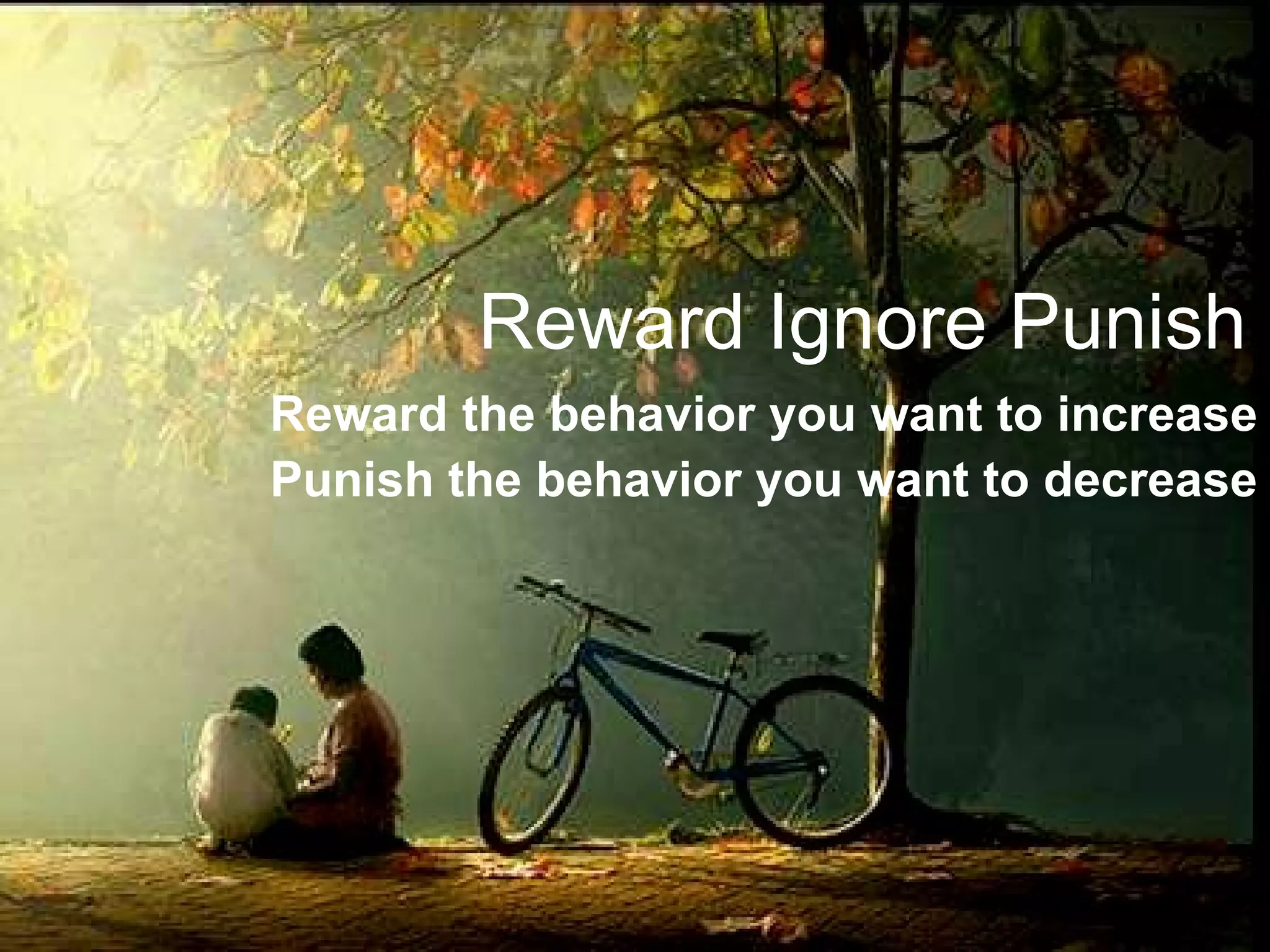
  43. Reward the behavior you want to increase Punish the behavior you want to decrease Reward Ignore Punish
  44. Small is good Life is hard ;by the yard, But by the inch; it is a cinch -Gean Gordon
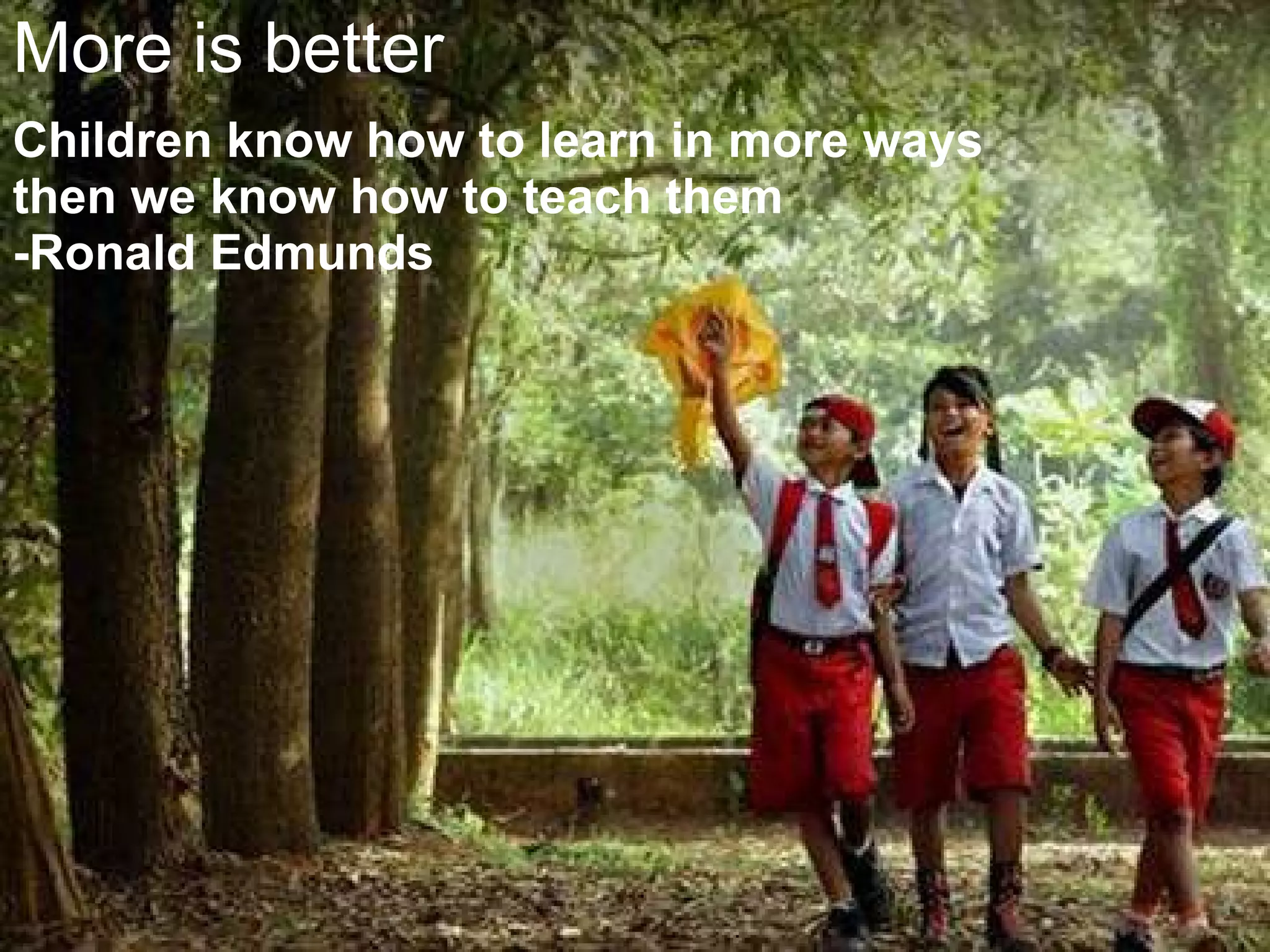
  45. More is better Children know how to learn in more ways then we know how to teach them -Ronald Edmunds
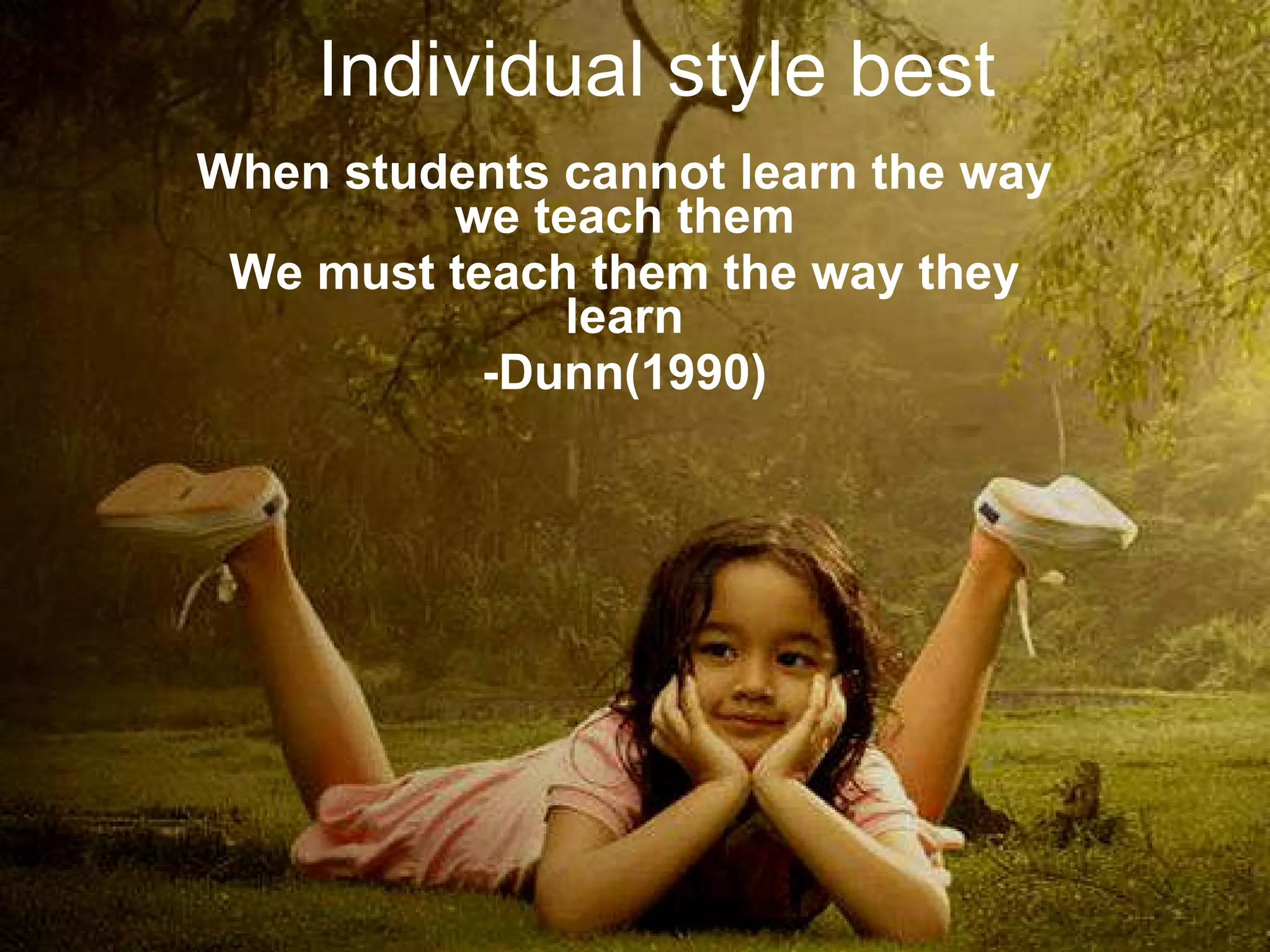
  46. Individual style best When students cannot learn the way we teach them We must teach them the way they learn -Dunn(1990)
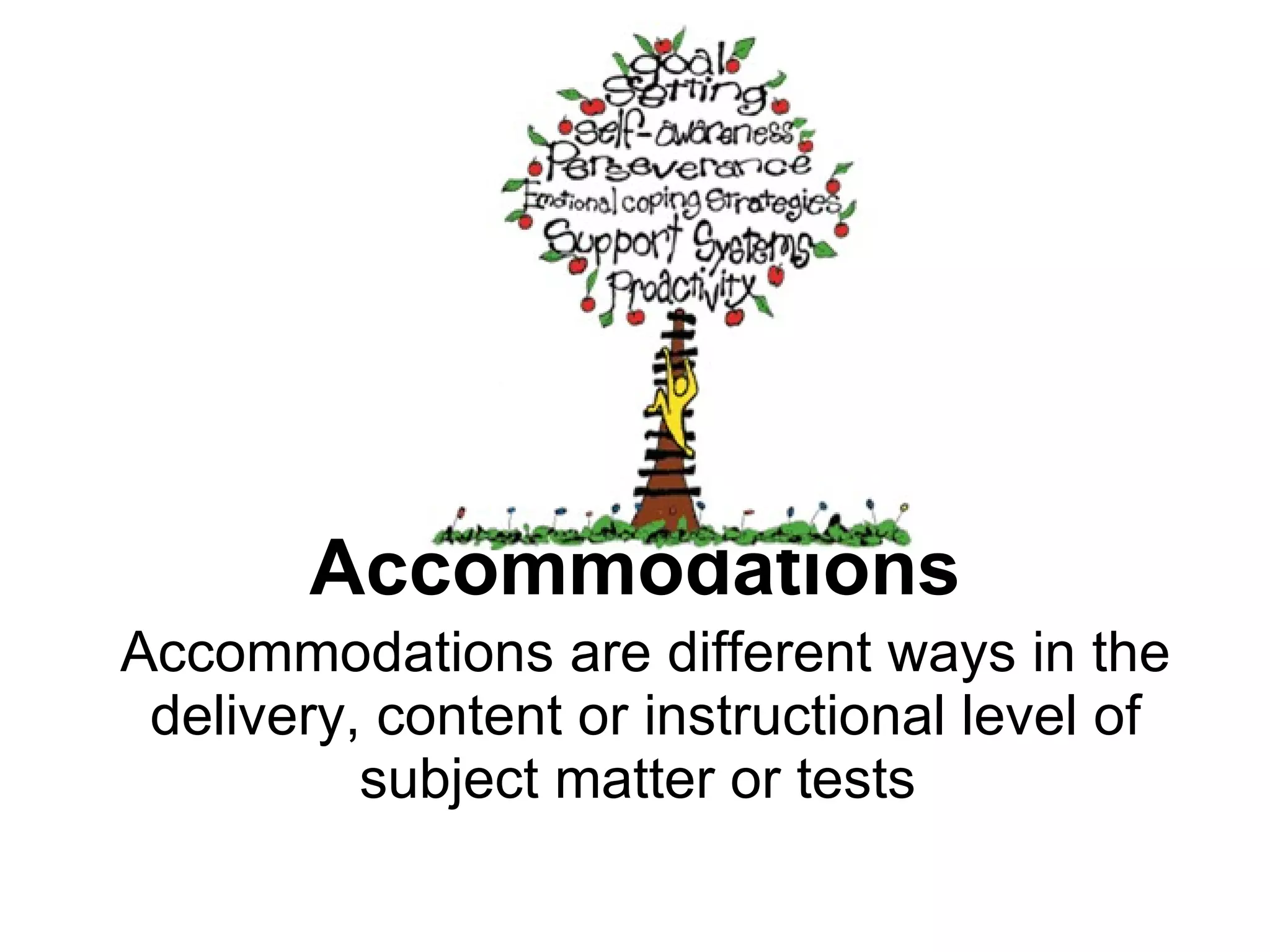
  47. Accommodations Accommodations are different ways in the delivery, content or instructional level of subject matter or tests
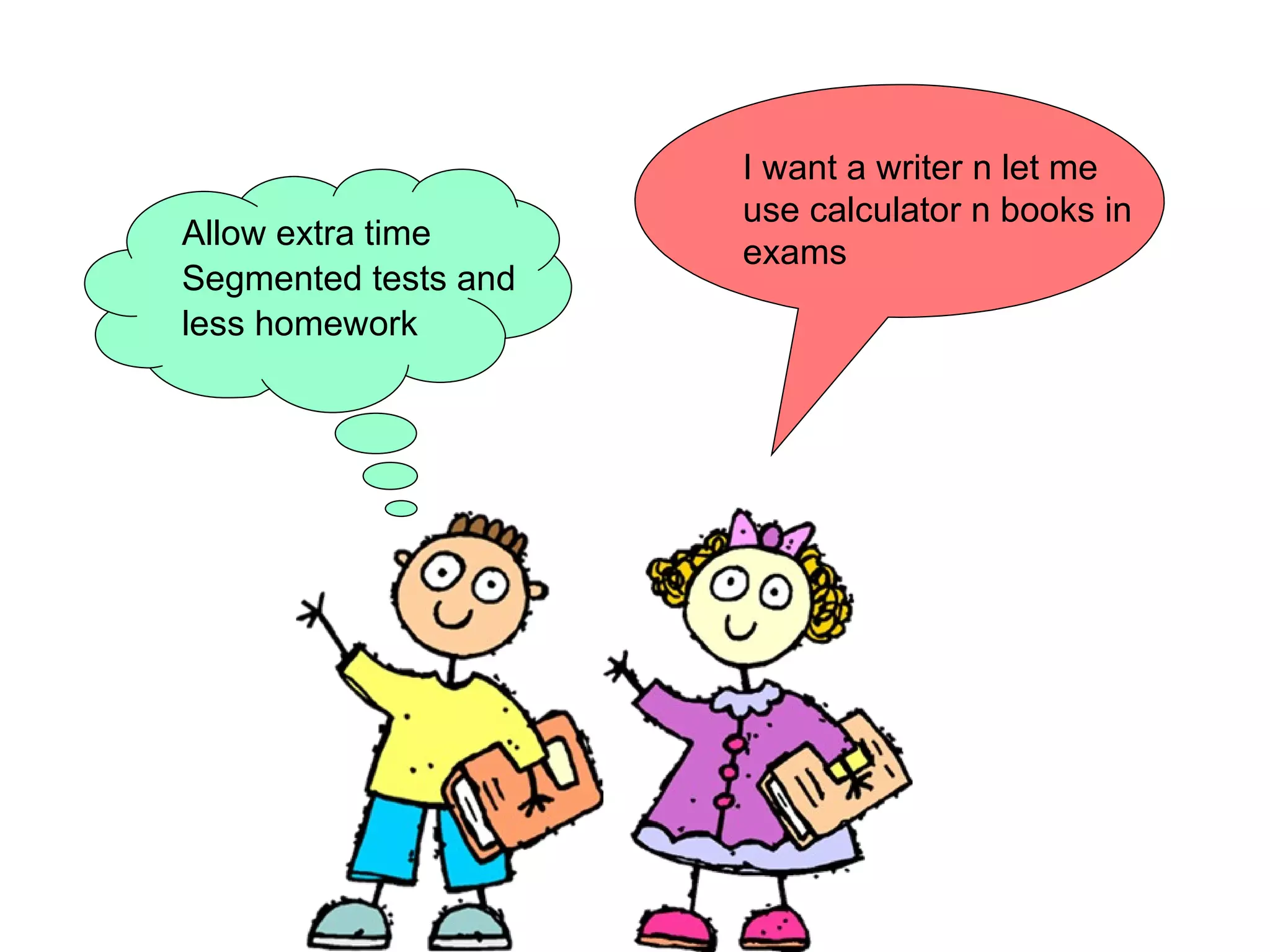
  48. Allow extra time Segmented tests and less homework I want a writer n let me use calculator n books in exams
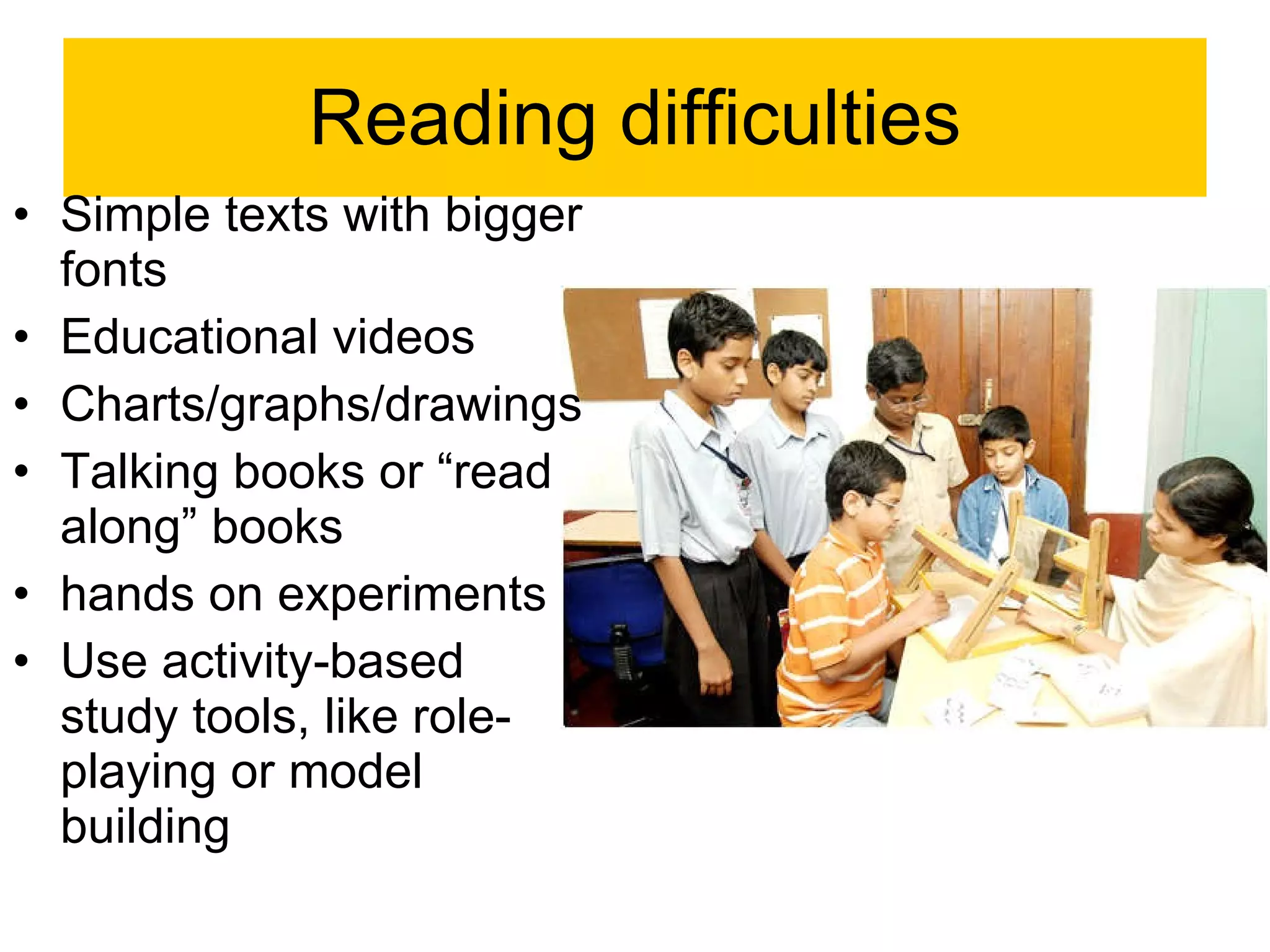
  49. Reading difficulties
    • Simple texts with bigger fonts
    • Educational videos
    • Charts/graphs/drawings
    • Talking books or “read along” books
    • hands on experiments
    • Use activity-based study tools, like role-playing or model building
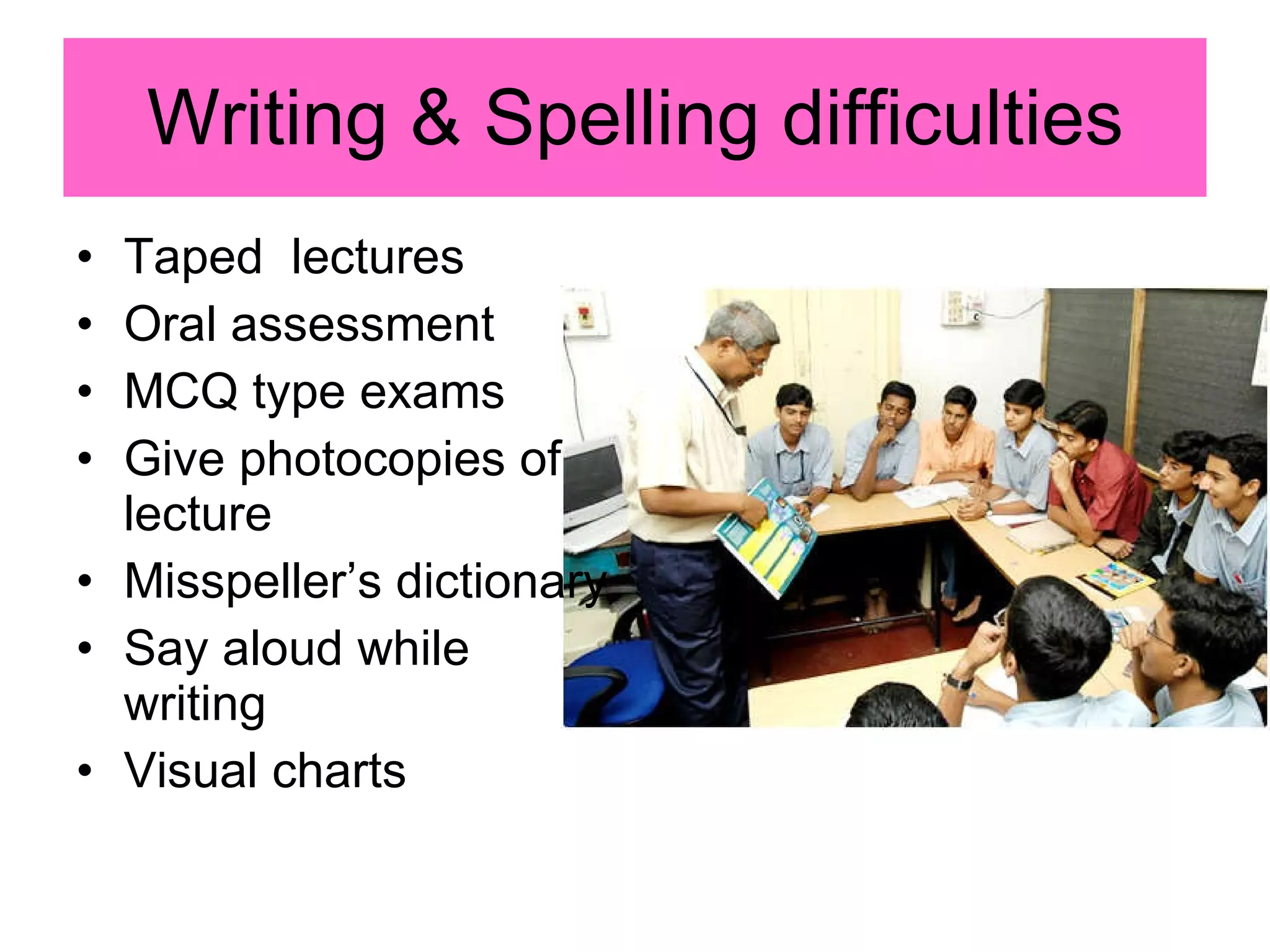
  50. Writing & Spelling difficulties
    • Taped lectures
    • Oral assessment
    • MCQ type exams
    • Give photocopies of lecture
    • Misspeller’s dictionary
    • Say aloud while writing
    • Visual charts
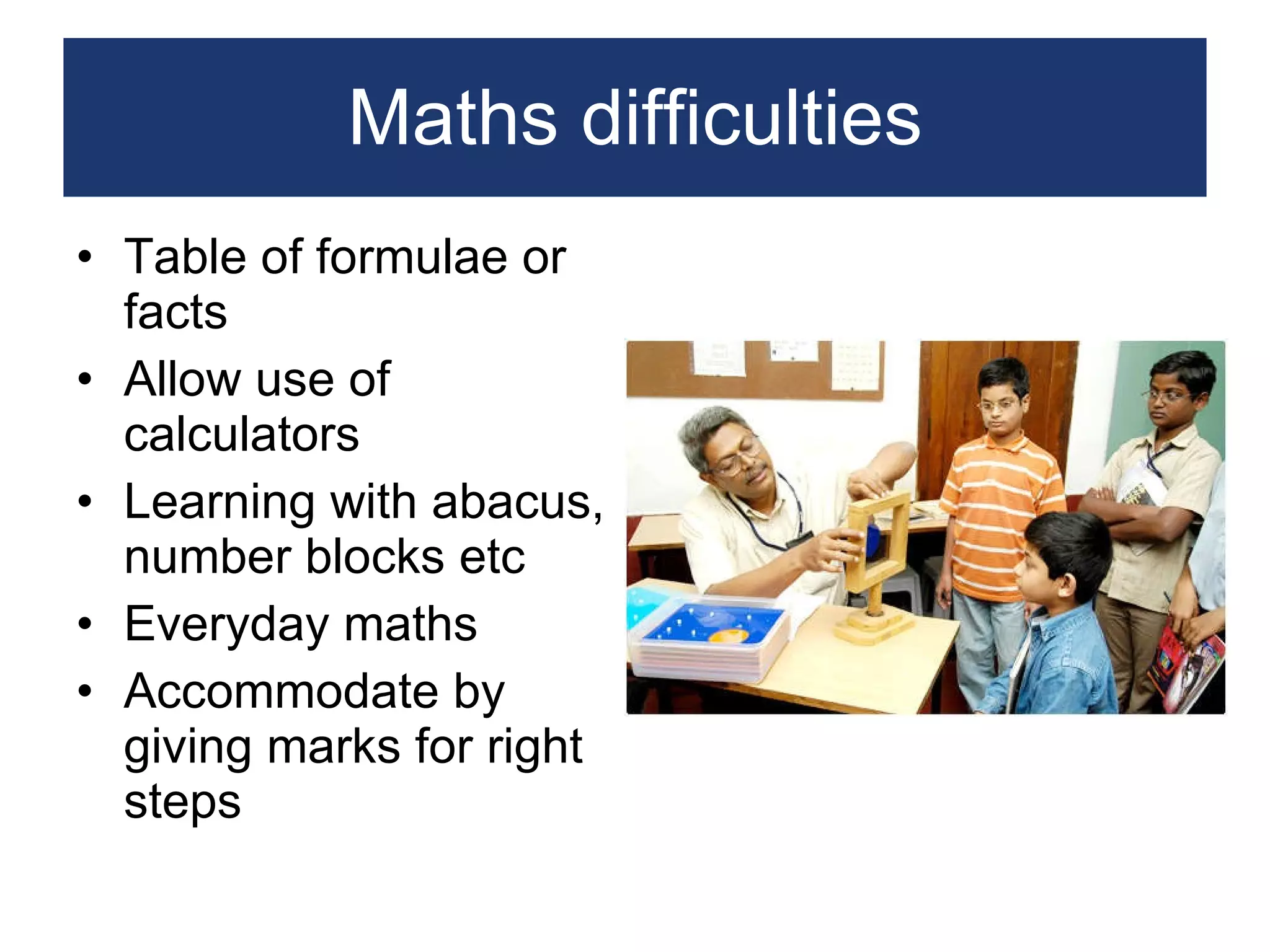
  51. Maths difficulties
    • Table of formulae or facts
    • Allow use of calculators
    • Learning with abacus, number blocks etc
    • Everyday maths
    • Accommodate by giving marks for right steps
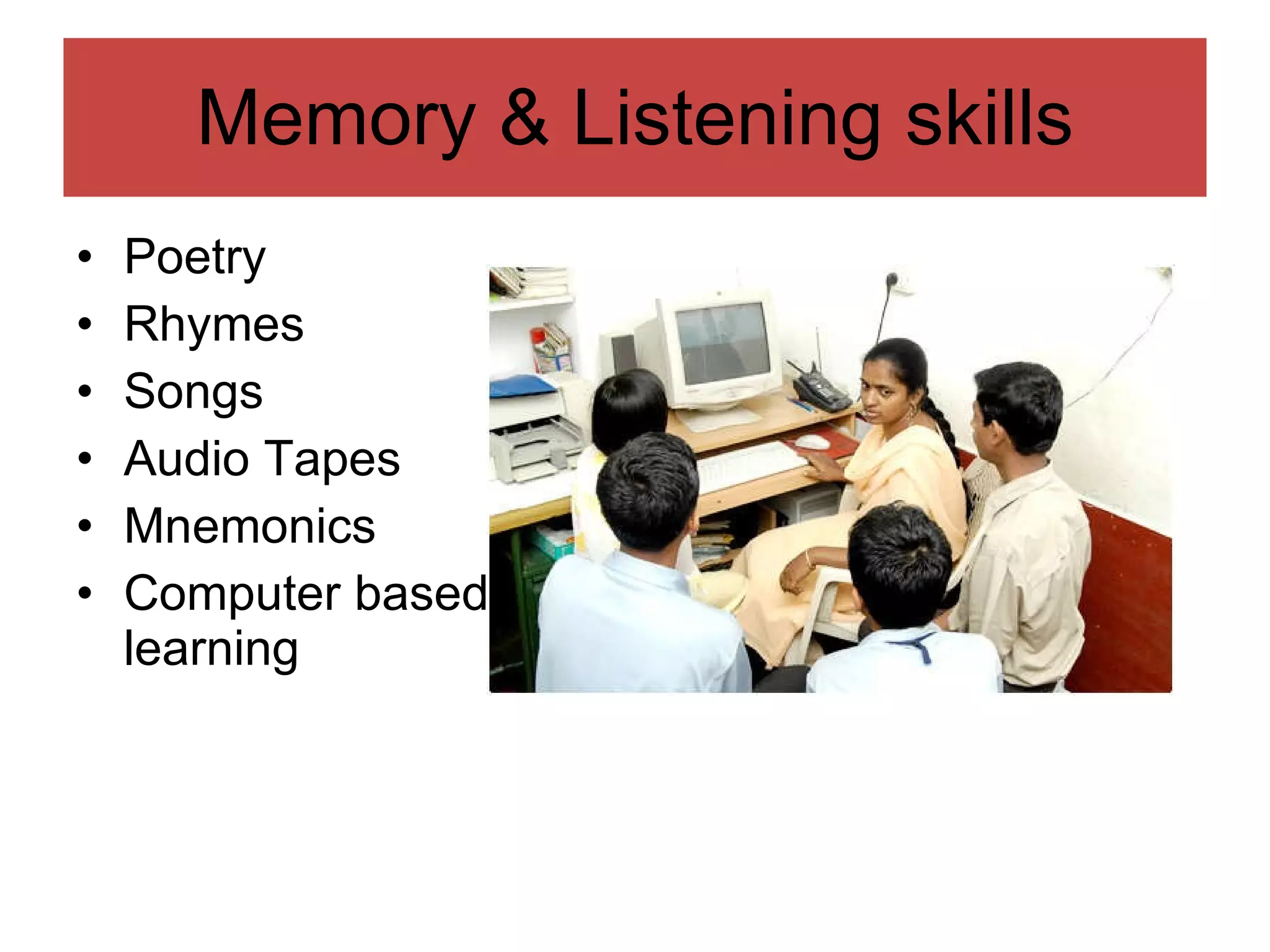
  52. Memory & Listening skills
    • Poetry
    • Rhymes
    • Songs
    • Audio Tapes
    • Mnemonics
    • Computer based learning
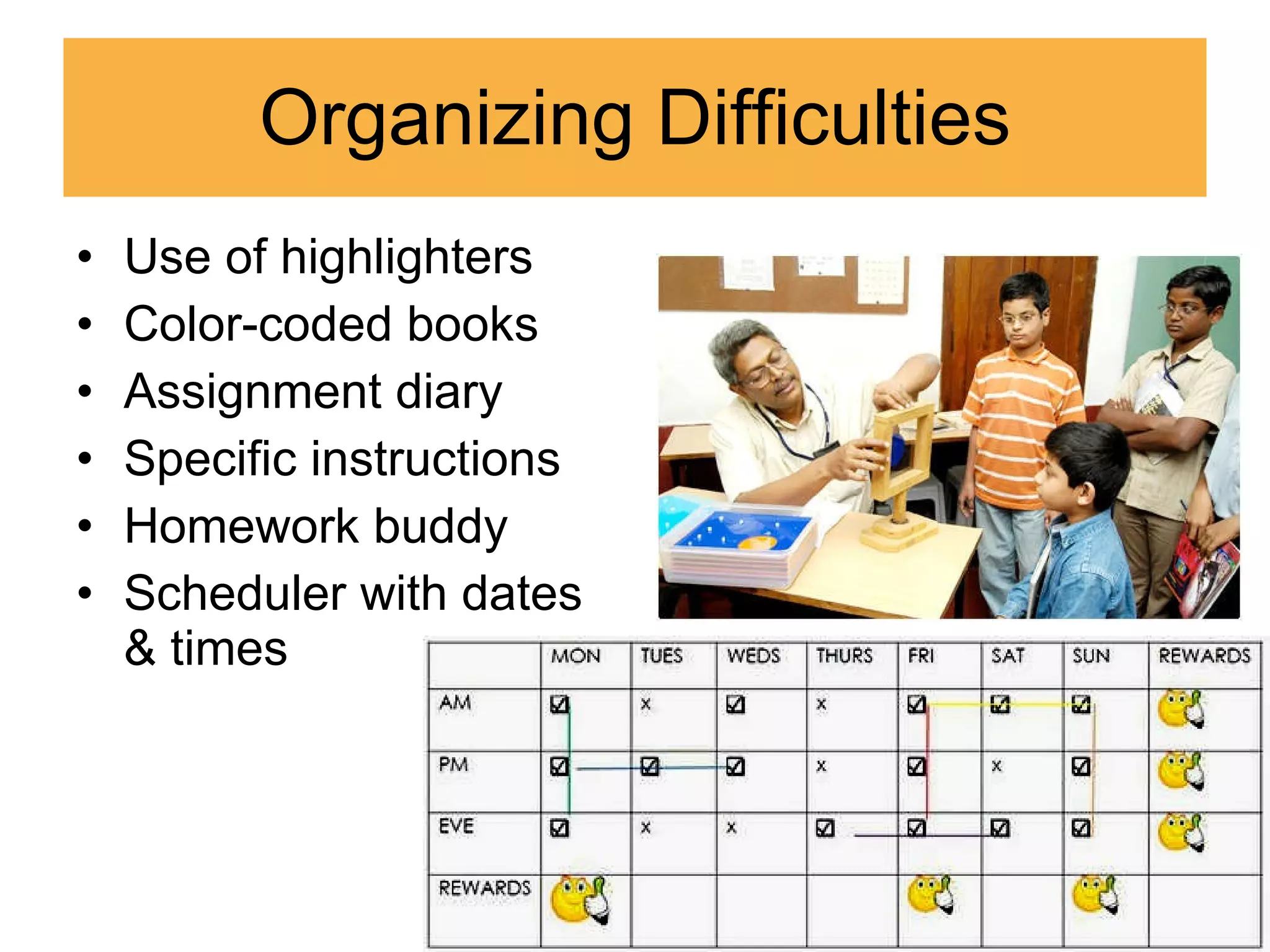
  53. Organizing Difficulties
    • Use of highlighters
    • Color-coded books
    • Assignment diary
    • Specific instructions
    • Homework buddy
    • Scheduler with dates & times
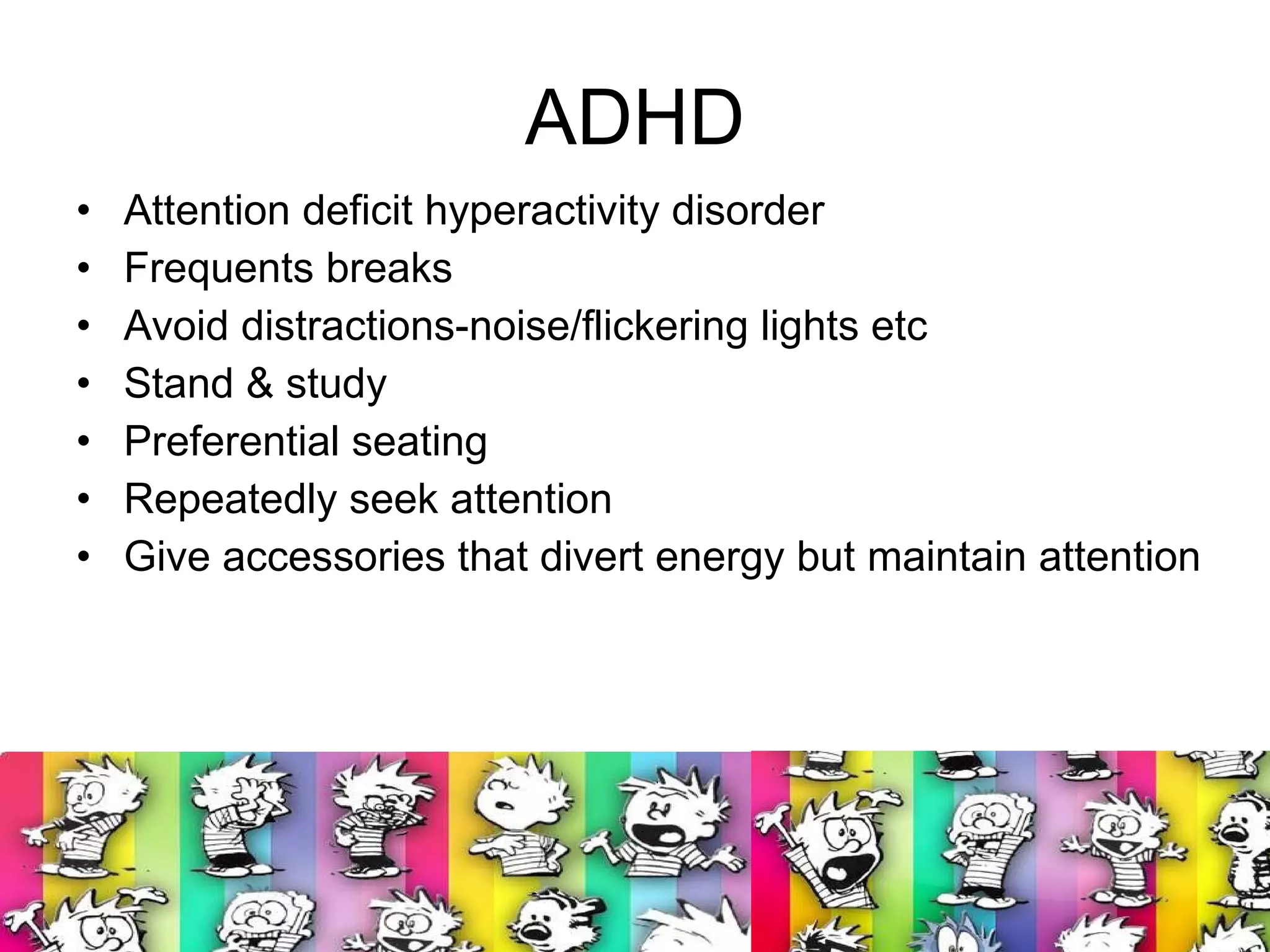
  54. ADHD
    • Attention deficit hyperactivity disorder
    • Frequents breaks
    • Avoid distractions-noise/flickering lights etc
    • Stand & study
    • Preferential seating
    • Repeatedly seek attention
    • Give accessories that divert energy but maintain attention
  55. Autistic Spectrum disorders
    • Difficulty in Language & expression
    • Use visual aids
    • Visual time clock
    • Pictures/ Diagrams/illustrations
    • Control disruptive behaviors by isolation/time out/make them stand in corner
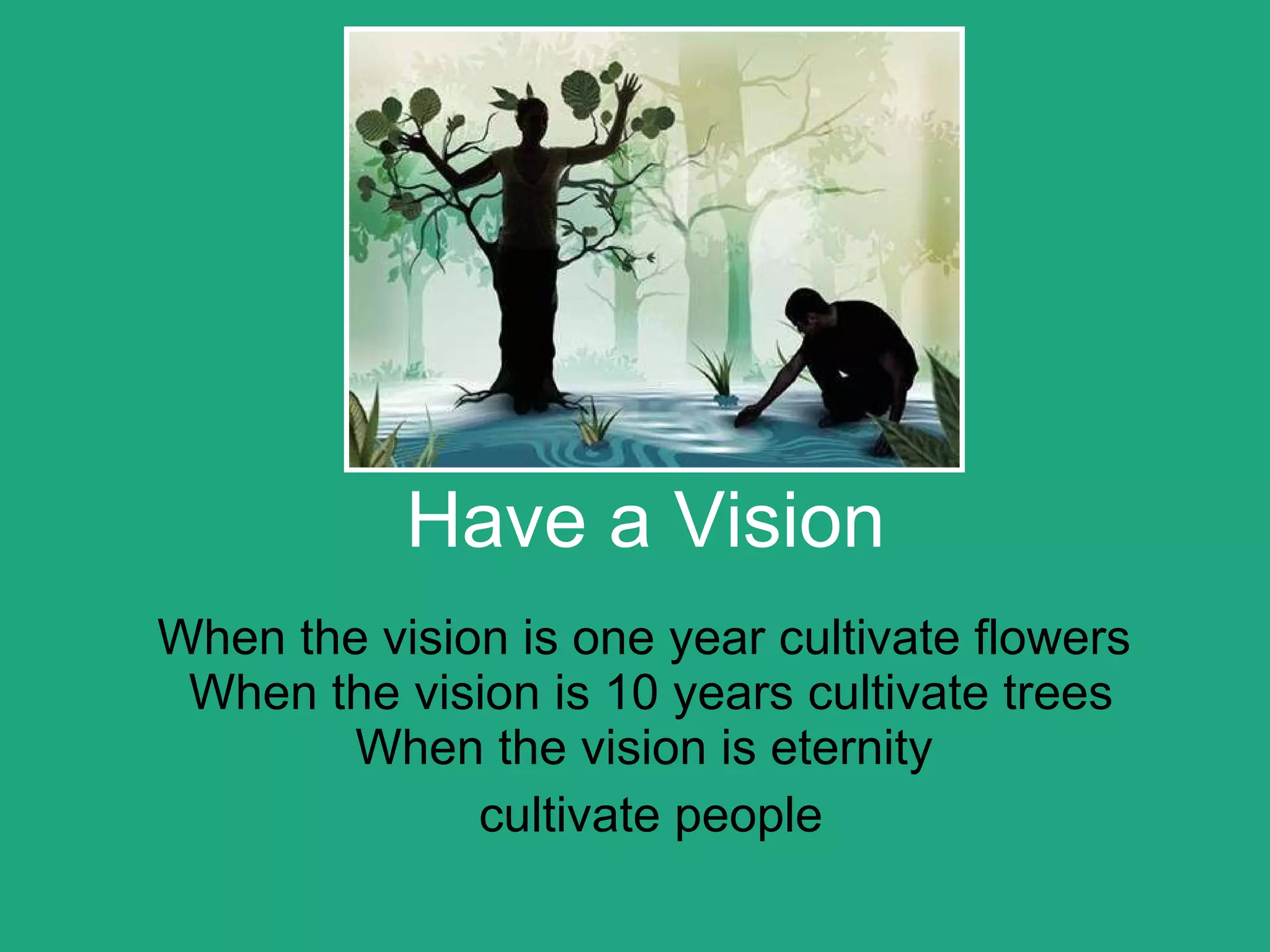
  56. Have a Vision When the vision is one year cultivate flowers When the vision is 10 years cultivate trees When the vision is eternity cultivate people
  57. Don’t ever give up because every student can learn
  58. Thank you!!

+ drtrupti pateldrtrupti patel, 2 months ago

custom

629 views, 10 favs, 3 embeds more stats

How to handle kids with LD at school?

More info about this document

© All Rights Reserved

Go to text version

  • Total Views 629
    • 623 on SlideShare
    • 6 from embeds
  • Comments 3
  • Favorites 10
  • Downloads 0
Most viewed embeds
  • 3 views on http://database4kids.blogspot.com
  • 2 views on http://philosophyrecycled.blogspot.com
  • 1 views on http://schoolchat.edublogs.org

more

All embeds
  • 3 views on http://database4kids.blogspot.com
  • 2 views on http://philosophyrecycled.blogspot.com
  • 1 views on http://schoolchat.edublogs.org

less

Flagged as inappropriate Flag as inappropriate
Flag as inappropriate

Select your reason for flagging this presentation as inappropriate. If needed, use the feedback form to let us know more details.

Cancel
File a copyright complaint
Having problems? Go to our helpdesk?

Categories