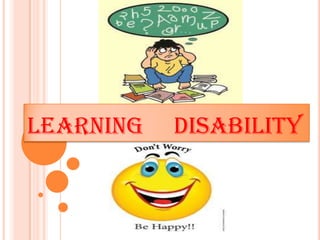
LEARNING   DISABILITY
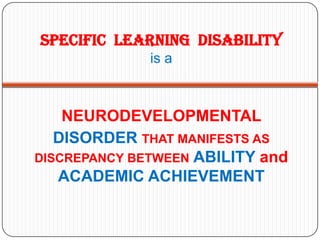
AGENDA
       1.INTRODUCTION


   2.WHAT IS SPECIFIC LEARNING
          DISABILITY ?


3. EARLY DIAGNOSIS AND PROCESS OF
             LEARNING
SPECIFIC LEARNING DISABILITY
              is a


    NEURODEVELOPMENTAL
   DISORDER THAT MANIFESTS AS
DISCREPANCY BETWEEN ABILITY and
   ACADEMIC ACHIEVEMENT
EARLY DIAGNOSIS
     SPECIAL LEARNING DISABILITY ARE NOT
          DIOGNISED TILL THEY ARE IN


1.2nd -3rd Standard or 7 to 8 years of age.
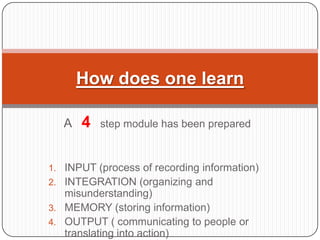
How does one learn

   A   4   step module has been prepared


1. INPUT (process of recording information)
2. INTEGRATION (organizing and
   misunderstanding)
3. MEMORY (storing information)
4. OUTPUT ( communicating to people or
   translating into action)
Creating an awareness of the problems
 faced by children with Special Learning
Disabilities and ensure that these children
continue their Education in the main
               stream school
A child who fails to get poor marks on school tests
   is always a source of anxiety for parents and
                      teachers.
We all know about the movie
   Tare Zameen Par
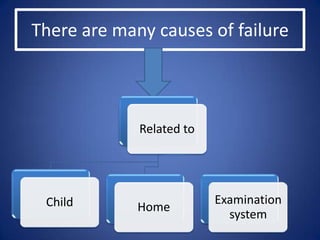
There are many causes of failure


             Related to


 Child                    Examination
             Home
                            system
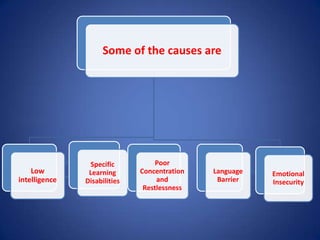
Some of the causes are


                Specific           Poor
    Low         Learning      Concentration   Language   Emotional
intelligence   Disabilities        and         Barrier   Insecurity
                               Restlessness
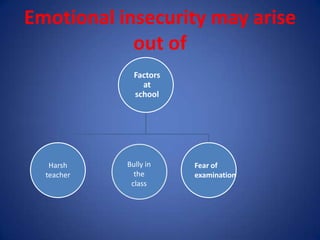
Emotional insecurity may arise
            out of
              Factors
                at
              school


   Harsh    Bully in    Fear of
  teacher     the       examination
             class
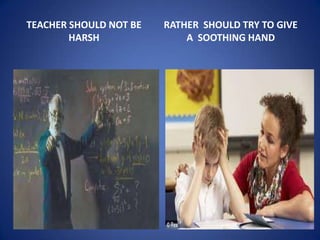
TEACHER SHOULD NOT BE   RATHER SHOULD TRY TO GIVE
        HARSH               A SOOTHING HAND
Some characteristics of children
     with learning disabilities
• Student learns a skill in a different way or at a
  different pace
• Student has difficulty processing information in
  particular ways
• Student has difficulty storing information either short
  term or long term
• Student has difficulty in the perception of
  information (letter or number reversal)
• Student has difficulty perceiving social situations
  (sees them differently)
A TEACHER SHOULD HAVE LOT OF
          PATIENCE
Speech or language disability
              defined:


• Communication disorder, like
  stuttering, impaired articulation, language
  impairment or voice impairment
What a teacher can do for students with
           learning disabilities
• Learn about the child and the learning disability
• Use multiple learning styles and multiple forms of
  communicating instructions
• Avoid lengthy directions
• Use strategies to help students remember
• Break down tasks into smaller steps
• Provide additional time for schoolwork and tests
• Allow the student with reading problems to use textbooks on
  tape or similar devices
• Allow the student with listening difficulties to borrow notes or
  use a tape recorder
• Allow the student with writing difficulties to use a computer
  with spell check, grammar checks, or speech recognition
• Teach organizational and study skills
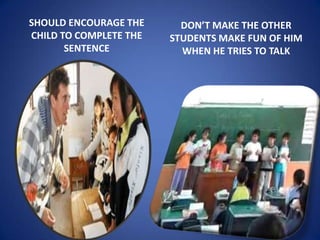
SHOULD ENCOURAGE THE      DON’T MAKE THE OTHER
CHILD TO COMPLETE THE   STUDENTS MAKE FUN OF HIM
       SENTENCE           WHEN HE TRIES TO TALK
Characteristics of speech or language
              disability

• Mispronouncing syllables or whole words
• Voice disorder, including abnormal
  pits, loudness or voice quality
• Fluency
  disorder, pauses, hesitations, repetitions
• Stutter
• Reluctance to speak
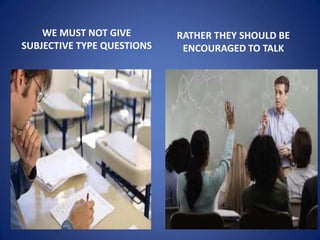
WE MUST NOT GIVE        RATHER THEY SHOULD BE
SUBJECTIVE TYPE QUESTIONS    ENCOURAGED TO TALK
What the teacher can do for speech
      and language disorders

• Minimize the pressure to perform verbally and
  reduce student’s anxiety
• Use nonverbal listening skills such as eye contact and
  facial expressions
• Let the student finish talking
• Don’t finish the student’s sentences
• Do not allow other students to make fun of the
  student
• Provide positive feedback for all communication
  efforts
A TEACHER SHOULD NOT STRESS
MUCH ON METHODICAL STUDIES
RATHER ON FUNCTIONAL STUDIES
Characteristics of students with
    other health impairments:

• Difficulty staying on task or paying attention to
  important aspect for a long period of time
• Impulsive
• Need to move around frequently
• Easily distracted
• Problems breathing
• Energetic
• Difficulty paying attention when not feeling well
What the teacher can do for students
  with other health impairments

• Provide many opportunities for movement
• Keep lecture and written activities short
• Use visuals during teaching centered activities
• Provide fidgets (ball, paperclip)
• Provide positive reinforcement
• Provide organizers away from desk for items student is not
  currently using
• Use timers
• Use highlighters to color code instructions and key parts of
  assignments
What the teacher can do for
      students with Emotional
            disturbances
• Provide positive recognition for appropriate behavior
• Set clear limits so student knows what is expected
• Provide posted rules/expectations and teach the student
  what they mean and provide reminders
• Follow the student’s behavioral intervention plan (IEP)
• Develop a non-verbal cueing system to assist the student
• Provide assigned seating
• Start each day new…don’t hold grudges
Learning     disability

Learning disability

  • 1.
    LEARNING DISABILITY
  • 2.
    AGENDA 1.INTRODUCTION 2.WHAT IS SPECIFIC LEARNING DISABILITY ? 3. EARLY DIAGNOSIS AND PROCESS OF LEARNING
  • 3.
    SPECIFIC LEARNING DISABILITY is a NEURODEVELOPMENTAL DISORDER THAT MANIFESTS AS DISCREPANCY BETWEEN ABILITY and ACADEMIC ACHIEVEMENT
  • 4.
    EARLY DIAGNOSIS SPECIAL LEARNING DISABILITY ARE NOT DIOGNISED TILL THEY ARE IN 1.2nd -3rd Standard or 7 to 8 years of age.
  • 5.
    How does onelearn A 4 step module has been prepared 1. INPUT (process of recording information) 2. INTEGRATION (organizing and misunderstanding) 3. MEMORY (storing information) 4. OUTPUT ( communicating to people or translating into action)
  • 6.
    Creating an awarenessof the problems faced by children with Special Learning Disabilities and ensure that these children continue their Education in the main stream school
  • 7.
    A child whofails to get poor marks on school tests is always a source of anxiety for parents and teachers.
  • 8.
    We all knowabout the movie Tare Zameen Par
  • 9.
    There are manycauses of failure Related to Child Examination Home system
  • 10.
    Some of thecauses are Specific Poor Low Learning Concentration Language Emotional intelligence Disabilities and Barrier Insecurity Restlessness
  • 11.
    Emotional insecurity mayarise out of Factors at school Harsh Bully in Fear of teacher the examination class
  • 12.
    TEACHER SHOULD NOTBE RATHER SHOULD TRY TO GIVE HARSH A SOOTHING HAND
  • 13.
    Some characteristics ofchildren with learning disabilities • Student learns a skill in a different way or at a different pace • Student has difficulty processing information in particular ways • Student has difficulty storing information either short term or long term • Student has difficulty in the perception of information (letter or number reversal) • Student has difficulty perceiving social situations (sees them differently)
  • 14.
    A TEACHER SHOULDHAVE LOT OF PATIENCE
  • 15.
    Speech or languagedisability defined: • Communication disorder, like stuttering, impaired articulation, language impairment or voice impairment
  • 16.
    What a teachercan do for students with learning disabilities • Learn about the child and the learning disability • Use multiple learning styles and multiple forms of communicating instructions • Avoid lengthy directions • Use strategies to help students remember • Break down tasks into smaller steps • Provide additional time for schoolwork and tests • Allow the student with reading problems to use textbooks on tape or similar devices • Allow the student with listening difficulties to borrow notes or use a tape recorder • Allow the student with writing difficulties to use a computer with spell check, grammar checks, or speech recognition • Teach organizational and study skills
  • 17.
    SHOULD ENCOURAGE THE DON’T MAKE THE OTHER CHILD TO COMPLETE THE STUDENTS MAKE FUN OF HIM SENTENCE WHEN HE TRIES TO TALK
  • 18.
    Characteristics of speechor language disability • Mispronouncing syllables or whole words • Voice disorder, including abnormal pits, loudness or voice quality • Fluency disorder, pauses, hesitations, repetitions • Stutter • Reluctance to speak
  • 19.
    WE MUST NOTGIVE RATHER THEY SHOULD BE SUBJECTIVE TYPE QUESTIONS ENCOURAGED TO TALK
  • 20.
    What the teachercan do for speech and language disorders • Minimize the pressure to perform verbally and reduce student’s anxiety • Use nonverbal listening skills such as eye contact and facial expressions • Let the student finish talking • Don’t finish the student’s sentences • Do not allow other students to make fun of the student • Provide positive feedback for all communication efforts
  • 21.
    A TEACHER SHOULDNOT STRESS MUCH ON METHODICAL STUDIES RATHER ON FUNCTIONAL STUDIES
  • 22.
    Characteristics of studentswith other health impairments: • Difficulty staying on task or paying attention to important aspect for a long period of time • Impulsive • Need to move around frequently • Easily distracted • Problems breathing • Energetic • Difficulty paying attention when not feeling well
  • 23.
    What the teachercan do for students with other health impairments • Provide many opportunities for movement • Keep lecture and written activities short • Use visuals during teaching centered activities • Provide fidgets (ball, paperclip) • Provide positive reinforcement • Provide organizers away from desk for items student is not currently using • Use timers • Use highlighters to color code instructions and key parts of assignments
  • 24.
    What the teachercan do for students with Emotional disturbances • Provide positive recognition for appropriate behavior • Set clear limits so student knows what is expected • Provide posted rules/expectations and teach the student what they mean and provide reminders • Follow the student’s behavioral intervention plan (IEP) • Develop a non-verbal cueing system to assist the student • Provide assigned seating • Start each day new…don’t hold grudges