

Dr. Chase Hayden, DC, QN
About Dr. Chase
ž Owner and    Doctor at The Hayden
  Institute: For Health, Nutrition, and
  Rehabilitation
ž Board Certified Chiropractor
ž Only Certified Quantum Neurologist in
  Houston
ž Specializes in chronic conditions and
  hormone imbalance
ALL Chronic Health conditions
         have some common threads
Thyroid Conditions                        Oxygen Deficit
Insulin Resistance (Metabolic Syndrome)
                                          Metabolic Imbalances:
Fibromyalgia
Menopause/Female Hormone Imbalance            1. Anemia
Vertigo                                       2. Protein/Fatty Acid Metabolism
Sciatica                                      3. Blood Sugar Imbalances
Chronic Fatigue Syndrome                      4. Hormone Imbalances
Peripheral Neuropathy                                  Cortisol (Adrenal)
Rheumatoid Arthritis                                   Thyroid
Chronic Neck/Back Pain                        5. Immune Imbalance
Stenosis                                               Bacterial, Viral, Parasitic
Insomnia
                                                       Auto-immune Activity
Crohn s Disease
Celiac Disease                            Food Sensitivities
PCOS/ Infertility                         Nervous System Imbalances
Migraine/Chronic Headaches                    1. Chemical/Metal Toxicity
ADD/ADHD/ Spectrum Disorders                  2. Neurological Weakness
Etc.
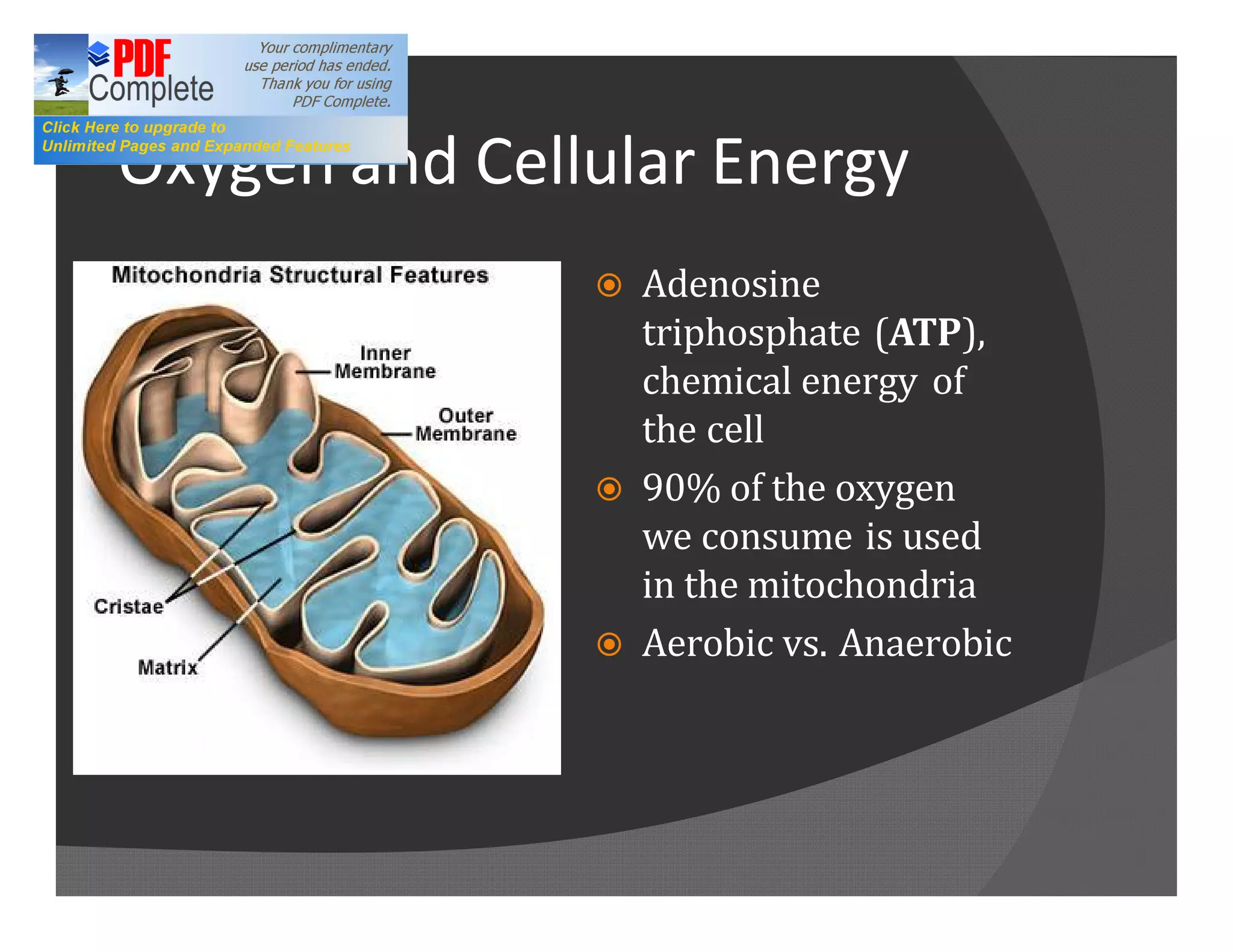
Oxygen and Cellular Energy
               ž Adenosine
                 triphosphate (ATP),
                 chemical energy of
                 the cell
               ž 90% of the oxygen
                 we consume is used
                 in the mitochondria
               ž Aerobic vs. Anaerobic
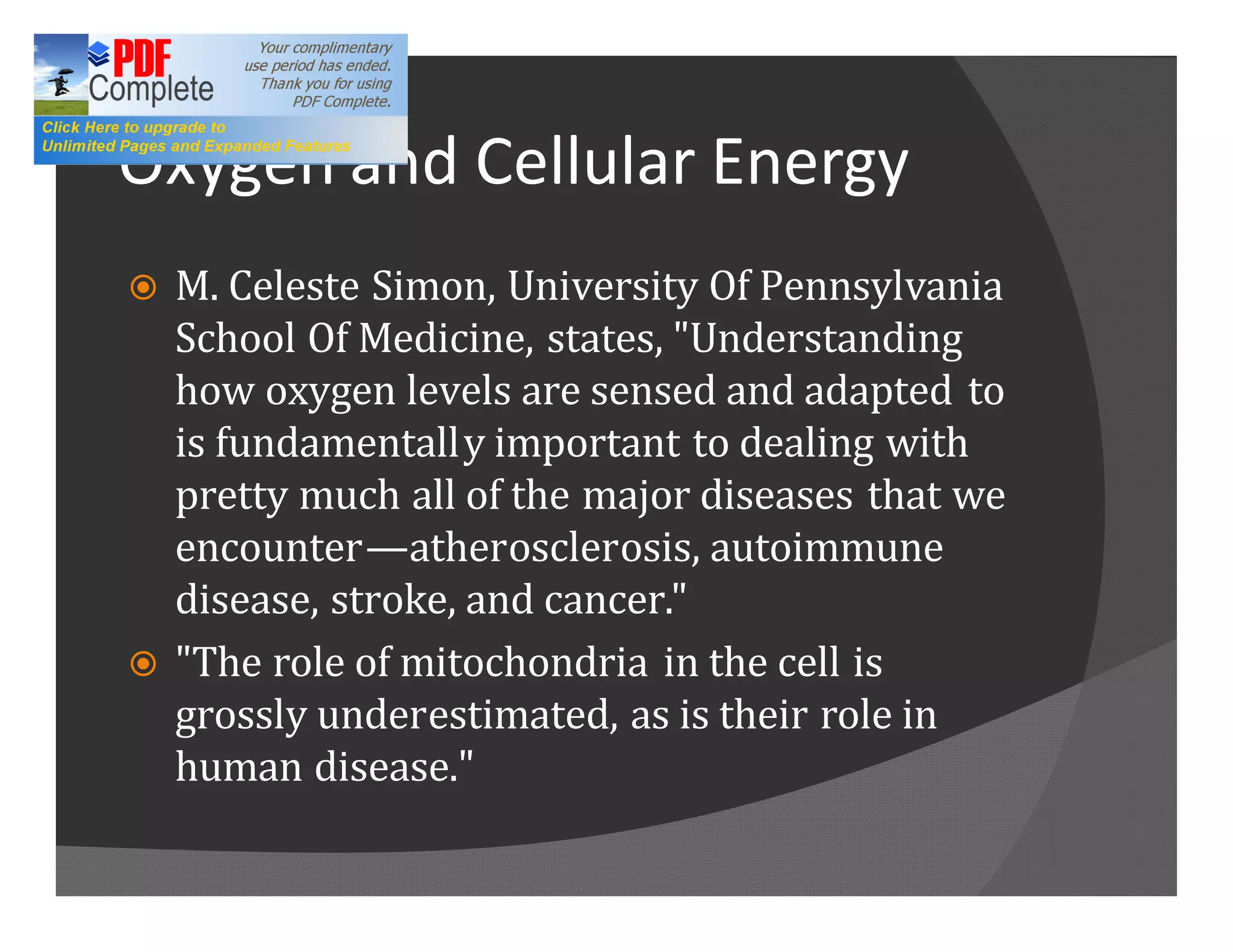
Oxygen and Cellular Energy
ž   M. Celeste Simon, University Of Pennsylvania
    School Of Medicine, states, "Understanding
    how oxygen levels are sensed and adapted to
    is fundamentally important to dealing with
    pretty much all of the major diseases that we
    encounter atherosclerosis, autoimmune
    disease, stroke, and cancer."
ž   "The role of mitochondria in the cell is
    grossly underestimated, as is their role in
    human disease."
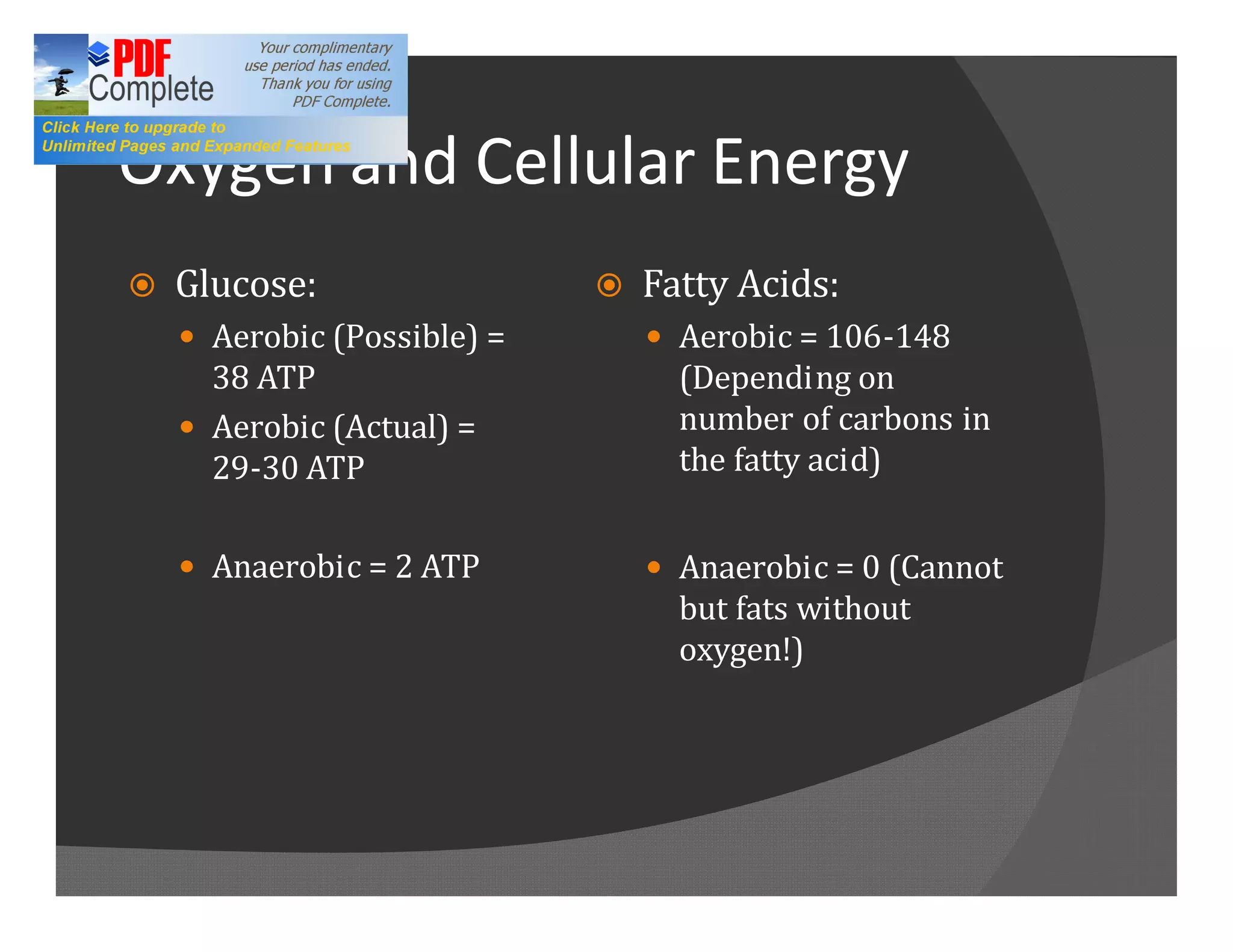
Oxygen and Cellular Energy
ž   Glucose:                 ž   Fatty Acids:
    — Aerobic (Possible) =       — Aerobic = 106-148
      38 ATP                       (Depending on
    — Aerobic (Actual) =           number of carbons in
      29-30 ATP                    the fatty acid)


    — Anaerobic = 2 ATP          — Anaerobic = 0 (Cannot
                                   but fats without
                                   oxygen!)
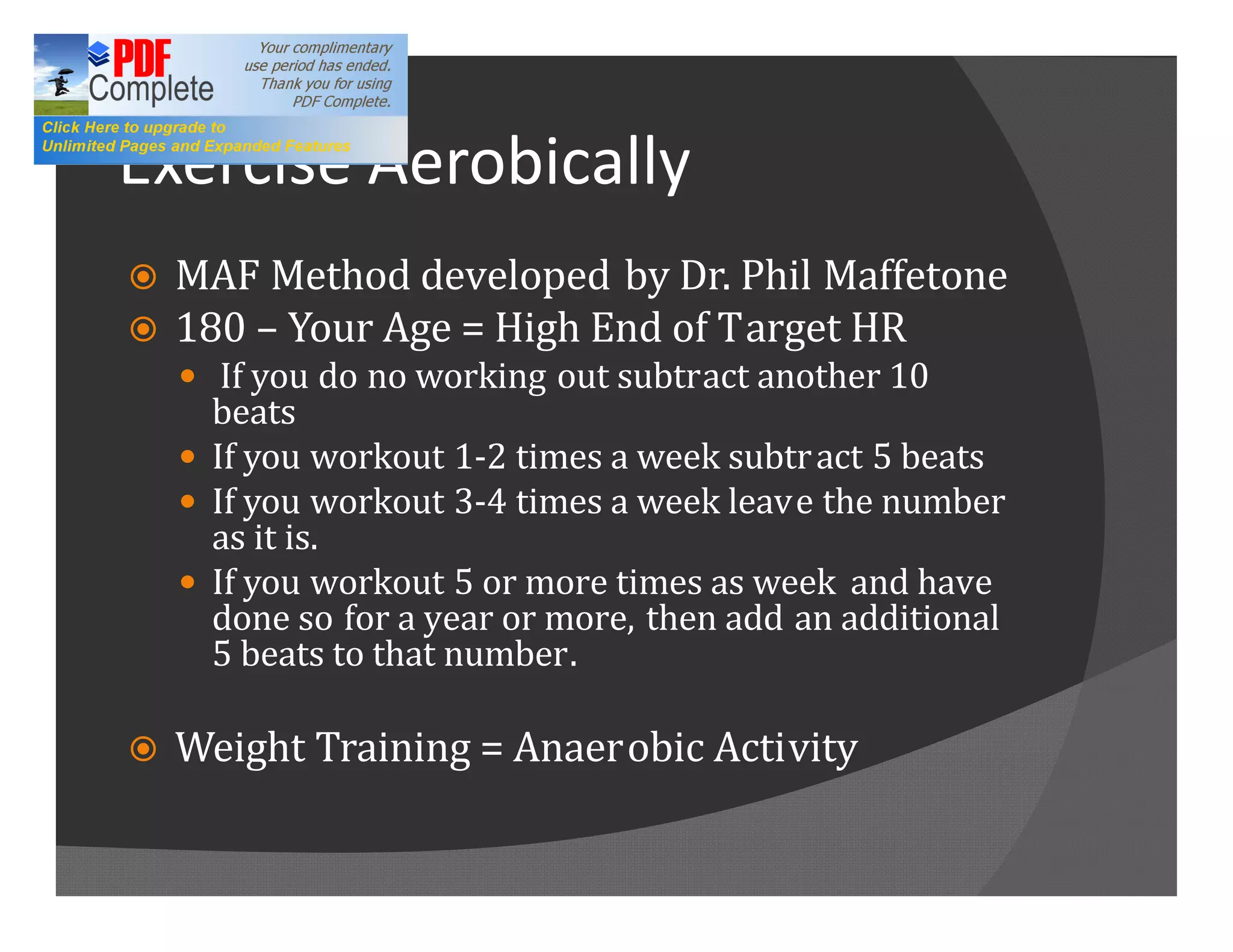
Exercise Aerobically
ž   MAF Method developed by Dr. Phil Maffetone
ž   180 Your Age = High End of Target HR
    — If you do no working out subtract another 10
      beats
    — If you workout 1-2 times a week subtr act 5 beats
    — If you workout 3-4 times a week leave the number
      as it is.
    — If you workout 5 or more times as week and have
      done so for a year or more, then add an additional
      5 beats to that number.

ž   Weight Training = Anaerobic Activity
Metabolic Imbalances
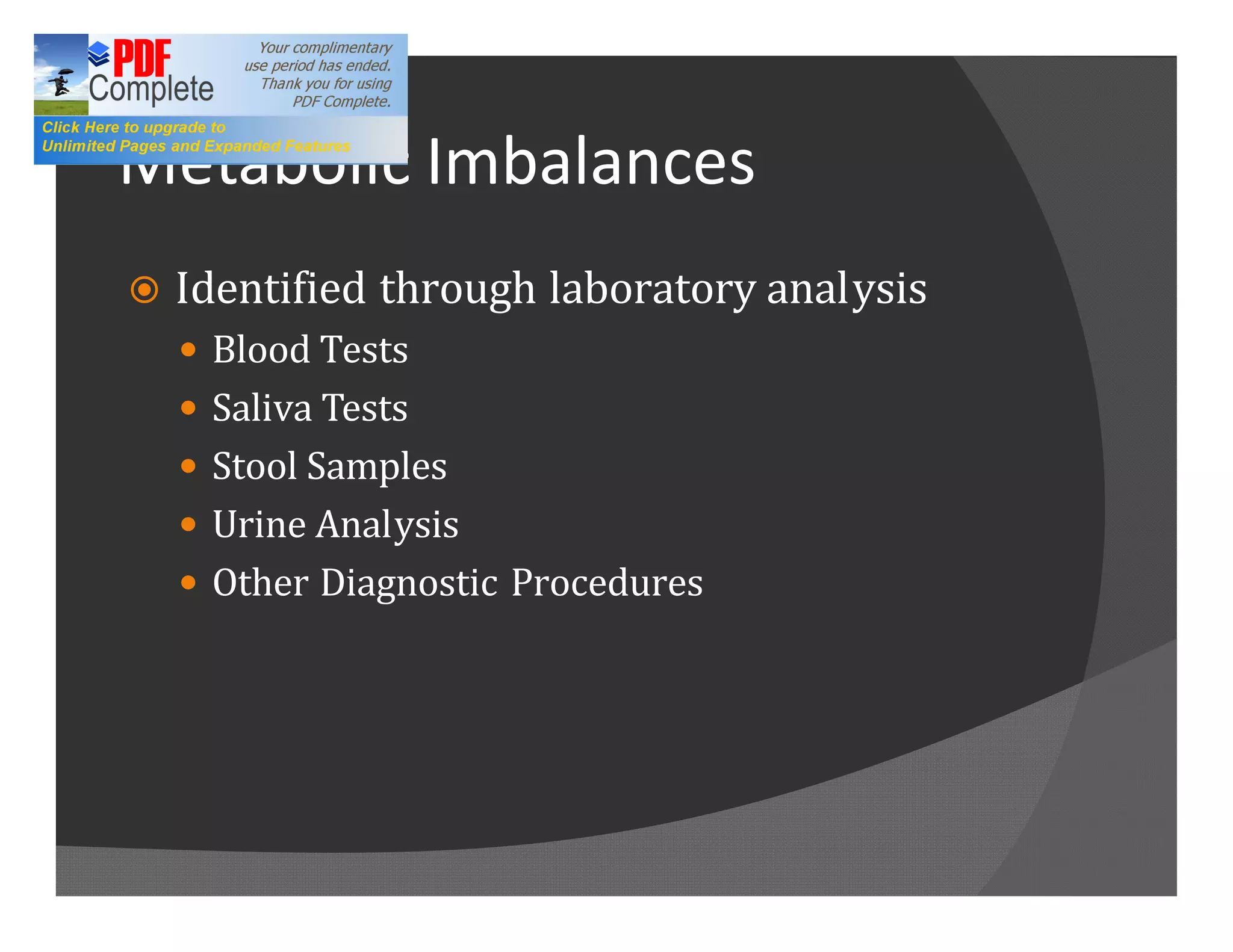
ž   Identified through laboratory analysis
    — Blood Tests
    — Saliva Tests
    — Stool Samples
    — Urine Analysis
    — Other Diagnostic Procedures
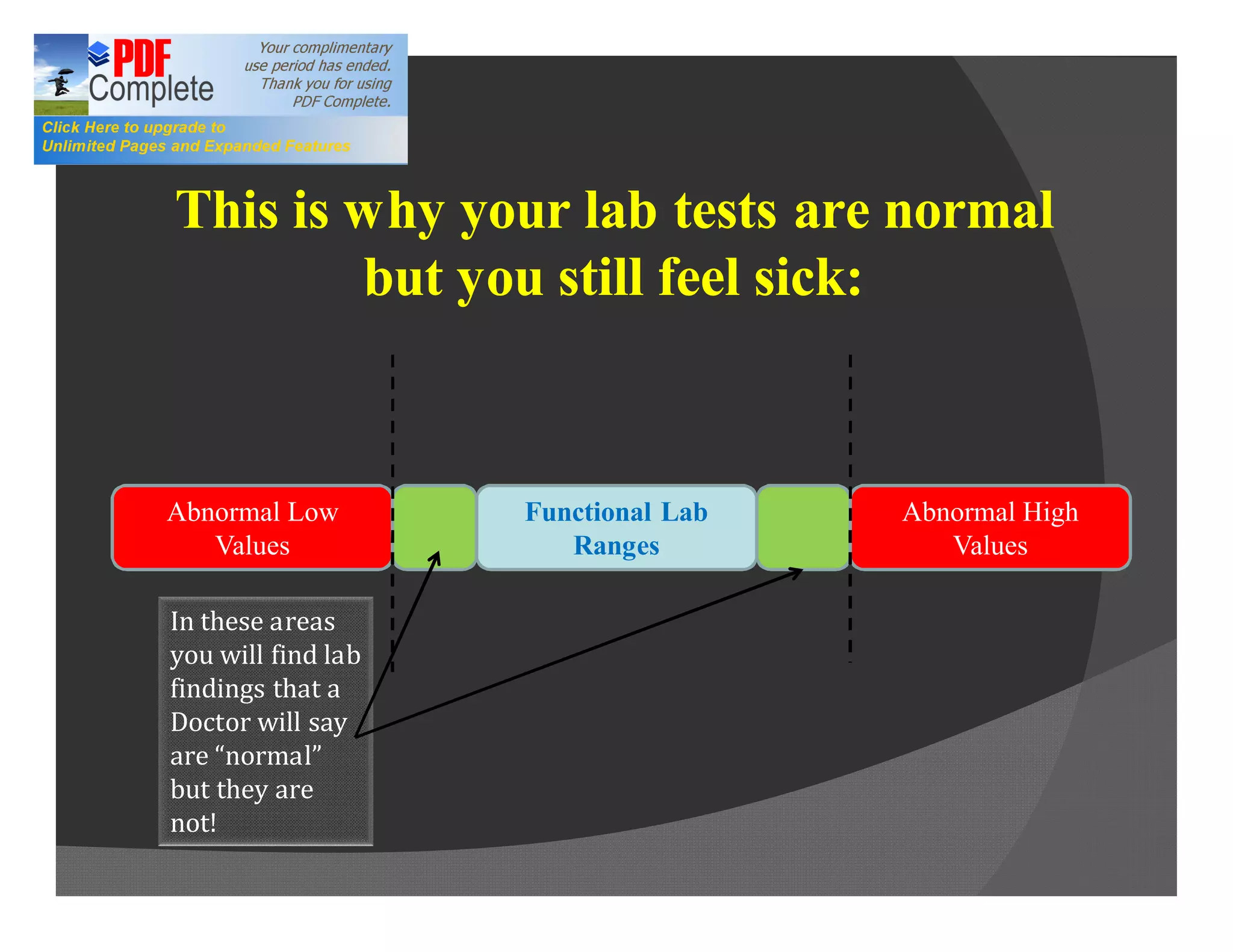
This is why your lab tests are normal
        but you still feel sick:


Abnormal Low        Functional Lab   Abnormal High
   Values              Ranges           Values

In these areas
you will find lab
findings that a
Doctor will say
are normal
but they are
not!
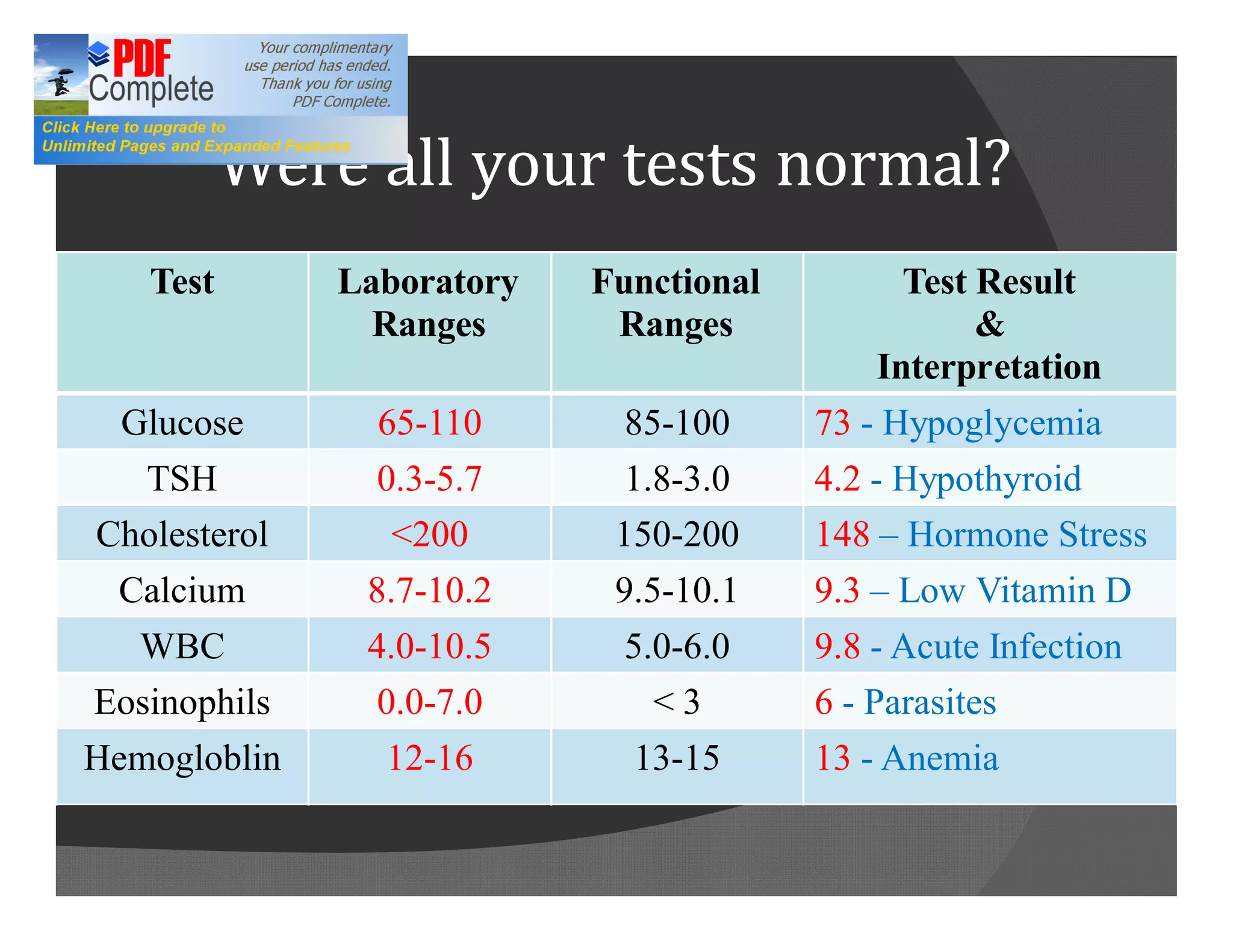
Were all your tests normal?
   Test       Laboratory   Functional          Test Result
                Ranges      Ranges                  &
                                             Interpretation
  Glucose       65-110      85-100      73 - Hypoglycemia
   TSH         0.3-5.7      1.8-3.0     4.2 - Hypothyroid
Cholesterol      <200       150-200     148 Hormone Stress
 Calcium       8.7-10.2     9.5-10.1    9.3 Low Vitamin D
   WBC         4.0-10.5     5.0-6.0     9.8 - Acute Infection
Eosinophils    0.0-7.0         <3       6 - Parasites
Hemogloblin     12-16        13-15      13 - Anemia
Metabolic Imbalance
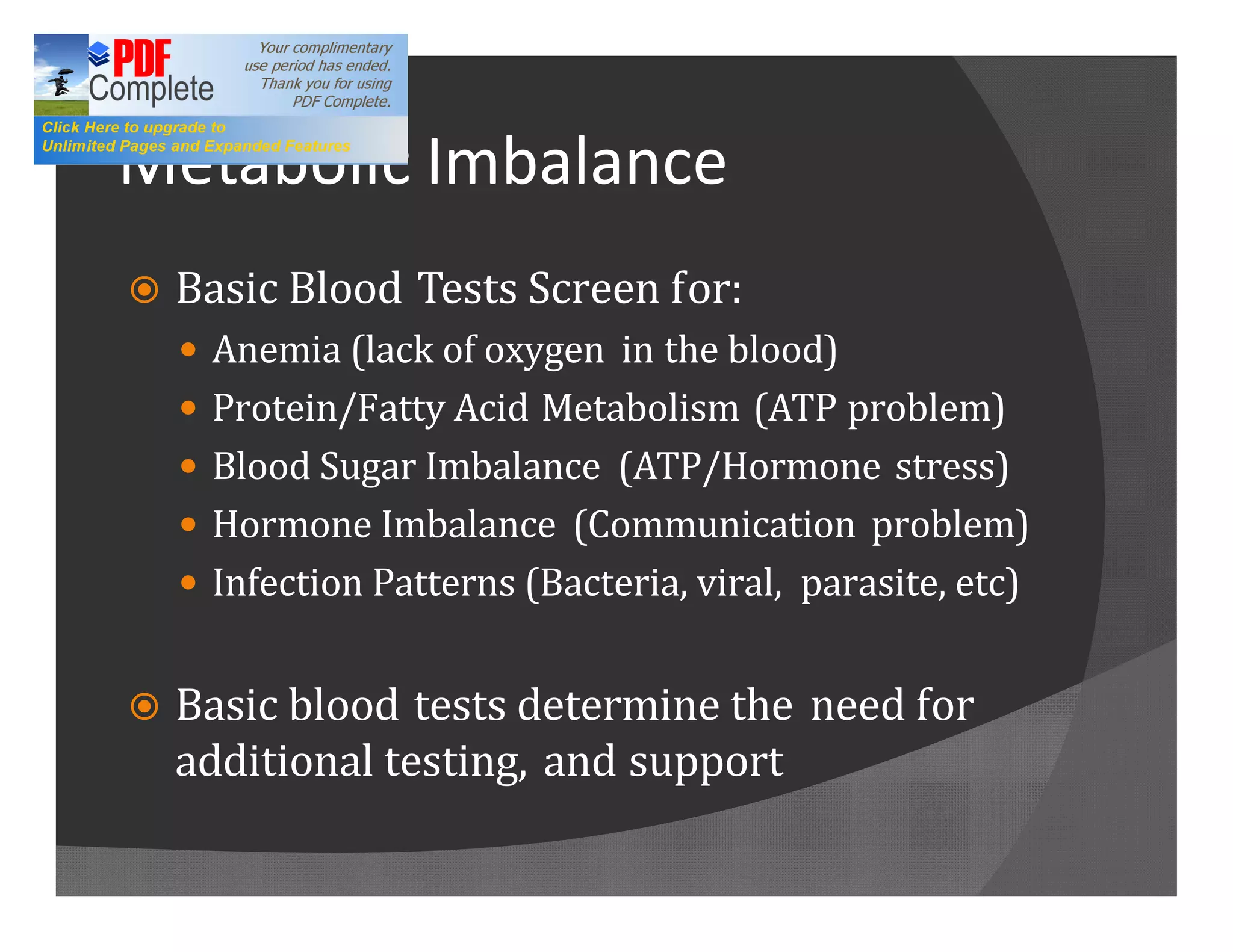
ž   Basic Blood Tests Screen for:
    — Anemia (lack of oxygen in the blood)
    — Protein/Fatty Acid Metabolism (ATP problem)
    — Blood Sugar Imbalance (ATP/Hormone stress)
    — Hormone Imbalance (Communication problem)
    — Infection Patterns (Bacteria, viral, parasite, etc)


ž   Basic blood tests determine the need for
    additional testing, and support
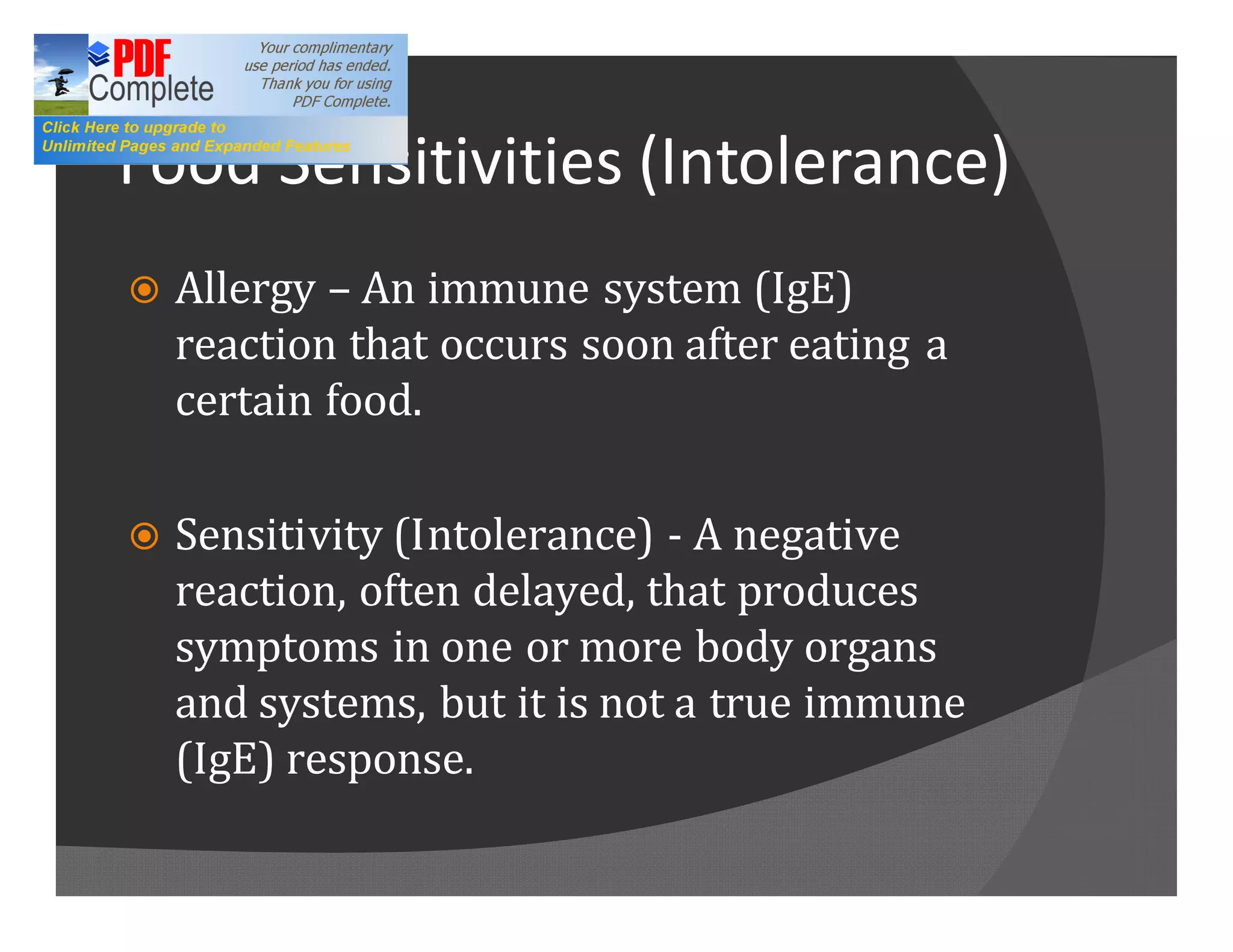
Food Sensitivities (Intolerance)
ž   Allergy An immune system (IgE)
    reaction that occurs soon after eating a
    certain food.

ž   Sensitivity (Intolerance) - A negative
    reaction, often delayed, that produces
    symptoms in one or more body organs
    and systems, but it is not a true immune
    (IgE) response.
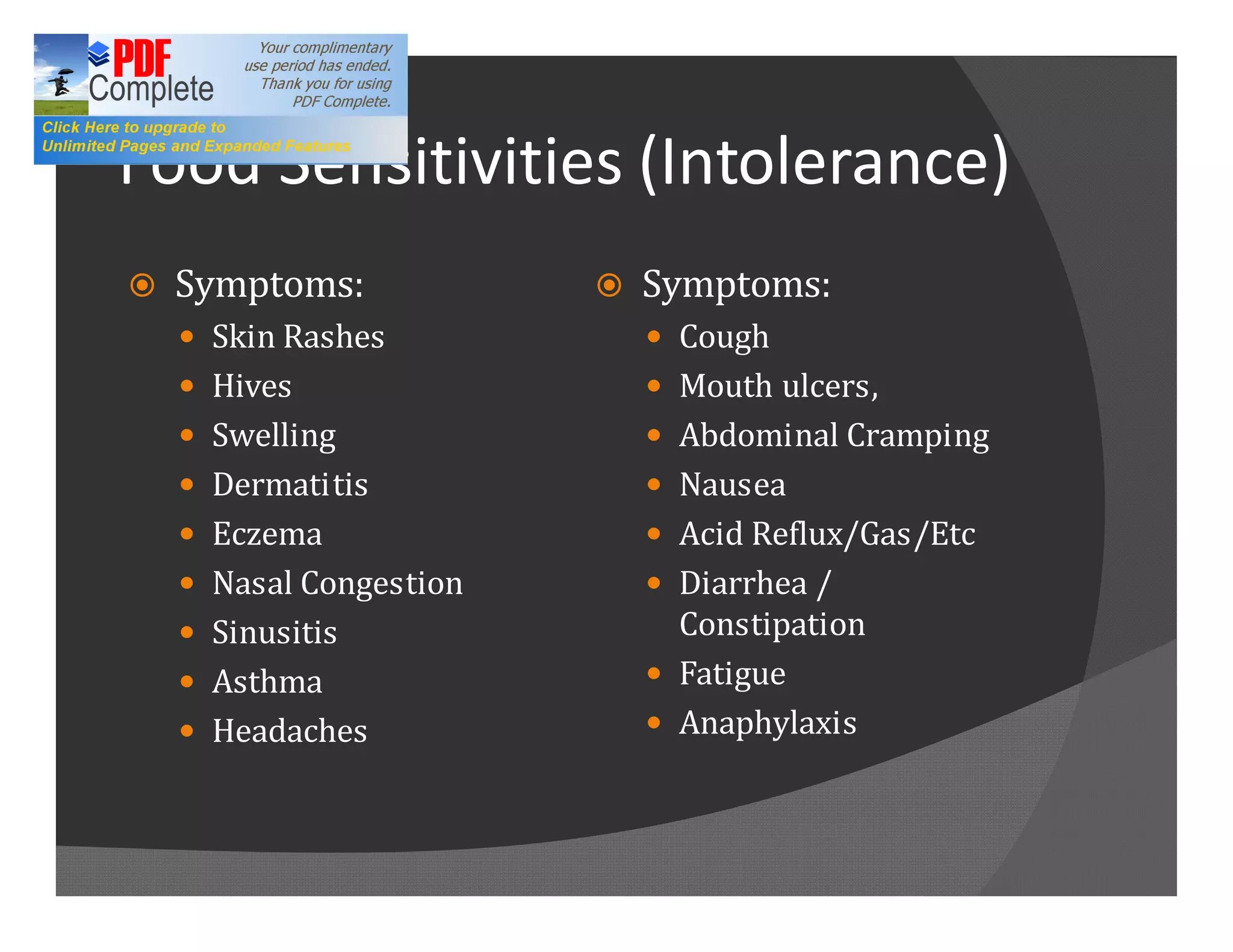
Food Sensitivities (Intolerance)
ž   Symptoms:            ž   Symptoms:
    — Skin Rashes            — Cough
    — Hives                  — Mouth ulcers,
    — Swelling               — Abdominal Cramping
    — Dermatitis             — Nausea
    — Eczema                 — Acid Reflux/Gas/Etc
    — Nasal Congestion       — Diarrhea /
    — Sinusitis                Constipation
    — Asthma                 — Fatigue
    — Headaches              — Anaphylaxis
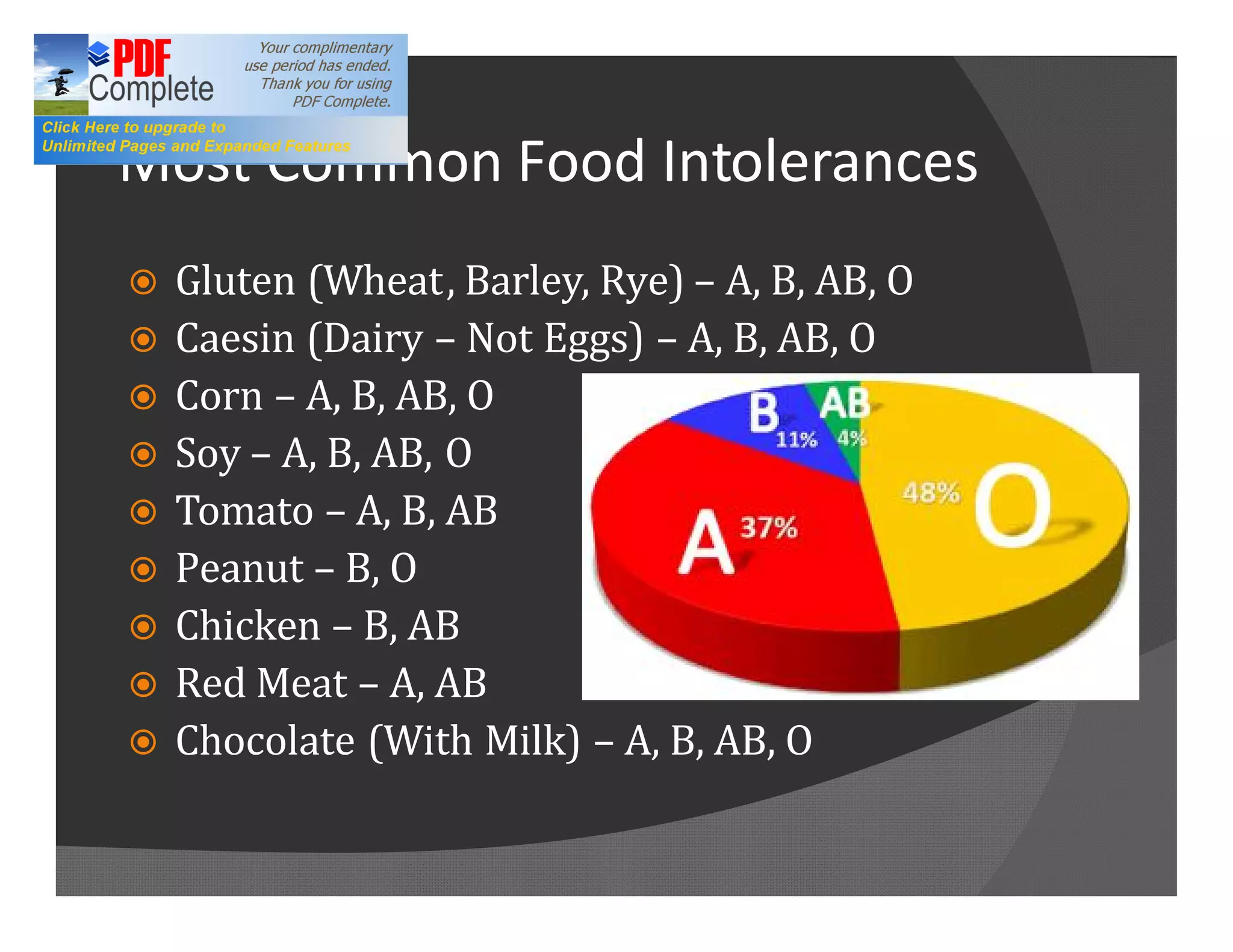
Most Common Food Intolerances
ž   Gluten (Wheat, Barley, Rye) A, B, AB, O
ž   Caesin (Dairy Not Eggs) A, B, AB, O
ž   Corn A, B, AB, O
ž   Soy A, B, AB, O
ž   Tomato A, B, AB
ž   Peanut B, O
ž   Chicken B, AB
ž   Red Meat A, AB
ž   Chocolate (With Milk) A, B, AB, O
Nervous System Imbalance
ž   Fuel + Activation = Wellness

ž   The brain represents only 2% of the human
    body weight; it receives 15% of the cardiac
    output, 20% of total body oxygen
    consumption, and 25% of total body glucose
    utilization.

ž   Every cell in your body receives neurological
    influences.
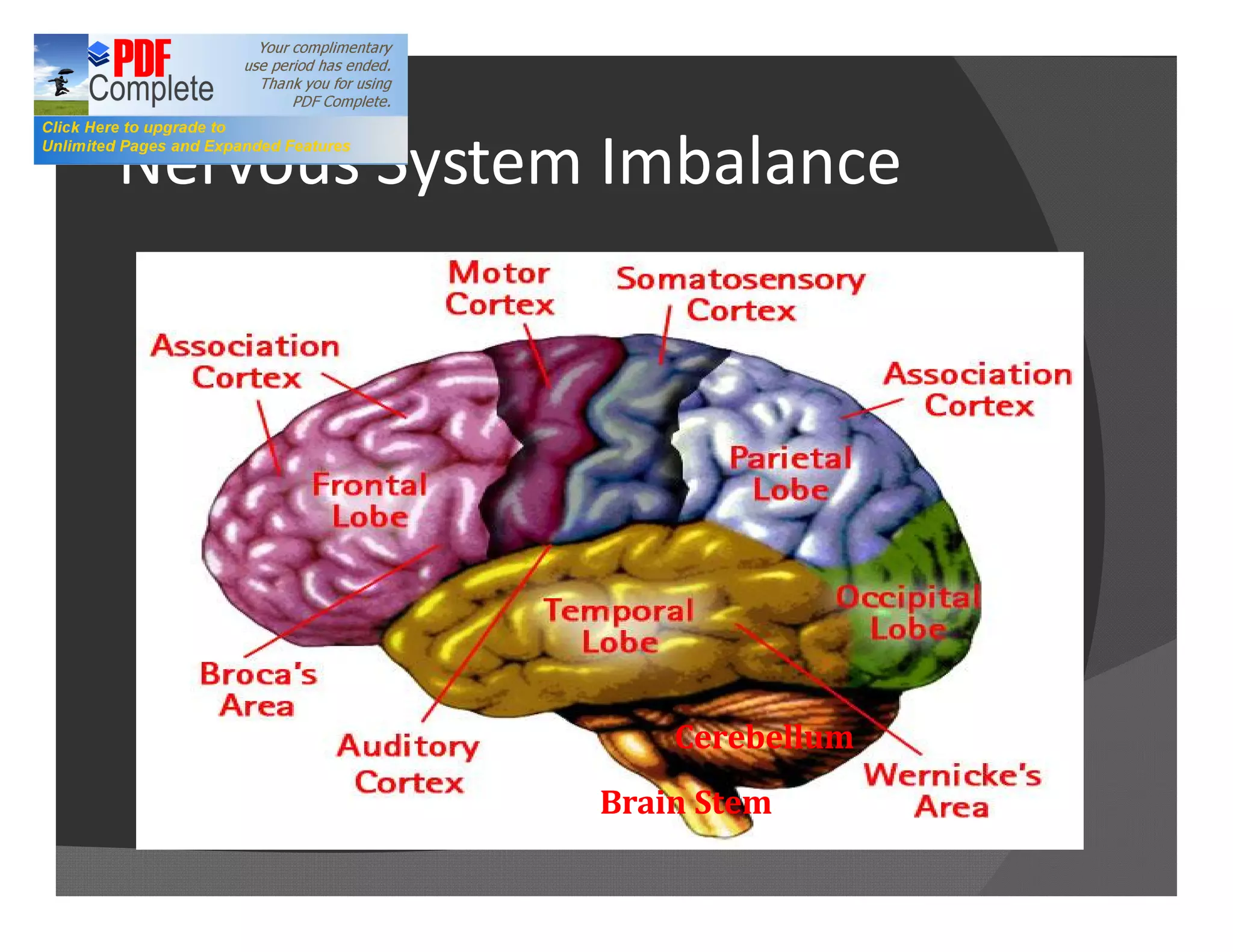
Nervous System Imbalance


                  Cerebellum
              Brain Stem
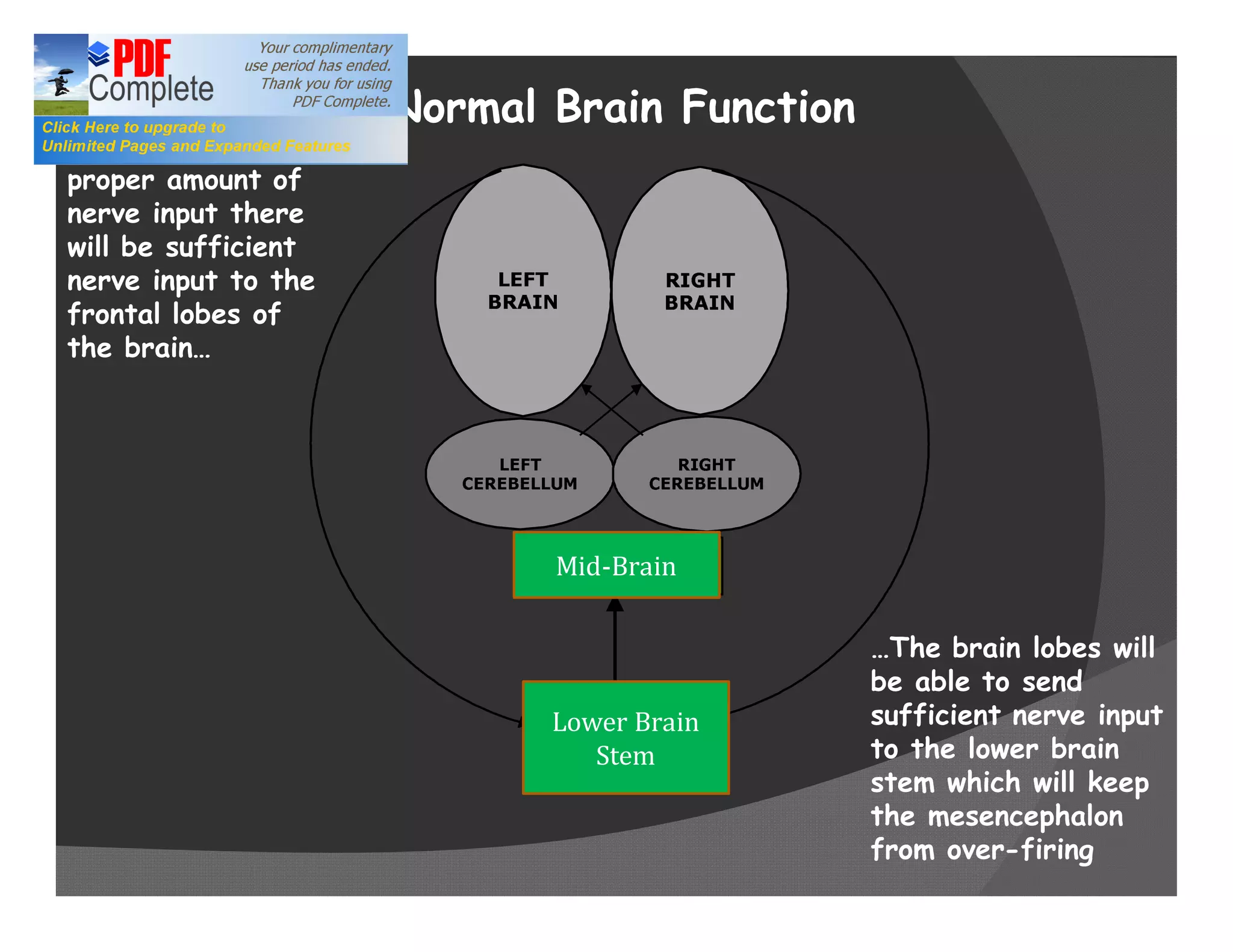
As long as the
cerebellum is        Normal Brain Function
receiving the
proper amount of
nerve input there
will be sufficient
nerve input to the
frontal lobes of
the brain


                            Mid-Brain

                                              The brain lobes will
                                             be able to send
                            Lower Brain      sufficient nerve input
                               Stem          to the lower brain
                                             stem which will keep
                                             the mesencephalon
                                             from over-firing
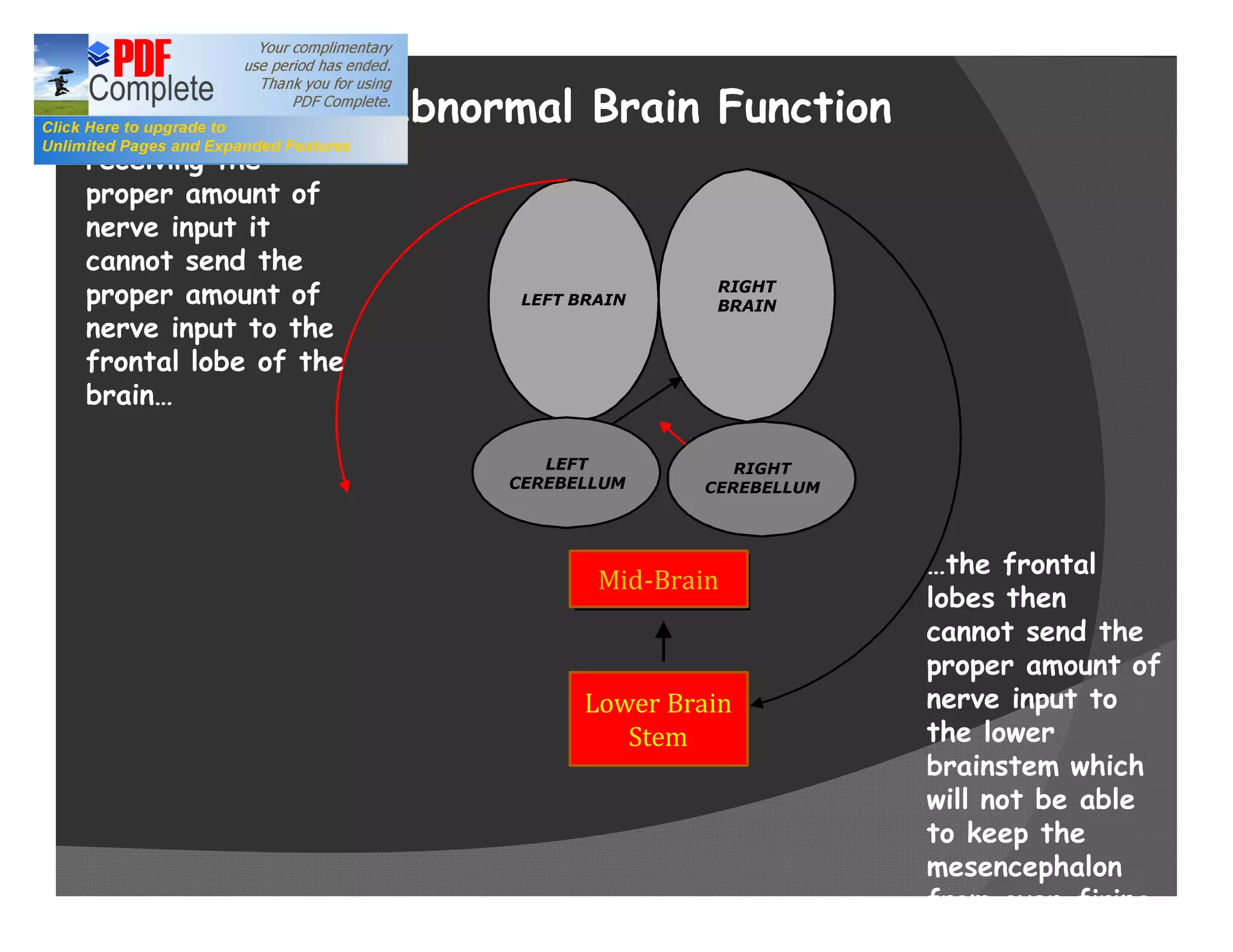
If one side of the
cerebellum is not     Abnormal Brain Function
receiving the
proper amount of
nerve input it
cannot send the
proper amount of            LEFT BRAIN

nerve input to the
frontal lobe of the
brain

                                             RIGHT
                                          CEREBELLUM


                                                         the frontal
                                   Mid-Brain
                                                       lobes then
                                                       cannot send the
                                                       proper amount of
                                      PONS
                                  Lower Brain
                                    ________
                                                       nerve input to
                                     Stem              the lower
                                    MEDULLA
                                                       brainstem which
                                                       will not be able
                                                       to keep the
                                                       mesencephalon
                                                       from over-firing
Nervous System Imbalance
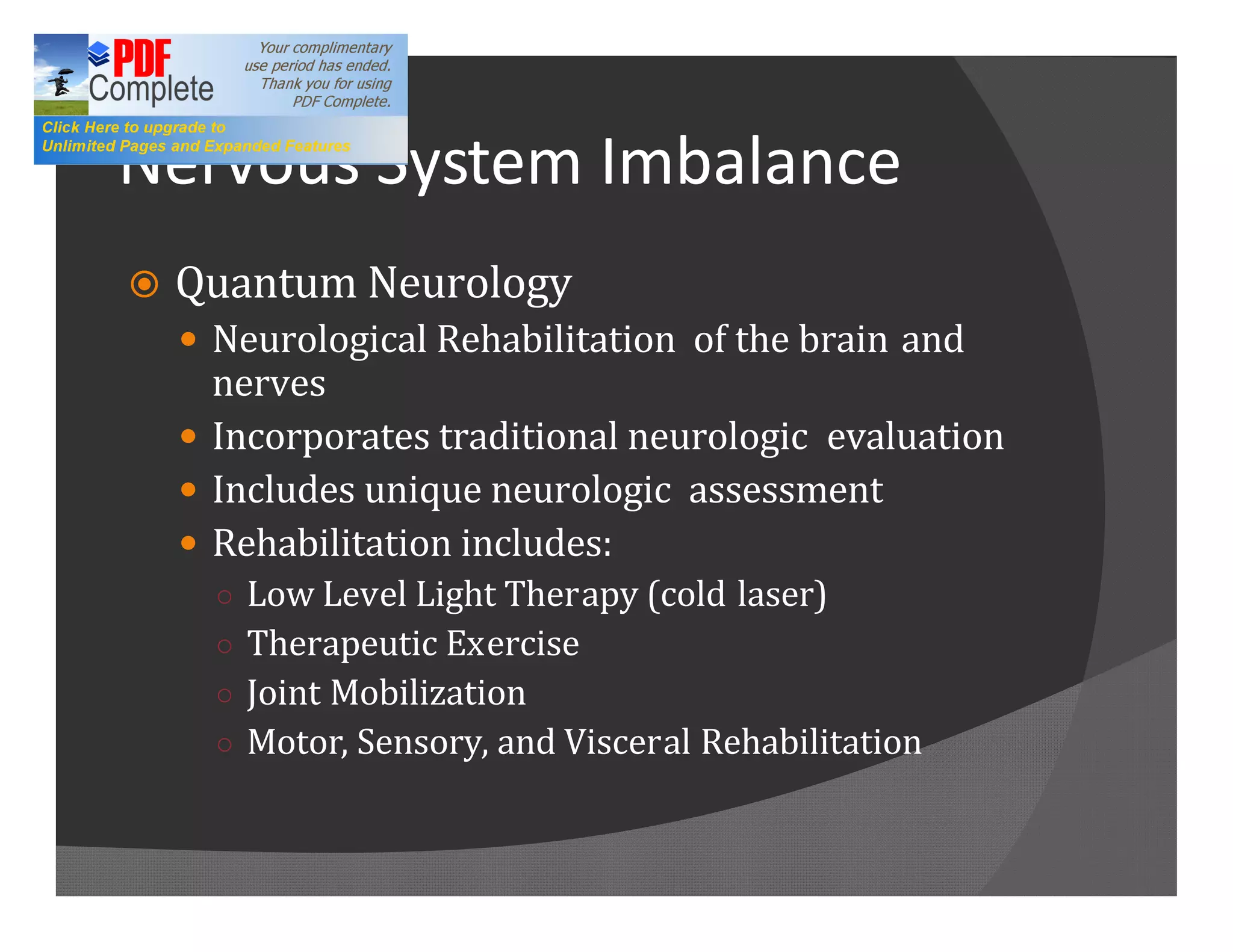
ž   Quantum Neurology
    — Neurological Rehabilitation of the brain and
      nerves
    — Incorporates traditional neurologic evaluation
    — Includes unique neurologic assessment
    — Rehabilitation includes:
       Low Level Light Therapy (cold laser)
       Therapeutic Exercise
       Joint Mobilization
       Motor, Sensory, and Visceral Rehabilitation
Personal Responsibility
ž   What are you doing about your own health?

ž   Pharmaceutical Research 2008: Cancer is a Preventable
    Disease that Requires Major Lifestyle Changes

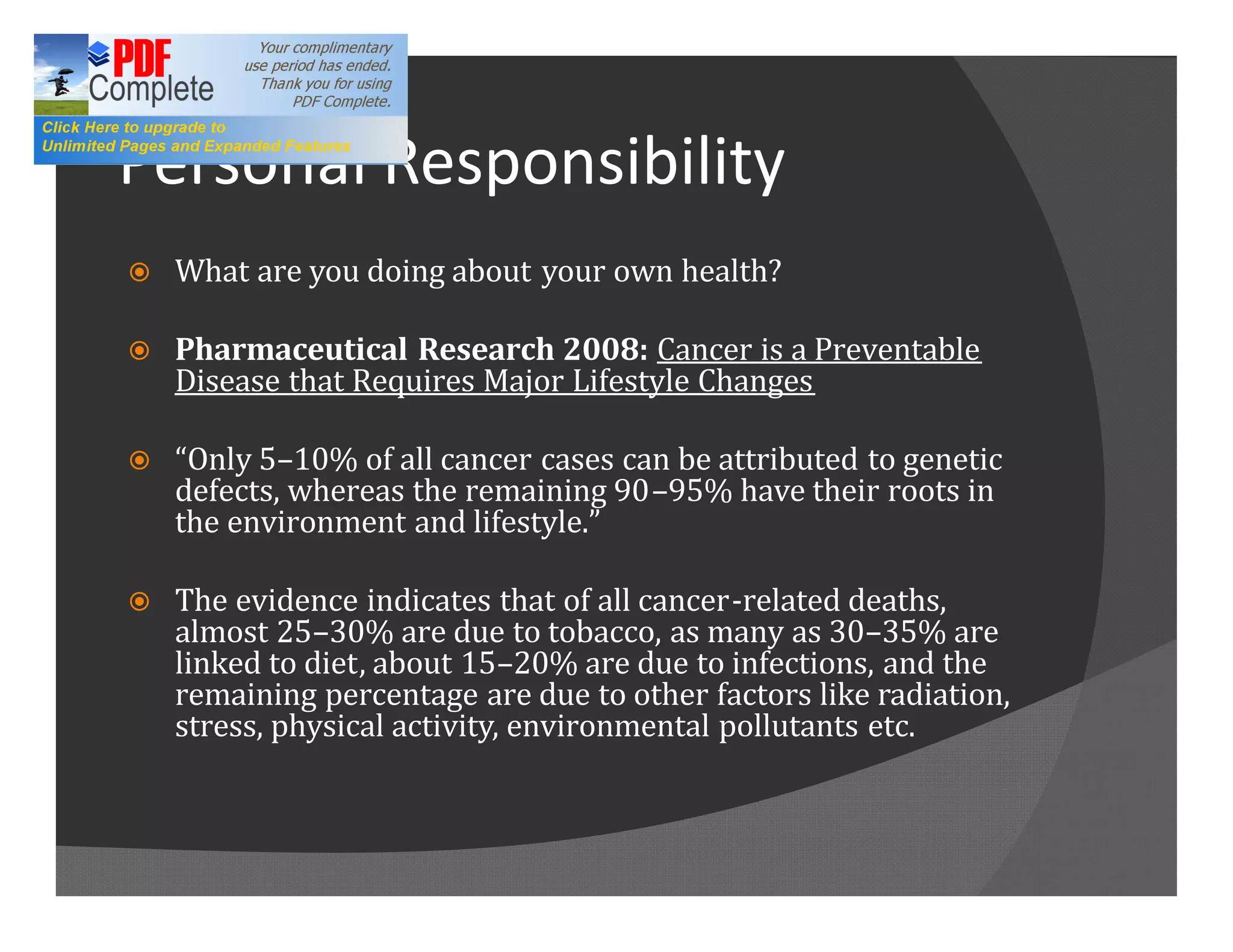
ž    Only 5 10% of all cancer cases can be attributed to genetic
    defects, whereas the remaining 90 95% have their roots in
    the environment and lifestyle.

ž   The evidence indicates that of all cancer-related deaths,
    almost 25 30% are due to tobacco, as many as 30 35% are
    linked to diet, about 15 20% are due to infections, and the
    remaining percentage are due to other factors like radiation,
    stress, physical activity, environmental pollutants etc.
Personal Responsibility
ž   Insurance is great for emergency and
    crisis care.

ž   Insurance does not cover health or
    wellness care.

ž   Insurance companies tell the doctors
    what they can and cannot do.
1.) Use Oxygen more efficiently by exercising differently
2.) Assess and support me tabolic imbalances You don t know if you don t test
3.) Avoid food sensitivities which contribute to the symptoms you experience
4.) Rehabilitate the neurological communica tion pathways
5.) Take personal responsibility for your health, do not let others dictate your care.
Contact Information
Dr. Chase Hayden
11455 Fallbrook Dr. #301A
Houston, TX 77065
(832) 704-9554

www.HaydenInstitute.com
(Links to Facebook, Twitter, BlogTalkRadio and more at our webpage)
Special Offer
$150 New Patient visit for
 attending this presentation

$50 New Patient visit if you
 schedule your appointment
 today with Stephanie

Five Important Things

  • 1.
  • 2.
    About Dr. Chase žOwner and Doctor at The Hayden Institute: For Health, Nutrition, and Rehabilitation ž Board Certified Chiropractor ž Only Certified Quantum Neurologist in Houston ž Specializes in chronic conditions and hormone imbalance
  • 3.
    ALL Chronic Healthconditions have some common threads Thyroid Conditions Oxygen Deficit Insulin Resistance (Metabolic Syndrome) Metabolic Imbalances: Fibromyalgia Menopause/Female Hormone Imbalance 1. Anemia Vertigo 2. Protein/Fatty Acid Metabolism Sciatica 3. Blood Sugar Imbalances Chronic Fatigue Syndrome 4. Hormone Imbalances Peripheral Neuropathy Cortisol (Adrenal) Rheumatoid Arthritis Thyroid Chronic Neck/Back Pain 5. Immune Imbalance Stenosis Bacterial, Viral, Parasitic Insomnia Auto-immune Activity Crohn s Disease Celiac Disease Food Sensitivities PCOS/ Infertility Nervous System Imbalances Migraine/Chronic Headaches 1. Chemical/Metal Toxicity ADD/ADHD/ Spectrum Disorders 2. Neurological Weakness Etc.
  • 5.
    Oxygen and CellularEnergy ž Adenosine triphosphate (ATP), chemical energy of the cell ž 90% of the oxygen we consume is used in the mitochondria ž Aerobic vs. Anaerobic
  • 7.
    Oxygen and CellularEnergy ž M. Celeste Simon, University Of Pennsylvania School Of Medicine, states, "Understanding how oxygen levels are sensed and adapted to is fundamentally important to dealing with pretty much all of the major diseases that we encounter atherosclerosis, autoimmune disease, stroke, and cancer." ž "The role of mitochondria in the cell is grossly underestimated, as is their role in human disease."
  • 8.
    Oxygen and CellularEnergy ž Glucose: ž Fatty Acids: — Aerobic (Possible) = — Aerobic = 106-148 38 ATP (Depending on — Aerobic (Actual) = number of carbons in 29-30 ATP the fatty acid) — Anaerobic = 2 ATP — Anaerobic = 0 (Cannot but fats without oxygen!)
  • 9.
    Exercise Aerobically ž MAF Method developed by Dr. Phil Maffetone ž 180 Your Age = High End of Target HR — If you do no working out subtract another 10 beats — If you workout 1-2 times a week subtr act 5 beats — If you workout 3-4 times a week leave the number as it is. — If you workout 5 or more times as week and have done so for a year or more, then add an additional 5 beats to that number. ž Weight Training = Anaerobic Activity
  • 11.
    Metabolic Imbalances ž Identified through laboratory analysis — Blood Tests — Saliva Tests — Stool Samples — Urine Analysis — Other Diagnostic Procedures
  • 12.
    This is whyyour lab tests are normal but you still feel sick: Abnormal Low Functional Lab Abnormal High Values Ranges Values In these areas you will find lab findings that a Doctor will say are normal but they are not!
  • 13.
    Were all yourtests normal? Test Laboratory Functional Test Result Ranges Ranges & Interpretation Glucose 65-110 85-100 73 - Hypoglycemia TSH 0.3-5.7 1.8-3.0 4.2 - Hypothyroid Cholesterol <200 150-200 148 Hormone Stress Calcium 8.7-10.2 9.5-10.1 9.3 Low Vitamin D WBC 4.0-10.5 5.0-6.0 9.8 - Acute Infection Eosinophils 0.0-7.0 <3 6 - Parasites Hemogloblin 12-16 13-15 13 - Anemia
  • 14.
    Metabolic Imbalance ž Basic Blood Tests Screen for: — Anemia (lack of oxygen in the blood) — Protein/Fatty Acid Metabolism (ATP problem) — Blood Sugar Imbalance (ATP/Hormone stress) — Hormone Imbalance (Communication problem) — Infection Patterns (Bacteria, viral, parasite, etc) ž Basic blood tests determine the need for additional testing, and support
  • 16.
    Food Sensitivities (Intolerance) ž Allergy An immune system (IgE) reaction that occurs soon after eating a certain food. ž Sensitivity (Intolerance) - A negative reaction, often delayed, that produces symptoms in one or more body organs and systems, but it is not a true immune (IgE) response.
  • 17.
    Food Sensitivities (Intolerance) ž Symptoms: ž Symptoms: — Skin Rashes — Cough — Hives — Mouth ulcers, — Swelling — Abdominal Cramping — Dermatitis — Nausea — Eczema — Acid Reflux/Gas/Etc — Nasal Congestion — Diarrhea / — Sinusitis Constipation — Asthma — Fatigue — Headaches — Anaphylaxis
  • 18.
    Most Common FoodIntolerances ž Gluten (Wheat, Barley, Rye) A, B, AB, O ž Caesin (Dairy Not Eggs) A, B, AB, O ž Corn A, B, AB, O ž Soy A, B, AB, O ž Tomato A, B, AB ž Peanut B, O ž Chicken B, AB ž Red Meat A, AB ž Chocolate (With Milk) A, B, AB, O
  • 20.
    Nervous System Imbalance ž Fuel + Activation = Wellness ž The brain represents only 2% of the human body weight; it receives 15% of the cardiac output, 20% of total body oxygen consumption, and 25% of total body glucose utilization. ž Every cell in your body receives neurological influences.
  • 21.
    Nervous System Imbalance Cerebellum Brain Stem
  • 22.
    As long asthe cerebellum is Normal Brain Function receiving the proper amount of nerve input there will be sufficient nerve input to the frontal lobes of the brain Mid-Brain The brain lobes will be able to send Lower Brain sufficient nerve input Stem to the lower brain stem which will keep the mesencephalon from over-firing
  • 23.
    If one sideof the cerebellum is not Abnormal Brain Function receiving the proper amount of nerve input it cannot send the proper amount of LEFT BRAIN nerve input to the frontal lobe of the brain RIGHT CEREBELLUM the frontal Mid-Brain lobes then cannot send the proper amount of PONS Lower Brain ________ nerve input to Stem the lower MEDULLA brainstem which will not be able to keep the mesencephalon from over-firing
  • 24.
    Nervous System Imbalance ž Quantum Neurology — Neurological Rehabilitation of the brain and nerves — Incorporates traditional neurologic evaluation — Includes unique neurologic assessment — Rehabilitation includes: Low Level Light Therapy (cold laser) Therapeutic Exercise Joint Mobilization Motor, Sensory, and Visceral Rehabilitation
  • 26.
    Personal Responsibility ž What are you doing about your own health? ž Pharmaceutical Research 2008: Cancer is a Preventable Disease that Requires Major Lifestyle Changes ž Only 5 10% of all cancer cases can be attributed to genetic defects, whereas the remaining 90 95% have their roots in the environment and lifestyle. ž The evidence indicates that of all cancer-related deaths, almost 25 30% are due to tobacco, as many as 30 35% are linked to diet, about 15 20% are due to infections, and the remaining percentage are due to other factors like radiation, stress, physical activity, environmental pollutants etc.
  • 27.
    Personal Responsibility ž Insurance is great for emergency and crisis care. ž Insurance does not cover health or wellness care. ž Insurance companies tell the doctors what they can and cannot do.
  • 28.
    1.) Use Oxygenmore efficiently by exercising differently 2.) Assess and support me tabolic imbalances You don t know if you don t test 3.) Avoid food sensitivities which contribute to the symptoms you experience 4.) Rehabilitate the neurological communica tion pathways 5.) Take personal responsibility for your health, do not let others dictate your care.
  • 29.
    Contact Information Dr. ChaseHayden 11455 Fallbrook Dr. #301A Houston, TX 77065 (832) 704-9554 www.HaydenInstitute.com (Links to Facebook, Twitter, BlogTalkRadio and more at our webpage)
  • 30.
    Special Offer $150 NewPatient visit for attending this presentation $50 New Patient visit if you schedule your appointment today with Stephanie