












PRIMAL MIND:  Nutrition and Mental Health: Improving The Way You Feel And Function  and Cultivating An Ageless Mind
Quote “ The statistics on sanity are that one out of every four Americans is suffering from some form of mental illness.  Think of your three best friends. If they're okay, then it's you."  ~ Rita Mae Brown
My Neurofeedback Perspective Seeing the brain as fundamentally bio-electric Many brain-based issues related to dysregulated timing mechanisms and phase relationships due largely to stressors on some level  Rather than compartmentalizing brain issues they are recognized as each part of a larger constellation or spectrum related to dysregulated arousal The best psychotherapy, brain training or medication cannot put a nutrient there that is not there and cannot remove some offending dietary substance that does not belong.  The brain and body need certain raw materials in order to function.  PERIOD
BOTTOM LINE: It’s no fun being a prisoner in your own nervous system!
STRESS!  (welcome to the modern world)
Understanding STRESS What is stress? Stress is  NOT  what happens to you…it is how you respond to what happens to you Stress is mainly mitigated by the temporal lobes and the HPA axis.  This is part of your limbic system (the emotional, more “primal” brain). The hypothalamus is attuned to your perceptions and beliefs about what you do and don’t consider stressful Biochemistry is, in part, an outgrowth of that response
The Primal Limbic Brain/Amygdala
What are  EMOTIONS? Emotions are merely biochemical storms in your body and brain … ..The healthier your biochemistry, the better the emotional “forecast”.
Keep In Mind We see everything through the lens of our blood sugar stability (the degree to which we are dependent on that), hormones and neurotransmitters and interpret the world around us accordingly
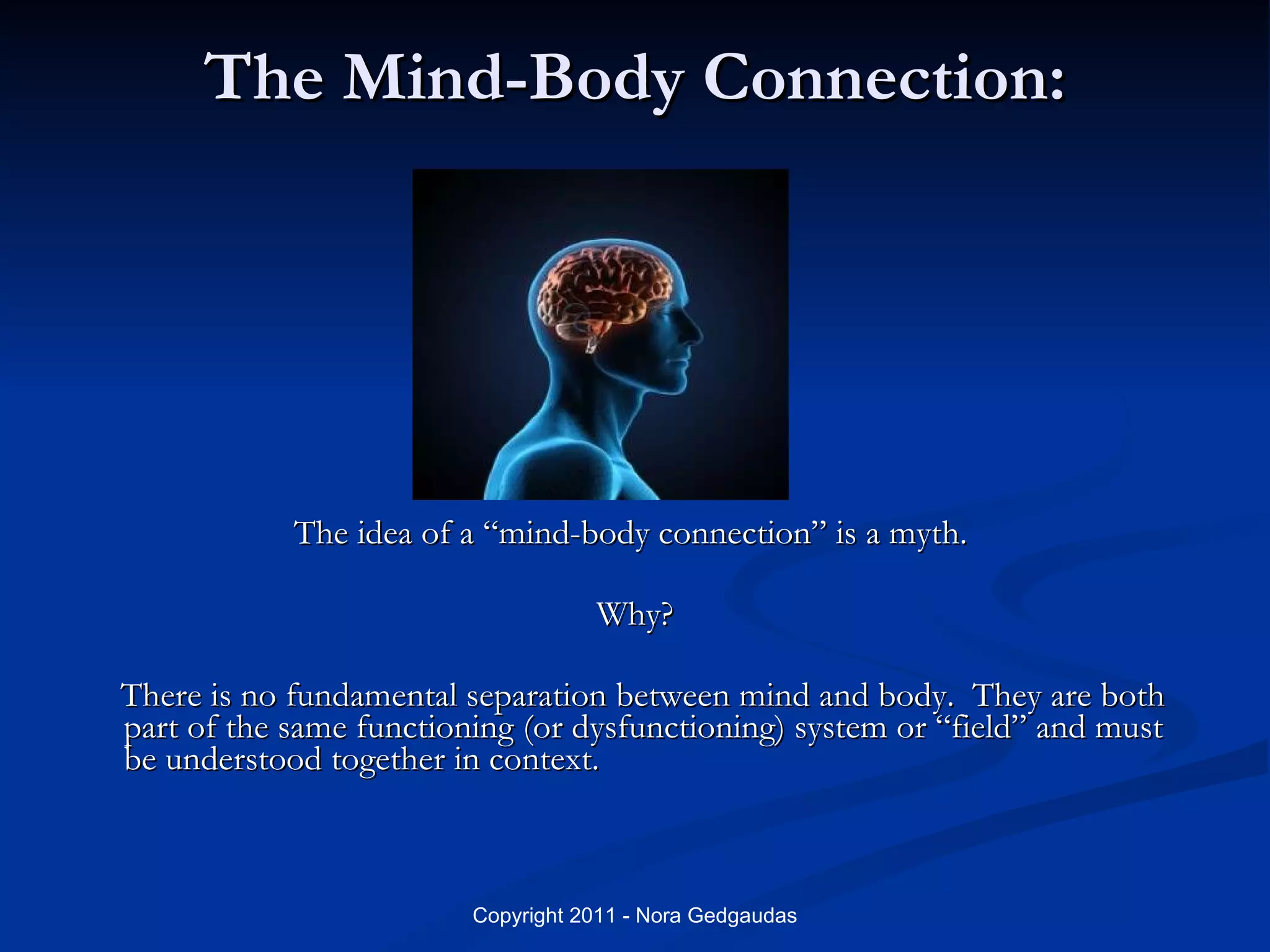
The Mind-Body Connection: The idea of a “mind-body connection” is a myth.  Why? There is no fundamental separation between mind and body.  They are both part of the same functioning (or dysfunctioning) system or “field” and must be understood together in context.
Mental and Physical Health are Unavoidably Linked
Both the brain and body need certain raw materials in order to function HINT: NOT donuts Without this no amount of any therapy will have optimal or lasting results.
“ Your body IS your subconscious mind!” —Candace Pert, PhD (and anyone who thinks their conscious mind is running the show is seriously mistaken)
Selected Topics: Where Nutrition Fits Into All Of This/General considerations Anxiety Depression ADD/HD Aging
Considerations Nutritional/Dietary Considerations Hydration (important but not covered here) Autoimmune issues Chronic inflammatory states Serotonin antibodies Dopamine antibodies Acetylcholine antibodies Digestive Considerations Dysbiosis SIBO Malabsorption HCL or pancreatic insufficiency Biliary issues Endocrine/Neurotransmitter-based Issues Adrenal Thyroid Steroidal hormones Serotonin GABA Catecholamines Endorphins Environmental considerations EMF pollution Heavy Metal toxicity Haptens (other toxic environmental compounds) Situational issues/trauma, etc. Metabolic disorders Pyroluria
Nutritional and Dietary Considerations
The Pivotal Role Of Blood Sugar Issues Blood sugar issues are foundational to the regulation or dysregulation of all endocrine function and are important  if not key  contributors to many issues surrounding mental health Blood sugar surges generate concomitant surges of both insulin and leptin-- each stimulating sympathetic over-arousal—generating and/or exacerbating anxiety-related disorders. Blood sugar surges are enormously destabilizing neurologically, hormonally, behaviorally and emotionally. Glucose in the bloodstream auto-oxidizes which produces potent free radical activity that damages tissues and forms cross-links with proteins called advanced glycosylation end products (AGE’s) known to accelerate the age-associated declines in the functioning of cells ( including brain cells ), other tissues and cause mutations in DNA.  This leads to deterioration of brain function over time  and increased risk for cancers.
Implications for Mental Health Unhealthy and/or chronic surges of blood sugar are a common source  of depression, anxiety, mania, mood swings, hyperactivity, irritability, violent tendencies and cognitive/attention-related dysfunction.  Blood sugar surges deplete the body of magnesium and B-complex vitamins essential to normal, healthy and calm neurological functioning Addressing blood sugar issues is ESSENTIAL to mental health and stability
A.G.E.’s and Mental Decline Glycation is the primary cause of brain degeneration in aging and also in Alzheimer’s. Alzheimer’s is basically a state of advanced brain neuropathy--not unlike the peripheral neuropathy in diabetics (notice the sweet tooth in many Alzheimer’s patients) Beta-amyloid proteins (glycated tangles of proteins) clump and stick together in the brain and eventually cause the symptoms later identified as Alzheimer’s disease.
Other Brain Consequences of High Carbohydrate Diets The same sort of damage that is done to the brain in alcoholism occurs at a slow, but steady rate when consuming any form of a carbohydrate- (sugar- and/or starch-) rich diet. This has implications for memory function, mood lability, cognitive decline and attentional disorders of all kinds Loss of magnesium with chronic blood sugar surges leave binding sites vulnerable to accumulations of aluminum (and other toxic  metals).
The impact of glycation on the brain
Additional Consequences of Chronic, Excess Carbohydrate Consumption… Serotonin depletion Magnesium depletion (essential for parasympathetic functioning) B-vitamin depletion (needed for neurotransmitter synthesis…etc) B12 insufficiency/malabsorption Irritability Brain fog Cognitive impairment Attentional disorders Depression Anxiety disorders Confusion and memory problems Alcoholism Nervous habits Mental disturbances Eating disorders Sleep disturbances Emotional lability/reactivity
The Effect of a Brain Following Long-Term  Chronic Carbohydrate Consumption:
Neurological Stability Nothing is more destabilizing to the brain and nervous system than blood sugar surges (and food sensitivity reactions) Nothing is more stabilizing to the brain than natural dietary fat
A Word About Gluten… WHEREVER neurological, cognitive, attentional or mood-based issues present gluten sensitivity and/or celiac disease should  always  be included as a suspect An article in the journal  Neurology  (Vol 56/No.3 Feb 13, 2005) states that “Gluten sensitivity can be primarily and at times exclusively a neurological disease”, affecting not only the brain and nervous system directly, but also cognitive and psychiatric illness.
OK…more than one word In the  Journal of Neurology, Neurosurgery and Psychiatry  (1997; 63; 770-775) the article states “Our finding…implies that immune response triggered by sensitivity to gluten may find expression in organs other than the gut; and the central and peripheral nervous systems are particularly susceptible.”
More To Consider A study published in 2009 in the peer reviewed journal,  Gastroenterology  (July;137(1):88-93) compared 10,000 available blood samples from individuals 50 years ago to 10,000 people today and found that there has been  a  400 % increase  in the incidence of full blown celiac disease  (defined by conventional medicine as a  total  villous atrophy of the small intestine)!
Ponder this… Only an estimated  1%  of all suffering gluten sensitivity or celiac disease is ever diagnosed .
And this… Food sensitivity reactions will impact blood sugar and insulin, even on a very low carbohydrate diet.
Why pick on gluten? Gluten can also be looked upon somewhat as a bit of as “gateway food sensitivity”.  It is known to increase an enzyme in the body known as  zonulin , which controls intestinal permeability.   Elevated zonulin levels in the presence of gluten can also serve to allow other types of undigested proteins to slip past what would otherwise be more selectively permeable barriers and cause additional immunological reactions to other foods. 
Still picking on gluten Casein (milk protein) is one of the most common co-sensitivities with gluten, but the immune system can come to react to almost anything if gluten consumption persists. This can be a very real problem.  Once multiple food sensitivities take over it can amount to a very vicious cycle that only worsens with time and becomes extremely difficult to correct.
Living with this can be miserable at best
Critical to keep in mind: Being “mostly” gluten free is like saying  “I’m just a little bit pregnant”.  You either are or you’re not. ONLY   total and permanent  abstinence from gluten can lead to restored health in a person that is gluten sensitive.
ANXIETY RELATED DISORDERS
Anxiety Related Disorders Anxiety related disorders are currently epidemic May be viewed as part of a “spectrum” involving over-arousal-based symptoms: Panic disorders (instability) Some forms of ADHD OCD Autism Asperger’s Tourette’s Bipolar disorder Chronic pain PTSD Certain forms of insomnia
Anxiety and Nutritional Considerations Carbs and blood sugar regulation:  Leptin, insulin, cortisol/adrenaline, magnesium, B-complex, HCl insufficiency Protein and amino acids Digestion Food sensitivity issues Dehydration Anemia (iron, B6 and/or B12) Minerals: magnesium, iron, iodine, zinc Self-medicating with food/beverages? Cravings? (i.e.,  chocolate/magnesium, etc) Dietary fat intake (low fat diets, EFA deficiencies, fat soluble nutrient deficiencies) Pyroluria
Carbs, Blood Sugar Dysregulation and Anxiety-Related Symptoms BLOOD SUGAR ISSUES ARE THE #1 MOST POWERFULLY INFLUENCING FACTOR! Food (gluten) sensitivities run a very close second Insulin and leptin dysregulation are both generated by chronic blood sugar surges and  both stimulate sympathetic over-arousal Chronic blood sugar dysregulation leads to excess cortisol/adrenaline production, metabolic syndrome and increased potential for food sensitivities
Excess Carbohydrate Consumption and Blood Sugar Dysregulation consequences   Chronic blood sugar surges cause magnesium loss, necessary for normal parasympathetic functioning (insulin is needed to store intracellular magnesium. Magnesium is needed to produce and utilize insulin.  Insulin resistance is depleting of and prevents retention of magnesium)  Note: Magnesium loss also results in elevated histamine levels (which functions as an excitatory neurotransmitter). Excess carbs lead to increased demand for B-complex (especially B1 and B6) and may readily lead to deficiencies High carb diets tend to be poor protein utilization diets High carbohydrate consumption can lead to yeast overgrowth Sleep disturbances Hypoglycemia/Reactive hypoglycemia Premature aging
Dietary Fat and Mental Health
Roles Of Fat in Mental Health Fats make up 60-80% of the human brain (by dry weight) – roughly 50% of this is saturated fat, 11% arachidonic acid @25% of these are DHA, an omega-3  (note: dominant essential fatty acid in the non-human primate brain is omega-6)
Roles of Fat…continued The richest concentration of cholesterol (a sterol) in the human body is in the brain (25%)—and is essential for normal/optimal neurological, cognitive and mood functioning Fats are  essential  for absorption of certain nutrients Fats  and cholesterol are  essential  for the formation of certain hormones Fats and cholesterol are  essential  for the structure and healthy functioning of our cell membranes Fats and cholesterol are  essential  for a healthy and stable nervous system
Roles of Fat and Implications Ample fats are  critical  to the formation of the brain and nervous system in prenatal nutrition and in the developing brains and nervous systems of babies, children and teens.  Low fat diets should  never  be promoted, particularly in these populations
Dietary Fat and Primal Cultures All primitive and traditional cultures revered and coveted sources of dietary fat Plains and Northern Indians used pemmican (over which entire wars were fought) Canadian tribes relished moose fat Coastal Salish tribes use oolichan grease Inuit eat/ate large amounts of seal, walrus and whale fat Innus (of NE Canada) coveted caribou fat Aborigines sought out emu fat Masai consume lots of high fat raw milk According to the work of nutritional pioneers such as Weston Price mental illness was virtually unknown in these cultures
And Let’s Not Forget We are Ice Age beings. Fat to us means  survival
Mental Health Consequences  Of A Low-Fat/Low Cholesterol Diet Endocrine issues Depression Anxiety Mood swings Attention Disorders (ADD/HD, etc) Cognitive dysfunction, poor memory, etc. Neurological instability   -Susceptibility to seizures   -Mood lability problems   -Susceptibility to migraines
The ultimate brain fuel KETONES  are the energy units of fat and can supply the most stable and steady source of energy for the brain and nearly all other body systems
Remember:  THE BRAIN + KETONES =
Fat and Neurological Stability NOTHING is more stabilizing to the brain than natural dietary fat (some things bear repeating)
Omega-3’s Briefly Revisited: Roles in mental health: Essential to normal mood and functioning of the human brain Helps modulate cortisol (stress hormone) levels in the brain Needed for proper memory and cognitive functioning
ALSO NOTE: Arachidonic acid, GLA, saturates, other fats and cholesterol also have an important role to play in cognitive functioning Statin drugs—by lowering cholesterol in the body and brain--can also result in memory issues and dementia-like symptoms in some individuals Excessively low cholesterol is known to impact mood and cognitive performance
QUOTE “No diet will remove all the fat from your body because the brain is entirely fat.  Without a brain you might look good, but all you could do is run for public office.” ~George Bernard Shaw
DEPRESSION
DEPRESSION Major depression, alone, is expected to be the  second leading cause of disability by 2020  worldwide — second  only to ischemic heart disease (Institute of Functional Medicine).    In just the United States, the lifetime risk for major depression is nearly a quarter of the population. Depression may be viewed in many cases as the flip side to the anxiety coin
DEPRESSION…cont’d Is very misunderstood – a state of “chronic efforting” May be commonly seen as “anxiety to exhaustion” Often times, may be responsive by addressing from the standpoint of anxiety
Depression: Issues To Consider Diet in general (junk food, additives, veganism, caffeine use, alcohol, etc) Blood sugar Adrenal health  Thyroid Anemia (iron, B6 and/or B12 related) Deficiencies (amino’s, B-vitamins, zinc, magnesium, iron, iodine, etc) Food sensitivities and possible autoimmune processes SAD (Seasonal Affective Disorder) – (light, low serotonin and vitamin D) Digestion (HCl insufficiency, biliary, pancreatic insufficiency, dysbiosis/SIBO/parasites) Sleep disorders Life issues/circumstances/history of trauma
The Depressed Brain
Nutritional Considerations Blood sugar issues (inherent in carbohydrate-based diets) leading to serotonin, B-complex and magnesium depletion Gluten sensitivity leading to frontal lobe hypo-perfusion and chronic microglial activation, as well as both gut-barrier and blood-brain barrier compromise and the potential for iNOS and autoimmune antibody activation  Dehydration leading to loss of function Insufficient complete-source protein intake (as with vegetarian or vegan diets or very high carb diets) leading to diminished HCL production and insufficient amino acids for neurotransmitter synthesis Excessively low fat intake leading to EFA deficiencies, impaired neurological function and absorption/utilization of fat soluble nutrients  Mineral deficiencies such as zinc, magnesium, iron which are normally essential for a positive mood
NUTRITIONAL CONSIDERATIONS  FOR ADD/HD
Most Common Issues Associated With ADD/HD: Blood sugar dysregulation Food sensitivities (esp. gluten) Digestive disorders/dysbiosis/SIBO Heavy Metal Toxicity Anemia Diagnosed or undiagnosed thyroid issues (also true of depression and anxiety) Nutrient Deficiencies Pyroluria … .or some combination of the above
Food Sensitivities - Gluten 70% of children with untreated gluten sensitivity/celiac disease show exactly the same abnormal brainwave patterns as those with ADD A study in  The Journal Of Attention Disorders  (March 2006, 1-5) stated : “In 132 participants  all  clinically diagnosed with ADHD ( that’s  100% )  after at least 6 months on a gluten-free diet,  all   ( emphasis mine )  patients or their parents reported a significant improvement in their behavior and functioning compared to the immediate period  before diagnosis and dietetic treatment.”   In the same study it was also stated that “ All ADHD-like symptomatology patients should be tested for celiac disease with serum screening tests  (EnteroLab or Cyrex Labs, please) , as celiac disease could be one of the  causes  of these neuropsychiatric symptoms.  We are convinced that celiac disease may predispose to important mental and behavioral disorders.” Gluten sensitivity is known to affect frontal/prefrontal lobe perfusion (blood flow) and subsequently impaired mood, memory, planning and judgment faculties, inhibitory capacity and cognitive functioning.  Improvement may typically be seen within several days to about 6 months of totally stopping gluten
Gluten Sensitivity testing Notoriously inaccurate.  False negatives are almost more the rule than the exception. You can take a “positive” result in any test to the bank, but a “negative” in no way implies that gluten sensitivity is not present. Test for gluten sensitivity using Enterolab ( www.enterolab.com )  - A stool antigen test or  Cyrex Labs  ( www.cyrexlabs.com ) “Array 3” panel (the new gold standard in gluten sensitivity testing)—includes a multi-peptide panel w/a very high accuracy rate.
Most Common Nutritional Deficiencies Associated With ADD/HD: Omega-3 GLA Protein/amino acids (i.e., excess carbohydrates) Iodine Iron (anemia) Zinc Magnesium B-complex
Cultivating An Ageless Mind
Where the Paleo Model Falls Short: Our ancestors didn’t necessarily select food based on the idea of optimizing  health and longevity—but rather based on a need for survival.  This makes the paleo model only a starting place in the longevity equation. Nature does not necessarily automatically guide us toward longevity enhancement or optimal health…only modern science is really able to do this Paleolithic dietary principles can be readily modified in line with modern longevity research to lead to a whole new model for optimal physical and brain health and a longer life
How To Take A Good Thing (the Paleo Diet) and Make It Better One model that has worked consistently to improve health and longevity across all species (from yeast to primates) is modified caloric restriction Caloric restriction– (as it turns out) is most effectively applied to carbohydrate and protein consumption Focus needs to be on NUTRIENT DENSITY and minimization of insulin/mTOR levels  (i.e., very low carb/moderate protein) Dietary fat to satiety serves to eliminate hunger and fibrous vegetables and greens may be used to add desired bulk
Caloric Restriction Primate Study A twenty year long study – just released in 2010 in the journal  Science (325, no.5937; 201-4)  entitled:  Caloric Restriction Delays Onset And Mortality in Rhesus Monkeys Two groups of Rhesus monkeys (selected for their strong similarity to us) were studied.   One group of Rhesus monkeys were allowed to eat as much as they wanted and the other group was given a sufficiently nutrient dense diet with 30% fewer calories than they would normally consume.   Twenty years later only 63% of the monkeys that ate as much as they wanted were still alive.  37% of them had died due to age related causes (heart disease, cancer or diabetes).
And the caloric restriction group? Fully  87%  were still alive!   Not just monkey business--Researchers confidently speculated that these findings would have considerable implications for combating aging and disease in humans. Throughout their lives the calorically restricted group maintained superior health and aging-related biomarkers in  every area   including brain health  (also metabolic health and rate, insulin sensitivity and cardiovascular vitality).   The caloric restriction group enjoyed  a 3-fold reduction in age-related disease!!   Also, they lost fat weight but maintained healthy levels of lean tissue mass.   They additionally retained greater brain volume (which normally shrinks with age and glycation) but more than that they retained superior cognitive function. 
A Picture Is Worth A Thousand Words
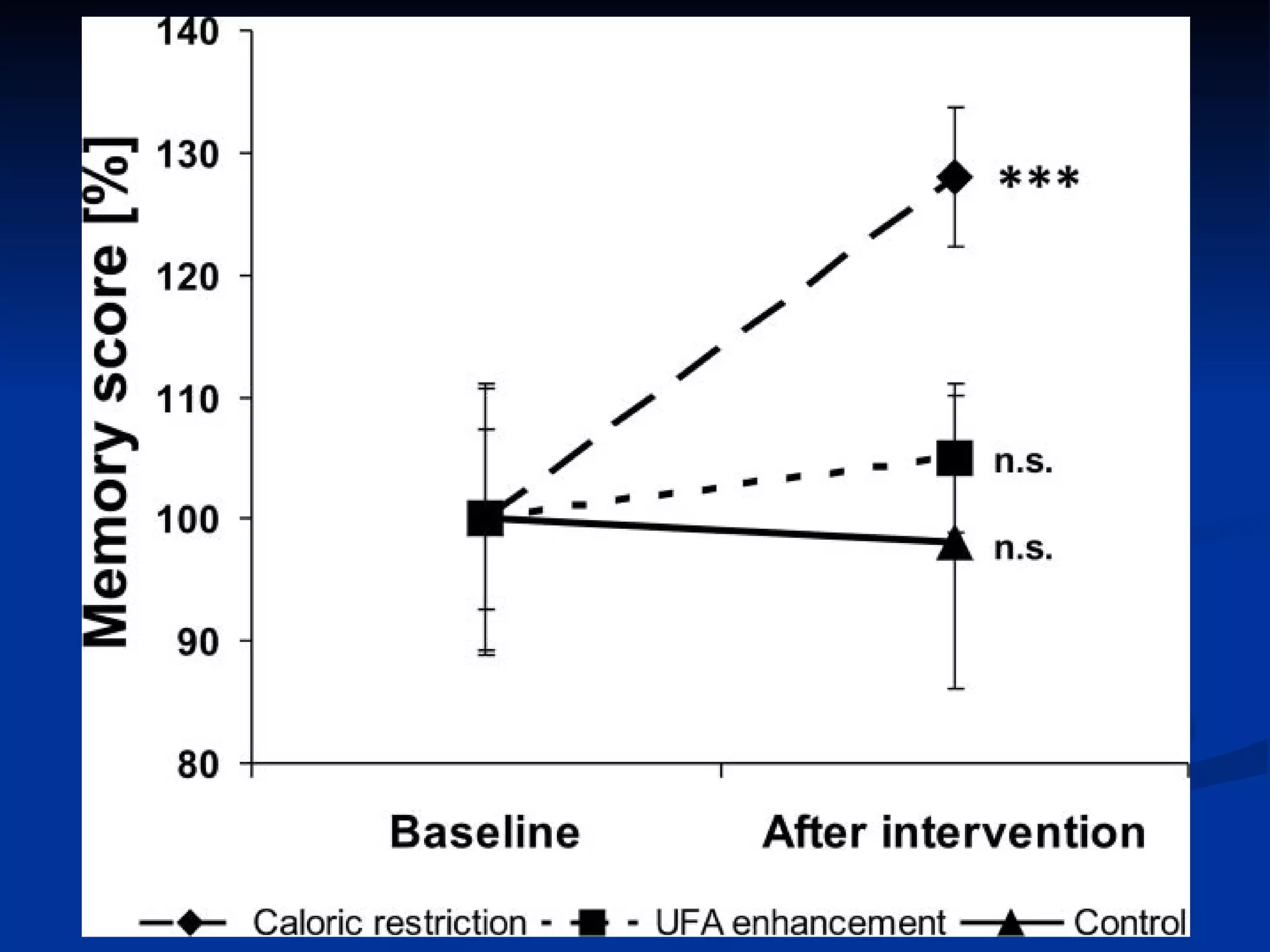
Another exciting new study In January, 2009, the  Proceedings of the National Academy of Science  published a study entitled "Caloric Restriction Improves Memory in Elderly Humans."  In this study, German researchers imposed a 30 percent calorie reduction on the diets of elderly individuals and compared their memory function with a similar age group who basically ate whatever they wanted. At the conclusion of the three-month study, those who ate without restriction experienced a small, but clearly defined decline in memory function, while memory function in the group consuming the calorie-reduced diet actually increased, and fairly profoundly.  In recognition of the obvious limitations of current pharmaceutical approaches to brain health, the authors concluded, "The present findings may help to develop new prevention and treatment strategies for maintaining cognitive health into old age." 
 
ALSO… The study further stated: “ In animal models of aging and neurodegenerative diseases, caloric restriction protected hippocampal, striatal, and cortical neurons, and ameliorated functional decline.” And… “ In longitudinal observations in humans, it was found that a calorically restricted diet, as consumed by residents of the city of Okinawa, Japan, contributed to healthy aging and longevity.”
Furthermore… “ R educed fasting insulin levels due to CR led to lower insulin resistance, higher insulin sensitivity, subsequently to improved insulin signaling in the brain and to increased synaptogenesis and neuronal survival” AND “ Higher insulin sensitivity due to caloric restriction in our subjects, with subsequently improved insulin signaling in the brain, would be a plausible explanation for the observed memory improvements in the current study.”
The Moral Of The Story Applying Caloric Restriction with Optimal Nutrition (CRON) is a means of taking the best (and oldest—tried and true) diet ever known to humankind, optimizing it for health and longevity  …..and even be able to afford it!
So…what’s the magic formula for long life and freedom from degenerative disease? The elimination of dietary sugars and starch…or anything that turns into sugar (in other words, minimization of insulin need) The moderation of protein intake (restricting protein calories to about the RDA: 44-56 grams per day or about 6-7 oz of COMPLETE protein (i.e., animal source).  0.8 grams per kilogram of ideal body weight in protein per day,  on   average  for adults. The inclusion of as much dietary fat  as is needed  in order to satisfy appetite (and calm leptin).  This amounts NOT to a “high fat diet” but a “high  percentage  fat diet”. The more liberal consumption of fibrous vegetables and greens- raw and cooked – for bulk and antioxidant value
In Conclusion Mental and physical health are inextricably entwined We see the world through the lens that is our blood sugar stability (or instability), our hormones and our neurotransmitters.  These will to a significant degree color your perception and experience of your world
In Conclusion There is nothing more stabilizing to the brain than healthy, natural dietary fat…and nothing more destabilizing than dietary sugar and starch. The more you can come to rely on ketones as your brain’s primary source of fuel the healthier and more stable your brain will be and the more gracefully it will age Modified caloric restriction (a nutrient-dense diet largely eliminating sugar and starch, moderate in protein, abundant in fibrous vegetables and greens and sufficient in natural dietary fat) adds a longevity and vitality bonus to both physical and cognitive function
And that’s no monkey business!
Now let’s go eat some lunch!
For More   Information: www.PrimalBody-PrimalMind.com

AHS12 Nora Gedgaudas

  • 1.
    PRIMAL MIND: Nutrition and Mental Health: Improving The Way You Feel And Function and Cultivating An Ageless Mind
  • 2.
    Quote “ Thestatistics on sanity are that one out of every four Americans is suffering from some form of mental illness. Think of your three best friends. If they're okay, then it's you." ~ Rita Mae Brown
  • 3.
    My Neurofeedback PerspectiveSeeing the brain as fundamentally bio-electric Many brain-based issues related to dysregulated timing mechanisms and phase relationships due largely to stressors on some level Rather than compartmentalizing brain issues they are recognized as each part of a larger constellation or spectrum related to dysregulated arousal The best psychotherapy, brain training or medication cannot put a nutrient there that is not there and cannot remove some offending dietary substance that does not belong. The brain and body need certain raw materials in order to function. PERIOD
  • 4.
    BOTTOM LINE: It’sno fun being a prisoner in your own nervous system!
  • 5.
    STRESS! (welcometo the modern world)
  • 6.
    Understanding STRESS Whatis stress? Stress is NOT what happens to you…it is how you respond to what happens to you Stress is mainly mitigated by the temporal lobes and the HPA axis. This is part of your limbic system (the emotional, more “primal” brain). The hypothalamus is attuned to your perceptions and beliefs about what you do and don’t consider stressful Biochemistry is, in part, an outgrowth of that response
  • 7.
    The Primal LimbicBrain/Amygdala
  • 8.
    What are EMOTIONS? Emotions are merely biochemical storms in your body and brain … ..The healthier your biochemistry, the better the emotional “forecast”.
  • 9.
    Keep In MindWe see everything through the lens of our blood sugar stability (the degree to which we are dependent on that), hormones and neurotransmitters and interpret the world around us accordingly
  • 10.
    The Mind-Body Connection:The idea of a “mind-body connection” is a myth. Why? There is no fundamental separation between mind and body. They are both part of the same functioning (or dysfunctioning) system or “field” and must be understood together in context.
  • 11.
    Mental and PhysicalHealth are Unavoidably Linked
  • 12.
    Both the brainand body need certain raw materials in order to function HINT: NOT donuts Without this no amount of any therapy will have optimal or lasting results.
  • 13.
    “ Your bodyIS your subconscious mind!” —Candace Pert, PhD (and anyone who thinks their conscious mind is running the show is seriously mistaken)
  • 14.
    Selected Topics: WhereNutrition Fits Into All Of This/General considerations Anxiety Depression ADD/HD Aging
  • 15.
    Considerations Nutritional/Dietary ConsiderationsHydration (important but not covered here) Autoimmune issues Chronic inflammatory states Serotonin antibodies Dopamine antibodies Acetylcholine antibodies Digestive Considerations Dysbiosis SIBO Malabsorption HCL or pancreatic insufficiency Biliary issues Endocrine/Neurotransmitter-based Issues Adrenal Thyroid Steroidal hormones Serotonin GABA Catecholamines Endorphins Environmental considerations EMF pollution Heavy Metal toxicity Haptens (other toxic environmental compounds) Situational issues/trauma, etc. Metabolic disorders Pyroluria
  • 16.
  • 17.
    The Pivotal RoleOf Blood Sugar Issues Blood sugar issues are foundational to the regulation or dysregulation of all endocrine function and are important if not key contributors to many issues surrounding mental health Blood sugar surges generate concomitant surges of both insulin and leptin-- each stimulating sympathetic over-arousal—generating and/or exacerbating anxiety-related disorders. Blood sugar surges are enormously destabilizing neurologically, hormonally, behaviorally and emotionally. Glucose in the bloodstream auto-oxidizes which produces potent free radical activity that damages tissues and forms cross-links with proteins called advanced glycosylation end products (AGE’s) known to accelerate the age-associated declines in the functioning of cells ( including brain cells ), other tissues and cause mutations in DNA. This leads to deterioration of brain function over time and increased risk for cancers.
  • 18.
    Implications for MentalHealth Unhealthy and/or chronic surges of blood sugar are a common source of depression, anxiety, mania, mood swings, hyperactivity, irritability, violent tendencies and cognitive/attention-related dysfunction. Blood sugar surges deplete the body of magnesium and B-complex vitamins essential to normal, healthy and calm neurological functioning Addressing blood sugar issues is ESSENTIAL to mental health and stability
  • 19.
    A.G.E.’s and MentalDecline Glycation is the primary cause of brain degeneration in aging and also in Alzheimer’s. Alzheimer’s is basically a state of advanced brain neuropathy--not unlike the peripheral neuropathy in diabetics (notice the sweet tooth in many Alzheimer’s patients) Beta-amyloid proteins (glycated tangles of proteins) clump and stick together in the brain and eventually cause the symptoms later identified as Alzheimer’s disease.
  • 20.
    Other Brain Consequencesof High Carbohydrate Diets The same sort of damage that is done to the brain in alcoholism occurs at a slow, but steady rate when consuming any form of a carbohydrate- (sugar- and/or starch-) rich diet. This has implications for memory function, mood lability, cognitive decline and attentional disorders of all kinds Loss of magnesium with chronic blood sugar surges leave binding sites vulnerable to accumulations of aluminum (and other toxic metals).
  • 21.
    The impact ofglycation on the brain
  • 22.
    Additional Consequences ofChronic, Excess Carbohydrate Consumption… Serotonin depletion Magnesium depletion (essential for parasympathetic functioning) B-vitamin depletion (needed for neurotransmitter synthesis…etc) B12 insufficiency/malabsorption Irritability Brain fog Cognitive impairment Attentional disorders Depression Anxiety disorders Confusion and memory problems Alcoholism Nervous habits Mental disturbances Eating disorders Sleep disturbances Emotional lability/reactivity
  • 23.
    The Effect ofa Brain Following Long-Term Chronic Carbohydrate Consumption:
  • 24.
    Neurological Stability Nothingis more destabilizing to the brain and nervous system than blood sugar surges (and food sensitivity reactions) Nothing is more stabilizing to the brain than natural dietary fat
  • 25.
    A Word AboutGluten… WHEREVER neurological, cognitive, attentional or mood-based issues present gluten sensitivity and/or celiac disease should always be included as a suspect An article in the journal Neurology (Vol 56/No.3 Feb 13, 2005) states that “Gluten sensitivity can be primarily and at times exclusively a neurological disease”, affecting not only the brain and nervous system directly, but also cognitive and psychiatric illness.
  • 26.
    OK…more than oneword In the Journal of Neurology, Neurosurgery and Psychiatry (1997; 63; 770-775) the article states “Our finding…implies that immune response triggered by sensitivity to gluten may find expression in organs other than the gut; and the central and peripheral nervous systems are particularly susceptible.”
  • 27.
    More To ConsiderA study published in 2009 in the peer reviewed journal, Gastroenterology (July;137(1):88-93) compared 10,000 available blood samples from individuals 50 years ago to 10,000 people today and found that there has been a 400 % increase in the incidence of full blown celiac disease (defined by conventional medicine as a total villous atrophy of the small intestine)!
  • 28.
    Ponder this… Onlyan estimated 1% of all suffering gluten sensitivity or celiac disease is ever diagnosed .
  • 29.
    And this… Foodsensitivity reactions will impact blood sugar and insulin, even on a very low carbohydrate diet.
  • 30.
    Why pick ongluten? Gluten can also be looked upon somewhat as a bit of as “gateway food sensitivity”.  It is known to increase an enzyme in the body known as zonulin , which controls intestinal permeability.  Elevated zonulin levels in the presence of gluten can also serve to allow other types of undigested proteins to slip past what would otherwise be more selectively permeable barriers and cause additional immunological reactions to other foods. 
  • 31.
    Still picking ongluten Casein (milk protein) is one of the most common co-sensitivities with gluten, but the immune system can come to react to almost anything if gluten consumption persists. This can be a very real problem.  Once multiple food sensitivities take over it can amount to a very vicious cycle that only worsens with time and becomes extremely difficult to correct.
  • 32.
    Living with thiscan be miserable at best
  • 33.
    Critical to keepin mind: Being “mostly” gluten free is like saying “I’m just a little bit pregnant”. You either are or you’re not. ONLY total and permanent abstinence from gluten can lead to restored health in a person that is gluten sensitive.
  • 34.
  • 35.
    Anxiety Related DisordersAnxiety related disorders are currently epidemic May be viewed as part of a “spectrum” involving over-arousal-based symptoms: Panic disorders (instability) Some forms of ADHD OCD Autism Asperger’s Tourette’s Bipolar disorder Chronic pain PTSD Certain forms of insomnia
  • 36.
    Anxiety and NutritionalConsiderations Carbs and blood sugar regulation: Leptin, insulin, cortisol/adrenaline, magnesium, B-complex, HCl insufficiency Protein and amino acids Digestion Food sensitivity issues Dehydration Anemia (iron, B6 and/or B12) Minerals: magnesium, iron, iodine, zinc Self-medicating with food/beverages? Cravings? (i.e., chocolate/magnesium, etc) Dietary fat intake (low fat diets, EFA deficiencies, fat soluble nutrient deficiencies) Pyroluria
  • 37.
    Carbs, Blood SugarDysregulation and Anxiety-Related Symptoms BLOOD SUGAR ISSUES ARE THE #1 MOST POWERFULLY INFLUENCING FACTOR! Food (gluten) sensitivities run a very close second Insulin and leptin dysregulation are both generated by chronic blood sugar surges and both stimulate sympathetic over-arousal Chronic blood sugar dysregulation leads to excess cortisol/adrenaline production, metabolic syndrome and increased potential for food sensitivities
  • 38.
    Excess Carbohydrate Consumptionand Blood Sugar Dysregulation consequences Chronic blood sugar surges cause magnesium loss, necessary for normal parasympathetic functioning (insulin is needed to store intracellular magnesium. Magnesium is needed to produce and utilize insulin. Insulin resistance is depleting of and prevents retention of magnesium) Note: Magnesium loss also results in elevated histamine levels (which functions as an excitatory neurotransmitter). Excess carbs lead to increased demand for B-complex (especially B1 and B6) and may readily lead to deficiencies High carb diets tend to be poor protein utilization diets High carbohydrate consumption can lead to yeast overgrowth Sleep disturbances Hypoglycemia/Reactive hypoglycemia Premature aging
  • 39.
    Dietary Fat andMental Health
  • 40.
    Roles Of Fatin Mental Health Fats make up 60-80% of the human brain (by dry weight) – roughly 50% of this is saturated fat, 11% arachidonic acid @25% of these are DHA, an omega-3 (note: dominant essential fatty acid in the non-human primate brain is omega-6)
  • 41.
    Roles of Fat…continuedThe richest concentration of cholesterol (a sterol) in the human body is in the brain (25%)—and is essential for normal/optimal neurological, cognitive and mood functioning Fats are essential for absorption of certain nutrients Fats and cholesterol are essential for the formation of certain hormones Fats and cholesterol are essential for the structure and healthy functioning of our cell membranes Fats and cholesterol are essential for a healthy and stable nervous system
  • 42.
    Roles of Fatand Implications Ample fats are critical to the formation of the brain and nervous system in prenatal nutrition and in the developing brains and nervous systems of babies, children and teens. Low fat diets should never be promoted, particularly in these populations
  • 43.
    Dietary Fat andPrimal Cultures All primitive and traditional cultures revered and coveted sources of dietary fat Plains and Northern Indians used pemmican (over which entire wars were fought) Canadian tribes relished moose fat Coastal Salish tribes use oolichan grease Inuit eat/ate large amounts of seal, walrus and whale fat Innus (of NE Canada) coveted caribou fat Aborigines sought out emu fat Masai consume lots of high fat raw milk According to the work of nutritional pioneers such as Weston Price mental illness was virtually unknown in these cultures
  • 44.
    And Let’s NotForget We are Ice Age beings. Fat to us means survival
  • 45.
    Mental Health Consequences Of A Low-Fat/Low Cholesterol Diet Endocrine issues Depression Anxiety Mood swings Attention Disorders (ADD/HD, etc) Cognitive dysfunction, poor memory, etc. Neurological instability -Susceptibility to seizures -Mood lability problems -Susceptibility to migraines
  • 46.
    The ultimate brainfuel KETONES are the energy units of fat and can supply the most stable and steady source of energy for the brain and nearly all other body systems
  • 47.
    Remember: THEBRAIN + KETONES =
  • 48.
    Fat and NeurologicalStability NOTHING is more stabilizing to the brain than natural dietary fat (some things bear repeating)
  • 49.
    Omega-3’s Briefly Revisited:Roles in mental health: Essential to normal mood and functioning of the human brain Helps modulate cortisol (stress hormone) levels in the brain Needed for proper memory and cognitive functioning
  • 50.
    ALSO NOTE: Arachidonicacid, GLA, saturates, other fats and cholesterol also have an important role to play in cognitive functioning Statin drugs—by lowering cholesterol in the body and brain--can also result in memory issues and dementia-like symptoms in some individuals Excessively low cholesterol is known to impact mood and cognitive performance
  • 51.
    QUOTE “No dietwill remove all the fat from your body because the brain is entirely fat. Without a brain you might look good, but all you could do is run for public office.” ~George Bernard Shaw
  • 52.
  • 53.
    DEPRESSION Major depression,alone, is expected to be the second leading cause of disability by 2020 worldwide — second  only to ischemic heart disease (Institute of Functional Medicine).    In just the United States, the lifetime risk for major depression is nearly a quarter of the population. Depression may be viewed in many cases as the flip side to the anxiety coin
  • 54.
    DEPRESSION…cont’d Is verymisunderstood – a state of “chronic efforting” May be commonly seen as “anxiety to exhaustion” Often times, may be responsive by addressing from the standpoint of anxiety
  • 55.
    Depression: Issues ToConsider Diet in general (junk food, additives, veganism, caffeine use, alcohol, etc) Blood sugar Adrenal health Thyroid Anemia (iron, B6 and/or B12 related) Deficiencies (amino’s, B-vitamins, zinc, magnesium, iron, iodine, etc) Food sensitivities and possible autoimmune processes SAD (Seasonal Affective Disorder) – (light, low serotonin and vitamin D) Digestion (HCl insufficiency, biliary, pancreatic insufficiency, dysbiosis/SIBO/parasites) Sleep disorders Life issues/circumstances/history of trauma
  • 56.
  • 57.
    Nutritional Considerations Bloodsugar issues (inherent in carbohydrate-based diets) leading to serotonin, B-complex and magnesium depletion Gluten sensitivity leading to frontal lobe hypo-perfusion and chronic microglial activation, as well as both gut-barrier and blood-brain barrier compromise and the potential for iNOS and autoimmune antibody activation Dehydration leading to loss of function Insufficient complete-source protein intake (as with vegetarian or vegan diets or very high carb diets) leading to diminished HCL production and insufficient amino acids for neurotransmitter synthesis Excessively low fat intake leading to EFA deficiencies, impaired neurological function and absorption/utilization of fat soluble nutrients Mineral deficiencies such as zinc, magnesium, iron which are normally essential for a positive mood
  • 58.
  • 59.
    Most Common IssuesAssociated With ADD/HD: Blood sugar dysregulation Food sensitivities (esp. gluten) Digestive disorders/dysbiosis/SIBO Heavy Metal Toxicity Anemia Diagnosed or undiagnosed thyroid issues (also true of depression and anxiety) Nutrient Deficiencies Pyroluria … .or some combination of the above
  • 60.
    Food Sensitivities -Gluten 70% of children with untreated gluten sensitivity/celiac disease show exactly the same abnormal brainwave patterns as those with ADD A study in The Journal Of Attention Disorders (March 2006, 1-5) stated : “In 132 participants all clinically diagnosed with ADHD ( that’s 100% ) after at least 6 months on a gluten-free diet, all ( emphasis mine ) patients or their parents reported a significant improvement in their behavior and functioning compared to the immediate period  before diagnosis and dietetic treatment.” In the same study it was also stated that “ All ADHD-like symptomatology patients should be tested for celiac disease with serum screening tests (EnteroLab or Cyrex Labs, please) , as celiac disease could be one of the causes of these neuropsychiatric symptoms.  We are convinced that celiac disease may predispose to important mental and behavioral disorders.” Gluten sensitivity is known to affect frontal/prefrontal lobe perfusion (blood flow) and subsequently impaired mood, memory, planning and judgment faculties, inhibitory capacity and cognitive functioning. Improvement may typically be seen within several days to about 6 months of totally stopping gluten
  • 61.
    Gluten Sensitivity testingNotoriously inaccurate. False negatives are almost more the rule than the exception. You can take a “positive” result in any test to the bank, but a “negative” in no way implies that gluten sensitivity is not present. Test for gluten sensitivity using Enterolab ( www.enterolab.com ) - A stool antigen test or Cyrex Labs ( www.cyrexlabs.com ) “Array 3” panel (the new gold standard in gluten sensitivity testing)—includes a multi-peptide panel w/a very high accuracy rate.
  • 62.
    Most Common NutritionalDeficiencies Associated With ADD/HD: Omega-3 GLA Protein/amino acids (i.e., excess carbohydrates) Iodine Iron (anemia) Zinc Magnesium B-complex
  • 63.
  • 64.
    Where the PaleoModel Falls Short: Our ancestors didn’t necessarily select food based on the idea of optimizing health and longevity—but rather based on a need for survival. This makes the paleo model only a starting place in the longevity equation. Nature does not necessarily automatically guide us toward longevity enhancement or optimal health…only modern science is really able to do this Paleolithic dietary principles can be readily modified in line with modern longevity research to lead to a whole new model for optimal physical and brain health and a longer life
  • 65.
    How To TakeA Good Thing (the Paleo Diet) and Make It Better One model that has worked consistently to improve health and longevity across all species (from yeast to primates) is modified caloric restriction Caloric restriction– (as it turns out) is most effectively applied to carbohydrate and protein consumption Focus needs to be on NUTRIENT DENSITY and minimization of insulin/mTOR levels (i.e., very low carb/moderate protein) Dietary fat to satiety serves to eliminate hunger and fibrous vegetables and greens may be used to add desired bulk
  • 66.
    Caloric Restriction PrimateStudy A twenty year long study – just released in 2010 in the journal Science (325, no.5937; 201-4) entitled: Caloric Restriction Delays Onset And Mortality in Rhesus Monkeys Two groups of Rhesus monkeys (selected for their strong similarity to us) were studied.  One group of Rhesus monkeys were allowed to eat as much as they wanted and the other group was given a sufficiently nutrient dense diet with 30% fewer calories than they would normally consume.  Twenty years later only 63% of the monkeys that ate as much as they wanted were still alive.  37% of them had died due to age related causes (heart disease, cancer or diabetes).
  • 67.
    And the caloricrestriction group? Fully 87% were still alive!   Not just monkey business--Researchers confidently speculated that these findings would have considerable implications for combating aging and disease in humans. Throughout their lives the calorically restricted group maintained superior health and aging-related biomarkers in every area including brain health (also metabolic health and rate, insulin sensitivity and cardiovascular vitality).  The caloric restriction group enjoyed a 3-fold reduction in age-related disease!!  Also, they lost fat weight but maintained healthy levels of lean tissue mass.  They additionally retained greater brain volume (which normally shrinks with age and glycation) but more than that they retained superior cognitive function. 
  • 68.
    A Picture IsWorth A Thousand Words
  • 69.
    Another exciting newstudy In January, 2009, the  Proceedings of the National Academy of Science  published a study entitled "Caloric Restriction Improves Memory in Elderly Humans." In this study, German researchers imposed a 30 percent calorie reduction on the diets of elderly individuals and compared their memory function with a similar age group who basically ate whatever they wanted. At the conclusion of the three-month study, those who ate without restriction experienced a small, but clearly defined decline in memory function, while memory function in the group consuming the calorie-reduced diet actually increased, and fairly profoundly. In recognition of the obvious limitations of current pharmaceutical approaches to brain health, the authors concluded, "The present findings may help to develop new prevention and treatment strategies for maintaining cognitive health into old age." 
  • 70.
  • 71.
    ALSO… The studyfurther stated: “ In animal models of aging and neurodegenerative diseases, caloric restriction protected hippocampal, striatal, and cortical neurons, and ameliorated functional decline.” And… “ In longitudinal observations in humans, it was found that a calorically restricted diet, as consumed by residents of the city of Okinawa, Japan, contributed to healthy aging and longevity.”
  • 72.
    Furthermore… “ Reduced fasting insulin levels due to CR led to lower insulin resistance, higher insulin sensitivity, subsequently to improved insulin signaling in the brain and to increased synaptogenesis and neuronal survival” AND “ Higher insulin sensitivity due to caloric restriction in our subjects, with subsequently improved insulin signaling in the brain, would be a plausible explanation for the observed memory improvements in the current study.”
  • 73.
    The Moral OfThe Story Applying Caloric Restriction with Optimal Nutrition (CRON) is a means of taking the best (and oldest—tried and true) diet ever known to humankind, optimizing it for health and longevity …..and even be able to afford it!
  • 74.
    So…what’s the magicformula for long life and freedom from degenerative disease? The elimination of dietary sugars and starch…or anything that turns into sugar (in other words, minimization of insulin need) The moderation of protein intake (restricting protein calories to about the RDA: 44-56 grams per day or about 6-7 oz of COMPLETE protein (i.e., animal source). 0.8 grams per kilogram of ideal body weight in protein per day, on average for adults. The inclusion of as much dietary fat as is needed in order to satisfy appetite (and calm leptin). This amounts NOT to a “high fat diet” but a “high percentage fat diet”. The more liberal consumption of fibrous vegetables and greens- raw and cooked – for bulk and antioxidant value
  • 75.
    In Conclusion Mentaland physical health are inextricably entwined We see the world through the lens that is our blood sugar stability (or instability), our hormones and our neurotransmitters. These will to a significant degree color your perception and experience of your world
  • 76.
    In Conclusion Thereis nothing more stabilizing to the brain than healthy, natural dietary fat…and nothing more destabilizing than dietary sugar and starch. The more you can come to rely on ketones as your brain’s primary source of fuel the healthier and more stable your brain will be and the more gracefully it will age Modified caloric restriction (a nutrient-dense diet largely eliminating sugar and starch, moderate in protein, abundant in fibrous vegetables and greens and sufficient in natural dietary fat) adds a longevity and vitality bonus to both physical and cognitive function
  • 77.
    And that’s nomonkey business!
  • 78.
    Now let’s goeat some lunch!
  • 79.
    For More Information: www.PrimalBody-PrimalMind.com