November 2014 
Securing Trust & Transparency 
in Peer Review 
Adam Etkin, Founder and Managing Director 
http://www.pre-val.org 
@PeerReviewEval
What is PRE-val? 
A service that works with the publisher and journal to provide 
independent validation of the review process 
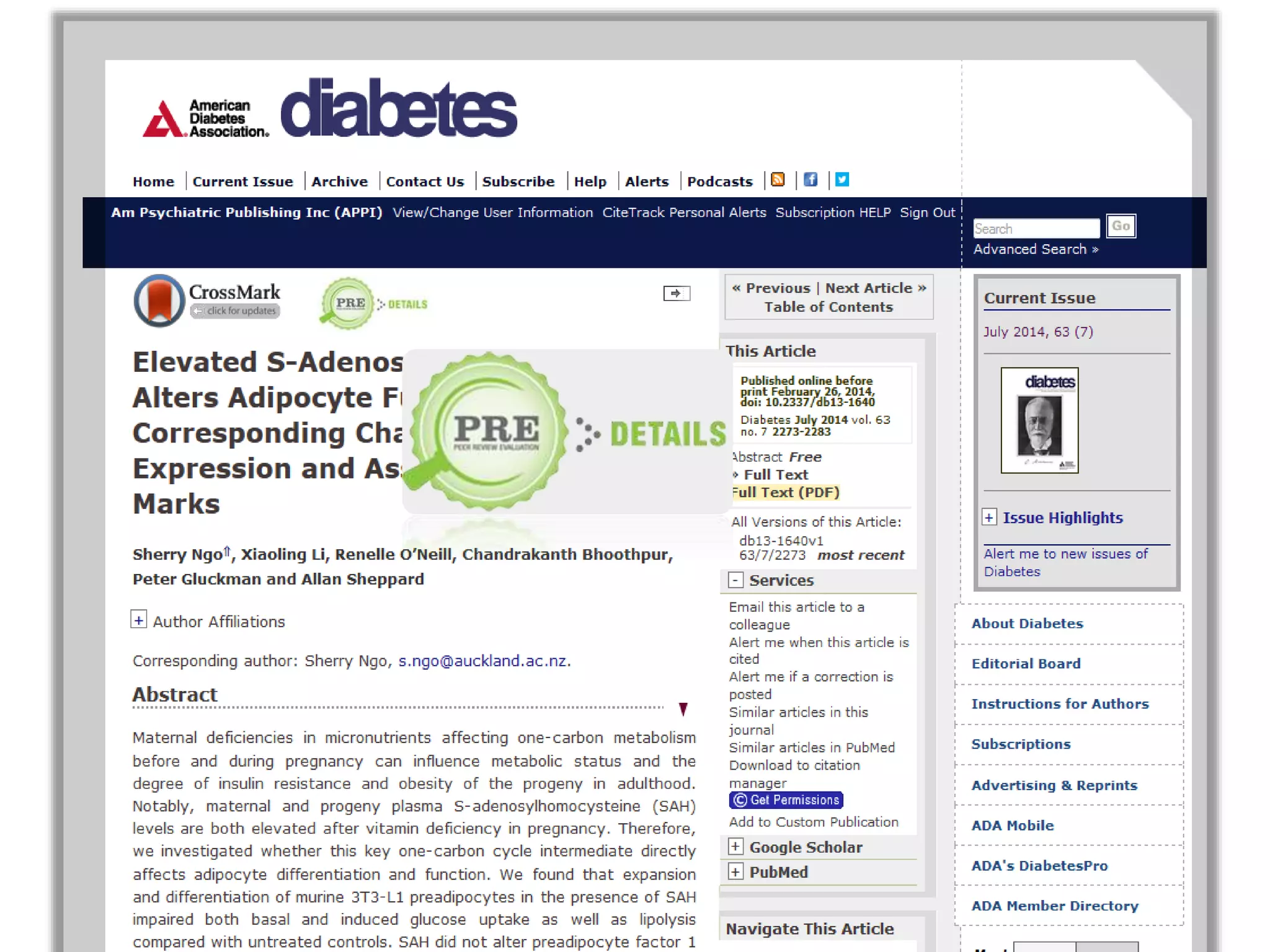
A badge that publishers can display in various places – search 
results, article pages, article-level metrics – to signal to readers 
that quality peer review has been conducted 
A window into a given journal’s peer review process accessible by 
end users 
PRE-val answers the most basic, and important, question about 
scholarly works: “Has this article really been peer reviewed?” 
PRE-val supports quality peer review. 
2
Why do we need PRE-val? 
Traditional peer review & scholarly publishers 
seem to be under constant criticism. 
Emergence of “predatory” publishers 
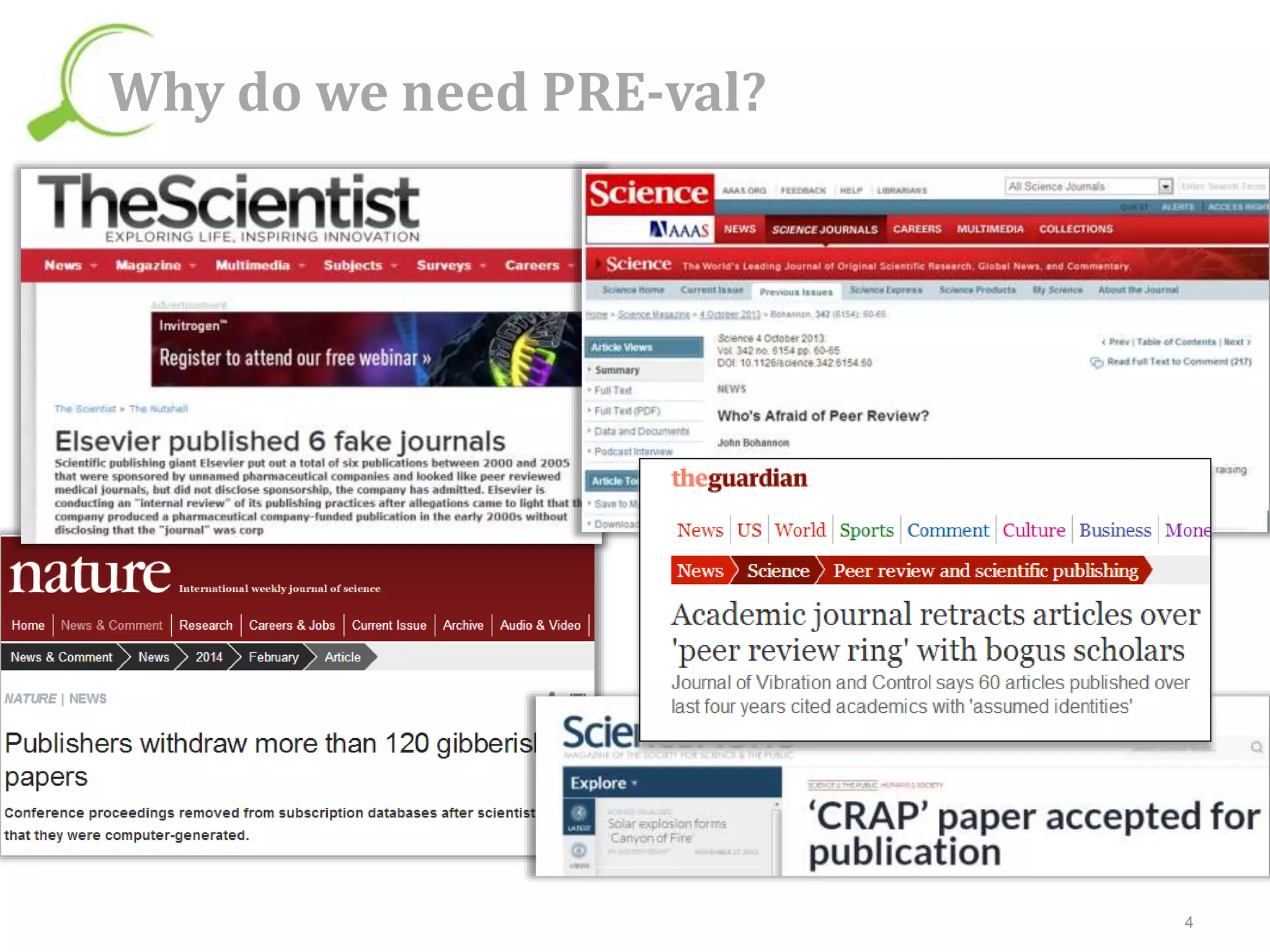
High-profile cases of faulty research being published 
Difficulty distinguishing peer-reviewed research from 
non-reviewed content in journals – publishing in a peer-reviewed 
journal does not equate with peer review for 
every article 
“Publish then filter” and “Publishing is a button” attitude 
3
Why do we need PRE-val? 
4
Why do we need PRE-val? 
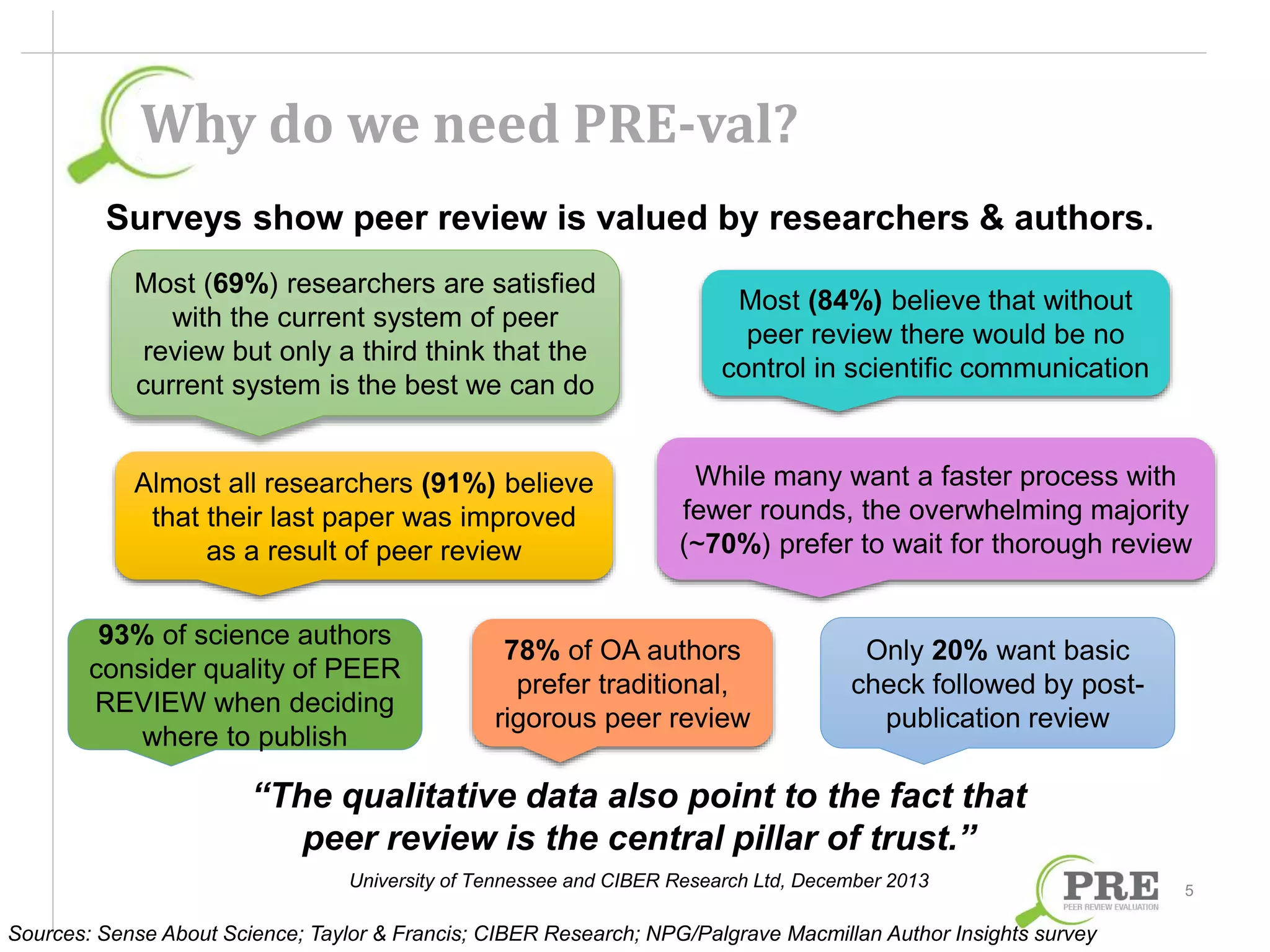
Surveys show peer review is valued by researchers & authors. 
“The qualitative data also point to the fact that 
peer review is the central pillar of trust.” 
University of Tennessee and CIBER Research Ltd, December 2013 
Sources: Sense About Science; Taylor & Francis; CIBER Research; NPG/Palgrave Macmillan Author Insights survey 
5 
Most (69%) researchers are satisfied 
with the current system of peer 
review but only a third think that the 
current system is the best we can do 
Most (84%) believe that without 
peer review there would be no 
control in scientific communication 
78% of OA authors 
prefer traditional, 
rigorous peer review 
Only 20% want basic 
check followed by post-publication 
review 
Almost all researchers (91%) believe 
that their last paper was improved 
as a result of peer review 
While many want a faster process with 
fewer rounds, the overwhelming majority 
(~70%) prefer to wait for thorough review 
93% of science authors 
consider quality of PEER 
REVIEW when deciding 
where to publish
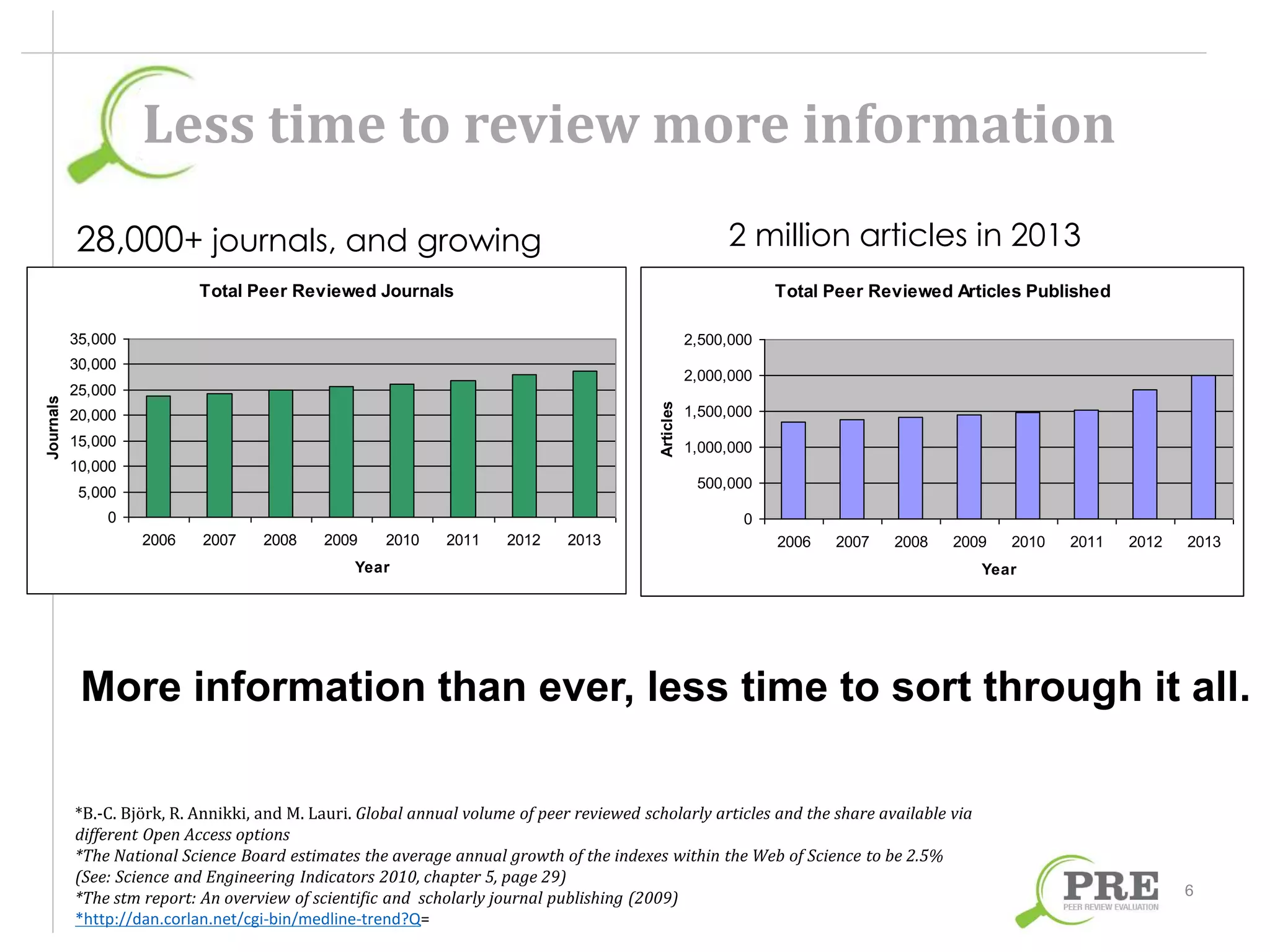
Less time to review more information 
6 
Total Peer Reviewed Journals 
35,000 
30,000 
25,000 
20,000 
15,000 
10,000 
5,000 
0 
2006 2007 2008 2009 2010 2011 2012 2013 
Year 
2,500,000 
2,000,000 
1,500,000 
1,000,000 
500,000 
*B.-C. Björk, R. Annikki, and M. Lauri. Global annual volume of peer reviewed scholarly articles and the share available via 
different Open Access options 
*The National Science Board estimates the average annual growth of the indexes within the Web of Science to be 2.5% 
(See: Science and Engineering Indicators 2010, chapter 5, page 29) 
*The stm report: An overview of scientific and scholarly journal publishing (2009) 
*http://dan.corlan.net/cgi-bin/medline-trend?Q= 
Journals 
28,000+ journals, and growing 
Total Peer Reviewed Articles Published 
0 
2006 2007 2008 2009 2010 2011 2012 2013 
Year 
Articles 
2 million articles in 2013 
More information than ever, less time to sort through it all.
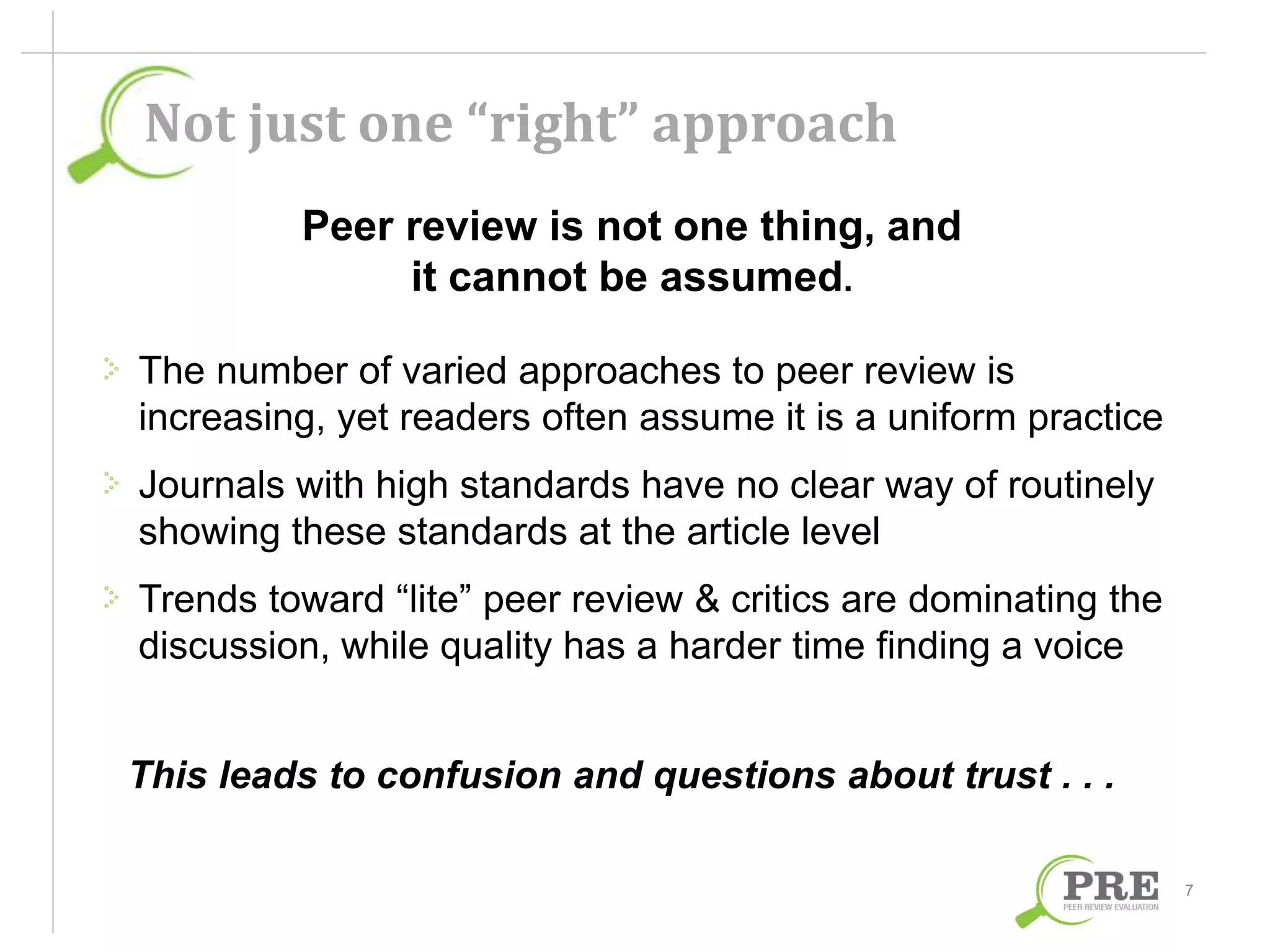
Not just one “right” approach 
Peer review is not one thing, and 
it cannot be assumed. 
The number of varied approaches to peer review is 
increasing, yet readers often assume it is a uniform practice 
Journals with high standards have no clear way of routinely 
showing these standards at the article level 
Trends toward “lite” peer review & critics are dominating the 
discussion, while quality has a harder time finding a voice 
This leads to confusion and questions about trust . . . 
7
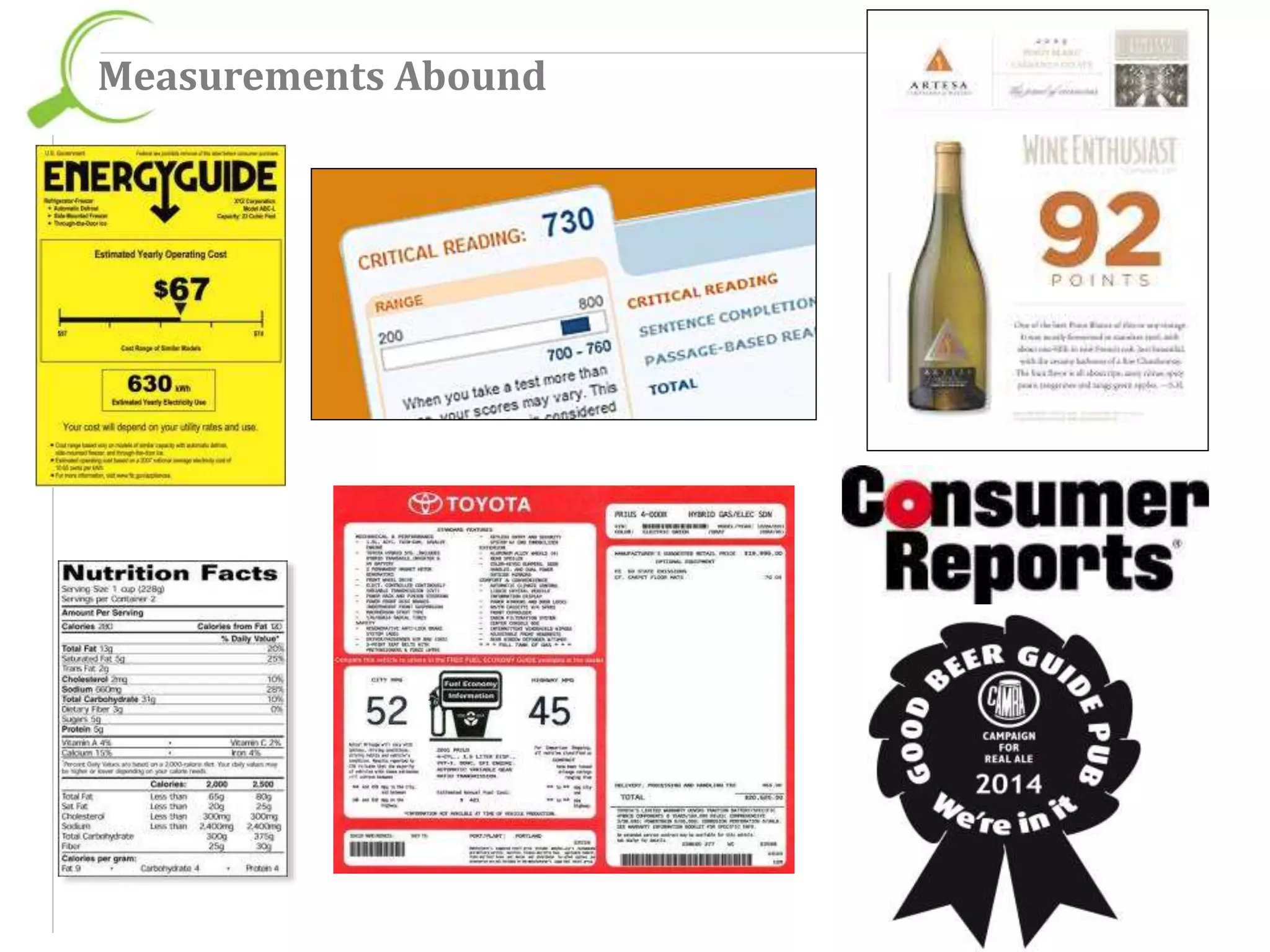
Measurements Abound
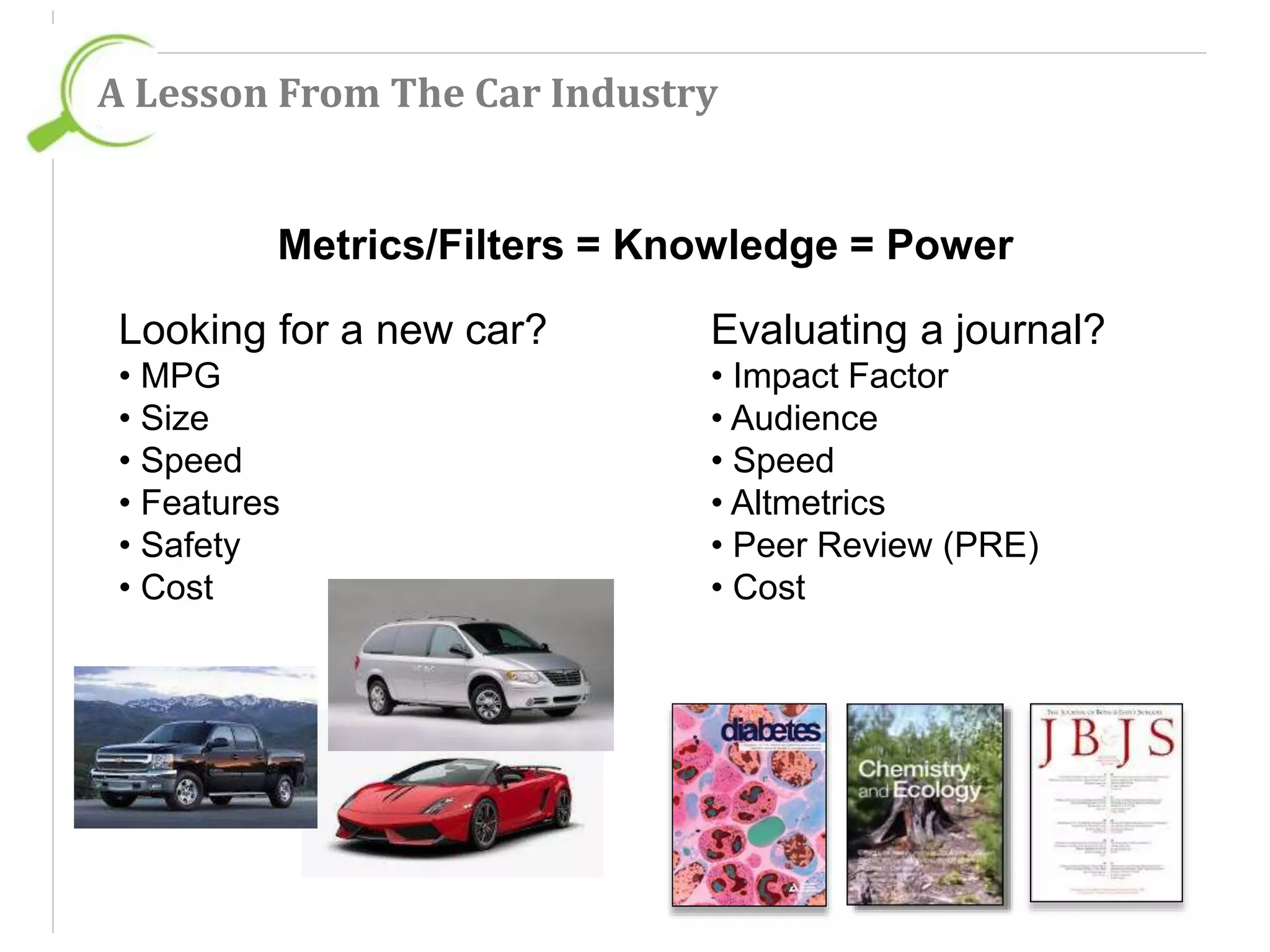
A Lesson From The Car Industry 
Metrics/Filters = Knowledge = Power 
Looking for a new car? 
• MPG 
• Size 
• Speed 
• Features 
• Safety 
• Cost 
Evaluating a journal? 
• Impact Factor 
• Audience 
• Speed 
• Altmetrics 
• Peer Review (PRE) 
• Cost
10 
Community 
Different approaches, different services….one goal: 
Working together to educate and support
We believe in peer review 
PRE-val creates incentives 
to use best practices in peer review. 
Recognizes journals with an editor-in-chief or other 
overseeing editor 
PRE-val encourages journals to use quality reviewers 
Provides transparency into iteration through review to 
improve the science and clarity of a paper 
Helps promote use of best practices, which are markers of 
commitment to better peer review approaches 
11
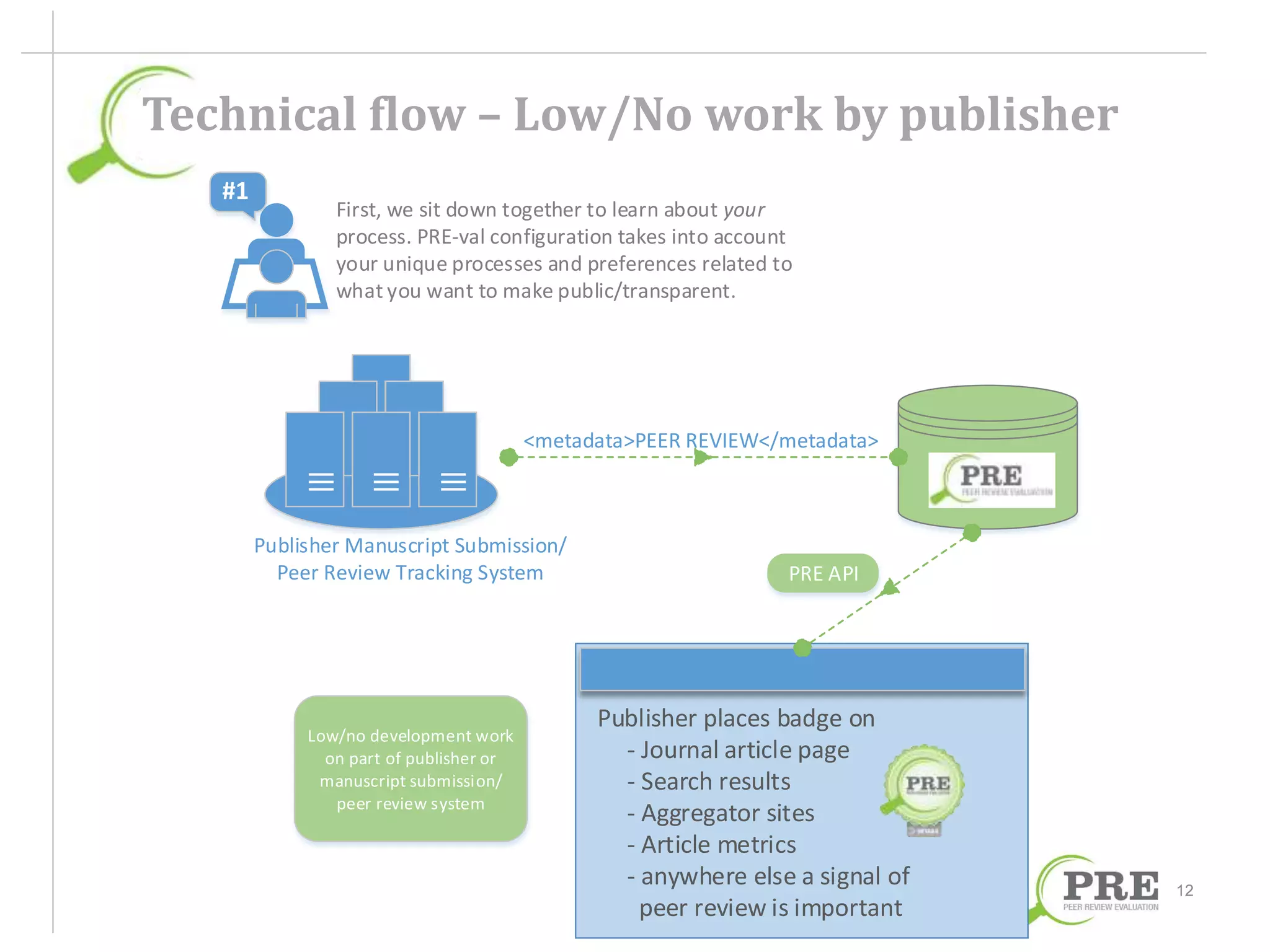
Technical flow – Low/No work by publisher 
12 
First, we sit down together to learn about your 
process. PRE-val configuration takes into account 
your unique processes and preferences related to 
what you want to make public/transparent. 
<metadata>PEER REVIEW</metadata> 
Publisher Manuscript Submission/ 
Peer Review Tracking System 
PRE API 
#1 
Low/no development work 
on part of publisher or 
manuscript submission/ 
peer review system 
Publisher places badge on 
- Journal article page 
- Search results 
- Aggregator sites 
- Article metrics 
- anywhere else a signal of 
peer review is important
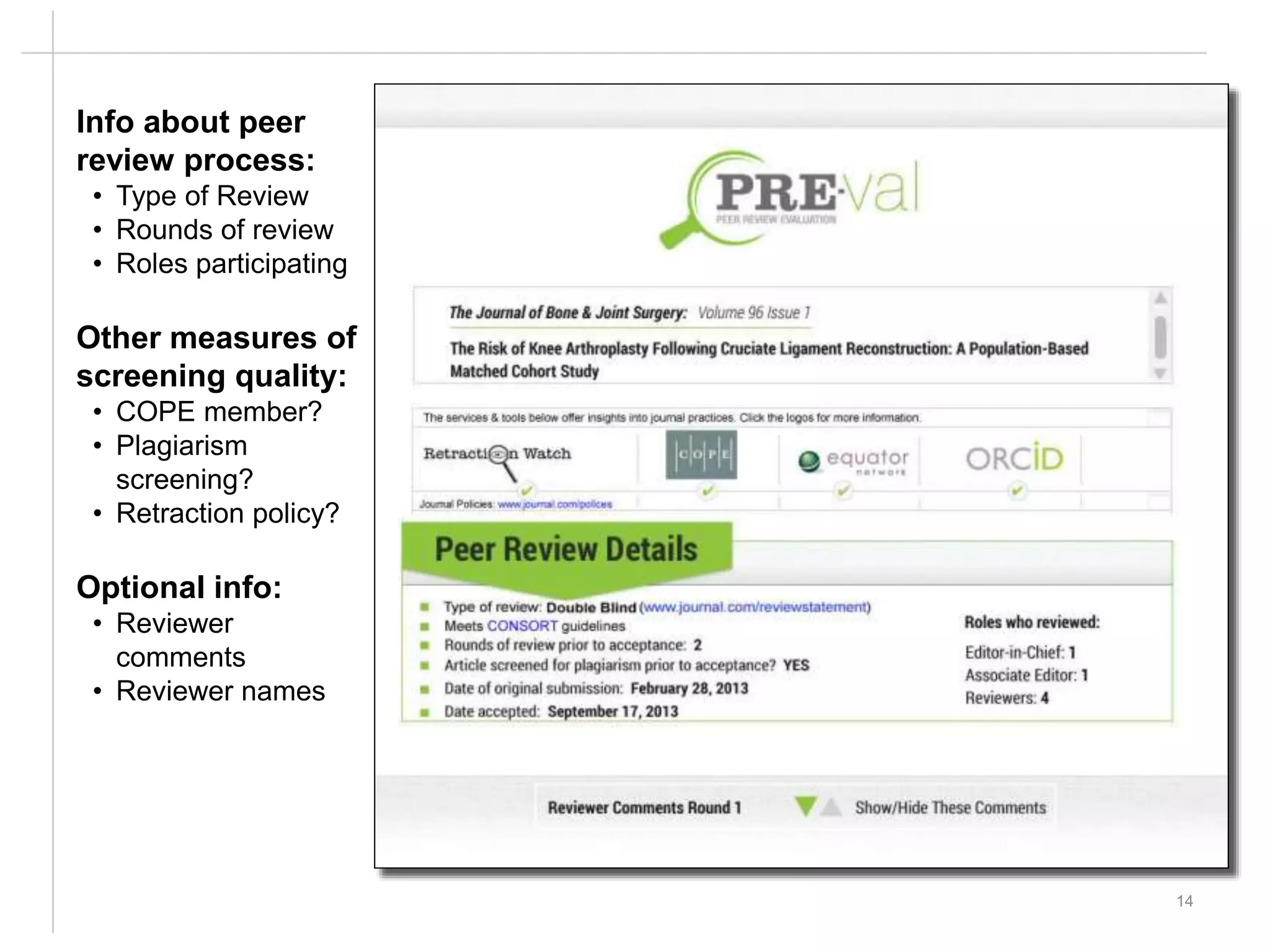
Info about peer 
review process: 
• Type of Review 
• Rounds of review 
• Roles participating 
Other measures of 
screening quality: 
• COPE member? 
• Plagiarism 
screening? 
• Retraction policy? 
Optional info: 
• Reviewer 
comments 
• Reviewer names 
14
November 2014 
Securing Trust & Transparency 
in Peer Review 
Adam Etkin, Founder and Managing Director 
http://www.pre-val.org 
@PeerReviewEval

2014 CrossRef Annual Meeting Peer Review Panel: PRE: Securing Trust & Transparency in Peer Review

  • 1.
    November 2014 SecuringTrust & Transparency in Peer Review Adam Etkin, Founder and Managing Director http://www.pre-val.org @PeerReviewEval
  • 2.
    What is PRE-val? A service that works with the publisher and journal to provide independent validation of the review process A badge that publishers can display in various places – search results, article pages, article-level metrics – to signal to readers that quality peer review has been conducted A window into a given journal’s peer review process accessible by end users PRE-val answers the most basic, and important, question about scholarly works: “Has this article really been peer reviewed?” PRE-val supports quality peer review. 2
  • 3.
    Why do weneed PRE-val? Traditional peer review & scholarly publishers seem to be under constant criticism. Emergence of “predatory” publishers High-profile cases of faulty research being published Difficulty distinguishing peer-reviewed research from non-reviewed content in journals – publishing in a peer-reviewed journal does not equate with peer review for every article “Publish then filter” and “Publishing is a button” attitude 3
  • 4.
    Why do weneed PRE-val? 4
  • 5.
    Why do weneed PRE-val? Surveys show peer review is valued by researchers & authors. “The qualitative data also point to the fact that peer review is the central pillar of trust.” University of Tennessee and CIBER Research Ltd, December 2013 Sources: Sense About Science; Taylor & Francis; CIBER Research; NPG/Palgrave Macmillan Author Insights survey 5 Most (69%) researchers are satisfied with the current system of peer review but only a third think that the current system is the best we can do Most (84%) believe that without peer review there would be no control in scientific communication 78% of OA authors prefer traditional, rigorous peer review Only 20% want basic check followed by post-publication review Almost all researchers (91%) believe that their last paper was improved as a result of peer review While many want a faster process with fewer rounds, the overwhelming majority (~70%) prefer to wait for thorough review 93% of science authors consider quality of PEER REVIEW when deciding where to publish
  • 6.
    Less time toreview more information 6 Total Peer Reviewed Journals 35,000 30,000 25,000 20,000 15,000 10,000 5,000 0 2006 2007 2008 2009 2010 2011 2012 2013 Year 2,500,000 2,000,000 1,500,000 1,000,000 500,000 *B.-C. Björk, R. Annikki, and M. Lauri. Global annual volume of peer reviewed scholarly articles and the share available via different Open Access options *The National Science Board estimates the average annual growth of the indexes within the Web of Science to be 2.5% (See: Science and Engineering Indicators 2010, chapter 5, page 29) *The stm report: An overview of scientific and scholarly journal publishing (2009) *http://dan.corlan.net/cgi-bin/medline-trend?Q= Journals 28,000+ journals, and growing Total Peer Reviewed Articles Published 0 2006 2007 2008 2009 2010 2011 2012 2013 Year Articles 2 million articles in 2013 More information than ever, less time to sort through it all.
  • 7.
    Not just one“right” approach Peer review is not one thing, and it cannot be assumed. The number of varied approaches to peer review is increasing, yet readers often assume it is a uniform practice Journals with high standards have no clear way of routinely showing these standards at the article level Trends toward “lite” peer review & critics are dominating the discussion, while quality has a harder time finding a voice This leads to confusion and questions about trust . . . 7
  • 8.
  • 9.
    A Lesson FromThe Car Industry Metrics/Filters = Knowledge = Power Looking for a new car? • MPG • Size • Speed • Features • Safety • Cost Evaluating a journal? • Impact Factor • Audience • Speed • Altmetrics • Peer Review (PRE) • Cost
  • 10.
    10 Community Differentapproaches, different services….one goal: Working together to educate and support
  • 11.
    We believe inpeer review PRE-val creates incentives to use best practices in peer review. Recognizes journals with an editor-in-chief or other overseeing editor PRE-val encourages journals to use quality reviewers Provides transparency into iteration through review to improve the science and clarity of a paper Helps promote use of best practices, which are markers of commitment to better peer review approaches 11
  • 12.
    Technical flow –Low/No work by publisher 12 First, we sit down together to learn about your process. PRE-val configuration takes into account your unique processes and preferences related to what you want to make public/transparent. <metadata>PEER REVIEW</metadata> Publisher Manuscript Submission/ Peer Review Tracking System PRE API #1 Low/no development work on part of publisher or manuscript submission/ peer review system Publisher places badge on - Journal article page - Search results - Aggregator sites - Article metrics - anywhere else a signal of peer review is important
  • 14.
    Info about peer review process: • Type of Review • Rounds of review • Roles participating Other measures of screening quality: • COPE member? • Plagiarism screening? • Retraction policy? Optional info: • Reviewer comments • Reviewer names 14
  • 15.
    November 2014 SecuringTrust & Transparency in Peer Review Adam Etkin, Founder and Managing Director http://www.pre-val.org @PeerReviewEval