CER, PCOR, & the History of PCORI:
Making Sense of Alphabet Soup
Michael Steinman, MD
Director of Comparative Effectiveness Research, CTSI
Associate Professor of Medicine, Division of Geriatrics
Thanks and Disclosure

• Thank you to participants and organizers
 –   Tracy Lieu           – Howard Pinderhughes
 –   Kathryn Phillips     – Claire Brindis
 –   David Thom           – Mark Pletcher
 –   Diane Allen
 –   Kevin Grumbach       – Aria Yow
 –   Laura Schmidt        – Deborah Grady
 –   Michael Potter       – Clay Johnston


• No conflicts of interest
History of PCORI

• 2010 health reform created Patient Centered
  Outcomes Research Institute
  – CER politically unpalatable (fears that → rationing)
  – So…PCOR
  – Define mandate, create systems to review and
    administer grants distinct from NIH or AHRQ
  – Clear mandate what is it not – cannot consider cost in
    coverage decisions; cannot use QALYs; will not fund
    cost-effectiveness analyses
Patient-Centered Outcomes

• Patient-centered outcomes – outcomes that
  directly impact patient’s lives and well-being
  – Functional status; ability to concentrate; care for
    loved ones; pain
  – NOT biomarkers

  – Effect size should be meaningful
  – Evaluate heterogeneity of treatment effects
  – Real-world settings
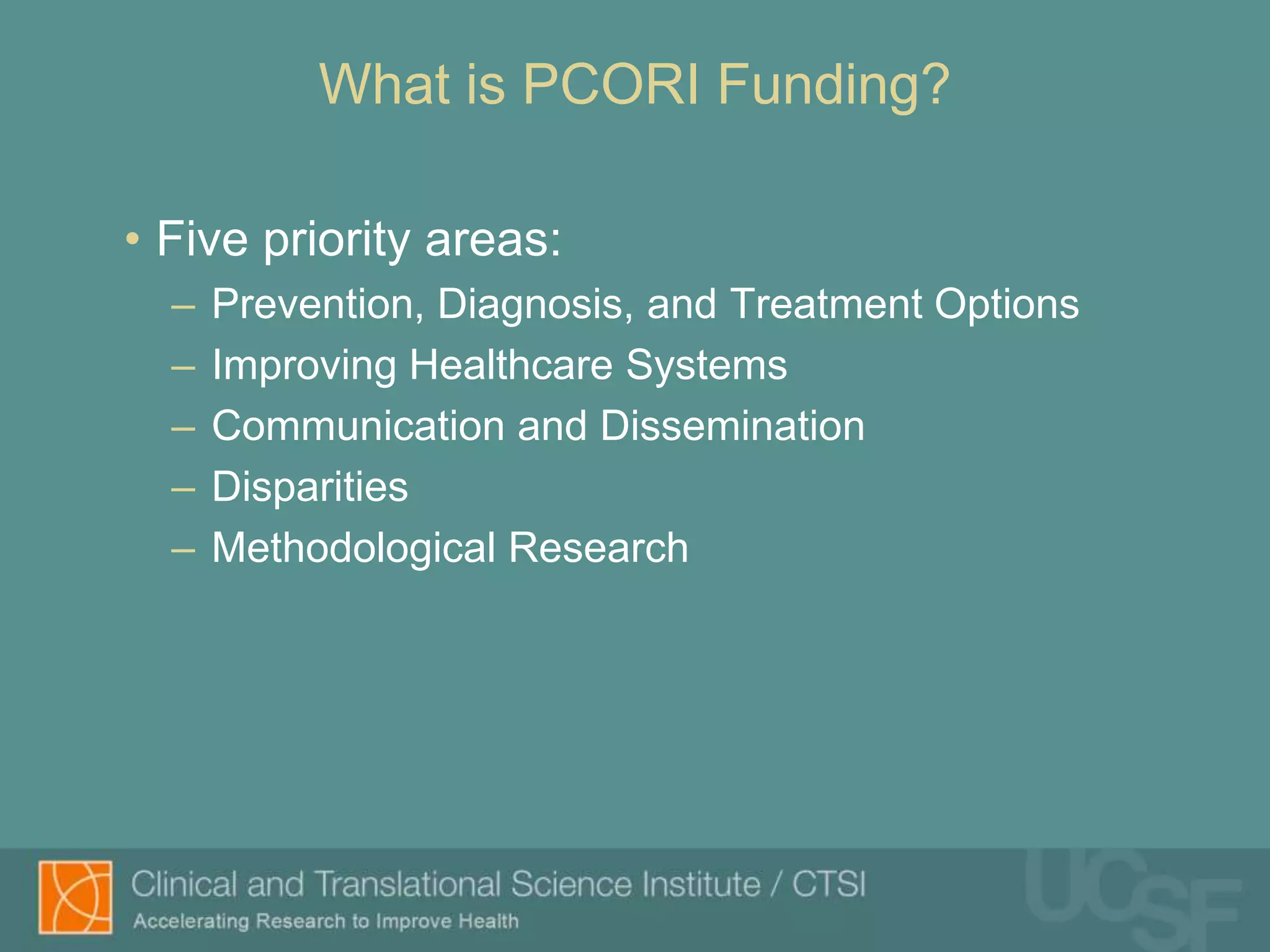
What is PCORI Funding?

• Five priority areas:
  –   Prevention, Diagnosis, and Treatment Options
  –   Improving Healthcare Systems
  –   Communication and Dissemination
  –   Disparities
  –   Methodological Research
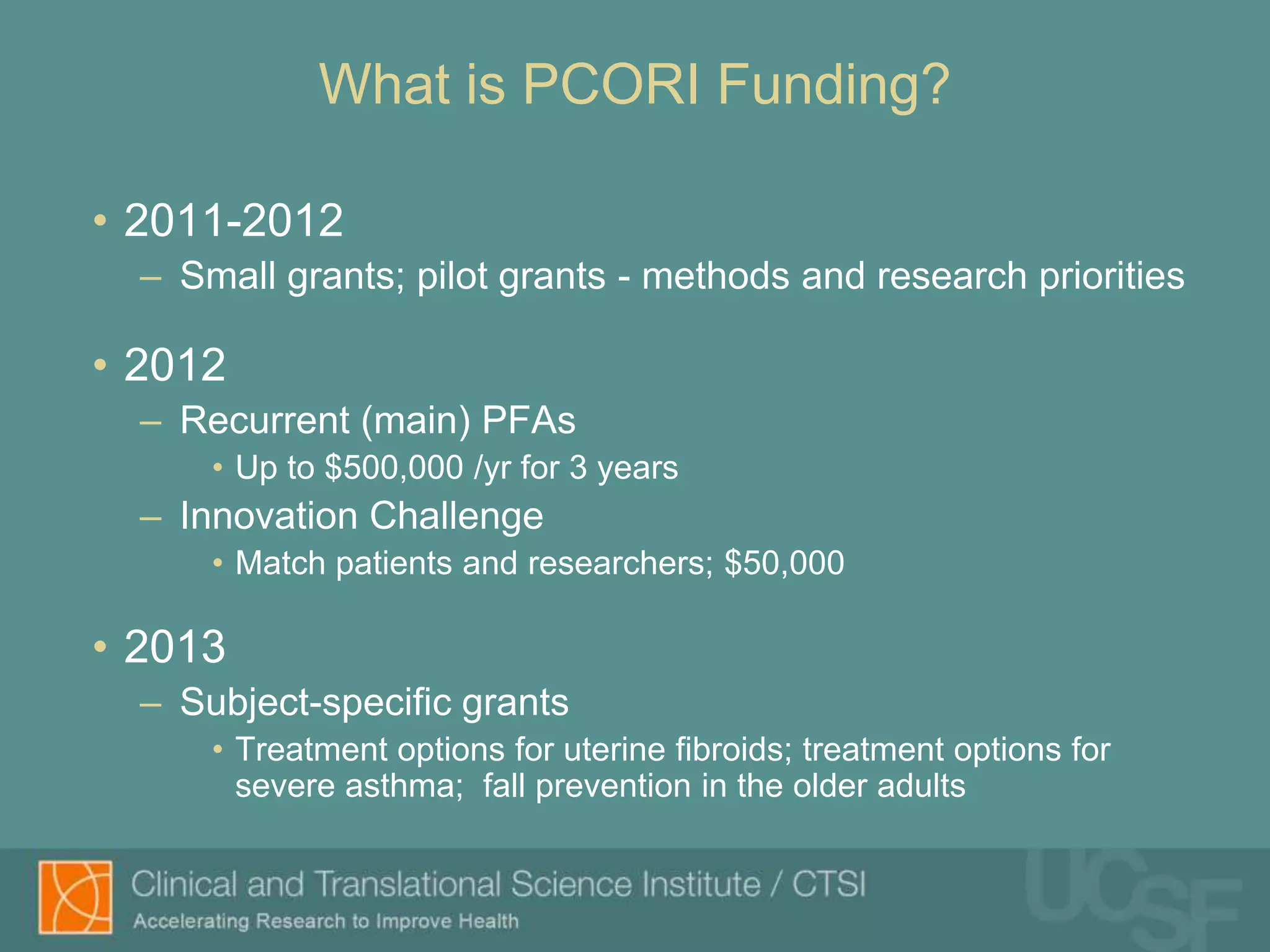
What is PCORI Funding?

• 2011-2012
  – Small grants; pilot grants - methods and research priorities

• 2012
  – Recurrent (main) PFAs
      • Up to $500,000 /yr for 3 years
  – Innovation Challenge
      • Match patients and researchers; $50,000

• 2013
  – Subject-specific grants
      • Treatment options for uterine fibroids; treatment options for
        severe asthma; fall prevention in the older adults
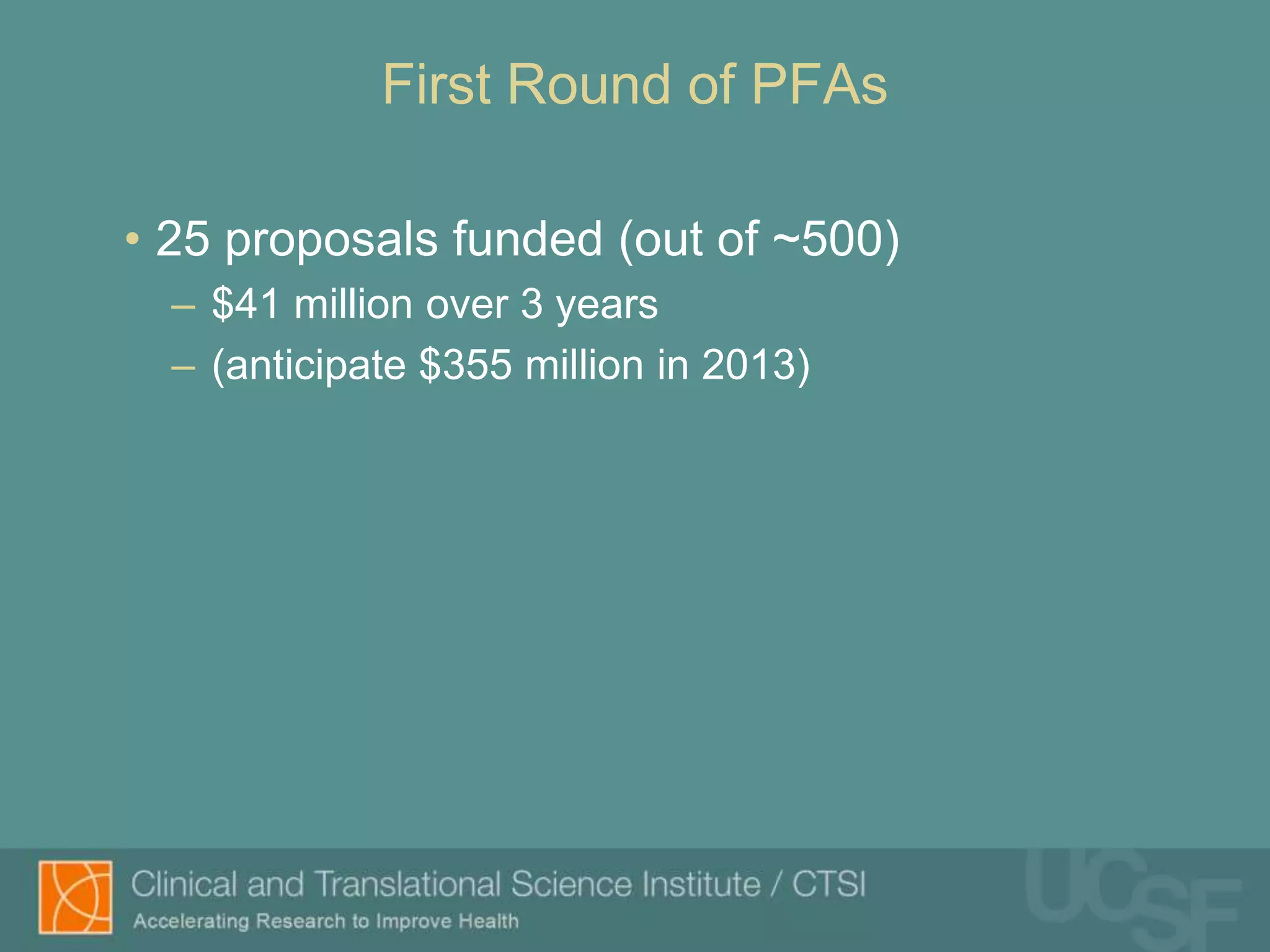
First Round of PFAs

• 25 proposals funded (out of ~500)
  – $41 million over 3 years
  – (anticipate $355 million in 2013)
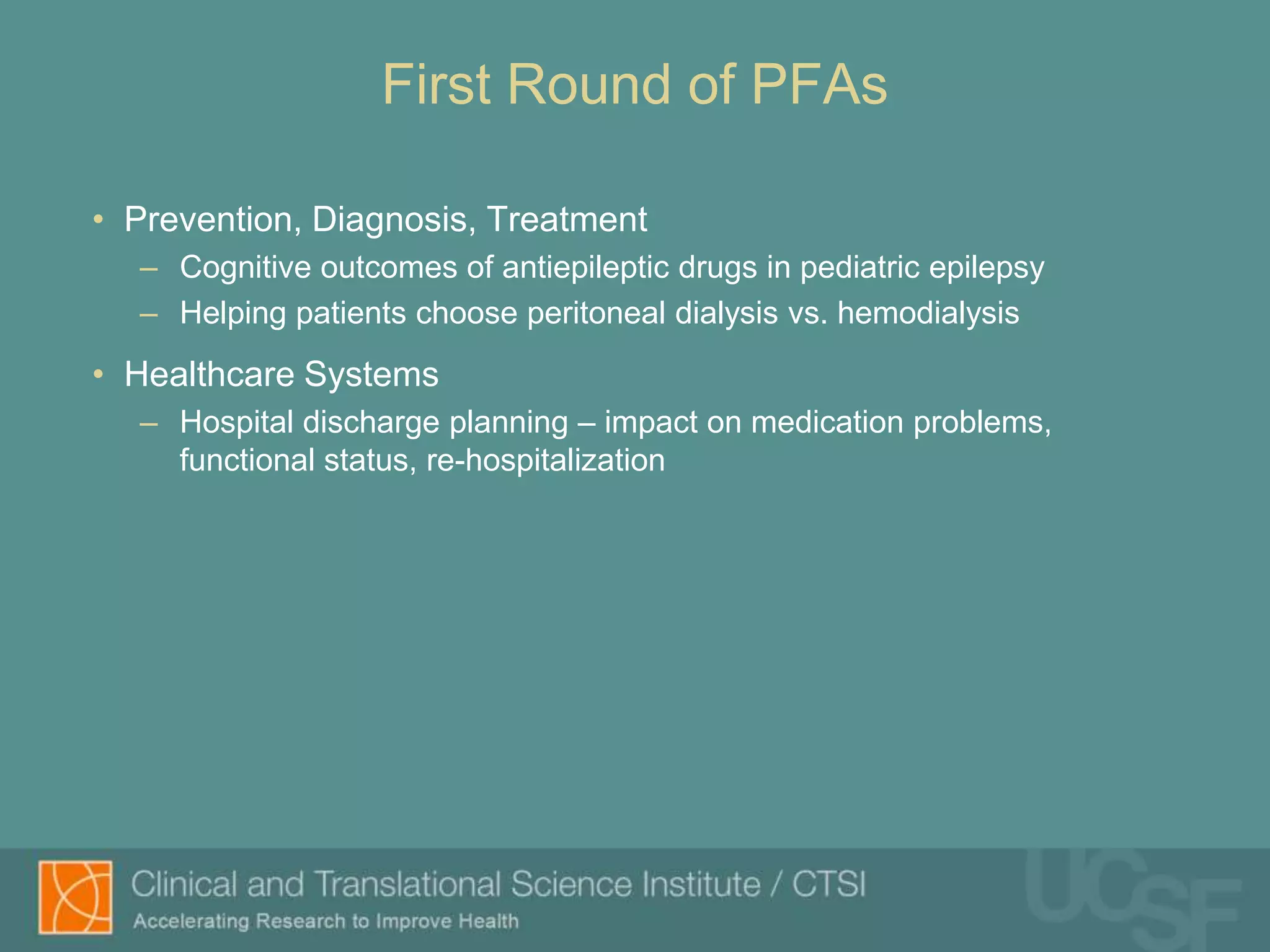
First Round of PFAs

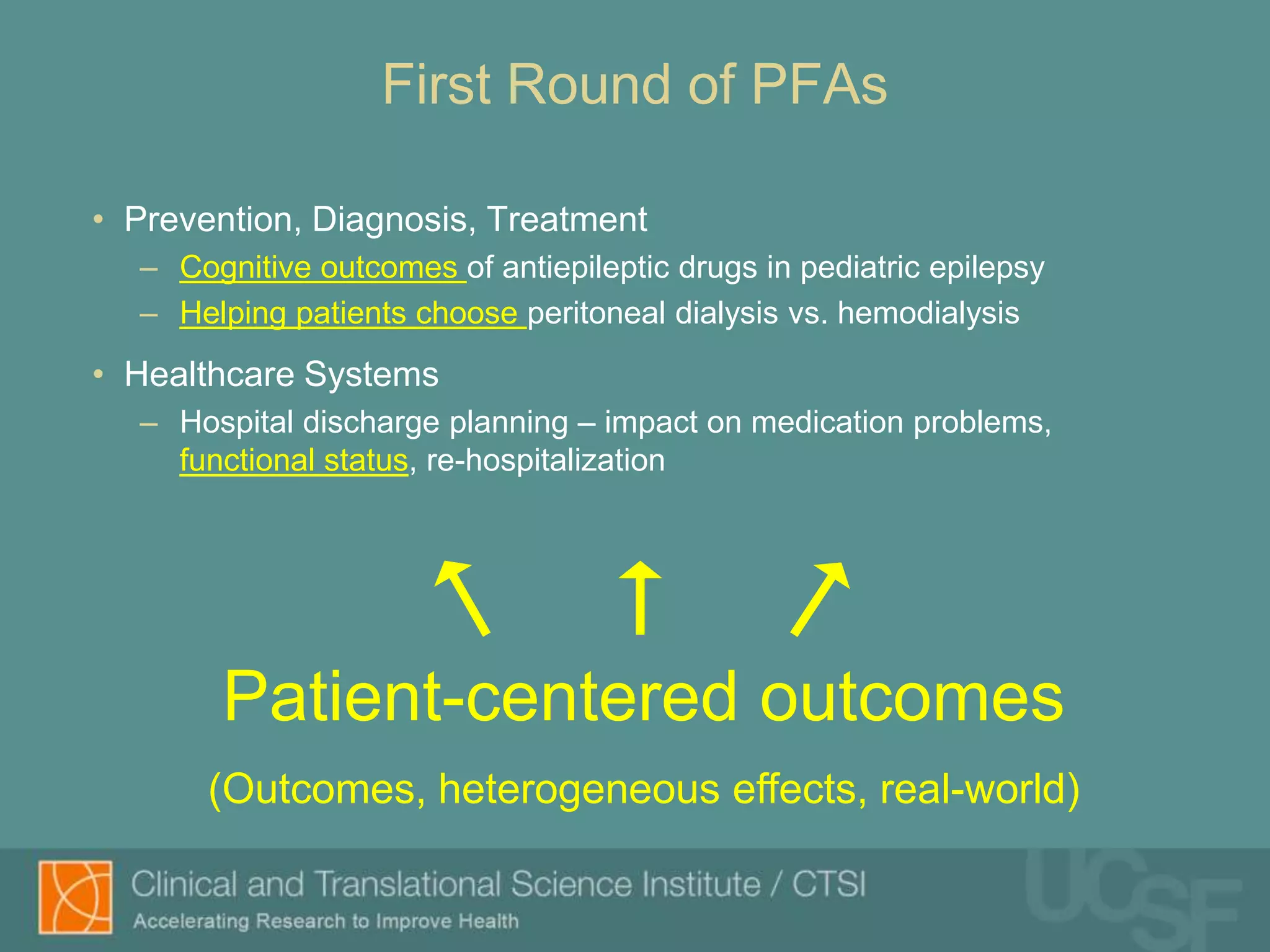
• Prevention, Diagnosis, Treatment
  – Cognitive outcomes of antiepileptic drugs in pediatric epilepsy
  – Helping patients choose peritoneal dialysis vs. hemodialysis
• Healthcare Systems
  – Hospital discharge planning – impact on medication problems,
    functional status, re-hospitalization
First Round of PFAs

• Prevention, Diagnosis, Treatment
  – Cognitive outcomes of antiepileptic drugs in pediatric epilepsy
  – Helping patients choose peritoneal dialysis vs. hemodialysis
• Healthcare Systems
  – Hospital discharge planning – impact on medication problems,
    functional status, re-hospitalization


       Patient-centered outcomes
       (Outcomes, heterogeneous effects, real-world)
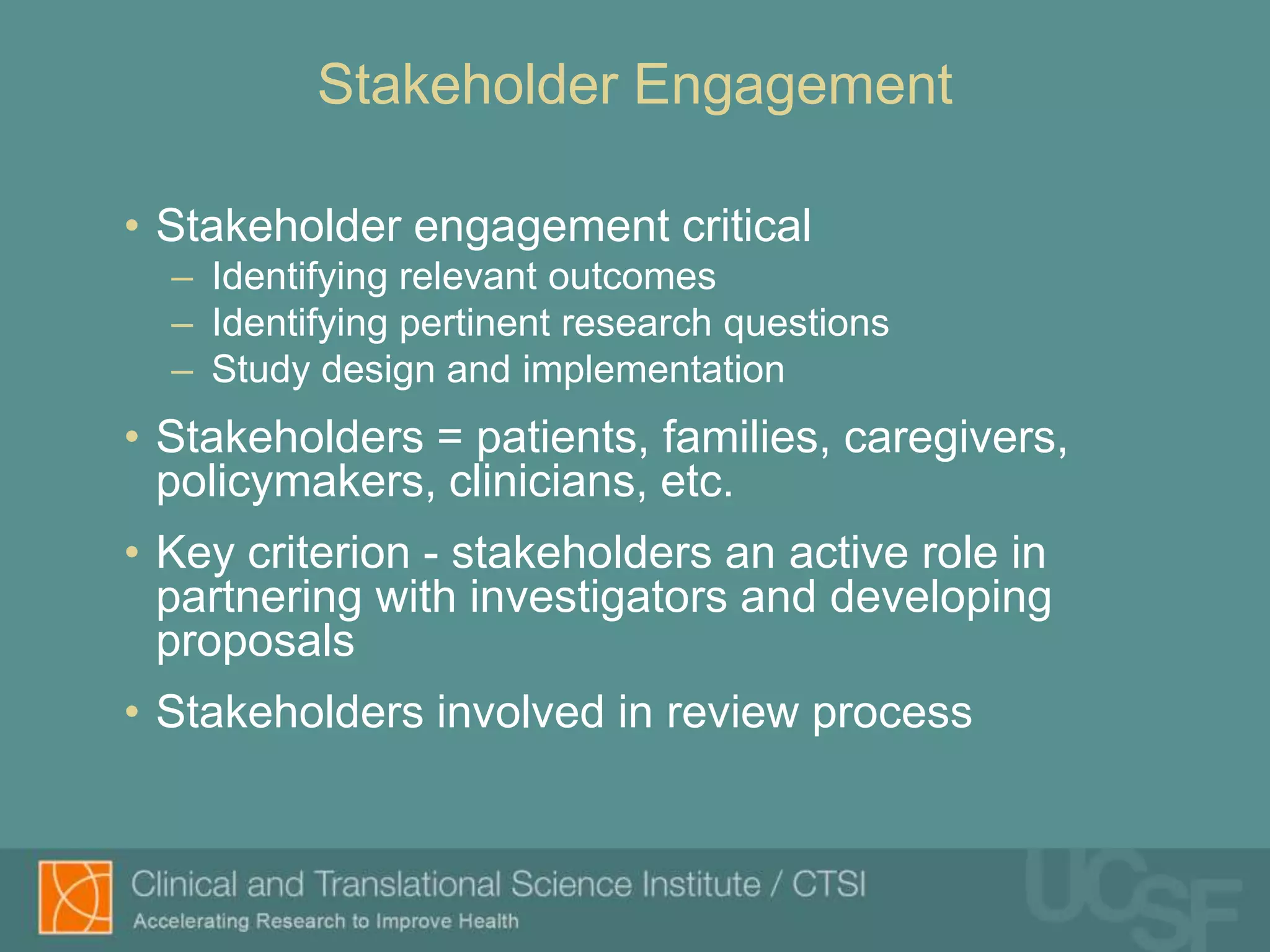
Stakeholder Engagement

• Stakeholder engagement critical
  – Identifying relevant outcomes
  – Identifying pertinent research questions
  – Study design and implementation
• Stakeholders = patients, families, caregivers,
  policymakers, clinicians, etc.
• Key criterion - stakeholders an active role in
  partnering with investigators and developing
  proposals
• Stakeholders involved in review process
Stakeholder Engagement

• How is this actually done?
• Main focus of this symposium
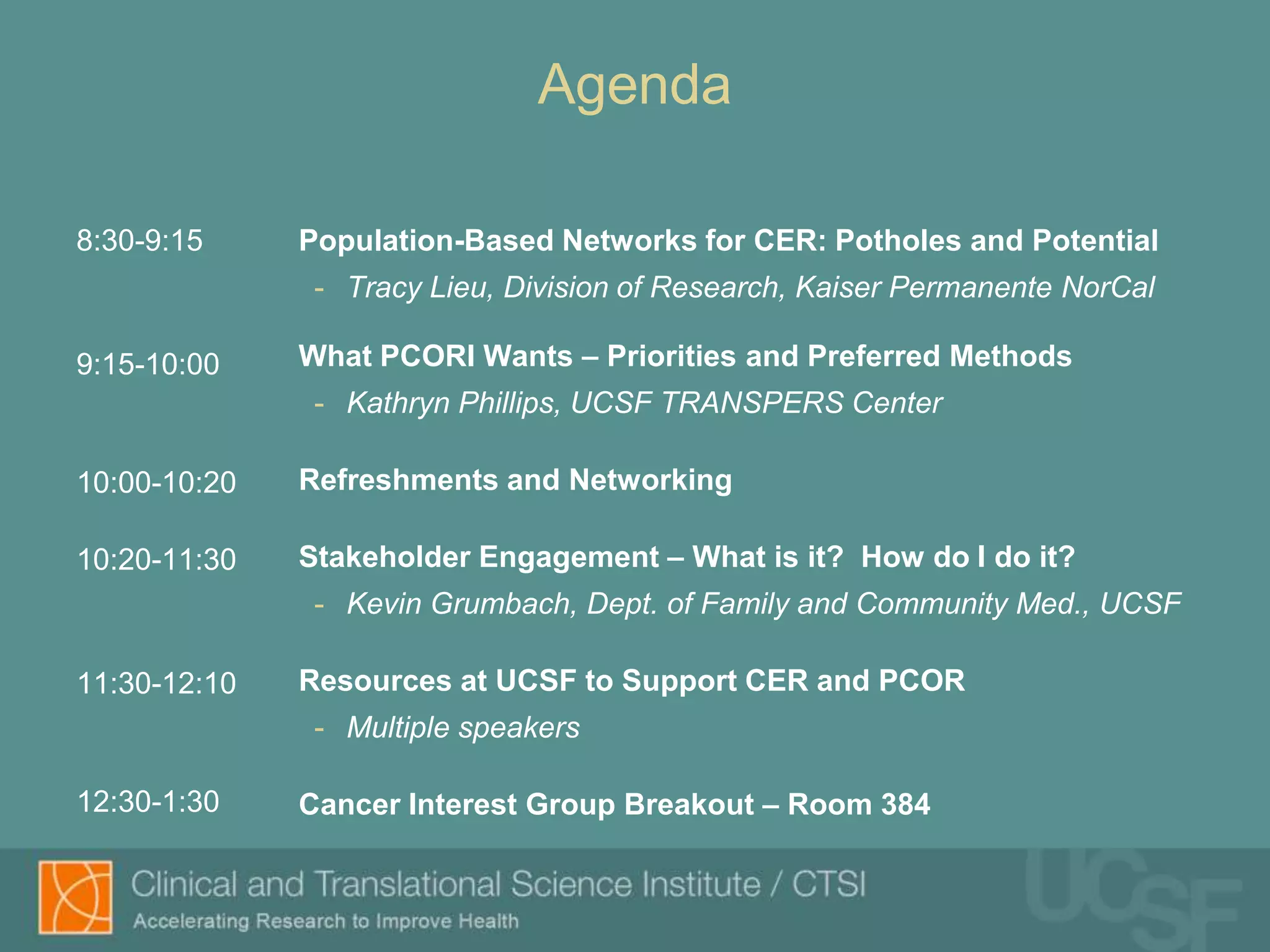
Agenda

8:30-9:15     Population-Based Networks for CER: Potholes and Potential
               - Tracy Lieu, Division of Research, Kaiser Permanente NorCal

9:15-10:00    What PCORI Wants – Priorities and Preferred Methods
               - Kathryn Phillips, UCSF TRANSPERS Center

10:00-10:20   Refreshments and Networking

10:20-11:30   Stakeholder Engagement – What is it? How do I do it?
               - Kevin Grumbach, Dept. of Family and Community Med., UCSF

11:30-12:10   Resources at UCSF to Support CER and PCOR
               - Multiple speakers

12:30-1:30    Cancer Interest Group Breakout – Room 384
First Round of PFAs

• Prevention, Diagnosis, Treatment
   – Cognitive outcomes of antiepileptic drugs in pediatric epilepsy
   – Helping patients choose peritoneal dialysis vs. hemodialysis
• Healthcare Systems
   – Hospital discharge planning – impact on medication problems,
     functional status, re-hospitalization
• Communication and Dissemination
   – Dementia care for rural and Hispanic populations
• Disparities
   – Literacy-adapted psychosocial treatments for chronic pain

UCSF CER - CER, PCOR, PCORI Overview (Symposium 2013)

  • 1.
    CER, PCOR, &the History of PCORI: Making Sense of Alphabet Soup Michael Steinman, MD Director of Comparative Effectiveness Research, CTSI Associate Professor of Medicine, Division of Geriatrics
  • 2.
    Thanks and Disclosure •Thank you to participants and organizers – Tracy Lieu – Howard Pinderhughes – Kathryn Phillips – Claire Brindis – David Thom – Mark Pletcher – Diane Allen – Kevin Grumbach – Aria Yow – Laura Schmidt – Deborah Grady – Michael Potter – Clay Johnston • No conflicts of interest
  • 3.
    History of PCORI •2010 health reform created Patient Centered Outcomes Research Institute – CER politically unpalatable (fears that → rationing) – So…PCOR – Define mandate, create systems to review and administer grants distinct from NIH or AHRQ – Clear mandate what is it not – cannot consider cost in coverage decisions; cannot use QALYs; will not fund cost-effectiveness analyses
  • 4.
    Patient-Centered Outcomes • Patient-centeredoutcomes – outcomes that directly impact patient’s lives and well-being – Functional status; ability to concentrate; care for loved ones; pain – NOT biomarkers – Effect size should be meaningful – Evaluate heterogeneity of treatment effects – Real-world settings
  • 5.
    What is PCORIFunding? • Five priority areas: – Prevention, Diagnosis, and Treatment Options – Improving Healthcare Systems – Communication and Dissemination – Disparities – Methodological Research
  • 6.
    What is PCORIFunding? • 2011-2012 – Small grants; pilot grants - methods and research priorities • 2012 – Recurrent (main) PFAs • Up to $500,000 /yr for 3 years – Innovation Challenge • Match patients and researchers; $50,000 • 2013 – Subject-specific grants • Treatment options for uterine fibroids; treatment options for severe asthma; fall prevention in the older adults
  • 7.
    First Round ofPFAs • 25 proposals funded (out of ~500) – $41 million over 3 years – (anticipate $355 million in 2013)
  • 8.
    First Round ofPFAs • Prevention, Diagnosis, Treatment – Cognitive outcomes of antiepileptic drugs in pediatric epilepsy – Helping patients choose peritoneal dialysis vs. hemodialysis • Healthcare Systems – Hospital discharge planning – impact on medication problems, functional status, re-hospitalization
  • 9.
    First Round ofPFAs • Prevention, Diagnosis, Treatment – Cognitive outcomes of antiepileptic drugs in pediatric epilepsy – Helping patients choose peritoneal dialysis vs. hemodialysis • Healthcare Systems – Hospital discharge planning – impact on medication problems, functional status, re-hospitalization Patient-centered outcomes (Outcomes, heterogeneous effects, real-world)
  • 10.
    Stakeholder Engagement • Stakeholderengagement critical – Identifying relevant outcomes – Identifying pertinent research questions – Study design and implementation • Stakeholders = patients, families, caregivers, policymakers, clinicians, etc. • Key criterion - stakeholders an active role in partnering with investigators and developing proposals • Stakeholders involved in review process
  • 11.
    Stakeholder Engagement • Howis this actually done? • Main focus of this symposium
  • 12.
    Agenda 8:30-9:15 Population-Based Networks for CER: Potholes and Potential - Tracy Lieu, Division of Research, Kaiser Permanente NorCal 9:15-10:00 What PCORI Wants – Priorities and Preferred Methods - Kathryn Phillips, UCSF TRANSPERS Center 10:00-10:20 Refreshments and Networking 10:20-11:30 Stakeholder Engagement – What is it? How do I do it? - Kevin Grumbach, Dept. of Family and Community Med., UCSF 11:30-12:10 Resources at UCSF to Support CER and PCOR - Multiple speakers 12:30-1:30 Cancer Interest Group Breakout – Room 384
  • 14.
    First Round ofPFAs • Prevention, Diagnosis, Treatment – Cognitive outcomes of antiepileptic drugs in pediatric epilepsy – Helping patients choose peritoneal dialysis vs. hemodialysis • Healthcare Systems – Hospital discharge planning – impact on medication problems, functional status, re-hospitalization • Communication and Dissemination – Dementia care for rural and Hispanic populations • Disparities – Literacy-adapted psychosocial treatments for chronic pain

Editor's Notes

  • #4 Mission “PCORI helps people make informed health care decisions – and improves health care delivery and outcomes – by producing and promoting high integrity, evidence-based information that comes from research guided by patients, caregivers, and the broader health care community. …”
  • #9 Home IV vs. oral antibiotics - rehospitalization and quality of lifeCommunity engagement ↓ disparities in depression outcomes
  • #10 Home IV vs. oral antibiotics - rehospitalization and quality of lifeCommunity engagement ↓ disparities in depression outcomes
  • #15 Home IV vs. oral antibiotics - rehospitalization and quality of lifeCommunity engagement ↓ disparities in depression outcomes