Discovering Our Reality
By: Vazgen Miridjanian
What is Reality?
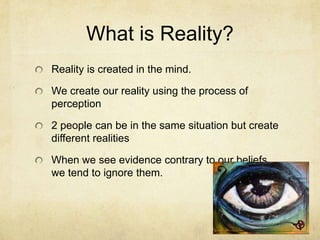
Reality is created in the mind.

We create our reality using the process of
perception

2 people can be in the same situation but create
different realities

When we see evidence contrary to our beliefs,
we tend to ignore them.
Reality is not what is “real”
 Reality is not what is “real”, it’s what we think is
 real.

 Arguments arise when two peoples realities are
 different on the same subject or situation

 When you are debating with someone over the
 subject of abortion, you are arguing over
 realities. (Your reality may be that abortion is
 acceptable and the other persons reality may be
 that abortion is murder)
The Perception Process
3 Steps in the Perception
         Process
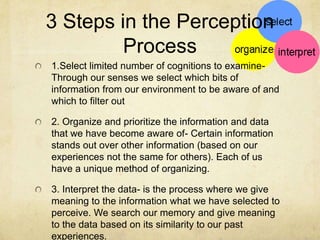
1.Select limited number of cognitions to examine-
Through our senses we select which bits of
information from our environment to be aware of and
which to filter out

2. Organize and prioritize the information and data
that we have become aware of- Certain information
stands out over other information (based on our
experiences not the same for others). Each of us
have a unique method of organizing.

3. Interpret the data- is the process where we give
meaning to the information what we have selected to
perceive. We search our memory and give meaning
to the data based on its similarity to our past
experiences.
Selecting and Sorting
          Filters
Psychological Condition- affects how we
recognize incoming data- If you are depressed
and go to Disneyland (the happiest place on
earth), the reality we create will be negative.
Physical Condition- can affect the data we
recognize. If we are hungry or tired we view our
environment differently than if we have eaten and
have rested.
Language- creates an organizational system that
allows us to understand messages from our
environment The more limited our vocabulary the
more limited our reality.
Selecting and Sorting
      Filters Cont.
Formal learning- shapes how we view our
environment

Experiences- are our first-hand informal learning
activities. Each similar experiences is added to a
previous experience.

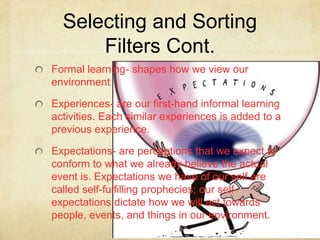
Expectations- are perceptions that we expect to
conform to what we already believe the actual
event is. Expectations we have of our self are
called self-fulfilling prophecies; our self-
expectations dictate how we will act towards
people, events, and things in our environment.
Factors That Influence
  How We Interpret Data
Closure- how the mind makes sense out of it’s
environment, even when only a limited amount of
data is available. (Not a conscious activity, more
of a physiological reflex reaction.)

Selective perception- When we narrow available
cognitions to make an interpretation of the
environment. We use as many cognitions as are
necessary to make a judgment about
persons, events, and things in our life.

Patterning- attempt to keep new or current
perceptions in line with past ones because new
perceptions which contradict past ones, knock us
off our STASIS.
Testing Your Reality
The skill of perception checking provides the
critical thinker with a better way to handle their
interpretations of people, events, and things in
their environment.

A goal of arguing is to narrow the differences in
perceptions between individuals.

Sharing and comparing our realities with those of
others can help reduce distortions and
differences among the many realities we have
created.
Stasis
A comfortable reality becomes our stasis on the
subject

Stasis means “at rest”, and once we have
reached stasis, we use communication to bolster
and maintain it.

We all physically and emotionally want to be in
stasis but we have a tendency to limit our ideas
and observations to just one reality, when the
reality can be a “delusion” (the delusion being
our reality).
More Than One Valid
        Reality
We are motivated to try psychologically and
physiologically keep our perceptions in our
thought and action consistent.
When individual perceptions about the
environment differ, we have difficulty in reaching
a common understanding of what is happening in
the environment.
Only when we understand that there may be
more than one valid reality of the
environment, can we begin to realize the
importance of communicating with others.

Discovering our reality

  • 1.
    Discovering Our Reality By:Vazgen Miridjanian
  • 2.
    What is Reality? Realityis created in the mind. We create our reality using the process of perception 2 people can be in the same situation but create different realities When we see evidence contrary to our beliefs, we tend to ignore them.
  • 3.
    Reality is notwhat is “real” Reality is not what is “real”, it’s what we think is real. Arguments arise when two peoples realities are different on the same subject or situation When you are debating with someone over the subject of abortion, you are arguing over realities. (Your reality may be that abortion is acceptable and the other persons reality may be that abortion is murder)
  • 4.
  • 5.
    3 Steps inthe Perception Process 1.Select limited number of cognitions to examine- Through our senses we select which bits of information from our environment to be aware of and which to filter out 2. Organize and prioritize the information and data that we have become aware of- Certain information stands out over other information (based on our experiences not the same for others). Each of us have a unique method of organizing. 3. Interpret the data- is the process where we give meaning to the information what we have selected to perceive. We search our memory and give meaning to the data based on its similarity to our past experiences.
  • 6.
    Selecting and Sorting Filters Psychological Condition- affects how we recognize incoming data- If you are depressed and go to Disneyland (the happiest place on earth), the reality we create will be negative. Physical Condition- can affect the data we recognize. If we are hungry or tired we view our environment differently than if we have eaten and have rested. Language- creates an organizational system that allows us to understand messages from our environment The more limited our vocabulary the more limited our reality.
  • 7.
    Selecting and Sorting Filters Cont. Formal learning- shapes how we view our environment Experiences- are our first-hand informal learning activities. Each similar experiences is added to a previous experience. Expectations- are perceptions that we expect to conform to what we already believe the actual event is. Expectations we have of our self are called self-fulfilling prophecies; our self- expectations dictate how we will act towards people, events, and things in our environment.
  • 8.
    Factors That Influence How We Interpret Data Closure- how the mind makes sense out of it’s environment, even when only a limited amount of data is available. (Not a conscious activity, more of a physiological reflex reaction.) Selective perception- When we narrow available cognitions to make an interpretation of the environment. We use as many cognitions as are necessary to make a judgment about persons, events, and things in our life. Patterning- attempt to keep new or current perceptions in line with past ones because new perceptions which contradict past ones, knock us off our STASIS.
  • 9.
    Testing Your Reality Theskill of perception checking provides the critical thinker with a better way to handle their interpretations of people, events, and things in their environment. A goal of arguing is to narrow the differences in perceptions between individuals. Sharing and comparing our realities with those of others can help reduce distortions and differences among the many realities we have created.
  • 10.
    Stasis A comfortable realitybecomes our stasis on the subject Stasis means “at rest”, and once we have reached stasis, we use communication to bolster and maintain it. We all physically and emotionally want to be in stasis but we have a tendency to limit our ideas and observations to just one reality, when the reality can be a “delusion” (the delusion being our reality).
  • 11.
    More Than OneValid Reality We are motivated to try psychologically and physiologically keep our perceptions in our thought and action consistent. When individual perceptions about the environment differ, we have difficulty in reaching a common understanding of what is happening in the environment. Only when we understand that there may be more than one valid reality of the environment, can we begin to realize the importance of communicating with others.