Tools for Reading Myths
-Peter Struck
Prepared by
Vaidehi Hariyani
(Research Scholar)
Department of English,MKBU
18th September 2018
PhD Coursework Exam
Peter Struck
• Associate Professor -Classical
Studies.
• Instructor in an Online Course
“Greek and Roman Mythology”.
• Created by University of
Pennsylvania.
Functionalism
Freud
Interpretation of
Dream
Myths and Rituals
Structuralism
• Bronisaw Malinowski (1884 to 1942)
• Delight and entertain us or to give us
the versions or teach us about the
sort of universal structure of the
Cosmos.
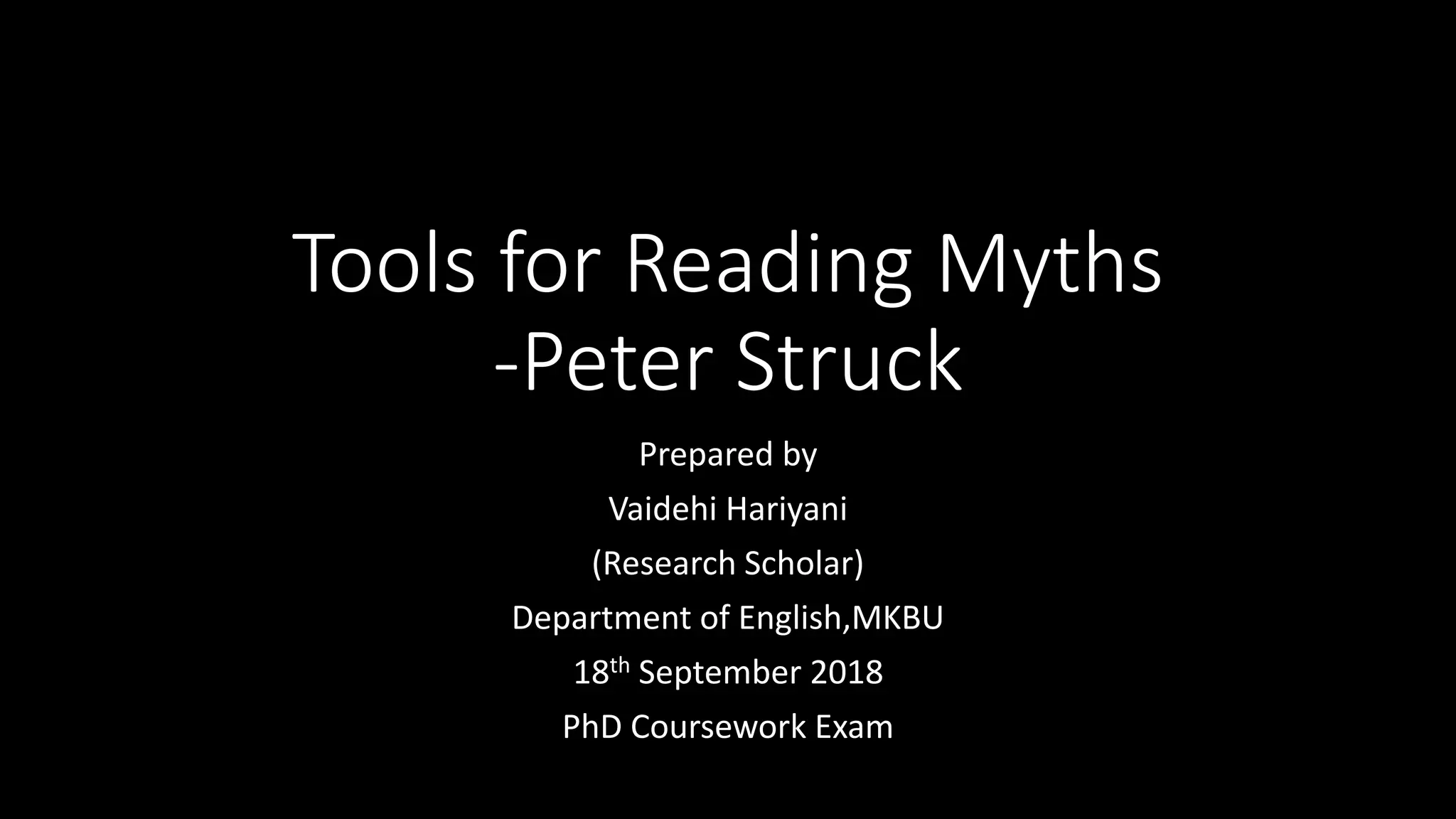
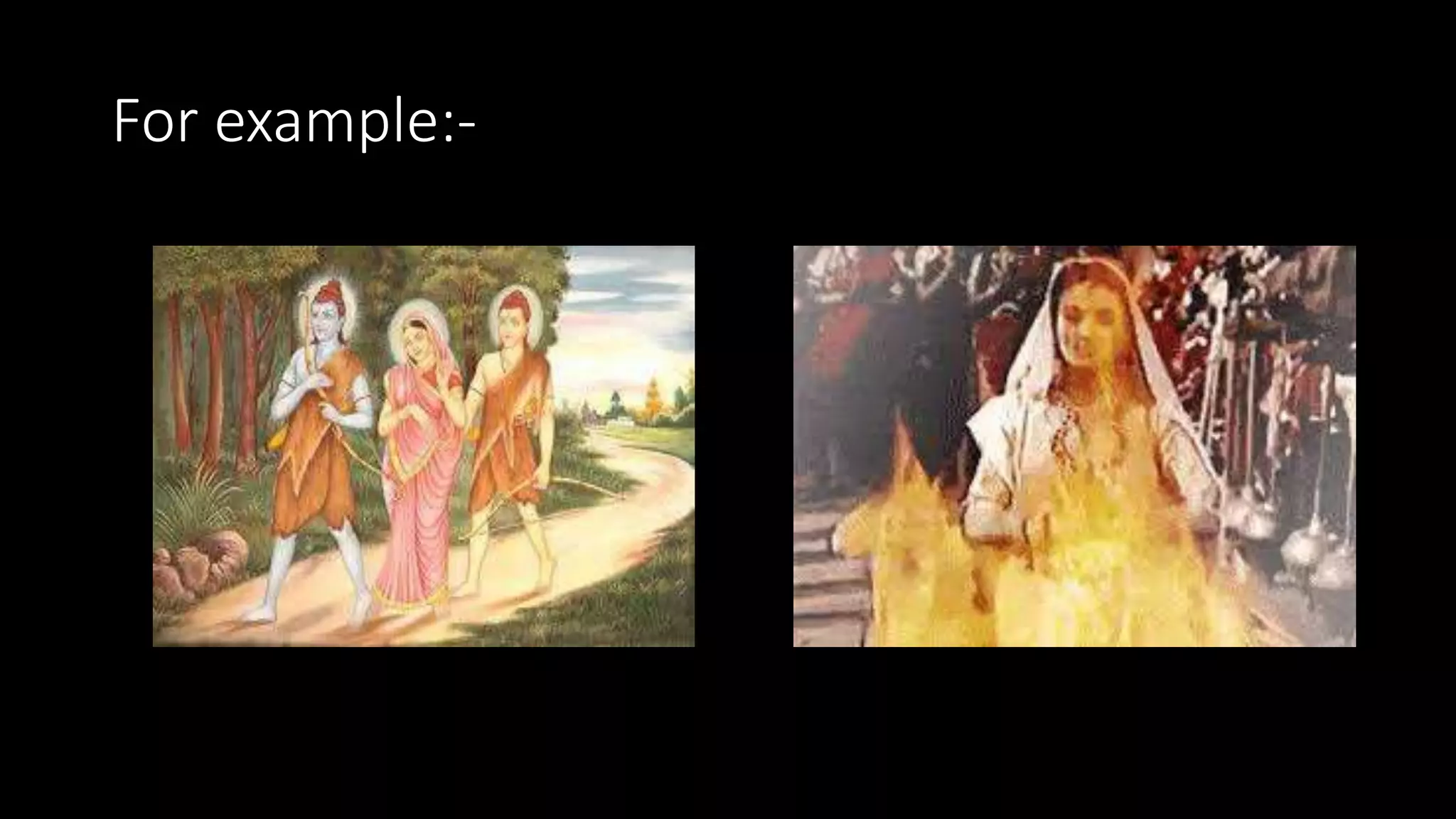
• Reassure us that our cultural norms
and our social values are the right
ones.
• So myths serve the function of
legitimatizing.
For example:-
• Claude Levi-Strauss (1908
to 2009)
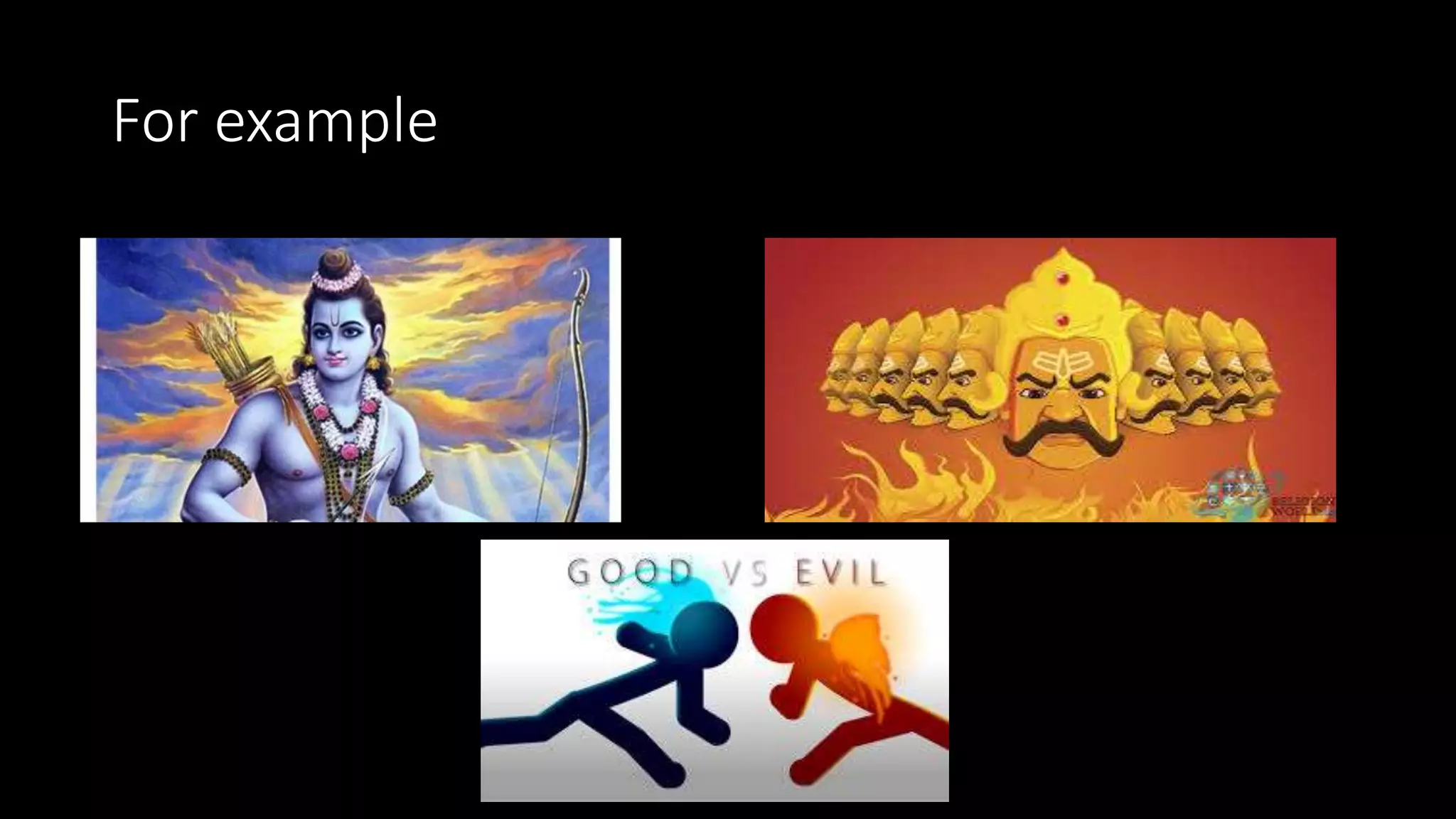
• Binary Opposition
• Absence of Something
• Human beings tend to
put the same pairs in
opposition from culture
to culture to culture.
For example
Freud – Interpretation of Dreams
• Sigmund Freud (1856 to 1939).
• The Interpretation of Dreams -1900.
• Example of doctor
• Myths are the dreams of an entire culture.
• Each of us is engaged always in a process of myth-making through our
dreams, and our cultures are, in a way, dreaming as they write their
myths.
For example
Myths and Rituals
• Emil Durkheim (1858 to 1917) and Jane Harrison (1850 to 1928).
• Collective Effervescence
• Myths and rituals are intimately tied.
• Why do we do this? And when someone steps back and ask that question,
That's when myth rushes in.
• When we see those connections the myth and ritual says, yes, that's
indeed how myths work.
• They're there as the soundtrack for ritual behaviors, strange ritual
behaviors that provoke people trying to invent explanations of them.
• And when they do, they tell stories, and these stories are what you and I
call myth.
For example
Recap
• Structuralists think they contain hidden messages about the structure
of the human mind.
• Functionalists think that they contain messages about the values that
a culture wants to legitimize to itself.
• Freud thinks that hidden messages inside a myth are always going to
be about just you and me as individuals, developing, working our way
through a developing, the developing of our psychological state.
• Rituals brings Myths into existence.
Works Cited:-
• Struck, Peter. Greek and Roman Mythology. Web. University of
Pennsylvania, n.d. 2018. Web
Vaidehi09hariyani@gmail.com
Thank you

Tools for Reading Myths - Peter Struck

  • 2.
    Tools for ReadingMyths -Peter Struck Prepared by Vaidehi Hariyani (Research Scholar) Department of English,MKBU 18th September 2018 PhD Coursework Exam
  • 3.
    Peter Struck • AssociateProfessor -Classical Studies. • Instructor in an Online Course “Greek and Roman Mythology”. • Created by University of Pennsylvania.
  • 4.
  • 5.
    • Bronisaw Malinowski(1884 to 1942) • Delight and entertain us or to give us the versions or teach us about the sort of universal structure of the Cosmos. • Reassure us that our cultural norms and our social values are the right ones. • So myths serve the function of legitimatizing.
  • 6.
  • 7.
    • Claude Levi-Strauss(1908 to 2009) • Binary Opposition • Absence of Something • Human beings tend to put the same pairs in opposition from culture to culture to culture.
  • 8.
  • 9.
    Freud – Interpretationof Dreams • Sigmund Freud (1856 to 1939). • The Interpretation of Dreams -1900. • Example of doctor • Myths are the dreams of an entire culture. • Each of us is engaged always in a process of myth-making through our dreams, and our cultures are, in a way, dreaming as they write their myths.
  • 10.
  • 11.
    Myths and Rituals •Emil Durkheim (1858 to 1917) and Jane Harrison (1850 to 1928). • Collective Effervescence • Myths and rituals are intimately tied. • Why do we do this? And when someone steps back and ask that question, That's when myth rushes in. • When we see those connections the myth and ritual says, yes, that's indeed how myths work. • They're there as the soundtrack for ritual behaviors, strange ritual behaviors that provoke people trying to invent explanations of them. • And when they do, they tell stories, and these stories are what you and I call myth.
  • 12.
  • 13.
    Recap • Structuralists thinkthey contain hidden messages about the structure of the human mind. • Functionalists think that they contain messages about the values that a culture wants to legitimize to itself. • Freud thinks that hidden messages inside a myth are always going to be about just you and me as individuals, developing, working our way through a developing, the developing of our psychological state. • Rituals brings Myths into existence.
  • 14.
    Works Cited:- • Struck,Peter. Greek and Roman Mythology. Web. University of Pennsylvania, n.d. 2018. Web Vaidehi09hariyani@gmail.com
  • 15.