Orlando: A Biography
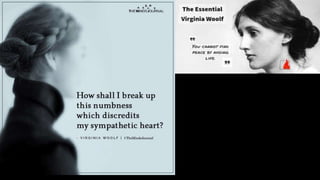
Virginia Woolf
Vaidehi Hariyani
(Research Scholar and Faculty)
Department of English,
Maharaja Krishnakumarsinhji Bhavnagar University
Virginia Woolf; Adeline Virginia Stephen
• Leslie Stephen (1 child) +Julia Jackson (3 Children)
• Julia Jackson Duckworth and Leslie Stephen married in 1878, and four
children followed: Vanessa (born 1879), Thoby (born 1880), Virginia
(born 1882), and Adrian (born 1883).
• Mother – Half sister Stella Duckworth – Father – Thoby – Vannesa’s
marriage -
• Born in London in 1882, Adeline Virginia Stephen, or “Ginia” as she was
affectionately known, had a love for arts and literature running through her
family.
• Her sister Vanessa was an artist, and when they reached adulthood, the
two sisters became the heart of an influential intellectual circle known as
the Bloomsbury Group, a collective of radical artists, writers and thinkers
during the early 20th century.
• In 1912, Virginia married Leonard Woolf, a politically active left-wing writer
and university friend of her brother’s. While Virginia Woolf’s earlier novels,
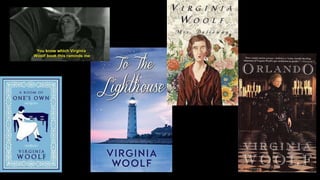
which included Night and Day (1919), Mrs Dalloway (1925) and To the
Lighthouse (1927), were not hugely commercially or critically successful
during her time, she is today respected as one of the most important
writers of the 20th century and a pioneer of “stream of consciousness”
writing.
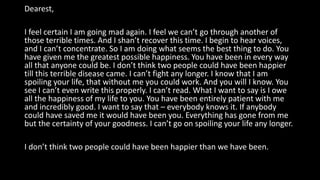
Dearest,
I feel certain I am going mad again. I feel we can’t go through another of
those terrible times. And I shan’t recover this time. I begin to hear voices,
and I can’t concentrate. So I am doing what seems the best thing to do. You
have given me the greatest possible happiness. You have been in every way
all that anyone could be. I don’t think two people could have been happier
till this terrible disease came. I can’t fight any longer. I know that I am
spoiling your life, that without me you could work. And you will I know. You
see I can’t even write this properly. I can’t read. What I want to say is I owe
all the happiness of my life to you. You have been entirely patient with me
and incredibly good. I want to say that – everybody knows it. If anybody
could have saved me it would have been you. Everything has gone from me
but the certainty of your goodness. I can’t go on spoiling your life any longer.
I don’t think two people could have been happier than we have been.
Vita Sackville-West
• The glamorous writer Vita Sackville-West was 10 years younger than Woolf
and came from an aristocratic family.
• The Sackvilles’ ancestral home was Knole, a sprawling estate in southern
England, and Sackville-West was always frustrated that she would never be
able to inherit Knole due to her gender, as English aristocratic custom
forbid it.
• (This was a point that Woolf highlighted in perhaps her most openly
political and feminist work, the 1929 essay A Room of One’s Own, in which
she advocated for women to be financially independent.)
• Sackville-West married diplomat Harold Nicholson in 1913, who would,
like his wife, also come to have same-sex affairs outside of their marriage.
That relationship is the subject of a new film, Vita & Virginia, which
includes lines lifted straight from the literary duo’s love letters.
Starring Elizabeth Debicki as Woolf and Gemma Arterton as Sackville-
West, the film from director Chanya Button is set against the backdrop
of bohemian high society in 1920s London with a host of characters
based on real-life people.
Here’s the true story behind Vita & Virginia, Woolf and Sackville-West’s
passionate relationship and the great literary work it inspired.
Although both were married to men, the two women penned hundreds
of poetic letters to each other, and their relationship would inspire one
of Woolf’s most celebrated works, the 1928 novel Orlando.
Pre-Task
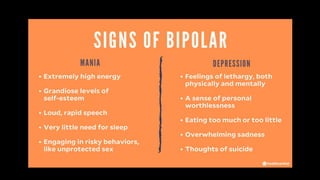
• What is Bipolar Disorder?
• Introduction about Virginia Woolf and Vita – Sackville West
While- Viewing Task
• Observe the symptoms of Depression in Woolf’s behaviour
• Observe the important Scene like their first meeting, their
last meeting, who initiates the relationship
• Note down the views about relationship, marriage and
society among the characters like Virginia Woolf, Vita
Sackville and the male charcters
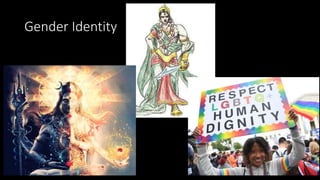
Gender Identity
Key facts
• Full Title: Orlando: A Biography
• When Written: 1927-1928
• Where Written: London, England
• When Published: 1928
• Literary Period: Modernism
• Genre: Historical Fiction; Experimental Biography
• Setting: London and Constantinople, spanning from the 16th to the 20th century
• Climax: October 11, 1928, when Orlando wakes at 10:00 a.m. to “the present
moment.”
• Antagonist: Society
• Point of View: Third-person omniscient
Historical Context in Orlando
• In Orlando, Orlando first sees Sasha skating on the River Thames during the
festival of the Great Frost. Throughout history, there have been several Great
Frosts to settle over England and Europe, including the Great Frosts of 1683 and
1708; however, it is likely that Woolf is referring to the Great Frost of 1608, in
which the very first frost fair was held in London. During December of 1607, a
massive cold spell settled over Great Britain, Europe, and Iceland. Temperatures
plummeted, killing people and livestock, and the River Thames froze completely
over. The coast of the North Sea froze as well, and all shipping and trading halted
for over three months. Just as Woolf describes, ships were frozen in the harbor
and giant icebergs floated out to the open water.
• Frost fairs offered merchants and businesses an opportunity to recuperate some
of their lost revenue on account of the cold, and Londoners took to the frozen
surface of the Thames River for sledding, ice skating, and carnival games. Frost
fairs typically lasted only a few days but did not start to shut down until the ice
began to melt, often trapping people and attractions out on the melting river. The
ice usually melted rapidly, often in less than a day’s time, and it led to several
deaths over the centuries. The greatest frost fair is said to have been held during
the Great Frost of 1683, one of the coldest winters on record in England, and the
last frost fair was held during the Great Frost of 1814. After the final frost fair of
1814, the Thames River did not again freeze over until 1963 and has not since.
• Stream of consciousness, narrative technique in nondramatic fiction intended to render the
flow of myriad impressions—visual, auditory, physical, associative, and subliminal—
• that impinge on the consciousness of an individual and form part of his awareness along
with the trend of his rational thoughts.
• The term was first used by the psychologist William James in The Principles of Psychology
(1890). As the psychological novel developed in the 20th century, some writers attempted
to capture the total flow of their characters’ consciousness, rather than limit themselves to
rational thoughts.
• To represent the full richness, speed, and subtlety of the mind at work, the writer
incorporates snatches of incoherent thought, ungrammatical constructions, and free
association of ideas, images, and words at the pre-speech level.
• The stream-of-consciousness novel commonly uses the narrative techniques of interior
monologue.
Themes
• Writing and Literature
• Subjectivity, Truth and Biography
• Gender and Society
• Identity and Transformation
• Clothing
• The Oak Tree
• Stroke of the clock
• Wild Goose/ Feathers
Biography – Characteristics or Elements
• Describe and discuss the life of a real person
• Information is based on fact
• Incidents, dialogue, and people are accurate and from a reliable source
using first person accounts when available
• The person's life story is told with respect to other people and events of
the time in which they lived
• Develops an understanding of the places, times, events, and other people
when the person lived
• Tells the story in a style and tone that the reader/listener can relate to the
person and believe in their humanness
• Develops a person as a real and interesting person not a persona or
stereotypical member of a particular group.
Works Cited
• Woolf, Virginia. Orlando: A Biography. London: Published by Leonard
& Virginia Woolf at the Hogarth Press, 1933.

Orlando: A Biography - Virginia Woolf

  • 1.
    Orlando: A Biography VirginiaWoolf Vaidehi Hariyani (Research Scholar and Faculty) Department of English, Maharaja Krishnakumarsinhji Bhavnagar University
  • 3.
    Virginia Woolf; AdelineVirginia Stephen • Leslie Stephen (1 child) +Julia Jackson (3 Children) • Julia Jackson Duckworth and Leslie Stephen married in 1878, and four children followed: Vanessa (born 1879), Thoby (born 1880), Virginia (born 1882), and Adrian (born 1883). • Mother – Half sister Stella Duckworth – Father – Thoby – Vannesa’s marriage -
  • 4.
    • Born inLondon in 1882, Adeline Virginia Stephen, or “Ginia” as she was affectionately known, had a love for arts and literature running through her family. • Her sister Vanessa was an artist, and when they reached adulthood, the two sisters became the heart of an influential intellectual circle known as the Bloomsbury Group, a collective of radical artists, writers and thinkers during the early 20th century. • In 1912, Virginia married Leonard Woolf, a politically active left-wing writer and university friend of her brother’s. While Virginia Woolf’s earlier novels, which included Night and Day (1919), Mrs Dalloway (1925) and To the Lighthouse (1927), were not hugely commercially or critically successful during her time, she is today respected as one of the most important writers of the 20th century and a pioneer of “stream of consciousness” writing.
  • 6.
    Dearest, I feel certainI am going mad again. I feel we can’t go through another of those terrible times. And I shan’t recover this time. I begin to hear voices, and I can’t concentrate. So I am doing what seems the best thing to do. You have given me the greatest possible happiness. You have been in every way all that anyone could be. I don’t think two people could have been happier till this terrible disease came. I can’t fight any longer. I know that I am spoiling your life, that without me you could work. And you will I know. You see I can’t even write this properly. I can’t read. What I want to say is I owe all the happiness of my life to you. You have been entirely patient with me and incredibly good. I want to say that – everybody knows it. If anybody could have saved me it would have been you. Everything has gone from me but the certainty of your goodness. I can’t go on spoiling your life any longer. I don’t think two people could have been happier than we have been.
  • 7.
    Vita Sackville-West • Theglamorous writer Vita Sackville-West was 10 years younger than Woolf and came from an aristocratic family. • The Sackvilles’ ancestral home was Knole, a sprawling estate in southern England, and Sackville-West was always frustrated that she would never be able to inherit Knole due to her gender, as English aristocratic custom forbid it. • (This was a point that Woolf highlighted in perhaps her most openly political and feminist work, the 1929 essay A Room of One’s Own, in which she advocated for women to be financially independent.) • Sackville-West married diplomat Harold Nicholson in 1913, who would, like his wife, also come to have same-sex affairs outside of their marriage.
  • 8.
    That relationship isthe subject of a new film, Vita & Virginia, which includes lines lifted straight from the literary duo’s love letters. Starring Elizabeth Debicki as Woolf and Gemma Arterton as Sackville- West, the film from director Chanya Button is set against the backdrop of bohemian high society in 1920s London with a host of characters based on real-life people. Here’s the true story behind Vita & Virginia, Woolf and Sackville-West’s passionate relationship and the great literary work it inspired. Although both were married to men, the two women penned hundreds of poetic letters to each other, and their relationship would inspire one of Woolf’s most celebrated works, the 1928 novel Orlando.
  • 10.
    Pre-Task • What isBipolar Disorder? • Introduction about Virginia Woolf and Vita – Sackville West While- Viewing Task • Observe the symptoms of Depression in Woolf’s behaviour • Observe the important Scene like their first meeting, their last meeting, who initiates the relationship • Note down the views about relationship, marriage and society among the characters like Virginia Woolf, Vita Sackville and the male charcters
  • 11.
  • 12.
    Key facts • FullTitle: Orlando: A Biography • When Written: 1927-1928 • Where Written: London, England • When Published: 1928 • Literary Period: Modernism • Genre: Historical Fiction; Experimental Biography • Setting: London and Constantinople, spanning from the 16th to the 20th century • Climax: October 11, 1928, when Orlando wakes at 10:00 a.m. to “the present moment.” • Antagonist: Society • Point of View: Third-person omniscient
  • 13.
    Historical Context inOrlando • In Orlando, Orlando first sees Sasha skating on the River Thames during the festival of the Great Frost. Throughout history, there have been several Great Frosts to settle over England and Europe, including the Great Frosts of 1683 and 1708; however, it is likely that Woolf is referring to the Great Frost of 1608, in which the very first frost fair was held in London. During December of 1607, a massive cold spell settled over Great Britain, Europe, and Iceland. Temperatures plummeted, killing people and livestock, and the River Thames froze completely over. The coast of the North Sea froze as well, and all shipping and trading halted for over three months. Just as Woolf describes, ships were frozen in the harbor and giant icebergs floated out to the open water. • Frost fairs offered merchants and businesses an opportunity to recuperate some of their lost revenue on account of the cold, and Londoners took to the frozen surface of the Thames River for sledding, ice skating, and carnival games. Frost fairs typically lasted only a few days but did not start to shut down until the ice began to melt, often trapping people and attractions out on the melting river. The ice usually melted rapidly, often in less than a day’s time, and it led to several deaths over the centuries. The greatest frost fair is said to have been held during the Great Frost of 1683, one of the coldest winters on record in England, and the last frost fair was held during the Great Frost of 1814. After the final frost fair of 1814, the Thames River did not again freeze over until 1963 and has not since.
  • 14.
    • Stream ofconsciousness, narrative technique in nondramatic fiction intended to render the flow of myriad impressions—visual, auditory, physical, associative, and subliminal— • that impinge on the consciousness of an individual and form part of his awareness along with the trend of his rational thoughts. • The term was first used by the psychologist William James in The Principles of Psychology (1890). As the psychological novel developed in the 20th century, some writers attempted to capture the total flow of their characters’ consciousness, rather than limit themselves to rational thoughts. • To represent the full richness, speed, and subtlety of the mind at work, the writer incorporates snatches of incoherent thought, ungrammatical constructions, and free association of ideas, images, and words at the pre-speech level. • The stream-of-consciousness novel commonly uses the narrative techniques of interior monologue.
  • 15.
    Themes • Writing andLiterature • Subjectivity, Truth and Biography • Gender and Society • Identity and Transformation
  • 16.
    • Clothing • TheOak Tree • Stroke of the clock • Wild Goose/ Feathers
  • 17.
    Biography – Characteristicsor Elements • Describe and discuss the life of a real person • Information is based on fact • Incidents, dialogue, and people are accurate and from a reliable source using first person accounts when available • The person's life story is told with respect to other people and events of the time in which they lived • Develops an understanding of the places, times, events, and other people when the person lived • Tells the story in a style and tone that the reader/listener can relate to the person and believe in their humanness • Develops a person as a real and interesting person not a persona or stereotypical member of a particular group.
  • 18.
    Works Cited • Woolf,Virginia. Orlando: A Biography. London: Published by Leonard & Virginia Woolf at the Hogarth Press, 1933.