Chapter 7 Depressants and Inhalants
Depressants Depressants = drugs that slow activity in the central nervous system Include prescription drugs that treat anxiety (sedatives) and insomnia (hypnotics) As a group, also called sedative-hypnotics Alcohol is the most widely used depressant Benzodiazepines are the most widely prescribed depressants
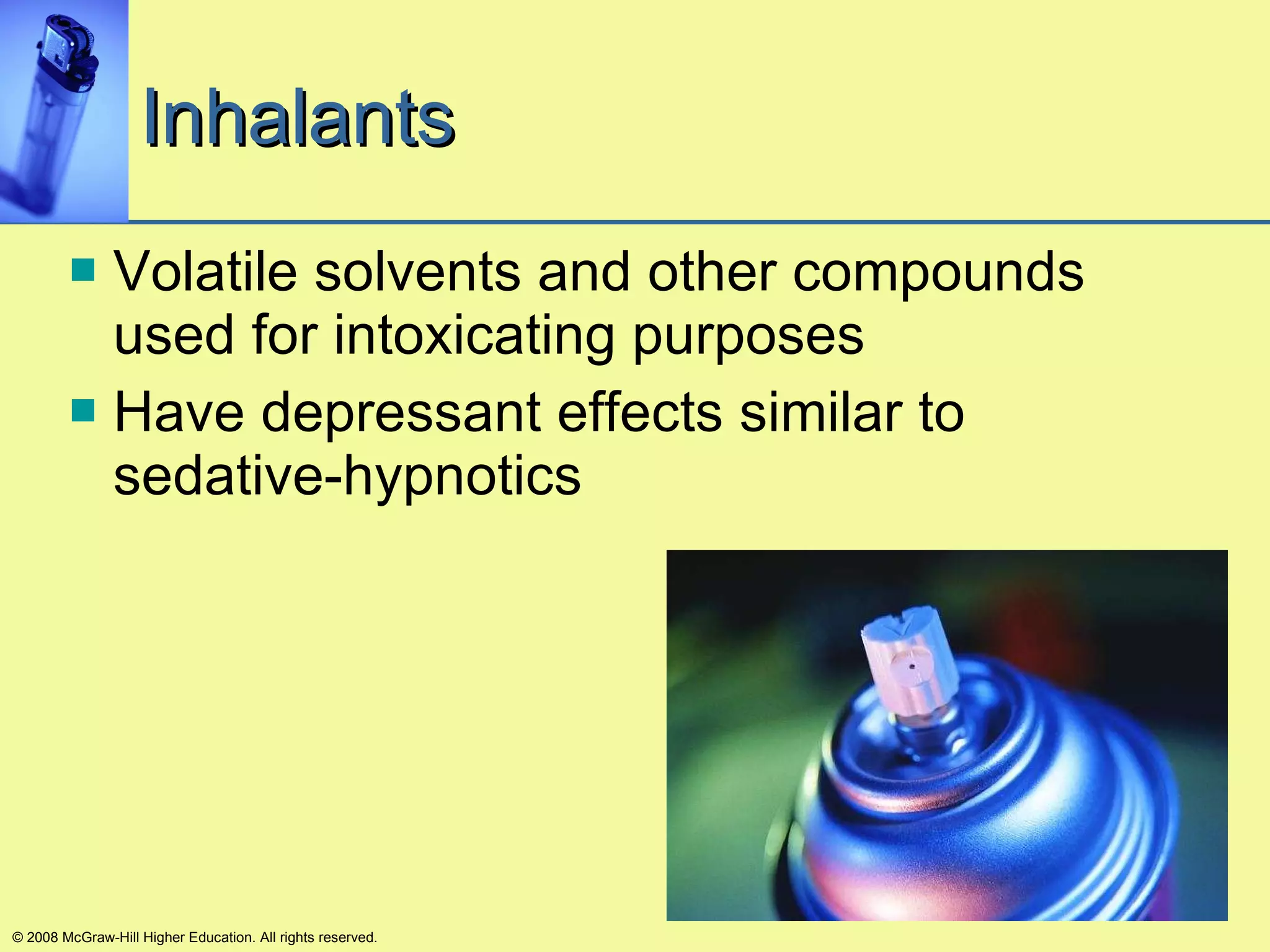
Inhalants Volatile solvents and other compounds used for intoxicating purposes Have depressant effects similar to sedative-hypnotics © 2008 McGraw-Hill Higher Education. All rights reserved.
History: Before Barbiturates Chloral hydrate  (“knockout drops,” “Mickey Finn”) Synthesized in 1832; used clinically in 1870 Induces sleep in less than an hour  Abuse leads to gastric irritation  Paraldehyde   Synthesized in 1829; used clinically in 1882 Effective with a wide safety margin Noxious taste and odor Bromides   Widely used as a sleep agent in patent medicines; appeared in OTC drugs through the 1960s Can accumulate in the body and cause toxic effects
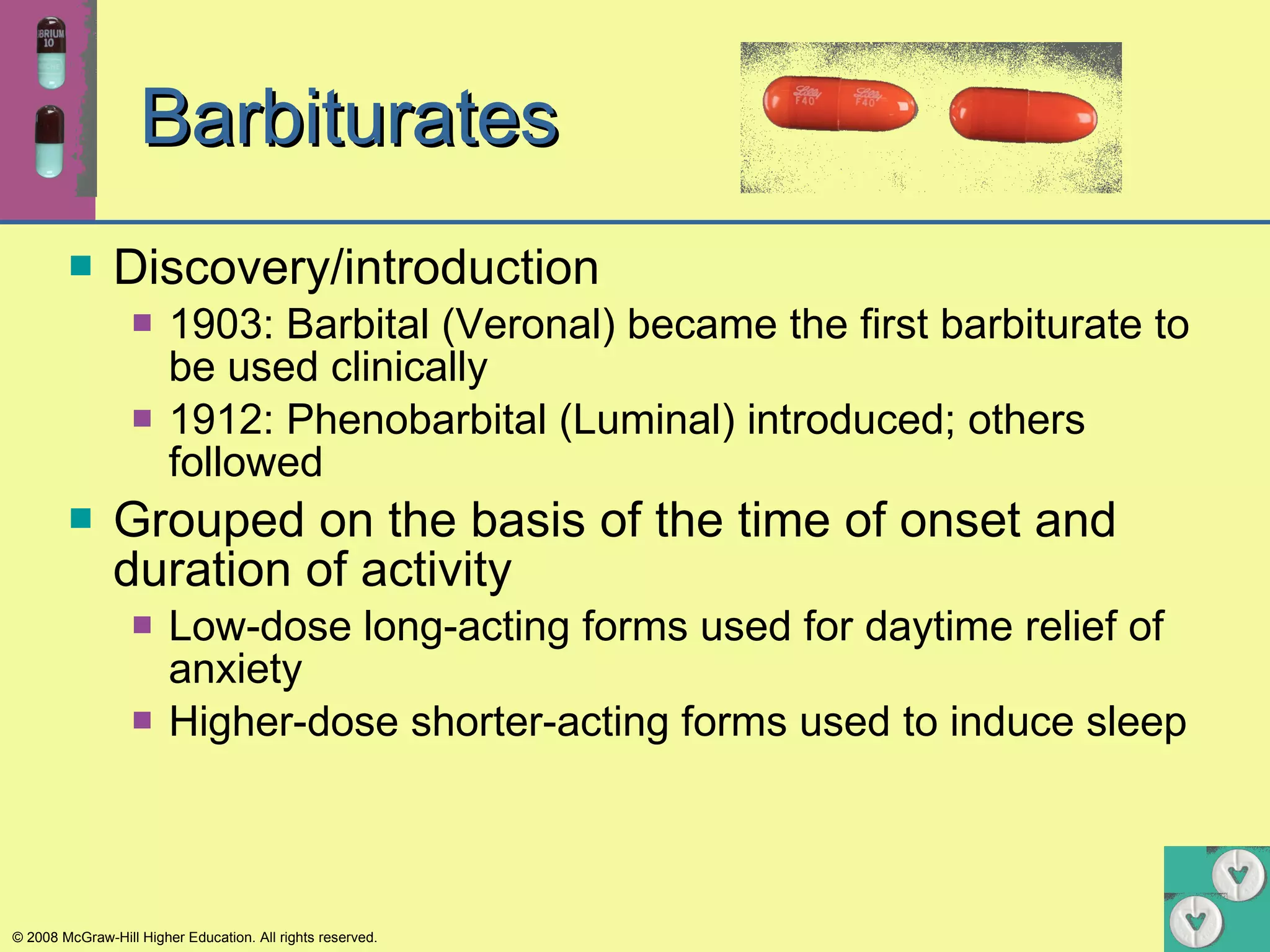
Barbiturates Discovery/introduction 1903: Barbital (Veronal) became the first barbiturate to be used clinically 1912: Phenobarbital (Luminal) introduced; others followed Grouped on the basis of the time of onset and duration of activity  Low-dose long-acting forms used for daytime relief of anxiety Higher-dose shorter-acting forms used to induce sleep
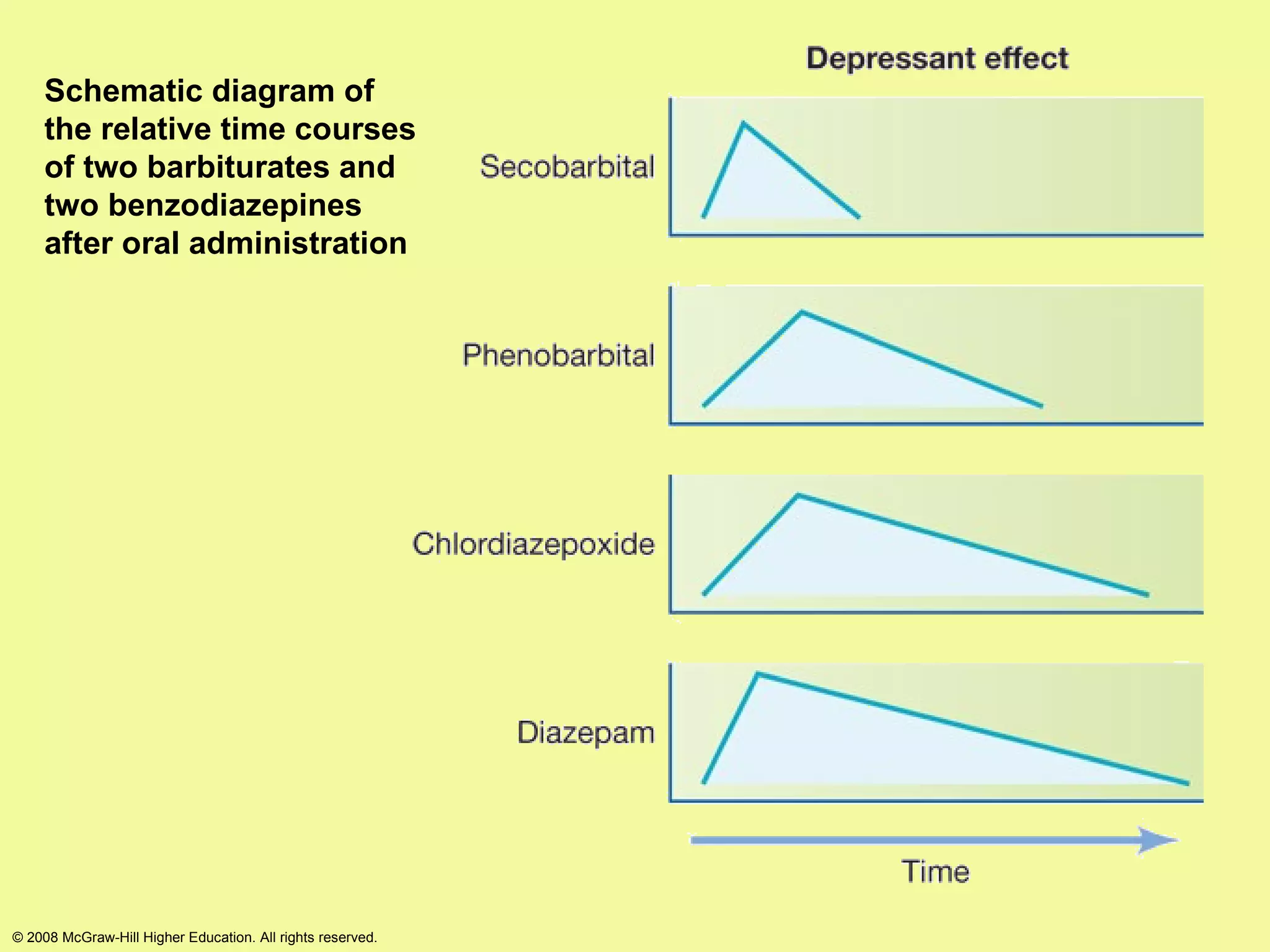
Barbiturates Short-acting  (pentobarbital, secobarbital) Time of onset: 15 minutes Duration of action: 2 to 3 hours Intermediate-acting  (amobarbital, butabarbital) Time of onset: 30 minutes Duration of action: 5 to 6 hours Long-acting  (mephobarbital, phenobarbital) Time of onset: 1 hour Duration of action: 6 to 10 hours
Barbiturates Use of barbiturates stimulates CYP450 liver enzymes Linked to tolerance and physical and psychological dependence Very dangerous when combined with alcohol due to respiratory depression Linked to accidental overdoses and suicide
Meprobamate The first modern antianxiety agent (anxiolytic) Widely prescribed beginning in the 1950s Like barbiturates, can produce psychological and physical dependence Still available as a prescription drug, although largely replaced by benzodiazepines
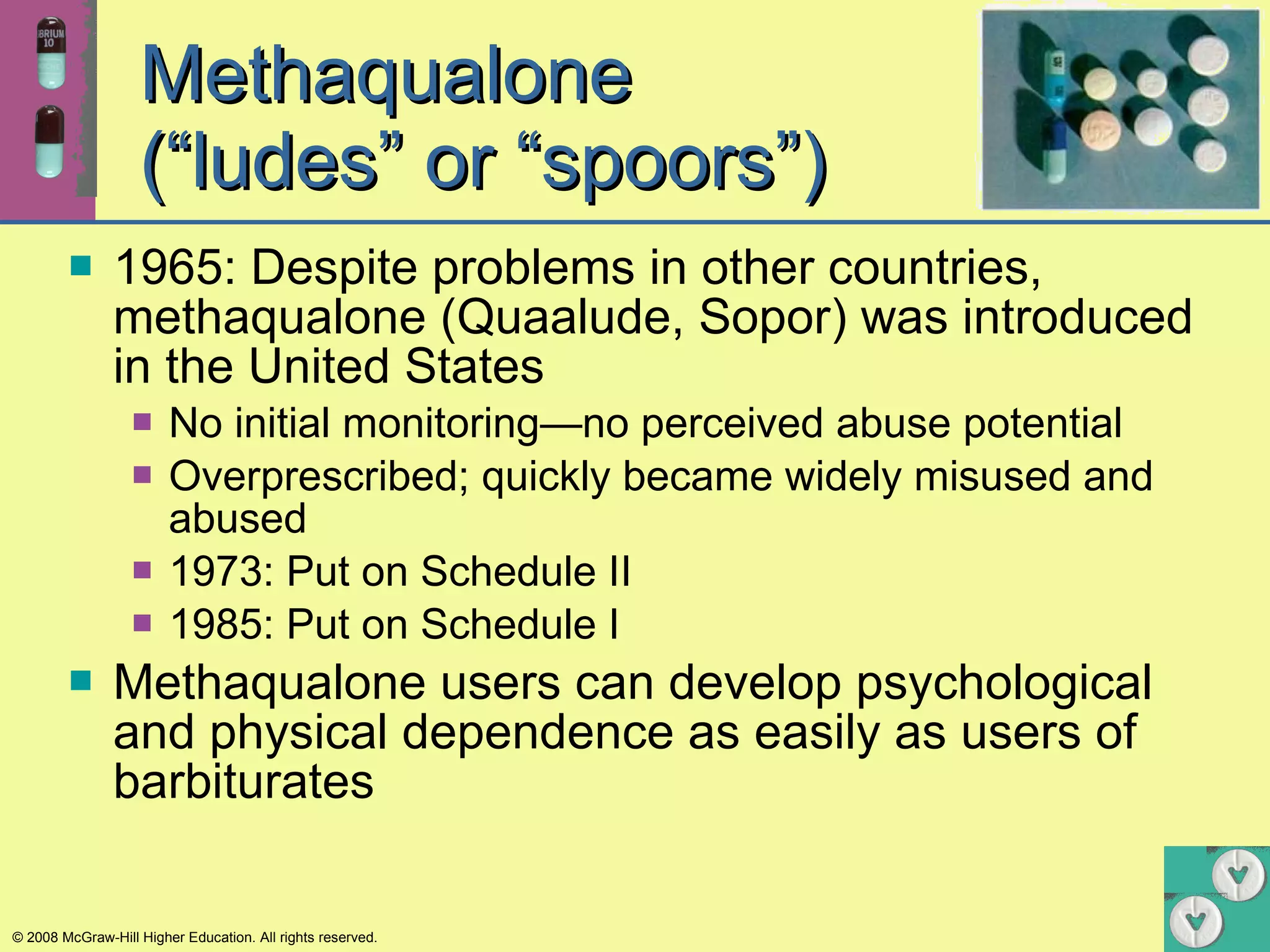
Methaqualone  (“ludes” or “spoors”) 1965: Despite problems in other countries, methaqualone (Quaalude, Sopor) was introduced in the United States No initial monitoring—no perceived abuse potential  Overprescribed; quickly became widely misused and abused  1973: Put on Schedule II 1985: Put on Schedule I Methaqualone users can develop psychological and physical dependence as easily as users of barbiturates
Benzodiazepines 1960: Introduction of chlordiazepoxide (Librium), the first commercially marketed benzodiazepine Reduces anxiety without inducing sleep Much larger safety margin than barbiturates  Physical dependence rare Overdose rare and usually only when combined with other depressants 1970s: Diazepam (Valium), a lower-dose benzodiazepine, became for a time the best seller among all prescription drugs
Benzodiazepines Dependence and overdose can occur; dosage and time course are critical factors Overdose deaths more likely for drugs sold in higher doses Psychological dependence more likely with drugs that have a rapid onset of effects Physical dependence more likely with drugs that have a short duration of action More differences  among  the barbiturates and  among  the benzodiazepines than there are  between  these two classes of drugs?
Schematic diagram of the relative time courses of two barbiturates and two benzodiazepines after oral administration © 2008 McGraw-Hill Higher Education. All rights reserved.
Benzodiazepines: Rohypnol A 1990s version of a “Mickey Finn” Produces profound intoxication when mixed with alcohol Reports surfaced of the drug being slipped into drinks and used as a “date-rape” drug  Changes in laws and in the formulation of the pills should reduce its abuse
Mechanism of Action  Benzodiazepines and barbiturates   Bond with brain receptors Enhance the normally inhibitory effects of GABA Nonbenzodiazepine hypnotics Selectively target the GABA-A receptor Seem to work better as sleeping pills than as antianxiety drugs Include zolpidem (Ambien), zaleplon (Sonata), and eszopiclone (Lunesta)
Beneficial Uses: Summary Anxiolytics As sleeping agents As anticonvulsants
Beneficial Uses Anxiolytics (anxiety-reducers) Sedatives often prescribed to reduce anxiety  Four benzodiazepines (Xanax, Ativan, Klonopin, Valium) are among the top 100 most commonly prescribed medications in the United States
Beneficial Uses Concerns about use of sedatives as anxiolytics:   Some anxiety disorders respond to anxiolytics while others seem to be treated more effectively by antidepressants or behavior therapy Patients may take the drugs for long period Anxiolytics may be overprescribed Is a person taking the drug to treat a disorder or to feel better in a general way?
Beneficial Uses As sleeping pills Taking a large enough dose of a hypnotic drug helps a person get to sleep more quickly Insomnia is a common complaint, although people sometimes overestimate its severity Today, fewer hypnotics are prescribed than in the past, and they are usually taken for only a few nights at a time
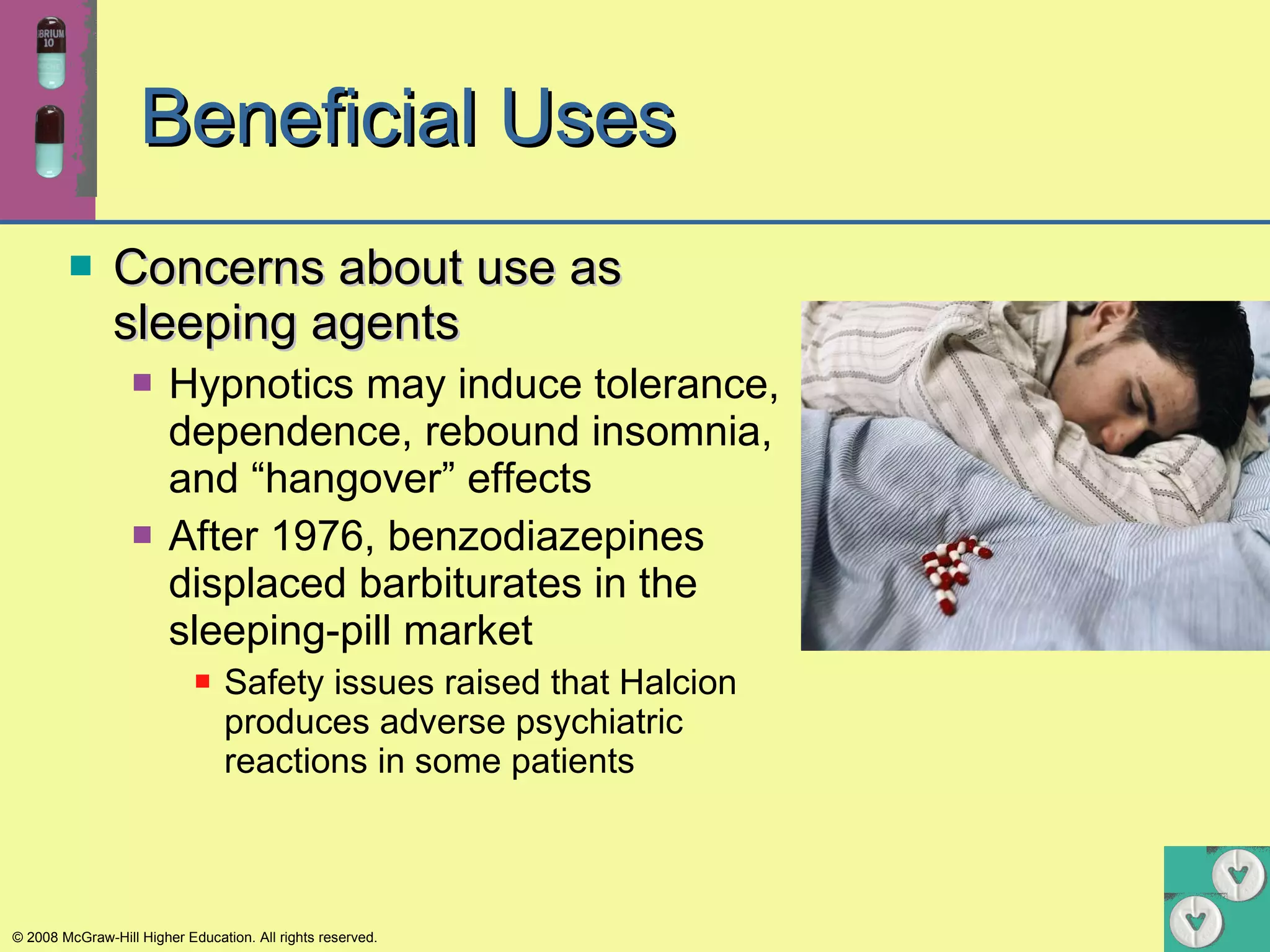
Beneficial Uses Concerns about use as sleeping agents Hypnotics may induce tolerance, dependence, rebound insomnia, and “hangover” effects After 1976, benzodiazepines displaced barbiturates in the sleeping-pill market Safety issues raised that Halcion produces adverse psychiatric reactions in some patients
Beneficial Uses Nonbenzodiazepine hypnotics Zolpidem (Ambien) binds selectively to GABA-A receptors Rapid onset and short duration of action Concern about people driving while still under the influence (from not allowing 8 hours of sleep after taking drug) Eszopiclone (Lunesta) Approved for long-term use
Falling Asleep Without Pills Have a regular sleep schedule When you go to bed, turn out the lights and relax Exercise regularly but not late in the evening Prepare a comfortable sleep environment in terms of temperature and noise Eat a light snack before bed Avoid tobacco use If you don’t fall asleep within 30 minutes, get up and do something relaxing before trying to fall asleep again Do not nap during the day Avoid chronic use of sleeping pills
Beneficial Uses As anticonvulsants Barbiturates and benzodiazepines, in low doses or combined with other anticonvulsants, may be prescribed for seizure disorders (epilepsies) Potential problems Tolerance and finding a dose that is effective but doesn’t cause excessive drowsiness Abrupt withdrawal is likely to cause seizures
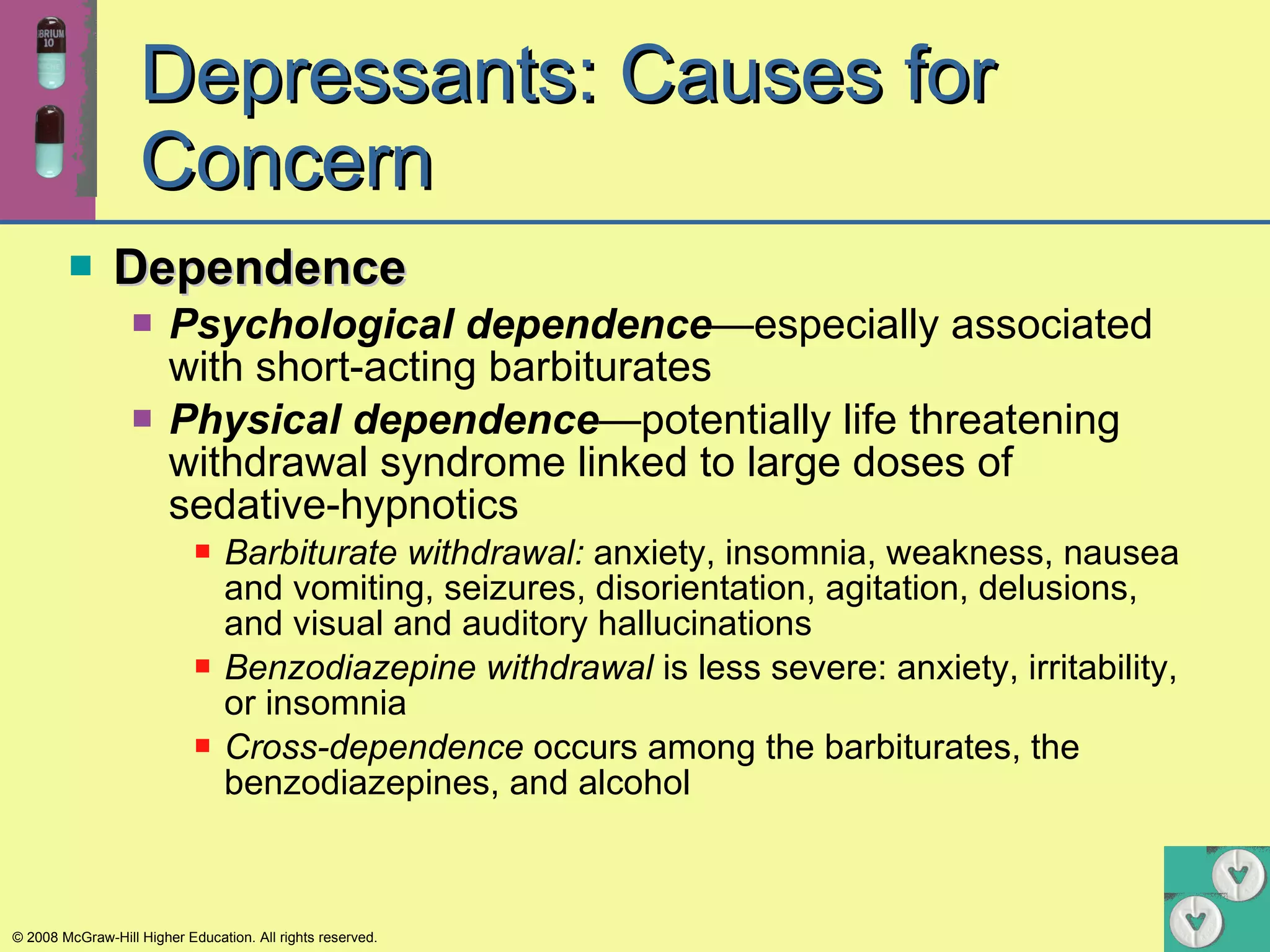
Depressants: Causes for Concern Dependence Psychological   dependence —especially associated with short-acting barbiturates Physical   dependence —potentially life threatening withdrawal syndrome linked to large doses of sedative-hypnotics  Barbiturate withdrawal:  anxiety, insomnia, weakness, nausea and vomiting, seizures, disorientation, agitation, delusions, and visual and auditory hallucinations Benzodiazepine withdrawal  is less severe: anxiety, irritability, or insomnia Cross-dependence  occurs among the barbiturates, the benzodiazepines, and alcohol
Depressants: Causes for Concern Toxicity Behavioral Alcohol-like intoxication with impaired judgment and coordination Increased risk of injury while driving or engaging in other activities Additive effects if combined with alcohol Physiological Respiratory depression Especially dangerous if combined with alcohol
Depressants: Causes for Concern Patterns of abuse Most abuse associated with oral use of legally manufactured products Two types of typical abusers Older adults using prescription drug, tolerance develops, dose increases Younger people who obtain drugs to get high; may take high doses and/or mix with alcohol
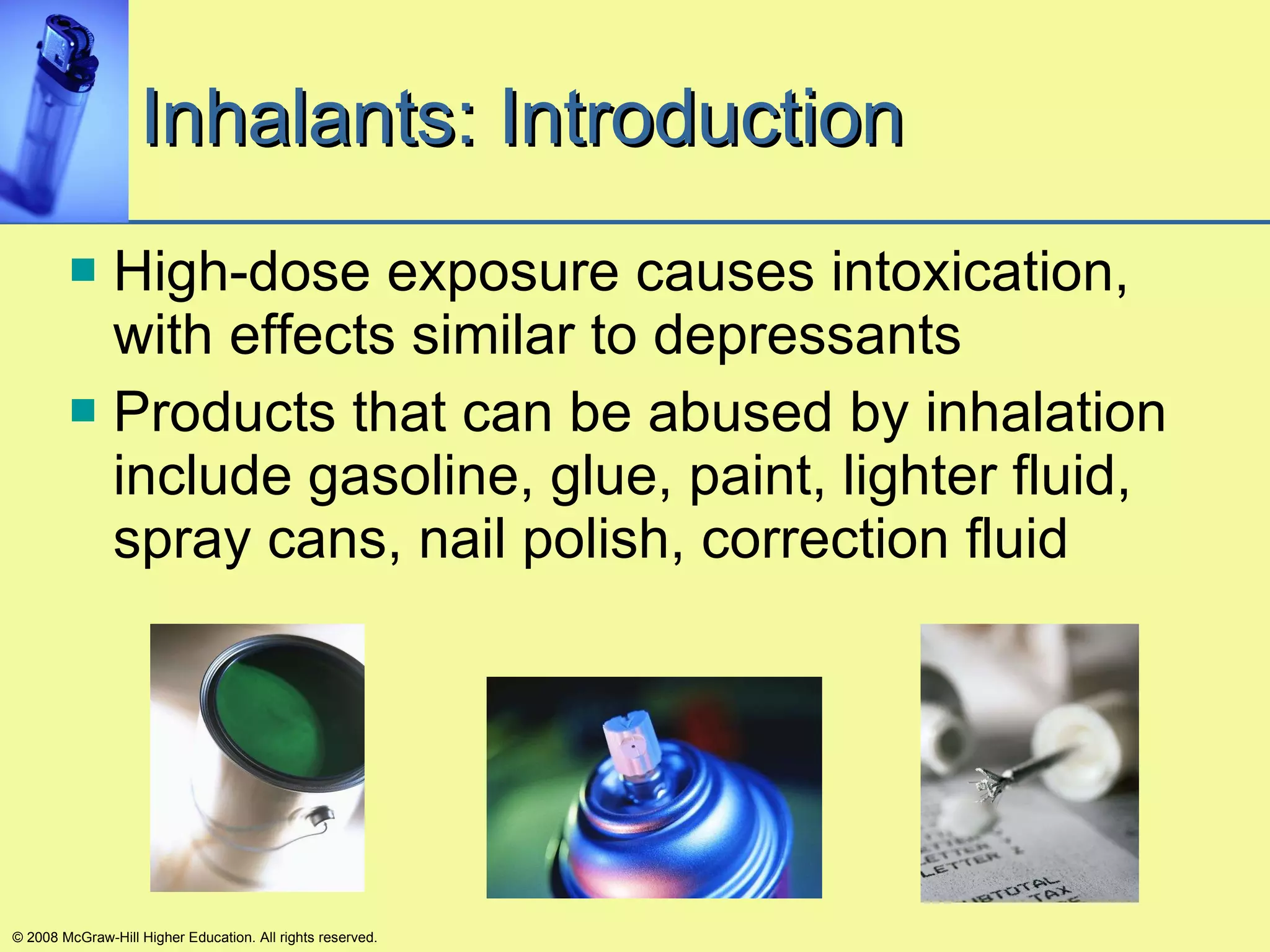
Inhalants: Introduction High-dose exposure causes intoxication, with effects similar to depressants Products that can be abused by inhalation include gasoline, glue, paint, lighter fluid, spray cans, nail polish, correction fluid © 2008 McGraw-Hill Higher Education. All rights reserved.
Inhalants: Examples Volatile solvents  (petroleum, acetone, toluene) Paint, paint thinner and remover, nail polish remover, correction fluid, glues, cements Aerosols, propellants, gases  (butane, propane) Spray paint, hair spray, lighters, whipped cream Anesthetics  (nitrous oxide, ether) Current and former medical anesthetics Nitrites  (isoamyl, isobutyl) “ Locker room,” “Rush,” “poppers” © 2008 McGraw-Hill Higher Education. All rights reserved.
Inhalants: Gaseous Anesthetics Nitrous oxide (“laughing gas”) was first used in the early 1800s Still used for light anesthesia, especially by dentists Used as a propellant for commercial and home whipping-cream dispensers © 2008 McGraw-Hill Higher Education. All rights reserved.
Inhalants: Nitrites Cause rapid dilation of the arteries Reduces blood pressure in the brain Can trigger faintness or unconsciousness Unpleasant odor Consumer Product Safety Commission taking steps to remove poppers and other nitrites from the market © 2008 McGraw-Hill Higher Education. All rights reserved.
Inhalants: Volatile Solvents Overly informative news articles and education programs actually demonstrated how to abuse volatile solvents  Abuse tends to occur as localized fads Most abusers are very young—solvents are readily available and inexpensive © 2008 McGraw-Hill Higher Education. All rights reserved.
Inhalants: Dangers Kidney damage Brain damage Peripheral nerve damage  Irritation of the respiratory tract Severe headache Death by suffocation   © 2008 McGraw-Hill Higher Education. All rights reserved.
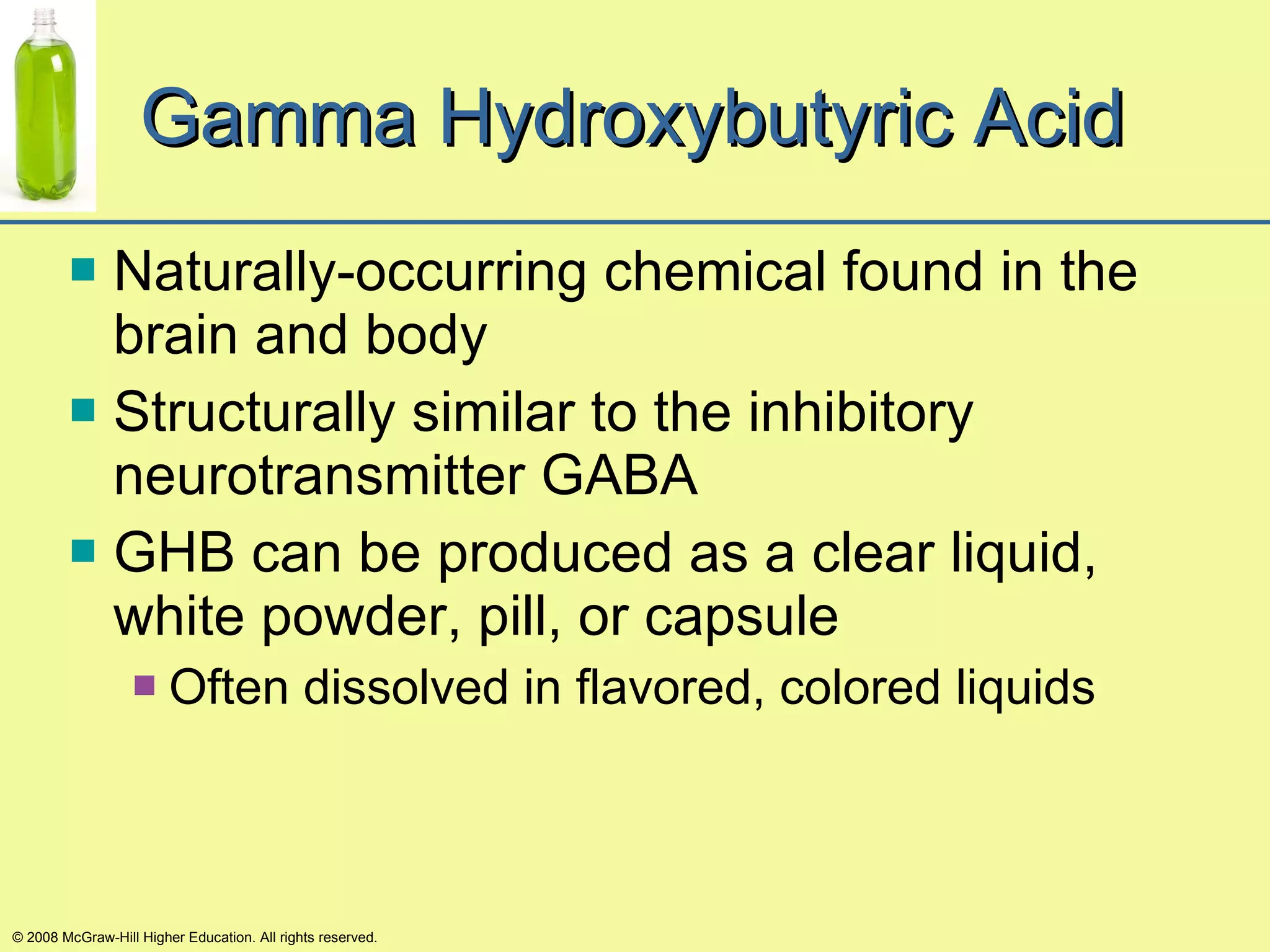
Gamma Hydroxybutyric Acid Naturally-occurring chemical found in the brain and body Structurally similar to the inhibitory neurotransmitter GABA GHB can be produced as a clear liquid, white powder, pill, or capsule Often dissolved in flavored, colored liquids © 2008 McGraw-Hill Higher Education. All rights reserved.
Gamma Hydroxybutyric Acid Causes CNS depression, especially when combined with alcohol Has been used as an anesthetic Behavioral effects similar to alcohol Lack of coordination and slurred speech Considered a date-rape drug Except for a specific formulation used to treat cataplexy, GHB is listed on Schedule I   © 2008 McGraw-Hill Higher Education. All rights reserved.
Chapter 7 Depressants and Inhalants

Depressants

  • 1.
    Chapter 7 Depressantsand Inhalants
  • 2.
    Depressants Depressants =drugs that slow activity in the central nervous system Include prescription drugs that treat anxiety (sedatives) and insomnia (hypnotics) As a group, also called sedative-hypnotics Alcohol is the most widely used depressant Benzodiazepines are the most widely prescribed depressants
  • 3.
    Inhalants Volatile solventsand other compounds used for intoxicating purposes Have depressant effects similar to sedative-hypnotics © 2008 McGraw-Hill Higher Education. All rights reserved.
  • 4.
    History: Before BarbituratesChloral hydrate (“knockout drops,” “Mickey Finn”) Synthesized in 1832; used clinically in 1870 Induces sleep in less than an hour Abuse leads to gastric irritation Paraldehyde Synthesized in 1829; used clinically in 1882 Effective with a wide safety margin Noxious taste and odor Bromides Widely used as a sleep agent in patent medicines; appeared in OTC drugs through the 1960s Can accumulate in the body and cause toxic effects
  • 5.
    Barbiturates Discovery/introduction 1903:Barbital (Veronal) became the first barbiturate to be used clinically 1912: Phenobarbital (Luminal) introduced; others followed Grouped on the basis of the time of onset and duration of activity Low-dose long-acting forms used for daytime relief of anxiety Higher-dose shorter-acting forms used to induce sleep
  • 6.
    Barbiturates Short-acting (pentobarbital, secobarbital) Time of onset: 15 minutes Duration of action: 2 to 3 hours Intermediate-acting (amobarbital, butabarbital) Time of onset: 30 minutes Duration of action: 5 to 6 hours Long-acting (mephobarbital, phenobarbital) Time of onset: 1 hour Duration of action: 6 to 10 hours
  • 7.
    Barbiturates Use ofbarbiturates stimulates CYP450 liver enzymes Linked to tolerance and physical and psychological dependence Very dangerous when combined with alcohol due to respiratory depression Linked to accidental overdoses and suicide
  • 8.
    Meprobamate The firstmodern antianxiety agent (anxiolytic) Widely prescribed beginning in the 1950s Like barbiturates, can produce psychological and physical dependence Still available as a prescription drug, although largely replaced by benzodiazepines
  • 9.
    Methaqualone (“ludes”or “spoors”) 1965: Despite problems in other countries, methaqualone (Quaalude, Sopor) was introduced in the United States No initial monitoring—no perceived abuse potential Overprescribed; quickly became widely misused and abused 1973: Put on Schedule II 1985: Put on Schedule I Methaqualone users can develop psychological and physical dependence as easily as users of barbiturates
  • 10.
    Benzodiazepines 1960: Introductionof chlordiazepoxide (Librium), the first commercially marketed benzodiazepine Reduces anxiety without inducing sleep Much larger safety margin than barbiturates Physical dependence rare Overdose rare and usually only when combined with other depressants 1970s: Diazepam (Valium), a lower-dose benzodiazepine, became for a time the best seller among all prescription drugs
  • 11.
    Benzodiazepines Dependence andoverdose can occur; dosage and time course are critical factors Overdose deaths more likely for drugs sold in higher doses Psychological dependence more likely with drugs that have a rapid onset of effects Physical dependence more likely with drugs that have a short duration of action More differences among the barbiturates and among the benzodiazepines than there are between these two classes of drugs?
  • 12.
    Schematic diagram ofthe relative time courses of two barbiturates and two benzodiazepines after oral administration © 2008 McGraw-Hill Higher Education. All rights reserved.
  • 13.
    Benzodiazepines: Rohypnol A1990s version of a “Mickey Finn” Produces profound intoxication when mixed with alcohol Reports surfaced of the drug being slipped into drinks and used as a “date-rape” drug Changes in laws and in the formulation of the pills should reduce its abuse
  • 14.
    Mechanism of Action Benzodiazepines and barbiturates Bond with brain receptors Enhance the normally inhibitory effects of GABA Nonbenzodiazepine hypnotics Selectively target the GABA-A receptor Seem to work better as sleeping pills than as antianxiety drugs Include zolpidem (Ambien), zaleplon (Sonata), and eszopiclone (Lunesta)
  • 15.
    Beneficial Uses: SummaryAnxiolytics As sleeping agents As anticonvulsants
  • 16.
    Beneficial Uses Anxiolytics(anxiety-reducers) Sedatives often prescribed to reduce anxiety Four benzodiazepines (Xanax, Ativan, Klonopin, Valium) are among the top 100 most commonly prescribed medications in the United States
  • 17.
    Beneficial Uses Concernsabout use of sedatives as anxiolytics: Some anxiety disorders respond to anxiolytics while others seem to be treated more effectively by antidepressants or behavior therapy Patients may take the drugs for long period Anxiolytics may be overprescribed Is a person taking the drug to treat a disorder or to feel better in a general way?
  • 18.
    Beneficial Uses Assleeping pills Taking a large enough dose of a hypnotic drug helps a person get to sleep more quickly Insomnia is a common complaint, although people sometimes overestimate its severity Today, fewer hypnotics are prescribed than in the past, and they are usually taken for only a few nights at a time
  • 19.
    Beneficial Uses Concernsabout use as sleeping agents Hypnotics may induce tolerance, dependence, rebound insomnia, and “hangover” effects After 1976, benzodiazepines displaced barbiturates in the sleeping-pill market Safety issues raised that Halcion produces adverse psychiatric reactions in some patients
  • 20.
    Beneficial Uses Nonbenzodiazepinehypnotics Zolpidem (Ambien) binds selectively to GABA-A receptors Rapid onset and short duration of action Concern about people driving while still under the influence (from not allowing 8 hours of sleep after taking drug) Eszopiclone (Lunesta) Approved for long-term use
  • 21.
    Falling Asleep WithoutPills Have a regular sleep schedule When you go to bed, turn out the lights and relax Exercise regularly but not late in the evening Prepare a comfortable sleep environment in terms of temperature and noise Eat a light snack before bed Avoid tobacco use If you don’t fall asleep within 30 minutes, get up and do something relaxing before trying to fall asleep again Do not nap during the day Avoid chronic use of sleeping pills
  • 22.
    Beneficial Uses Asanticonvulsants Barbiturates and benzodiazepines, in low doses or combined with other anticonvulsants, may be prescribed for seizure disorders (epilepsies) Potential problems Tolerance and finding a dose that is effective but doesn’t cause excessive drowsiness Abrupt withdrawal is likely to cause seizures
  • 23.
    Depressants: Causes forConcern Dependence Psychological dependence —especially associated with short-acting barbiturates Physical dependence —potentially life threatening withdrawal syndrome linked to large doses of sedative-hypnotics Barbiturate withdrawal: anxiety, insomnia, weakness, nausea and vomiting, seizures, disorientation, agitation, delusions, and visual and auditory hallucinations Benzodiazepine withdrawal is less severe: anxiety, irritability, or insomnia Cross-dependence occurs among the barbiturates, the benzodiazepines, and alcohol
  • 24.
    Depressants: Causes forConcern Toxicity Behavioral Alcohol-like intoxication with impaired judgment and coordination Increased risk of injury while driving or engaging in other activities Additive effects if combined with alcohol Physiological Respiratory depression Especially dangerous if combined with alcohol
  • 25.
    Depressants: Causes forConcern Patterns of abuse Most abuse associated with oral use of legally manufactured products Two types of typical abusers Older adults using prescription drug, tolerance develops, dose increases Younger people who obtain drugs to get high; may take high doses and/or mix with alcohol
  • 26.
    Inhalants: Introduction High-doseexposure causes intoxication, with effects similar to depressants Products that can be abused by inhalation include gasoline, glue, paint, lighter fluid, spray cans, nail polish, correction fluid © 2008 McGraw-Hill Higher Education. All rights reserved.
  • 27.
    Inhalants: Examples Volatilesolvents (petroleum, acetone, toluene) Paint, paint thinner and remover, nail polish remover, correction fluid, glues, cements Aerosols, propellants, gases (butane, propane) Spray paint, hair spray, lighters, whipped cream Anesthetics (nitrous oxide, ether) Current and former medical anesthetics Nitrites (isoamyl, isobutyl) “ Locker room,” “Rush,” “poppers” © 2008 McGraw-Hill Higher Education. All rights reserved.
  • 28.
    Inhalants: Gaseous AnestheticsNitrous oxide (“laughing gas”) was first used in the early 1800s Still used for light anesthesia, especially by dentists Used as a propellant for commercial and home whipping-cream dispensers © 2008 McGraw-Hill Higher Education. All rights reserved.
  • 29.
    Inhalants: Nitrites Causerapid dilation of the arteries Reduces blood pressure in the brain Can trigger faintness or unconsciousness Unpleasant odor Consumer Product Safety Commission taking steps to remove poppers and other nitrites from the market © 2008 McGraw-Hill Higher Education. All rights reserved.
  • 30.
    Inhalants: Volatile SolventsOverly informative news articles and education programs actually demonstrated how to abuse volatile solvents Abuse tends to occur as localized fads Most abusers are very young—solvents are readily available and inexpensive © 2008 McGraw-Hill Higher Education. All rights reserved.
  • 31.
    Inhalants: Dangers Kidneydamage Brain damage Peripheral nerve damage Irritation of the respiratory tract Severe headache Death by suffocation © 2008 McGraw-Hill Higher Education. All rights reserved.
  • 32.
    Gamma Hydroxybutyric AcidNaturally-occurring chemical found in the brain and body Structurally similar to the inhibitory neurotransmitter GABA GHB can be produced as a clear liquid, white powder, pill, or capsule Often dissolved in flavored, colored liquids © 2008 McGraw-Hill Higher Education. All rights reserved.
  • 33.
    Gamma Hydroxybutyric AcidCauses CNS depression, especially when combined with alcohol Has been used as an anesthetic Behavioral effects similar to alcohol Lack of coordination and slurred speech Considered a date-rape drug Except for a specific formulation used to treat cataplexy, GHB is listed on Schedule I © 2008 McGraw-Hill Higher Education. All rights reserved.
  • 34.
    Chapter 7 Depressantsand Inhalants

Editor's Notes

  • #2 Image source: Spike Mafford/Getty Images (Image Ch07_02PrescriptionSedative)
  • #3 Image source (Librium, Valium): Drug Enforcement Administration (Images Ch07_04Librium, Ch07_05Valium)
  • #4 Image sources: TRBfoto/Getty Images (Image Ch07_13CigaretteLighter); Nick Koudis/Getty Image (Image Ch07_11AerosolCan)
  • #6 Image source (Seconal): Drug Enforcement Administration (Image Ch07_01Seconal)
  • #10 Image source: National Archives (Image Ch07_03Methaqualone)
  • #13 Figure 7.1 from text
  • #14 Image source: Drug Enforcement Administration (Image Ch07_06Rohypnol)
  • #16 Image source: Spike Mafford/Getty Images (Image Ch07_02PrescriptionSedative)
  • #17 Image source: Jonnie Miles/Getty Images (Image Ch07_07Anxiety)
  • #19 Image source: Royalty-Free/Corbis (Image Ch07_08Insomnia)
  • #20 Image source: Banana Stock/PunchStock (Image Ch07_09SleepingPills)
  • #25 Image source: Dynamic Graphics/JupiterImages (See Chapter 2; Image Ch02_04DrugAlcoholCombo)
  • #27 Image sources: TRBfoto/Getty Images (Image Ch07_13CigaretteLighter); Royalty-Free/Corbis (Image Ch07_10Paint); Nick Koudis/Getty Image (Image Ch07_11AerosolCan); Janis Christie/Getty Images (Image Ch07_12CorrectionFluid)
  • #31 Image source: The McGraw-Hill Companies, Inc./Stephen Ogilvy photographer (Image Ch07_14GlueBottles)
  • #33 Image source: The McGraw-Hill Companies, Inc/Ken Karp photographer (Image Ch07_15LiquidGHB)
  • #35 Image source: Spike Mafford/Getty Images (Image Ch07_02PrescriptionSedative)