Complications of paraplegia
and its management
chetan
 Typically affect young and previously
healthy individuals who now require
urgent and comprehensive
emergency care
 patient is expected to learn to
perform once simple and now
complex tasks of daily living
independently with the goal of
returning home
History
 Egyptian physicians long ago labeled SCI as an ailment not to
be treated at all because they feared that the pharaoh would
kill them if they let a patient die under their care.
 Prior to WW I, SCI typically resulted in early death.
 Significant advances in treatment began during WW II & have
continued to progress, allowing many individuals with SCI to
live far longer than previously expected.
Def
 Impairment in motor function of the lower extremities and possibly trunk with or without involvement
of sensory system
 Caused by involvement of
 cerebral cortex,
 spinal cord,
 Nerves supplying the muscles of lower extremity
 And the muscle itself directly
 Early rehabilitation of spinal cord injury pts begin with prevention
 Preventing secondary complications speeds entry into the rehabilitation phase and improves the
possibility that the patient will become a productive member of society
Complications
 Pressure Ulcers
 Pulmonary Complications
 Osteoporosis and Fractures
 Urinary Tract Dysfunction
 Neurogenic Heterotopic Ossification
 Spasticity
 Venous thrombosis
 Upper extremity arthropathies
 Bowel Complications
 Cardiovascular Diseases
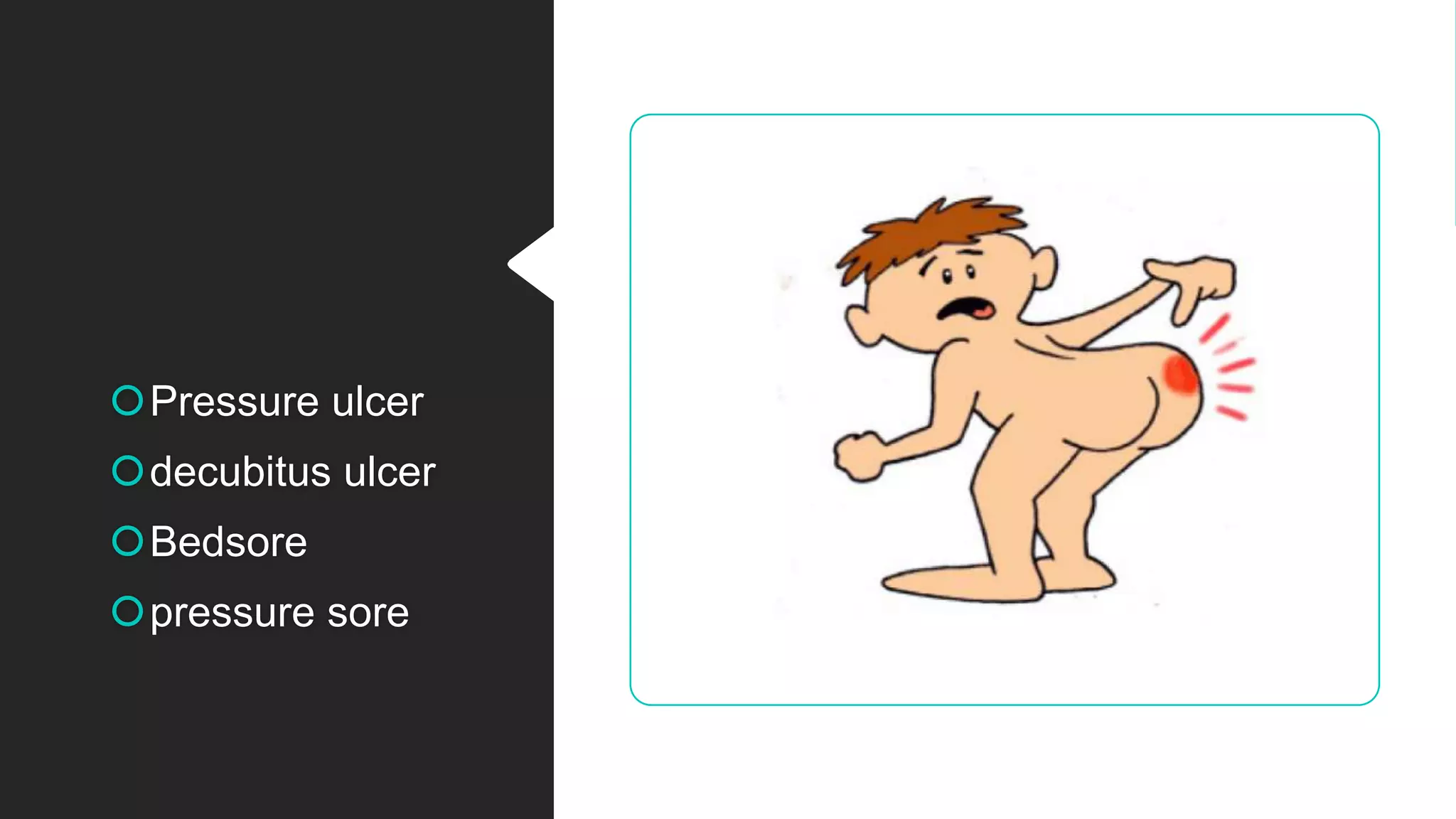
Pressure ulcer
decubitus ulcer
Bedsore
pressure sore
sites
 Early acute phase – sacral area
 Subacte and chronic phases – ischial area
Risk factors
Combination of
 Immobility
 Insensitivity
 Moisture from bowel or urinary
incontinence
 Muscle atrophy
 Nutrironal status
National Pressure Ulcer
Advisory Panel staging
system
 Stage I: Intact skin with nonblanchable
redness of a localized area usually over a
bony prominence.
 Stage II: Partial-thickness
loss of dermis presenting as a
shallow open ulcer with a red
pink wound bed, without
slough
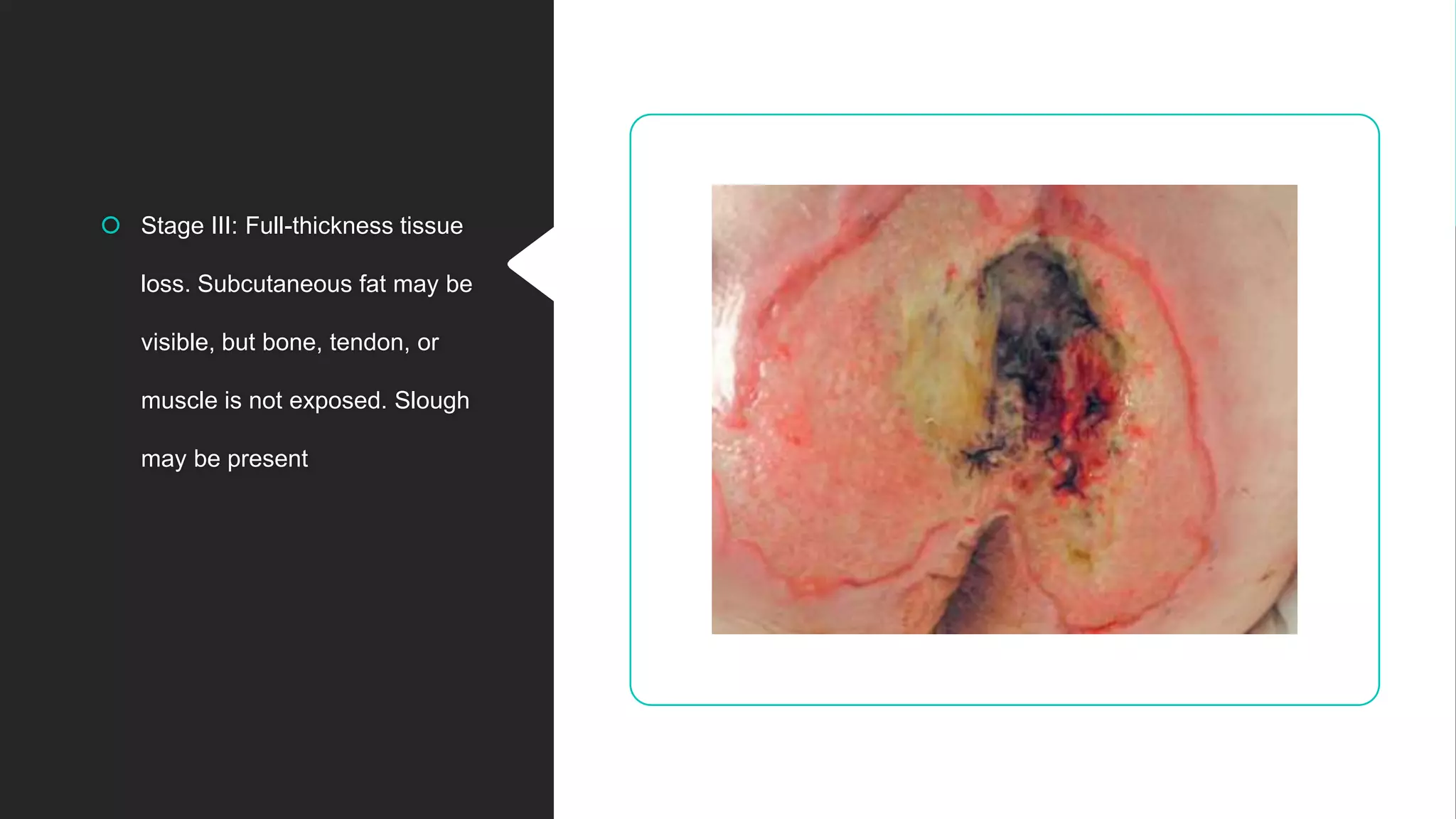
 Stage III: Full-thickness tissue
loss. Subcutaneous fat may be
visible, but bone, tendon, or
muscle is not exposed. Slough
may be present
 Stage IV: Full-thickness
tissue loss with exposed
bone, tendon, or muscle
Prevention
 Assess the patient's skin daily
 Cleanse skin when indicated using a pH-balanced cleanser
 Avoid soap and hot water
 dry by rubbing or patting
 Use emollients to maintain skin hydration
Pressure relief
 Support surfaces are divided into 2 categories
 Constant low-pressure (CLP) devices
 Alternating-pressure (AP) devices
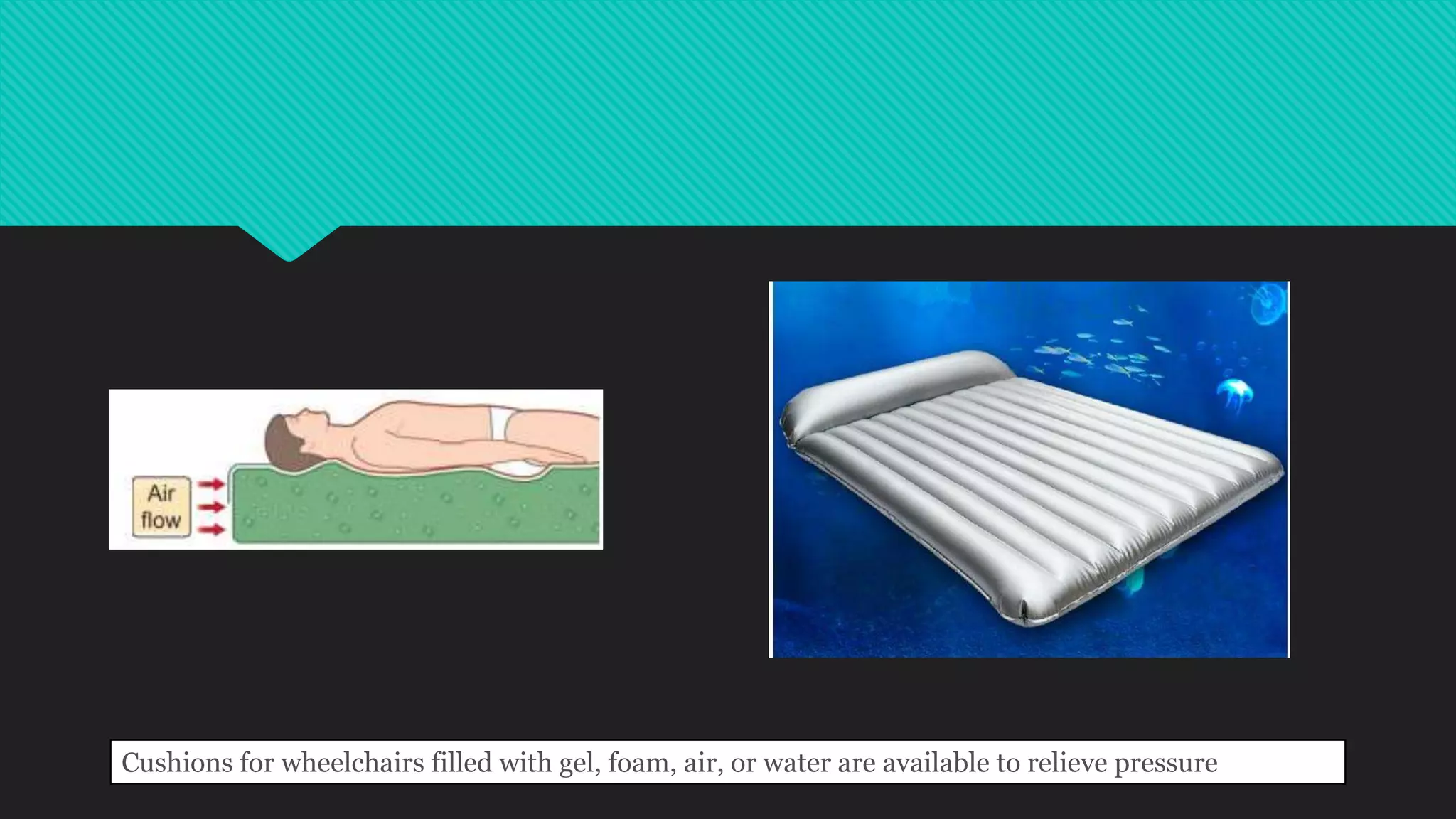
Cushions for wheelchairs filled with gel, foam, air, or water are available to relieve pressure
 A turning schedule should be initiated immediately
 The patient’s position in bed should be initially established for turns to occur every 2 to 3 hours.
 This interval can be gradually increased to 6 hours with careful monitoring for evidence of skin
compromise
 Turning positions include prone, supine, right and left side-lying, semi prone, and semisupine positions
Wound care
 Debridement is the first step
 Followed by NPWT
 Surgical management
Musculocutaneo
us flap
Heterotopic ossification
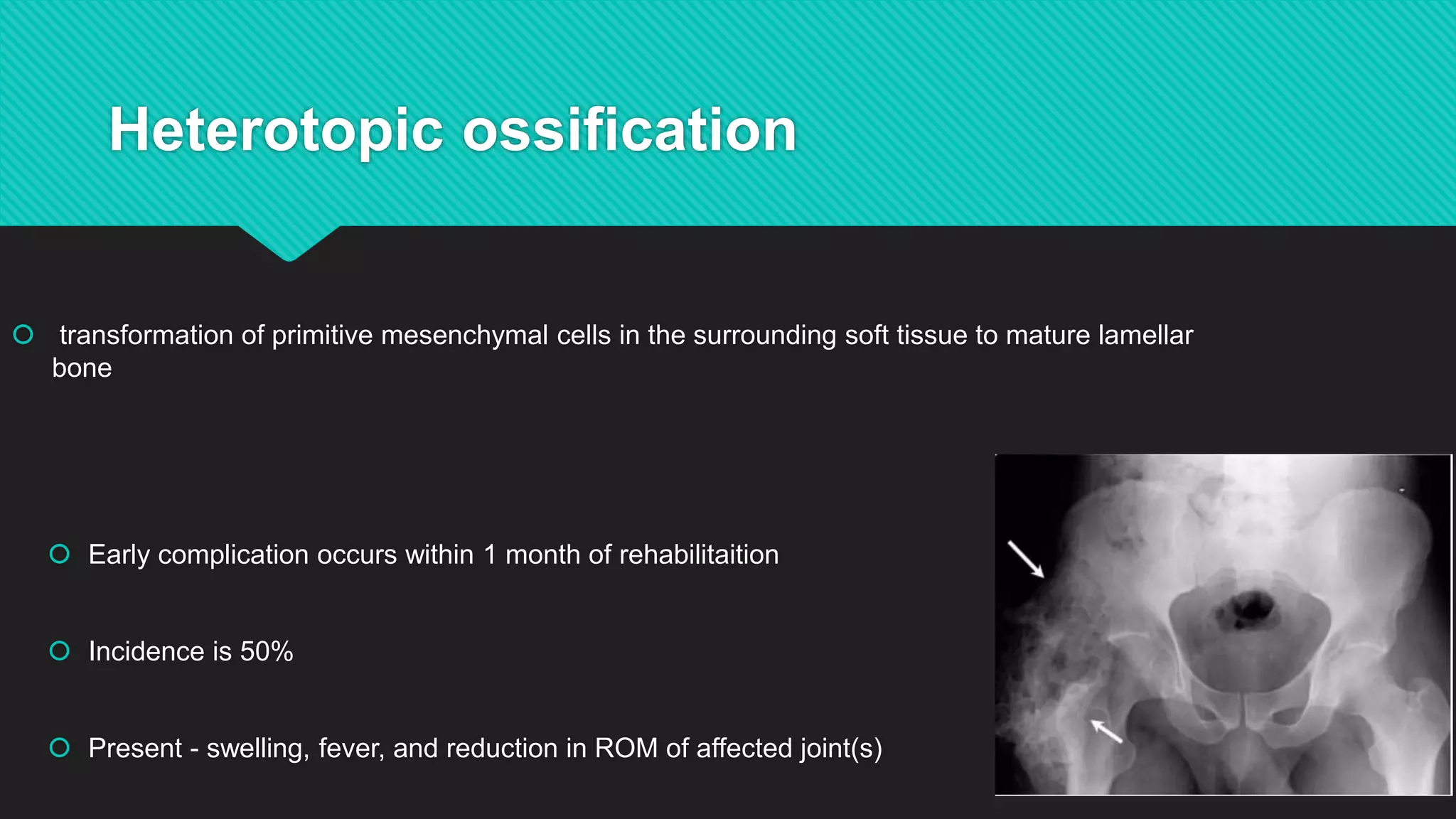
 transformation of primitive mesenchymal cells in the surrounding soft tissue to mature lamellar
bone
 Early complication occurs within 1 month of rehabilitaition
 Incidence is 50%
 Present - swelling, fever, and reduction in ROM of affected joint(s)
Diagnosis
 level of sr creatine phosphokinase early stage -severity of muscle involvement
 Sr alkaline phosphatase –inc bone turnover
 Xray {calcification appears after 3 to 8 weeks progress from peripheral to central}
 Mri- varies as the lesion evolves
 Early T1 poorly defined masses {immaure –complex fluid collection}
 Ct 3d recon
 Three phase technetium bone scan early
 Early diagnosis {suspicious} is the key for timely intervention and prophylactic management
 complications such as nerve impingement, joint contractures, pain, and limited range of motion
 Surgical - risks wound healing complications, delayed therapy, rehabilitation, as well as the risk of
recurrence
 indomethacin is effective if started early (3 to 4 weeks) after injury
 Etidronate is first-line treatment for management of HO in the acute stage
 aggressive joint motion by physical therapy
Osteoporosis and Fractures
 significant bone loss in paralyzed limbs in the early period after injury
 distal femur and proximal tibia
 Bone densitometric studies --bone loss of 30% in the first 3 months
 Patients who actually suffer fractures were found to have even higher bone loss: approx 40% in femoral
shaft and 70% in proximal tibia
The paraplegic fracture: supracondylar femur fracture
Prevention and treatment
 Intensive exercise regime and mobilization
 Transient
 Pharmological management
 Non operative
Exoskeleton-Assisted Walking
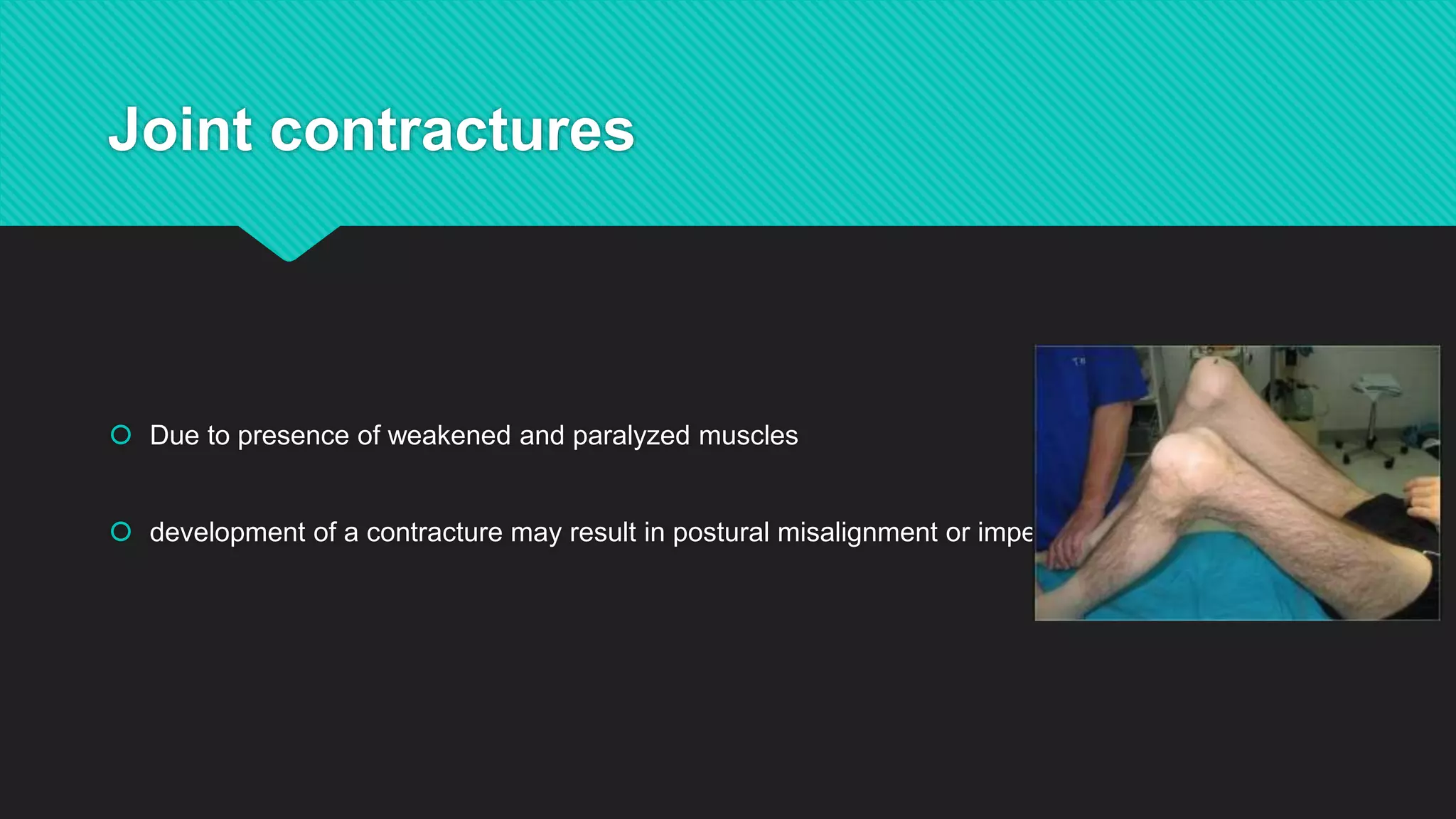
Joint contractures
 Due to presence of weakened and paralyzed muscles
 development of a contracture may result in postural misalignment or impede potential function
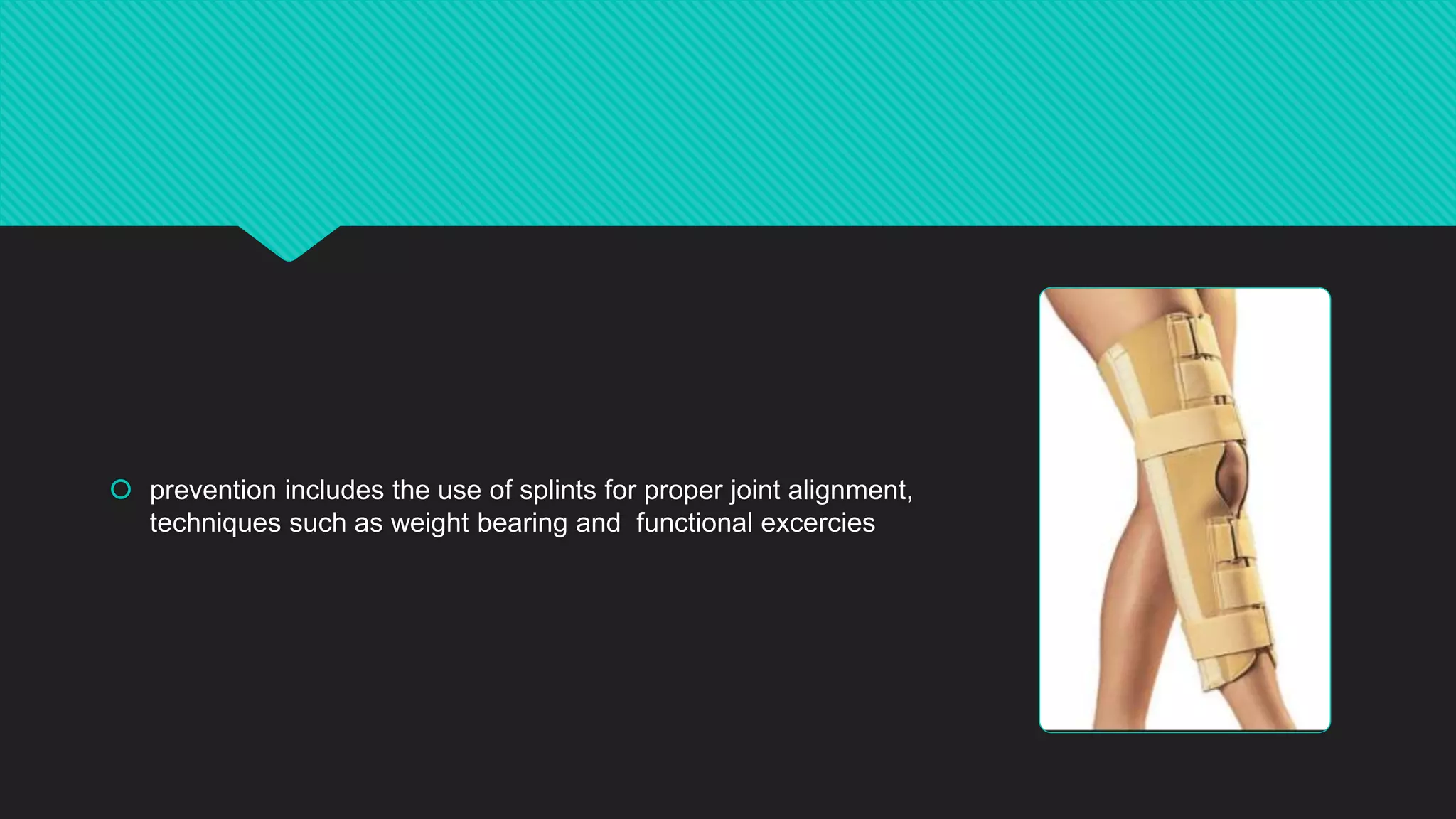
 prevention includes the use of splints for proper joint alignment,
techniques such as weight bearing and functional excercies
 Despite preventive measures if joint contactures occur
 plaster or fiberglass serial casting techniques
 botulinum toxin type A injections {tone reduction}
 Surgical management
Respiratory Complications
 most common early and late cause of death after SCI
 Pneumonia is the most common complication in high-level injuries, while atelectasis is seen in all
groups of patients
pathophysiology
 restrictive ventilatory dysfunction --muscle paralysis
 inability to cough, which is due primarily to paralysis of abdominal and intercostal muscles
 hypersecretion of mucus--absent sympathetic outflow
 Secretions are most commonly removed by tracheal
suctioning, assisted coughing
 Acessory muscle training
Maximal
Inspiratory
effort
Delivers a
manual
thrust to
cough
 bronchodilators (β-adrenergic agonists and /or anticholinergics), mucolytic agents, and chest
physiotherapy
 Later in phase of rehabilitation there is decrease mucus production needs assisted cough and
breathing excercises
 yearly vaccination for influenza and vaccination every five years for pneumonia
Shoulder arthropathies
 Prevalence is 30 to 60% Shoulder becomes major weight bearing
And often overused
Neuromuscular fatigue leads to decreased stability and superior displacement of the humeral head
Shoulder Arthropathies
 Common pathologies include:
 Chronic inflammation (especially supraspinatus)
 Impingement syndrome
 Bursitis
 Rotator cuff tears
 Bicipital tendinitis
 Glenohumeral and acromioclavicular arthritis
 Peripheral neuropathies (carpal tunnel syndrome) are also common
Shoulder Arthropathies
 Paraplegic patients with higher levels of shoulder pain reported lower subjective
quality of life and physical activity scores
 Interventions:
 Designing ergonomic ways for patients to transfer
 Wheelchair biomechanics (power)
 Physiotherapy to enhance shoulder stability
 Core body support for patients with high thoracic paraplegia
 Medical management
 Surgical management (cuff repair, subacromial debridement, shoulder arthroplasty)
Neurogenic bladder
incontinence
Consortium for Spinal Cord Medicine
 Management of fluid intake to maintain daily urine output between 1.5 and 2 L
 Intermittent catheterization using clean or sterile technique
 Indwelling catheter for patients with poor hand control and lack of attendant care
 Suprapubic catheter for, most commonly, patients with urethral lesions
 External (condom) catheter for male patients with UMN bladder with reflex voiding
 Surgery
Neurogenic bowel
Following SCI, there is a disruption of the extrinsic influences of the nervous system on the bowel
significant physical distress
Embarrassment
inconvinence
UMN
• Voluntary control of bowel is lost in
these patients but conus-mediated reflex
activity and intestinal peristalsis are
intact.
• external anal sphincter becomes spastic
LMN
• Voluntary control of bowel is lost as well
as sacral reflex activity.
• The external anal sphincter becomes
atonic and flaccid
Cardiovascular comlications
 related to the disruption of sympathetic control located in the cervical cord
 Most frequent presentations are
 orthostatic hypotension (68%) {passive vasodilatation below the level of injury}
 bradycardia (71%) {uninhibited parasympathetic tone}
 Dizziness
 Blurred vision
Midodrine orally alpha 1 agonist is 1 choice
Deep Vein thrombosis
 Incidence is high in acute stages incidence is 47%
 Caution with motor complete injuries, obesity, previous h/o of dvt , lower extremity
fractures heart failure
 compression stockings, boots, pneumatic devices
 LMWH is recommended for 8 weeks
 Oral anticoagulants like Warfarin
 Inferior vena cava filter if contraindication to anticoagulants
Complications of paraplegia and its management

Complications of paraplegia and its management

  • 1.
    Complications of paraplegia andits management chetan
  • 2.
     Typically affectyoung and previously healthy individuals who now require urgent and comprehensive emergency care  patient is expected to learn to perform once simple and now complex tasks of daily living independently with the goal of returning home
  • 3.
    History  Egyptian physicianslong ago labeled SCI as an ailment not to be treated at all because they feared that the pharaoh would kill them if they let a patient die under their care.  Prior to WW I, SCI typically resulted in early death.  Significant advances in treatment began during WW II & have continued to progress, allowing many individuals with SCI to live far longer than previously expected.
  • 4.
    Def  Impairment inmotor function of the lower extremities and possibly trunk with or without involvement of sensory system  Caused by involvement of  cerebral cortex,  spinal cord,  Nerves supplying the muscles of lower extremity  And the muscle itself directly
  • 5.
     Early rehabilitationof spinal cord injury pts begin with prevention  Preventing secondary complications speeds entry into the rehabilitation phase and improves the possibility that the patient will become a productive member of society
  • 6.
    Complications  Pressure Ulcers Pulmonary Complications  Osteoporosis and Fractures  Urinary Tract Dysfunction  Neurogenic Heterotopic Ossification  Spasticity  Venous thrombosis  Upper extremity arthropathies  Bowel Complications  Cardiovascular Diseases
  • 7.
  • 8.
    sites  Early acutephase – sacral area  Subacte and chronic phases – ischial area
  • 9.
    Risk factors Combination of Immobility  Insensitivity  Moisture from bowel or urinary incontinence  Muscle atrophy  Nutrironal status
  • 10.
    National Pressure Ulcer AdvisoryPanel staging system  Stage I: Intact skin with nonblanchable redness of a localized area usually over a bony prominence.
  • 11.
     Stage II:Partial-thickness loss of dermis presenting as a shallow open ulcer with a red pink wound bed, without slough
  • 12.
     Stage III:Full-thickness tissue loss. Subcutaneous fat may be visible, but bone, tendon, or muscle is not exposed. Slough may be present
  • 13.
     Stage IV:Full-thickness tissue loss with exposed bone, tendon, or muscle
  • 14.
    Prevention  Assess thepatient's skin daily  Cleanse skin when indicated using a pH-balanced cleanser  Avoid soap and hot water  dry by rubbing or patting  Use emollients to maintain skin hydration
  • 15.
    Pressure relief  Supportsurfaces are divided into 2 categories  Constant low-pressure (CLP) devices  Alternating-pressure (AP) devices
  • 16.
    Cushions for wheelchairsfilled with gel, foam, air, or water are available to relieve pressure
  • 17.
     A turningschedule should be initiated immediately  The patient’s position in bed should be initially established for turns to occur every 2 to 3 hours.  This interval can be gradually increased to 6 hours with careful monitoring for evidence of skin compromise  Turning positions include prone, supine, right and left side-lying, semi prone, and semisupine positions
  • 18.
    Wound care  Debridementis the first step  Followed by NPWT  Surgical management
  • 19.
  • 20.
    Heterotopic ossification  transformationof primitive mesenchymal cells in the surrounding soft tissue to mature lamellar bone  Early complication occurs within 1 month of rehabilitaition  Incidence is 50%  Present - swelling, fever, and reduction in ROM of affected joint(s)
  • 21.
    Diagnosis  level ofsr creatine phosphokinase early stage -severity of muscle involvement  Sr alkaline phosphatase –inc bone turnover  Xray {calcification appears after 3 to 8 weeks progress from peripheral to central}  Mri- varies as the lesion evolves  Early T1 poorly defined masses {immaure –complex fluid collection}  Ct 3d recon  Three phase technetium bone scan early
  • 22.
     Early diagnosis{suspicious} is the key for timely intervention and prophylactic management  complications such as nerve impingement, joint contractures, pain, and limited range of motion  Surgical - risks wound healing complications, delayed therapy, rehabilitation, as well as the risk of recurrence
  • 23.
     indomethacin iseffective if started early (3 to 4 weeks) after injury  Etidronate is first-line treatment for management of HO in the acute stage  aggressive joint motion by physical therapy
  • 24.
    Osteoporosis and Fractures significant bone loss in paralyzed limbs in the early period after injury  distal femur and proximal tibia  Bone densitometric studies --bone loss of 30% in the first 3 months  Patients who actually suffer fractures were found to have even higher bone loss: approx 40% in femoral shaft and 70% in proximal tibia The paraplegic fracture: supracondylar femur fracture
  • 25.
    Prevention and treatment Intensive exercise regime and mobilization  Transient  Pharmological management  Non operative Exoskeleton-Assisted Walking
  • 26.
    Joint contractures  Dueto presence of weakened and paralyzed muscles  development of a contracture may result in postural misalignment or impede potential function
  • 27.
     prevention includesthe use of splints for proper joint alignment, techniques such as weight bearing and functional excercies
  • 28.
     Despite preventivemeasures if joint contactures occur  plaster or fiberglass serial casting techniques  botulinum toxin type A injections {tone reduction}  Surgical management
  • 29.
    Respiratory Complications  mostcommon early and late cause of death after SCI  Pneumonia is the most common complication in high-level injuries, while atelectasis is seen in all groups of patients
  • 30.
    pathophysiology  restrictive ventilatorydysfunction --muscle paralysis  inability to cough, which is due primarily to paralysis of abdominal and intercostal muscles  hypersecretion of mucus--absent sympathetic outflow
  • 31.
     Secretions aremost commonly removed by tracheal suctioning, assisted coughing  Acessory muscle training Maximal Inspiratory effort Delivers a manual thrust to cough
  • 32.
     bronchodilators (β-adrenergicagonists and /or anticholinergics), mucolytic agents, and chest physiotherapy  Later in phase of rehabilitation there is decrease mucus production needs assisted cough and breathing excercises  yearly vaccination for influenza and vaccination every five years for pneumonia
  • 33.
    Shoulder arthropathies  Prevalenceis 30 to 60% Shoulder becomes major weight bearing And often overused Neuromuscular fatigue leads to decreased stability and superior displacement of the humeral head
  • 34.
    Shoulder Arthropathies  Commonpathologies include:  Chronic inflammation (especially supraspinatus)  Impingement syndrome  Bursitis  Rotator cuff tears  Bicipital tendinitis  Glenohumeral and acromioclavicular arthritis  Peripheral neuropathies (carpal tunnel syndrome) are also common
  • 35.
    Shoulder Arthropathies  Paraplegicpatients with higher levels of shoulder pain reported lower subjective quality of life and physical activity scores  Interventions:  Designing ergonomic ways for patients to transfer  Wheelchair biomechanics (power)  Physiotherapy to enhance shoulder stability  Core body support for patients with high thoracic paraplegia  Medical management  Surgical management (cuff repair, subacromial debridement, shoulder arthroplasty)
  • 36.
  • 37.
    Consortium for SpinalCord Medicine  Management of fluid intake to maintain daily urine output between 1.5 and 2 L  Intermittent catheterization using clean or sterile technique  Indwelling catheter for patients with poor hand control and lack of attendant care  Suprapubic catheter for, most commonly, patients with urethral lesions  External (condom) catheter for male patients with UMN bladder with reflex voiding  Surgery
  • 38.
    Neurogenic bowel Following SCI,there is a disruption of the extrinsic influences of the nervous system on the bowel significant physical distress Embarrassment inconvinence
  • 39.
    UMN • Voluntary controlof bowel is lost in these patients but conus-mediated reflex activity and intestinal peristalsis are intact. • external anal sphincter becomes spastic LMN • Voluntary control of bowel is lost as well as sacral reflex activity. • The external anal sphincter becomes atonic and flaccid
  • 40.
    Cardiovascular comlications  relatedto the disruption of sympathetic control located in the cervical cord  Most frequent presentations are  orthostatic hypotension (68%) {passive vasodilatation below the level of injury}  bradycardia (71%) {uninhibited parasympathetic tone}  Dizziness  Blurred vision Midodrine orally alpha 1 agonist is 1 choice
  • 41.
    Deep Vein thrombosis Incidence is high in acute stages incidence is 47%  Caution with motor complete injuries, obesity, previous h/o of dvt , lower extremity fractures heart failure
  • 42.
     compression stockings,boots, pneumatic devices  LMWH is recommended for 8 weeks  Oral anticoagulants like Warfarin  Inferior vena cava filter if contraindication to anticoagulants