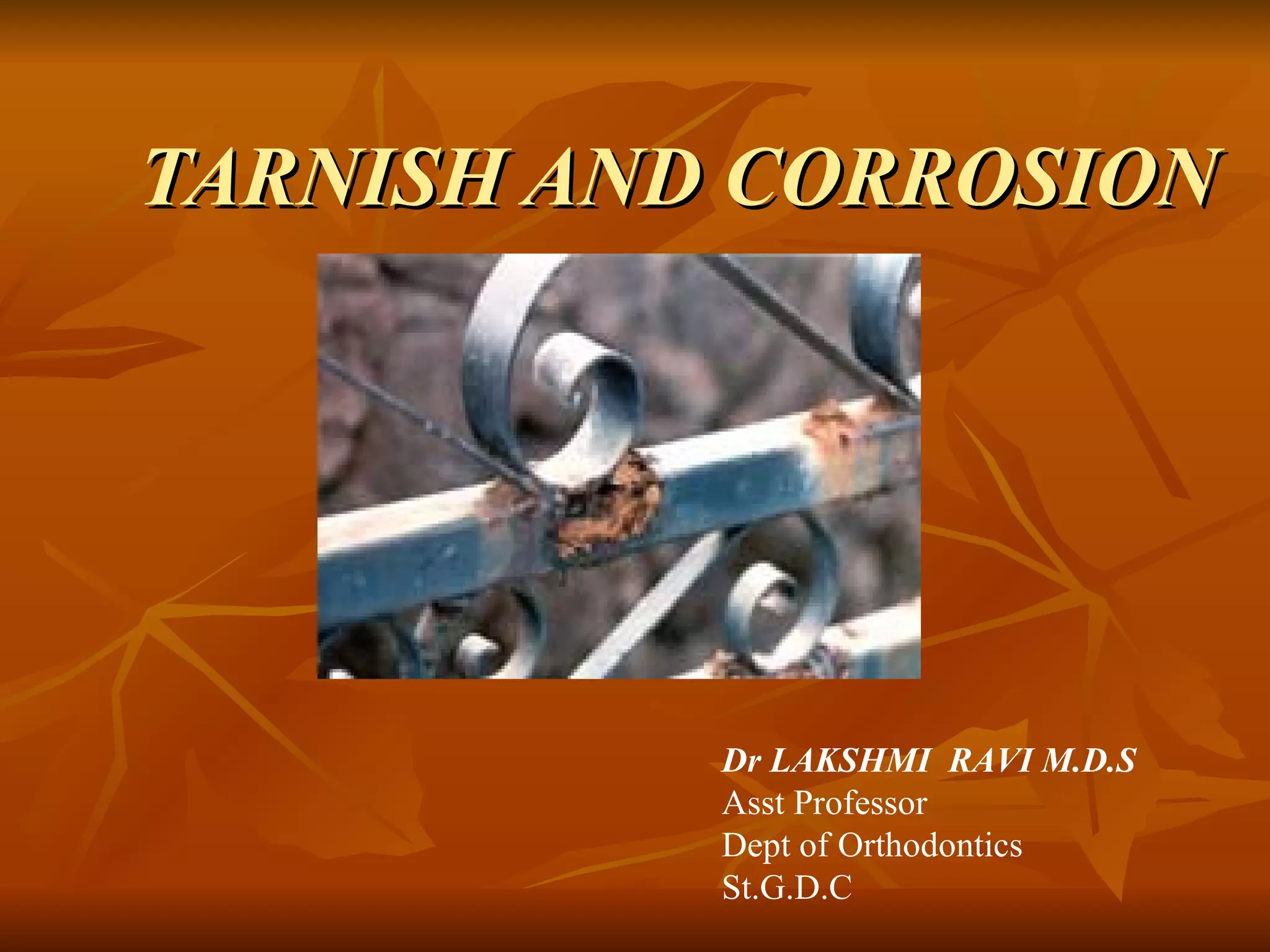

TARNISH AND CORROSION Dr LAKSHMI  RAVI M.D.S Asst Professor Dept of Orthodontics St.G.D.C
CORROSION A chemical or electrochemical process through which a metal is attacked by natural agents such as air and water resulting in partial or complete dissolution, deterioration or weakening of any solid substance.   Types of Corrosion Crevice corrosion  - corrosion in narrow spaces caused by localized electrochemical process and chemistry changes such as acidification and depletion of oxygen content.  Eg. Microleakage in dental restorations. Galvanic corrosion  - corrosion on a less noble metal when electrochemically dissimilar metals are in electrical contact in presence of corrosive liquid environment.
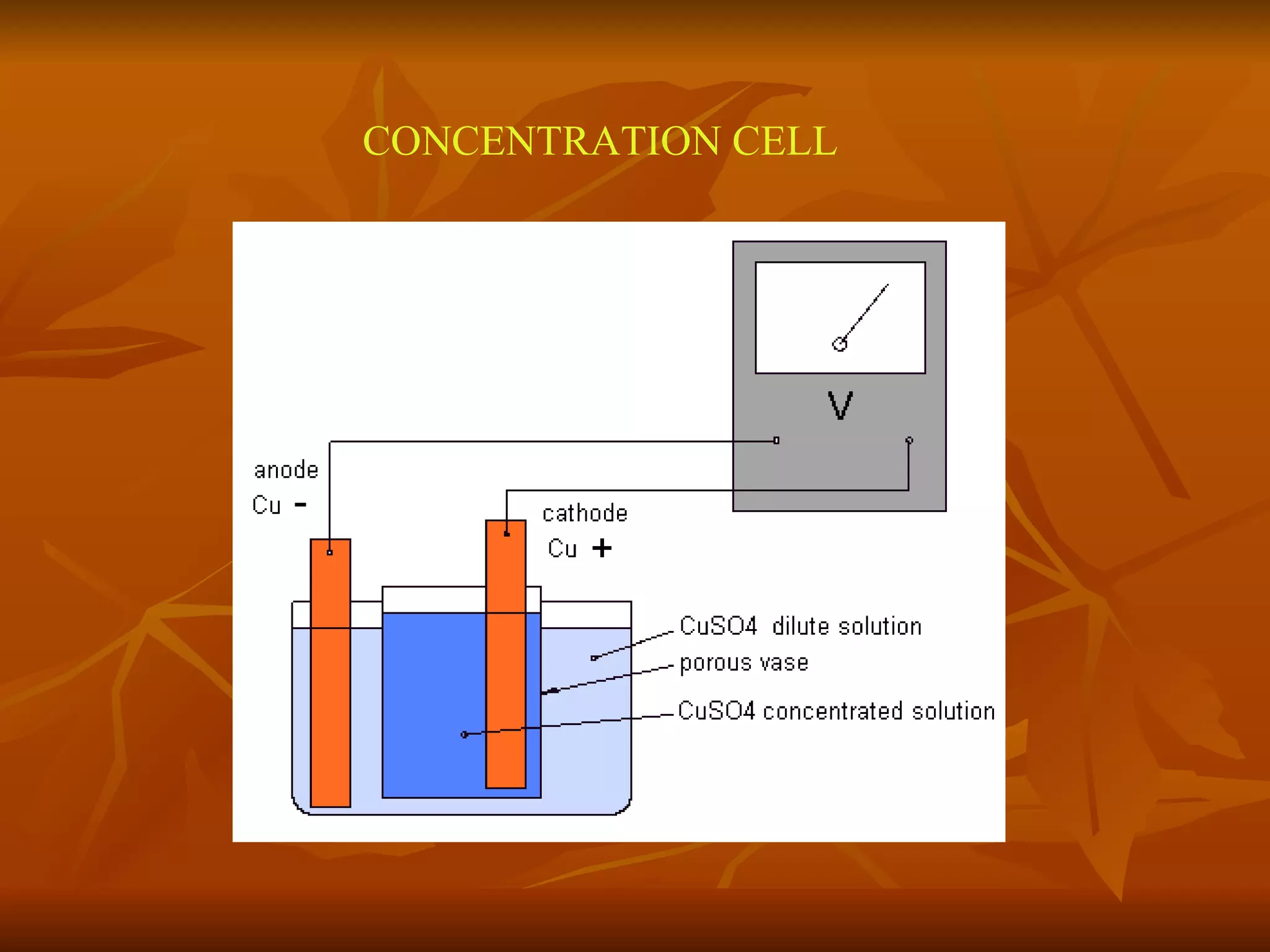
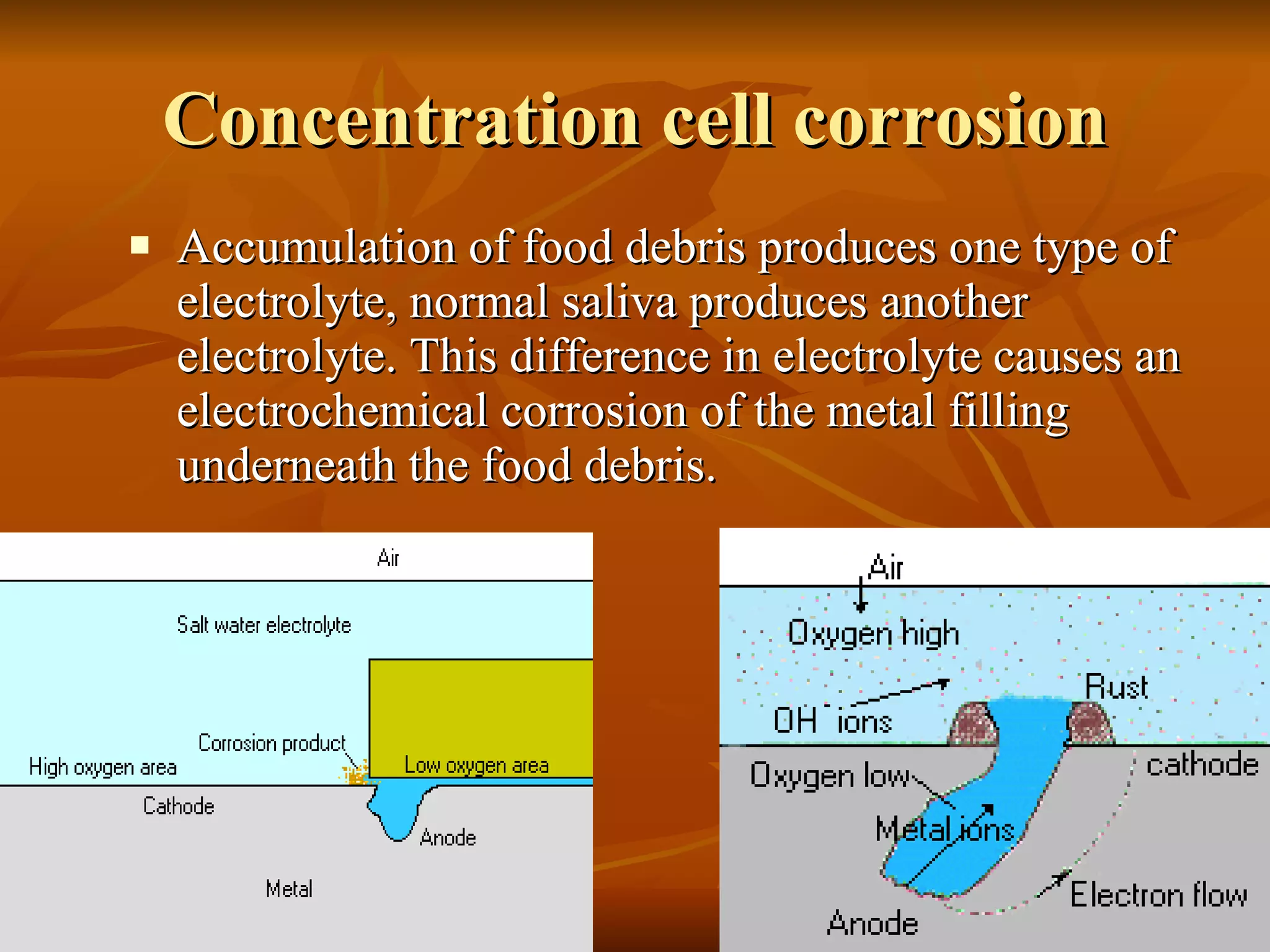
Pitting corrosion  - Sharply localised corrosion in base metals like iron,nickel and chromium (which are naturally protected by a thin film of oxide) in the presence of chlorides in the environment ,the film locally breaks down causing dissolving of the metal underneath it in the form of pits. Stress corrosion  –Degradation by the combined effects of mechanical stress and a corrosive environment,usually in the form of cracking. Tarnish  - A process by which a metal surface is dulled in brightness or discolored through the formation of a chemical film,such as a sulfide and an oxide. Concentration cell  -  An electrochemical corrosion cell,in which the potential difference is associated with the difference in the concentration of the solutions causing corrosion at different parts of the metal surface .
CONCENTRATION CELL
Causes of Tarnish and Corrosion Formation of hard(calculus) and soft deposits(plaques and films composed of micro organisms and mucin) on the surface of the restoration. Formation of thin films of oxides, sulfides and chlorides on a metal causing surface discoloration. Corrosion results in surfaces under stress or with irregular impurities on the metal. Disintegration of a metal may occur through the action of moisture, atmosphere, acid or alkaline solutions and certain chemicals.
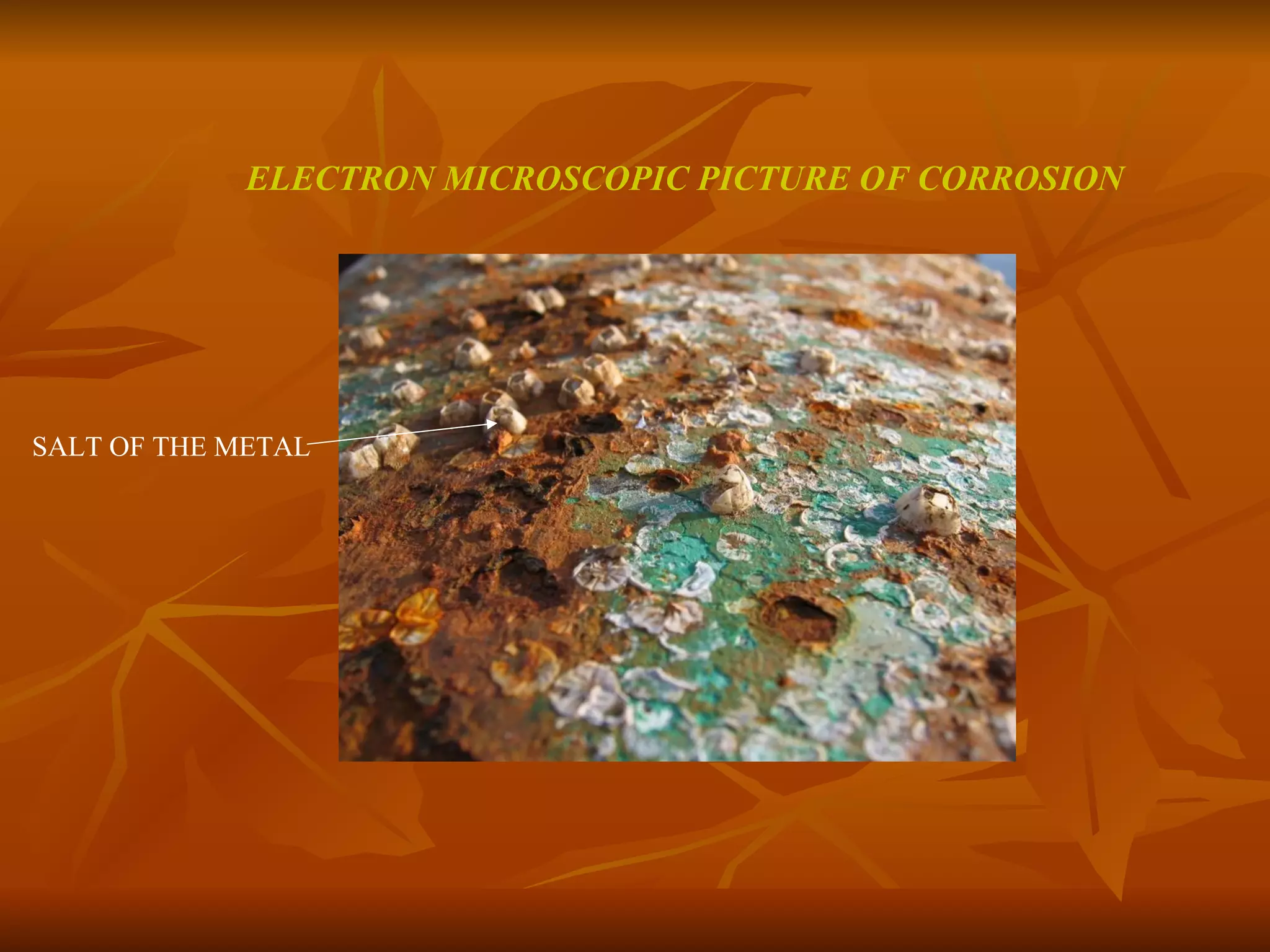
ELECTRON MICROSCOPIC PICTURE OF CORROSION SALT OF THE METAL
Tarnish that is formed in time can accumulate elements or compounds that chemically attack the metallic surface. For e.g. and certain foods contain amounts of sulfur. Sulfides such an hydrogen and ammonium sulfides, corrode silver, copper and similar metals present in dental alloys and amalgam. Water ,oxygen and chloride ions present in saliva contribute to corrosion attack. Various acids such as phosphoric, lactic, acetic acids at proper concentration and pH can produce corrosion.
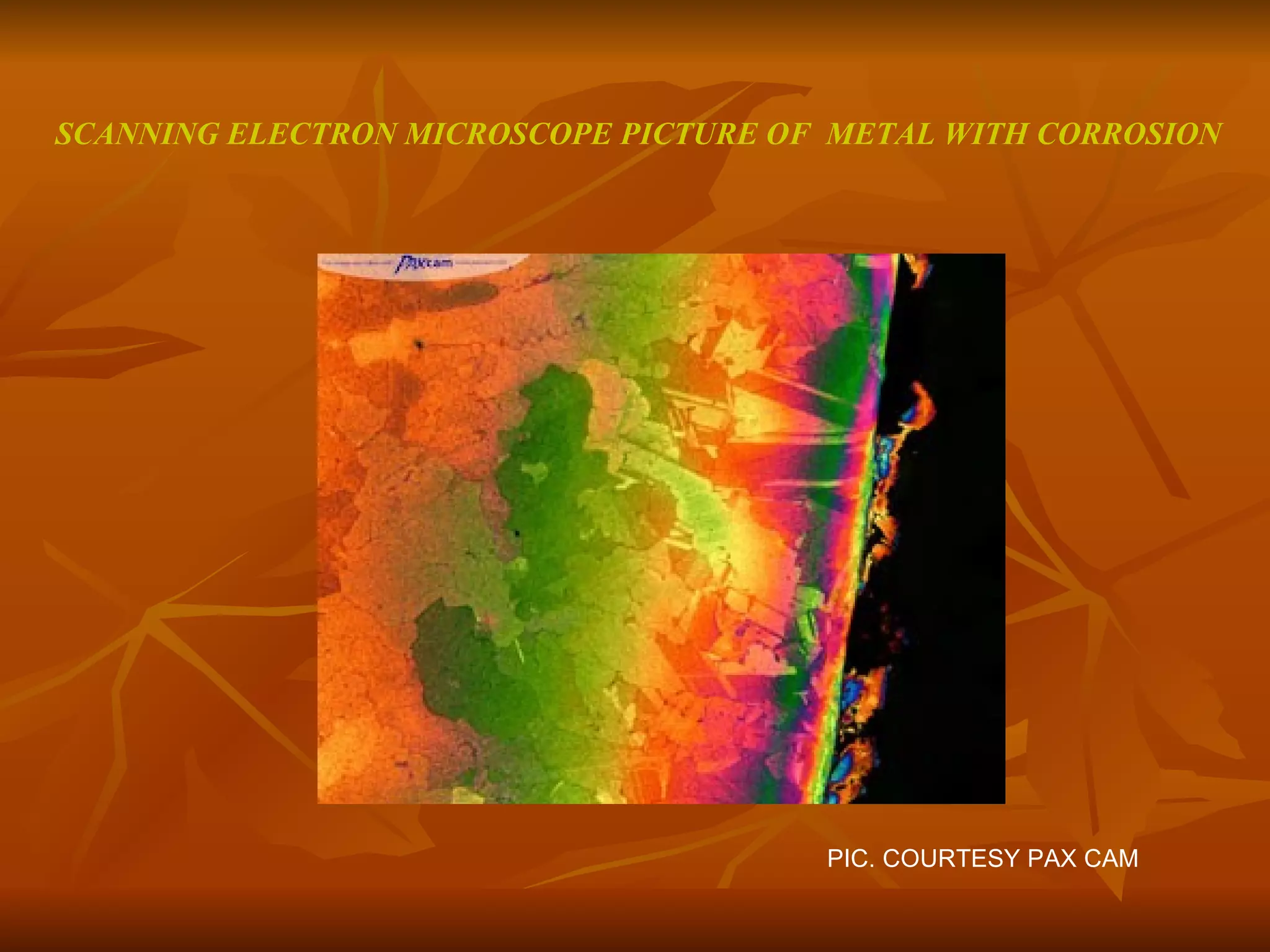
SCANNING ELECTRON MICROSCOPE PICTURE OF  METAL WITH CORROSION PIC. COURTESY PAX CAM
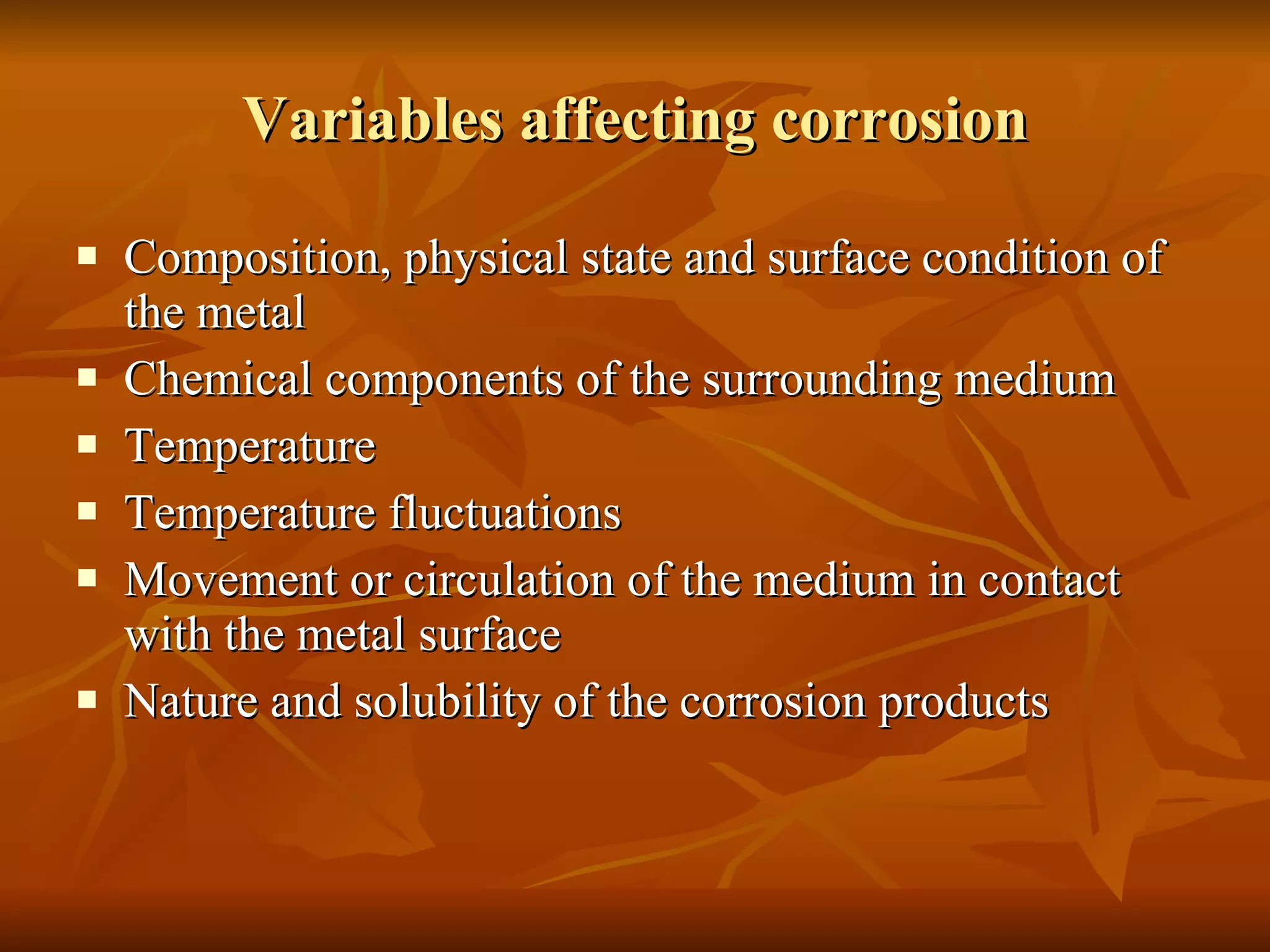
Variables affecting corrosion Composition, physical state and surface condition of the metal Chemical components of the surrounding medium Temperature Temperature fluctuations Movement or circulation of the medium in contact with the metal surface Nature and solubility of the corrosion products
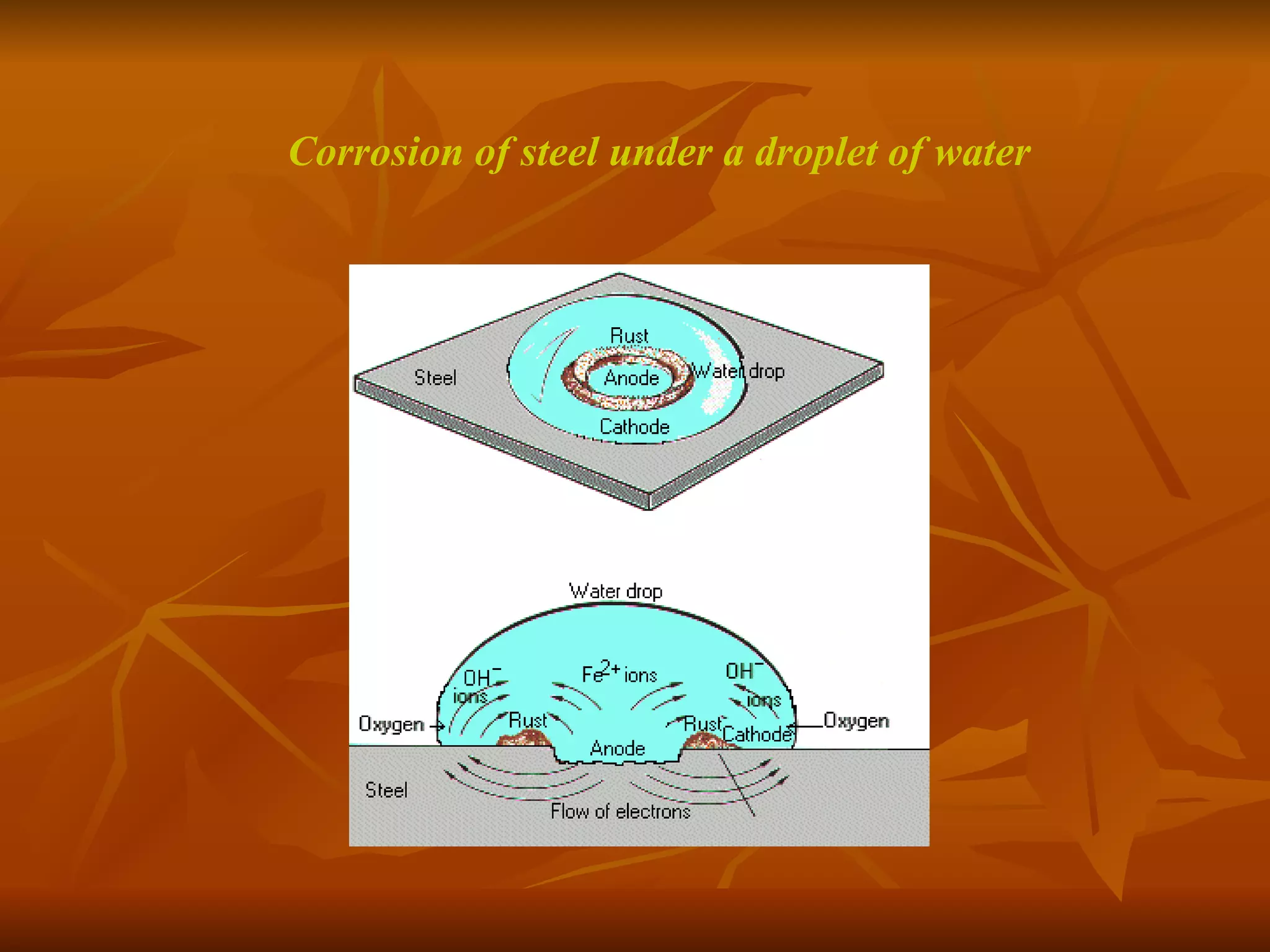
Corrosion of steel under a droplet of water
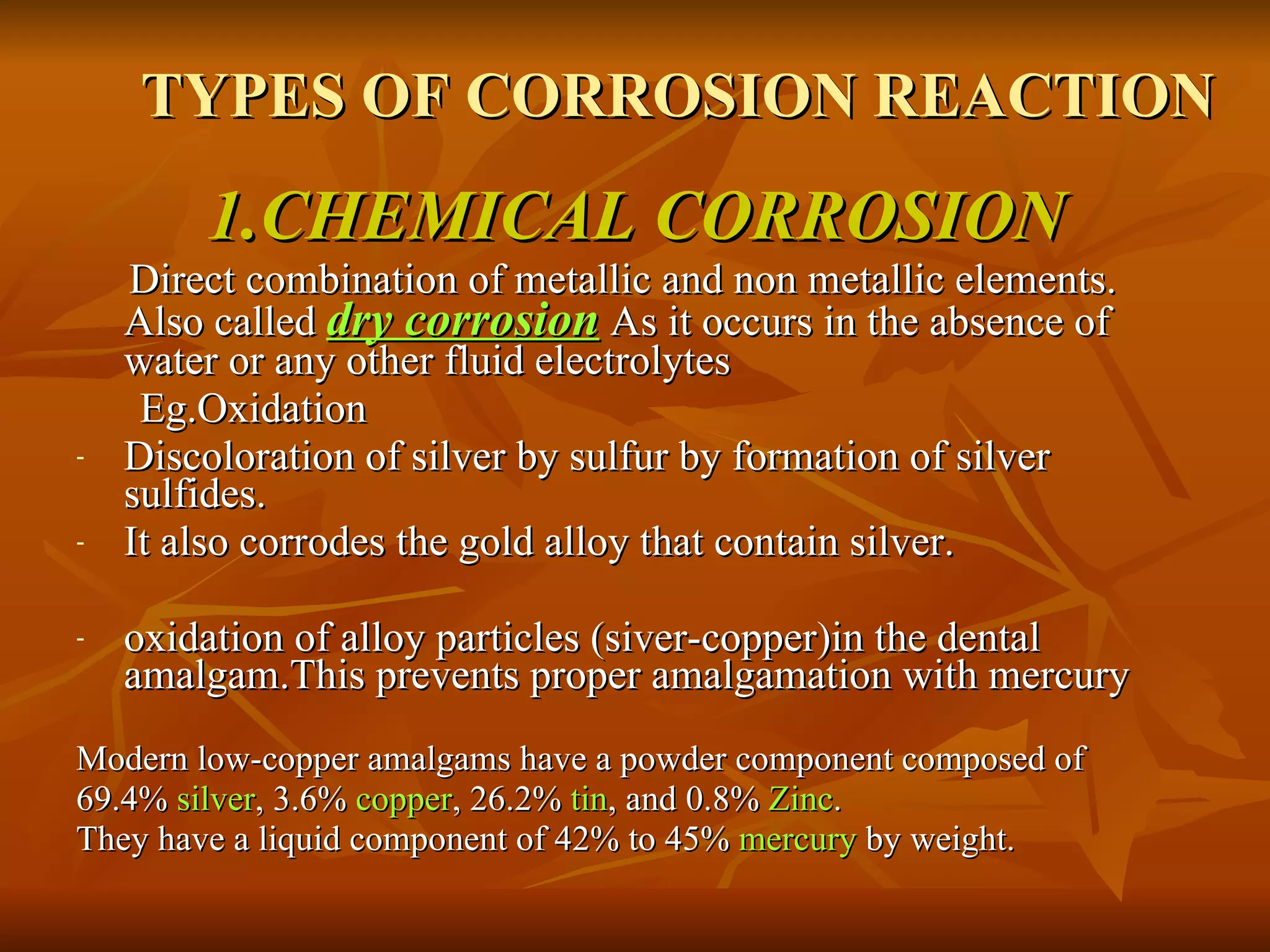
TYPES OF CORROSION REACTION   1.CHEMICAL CORROSION Direct combination of metallic and non metallic elements. Also called  dry corrosion  As it occurs in the absence of water or any other fluid electrolytes Eg.Oxidation Discoloration of silver by sulfur by formation of silver sulfides. It also corrodes the gold alloy that contain silver. oxidation of alloy particles (siver-copper)in the dental amalgam.This prevents proper amalgamation with mercury  Modern low-copper amalgams have a powder component composed of  69.4%  silver , 3.6%  copper , 26.2%  tin , and 0.8%  Zinc . They have a liquid component of 42% to 45%  mercury  by weight.
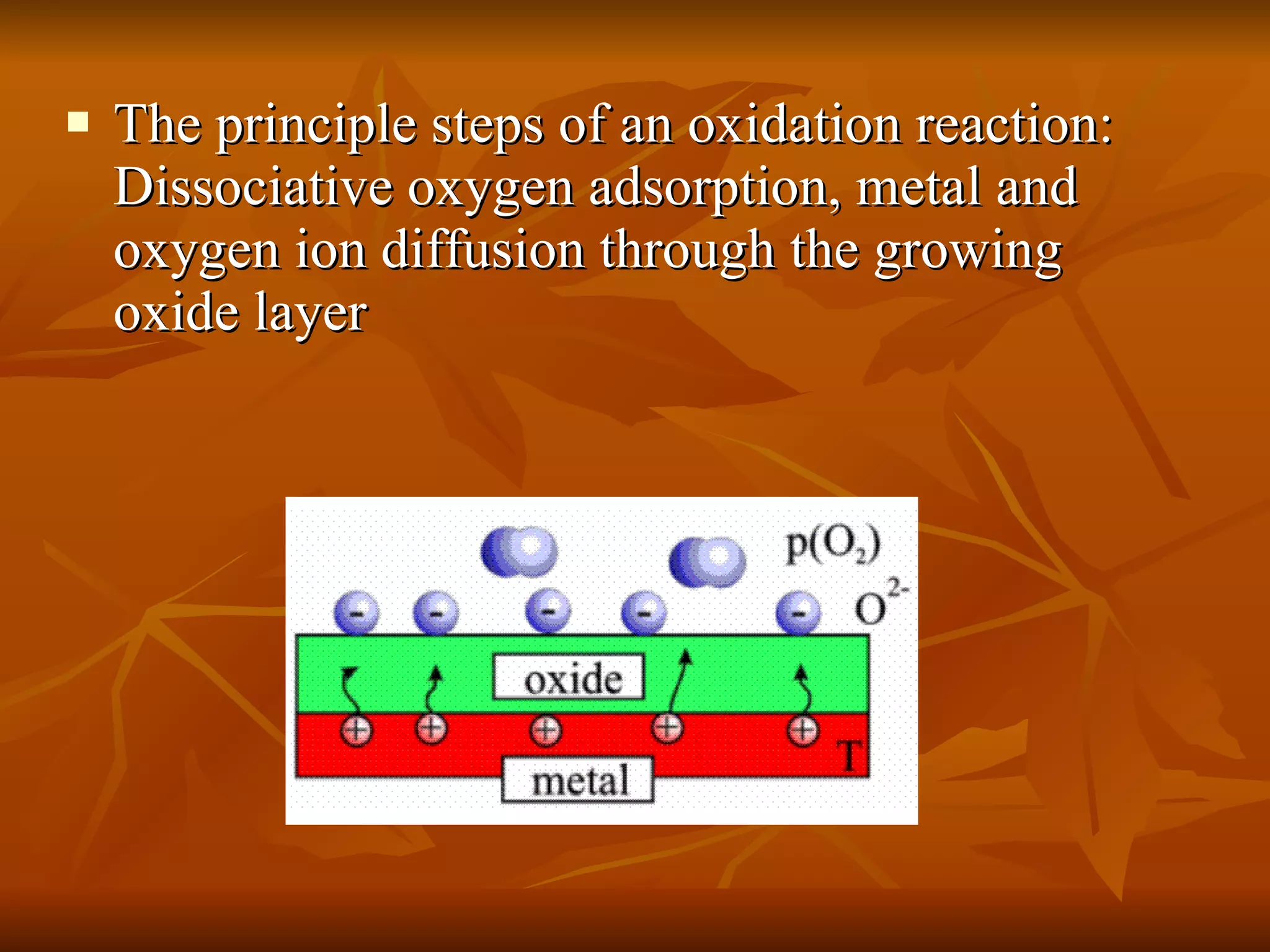
The principle steps of an oxidation reaction: Dissociative oxygen adsorption, metal and oxygen ion diffusion through the growing oxide layer
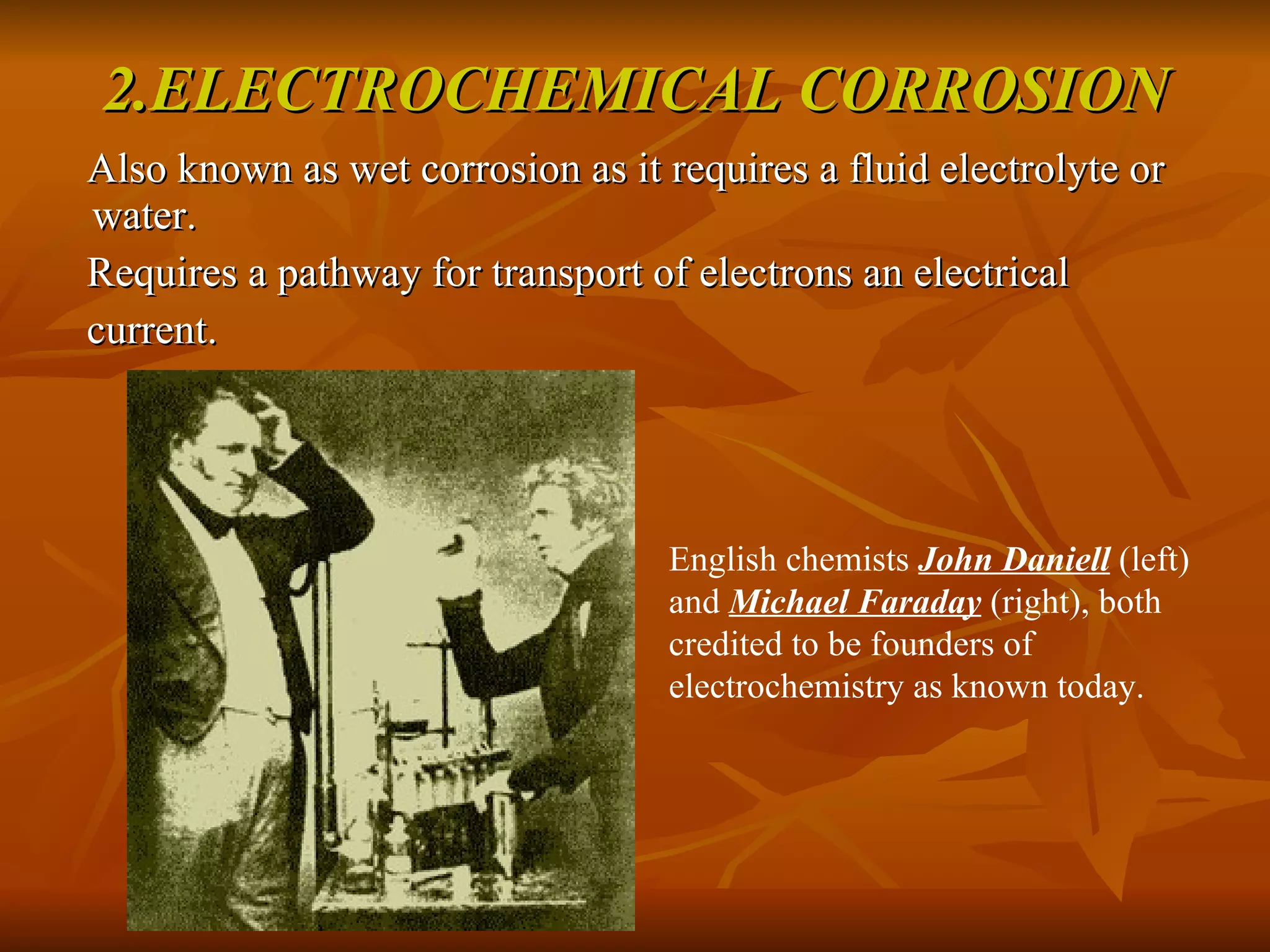
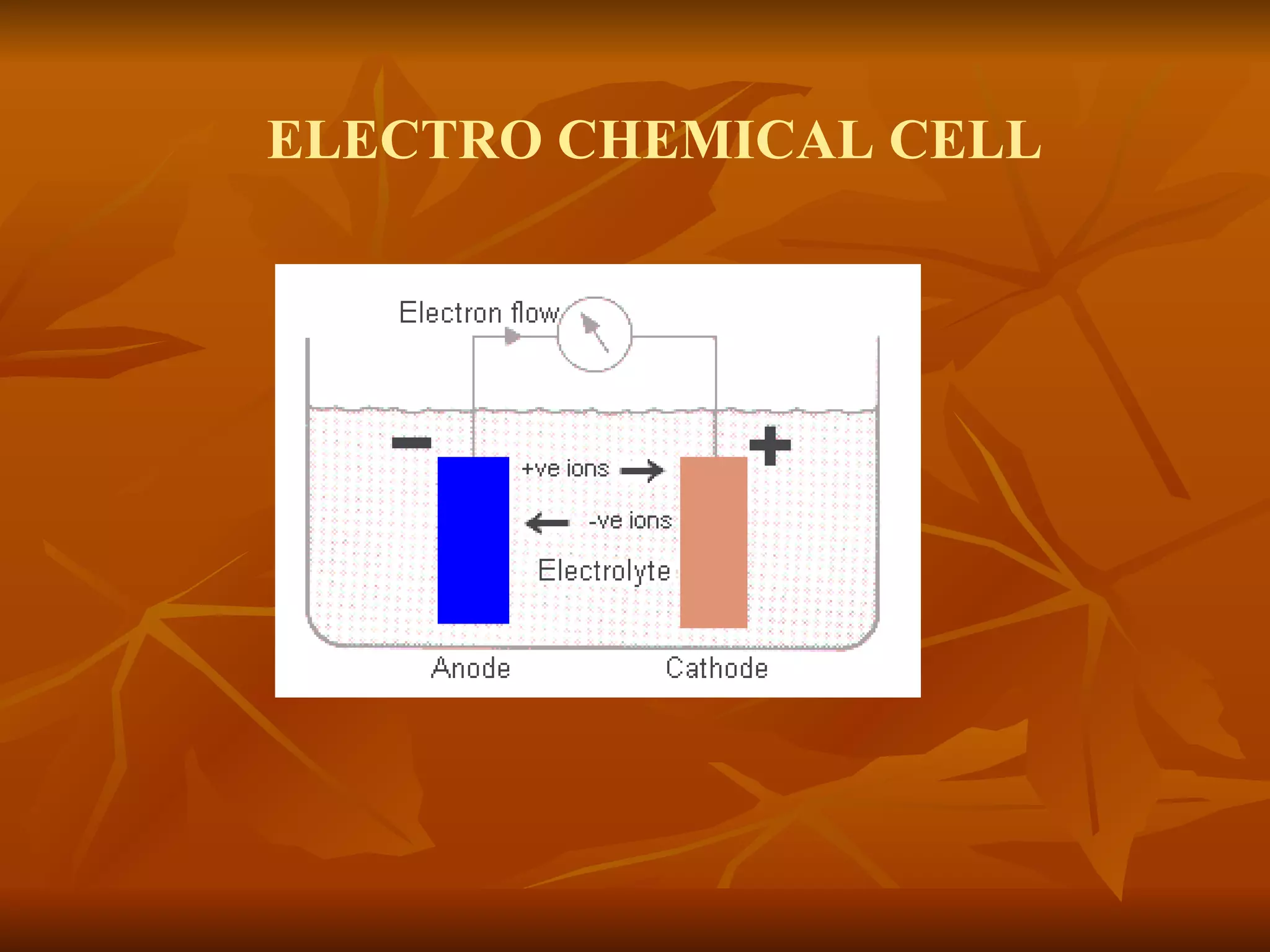
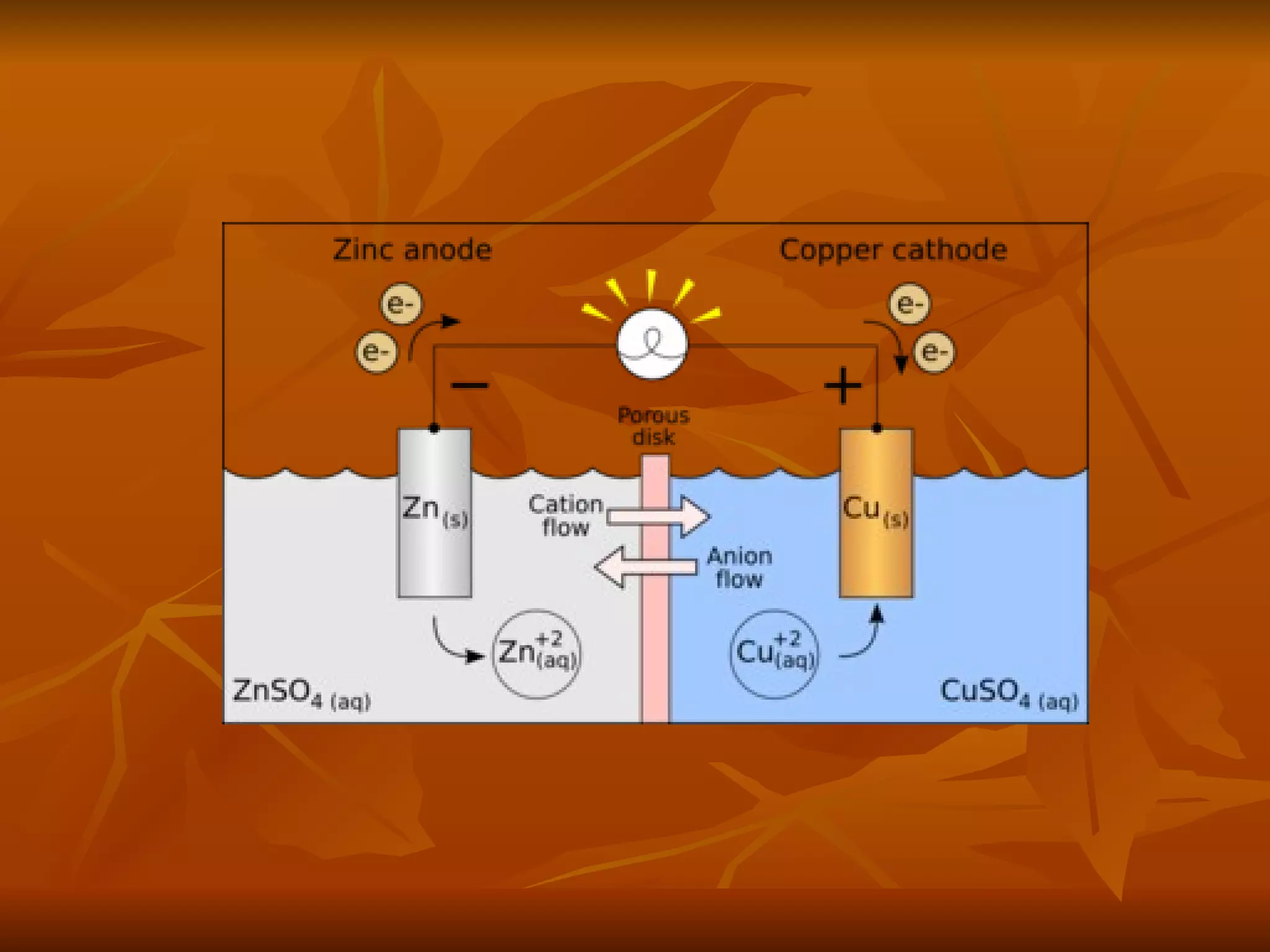
2.ELECTROCHEMICAL CORROSION Also known as wet corrosion as it requires a fluid electrolyte or water. Requires a pathway for transport of electrons an electrical  current. English chemists  John Daniell  (left) and  Michael Faraday  (right), both credited to be founders of electrochemistry as known today.
ELECTRO CHEMICAL CELL
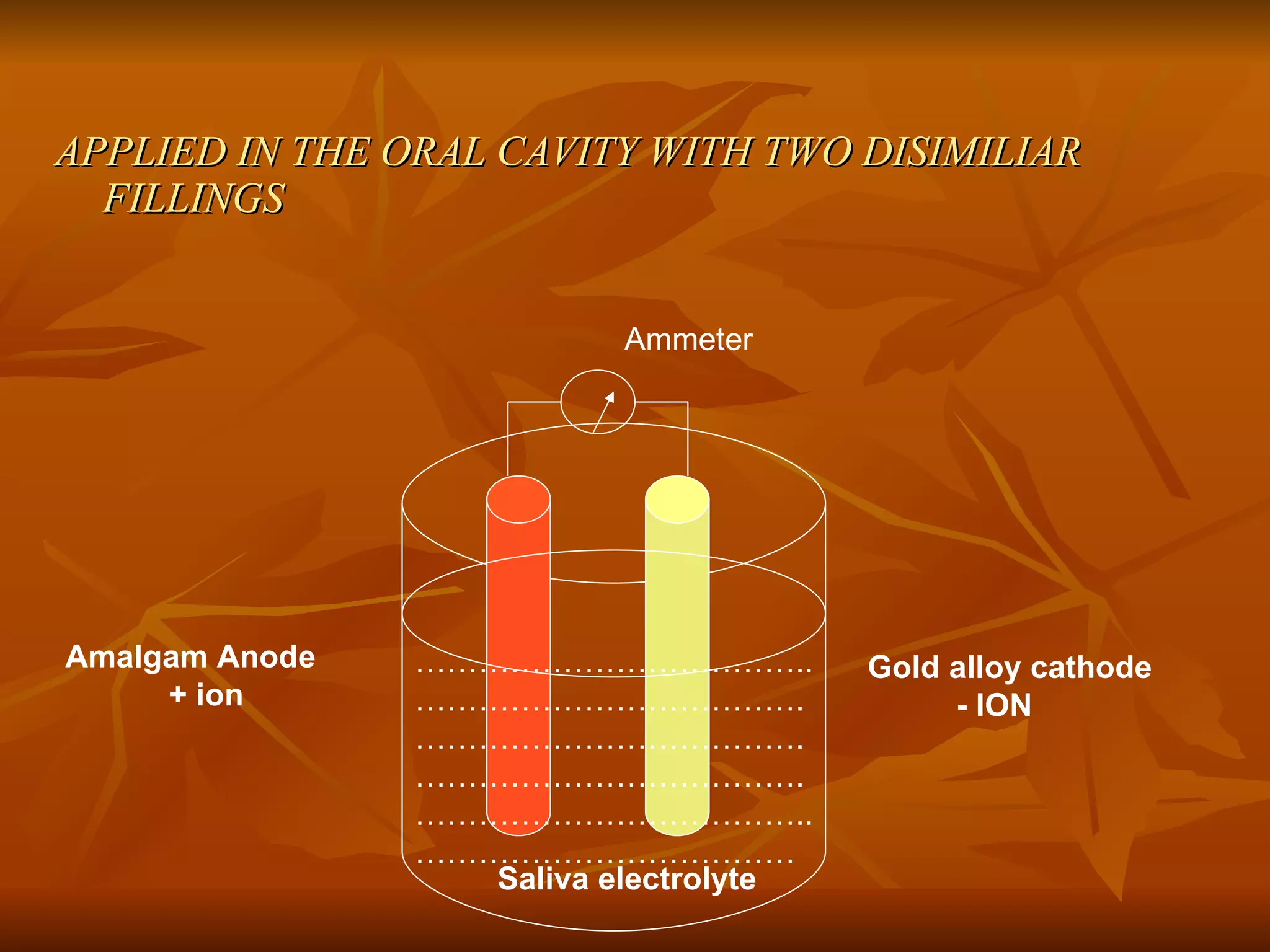
APPLIED IN THE ORAL CAVITY WITH TWO DISIMILIAR FILLINGS Amalgam Anode + ion Gold alloy cathode - ION Saliva electrolyte Ammeter  ……………………………… .. ……………………………… . ……………………………… . ……………………………… . ……………………………… .. ………………………………
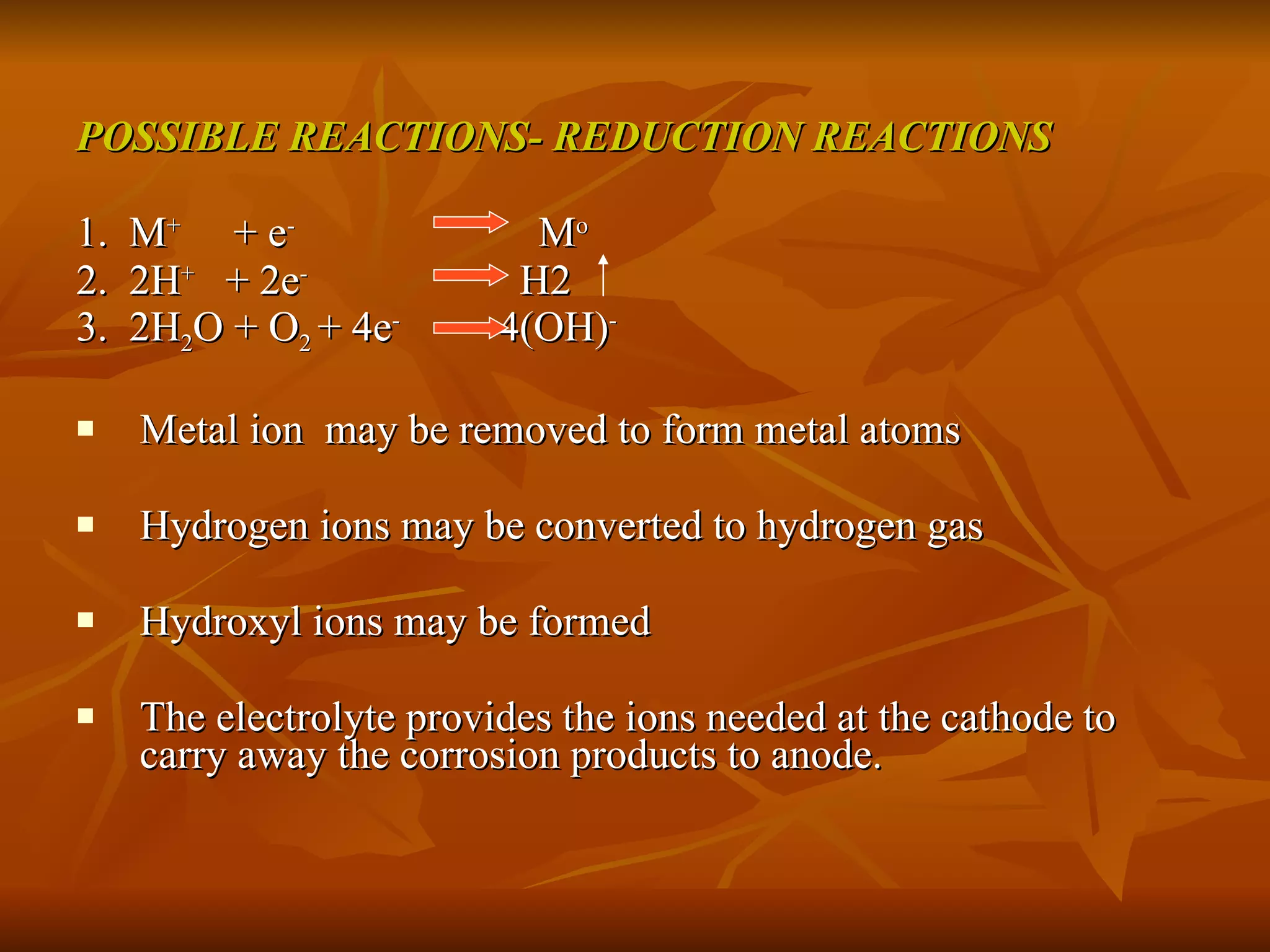
POSSIBLE REACTIONS- REDUCTION REACTIONS 1.  M +   + e -   M o 2.  2H +  + 2e -   H2  3.  2H 2 O + O 2  + 4e -  4(OH) - Metal ion  may be removed to form metal atoms Hydrogen ions may be converted to hydrogen gas Hydroxyl ions may be formed The electrolyte provides the ions needed at the cathode to carry away the corrosion products to anode.
Electromotive force series This classification for arrangement of the elements in the order of their dissolution tendencies in water. Potential values are calculated with solutions containing one atomic weight ,in grams, of ions in 1000ml of water at 25 c. Metals with a more positive potential have a lower tendency to dissolve in aqueous solutions.
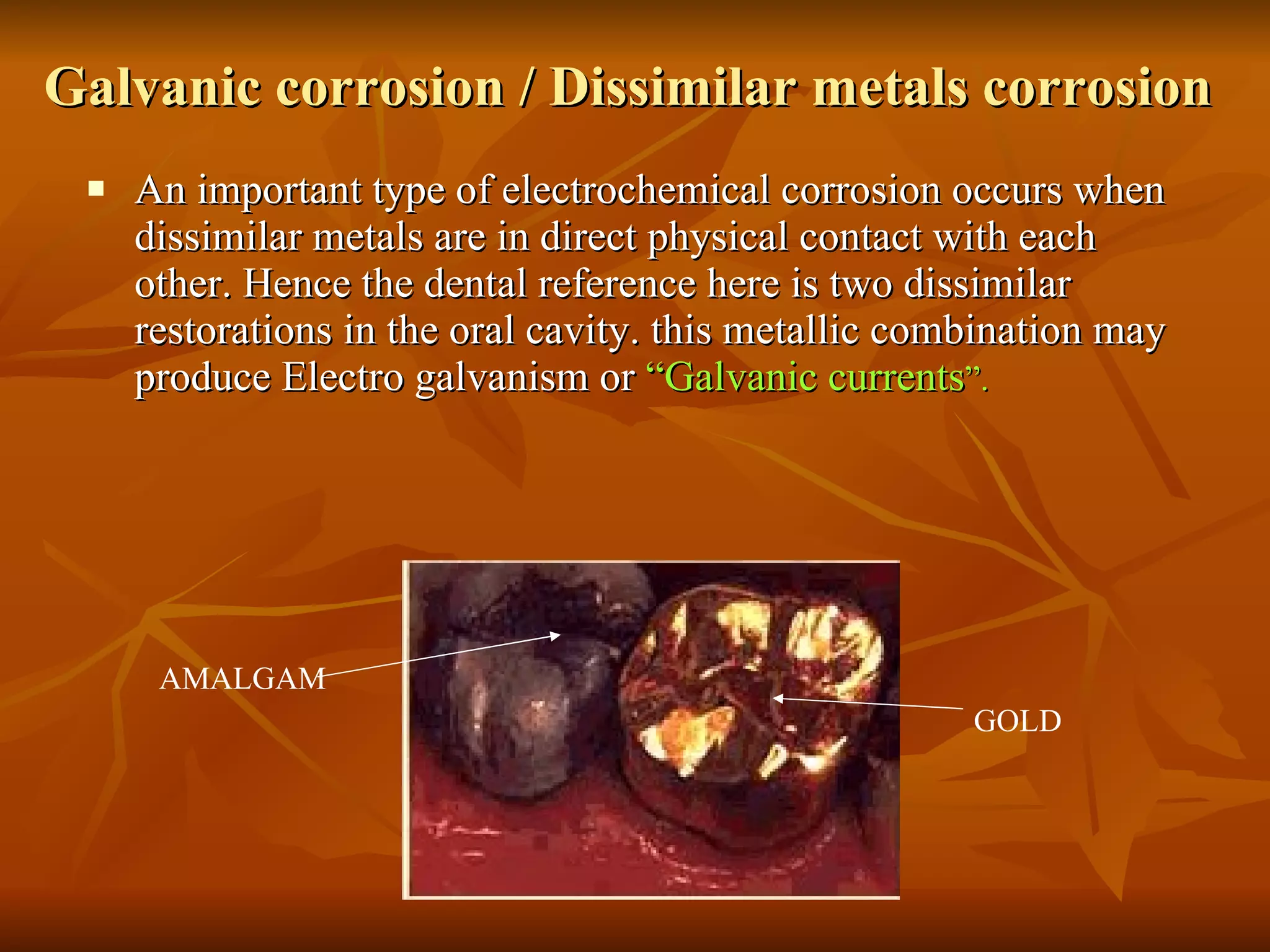
Galvanic corrosion / Dissimilar metals corrosion  An important type of electrochemical corrosion occurs when dissimilar metals are in direct physical contact with each other. Hence the dental reference here is two dissimilar restorations in the oral cavity. this metallic combination may produce Electro galvanism or  “Galvanic currents ”. AMALGAM GOLD
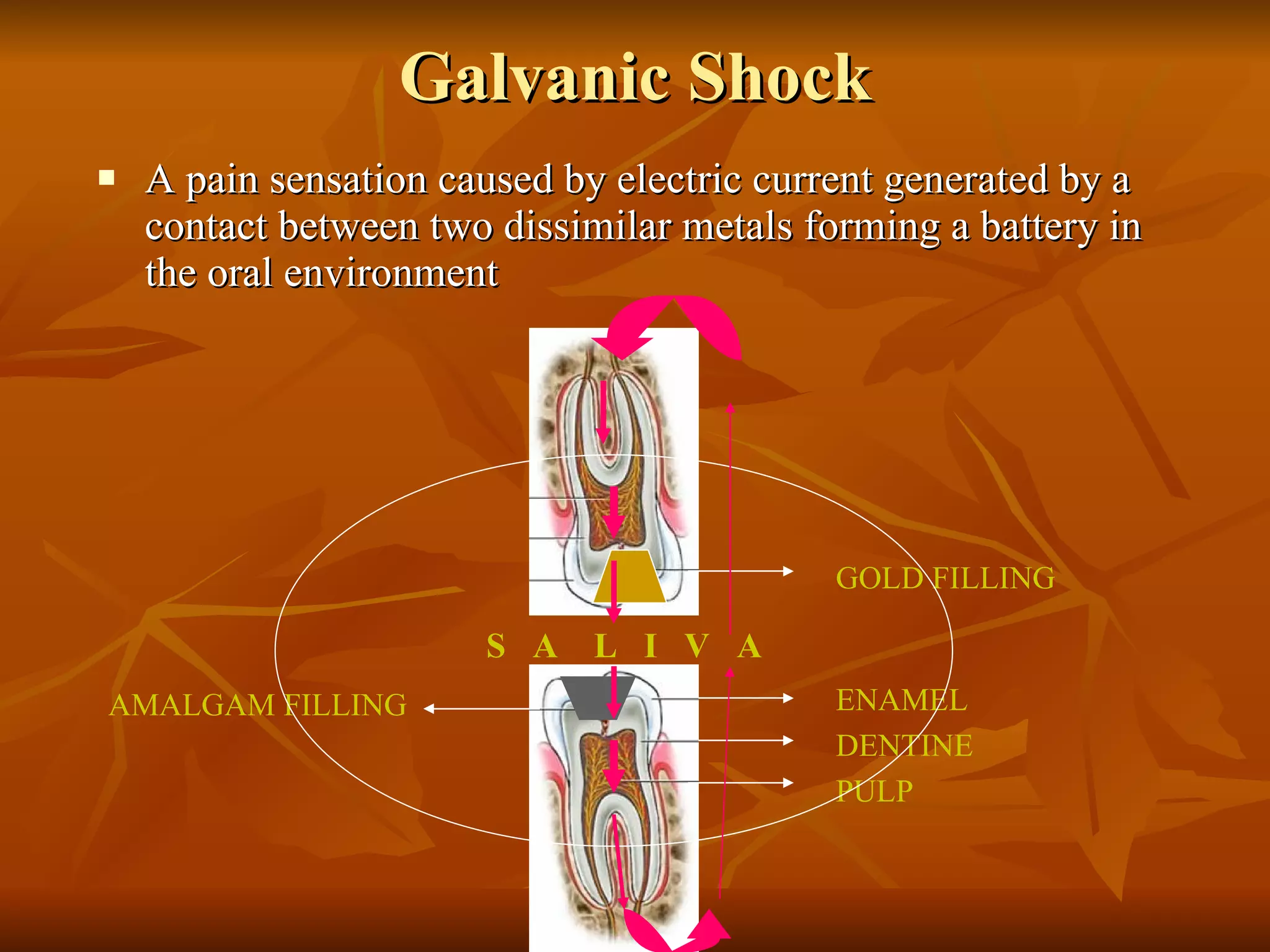
Galvanic Shock A pain sensation caused by electric current generated by a contact between two dissimilar metals forming a battery in the oral environment GOLD FILLING ENAMEL DENTINE PULP AMALGAM FILLING S  A  L  I  V  A
Eg. Amalgam filling opposing a gold inlay  as  both the restorations are wet in saliva, an  electrical couple exists, with a potential  difference between the dissimilar restorations. When they come in contact, the potential is  suddenly short circuited through the two alloys  resulting in a sharp pain.
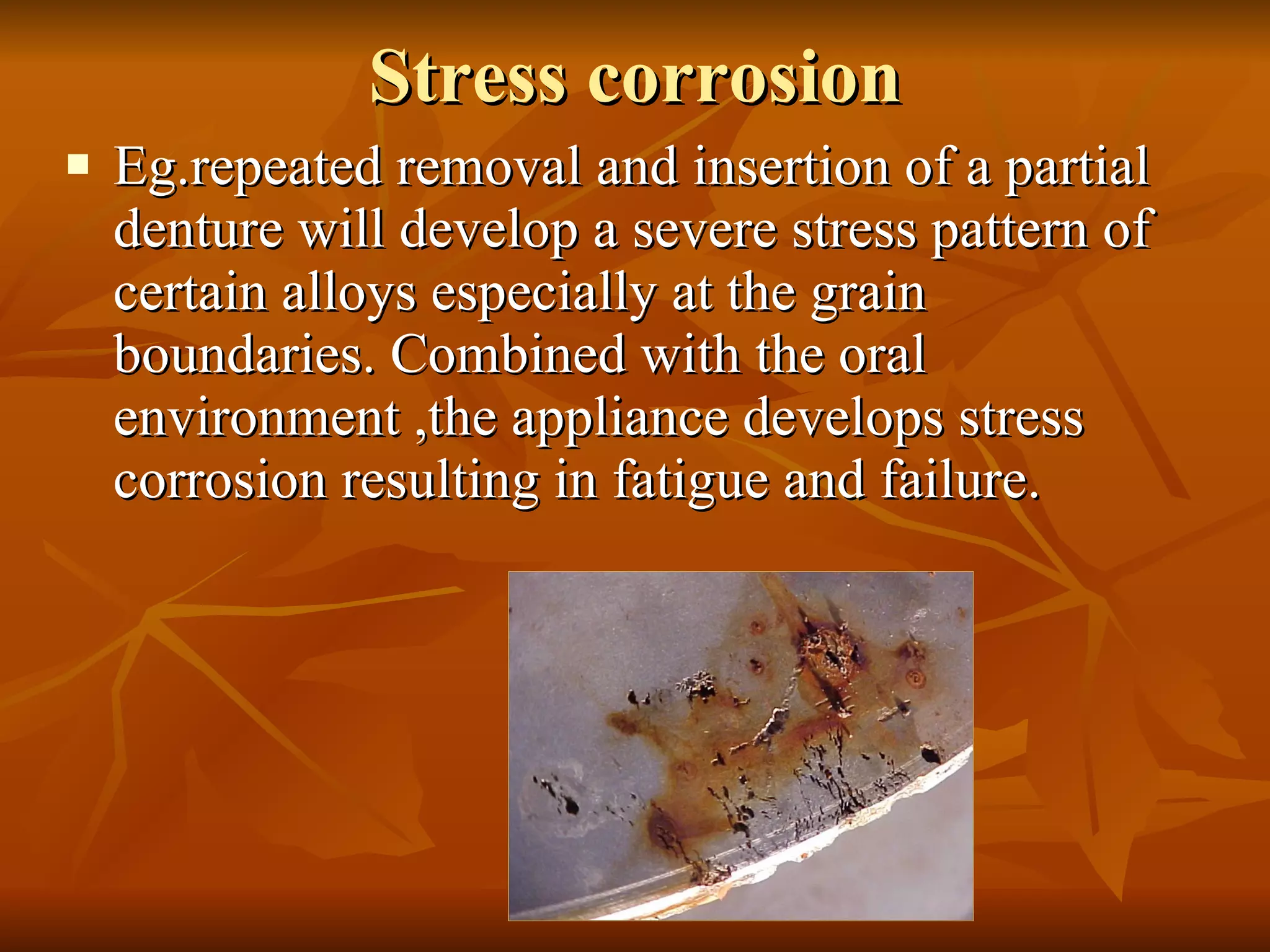
Stress corrosion Eg.repeated removal and insertion of a partial denture will develop a severe stress pattern of certain alloys especially at the grain boundaries. Combined with the oral environment ,the appliance develops stress corrosion resulting in fatigue and failure.
Concentration cell corrosion Accumulation of food debris produces one type of electrolyte, normal saliva produces another electrolyte. This difference in electrolyte causes an electrochemical corrosion of the metal filling underneath the food debris.
PROTECTION AGAINST CORROSION Highly polished restorations A coat of noble metal over the base metal in dental casting(noble metals resist corrosion because their EMF is positive) Paint application or coating with inorganic nonconductive coatings. Passivating metals-some metals form a thin protective layer when exposed to the environment .Eg,chromium Electroplating with nickel followed by chromium for protective film.eg.stainless steel
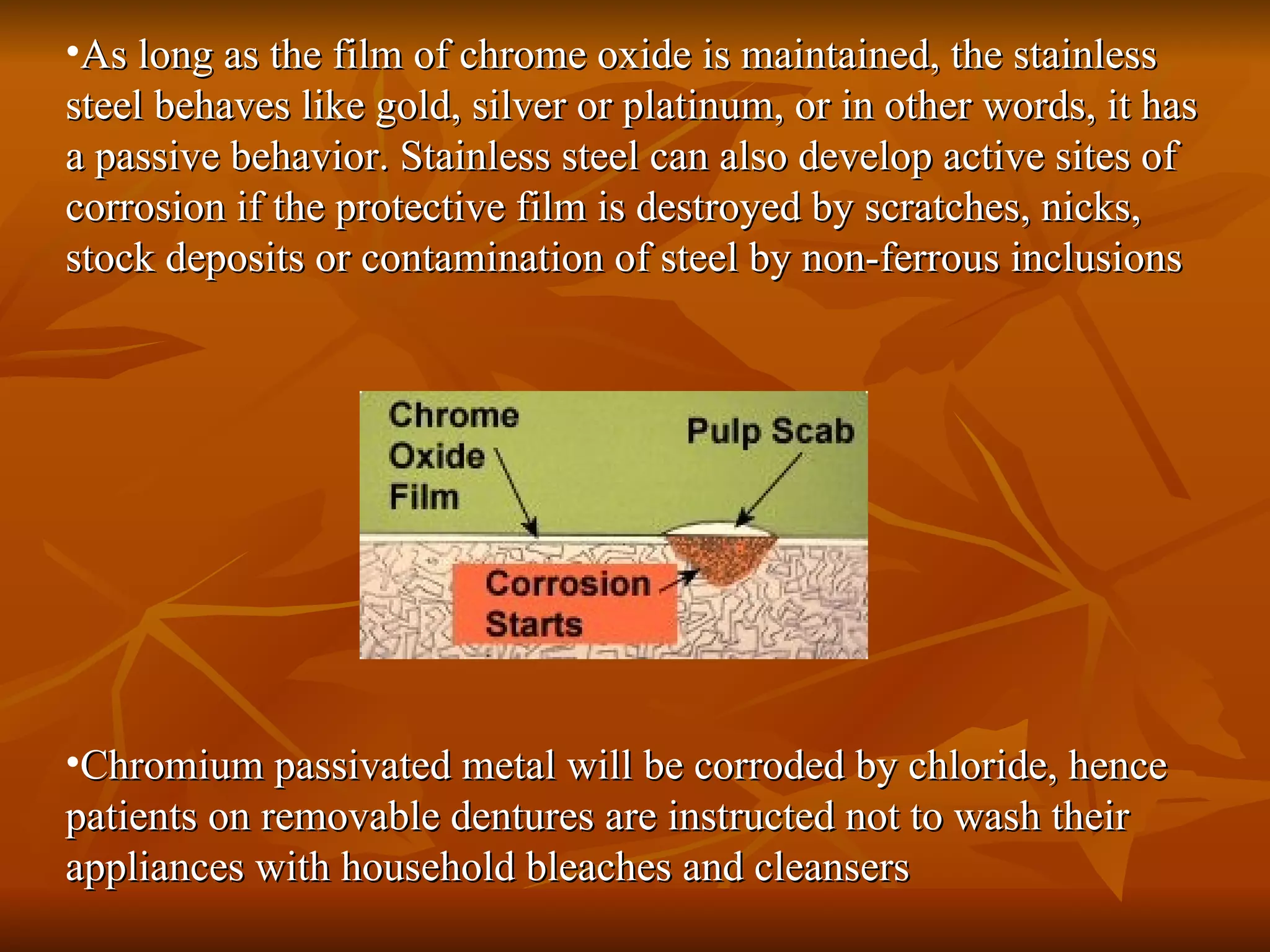
As long as the film of chrome oxide is maintained, the stainless steel behaves like gold, silver or platinum, or in other words, it has a passive behavior. Stainless steel can also develop active sites of corrosion if the protective film is destroyed by scratches, nicks, stock deposits or contamination of steel by non-ferrous inclusions  Chromium passivated metal will be corroded by chloride, hence patients on removable dentures are instructed not to wash their appliances with household bleaches and cleansers
 
Corrosion of dental restorations Affecting Factors   Diet Drug Smoking  Bacterial activity Oral hygiene and habits
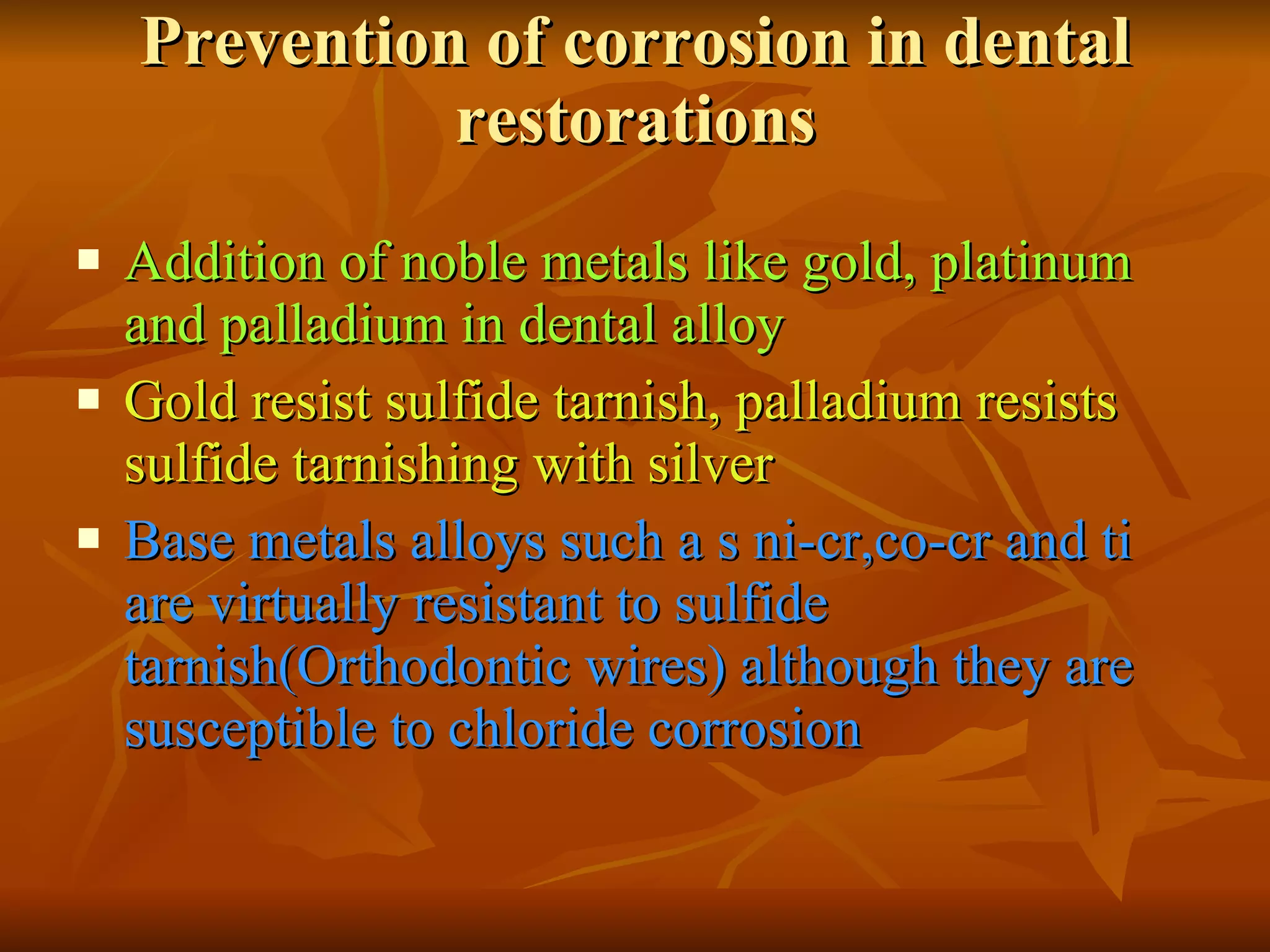
Prevention of corrosion in dental restorations Addition of noble metals like gold, platinum and palladium in dental alloy Gold resist sulfide tarnish, palladium resists  sulfide tarnishing with silver Base metals alloys such a s ni-cr,co-cr and ti are virtually resistant to sulfide tarnish(Orthodontic wires) although they are susceptible to chloride corrosion
Clinical considerations Application of varnish in the dentinal walls and on the surface of the filling to avoid galvanism in amalgam restorations. Avoid giving amalgam restoration opposing gold filling because the mercury released from the silver amalgam will weaken and discolour both the fillings and also gives a metallic taste in the mouth. SEPAGE OF MECURY FROM AN AMALGAM FILLING ELECTRON MICROSCOPE PICTURE MERCURY
Luigi Galvani -1737 - 1798 Galvani was born, educated and taught anatomy  in Bologna. The Italian physiologist made  one of the early discoveries that advanced the  study of electricity. His work with frogs led to his discovery in 1781 of galvanic or voltaic electricity.  Galvani found he could make the muscles of a dead  frog twitch when he touched them with different  metals or the current from a nearby static electric generator.  But he incorrectly thought fluid in the frog's body was the  source of the electricity. This discovery soon led to another by Allesandro Volta, who invented the electric cell or early battery.
 
Alessandro Volta - 1745 - 1827 Count Alessandro Volta was born in Como, Italy, into a noble family, Count Volta was a physicist and pioneer  in the study of electricity. "Volt," named after Count Volta.  Inventor of the Battery. Around 1800, he invented a wet battery called a Voltaic Pile. The Voltaic Pile consisted of discs of copper and zinc separated by discs of paper or cardboard (soaked in salt water). Attached to the top and bottom of this "Pile" was a copper wire. When Volta closed the circuit, electricity flowed through the pile. Volta's battery was later refined by other scientists, and the French emperor, Napoleon, made Volta a "Count" for his discovery.
THANK YOU

Tarnish and Corrosion in Dentistry

  • 1.
    TARNISH AND CORROSIONDr LAKSHMI RAVI M.D.S Asst Professor Dept of Orthodontics St.G.D.C
  • 2.
    CORROSION A chemicalor electrochemical process through which a metal is attacked by natural agents such as air and water resulting in partial or complete dissolution, deterioration or weakening of any solid substance. Types of Corrosion Crevice corrosion - corrosion in narrow spaces caused by localized electrochemical process and chemistry changes such as acidification and depletion of oxygen content. Eg. Microleakage in dental restorations. Galvanic corrosion - corrosion on a less noble metal when electrochemically dissimilar metals are in electrical contact in presence of corrosive liquid environment.
  • 3.
    Pitting corrosion - Sharply localised corrosion in base metals like iron,nickel and chromium (which are naturally protected by a thin film of oxide) in the presence of chlorides in the environment ,the film locally breaks down causing dissolving of the metal underneath it in the form of pits. Stress corrosion –Degradation by the combined effects of mechanical stress and a corrosive environment,usually in the form of cracking. Tarnish - A process by which a metal surface is dulled in brightness or discolored through the formation of a chemical film,such as a sulfide and an oxide. Concentration cell - An electrochemical corrosion cell,in which the potential difference is associated with the difference in the concentration of the solutions causing corrosion at different parts of the metal surface .
  • 4.
  • 5.
    Causes of Tarnishand Corrosion Formation of hard(calculus) and soft deposits(plaques and films composed of micro organisms and mucin) on the surface of the restoration. Formation of thin films of oxides, sulfides and chlorides on a metal causing surface discoloration. Corrosion results in surfaces under stress or with irregular impurities on the metal. Disintegration of a metal may occur through the action of moisture, atmosphere, acid or alkaline solutions and certain chemicals.
  • 6.
    ELECTRON MICROSCOPIC PICTUREOF CORROSION SALT OF THE METAL
  • 7.
    Tarnish that isformed in time can accumulate elements or compounds that chemically attack the metallic surface. For e.g. and certain foods contain amounts of sulfur. Sulfides such an hydrogen and ammonium sulfides, corrode silver, copper and similar metals present in dental alloys and amalgam. Water ,oxygen and chloride ions present in saliva contribute to corrosion attack. Various acids such as phosphoric, lactic, acetic acids at proper concentration and pH can produce corrosion.
  • 8.
    SCANNING ELECTRON MICROSCOPEPICTURE OF METAL WITH CORROSION PIC. COURTESY PAX CAM
  • 9.
    Variables affecting corrosionComposition, physical state and surface condition of the metal Chemical components of the surrounding medium Temperature Temperature fluctuations Movement or circulation of the medium in contact with the metal surface Nature and solubility of the corrosion products
  • 10.
    Corrosion of steelunder a droplet of water
  • 11.
    TYPES OF CORROSIONREACTION 1.CHEMICAL CORROSION Direct combination of metallic and non metallic elements. Also called dry corrosion As it occurs in the absence of water or any other fluid electrolytes Eg.Oxidation Discoloration of silver by sulfur by formation of silver sulfides. It also corrodes the gold alloy that contain silver. oxidation of alloy particles (siver-copper)in the dental amalgam.This prevents proper amalgamation with mercury Modern low-copper amalgams have a powder component composed of 69.4% silver , 3.6% copper , 26.2% tin , and 0.8% Zinc . They have a liquid component of 42% to 45% mercury by weight.
  • 12.
    The principle stepsof an oxidation reaction: Dissociative oxygen adsorption, metal and oxygen ion diffusion through the growing oxide layer
  • 13.
    2.ELECTROCHEMICAL CORROSION Alsoknown as wet corrosion as it requires a fluid electrolyte or water. Requires a pathway for transport of electrons an electrical current. English chemists John Daniell (left) and Michael Faraday (right), both credited to be founders of electrochemistry as known today.
  • 14.
  • 15.
    APPLIED IN THEORAL CAVITY WITH TWO DISIMILIAR FILLINGS Amalgam Anode + ion Gold alloy cathode - ION Saliva electrolyte Ammeter ……………………………… .. ……………………………… . ……………………………… . ……………………………… . ……………………………… .. ………………………………
  • 16.
    POSSIBLE REACTIONS- REDUCTIONREACTIONS 1. M + + e - M o 2. 2H + + 2e - H2 3. 2H 2 O + O 2 + 4e - 4(OH) - Metal ion may be removed to form metal atoms Hydrogen ions may be converted to hydrogen gas Hydroxyl ions may be formed The electrolyte provides the ions needed at the cathode to carry away the corrosion products to anode.
  • 17.
    Electromotive force seriesThis classification for arrangement of the elements in the order of their dissolution tendencies in water. Potential values are calculated with solutions containing one atomic weight ,in grams, of ions in 1000ml of water at 25 c. Metals with a more positive potential have a lower tendency to dissolve in aqueous solutions.
  • 18.
    Galvanic corrosion /Dissimilar metals corrosion An important type of electrochemical corrosion occurs when dissimilar metals are in direct physical contact with each other. Hence the dental reference here is two dissimilar restorations in the oral cavity. this metallic combination may produce Electro galvanism or “Galvanic currents ”. AMALGAM GOLD
  • 19.
    Galvanic Shock Apain sensation caused by electric current generated by a contact between two dissimilar metals forming a battery in the oral environment GOLD FILLING ENAMEL DENTINE PULP AMALGAM FILLING S A L I V A
  • 20.
    Eg. Amalgam fillingopposing a gold inlay as both the restorations are wet in saliva, an electrical couple exists, with a potential difference between the dissimilar restorations. When they come in contact, the potential is suddenly short circuited through the two alloys resulting in a sharp pain.
  • 21.
    Stress corrosion Eg.repeatedremoval and insertion of a partial denture will develop a severe stress pattern of certain alloys especially at the grain boundaries. Combined with the oral environment ,the appliance develops stress corrosion resulting in fatigue and failure.
  • 22.
    Concentration cell corrosionAccumulation of food debris produces one type of electrolyte, normal saliva produces another electrolyte. This difference in electrolyte causes an electrochemical corrosion of the metal filling underneath the food debris.
  • 23.
    PROTECTION AGAINST CORROSIONHighly polished restorations A coat of noble metal over the base metal in dental casting(noble metals resist corrosion because their EMF is positive) Paint application or coating with inorganic nonconductive coatings. Passivating metals-some metals form a thin protective layer when exposed to the environment .Eg,chromium Electroplating with nickel followed by chromium for protective film.eg.stainless steel
  • 24.
    As long asthe film of chrome oxide is maintained, the stainless steel behaves like gold, silver or platinum, or in other words, it has a passive behavior. Stainless steel can also develop active sites of corrosion if the protective film is destroyed by scratches, nicks, stock deposits or contamination of steel by non-ferrous inclusions Chromium passivated metal will be corroded by chloride, hence patients on removable dentures are instructed not to wash their appliances with household bleaches and cleansers
  • 25.
  • 26.
    Corrosion of dentalrestorations Affecting Factors Diet Drug Smoking Bacterial activity Oral hygiene and habits
  • 27.
    Prevention of corrosionin dental restorations Addition of noble metals like gold, platinum and palladium in dental alloy Gold resist sulfide tarnish, palladium resists sulfide tarnishing with silver Base metals alloys such a s ni-cr,co-cr and ti are virtually resistant to sulfide tarnish(Orthodontic wires) although they are susceptible to chloride corrosion
  • 28.
    Clinical considerations Applicationof varnish in the dentinal walls and on the surface of the filling to avoid galvanism in amalgam restorations. Avoid giving amalgam restoration opposing gold filling because the mercury released from the silver amalgam will weaken and discolour both the fillings and also gives a metallic taste in the mouth. SEPAGE OF MECURY FROM AN AMALGAM FILLING ELECTRON MICROSCOPE PICTURE MERCURY
  • 29.
    Luigi Galvani -1737- 1798 Galvani was born, educated and taught anatomy in Bologna. The Italian physiologist made one of the early discoveries that advanced the study of electricity. His work with frogs led to his discovery in 1781 of galvanic or voltaic electricity. Galvani found he could make the muscles of a dead frog twitch when he touched them with different metals or the current from a nearby static electric generator. But he incorrectly thought fluid in the frog's body was the source of the electricity. This discovery soon led to another by Allesandro Volta, who invented the electric cell or early battery.
  • 30.
  • 31.
    Alessandro Volta -1745 - 1827 Count Alessandro Volta was born in Como, Italy, into a noble family, Count Volta was a physicist and pioneer in the study of electricity. "Volt," named after Count Volta. Inventor of the Battery. Around 1800, he invented a wet battery called a Voltaic Pile. The Voltaic Pile consisted of discs of copper and zinc separated by discs of paper or cardboard (soaked in salt water). Attached to the top and bottom of this "Pile" was a copper wire. When Volta closed the circuit, electricity flowed through the pile. Volta's battery was later refined by other scientists, and the French emperor, Napoleon, made Volta a "Count" for his discovery.
  • 32.