By :
Dr. Gehan Shaalan, PT
     Lecturer BMC
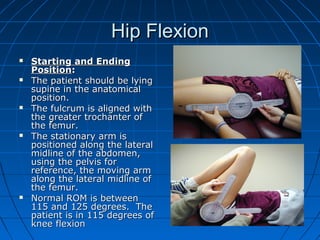
Hip Flexion
   Starting and Ending
    Position:
   The patient should be lying
    supine in the anatomical
    position.
   The fulcrum is aligned with
    the greater trochanter of
    the femur.
   The stationary arm is
    positioned along the lateral
    midline of the abdomen,
    using the pelvis for
    reference, the moving arm
    along the lateral midline of
    the femur.
   Normal ROM is between
    115 and 125 degrees. The
    patient is in 115 degrees of
    knee flexion
Hip Flexion
Precaution
 Allow the knee to flex to prevent a

  stretch on the hamstring muscle.
 Avoid lumbosacral motion.


Factors limiting motion
 Contact of thigh with pelvis.
Hip Extension
   Starting and Ending
    Position:
   Patient is lying prone
    with legs together and
    arms at sides.
   Goniometer
    positioning is the
    same as for hip
    flexion.
   Normal ROM for hip
    extension is 10 to 30
    degrees, patient has
    25 degrees of hip
    extension.
Hip Extension
Precaution
  Avoid lumbar extension.
  Keep knee joint extended to prevent
   stretch on the rectus femoris muscle

Factors limiting ROM
  Tension of hip flexor muscles.
  Tension of iliofemoral ligament.
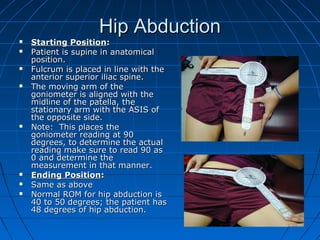
Hip Abduction
   Starting Position:
   Patient is supine in anatomical
    position.
   Fulcrum is placed in line with the
    anterior superior iliac spine.
   The moving arm of the
    goniometer is aligned with the
    midline of the patella, the
    stationary arm with the ASIS of
    the opposite side.
   Note: This places the
    goniometer reading at 90
    degrees, to determine the actual
    reading make sure to read 90 as
    0 and determine the
    measurement in that manner.
   Ending Position:
   Same as above
   Normal ROM for hip abduction is
    40 to 50 degrees; the patient has
    48 degrees of hip abduction.
Hip Abduction
 Precaution
Prevent lateral rotation of hip joint.

Factors limiting motion
1-Tension of hip adductor muscles.
2-Tension of iliofemoral ligament.
Hip Adduction
   Starting Position:
   Patient is supine the leg
    not being measured is
    abducted to allow full
    adduction of the opposite
    leg.
   The goniometer positioning
    is the same as for
    abduction, fulcrum at the
    ASIS, moving arm aligned
    with the midline of the
    patella, and the stationary
    arm with the ASIS of the
    opposite side. Also,
    remember to adjust due to
    the goniometer starting at
    a reading of 90 degrees.
   Ending Position:
   Same as above
   The normal ROM is 15 to
    25 degrees. The patient
    has 18 degrees of hip
Hip Adduction
Precaution
 Prevent medial rotation of hip joint.


Factors limiting ROM
 Contact with opposite limb.
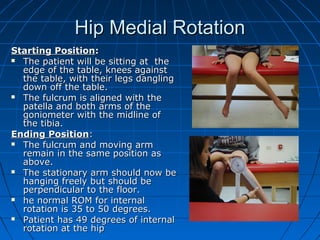
Hip Medial Rotation
Starting Position:
 The patient will be sitting at the
  edge of the table, knees against
  the table, with their legs dangling
  down off the table.
 The fulcrum is aligned with the
  patella and both arms of the
  goniometer with the midline of
  the tibia.
Ending Position:
 The fulcrum and moving arm
  remain in the same position as
  above.
 The stationary arm should now be
  hanging freely but should be
  perpendicular to the floor.
 he normal ROM for internal
  rotation is 35 to 50 degrees.
 Patient has 49 degrees of internal
  rotation at the hip
Hip Medial Rotation
Precautions
 Prevent the pelvis from lifting off the

  table.
 Prevent trunk flexion.

Factors Limiting ROM
 Tension of hip lateral rotator muscles.

 When hip is extended (during prone

  position) tension of ischiocapsular
  ligament.
 When hip is flexed (during sitting position)

  tension of iliofemoral ligament.
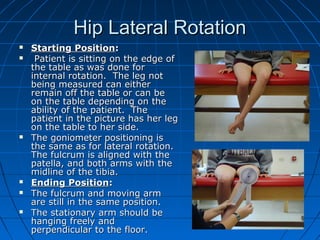
Hip Lateral Rotation
   Starting Position:
    Patient is sitting on the edge of
    the table as was done for
    internal rotation. The leg not
    being measured can either
    remain off the table or can be
    on the table depending on the
    ability of the patient. The
    patient in the picture has her leg
    on the table to her side.
   The goniometer positioning is
    the same as for lateral rotation.
    The fulcrum is aligned with the
    patella, and both arms with the
    midline of the tibia.
   Ending Position:
   The fulcrum and moving arm
    are still in the same position.
   The stationary arm should be
    hanging freely and
    perpendicular to the floor.
Hip Lateral Rotation
Precaution
 Prevent the pelvis from lifting off the

  table.
 Prevent trunk flexion.

Factors Limiting ROM
 Tension of hip medial rotator

  muscles.
 Tension of iliofemoral ligament.
Hip goinomery

Hip goinomery

  • 1.
    By : Dr. GehanShaalan, PT Lecturer BMC
  • 2.
    Hip Flexion  Starting and Ending Position:  The patient should be lying supine in the anatomical position.  The fulcrum is aligned with the greater trochanter of the femur.  The stationary arm is positioned along the lateral midline of the abdomen, using the pelvis for reference, the moving arm along the lateral midline of the femur.  Normal ROM is between 115 and 125 degrees. The patient is in 115 degrees of knee flexion
  • 3.
    Hip Flexion Precaution  Allowthe knee to flex to prevent a stretch on the hamstring muscle.  Avoid lumbosacral motion. Factors limiting motion  Contact of thigh with pelvis.
  • 4.
    Hip Extension  Starting and Ending Position:  Patient is lying prone with legs together and arms at sides.  Goniometer positioning is the same as for hip flexion.  Normal ROM for hip extension is 10 to 30 degrees, patient has 25 degrees of hip extension.
  • 5.
    Hip Extension Precaution  Avoid lumbar extension.  Keep knee joint extended to prevent stretch on the rectus femoris muscle Factors limiting ROM  Tension of hip flexor muscles.  Tension of iliofemoral ligament.
  • 6.
    Hip Abduction  Starting Position:  Patient is supine in anatomical position.  Fulcrum is placed in line with the anterior superior iliac spine.  The moving arm of the goniometer is aligned with the midline of the patella, the stationary arm with the ASIS of the opposite side.  Note: This places the goniometer reading at 90 degrees, to determine the actual reading make sure to read 90 as 0 and determine the measurement in that manner.  Ending Position:  Same as above  Normal ROM for hip abduction is 40 to 50 degrees; the patient has 48 degrees of hip abduction.
  • 7.
    Hip Abduction  Precaution Preventlateral rotation of hip joint. Factors limiting motion 1-Tension of hip adductor muscles. 2-Tension of iliofemoral ligament.
  • 8.
    Hip Adduction  Starting Position:  Patient is supine the leg not being measured is abducted to allow full adduction of the opposite leg.  The goniometer positioning is the same as for abduction, fulcrum at the ASIS, moving arm aligned with the midline of the patella, and the stationary arm with the ASIS of the opposite side. Also, remember to adjust due to the goniometer starting at a reading of 90 degrees.  Ending Position:  Same as above  The normal ROM is 15 to 25 degrees. The patient has 18 degrees of hip
  • 9.
    Hip Adduction Precaution  Preventmedial rotation of hip joint. Factors limiting ROM  Contact with opposite limb.
  • 10.
    Hip Medial Rotation StartingPosition:  The patient will be sitting at the edge of the table, knees against the table, with their legs dangling down off the table.  The fulcrum is aligned with the patella and both arms of the goniometer with the midline of the tibia. Ending Position:  The fulcrum and moving arm remain in the same position as above.  The stationary arm should now be hanging freely but should be perpendicular to the floor.  he normal ROM for internal rotation is 35 to 50 degrees.  Patient has 49 degrees of internal rotation at the hip
  • 11.
    Hip Medial Rotation Precautions Prevent the pelvis from lifting off the table.  Prevent trunk flexion. Factors Limiting ROM  Tension of hip lateral rotator muscles.  When hip is extended (during prone position) tension of ischiocapsular ligament.  When hip is flexed (during sitting position) tension of iliofemoral ligament.
  • 12.
    Hip Lateral Rotation  Starting Position:  Patient is sitting on the edge of the table as was done for internal rotation. The leg not being measured can either remain off the table or can be on the table depending on the ability of the patient. The patient in the picture has her leg on the table to her side.  The goniometer positioning is the same as for lateral rotation. The fulcrum is aligned with the patella, and both arms with the midline of the tibia.  Ending Position:  The fulcrum and moving arm are still in the same position.  The stationary arm should be hanging freely and perpendicular to the floor.
  • 13.
    Hip Lateral Rotation Precaution Prevent the pelvis from lifting off the table.  Prevent trunk flexion. Factors Limiting ROM  Tension of hip medial rotator muscles.  Tension of iliofemoral ligament.