Lights, Camera, Fluency
How pop music, podcasts, and Tik Tok are impacting
English language learning
20 February 2024
Andreas Schleicher
Director, Directorate for Education and Skills
Learning a foreign language helps students thrive in multicultural settings
0.00
0.05
0.10
0.15
0.20
0.25
0.30
Respect for people
from other cultures
Attitudes towards
immigrants
Awareness of
intercultural
communication
Awareness of
global issues
Interest in learning
about other
cultures
Self-efficacy
regarding global
issues
Perspective taking
Index change
Before accounting for gender, immigrant background, and students' and schools' socio-demographic profile
After accounting for gender, immigrant background, and students' and schools' socio-demographic profile
OECD (2020), PISA 2018 Results (Volume VI), https://doi.org/10.1787/d5f68679-en.
The impact of learning a foreign language on students who speak one language
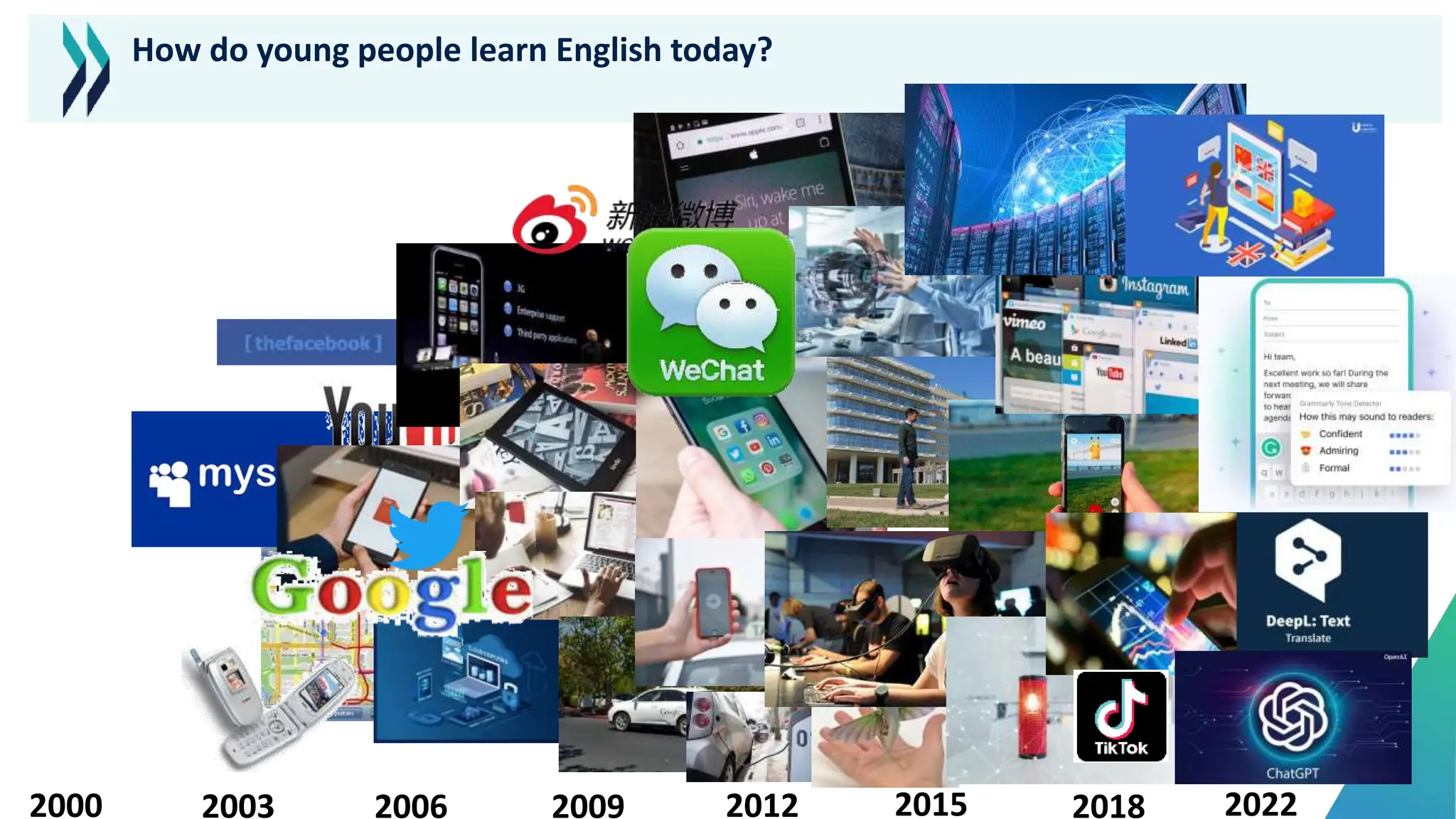
2009 2012 2015
2006 2018
2003
2000 2022
How do young people learn English today?
Learning English transcends classroom walls…
English lesson in school
• Reading books
• Watching TV and videos
• Gaming
• Listening to music
• Social media and Internet
• Communicating with
friends
Engagement with English on a typical school day for a 15-year-old (Portugal)
> Linguistic inaccuracies?
> Unequal?
> Inflated sense of proficiency?
Perceived benefits Perceived challenges
This increased exposure bring benefits and challenges
> Increases linguistic knowledge
> Enhances metalinguistic skills
> Increases motivation to learn
Outside school, digital technologies drive exposure to English
The moment they get the phone, the
[English] world opens up.
(Teacher, the Netherlands)
How 15-year-olds encounter English outside school (all countries)
IN MOST CASE STUDY SCHOOLS
> Teachers use technologies
> Game-based platforms to monitor
learning
> Online media and web content as
stimuli for learning activities
> Giving instructions or
administering homework
> Students using technologies
> Individualising learning and
differentiation
IN SOME CASE STUDY SCHOOLS
Inside school, technology is used in moderation
We were raised with this technology…
it’s more interesting…it’s easier for us
to understand.
[Student, Greece]
> Technologies that facilitate
interaction or collaboration
> Technologies that facilitate
feedback / marking
IN NO CASE STUDY SCHOOLS
Kids spend a lot of time already on their
phones…I don’t want to add to that.
(Teacher, Finland)
Textbooks (paper and digital) remain a key resource but attitudes are mixed
Some national specificities in the teaching and learning of English
may be of interest to other countries
Greece Valuing English language in the curriculum from the earliest age.
Israel Providing more challenging courses for high-performing students.
The
Netherlands
Offering bilingual programmes (Dutch-English).
Portugal Providing extra-curricular opportunities for students to practice
English.
Finland
Building a strong evidence base on English language teaching and
learning nationally.
Thank you
Tests
(representative sample of
15-year-olds’ language
proficiency in English)
Case studies
(learning practices inside
and outside school)
Contextual
questionnaires
(students, their teachers
and school leaders)
The PISA Foreign Language Assessment
Key aims
• Guide policy decisions
• Inform and improve language teaching
and learning

Andreas Schleicher - 20 Feb 2024 - How pop music, podcasts, and Tik Tok are impacting English language learning.pptx

  • 1.
    Lights, Camera, Fluency Howpop music, podcasts, and Tik Tok are impacting English language learning 20 February 2024 Andreas Schleicher Director, Directorate for Education and Skills
  • 2.
    Learning a foreignlanguage helps students thrive in multicultural settings 0.00 0.05 0.10 0.15 0.20 0.25 0.30 Respect for people from other cultures Attitudes towards immigrants Awareness of intercultural communication Awareness of global issues Interest in learning about other cultures Self-efficacy regarding global issues Perspective taking Index change Before accounting for gender, immigrant background, and students' and schools' socio-demographic profile After accounting for gender, immigrant background, and students' and schools' socio-demographic profile OECD (2020), PISA 2018 Results (Volume VI), https://doi.org/10.1787/d5f68679-en. The impact of learning a foreign language on students who speak one language
  • 3.
    2009 2012 2015 20062018 2003 2000 2022 How do young people learn English today?
  • 4.
    Learning English transcendsclassroom walls… English lesson in school • Reading books • Watching TV and videos • Gaming • Listening to music • Social media and Internet • Communicating with friends Engagement with English on a typical school day for a 15-year-old (Portugal)
  • 5.
    > Linguistic inaccuracies? >Unequal? > Inflated sense of proficiency? Perceived benefits Perceived challenges This increased exposure bring benefits and challenges > Increases linguistic knowledge > Enhances metalinguistic skills > Increases motivation to learn
  • 6.
    Outside school, digitaltechnologies drive exposure to English The moment they get the phone, the [English] world opens up. (Teacher, the Netherlands) How 15-year-olds encounter English outside school (all countries)
  • 7.
    IN MOST CASESTUDY SCHOOLS > Teachers use technologies > Game-based platforms to monitor learning > Online media and web content as stimuli for learning activities > Giving instructions or administering homework > Students using technologies > Individualising learning and differentiation IN SOME CASE STUDY SCHOOLS Inside school, technology is used in moderation We were raised with this technology… it’s more interesting…it’s easier for us to understand. [Student, Greece] > Technologies that facilitate interaction or collaboration > Technologies that facilitate feedback / marking IN NO CASE STUDY SCHOOLS Kids spend a lot of time already on their phones…I don’t want to add to that. (Teacher, Finland)
  • 8.
    Textbooks (paper anddigital) remain a key resource but attitudes are mixed
  • 9.
    Some national specificitiesin the teaching and learning of English may be of interest to other countries Greece Valuing English language in the curriculum from the earliest age. Israel Providing more challenging courses for high-performing students. The Netherlands Offering bilingual programmes (Dutch-English). Portugal Providing extra-curricular opportunities for students to practice English. Finland Building a strong evidence base on English language teaching and learning nationally.
  • 10.
  • 11.
    Tests (representative sample of 15-year-olds’language proficiency in English) Case studies (learning practices inside and outside school) Contextual questionnaires (students, their teachers and school leaders) The PISA Foreign Language Assessment Key aims • Guide policy decisions • Inform and improve language teaching and learning