WHAT
ARE YOUR
EXPECTATIONS?
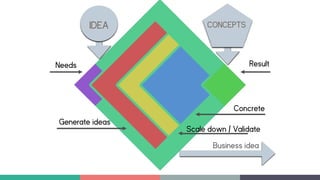
Needs
Concrete
Scale down / Validate
Business idea
Result
Generate ideas
IDEA CONCEPTS
TODAY, WE:
• Scale down the Ideas
• Identify our Customer Segments
• Come up with Value Proposition
• Create Visual Prototypes
• & Lastly, come up with a Business Model for the ideas
DID YOU DO THE ASSIGNMENT 
Online Presence Assignment
Problem to Ideas Assignment
ACTIVITY ONE: POST YOUR IDEAS
Under each of the problems
THAT WE CAME UP WITH
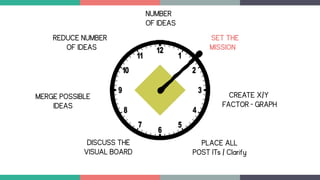
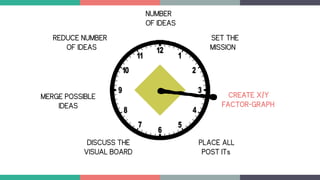
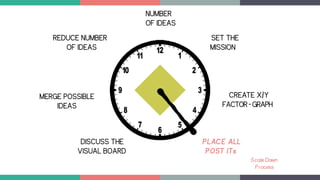
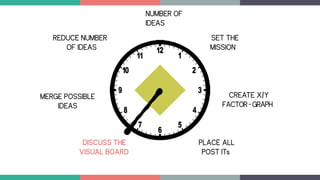
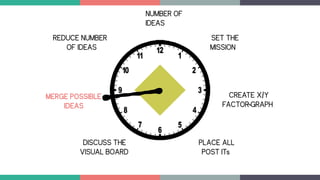
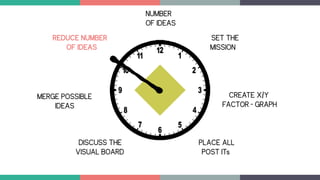
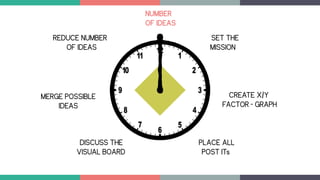
NUMBER
OF IDEAS
CREATE X/Y
FACTOR - GRAPH
PLACE ALL
POST ITs / Clarify
ScaleDown
Process
DISCUSS THE
VISUAL BOARD
MERGE POSSIBLE
IDEAS
REDUCE NUMBER
OF IDEAS
SET THE
MISSION
Scale Down
Process
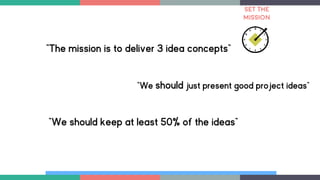
SET THE
MISSION
”The mission is to deliver 3 idea concepts”
”We should keep at least 50% of the ideas”
”We should just present good project ideas”
ACTIVITY TWO: NARROW DOWN to
Top 3 problems –
YES, ONLY THREE
NUMBER
OF IDEAS
CREATE X/Y
FACTOR-GRAPH
PLACE ALL
POST ITs
DISCUSS THE
VISUAL BOARD
MERGE POSSIBLE
IDEAS
REDUCE NUMBER
OF IDEAS
SET THE
MISSION
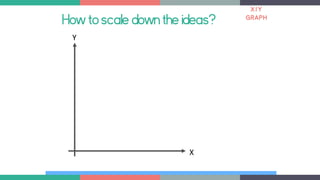
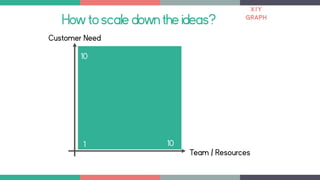
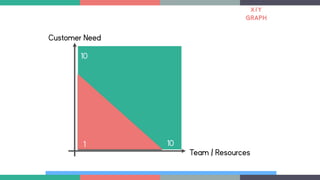
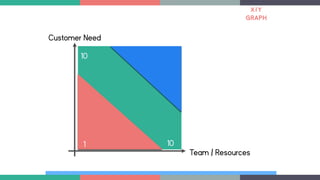
Howtoscaledowntheideas?
Y
X
X/Y
GRAPH
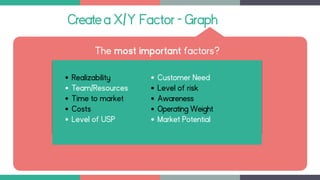
Createa X/Y Factor - Graph
• Realizability
• Team/Resources
• Time to market
• Costs
• Level of USP
• Customer Need
• Level of risk
• Awareness
• Operating Weight
• Market Potential
The most important factors?
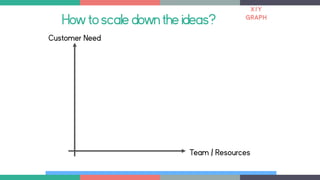
Howtoscaledowntheideas?
Customer Need
Team / Resources
X/Y
GRAPH
Howtoscaledowntheideas?
Customer Need
10
1 10
Team / Resources
X/Y
GRAPH
Customer Need
10
1 10
Team / Resources
X/Y
GRAPH
Customer Need
10
1 10
Team / Resources
X/Y
GRAPH
NUMBER
OF IDEAS
CREATE X/Y
FACTOR-GRAPH
PLACE ALL
POST ITs
ScaleDown
Process
DISCUSS THE
VISUAL BOARD
MERGE POSSIBLE
IDEAS
REDUCE NUMBER
OF IDEAS
SET THE
MISSION
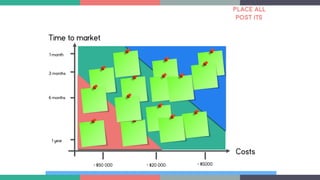
PLACE ALL
POST ITs
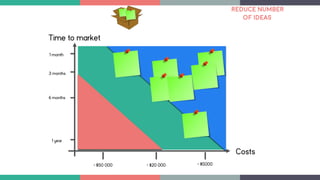
Time to market
1 year
Costs
1 month
3 months
6 months
> $5000> $20 000> $50 000
NUMBER OF
IDEAS
CREATE X/Y
FACTOR-GRAPH
PLACE ALL
POST ITs
DISCUSS THE
VISUAL BOARD
MERGE POSSIBLE
IDEAS
REDUCE NUMBER
OF IDEAS
SET THE
MISSION
NUMBER OF
IDEAS
CREATE X/Y
FACTOR-‐GRAPH
PLACE ALL
POST ITs
DISCUSS THE
VISUAL BOARD
MERGE POSSIBLE
IDEAS
REDUCE NUMBER
OF IDEAS
SET THE
MISSION
NUMBER
OF IDEAS
CREATE X/Y
FACTOR - GRAPH
PLACE ALL
POST ITs
DISCUSS THE
VISUAL BOARD
MERGE POSSIBLE
IDEAS
REDUCE NUMBER
OF IDEAS
SET THE
MISSION
Time to market
1 year
Costs
1 month
3 months
6 months
> $5000> $20 000> $50 000
REDUCE NUMBER
OF IDEAS
NUMBER
OF IDEAS
CREATE X/Y
FACTOR - GRAPH
PLACE ALL
POST ITs
DISCUSS THE
VISUAL BOARD
MERGE POSSIBLE
IDEAS
REDUCE NUMBER
OF IDEAS
SET THE
MISSION
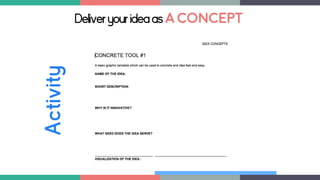
Deliveryourideaasaconcept
Activity
Who is your target Customer?
WHAT is Customer Segmentation?
WHY do you need to segment your customers?
HOW do we segment our customers?
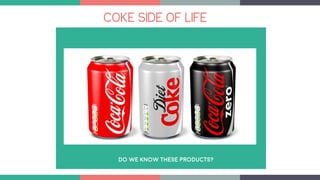
COKE SIDE OF LIFE
DO WE KNOW THESE PRODUCTS?
NOT EVERYONE
IS
YOUR CUSTOMER!!!!!
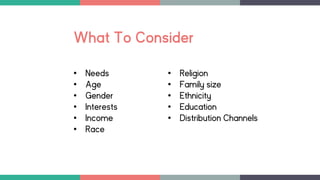
What To Consider
• Needs
• Age
• Gender
• Interests
• Income
• Race
• Religion
• Family size
• Ethnicity
• Education
• Distribution Channels
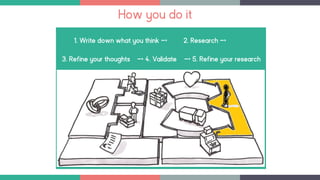
How you do it
1. Write down what you think —> 2. Research —>
3. Refine your thoughts —> 4. Validate —> 5. Refine your research

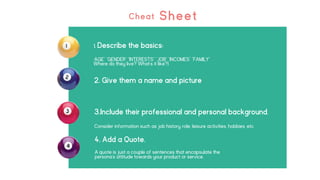
Cheat Sheet
1. Describe the basics:
”AGE” ”GENDER” ”INTERESTS” ”JOB” ”INCOMES” ”FAMILY”
Where do they live? What's it like?)
2. Give them a name and picture
4. Add a Quote.
A quote is just a couple of sentences that encapsulate the
persona’s attitude towards your product or service.
3.Include their professional and personal background.
Consider information such as job history, role, leisure activities, hobbies, etc.
CheatSheet
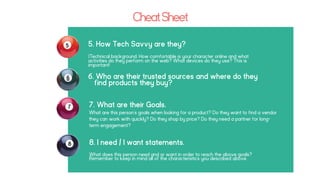
5. How Tech Savvy are they?
(Technical background. How comfortable is your character online and what
activities do they perform on the web? What devices do they use? This is
important!
6. Who are their trusted sources and where do they
find products they buy?
7. What are their Goals.
What are this person’s goals when looking for a product? Do they want to find a vendor
they can work with quickly? Do they shop by price? Do they need a partner for long-
term engagement?
8. I need / I want statements.
What does this person need and or want in order to reach the above goals?
Remember to keep in mind all of the characteristics you described above.
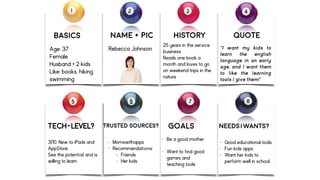
BASICS
Age: 37
Female
Husband + 2 kids
Like: books, hiking,
swimming
NAME + PIC
Rebecca Johnson
HISTORY
25 years in the service
business.
Reads one book a
month and loves to go
on weekend trips in the
nature
Be a good mother-‐
3/10. New to iPads and
AppStore.
See the potential and is
willing to learn
Momswithapps
Recommendations:
Good educational tools
Fun kids apps
Want her kids to
perform well in school.
-‐
-‐
-‐
-‐
-‐
Want to find good
games and
teaching tools
-‐
Friends
Her kids
-‐
-‐
QUOTE
”I want my kids to
learn the english
language in an early
age, and I want them
to like the learning
tools I give them!”
TECH-LEVEL? TRUSTED SOURCES? GOALS NEEDS/WANTS?
YOUR TURN!!!
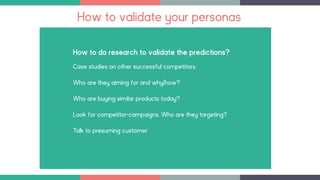
How to do research to validate the predictions?
Case studies on other successful competitors.
Who are they aiming for and why/how?
Who are buying similar products today?
Look for competitor-campaigns. Who are they targeting?
Talk to presuming customer
How to validate your personas
VALUE
PROPOSITION
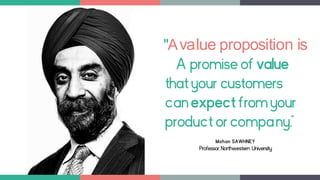
"Avalue proposition is
A promiseof value
thatyour customers
canexpectfromyour
productor company."
Mohan SAWHNEY
Professor, Northwestern University
Why would you buy an iPhone 7 over an Samsung S7
Why you choose TECNO over Infinix
Why you choose Kenya Mpya over Lopha Travels
In Short
A value proposition isacrystalclear
statement of howyour product or service
solvesa customer's problem,delivers some
benefits and improvestheirsituation
presented in a simple, compelling way that
moves a prospective customer to take action
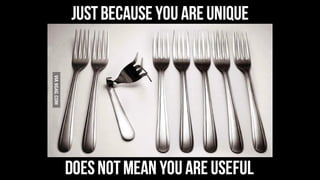
People don't buy your product,
they buy what your product
can do for them.
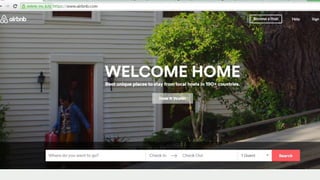
'" Adobe t l shopify t g E V E R N OTE adidas HUGE
CLEARLY
COMMUNICATING
W H AT YO U D O A N D W H Y I T M AT T E R S
Q: WHEN PEOPLE TELL YOU ABOUT THEIR
PRODUCTS AND/OR, SERVICES, WHAT
COMMON MISTAKES OR WAYS OF
COMMUNICATING MAKE IT DIFFICULT
FOR YOU TO UNDERSTAND?
COMMUNICATION = CONNECTION
Too often we recite tag lines and throw jargon around
without intentionally thinking how to connect with the
person we are speaking to for a meaningful outcome.
WHEN SPEAKING ABOUT YOUR
PRODUCT AND/OR SERVICE….
BE CONCISE
USE YOUR CUSTOMER’S WORDS
BREAK IT DOWN
AVOID AMBIGUITY
EXAMPLES
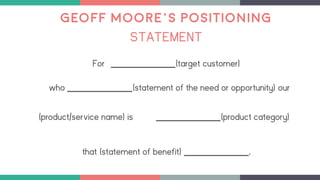
GEOFF MOORE’S POSITIONING
STATEMENT
For (target customer)
who (statement of the need or opportunity) our
(product/service name) is (product category)
that (statement of benefit) .
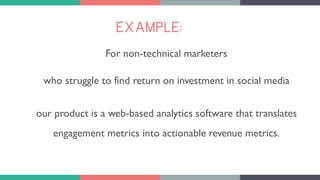
EXAMPLE:
For non-technical marketers
who struggle to find return on investment in social media
our product is a web-based analytics software that translates
engagement metrics into actionable revenue metrics.
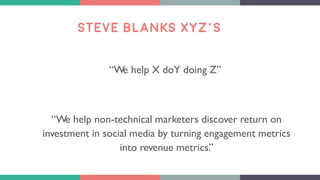
STEVE BLANKS XYZ’S
“We help X doY doing Z”
“We help non-technical marketers discover return on
investment in social media by turning engagement metrics
into revenue metrics.”
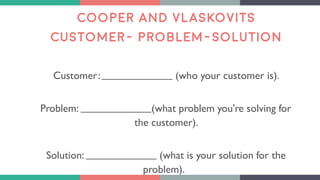
COOPER AND VLASKOVITS
CUSTOMER- PROBLEM-SOLUTION
Customer: (who your customer is).
Problem: (what problem you're solving for
the customer).
Solution: (what is your solution for the
problem).
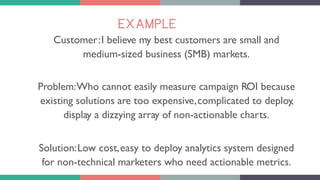
EXAMPLE
Customer:I believe my best customers are small and
medium-sized business (SMB) markets.
Problem:Who cannot easily measure campaign ROI because
existing solutions are too expensive,complicated to deploy,
display a dizzying array of non-actionable charts.
Solution:Low cost,easy to deploy analytics system designed
for non-technical marketers who need actionable metrics.
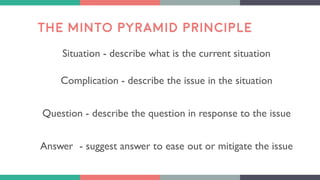
THE MINTO PYRAMID PRINCIPLE
Situation - describe what is the current situation
Complication - describe the issue in the situation
Question - describe the question in response to the issue
Answer - suggest answer to ease out or mitigate the issue
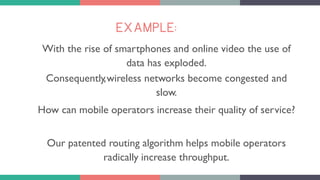
EXAMPLE:
With the rise of smartphones and online video the use of
data has exploded.
Consequently,wireless networks become congested and
slow.
How can mobile operators increase their quality of service?
Our patented routing algorithm helps mobile operators
radically increase throughput.
YOUR TURN!!!!
Use 1 of the
templates
Visual
Prototyping
Done at the beginning to make
your idea more concrete
Also, later stage when rethinking
an existing product
Basically, helps clarify your
product
Also, later stage when rethinking
an existing product
How
Get creative and use quick sketches to bring out
the essence of your business idea
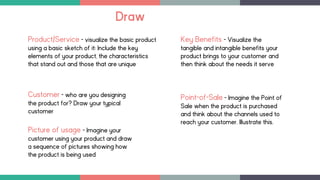
Draw
Product/Service – visualize the basic product
using a basic sketch of it: Include the key
elements of your product, the characteristics
that stand out and those that are unique
Picture of usage - Imagine your
customer using your product and draw
a sequence of pictures showing how
the product is being used
Customer - who are you designing
the product for? Draw your typical
customer
Point-of-Sale – Imagine the Point of
Sale when the product is purchased
and think about the channels used to
reach your customer. Illustrate this.
Key Benefits – Visualize the
tangible and intangible benefits your
product brings to your customer and
then think about the needs it serve
Activity:
In your teams, draw the visual
Prototypes for your businesses
What is a
business Model
A business model describes the rationale of how an
organization creates, delivers and captures value
It’s the way you intend to generate revenue and profits
as well as how you plan to deliver your value proposition
to your customers
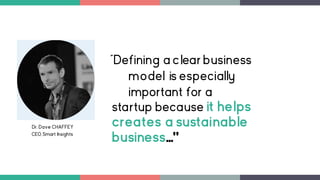
Dr. Dave CHAFFEY
CEO, Smart Insights
"Defining a clear business
model is especially
important for a
startup because it helps
creates a sustainable
business..."
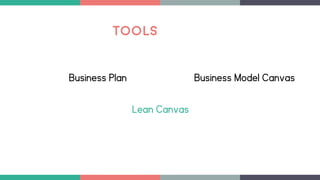
Business Plan Business Model Canvas
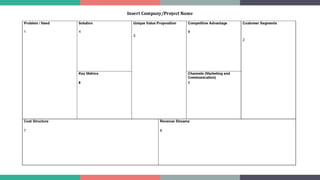
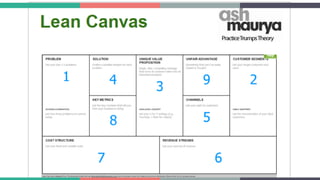
Lean Canvas
Tools
Activity:
CREATE BUSINESS MODEL FOR YOUR BUSINESSES!!!
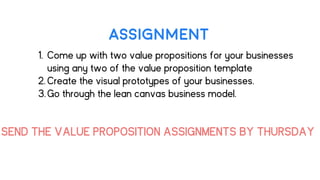
ASSIGNMENT
1. Come up with two value propositions for your businesses
using any two of the value proposition template
2. Create the visual prototypes of your businesses.
3.Go through the lean canvas business model.
SEND THE VALUE PROPOSITION ASSIGNMENTS BY THURSDAY

Zero to One Startup Masterclass Series - Week Two

  • 2.
  • 3.
    Needs Concrete Scale down /Validate Business idea Result Generate ideas IDEA CONCEPTS
  • 6.
    TODAY, WE: • Scaledown the Ideas • Identify our Customer Segments • Come up with Value Proposition • Create Visual Prototypes • & Lastly, come up with a Business Model for the ideas
  • 7.
    DID YOU DOTHE ASSIGNMENT  Online Presence Assignment Problem to Ideas Assignment
  • 8.
    ACTIVITY ONE: POSTYOUR IDEAS Under each of the problems THAT WE CAME UP WITH
  • 9.
    NUMBER OF IDEAS CREATE X/Y FACTOR- GRAPH PLACE ALL POST ITs / Clarify ScaleDown Process DISCUSS THE VISUAL BOARD MERGE POSSIBLE IDEAS REDUCE NUMBER OF IDEAS SET THE MISSION
  • 10.
    Scale Down Process SET THE MISSION ”Themission is to deliver 3 idea concepts” ”We should keep at least 50% of the ideas” ”We should just present good project ideas”
  • 11.
    ACTIVITY TWO: NARROWDOWN to Top 3 problems – YES, ONLY THREE
  • 12.
    NUMBER OF IDEAS CREATE X/Y FACTOR-GRAPH PLACEALL POST ITs DISCUSS THE VISUAL BOARD MERGE POSSIBLE IDEAS REDUCE NUMBER OF IDEAS SET THE MISSION
  • 13.
  • 14.
    Createa X/Y Factor- Graph • Realizability • Team/Resources • Time to market • Costs • Level of USP • Customer Need • Level of risk • Awareness • Operating Weight • Market Potential The most important factors?
  • 15.
  • 16.
  • 17.
    Customer Need 10 1 10 Team/ Resources X/Y GRAPH
  • 18.
    Customer Need 10 1 10 Team/ Resources X/Y GRAPH
  • 19.
    NUMBER OF IDEAS CREATE X/Y FACTOR-GRAPH PLACEALL POST ITs ScaleDown Process DISCUSS THE VISUAL BOARD MERGE POSSIBLE IDEAS REDUCE NUMBER OF IDEAS SET THE MISSION
  • 20.
    PLACE ALL POST ITs Timeto market 1 year Costs 1 month 3 months 6 months > $5000> $20 000> $50 000
  • 21.
    NUMBER OF IDEAS CREATE X/Y FACTOR-GRAPH PLACEALL POST ITs DISCUSS THE VISUAL BOARD MERGE POSSIBLE IDEAS REDUCE NUMBER OF IDEAS SET THE MISSION
  • 22.
    NUMBER OF IDEAS CREATE X/Y FACTOR-‐GRAPH PLACEALL POST ITs DISCUSS THE VISUAL BOARD MERGE POSSIBLE IDEAS REDUCE NUMBER OF IDEAS SET THE MISSION
  • 23.
    NUMBER OF IDEAS CREATE X/Y FACTOR- GRAPH PLACE ALL POST ITs DISCUSS THE VISUAL BOARD MERGE POSSIBLE IDEAS REDUCE NUMBER OF IDEAS SET THE MISSION
  • 24.
    Time to market 1year Costs 1 month 3 months 6 months > $5000> $20 000> $50 000 REDUCE NUMBER OF IDEAS
  • 25.
    NUMBER OF IDEAS CREATE X/Y FACTOR- GRAPH PLACE ALL POST ITs DISCUSS THE VISUAL BOARD MERGE POSSIBLE IDEAS REDUCE NUMBER OF IDEAS SET THE MISSION
  • 27.
  • 28.
    Who is yourtarget Customer?
  • 29.
    WHAT is CustomerSegmentation? WHY do you need to segment your customers? HOW do we segment our customers?
  • 30.
    COKE SIDE OFLIFE DO WE KNOW THESE PRODUCTS?
  • 31.
  • 32.
    What To Consider •Needs • Age • Gender • Interests • Income • Race • Religion • Family size • Ethnicity • Education • Distribution Channels
  • 33.
    How you doit 1. Write down what you think —> 2. Research —> 3. Refine your thoughts —> 4. Validate —> 5. Refine your research
  • 34.
    Cheat Sheet 1. Describethe basics: ”AGE” ”GENDER” ”INTERESTS” ”JOB” ”INCOMES” ”FAMILY” Where do they live? What's it like?) 2. Give them a name and picture 4. Add a Quote. A quote is just a couple of sentences that encapsulate the persona’s attitude towards your product or service. 3.Include their professional and personal background. Consider information such as job history, role, leisure activities, hobbies, etc.
  • 35.
    CheatSheet 5. How TechSavvy are they? (Technical background. How comfortable is your character online and what activities do they perform on the web? What devices do they use? This is important! 6. Who are their trusted sources and where do they find products they buy? 7. What are their Goals. What are this person’s goals when looking for a product? Do they want to find a vendor they can work with quickly? Do they shop by price? Do they need a partner for long- term engagement? 8. I need / I want statements. What does this person need and or want in order to reach the above goals? Remember to keep in mind all of the characteristics you described above.
  • 36.
    BASICS Age: 37 Female Husband +2 kids Like: books, hiking, swimming NAME + PIC Rebecca Johnson HISTORY 25 years in the service business. Reads one book a month and loves to go on weekend trips in the nature Be a good mother-‐ 3/10. New to iPads and AppStore. See the potential and is willing to learn Momswithapps Recommendations: Good educational tools Fun kids apps Want her kids to perform well in school. -‐ -‐ -‐ -‐ -‐ Want to find good games and teaching tools -‐ Friends Her kids -‐ -‐ QUOTE ”I want my kids to learn the english language in an early age, and I want them to like the learning tools I give them!” TECH-LEVEL? TRUSTED SOURCES? GOALS NEEDS/WANTS?
  • 37.
  • 38.
    How to doresearch to validate the predictions? Case studies on other successful competitors. Who are they aiming for and why/how? Who are buying similar products today? Look for competitor-campaigns. Who are they targeting? Talk to presuming customer How to validate your personas
  • 40.
  • 41.
    "Avalue proposition is Apromiseof value thatyour customers canexpectfromyour productor company." Mohan SAWHNEY Professor, Northwestern University
  • 42.
    Why would youbuy an iPhone 7 over an Samsung S7 Why you choose TECNO over Infinix Why you choose Kenya Mpya over Lopha Travels In Short
  • 43.
    A value propositionisacrystalclear statement of howyour product or service solvesa customer's problem,delivers some benefits and improvestheirsituation presented in a simple, compelling way that moves a prospective customer to take action
  • 45.
    People don't buyyour product, they buy what your product can do for them.
  • 46.
    '" Adobe tl shopify t g E V E R N OTE adidas HUGE
  • 48.
    CLEARLY COMMUNICATING W H ATYO U D O A N D W H Y I T M AT T E R S
  • 49.
    Q: WHEN PEOPLETELL YOU ABOUT THEIR PRODUCTS AND/OR, SERVICES, WHAT COMMON MISTAKES OR WAYS OF COMMUNICATING MAKE IT DIFFICULT FOR YOU TO UNDERSTAND?
  • 50.
    COMMUNICATION = CONNECTION Toooften we recite tag lines and throw jargon around without intentionally thinking how to connect with the person we are speaking to for a meaningful outcome.
  • 51.
    WHEN SPEAKING ABOUTYOUR PRODUCT AND/OR SERVICE….
  • 52.
  • 53.
  • 54.
  • 55.
  • 56.
  • 57.
    GEOFF MOORE’S POSITIONING STATEMENT For(target customer) who (statement of the need or opportunity) our (product/service name) is (product category) that (statement of benefit) .
  • 58.
    EXAMPLE: For non-technical marketers whostruggle to find return on investment in social media our product is a web-based analytics software that translates engagement metrics into actionable revenue metrics.
  • 59.
    STEVE BLANKS XYZ’S “Wehelp X doY doing Z” “We help non-technical marketers discover return on investment in social media by turning engagement metrics into revenue metrics.”
  • 60.
    COOPER AND VLASKOVITS CUSTOMER-PROBLEM-SOLUTION Customer: (who your customer is). Problem: (what problem you're solving for the customer). Solution: (what is your solution for the problem).
  • 61.
    EXAMPLE Customer:I believe mybest customers are small and medium-sized business (SMB) markets. Problem:Who cannot easily measure campaign ROI because existing solutions are too expensive,complicated to deploy, display a dizzying array of non-actionable charts. Solution:Low cost,easy to deploy analytics system designed for non-technical marketers who need actionable metrics.
  • 62.
    THE MINTO PYRAMIDPRINCIPLE Situation - describe what is the current situation Complication - describe the issue in the situation Question - describe the question in response to the issue Answer - suggest answer to ease out or mitigate the issue
  • 63.
    EXAMPLE: With the riseof smartphones and online video the use of data has exploded. Consequently,wireless networks become congested and slow. How can mobile operators increase their quality of service? Our patented routing algorithm helps mobile operators radically increase throughput.
  • 64.
    YOUR TURN!!!! Use 1of the templates
  • 66.
  • 67.
    Done at thebeginning to make your idea more concrete Also, later stage when rethinking an existing product
  • 68.
    Basically, helps clarifyyour product Also, later stage when rethinking an existing product
  • 69.
    How Get creative anduse quick sketches to bring out the essence of your business idea
  • 70.
    Draw Product/Service – visualizethe basic product using a basic sketch of it: Include the key elements of your product, the characteristics that stand out and those that are unique Picture of usage - Imagine your customer using your product and draw a sequence of pictures showing how the product is being used Customer - who are you designing the product for? Draw your typical customer Point-of-Sale – Imagine the Point of Sale when the product is purchased and think about the channels used to reach your customer. Illustrate this. Key Benefits – Visualize the tangible and intangible benefits your product brings to your customer and then think about the needs it serve
  • 71.
    Activity: In your teams,draw the visual Prototypes for your businesses
  • 73.
  • 74.
    A business modeldescribes the rationale of how an organization creates, delivers and captures value It’s the way you intend to generate revenue and profits as well as how you plan to deliver your value proposition to your customers
  • 75.
    Dr. Dave CHAFFEY CEO,Smart Insights "Defining a clear business model is especially important for a startup because it helps creates a sustainable business..."
  • 76.
    Business Plan BusinessModel Canvas Lean Canvas Tools
  • 79.
    Activity: CREATE BUSINESS MODELFOR YOUR BUSINESSES!!!
  • 81.
    ASSIGNMENT 1. Come upwith two value propositions for your businesses using any two of the value proposition template 2. Create the visual prototypes of your businesses. 3.Go through the lean canvas business model. SEND THE VALUE PROPOSITION ASSIGNMENTS BY THURSDAY