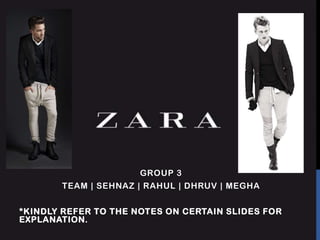
GROUP 3

TEAM | SEHNAZ | RAHUL | DHRUV | MEGHA
*KINDLY REFER TO THE NOTES ON CERTAIN SLIDES FOR
EXPLANATION.
SNAPSHOTS
1. What is fashion
2. Analysis of ZARA

3. Blue ocean strategy
4. What should ZARA do regarding its IT system?
5. Learning from ZARA
WHEN WE TALK ABOUT

FASHION.

WHAT IS THE FIRST
THING THAT COMES TO
YOUR MIND?
WHAT DO THESE MODELS
HAVE IN

COMMON?
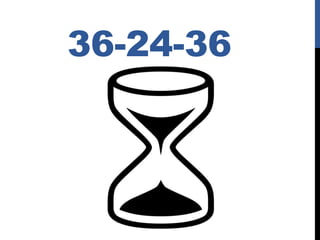
36-24-36
EVEN YOUR RIVALS KNOW THAT
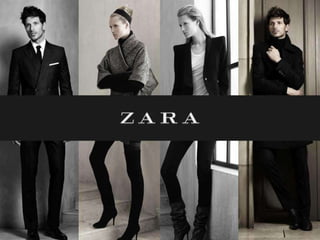
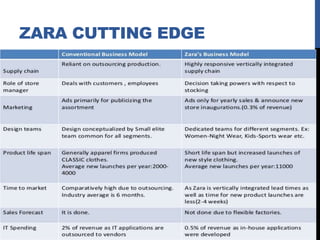
ZARA CUTTING EDGE
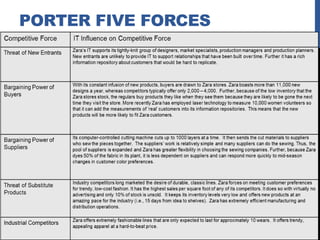
PORTER FIVE FORCES
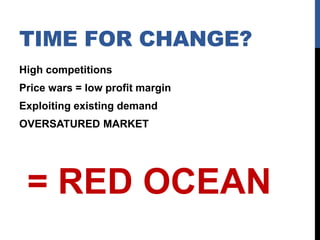
TIME FOR CHANGE?
High competitions
Price wars = low profit margin
Exploiting existing demand

OVERSATURED MARKET

= RED OCEAN
HOW DO WE CROSSOVER TO

THE BLUE
OCEAN?
ZARA+
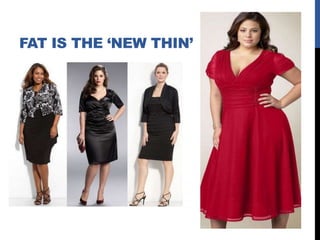
FAT IS THE ‘NEW THIN’
WHY?
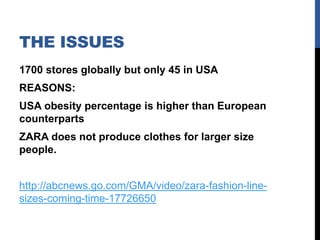
THE ISSUES
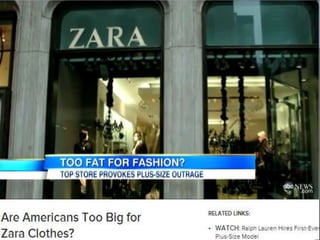
1700 stores globally but only 45 in USA
REASONS:
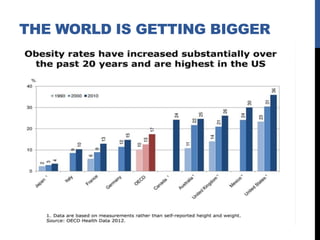
USA obesity percentage is higher than European
counterparts
ZARA does not produce clothes for larger size
people.
http://abcnews.go.com/GMA/video/zara-fashion-linesizes-coming-time-17726650
THE WORLD IS GETTING BIGGER
SHOULD

ZARA

MODERNIZE
HER

IT SYSTEM?
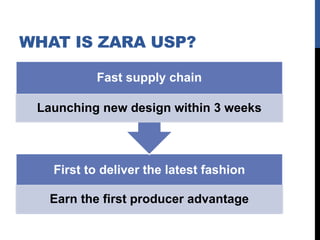
WHAT IS ZARA USP?
Fast supply chain
Launching new design within 3 weeks

First to deliver the latest fashion
Earn the first producer advantage
WHY CHANGE THE SYSTEM
THAT WORKS?
• Rapid globalization of stores
• Current system becoming obsolete
• Delicate system with limited workforce to
repair it
• Keep up with current technology so

ZARA doesn’t get
left behind!
THE BEST WAY TO IMPLEMENT IT?
1. Test-drive new system in the new store first
2. Identify potential problems and rectify them
3. In the mean time, the company will have two software
running for a period of time

4. Operating cost will be higher but our supply chain won’t
be affected
5. So this way ZARA doesn’t lose her USP
6. Once the system is running smoothly, we will start
introducing these system in the old stores
LEARNING
FROM
THEY UNDERSTAND WHAT IS THE
MOST IMPORTANT ASPECT OF
THE INDUSTRY.
RAPIDLY-CHANGING TASTE OF
THE CONSUMERS
THANK
YOU

Zara case study

  • 1.
    GROUP 3 TEAM |SEHNAZ | RAHUL | DHRUV | MEGHA *KINDLY REFER TO THE NOTES ON CERTAIN SLIDES FOR EXPLANATION.
  • 2.
    SNAPSHOTS 1. What isfashion 2. Analysis of ZARA 3. Blue ocean strategy 4. What should ZARA do regarding its IT system? 5. Learning from ZARA
  • 3.
    WHEN WE TALKABOUT FASHION. WHAT IS THE FIRST THING THAT COMES TO YOUR MIND?
  • 5.
    WHAT DO THESEMODELS HAVE IN COMMON?
  • 6.
  • 7.
  • 10.
  • 11.
  • 12.
    TIME FOR CHANGE? Highcompetitions Price wars = low profit margin Exploiting existing demand OVERSATURED MARKET = RED OCEAN
  • 13.
    HOW DO WECROSSOVER TO THE BLUE OCEAN?
  • 14.
  • 15.
    FAT IS THE‘NEW THIN’
  • 16.
  • 18.
    THE ISSUES 1700 storesglobally but only 45 in USA REASONS: USA obesity percentage is higher than European counterparts ZARA does not produce clothes for larger size people. http://abcnews.go.com/GMA/video/zara-fashion-linesizes-coming-time-17726650
  • 19.
    THE WORLD ISGETTING BIGGER
  • 20.
  • 21.
    WHAT IS ZARAUSP? Fast supply chain Launching new design within 3 weeks First to deliver the latest fashion Earn the first producer advantage
  • 22.
    WHY CHANGE THESYSTEM THAT WORKS? • Rapid globalization of stores • Current system becoming obsolete • Delicate system with limited workforce to repair it • Keep up with current technology so ZARA doesn’t get left behind!
  • 23.
    THE BEST WAYTO IMPLEMENT IT? 1. Test-drive new system in the new store first 2. Identify potential problems and rectify them 3. In the mean time, the company will have two software running for a period of time 4. Operating cost will be higher but our supply chain won’t be affected 5. So this way ZARA doesn’t lose her USP 6. Once the system is running smoothly, we will start introducing these system in the old stores
  • 24.
  • 25.
    THEY UNDERSTAND WHATIS THE MOST IMPORTANT ASPECT OF THE INDUSTRY. RAPIDLY-CHANGING TASTE OF THE CONSUMERS
  • 26.